Mahmoud Shakarna* | Oday Jaradat | Malik Alsharayeh | Rinad Amro
© 2026 The authors. This article is published by IIETA and is licensed under the CC BY 4.0 license (http://creativecommons.org/licenses/by/4.0/).
OPEN ACCESS
This study investigates the feasibility of using washed crushed sand (WCS) produced from long-accumulated crusher waste in Palestine as a sustainable replacement for natural fine aggregate in concrete. Crusher waste collected from three quarry locations in the West Bank was processed by controlled laboratory washing and sieving to obtain clean crushed sand meeting relevant physical and chemical requirements. Five concrete mixtures were prepared with WCS replacement levels of 0%, 20%, 50%, 80%, and 100% while maintaining constant cement content, water content, aggregate proportions, and admixture dosage. The experimental program evaluated density, workability, compressive strength, drying shrinkage, water permeability, dynamic elastic modulus, and microstructural characteristics. The results showed that increasing the WCS content improved density, compressive strength, dimensional stability, impermeability, and stiffness, while reducing workability because of the angular and rough surface texture of the crushed particles. At 100% replacement, compressive strength increased by approximately 24.5% at 28 days and 26.3% at 90 days relative to the control mix. Water permeability and drying shrinkage also decreased progressively with increasing WCS content. Microstructural observations confirmed a denser matrix, a thinner interfacial transition zone, and fewer microcracks in mixtures containing high WCS contents. Overall, washed crusher waste can serve as an effective and sustainable fine aggregate for concrete, with 50% replacement offering the best balance of fresh properties and performance, and higher replacement levels providing the greatest gains in strength and durability.
washed crushed sand, crusher waste valorization, fine aggregate replacement, sustainable concrete, compressive strength, water permeability, microstructure
Although numerous studies have investigated the use of quarry dust or crusher fines as partial replacements for natural river sand in concrete, most of these studies have focused on untreated or minimally processed materials. In the present study, the raw material was crusher waste, defined as the unwashed fine by-product of stone-crushing operations containing significant amounts of clay, silt, and dust. After subjecting this material to a controlled washing process, the resulting material was termed washed crushed sand (WCS). Accordingly, this study focuses on the use of WCS as a partial replacement for natural fine aggregate in concrete. Such untreated materials often adversely affect concrete workability, shrinkage behavior, permeability, and long-term durability because of their high content of deleterious fines. Moreover, previous research has predominantly emphasized mechanical properties, particularly compressive strength, with limited attention given to durability-related parameters and microstructural performance. In this context, the present study addresses a clear research gap by providing a comprehensive evaluation of both mechanical and durability-related properties, including drying shrinkage, water permeability, elastic modulus, and microstructural characteristics using scanning electron microscopy (SEM) and X-ray Diffraction (XRD) analyses. By integrating material processing, performance assessment, and durability evaluation, this research offers a novel and globally relevant contribution toward the sustainable utilization of crusher waste as a viable alternative to natural fine aggregates in concrete production.
Stone crushers in Palestine are important in the social and economic context. They play an important role in creating employment and empowering the local economy [1]. The main source of raw material that is needed to produce asphalt, concrete, and other construction materials that are highly used during building construction is the limestone quarries [2]. Nevertheless, the stone crushing activities lead to negative impacts on the adjacent community, the environment, and the health and safety of the employees and the overall population, irrespective of their economic benefit. The negative effects are the degradation of the landscapes, disappearance of the ecosystem, air and water pollution and noise pollution [1]. The increased production of aggregates for concrete manufacturing has intensified environmental and health concerns for populations living around stone-crushing plants. For instance, a factory for crushing stones in Hebron, located in southern Palestine, produces thousands of tons of waste annually in the form of crushed stones mixed with clay dust and other impurities. Such waste is generated while carrying out the primary rock extraction process employed in the manufacture of crushed aggregate. All such waste products collect and lead to pollution, which has critical health implications for the population adjacent to the site, particularly as it is a major contributor to respiratory illnesses. Numerous epidemiological studies have linked prolonged exposure to crusher dust with chronic respiratory conditions such as silicosis, asthma, and bronchitis, particularly among workers and populations living within a 1–2 km radius of crushing plants [2]. This waste holds a lot of land without exploitation and pollutes the groundwater. During the initial stages of the mining process, including rock extraction using heavy equipment or blasting, large quantities of fine rock fragments are generated and mixed with clay or silt. In the initial stages of extracting rocks from the ground using heavy equipment or blasting, a large quantity of these rocks are crushed into small sizes and mixed with clay or silt. These fines are often referred to as "crusher screenings" or "quarry dust," and are typically discarded due to their poor grading, high fine content, and contamination with organic or clay particles, which limits their direct use in concrete without proper treatment [3]. These materials cannot be introduced into the crusher due to their small size and mixing with clay and impurities. Therefore, they are disposed of in the form of waste in landfills near crushers, which is spread. The quarry areas in the West Bank, where there are thousands of tons of waste that pollute the environment and groundwater, Figure 1 shows the waste from the crushing process in the West Bank.
Millions of tons of these screenings accumulated and were dispersed across the areas of the crushers in the West Bank, forming extensive waste zones that adversely affect the environment and groundwater. Figure 1 shows a typical accumulation of waste emanating from rock-crushing operations in the area. In this context, the present study investigates the feasibility of employing these long-accumulated waste materials for the production of manufactured sand, which will contribute to environmental protection, land restoration, and a sustainable and cost-effective local alternative to natural sand.

Figure 1. Accumulated crusher waste at a stone-crushing site in the West, Palestine
The formation of indecomposable waste materials, together with the rapid growth of consumer demand, has resulted in a global waste management challenge [4, 5]. Worldwide, the construction industry generates more than 1.3 billion tons of solid waste annually, a large proportion of which remains unutilized. Recycling quarry and crusher waste has emerged as a sustainable approach to mitigating environmental impacts and promoting circular economy practices within the construction sector [1, 3, 15]. The accelerating pace of global development has further increased the demand for advanced engineering solutions across various applications [21]. One effective strategy to address this challenge is the recycling of waste materials into value-added construction products [1, 21]. Numerous studies have demonstrated the potential use of quarry waste, particularly as a partial or full replacement of fine aggregate in concrete mixtures [8, 15, 16]. Experimental investigations have shown that crushed stone waste can satisfactorily replace natural river sand, offering an environmentally friendly alternative while reducing excessive river sand extraction [14, 23]. Furthermore, research on the mechanical performance of concrete incorporating crushed stone waste as fine aggregate replacement has reported improvements in compressive, flexural, and tensile strengths [6, 25]. These outcomes confirm the technical feasibility of utilizing crushed stone waste as an alternative fine aggregate in concrete production. Concrete remains one of the most widely used construction materials due to its affordability, durability, and versatility [20]. It is primarily composed of binding materials, fine and coarse aggregates, and water [7, 20]. Aggregates represent the largest constituent of concrete, accounting for approximately 60–75% of its volume (70–85% by mass), and they significantly influence both fresh and hardened concrete properties as well as mix economy [6]. Fine aggregates, which constitute about 35–45% of the total aggregate content, play a critical role in filling voids between coarse aggregates and enhancing bond strength [7]. The use of recycled fine aggregates not only alleviates the depletion of natural sand resources but also contributes to lowering the embodied carbon of concrete mixtures. Recent studies indicate that, when properly processed, crushed sand can achieve equal or superior durability and long-term strength compared to natural river sand [8, 14, 24].
This study aims to estimate the potential of using crusher waste produced from quarrying activities in Palestine as a sustainable substitute for natural sand in concrete production. The research focuses on processing this waste through laboratory washing techniques to attain high-quality crushed sand and analysing its physical and chemical properties in accordance with local and international standards. Moreover, the study examines the performance of concrete mixtures incorporating various proportions of WCS by assessing key characteristics such as compressive strength, workability, shrinkage, and modulus of elasticity. The ultimate goal is to identify the optimum replacement ratio that maintains concrete quality while maximizing environmental and economic advantages, thus supporting the use of recycled materials in sustainable construction.
This section outlines the materials used in the research, such as crusher waste sources, processing techniques, and properties of aggregates and other constituents used in the concrete mixtures.
2.1 Crushed sand from crusher waste
2.1.1. Sampling
Pulveriser waste samples were collected from 3 stone-crushing sites located in different areas of the West Bank. These samples comprehend fine particles and debris that accumulate during the initial stages of rock extraction and crushing, as shown in Figure 2.

Figure 2. Stone crushers waste before washing
2.1.2 Laboratory washing process
The waste material collected was taken to the laboratory, where it underwent a process of simulating a sand-washing process. In this operation, the impurities that were to be eliminated included clay, silt, and organic matter to enable the company to produce cleaner, usable crushed sand that would be used in concrete constructions (Figure 3). Washing was conducted in an approximate ratio of 3:1 water to solid, and mechanical agitation was applied for approximately 1015 minutes to separate clayey and silty particles and the sand portion. To conduct the sand-washing simulation experiment in the laboratory, the following steps were undertaken:
• Primary Sieving:
The subsequent screening of the sample was done to eliminate any particle greater than 5 millimetres using a 4.75 mm sieve. The step removed large aggregates and rough contaminants in the material.
• The following processes are involved in the elimination of fine and clay materials:
The fraction that was passed through the 4.75 mm sieve was then sieved again with the No. 200 (75 mm) sieve. This process eliminated clay particles and fine materials that may adversely affect the performance of the sand in its application in construction.
• Sand Quality Assessment – Sand Equivalent (SE)Test:
The washed sand's, including its texture, colour, and performance in crushing, pelagic
• The SE test was conducted after sieving, and it was used to test the cleanliness and general quality of the sand, especially the percentage of fine and clay-like elements. The SE test was taken as the main acceptance criterion of the washing process. The sand has to be of sufficient Sand Equivalent of 65 per cent as per local standards in order to be viewed as acceptable for the production of concrete and general construction usage. Visual observation was done to ensure that there was no visible clay coating as well as excessive fines.
It is notable from Table 1 that the percentage of waste after washing varies from one quarry to another, depending on the geological properties of the rock used in each quarry. The waste produced after washing mainly consists of a mixture of clay and silt and may be reused for agricultural purposes.


Figure 3. The crushed sand obtained from the crusher waste after the washing process
Table 1. The percentage of waste after sand washing for different quarries in the West Bank
|
Sample Location |
Waste After Washing (%) |
|
South West Bank sample |
22.0 |
|
North West Bank sample |
19.0 |
|
Middle West Bank sample |
25.0 |
2.1.3 Physical properties of washed crushed sand
Laboratory tests were conducted to determine the suitability of the WCS as a fine aggregate. The results were compared with local (PS 48) and international (ACI, ASTM, BS) standards, as shown in Table 2. The results indicate that the crushed sand has low water absorption, high purity, and good particle stability, making it suitable for concrete applications.
It is noted from the above results that all the sand obtained from the washing process in the laboratory conformed to the standards, but in the concrete mixers, we used sand from the sample from the northern part of the West Bank, as the sand value is lower, so that the results later would be based on the lower result.
2.1.4 Sieve analysis of crushed sand
The gradation of the WCS was analysed to assess its distribution across different sieve sizes, as shown in Table 3. Sand grading is well-distributed and suitable for use in concrete mixtures.
2.1.5 Chemical properties of crushed sand
Chloride and sulfate content are within safe limits, ensuring no adverse impact on steel reinforcement or concrete durability, as shown in Table 4.
2.2 Coarse aggregate and river sand
The study used coarse aggregates and river sand sourced from a local concrete production facility in the Palestinian market to ensure the realism and applicability of the experimental results. These materials conform to the specifications and standards (PS-48 -2018 Mineral Aggregates from Natural Resources) currently in force in Palestine, as verified through laboratory testing (Table 5).
Table 2. Physical properties of crushed sand after washing
|
Standard |
Requirements |
Result |
Test Name |
No. |
||
|
Middle West Bank Sample |
North West Bank Sample |
South West Bank Sample |
||||
|
ACI 221R |
1.6-3.2 |
2.55 |
2.53 |
2.56 |
Specific Gravity |
1 |
|
PS -48 |
According to the contract |
1.1 |
1.3 |
1.0 |
Water Absorption (%) |
2 |
|
PS -48 |
65 (Min) |
78 |
75 |
83 |
Sand Equivalent (%) |
3 |
|
ASTM –C40 |
No change in color |
No change in color |
No change in color |
No change in color |
Organic Impurities |
4 |
|
ASTM C88-90 |
10% (Max) |
1.8 |
1.9 |
1.5 |
Soundness (%) |
5 |
Table 3. Sieve analysis of crushed sand
|
Sieve Size |
Cumulative (%) Passing |
Requirements According to PS - 48 Cumulative (%) Passing |
||
|
Middle West Bank Sample |
North West Bank Sample |
South West Bank Sample |
||
|
# 8 (2.36 mm) |
100 |
100.0 |
99.5 |
100 |
|
# 16 (1.18 mm) |
78.4 |
72.2 |
70.8 |
40-100 |
|
#30(0.600 mm) |
50.3 |
48.1 |
46.3 |
25-75 |
|
# 40(0.425 mm) |
40.2 |
30.5 |
29.8 |
15-60 |
|
# 100 (0.425 mm) |
21.2 |
17.6 |
15.3 |
10-40 |
|
#200 (0.075 mm) |
10.2 |
7.0 |
6.8 |
0-15 |
Table 4. Chemical properties of crushed sand
|
Standard |
Requirements |
Result |
Test Name |
No. |
||
|
Middle West Bank Sample |
North West Bank Sample |
South West Bank Sample |
||||
|
BS 810-1 |
0.05 (Max) |
0.04 |
0.02 |
0.05 |
Chloride Content , % |
1 |
|
BS EN 13242 |
0.2 (Max) |
0.03 |
0.06 |
0.04 |
Sulphate Content ,% |
2 |
Table 5. The properties of the incorporated aggregate of the concrete mix
|
Test Name |
Coarse Aggregate (19 mm) |
Coarse Aggregate (14 mm) |
Coarse Aggregate (9.5 mm) |
River Sand |
|
Specific gravity |
2.560 |
2.562 |
2.565 |
2.620 |
|
Water absorption (%) |
1.1 |
1.4 |
1.7 |
0.4 |
|
Abrasion (%) |
27.2 |
- |
||
|
Sand equivalent (%) |
- |
71 |
||
|
Clay lumps (%) |
0.13 |
0.16 |
0.17 |
- |
|
Soundness (%) |
2.30 |
2.11 |
1.13 |
- |
|
Flakiness index (%) |
14.0 |
15.2 |
- |
- |
|
Elongation index (%) |
18.2 |
17.3 |
- |
- |
2.3 Cement
The cement used in the experiments was imported from Jordan, Grade CEM I-52.5 N. The compressive strength according to EN 196-1, setting time, and soundness according to EN 196-1, the following results were obtained (Tables 6 and 7):
2.4 Superplasticizer
All mixtures of concrete contained a chemical admixture (Type G -high-range water reducer and retarder), as per ASTM C94, which is normally added to local concrete factories in order to attain realistic results and enhance the accuracy of the experiment. All mixes had an admixture dosage of 1% of the weight of cement.
2.5 Concrete mix formulations
The research comprised a total of five mix designs of concrete; each of them was founded on a standard B30 (30 MPa) mix, and the maximum aggregate size was 20 mm. The level of natural sand that was substituted by the WCS was the only variable in the mixes. The water-to-cement ratio, amount of cement, mixer ratios of the aggregate, and the dosage of admixtures were maintained constant to make correct comparisons as depicted in Table 8.
2.6 Specimen preparation
To ensure a high degree of homogeneity in the concrete mixtures, an initial dry mixing of the constituents was conducted, followed by a second mixing stage after the addition of water. Mixing continued for each composition until a uniform mixture was achieved, according to the EN 12390-2 standard. The prepared specimens were demolded after 24 hours. Mixtures were then stored in a water tank at a controlled temperature of 20 ± 2℃ as specified by the EN 12390-2 standard, until the time of testing.
Table 6. Compressive strength results of the cement
|
Compressive Strength (MPa) |
2 Days |
7 Days |
28 Days |
|
|
30.8 |
44.3 |
55.7 |
|
|
31.4 |
45.1 |
54.6 |
|
30.8 |
43.2 |
56.2 |
|
|
31.9 |
44.2 |
55.2 |
|
|
30.6 |
44.9 |
55.3 |
|
|
31.1 |
43.8 |
54.4 |
|
|
Average |
31.10 |
44.25 |
55.23 |
Table 7. Consistency and setting time results
|
Consistency (%) |
28.0 |
|
|
Setting time (min.) |
Initial 185 |
Final 200 |
Table 8. Concrete mix formulations
|
Materials |
Reference Mix |
Mix With 20% Crushed Sand |
Mix With 50% Crushed Sand |
Mix With 80% Crushed Sand |
Mix With 100% Crushed Sand |
|
Coarse aggregate (19 mm) kg/m3 |
450 |
450 |
450 |
450 |
450 |
|
Coarse aggregate (14 mm) kg/m3 |
280 |
280 |
280 |
280 |
280 |
|
Coarse aggregate (9.5 mm) kg/m3 |
560 |
580 |
580 |
580 |
580 |
|
Sand kg/m3 |
630 |
504 |
315 |
126 |
0 |
|
Washed crushed sand (WCS) kg/m3 |
0 |
126 |
315 |
504 |
630 |
|
Cement kg/m3 |
275 |
275 |
275 |
275 |
275 |
|
Net Water (L/m³), incl. W.C |
150 |
150 |
150 |
150 |
150 |
|
Superplasticizer 1.0% of T.W. of cement (L/ M3) |
3.0 |
3.0 |
3.0 |
3.0 |
3.0 |
2.7 Testing procedure
3.1 Density
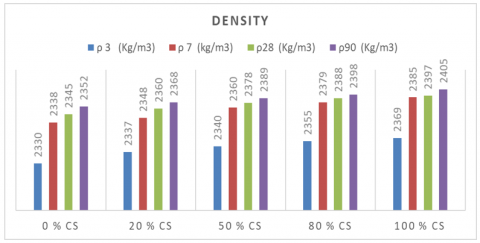
Figure 4 represents the increment in dry density of concrete samples with different replacement levels of crushed sand (CS) instead of natural silica sand. The outcome indicates a continuous increase in the dry density with an increase in replacement levels of crushed sand, varying from 2300 kg/m³ at 0% CS to 2458 kg/m³ at 100% CS for all curing times of 3, 7, 28, and 90 days. Although an increment occurred, the values remained within an acceptable level of standard concrete, ensuring that crushed sand can be used without affecting much the structural gravity of a mixture. The increase in density can be attributed mainly to characteristics of crushed sand with a distinct angularity, coarser texture, and higher specific gravity than natural sand. Such properties aid in providing better interlock and less void content, hence resulting in better compactness and overall density of the concrete matrix [9]. The crushed sand particles will aid in improving the frictional angle and delaying the segregation during mixing and compacting operations [10]. The increment in dry density was 1.67% from 2330 kg/m³ at 0% CS to 2369 kg/m³ at 100% CS for all curing times of 3 days. The continuous elevation in all curing times up to 3 days specifies that hydration reactions were not affected when using crushed sand in mix designs. Contrary to this, using crushed sand will improve the interfacial transition zone (ITZ) among aggregates and cement paste matrices, resulting in enhanced compactness in microstructure matrices [11]. The study supposes a pre-existing research identifying a constructive increment in using crushed sand with an increase in density and microstructural homogeneity, thus resulting in better workability and increased durability of concrete mix designs [10, 12]. Additionally, all measurements of density were within the specifications described in classifying standard densities of concrete mix designs under ASTM-C138/C138M standards, ensuring the practicality in using crushed sand with enhanced safety and sustainability in constructing a structure with natural sand.
Figure 4. The concrete density with different percentage of crushed sand
3.2 Workability
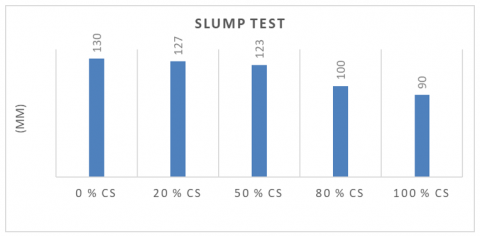
Workability is a fundamental property that significantly influences the quality, placement, and compaction of fresh concrete. Because this property is directly affected by fine aggregates, the effect of different WCS percentages on concrete workability was evaluated in this study through slump tests. In general, it is desirable to improve the workability and plasticity of concrete without increasing the water-to-cement (w/c) ratio. In order to isolate the effect of crushed sand, all other parameters were kept the same for all mixtures: aggregate type and w/c ratio. Moreover, to simulate practical construction conditions, and most importantly, the time gap between mixing and casting, the slump test was conducted after 45 minutes of mixing for each batch. As can be seen from Figure 5, slump values are considerably reduced with an increase in CS percentage. The slump value was reduced from 130 mm (0% CS) to 127 mm (20% CS), 123 mm (50% CS), 100 mm (80% CS), and finally to 90 mm at 100% CS. This constitutes a net reduction in slump of 30.8% between 0% and 100% CS mixes. Reductions in workability are due to the angularity and rough surface texture of crushed sand particles; these characteristics increase the level of internal friction among particles and reduce flowability. Despite this reduction, the 50% CS replacement has given a net slump drop of only 5.4%, and hence may provide the optimal percentage in terms of the trade-off between sustainability and fresh concrete performance. Indeed, it was reported in some studies that the increase in the content of angular manufactured sand reduces the workability of concrete due to the decrease in the lubrication effect between the particles. In addition, it was stated that angular particles have an increasing effect on internal friction, thus reducing slump and plastic behavior in fresh concrete [13, 14]. Highly manufactured angular sand content tends to reduce workability due to a reduction in particle lubrication and an increase in friction [15]. The reduction in workability with increasing WCS content can be attributed to the higher angularity and rough surface texture of manufactured sand particles, which increase internal friction and reduce particle lubrication within the fresh concrete matrix. Previous studies have reported that angular manufactured sand significantly decreases slump values due to reduced inter-particle mobility and increased friction compared to natural river sand [16, 17].
Figure 5. The concrete workability with different percentages of crushed sand
3.3 Compressive strength
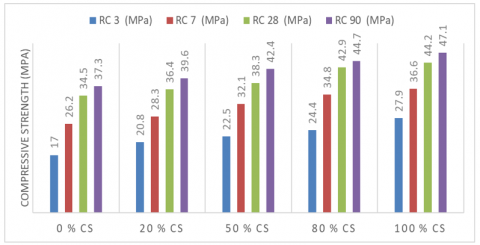
As shown in Figure 6, Compressive Strength is considered one of the most important mechanical properties of concrete. Compressive Strength can be affected by various factors such as cement content, quality, and the quality of coarse and fine aggregates, water-cement ratio, and the usage of chemical admixtures. In the current investigation, in order to nullify the effect of WCS used in each mix, the amount of cement content, water content, coarse aggregates, and admixture was kept constant. To assess the influence of WCS on Compressive Strength, Natural Sand content in each mix was allowed to increment up to 20%, 50%, 80%, and 100%, and measurements were recorded at intervals of 3, 7, 28, and 90 days. As evident in Fig. 6, a marked increase in Compressive Strength with an increase in WCS content is observed. For example, at 28 days, Compressive Strength increased from 34.5 MPa in the control mix to 44.2 MPa in 100% WCS mix, registering an increment of approximately 28.1%. Furthermore, at 90 days, Compressive Strength increased from 37.3 MPa in the control mix to 47.1 MP in 100% WCS mix, registering a gain of approximately 26.3%. The above-mentioned Compressive Strength increment can be attributed to an increase in the angularity and texture of WCS compared to Natural Sand, thus increasing bond strength between aggregate and cement paste [11]. Moreover, exterior pores and higher packing density in cement particles because of WCS may also work towards augmenting strengths at advanced ages [18]. Importantly, at 90 days, no decrease in strengths is observed with increasing content of WCS, thus establishing evidence of sustainability with time. As evident in previous literature, a marked increment in Compressive Strength in WCS Concrete over Natural Sand Concrete is attributed to increased interlock and reduced micro void content [19]. Hence, by using WCS in construction work, not only will a constructive step towards sustainability in construction work be achieved, but it will also improve performance.
The observed enhancement in compressive strength can be directly linked to the microstructural improvements identified in Section 3.7. SEM observations revealed a denser ITZ, reduced micro-voids, and improved particle interlocking in concrete mixtures incorporating WCS. These micro-scale characteristics contribute to more efficient stress transfer and reduced crack initiation, thereby explaining the macro-scale increase in compressive strength observed in CS-based concrete mixtures.
Figure 6. The concrete compressive strength with different percentages of crushed sand
3.4 Shrinkage
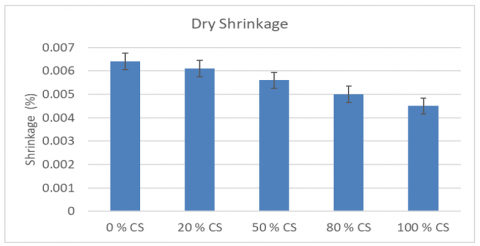
Figure 7 presents the results of the shrinkage tests, with the result showing a clear and meaningful trend. Increasing the proportion of WCS in the concrete mixture significantly reduces the dry shrinkage percentage. This happens not just empirically but also based on deeper grounds of material characteristics, as confirmed by our wide-ranging physical and chemical tests. These tests confirmed that WCS is virtually free from impurities, especially clay and fine silt particles, which are well known to be extremely injurious to concrete shrinkage behavior [20]. Data show a negative relationship between WCS content and shrinkage values, with concrete mixes having 100% washed CS having the lowest shrinkage values, within the range of 0.001% and 0.007%, while the highest shrinkage is obtained from the control mix, which had 0% CS (untreated natural sand). This pattern shows that the physical and chemical cleanliness of the aggregate plays a very fundamental role in the drying dimensional stability of concrete. The root of this pattern is the absence of clay and fine silt in the WCS, materials widely known for their water retention properties. Such impurities have a natural affinity towards retaining water in the concrete mixture, which consequently dries at an uneven rate with subsequent volumetric contraction due to evaporation of water [9]. The effects of these impurities in the concrete mixture can be effectively removed by washing crushed sand, thus increasing the drying uniformity and reducing water retention in the concrete mixture. In summary, this makes it less volumetric and dimensionally stable. One can closely relate this definition to the expert views of authors presented in the study by Khattab et al. [21]. They assert that clean aggregates make concrete less prone to shrinkage since they have reduced water retention capabilities with minimal micro-cracking in the microstructure of the concrete. They profoundly assert in their work that impurities such as clays not only have a high affinity towards water but also affect the bonding capacity of cement paste in correlation with aggregates, thus intensifying effects concerning shrinkage in concrete. Also, in support of this definition, studies [9, 22] indicate that clays have a high affinity towards water, thus increasing shrinkage effects in a concrete mixture since they are largely responsible for increasing drying defects leading to concrete cracking due to shrinkage effects. As illustrated in this definition, one can conclude that it underlines the deep relationship between purity and performance in a structure. One can relate such performances to minor differences in pure composition, which in these studies can create a substantial impact in major performances characteristic of cement in terms of increased properties based on macro capabilities presented in this definition.
Figure 7. The concrete dry shrinkage with different percentages of crushed sand
3.5 Permeability
"Permeability is an important parameter in assessing the durability of concrete because it determines how easily water and aggressive substances such as chlorides and sulfates can migrate into the concrete structure."
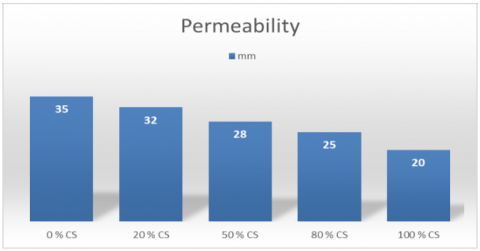
A series of samples with different levels of natural sand substitution with wash crushed sand were mixed with equal proportions, cement content, w/c ratio, and aggregates. The aggregates with different levels of substitution were evaluated for their permeability using standard curing for 28 days described in EN 12390-2. The resulting concrete cubes were oven-dried for 48 hours and water pressure of 500 kPa for 72 hours described in EN 12390-8. The depth of penetration of water into the samples can be seen in Figure 8 below, with higher depth representing higher permeability. Higher proportions of CS led to lower permeability in the concrete specimens. For instance, mixtures containing 50% and 100% CS showed significant reductions in permeability. Water permeability is one of the most important parameters governing concrete durability and long-term performance, as it reflects the ease with which water and aggressive agents, such as chlorides and sulfates, can penetrate the concrete matrix. To determine this property, cubes of concrete were prepared by the same mixing proportions, identical cement content, water-to-cement (w/c) ratio, and sources of aggregate, which can eliminate the effect of extraneous variables on the self-similarity of tests. After standard curing for 28 days according to the procedure described in EN 12390-2, the concrete cubes were oven-dried for 48 hours and subjected to a water pressure of 500 kPa applied for 72 hours according to the test method described by EN 12390-8. The depth of water penetration was then measured, with higher values indicating higher permeability. The results presented in Figure 8 revealed an obvious inverse relationship between the depth of water penetration and the content of CS. With increasing CS%, the permeability of concrete exhibited a consistent decrease. For penetration depth compared to the control mixture with 100% river sand. This observation can be related to a number of factors that are interrelated. First, due to its angular and rough texture, CS particles densify the particle packing, thus reducing internal voids and increasing the overall density of the matrix. Second, the irregular surface morphology of CS may improve mechanical interlocking and bond strength between the aggregate particles and the cement paste, which will limit the continuity of capillary pores. In addition, microvoids are further obstructed by the presence of fine particles in the crushed sand, hindering the movement of water and other aggressive substances that could pass through the capillaries. Due to these microstructural changes, the porosity of the cementitious matrix decreases with further refinement. Recent studies confirm these findings, showing that crushed sand offers not only improved compressive strength but also significantly enhanced impermeability and resistance to external attacks [23, 24]. Improving impermeability is crucial to enhancing the durability of concrete, especially in aggressive environmental conditions. According to the standard EN 12390-8 and other durability standards, such as EN 206, reduced permeability may indicate increased resistance to chloride ingress, carbonation, or freeze-thaw cycles. Therefore, crushed washed sand has proved not only feasible but also highly viable for producing dense, durable, and long-lasting concrete as a river sand substitute. Likewise, the optimum permeability results were obtained particularly with 50% and 80% replacement levels in which the micro-structural compactness was sufficiently maximized without affecting workability.
3.6 Dynamic elastic modulus
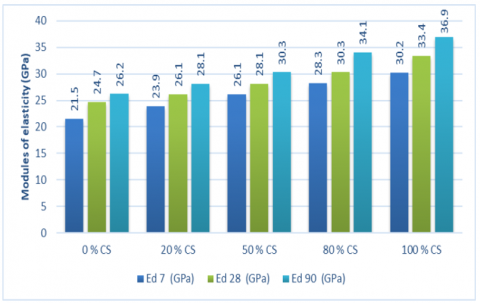
Figure 9 shows the variation of the dynamic elastic modulus in concrete mixtures containing various replacement levels of washed CS. Generally, there is an increase in modulus values with increasing the CS replacement level for all curing ages, namely 7, 28, and 90 days. Maximum values were recorded at 100% replacement of CS by 30.2 GPa, 33.4 GPa, and 36.9 GPa, respectively. It can be related directly to the intrinsic physical properties of the crushed sand itself, which involves an angular particle shape with a rough texture and improved packing density. In general, it has been found that angular grains provide an improved interlocking mechanism in cementitious matrices, contributing to increased stiffness and consequently resisting material deformation. The stiffer the aggregate, the higher the dynamic modulus of the concrete, due to the aggregate's higher capability to transfer the stress in the concrete matrix [17]. Besides, the rough texture of crushed sand improves the mechanical bond between the hydrated cement paste and aggregate, as developed by de Larrard and Belloc [25]. He stated that the improved adhesion at the paste–aggregate interfaces enhances elastic modulus and long-term mechanical properties. Also, superior gradation and cleanliness of the WCS in the current study offer the best particle packing, which reduces internal voids and microcracking potential, leading to a denser microstructure. Celik and Marar [26] highlighted that the most important parameters enhancing the compressive strength and dynamic stiffness of concrete are the improvement of the gradation and surface cleanliness of fine aggregates. Moreover, the continuous increase in the dynamic modulus in relation to the curing time can be related to ongoing hydration reactions, as well as the continuous generation of C–S–H gel that refines the microstructure and enhances load distribution. This trend is in line with Kou and Poon [27], where it was reported that when recycled materials have suitable morphological properties, they can exhibit better mechanical performance than natural sand, especially when proper treatment techniques are employed, such as washing and proper grading. The presence of crushed sand may impede early shrinkage and reduce the probability of microcracks because of its rigidity; besides, maintaining structural continuity will give a high modulus of elasticity. This has been agreed on by Zhao et al. [28], who reported that denser packing and particle angularity can reduce micro-deflection under dynamic loading.
Figure 8. Water penetration depth with different percentages of crushed sand
Figure 9. Dynamic elastic modulus with different percentage of crushed sand


Figure 10. Microstructure of concrete using scanning electron microscopy (SEM)
3.7 Microstructure
The microstructure of concrete plays a vital role in determining its mechanical performance and long-term durability. In this study, concrete samples prepared with varying replacement levels of natural sand by WCS (0%, 20%, 50%, 80%, and 100%) were analyzed using SEM and XRD after 28 days of curing under standard conditions as per EN 12390-2, as shown in Figure 10. The aim was to observe how changes in fine aggregate morphology and particle packing influence the internal structure of the concrete matrix. SEM imaging revealed significant differences in the ITZ and matrix homogeneity. Mixtures containing higher proportions of crushed sand (particularly 80% and 100%) exhibited denser packing and a more homogeneous distribution of the cementitious paste. The angular particles of the crushed sand provided better mechanical interlocking, which improved paste-aggregate bonding and reduced the formation of microcracks at the ITZ. The ITZ in 100% CS samples was observed to be 30–40% thinner than in control samples (0% CS), and showed fewer voids and calcium hydroxide (CH) deposits, leading to a more refined and mechanically stable microstructure [29, 30]. XRD analysis supported the SEM findings by indicating increased formation of calcium silicate hydrate (C-S-H) gel in concrete mixtures containing crushed sand. The higher C-S-H content is indicative of enhanced cement hydration efficiency, which contributes directly to strength and durability. Moreover, the content of less desirable hydration products such as ettringite and portlandite was comparatively lower in CS-rich mixtures, reducing the likelihood of internal expansion or delayed ettringite formation, which are common causes of deterioration in aggressive environments [31, 32]. These microstructural improvements explain the enhancements observed in compressive strength, reduced permeability, and overall durability. A denser matrix with improved particle interlock minimizes capillary porosity and enhances resistance to external agents like chlorides, while a stronger ITZ provides improved resistance to freeze-thaw cycles and cracking [33]. Replacing river sand with WCS optimizes internal concrete structure by improving particle packing, strengthening the bond at the ITZ, and promoting more efficient hydration. This results in a more robust and durable concrete matrix, confirming the technical and practical viability of crushed sand as a sustainable alternative fine aggregate.
The current research was an experimental study of the impact of substituting natural river sand with WCS, which was made out of crusher waste, on the physical, mechanical, durability, and microstructural characteristics of concrete. The main achievement of this research is the successful production of high-quality WCS from crusher waste, demonstrating its technical feasibility as a sustainable fine aggregate for concrete applications. Based on systematic experimental testing and analysis, the following conclusions can be drawn:
• WCS was used, which has led to a small and systematic elevation in the dry density of concrete. This is explained by the fact that the specific gravity is increased, as well as the better interlocking properties of the crushed sand particles, which increase the compactness of the mixture without any substantial effect on the increasing unit weight of normal concrete.
• The workability of concrete reduced as the content of CS was increased because of the angularity and roughness of the surface texture of the crushed sand particles. Nevertheless, the decrease in the slump was insignificant at 50% replacement, as it was within an acceptable range, which is an ideal compromise between workability and performance.
• Compressive strength improved consistently with increasing CS replacement levels. The highest strength values were recorded at 100% replacement, particularly at 28 and 90 days, indicating enhanced load-bearing capacity due to improved particle interlock and cement–aggregate bonding.
• The shrinkage of drying mixtures was minimized in concrete mixtures with increased amounts of CS. The reduced content of clay and fine impurities, as well as the angular shape of the particles, led to the enhanced dimensional stability over time.
• Water permeability decreased significantly with increasing CS content, reflecting a denser pore structure and reduced capillary connectivity. This improvement is particularly beneficial for concrete durability in aggressive environmental conditions.
• The static modulus of flexibility exhibited a moderate increase with higher CS replacement ratios. It refers to enhanced stiffness and structural integrity of the concrete matrix, which is advantageous for structural applications requiring higher rigidity.
Microstructural analysis using SEM supports the above findings by revealing a denser cement matrix, reduced ITZ thickness, and fewer microcracks in concrete mixtures containing high CS content, particularly at 100% replacement. These microstructural improvements explain the observed enhancements in mechanical strength and durability.
Adverb, the results demonstrate that replacing natural river sand with WCS, especially within the optimal range of 50–100%, leads to notable improvements in strength, durability, and microstructural performance. From an environmental and practical perspective, the utilization of washed crusher waste contributes to conserving natural sand resources, reducing environmental pollution from waste stockpiles, and supporting sustainable and circular construction practices. Therefore, WCS can be considered a viable, efficient, and environmentally sustainable alternative to natural fine aggregates in concrete production.
Generative AI tools were used solely for supportive purposes related to clarity. They were not used to produce or influence the scientific content of this manuscript.
The authors declare that they have no known competing financial interests or personal relationships that could have appeared to influence the work reported in this paper.
[1] Vural, N., Yılmaz, M., Onat, B., Tuğrul, A. (2025). Life cycle assessment of sandstone aggregate quarry activities—A case study in Istanbul, Türkiye. The International Journal of Life Cycle Assessment, 30(5): 862-879. https://doi.org/10.1007/s11367-025-02442-x
[2] Adanu, S.K., Boakye, M.K., Gbedemah, S.F., Nyatuame, M. (2025). Perceptions of environmental and health effects of quarry activities at Klefe in the Ho municipality of the volta region. GeoHealth, 9(3): e2024GH001168.
[3] Altheeb, A. (2022). Quarry dust waste-based cementitious composites–A comprehensive review. Construction and Building Materials, 350: 128817. https://doi.org/10.1016/j.conbuildmat.2022.128817
[4] Kaveh, A., Dadras Eslamlou, A. (2020). Optimization of building components with sustainability aspects in bim environment. In Metaheuristic Optimization Algorithms in Civil Engineering: New Applications, pp. 289-308. https://doi.org/10.1007/978-3-030-45473-9_13
[5] Mottaghi, L., Izadifard, R.A., Kaveh, A. (2021). Factors in the relationship between optimal CO2 emission and optimal cost of the RC frames. Periodica Polytechnica Civil Engineering, 65(1): 1-14. https://doi.org/10.3311/PPci.16790
[6] Konitufe, C., Abubakar, A., Baba, A.S. (2023). Influence of aggregate size and shape on the compressive strength of concrete. Construction, 3(1): 15-22. https://doi.org/10.15282/construction.v3i1.9075
[7] Kosmatka, S.H., Panarese, W.C., Kerkhoff, B. (2002). Design and Control of Concrete Mixtures. Skokie, IL: Portland cement association.
[8] Ilangovana, R., Mahendrana, N., Nagamanib, K. (2008). Strength and durability properties of concrete containing quarry rock dust as fine aggregate. ARPN Journal of Engineering and Applied Sciences, 3(5): 20-26.
[9] Neville, A.M. (2011). Properties of Concrete, Pearson Education Limited. Edinburgh Gate, Harlow England, pp. 58-661.
[10] Navas, F.O., Navarro-Gregori, J., Herdocia, G.L., Serna, P., Cuenca, E. (2018). An experimental study on the shear behaviour of reinforced concrete beams with macro-synthetic fibres. Construction and Building Materials, 169: 888-899. https://doi.org/10.1016/j.conbuildmat.2018.02.023
[11] Long, G., Yang, J., Xie, Y. (2017). The mechanical characteristics of steam-cured high strength concrete incorporating with lightweight aggregate. Construction and Building Materials, 136: 456-464. https://doi.org/10.1016/j.conbuildmat.2016.12.171
[12] Ekincioglu, O., Ozkul, M.H., Struble, L.J., Patachia, S. (2012). Optimization of material characteristics of macro-defect free cement. Cement and Concrete Composites, 34(4): 556-565. https://doi.org/10.1016/j.cemconcomp.2011.11.003
[13] Islam, M.N., Siddika, A., Hossain, M.B., Rahman, A., Asad, M.A. (2011). Effect of particle size on the shear strength behaviour of sands. Australian Geomechanics, 46(3): 75-86.
[14] Guo, L., Ma, F., Zhao, B. (2024). Study on the durability of manufactured sand concrete with the change of mix proportion parameters. In Advances in Frontier Research on Engineering Structures II, pp. 105-114. https://doi.org/10.1007/978-981-97-6238-5_9
[15] Jaradat, O., Shakarna, M., Gadri, K., Suleiman, H., Khattab, M., Sirhan, A., Guettala, A. (2024). Sustainable valorisation of sand concrete properties using quarry waste as crushed sand. Asian Journal of Civil Engineering, 25(7): 5533-5546. https://doi.org/10.1007/s42107-024-01127-4
[16] Jaradat, O., Gadrı, K., Guettala, A. (2021). Study the mechanical and physical properties of sand concrete using crushed limestone sand. Journal of Materials and Electronic Devices, 3(1): 26-29.
[17] Gadri, K., Guettala, A. (2017). Evaluation of bond strength between sand concrete as new repair material and ordinary concrete substrate (The surface roughness effect). Construction and Building Materials, 157: 1133-1144. https://doi.org/10.1016/j.conbuildmat.2017.09.183
[18] Xu, Q., Li, J., Jiang, N., Yuan, X., et al. (2024). A Study on the Design of Knee Exoskeleton Rehabilitation Based on the RFPBS Model. Biomimetics, 9(7): 410. https://doi.org/10.3390/biomimetics9070410
[19] Lim, S., Chang, M., Lee, W. (2025). A comprehensive review of electrochemical exfoliation of graphite for tunable graphene architecture: Mechanistic insights, design principles, functional derivatives, and emerging applications. Carbon, 246: 120888. https://doi.org/10.1016/j.carbon.2025.120888
[20] Qin, X., Zhang, C., Wang, P., Pingcuo, Z., et al. (2025). Effects of tuff powder on the macro-performance and microstructure of self-compacting concrete under freeze–thaw cycles. International Journal of Concrete Structures and Materials, 19(1): 106. https://doi.org/10.1186/s40069-025-00846-5
[21] Khattab, M., Jaradat, O., Hachemi, S., Suleiman, H., Benzetta, H., Shakarna, M. (2024). An experimental study on the use of waste marble as replacement of aggregates and cement in construction material. Innovative Infrastructure Solutions, 9(7): 269. https://doi.org/10.1007/s41062-024-01580-9
[22] Acharya, R. (2015). Enhanced shrinkage characterization of clayey soils. Civil Engineering Dissertations, 295. https://mavmatrix.uta.edu/civilengineering_dissertations/295.
[23] Elat, E., Pliya, P., Pierre, A., Mbessa, M., Noumowé, A. (2020). Microstructure and mechanical behavior of concrete based on crushed sand combined with alluvial sand. CivilEng, 1(3): 181-197. https://doi.org/10.3390/civileng1030011
[24] Silva, L.S., Amario, M., Stolz, C.M., Figueiredo, K.V., Haddad, A.N. (2023). A comprehensive review of stone dust in concrete: Mechanical behavior, durability, and environmental performance. Buildings, 13(7): 1856. http://doi.org/10.31031/amms.2018.01.000509
[25] de Larrard, F., Belloc, A. (1997). The influence of aggregate on the compressive strength of normal and high-strength concrete. Materials Journal, 94(5) 417-426. http://doi.org/10.14359/326
[26] Celik, T., Marar, K. (1996). Effects of crushed stone dust on some properties of concrete. Cement and Concrete research, 26(7): 1121-1130. https://doi.org/10.1016/0008-8846(96)00078-6
[27] Kou, S.C., Poon, C.S. (2009). Properties of self-compacting concrete prepared with coarse and fine recycled concrete aggregates. Cement and Concrete composites, 31(9): 622-627. https://doi.org/10.1016/j.cemconcomp.2009.06.005
[28] Zhao, Z., Remond, S., Damidot, D., Xu, W. (2015). Influence of fine recycled concrete aggregates on the properties of mortars. Construction and Building Materials, 81: 179-186. https://doi.org/10.1016/j.conbuildmat.2015.02.037
[29] Muendecke, E., Mechtcherine, V. (2020). Tensile behaviour of strain-hardening cement-based composites (SHCC) with steel reinforcing bars. Cement and Concrete Composites, 105: 103423. https://doi.org/10.1016/j.cemconcomp.2019.103423
[30] Xiao, J., Lv, Z., Duan, Z., Zhang, C. (2023). Pore structure characteristics, modulation and its effect on concrete properties: A review. Construction and Building Materials, 397, 132430. https://doi.org/10.1016/j.conbuildmat.2023.132430
[31] Abdul-Rahman, M., Al-Attar, A.A., Hamada, H.M., Tayeh, B. (2020). Microstructure and structural analysis of polypropylene fibre reinforced reactive powder concrete beams exposed to elevated temperature. Journal of Building Engineering, 29: 101167. https://doi.org/10.1016/j.jobe.2019.101167
[32] Jaradat, O.Z., Gadri, K., Tayeh, B.A., Guettalaa, A. (2021). Influence of sisal fibres and rubber latex on the engineering properties of sand concrete. Structural Engineering and Mechanics, An Int'l Journal, 80(1): 47-62. https://doi.org/10.12989/sem.2021.80.1.047
[33] Tayeh, B.A., Abu Bakar, B.H., Megat Johari, M.A., Zeyad, A.M. (2014). Microstructural analysis of the adhesion mechanism between old concrete substrate and UHPFC. Journal of Adhesion Science and Technology, 28(18): 1846-1864. https://doi.org/10.1080/01694243.2014.925386