Anilton Yoel Izquierdo-Santa-Cruz | Greysi Alitun Saavedra-Lozada | Franklin Cordova-Buiza* | Jaime Zarate-Aguilar
© 2026 The authors. This article is published by IIETA and is licensed under the CC BY 4.0 license (http://creativecommons.org/licenses/by/4.0/).
OPEN ACCESS
Sustainability has become a central concern for agroindustrial companies facing increasing competitive pressure and growing environmental and social demands, particularly in emerging economies where productive activities are closely linked to territorial development. The objective of this study is to analyse the relationship between employees’ perceptions of market-oriented economic sustainability and perceived competitiveness in agroindustrial companies located in northern Peru. A quantitative and correlational methodology was adopted through a non-experimental and cross-sectional design, using survey data collected from 120 employees with a minimum tenure of six months, whose responses reflect individual perceptions of organisational practices rather than objective firm-level performance indicators. The results indicate a positive, high, and statistically significant relationship between perceived market-oriented economic sustainability and perceived competitiveness. More specifically, the dimensions related to responsible pricing, sustainable product quality, and sustainable value-added show significant correlations with perceived competitiveness. These findings are limited to the economic and market scope covered by the instrument and should be understood as statistical associations rather than causal effects. In conclusion, perceived market-oriented economic sustainability is associated with perceived competitiveness among employees of agroindustrial companies in northern Peru.
sustainability, competitiveness, agribusiness, value added, territorial development
Sustainability has become a strategic factor in business competitiveness, particularly when it is oriented towards the efficient use of resources and by-products through ecological processes that foster innovation, reduce environmental impacts and strengthen market positioning [1].
In this context, contemporary approaches such as the triple bottom line, which integrates economic, social and environmental dimensions, and the resource-based view (RBV) suggest that sustainable practices constitute valuable capabilities that are difficult to imitate and essential for sustaining long-term competitive advantages [2]. Similarly, operational and social practices oriented towards sustainability contribute to organisational performance and to the strengthening of competitiveness, implying more efficient administrative management [2, 3].
From this perspective, eco-efficiency promotes the rational use of resources and the adoption of clean technologies that foster innovation and reduce environmental impacts, particularly in agroindustrial processes [4]. In Peru, this approach has become increasingly important in the agroindustrial sector due to the need to meet sustainability standards in order to strengthen international competitiveness and enhance export performance [5, 6]. Likewise, studies in agricultural organisations under fair trade schemes indicate that responsible practices are pillars of economic and social sustainability, in line with sustainable development agendas and international market requirements [7].
Despite these advances, food waste remains a significant challenge in Peru, requiring collaborative prevention efforts across production and consumption systems [8]. Evidence from agro-food processing enterprises further suggests that zero-waste practices and the productive use of by-products can improve resource utilisation and support cost control and value creation [9]. In the country's agroindustrial regions, various environmental strategies have been incorporated to improve competitiveness and mitigate ecological impacts [10]. However, limitations persist in access to the technologies, infrastructure and technical resources required to consolidate these initiatives [11]. This situation places the country in a vulnerable position with regard to international standards and increases the need to integrate more modern approaches to sustainable management.
International literature has often addressed sustainability from isolated dimensions, such as environmental performance, social responsibility, or economic outcomes. This limits a comprehensive understanding of its relationship with competitiveness, especially in the agroindustrial sector. This limitation is particularly evident in Peru, where few empirical studies have directly examined this relationship in northern agroindustrial companies. This theoretical and empirical gap highlights the need for research that more clearly defines the specific dimension of sustainability under analysis and examines its relationship with competitiveness within a well-delimited conceptual framework.
From a methodological perspective, it is appropriate to apply a quantitative approach that allows sustainability and competitiveness to be operationalised in observable and comparable dimensions, facilitating empirical analysis of their relationship using validated instruments and appropriate statistical techniques. This study is particularly relevant as it is being conducted in an agroindustrial sector subject to increasing sustainability demands from national and international markets, where compliance with environmental and social standards has become a requirement for accessing certifications, attracting investment and sustaining participation in global value chains. Likewise, the research contributes to the field of sustainable development planning by generating empirical evidence useful for the design of business and territorial strategies aimed at environmental conservation, the generation of decent employment, and the strengthening of community well-being in productive contexts of emerging economies.
Accordingly, the overall objective is to determine the relationship between employees’ perceptions of market-oriented economic sustainability and perceived competitiveness in agroindustrial companies located in northern Peru. The specific objectives are: (1) to determine the relationship between perceived product price and perceived competitiveness; (2) to determine the relationship between perceived sustainable product quality and perceived competitiveness; and (3) to determine the relationship between perceived sustainable value added and perceived competitiveness.
Finally, the general hypothesis is that perceived market-oriented economic sustainability is significantly related to perceived competitiveness in agroindustrial companies located in northern Peru. The specific hypotheses are as follows: (1) perceived product price is significantly related to perceived competitiveness; (2) perceived sustainable product quality is significantly related to perceived competitiveness; and (3) perceived sustainable value added is significantly related to perceived competitiveness.
Corporate sustainability is understood as the ability to balance economic performance, environmental protection and social well-being through practices that reduce negative impacts and promote responsible development [12]. This approach is reinforced through the adoption of technologies that enhance environmental performance and enable more efficient resource management [13]. At the same time, competitiveness is understood as a company's ability to maintain a favourable position in dynamic markets, supported by productivity, quality, innovation and organisational efficiency [14]. These perspectives underline the need to examine both constructs jointly, particularly in agribusiness, where sustainability requirements are becoming increasingly stringent [15].
From a broader theoretical perspective, sustainability and competitiveness are linked through several approaches. Resource and capability theory argue that the efficient use of knowledge, human capital and technology can generate long-term sustainable advantages [15]. Porter’s [16] strategic analysis further suggests that both cost leadership and differentiation can be strengthened when environmental and social criteria are integrated into the business model. The disruptive innovation perspective also indicates that sustainable technological solutions can transform markets and reshape competitive dynamics [17]. These theoretical foundations are complemented by recent studies showing that sustainability-oriented innovation and production practices contribute to both business sustainability and competitiveness by improving operational efficiency and long-term value creation in agricultural and agroindustrial contexts [18].
Regarding environmental management as a component of competitiveness, evidence from African contexts suggests that environmental practices strengthen business sustainability and improve operational performance in emerging markets [19]. In addition, analyses of logistics performance indicate that efficiency in sustainable operations has a positive effect on competitiveness, particularly when transport and supply chain logistics integrate ecological criteria [20]. However, economic and regulatory constraints may limit the capacity to implement sustainable practices at scale, thereby directly affecting competitive performance [21]. Overall, these findings suggest that sustainability can function both as a driver and as a constraint, depending on the financial and regulatory context.
International evidence from extractive and agroindustrial sectors indicates that sustainability can enhance competitiveness through practices that facilitate market access and integration into global value chains [22]. In other countries in the region, foreign trade has been found to act as a channel that amplifies the benefits of sustainable practices when they are linked to cooperation and development policies [23]. In small businesses, technology adoption and eco-efficiency can increase productivity, underscoring the strategic role of sustainability in competitive environments [24]. Similarly, studies of industrial SMEs suggest that sustainability related factors influence customer loyalty and productivity through organisational improvements [25].
In Peru, sustainable water management and environmental certifications have proven decisive for accessing international markets within agro-export chains, indicating a direct link between water sustainability and competitiveness [26]. Evidence also points to sustainable productive diversification, which strengthens agribusiness through strategies that support economic and social stability in the sector [27]. From a European perspective, recent studies highlight the role of digital tools, such as electronic signatures, in optimising processes and supporting the operational sustainability of small businesses [28]. In addition, research on energy efficiency in extractive industries shows that programmes aimed at reducing energy consumption can improve competitiveness by lowering operating costs [29].
Analyses of sustainable practices in small- and medium-sized enterprises show that organisational legitimacy is strengthened when firms adopt responsible mechanisms aligned with the social and environmental context [30]. A similar pattern is observed in urban communities, where sustainable performance is shaped by local interactions that influence business activity [31]. In fishing contexts, variables such as productivity and competitiveness have been linked to efficient resource management practices, reinforcing the importance of adopting a sustainable approach [32]. At the environmental management level, control and certification systems have been shown to positively influence the performance of certified companies by generating value and efficiency [33].
In addition, evidence shows that the adoption of information technologies and internal strategic guidelines can improve competitive performance through greater organisational responsiveness [34]. Finally, studies on circular models highlight how such practices contribute to cost reduction and process optimisation, thereby integrating economic and environmental sustainability [35].
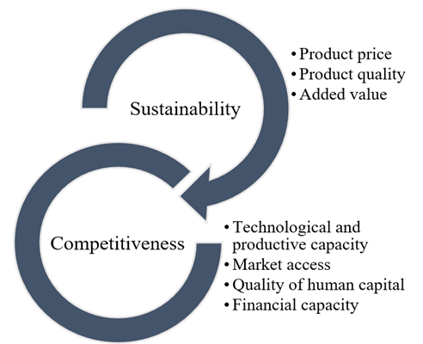
Based on the reviewed evidence, an important gap in the scientific literature can be identified. While many studies analyse sustainability through broad frameworks that integrate environmental, social and economic dimensions, fewer investigations examine how market-oriented economic sustainability is expressed through specific commercial attributes within agroindustrial chains in emerging economies. In this study, sustainability is not conceptualised as an integral sustainability construct, but rather as perceived market-oriented economic sustainability, reflected through product price, sustainable product quality and sustainable value added. This delimitation enables a more precise examination of its relationship with perceived competitiveness and reduces conceptual overlap with broader organisational performance constructs. Figure 1 presents the theoretical model proposed in this study, illustrating the relationship between market-oriented economic sustainability and perceived competitiveness, together with their respective dimensions.
Figure 1. Theoretical model of sustainability and competitiveness
This study adopted an applied research approach with a quantitative and correlational scope, using a non-experimental and cross-sectional design, with the aim of generating empirical evidence to understand the relationship between sustainability and competitiveness in agroindustrial companies. This methodological approach allowed both variables to be analysed within their real operating context, without deliberate manipulation and at a single point in time, which is appropriate for studies focused on strategic planning and business performance diagnosis. In addition, the adopted design facilitates the identification of relevant associative patterns that can serve as a basis for formulating business and territorial policies oriented towards the sustainable development of the agroindustrial sector.
The study population consisted of employees working in formally established agroindustrial companies in northern Peru. Due to institutional access constraints and participant availability, non-probability convenience sampling was employed, which facilitated access to respondents who met the inclusion criteria. The final sample consisted of 120 workers, which was considered adequate for correlational studies, as it exceeded the minimum recommended to detect associations of moderate magnitude and complied with the guideline of at least ten participants per questionnaire item. Therefore, the findings should be interpreted only within the analysed group and not as a statistical representation of all agroindustrial companies in Peru. The unit of analysis was the individual employee surveyed, as the study focused on workers’ perceptions of organisational practices and capabilities rather than on objective indicators of organisational performance. The inclusion criterion required a minimum of six months of service with the company; temporary staff or those with shorter tenure were excluded to ensure that responses were based on sufficient organisational experience.
Data were collected using a structured questionnaire with a five-point Likert scale, consisting of 14 items. The sustainability variable was measured using six items distributed across three dimensions: product price, product quality, and added value, with two items assigned to each dimension. The complete list of questionnaire items used to measure the study variables and their corresponding dimensions is provided in Appendix A.
Although sustainability is commonly conceptualised as a multidimensional construct encompassing economic, social, and environmental dimensions, this study deliberately focuses on the economic dimension of sustainability. In the context of agroindustrial companies in emerging economies, economic sustainability is closely linked to the firm’s capacity to generate sustained market value over time. Accordingly, sustainability is operationalised through product price, product quality, and added value, as these dimensions reflect long-term value creation, efficiency, and market viability, which are critical conditions for sustainable development in agroindustrial sectors.
The competitiveness variable was measured using eight items organised into the dimensions of technological and productive capacity, market access, human capital quality, and financial capacity, with two items per dimension. The number of items was established by seeking a balance between conceptual precision and operational feasibility of the instrument, avoiding unnecessary extensions that could affect the response rate and applicability in business contexts.
Content validity was obtained through the judgement of three experts in business management and research methodology, who evaluated the relevance, clarity, and consistency of the items with respect to the theoretical constructs and the objectives set. After incorporating their observations, a pilot test was applied to a small group of workers with characteristics similar to the final sample, which allowed for verification of the comprehension of the items and adjustment of the wording of some statements. Given the sample size and the applied nature of the study, exploratory factor analysis and confirmatory factor analysis were not conducted. Therefore, the validity of the instrument should be understood as an approximation supported by theoretical review, expert judgement, pilot testing and internal consistency rather than as a fully validated factorial structure.
The reliability of the instrument was assessed using Cronbach's alpha coefficient. SPSS v.27 statistical software was used for data processing and analysis. Descriptive statistics (frequencies, measures of central tendency and dispersion) were first applied to characterise the levels of sustainability and competitiveness, followed by the Kolmogorov–Smirnov normality test.
Because both variables were measured through the same self-report questionnaire, administered to the same respondents and at a single point in time, the possibility of common method bias is acknowledged. Furthermore, some indicators of market-oriented economic sustainability are conceptually close to competitiveness attributes, which may partially increase the observed associations. Consequently, the results should be interpreted as statistical associations rather than evidence of causal relationships.
For descriptive purposes, sustainability and competitiveness scores were classified into low, medium, and high levels using theoretical score intervals derived from the minimum and maximum possible scores of each scale. The classification was established by dividing the theoretical range of each variable into three equal intervals representing low, medium, and high levels, respectively.
Given that the variables were measured on an ordinal scale, Spearman's Rho test was applied to determine the degree and direction of the association between market-oriented economic sustainability and perceived competitiveness, as well as between their respective dimensions, in accordance with the general and specific objectives of the study. Owing to the correlational nature of the research and the cross-sectional design adopted, no regression models were estimated. Therefore, the analysis was exclusively oriented towards identifying statistical associations and not towards estimating predictive effects, relative contributions among dimensions, or causal relationships.
The fieldwork began with obtaining authorisations from the participating companies and developing a digital form suitable for online application. Once the instrument was approved and compliance with the ethical principles of confidentiality and voluntariness was verified, the questionnaire was implemented using Google Forms. The survey was distributed through the WhatsApp application, the usual communication channel in organisations. Participants had approximately fifteen minutes to complete the questionnaire in a quiet and private setting. The form included clear instructions, an explanation of the study's objectives, and details on the use of the data, reinforcing its anonymous and confidential nature.
In terms of ethics, the principles of autonomy, confidentiality, fairness, and scientific integrity were respected. Participants gave their informed consent before completing the questionnaire and were informed that they could withdraw at any time without consequence. The information collected was handled anonymously, used exclusively for academic purposes, and stored in protected files. Likewise, the intellectual property of the sources was respected through the proper use of the seventh edition of the APA style, and efforts were made to ensure that the results contribute to strengthening sustainable practices in the agroindustrial sector.
This section presents the empirical results obtained from the analysis of the data collected in the study. The results are organised in accordance with the study variables and their respective dimensions, following the structure established in the methodological section.
Table 1 presents the descriptive statistics for the composite scores of market-oriented economic sustainability and perceived competitiveness, as well as for their respective dimensions. The mean values indicate generally favourable perceptions among respondents regarding both constructs, while the standard deviations suggest sufficient variability for correlational analysis. Likewise, the dimensions of product price, product quality, added value, technological and productive capacity, market access, quality of human capital, and financial capacity show consistent distributions, allowing an adequate characterisation of the constructs examined in the study. As these measures are based on employees’ perceptions, they should be interpreted as subjective evaluations rather than objective indicators of organisational performance.
Table 1. Distribution of sustainability and competitiveness dimensions
|
Variable / Dimension |
N |
Minimum |
Maximum |
Mean |
Standard Deviation |
|
Sustainability |
120 |
6.00 |
30.00 |
22.03 |
5.46 |
|
Product price |
120 |
2.00 |
10.00 |
7.15 |
2.05 |
|
Product quality |
120 |
2.00 |
10.00 |
7.38 |
2.15 |
|
Added value |
120 |
2.00 |
10.00 |
7.50 |
2.12 |
|
Competitiveness |
120 |
8.00 |
40.00 |
30.66 |
7.59 |
|
Technological and productive capacity |
120 |
2.00 |
10.00 |
7.50 |
2.03 |
|
Market access |
120 |
2.00 |
10.00 |
7.59 |
2.07 |
|
Quality of human capital |
120 |
2.00 |
10.00 |
7.61 |
2.13 |
|
Financial capacity |
120 |
2.00 |
10.00 |
7.35 |
2.11 |
Table 2 presents the reliability indices of the measurement instrument. Cronbach’s alpha coefficients exceeded the commonly accepted threshold of 0.70 across all dimensions, confirming adequate internal consistency. Both sustainability and competitiveness, in their overall measures, exhibited high levels of reliability, supporting the suitability of the scores for subsequent descriptive and inferential analyses.
Table 3 indicates that 35.0% of participants perceive a high level of sustainability, 33.3% a medium level, and 31.7% a low level. This distribution reflects a heterogeneous sector in which companies with stronger market-oriented economic sustainability perceptions coexist with others that need to strengthen their pricing strategies, product quality, and value-added capabilities.
Table 4 presents the distribution of competitiveness levels. Thirty-five per cent of respondents place their companies at a medium level of competitiveness, followed by 34.2 per cent at a high level and 30.8 per cent at a low level. These data indicate that, although a group of companies holds a solid position, the overall competitiveness of the sector remains at a moderate level, reflecting the need to strengthen strategies related to innovation, productive efficiency and market differentiation.
Table 2. Reliability of the instrument by dimension
|
Variable / Dimension |
Cronbach's α |
|
Sustainability (global) |
0.922 |
|
Product price |
0.721 |
|
Product quality |
0.793 |
|
Added value |
0.810 |
|
Competitiveness (global) |
0.931 |
|
Technological and productive capacity |
0.791 |
|
Market access |
0.753 |
|
Quality of human capital |
0.862 |
|
Financial capacity |
0.860 |
Table 3. Distribution of sustainability
|
|
Frequency |
Percentage |
Valid Percentage |
Cumulative Percentage |
|
|
Valid |
Low |
38 |
31.7 |
31.7 |
31.7 |
|
Medium |
40 |
33.3 |
33.3 |
65.0 |
|
|
High |
42 |
35.0 |
35.0 |
100.0 |
|
|
Total |
120 |
100.0 |
100.0 |
|
|
Table 4. Levels of competitiveness in the study sample
|
|
Frequency |
Percentage |
Valid Percentage |
Cumulative Percentage |
|
|
Valid |
Low |
37 |
30.8 |
30.8 |
30.8 |
|
Medium |
42 |
35.0 |
35.0 |
65.8 |
|
|
High |
41 |
34.2 |
34.2 |
100.0 |
|
|
Total |
120 |
100.0 |
100.0 |
|
|
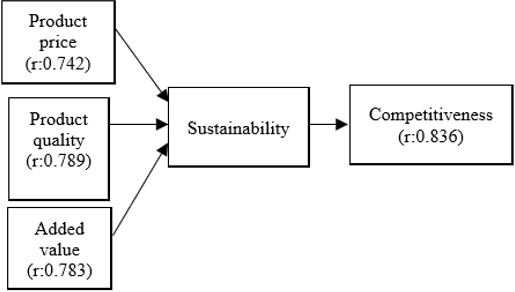
Regarding inferential analysis, Table 5 reveals a positive, high and statistically significant correlation between perceived market-oriented economic sustainability and perceived competitiveness (ρ = 0.836; p < 0.01). This result supports the general hypothesis and indicates that both variables maintain a consistent statistical association within the analysed sample. This finding confirms that higher levels of perceived market-oriented economic sustainability are associated with higher levels of perceived competitiveness, suggesting that sustainable practices not only fulfil regulatory or reputational functions, but also generate tangible benefits for organisational performance.
Table 6 shows the correlation between product price and competitiveness (r = 0.742; p < 0.01), highlighting the influence of pricing strategies backed by operational efficiency. Table 7 reveals a high correlation between product quality and competitiveness (r = 0.789; p < 0.01), highlighting the central role of quality in customer differentiation and loyalty. Finally, Table 8 indicates that added value also maintains a high and significant correlation with competitiveness (r = 0.783; p < 0.01), confirming the importance of innovations, certifications, and differentiating attributes in consolidating competitive advantages.
Figure 2 summarises the inferential results, showing the overall and specific correlations between the dimensions of sustainability and competitiveness. This representation facilitates a comprehensive interpretation of the model, demonstrating that sustainability, through its three measured dimensions, is strongly associated with business competitiveness in the agroindustrial sector.
Table 5. Relationship between sustainability and competitiveness
|
|
Sustainability |
Competitiveness |
||
|
Spearman's rho |
Sustainability |
Correlation coefficient Sig. (two-tailed) N |
1.000 |
0.836** |
|
. |
0.000 |
|||
|
120 |
120 |
|||
|
Competitiveness |
Correlation coefficient Sig. (two-tailed) N |
0.836** |
1.000 |
|
|
0.000 |
. |
|||
|
120 |
120 |
|||
|
**. The correlation is significant at the 0.01 level (bilateral). |
||||
Table 6. Relationship between product price and competitiveness
|
|
Product Price |
Competitiveness |
||
|
Spearman's rho |
Product price |
Correlation coefficient Sig. (two-tailed) N |
1.000 |
0.742** |
|
. |
0.000 |
|||
|
120 |
120 |
|||
|
Competitiveness |
Correlation coefficient Sig. (two-tailed) N |
0.742** |
1.000 |
|
|
0.000 |
. |
|||
|
120 |
120 |
|||
|
**. The correlation is significant at the 0.01 level (bilateral). |
||||
Table 7. Relationship between product quality and competitiveness
|
|
Product Quality |
Competitiveness |
||
|
Spearman's rho |
Product quality |
Correlation coefficient Sig. (two-tailed) N |
1.000 |
0.789** |
|
. |
0.000 |
|||
|
120 |
120 |
|||
|
Competitiveness |
Correlation coefficient Sig. (two-tailed) N |
0.789** |
1.000 |
|
|
0.000 |
. |
|||
|
120 |
120 |
|||
|
**. The correlation is significant at the 0.01 level (bilateral). |
||||
Table 8. Relationship between value added and competitiveness
|
|
Value Added |
Competitiveness |
||
|
Spearman's rho |
Value added |
Correlation coefficient Sig. (two-tailed) N |
1.000 |
0.783** |
|
. |
0.000 |
|||
|
120 |
120 |
|||
|
Competitiveness |
Correlation coefficient Sig. (two-tailed) N |
0.783** |
1.000 |
|
|
0.000 |
. |
|||
|
120 |
120 |
|||
|
**. The correlation is significant at the 0.01 level (bilateral). |
||||
Figure 2. Summary of correlations
The results of the study indicate that market-oriented economic sustainability has a positive and strong association with perceived competitiveness. This finding supports the general hypothesis and is consistent with previous research showing that sustainability-related business practices may strengthen organisational performance, market positioning and competitive capacity [12, 13, 19, 30]. However, in the present study, this relationship should be interpreted within the specific economic and market-oriented scope of the instrument, which measured product price, product quality and value added rather than environmental, social or environmental, social and governance (ESG) performance. In this sense, the findings suggest that employees tend to perceive higher competitiveness when agroindustrial companies offer products associated with adequate pricing, quality attributes and differentiated value propositions. This interpretation is also consistent with studies that emphasise the role of productive efficiency, market access and organisational capabilities in strengthening competitiveness in emerging and agroindustrial contexts [24, 26, 33].
With regard to specific objective 1, the significant correlation between product price and perceived competitiveness suggests that pricing is an important component of employees’ evaluations of competitive capacity. This result is coherent with studies indicating that efficiency, cost management and market-oriented strategies can influence competitiveness by improving the value perceived by customers and strengthening the firm’s position in dynamic markets [20, 24, 27]. Nevertheless, this finding should not be interpreted as evidence that environmental efficiency or resource management directly improves competitiveness, since those dimensions were not measured in this study. Rather, the result indicates that, within the analysed sample, employees associate perceived product price with higher levels of perceived competitiveness.
With regard to specific objective 2, the findings indicate that perceived product quality is strongly associated with perceived competitiveness. This result is consistent with previous studies showing that quality contributes to market differentiation, customer satisfaction, and stronger competitive positioning [31, 32]. Likewise, research conducted in different productive sectors suggests that organisations perceived as delivering higher quality products tend to achieve greater levels of customer trust and market recognition [33, 34]. Within the context of this study, the results suggest that employees associate higher levels of product quality with stronger perceptions of organisational competitiveness.
With regard to specific objective 3, the results indicate that value added maintains a high and statistically significant relationship with perceived competitiveness. This finding is consistent with previous research suggesting that differentiated products, innovation, and unique value propositions contribute to stronger market positioning and competitive performance [36, 37]. Within the analysed sample, employees appear to associate value-added attributes with greater customer appeal, enhanced differentiation, and improved competitiveness. These findings reinforce the strategic importance of value creation as a mechanism for strengthening competitive positioning in agroindustrial markets.
From a stakeholder theory perspective, the findings indicate that sustainability acts as a mechanism of legitimacy vis-à-vis customers, employees, communities, external auditors and international buyers. This is consistent with research indicating that companies which respond consistently to stakeholder expectations develop greater resilience, consolidate stable business relationships and strengthen their socio-environmental reputation [38, 39]. This study supports this perspective by indicating that organisations perceived as more competitive are also perceived as delivering stronger value propositions through product quality, pricing strategies, and value-added attributes.
From a resource and capability theory perspective, the results allow the dimensions of price, quality and added value to be interpreted as tangible manifestations of internal capabilities that are difficult to imitate. This interpretation is consistent with research conducted in Asia, Europe and Latin America, which indicates that innovation capabilities, organisational learning, product differentiation and specialised human capital contribute to the development of sustainable competitive advantages [15, 40].
From a dynamic capabilities perspective, the results suggest that the most competitive agribusinesses are those that adjust processes, redesign products and reconfigure their production systems as global standards evolve. This is consistent with studies indicating that sustainable competitiveness depends on firms’ ability to sense opportunities, reconfigure resources, and adapt organisational capabilities in response to evolving regulatory, technological, and market demands [41, 42]. Recent research indicates that digital transformation, the strengthening of internal control systems and the adoption of environmental technologies are factors that enhance this adaptive capacity [43, 44].
As both constructs were measured using perceptual data collected from the same respondents at a single point in time, the possibility of conceptual proximity cannot be entirely ruled out. From an economic perspective, as defined in the operationalisation of the construct, the findings reflect the role of market-oriented factors such as product price, product quality, and added value in supporting the economic viability and long-term competitiveness of agroindustrial companies. Although environmental and social sustainability practices, including ESG standards and resource efficiency, are relevant for sustainable development, these dimensions were not directly measured in the present study and therefore should be interpreted with caution.
The strong association observed between market-oriented economic sustainability and perceived competitiveness should be interpreted with caution. Both constructs were measured through perceptual data collected from the same respondents at a single point in time; therefore, the possibility of conceptual proximity between some indicators cannot be entirely ruled out. From the perspective adopted in this study, the findings reflect the role of market-oriented factors such as product price, sustainable product quality, and sustainable value added in supporting the perceived economic viability and competitiveness of agroindustrial companies. Environmental and social dimensions of sustainability were not directly measured and, consequently, should not be inferred from the results.
Finally, the results have important territorial implications. Studies conducted in Ecuador, Mexico and Andean countries indicate that productive sustainability improves water use efficiency, reduces environmental impacts and strengthens territorial resilience to climate pressures [45]. Taken together, the results suggest that regional governments can incorporate business sustainability criteria into economic development plans by promoting technical assistance, certification, specialised financing and clean technologies. These strategies would consolidate responsible production models and strengthen territorial competitiveness, aligning business capabilities with the Sustainable Development Goals.
With regard to the overall objective of the study, which sought to determine the relationship between sustainability and competitiveness in Peruvian agroindustrial companies, it is concluded that sustainability has a positive, strong and statistically significant relationship with business competitiveness. This result empirically confirms that employees’ perceptions of market-oriented economic sustainability are positively associated with perceived competitiveness within the analysed agroindustrial companies. Sustainability is therefore integrated into the core of competitive performance. Likewise, the findings support the postulates of stakeholder theory, the RBV and the dynamic capabilities approach, by indicating that sustainability can be understood as a key organisational capability for strengthening competitiveness in agroindustrial contexts within emerging economies.
Furthermore, the findings indicate that incorporating sustainability criteria into operational and commercial management generates tangible benefits in terms of companies’ competitive positioning. Pricing strategies, product quality, and value-added attributes linked to innovation and differentiation strengthen the value proposition directed at national and international markets. This may strengthen corporate reputation, expand opportunities for access to specialised markets and contribute to the consolidation of sustained competitive advantages in contexts where sustainability has become an increasingly important requirement for permanence and growth.
Among the main limitations of this study are the use of non-probability convenience sampling and the focus on a specific agroindustrial context, which restrict the generalisability of the findings to other regions, production chains, and organisational settings. Furthermore, the data were collected through self-report questionnaires administered to employees, meaning that the results reflect individual perceptions rather than objective measures of organisational performance. As both variables were measured at a single point in time using the same instrument, the possibility of common method bias cannot be completely ruled out. Although several methodological and ethical procedures were implemented to minimise these limitations, including expert validation, pilot testing, confidentiality safeguards, and voluntary participation, the findings should be interpreted as evidence of statistical associations within the analysed sample.
Finally, future research is encouraged to develop comparative studies across regions and types of agroindustrial chains in order to identify different patterns in the relationship between sustainability and competitiveness. It would also be relevant to incorporate longitudinal designs that allow for the analysis of the evolution of sustainable practices over time and to apply advanced analytical techniques, such as structural equation models or mixed approaches, to delve deeper into the causal mechanisms that link sustainability with competitive performance in various production scenarios.
Appendix A. Questionnaire items
Sustainability
|
Dimension |
Code |
Item |
|
Product Price |
PP1 |
The prices of the company's products are competitive compared to those of similar companies in the market. |
|
Product Price |
PP2 |
The company's pricing strategy allows it to remain competitive while maintaining sustainable business practices. |
|
Product Quality |
PQ1 |
The company's products consistently meet high quality standards. |
|
Product Quality |
PQ2 |
Product quality contributes to customer satisfaction and long-term business sustainability. |
|
Added Value |
AV1 |
The company incorporates value-added features that differentiate its products from competitors. |
|
Added Value |
AV2 |
Product innovation and differentiation strengthen the company's market position. |
Competitiveness
|
Dimension |
Code |
Item |
|
Technological and Productive Capacity |
TPC1 |
The company effectively uses technology to improve productivity and operational efficiency. |
|
Technological and Productive Capacity |
TPC2 |
The company continuously improves its production processes to remain competitive. |
|
Market Access |
MA1 |
The company has the ability to access and compete in different markets. |
|
Market Access |
MA2 |
The company successfully adapts its products to market requirements and customer needs. |
|
Quality of Human Capital |
HC1 |
Employees possess the skills and knowledge required to perform their work effectively. |
|
Quality of Human Capital |
HC2 |
The company promotes employee development and continuous learning. |
|
Financial Capacity |
FC1 |
The company has sufficient financial resources to support its operations and growth. |
|
Financial Capacity |
FC2 |
The company is able to invest in improvements and strategic initiatives when needed. |
[1] Treviño, L.R., Colín, A., Martínez, A.L., Saucedo, V., García, P.E., Velasco, C. (2025). Surface modification of keratin from agroindustrial products treated by green processes to generate sustainable materials. Sustainable Chemistry and Pharmacy, 44: 101959. https://doi.org/10.1016/j.scp.2025.101959
[2] Johann, G., Silva, G., Mazzioni, S., Casagrande, R. (2022). Sustainability practices, performance and competitiveness in the export furniture industry management. Ambiente & Sociedade, 25: e00292. https://doi.org/10.1590/1809-4422asoc20210029r2r1vu2022L3OA
[3] Cabrejos, M., Galvez, S. (2024). Análisis de la responsabilidad social empresarial en las exportaciones de Lambayeque 2020–2024. Universidad Señor de Sipán, Perú. https://hdl.handle.net/20.500.12802/15115.
[4] Murga, A., Huertas, K., Cordova, F., Rodriguez, L. (2025). Eco-efficiency strategies in architecture: Driving sustainable innovation for environmental impact mitigation and social well-being. International Journal of Environmental Impacts, 8(3): 523-533. https://doi.org/10.18280/ijei.080310
[5] Silva, R., Campo, B., Carhuachin, C., Leon, J., Cardenas, J., Borges, R. (2025). A production management method to reduce non-fulfillment of orders based on lean tools and change management: Case of a Peruvian apparel company. International Journal of Engineering Trends and Technology, 73(4): 191-209. https://doi.org/10.14445/22315381/IJETT-V73I4P118
[6] Montes, J., Ludeña, D., Blas, J., et al. (2025). An analysis of market diversification strategy and commercial competitiveness in the cocoa bean exporting companies. Corporate & Business Strategy Review, 6(1): 178-186. https://doi.org/10.22495/cbsrv6i1art17
[7] Barro, A., Rivera, P., Ramos, M., Cordova, F. (2023). Agricultural associations and fair trade in the Peruvian rainforest: A socioeconomic and ecological analysis. Environmental Economics, 14(1): 24-35. https://doi.org/10.21511/ee.14(1).2023.03
[8] Cordova, F., Paucar, A., Quispe, S., et al. (2022). Strengthening collaborative food waste prevention in Peru: Towards responsible consumption and production. Sustainability, 14(3): 1050. https://doi.org/10.3390/su14031050
[9] Intyas, C.A., Tjahjono, A., Kowiyu, A., Swara, S.E., Aquino, E.C. (2026). Financial vulnerability and value creation in zero-waste-oriented fish-processing MSME: Evidence from a Pangasius value chain in Indonesia. Challenges in Sustainability, 14(4): 793–808. https://doi.org/10.56578/cis140411
[10] Cordova, L., Ramon, J. (2024). Designing a sustainability assessment framework for Peruvian manufacturing SMEs applying the stakeholder theory approach. Sustainability, 16(5): 1853. https://doi.org/10.3390/su16051853
[11] Ramos, E., Ali, Z., Hazen, B., Boone, C., Miranda, G., Tamayo, A. (2025). Use of supply chain analytics technologies in Peru's agri-food supply chain. Transportation Journal, 64: e70007. https://doi.org/10.1002/tjo3.70007
[12] Cardoni, A., Kiseleva, E., Bellucci, A. (2023). The quality of SMEs stakeholder communication during strategic crises. Business Strategy and the Environment, 32(6): 3292-3308. https://doi.org/10.1002/bse.3300
[13] He, Q. (2025). The influence of organizational policies on firm environmental performance through sustainable technologies. Scientific Reports, 15: 10019. https://doi.org/10.1038/s41598-025-94499-9
[14] Rasyid, S., Azis, N., Rahmat, A. (2024). Green accounting for medium-sized enterprises: A review of participatory action research towards a sustainable future. International Journal of Economics and Financial Issues, 15(1): 84-92. https://doi.org/10.32479/ijefi.17331
[15] Akter, T., Masud, A., Chaity, N., Akhter, P., Emon, M., Samir, M. (2025). Sustainability through green intellectual capital: The role of IT capability as a moderator. Discover Sustainability, 6: 427. https://doi.org/10.1007/s43621-025-01268-9
[16] Porter, M. (2016). Ventaja Competitiva: Creación y Sostenimiento de un Desempeño Superior. Grupo Editorial Patria.
[17] Varga, A., Emrich, T. (2025). Photon-counting detector CT: A disrupting innovation in medical imaging. European Radiology Experimental, 9: 38. https://doi.org/10.1186/s41747-025-00571-4
[18] Vrabcová, P., Urbancová, H. (2023). Sustainable innovation in agriculture: Building competitiveness and business sustainability. Agricultural Economics (Zemědělská Ekonomika), 69(1): 1-12. https://doi.org/10.17221/321/2022-AGRICECON
[19] Ahenkan, A., Boon, E., Akalibey, S., Nordjo, E. (2025). Corporate environmentalism and business sustainability in Ghana. Business Strategy & Development, 8(1): e70057. https://doi.org/10.1002/bsd2.70057
[20] Ahmad, A.U., Jeevan, J., Ruslan, S.M.M. (2025). Effect of green logistics performance on sustainability in African countries. WMU Journal of Maritime Affairs, 24(2): 249-292. https://doi.org/10.1007/s13437-025-00373-w
[21] Sang, T., Hung, N. (2025). Correction: Dynamic competitiveness, firm performance and the regulatory role of government policies in Industry 5.0. Discover Sustainability, 6(1): 269. https://doi.org/10.1007/s43621-025-00783-1
[22] Garcia Ruiz, K.A., Vargas Vila, L.L. (2023). The circular economy and its relationship with competitiveness in the exports of Peruvian copper mining companies SPN 2603.00.00.00 to China in the period 2016-2021. Universidad Peruana de Ciencias Aplicadas, Perú. http://hdl.handle.net/10757/668031.
[23] Cabral, M.A.L. (2020). Foreign trade as a field of international development cooperation in Paraguay. The projects implemented in the period 2003–2013. Estudios Internacionales (Santiago), 52(195): 33-64. http://doi.org/10.5354/0719-3769.2020.57249
[24] Guerra Guerra, C.R., Montalvo Chahua, V.K. (2023). Impact of technology on productivity in the textile SME sector of Lima in 2023. Universidad Peruana de Ciencias Aplicadas, Perú. http://hdl.handle.net/10757/673600.
[25] Benites Gutiérrez, L.A., Ruff Escobar, C., Ruiz Toledo, M., Matheu Pérez, A., Inca Alayo, M., Juica Martínez, P. (2020). Analysis of competitiveness factors for the sustainable productivity of SMEs in Trujillo (Peru). Revista de Métodos Cuantitativos para la Economía y la Empresa, 29: 208-236. https://doi.org/10.46661/revmetodoscuanteconempresa.3513
[26] Roncagliolo, A., Pierrend, D. (2017). Competitiveness and sustainability of water management on the Peruvian agro-exporting coast. https://www.un-page.org/knowledge-hub/peru-study-on-competitiveness-and-sustainability-of-water-management-in-ago-exportation-sector-in-the-coastal-region-es/.
[27] Santos, C., Camones, C., Pejerrey, J., Mota, C. (2025). Productive diversification and agricultural agroindustry in Peru: Analysis of impact and sustainability. Impulso, Revista de Administración, 5(10): 46-57. https://doi.org/10.59659/impulso.v.5i10.100
[28] Borcosi, C., Borcosi, I., Marian, M., Cusman, A., Ionica, D. (2023). Sustainability of Romanian SMEs using the electronic signature as a digital tool. Sustainability, 15(22): 15806. https://doi.org/10.3390/su152215806
[29] Carrera, C. (2024). Analysis of the integration of energy efficiency programs to improve the competitiveness and sustainability of the copper mining sector in Peru. Master’s dissertation. Escuela de Posgrado, Pontificia Universidad Católica del Perú, Lima, Perú. http://hdl.handle.net/20.500.12404/29108.
[30] Crossley, R., Elmagrhi, M., Ntim, C. (2021). Sustainability and legitimacy theory: Sustainable practices of SMEs. Business Strategy and the Environment, 30(8): 3740-3762. https://doi.org/10.1002/bse.2837
[31] Hossain, M., Teh, B., Tabash, M., Alam, M., Ong, T. (2024). Paradoxes on sustainable performance in Dhaka’s enterprising community. Journal of Enterprising Communities, 18(2): 145-173. https://doi.org/10.1108/JEC-08-2022-0119
[32] Jiménez Veloza, A.F., Guerra Zambrano, D.Y. (2021). Publication: Analysis of the productivity and competitiveness variables of the fishing sector in Lima and Bogotá. Facultad de Ciencias Económicas y Administrativas, Administración de Empresas, Universidad Cooperativa de Colombia, Bogotá, Colombia. https://hdl.handle.net/20.500.12494/34569.
[33] Johnstone, L. (2022). The means to substantive performance improvements-environmental management control systems in ISO 14001-certified SMEs. Sustainability Accounting, Management and Policy Journal, 13(5): 1082-1108. https://doi.org/10.1108/SAMPJ-11-2021-0456
[34] Kazakov, S., Ruiz, J., Munoz, M. (2021). The impact of ICT and internal market orientation on performance in SMEs. European Journal of Management and Business Economics, 30(2): 129-151. https://doi.org/10.1108/EJMBE-04-2020-0068
[35] Krassnitzer, P., Wetzlmaier, V., Martinz, M. (2025). Sustainability in flooring: Assessing the environmental and economic impacts of circular business models. Discover Sustainability, 6: 466. https://doi.org/10.1007/s43621-025-01312-8
[36] Medina, L.B.R., Sánchez, A.G., Forero, F.F.E., et al. (2021). Gestión Empresarial de la Cadena de Suministro. Ediciones de la U.
[37] Nettlenbusch, L., Reissmann, J., Hasse, A. (2025). Quality management approach considering sustainability aspects within the design of wind turbines based on a literature review to explore the state of the art. Forschung im Ingenieurwesen, 89(1): 44. https://doi.org/10.1007/s10010-025-00820-3
[38] Nuraisyah, A., Wulandari, E., Indrawan, D. (2025). The roles of stakeholders in supply chain sustainability: Coffee chain in Indonesia. Discover Sustainability, 6: 247. https://doi.org/10.1007/s43621-025-01004-3
[39] Vrabcová, P., Urbancová, H., Hudaková, M. (2022). Strategic trends of organizations in the context of new perspectives of sustainable competitiveness. Journal of Competitiveness, 14(2): 174-193. https://doi.org/10.7441/joc.2022.02.10
[40] Pardo, Y., Hernandez, O., Andrade, M. (2022). Key factors of competitiveness and sustainability in livestock systems. Mercados y Negocios, 23(45): 27-48. https://doi.org/10.32870/myn.vi45.7663
[41] Rupeika-Apoga, R., Bule, L., Petrovska, K. (2022). Investigating the influence of agricultural-related policies towards profitability and competitiveness of garlic farming in Indonesia. Journal of Risk and Financial Management, 15(2): 45. https://doi.org/10.3390/jrfm15020045
[42] Karman, A., Savanevičienė, A. (2021). Enhancing dynamic capabilities to improve sustainable competitiveness: Insights from research on organisations of the Baltic region. Baltic Journal of Management, 16(2): 318-341. https://doi.org/10.1108/BJM-08-2020-0287
[43] Singh, V., Agrawal, S., Kumar, S. (2025). Is effective coordination the key to sustainable performance? International Journal of Productivity and Performance Management, 74(5): 1766-1795. https://doi.org/10.1108/IJPPM-08-2023-0437
[44] Tunde, O., Babatunde, M., John, O., Kehinde, B. (2023). Internal control systems and organizational performance in SMEs in Nigeria. African Journal of Business Management, 17(4): 65-73. https://doi.org/10.5897/AJBM2023.9445
[45] Wang, Y., Ali, A., Chen, Z. (2025). Dynamic relationships between environment-related technologies, agricultural value added, transport infrastructure and environmental emissions. Scientific Reports, 15: 2308. https://doi.org/10.1038/s41598-025-86451-8