Ali Sabri Abbas | Ayad Ali Mohammed*
© 2026 The authors. This article is published by IIETA and is licensed under the CC BY 4.0 license (http://creativecommons.org/licenses/by/4.0/).
OPEN ACCESS
The morphing airfoil is an effective solution to overcome the challenge of improving aerodynamic performance under various flight conditions with minimal mechanical complexity. Composite materials are suitable for such applications due to their high stiffness-to-weight ratio and anisotropic characteristics. However, the integration of composite materials with optimization remains a critical challenge. The present study aims to synthesize 50 peer-reviewed articles published between 2005 and 2025 to discuss optimization techniques, computational fluid dynamics (CFD) modeling, surrogates, and composite materials used in designing a morphing airfoil. The results suggest that evolutionary multi-objective algorithms, especially NSGA-II, are commonly used for initial design optimization, while adjoint methods are applied in CFD-based optimization. Kriging and neural networks are commonly used as surrogates for optimization problems to reduce computational time, but their predictions are highly affected by insufficient data and poor integration with physics. The synthesis also reveals that there are three major bottlenecks: turbulence and transition under deformation, experimental validation of composite aero-structural problems, and insufficient representation of composite materials used for designing a morphing airfoil. These factors contribute to the discrepancy between numerical optimization results and practical implementation.
composite morphing airfoils, multi-objective optimization, surrogate modelling, aero-structural coupling, compliant composite skins, smart materials and actuation, advanced composite
Morphing airfoil technologies have recently attracted considerable interest and have emerged as a way to achieve adaptive and fuel-efficient aerodynamic systems for future aircraft. Morphing airfoil technologies improve the lift/drag ratio, handling characteristics, stall extension, and reduce fuel burn through geometric control during flight operations for commercial aircraft, military aircraft, and unmanned aerial vehicles (UAVs). The improvements achieved are reduced fuel consumption for commercial aircraft and over 20% performance enhancement for UAVs, confirming the importance of morphing technologies for the future of sustainable aviation [1-3]. These aerodynamic benefits are inherently governed by the mechanical behavior and deformation capability of advanced composite materials and compliant structural skins used in morphing airfoil systems [4, 5].
The computational formulation of morphing airfoil shapes necessarily involves the complexity of multi-objective compromises concerning aero performance, structural robustness, kinematic constraints, and fluid-dynamic stability. The complexity of the discipline has led to the widespread adoption of Multi-Objective Optimization (MOO) algorithms, specifically evolutionary algorithms such as Genetic Algorithms (GA) [6, 7], NSGA-II, Artificial Bee Colony algorithms [8], and modern hybrid and metaheuristic approaches such as Black Widow Optimization and Particle Swarm Optimization [9, 10].
These compromises become more critical in composite-based morphing airfoils, where material anisotropy, stiffness tailoring, and deformation limits strongly influence feasible design solutions. particularly in composite laminates, elastomeric skins, and smart material–based morphing concepts [11, 12].
These metaheuristics are typically applied for robust global searches of complex and large-scale, nonlinear spaces. At the same time, gradient-based methods using the Adjoint Sensitivity formulation and implemented within high-fidelity computational fluid dynamics (CFD) have emerged and been widely characterized by the capability of efficiently computing the gradient of the objective using the Adjoint Jacobian [13, 14], thus used for the refined optimization of morphing leading and trailing edges during both transonic and cruise flight [15].
However, the effectiveness of adjoint-based optimization remains strongly dependent on the accurate representation of composite material deformation and structural response during morphing.
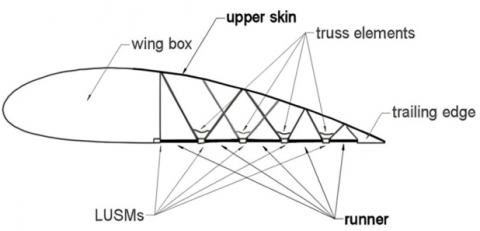
Figure 1 illustrates that morphing capability is primarily enabled by the interaction between compliant composite skins and internal load-bearing structures, emphasizing the material-driven nature of morphing airfoil design.
The importance of high-fidelity simulations using CFD cannot be overemphasized for morphing airfoil models using Reynolds-averaged Navier Stokes (RANS) simulations and models such as Spalart Allmaras and SST k-ω [10, 17] Nevertheless, the accurate simulation of separation, transition, and transient phenomena in morphing models is challenging [18], and various authors [1, 19, 20] have used multi-point optimization and simulation of transitional turbulence together with experiments.
These modeling challenges are further amplified when composite skins undergo large deformations, where material nonlinearity and structural flexibility interact with unsteady flow phenomena.
Because of the high computational intensity involved with completely coupled CFD optimization, the field has gradually shifted towards the use of surrogate models and multi-fidelity modeling. In composite-based morphing structures, surrogate models also serve as a practical tool to incorporate material behavior, structural deformation, and aero-structural coupling within optimization frameworks.
Kriging models, radial basis function (RBF) models, artificial neural networks, and deep surrogates such as deep neural operators [21], convolutional neural network (CNN) multi-fidelity models [22], transfer-learning frameworks [23], and gradient-enhanced deep surrogates [24] have proven capable of accurately modeling high-fidelity aerodynamic predictions with errors typically below the 6% level. These technologies greatly accelerate the optimization task while allowing for the examination of very large design spaces. Recent advancements include the combination of physics and machine learning (ML) [25], latent diffusion models for inverse modeling [26], and geometric deep learning (DL), reflecting the ever-growing interest in the direct coupling of aerodynamics knowledge and data models. This shift is particularly relevant for composite morphing structures, where repeated high-fidelity simulations are required to capture material-driven deformation behavior.
From a materials and structural perspective, morphing airfoils represent a class of advanced composite structures subjected to controlled large deformations.
Parallel to aerodynamic simulation models, modern and robust multifaceted/multidisciplinary design optimization (MDO) tools are currently being enhanced with analysis of structures, compliant mechanism designs, and fluid-structure interactions. Finite element analysis (FEA) and explicit nonlinear solution strategies of the structure have been widely used for validating morphing skin structures and internal dynamics [27-29]. Multi-fidelity models of aeroelastic systems [30, 31], mesh morphing strategies for structurally optimized models [32, 33], and coordinated aerodynamic and control concepts for adaptive mission tasks [33, 34] also reflect the emerging demands for integrated a Nonetheless, several challenges still exist within the literature.
The surrogate models experience challenges of generalizing morphing layouts that are novel [35]. There are also challenges related to the modeling of turbulence within morphing shapes that are dynamically changing [36]. The models are mostly treated within two-dimensional morphing airfoil layouts and not completely within morphing wings [37]. The tests are mostly not within the scope of validating UAV morphing shapes [1, 15]. The models are not well developed within aspects of constrained morphing actions, real-time morphing control strategies, and uncertainty.
This review is unprecedented because of the extensive incorporation of Multiple Objective Optimization Techniques and the modern frameworks of Surrogate Models for morphing airfoil shapes that are being used currently [38-40]. This review provides a thorough and interdisciplinary examination that brings together aerodynamic optimization and structural simulation and data-driven solutions, and also includes the broader aspects of the aforementioned topics such as Evolutionary Optimization Techniques, Adjoint Optimization Techniques, High-Fidelity Computational Fluid Dynamics Simulations, Multi-Fidelity Simulation Models, Deep Surrogate Models, Mesh Morphing Methods, Fluid Structure Interaction Models, and ML-Based Inverse Simulation that were considered separately and individually within the earlier reviews related to aerodynamics and morphing airfoils. This review brings together the various technologies and determines the computational implications of the aforementioned challenges related to the morphing airfoil technologies.
Unlike previous reviews that primarily focused on aerodynamic optimization, this review explicitly highlights the role of advanced composite materials, compliant structures, and material-driven constraints in shaping modern morphing airfoil optimization frameworks.
While considerable advancements have been made in the development of optimization algorithms and surrogate modeling approaches, the review highlights the fundamental limitation that currently restricts the practical implementation of morphing airfoil optimization methodologies. In particular, the nonlinear, anisotropic, and coupled nature of composite material deformation physics is identified as the major limitation, hindering the effective translation of numerical optimization outcomes into morphing airfoil hardware. It is proposed that future optimization methodologies should take into consideration material modeling approaches in order to effectively capture composite material deformation physics and enable the development of morphing airfoil optimization methodologies.
This work is a specific attempt at the synthesis of modern MOO methodologies used within morphing airfoil shape optimization, including both evolutionary algorithms and various other hybrid strategies.
This review uses a structured and reproducible methodology to provide comprehensive coverage of the studies addressing MOO and surrogate modeling for morphing airfoil design. It adopts established good practices for systematic and structured literature reviews from leading journals published by Elsevier, Springer, and Wiley.
Special attention was given to studies addressing composite materials, compliant structures, and material-driven deformation mechanisms in morphing airfoil systems.
A structured data extraction form was developed and applied to all included studies to ensure reproducibility and consistency. The complete extraction template and coding scheme are provided in Table S1 in the Appendix.
2.1 Search strategy
The literature search was conducted across major scientific databases, including Scopus, Web of Science, ScienceDirect, AIAA, IEEE Xplore, and SpringerLink, covering the period from 2005 to 2025. To ensure comprehensive coverage of the field, various keyword groups were used, such as composite morphing structures, compliant composite skins, smart materials, large-deformation composite behavior, morphing aerodynamics, optimization techniques, surrogate modeling, and multidisciplinary computational methods, combined with Boolean operators. The keyword sets also include—but are not limited to—morphing airfoil/wing, adaptive wing, multi-objective optimization (MOO), evolutionary and gradient-based methods, surrogate modeling techniques (e.g., Kriging, neural networks, deep learning, multi-fidelity models), CFD and turbulence modeling, aeroelasticity, and applications for UAVs, commercial, and military aircraft. The search strategy was designed to capture both foundational and recent advances in morphing airfoil research.
2.2 Inclusion and exclusion criteria
Morphing airfoil or wing configurations, which involved numerical optimization, CFD-based analysis, aero-structural coupling, or surrogate modeling relevant to deformable aerodynamic systems, were included. In this review, only reputable peer-reviewed journal articles and international conference papers were selected. This review excluded publications that did not focus on morphing concepts or were limited solely to material characterization without addressing structural deformation or aerodynamic relevance. Editorials, abstracts, and non-technical reports were likewise omitted, thereby ensuring that only technically sound and methodologically transparent studies were considered.
2.3 Screening and study selection
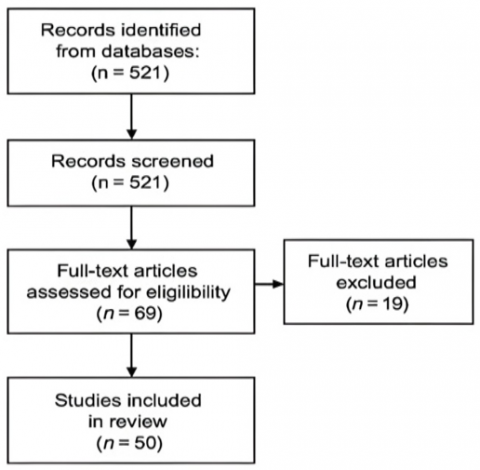
The initial search resulted in 521 studies after the removal of duplicates. A two-stage screening process was performed: first, a title and abstract review; second, a full-text assessment for methodological depth and relevance to MOO or surrogate-based aerodynamic modeling themes. After applying all the criteria, a total of 50 studies were selected as core literature for detailed synthesis.
These studies represent significant contributions in areas such as evolutionary optimization, adjoint-based methods, high-fidelity aerodynamic modeling, surrogate learning, and aero-structural integration.
2.4 Data extraction and classification
For each of the identified publications, the critical information was extracted in terms of optimization techniques, surrogate modeling strategies, CFD modeling fidelity, turbulence modeling, structural analysis techniques, composite systems and deformation characteristics, validation strategies, and application domains. This information helped in the systematic grouping of the literature in terms of methodological trends, computational strategies, aerodynamic and aero-structural considerations, and data-driven modeling perspectives. Such information extraction helped in the systematic comparison of the identified literature while highlighting the critical methodological strengths and weaknesses.
2.5 Quality assessment
All identified studies were further screened for modeling fidelity, rigor in optimization, accuracy of surrogate model, transparency of methodology, and practical or experimental relevance. Particular attention was given to those works reporting convergence analysis, Pareto front evaluations, and validation against experiments or high-fidelity simulations. Only studies that showed a high degree of scientific rigor were included in the final synthesis.
2.6 Synthesis approach
Further, a narrative and thematic synthesis has been conducted to integrate findings across optimization domains, surrogate modeling strategies, computational frameworks, and multidisciplinary paradigms. Such synthesis underlines methodological trends, computational trade-offs, modeling challenges, existing research gaps, and future directions necessary for the development of scalable, physics-informed, real-time optimization frameworks for morphing airfoil technologies.
Figure 2. The literature selection and screening process illustrated by the Preferred Reporting Items for Systematic Reviews and Meta-Analyses (PRISMA) flow diagram
The Preferred Reporting Items for systematic reviews and Meta-Analyses (PRISMA) flow diagram illustrates the overall process of article identification, screening, eligibility assessment, and final inclusion (Figure 2), with particular emphasis on the implications of material behavior and composite structural performance on optimization outcomes.
3.1 Descriptive overview of the included studies
A total of 50 rigorously selected peer-reviewed studies have been identified and included in the final dataset to investigate composite-based morphing airfoil optimization, surrogate modeling, and aero-structural integration. The selection process is described in Figure 2, where the PRISMA flow diagram illustrates the selection process from 521 to 50 studies. These studies are the state-of-the-art in multi-objective aerodynamic optimization, composite structural modeling, and data-driven surrogate modeling approaches. The thematic distribution of the selected studies is provided in Table 1. Optimization algorithms are identified as the predominant research focus, appearing in 29 out of 50 studies. This is followed by multidisciplinary aero-structural integration and multi-fidelity modeling approaches, each appearing in 23 studies. The fact that morphing airfoil design is indeed a multidisciplinary optimization problem where aerodynamics, structural behavior, and material-induced deformation constraints are to be addressed simultaneously. Composite materials and structural behavior are addressed in 18 studies, which is a significant increase in recent literature to address material behavior as a design variable. Surrogate modeling approaches are identified in 15 studies, indicating their growing importance in aerodynamic and aero-structural optimization. Likewise, the topic of high-fidelity CFD and turbulence modeling is discussed in 14 studies for simulating realistic aerodynamics. Experimental validation is discussed in only 8 studies, again due to the emphasis on computational methods and the lack of experimentally validated morphing airfoil-based optimization methods.
In terms of the application of the methods, a significant bias towards UAV-based platforms. This review shows that it can be used for various morphing concepts due to the reduced structural loads, reduced regulatory requirements, and the ability for experimental prototyping of the concepts, as suggested in [2, 20]. By contrast, commercial aircraft and transportation-scale morphing applications are underrepresented, which may be attributed to higher structural complexities, certification requirements, and actuation difficulties associated with larger-scale morphing applications.
Table 1. Thematic classification of the 50 studies
|
Theme |
Number of Studies |
Description |
|
Optimization Algorithms |
29 / 50 |
Multi-objective optimization (MOO) methods, including Genetic Algorithms (GA), NSGA-II, Particle Swarm Optimization, adjoint-based gradient methods, and hybrid/metaheuristic strategies, are applied to morphing airfoil design. |
|
Surrogate Modeling |
15 / 50 |
Kriging, RBF, artificial neural networks, deep learning (DL) surrogates, and multi-fidelity frameworks are used to approximate aerodynamic and aero-structural responses of morphing airfoils. |
|
Computational Fluid Dynamics (CFD) & Turbulence Modeling |
14 / 50 |
Reynolds-averaged Navier Stokes (RANS)-based simulations, transitional turbulence models, and unsteady flow analysis applied to morphing configurations under varying flight conditions. |
|
Aero-Structural Coupling & Multidisciplinary Design Optimization (MDO) |
23 / 50 |
Coupled aerodynamic–structural optimization frameworks integrating CFD with structural solvers to account for deformation, load transfer, and aeroelastic effects. |
|
Structural Analysis & Compliant Mechanisms |
11 / 50 |
Finite element modeling, compliant internal mechanisms, and large-deformation structural analyses supporting morphing airfoil functionality. |
|
Material System / Composite Concept |
18 / 50 |
Studies explicitly addressing composite laminates, elastomeric skins, smart materials (e.g., SMA, TPU), and material-driven deformation behavior in morphing airfoils. |
|
Multi-Fidelity & Reduced-Order Models |
23 / 50 |
Hierarchical and reduced-order modeling approaches combining low- and high-fidelity simulations to improve computational efficiency in optimization studies. |
|
Control Integration |
6 / 50 |
Data-driven control strategies, adaptive control, and control-oriented morphing concepts integrated with aerodynamic or aero-structural models. |
|
Experimental Validation |
8 / 50 |
Wind-tunnel experiments, laboratory-scale tests, and experimental assessments of morphing airfoils or wings focusing on deformation capability and structural performance. |
|
Application Domain |
10 / 50 |
Practical implementations and case studies related to unmanned aerial vehicles (UAVs), commercial aircraft, military, or conceptual morphing platforms. |
|
Historical Trends & Review Studies |
8 / 50 |
Chronological analyses and review papers addressing the evolution of morphing airfoil technologies and associated optimization methodologies. |
Note: Individual studies may belong to multiple thematic categories; therefore, the total count exceeds the number of reviewed studies (n = 50)
3.2 Optimization algorithms and multi-objective design strategies
The analysis reveals that evolutionary MOO algorithms dominate the selection of optimization algorithms for morphing airfoil designs. Specifically, GA, NSGA-II, and other meta-heuristic algorithms were used in over half of the analyzed studies (see Table 1), and their potential for addressing nonlinear multi-objective problems associated with morphing airfoil designs.
The studies presented in Table 2 show the efficiency of evolutionary optimization algorithms for the improvement of aerodynamic characteristics. For instance, Longtin Martel et al. [7] showed the improvement of the lift-to-drag ratio by up to 65% using the NSGA-II algorithm for optimizing a morphing trailing-edge airfoil. In this regard, the authors of the study demonstrate the efficiency of evolutionary algorithms for solving multi-objective problems and finding the optimal solution for conflicting requirements. A similar trend can be observed from Ullah et al. [41], where an improvement in stall characteristics and drag reduction is presented by applying a Black Widow algorithm for optimizing a flexible droop nose morphing airfoil.
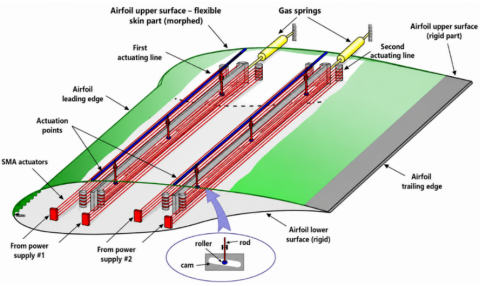
The general scheme of the typical actuation layout for morphing airfoils is presented in Figure 3, where composite skins, internal linkages, and shape memory alloy (SMA) actuators play a crucial role as enabling mechanisms for controlled aerodynamic shape deformation [16]. These structural parts will introduce new constraints for the distribution of stiffness, deformation, and force requirements.
Adjoint-based gradient optimization methods are also popular methods, especially for high-fidelity aerodynamic optimizations that include transonic flight or cruise flight conditions. The efficiency of the drag minimization problem using an adjoint-based gradient optimization method for the design of the morphing leading and trailing edges of an aircraft has been successfully demonstrated in the research work presented by Zhang et al. [13]. The efficiency of the adjoint sensitivity analysis in the optimization of the morphing trailing-edge wing was also effectively demonstrated in the research by Lyu and Martins [14].
Table 2. Summary of key influential studies
|
Study |
Methodology / Model |
Optimization Approach |
Key Findings |
Application Domain |
Material / Structural Concept |
|
[28] |
Panel method + FEM |
Multi-objective topology optimization |
Improved aero-structural trade-offs |
UAV / conceptual wings |
Compliant internal structure, deformable wing concept |
|
[1] |
RANS CFD + Kriging |
NSGA-II |
<6% surrogate error, L/D improvement |
Transonic airfoils |
Implicit flexible airfoil geometry (material not explicitly specified) |
|
[38] |
CFD + DRL surrogate |
Deep Reinforcement Learning |
Efficient inverse morphing design |
UAV / adaptive wings |
Morphing airfoil with assumed flexible skin |
|
[2] |
CFD + structural FEM |
GA |
Fuel savings & climate benefits |
UAV |
Flexible wing structure with aero-structural coupling |
|
[21] |
Deep neural operators |
Gradient-enhanced surrogate |
Fast & accurate shape prediction |
CFD surrogate applications |
Numerical shape representation (material-independent surrogate) |
|
[36] |
DL surrogate + aeroelastic model |
Hybrid ML-based |
High-dimensional aeroelastic optimization |
Flexible wings |
Aeroelastic composite wing model |
|
[7] |
XFoil + SST |
NSGA-II |
Up to 65% L/D gain |
UAV morphing airfoils |
Morphing trailing-edge with flexible skin |
|
[13] |
RANS + adjoint |
Gradient-based |
Drag reduction at cruise |
Transport aircraft |
Morphing leading and trailing edges (structural flexibility assumed) |
|
[11] |
SST CFD |
Black Widow Optimization |
Stall control & L/D increase |
UAV |
Flexible droop-nose leading edge (compliant structure) |
|
[18] |
RANS + aeroacoustics |
Gradient-based
|
Noise reduction with high lift
|
High-lift airfoils
|
Camber morphing airfoil with deformable geometry
|
However, from the results, it is evident that the effectiveness of these optimization algorithms is also dependent on the composite material properties, deformation limits, and aero-structural coupling effects. The anisotropic properties, non-linear deformation, and actuator-material interactions also impose additional constraints on the design space, which affect the design solutions [11, 28, 29].
Hybrid optimization techniques, which include evolutionary algorithms, have also been proposed in recent studies on morphing wing design optimization [23, 24, 30].
3.3 Computational fluid dynamics modeling fidelity and surrogate-assisted optimization
The aerodynamic performance of the morphing airfoils is mainly computed using RANS-based CFD models coupled with turbulence models such as the SST k-ω and Spalart-Allmaras model in the studies reviewed. The RANS model is widely used in aerodynamic optimizations due to its efficiency in computing the aerodynamic performance in an iterative manner.
Table 2 shows that many studies have successfully incorporated the results of CFD simulations into the framework of surrogate modeling techniques for reducing computation costs while maintaining prediction accuracy. For example, Wang et al. [1] have successfully demonstrated that Kriging-based surrogate modeling techniques are capable of producing prediction errors of less than 6% for the efficient MOO of transonic morphing airfoils. Similarly, Shukla et al. [21] have successfully demonstrated that deep neural operator-based surrogate modeling techniques are capable of producing highly accurate aerodynamic shape predictions with significantly reduced computation costs.
The surrogate modeling techniques that have been successfully incorporated into the framework of morphing airfoil optimization, based on the results of the literature review, are Kriging models, RBF models, artificial neural networks, deep neural operators, and multi-fidelity surrogate models [21-27]. These surrogate modeling techniques enable efficient exploration of high-dimensional morphing airfoil design spaces while significantly reducing computational cost. Moreover, the incorporation of advanced actuation mechanisms and smart material systems in optimization algorithms for morphing airfoil design emphasizes the necessity of using a combination of surrogate optimization and physical models of morphing systems [42].
From the results of the literature review, however, it is evident that the predictive reliability of the results of surrogate modeling techniques is highly dependent on the quality of the training data and the composite structural deformation. For example, there are many studies that have reported limitations of the generalization capability of surrogate modeling techniques for morphing airfoils that are different from the training dataset or have different deformation conditions [35, 43].
Furthermore, turbulence modeling and transition prediction are significant limitations of the results of CFD simulations for morphing airfoil analysis, particularly under large deformation conditions. The limitations of the results of CFD simulations have a direct influence on the accuracy of the results of optimization techniques.
3.4 Multidisciplinary aero-structural integration and composite material influence
A significant portion of the studies that have been incorporated into the results of the literature review have successfully incorporated multidisciplinary aero-structural optimization techniques for integrating the results of CFD simulations with structural analysis techniques such as the finite element method (FEM). The multidisciplinary aero-structural analysis techniques have been successfully incorporated into the framework of morphing airfoil analysis for efficiently evaluating the aerodynamic performance of morphing airfoils.
Composite materials are recognized as the main facilitators for the implementation of morphing airfoils, given their anisotropic stiffness, fatigue, and high elastic deformation capabilities [4, 10, 44, 45]. Advanced material systems, such as flexible composite skins and morphing structures, have been identified to play a crucial role in enabling the aerodynamic adaptation of airfoils. Numerical and experimental validation of the structural and aerodynamic performance of composite morphing airfoils has been achieved in previous studies. Liu et al. [10] analyzed the deformation and failure characteristics of flexible composite skins, while De Gaspari et al. [46] experimentally validated the aerodynamic performance and structural viability of a full-scale composite morphing droop nose airfoil.
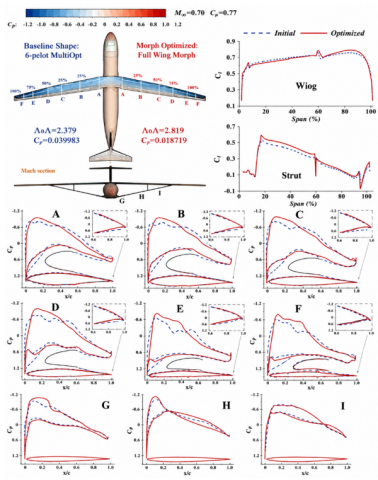
Figure 4 shows the multi-segment configuration of the morphing airfoil, focusing on the position of the actuators, the segmentation of the structure, and the deformation of the structure for the improvement of aerodynamic performance. These structural configurations for the morphing airfoil show the importance of the material's stiffness properties, the actuators, and the aero-structural coupling behavior for the improvement of aerodynamic performance.
Even though the aerodynamic benefits of the morphing airfoil are significant, the findings of the present study reveal the limitations of the optimization studies, where the behavior of the composite material is considered a constraint instead of a design variable for the improvement of aerodynamic performance.
3.5 Thematic and chronological trends
Thematic classification of the 50 studies reveals several main themes:
Chronologically, the literature evolves from foundational GA + CFD optimization and basic parameterization (2006–2010) to multidisciplinary and multi-fidelity frameworks (2012–2018), and, more recently, to deep-learning-based surrogates, advanced multi-fidelity modeling, and automated parameterization (2019–2025). This trajectory indicates a clear shift from single-discipline, high-cost CFD optimization to data-driven, integrated, and computationally efficient design workflows.
4.1 Interpretation of optimization algorithm performance and design trade-offs
The synthesis of the above-referenced literature review indicates that the use of evolutionary MOO algorithms, such as NSGA-II and other genetic-based optimization schemes, represents the most effective optimization methodology for the morphing airfoil design problem [6, 7, 41]. As indicated in Table 1 and Table 2, the dominant performance of the NSGA-II and other genetic-based optimization schemes can be attributed to the fact that they are the only optimization methodologies that are able to address the complexities of the nonlinear and multi-modal nature of the morphing airfoil design problem, including the conflicting objectives of maximizing the lift-to-drag ratio while minimizing the structural stress and actuation requirements [6, 7]. As indicated by Longtin Martel et al. [7] and Bashir et al. [11]. In addition, the use of evolutionary optimization algorithms has the ability to optimize the trade-off between aerodynamic performance and structural feasibility, and this has the ability to lead to substantial performance improvements, such as stall characteristics and improvements in the lift-drag ratio.
However, the performance of the evolutionary optimization algorithms is accompanied by substantial computational requirements due to the need to perform numerous evaluations of the designs to be optimized. As such, the use of surrogate-based optimization has emerged as an important aspect of the morphing airfoil design problem [21-27].
Adjoint gradient optimization techniques offer an alternative method for solving optimization problems, especially for aerodynamic optimization problems. Adjoint gradient optimization techniques are found to be beneficial for efficiently computing the gradients and achieving accelerated convergence rates compared to the evolutionary algorithms [13, 14]. For example, the efficacy of the adjoint gradient optimization methods in the precise achievement of drag reduction and the improvement of the aerodynamic performance of morphing wing geometries has been demonstrated by Zhang et al. [13] and Lyu and Martins [14]. It is, however, important to note that the application of the adjoint gradient optimization methods is largely dependent on the precision of the aerodynamic and structural models, especially for the case of composite morphing structures that may be affected by non-linear effects during deformation [10, 28, 29]. This is an example of how the application of evolutionary and gradient-based optimization techniques is complementary.
4.2 Surrogate modeling as a computational enabler and its limitations
Surrogate modeling has emerged as an important enabling technology in the morphing airfoil optimization problem by alleviating the computational expense of repeated CFD calculations. Kriging, neural networks, deep neural network operators, and multi-fidelity surrogate modeling methods have been used by various researchers for the prediction of aerodynamic performance of the morphing airfoil with sufficient accuracy while exploring the design space in a computationally efficient manner [21-27]. For instance, the prediction errors of the aerodynamic performance of the airfoil were found to be less than 6% by Wang et al. [1], thereby confirming the prospect of utilizing surrogate-based optimization methods to expedite the aerodynamic optimization problem.
Among the surrogate modeling techniques discussed above, the models based on the Kriging method have been found to perform better in low-dimensional morphing optimization problems because of the ability of the Kriging method to handle the nonlinearity of aerodynamic problems using a limited amount of data [1, 22]. However, the potential of the neural network-based models and deep neural operators in handling high-dimensional composite morphing problems is higher due to the ability of the models to handle the nonlinearity of the problem, especially when enough data is available [21, 23, 36].
However, the results obtained in this study suggest that the performance of the surrogate models is largely dependent on the quality of the training data, the extent of the design space, and the incorporation of the appropriate physical parameters. Most of the surrogate models are trained on the data obtained from the CFD calculations, considering the deformation range of the morphing airfoil, which is often restricted. The performance of the surrogate models is compromised in the case of composite morphing airfoils, as the aerodynamic performance of the morphing airfoil is directly influenced by the deformation behavior of the structure, the anisotropy of the composite materials, and the interaction effects of the actuators.
Furthermore, the use of surrogate models based on geometric and aerodynamic parameters without the incorporation of structural deformation physics may lead to accurate numerical solutions within the range of the data used for the development of the surrogate model, but the accuracy of the solution in terms of aero-structural behavior of the composite material used in the morphing system would be compromised.
Such optimization challenges are directly related to the intrinsic properties of composite materials, such as anisotropic distribution of material stiffness, non-linear deformation response, and sensitivity to environmental conditions. Such material properties play a crucial role in aerodynamic shape stability and deformation response, which in turn affect the reliability of surrogate model generalization and optimization convergence [44].
4.3 Computational fluid dynamics fidelity, turbulence modeling, and aero-structural coupling challenges
Solutions based on the RANS method of CFD are mostly used for aerodynamic optimization problems due to their accuracy and efficiency. However, the simulation of the aerodynamics of a morphing airfoil is faced with several challenges in modeling the turbulence and transition for problems involving large deformation of the airfoil surfaces, as reported in the literature [17, 18, 36].
Turbulence and transition modeling are critical factors in accurately predicting the aerodynamic behavior of morphing airfoils, and the use of simplified or inaccurate turbulence models may lead to incorrect estimation of aerodynamic characteristics, thereby misleading optimization algorithms toward unrealistic solutions [17, 18, 47]. These limitations are particularly important in morphing configurations, where geometric deformation alters flow separation, transition location, and aerodynamic loading.
Significant improvements in the prediction accuracy of the aerodynamic characteristics for the morphing airfoil have been reported with the inclusion of the effect of the aero-structural coupling, finite element modeling, and multidisciplinary optimization. As reported in the studies in Table 2, the stiffness properties, deformation limits, and compliance of the composite materials are significant in the determination of the aerodynamic characteristics and the deformation limits [10, 44, 48]. Figure 4 also highlights the importance of the positioning and segmentation of the structure in the determination of the deformation characteristics and the effectiveness in the aerodynamic application.
Coupled aero-servo-elastic optimization, however, remains a computationally costly process and is not commonly used in the design process for morphing airfoils. Therefore, simplified models are often used for the structure and aerodynamics, which could affect the accuracy in the prediction of the aerodynamic performance and the reliability of the optimization process [49, 47]. The aforementioned modeling issues cause discrepancies between the results obtained from the optimization process and the experimental results for the aerodynamic performance, as reported in experimental studies on composite morphing wings and high-lift morphing configurations [50].
4.4 Role of composite materials as active design drivers
Composite materials are not just structural components of morphing airfoils. Instead, they play an active role in the design of morphing airfoils. The anisotropic properties of composite materials are used for designing the deformation of the morphing airfoil. This allows for the adaptation of the aerodynamic shape of the airfoil while maintaining structural integrity.
The studies of Liu et al. [10] and De Gaspari et al. [46] proved that composite morphing airfoil skins are capable of undergoing significant deformation while maintaining aerodynamic performance and structural stability. However, the review of existing studies indicates that composite materials are treated as constants during the optimization of morphing airfoils. This is one of the factors that limit the potential of optimization algorithms for designing morphing airfoils.
The non-linear properties of composite materials, fatigue, interaction between the material and actuators, and durability are some of the factors that influence the design of morphing airfoils. However, there is insufficient consideration of these factors during the optimization of morphing airfoils.
4.5 Gap between numerical optimization and practical implementation
While numerous research works on numerical optimization of aerodynamic performance show positive results, the actual implementation of morphing airfoil technologies has been limited. This is attributed to various factors such as a lack of experimental validation, complexities, and certification issues [48, 50].
Empirical validation studies carried out by various researchers, including De Gaspari et al. [46] and Auteri et al. [50], confirm the viability of composite morphing concepts. However, the studies also highlight some of the problems that come with scaling up morphing technology to full-scale aircraft. The studies also highlight that some of the optimization studies carried out so far have been limited to two-dimensional airfoil structures. These studies did not adequately represent the complexities associated with full-scale aircraft structures.
In conclusion, some of the critical issues that have to be considered before morphing airfoil technologies can be adopted for commercial aviation purposes include actuation integration, power requirements, durability, and reliability.
4.6 Implications for future morphing airfoil optimization frameworks
From the review carried out above, it is evident that there is a need to integrate high-fidelity aerodynamic models, physics-informed surrogate models, and aero-structural optimization frameworks to ensure that there is progress in morphing airfoil optimization. The development of ML technologies also presents promising opportunities for resolving computational challenges without compromising predictive accuracy.
Another important direction for future research is the development of standard benchmark morphing airfoil designs with specific composite skin definitions, as well as aerodynamic and structural loading conditions. The development of standard benchmark designs will help in validating, comparing, and reproducing different optimization approaches, especially in terms of capturing nonlinear deformations of composite materials and aero-structural effects.
In addition, developing physics-informed surrogate models, which include specific definitions of composite material constitutive properties, anisotropic stiffness, and deformation-dependent aerodynamic effects, is also important. The optimization of composite material behavior as an active design variable rather than a passive constraint is also expected to improve optimization convergence reliability, which will be important for the practical application of morphing airfoil technologies in future aircraft systems [44, 50].
4.7 Limitations of existing morphing airfoil optimization studies
Despite the significant advancements in the optimization of the morphing airfoil, certain limitations were also evident in the literature reviewed. The most significant limitation is related to the varying levels of modeling fidelity in the aerodynamic modeling. Although most literature reviewed relies on high-fidelity RANS-based CFD, there is also considerable literature that relies on lower-fidelity modeling, such as panel codes or inviscid formulations. Such modeling may not capture the complex aerodynamic features, especially in the context of morphing airfoils, where significant geometric deformation is involved.
The second significant limitation is related to the insufficient level of experimental verification. Although wind tunnel experiments were included in a limited number of the literature reviewed, as evident in Table 1, most of the literature reviewed relies on numerical simulations only. The limited level of experimental verification is also limiting the applicability of the optimization results, especially in the context of real-world morphing airfoil configurations.
The computational cost is also an important constraint, especially in the context of multidisciplinary design optimization (MDO), where the integration of structural analysis is also included in the optimization process. Although high-fidelity aero-structural optimization is computationally expensive, especially in the context of high-fidelity RANS-based CFD, surrogate-based optimization is also limited in terms of robustness, especially in the context of insufficient datasets.
The applicability of most literature reviewed is also limited, especially in the context of three-dimensional wing configurations, where most literature reviewed is limited to two-dimensional airfoil configurations only. Although the integration of structural, aerodynamic, and control system optimization is included in most literature reviewed, certain limitations were also evident, especially in terms of coupling assumptions, where the coupling may not be representative of real-world configurations.
Although most of the literature reviewed is related to UAV-scale morphing configurations, relatively limited literature is related to full-scale commercial aircraft configurations.
This review aims to provide a comprehensive overview of numerical methods applied to morphing airfoil optimization, with special focus on MOO strategies, high-fidelity CFD methods, and surrogate model techniques. From analyzing the 50 peer-reviewed articles, it can be noted that evolutionary algorithms are preferred methods for exploring the design space, whereas adjoint-based gradient methods are precise methods when applied with high-fidelity methods. The promising results from notable advancements include Kriging methods, DL methods, and multi-fidelity surrogate models. The morphing airfoil concept has now transformed into an interdisciplinary area where aerodynamics, structural response, and material response are strongly interconnected. This can be noted from UAV applications, where morphing airfoils have shown significant improvements in lift-drag ratio, range, and maneuverability when compared to conventional airfoils. However, morphing airfoils have not yet been applied to commercial and military aircraft due to difficulties in integrating morphing structures, durability, and certification of morphing composite materials. Although notable advancements have been made, many limitations need to be overcome before morphing airfoils can be applied to real-world applications. Notable limitations include turbulence and transition models for morphed wings, insufficient experimental validations, and optimization problems being restricted to two-dimensional wing models. Surrogate models have shown difficulties in generalization due to material nonlinearity, large deformations of composite materials, and insufficient training data. The focus areas for future work include material-aware surrogate models, aero-structural control-oriented optimization methods, and three-dimensional morphing composite wings. The morphing airfoil concept must be validated at the wind tunnel and flight scale to ensure reliable performance. The morphing airfoil concept must be transformed from a numerical model to a real-world application.
Data extraction form and coding scheme for morphing airfoil optimization review are summarized below.
S1. Purpose of the data extraction form
In order to ensure transparency, reproducibility, and consistency in the systematic synthesis, a data extraction form has been established and used for all studies considered for review (n = 50). The data extraction form has been conceived with the aim of collecting methodological, aerodynamic, optimization, surrogate-based, and material-related information pertinent to composite morphing airfoil optimization.
All studies have been analyzed with a similar extraction methodology, and each variable has been coded following a series of categories, as follows.
S2. Data extraction template
The following is the standardized data extraction sheet used for the review, as depicted in Table S1.
Table S1. Data extraction form used for literature synthesis
|
Field Category |
Extracted Parameter |
Description |
Coding Example |
|
Study Identification |
Study ID |
Unique identifier assigned to each study |
S01 |
|
Authors and Year |
First author and publication year |
Wu et al., 2017 |
|
|
Publication Type |
Journal / Conference / Preprint |
Journal |
|
|
Morphing Configuration |
Morphing Type |
Type of geometric morphing |
Camber morphing |
|
Application Platform |
Airfoil / Wing / UAV / Aircraft |
Airfoil |
|
|
Aerodynamic Modeling |
CFD Method |
Aerodynamic simulation fidelity |
RANS |
|
Turbulence Model |
Turbulence closure model |
SST k–ω |
|
|
Coupling Type |
Aero-only / One-way FSI / Two-way FSI |
One-way FSI |
|
|
Structural Modeling |
Structural Model |
Structural analysis method |
FEM nonlinear |
|
Material Type |
Composite material used |
Carbon fiber composite |
|
|
Optimization |
Optimization Algorithm |
Optimization method used |
NSGA-II |
|
Optimization Type |
Single-objective / Multi-objective |
Multi-objective |
|
|
Objective Functions |
Optimization goals |
Max L/D, Min drag |
|
|
Surrogate Modeling |
Surrogate Model Type |
Surrogate algorithm |
Kriging |
|
Training Data Size |
Number of training samples |
200 |
|
|
Validation |
Validation Method |
Validation approach used |
CFD-only |
|
Experimental Validation |
Wind tunnel / Flight / None |
None |
|
|
Performance Outcome |
Reported Improvement |
Performance improvement |
+12% L/D |
|
Limitations |
Reported Limitation |
Limitations mentioned in the study |
Limited validation |
S3. Coding scheme
To ensure consistent classification, categorical coding rules were applied:
Optimization algorithms:
CFD fidelity:
Surrogate models:
Validation level:
S4. Example of completed extraction entry
Table S2 shows an example of a completed extraction entry for one study.
Table S2. Example extracted data entry
|
Parameter |
Example Value |
|
Study ID |
S17 |
|
Authors |
Wu et al. |
|
Year |
2017 |
|
Morphing Type |
Camber morphing |
|
Material |
Composite |
|
CFD Method |
RANS |
|
Optimization |
NSGA-II |
|
Surrogate |
Kriging |
|
Validation |
CFD-only |
|
Outcome |
10% improvement in L/D |
|
Limitation |
Limited experimental validation |
S5. Reproducibility statement
The standardized extraction form ensures consistent evaluation and reproducibility. All variables, classification rules, and coding schemes are defined in this Appendix.
[1] Wang, W., Feng, H., Cui, S.N., Li, Z.D. (2025). Multi-objective optimization of transonic variable-camber airfoil with leading and trailing edge deflections using Kriging surrogate model. Aerospace, 12(8): 659. https://doi.org/10.3390/aerospace12080659
[2] Salinas, M.F., Botez, R.M., Gauthier, G. (2023). New validation methodology of an adaptive wing for UAV S45 for fuel reduction and climate improvement. Applied Sciences, 13(3): 1799. https://doi.org/10.3390/app13031799
[3] Eraslan, Y., Oktay, T. (2023). Multidisciplinary performance enhancement on a fixed-wing unmanned aerial vehicle via simultaneous morphing wing and control system design. Information Technology and Control, 52(4): 833-848. https://doi.org/10.5755/j01.itc.52.4.33527
[4] Hajarian, A., Zargar, O., Zakerzadeh, M.R., Baghernejad, S., Baghani, M. (2022). Fabrication, characterization, and modeling of a structural flexible skin for applications in morphing wings. Mechanics of Materials, 172: 104409. https://doi.org/10.1016/j.mechmat.2022.104409
[5] Wang, J., Chortos, A. (2024). Performance metrics for shape-morphing devices. Nature Reviews Materials, 9: 738-751. https://doi.org/10.1038/s41578-024-00714-w
[6] Bharti, S., Frecker, M., Lesieutre, G. (2009). Optimal morphing-wing design using parallel nondominated sorting genetic algorithm II. AIAA Journal, 47(7): 1627-1635. https://doi.org/10.2514/1.36003
[7] Longtin Martel, S., Bashir, M., Botez, R.M., Wong, T. (2023). A Pareto multi-objective optimization of a camber morphing airfoil using non-dominated sorting genetic algorithm. In AIAA SCITECH 2023 Forum, National Harbor, MD & Online, p. 1583. https://doi.org/10.2514/6.2023-1583
[8] Gabor, O.S., Simon, A., Koreanschi, A., Botez, R.M. (2014). Application of a morphing wing technology on Hydra Technologies unmanned aerial system UAS-S4. In Proceedings of the ASME 2014 International Mechanical Engineering Congress and Exposition, Montreal, Quebec, Canada. https://doi.org/10.1115/IMECE2014-37619
[9] Ziatabar, H., Rahni, M.T., Taleghani, A.S. (2026). Aerodynamic design of a trailing-edge morphing wing using morphing function idea and meta-model optimization based on CFD approach. International Journal of Aeronautical and Space Sciences. https://doi.org/10.1007/s42405-025-01108-0
[10] Liu, T.W., Bai, J.B., Li, S.L., Fantuzzi, N. (2023). Large deformation and failure analysis of the corrugated flexible composite skin for morphing wing. Engineering Structures, 278: 115463. https://doi.org/10.1016/j.engstruct.2022.115463.
[11] Bashir, M., Longtin-Martel, S., Botez, R.M., Wong, T. (2022). Optimization and design of a flexible droop-nose leading-edge morphing wing based on a novel black widow optimization algorithm—Part I. Designs, 6(1): 10. https://doi.org/10.3390/designs6010010
[12] Ruland, O., Mkhoyan, T., De Breuker, R., Wang, X. (2023). Black-box online aerodynamic performance optimization for a seamless wing with distributed morphing. Journal of Guidance, Control, and Dynamics, 46(3): 560-570. https://doi.org/10.2514/1.G006573
[13] Zhang, Z.K., De Gaspari, A., Ricci, S., Song, C., Yang, C. (2021). Gradient-based aerodynamic optimization of an airfoil with morphing leading and trailing edges. Applied Sciences, 11(4): 1929. https://doi.org/10.3390/app11041929
[14] Lyu, Z., Martins, J.R.R.A. (2015). Aerodynamic shape optimization of an adaptive morphing trailing-edge wing. Journal of Aircraft, 52(6): 1951-1970. https://doi.org/10.2514/1.C033116
[15] Batay, S., Baidullayeva, A., Sarsenov, E., Zhao, Y., Zhou, T., Ng, E.Y.K., Kadylulu, T. (2024). Integrated aerodynamic shape and aero-structural optimization: Applications from Ahmed body to NACA 0012 airfoil and wind turbine blades. Fluids, 9(8): 170. https://doi.org/10.3390/fluids9080170
[16] Wu, R., Soutis, C., Zhong, S., Filippone, A. (2017). A morphing aerofoil with highly controllable aerodynamic performance. The Aeronautical Journal, 121(1235): 54-72. https://doi.org/10.1017/aer.2016.113
[17] Sprengeler, T., Refling, W., Estevadeordal, J., Suzen, Y.B. (2022). Computational investigation of leading and trailing edge deflections on VR-12 airfoil aerodynamic characteristics. In AIAA SCITECH 2022 Forum, San Diego, CA & Virtual, p. 1950. https://doi.org/10.2514/6.2022-1950
[18] Martinez, R.V., Afonso, F., Lau, F. (2022). Aerodynamic shape optimisation of a camber morphing airfoil and noise estimation. Aerospace, 9(1): 43. https://doi.org/10.3390/aerospace9010043
[19] Colletti, C.R., Ansell, P.J. (2022). Airfoil morphed leading-edge design for high-lift applications using genetic algorithm. Journal of Aircraft, 60(1): 160-171. https://doi.org/10.2514/1.C036755
[20] Abbas, A.S., Mohammed, A.A. (2025). Experimental evaluation of morphing wing technologies: A systematic review. Revue des Composites et des Matériaux Avancés-Journal of Composite and Advanced Materials, 35(6): 1199-1209. https://doi.org/10.18280/rcma.350619
[21] Shukla, K., Oommen, V., Peyvan, A., Penwarden, M., Bravo, L., Ghoshal, A., Kirby, R.M., Karniadakis, G.E. (2023). Deep neural operators can serve as accurate surrogates for shape optimization: A case study for airfoils. arXiv preprint arXiv:2302.00807. https://doi.org/10.48550/arXiv.2302.00807
[22] Tao, G.C., Fan, C.W., Wang, W., Guo, W.J., Cui, J.H. (2024). Multi-fidelity deep learning for aerodynamic shape optimization using convolutional neural network. Physics of Fluids, 36: 056116. https://doi.org/10.1063/5.0205780
[23] Wu, M.Y., He, X.J., Sun, X.H., Tong, T.S., Chen, Z.H., Zheng, C. (2024). Efficient aerodynamic shape optimization using transfer-learning-based multi-fidelity deep neural network. Physics of Fluids, 36: 116109. https://doi.org/10.1063/5.0236980
[24] Özkaya, E., Rottmayer, J., Gauger, N.R. (2024). Gradient enhanced surrogate modeling framework for aerodynamic design optimization. In AIAA SCITECH 2024 Forum, Orlando, FL, p. 2670. https://doi.org/10.2514/6.2024-2670
[25] Zhang, Y., Wang, Z.K., Han, Z.H. (2024). A parallel variable-fidelity algorithm for efficient constrained multi-objective aerodynamic design optimization. Physics of Fluids, 36: 087135. https://doi.org/10.1063/5.0219781
[26] Gong, Z.Y., Zhao, H. (2024). Latent diffusion model for multidisciplinary and multi-objective airfoil inverse design. TechRxiv. https://doi.org/10.36227/techrxiv.172468827.77833794/v1
[27] Wei, Z., Yang, A.B., Li, J.C., Bauerheim, M., Liem, R.P., Fua, P. (2025). Automated parameterization for aerodynamic shape optimization via deep geometric learning. AIAA Journal, 63(12): 5430-5447. https://doi.org/10.2514/1.J065203
[28] Kambayashi, K., Kogiso, N. (2025). Simultaneous aerodynamic and structural optimal design of a morphing deformation and an internal compliant mechanism. Transactions of the Japan Society for Aeronautical and Space Sciences, 68(1): 19-28. https://doi.org/10.2322/tjsass.68.19
[29] Lendraitis, M., Lukoševičius, V. (2023). Novel approach of airfoil shape representation using modified finite element method for morphing trailing edge. Mathematics, 11(9): 1986. https://doi.org/10.3390/math11091986
[30] Abbas, A.S., Khudheyer, A.F., Hussain, J.M. (2018). Investigation the effect of flap design optimization on wake propagation behind wings of transport plan. ARPN Journal of Engineering and Applied Sciences, 13(21): 8393-8404. https://www.arpnjournals.org/jeas/research_papers/rp_2018/jeas_1118_7344.pdf.
[31] Berci, M., Toropov, V.V., Hewson, R.W., Gaskell, P.H. (2014). Multidisciplinary multifidelity optimisation of a flexible wing aerofoil with reference to a small UAV. Structural and Multidisciplinary Optimization, 50: 683-699. https://doi.org/10.1007/s00158-014-1066-2
[32] Biancolini, M.E., Gozzi, M. (2013). Aircraft design optimization by means of Radial Basis Functions mesh morphing. In ANSYS User Group Meeting Italia.
[33] Punzi, C., Crooks, M., Mancini, A., D’Amico, F., Giovanardi, E. (2024). A multidisciplinary mid-fidelity approach for tiltrotor wing aeroelastic design based on structural mesh morphing. In Vertical Flight Society 80th Annual Forum & Technology Display. https://doi.org/10.4050/f-0080-2024-1149
[34] Júnior, J.M.M., Halila, G.L.O., Vamvoudakis, K.G. (2024). Data-driven controller and multi-gradient search algorithm for morphing airfoils in high Reynolds number flows. Aerospace Science and Technology, 147: 109106. https://doi.org/10.1016/j.ast.2024.109106
[35] Lilly, J., Buckle, W., Davis, A., Dean, J., White, T.D., Hartl, D.J., Cervantes, G. (2024). High-throughput analysis and morphing design-space decomposition for mission-adaptive air vehicles. In AIAA SCITECH 2024 Forum, Orlando, FL, p. 1332. https://doi.org/10.2514/6.2024-1332
[36] Karbasian, H., van Rees, W.M. (2023). A deep-learning surrogate model approach for optimization of morphing airfoils. In AIAA SCITECH 2023 Forum, National Harbor, MD & Online, p. 1619. https://doi.org/10.2514/6.2023-1619
[37] Curiale, N.J., Zingg, D.W. (2018). Morphing wings: A study using aerodynamic shape optimization. In 2018 AIAA/ASCE/AHS/ASC Structures, Structural Dynamics, and Materials Conference, Kissimmee, Florida, p. 1910. https://doi.org/10.2514/6.2018-1910
[38] Su, J., Sun, G., Tao, J. (2024). A novel inverse design method for morphing airfoil based on deep reinforcement learning. Aerospace Science and Technology, 145: 108895. https://doi.org/10.1016/j.ast.2024.108895
[39] Ghadge, R., Ghorpade, R., Joshi, S. (2022). Multi-disciplinary design optimization of composite structures: A review. Composite Structures, 280: 114875. https://doi.org/10.1016/j.compstruct.2021.114875
[40] Miller, B., Ziemiański, L. (2025). Accelerating multi-objective optimization of composite structures using multi-fidelity surrogate models and curriculum learning. Materials, 18(7): 1469. https://doi.org/10.3390/ma18071469
[41] Ullah, R., Bibi, S., Asghar, Z., Shah, A. (2026). Multi-objective optimization of parametric airfoil shape using NSGA-II and PSO metaheuristic algorithms. Aerospace Science and Technology, 168: 111314. https://doi.org/10.1016/j.ast.2025.111314
[42] Rodinò, S., Maletta, C. (2024). Design considerations and applications of shape memory alloy-based actuation in morphing structures: A systematic review. Progress in Engineering Science, 1(4): 100021. https://doi.org/10.1016/j.pes.2024.100021
[43] Shi, X.T., Yang, Y., Bao, P.P., Wang, Z.G., Deng, Y.C. (2025). Parametric study of a layered composite skin for variable camber trailing edge. In Proceedings of the 7th China Aeronautical Science and Technology Conference (CASTC 2024), Chengdu, China, pp. 65-77. https://doi.org/10.1007/978-981-97-9765-3_6
[44] Ahmad, D., Gour, S., Kumar, D., Ajaj, R.M., Zweiri, Y. (2024). Innovative skin structures: Synthesis, void analysis, and hysteresis modeling of zero Poisson’s ratio skin for span morphing wing. International Journal of Applied Mechanics, 16(7): 2450074. https://doi.org/10.1142/S1758825124500741
[45] Li, S.H., Gao, M., Shi, W.W., Sun, X.L., et al. (2025). Engineering stimuli-responsive shape-morphing through high-resolution 4D printing. Responsive Materials, 3(4): e70025. https://doi.org/10.1002/rpm2.70025
[46] De Gaspari, A., Cavalieri, V., Ricci, S. (2024). Experimental and performance validation of a full-scale morphing droop nose design based on composite compliant structures. Composite Structures, 348: 118502. https://doi.org/10.1016/j.compstruct.2024.118502
[47] Zhu, Y.B., Yuan, Z.X., Zhu, F. (2025). Smart materials in morphing wings: Advances, challenges, and future directions. Mechanics of Advanced Materials and Structures, 1-25. https://doi.org/10.1080/15376494.2025.2583352
[48] Zhu, J.H., Yang, J.N., Zhang, W.H., Gu, X.J., Zhou, H. (2023). Design and applications of morphing aircraft and their structures. Frontiers of Mechanical Engineering, 18: 34. https://doi.org/10.1007/s11465-023-0750-6
[49] Giuliani, M., Dimino, I., Ameduri, S., Pecora, R., Concilio, A. (2022). Status and perspectives of commercial aircraft morphing. Biomimetics, 7(1): 11. https://doi.org/10.3390/biomimetics7010011
[50] Auteri, F., Savino, A., Zanotti, A., Gibertini, G., Zagaglia, D., Tekap, Y.B., Braza, M. (2022). Experimental evaluation of the aerodynamic performance of a large-scale high-lift morphing wing. Aerospace Science and Technology, 124: 107524. https://doi.org/10.1016/j.ast.2022.107515