Hairil Budiarto* | Ach. Dafid | Ibnu Irawan | Puteri Nurul Ma’rifah | Aminulloh | Firman Maolana
© 2025 The authors. This article is published by IIETA and is licensed under the CC BY 4.0 license (http://creativecommons.org/licenses/by/4.0/).
OPEN ACCESS
Indonesia has significant potential for salt production but still faces challenges in meeting domestic demand. Although national salt production is projected to reach 2.04 million tons in 2024, Indonesia must continue importing around 2.8 million tons to meet the total national requirement of 4.8 million tons. This research aims to develop an adaptive engineering evaporation system capable of accelerating the transformation of young brine into mature (old) brine in a shorter period. The proposed innovation integrates an Artificial Heating System controlled by an adaptive Fuzzy Logic Control (FLC) to replace the dependency on solar heat and stabilize the evaporation process. The FLC algorithm simultaneously regulates two critical parameters: the artificial heating temperature to accelerate evaporation and the exhaust ventilation speed to maintain optimal room humidity. Experimental results demonstrate that the adaptive heating–ventilation system successfully increased brine concentration from 2–4 °Be to 25–27 °Be in only two days (approximately 48 hours), compared to conventional methods that require up to 30 days. The application of FLC effectively maintained thermal stability and adaptive environmental response, ensuring consistent evaporation performance and producing higher brine quality suitable for industrial salt production.
brine concentration, Artificial Heating System, adaptive FLC, salt evaporation process, process optimization, renewable energy integration, sustainable salt production
Indonesia is an archipelagic country with vast coastal areas and significant potential for salt production, particularly through solar-based evaporation ponds. According to data from the Ministry of Marine Affairs and Fisheries - Republic of Indonesia, national salt production is expected to reach 2.04 million tons in 2024 [1], exceeding the initial target of 2 million tons. However, salt production is still unable to meet domestic demand. This is proven by the data released by the Central Bureau of Statistics, which states that Indonesia still must import approximately 2.8 million tons of salt to fulfill national requirements [2]. The amount is in accordance with the total national demand of around 4.8 million tons. This continued dependence on imported salt highlights the inefficiency of traditional production systems that rely heavily on uncontrolled natural evaporation.
Based on field observations, many obstacles still challenge salt farmers. One of the main issues is the long maturation process of young brine (seawater) into old brine in a traditional pond system. This process heavily depends on weather conditions, natural evaporation rates, and conventional and management practices [3-5]. Consequently, salt production takes a lot of time, results in inconsistent quality, and is vulnerable to environmental fluctuations. These limitations prevent the national salt industry from meeting domestic demand, leading to continued reliance on large-scale salt imports for both industrial and household use.
Research on the acceleration process, especially the transition from young salt water to old salt water, has been relatively scarce, particularly regarding innovative technology. Earlier studies still mainly focus on conventional evaporation methods [6-9]. However, this approach has limitations due to reliance on environmental factors and inefficiency with time. This highlights the need for more adaptive and intelligent control technologies to stabilize the process and enhance energy efficiency.
Refer to Table 1, some can be found:
(1) The evaporation method that has been implemented can contribute to increasing salt production, including accelerating evaporation, increasing °Be, and improving salt content. However, the proposed research will focus on adaptive engineering innovation to accelerate the upgrading of young brine (raw brine) to old brine (20-27 °Be).
(2) Innovation proposed technology is developed from several previous studies on salt evaporation technology.
(3) Based on previously reported research data, there have not been many studies conducted about the acceleration of transforming young brine into old brine. Therefore, this study proposes an intelligent fuzzy logic–based evaporation control system as a novel contribution to salt processing technology in Indonesia.
Table 1. The research art
|
No. |
Authors |
Method |
Important Findings |
|
1 |
Zhao et al. [10] |
Photothermal Interfacial Evaporation |
The evaporator design achieves salt collection of 54.30%, which is significantly higher than that of conventional methods. |
|
2 |
Ding et al. [11] |
Advanced Solar Evaporation Systems |
Advanced solar evaporation architectures improve heat localization and mass transfer, leading to enhanced seawater desalination efficiency and accelerated salt production compared to conventional evaporation systems. |
|
3 |
Ghasemi et al. [12] |
Three-Dimensional Structured Evaporator |
Three-dimensional evaporator structures enable effective heat localization at the air–water interface, resulting in substantially increased evaporation rates compared to planar or bulk-heating evaporation methods. |
|
4 |
Teixeira-Duarte et al. [13] |
Solar-Driven Evaporation for Brine Concentration |
Solar-driven evaporation technologies demonstrate strong potential for brine concentration and salt harvesting by suppressing salt fouling and maintaining stable evaporation performance under high-salinity conditions. |
Although these previous methods achieved improved evaporation rates, none incorporated adaptive control algorithms capable of maintaining optimal thermal and humidity stability during operation.
As a solution to the problems described, an adaptive evaporation control technology is required to accelerate the conversion of young brine into old brine in a shorter time frame. This technology aims to accelerate the improvement in salt water concentration from 2-4 °Be to 20-27 °Be. Naturally, this process usually takes about 30 days (1 month), but with the proposed implementation technology, changes can be expected to accelerate to 2-3 days. This technology replaces the hot sun with a heating-controlled artificial heater. The system applies a Fuzzy Logic Control (FLC) algorithm that manages two key subsystems: (a) the artificial heating element for maintaining the optimal temperature and (b) an exhaust fan–based ventilation system to regulate room humidity dynamically. The hope is that the old salt water from the results will yield appropriate salt meeting industrial specifications or known industrial salt.
The technology being researched aligns with the President's Asta Cita Republic of Indonesia, which emphasizes improving the productivity of the maritime sector and the independent economy, particularly in the salt industry sector, which has so far relied on imports. This research also supports the achievement of the Sustainable Development Goals (SDGs), in particular SDG 2–Zero Hunger, by increasing the production of salt, a material essential to the food industry and fisheries. This research also supports SDG 9–Industry, Innovation, and Infrastructure, by implementing innovative technology in process manufacturing to Power local sources. Besides that, heating integration electrically controlled by fuzzy logic also contributes to SDG 13–Climate Action, by reducing dependence on methods that affect natural evaporation due to climate change, allowing for more consistent and sustainable salt production. Hence, this study provides a sustainable, scalable approach to modernizing Indonesia’s salt production process through intelligent and adaptive control integration.
Fuzzy logic departs from draft fuzzy sets, where each element in the universe has its own degrees of membership $\mu A(x)$ in the interval [0,1] [14].
2.1 Fuzzy sets and functions membership
Definition of fuzzy set (Type-1) for universe X, a fuzzy set A is defined as a function of membership.
$\mu A(x): X \rightarrow[0,1]$ (1)
where, $\mu A(x)$ indicates the degree of membership element x in fuzzy set A.
Form function membership general: triangular, trapezoidal, Gaussian, and so on.
2.2 Fuzzification
Crisp input $x_i$ is converted into membership values for each linguistic set (fuzzy set) on the input variable [15]. For example, for the temperature variable, there are fuzzy sets "Low", "Medium", and "High". Mathematically shown as:
$\mu_{A_j}\left(x_i\right), \quad \forall j \in 1, \ldots, N$ (2)
where, $A_j$ is the j-th fuzzy set.
2.3 Rule-based and inference
General fuzzy rules in the form of IF ... AND / OR ... THEN .... One of the examples of fuzzy Mamdani:
IF $x_1$ is $A$ AND $x_2$ is $B \Rightarrow y$ is $C$ (3)
Combination (AND / OR), in practice, for the AND operator, often use minimum, OR use maximum.
$I \mu A\ A N D\ B(x)=\min (\mu A(x), \mu B(x))$ (4)
$I \mu A\ O R\ B(x)=\max (\mu A(x), \mu B(x))$ (5)
Firing strength (degrees fulfillment rules) on fuzzy. If the rules have some antecedents, the firing strength value is the result combination of AND / OR operators applied to the fuzzy input membership. Suppose a rule with two antecedents:
$w_i=\min \left(\mu A\left(x_1\right), \mu B\left(x_2\right)\right)$ (6)
Output from each fuzzy rule in Mamdani Fuzzy, fuzzy consequents are also calculated with the implications of the function consequent membership with the firing strength value:
$\mu C_i^{\prime}(y)=\min \left(w_i, \mu C(y)\right)$ (7)
2.4 Aggregation
Of many active rules, their fuzzy outputs are combined (aggregated) into a single fuzzy set, the total output. The operation is usually the maximum (union) of all the fuzzy consequents that have been modified by firing strength:
$\mu_c^{a g g r}(y)=\max \left(\mu C_i^{\prime}(y)\right)$ (8)
2.5 Defuzzification
The goal is to change the fuzzy output (fuzzy set) into a crisp value that can be used as an action/output in the system [16-19]. Several methods are familiar and easy, one of them being the presence of the Centroid. In research, this method, the defuzzification used is Centroid, where Centroid/Center of Gravity = Center of Area. Mathematical:
$y^*=\frac{\int y \mu_C^{a g g r}(y) d y}{\int \mu_C^{a g g r}(y) d y}$ (9)
3.1 FLC approach
In this study, the FLC approach was used. Because this approach is capable of handling uncertainty [20, 21], nonlinearity [22], as well as complex processes difficult to model with conventional mathematical methods [23-26]. The process maturation of old brine involves numerous dynamic variables, such as temperature, air, humidity, water temperature, and salt level (PPM). The relationship between these parameters is not always naturally linear, so that system-based logic, binary or conventional PID control, is less optimal for adapting to changing environmental conditions in real time [27-30]. As for details, the FLC design for this research is as follows:
In this part, a variable is presented as a fuzzy set to handle uncertainty in the process change environment.
Function membership for the arrangement speed blower.
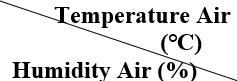
(1) Air temperature is categorized into five levels: Very Low (SR), Low (R), Medium (S), High (T), and Very High (SD) categories. The details of the variables, input temperature, and air, are explained in Figure 1.
(2) Air humidity is divided into the following categories: Very Dry (SK), Dry (K), Medium (S), Moist (L), and Very Humid (SL). The detailed variables for input humidity air are explained in Figure 2.

Figure 1. Variables input air temperature

Figure 2. Variables input air humidity
The speed blower consists of five categories: Very Slow (SL), Slow (L), Medium (S), Fast (C), and Very Fast (SC). In detail, the variables related to the blower’s output speed are explained in Figure 3.

Figure 3. Variables output speed blower
Function membership for the arrangement temperature heating artificial (heater).
(1) Salt temperature is divided into the following categories: Very Cold (SD), Cold (D), Normal (N), Hot (P), and Very Hot (SP). Details of the variables, including input salt temperature, are explained in Figure 4.
(2) Salinity (PPM) consists of Unsaturated (TJ), Moderately Saturated (JS), Saturated (J), Very Saturated (SJ), and Perfect (SP) categories. Details of the variables, including input temperature and air, are explained in Figure 5.

Figure 4. Variables input salt temperature

Figure 5. Variables input salinity
The dimmer heater consists of five categories: Very Low (SR), Low (R), Medium (S), High (T), and Very High (ST). Details of the variables and the blower’s output speed are explained in Figure 6.

Figure 6. Variables output dimmer heater
Inference is used to integrate the input and output based on the predefined fuzzy rules (rule base). The inference process aims to make a decision based on a condition that a system is not definite, non-linear, or complex, modeled in a mathematical way. The inference arrangement speed blower can be seen in Table 2, whereas the inference for arrangement heating artificial (heater) can be seen in Table 3.
Table 2. Inference for the arrangement speed blower
|
|
SR |
R |
S |
T |
ST |
|
SK |
SL |
SL |
R |
R |
S |
|
K |
SL |
R |
R |
S |
S |
|
S |
R |
R |
S |
C |
C |
|
L |
R |
S |
C |
C |
SC |
|
SL |
S |
C |
C |
SC |
SC |
Table 3. Inference for the arrangement temperature heating artificial (heater)
|
Elementary School |
D |
N |
P |
SP |
|
|
TJ |
ST |
ST |
T |
S |
R |
|
JS |
ST |
T |
S |
S |
R |
|
J |
T |
S |
S |
R |
R |
|
SJ |
S |
S |
R |
R |
SL |
|
SP |
S |
R |
R |
SL |
SL |
In this research, the defuzzification method used is the Centroid of Area (CoA). This method calculates the point-center area below the curve's fuzzy membership function to produce a mark that is crispier, more stable, and more realistic [14, 15].
Formula of CoA:
$y^*=\frac{\sum_j y_j \mu_c^{a g g r}\left(y_j\right)}{\sum_j \mu_c^{a g g r}\left(y_j\right)}$ (10)
Superiority of FLC in this research lies in its ability to adapt to changing environments, where FLC can overcome fluctuations in temperature and humidity that influence evaporation rates. Control is adaptive based on basically one's own good ability in processing annoying situations with the rules that have been made, and will provide positive feedback if it goes beyond the specified fuzzy rules [31, 32]. With designed fuzzy rules, such as those in point b (rulebase), the system will be able to adapt the speed of the blower and the Power heater in real time, without needing a complicated mathematical model. Additionally, FLC increases energy efficiency by controlling the blower and heater only at the required level, thereby reducing wasted electricity compared to systems with ON/OFF or PID control.
3.2 Design system
In a way, general design technology engineering evaporation is something design mechanics are equipped with for a tub saltwater container. Salt water container is shared into three parts, namely (1) Young brine reservoir (2–4 °Be), (2) Brine reservoir on process second (17–19 °Be), and (3) Receptacle end (Salt water industrially viable). Details can be seen in Figure 7; meanwhile, the optimal design for sensor placement to detect in a way that is good and optimal is shown in Figure 8. The design placement actuator is shown in Figure 9.

Figure 7. Framework design technology engineering evaporation

Figure 8. Sensor placement design

Figure 9. Placement design actuator
Referring to the design placement sensor and actuator in Figures 8 and 9. Referring to the proposed system architecture, the complete electronic design of the adaptive engineering evaporation system, including the sensor interfaces, microcontroller unit, heater control module, and blower driver circuit, is illustrated in Figure 10.

Figure 10. Design electronics technology engineering evaporation
3.3 Fuzzy logic flowchart system
The fuzzy logic flowchart illustrated in Figure 11 describes the overall operational process of the adaptive control system used in the artificial saltwater evaporation chamber, where the sequence begins with the input acquisition of temperature, humidity, and salinity parameters from sensors as crisp data, which are then processed in the fuzzification stage to convert them into linguistic variables representing environmental conditions, followed by the inference and rule-base evaluation process that determines the appropriate control decision based on predefined IF–THEN fuzzy rules, and subsequently the defuzzification stage that transforms the fuzzy outputs into precise control signals in the form of PWM values for the heater and ventilation actuators, enabling the system to adaptively regulate chamber temperature and humidity in real time; if the measured values have not yet met the desired concentration range (20–27 °Be), the process returns to the input stage through a closed-loop feedback mechanism, thereby ensuring that the evaporation process remains stable, energy-efficient, and capable of achieving mature brine concentration within 48 hours.

Figure 11. Flowchart system FLC
4.1 FLC model testing
This testing process was conducted to evaluate the performance of the previously designed FLC system. The experiment included implementing the control algorithm, acquiring sensor data, and evaluating performance through analysis of key parameters such as temperature, humidity, and brine salinity. Obtained results by comparing the system’s responses under different conditions to assess effectiveness and stability. On the first day of testing, the system recorded an average chamber temperature of 47.37℃, with the heater operating at 215 PWM and the brine salinity increasing to 13.5 °Be, as shown in Figure 12.

Figure 12. Results of the first day of experiment
From the experiment's results, we can observe the condition of the salt water in Room 1 during the testing process, as shown in Figure 13.
On the first day of the experiment, the performance of the FLC-based evaporation system showed a gradual increase in water temperature and brine concentration, as illustrated in Figure 12, while the physical condition of the evaporation chamber in Room 1 during this initial stage is shown in Figure 13. The real-time monitoring of temperature, humidity, and brine concentration displayed on the LCD panel in Room 1 is presented in Figure 14.

Figure 13. Condition of Room 1

Figure 14. LCD of Room 1
On the second day, the experiment continued with the target of achieving mature brine (25–27 °Be). The recorded temperature increased to 55.34℃, while the brine concentration reached 27.7 °Be, as shown in Figure 15. During this stage, the physical condition of the evaporation process in Room 2 is illustrated in Figure 16, and the integrated LCD display showing the operational status and brine concentration of the two-room system is presented in Figure 17. Interestingly, the average heater output decreased to 143 PWM, demonstrating that the FLC automatically reduced heating power once optimal thermal conditions were reached. This confirms that the adaptive control effectively optimized energy consumption while maintaining stable temperature and humidity levels.
From the experimental results, it can be observed that the condition of the brine during the second day of testing is illustrated in Figures 13 and 16. The condition of Room 2 and the corresponding LCD display indicate the achieved brine concentration in degrees Baumé (°Be). Once the target concentration was reached, the process proceeded to the third chamber, where mature brine was obtained after undergoing the rapid evaporation engineering process.

Figure 15. Results of the second day of the experiment

Figure 16. Condition of Room 2

Figure 17. LCD of the two-room
4.2 Analysis and evaluation
A significant increase in PPM from 2–4 °Be to 25–27 °Be indicates that the evaporation process is progressing to produce higher salt concentrations. This suggests that the applied technology is functioning well, increasing the efficiency of the evaporation process. The following is a picture of the experimental room, showing the condition of the evaporation room during the experimental process, as depicted in Figure 18 (Condition of room one), Figure 19 (Condition of room two), and Figure 20 (Condition of room three).
Chamber 1 is where the evaporation process takes place, with the aim of the young brine reaching its maximum temperature of 13.5 °Be. The evaporation proceeds or flows into chamber 2, as shown in Figure 19.

Figure 18. Condition of Room 1

Figure 19. Condition of Room 2

Figure 20. Condition of Room 3
Chamber 2 continues the process in chamber 1, with an initial Be value of 13.5, followed by re-evaporation. The final destination of the process in chamber 2 is aged brine with a Be value of 27°. Once the desired condition is reached, the final step is distributing water to Room 3, the old brine storage room, after it passes through the evaporation process in spaces 1 and 2. The conditions are illustrated in Figure 20.
The accelerated evaporation process achieved in this study represents a 93% reduction in processing time compared to conventional salt ponds. The integration of FLC enabled real-time adaptation of heater and blower power, allowing the system to respond dynamically to environmental fluctuations. Unlike traditional ON/OFF control, the fuzzy controller adjusted PWM signals proportionally, resulting in smoother heating transitions and improved energy efficiency.
Compared with spray evaporation technology, which raises brine concentration from 4 °Be to 24 °Be over approximately 90 hours, the proposed FLC system reached 27 °Be in just 48 hours, effectively reducing processing time by about 50%. This improvement can be attributed to the FLC’s ability to simultaneously evaluate temperature, humidity, and salinity, enabling adaptive control decisions that maintain optimal evaporation conditions without over-drying.
Beyond speed and efficiency, the fuzzy-controlled system also ensured uniform brine quality, maintaining consistency according to industrial standards. This result highlights that integrating fuzzy logic into evaporation engineering technology is not merely an alternative but a scientific breakthrough that enhances adaptability, operational efficiency, and sustainability. The system’s independence from weather conditions and reduced energy consumption further support national goals in the maritime and salt industries, contributing to SDG 9 and SDG 13.
The results of this study demonstrate that the adaptive FLC system effectively accelerated the evaporation process, transforming young brine (2–4 °Be) into mature brine (25–27 °Be) within 48 hours, representing a 93% reduction in processing time compared to the conventional solar pond method, which typically requires up to 30 days.
This improvement validates FLC’s ability to maintain stable thermal and humidity conditions through real-time adaptive feedback.
The superior performance of the FLC system arises from its ability to manage nonlinear interactions between temperature, humidity, and salinity, allowing it to balance heat input and ventilation continuously.
Unlike traditional ON/OFF or PID systems, the fuzzy inference mechanism enables smooth actuator transitions and energy-efficient heating control, thereby preventing temperature overshoot and ensuring consistent brine concentration quality.
This research was conducted on a small-scale laboratory prototype and has not yet been tested under outdoor environmental variations.
Therefore, further studies are needed to examine long-term performance, sensor calibration stability, and system robustness under fluctuating ambient conditions such as solar radiation, wind, and humidity.
Future development will focus on integrating solar or hybrid photovoltaic–thermal (PV–T) energy systems to enhance sustainability, as well as on implementing predictive control approaches, such as Model Predictive Control (MPC) or Neuro-fuzzy hybrid models, to improve accuracy and adaptability in large-scale applications further.
The integration of adaptive fuzzy logic in salt evaporation engineering provides a strategic technological solution for the national salt industry, promoting process automation, energy efficiency, and independence from climatic constraints.
This innovation directly supports SDG and SDG 13 by advancing sustainable, intelligent process engineering aligned with renewable energy transition goals.
The author expresses love for the Directorate of Research, Technology, and Community Service to the Community (DRTPM) Ministry of Higher Education, Science, and Technology, which has been given financial support through the 2025 Fundamental Research Scheme contract number B/038/UN46.1/PT.01.03/BIMA/PL/2025.
[1] Gude, V.G., Nirmalakhandan, N. (2010). Sustainable desalination using solar energy. Energy Conversion and Management, 51(11): 2245-2251. https://doi.org/10.1016/j.enconman.2010.03.019
[2] Central Agency Statistics. Salt Imports by Main Country of Origin, 2017-2023. https://www.bps.go.id/id/statistics-table/1/MjAxMyMx/impor-garam-menurut-negara-asal-utama--2017-2023.html. 2024.
[3] Susilowati, E., Alamsjah, M.A., Pujiastuti, D.Y. (2023). The effect of old water making time and heating temperature on moisture content and NaCl on traditional salt production. IOP Conference Series: Earth and Environmental Science, 1273(1): 012028. https://doi.org/10.1088/1755-1315/1273/1/012028
[4] Luo, X.G., Wei, C., Li, X.B., Deng, Z.G., Li, M.T., Fan, G. (2022). Optimization of NaOH–Na2CO3 brine purification method: From laboratory experiments to industrial application. Separation and Purification Technology, 296: 121367. https://doi.org/10.1016/j.seppur.2022.121367
[5] Dong, L., Xiong, Y.W., Huang, Q.Z., Xu, X., Huo, Z.L., Huang, G.H. (2021). Evaporation-induced salt crystallization and feedback on hydrological functions in porous media with different grain morphologies. Journal of Hydrology, 598: 126427. https://doi.org/10.1016/j.jhydrol.2021.126427
[6] Zhang, X., Ye, P., Wu, Y., Zhai, E. (2022). Experimental study on simultaneous heat-water-salt migration of bare soil subjected to evaporation. Journal of Hydrology, 609: 127710. https://doi.org/10.1016/j.jhydrol.2022.127710
[7] Lalanne, C., Givaudan, A., Boumendil, P., Lequien, F., Fullana, J.M. (2023). Salt concentration effects on evaporation-driven pattern formation in sessile droplets. European Journal of Mechanics-B/Fluids, 102: 10-17. https://doi.org/10.1016/j.euromechflu.2023.07.002
[8] Ma, X., Jia, X., Yao, G., Wen, D. (2022). Umbrella evaporator for continuous solar vapor generation and salt harvesting from seawater. Cell Reports Physical Science, 3(7): 100940. https://doi.org/10.1016/j.xcrp.2022.100940
[9] Yu, Z., Li, S., Chen, Y., Zhang, X., Chu, J., Zhang, Y., Tan, S.C. (2022). Intensifying the co-production of vapor and salts by a one-way brine-flowing structure driven by solar irradiation or waste heat. Desalination, 539: 115942. https://doi.org/10.1016/j.desal.2022.115942
[10] Zhao, H.L., Mu, X.J., Yin, L., Zhang, Z.X., et al. (2025). Solar-driven evaporation based on regulation salt crystallization behavior for high-efficiency freshwater production and salt collection. Desalination, 602: 118649. https://doi.org/10.1016/j.desal.2025.118649.
[11] Ding, P., Liu, X.J., Li, H.Q., Huang, Z.Q., Zhang, K., Shao, L., Abedinia, O. (2021). Useful life prediction based on wavelet packet decomposition and two-dimensional convolutional neural network for lithium-ion batteries. Renewable and Sustainable Energy Reviews, 148: 111287. https://doi.org/10.1016/j.rser.2021.111287
[12] Ghasemi, H., Ni, G., Marconnet, A.M., Loomis, J., Yerci, S., Miljkovic, N., Chen, G. (2014). Solar steam generation by heat localization. Nature Communications, 5(1): 4449. https://doi.org/10.1038/ncomms5449
[13] Teixeira-Duarte, F., Clemente, D., Giannini, G., Santos, P.R., Pinto, F.T. (2022). Review on layout optimization strategies of offshore parks for wave energy converters. Renewable and Sustainable Energy Reviews, 163: 112513. https://doi.org/10.1016/j.rser.2022.112513
[14] Belyadi, H., Haghighat, A. (2021). Machine Learning Guide for Oil and Gas Using Python: A Step-by-Step Breakdown with Data, Algorithms, Codes, and Applications. Gulf Professional Publishing. https://doi.org/10.1016/C2019-0-03617-5
[15] López, L.M., Ishizaka, A., Qin, J.D., Carrillo, P.A.Á. (2023). Chapter 4 - Fuzzy sets and MCDM sorting. In Multi-Criteria Decision-Making Sorting Methods, pp. 161-199. https://doi.org/10.1016/B978-0-32-385231-9.00009-2
[16] Greenfield, S. (2018). Geometric defuzzification revisited. Information Sciences, 466: 220-235. https://doi.org/10.1016/j.ins.2018.07.019
[17] Zhang, W. (2024). A new defuzzification method and ranking method for type-2 fuzzy numbers. Information Sciences, 682: 121275. https://doi.org/10.1016/j.ins.2024.121275
[18] Mahdiani, H.R., Banaiyan, A., Javadi, M.H.S., Fakhraie, S.M., Lucas, C. (2013). Defuzzification block: New algorithms, and efficient hardware and software implementation issues. Engineering Applications of Artificial Intelligence, 26(1): 162-172. https://doi.org/10.1016/j.engappai.2012.07.001
[19] Bobyr, M.V., Milostnaya, N.A., Kulabuhov, S.A. (2017). A method of defuzzification based on the approach of areas' ratio. Applied Soft Computing, 59: 19-32. https://doi.org/10.1016/j.asoc.2017.05.040
[20] Mamdani, E.H., Assilian, S. (1975). An experiment in linguistic synthesis with a fuzzy logic controller. International Journal of Man-Machine Studies, 7(1): 1-13. https://doi.org/10.1016/S0020-7373(75)80002-2
[21] Roy, P., Mahapatra, G.S., Rani, P., Pandey, S.K., Dey, K.N. (2014). Robust feedforward and recurrent neural network based dynamic weighted combination models for software reliability prediction. Applied Soft Computing, 22: 629-637. https://doi.org/10.1016/j.asoc.2014.04.012
[22] Raghavendra, K., Sarkar, S., Ajmani, S.K., Denys, M.B., Singh, M.K. (2013). Mathematical modelling of single and multi-strand tundish for inclusion analysis. Applied Mathematical Modelling, 37(9): 6284-6300. https://doi.org/10.1016/j.apm.2013.01.013
[23] Kosmadakis, G., Manolakos, D., Papadakis, G. (2010). Parametric theoretical study of a two-stage solar organic Rankine cycle for RO desalination. Renewable Energy, 35(5): 989-996. https://doi.org/10.1016/j.renene.2009.10.032
[24] Liu, H., Qin, Q. (2024). Research on post weld heat treatment control system for ultra large carbon steel workpieces based on fuzzy PID. In 2024 China Automation Congress (CAC), Qingdao, China, pp. 2418-2422. https://doi.org/10.1109/CAC63892.2024.10865728
[25] Amir, I.D., Pramudita, B.A., Damai, T.G.H.A.P., Wibowo, A.S. (2023). Smart monitoring and controlling system for soil moisture utilizing Internet of Things (IoT) technology with fuzzy logic controller. In 2023 International Conference on Data Science and Its Applications (ICoDSA), Bandung, Indonesia, pp. 356-361. https://doi.org/10.1109/ICoDSA58501.2023.10276432
[26] Akbari, E., Shadlu, M.S. (2023). Intelligent control of a domestic solar water heating system with thermal storage using fuzzy logic-modified model predictive controller. In 2023 8th International Conference on Technology and Energy Management (ICTEM), Mazandaran, Babol, Iran, Islamic Republic of, pp. 1-7. https://doi.org/10.1109/ICTEM56862.2023.10084188
[27] Almoshity, S., Gouda, K.A., Younus, S., Mohamed, F.A., Elbreki, A.M. (2022). Comparison study between PID and fuzzy logic controller to improve performance of AVR system for synchronous generators. In 2022 13th International Renewable Energy Congress (IREC), Hammamet, Tunisia, pp. 1-4. https://doi.org/10.1109/IREC56325.2022.10002030
[28] Cabral, I.M., Pereira, J.S., Ribeiro, J.B. (2024). Performance evaluation of PID and fuzzy logic controllers for residential ORC-based cogeneration systems. Energy Conversion and Management: X, 23: 100622. https://doi.org/10.1016/j.ecmx.2024.100622
[29] Nethaji, G., Kathirvelan, J. (2024). Performance comparison between PID and fuzzy logic controllers for the hardware implementation of traditional high voltage DC-DC boost converter. Heliyon, 10(17): e36750. https://doi.org/10.1016/j.heliyon.2024.e36750
[30] Diouf, S.M., Gueye, I., Kebe, A., Diop, M. (2021). Comparative study of conventional PID and fuzzy logic controllers applied to an electric oven. In 2021 International Conference on Electrical, Communication, and Computer Engineering (ICECCE), Kuala Lumpur, Malaysia, pp. 1-5. https://doi.org/10.1109/ICECCE52056.2021.9514104
[31] Bandpey, R.F., Kalat, A.A. (2022). An observer-based adaptive fuzzy control for prescribing drug dosage in cancer treatment. Biocybernetics and Biomedical Engineering, 42(4): 1137-1148. https://doi.org/10.1016/j.bbe.2022.09.004
[32] Romanov, A.A., Filippov, A.A., Yarushkina, N.G. (2023). Adaptive fuzzy predictive approach in control. Mathematics, 11(4): 875. https://doi.org/10.3390/math11040875