Sunardi* | Fuad | Mochamad Arif Zainul Fuad | Mihrobi Khulwatu Rihmi | Asep Awaludin Prihanto | Achmad Baidowi | Oktiyas Muzaky Luthfi
© 2025 The authors. This article is published by IIETA and is licensed under the CC BY 4.0 license (http://creativecommons.org/licenses/by/4.0/).
OPEN ACCESS
This study evaluates the seakeeping and stability of a redesigned traditional fishing vessel, modified to improve accessibility for wheelchair users while maintaining safety and efficiency. Key changes include a leveled deck, integrated ramps, handrails, and wheelchair anchoring systems to overcome accessibility barriers. Computational analyses confirmed that the vessel meets International Maritime Organization (IMO) stability standards despite structural changes like an elevated deck and redistributed weight. Seakeeping improvements reduce wave-induced motions, enhancing passenger comfort and safety. Motion Sickness Incidence (MSI) assessments showed better habitability across various sea conditions. The redesign also doubles the fish hold capacity, boosting operational efficiency. These results demonstrate the feasibility of integrating inclusive design principles into small fishing vessels, promoting accessibility and safety in maritime applications.
wheelchair-accessible vessel, fishing vessel redesign, inclusive maritime design, stability analysis, seakeeping performance
Designing maritime vessels that balance accessibility and operational efficiency presents unique challenges, particularly for fishing vessels catering to individuals with disabilities. Although inclusive principles have advanced across various transportation sectors, the maritime industry remains slow in adopting comprehensive accessibility measures. Effective boat design requires not only structural modifications, such as ramps, handrails, and anti-slip surfaces, but also broader considerations for user experience and environmental impact [1, 2].
Accessibility goes beyond physical features. For example, the concept of perceived accessibility highlights the need to prioritize both functional and experiential needs in vessel design [3]. The ecological dimension also plays a critical role, as vessel interactions with marine life significantly shape user satisfaction [4]. Community engagement is another essential factor, ensuring that designs meet diverse user requirements and foster inclusivity throughout the development process [5].
Regulatory frameworks, such as those established by the Passenger Vessel Access Advisory Committee, are instrumental in shaping accessible maritime infrastructure. These regulations have significantly improved port facilities and the marine tourism experience for individuals with disabilities [6]. However, meaningful solutions require the early integration of accessibility considerations into the design process [7]. Despite these advancements, the maritime sector continues to lag behind other modes of transportation in adopting accessibility standards [8].
The safety and operational efficiency of fishing vessels depend heavily on their stability and seakeeping performance. Stability is influenced by parameters such as the center of gravity (CG), metacentric height (GM), and cargo load, all of which can be affected by design modifications or operational conditions. Simplified methodologies aligned with International Maritime Organization (IMO) regulations provide practical tools for stability assessments in fishing operations [9]. At the same time, tailored criteria are necessary to address the specific characteristics of fishing vessels, as generic solutions may not be sufficient [10].
Seakeeping analysis, crucial for evaluating a vessel’s performance in variable sea conditions, has benefited from advanced methodologies. For instance, the Seakeeping Performance Index (SPI) employs a probabilistic framework to quantify vessel operability in dynamic maritime environments [11]. Computational tools, such as numerical simulations, provide granular insights into vessel performance and improve the accuracy of seakeeping evaluations [12].
Operational variability is another key factor influencing vessel dynamics. Changes in cargo loads can significantly affect stability and seakeeping, underscoring the need for adaptive methodologies [13]. Real-time monitoring systems offer actionable feedback on stability parameters, enhancing operational decision-making and safety [14].
In summary, achieving optimal stability and seakeeping performance in accessible fishing vessels requires a multifaceted approach. By combining simplified criteria, probabilistic assessments, computational analysis, and real-time monitoring systems, designers and operators can address the dual objectives of safety and inclusivity. This study aims to bridge the gap between technical performance and social equity, advancing sustainable and inclusive practices within the maritime industry.
This study utilized a structured approach involving field surveys, conceptual redesign, and computational analysis to create a wheelchair-accessible fishing vessel. The research was conducted at Pondok Dadap Fishing Port, Malang Regency, with technical analysis performed at the Faculty of Fisheries and Marine Sciences, Universitas Brawijaya, and the Ship Design Laboratory at ITS.
The structural limitations of existing Sekoci designs, including deck height, pathways, and accessibility features, were assessed through on-site inspections. Feedback from wheelchair users and crew members was collected to identify mobility challenges.
Accessible design concepts were developed using Computer-Aided Design (CAD) software. These designs incorporated ramps, handrails, wheelchair anchoring systems, and flat deck layouts, ensuring compliance with international maritime safety standards [15, 16].
Computational tools were employed to analyze the effects of proposed modifications on vessel stability and seakeeping. Stability analysis evaluated parameters such as metacentric height (GM) and righting moments, while seakeeping analysis focused on the vessel’s behavior under various sea conditions, particularly roll, pitch, and heave [17, 18].
A validation process was conducted by comparing the geometric parameters of the existing Sekoci fishing vessel’s technical drawings with the computational model developed using Bentley Maxsurf Modeler for Academic.
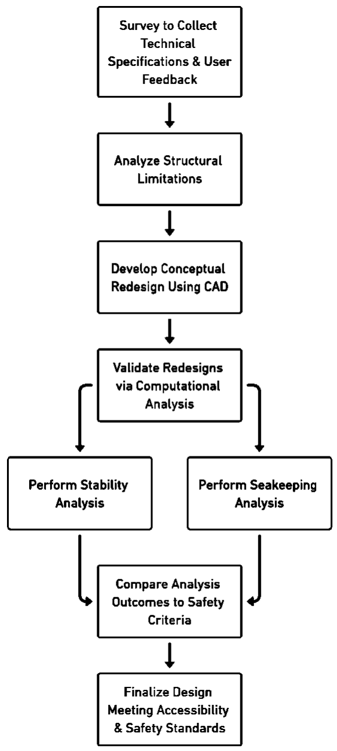
The research methodology for redesigning fishing vessels to improve wheelchair accessibility involves surveying existing designs to identify structural limitations, such as uneven decks and narrow pathways, and gathering user feedback. Using CAD, conceptual redesigns were developed with features like ramps, handrails, and wheelchair anchoring systems as shown in Figure 1. These designs underwent computational analysis to evaluate stability and seakeeping performance, ensuring compliance with IMO standards. Stability and motion responses were analyzed and compared to safety criteria. The final design balances accessibility, operational efficiency, and safety, incorporating iterative refinements based on analysis results.
Figure 1. Research flow of stability and seakeeping evaluation of redesigning fishing vessel for wheelchair users
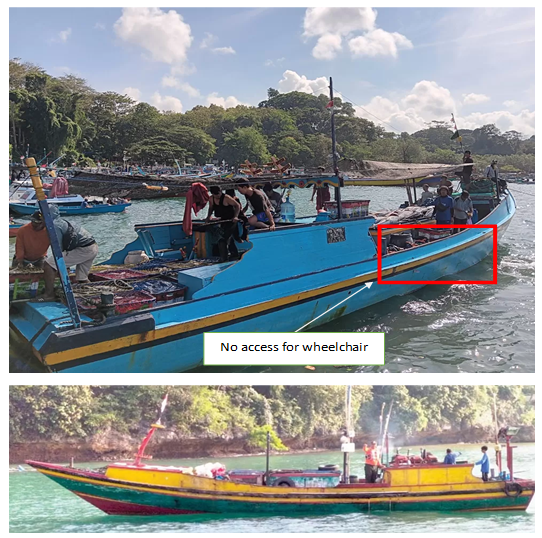
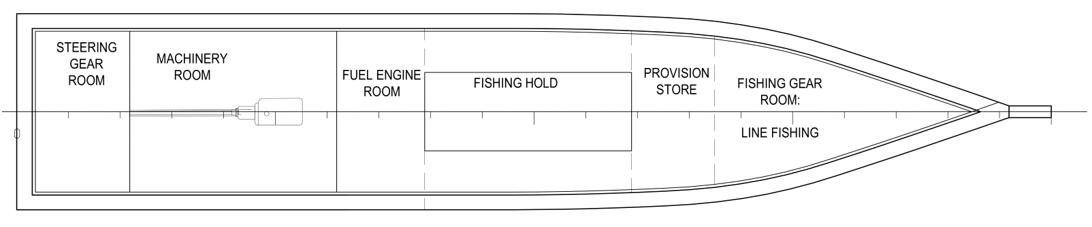
The existing design of Sekoci fishing boats poses significant challenges for wheelchair accessibility as shown in Figure 2. The traditional layout includes a large central fish hold, uneven deck surfaces, and narrow pathways, which severely restrict movement across the deck. The lack of ramps, handrails, and accessible features further exacerbates mobility and safety issues for wheelchair users [18-20]. Additionally, the absence of essential amenities, such as accessible toilets and seating, highlights the overall inaccessibility of the current design.
Figure 2. Challenges in mobility and accessibility of existing deck design
The validation results, presented in Table 1, compare the computational model developed using Bentley Maxsurf Modeler for Academic with the existing Sekoci fishing vessel based on remeasurement and redesign data. The results show minimal differences between the two models, with a maximum deviation of 2.5% in displacement and 2.4% in block coefficient. These discrepancies fall within acceptable limits for computational modeling, ensuring that the stability and seakeeping simulations accurately represent real-world vessel performance.
Table 1. Validation model results
|
Parameter |
Unit |
Sekoci Fishing Vessel |
Model |
Difference (%) |
|
Displacement |
m³ |
48.5 |
47.3 |
2.5% |
|
Draft Amidships |
m |
1.50 |
1.50 |
0.0% |
|
Immersed Depth |
m |
1.50 |
1.50 |
0.0% |
|
WL Length |
m |
13.40 |
13.40 |
0.0% |
|
Beam (on WL) |
m |
4.80 |
4.80 |
0.0% |
|
LCG (Horizontal) |
m |
6.10 |
6.07 |
0.5% |
|
LCG (Vertical) |
m |
0.98 |
0.98 |
0.0% |
|
Block Coefficient (Cb) |
|
0.50 |
0.49 |
2.4% |
The redesign process involved iterative refinements based on computational results and user feedback from wheelchair users collected during field surveys and reviews of preliminary redesign plans. Qualitative feedback focused on mobility and safety concerns, while quantitative input was mapped to specific design requirements based on accessibility standards. This feedback directly led to the following key design improvements:
These changes addressed users’ perceived risks and onboard challenges. Future trials will further engage users to refine the vessel design. The final design successfully balances accessibility, stability, and operational efficiency while meeting International Maritime Organization (IMO) standards and ISO 2631-1:1997 guidelines. Although the redesigned Sekoci meets IMO stability and safety requirements, additional regulatory challenges may arise based on regional contexts. Different flag states may impose supplemental requirements, such as the Americans with Disabilities Act (ADA) in the U.S., which specifies wider ramps, standardized handrails, and evacuation protocols. In the EU, compliance may require adherence to both EU-wide directives and individual member-state regulations, potentially involving complex certification processes.
Beyond accessibility, environmental regulations could impact certification, with requirements such as emission limits or fuel restrictions affecting vessel design. Classification societies like DNV, ABS, and Lloyd’s Register may also demand detailed documentation and risk assessments to demonstrate compliance with their standards. To address these potential challenges, early collaboration with local authorities and classification societies is essential. Engaging regulatory bodies during the design phase helps identify region-specific requirements, such as wheelchair-accessible emergency exits or additional stability tests, ensuring they are integrated into the design before construction. This proactive approach ensures that the redesign not only complies with IMO standards but is adaptable to diverse operational contexts, supporting wider deployment of inclusive vessel designs without compromising safety.
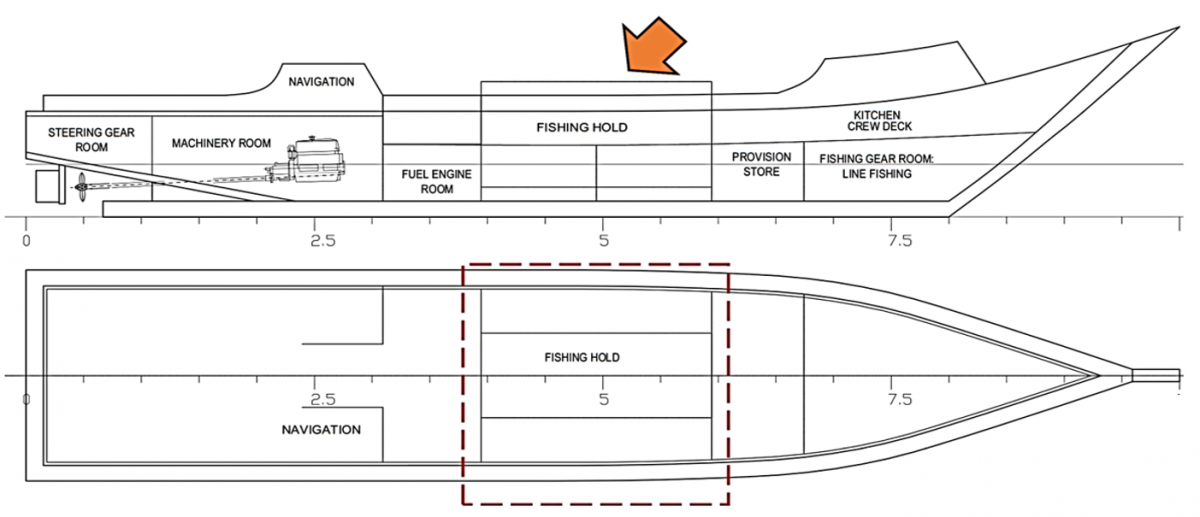
The existing Sekoci fishing boat presents significant accessibility challenges due to uneven deck heights, narrow pathways, and the absence of essential amenities, such as accessible toilets and designated seating, as shown in Figures 3 and 4. These issues severely limit mobility and navigation for wheelchair users. The redesigned Sekoci addresses these challenges with several improvements aimed at enhancing both accessibility and operational efficiency. The leveled deck enables seamless movement across the vessel, with flush fish hold covers ensuring a smooth, wheelchair-friendly surface. Stability and seakeeping analyses confirmed the technical feasibility of these modifications, validating the redesign for disabled users before proceeding with detailed design and prototype development.
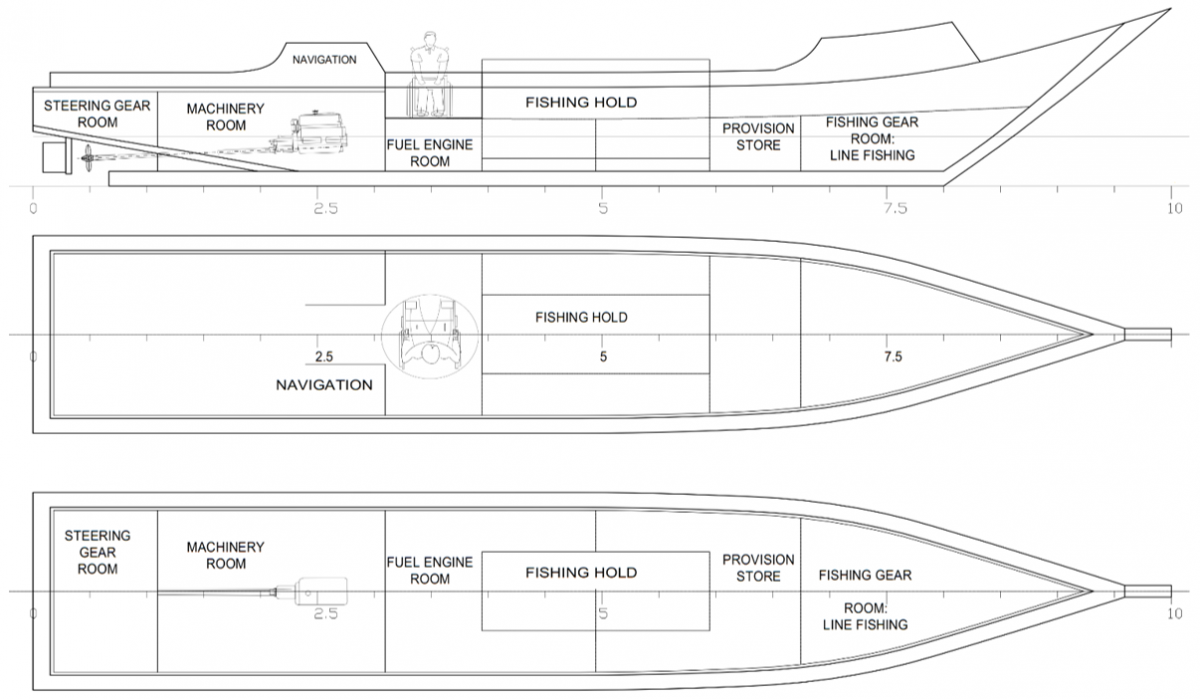
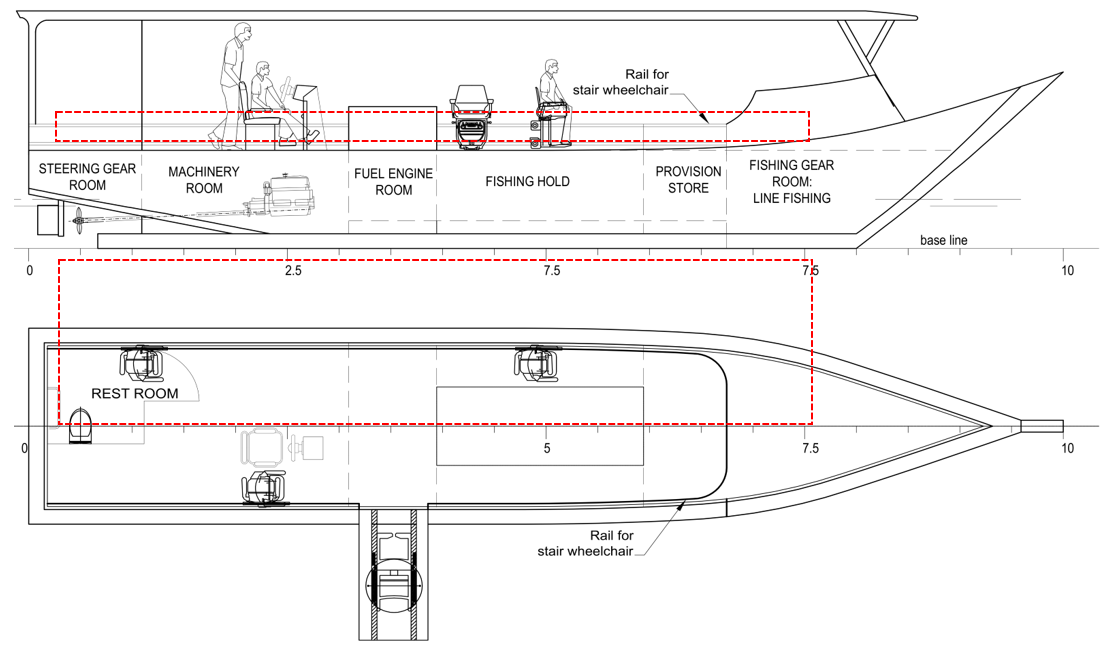
The redesigned Sekoci introduces a leveled deck aligned with the engine room height, providing seamless movement across the vessel. Flat fish hold covers replace the traditional raised design, allowing wheelchair users to navigate freely as illustrated in Figure 5.
The redesign introduced several structural modifications to enhance both functionality and accessibility. The deck height was raised to align seamlessly with the engine room, reducing the fish hold height by 0.5 meters. To compensate for this reduction, the hold's width was expanded to match the vessel's full beam, with an additional width of 1.25 meters. This adjustment resulted in a substantial increase in hold volume from 4.596 m³ to 9.219 m³, effectively doubling the storage capacity. With a stowage factor of approximately 0.5 tons per cubic meter, the redesign achieves a 100% increase in storage capacity under full-load conditions.
Additional modifications were implemented to enhance accessibility and safety for wheelchair users. Pathways were widened to facilitate ease of movement across the deck, while ramps and handrails were integrated to improve safety and stability during operations. A wheelchair anchoring system was added to ensure secure placement during vessel activity. These changes, combined with the optimized fish hold design, significantly improve the vessel’s practicality and usability, addressing critical accessibility needs without compromising operational efficiency.
Despite the elevated deck, the metacentric height (GM) remains within safe limits, and the righting arm (GZ) curve demonstrates sufficient restoring force, ensuring stability under fully loaded conditions [21, 22]. The redesigned weight distribution enhances dynamic performance, minimizing the risks of rolling and heeling in rough seas. The weight distribution for the current design is detailed in Table 2, while the redesigned distribution is presented in Table 3.
Figure 3. Existing Sekoci fishing boat layout with central fish hold
Figure 4. Wheelchair user accessibility challenges on existing Sekoci design
Table 2. Fuel load condition for existing design weight distribution
|
Item Name |
Quantity |
Unit Mass Tonne |
Total Mass Tonne |
Long Arm |
Trans Arm |
Vertical Arm |
|
LWT |
1 |
3.8 |
3.8 |
6.8 |
0 |
0.82 |
|
Fish |
1 |
2.5 |
2.5 |
8.4 |
0 |
1.5 |
|
Crew |
5 |
0.08 |
0.4 |
5 |
0 |
3.5 |
|
Machinery |
1 |
0.85 |
0.85 |
3.8 |
0 |
0.7 |
|
Fuel engine |
50% |
1.485 |
0.742 |
5.252 |
0 |
0.418 |
|
Water sb |
50% |
0.202 |
0.101 |
5.246 |
-1.12 |
0.626 |
|
Water ps |
50% |
0.202 |
0.101 |
5.246 |
1.12 |
0.626 |
Table 3. Fuel load condition for redesigned weight distribution
|
Item Name |
Quantity |
Unit Mass Tonne |
Total Mass Tonne |
Long Arm |
Trans Arm |
Vertical Arm |
|
LWT |
1 |
4.2 |
4.2 |
6.8 |
0 |
0.82 |
|
Fish |
1 |
4.5 |
4.5 |
8.4 |
0 |
1.5 |
|
Crew |
5 |
0.08 |
0.4 |
5 |
0 |
3.5 |
|
Machinery |
1 |
0.85 |
0.85 |
3.8 |
0 |
0.7 |
|
Fuel engine |
50% |
1.485 |
0.742 |
5.252 |
0 |
0.418 |
|
Water sb |
50% |
0.202 |
0.101 |
5.246 |
-1.12 |
0.626 |
|
Water ps |
50% |
0.202 |
0.101 |
5.246 |
1.12 |
0.626 |
Figure 5. Proposed redesign of Sekoci for wheelchair accessibility
Table 4. Stability criteria results based on IMO standards for criteria 3.1.2.1 to 3.1.2.4
|
Code |
Criteria |
Value |
Units |
Actual |
Status |
|
|
Existing |
Re-Design |
|||||
|
A.749(18) Ch3 - Design criteria applicable to all ships |
Area 0 to 30 |
3.151 |
m.deg |
5.5004 |
5.1948 |
Pass |
|
Area 0 to 40 |
5.157 |
m.deg |
156 |
8.651 |
Pass |
|
|
Area 30-40 |
1.719 |
m.deg |
3.7152 |
3.4562 |
Pass |
|
|
Max GZ at 30 or greater |
0.2 |
m |
0.387 |
0.352 |
Pass |
|
|
Angle of maximum GZ |
25 |
deg |
40.9 |
38.2 |
Pass |
|
|
Initial GMt |
0.15 |
m |
0.734 |
0.673 |
Pass |
|
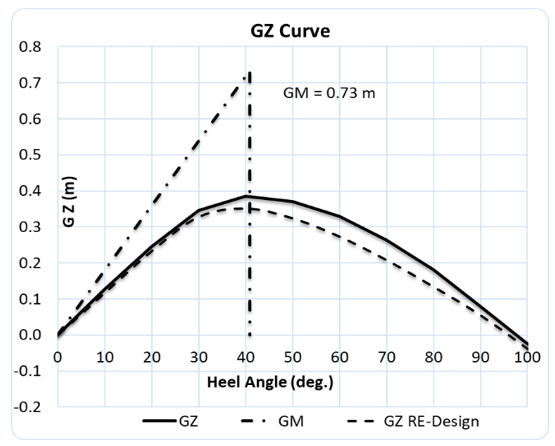
The redesign of the Sekoci fishing vessel significantly altered its weight distribution, influencing its stability characteristics. The GZ curve analysis revealed a reduction in the area under the curve compared to the original design (Figure 6). This indicates a decrease in the vessel's righting ability, a consequence of the elevated deck and modified weight distribution. Despite this, the analysis demonstrated that the redesigned vessel still adheres to the International Maritime Organization (IMO) stability criteria as outlined in Annex A.749(18).
The redesigned vessel's stability remains robust, particularly under fully loaded conditions, as evidenced by the compliance of critical parameters such as the metacentric height (GM) and the righting arm (GZ) with IMO standards. These results underscore the importance of careful weight distribution adjustments to balance accessibility enhancements with operational safety. The modifications achieve the dual goals of creating an inclusive design while maintaining high levels of vessel stability and safety.
Table 4 presents the stability criteria results for both the existing and redesigned Sekoci fishing vessels, evaluated against the International Maritime Organization (IMO) standards outlined in Annex A.749(18). The analysis confirms that the redesigned vessel meets all required stability parameters under full-load conditions. Simulations using hydrodynamic software (Maxsurf) assessed key stability factors, including metacentric height (GM), righting arm (GZ), and the GZ curve under various loading conditions.
The simulations demonstrate that the redesigned Sekoci meets and surpasses IMO A.749(18) criteria, even after modifications for wheelchair accessibility. The area under the GZ curve for the 0°–30° heel range slightly decreases from 5.5004 m.deg to 5.1948 m.deg, remaining well above the 3.151 m.deg minimum. Similarly, the area in the 0°–40° range decreases from 9.2156 m.deg to 8.651 m.deg, exceeding the 5.157 m.deg requirement. The maximum GZ beyond 30° decreases from 0.387 m to 0.352 m, still above the 0.2 m minimum, while the angle of maximum GZ shifts slightly from 40.9° to 38.2°.
Both the initial GM values for the current (0.734 m) and redesigned (0.673 m) vessels exceed the 0.15 m guideline, ensuring strong initial stability. The vanishing angle, where stability is lost, decreases slightly from 100.07° to 97°, but still provides an adequate range of positive stability. Despite a slight reduction in the righting ability, the modified weight distribution (Table 2) effectively mitigates the impact of the elevated deck by redistributing mass to maintain balance. Overall, these results confirm that the redesigned vessel maintains a significant safety margin above international standard. This demonstrates that inclusive design features, such as an elevated deck, can be successfully incorporated without compromising operational safety or stability [23].
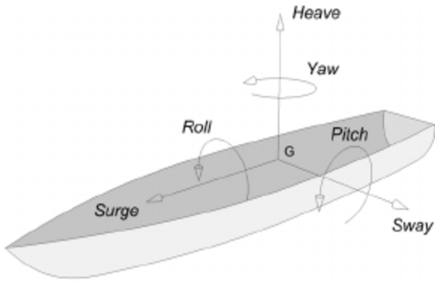
The seakeeping analysis evaluated the redesigned Sekoci vessel's performance under various wave conditions, focusing on its response to wave-induced motions as shown in Figure 7. This analysis is critical for understanding the vessel's stability, passenger comfort, and operational safety, particularly for wheelchair users. The study examined key motion responses, including heave, pitch, and roll, using Response Amplitude Operator (RAO) graphs to quantify the vessel’s behavior under different sea states.
Figure 6. GZ curve
Figure 7. Seakeeping analysis: Wave-induced vessel responses in 6 free motions
Figure 8. Seakeeping analysis: Vessel responses in head seas
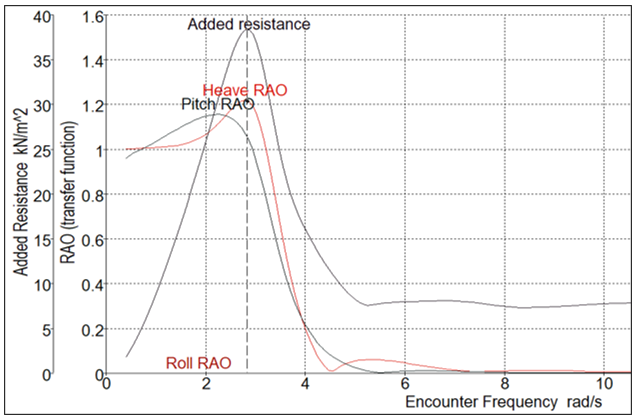
In head seas (Figure 8), the dominant responses of the vessel are heaving and pitching, as these motions are directly influenced by wave energy acting along the vessel’s longitudinal axis. The RAO graph indicates that at a wave frequency of approximately 2.8 rad/s, the heave and pitch responses peaked with an RAO value of 1.2, signifying that the vessel's motion amplitude was 1.2 times greater than the wave amplitude. This peak response represents the natural frequency range where the vessel is most susceptible to wave-induced motions. Beyond this frequency range, particularly between 4 and 6 rad/s, the motion response diminished significantly, with RAO values approaching near-zero levels. The substantial reduction in motion amplitude contributes to improved operational safety and ensures greater comfort for passengers, particularly for those using wheelchairs, by minimizing the impacts of wave-induced motions.
Figure 9. Seakeeping analysis: Vessel responses in side beam seas
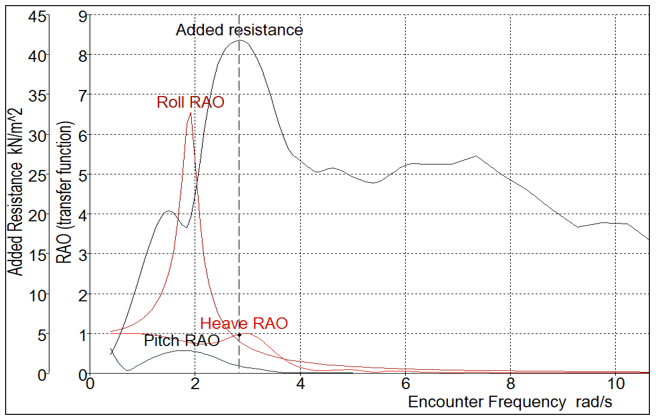
The vessel's response to wave conditions originating from the side (side beam seas) is primarily characterized by rolling motion, as shown in the RAO graph (Figure 9). At a wave frequency of approximately 2 rad/s, the RAO value for rolling motion reached 6.8, indicating that the roll amplitude was 6.8 times greater than the wave amplitude. This significant rolling response highlights the vessel's sensitivity to lateral wave forces within this frequency range. However, as the wave frequency increased to between 3 and 6 rad/s, the rolling response gradually diminished, approaching negligible levels. This trend demonstrates the vessel’s ability to stabilize at higher wave frequencies, which directly contributes to improved safety and passenger comfort.
Based on these findings, it is evident that wave encounter frequencies in the range of 1–3 rad/s produce significant motion responses. Therefore, careful consideration must be given to selecting operational waters with wave frequencies outside this range to ensure safer and more comfortable operations, particularly for wheelchair users. In scenarios where such conditions cannot be avoided, additional safety measures should be implemented. These include enhanced locking mechanisms for wheelchairs, non-slip deck surfaces, and reinforced safety features to prevent accidents caused by excessive rolling motions [24, 25].
The analysis further underscores the combined influence of wave frequency, hull shape, and dimensions on the vessel's motion characteristics under specific sea conditions. The RAO findings offer critical insights into refining design parameters, particularly in optimizing wheelchair accessibility. By applying these insights, the placement, configuration, and operational stability of wheelchair facilities on the deck can be improved, ensuring greater safety and comfort for all passengers, especially under challenging sea conditions.
The International Standard ISO 2631-1:1997, Mechanical Vibration and Shock – Evaluation of Human Exposure to Whole-Body Vibration – Part 1: General Requirements, provides a robust framework for evaluating human comfort under whole-body vibration exposure. This standard is widely applied in maritime contexts to assess the effects of vessel motion on passenger comfort and safety. Using parameters such as Root Mean Square (RMS) acceleration, ISO 2631-1 defines critical thresholds for comfort, health, and performance, particularly in relation to vertical accelerations induced by wave motion [26].
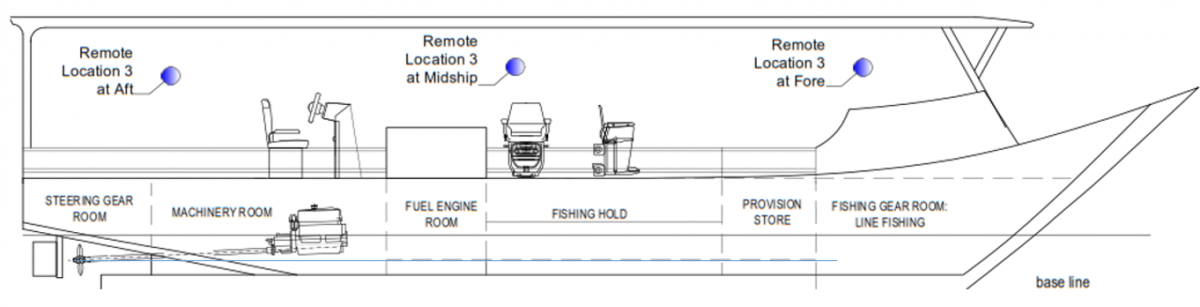
Motion Sickness Incidence (MSI) serves as a metric to evaluate the percentage of passengers likely to experience discomfort or motion sickness under wave-induced vessel motions. MSI analyses were performed through computer simulations that placed observation points at multiple remote locations on the deck, such as the stern, midship, and bow, as illustrated in Figure 10. These simulations captured the differing conditions across these locations, highlighting variations in passenger experiences based on their position on the vessel [27, 28].
Figure 10. Remote location for MSI analysis
The analysis revealed that significant vessel motions, characterized by high acceleration levels due to wave impacts, increase the likelihood of passenger discomfort or sickness. The relationship between acceleration levels and passenger comfort is guided by ISO standards for habitability (Table 5), which categorize comfort levels based on RMS acceleration. These categories range from not uncomfortable (< 0.315 m/s²) to extremely uncomfortable (> 2 m/s²) [29, 30].
Table 5. Motion sickness incident categorization based on ISO standards for habitability
|
Habitability Acceleration |
|
|
< 0.315 ms-2 |
Not uncomfortable |
|
0.315 – 0.63 ms-2 |
A little uncomfortable |
|
0.5 – 1.0 ms-2 |
Fairly uncomfortable |
|
0.8 – 1.6 ms-2 |
Uncomfortable |
|
– 2.5 ms-2 |
Very uncomfortable |
|
>2 ms-2 |
Extremely uncomfortable |
Computer simulations were conducted to evaluate RMS accelerations at various points on the vessel, including the stern, midship, and bow. The analysis included:
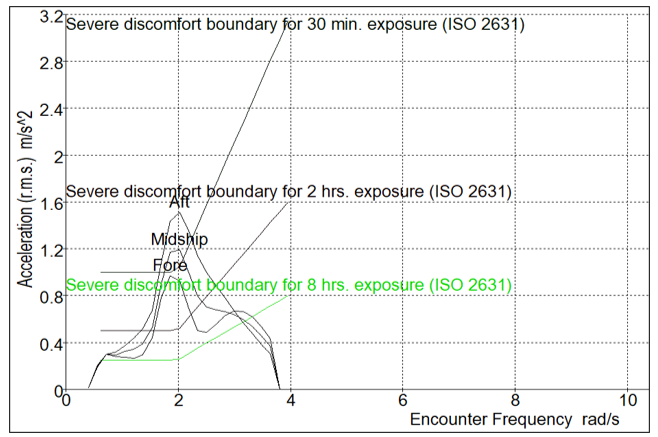
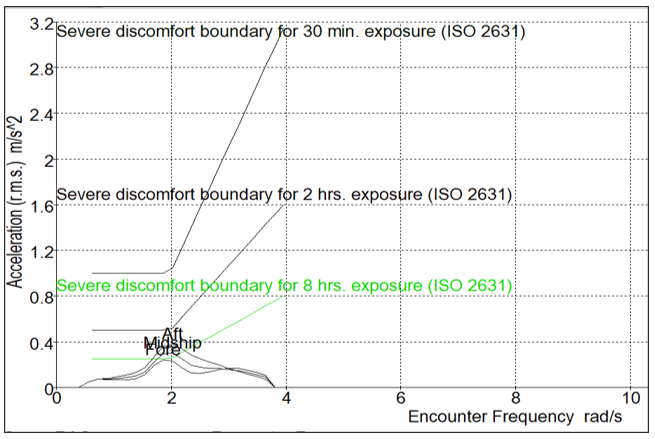
In this study, MSI was simulated using motion (Bentley Maxsurf for academic) to generate the vessel's Response Amplitude Operator (RAO) curves under varying wave frequencies. Results showed that at a wave frequency of 2 rad/s, vertical accelerations at the stern reached 1.5 m/s², categorized as uncomfortable according to ISO 2631-1. However, at wave frequencies exceeding 4 rad/s, vertical accelerations decreased significantly, indicating enhanced passenger comfort. For calm seas (1-meter wave height), the MSI remained low across all measurement points, categorized as "slightly uncomfortable" with vertical accelerations below 0.4 m/s² (Figure 11). In rough seas (4-meter wave height), vertical acceleration increased, leading to a higher MSI percentage, particularly in the aft and midship areas, where values were categorized as "uncomfortable" with vertical accelerations exceeding 0.8 m/s² (Figure 12).
Figure 11. Motion sickness incident analysis for rough sea conditions
Figure 12. Motion sickness incident analysis for calm sea conditions
This analysis demonstrates that MSI, when evaluated through computer simulations and guided by ISO 2631-1, provides a comprehensive approach to assessing and optimizing vessel design. Such evaluations are instrumental in ensuring passenger comfort and safety, particularly for wheelchair users, by informing decisions about vessel configurations and operational conditions in specific maritime environments.
The leveled deck and accessibility feature significantly enhance usability for wheelchair users, promoting inclusivity without sacrificing operational efficiency. Additionally, the optimized fish hold design increases storage capacity by 100%, enhancing the vessel's practicality for fishing operations. The redesigned Sekoci fishing vessel addresses critical accessibility challenges faced by wheelchair users while maintaining the safety and functionality required for traditional fishing operations. The inclusion of accessibility features, such as a leveled deck, ramps, handrails, and wheelchair anchoring systems, eliminates significant barriers, allowing seamless mobility across the deck. These modifications demonstrate that inclusive design principles can be effectively integrated into maritime vessels without compromising operational performance. The increased fish hold capacity achieved through optimized dimensions further highlights the practicality of the redesign, doubling storage potential and enhancing its commercial viability [31-34].
Stability analysis confirms the redesign’s compliance with IMO standards, showing that careful adjustments to weight distribution and deck height can mitigate potential risks associated with elevating the center of gravity [35-37]. These findings are consistent with previous studies emphasizing the importance of balancing accessibility with technical performance in vessel design. Similarly, the improved seakeeping performance, particularly in reducing wave-induced motions such as rolling and pitching, ensures a safer and more comfortable experience for all users under various sea conditions [38]. Careful adjustments to weight distribution and deck height have been shown to effectively address stability challenges, as highlighted in studies on vessel dynamics and weight management strategies [39-42]. These design considerations ensure both compliance with technical standards and enhanced user experience, aligning with the principles of accessible and safe maritime design.
The Motion Sickness Incidence (MSI) analysis underscores the importance of minimizing dynamic motions to enhance passenger comfort, particularly for vulnerable individuals. By adhering to ISO standards for habitability, the redesign provides a more stable and accommodating environment, aligning with the broader goal of fostering inclusivity in maritime activities. These results validate the redesign as a feasible solution to accessibility challenges, setting a precedent for the integration of inclusive features into other small-scale vessels [43-45]. This study contributes to the growing field of inclusive maritime design by offering a comprehensive framework for addressing the unique needs of disabled users.
The redesign faced constraints, including limited structural modifications due to fixed vessel dimensions and the challenge of maintaining stability despite the raised deck. Computational analysis provided effective solutions, but further validation through physical trials is necessary. Future research will focus on:
Environmental sustainability will also be a key consideration. Planned studies will explore fuel efficiency improvements, emissions reduction, and the integration of renewable energy sources, such as electric propulsion and solar panels. The selection of lightweight, durable materials could further minimize the vessel’s environmental impact, aligning the design with sustainable maritime practices and reducing its carbon footprint.
Additionally, future research will incorporate long-term user feedback and prototype testing to refine accessibility features and evaluate their broader application. By bridging technical innovation, environmental responsibility, and social equity, this work paves the way for more inclusive and sustainable practices in fisheries and maritime industries, ensuring the design’s adaptability across regions and vessel types.
The redesign presents significant socio-economic benefits. Although initial costs may rise due to accessibility improvements, these are offset by long-term gains from inclusive market opportunities, such as sport fishing and accessible marine tourism. The redesign allows operators to attract a larger and more diverse clientele, enhancing revenue streams. Socially, the redesign promotes equal access for disabled individuals, supporting SDG objectives. Communities adopting this design can benefit from job creation, specialized tourism services, and increased local income. As a model for inclusive vessel design, it holds the potential to boost socio-economic development in coastal regions.
The redesigned Sekoci fishing vessel enhances accessibility for wheelchair users while meeting safety and operational standards. Key improvements, including a leveled deck, ramps, handrails, and anchoring systems, eliminate mobility barriers and improve usability. Stability and seakeeping analyses confirm compliance with International Maritime Organization (IMO) standards, ensuring safe operations under varying sea conditions. The optimized fish hold doubles storage capacity, increasing efficiency without compromising accessibility. Future research will focus on prototype testing, durability assessments, and integrating advanced technologies like automation and renewable energy systems to enhance sustainability. The redesign aligns with sustainable maritime practices, supporting fuel efficiency, emissions reduction, and socio-economic benefits through inclusive tourism and job creation. This study demonstrates that inclusive design can be effectively applied to small vessels, promoting safety, efficiency, and sustainability in maritime industries.
[1] Lindsay, R.K., Carmichael, C., Allen, P.M., Fossey, M., Godier-McBard, L.R., Butler, L., Smith, L. (2022). Fishing participation, motivators and barriers among UK anglers with disabilities: Opportunities and implications for green social prescribing. International Journal of Environmental Research and Public Health, 19(8): 4730. https://doi.org/10.3390/ijerph19084730
[2] Wulandari, A.I., Utama, I., Rofidayanti, A., Hudson, D. (2024). Numerical analysis of ship motion of crew boat with variations of wave period on ship operational speed. CFD Letters, 16(4): 1-15. https://doi.org/10.37934/cfdl.16.4.115
[3] Lättman, K., Friman, M., Olsson, L. (2016). Perceived accessibility of public transport as a potential indicator of social inclusion. Social Inclusion, 4(3): 36-45. https://doi.org/10.17645/si.v4i3.481
[4] Guerra, M., Dawson, S., Brough, T., Rayment, W. (2014). Effects of boats on the surface and acoustic behaviour of an endangered population of bottlenose dolphins. Endangered Species Research, 24(3): 221-236. https://doi.org/10.3354/esr00598
[5] Ahmed, J.U., Ashikuzzaman, N.M., Mahmud, A.S.M. (2017). Social innovation in education: BRAC boat schools in Bangladesh. Journal of Global Entrepreneurship Research, 7(1): 20. https://doi.org/10.1186/s40497-017-0077-z
[6] Muntaha, A., Setyohadi, D., Isdianto, A. (2023). Enhancing safety and security: Facilities for wheelchair users in marine tourism area. International Journal of Safety & Security Engineering, 13(6): 1153-1161. https://doi.org/10.18280/ijsse.130619
[7] Ferrari, P., Ferrari, P. (2020). State-of-the-art in the design of accessible boats. Planning Inclusive Yachts: A Novel Approach to Yacht Design, 1: 37-79. https://doi.org/10.1007/978-3-030-55207-7_3
[8] Farzana, F. (2018). Accessibility of public buildings in Khulna, Bangladesh, for wheelchair users. Disability, CBR & Inclusive Development, 29(4): 83-97. https://doi.org/10.5463/dcid.v29i4.785
[9] Woo, D., Choe, H., Im, N.K. (2021). Analysis of the relationship between GM and IMO intact stability parameters to propose simple evaluation methodology. Journal of Marine Science and Engineering, 9(7): 735. https://doi.org/10.3390/jmse9070735
[10] Alvite-Castro, J., Orosa, J., Vergara, D., Costa, Á., Bouzón, R. (2020). A new design criterion to improve the intact stability of Galician small fishing vessels. Journal of Marine Science and Engineering, 8(7): 499. https://doi.org/10.3390/jmse8070499
[11] Sariöz, K., Sariöz, E. (2006). Practical seakeeping performance measures for high speed displacement vessels. Naval Engineers Journal, 118(4): 23-36. https://doi.org/10.1111/j.1559-3584.2006.tb00483.x
[12] Putra, G.H., Soelistijono, R.T., Setyawan, P.D. (2024). Analysis of ambulance ship design in Karimunjawa waters reviewed by stability and seakeeping. Kapal: Jurnal Ilmu Pengetahuan dan Teknologi Kelautan, 21(1): 23-30. https://doi.org/10.14710/kapal.v21i1.60839
[13] Iqbal, M., Terziev, M., Tezdogan, T., Incecik, A. (2022). Operability analysis of traditional small fishing boats in Indonesia with different loading conditions. Ships and Offshore Structures, 18(7): 1060-1079. https://doi.org/10.1080/17445302.2022.2107300
[14] Caamaño, L., Galeazzi, R., Nielsen, U., González, M., Casás, V. (2019). Real-time detection of transverse stability changes in fishing vessels. Ocean Engineering, 189: 106369. https://doi.org/10.1016/j.oceaneng.2019.106369
[15] Gosine, P., Komisar, V., Novak, A.C. (2021). The effect of handrail cross-sectional design and age on applied handrail forces during reach-to-grasp balance reactions. Journal of Biomechanics, 129: 110788. https://doi.org/10.1016/j.jbiomech.2021.110788
[16] Gosine, P., Komisar, V., Novak, A.C. (2022). The effect of handrail cross-sectional design and age on the speed and quality of reach-to-grasp reactions to recover balance. Human Factors: The Journal of the Human Factors and Ergonomics Society, 66(1): 56-70. https://doi.org/10.1177/00187208221082439
[17] Zubaydi, A., Aryawan, W.D. (2023). Investigating the capsizing incident of the RoPax OCD vessel utilizing the RAO approach in wave conditions. IOP Conference Series: Earth and Environmental Science, 1198(1): 012009. https://doi.org/10.1088/1755-1315/1198/1/012009
[18] Youn, D., Choi, L., Kim, J. (2023). Motion response characteristics of small fishing vessels of different sizes among regular waves. Journal of Ocean Engineering and Technology, 37(1): 1-7. https://doi.org/10.26748/ksoe.2022.032
[19] De la Hoz-Torres, M.L., Aguilar, A.J., Ruiz, D.P., Martínez-Aires, M.D. (2022). Whole body vibration exposure transmitted to drivers of heavy equipment vehicles: A comparative case according to the short-and long-term exposure assessment methodologies defined in ISO 2631-1 and ISO 2631-5. International Journal of Environmental Research and Public Health, 19(9): 5206. https://doi.org/10.3390/ijerph19095206
[20] Danielsen, B.E., Lützhöft, M., Haavik, T.K., Johnsen, S.O., Porathe, T. (2022). “Seafarers should be navigating by the stars”: Barriers to usability in ship bridge design. Cognition, Technology & Work, 24(4): 675-691. https://doi.org/10.1007/s10111-022-00700-8
[21] Faiz, M., Prastianto, R.W., Djatmiko, E.B., Nugroho, S., Hadasa, Y.B. (2024). Intact stability analysis of crane barge due to loading orientation effect during heavy lifting operation. IOP Conference Series: Earth and Environmental Science, 012020. https://doi.org/10.1088/1755-1315/1298/1/012020
[22] Taqi, H.F.M., Trimulyono, A., Mursid, O., Hakim, M.L. (2024). Analysis of deck house height and center of gravity in anti-capsize patrol boat. IOP Conference Series: Earth and Environmental Science, 012004. https://doi.org/10.1088/1755-1315/1298/1/012004
[23] Alvite-Castro, J., Orosa, J.A., Vergara, D., Costa, Á.M., Bouzón, R. (2020). A new design criterion to improve the intact stability of Galician small fishing vessels. Journal of Marine Science and Engineering, 8(7): 499. https://doi.org/10.3390/jmse8070499
[24] Garner, T.D., Ricard, M.D. (2023). The effects of trunk function on volume of action in manual wheelchair users. International Journal of Research in Physical Medicine & Rehabilitation, 1(2): 1-7. https://doi.org/10.33425/2996-4377.1009
[25] Hammill, H., Swanepoel, M., Ellapen, T., Strydom, G. (2017). The health benefits and constraints of exercise therapy for wheelchair users: A clinical commentary. African Journal of Disability, 6(1): 1-8. https://doi.org/10.4102/ajod.v6i0.337
[26] Fard, M., Lo, L., Subic, A., Jazar, R. (2014). Effects of seat structural dynamics on current ride comfort criteria. Ergonomics, 57(10): 1549-1561. https://doi.org/10.1080/00140139.2014.934300
[27] Welaya, Y., Kotb, M.A., Hassan, T.M. (2016). Buoyancy boxes (sponsons) effects on sea keeping qualities of RoRo/Pax ships. In Proceedings of the 17th International AMME Conference, Cairo, Egypt, pp. 181-193. https://doi.org/10.21608/amme.2016.35273
[28] Lau, C.Y., Ali-Lavroff, J., Holloway, D.S., Mehr, J.A., Thomas, G.A. (2023). Influence of an active T-foil on motions and passenger comfort of a wave-piercing catamaran based on sea trials in oblique seas. Proceedings of the Institution of Mechanical Engineers, Part M: Journal of Engineering for the Maritime Environment, 237(1): 83-95. https://doi.org/10.1177/14750902221111122
[29] Uzuegbunam, T.D., Forster, R., Williams, T. (2023). Assessing the welfare of technicians during transits to offshore wind farms. Vibration, 6(2): 434-448. https://doi.org/10.3390/vibration6020027
[30] Ajayi, A.B., Ojolo, S.J., Ojogho, E., Siqueira, A.M. (2023). Parametric study of rider’s comfort in a vehicle with semi-active suspension system under steady state conditions. The Journal of Engineering and Exact Sciences, 9(5): 15377-01e. https://doi.org/10.18540/jcecvl9iss5pp15377-01e
[31] Smith, E., Sakakibara, B., Miller, W. (2014). A review of factors influencing participation in social and community activities for wheelchair users. Disability and Rehabilitation Assistive Technology, 11(5): 361-374. https://doi.org/10.3109/17483107.2014.989420
[32] Aldersey, H., Quadir, M.M., Akter, S., Mozumder, R.H., Nazneen, N., Nuri, R.P. (2018). Barriers and facilitators for wheelchair users in Bangladesh: A participatory action research project. Disability, CBR & Inclusive Development, 29(2): 24-44. https://doi.org/10.5463/dcid.v29i2.730
[33] Santoso, T.B. (2023). Accessibility barriers of wheelchair users in public spaces. Magna Scientia Advanced Research and Reviews, 8: 92-101. https://doi.org/10.30574/msarr.2023.8.1.0077
[34] Fredericks, J.P., Visagie, S., van Niekerk, L. (2024). A qualitative exploration of community mobility experiences of wheelchair users. African Journal of Disability, 13: 1253. https://doi.org/10.4102/ajod.v13i0.1253
[35] Lemaire, E.D., Lamontagne, M., Barclay, H.W., John, T., Martel, G. (1991). A technique for the determination of center of gravity and rolling resistance for tilt-seat wheelchairs. Journal of Rehabilitation Research and Development, 28(3): 51-58. https://doi.org/10.1682/JRRD.1991.07.0051
[36] Díaz-Secades, L. (2024). Enhancement of maritime sector decarbonization through the integration of fishing vessels into IMO energy efficiency measures. Journal of Marine Science and Engineering, 12(4): 663. https://doi.org/10.3390/jmse12040663
[37] Fadillah, A. (2024). Seakeeping of a 60 GT cast nets fishing vessel at Muara Angke fishing port. Zona Laut Jurnal Inovasi Sains Dan Teknologi Kelautan, 5(1): 15-22. https://doi.org/10.62012/zl.v5i1.32002
[38] Suastika, I., Dikantoro, R., Purwanto, D., Setyawan, D., Putra, W. (2018). Analysis of lift and drag of mono-foil Hysucat due to longitudinal foil-placement variation. International Journal of Marine Engineering Innovation and Research, 2(2): 3655. https://doi.org/10.12962/j25481479.v2i2.3655
[39] Allen, R.W., Klyde, D.H., Rosenthal, T.J., Smith, D.M. (2003). Estimation of passenger vehicle inertial properties and their effect on stability and handling. SAE Transactions, 112: 1032-1050. https://doi.org/10.4271/2003-01-0966
[40] Morioka, S., Hidaka, M., Miyamoto, S. (1999). Factor of determination of the center of gravity point on sitting of the right and left axis in patients with hemiplegia. Journal of Physical Therapy Science, 11(2): 109-111. https://doi.org/10.1589/jpts.11.109
[41] Okello, M. (2024). Ship lateral plate stiffening and longitudinal support structure. Preprints, 1: 1-21. https://doi.org/10.20944/preprints202402.0155.v1
[42] Prompakdee, E., Boonporm, P., Rooppakhun, S. (2016). The influence of weight distribution on the handling characteristics of intercity bus under steady state vehicle cornering condition. In MATEC Web of Conferences, Lucerne, Switzerland, p. 04014. https://doi.org/10.1051/matecconf/20168104014
[43] Joseph, J., Griffin, M. (2008). Motion sickness: Effect of the magnitude of roll and pitch oscillation. Aviation, Space, and Environmental Medicine, 79(4): 390-396. https://doi.org/10.3357/asem.2196.2008
[44] Yeo, S., Kwon, J., Park, G. (2022). EEG-based analysis of various sensory stimulation effects to reduce visually induced motion sickness in virtual reality. Scientific Reports, 12(1): 18043. https://doi.org/10.1038/s41598-022-21307-z
[45] Zhang, C., Li, S., Li, Y., Li, S., Nie, B. (2020). Analysis of motion sickness-associated brain activity using fNIRS: A driving simulator study. IEEE Access, 8: 207415-207425. https://doi.org/10.1109/access.2020.3038039