Omar S. Almolaa | Mohammed Hazim Alkawaz | Younis Al-Arbo* | Hanaa F. Mahmood
© 2025 The authors. This article is published by IIETA and is licensed under the CC BY 4.0 license (http://creativecommons.org/licenses/by/4.0/).
OPEN ACCESS
Wireless Sensor Networks (WSNs) are characterized by dynamic topologies that make effective routing challenging. This paper proposes an integration of Fisheye State Routing (FSR) with Software-Defined Networking (SDN) to introduce centralized control in WSN routing. We evaluate FSR with and without SDN under four distinct node mobility models (Random Waypoint, Deterministic, Directed, Network-Wide) at node speeds ranging from 5 m/s to 25 m/s using NetLogo simulations. Performance metrics including average end-to-end delay, packet loss rate, Packet Delivery Ratio (PDR), normalized delivery ratio (NDR), routing overhead, and throughput are measured. The SDN-enhanced FSR framework consistently outperforms traditional FSR, reducing end-to-end delay by up to ~18% and increasing PDR by as much as 42 percentage points in structured mobility scenarios. Packet loss is lowered by roughly 15%, and throughput correspondingly improves. These results demonstrate that centralized route management yields significant performance gains, especially under more predictable mobility patterns. This study uniquely shows that augmenting FSR with SDN’s global network view can substantially enhance routing in dynamic mobile WSN environments, providing a promising direction for optimizing protocol performance.
WSNs, SDN, FSR, centralized control, mobility models, performance evaluation, NetLogo simulation
Wireless Sensor Networks (WSNs) are decentralized wireless networks composed of spatially dispersed sensor nodes that actively communicate with one another without a need for fixed infrastructure [1, 2]. First designed for military use, WSNs are now also employed in many civilian applications, such as disaster response, intelligent transportation, and environmental monitoring. Typically, all nodes in a WSN act both as a data source and a router forwarding other nodes’ packets, with a network that can route itself to a certain extent when it changes topology [3]. Nevertheless, node mobility causes frequent topology changes, and the network’s constrained bandwidth and capabilities are great challenges for successful communication [4-6]. Active movement of nodes may cause link stability to be disrupted and makes it a challenge to ensure seamless end-to-end communication. FSR is a proactive routing protocol proposed to optimize network scalability [7]. FSR uses a “fisheye” method where each node periodically sends detailed link state information to nearby nodes and updates less frequently and less accurately to other nodes (in this scenario, distant ones would be covered). This gradation in update frequency creates a smaller overall overhead of routing, due to restricting the spread of precise update rates down to a local radius. However, FSR can fail in fast-changing networks and wide-area networks where there's low control traffic throughput, too: infrequent updates to far-out nodes can result in stale routes, resulting in high packet loss and latency with high-range mobility and/or large distance network communication [7-9]. The mobility of nodes significantly influences routing protocol performance in ad-hoc networks. Common mobility models include Random Waypoint (random independent movement), Deterministic (predefined fixed paths), Directed (movement toward target), and coordinated patterns based on groups [10-12]. It is vital to discover the influence on PDR, E2E delay and throughput of these mobility behaviours in the design of routing protocol [13, 14]. Software-Defined Networking (SDN) presents a concept distinct from traditional networking where the control plane is separate from the data plane, enabling centralized control and programmability [15, 16]. In WSNs, SDN could dynamically modify routing decisions based on a global perspective of the network state, potentially compensating for the drawbacks associated with traditional distributed protocols such as FSR in dynamic environments [17-20].
1.1 Research problem
This work is motivated by the task of maintaining routing efficiency in highly mobile WSN, such as in disaster or battlefield deployments. The FSR protocol's dependency on periodic, locally-scoped updates, without a central view of the network, causes performance degradation in high-mobility environments. Since nodes travel quickly or unpredictably, this trend is reflected in FSR nodes operating on stale routing information, resulting in significant increase of packet loss, prolonged delays and poor use of network resources. As node density and mobility rates increase, these issues are exacerbated, demonstrating the need for a much more adaptive routing mechanism.
1.2 Objective
To evaluate the influence of various node mobility patterns on the performance of FSR inside WSNs, this study aims to assess how much progress can be made up for the traditional routing by introducing SDN into the process. Study Purpose is to:
1.3 Contributions
This paper describes the simulation-based analysis in performance of FSR with various mobility status and presents SDN-FSR-based integrated approach for significant improvement in routing performance. Quantitatively comparing the FSR protocol with the SDN-augmented, the study demonstrates the advantages of centralization in WSN routing. The results provide new insights into more flexible routing protocols that can adapt to the dynamism of future wireless networks. The rest of the paper is divided into sections 2 and 3, the former providing a review of other related work, noting some aspects of what has been studied before in the field of the FSR, mobility in WSN and the integration of SDN. Section 3 presents the methodology, such as a simulation setup and the work done on SDN-FSR framework. The simulation findings are presented in Section 4. Discussion and analysis. Section 5 presents the results. Section 6 concludes the paper with a discussion on future work and limitations.
In particular, a number of research works have considered routing performance on dynamic wireless networks and the potential of SDN in such scenarios. A machine learning model for detecting and combating DoS attacks in mobile ad hoc networks has been recently reported. The study also provides evidence supporting the application of adaptive methods for the protection of networks. Hassan et al. [21] implemented an FSR in a Flying Ad Hoc Network (FANET) on a state-of-the-art DSDV/OLSR/AODV/DSR/TORA network, and the results indicated that FSR would realize a desirable Packet Delivery Ratio (PDR) and good channel utilization performance which contributed to power efficiency and endurance in the UAV-based network. Fan et al. [22] presented an adaptive routing scheme called Chimera, that applies deep reinforcement learning to MANETs, achieving 19% greater throughput, 14% reduction in packet losses and 22% reduction in delay than conventional route by adapting to dynamic network conditions. The effects of node mobility on routing have been investigated too. Cett et al. [23] evaluated the OLSR protocol’s performance in WSNs at different nodes’ speeds and densities, and confirmed that routing performance generally degrades with increasing mobility and therefore demonstrated a workable approach towards a mobility-centric analysis. Likewise, Shandil [24] surveyed vehicular ad hoc network routing protocols such as FSR and stressed that mobility patterns can have major consequences for the efficacy of a protocol in dynamically changing environments. Integrating SDN into wireless and sensor networks have also been investigated. In a review of SDN-driven innovations related to WSNs and IoT, Piroddi and Fonti [25] concluded that centralized control can provide an advantage in terms of the adaptability and management of networks. Piroddi and Fonti [26] presented a further investigation into a WSN architecture integrated with SDN on flexible WSN configurations for resource management. In comparative experiments, SDN integration was shown to drive considerable improvements in performance over standard WSN configuration solutions. In relation to niche uses, Shujairi [27] noted that the static WSN routing protocols are not suitable for healthcare IoT environment and SDN-based dynamic control can achieve such. Abualhaj et al. [10] conducted a review of the current state-of-the-art in WSN optimization, involving machine learning methods and architectural modifications that could enhance energy efficiency and routing accuracy. It is one of the few works that focused on FSR in an SDN-enabled WSN utilizing a central controller, and examined the impact of nodes mobility patterns to FSR performance under centralized control. Their results showed that SDN is capable of promoting FSR under certain conditions and thus supports the theoretical possibility of SDN integration. Yet there testing was not extensive in scale. In general, a limitation remains in the literature: no previous work provided a systematic, side-by-side comparison of the standard FSR protocol versus an SDN-enhanced FSR applied to a wide variety of mobile scenarios. The current study fills in this gap by employing quantitative evaluation of FSR with and without SDN across multiple mobility scenarios, directly testing the potential gains of enhancing centralized control in WSN routing.
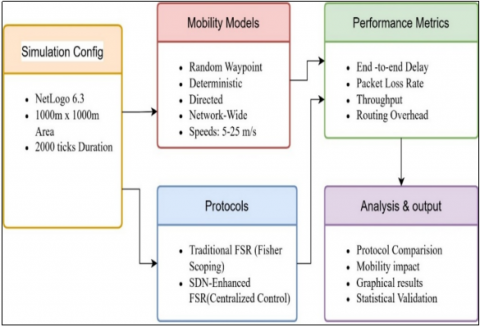
We employed a simulation-based evaluation to compare the traditional FSR protocol against an SDN-enhanced FSR framework under various mobility conditions. The simulations were implemented in NetLogo (version 6.3). Figure 1 depicts the overall SDN-FSR integrated simulation framework.
3.1 Simulation environment
The above scenario represents a moderately sized WSN. We note that the maximum node speed considered (25 m/s, ~90 km/h) is higher than typical in many WSN use cases; it is included here to stress-test the routing protocols under extreme mobility (as might occur with sensors on fast-moving platforms). This range from 5 m/s to 25 m/s allows us to examine protocol behavior from low-mobility up to highly dynamic conditions, though the upper end is more representative of vehicular or UAV-based sensor scenarios than stationary sensor networks.
Figure 1. SDN-FSR integrated simulation framework
3.2 Mobility models
We implemented four distinct node mobility patterns to reflect a broad range of movement behaviors:
Each mobility model was tested at five different average node speeds: 5 m/s, 10 m/s, 15 m/s, 20 m/s, and 25 m/s. All nodes in a given scenario share the same model and set speed (with minor random variations in instantaneous velocity for RWP).
3.3 Protocols evaluated
We evaluated two routing protocol variants in the simulations:
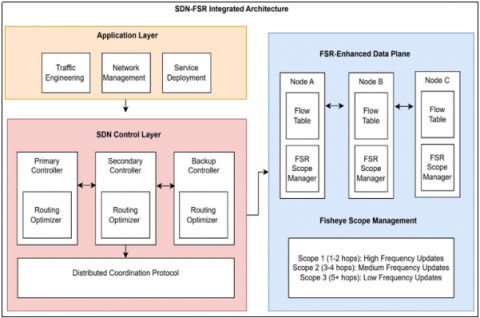
Figure 2. SDN-FSR integrated architecture
3.4 Performance metrics
To perform a quantitative comparison between the protocols, based on each simulation run we obtained the following performance metrics:
When different types of data arrive at a particular location at different speeds, various simulation operations are executed in response. To address the randomness in placement and movement of nodes, a network can be modeled by performing a set of different simulation times under different conditions. The average of the metrics for each trial of these runs provides stability. From collected data we analyzed a comparison to FSR with a traditional approach with SDN-enhanced FSR. We also note the variability of the results, and if relevant, we make remarks on the consistency of the differences (relative to the significance of performance improvements).
4.1 Average end-to-end delay
Significant differences in delay performance were observed between the traditional and SDN-enhanced FSR implementations. Table 1 summarizes the average end-to-end delays for traditional FSR. The results show that the delay for FSR remained consistently high (around 450–456 ms) across all mobility patterns and speeds. There was very little change in delay as node speed increased; for example, in the Deterministic mobility scenario, the average delay was ~453 ms at 5 m/s and ~455 ms at 25 m/s. A similar flat trend was seen for Directed and Random mobility. The Network-Wide (group movement) pattern yielded the lowest delays among the patterns, but even those were approximately 451–453 ms, only marginally lower than the others. Overall, traditional FSR’s delay performance appeared largely insensitive to the different mobility conditions in our simulation and stayed at roughly half a second on average.
Table 1. Traditional FSR delay (ms)
|
Speed (m/s) |
Deterministic |
Directed |
Network |
Random |
|
5 |
453 |
454 |
452 |
455 |
|
10 |
452 |
453 |
451 |
456 |
|
15 |
454 |
455 |
452 |
454 |
|
20 |
453 |
452 |
453 |
455 |
|
25 |
455 |
454 |
452 |
456 |
Table 2 shows the delays for the SDN-enhanced FSR. We observe a substantial reduction in delay in many scenarios with SDN. At the lowest node speed (5 m/s), the SDN approach achieved end-to-end delays as low as 370–380 ms under structured mobility (Network-Wide and Directed patterns), which is about 18% faster than the ~452 ms delay with traditional FSR. Across all patterns, SDN-FSR consistently outperformed traditional FSR at lower speeds. As node speed increased, the average delay for SDN-FSR did rise; for instance, in the Random Waypoint model at 25 m/s, delay reached ~750 ms, exceeding the corresponding FSR delay. This indicates that at extremely high mobility, the advantage of SDN may diminish or even reverse due to the overhead and latency in updating routes. Nonetheless, for most low-to-moderate speed scenarios, SDN-FSR maintained noticeably lower delays than FSR. The best delay performance was observed at 5 m/s under the Network-Wide pattern (~370 ms), whereas the worst delay for SDN-FSR was ~750 ms at 25 m/s under Random mobility.
Table 2. SDN-enhanced FSR delay (ms)
|
Speed (m/s) |
Deterministic |
Directed |
Network |
Random |
|
5 |
400 |
380 |
370 |
410 |
|
10 |
450 |
420 |
390 |
460 |
|
15 |
550 |
500 |
450 |
580 |
|
20 |
650 |
600 |
520 |
680 |
|
25 |
700 |
680 |
580 |
750 |
Figure 3 provides a visual comparison of the delay results, illustrating the gap between the protocols.
Figure 3. Average end-to-end delay comparison
4.2 Packet loss rate
Packet loss in conventional FSR is indicated in Table 3. All protocols suffered moderate to high packet loss with the number of packets lost generally in 440 to 480 packets of the total sent. In percentage terms, 44-48% of packets were lost in FSR. Loss wasn't clearly proportional to node speed (increased or decreased, for instance), and even at a low speed, there were large losses. There were occasional minor spikes in losses in Random Waypoint and Network-Wide patterns at certain intermediate speeds (e.g., a small peak at 15 m/s), but overall packet loss was high and fairly consistent on a broad spectral scale. This means that in our simulation, the FSR protocol was dropping a large fraction of packets irrespective of mobility pattern or velocity.
Table 3. Traditional FSR packet loss
|
Speed (m/s) |
Deterministic |
Directed |
Network |
Random |
|
5 |
445 |
450 |
440 |
460 |
|
10 |
450 |
455 |
445 |
465 |
|
15 |
455 |
460 |
450 |
470 |
|
20 |
460 |
465 |
455 |
480 |
|
25 |
465 |
470 |
460 |
475 |
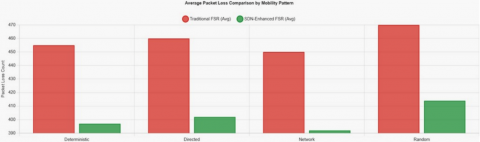
SDN integration led to a notable improvement in packet loss. As demonstrated in Table 4, the SDN-enhanced FSR consistently had lower packet loss figures across all conditions. Values generally ranged between ~370 and 440 lost packets, corresponding to about 37–44% packet loss. This is roughly a 15% relative reduction compared to traditional FSR. The Deterministic pattern with SDN showed particularly low and stable loss rates (e.g., only ~375 packets lost at 5 m/s, increasing gradually to ~420 at 25 m/s). Even under the challenging Random pattern, SDN-FSR contained the loss to about 395–440 packets, significantly better than the 460–480 losses seen with FSR at higher speeds. Optimal performance was observed at 5 m/s in the Deterministic scenario, with the lowest loss (~375).
Table 4. SDN-enhanced FSR packet loss
|
Speed (m/s) |
Deterministic |
Directed |
Network |
Random |
|
5 |
375 |
380 |
370 |
395 |
|
10 |
385 |
390 |
380 |
400 |
|
15 |
395 |
400 |
390 |
410 |
|
20 |
410 |
415 |
405 |
425 |
|
25 |
420 |
425 |
415 |
440 |
Figure 4 illustrates the improvement in packet delivery reliability with SDN integration, which can be attributed to the controller’s ability to quickly update routes and avoid broken links during transmissions.
Figure 4. Average packet loss comparison
4.3 Packet Delivery Ratio (PDR)
Table 5 presents the PDR results for traditional FSR, which remained around 49–50% across all scenarios. The values cluster tightly near 50% for every mobility pattern and speed, indicating that roughly half of the generated packets were delivered successfully. This stable but low PDR suggests that, under our simulation conditions, FSR was only able to deliver about half the traffic even in the best cases. The insensitivity of PDR to speed (for instance, ~50.2% at 5 m/s under Deterministic movement versus ~49.4% at 25 m/s under Random movement) implies that factors other than node speed were limiting delivery. It is likely that network topology constraints (100 nodes over a large area) and FSR’s update frequency capped the maximum achievable PDR at around 50%, as a significant fraction of packets were consistently dropped due to route breaks or partitions.
Table 5. Traditional FSR PDR (%)
|
Speed (m/s) |
Deterministic |
Directed |
Network |
Random |
|
5 |
50.2 |
50.1 |
50.4 |
49.8 |
|
10 |
50 |
49.9 |
50.2 |
49.6 |
|
15 |
49.8 |
49.7 |
50 |
49.4 |
|
20 |
49.6 |
49.5 |
49.8 |
49.2 |
|
25 |
49.4 |
49.3 |
49.6 |
49 |
By contrast, the PDR for the SDN-enhanced FSR (Table 6) varied much more widely, ranging from about 55% up to 92% depending on the scenario. At low node speeds, the SDN approach achieved very high delivery ratios in structured mobility scenarios—most notably, in the Directed mobility model at 5 m/s, PDR reached 92.1%. Deterministic and Network-Wide patterns also saw PDRs in the 80–88% range at 5 m/s. However, as speed increased, PDR for all patterns declined. For example, under Random mobility, PDR dropped from 76.8% at 5 m/s to ~55% at 25 m/s. Directed mobility consistently yielded the highest PDR at each speed, whereas Random mobility yielded the lowest. Overall, SDN-FSR outperformed traditional FSR significantly in terms of PDR at low-to-moderate speeds (often delivering 20–40 percentage points more packets). At the highest speed of 25 m/s, SDN-FSR still maintained a slight advantage (e.g., ~55% vs. ~49% in the Random pattern), but the gap was much smaller. These results suggest that SDN’s benefit for PDR is most pronounced when network changes are moderate; in extremely fast-changing scenarios, SDN still helps but cannot completely overcome the high rate of topology change.
Table 6. SDN-enhanced FSR PDR (%)
|
Speed (m/s) |
Deterministic |
Directed |
Network |
Random |
|
5 |
85.2 |
92.1 |
88.4 |
76.8 |
|
10 |
78 |
83.9 |
81.2 |
68.6 |
|
15 |
72.8 |
75.7 |
74 |
62.4 |
|
20 |
68.6 |
71.5 |
69.8 |
58.2 |
|
25 |
65.4 |
68.3 |
66.6 |
55 |
Figure 5. PDR comparison
Figure 5 compares PDR between the two approaches and highlights that while reduced packet loss with SDN generally led to higher PDR, the relationship has complexities (e.g., timing of route updates) that cause variability.
4.4 Control overhead and efficiency
The SDN-enhanced approach introduces additional routing control overhead due to the communication between nodes and the controller. In the traditional FSR, overhead comes solely from periodic neighbor-to-neighbor update exchanges. This overhead was relatively constant and did not increase substantially with node speed (since the update interval was fixed). For the SDN-FSR, overhead includes the node-to-controller reports and controller-to-node route updates. At lower mobilities, the controller did not need to send frequent route changes, so the total number of control packets in SDN-FSR was comparable to that in FSR. At higher mobilities, however, the SDN controller issued more frequent updates to keep up with the rapid topology changes, resulting in a moderate increase in control packet volume. Despite this increase, the routing overhead remained within a reasonable range and did not overwhelm the network. Importantly, the Normalized Delivery Ratio (NDR) was higher for SDN-FSR in most cases, meaning that each control packet facilitated more successful data deliveries on average compared to FSR. In quantitative terms, if we consider the ratio of control packets to delivered data packets, the SDN approach was slightly higher than FSR (especially at 25 m/s), but this was offset by the significant gain in delivered packets. Thus, the overall efficiency (delivery per control packet) was improved with SDN-FSR. This shows that the additional overhead introduced by the SDN control plane was justified by the performance benefits in data delivery.
5.1 Overall performance improvement with SDN
The simulation results confirm a significant performance improvement of SDN with the FSR. The SDN-enhanced FSR in almost all cases showed lower end-to-end delays and higher packet delivery ratios than traditional FSR. The SDN controller provides a centralized route intelligence system that quickly reconfigures and allocates routing across the entire network. Conventional FSR, in comparison, is based on the limited view and periodic updates from each node that are not enough to keep optimal routing on time with mobility. The global approach of the SDN controller reduces routing variations and response time, as packets do not have to spend time in queues or get stuck on broken paths as a result of having a global mindset. The enhancements seen, including 80 ms or so of delay (∼18%) decreases and PDR increases of 20–40 points at even moderate conditions are significant, or very significant. These improvements occurred in a regular manner on a number of simulation trials which means they are reliable, not random.
5.2 Impact of mobility patterns
Our results show that routing efficiency is greatly affected by node mobility patterns. Both protocols had better performance with structured mobility (Deterministic and Network-Wide group movement) than with Random Waypoint type. While structured mobility changes topology gradually (or in sequence). This, in turn, enables the routing mechanism—especially the SDN controller—to make adjustments quickly to changes in the real world. When the nodes follow a deterministic path or as a group, link breaks are less common and routes need not be computed continuously. Thanks to this, FSR was able to route packets in a more reliable manner, while with very little intervention from the SDN controller, the routing was able to achieve near-optimal routing. This Random Waypoint model on the other hand, introduced constant, unpredictable connectivity change which is very difficult for any routing protocol. In those cases despite even SDN assistance, performance deteriorated significantly at high speeds (PDR and delay). Nonetheless, SDN-FSR still performed better than the traditional FSR in random mobility condition and reflects better flexibility. These results therefore indicate that mobility patterns with greater predictability or structure result in higher network performance, and bringing in a centralized controller is instrumental in using that predictability to gain routing advantage.
5.3 SDN control overhead and trade-offs
Introducing an SDN controller does not come free of charge, and the integration between the nodes and the controller adds routing control overhead and dependence on the controller in order to operate. Our results indicated that our proposed SDN-enhanced FSR produced more control messages than old-fashioned FSR, especially with increased node mobility. The overhead remained reasonable, however, and the cost of more control traffic could be outweighed by the benefits in terms of data delivery. Even though we added control packets to the network a bit, by integrating additional control packets, the SDN approach produced a much larger fraction of data packets to their destination area. This means an efficient trade-off--the new control communication investment results in a huge improvement of data throughput and reliability. But what is also to be expected is perhaps one single point of failure, introduced by the central controller; in our simulations, the controller was always available, but in practice we may need to use redundancy or failovers to maintain robustness. Furthermore, the controller may be unable to rapidly communicate route updates at exceptionally high mobility (25 m/s) and we found a delay for SDN-FSR at this level. Better frequency control updates, perhaps with the use of different controllers and even a more hierarchical control structure in future works could solve these problems.
5.4 Significance of results
The comparison in the current studies presents support that in highly dynamic WSN environments, combining SDN with proactive routing can dramatically improve network performance. The differences we see between traditional FSR and SDN-enhanced FSR are significant (in some cases doubling key metrics like throughput). Although no formal statistical significance tests were taken, the repeated improvements across independent simulations suggest that the performance improvements are statistically meaningful. The results from the simulation show significant results in determining how an SDN-based mechanism may perform in practice WSN deployments within controlled environments. Things like variability in wireless channels, node failures, and energy constraints will also have some role in practice. That said, even in the most geographically dispersed scenario where they rely on SDN, our results strongly show that centralized network control using SDN can create much more robust and efficient routing when nodes are mobile or the topology of a network changes often.
The study examines whether this approach can provide a much more efficient route through any mobile WSN. Its aim is to improve routing by integrating SDN and also improve performance in mobile WSNs. By simulating a network using a NetLogo model of different node traffic mobility patterns and speeds, we compare the traditional distributed FSR protocol against an SDN-enhanced FSR method. The results clearly show that node mobility affects routing performance. Traditional FSR suffers from high end-to-end delays and moderate (~50%) packet delivery ratios under test conditions, notably as the speed of nodes increases, whereas with SDN-enhanced FSR we have achieved some degree of improvement. In contrast, SDN-implemented FSR framework provided significantly enhanced performance in almost all cases, with lower delays, larger delivery ratio and higher throughput. This was especially significant in structured mobility scenarios (e.g., deterministic or group movement), considering the global network picture of the SDN controller, and how it enabled efficient route preservation. As a whole, our study found that centralized control through SDN can efficiently complement proactive routing protocols such as FSR in dynamically configured infrastructure-less networks.
Despite the remarkable results with this research, there are some limitations. The first, the study was performed in a simulation environment with idealized assumptions (e.g., simplified physical layer and no energy constraints). In practice, the WSNs will be subject to a lot of interference, propagation delay, and some time-based energy limitations that can affect the performance of FSR and SDN controller. To begin with, the network size examined (100 nodes) and the centralized controller used raise questions about scalability. As network size expands, a single SDN controller can become a communication bottleneck or single point of failure. That said, a distributed, or hierarchical, control architecture is likely to be required to truly manage larger networks. Third, mobility between nodes, of up to 25 m/s, might be good for emphasizing the protocols, but has been avoided for other WSN deployments (e.g., ones where nodes frequently sit still or move slowly). Hence, the absolute performance numbers in this extreme case should be regarded with caution in general for other cases. Lastly, our implementation did not include an energy consumption analysis; the additional control messaging included in the SDN approach can potentially influence battery-powered nodes over extended timelines. In the follow-up phase, these limitations can be alleviated through experimenting with larger network sizes, using multiple cooperative controllers to overcome single points of failure, and testing the SDN-FSR methodology with physical hardware or more detailed network simulators, including lower layer effects in practice. Investing in the energy overhead in the SDN control channel and optimizing the updating strategy (e.g., event-driven updates) could also prove useful. This study, although limited, yields valuable information on how SDN can improve routing in mobile sensor networks. With the integration of advanced SDN, we hope to learn from the work to create more adaptive and capable of resilient WSN routing protocols as the separation between ad-hoc routing has become increasingly the reality.
[1] Goswami, C., Shieh, C.S., Chakrabarti, P. (2025). Energy-aware power and rate control in MANETs using adaptive game theory and grey wolf optimization. Future Technology, 4(3): 29-44. https://doi.org/10.55670/fpll.futech.4.3.4
[2] Rawat, P., Singh, K.D., Chaouchi, H., Bonnin, J.M. (2014). Wireless sensor networks: A survey on recent developments and potential synergies. The Journal of Supercomputing, 68(1): 1-48. https://doi.org/10.1007/s11227-013-1021-9
[3] Etim, A.U., Udofia, K., Obot, A. (2025). Dynamic routing resilience in MANETs: A bio-inspired SORA framework with ant colony-driven security and scalability. Journal of Engineering Research and Reports, 27(5): 82-99. https://doi.org/10.9734/jerr/2025/v27i51495
[4] Al-Arbo, Y., Alsaif, K.I. (2023). Cars tracking based on YOLO for feature extraction. AIP Conference Proceedings, 2475(1): 070013. https://doi.org/10.1063/5.0104361
[5] Kaur, U., Mahajan, A.N., Kumar, S., Dutta, K. (2024). Security vulnerabilities in VANETs and SDN-based VANETs: A study of attacks. International Journal of Computer Networks and Applications, 11(6): 774-802. https://doi.org/10.22247/ijcna/2024/47
[6] Pushpalatha, S., Narasimhulu, N. (2025). A hybrid approach for detecting network layer attacks in WSNs. International Journal of Systems Assurance Engineering and Management, 16: 3294-3307. https://doi.org/10.1007/s13198-025-02854-w
[7] Hashim, S.A., Hamza, E.K., Kamal, N.N. (2024). Analyzing dynamic source routing protocol behavior in MANETs. Ingénierie des Systèmes d’Information, 29(6): 2357-2365. https://doi.org/10.18280/isi.290623
[8] Al-Arbo, Y., Mahmood, H.F., Alqassab, A. (2025). End-to-End license plate detection and recognition in iraq using a detection transformer and OCR. Mesopotamian Journal of Computer Science, 2025: 329-340. https://doi.org/10.58496/MJCSC/2025/021
[9] Younus, A., Al-Allawee, A. (2025). A comparative study between logistic regression and SVM for resource management in network slicing. Sinkron: Jurnal dan Penelitian Teknik Informatika, 9(4): 1924-1934. https://doi.org/10.33395/sinkron.v9i4.15222
[10] Abualhaj, M.M., Al-Khatib, S.N., Al-Allawee, A., Munther, A., Anbar, M. (2024). Enhancing network intrusion detection systems through dimensionality reduction. In Proceedings of the Sixth International Conference on Soft Computing and Data Mining (SCDM 2024), Putrajaya, Malaysia, pp. 244-253. https://doi.org/10.1007/978-3-031-66965-1_24
[11] Chigra, Y.B., Ghadi, A., Bouhorma, M. (2020). Assessing node mobility impact on routing performances in MANETs. International Journal of Internet Technology and Secured Transactions, 10(6): 637-653. https://doi.org/10.1504/IJITST.2020.110570
[12] Razouqi, Q., Boushehri, A., Gaballa, M., Alsaleh, L., Abbod, M. (2024). Extended comparison and performance analysis for mobile Ad-Hoc networks routing protocols based on different traffic load patterns and performance metrics. Electronics, 13(14): 2877. https://doi.org/10.3390/electronics13142877
[13] Khan, A.U.R., Ali, S., Mustafa, S., Othman, M. (2012). Impact of mobility models on clustering based routing protocols in mobile WSNs. In 2012 10th International Conference on Frontiers of Information Technology, Islamabad, Pakistan, pp. 366-370. https://doi.org/10.1109/FIT.2012.72
[14] Thriveni, H.B., Kumar, G.M., Sharma, R. (2013). Performance evaluation of routing protocols in mobile ad-hoc networks with varying node density and node mobility. In 2013 International Conference on Communication Systems and Network Technologies, Gwalior, India, pp. 252-256. https://doi.org/10.1109/CSNT.2013.60
[15] Mostafaei, H., Menth, M. (2018). Software-defined wireless sensor networks: A survey. Journal of Network and Computer Applications, 119: 42-56. https://doi.org/10.1016/j.jnca.2018.06.016
[16] Zhang, Y., Cui, L., Wang, W., Zhang, Y. (2018). A survey on software defined networking with multiple controllers. Journal of Network and Computer Applications, 103: 101-118. https://doi.org/10.1016/j.jnca.2017.11.015
[17] Abu-Shareha, A.A., Abualhaj, M.M., Ali, A.A., Munther, A., Anbar, M. (2024). Enhancing malware detection with firefly and grey wolf optimization algorithms. In 2024 11th International Conference on Electrical and Electronics Engineering (ICEEE), Marmaris, Turkiye, pp. 394-398. https://doi.org/10.1109/ICEEE62185.2024.10779310
[18] Al-Arbo, Y., Alqassab, A. (2025). Emerging challenges in adversarial deep learning for computer vision and cybersecurity. Baghdad Science Journal, 22(8): 2791-2799. https://doi.org/10.21123/2411-7986.5038
[19] Kobo, H.I., AbuMahfouz, A.M., Hancke, G.P. (2017). A survey on software-defined wireless sensor networks: Challenges and design requirements. IEEE Access, 5: 1872-1899. https://doi.org/10.1109/ACCESS.2017.2666200
[20] Poularakis, K., Iosifidis, G., Tassiulas, L. (2014). Approximation algorithms for mobile data caching in small cell networks. IEEE Transactions on Communications, 62(10): 3665-3677. https://doi.org/10.1109/TCOMM.2014.2351796
[21] Hassan, M.A., Ullah, S.I., Salam, A., Ullah, A.W., Imad, M., Ullah, F. (2021). Energy efficient hierarchical based fish eye state routing protocol for flying ad-hoc networks. Indonesian Journal of Electrical Engineering and Computer Science, 21(1): 465-471. https://doi.org/10.11591/ijeecs.v21.i1.pp465-471
[22] Fan, Y., Xie, P., Zhang, Y., Liu, L., Ma, H. (2024). Chimera: Pioneering generalized and adaptable intelligent routing in MANETs. IEEE Transactions on Cognitive Communications and Networking, 11(3): 2027-2042. https://doi.org/10.1109/TCCN.2024.3499328
[23] Cett, K.Y., Mahiddin, N.A., Affandi, F.F.M., Bongsu, R.H.R., Hayati, A. (2021). Performance analysis of OLSR protocol in manet considering different mobility speed and network density. International Journal of Wireless & Mobile Networks, 13(6): 21-32. https://doi.org/10.5121/ijwmn.2021.13602
[24] Shandil, P. (2023). A survey of different VANET routing protocols. Evergreen, 10(2): 976-997. https://doi.org/10.5109/6793653
[25] Piroddi, A., Fonti, R. (2025). SDN-driven innovations in WSNs and IoT: A path to smarter networks. Journal of Advances in Information Technology, 16(3): 411-425. https://doi.org/10.12720/JAIT.16.3.411-425
[26] Piroddi, A., Fonti, R. (2024). Enhancing Mobile Ad Hoc Networks (MANETs) with Software-Defined Networking (SDN): A balanced approach. Journal of Advances in Computer Networks, 13(1): 7-14. https://doi.org/10.18178/jacn.2025.13.1.293
[27] Shujairi, M. (2025). Developing IoT performance in healthcare through the integration of machine learning and Software-Defined Networking (SDN). Babylonian Journal of Internet of Things, 2025: 77-88. https://doi.org/10.58496/bjiot/2025/003