Ni Wayan Ardiarani Utami | Ngakan Ketut Acwin Dwijendra* | I Made Adhika | I Dewa Gede Agung Diasana Putra
© 2026 The authors. This article is published by IIETA and is licensed under the CC BY 4.0 license (http://creativecommons.org/licenses/by/4.0/).
OPEN ACCESS
This study develops a preliminary cultural-ecological framework for sustainable material selection in Balinese architecture. A sequential exploratory mixed-methods design combined field observations of three purposively selected tourism-building cases, semi-structured interviews with 23 participants representing four stakeholder groups, and a descriptive questionnaire survey of 45 purposively recruited architecture and construction practitioners in Bali. The qualitative phase identified four culturally grounded criteria: Tri Hita Karana, Desa Kala Patra, Rwa Bhineda, and sacred-profane spatial hierarchy. The questionnaire provided panel-level importance ratings for climatic adaptation, cultural compatibility, durability, low-carbon performance, and recyclability; it was not intended for population-level hypothesis testing. Criterion weights were derived through a transparent hierarchical normalization procedure. The mean importance of the ecological dimension was 4.60, while cultural compatibility obtained a mean of 4.72, producing dimension weights of 49.36% and 50.64%, respectively. Ecological subcriterion weights were normalized from their questionnaire means, whereas the four cultural subcriteria received equal within-dimension weights because they were not quantitatively rated separately. The framework was demonstrated using an explicit five-point scoring rubric, a criterion-by-material score matrix, weighted-sum aggregation, and sensitivity analysis. In the illustrative screening scenario, bamboo, natural stone, and timber retained the first three positions under all tested weighting scenarios, whereas reinforced concrete and steel ranked fourth and fifth. These rankings are illustrative rather than universal because the material scores were generated through an author-consensus demonstration and were not independent project-level measurements. The framework therefore provides a transparent preliminary decision-support structure that requires further validation using project-specific life-cycle data, independent expert ratings, and larger stratified practitioner samples.
Balinese architecture, sustainable materials, Tri Hita Karana, life cycle assessment, cultural sustainability, multi-criteria analysis
The construction sector is one of the largest contributors to environmental degradation globally, particularly through material consumption, energy use, and waste generation. According to global environmental reports, the building and construction sector contributes approximately 37-40% of global carbon emissions and produces a significant portion of construction waste annually [1]. In Indonesia, the construction industry represents a substantial share of national economic activity while simultaneously generating considerable environmental impacts due to material extraction, production, and disposal processes.
Material selection plays a critical role in determining the environmental performance of buildings. Studies indicate that construction materials can represent up to 85% of the total value of building projects and significantly influence environmental impacts throughout the building life cycle [2, 3]. The sustainability of vernacular architecture is closely associated with contextual adaptation, locally available materials, climatic responsiveness, cultural continuity, and the efficient use of environmental resources [4, 5]. Contemporary sustainable material-selection approaches increasingly employ structured multi-criteria and optimization methods to integrate environmental performance, technical requirements, life-cycle considerations, and stakeholder priorities within the decision-making process [6-9]. Consequently, the concept of sustainable architecture has emerged as an approach that seeks to reduce environmental impacts by promoting efficient use of resources, energy efficiency, and environmentally friendly materials.
However, most research on sustainable architecture primarily focuses on ecological indicators such as energy efficiency, carbon emissions, and resource consumption. Cultural dimensions of sustainability remain relatively underexplored in architectural studies. This limitation is particularly significant in regions with strong architectural traditions, where cultural values are integral to building design and material selection [10, 11].
Balinese traditional architecture represents a unique architectural system that integrates ecological, spiritual, and cultural values. Rooted in the philosophy of Tri Hita Karana, Balinese architecture emphasizes harmonious relationships between humans, nature, and the divine. This philosophy influences various aspects of architectural design, including spatial organization, building orientation, and the selection of materials derived from local natural resources.
Recent studies further demonstrate that Tri Hita Karana provides a culturally grounded sustainability framework applicable to spatial planning, vernacular architecture, tourism development, and environmentally responsive design in Bali [12].
Traditional Balinese architecture historically utilized locally sourced materials such as bamboo, natural stone, coconut wood, and thatch roofing. These materials not only reflect ecological adaptation to tropical climates but also carry symbolic meanings associated with cultural identity and spiritual values.
Despite this rich tradition, modern architectural development in Bali-particularly within tourism infrastructure such as hotels and resorts-has increasingly adopted industrial materials including concrete, steel, and synthetic finishes. This shift has resulted in the gradual loss of cultural identity and increased environmental impact associated with construction activities.
Furthermore, while regional regulations such as the Bali Provincial Regulation No. 5 of 2005 require buildings to reflect Balinese architectural characteristics, these regulations mainly focus on visual appearance rather than material sustainability. As a result, architects often replicate the aesthetic appearance of Balinese architecture while utilizing non-sustainable industrial materials.
This situation highlights the absence of a systematic framework for selecting building materials that simultaneously considers ecological sustainability and cultural compatibility. Therefore, this study addresses this gap by proposing a preliminary cultural-ecological framework that integrates measurable ecological indicators with Balinese cultural principles for sustainable material selection in contemporary tourism architecture.
The objectives of this study are threefold:
1. To identify ecological and cultural criteria influencing material selection in Balinese architecture.
2. To develop a preliminary cultural–ecological framework for sustainable material selection based on these criteria.
3. To demonstrate, rather than fully validate, the application of the model through an illustrative material-screening scenario for tourism architecture in Bali.
Through this research, it is expected that sustainable architecture can be strengthened not only through environmental considerations but also through the preservation of cultural identity in architectural practices.
The central research gap addressed in this study lies in the separation between ecological material assessment and culturally grounded architectural evaluation. Existing sustainable material assessment frameworks generally emphasize measurable ecological indicators such as embodied energy, carbon footprint, durability, recyclability, and life-cycle performance, but they rarely incorporate Balinese cultural principles as explicit assessment criteria. Conversely, Bali Provincial Regulation No. 5 of 2005 provides an important basis for maintaining Balinese architectural identity, yet its implementation tends to focus on visual architectural expression rather than measurable ecological performance, material life-cycle responsibility, or carbon-related assessment. Therefore, architects and policymakers still lack a practical framework for selecting materials that are simultaneously ecologically responsible, culturally compatible, locally contextual, and applicable to contemporary tourism architecture.
Unlike previous studies that primarily evaluate environmental performance or cultural preservation separately, this study integrates both dimensions into a single decision-support framework using Multi-Criteria Decision Analysis (MCDA), thereby providing a more comprehensive approach to sustainable material selection.
2.1 Research design
This study employed a sequential exploratory mixed-methods design. The qualitative stage was conducted first through literature review, field observation, and semi-structured interviews to identify culturally embedded and context-specific criteria for material selection in Balinese architecture. The quantitative stage was then conducted through questionnaire surveys to evaluate the perceived importance of the identified cultural and ecological criteria among architectural practitioners. Integration occurred at the interpretation and model-building stage, where qualitative themes were translated into cultural assessment indicators and combined with ecological indicators derived from literature and practitioner evaluation. These integrated indicators were then structured into an MCDA framework for comparing alternative building materials. The final MCDA stage consisted of four explicitly separated procedures: criterion-weight derivation, material-performance scoring, weighted-sum aggregation, and sensitivity analysis. The material comparison was used as a worked demonstration of the proposed framework and was not treated as project-level empirical validation. Mandatory requirements such as structural safety, fire safety, regulatory compliance, and functional suitability were considered screening constraints that must be satisfied before alternatives are compared using MCDA.
2.2 Study area
Table 1 summarizes the tourism building cases selected for field observation in this study. The case studies were purposively chosen to represent different tourism development contexts and architectural typologies across Bali. Each case provides distinctive examples of how traditional Balinese architectural principles are integrated with contemporary construction practices through the application of local materials, spatial organization, and environmentally responsive design. This variation enabled a comparative assessment of ecological performance and cultural compatibility across different building components and tourism settings.
The observed cases were selected purposively to represent different tourism development contexts and material practices in Bali. The Oberoi Beach Resort Bali was selected to represent coastal resort architecture with strong use of stone, timber, thatch, and traditional spatial expression. Adiwana Resort Jembawan in Ubud was selected to represent cultural tourism accommodation that integrates alang-alang roofing, timber elements, natural stone, and landscape-based architectural composition. Additional observations were used to contextualize material practices in tourism corridors, cultural tourism areas, and highland tourism settings. The cases were selected because they demonstrate the interaction between local material identity, ecological adaptation, and contemporary tourism requirements.
Table 1. Observed tourism building cases
|
Study Area |
Building |
Building Type |
Observation Focus |
Selection Reason |
|
Kuta-Nusa Dua |
Oberoi Resort |
Resort |
Roof, Wall, Ornament |
Traditional material application |
|
Ubud |
Adiwana Resort Jembawan |
Resort |
Roof, Timber, Pool |
Tropical ecological adaptation |
|
Kintamani |
Pramana Zahill Kintamani |
Eco Lodge |
Stone & Bamboo |
Highland adaptation |
2.3 Data collection
Three main data collection techniques were used:
1. Field observation
Direct observation was conducted in selected hotel and resort projects to identify the types of materials used and their architectural integration.
The observation instrument evaluated:
•material origin
•environmental performance
•architectural compatibility
•cultural symbolism
as outlined in the field observation framework.
2. In-depth interviews
Interviews were conducted with stakeholders including:
•architects
•academics
•government officials
•traditional craftsmen
Interview results revealed that cultural philosophies such as Tri Hita Karana and Desa Kala Patra strongly influence architectural decisions and material usage.
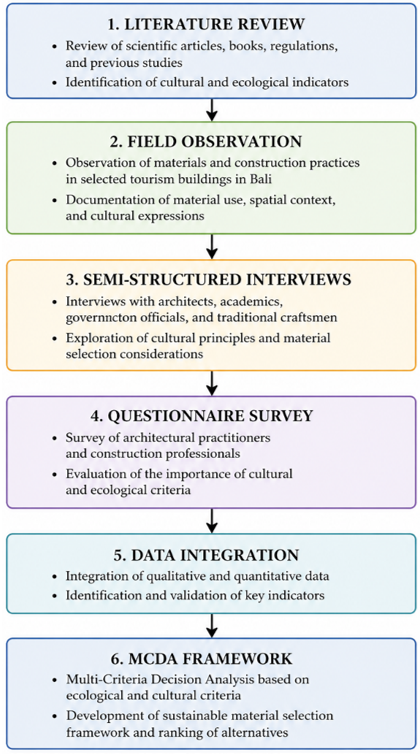
Figure 1 illustrates the overall research data collection and integration process adopted in this study. The research began with a comprehensive literature review to identify relevant ecological and cultural indicators for sustainable material selection. Field observations were subsequently conducted to document material applications and architectural characteristics in selected tourism buildings. Semi-structured interviews with architects, academics, government officials, and traditional craftsmen were then carried out to explore the cultural significance of material selection. Quantitative data were collected through questionnaire surveys administered to architectural practitioners to evaluate the relative importance of the identified criteria. Finally, the qualitative and quantitative findings were integrated to establish an MCDA framework, which serves as the basis for the proposed cultural-ecological material selection framework.
The field-observation sheet consisted of five main components: building element, observed material, material origin, cultural meaning, and ecological performance. Each material was assessed using a five-point qualitative score, where 1 indicates very low relevance or performance, and 5 indicates very high relevance or performance. Cultural relevance was assessed based on symbolic meaning, alignment with Balinese architectural principles, and appropriateness to the building component. Ecological performance was assessed based on local availability, carbon intensity, durability, recyclability, and climatic adaptability. The operational scoring anchors used to evaluate material performance are presented in Table 2. The table defines the qualitative interpretation of Scores 1, 3, and 5 for each ecological and cultural criterion, while Scores 2 and 4 represent intermediate levels between the stated anchors. This scoring rubric was applied consistently during the material-performance assessment to improve transparency and reproducibility.
2.4 Questionnaire survey and participant sampling
A structured questionnaire was used to obtain professional judgments regarding the importance of cultural and ecological criteria in sustainable material selection. Respondents rated each criterion on a five-point importance scale, where 1 indicated “not important,” and 5 indicated “extremely important.” The evaluated items included climatic adaptation, cultural compatibility, durability, low-carbon performance, and recyclability.
Two phase-specific purposive sampling strategies were applied. Maximum-variation purposive sampling was used in the qualitative phase to include 23 participants representing four stakeholder groups: 10 practicing architects, five academics, four government officials, and four traditional craftsmen. Criterion-based purposive sampling was used in the questionnaire phase to recruit 45 architecture and construction practitioners. The interviews were used to identify and interpret culturally grounded criteria, whereas the questionnaire was used only for descriptive panel-level prioritization and preliminary weight calibration. The interview and questionnaire samples did not overlap. Therefore, the 23 interview participants and 45 questionnaire respondents represented 68 unique individuals.
The operational sampling frame consisted of professionals and domain experts who were professionally active in Bali and were identified through architectural and engineering practices, university departments, relevant government agencies, professional associations, and traditional craft networks. Because no single population register simultaneously identifies professional role, relevant Bali project experience, and familiarity with Balinese architectural principles, the sampling frame was operational rather than probability-based.
Table 2. Operational anchors for material-performance scoring
|
Criterion |
Score 1: Very Low Performance |
Score 3: Moderate Performance |
Score 5: Very High Performance |
|
Low-carbon performance |
Energy-intensive production, high embodied-carbon burden, or long supply chain |
Moderate processing and transport burden |
Renewable, naturally occurring, minimally processed, or locally sourced with comparatively low embodied-carbon burden. |
|
Durability |
Low resistance or short service performance under the intended exposure conditions |
Acceptable service performance with periodic maintenance |
Long service performance and high resistance under the intended conditions. |
|
Recyclability |
Limited reuse, recycling, recovery, or safe biological return |
Partially reusable or recyclable |
Readily reusable, recyclable, recoverable, or safely biodegradable. |
|
Climatic adaptation |
Poor thermal or moisture suitability for Bali’s tropical conditions and substantial protective intervention required |
Acceptable tropical performance with conventional protection or maintenance |
Strong thermal, moisture, ventilation, and tropical-climate compatibility. |
|
Tri Hita Karana |
No evident support for, or conflict with, human–nature–spiritual harmony |
Partial or conditional alignment |
Strong support for harmony among human activity, nature, and the spiritual realm. |
|
Desa Kala Patra |
Weak relationship to local place, time, and circumstances |
Contextually acceptable with adaptation |
Strong contextual fit with local place, period, use, and social circumstances. |
|
Rwa Bhineda |
Does not support complementary balance between opposing qualities |
Neutral or conditionally balanced |
Strongly supports complementary balance in material expression and function. |
|
Sacred hierarchy |
Culturally inappropriate for the intended sacred–profane position
|
Acceptable with restrictions or contextual treatment
|
Highly appropriate for the intended sacred–profane spatial position.
|
Questionnaire respondents were eligible when they: (1) were practicing architects, civil or structural engineers, construction managers or site supervisors, quantity surveyors or material specifiers, or building consultants; (2) had at least five years of relevant professional experience; (3) had been directly involved in at least one tourism or public-building project in Bali; (4) had responsibility for architectural design, material specification, procurement, construction supervision, or technical approval; and (5) were familiar with Balinese architectural principles and locally used construction materials. Respondents were excluded when they had fewer than five years of relevant experience, lacked direct Bali project experience or material-selection responsibility, or submitted an incomplete or duplicate questionnaire. Interview participants were required to have at least five years of relevant professional or craft experience, direct knowledge of Balinese architecture or local material practices, and membership in one of the four prespecified stakeholder categories.
The questionnaire was designed for descriptive expert elicitation and preliminary MCDA calibration rather than population-level hypothesis testing. No a priori power calculation was conducted because no inferential hypothesis test or prespecified effect size was involved. The realized sample size was therefore evaluated retrospectively in relation to panel coverage and numerical precision rather than statistical power. With n = 45 and the largest observed standard deviation of 0.61, the maximum standard error of a criterion mean was 0.091, and the corresponding 95% t-based interval had a half-width of approximately 0.18 points on the five-point scale. This precision was considered sufficient for identifying broad panel-level priorities, but not for distinguishing small differences between adjacent criteria or generalizing the results to all architecture and construction practitioners in Bali. The qualitative sample of 23 interview participants was assessed in terms of information power because the study had a focused aim, the participants possessed specialized domain knowledge, and all four stakeholder groups central to the research question were represented [13, 14].
The questionnaire survey employed purposive sampling because the study's objective was not to estimate population parameters but to obtain informed professional judgments on sustainable material selection in Balinese architecture. All questionnaire respondents were required to satisfy the following inclusion criteria: (1) a minimum of five years of professional experience in architecture, construction, or building consultancy; (2) direct involvement in the design, supervision, or specification of tourism or public building projects in Bali; (3) familiarity with Balinese architectural principles and local construction materials; and (4) professional engagement in architectural practice, engineering consultancy, academia, or government-related building regulation. The interview participants were selected using the same purposive strategy to ensure representation of key stakeholder groups, including architects, academics, government officials, and traditional craftsmen.
Although the questionnaire involved 45 professional respondents, this sample size is considered appropriate for an exploratory mixed-methods study emphasizing expert judgment rather than statistical generalization. The primary objective of the quantitative stage was to prioritize evaluation criteria for the proposed MCDA framework rather than to estimate population characteristics. Similar exploratory studies in architecture and decision-support framework development commonly employ expert samples ranging from 20 to 60 participants.
Table 3. Phase-specific participant composition, sampling frame, and eligibility
|
Research Phase |
Participant Group or Discipline |
n |
Principal Eligibility Requirements |
Function in the Study |
|
Qualitative interviews |
Practicing architects |
10 |
≥5 years of practice; direct experience in Balinese or tourism-building design and material selection |
Identification and interpretation of cultural and material-selection criteria |
|
Qualitative interviews |
Academics |
5 |
≥5 years of teaching or research; expertise in Balinese architecture, sustainability, or building materials |
Conceptual and theoretical interpretation |
|
Qualitative interviews |
Government officials |
4 |
≥5 years of relevant experience; involvement in building regulation, planning, permitting, or architectural policy |
Regulatory and policy perspective |
|
Qualitative interviews |
Traditional craftsmen or local-material specialists |
4 |
≥5 years of practical experience with traditional construction or locally used materials |
Traditional knowledge and cultural interpretation |
|
Questionnaire survey |
The interview and questionnaire samples did not overlap; consequently, the 23 interview participants and 45 questionnaire respondents represented 68 unique individuals. The questionnaire sample was purposively recruited and should not be interpreted as a probability sample of all architecture and construction practitioners in Bali. |
45 |
≥5 years of relevant experience; involvement in at least one tourism or public-building project in Bali; direct design, specification, supervision, procurement, or approval responsibility |
Descriptive importance rating and preliminary weight calibration |
|
Phase-specific totals |
Interviews = 23; questionnaires = 45
|
68 participation records
|
—
|
—
|
The interview and questionnaire samples did not overlap; consequently, the study involved 68 unique individuals.
Table 3 distinguishes the interview sample from the questionnaire sample and reports the eligibility requirements applied to each phase. The table also identifies the professional disciplines represented in the questionnaire panel and clarifies cross-phase overlap to prevent double counting. This distinction is necessary because the interviews and questionnaire served different analytical purposes within the sequential exploratory design.
2.5 Data analysis
Data analysis comprised five linked procedures: (1) qualitative thematic analysis, (2) descriptive questionnaire analysis, (3) hierarchical criterion-weight derivation, (4) criterion-level material scoring and weighted-sum aggregation, and (5) sensitivity analysis.
Interview transcripts and field-observation records were coded thematically to identify recurring relationships between cultural principles and material-selection practices. The coding process generated four cultural criteria: Tri Hita Karana, Desa Kala Patra, Rwa Bhineda, and sacred-profane spatial hierarchy. Theme frequencies were used to describe the prevalence of the themes within the interview material, but they were not converted directly into numerical weights because frequency of mention does not constitute a cardinal measure of relative importance.
Questionnaire responses were analyzed descriptively using the mean, standard deviation, standard error, and 95% t-based precision interval for each criterion. No null-hypothesis significance test, regression model, or probability-based population estimate was conducted. Because the respondents were purposively recruited, the intervals describe numerical precision within the participating panel and should not be interpreted as design-based confidence intervals for all practitioners in Bali.
Criterion weights were derived through a two-level hierarchical normalization procedure. First, the mean importance of the ecological dimension was calculated as the average of the four ecological questionnaire items [15].
The weighted-sum aggregation and sensitivity analysis procedures followed established deterministic MCDA principles, particularly the evaluation of ranking stability under systematic variations in criterion weights [15].
$M_E=(4.54+4.65+4.43+4.78) / 4=4.60$
The cultural-dimension importance value was represented by the questionnaire mean for cultural compatibility:
$M_C=4.72$
The two dimension weights were then normalized as:
$\begin{aligned} & W_E=M_E /\left(M_E+M_C\right)=4.60 /(4.60+4.72)=0.4936 \\ & W_C=M_C /\left(M_E+M_C\right)=4.72 /(4.60+4.72)=0.5064\end{aligned}$
where, $M_E$ denotes the questionnaire-derived mean importance value of the ecological dimension (4.60), $M_C$ denotes the questionnaire-derived mean importance value of the cultural dimension (4.72), $W_E$ represents the normalized global weight of the ecological dimension, and $W_C$ represents the normalized global weight of the cultural dimension. By definition, $W_E+W_C=1.00$.
Within the ecological dimension, the local weight of criterion j was calculated by normalizing its questionnaire mean:
$v_j=m_j / \sum_{j=1}^4 m_j$
where, $v_j$ denotes the normalized local weight of criterion $j$ within its respective dimension, and $m_j$ represents the questionnaire-derived mean importance score of criterion $j$. The denominator $\sum_{j=1}^4 m_j$ represents the sum of the mean importance scores of the four criteria within the corresponding dimension. Thus, $v_j$ expresses the relative contribution of criterion $j$ within that dimension, with the local weights summing to 1.00 .
Because the questionnaire did not obtain separate quantitative importance ratings for Tri Hita Karana, Desa Kala Patra, Rwa Bhineda, and sacred hierarchy, equal local weights of 0.25 were assigned to the four cultural subcriteria. This equal allocation was adopted as a neutral baseline rather than deriving importance weights from qualitative theme frequencies. The global weight of each criterion was then calculated as
$w_j=W_d \times v_j$
where, $w_j$ is the global weight assigned to criterion j, Wd is the normalized weight of the dimension d to which criterion j belongs (d = E for the ecological dimension and d = C for the cultural dimension). The resulting global criterion weights satisfy $\sum_{j=1}^8 w_j=1.00$.
All eight material-performance criteria were benefit-coded on a common scale from 1 to 5, where a higher value indicated more favorable performance. “Carbon footprint” was renamed “low-carbon performance” so that a higher score consistently represented lower environmental impact. Before MCDA scoring, material alternatives were screened against mandatory requirements for structural safety, fire safety, regulatory compliance, availability, and functional suitability. A material that failed a mandatory requirement for a particular building component was not considered an eligible substitute for that component.
The material comparison was constructed as an illustrative early-stage screening scenario for material families used in visible building-envelope, finish, landscape, and non-primary structural applications in low-rise tourism architecture. It was not intended to establish a universal ranking for every structural or construction application. The criterion scores in the worked example were assigned through a structured author-consensus exercise using the operational anchors provided in Table 2 and evidence from the literature, field-observation records, and qualitative findings. The 45 questionnaire respondents did not score the five material alternatives. One consensus value was retained for each material-criterion combination.
Because only consensus values were retained and no independent rater-level score matrix was available, between-rater variance and an intraclass correlation coefficient could not be calculated. The absence of an independent reliability estimate is explicitly treated as a limitation. Future validation should require independent scoring by a multidisciplinary panel and report an appropriate absolute-agreement reliability coefficient.
For material $i$, the within-dimension ecological composite was calculated as:
$E_i=\sum_{j \in E}\left(w_j / W_E\right) x_{i j}$
where, Ei denotes the ecological composite score of material i; E denotes the set of ecological criteria; j indexes an individual criterion within the ecological set; wj is the global weight of ecological criterion j, and xij is the performance score of material i under criterion j, measured on the common five-point benefit-oriented scale. The ratio wj/WE therefore represents the normalized within-dimension weight of ecological criterion j.
The cultural composite was calculated as:
$C_i=\sum_{j \in C}\left(w_j / W_C\right) x_{i j}$
where, Ci denotes the cultural composite score of material i; C denotes the set of cultural criteria; j indexes an individual criterion within the cultural set; wj is the global weight of cultural criterion j. Accordingly, wj/WC represents the normalized within-dimension weight of cultural criterion j.
The final weighted score was:
$S_i=\sum_{j=1}^8 w_j x_{i j}=W_E E_i+W_C C_i$
where, Si is the final weighted MCDA score of material i; i indexes the material alternative being evaluated; j indexes the eight evaluation criteria; and Ei and $C_i$ are the corresponding ecological and cultural composite scores of material i. Higher values of Si indicate better overall cultural–ecological performance.
Because every criterion used the same benefit-oriented five-point scale, no additional range normalization was applied. Materials were ranked from the highest to the lowest final weighted score.
Weight sensitivity was examined using four scenarios: (1) the baseline data-derived dimension weights of 49.36% ecology and 50.64% culture; (2) an ecology-emphasis scenario in which the ecology dimension was increased by 10 percentage points; (3) a culture-emphasis scenario in which the culture dimension was increased by 10 percentage points; and (4) equal global weights of 12.5% for all eight criteria. Within-dimension proportions were retained in the first three scenarios. In addition, each global criterion weight was separately increased and decreased by 20%, with all weights proportionally renormalized to sum to 1.00. Ranking stability and score ranges were then compared across scenarios.
The weighting scheme was established through an expert-based weighting procedure integrating three complementary sources of evidence. First, the literature review identified the ecological and cultural criteria most frequently reported in sustainable architecture research. Second, qualitative thematic analysis of the interview data identified the relative importance of cultural principles within Balinese architectural practice. Third, questionnaire results were used to prioritize the ecological and cultural criteria according to their mean importance scores.
The weighting procedure therefore combined questionnaire-derived importance values with an explicit hierarchical normalization structure. The ecological dimension weight was derived from the mean importance ratings of the four ecological criteria, whereas the cultural dimension weight was represented by the questionnaire rating for cultural compatibility. Within the ecological dimension, local criterion weights were normalized from the corresponding questionnaire means. Because the four cultural subcriteria were not independently rated in the questionnaire, equal local weights were assigned as a neutral baseline assumption. This weighting procedure was adopted to ensure transparency and reproducibility and was subsequently examined through sensitivity analysis.
3.1 Cultural criteria for material selection
The research identified several cultural indicators influencing material selection:
•Tri Hita Karana philosophy
•Desa Kala Patra contextual adaptation
•Rwa Bhineda symbolic balance
• Sacred vs profane spatial hierarchy
These principles guide architects in determining appropriate materials for different building components.
Table 4. Summary of interview themes
|
Theme |
Frequency |
Representative Quote |
Interpretation |
|
Tri Hita Karana |
21 |
"...materials should harmonize with nature..." |
Environmental harmony |
|
Desa Kala Patra |
18 |
"...materials depend on local context..." |
Contextual adaptation |
|
Rwa Bhineda |
15 |
"...balance is essential..." |
Material duality |
|
Sacred Hierarchy |
13 |
"...certain materials belong to sacred spaces..." |
Spatial hierarchy |
Table 4 summarizes the principal themes identified from the thematic analysis of the semi-structured interviews. The coding process revealed four dominant cultural dimensions influencing sustainable material selection in Balinese architecture, namely Tri Hita Karana, Desa Kala Patra, Rwa Bhineda, and the sacred–profane spatial hierarchy. These themes consistently emerged across different stakeholder groups and served as the conceptual foundation for formulating the cultural criteria incorporated into the proposed cultural–ecological material selection framework.
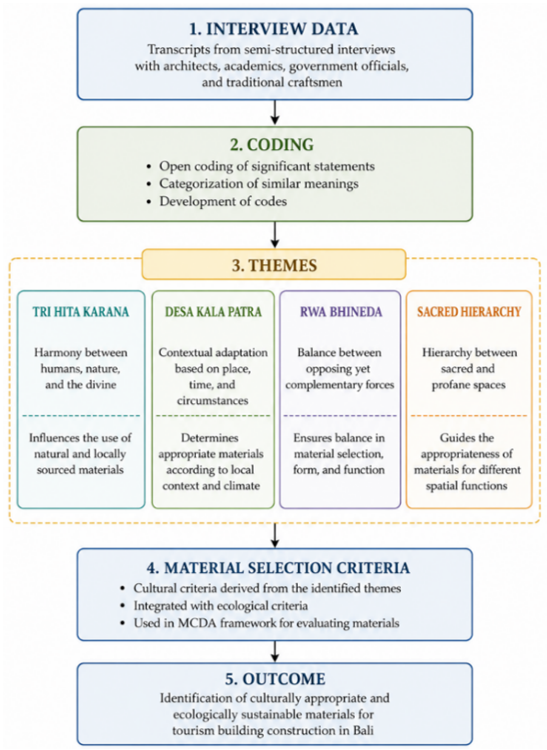
Figure 2. Qualitative coding map- research process for theme identification and material selection criteria development
Figure 2 illustrates the qualitative data analysis process employed in this study to derive the cultural criteria for sustainable material selection. The analysis began with the collection of interview data from architects, academics, government officials, and traditional craftsmen. Through a systematic coding process, recurring concepts and meaningful statements were categorized into major themes. Four dominant cultural themes emerged, namely Tri Hita Karana, Desa Kala Patra, Rwa Bhineda, and the sacred-profane spatial hierarchy. These themes were subsequently synthesized into cultural material-selection criteria and integrated with ecological indicators to establish the proposed MCDA framework
The interview data were coded thematically to identify recurring relationships between cultural philosophy and material selection. Four dominant themes emerged: harmony with nature and spirituality, contextual adaptation, symbolic balance, and sacred–profane material differentiation. For example, one architect stated that material selection in Balinese architecture should not only follow technical requirements but also respect the relationship between the building, nature, and spiritual order. A traditional craftsman emphasized that natural stone, timber, bamboo, and thatch are not merely construction materials but also carriers of local identity and ritual appropriateness. These findings support the inclusion of Tri Hita Karana, Desa Kala Patra, Rwa Bhineda, and sacred-profane hierarchy as cultural indicators in the framework.
3.2 Questionnaire-based importance of ecological and cultural criteria
The questionnaire assessed the perceived importance of four ecological criteria and one overarching cultural-compatibility criterion. The descriptive results are presented in Table 5, including the mean scores, standard deviations, 95% t-based precision intervals, and descriptive rankings for each criterion. These results are reported for the participating professional panel and should not be interpreted as population-level estimates.
Table 5. Descriptive importance ratings within the questionnaire panel (n = 45)
|
Criterion |
Mean |
SD |
95% t-Based Precision Interval |
Descriptive Rank |
|
Climatic Adaptation |
4.78 |
0.41 |
4.66-4.90 |
1 |
|
Cultural Compatibility |
4.72 |
0.46 |
4.58-4.86 |
2 |
|
Durability |
4.65 |
0.52 |
4.49-4.81 |
3 |
|
Low-Carbon Performance |
4.54 |
0.61 |
4.36-4.72 |
4 |
|
Recyclability
|
4.43
|
0.58
|
4.26-4.60
|
5
|
All five criteria received high mean importance ratings, ranging from 4.43 to 4.78. Climatic adaptation obtained the highest descriptive mean, followed by cultural compatibility and durability. However, the precision intervals overlap, particularly among the three highest-rated criteria. The ordering should therefore be interpreted as a broad panel-level priority pattern rather than statistically significant separation between adjacent criteria. The questionnaire results were subsequently used in the transparent hierarchical weight-derivation procedure described in Section 2.5.
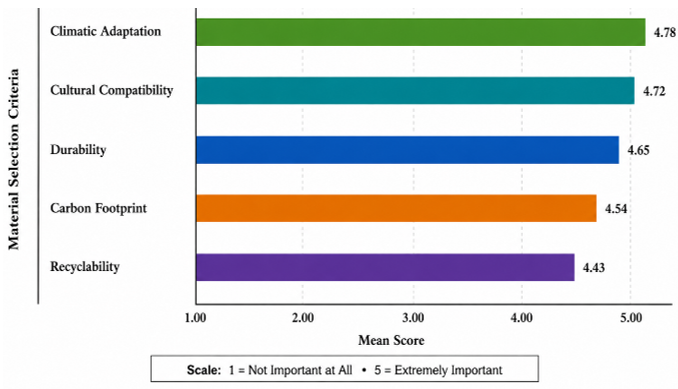
Figure 3. Mean importance ratings and 95% t-based precision intervals within the questionnaire panel (n = 45)
Figure 3 illustrates the ranking of the material selection criteria based on the mean scores obtained from the questionnaire survey. The results indicate that climatic adaptation received the highest mean score, demonstrating that respondents consider the ability of building materials to perform effectively under Bali's tropical environmental conditions as the most important criterion. Cultural compatibility ranked second, highlighting the importance of preserving Balinese architectural identity alongside environmental performance. Durability, carbon footprint, and recyclability were also highly rated, indicating that architectural practitioners recognize sustainable material selection as a multidimensional decision that balances technical performance, environmental responsibility, and cultural values. These findings provide quantitative support for the weighting of the evaluation criteria incorporated into the proposed MCDA framework.
The ecological ratings were not intended to represent a complete laboratory-based life-cycle assessment. Instead, they were developed as a preliminary comparative evaluation based on three sources: literature on material sustainability and embodied carbon, field observation of material use in Balinese tourism buildings, and expert/practitioner judgment collected through interviews and questionnaires. Materials were rated using a five-level scale from very low to very high. Low-carbon ratings were assigned to locally available, minimally processed, and renewable or naturally occurring materials. High-carbon ratings were assigned to industrial materials requiring intensive manufacturing, long supply chains, or high embodied energy. Durability, recyclability, and climatic adaptability were evaluated based on service life, reuse potential, biodegradability or recyclability, and suitability for Bali’s tropical climate
3.3 Questionnaire results
The questionnaire results indicate that the participating practitioners regarded both ecological performance and cultural compatibility as important considerations in material selection. Climatic adaptation, cultural compatibility, and durability formed the highest-rated descriptive cluster. Because their precision intervals overlap, the observed ordering does not demonstrate statistically significant differences between these criteria. Low-carbon performance and recyclability also received high ratings. The survey findings were used for panel-level weight calibration and should not be generalized to the entire population of architecture and construction practitioners in Bali.
3.4 Multi-Criteria Decision Analysis weight derivation, material scoring, and sensitivity
Table 6 reports each numerical step used to derive the global MCDA weights. The procedure first determines the relative balance between the ecological and cultural dimensions and then assigns weights to the subcriteria within each dimension. This hierarchical procedure prevents the ecological dimension from receiving a mechanically larger total weight merely because it contains several questionnaire items. It also makes explicit which weights are data-derived and which represent neutral methodological assumptions.
Table 6. Transparent hierarchical derivation of the Multi-Criteria Decision Analysis (MCDA) criterion weights
|
Dimension |
Criterion |
Quantitative Input |
Local Weight Within Dimension (%) |
Dimension Weight (%) |
Global Weight (%) |
|
Ecology |
Low-Carbon Performance |
Mean = 4.54 |
24.674 |
49.356 |
12.178 |
|
Ecology |
Durability |
Mean = 4.65 |
25.272 |
49.356 |
12.473 |
|
Ecology |
Recyclability |
Mean = 4.43 |
24.076 |
49.356 |
11.883 |
|
Ecology |
Climatic Adaptation |
Mean = 4.78 |
25.978 |
49.356 |
12.822 |
|
Culture |
Tri Hita Karana |
Equal allocation |
25.000 |
50.644 |
12.661 |
|
Culture |
Desa Kala Patra |
Equal allocation |
25.000 |
50.644 |
12.661 |
|
Culture |
Rwa Bhineda |
Equal allocation |
25.000 |
50.644 |
12.661 |
|
Culture |
Sacred Hierarchy |
Equal allocation |
25.000 |
50.644 |
12.661 |
|
Total |
— |
—
|
—
|
100.000
|
100.000
|
The dimension weights were derived directly from the questionnaire outputs. This produced nearly balanced weights for the ecological (49.356%) and cultural (50.644%) dimensions. Within the ecological dimension, climatic adaptation received the largest local weight, followed by durability, low-carbon performance, and recyclability. Equal cultural subweights were used as the baseline because no defensible quantitative evidence was available to distinguish their relative importance. The sensitivity analysis evaluates the effect of this assumption.
Ecological criteria include carbon footprint, durability, recyclability, and climatic adaptation, whereas cultural criteria comprise Tri Hita Karana, Desa Kala Patra, Rwa Bhineda, and the sacred-profane spatial hierarchy. The assigned weights represent the relative importance of each criterion, as determined through the integration of literature review, qualitative thematic analysis, and questionnaire findings.
This weighting structure provides a systematic basis for evaluating and comparing alternative building materials and serves as the foundation for the subsequent scoring and ranking process within the proposed MCDA framework.
The worked-example scores were assigned during a structured author-consensus session conducted after the scoring rubric had been finalized. The authors reviewed each material–criterion combination against the operational anchors in Table 2 and the available literature, field-observation records, and interview-derived contextual evidence. Discussion continued until one consensus score was agreed for each cell. The resulting consensus matrix was retained as the illustrative input to the MCDA calculation. The questionnaire respondents were not asked to score individual materials.
Because only consensus values were retained and no independent rater-level score matrix was available, between-rater variance and an intraclass correlation coefficient (ICC) could not be calculated. The absence of an independent reliability estimate is explicitly treated as a methodological limitation. Future validation should require independent scoring by a multidisciplinary panel, retention of individual rater-level scores, and reporting of an appropriate absolute-agreement ICC following established reliability-reporting guidelines [16].
The criterion-level scores and the resulting composite material evaluations are presented in Tables 7 and 8. Table 7 reports the score assigned to each material under each ecological and cultural criterion, thereby making the material-performance inputs fully traceable. Table 8 presents the corresponding ecological and cultural composite scores, overall weighted scores, and illustrative material rankings derived from the weighted-sum aggregation procedure. To evaluate the robustness of the material rankings to changes in criterion weights, a sensitivity analysis was conducted under four alternative weighting scenarios, as presented in Table 9. The scenarios comprise the baseline data-derived weights, an ecology-emphasis scenario, a culture-emphasis scenario, and an equal-criteria scenario.
Table 7. Illustrative criterion-level material score matrix
|
Material |
Low-Carbon |
Durability |
Recyclability |
Climate Adaptation |
Tri Hita Karana |
Desa Kala Patra |
Rwa Bhineda |
Sacred Hierarchy |
|
Bamboo |
5.0 |
4.0 |
5.0 |
5.0 |
5.0 |
5.0 |
5.0 |
5.0 |
|
Natural stone |
4.0 |
5.0 |
4.0 |
4.5 |
5.0 |
5.0 |
4.5 |
5.0 |
|
Timber |
4.5 |
4.0 |
4.5 |
4.5 |
5.0 |
4.5 |
4.5 |
4.5 |
|
Reinforced concrete |
2.0 |
5.0 |
2.5 |
3.5 |
2.5 |
3.0 |
3.0 |
2.0 |
|
Steel |
1.5 |
5.0 |
4.0 |
2.5
|
2.0
|
2.5
|
2.5
|
1.5
|
Table 8. Recalculated dimension composites, overall scores, and illustrative rankings
|
Material |
Ecology Composite |
Culture Composite |
Overall Weighted Score |
Rank |
|
Bamboo |
4.747 |
5.000 |
4.875 |
1 |
|
Natural stone |
4.383 |
4.875 |
4.632 |
2 |
|
Timber |
4.374 |
4.625 |
4.501 |
3 |
|
Reinforced concrete |
3.268 |
2.625 |
2.942 |
4 |
|
Steel |
3.246 |
2.125 |
2.678 |
5 |
The analysis examines whether reasonable changes in the relative importance of ecological and cultural criteria alter the resulting material rankings.
Table 7 makes the material-performance inputs fully traceable by reporting the score of each material under every criterion. Table 6b reports the within-dimension composites and the final weighted score. The ecological and cultural composites are not independently assigned values; they are calculated from the criterion-level scores using the normalized within-dimension weights. The overall score is then obtained by multiplying every criterion score by its global weight and summing the eight weighted contributions.
As shown in Table 9, the rank order remained unchanged across all four principal weighting scenarios. Bamboo consistently ranked first, followed by natural stone, timber, reinforced concrete, and steel. The one-at-a-time sensitivity analysis, in which each global criterion weight was independently increased and decreased by 20% and the complete weight vector was subsequently renormalized, also produced no rank reversal. These results indicate that the illustrative material ranking is stable under moderate variations in criterion weights. However, this robustness applies specifically to the illustrative author-consensus score matrix and should not be interpreted as external validation of the framework.
Table 9. Sensitivity of illustrative material scores and rankings to alternative weighting scenarios
|
Material |
Baseline: E 49.36%, C 50.64% |
Ecology Emphasis: E 59.36%, C 40.64% |
Culture Emphasis: E 39.36%, C 60.64% |
Equal Criteria: 12.5% Each |
|
Bamboo |
4.875 (1) |
4.850 (1) |
4.901 (1) |
4.875 (1) |
|
Natural stone |
4.632 (2) |
4.583 (2) |
4.681 (2) |
4.625 (2) |
|
Timber |
4.501 (3) |
4.476 (3) |
4.526 (3) |
4.500 (3) |
|
Reinforced concrete |
2.942 (4) |
3.007 (4) |
2.878 (4) |
2.938 (4) |
|
Steel |
2.678 (5) |
2.790 (5)
|
2.566 (5)
|
2.688 (5)
|
For example, the overall score for bamboo was calculated as:
$\begin{gathered}S_{\text {bamboo }}=5(0.121781)+4(0.124732)+5(0.118830) \\ +5(0.128219)+5(0.126609)+5(0.126609) \\ +5(0.126609)+5(0.126609)=4.875\end{gathered}$
This calculation replaces the untraceable composite-score procedure used in the earlier version. Under the illustrative baseline scenario, bamboo obtained the highest overall score, followed by natural stone and timber. Reinforced concrete and steel received high durability scores but lower low-carbon and cultural scores. These results apply only to the stated early-stage screening context and should not be interpreted as evidence that one material universally substitutes for another in primary structural applications
The rank order remained unchanged across the four principal weighting scenarios. Bamboo, natural stone, timber, reinforced concrete, and steel retained ranks one through five, respectively. The one-at-a-time analysis, in which each global criterion weight was increased and decreased by 20%, and the complete weight vector was renormalized, also produced no rank reversal. Across these perturbations, the score ranges were 4.854–4.898 for bamboo, 4.617–4.648 for natural stone, 4.488–4.514 for timber, 2.890–2.993 for reinforced concrete, and 2.619–2.735 for steel. The results indicate that the rank order is stable under moderate changes in the assumed weights for this illustrative score matrix. This robustness should not be interpreted as external validation because the material-performance values remain scenario-based author-consensus scores.
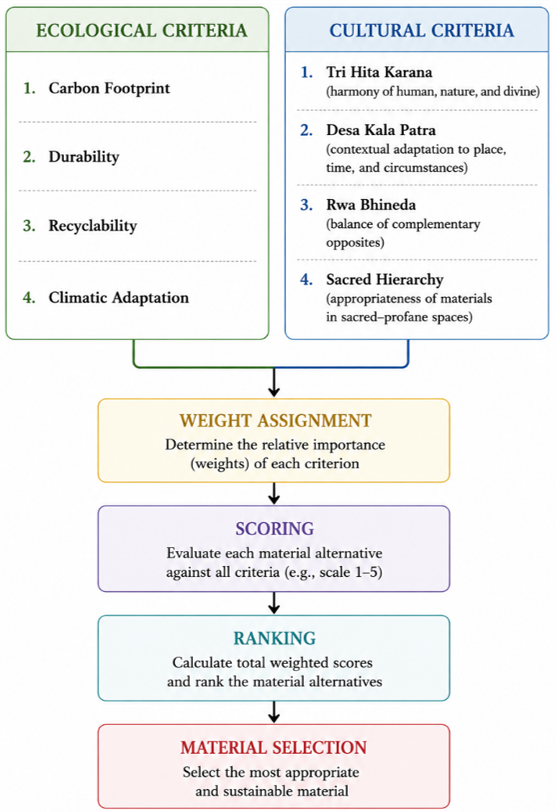
Figure 4. Transparent Multi-Criteria Decision Analysis (MCDA) weighting, scoring, aggregation, and sensitivity process
Figure 4 illustrates the proposed MCDA framework developed to support sustainable material selection in Balinese architecture. The framework integrates two complementary dimensions, namely ecological performance and cultural compatibility, into a unified decision-making process. The ecological dimension evaluates materials based on carbon footprint, durability, recyclability, and climatic adaptation, while the cultural dimension assesses their consistency with the Balinese architectural philosophies of Tri Hita Karana, Desa Kala Patra, Rwa Bhineda, and the sacred-profane spatial hierarchy. These criteria are subsequently assigned relative weights according to their level of importance, followed by the scoring of each material alternative against all evaluation criteria. The weighted scores are then aggregated to generate a ranking of the available material options, enabling the selection of materials that achieve an appropriate balance between environmental sustainability and cultural preservation. Accordingly, the proposed MCDA framework provides a transparent and systematic approach for supporting material selection decisions in contemporary Balinese architecture, particularly within tourism-oriented development projects.
Table 10. Trade-off analysis between ecological and cultural performance
|
Material |
Ecology |
Culture |
Recommendation |
|
Bamboo |
High |
High |
Highly Recommended |
|
Stone |
High |
High |
Recommended |
|
Timber |
High |
High |
Recommended |
|
Concrete |
Moderate |
Low |
Use only for structural elements |
|
Steel |
Moderate |
Low |
Structural use with mitigation |
Table 10 interprets the ecological-cultural trade-offs generated by the illustrative worked example. Under the stated screening context and baseline assumptions, bamboo, natural stone, and timber received comparatively high scores in both dimensions. Reinforced concrete and steel received high durability scores but lower low-carbon and cultural scores. These outcomes should not be interpreted as a universal prohibition on industrial materials or as evidence that natural materials can replace structural concrete or steel in every application. Structural safety, fire performance, code compliance, exposure conditions, availability, and maintenance requirements remain mandatory project-specific constraints. Where reinforced concrete or steel is technically necessary, the framework supports mitigation through material-volume optimization, recycled content, lower-carbon production, local sourcing, durability planning, and integration with culturally meaningful materials.
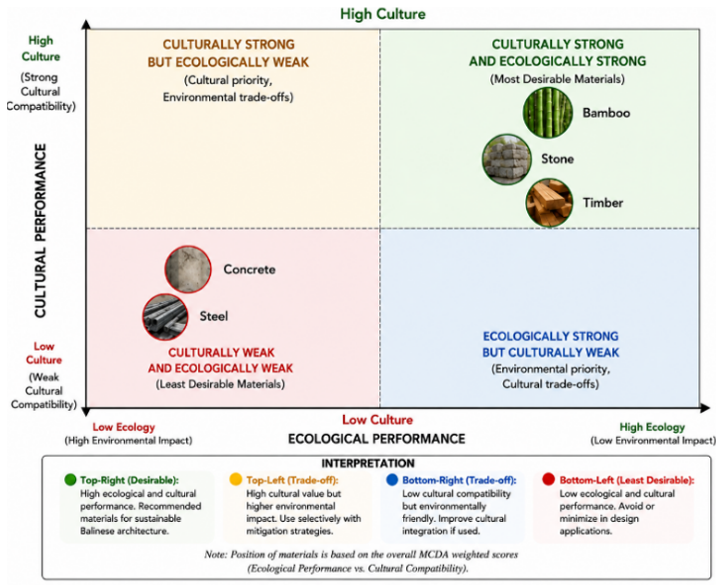
Figure 5 illustrates the trade-off relationship between ecological performance and cultural compatibility in the evaluation of building materials for Balinese architecture. The horizontal axis represents ecological performance, ranging from low to high, while the vertical axis represents cultural compatibility, ranging from low to high. Materials located in the upper-right quadrant, such as bamboo, natural stone, and timber, demonstrate superior performance in both ecological and cultural dimensions, indicating that they are the most suitable alternatives for sustainable architectural applications. In contrast, reinforced concrete and steel are positioned in the lower-left quadrant because, although they provide high structural strength and durability, they exhibit relatively higher environmental impacts and lower compatibility with traditional Balinese architectural values. The quadrant analysis demonstrates that sustainable material selection requires balancing environmental responsibility with cultural preservation rather than optimizing a single criterion. Consequently, the proposed MCDA framework provides a systematic mechanism for evaluating these trade-offs through weighted criteria and integrated scoring, thereby supporting more transparent, balanced, and context-sensitive material selection decisions for contemporary Balinese architecture.
Figure 5. Illustrative ecological-cultural trade-off under the baseline weighting scenario
The quadrant provides a visual interpretation of the illustrative score matrix rather than an independently validated material classification. Its principal function is to identify materials that combine favorable ecological and cultural scores and materials that require mitigation or restricted application. The position of a material may change when the building component, technical requirements, measured environmental data, or stakeholder preferences change.
3.5 Application in tourism architecture
Observations of hotel and resort buildings indicate that:
•Local materials are often used in façade elements.
•Structural systems frequently rely on concrete.
•Decorative elements simulate traditional architecture.
This hybridization reflects the tension between modern construction efficiency and cultural authenticity.
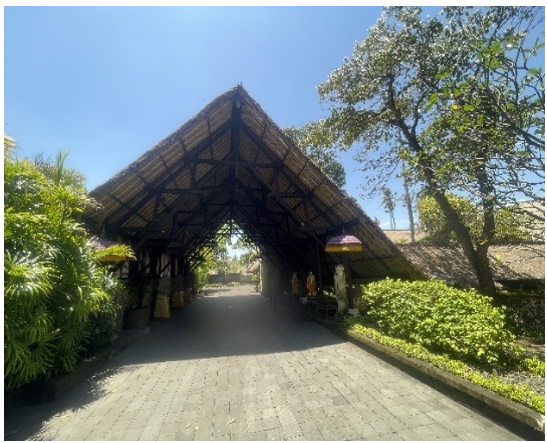
Figure 6. Traditional alang-alang thatched roof and exposed timber roof structure at the main lobby of the Oberoi Resort Bali, demonstrating climate-responsive vernacular architecture
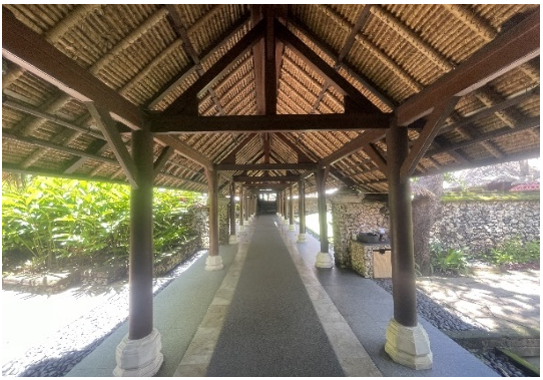
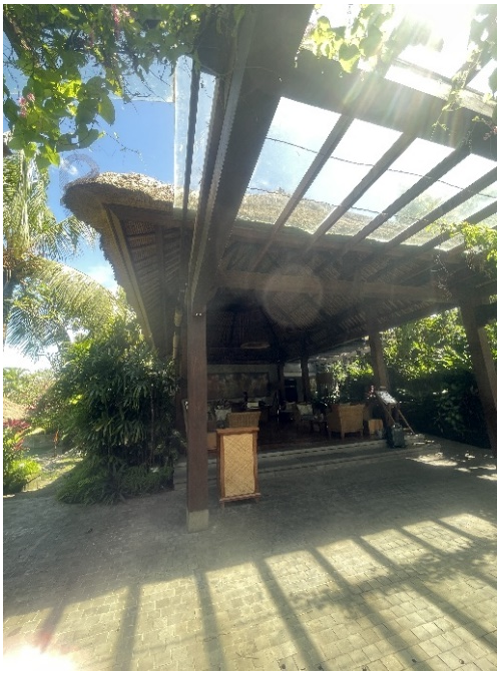
Figure 7. Exposed timber column and roof structure at the lobby of the Oberoi Resort Bali, illustrating the integration of local structural materials and traditional Balinese architectural expression
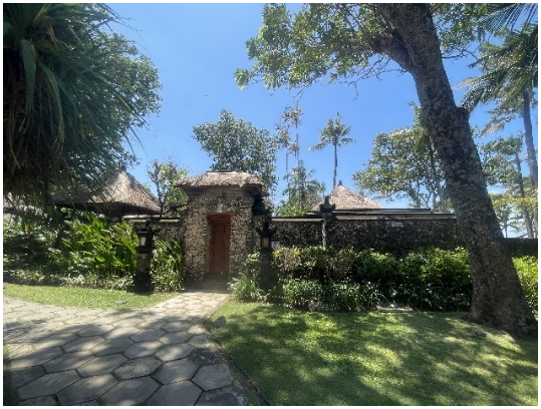
Figure 8. Jimbaran coral-stone boundary wall at the Oberoi Resort Bali, representing the application of locally sourced natural stone in Balinese resort architecture
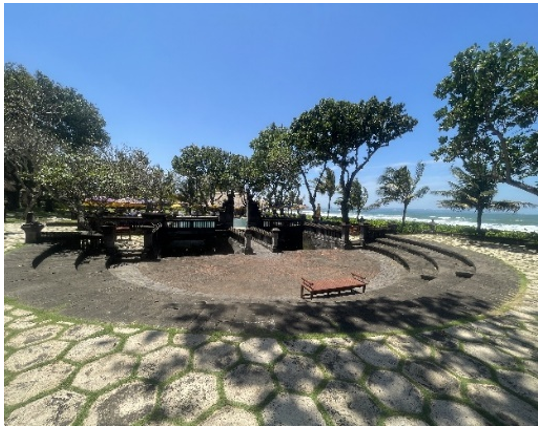
Figure 9. Brick-paved amphitheater flooring at the Oberoi Resort Bali, illustrating the use of locally produced brick as a durable and culturally compatible landscape material
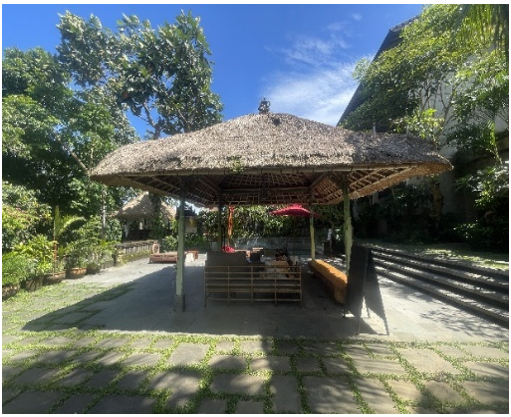
The observed material applications in the selected tourism buildings are documented in Figures 6–13. Figures 6–9 illustrate material applications at the Oberoi Resort Bali, including alang-alang thatched roofing, exposed timber roof and column structures, locally sourced coral-stone boundary walls, and brick-paved amphitheatre flooring. Figures 10 and 11 show the application of alang-alang roofing, timber columns, and timber flooring at Adiwana Resort Jembawan, Ubud.
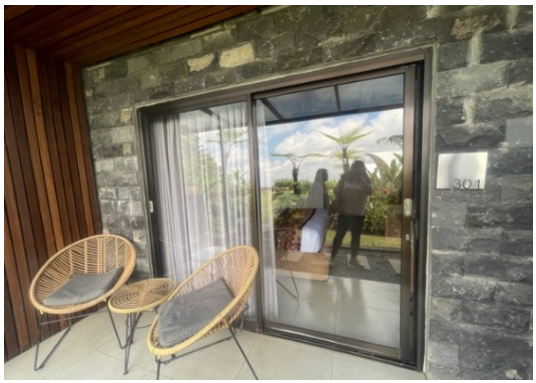
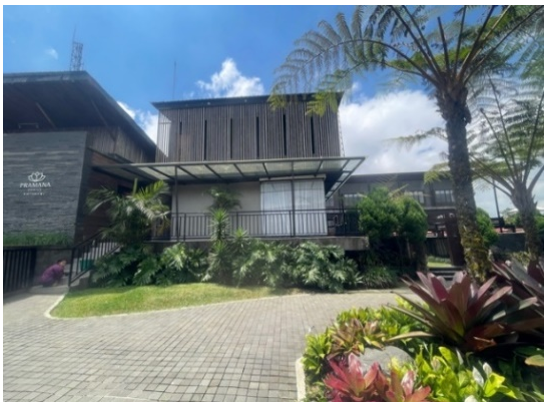
Figures 12 and 13 illustrate the use of locally available volcanic stone and timber cladding at Pramana Zahill Kintamani. Collectively, these field observations demonstrate how locally sourced and culturally recognizable materials are incorporated into contemporary tourism architecture across coastal, cultural, and highland settings in Bali.
Figure 10. Alang-alang grass roofing supported by teak timber columns and timber flooring at the lobby of Adiwana Resort Jembawan, Ubud
Figure 11. Alang-alang grass roofing supported by timber columns and timber flooring at the Adiwana Resort Jembawan Ubud swimming pool pavilion
Figure 12. Volcanic-stone wall finish at Pramana Zahill Kintamani, demonstrating the application of locally available highland materials in contemporary tourism architecture
The case-level analysis shows that reinforced concrete is mainly used in foundations, columns, beams, and floor structures because of structural safety and construction efficiency, but it has lower cultural expression and higher embodied carbon. Façade elements commonly use natural stone, brick, and timber, which provide stronger cultural identity and moderate ecological performance. Roof elements using thatch, tile, or timber structures contribute to climatic adaptation and Balinese visual identity, although maintenance and durability must be considered. Decorative elements such as stone carving, timber ornamentation, and traditional gates have high cultural value but should be evaluated in relation to material sourcing, durability, and maintenance needs.
Figure 13. Timber cladding applied to the exterior façade of Pramana Zahill Kintamani, illustrating the integration of natural materials into contemporary eco-lodge architecture
Table 11. Material application in tourism buildings
|
Component |
Material |
Cultural Meaning |
Ecology |
Alternative |
|
Roof |
Alang-alang |
High |
Excellent |
Maintain |
|
Wall |
Batu Karang |
High |
Good |
Maintain |
|
Structure |
Concrete |
Low |
Moderate |
Reduce volume |
|
Ornament |
Stone carving |
High |
High |
Maintain |
|
Floor |
Timber |
High |
High |
Certified timber |
Table 11 summarizes the application of major building materials in the observed tourism buildings and evaluates their ecological performance, cultural significance, and potential alternatives. The analysis demonstrates that different building components require different material selection strategies depending on their structural function, environmental performance, and cultural relevance. Natural materials such as alang-alang thatch, natural stone, timber, and brick exhibit strong compatibility with Balinese architectural traditions while providing favorable ecological characteristics, including climatic adaptability and lower environmental impacts. Conversely, reinforced concrete remains essential for structural systems because of its strength and durability, although its higher embodied carbon necessitates mitigation strategies such as reducing material consumption, incorporating recycled content, and combining structural elements with locally sourced natural materials. These findings highlight that sustainable tourism architecture in Bali should adopt a balanced approach that integrates technical performance with ecological responsibility and cultural preservation.
3.6 Integrative framework
When ecological and cultural criteria produce conflicting evaluations, the framework applies a trade-off rule rather than a single-dimension decision. Materials that score highly in durability but poorly in carbon footprint or cultural compatibility are not automatically rejected, particularly when they are required for structural safety. Instead, their use should be minimized, justified, and mitigated through design strategies such as reducing material volume, using recycled content, sourcing from closer suppliers, exposing fewer industrial surfaces, and combining them with local culturally meaningful materials. For example, reinforced concrete may remain necessary for foundations or structural frames, but its negative ecological and cultural scores can be reduced by limiting its visible expression, optimizing structural efficiency, using supplementary cementitious materials, and integrating natural stone, timber, brick, or thatch in culturally significant architectural elements.
In practical application, the proposed framework can be used during the early design and material-specification stages. Architects may first identify the building component, then compare alternative materials using ecological and cultural indicators. For tourism buildings, this process can help determine which materials should be prioritized for roofs, façades, landscape elements, sacred or semi-sacred spaces, public areas, and structural systems. For policymakers, the framework can support the development of more detailed local guidelines that move beyond visual compliance with Balinese architectural style toward measurable material sustainability. Such guidelines may include recommended local materials, ecological performance thresholds, culturally sensitive material applications, and mitigation strategies for unavoidable industrial materials.
The proposed framework also contributes to the achievement of Sustainable Development Goal (SDG) 11 by promoting sustainable cities and communities through culturally responsive material selection. In addition, the emphasis on resource efficiency and reduced environmental impact supports SDG 12 concerning responsible consumption and production, while lower embodied carbon contributes to SDG 13 on climate action.
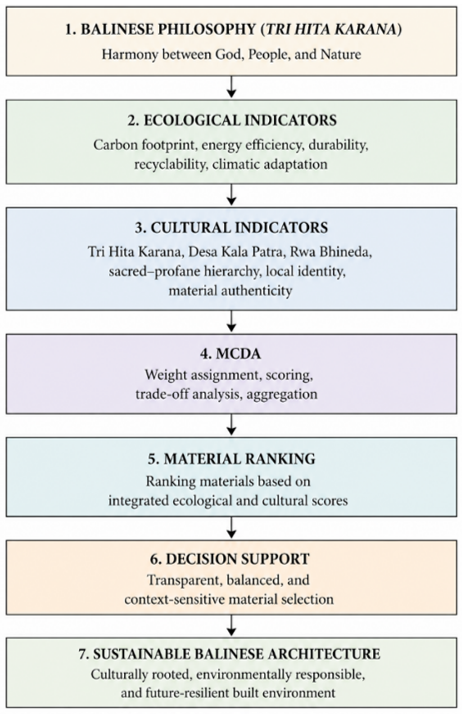
Figure 14 presents the proposed integrated framework for sustainable material selection in Balinese architecture. The framework begins with the philosophical foundation of Tri Hita Karana, which establishes harmony between humans, nature, and the spiritual realm as the guiding principle for architectural decision-making [17, 18]. This philosophical basis is subsequently translated into two complementary evaluation dimensions: ecological indicators, which assess environmental performance through carbon footprint, durability, recyclability, and climatic adaptation, and cultural indicators, which evaluate compatibility with Balinese architectural values, including Tri Hita Karana, Desa Kala Patra, Rwa Bhineda, and the sacred–profane spatial hierarchy [19]. Both dimensions are integrated through the MCDA process, where criteria are weighted, material alternatives are systematically scored, and overall rankings are generated. The resulting rankings provide transparent and evidence-based decision support for architects, planners, and policymakers in selecting building materials that simultaneously achieve ecological sustainability and cultural preservation. Ultimately, the framework contributes to the realization of sustainable Balinese architecture, in which environmental responsibility, cultural continuity, and technical performance are integrated into a coherent material selection strategy for contemporary architectural practice.
Figure 14. Proposed framework
Beyond its application in Bali, the proposed framework has the potential to be adapted for other regions possessing strong vernacular architectural traditions [20]. By modifying the cultural evaluation criteria while maintaining the ecological assessment structure, the framework may provide a transferable decision-support approach for sustainable material selection in culturally sensitive built environments [21, 22].
This study has several limitations. First, the questionnaire used a purposively recruited panel of 45 practitioners and was not designed or powered for population-level hypothesis testing. The reported means and weights therefore represent the participating professional panel and may not generalize to all architecture and construction practitioners in Bali. The overlapping precision intervals also limit fine-grained distinctions between adjacent importance ratings.
Second, the operational sampling frame was based on targeted professional and stakeholder networks rather than a complete probability-based register. Any unavailable recruitment denominator or cross-phase participant overlap limits the assessment of non-response and sample representativeness.
Third, the ecological and cultural dimension weights were calibrated from questionnaire means, but the four cultural subcriteria were not quantitatively rated separately. Equal cultural subweights were consequently used as a neutral baseline and examined through sensitivity analysis. Future studies should obtain direct importance judgments for every subcriterion using a larger multidisciplinary panel or a formal elicitation procedure.
Fourth, the material-performance matrix was constructed as an illustrative author-consensus worked example. The material scores were not independent ratings from the 45 questionnaire respondents, were not derived from complete laboratory or life-cycle inventory datasets, and were not retained at the individual-rater level. Inter-rater reliability could therefore not be calculated. Although the rank order was stable under the tested weight perturbations, this robustness applies only to the illustrative matrix and does not constitute external validation.
Fifth, material suitability is component- and project-specific. The framework cannot override mandatory requirements concerning structural safety, fire safety, durability, code compliance, cost, availability, or maintenance. Future validation should use project-specific functional units, measured or verified life-cycle data, independent multidisciplinary raters, documented inter-rater reliability, larger stratified practitioner samples, and completed construction projects.
This study develops a preliminary cultural–ecological framework for sustainable material selection in Balinese architecture. Its principal contribution is the explicit integration of ecological performance and culturally grounded criteria within a transparent MCDA structure. The revised framework makes the sampling scope, criterion-weight derivation, material-performance scoring, weighted aggregation, and sensitivity analysis traceable.
The questionnaire results indicate that the participating practitioners placed high importance on climatic adaptation, cultural compatibility, durability, low-carbon performance, and recyclability. These findings are descriptive of the purposively recruited panel and are not population estimates. Hierarchical normalization produced an ecological-dimension weight of 49.36% and a cultural-dimension weight of 50.64%. Ecological subcriterion weights were derived from questionnaire means, while equal cultural subweights were used because separate quantitative importance ratings were unavailable.
In the illustrative material-screening scenario, bamboo, natural stone, and timber retained the first three positions across all tested weighting scenarios, while reinforced concrete and steel retained the fourth and fifth positions. These rankings demonstrate how the framework operates; they do not establish a universal material hierarchy. The material scores were author-consensus scenario values rather than independent project measurements, and no inter-rater reliability coefficient could be calculated.
Accordingly, the framework should be regarded as a preliminary decision-support structure rather than a standardized assessment instrument. Its practical use must begin with mandatory technical and regulatory screening and must be adapted to the relevant building component, exposure conditions, and project objectives. Further research should calibrate every criterion with a larger stratified expert panel, incorporate project-specific life-cycle and cost data, retain independent rater-level scores, report reliability, and validate the resulting recommendations through completed architectural projects.
The authors would like to express gratitude to the Faculty of Engineering, Udayana University, and all interview participants, including architects, academics, government officials, and traditional craftsmen, who contributed valuable insights to this research.
Artificial intelligence (AI)-based language assistance tools were used solely to support grammar checking, language refinement, and manuscript editing during the preparation of this manuscript. AI was not used to generate the research questions, methodology, field observations, data collection, analysis, interpretation, discussion, or conclusions. All scientific content, critical interpretation, and final manuscript revisions were developed, verified, and approved entirely by the authors, who take full responsibility for the originality, accuracy, and integrity of this work.
[1] Crawford, R.H., Stephan, A., Prideaux, F. (2019). Environmental Performance in Construction (EPiC) Database. The University of Melbourne, Melbourne, Australia, 268. https://doi.org/10.26188/5dc228ef98c5a
[2] Bajwa, A.U.R., Siriwardana, C., Shahzad, W., Naeem, M.A. (2025). Material selection in the construction industry: A systematic literature review on multi-criteria decision making. Environment Systems and Decisions, 45: 8. https://doi.org/10.1007/s10669-025-10001-w
[3] United Nations Environment Programme. (2022). 2022 Global Status Report for Buildings and Construction: Towards a Zero-Emission, Efficient and Resilient Buildings and Construction Sector. United Nations Environment Programme, Nairobi. https://www.unep.org/resources/publication/2022-global-status-report-buildings-and-construction.
[4] Utami, N.W.A., Adhika, I.M., Dwijendra, N.K.A., Putra, I.D.G.A.D. (2025). Integration of cultural and ecological aspects in the selection of sustainable materials for traditional Balinese architecture. ASTONJADRO, 14(4): 1138-1142. https://doi.org/10.32832/astonjadro.v14i4.19093
[5] Zong, J., Wan Mohamed, W.S., Jaafar, M.F.Z., Ujang, N. (2025). Sustainable development of vernacular architecture: A systematic literature review. Journal of Asian Architecture and Building Engineering, 24(5): 3558-3574. https://doi.org/10.1080/13467581.2024.2399685
[6] Siddhpura, M., Siddhpura, A. (2024). Importance of material selection to achieve sustainable construction. In Materials Selection for Sustainability in the Built Environment: Environmental, Social and Economic Aspects, Woodhead Publishing, pp. 43-70. https://doi.org/10.1016/B978-0-323-95122-7.00003-4
[7] Hammad, A.W.A., Haddad, A.N., Figueiredo, K. (2024). Sustainable material choice in construction projects via mathematical programming. In Materials Selection for Sustainability in the Built Environment: Environmental, Social and Economic Aspects, Woodhead Publishing, pp. 487-501. https://doi.org/10.1016/B978-0-323-95122-7.00022-8
[8] Dwijendra, N.K.A. (2003). Balinese traditional housing and settlements. Jurnal Natah. https://ojs.unud.ac.id/index.php/natah/article/view/2926.
[9] Bahari, P.I., Zuhri, S. (2024). The application of sustainable architecture in commercial and tourism buildings as an effort to realize a green city. JAUR (Journal of Architecture and Urbanism Research), 8(1): 59-68. https://doi.org/10.31289/jaur.v8i1.11818
[10] Qtaishat, Y., Adeyeye, K., Emmitt, S. (2020). Eco-cultural design assessment framework and tool for sustainable housing schemes. Urban Science, 4(4): 65. https://doi.org/10.3390/urbansci4040065
[11] Vellinga, M. (2015). Vernacular architecture and sustainability: Two or three lessons. In Vernacular Architecture: Towards a Sustainable Future, CRC Press, pp. 3-8.
[12] Bali Provincial Government. (2005). Bali Provincial Regulation No. 5 of 2005 concerning Building Architecture Requirements. Denpasar: Government of Bali Province. http://perijinan.denpasarkota.go.id/peraturan/file_peraturan/perda5th2005.pdf.
[13] Lakens, D. (2022). Sample size justification. Collabra: Psychology, 8(1): 33267. https://doi.org/10.1525/collabra.33267
[14] Malterud, K., Siersma, V.D., Guassora, A.D. (2016). Sample size in qualitative interview studies: Guided by information power. Qualitative Health Research, 26(13): 1753-1760. https://doi.org/10.1177/1049732315617444
[15] Triantaphyllou, E., Sánchez, A. (1997). A sensitivity analysis approach for some deterministic multi-criteria decision-making methods. Decision Sciences, 28(1): 151-194. https://doi.org/10.1111/j.1540-5915.1997.tb01306.x
[16] Koo, T.K., Li, M.Y. (2016). A guideline of selecting and reporting intraclass correlation coefficients for reliability research. Journal of Chiropractic Medicine, 15(2): 155-163. https://doi.org/10.1016/j.jcm.2016.02.012
[17] Wiryawan, I.W., Ernawati, N. (2024). Tri Hita Karana in the spatial planning of Bali Province in national and regional regulations as an environmental conservation effort. International Journal of Environmental Impacts, 7(1): 31-40. https://doi.org/10.18280/ijei.070104
[18] Luqiana, A. (2024). Reinterpreting the Tri Hita Karana philosophy in Balinese bamboo architecture: Connecting humans, nature, and the gods. JAUR (Journal of Architecture and Urbanism Research), 8(1): 11-17. https://doi.org/10.31289/jaur.v8i1.11435
[19] Hutasoit, H., Wau, R. (2017). Towards sustainability with Tri Hita Karana (an interpretive study of Balinese society). Business Management Journal, 13(2). https://doi.org/10.30813/bmj.v13i2.917
[20] Dwijendra, N.K.A. (2026). Reinterpreting traditional Balinese architecture through Tri Hita Karana for sustainable spatial development. International Journal of Integrated Science and Technology, 4(4): 222-235. https://doi.org/10.59890/ijist.v4i4.303
[21] Spitz, C. (2025). Sustainability & identity: Bali’s struggle in the age of mass tourism. Journal of A Sustainable Global South, 9(2): 6-12. https://doi.org/10.24843/jsgs.2025.v09.i02.p06
[22] Yuhan, W., Widiastini, N.M.A. (2026). Tri Hita Karana: A holistic framework for sustainable tourism development in Bali. Jurnal Bali Membangun Bali, 7(1): 1-12. https://doi.org/10.51172/jbmb.v7i1.500