Jedsada Suksikarn | Rewat Suksikarn*
© 2025 The authors. This article is published by IIETA and is licensed under the CC BY 4.0 license (http://creativecommons.org/licenses/by/4.0/).
OPEN ACCESS
This research examines the effectiveness of participatory design approaches in facilitating sustainable product innovation through a qualitative case study on the development of banana fiber crafts in Thailand. The study employed a mixed-methods research design, combining participant observation, semi-structured interviews, and documentary analysis to investigate the integration of diverse knowledge domains through collaborative processes. The study followed a three-phase approach: initial knowledge gathering through expert consultations and field surveys, collaborative design development through structured workshops, and iterative prototype refinement with stakeholder feedback. The study was conducted at Ban Hua Khwai community in Songkhla Province, Thailand, where traditional craft knowledge was integrated with contemporary design approaches through structured participatory processes. Data collection spanned six months, involving 15 design students, 3 researchers, 2 entrepreneurs, and 12 community producers, who were purposively sampled to represent key stakeholder perspectives. The analysis employed thematic coding using NVivo software, focusing on identifying patterns of knowledge integration and creative collaboration. Results demonstrated the successful development of innovative product categories in two main segments: decorative household items and lifestyle products. The study introduced and validated the Creative Knowledge Integration (CKI) framework, providing a structured approach for synthesizing diverse knowledge domains in participatory design processes. Analysis using Elkington's Triple Bottom Line framework revealed significant positive impacts across economic (through successful product commercialization), social (through meaningful engagement of elderly community producers), and environmental dimensions (through sustainable material use and production methods). This research contributes to both the theoretical understanding of collective creativity in design and the practical application of participatory methods in sustainable product innovation. The findings provide valuable insights for designers, researchers, and communities seeking to develop sustainable products through collaborative approaches.
sustainable product innovation, participatory design, creative knowledge integration, banana fiber, triple bottom line
The intersection of design creativity and sustainable innovation represents a key domain in addressing contemporary societal challenges. As global concerns about environmental sustainability continue to mount, the need for creative design solutions that balance ecological preservation with social and economic viability becomes increasingly urgent. Within this context, participatory design (PD) emerges as a particularly suitable approach for sustainable product innovation for several compelling reasons.
First, sustainable product innovation inherently requires the integration of multiple knowledge domains - from technical understanding of materials and processes to local cultural wisdom and market insights. Recent research by Zhang et al. [1] demonstrated that successful sustainable innovation depends on effectively combining diverse knowledge types through structured collaborative processes. PD provides a systematic framework for facilitating the integration of diverse knowledge domains, enabling stakeholders to contribute their unique perspectives and expertise to the innovation process.
Second, contemporary research in sustainable design emphasizes the importance of stakeholder engagement throughout the innovation process [2, 3] and highlights how early stakeholder involvement leads to more environmentally and socially sustainable outcomes. PD's emphasis on democratic participation and collective creativity aligns perfectly with this requirement, providing structured methods for engaging diverse stakeholders from the earliest stages of the design process.
Third, sustainable product innovation often involves navigating complex trade-offs between environmental, social, and economic objectives. Recent work by Wang and Su [4] illustrated how participatory approaches can help balance these competing demands by bringing multiple perspectives into the decision-making process. PD's collaborative framework enables stakeholders to collectively explore and resolve these tensions, leading to more holistic and sustainable solutions.
The current research addresses significant gaps in our understanding of how PD can effectively drive sustainable product innovation. While existing literature acknowledges the potential of participatory approaches, empirical evidence remains limited regarding how PD processes can be structured to facilitate sustainable innovation in traditional craft contexts. Furthermore, while scholars such as Aibar-Guzmán et al. [5] have examined sustainable product innovation in industrial contexts, the application of PD approaches to traditional craft-based production systems remains understudied.
This research makes several unique contributions to addressing these gaps. First, it develops and validates a comprehensive framework for implementing PD in sustainable craft innovation, providing practical guidance for similar initiatives. Second, it offers detailed empirical evidence of how different stakeholder groups contribute to sustainable innovation through structured participatory processes. Third, it introduces the Creative Knowledge Integration (CKI) framework as a theoretical tool for understanding and facilitating collaborative innovation in sustainable design contexts.
Recent developments in design thinking and participatory design have highlighted new opportunities for sustainable innovation. Studies by Fajarwati et al. [6] and Zannoun et al. [7] demonstrate how collaborative design approaches can unlock new possibilities for sustainable product development. This research builds on these recent insights while addressing the specific challenges of integrating traditional craft knowledge with contemporary design approaches through participatory methods.
2.1 Participatory design
Using a collaborative design approach, PD seeks to create suitable solutions using technical specialists working with representatives of affected communities [8]. This kind of endeavor enables affected communities to obtain prototypes of the product for future manufacturing and distribution, therefore providing contextually suitable solutions. Information systems [9, 10], consumer goods [11], and humanitarian solutions [12, 13], as well as PD, have found great use in design. It is anchored on the guiding ideas of equalizing power relations, democratic practices, situation-based actions, mutual learning, and suitable tools and procedures [14]. Of great relevance to this paper is how these ideas are used to promote significant cooperation among designers, academics, entrepreneurs, and the nearby producer community.
2.2 PD cooperation
Designed in PD framework including local producer community, academics, designers, and entrepreneurs. Clearly define the responsibilities and benefits of every group of stakeholders as follows:
Design students: By adding design knowledge and inventiveness to the process, they become rather important partners.
Researchers provide vital new perspectives on sustainability, materials, and techniques.
Entrepreneurs guarantee that sustainable goods are not only innovative but also financially practical, thereby bridging invention and market viability.
Local producer groups provide priceless knowledge about banana fibers and their cultural background, therefore assuring that the finished goods appeal to local customs and demands.
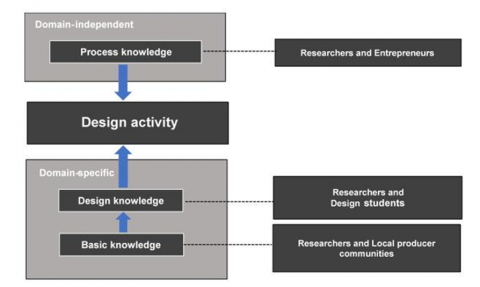
Using the construction of three knowledge sets crucial for design activities, Christiaans [15] offered an insightful analysis of the particular co-creation. Process knowledge, design knowledge, and maybe fit to the participatory design collaboration as shown in Figure 1 three knowledge sets. Furthermore, fundamental information. While design and fundamental knowledge are domain-specific, Christiaans said process knowledge is domain-independent. The three forms of knowledge listed below describe themselves.
Figure 1. Knowledge and design activity
• Process knowledge (Researchers and Entrepreneurs) —understanding of the necessary design procedures, capacity to work within ill-defined projects, and maintaining a mentality suitable to design work.
• Design expertise—in-depth knowledge of certain industrial design and engineering ideas, current solutions, approaches, and techniques— Researchers and Design students.
• Basic knowledge (local producer communities and researchers) —general knowledge of a spectrum of issues that provide a broad breadth of information and the capacity to draw from several disciplines. This covers knowledge in the areas of socio-cultural and problem-related spheres.
This approach emphasizes the requirement of all three knowledge sets being present in cooperation, with various people providing diverse knowledge, hence, it is relevant for PD practice.
2.3 Sustainable product innovation
This theoretical system advances thorough knowledge. It advances a thorough knowledge of the financial, environmental, and social sides of sustainability. By using a sophisticated procedure that balances environmental effects, cultural value, and financial viability, participatory cooperation helps to produce sustainable banana fiber goods.
Many researchers have been motivated to concentrate on improving sustainability in this field by the rising demand for sustainable products and services. Product sustainability is defined by the triple bottom lines (TBL) of sustainability, which together include environmental, social, and financial implications [16].
John Elkington's Triple Bottom Line (TBL) concept evaluates company performance in three areas: environmental, social, and financial sustainability. Originally proposed in the early 1990s, the TBL idea changed company sustainability by extending the emphasis beyond only financial measurements to include social and environmental effects.
With an eye on revenue, profits, and returns from the sales of banana fiber products, the economic component of TBL assesses financial performance. Four stakeholder groups—design students, researchers, entrepreneurs, and the nearby producer community—have cooperatively designed and produced the goods.
TBL's social component attends to issues of social equality, justice, and human rights. Elkington emphasizes the need for businesses to improve their working conditions and support diversity and inclusion within their operations. Many communities, including populations of older people, make things out of banana fiber. The environmental factor relates to the ecological consequences and results connected to a company. About ecosystems and natural resources, this helps to lower pollution levels. Save energy and water to help reduce trash creation. Products co-designed with banana fiber People should follow ecologically friendly lifestyles to lower negative effects on the surroundings and support the long-term survival of the earth. The locally obtained material comes from natural sources and goes through sun-drying, twisting, and tying at every phase of product development. There are little environmental effects.
Elkington's TBL approach helps companies. Execute a thorough sustainability agenda. include the decision-making process, and social, environmental, and financial elements. Organizing the interests of people, the surroundings, and financial results can help businesses to grow sustainably. It helps social welfare as well as environmental welfare.
Different important theoretical traditions in design research and creativity studies provide a foundation for understanding group creativity in participatory design contexts, which also builds on and extends. This theory holds that rather than from isolated cognitive processes, creative ideas develop in cooperative design environments from complex interconnections across many knowledge areas and stakeholder views.
In participatory settings, conventional approaches for understanding design knowledge—exemplified by Christiaans' framework of process knowledge, design knowledge, and basic knowledge—acquire extra dimensions. In this regard, process knowledge goes beyond personal design approaches to include the shared knowledge of successful cooperation among many design partners. Technical mastery, as well as the integration of many design points of view and techniques, define design expertise. Since it covers the contextual understanding required for good communication and stakeholder cooperation, fundamental knowledge is crucial.
Hussain [12] provided participatory design ideas with great relevance for enabling group creativity using organized cooperation. Their attention to equalizing power relations, democratic practices, context-specific behaviors, and reciprocal learning creates an atmosphere fit for efficient knowledge assimilation. The importance of these notions has to be developed to show how they support creative ideas in environmentally friendly product creation.
This book provides a major theoretical contribution using the Creative Knowledge Integration (CKI) framework, which synthesizes and expands current theoretical traditions to clarify the evolution of creative solutions in participatory design processes. According to CKI, creativity is the methodical blending of many data points via group efforts. Three basic processes—knowledge excavation, creative synthesis, and creative application—help to enable this integration.
Knowledge excavation is the methodical examination and documentation of several knowledge domains, including old craft processes, modern design concepts, market insights, and production capability. This approach goes beyond simple communication to include a critical study of the many kinds of knowledge that could support innovative ideas. The excavation process emphasizes the need for tacit knowledge contained in old craft practices and its possible contribution to sustainable innovation.
The basic process by which several kinds of data are combined to generate novel ideas is creative synthesis. This method requires the change of knowledge via cooperative interaction instead of a simple combination. Design activities that let stakeholders participate in investigating new possibilities using the integration of many points of view and approaches, therefore improving the synthesis process.
The application stresses the conversion of produced knowledge into design solutions that satisfy market needs and follow environmental criteria. This method ensures that ideas are both creative and practical by means of iterative creation and refinement of prototypes using continuous input from many stakeholder groups.
The CKI framework acknowledges the need for contextual aspects in determining creative results. The paper covers technological possibilities, cultural conventions, market circumstances, and environmental needs. Analysis of the influence of contextual elements on the creative process is necessary for the evolution of successful participatory design approaches that provide original and sustainable solutions.
The framework recognizes that group innovation in participatory design contexts operates on many spatial and chronological levels. Extended creative procedures help stakeholders to consider and improve their knowledge of options and constraints, therefore enhancing short-term creative interactions in design seminars and prototype creation sessions. Creativity is fostered via official design initiatives, casual contacts, and stakeholder information sharing. The success of the framework is evaluated using many criteria including the degree of knowledge integration attained, the amount of creativity in the produced solutions, and the sustainability consequences across economic, social, and environmental aspects. Examining these criteria requires quantitative studies and qualitative evaluations of stakeholder experiences and results.
The CKI framework provides a methodical technique for combining creative knowledge, therefore closing a major discrepancy in participatory design theory and practice. This work offers insightful information for encouraging group creativity and efficiently combining many kinds of knowledge into environmentally friendly solutions.
3.1 Innovative sustainable product development
Sustainable product innovation is the development of new goods, services, technologies, processes, and business models that improve environmental and social performance while producing profit for companies [2]. Attaining development, competitive advantage, and sustainability using environmental and social issues [3] is the focus. To control and improve general sustainability, sustainable product innovation calls for an analysis of the whole life cycle of the product—that includes its creation and service phases [4]. Environmental, financial, and social elements should all be given attention; the social factor should especially be given more priority [1]. Significant but difficult is the communication of environmental and socioeconomic performance of sustainable goods and services to customers [5].
Traditionally, design students have helped to preserve unsustainable lifestyles and have addressed problems that call for answers. Future designers have to change both practically and culturally to properly help to provide answers. New conceptual and methodological tools must be developed to improve sustainable design practices; however, they should also actively engage in the societal conversation on the vision and development of a sustainable future [17]. Innovation in many different fields, including industry, government, and social groups including local communities, depends critically on design. Inspired by pioneers like Buckminster Fuller and Victor Papanek, it has occasionally participated in sustainability debates and practices since the mid-twentieth century. Early in the 1980s, systematic involvement started, driven by growing industrial concern in social and environmental concerns [18-21].
Using the combination of classical, transforming, patterned, multi-material, and ornamental aspects, sustainable product innovation in craft design may be accomplished, therefore improving the product value in a sustainable way [6]. By creating ecologically friendly interior goods from waste products using the circular economy framework, artists may thus promote social, economic, and environmental benefits [2]. Classical Italian design may guide the development of sustainable goods using creative combinations of materials from several sources, therefore producing visually beautiful and emotionally resonant things [7]. By using eco-friendly materials like banana fiber, one helps to create ecologically friendly goods that satisfy the expectations of ethical customers and, therefore advance sustainable industrial practices. Using these techniques helps craftsmen create commercially feasible, socially conscious, and ecologically friendly goods.
Research on appropriate approaches is lacking in studies and the development of goods linked with sustainable product innovation. Referring to three dimensions—environmental, social, and financial impacts—the Triple Bottom Line (TBL) helps one to evaluate the sustainability of goods. Applied with an industry first, this framework is used in service goods and product design. It does not, however, include the assessment of local craft products—more especially, local craft materials—especially in Southeast Asia, including Thailand, which has plenty of natural resources fit for the creation of different crafts. This would greatly improve the availability on Earth of craft supplies. This work has used this idea as a structure for further investigation of related plant fibers.
3.2 Participatory development
Participatory design is putting people in charge of their created and natural environments [22]. The project aims to include people in the planning and design decision-making process thereby transcending traditional professional limits and cultures. Participation mostly seeks to improve people's trust and confidence in organizations, polish plans and choices, and strengthen a feeling of community [23]. Using a variety of approaches, participatory design makes use of group mapping [24], interactive group decision-making strategies, and field methodologies like surveys and interviews. Among designers, this area of study is evolving and becoming more and more sophisticated. Beyond simple consultation and idea testing, participatory design combines researchers, designers, users, and other specialists to understand and express issues, create strategies and ideas, and build, test, and evaluate treatments [25, 26]. From start to finish, participatory design (PD) is a technique involving stakeholders all through the design process. This approach depends mostly on the participants. Rooted in Scandinavian heritage, participatory design is based on workshops and design sessions [27].
For designers, academics, businesspeople, and the production community PD offers several benefits. It helps people to participate in the creation and management of their created and natural environments, therefore overcoming traditional professional limitations and cultural differences [22]. This involvement helps people to have more faith in companies, which raises the possibility of their involvement in current systems when handling problems [28]. Second, participatory design helps people to participate in planning, design, and decision-making procedures thereby producing improved plans, choices, service delivery, and generally better environmental quality [29]. Moreover, it strengthens the community by bringing people together with common goals [30]. For students, participatory design techniques provide great chances to interact as informed contributors as well as learners. This engagement helps people to affect the consequences of design and promotes responsibility for their study involvement [31].
3.3 Cooperation in the method of professional development regarding craft advancement: Banana fiber
Reiteration or recombination of current knowledge in fresh and creative ways is what defines craft design [32, 33]. According to the present knowledge of a craft, one has innated specialized talents either personally or throughout local communities. Tacit knowledge is distinguished by the idea that people know more than they can express. Practical and personal interaction between master and student allows one to mostly absorb the tacit knowledge held by the indigenous artists from the great experience of dealing with materials and techniques. Within families or close-knit groups, certain methods and artisan styles might be passed on through generations. Chuenrudeemol et al. [34] suggested two strategies for obtaining local craftspeople’s expertise to create new goods targeted at commercialization. The two models are the co-creation model and the master/apprentice one. Designers looking to progress local crafts have to actively engage themselves in the local setting using interactions and cooperative projects with the artisan community. These circumstances clearly show collaborative innovation; some instances show the cooperation of designers and artisan groups in creating new items with the possibility of reaching fresh consumers [35-37]. This cooperation implies that the development of local handicaps would benefit not only designers but also craftsmen. One of her initiatives [38], including native bamboo artists in India and designers, shows how teamwork leverages the skill and knowledge contributions of every participant in the invention process.
Working together in product creation between designers and craftspeople uses group inventiveness to progress regional craft. This supports the case made by Sanders and Stappers [39], which holds that designers are expected to solve problems that cannot be handled by people acting alone. They underline the need for the first phases, also known as the "fuzzy front end," before the traditional design process starts to encourage group innovation. The name "Fuzzy" describes the intangible and uncertain qualities of this stage. In the first phases, all parties have to cooperate to create a clear design plan and express suggestions for further development. Aimed at exposing design issues, seeing possibilities, and deciding on a suitable design solution, this stage offers several different pathways for investigation. Before the design development process, the fuzzy front end shapes product ideas into concepts, and prototypes, and then polished into finished products. The much the
Sanders and Stappers' co-creation approach may be modified to fit craft-design teamwork. The method acts as a learning tool, enabling designers and craftspeople to choose knowledge and abilities from this group experience. Design and work merge to call for reciprocal learning among practitioners in both disciplines. The design-craft cooperation offers a multidisciplinary approach that helps participants gain more skills and knowledge, thereby improving their competence [40].
Working with the nearby producer community, the author and 10 young designers—design students—are part of this cooperative effort. The aim was to develop a product design and acquire an understanding of the cooperation involving banana fibers in a useful context. The trial ran for around six months. Leading the group and in charge of supervising the cooperative effort was the author, a researcher.
Product research and development using participatory design show a dearth of studies targeted at inclusive approaches including all stakeholders, including design students, researchers, entrepreneurs, and local producer communities. Usually, research involves only designers and communities, thereby including just two people. This constraint results in inadequate connectedness of ideas, sharing of experiences, and cooperative learning and functioning. This study uses a participatory design approach to create integrated, beneficial ideas fit for all stakeholders, compliant with target group demands, and realistic for manufacturing and distribution. The results of design arise from group ideas and behavior.
3.4 Design with banana fiber
One quite well-known fruit is the banana. Every part of the banana plant—fruit, leaves, flower bud, stem, pseudostem—is useful. Along with their good air permeability and water absorption qualities, banana fibers are known for their light weight and stiffness. Although bananas have less fiber than hemp, their chemical makeup includes notable levels of lignin and cellulose; so, their reduced softness results from their poorer spinnability. Banana planks [41, 42] may be bulk-produced from the pseudostem of the banana, a main agricultural waste produced following harvest.
Using Bananatex, a waterproof material made entirely of natural banana fibers derived from a particular species of bananas endemic to the Philippines, Swiss backpack company QWSTION creates backpacks. Recognized as an intangible cultural asset by the Taiwanese government due to their cultural relevance and ecological sustainability, the Kavalan people of Taiwan, an indigenous group living in eastern Hualien County, have kept their traditional banana-silk weaving techniques [43]. Because ramie threads were only seasonal, the Kavalan people switched to banana silk as another resource for livelihood crafts. This change allowed traditional clothes, backpacks, tote bags, straw capes, straw mats, and ornamental screens [44]. Leveraging its beneficial qualities and ecologically benign nature, banana fiber may be used in creative and sustainable design. Studies show that banana fibers may be used alone or mixed with other fibers to substitute for traditional textiles [45]. In craft traditions, banana fibers help to integrate cultural legacy with modern architecture thereby supporting ecological sustainability [44]. Product design benefits much from banana fibers. Economically wise, easily available, and ecologically sustainable [46] they are. Superior tensile characteristics and fit for manufacturing a variety of products—textiles, carpets, pillow coverings, bags, and tablecloths—are shown by banana fibers [47]. Breaking down into water and carbon dioxide in the soil, they are biodegradable and ecologically benign [45]. Combining banana fibers with other fibers—such as cotton—helps to create consistent textiles [48]. Moreover, banana fibers show improved tensile strength and surface shape after alkaline treatment, thereby acting as a substitute for synthetic fibers in composite creation [49]. Banana fiber composites show improved mechanical qualities in automotive uses, which qualifies for modern needs. Because of its practicality, durability, and biodegradability, banana fiber has become somewhat well-known as an environmentally beneficial material. Usually regarded as agricultural trash, banana stalks provide most of these elements. Several techniques for using banana fibers have been studied, including the creation of composites for use in domestic goods and textiles [50].
According to Lin and Lin [44], research on Taiwan Kavalan Banana Fibers sought to translate banana fibers into a sustainable material for modern goods. Material Driven Design (MDD) helped to create a material-tinkering loop meant to provide fresh design ideas using banana fibers. Significant motifs related to banana fibers and creative design thinking were found using a grounded theory study. Using special insights, technical knowledge, digital tools, and methodical practice of their trade, designers created original designs using banana fibers using these instruments. Banana fibers find use in many Thai products. Characterized by their lightweight nature, great strength, and environmental sustainability [51], these materials work as substitutes for typical synthetic fibers for noise absorption. Lightweight blocks are made from banana fibers, which replace cement and sand to provide reasonably priced, lightweight building materials [52]. Furthermore, used in the sun drying process for bananas are banana fibers, thus improving the drying temperature and time to produce dried banana goods with ideal moisture content and color [53].
Mostly focusing on material science—more especially, durability, strength, and flexibility—the research and development of banana fiber products follows laboratory experiments and then reports. Research on the social, financial, and environmental effects emphasizing the value of participatory design (PD) lags much. Professional growth is a group effort that includes all the stakeholders. Using design students, academics, entrepreneurs, and local producer groups in the design process, this project applies the PD approach. Once the design is finalized, mass manufacturing is simplified and results in useful goods. Direct field experience lets students see actual manufacturing techniques, which produce ideas combining design concepts with the pragmatic needs of product prototypes guided by actual capabilities. Production and marketing of these goods may provide money for the neighborhood and, hence support its sustainability. This strategy offers a framework for sustainable craft-based community development and may be a model for other towns using banana fiber or related craft materials development.
This research employed an embedded single-case study design, focusing on the Ban Hua Khwai community in Songkhla Province as a representative case of traditional craft communities engaging in sustainable product innovation. The single-case design was chosen due to the community's unique characteristics as a well-established banana fiber craft center with a rich tradition of knowledge transmission and a demonstrated openness to innovation. The embedded nature of the study allowed for analysis at multiple levels, examining both individual stakeholder experiences and collective creative processes.
4.1 Research design and data collection
The study followed a systematic three-phase research design, with each phase employing specific data collection methods to capture different aspects of the participatory design process. The first phase, lasting two months, focused on knowledge gathering and context understanding. During this phase, researchers conducted 25 semi-structured interviews with community members, design professionals, and market experts. These interviews, lasting 60-90 minutes each, were recorded, transcribed, and coded using NVivo software to identify key themes and patterns in stakeholder perspectives.
The second phase, spanning three months, involved intensive participatory design activities. Researchers documented 12 collaborative design workshops through video recording, participant observation, and detailed field notes. Workshop sessions were structured to facilitate equal participation from all stakeholder groups while ensuring systematic documentation of creative processes and outcomes. Researchers maintained detailed observational logs recording patterns of interaction, moments of creative synthesis, and the evolution of design concepts.
The final phase, lasting one month, focused on prototype development and evaluation. This phase involved the systematic documentation of prototype iterations, stakeholder feedback sessions, and assessment of outcomes against sustainability criteria. Researchers employed structured evaluation forms to gather consistent feedback across stakeholder groups, supplemented by in-depth interviews exploring participants' experiences and perspectives on the process and outcomes.
4.2 Participant selection and sampling strategy
The study employed purposive sampling to select participants from four key stakeholder groups: design students, researchers, entrepreneurs, and community producers. Selection criteria were carefully developed to ensure the representation of diverse perspectives and expertise levels:
Design students were selected from final-year undergraduate programs based on their academic performance, demonstrated interest in sustainable design, and previous experience with collaborative projects. From an initial pool of 25 candidates, 15 students were chosen through a structured interview process assessing their understanding of sustainability principles and commitment to community engagement.
Researchers were selected based on their expertise in relevant fields, including sustainable design, craft development, and participatory research methods. The three researchers chosen brought complementary expertise in materials science, design methodology, and community development, ensuring comprehensive coverage of key research domains.
Entrepreneurs were identified through industry networks and selected based on their experience in sustainable product development and market success. The two entrepreneurs chosen each had over ten years of experience in developing and commercializing sustainable craft products, providing valuable insights into market requirements and business viability.
Community producers were selected to represent different age groups, skill levels, and roles within the traditional craft production system. Special attention was paid to including elderly craftspeople who held deep traditional knowledge alongside younger producers interested in innovation. The final group of 12 producers was chosen through consultation with community leaders and craft guild representatives.
4.3 Data analysis methods
The research employed a comprehensive data analysis approach combining thematic analysis, process tracing, and comparative case analysis. NVivo software was used to organize and code data from multiple sources, enabling systematic identification of patterns and themes across different data types.
Initial coding followed a grounded theory approach, with researchers independently coding transcripts and field notes to identify emergent themes. These initial codes were then refined through team discussion and comparison, leading to the development of a structured coding framework. This framework was applied systematically across all data sources, with regular intercoder reliability checks ensuring consistency in analysis.
Process tracing methods were employed to map the evolution of design concepts through different stages of the participatory process. This involved a detailed analysis of workshop documentation, prototype iterations, and stakeholder feedback sessions to understand how different forms of knowledge contributed to final design outcomes.
Comparative analysis was used to examine patterns of creative collaboration across different workshop sessions and prototype development phases. This analysis helped identify factors that facilitated or hindered effective knowledge integration and creative synthesis.
4.4 Research process flow
The research process followed a structured flow designed to ensure systematic data collection and analysis while maintaining flexibility to respond to emergent insights and opportunities:
1. Initial context analysis (2 weeks)
(1) Document review and preliminary interviews
(2) Stakeholder mapping and initial contact
(3) Development of detailed research protocols
2. Knowledge gathering phase (6 weeks)
(1) Expert interviews and knowledge documentation
(2) Field observations of traditional craft practices
(3) Market analysis and sustainability assessment
3. Participatory design workshops (12 weeks)
(1) Structured collaborative design sessions
(2) Progressive prototype development
(3) Ongoing documentation and analysis
4. Evaluation and synthesis (4 weeks)
(1) Systematic outcome assessment
(2) Stakeholder feedback gathering
(3) Integration of findings and framework Development
This systematic approach to methodology ensures rigor in data collection and analysis while maintaining the flexibility needed to capture the complex dynamics of participatory design processes. The detailed documentation of methods and procedures enables replication of the study in other contexts while providing a clear framework for evaluating research quality and reliability.
This case study's results, data collected, and the products that emerged from the collaboration conclude that they are sustainable, following the processes as follows:
Knowledge: Experts in botany, specifically banana plants, provide design students with comprehensive information about banana plants. This includes the types of banana plants, their benefits, and the processes involved in converting them into useful products. The transformation process starts from the roots and stems, which can be boiled to quench thirst or used to make traditional herbal medicines. The trunk sheaths can be processed into fibers for making ropes, woven materials, animal feed, and even human food. Banana leaves serve as wrappers for Thai food and sweets or are crafted into traditional offerings like floating lanterns. The banana blossom can be used as a side dish in Thai cuisine. Strips from the banana stalks can be used for tying things together or crafted into children's toys like hobby horses. The fruit itself offers numerous health benefits due to its fiber, vitamins, and mineral content, aiding in digestion, reducing stomach acidity, and more. Design students can use this understanding of material properties as a basis for innovating product designs that blend creativity with practicality, integrating reality with imagination in the field of design.
Sharing: Entrepreneurs with over a decade of experience in processing, producing, and marketing under their brands shared their knowledge with design students. They discussed product design, processing, design thinking, production, and distribution processes. This insight serves as a guide for design students to develop their product designs and understand the consumers of craft industry products. It enables them to apply this knowledge in designing banana fiber products and collaborating with community producers to create prototypes for actual production and future distribution. Both activities are shown in Figure 2.
Figure 2. (a) A banana plant botany expert transfers knowledge to design students; (b) An entrepreneur lectures to design students and shares ideas; (c) Design students are studying banana fiber products
Study: Researchers and design students visited raw material sources and collaborated with the banana fiber weaving group in Ban Hua Khwai, Moo 9, Khu Tao Sub-district, Hat Yai District, Songkhla Province, Thailand. They collected data and studied the production methods to inform the design and development of banana fiber products. The process included the following steps:
• Study the context of products made from banana fiber.
• Learn the production process of banana fiber products.
The context of banana fiber products in Ban Hua Khwai, Hat Yai District, Songkhla Province, Thailand, reflects a deep-rooted connection between the community's agricultural practices and its craft traditions. The community, primarily composed of elderly individuals, has found innovative ways to utilize every part of the banana plant, demonstrating an exemplary model of sustainability and local wisdom.
1. Banana Leaves: Utilized both fresh and dried for creating food packaging and decorative items. This practice not only reduces waste but also provides an eco-friendly alternative to plastic.
2. Banana Latex: Employed as a natural dye for textiles, offering a durable and colorfast solution that enhances the value of local fabrics.
3. Banana Bark and Stem: Crafted into durable ropes and artistic carvings, showcasing the versatility of banana plant materials.
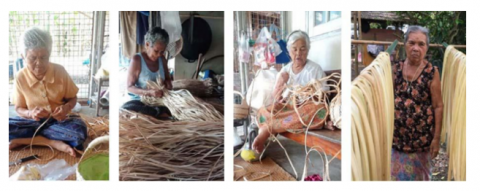
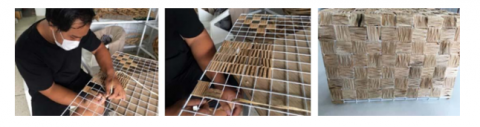
This community initiative started from the simple, agricultural lifestyle of the village, where banana plants were grown around homes for their utility. Every part of the banana plant was used, ensuring zero waste and maximizing the plant's benefits. The initiative to create banana fiber products stemmed from recognizing the abundance of raw materials within the community, coupled with a desire to augment household income through sustainable practices. Over time, with the support of government agencies, the private sector, and local administration, the community has successfully transformed its local wisdom into a thriving craft, producing high-quality, durable, and aesthetically pleasing banana fiber products. This transformation was driven by a blend of inspiration from available resources, hard work, love for the craft, and the ability to learn and innovate. The community's efforts have not only led to economic benefits but have also ensured the preservation and transmission of local knowledge and skills. The success story of Ban Hua Khwai's banana fiber products is a testament to the power of community collaboration, sustainability, and innovation. It serves as an inspiration for design students and professionals to explore and integrate local materials and traditional techniques into contemporary design, thereby creating products that are both meaningful and marketable on a global scale, this activity is shown in Figure 3.
Figure 3. Producers weaving banana plant fibers is mostly elderly
5.1 Production process of banana fiber products
1. Cutting: Use banana stems that have been cut from the plant. Trim the stem, leaving about 15 centimeters from the base of the leaf stem.
2. Peeling: Peel off the outer layers of the stem, which are green in color, leaving about 2-3 layers until reaching the white inner layers. Peel off one layer at a time until reaching the core.
3. Stripping: Take the white layers and strip them into thin strips, approximately 1 inch wide, using a sharp knife. Strip along the length of the banana stem to create straight strips.
4. Drying: After stripping, hang the banana strips to dry in the sun on racks or in a clean, dry area. Once dried, the banana strips will have a slightly white color.
5. Bake the partially dried banana strips in a well-ventilated wooden drying box or an oven. Arrange the strips in a single layer and bake for about 2 to 3 hours. The banana fibers will become lighter in color after baking.
6. Pressing and weaving: Use a pressing machine to press the baked banana strips and then weave them into various products as desired. Once woven, allow them to dry in the sun.
7. Applying lacquer: For added beauty and durability, apply lacquer to the woven products before drying them in the sun again. This ensures that the final products are not only beautiful and durable but also made from materials sourced within the community.
The production process reflects the community's ingenuity in utilizing locally available resources to create sustainable and aesthetically pleasing banana fiber products, as shown in Figure 4.
Figure 4. (a) Cutting; (b) Peeling; (c) Stripping; (d) Pressing and weaving; (e) Banana fiber before and after drying; (f) The existing banana fiber products
After conducting fieldwork and studying the characteristics of banana fiber materials with the group of producers, the Buffalo Head Banana Fiber Weaving Group, the following collaborative guidelines were summarized:
5.2 Summary of guidelines for designing and developing products from banana fiber
Material Characteristics:
Natural: The material is naturally sourced.
Flexible and stretchable: The material has a fibrous texture that can be divided into various sizes.
Molding: The material can be molded both independently and with the use of a frame.
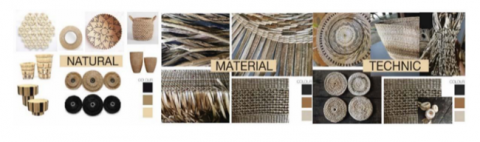
Figure 5. Mood board for designing and developing products from banana fiber
5.3 Product development guidelines
Based on the characteristics of banana plant fibers, which possess excellent elasticity and flexibility, with natural, gentle, and vibrant colors. These fibers can be segmented into various sizes, and the molding process can either be self-molded or require a framework. They are used to manufacture and experiment with products suitable for both practical use and decoration. For this research project, new production and weaving processes are experimented with, alongside traditional production methods and new design concepts, to meet the current consumer demands shown in the mood board in Figure 5. The products can be industrialized, and importantly, stakeholders in the community can genuinely participate in the production process.
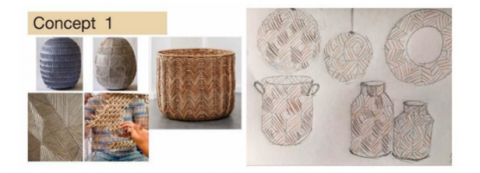
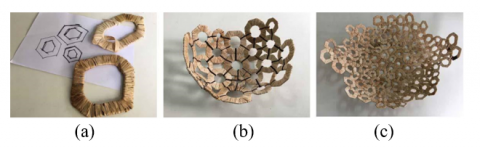
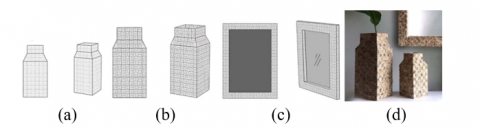
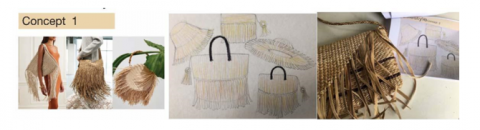
Decorative household product set 1 experiment with a new manufacturing process by tearing banana fibers into threads and alternating the inner surface to the outside, which is a highlight and difference from the same type of traditional craftsmanship. Then, weaving in various patterns to experiment with suitability for the next product design is shown in Figures 6, 7, and 8.
Figure 6. Mood board for decorative, utility, fashion, and lifestyle products
Figure 7. Design draft: decorative household products set 1
Figure 8. Experiment with various methods of banana fiber weaving
Figure 9. Design draft: decorative household products set 2
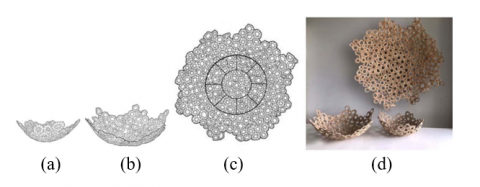
Decorative utility product set 2 draws inspiration from coral reefs, experimenting with a new manufacturing process and swapping the inner surface to the outer surface, distinguishing itself from similar types of craftsmanship. By tearing banana fibers into threads and wrapping them around variously sized small sub-shapes, it aims to be used as components for assembling into product shapes. Its highlights lie in the differing sizes and the ability to connect into various freeform shapes according to the imagination, as shown in Figures 9, 10, 11, and 12.
Figure 10. (a) Wrapping banana fibers around variously sized sub-shapes; (b) Using banana fibers of various colors to compose between the pieces; (c) Composing the sub-shapes into the form of the product
Figure 11. (a) Small vase shape: height 53 cm, width 25 cm, depth 25 cm; (b) Large vase shape: height 76 cm, width 32.5 cm, depth 32 cm; (c) Mirror: height 101 cm, width 76 cm, depth 5 cm; (d) Prototype of decorative household products set 1, titled “Still”
Figure 12. (a) Small tray diameter 50 cm, height 25 cm; (b) Medium tray diameter 70 cm, height 20 cm; (c) Large tray wall art, diameter 113 cm, height/depth 31.5 cm; (d) Prototype of decorative household products set 2, titled “Coral”
Fashion Lifestyle Products:
Figure 13. Design draft: fashion lifestyle product set 1
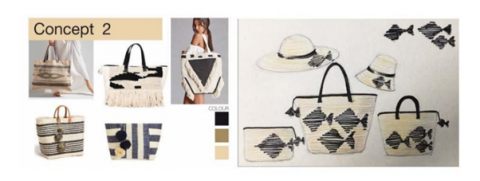
From experimenting with creating fashion prototype products, specifically in the form of bags, using traditional weaving methods, and showcasing banana fiber threads and natural raw materials, it was found that the shape of the bag woven with traditional methods could be completed quickly, with strong flexibility and durability. However, at the end of the banana fiber thread, where the natural feel of the raw material was desired, by allowing the banana fiber to remain natural, the resulting product was unable to communicate its quality effectively. It appeared incomplete, so this approach was discontinued, as shown in Figure 13.
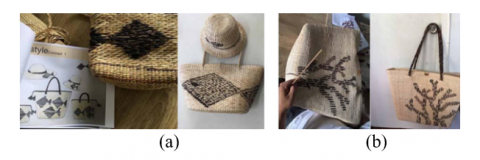
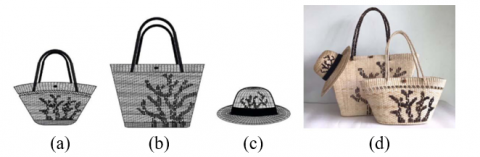
The focus is on the characteristics of the traditional banana fiber weaving method as set number 2 because it is sticky, durable, and strong. Enhancing the interest and highlights of the set, graphic patterns are woven and stitched onto the surface of the banana fiber using natural dark brown colors from the banana fiber of the Tanee variety. Two sets of stories are created, consisting of large and small bags and hats, designed with two underwater themes: fish and stingray, shown in Figures 14, 15, 16, and 17.
Figure 14. Design draft: Fashion lifestyle product set 2
Figure 15. Development prototype of fashion lifestyle product (a) “fish collection”; (b) “coral collection”
Figure 16. (a) Small bag; (b) Large bag; (c) Hat; (d) Prototype of fashion lifestyle product “fish collection”
Figure 17. (a) Small bag; (b) Large bag; (c) Hat; (d) Prototype of fashion lifestyle product “coral collection”
5.4 The impact of participatory design on sustainable product innovation
Participatory design methodology
This research has adapted the framework of Christiaans [15], which summarized Knowledge and Design Activity as the separation of Process Knowledge, Design Knowledge, and Basic Knowledge. When collaborating in participatory design (PD) to develop banana fiber ropes, everyone gained new insights from this study. Through collaboration and knowledge sharing, a new flowchart summarizing the process was created, as illustrated in Figure 18.
The impact on the community and stakeholders
Throughout ideation, design, and development, all of the stakeholders worked together under this participatory design approach. Working together, cooperative manufacturing addressed problems and produced a prototype fit for commercialization. This program helped manufacturers create income, therefore encouraging sustainability in the neighborhood. Three dimensions—environmental, social, and economic impacts—collectively known as the triple bottom lines (TBL) of sustainability—that is, product sustainability—are evaluated in Figure 19.
From an economic standpoint, Revenue, profitability, and returns from sales of banana fiber products define the impact on community financial performance. Four stakeholder groups—design students, researchers, entrepreneurs, and the local producer community—have cooperatively conceived and produced the items.
The social component: The impact on society about social justice, equality, and human rights. Elkington emphasizes the need for companies to improve their working environments and promote diversity and inclusion in their operations. Many of these areas produce goods using banana fiber. advanced age.
The environmental feature has consequences on local ecosystems and resources. This results in less pollution. Save water and electricity while reducing trash creation. Products co-designed with banana fiber. Everybody should adopt ecologically friendly habits to minimize negative consequences on the surroundings and advance the long-term viability of the earth. At every level of product development, the locally produced material comes from natural sources and uses sun-drying, tying, and twisting. There is little environmental effect.
Figure 18. Knowledge and participatory design activity
Figure 19. The impact on the community and stakeholders
6.1 Critical analysis of PD implementation challenges
While PD demonstrated significant benefits in this study, several important challenges and limitations emerged during implementation. These challenges provide crucial insights for future applications of PD in sustainable craft innovation contexts.
Cultural differences presented significant barriers to effective collaboration, particularly in the early stages of the project. The traditional knowledge hierarchy within the craft community sometimes conflicted with the democratic ideals of participatory design. Elderly craftspeople, who held positions of authority based on their extensive experience, initially struggled with the concept of equal participation from younger design students. This cultural tension manifested in several ways during early workshop sessions, where traditional producers were hesitant to engage in open criticism or modification of design proposals from younger participants.
The research also revealed potential conflicts of interest between different stakeholder groups. Entrepreneurs' focus on market viability and scalability sometimes conflicted with community producers' emphasis on traditional production methods and cultural authenticity. For example, discussions about streamlining production processes to increase efficiency often met resistance from craftspeople who valued traditional, time-intensive techniques. These conflicts required careful mediation and sometimes resulted in compromises that didn't fully satisfy all stakeholders.
Power dynamics within the community affected participation patterns and decision-making processes. Despite efforts to ensure equal participation, some community members were more hesitant to contribute during group sessions, particularly when their views diverged from those of community leaders. This challenge required ongoing attention to facilitation techniques and sometimes necessitated additional one-on-one sessions to gather input from less vocal participants.
Resource allocation and time management emerged as significant challenges. The participatory process required substantial time commitment from all stakeholders, which sometimes created tension with their other responsibilities. Community producers, in particular, had to balance workshop participation with their regular production duties, while design students needed to manage their academic commitments alongside the project.
Language and communication barriers occasionally hinder effective knowledge exchange. Technical design terminology didn't always translate well into local language concepts, while traditional craft knowledge sometimes included nuanced understanding that was difficult to capture in formal design documentation. These communication challenges required the development of shared vocabularies and visual communication tools to bridge understanding gaps.
The study also revealed limitations in the scalability of the PD approach. The intensive nature of stakeholder engagement and the need for careful facilitation of group dynamics suggest that this method might be challenging to implement in larger communities or more complex production systems without significant modification.
Technical knowledge gaps sometimes create barriers to effective collaboration. While community producers possessed deep material knowledge, they sometimes struggled to engage with contemporary design tools and documentation methods. Conversely, design students occasionally found it difficult to fully grasp the subtleties of traditional production techniques, leading to proposals that weren't feasible within existing craft practices.
Economic tensions emerged around the valuation of different contributions to the design process. Traditional knowledge holders sometimes felt their expertise was undervalued in market-oriented discussions, while entrepreneurs expressed concerns about the economic viability of maintaining traditional production methods in competitive markets.
These challenges highlight the importance of developing robust support systems and facilitation methods for PD implementation in traditional craft contexts. Future applications of this approach will need to consider these potential barriers carefully and develop strategies to address them effectively while maintaining the core benefits of participatory methods.
6.2 Generalizability and broader applications
The findings from this study of participatory design in banana fiber craft innovation have significant implications for broader applications in sustainable product development and design practice. Analysis reveals several key aspects of generalizability across different materials, industries, and cultural contexts.
The CKI framework developed through this research demonstrates the potential for application across various traditional craft materials beyond banana fiber. The framework's emphasis on structured knowledge exchange and creative synthesis appears particularly relevant for materials with similar characteristics of traditional processing methods and cultural significance.
Materials such as bamboo, rattan, and various natural fibers present parallel challenges in balancing traditional knowledge with contemporary design requirements. The systematic approach to knowledge integration developed in this study could be particularly valuable for craft communities working with these materials.
The research findings also have implications for broader industrial applications beyond traditional crafts. The principles of stakeholder engagement and knowledge integration demonstrated in this study align with emerging trends in sustainable industrial design. Large-scale manufacturers increasingly recognize the value of incorporating traditional knowledge and local expertise into their design processes. The methodological approaches developed in this study, particularly the structured workshop formats and documentation methods, could be adapted for larger-scale industrial applications.
The cross-cultural applicability of the findings is evidenced through comparison with similar initiatives in other regions. The challenges and solutions identified in this Thai context show notable parallels with documented experiences in other
Asian craft communities, suggesting broader regional applicability. However, cultural adaptation would be necessary for implementation in significantly different cultural contexts.
The participatory design methods developed through this research show particular promise for application in other sustainability-focused design initiatives. The approach to balancing environmental, social, and economic considerations could be valuable for various sustainable product development contexts, from urban planning to consumer goods design. The structured stakeholder engagement methods developed here could inform approaches to community involvement in diverse sustainability projects.
Market analysis suggests the growing potential for the broader application of these findings. Global trends in sustainable product consumption indicate increasing consumer interest in products that combine traditional craftsmanship with contemporary design. The market for sustainably produced craft products has shown consistent growth, with particular strength in segments that emphasize cultural authenticity and environmental responsibility.
The research methods developed through this study also demonstrate the potential for broader application in design research. The combination of qualitative and quantitative assessment methods, particularly the approach to documenting creative processes and measuring sustainability impacts, could be valuable for various design research contexts. The structured approach to stakeholder engagement and process documentation provides a model for similar research in other fields.
Educational implications of the research extend beyond craft-based design. The participatory methods developed here could inform approaches to design education more broadly, particularly in contexts where traditional knowledge needs to be integrated with contemporary design practices.
The documented experiences of design students in this project provide insights for structuring similar educational initiatives.
Policy implications of the research findings suggest potential applications in craft development and cultural preservation programs. The demonstrated success of structured participatory approaches could inform policy development for supporting traditional craft communities while promoting sustainable innovation. The documented economic and social benefits provide evidence to support similar initiatives in other contexts.
However, certain limitations to generalizability must be acknowledged. The success of participatory design approaches appears particularly dependent on community cohesion and willingness to engage in collaborative processes. Communities with different social structures or cultural attitudes toward innovation might require significant adaptation of these methods. Additionally, the resource requirements for implementing comprehensive participatory design processes might limit applicability in some contexts.
These considerations of generalizability suggest several promising directions for future research and application. Testing the CKI framework in different material and cultural contexts could help refine its broader applicability. Investigation of scaling mechanisms could identify ways to adapt these approaches for larger-scale implementation. Further research could also explore how digital tools might support the broader application of these participatory design methods while maintaining their essential benefits.
This research has demonstrated the significant potential of participatory design approaches in driving sustainable product innovation while preserving traditional craft knowledge. Through a detailed examination of banana fiber craft development in Thailand, the study has revealed key mechanisms for the successful integration of different knowledge types in collaborative design processes. These findings have important implications for both theory and practice in sustainable design and craft development.
The study's primary theoretical contribution, the Creative Knowledge Integration framework, provides a structured approach to understanding and facilitating collaborative innovation in traditional craft contexts. This framework addresses a crucial gap in existing design theory by explicating the mechanisms through which different forms of knowledge can be effectively combined to generate innovative solutions. The documented success of this approach in generating commercially viable products while maintaining cultural authenticity suggests promising applications in other contexts.
Several specific directions for future research emerge from this study. First, an investigation of participatory design applications in other handicraft industries could help validate and refine the CKI framework. Materials such as bamboo, rattan, and other natural fibers present similar challenges in balancing traditional knowledge with contemporary design requirements. Research examining how the framework adapts to these different material contexts could provide valuable insights for broader applications.
Process optimization represents another crucial area for future investigation. Research could explore how digital tools and advanced documentation methods might streamline participatory design processes while maintaining their essential benefits. Studies might examine how virtual collaboration platforms could support knowledge exchange between stakeholders while reducing resource requirements for physical meetings. Investigation of automated documentation tools could help address the current time-intensive nature of process recording and analysis.
The role of education in supporting participatory design implementation merits further study. Research could examine how design education programs might better prepare students for collaborative work with traditional craft communities. Investigation of effective methods for teaching facilitation skills and cultural sensitivity could inform curriculum development for sustainable design education.
Market dynamics and economic sustainability warrant detailed investigation. Future research could explore how participatory design approaches might be adapted to address changing market conditions while maintaining community benefits. Studies examining the long-term economic impacts of participatory design initiatives could provide valuable evidence for supporting similar programs in other communities.
The cross-cultural application of participatory design methods presents another important research direction. Studies examining how these approaches might be adapted for different cultural contexts could help develop more flexible and adaptable implementation methods. Research into cultural factors affecting stakeholder engagement could inform the development of culturally sensitive facilitation approaches.
Technical innovation in traditional craft production offers promising research opportunities. Studies could investigate how new materials and production methods might be integrated into traditional craft practices through participatory approaches. Research examining the role of technology in supporting traditional knowledge transmission could help preserve crucial craft skills for future generations.
Policy implications and institutional support mechanisms represent another crucial area for investigation. Research could examine how government policies and support programs might better facilitate participatory design initiatives in craft communities. Studies of successful institutional frameworks could inform the development of more effective support systems for traditional craft innovation.
Scaling and replication of successful participatory design initiatives present particular challenges that warrant further study. Research could examine how these approaches might be adapted for larger communities or more complex production systems. Investigation of essential factors for successful replication could help develop more effective implementation guidelines.
The social dynamics of participatory design in traditional communities’ merit deeper investigation. Research could explore how power relationships and cultural hierarchies affect collaborative design processes. Studies examining effective methods for managing stakeholder relationships could inform the development of better facilitation approaches.
Environmental impact assessment methods for craft production systems need further development. Research could investigate how traditional craft knowledge might inform more sustainable production methods. Studies examining the long-term environmental impacts of different production approaches could help identify optimal practices for sustainable craft development.
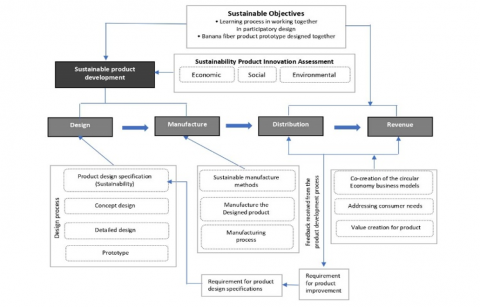
As illustrated in Figure 20, these research directions outline a rich agenda for future investigation that could significantly enhance our understanding of participatory design in sustainable craft innovation. The findings from such research could help develop more effective approaches to preserving traditional craft knowledge while fostering sustainable innovation in an increasingly challenging global market environment.
Figure 20. Approach for sustainability in participatory design
[1] Zhang, Z., Li, L., Zhang, H. (2022). A sustainable innovation strategy oriented toward complex product Servitization. Sustainability, 14(7): 4290. https://doi.org/10.3390/su14074290
[2] Zhou, X., Miyauchi, R., Inoue, Y. (2023). Sustainable fashion product innovation: Continuous value of apparel products on second-hand product trading platforms. Sustainability, 15(10): 7881. https://doi.org/10.3390/su15107881
[3] Tavanti, M. (2023). Understanding sustainability innovation. In: Developing Sustainability in Organizations. Sustainable Development Goals Series. Palgrave Macmillan, Cham. pp. 341-361. https://doi.org/10.1007/978-3-031-36907-0_11
[4] Wang, S., Su, D. (2022). Sustainable product innovation and consumer communication. Sustainability, 14(14): 8395. https://doi.org/10.3390/su14148395
[5] Aibar-Guzmán, B., García-Sánchez, I.M., Aibar-Guzmán, C., Hussain, N. (2022). Sustainable product innovation in agri-food industry: Do ownership structure and capital structure matter? Journal of Innovation & Knowledge, 7(1): 100160. https://doi.org/10.1016/j.jik.2021.100160
[6] Fajarwati, A.A.S., Wulandari, A.A.A., Caroline, O.S., Ruki, U.A., Fanthi, R., Fathoni, A.F.C.A. (2023). Sustainable design strategy through upcycling waste wood material and creating a digital marketplace for micro crafters community. IOP Conference Series: Earth and Environmental Science, 1169(1): 012037. https://doi.org/10.1088/1755-1315/1169/1/012037
[7] Zannoun, H., Okorafor, J., Asensio, T., Guedes, G., Badurdeen, F., Wang, P., Jawahir, I.S., Campana, G., Mele, M., Cimatti, B. (2022). Leveraging insights from unique artifacts for creating sustainable products. In Global Conference on Sustainable Manufacturing, Cham: Springer International Publishing, pp. 1065-1073. https://doi.org/10.1007/978-3-031-28839-5_118
[8] Holmlid, S. (2009). Participative, co-operative, emancipatory: From participatory design to service design. In First Nordic Conference on service design and service innovation (Vol. 53)., Oslo, Norway.
[9] Johnson, M.P., Ballie, J., Thorup, T., Brooks, E., Brooks, E. (2017). CO/DEsign: Building a shared dialogue around analysis within co-design. The Design Journal, 20(sup1): S4241-S4252. https://doi.org/10.1080/14606925.2017.1352922
[10] Ssozi-Mugarura, F., Blake, E., Rivett, U. (2017). Codesigning with communities to support rural water management in Uganda. CoDesign, 13(2): 110-126. https://doi.org/10.1080/15710882.2017.1310904
[11] Demirbilek, O., Demirkan, H. (2004). Universal product design involving elderly users: A participatory design model. Applied Ergonomics, 35(4): 361-370. https://doi.org/10.1016/j.apergo.2004.03.003
[12] Hussain, S. (2010). Empowering marginalised children in developing countries through participatory design processes. CoDesign, 6(2): 99-117. https://doi.org/10.1080/15710882.2010.499467
[13] Winschiers, H. (2006). The challenges of participatory design in a intercultural context: Designing for usability in Namibia. In PDC, pp. 73-76. Palo Alto, CA: CPSR.
[14] Kensing, F., Greenbaum, J. (2012). Heritage: Having a say. In International Handbook of Participatory Design, pp. 21-36. New York, NY: Routledge.
[15] Christiaans, H.H.C.M. (1992). Creativity in design: The role of domain knowledge in designing. Doctoral dissertation. Delft University of Technology, Delft, the Netherlands.
[16] Elkington, J. (1997). Cannibals with Forks – the Triple Bottom Line of 21st Century Business. New Society Publishers, Stoney Creek, CT.
[17] Manzini, Ezio. (2007). Design Research for Sustainable Social Innovation. Design Research Now: Essays and Selected Projects, edited by Ralf Michel, Berlin, Boston: Birkhäuser, pp. 233-245. https://doi.org/10.1007/978-3-7643-8472-2_14
[18] Council, D. (2007). The value of design factfinder report. Londres: Design Council.
[19] Gruber, M., De Leon, N., George, G., Thompson, P. (2015). Managing by design. Academy of Management Journal, 58(1): 1-7. https://doi.org/10.5465/amj.2015.4001
[20] Meroni, A. (Ed.). (2007). Creative Communities. People Inventing Sustainable Ways of Living. Milan, Italy: Edizioni Polidesign.
[21] Ryan, C. (2017). Eco-innovative cities Australia: A pilot project for the ecodesign of services in eight local councils. In System Innovation for Sustainability 1, pp. 207-223. Routledge.
[22] Sanoff, H. (2022). Participatory design. https://doi.org/10.55755/deparch.2022.8
[23] Mirzaean, M.S., Zabihi, H., Majedi, H. (2014). Participatory design, a new approach to regenerate the public space. International Journal of Architecture and Urban Development, 4(4): 15-22.
[24] Hagen, P., Collin, P., Metcalf, A., Nicholas, M., Rahilly, K., Swainston, N. (2012). Participatory design of evidence-based online youth mental health promotion, intervention and treatment. Young and Well Cooperative Research Centre. https://www.westernsydney.edu.au/__data/assets/pdf_file/0005/476330/Young_and_Well_CRC_IM_PD_Guide.pdf.
[25] Greenbaum, J. (1991). Towards participatory design: The head and the heart revisited. DAIMI Report Series, 20(374): 1-9. https://doi.org/10.7146/DPB.V20I374.6606
[26] Hansson, H., von Busch, O. (2023). Co-crafting the social: Material manifestations through collaborative crafts. CoDesign, 19(2): 162-176. https://doi.org/10.1080/15710882.2022.2138448.
[27] Cahyanti, A.D., Rante, H., Basuki, A. (2019). Participatory design with children in designing a smartphone holder. In 2019 International Electronics Symposium (IES), Surabaya, Indonesia, pp. 220-224. https://doi.org/10.1109/ELECSYM.2019.8901655
[28] Udoewa, V. (2022). An introduction to radical participatory design: Decolonising participatory design processes. Design Science, 8: e31. https://doi.org/10.1017/dsj.2022.24
[29] Ward, V., Parsons, S., Kovshoff, H., Crump, B. (2022). Co-creation of research and design during a coding club with autistic students using multimodal participatory methods and analysis. Frontiers in Education, 7: 864362. https://doi.org/10.3389/feduc.2022.864362
[30] Alkhalaf, M.N.A. (2023). Rethinking design through (re) investigating participatory design. In Contemporary Manifests on Design Thinking and Practice, pp. 191-212. IGI Global. https://doi.org/10.4018/978-1-6684-6376-5.ch010
[31] Udoewa, V. (2022). Radical participatory design: Awareness of participation. Journal of Awareness-Based Systems Change, 2(2): 59-84. https://doi.org/10.47061/jasc.v2i2.3816
[32] Pannozzo, A. (2007). The (Ir) relevance of technology: Creating a culture of opportunity by design. Design Management Review, 18(4): 18-24.
[33] Polanyi, M. (1997). The tacit dimension. In L. Prusak (Ed.), Knowledge in Organizations, pp. 135-146. Newton, MA: Butterworth-Heinemann.
[34] Chuenrudeemol, W., Boonlaor, N., Kongkanan, A. (2012). Design process in retrieving the local wisdom and communal identity: A case study of Bangchaocha’s bamboo basketry crafts. In Research: Uncertainty Contradiction Value - DRS International Conference 2012, 1-4 July, Bangkok, Thailand.
[35] Murray, K. (2010). Outsourcing the hand: An analysis of craft-design collaborations across the global divide. Craft+ Design Enquiry, 2(2): 1-24.
[36] Barker, T., Hall, A. (2009). GoGlobal: How can contemporary design collaboration and e-commerce models grow the creative industries in developing countries? In Proceedings of the 3rd IASDR Conference on Design Research, pp. 2227-2236. Seoul, Korea: Korean Society of Design Science.
[37] Reubens, R. (2010). Bamboo canopy: Creating new reference-points for the craft of Kotwalia community in India through sustainability. Craft Research, 1(1): 11-38. https://doi.org/10.1386/crre.1.11_1
[38] Reubens, R. (2010). Bamboo bridge: Sustainability in indigenous product design through bamboo. Retrieved May 26, 2023, from http://www.indigodesignnetwork.org/?p=637.
[39] Sanders, E.B.N., Stappers, P.J. (2008). Co-creation and the new landscapes of design. Co-Design, 4(1): 5-18. https://doi.org/10.1080/15710880701875068
[40] Dykes, T.H., Rodgers, P.A., Smyth, M. (2009). Towards a new disciplinary framework for contemporary creative design practice. CoDesign, 5(2): 99-116. https://doi.org/10.1080/15710880902910417
[41] Cecci, R.R.R., Passos, A.A., de Aguiar Neto, T.C., Silva, L.A. (2020). Banana pseudostem fibers characterization and comparison with reported data on jute and sisal fibers. Sn Applied Sciences, 2(1): 20. https://doi.org/10.1007/s42452-019-1790-8
[42] Jagadeesh, D., Venkatachalam, R., Nallakumarasamy, G. (2015). Characterisation of banana fiber-A review. J. Environ. Nanotechnol, 4(2): 23-26. https://doi.org/10.13074/jent.2015.06.152154
[43] Kavalan Banana Fiber Weaving Craft. National Cultural Heritage Database Management System—Bureau of Cultural Heritage, Ministry of Culture. Available online: https://nchdb.boch.gov.tw/assets/overview/traditionalCraft/20151026000005, accessed on 26 October 2015.
[44] Lin, Y.S., Lin, M.H. (2022). Exploring indigenous craft materials and sustainable design—A case study based on Taiwan Kavalan Banana fibre. Sustainability, 14(13): 7872. https://doi.org/10.3390/su14137872
[45] Sangamithirai, K. (2023). Feasibility of developing banana-cotton fabric as a sustainable textile. The Journal of Research ANGRAU, 51(2): 93-100. https://doi.org/10.58537/jorangrau.2023.51.2.10
[46] Gupta, U.S., Tiwari, S., Sharma, U. (2023). Influence of low-pressure Ar plasma modification of Musa sapientum banana fibers on banana fiber reinforced epoxy composite. Composite Interfaces, 30(8): 877-898. https://doi.org/10.1080/09276440.2023.2179243
[47] Shirisha, T., Payal, M., Trupti, B. (2022). Organic production of banana fibres for pollution-free and environmental benefits. Current Perspectives in Agriculture and Food Science, 1: 1-10. https://doi.org/10.9734/bpi/cpafs/v1/3554C
[48] Borisade, S.G., Isiaka, O.O., Akinlabi, O.A., Adebayo, A.O. (2023). Impact of alkaline treatment on the constituents, strength and morphological characteristics of banana fiber. European Journal of Materials Science and Engineering, 8(2): 102-107. https://doi.org/10.36868/ejmse.2023.08.02.102
[49] Senthil Kumar, M., Sakthivel, G., Jagadeeshwaran, R., Lakshmipathi, J., Vanmathi, M., Mohanraj, T., Admassu, Y. (2022). Development of eco-sustainable silica-reinforced natural hybrid polymer composites for automotive applications. Advances in Materials Science and Engineering, 2022(1): 5924457. https://doi.org/10.1155/2022/5924457
[50] Fan, Y. (2023). Study on preparation and application of banana fiber-based composites. Journal of Physics: Conference Series, 2539(1): 012093. https://doi.org/10.1088/1742-6596/2539/1/012093
[51] Chattaviriya, P., Supawantanakul, D., Sangsirimongkolying, R., Sua-Iam, G. (2022). Banana fibers as a sustainable acoustic absorbing materials: A review. Trends in Sciences, 19(11): 4498-4498. https://doi.org/10.48048/tis.2022.4498
[52] Deelaman, W., Chaochanchaikul, K., Tungsudjawong, K. (2018). Effect of banana fibers on mechanical and physical properties of light weight concrete blocks. Applied Mechanics and Materials, 879: 151-155. https://doi.org/10.4028/www.scientific.net/AMM.879.151
[53] Kreetachat, T., Imman, S., Suwannahong, K., Wongcharee, S., Muangthong-On, T., Suriyachai, N. (2023). Dataset on the optimization by response surface methodology for dried banana products using greenhouse solar drying in Thailand. Data in Brief, 49: 109370. https://doi.org/10.1016/j.dib.2023.109370