Ammar Yaseen Burjes* | Dhamiaa H. Muhsen | Heba M.T. Khalil
© 2026 The authors. This article is published by IIETA and is licensed under the CC BY 4.0 license (http://creativecommons.org/licenses/by/4.0/).
OPEN ACCESS
Natural fiber-reinforced polymer composites (NFRPCs) are considered lightweight and environmentally sustainable alternatives to conventional synthetic materials for automotive applications. This paper presents a numerical finite element study on epoxy-based composite laminates reinforced with flax, kenaf, sisal, and jute fibers. Four five-layer composite laminate models with American Society for Testing and Materials (ASTM) D3039 geometry were designed and numerically studied using ANSYS Workbench finite element software and ANSYS Composite PrepPost (ACP) under identical cantilever boundary conditions and a constant applied load of 1000 N. The simulated structural responses were evaluated in terms of equivalent (von Mises) stress, total deformation, maximum shear stress, directional deformation, and equivalent total strain. The numerical results indicated that the flax/epoxy laminate exhibited the lowest predicted equivalent stress (55.075 MPa), total deformation (29.558 mm), maximum shear stress (31.331 MPa), directional deformation (0.38542 mm), and equivalent total strain (0.0015736 mm/mm). However, maximum stress and deformation response were observed in the jute/epoxy laminate, with kenaf and sisal showing intermediate and close behavior. In the numerical conditions considered in this work, the flax/epoxy laminate showed the highest predicted stiffness and resistance to deformation of all the materials studied. The results provide a numerical basis for comparative material screening for lightweight automotive applications. However, experimental validation is recommended before practical implementation.
natural fiber composites, finite element analysis, numerical simulation, ANSYS Workbench, composite laminates, automotive applications
The demand for sustainable and eco-friendly materials has increased, and the development of natural fiber-reinforced polymer composites (NFRPCs) as an alternative to conventional synthetic composites has been accelerated [1]. In recent decades, increased environmental awareness, stricter regulations on carbon emissions, and the demand for recyclable materials have resulted in researchers and manufacturers replacing conventional reinforcements, such as glass [2] and carbon fibers [3], with renewable natural fibers. Among the natural fibers available, flax, kenaf, sisal, and jute have received much attention due to their low density, biodegradability, low production cost, and good mechanical properties [4]. These advantages have prompted their use in several engineering applications, especially in the automotive industry where lightweight materials are needed to improve fuel efficiency and reduce the impact on the environment [5].
Despite the important advances in the field of natural fiber composites, some challenges remain to be faced. The mechanical behavior of natural fibers is highly dependent on the fiber type, chemical composition, manufacturing conditions, and fiber-matrix interaction [6]. Therefore, considerable differences in strength, stiffness, deformation, and durability are often observed among different natural fiber composite systems [6]. These variations lead to uncertainty in choosing the most suitable fiber reinforcement for structural applications. In addition, experimental studies on composite laminates are time-, material-, and cost-intensive. Consequently, optimization is a costly and time-consuming task [7].
These difficulties have resulted in the increasing importance of numerical simulation techniques in the research on composite materials. Finite element analysis (FEA) provides an efficient and reliable way to predict the structural behavior of composite laminates under different loading conditions prior to their manufacturing [8]. High accuracy can be obtained in the modeling of multilayer composite structures, analysis of stress–strain distribution, evaluation of deformation characteristics, and comparison of different material configurations by using modern simulation platforms like ANSYS Workbench [9] and ANSYS Composite PrepPost (ACP) [10]. Therefore, numerical analysis has become an essential tool to reduce the development costs and to speed up the design process of advanced composite structures.
Although there have been a number of previous studies on natural fiber-reinforced composites, the majority of research work has been directed towards experimental characterization or the evaluation of individual fiber systems [11]. Few comparative numerical studies have evaluated different natural-fiber systems using identical specimen geometry, laminate configuration, and loading conditions. Moreover, there is a continuing need to determine the best-suited natural fiber reinforcement that can provide improved structural performance for lightweight automotive components such as door panels [12], interior structures [13], and secondary load-bearing elements [14].
NFRPCs have been gaining increasing interest from researchers due to their potential to replace conventional synthetic materials in structural and automotive applications. Therefore, many experimental and numerical studies have been performed to assess the mechanical behavior of natural fiber composites and to determine appropriate reinforcement materials for lightweight engineering structures. FEA with ANSYS Workbench is now one of the most widely used tools for the prediction of the structural behavior of composite laminates, reducing the development costs and the experimental efforts while providing a reliable assessment of the mechanical performance.
Saini et al. [15] investigated the vibration characteristics of natural fiber-reinforced epoxy composites using the finite element method. The study revealed that the addition of natural fibers enhanced the damping behavior of epoxy materials and at the same time decreased the structural weight. Natural fiber-reinforced composites are attractive due to their mechanical performance and environmental sustainability and are suitable for engineering and transportation applications, the researchers said. Furthermore, Miliket et al. [16] carried out an experimental investigation of hybrid natural fiber composites reinforced with sisal and other fibers for wind turbine blade applications. The tensile, compressive, and flexural tests of the natural fibers indicated that the mechanical properties of composite structures can be improved significantly by natural fibers, especially with optimum reinforcement arrangements.
Recently, Gupta et al. [17] performed a finite element study on natural jute fibers reinforced and glass fibers hybridized polymer composites. The results showed that the presence of reinforcing fibers improved the stress distribution and mechanical properties and provided a higher structural efficiency. In addition, many numerical studies were carried out by Burjes et al. [18] using ANSYS to study the effect of fiber orientation, laminate stacking sequence, and stress concentration near geometrical discontinuities in composite materials. The results verified that the stress distribution, deformation behavior, and the overall structural performance depend on the laminate configuration.
Saravanan et al. [19] used ANSYS FEA to study the structural behavior of natural fiber-reinforced composite laminates for application in an automotive door panel. Comparison of flax, jute, sisal, and leather fiber composites under the same loading conditions and their mechanical behavior was evaluated in terms of equivalent stress, shear stress, strain, and deformation. Numerical results revealed that the minimum total deformation and equivalent strain of the flax fiber composite were 1.026 mm and 0.017 mm/mm, respectively. The minimum equivalent stress and shear stress of the sisal composite were 68.09 MPa and 38.178 MPa, respectively. On the contrary, the leather composite showed the highest values of stress, strain, and deformation (the worst structural performance). The authors concluded that the flax fiber composites had better overall mechanical properties and could be a potential alternative for lightweight automotive door panel applications.
Mahmud et al. [20] presented a detailed review of epoxy composites reinforced with natural fibers and investigated the influence of various natural fibers such as flax, kenaf, jute, and sisal on the mechanical properties and prospective engineering applications of epoxy-based composite materials. The authors have reported that the mechanical properties of natural fibers vary significantly. The tensile strength of kenaf fibers, jute fibers, sisal fibers, and flax fibers has been reported to be 260–930 MPa, 200–540 MPa, 80–855 MPa, and 400–1500 MPa, respectively. Moreover, flax fibers had a density of 1400-1500 kg/m³, whereas kenaf fibers had a lower density of 295–1320 kg/m³. The review concluded that fiber-matrix adhesion, fiber orientation and laminate configuration are important parameters affecting the structural performance of natural fiber composites. The authors also reported the increasing use of flax-, kenaf-, sisal- and jute-reinforced epoxy composites in automotive applications, especially for door panels, seat backs, dashboards, cargo floors and interior structural components, owing to their good strength-to-weight ratio, environmental sustainability and potential to replace conventional synthetic fiber composites. These results provide a basis for the selection of natural fiber/epoxy laminates for finite element structural studies and motivate the evaluation of them for lightweight automotive structures.
Kumar et al. [21] studied the structural feasibility of a natural fiber-reinforced hybrid polymer composite fuel tank for automotive application using FEA. The mechanical behavior of a 45 L fuel tank fabricated with bamboo fiber and 2 wt.% nano-silica in an epoxy matrix was investigated at different fuel filling ratios. The composite laminate model was implemented in ACP to perform a stress and deformation analysis to determine the structural integrity of the tank and to determine the appropriate wall thickness. The numerical results indicate that the proposed hybrid composite tank has the potential to be used under the applied loading conditions with acceptable stress and deformation values. Furthermore, the study also indicates the potential use of NFRPCs as a replacement for conventional metallic fuel tanks, which can result in substantial weight reduction, better fuel efficiency, and enhanced sustainability in automotive applications. The authors concluded that FEA is an effective way of designing and optimizing the lightweight composite structure for transportation systems.
Previous studies have shown the feasibility of natural-fiber-reinforced polymer composites through experimental characterization and FEA, but direct numerical comparisons are often complicated by differences in specimen geometry, laminate architecture, material definitions, loading conditions, boundary conditions, and response parameters evaluated. This implies that the relative structural performance of different natural-fiber/epoxy laminates was not always compared in a consistent manner across different works. Therefore, a controlled numerical comparison in which the investigated materials are evaluated with the same laminate configuration and under the same finite element conditions is necessary to isolate the effect of the reinforcement type on the predicted structural response.
Hence, this paper provides a unified finite element benchmarking framework for the direct comparison of the performance of flax, kenaf, sisal, and jute-reinforced epoxy laminates. The five-layer laminate configuration, mesh strategy, boundary conditions, and a 1000 N cantilever loading condition are the same for all four laminate systems, and all are modeled using the same American Society for Testing and Materials (ASTM) D3039-based geometry. They are compared with five widely used indicators: equivalent (von Mises) stress, total deformation, maximum shear stress, directional deformation, and equivalent total strain. In this way, the effect of other parameters is eliminated, and the effect of reinforcement type is studied, ensuring the same numerical conditions for all the materials under investigation. This also provides a common ground to compare the four natural fibers for their predicted stiffness, stress distribution, and deformation resistance. The standardized comparative approach enables material screening for lightweight automotive components and provides a reproducible numerical framework for subsequent experimental validation and laminate optimization.
NFRPCs have been chosen in this study due to their promise to be lightweight, eco-friendly, and low-cost replacements for conventional synthetic composite materials. Four natural fibers, viz. flax, kenaf, sisal, and jute, were used as reinforcement materials, and epoxy resin was used as the matrix material. The materials were selected based on availability, good mechanical properties, and suitability for automotive interior applications such as door panels [22].
2.1 Flax fiber
Flax fiber is one of the most popular natural fibers used for engineering applications because it exhibits relatively high stiffness and strength among plant-based fibers. Its low density and good mechanical performance make it suitable for lightweight structural components. In Table 1, the material properties, the Young’s modulus of flax is the highest (60 GPa), followed by kenaf (40 GPa), sisal (38 GPa), and jute (25 GPa). This larger elastic modulus indicates a higher inherent resistance to elastic deformation, and it also provides an important basis for the explanation of the numerical structural response in Section 4 [23].
Table 1. Mechanical properties adopted for the numerical simulations, based on reported ranges and representative values from the literature [23]
|
Materials |
Density [g/cm3] |
Young’s Modulus [GPa] |
Poisson’s Ratio |
Tensile Strength [MPa] |
|
Flax |
1.4 |
60 |
0.41 |
343 |
|
Kenaf |
1.5 |
40 |
0.342 |
350 |
|
Sisal |
1.33 |
38 |
0.40 |
468 |
|
Jute |
1.4 |
25 |
0.361 |
200 |
|
Resin |
1.28 |
35 |
0.35 |
54.6 |
2.2 Kenaf fiber
Kenaf fiber has attracted great interest in the automotive industry owing to its balanced mechanical properties, low cost, and renewable nature. It provides adequate tensile performance and stiffness while maintaining a relatively low structural weight. Due to these properties, kenaf fiber is a promising reinforcement material for composite applications requiring moderate strength and weight reduction [24].
2.3 Sisal fiber
Sisal fibers are known for their toughness, strength, and relatively high tensile strength. It is a very popular material in composite manufacturing because of its resistance to environmental degradation and its energy absorption under loading conditions. Sisal reinforced composites are often considered for semi-structural applications where toughness and durability are important design parameters [25].
2.4 Jute fiber
Jute fiber is one of the cheapest and most abundant natural fibers. Jute fibers are less stiff than flax, kenaf, and sisal fibers based on the Young’s modulus values adopted in the present numerical model. Jute reinforced composites have been widely used in automotive interior components and non-critical structural applications [26].
2.5 Epoxy resin
The matrix material was selected to be epoxy resin because of its excellent bonding properties, dimensional stability, and mechanical performance. The epoxy matrix is primarily responsible for holding the reinforcing fibers together, transmitting stresses between the fibers, and shielding the reinforcement from environmental effects. Besides, the epoxy resin is involved in the overall strength of the structure of the laminate, as well as the load distribution over the whole composite layers [27].
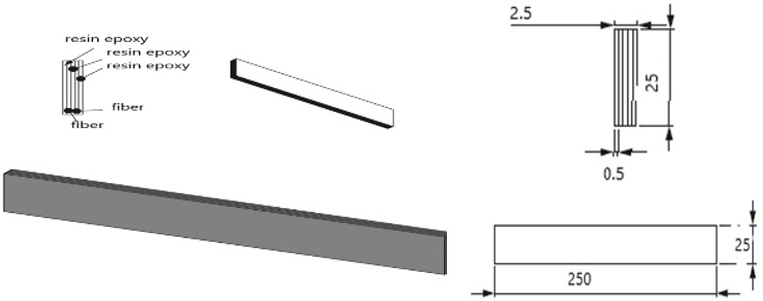
In this work, the natural fiber-reinforced composite laminate was developed using epoxy resin as the matrix material and flax, kenaf, sisal, and jute fibers as the reinforcement material. The laminate was designed as a multi-layer structure to provide sufficient stiffness and load-carrying capability. The laminate was designed to be a lightweight configuration suitable for automotive interior applications. The composite laminate consists of five layers with an alternating sequence of epoxy resin and natural fiber layers as shown in Figure 1. This configuration was selected to allow for efficient stress transfer between the constituent materials and to improve the structural performance of the laminate. For the numerical analysis, a similar laminate architecture was used for all investigated fiber types to have a consistent comparison of their mechanical behavior.
Figure 1. Five-layer [Epoxy/Fiber/Epoxy/Fiber/Epoxy] laminate configuration used in the numerical models
The laminate consists of five discrete plies arranged symmetrically as [Epoxy/Fiber/Epoxy/Fiber/Epoxy]. The same lay-up was used for flax, kenaf, sisal, and jute models to ensure a consistent numerical comparison.
For the comparative numerical analysis, the material properties used as input to the finite element models were obtained from the literature cited, so as to provide a consistent baseline. The selected data were the density, Young’s modulus, Poisson ratio and tensile strength needed to define the flax, kenaf, sisal, jute and epoxy materials in the ANSYS environment. The values selected were representative of the same material families discussed in the present study and were used consistently with the same laminate geometry, stacking configuration, loading and boundary conditions for all four models. This was done to ensure that the differences in the predicted structural responses were mainly the result of the assigned material properties and not due to changes in the numerical configuration. The mechanical properties used were selected from reported experimental and review data of the corresponding natural fibers. Recent literature confirms that flax, kenaf, sisal and jute exhibit a large variation in density, tensile strength and elastic modulus, which is attributed to the source of the fibers, their extraction, treatment and testing conditions. For this reason, representative values in the ranges published in the literature were used to establish a consistent numerical baseline for the comparative FEA [28]. The properties considered are density, Young’s modulus, Poisson’s ratio and tensile strength, and are summarized in Table 1.
The mechanical properties of natural fibers are inherently variable, as they may depend on the source of the fiber, processing conditions, moisture content, and fiber-matrix interaction. Hence, the absolute values of the predicted stress, strain, and deformation, calculated by the finite element model, may be affected by the variations in Young’s modulus, Poisson’s ratio, density, or strength. Changes in the elastic modulus, in particular, directly influence the predicted laminate stiffness and deformation response. Thus, the numerical values given in this paper must be regarded with the specific material-property data set used in Table 1. The present work provides a controlled comparative assessment with a common set of input conditions. A systematic parametric or sensitivity analysis of material-property variability is recommended for future investigation.
In recent years, NFRPCs have received much attention mainly due to the possibility of developing lightweight, environmentally friendly, and low-cost alternatives to the traditional synthetic composite materials. With the rising need for sustainable engineering solutions, mainly in the automotive sector, the application of natural fibers for reinforcing polymer matrices has been adopted. These composites combine the good mechanical properties of natural fibers with the binding and protective properties of polymer resins, giving rise to materials that have a minimal environmental impact and can fulfil structural and functional requirements [29].
A composite laminate results from the combination of reinforcing fibers and a polymer matrix. In this study, epoxy resin is used as the matrix phase owing to its good adhesive properties, dimensional stability, and ability to transfer load between fiber layers. The fiber phase provides stiffness and strength, and the epoxy phase holds the fibers together, protects them from environmental damage, and spreads stresses throughout the laminate. The mechanical behavior of the final composite is therefore not only dependent on the individual properties of the fiber and resin, but also on the stacking sequence, fiber orientation, layer thickness, bonding quality and boundary conditions applied to the structure [30].
The mechanical performance of natural fiber composites depends on several parameters such as the type of reinforcement fiber, the matrix material, the laminate configuration, the layer arrangement, the loading conditions and the manufacturing process. Thus, the study of the structural response of such materials involves an integrated study of the constituent materials, laminate architecture, structural behavior under loading, and numerical analysis techniques used for performance evaluation. As the present work investigates the structural behavior of epoxy-based composite laminates reinforced with flax, kenaf, sisal, and jute fibers under cantilever loading conditions using ANSYS, it is necessary to establish the theoretical foundations related to NFRPCs, composite laminate structures, cantilever structural behavior, FEA, numerical composite modelling, and performance evaluation [31]. The theoretical background of this research is divided into four main parts, namely, (1) NFRPCs, (2) Composite laminate structure and mechanical behavior, (3) Cantilever structural behavior and FEA, and (4) ANSYS composite modelling and structural performance evaluation.
3.1 Natural fiber-reinforced polymer composites
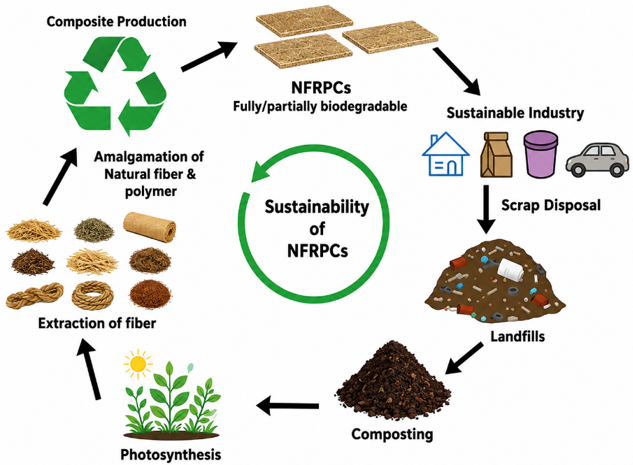
Commonly used natural fibers in engineering applications are flax, kenaf, sisal, and jute fibers. These fibers differ in mechanical properties, fiber morphology and resistance to the environment, which directly affect the structural performance of the composite laminate. Natural fiber composites are increasingly being used in the automotive industry for door panels, seat structures, interior trims, and lightweight structural components, as they reduce the weight of the vehicle while maintaining acceptable mechanical performance [32]. The epoxy resin is widely used as a matrix material due to its excellent adhesion, dimensional stability, and strong bonding capability at the interface with reinforcing fibers. The stress transfer in the composite is governed by the interaction between the epoxy and the natural fibers, and thus the structural behavior of the laminate as a whole [33]. The schematic of the natural fiber epoxy laminate considered is shown in Figure 2. This alternating arrangement of fiber and epoxy layers provides an efficient mechanism for the distribution of loads and contributes to the structural integrity of the composite system [34].
Figure 2. Schematic design of the natural fiber/epoxy composite laminate [1]
3.2 Composite laminate structure and mechanical behavior
Homogeneous materials are different from laminated composites, which are made of several layers stacked in a predetermined order. The response of a laminate structure is dependent on the material properties of each layer, layer thickness, stacking sequence, and fiber orientation. The composite structure in the present study is of five layers with alternated arrangement of epoxy resin and natural fiber layers. This configuration allows for efficient load distribution across the thickness of the laminate with the benefit of being lightweight. The alternating layout provides increased structural stability and reduces localized stress concentrations. The mechanical response in laminated composites is not the same as in isotropic materials, since the stresses and strains are shared by several layers rather than by only one homogeneous material. Thus, the fiber type, the laminate architecture, and the layer stacking are important for the stiffness, the deformation, and the stress distribution [35].
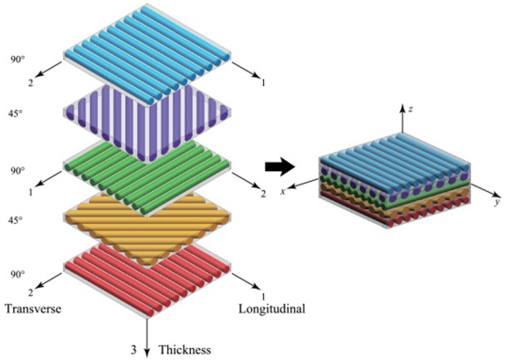
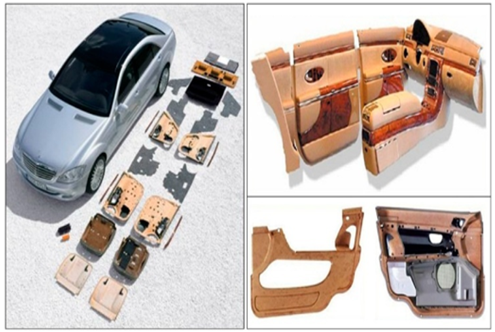
Laminated composites, unlike homogeneous materials, can be tailored to meet specific engineering requirements by varying the stacking sequence and lay-up configuration. The composite laminate used in this study consists of several alternating layers of natural fibers and epoxy resin, as shown in Figure 3, which provides an efficient load distribution mechanism and improved structural performance [36].
(a)
(b)
Figure 3. Natural fiber/epoxy composite laminate: (a) schematic representation of the multilayer configuration [36], and (b) automobile components manufactured from natural fiber-reinforced composites [37]
3.3 Cantilever structural behavior and finite element analysis
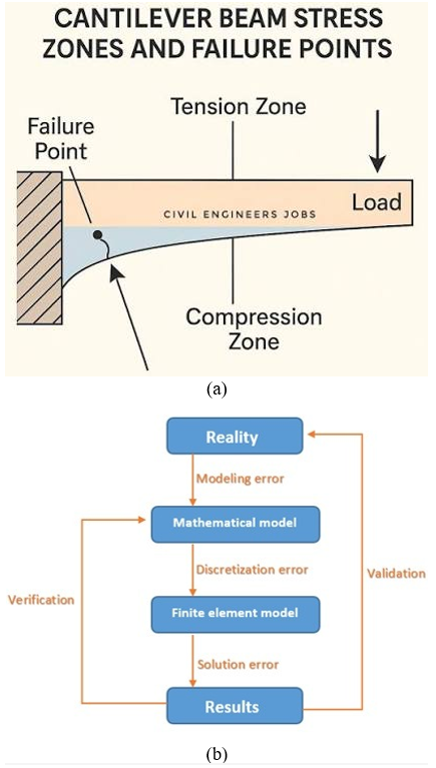
The cantilever beam is one of the most common models used for evaluating the structural performance of engineering materials. A cantilever structure is supported at one end and loaded at the other end. In such a case, the maximum stresses are generally found near the fixed support and the maximum deformation is seen near the free end. For composite laminates, the structural response is more complex due to the layered nature of the material and the difference in the mechanical characteristics of each constituent layer. Therefore, the analytical prediction of the stress and deformation becomes difficult, and the numerical simulation becomes a necessary tool for the study of structural behavior [38]. FEA has become one of the most powerful numerical methods for the assessment of composite structures. The method involves subdividing the structure into a large number of small elements connected by nodes. The fields of stress, strain, and deformation can then be calculated throughout the structure. This method gives accurate predictions and reduces experimental cost and development time [39]. As illustrated in Figure 4(a), the maximum stress in a cantilever structure is typically localized near the fixed support. Figure 4(b) presents the basic workflow of FEA for the prediction of the structural response of engineering systems [40].
Figure 4. Cantilever structural behavior: (a) Cantilever beam stress distribution [38], and (b) finite element analysis (FEA) flowchart [40]
3.4 ANSYS composite modelling and structural performance evaluation
The ANSYS Workbench provides a complete environment for the numerical analysis of composite structures. The material properties, laminate stacking sequence, layer thicknesses, and fiber orientations were defined using the ACP module. Then the composite data were imported into the Static Structural module to apply boundary conditions and loading. The modelling procedure starts with the creation of geometry according to the dimensions of ASTM D3039. The laminate lay-up is defined, the finite element mesh is generated, the cantilever boundary conditions are applied, and the structural analysis is performed. The simulation allows a detailed visualization of the internal mechanical response of the laminate under loading conditions [41].
The numerical specimen was modeled with ASTM D3039-based dimensions of 250 mm × 25 mm × 2.5 mm. One end of the laminate was fully constrained to restrict all translational and rotational degrees of freedom at the fixed boundary, which implemented an idealized cantilever boundary condition. A static tensile force of 1000 N was applied at the opposite free end. All four material systems had the same loading magnitude and direction, constraint definition, geometry, and laminate configuration. This standardized loading arrangement was adopted so as to provide a controlled numerical basis to allow direct comparison of the stress, strain, and deformation responses of the flax, kenaf, sisal, and jute-reinforced epoxy laminates.
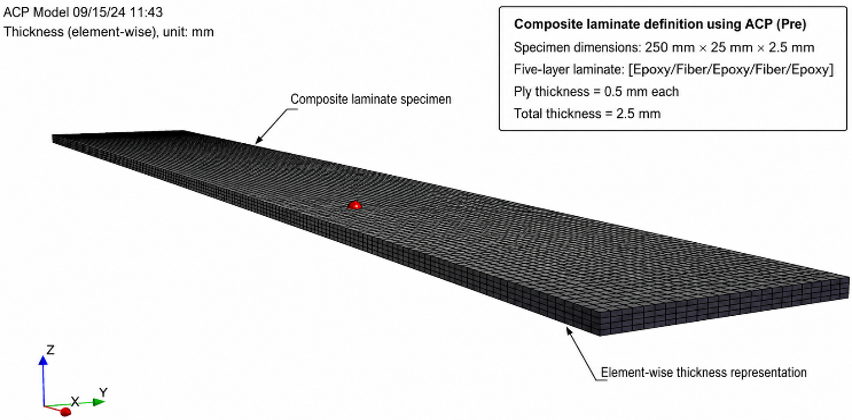
The laminate model defined in ACP was composed of five plies with the stacking sequence [Epoxy/Fiber/Epoxy/Fiber/Epoxy]. The thickness of each ply was 0.5 mm, and the total thickness of the laminate was 2.5 mm. The reinforcement plies were oriented at 0° to the longitudinal axis of the specimen, and the same stacking sequence and orientation were maintained for all four fiber systems investigated. The epoxy and fiber plies were modeled as distinct material layers, and thus, a specific micromechanical fiber volume fraction was not explicitly assigned in the present macro-scale model. According to the laminate geometry, the two fiber plies correspond to 1.0 mm of the total laminate thickness of 2.5 mm, such as a fiber-ply thickness fraction of 40%. Note that this should not be confused with an intraply fiber volume fraction. The interface between the adjacent fiber and epoxy plies was assumed to be perfect so that there was displacement continuity and a full load transfer without any interfacial slip or delamination.
The structural parameters such as equivalent stress, total deformation, maximum shear stress, directional deformation, and equivalent strain were employed to assess the performance of the composite laminates. This set of parameters gives a complete idea about the structural behavior of each natural fiber composite and also helps in the comparison of flax, kenaf, sisal, and jute reinforced laminates.
3.5 Mesh discretization, convergence considerations, and limitations
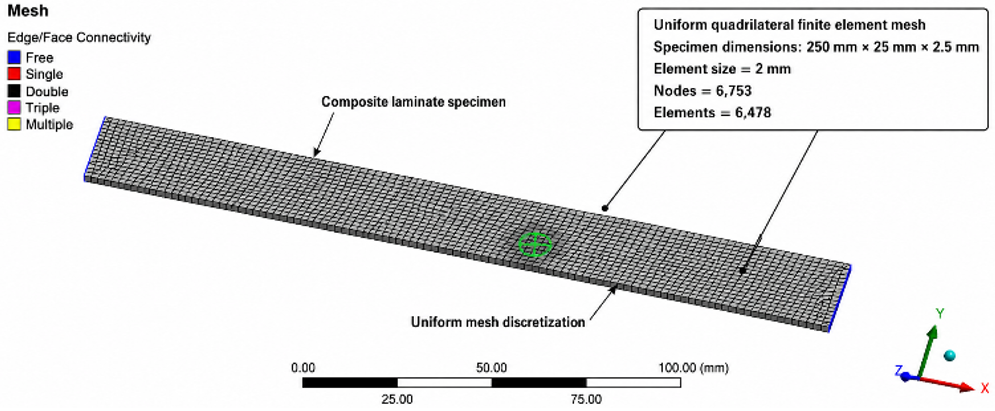
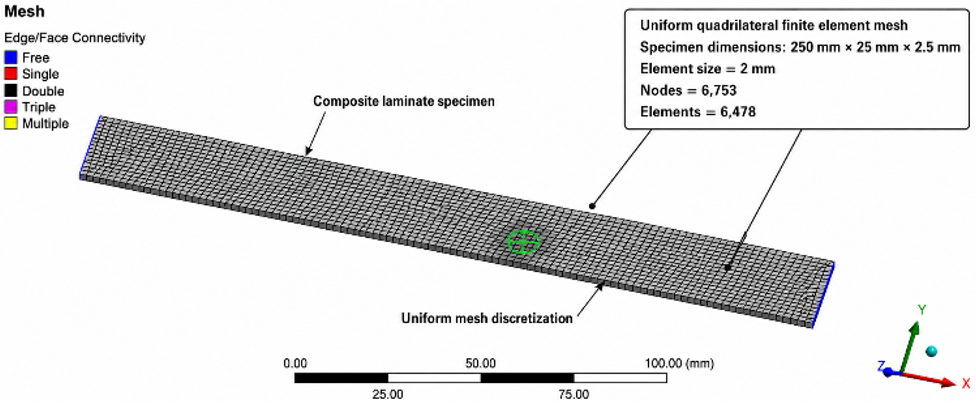
A uniform finite element discretization with an element size of 2 mm has been utilized for all considered laminate models, leading to 6,753 nodes and 6,478 elements. This mesh configuration was uniformly adopted for the flax-, kenaf-, sisal-, and jute-reinforced epoxy laminates as all models had the same specimen geometry, stacking configuration, loading condition, and boundary conditions. For the present comparative study, it was important to use the same mesh in an effort to minimize the differences due to discretization and to ensure that the differences in structural response were mainly due to the assigned material properties. For this mesh setup, the flax/epoxy laminate gave an equivalent (von Mises) stress of 55.075 MPa and a total deformation of 29.558 mm.
However, a full multi-level mesh-independence study with successive refinement and quantitative comparison of different element sizes was not carried out in the scope of the present work. Hence, the selection of a 2 mm mesh is considered a consistent discretization for comparison purposes, and not a rigorously proven mesh-independent solution. This restriction is expressly acknowledged. Future work will explore coarser and finer meshes than the current 2 mm discretization and will track the number of nodes and elements, equivalent stress, and total deformation, to establish full numerical convergence. This percentage difference in the response parameters at subsequent refinement levels will then be used to identify the level at which further refinement of the mesh leads to negligible changes, thus providing a quantitative basis for selection of an optimal mesh and confirming numerical mesh independence.
Future work will systematically explore both coarser and finer meshes around the current discretization of 2mm, monitoring the associated numbers of nodes and elements, equivalent stress and total deformation. The numerical convergence will be checked by calculating the percentage variation of these response parameters between two successive mesh refinement levels. Then a pre-defined convergence tolerance will be used to identify the point at which further mesh refinement produces only minor changes, providing a quantitative justification for the selection of the optimum mesh and confirming the mesh independence of the finite element solution.
The FEA of the epoxy composite laminates reinforced with natural fibers was studied in ANSYS Workbench. Four composite laminates reinforced with flax, kenaf, sisal and jute fibers were analyzed under similar loading and boundary conditions to have a consistent comparison of their mechanical behavior. The finite element mesh used in the numerical simulations is shown in Figure 5. All the models were uniformly meshed with an element size of 2 mm, leading to 6753 nodes and 6478 elements. Based on the mesh consideration discussed in Section 3.5, an element size of 2 mm, corresponding to 6,753 nodes and 6,478 elements, was adopted consistently for four laminate models.
Figure 5. Finite element discretization of the composite laminate model
Figure 6. Composite laminate definition and ply arrangement using the ANSYS Composite PrepPost pre-processing (ACP Pre) module
Figure 7. Boundary conditions applied to the composite laminate under a 1000 N tensile load
The laminate modelling process was done using the ANSYS Composite PrepPost pre-processing (ACP Pre) module as shown in Figure 6. The material properties, layer thicknesses, stacking sequence, and fiber orientations were defined before migrating the model to the Static Structural environment. Figure 7 shows the boundary and loading conditions used in the numerical analysis. One end of the laminate was fully fixed, and a static tensile force of 1000 N was applied at the opposite free end. The boundary and loading conditions were kept the same for all four laminate models to allow a consistent comparison from material to material.
The applied load of 1000 N is to be understood as a standardized numerical benchmark for a comparative assessment, not as a directly validated service load of a specific automotive component. The value was held constant for all four laminate configurations to produce a response large enough to be measurable from the structure and to isolate the effect of reinforcement type under the same static conditions. This model is meant to assist in the preliminary material screening for lightweight automotive interior and secondary structural applications, and not to replicate a specific door-panel service event, crash condition, or regulatory automotive load case. Correspondingly, the numerical results show the relative response of the investigated laminates under the given 1000 N static load condition, but do not constitute component-level automotive load certification. Future work should therefore consider component-specific geometries and automotive loadings derived from experiments or standards to assess the laminates under representative service and safety conditions.
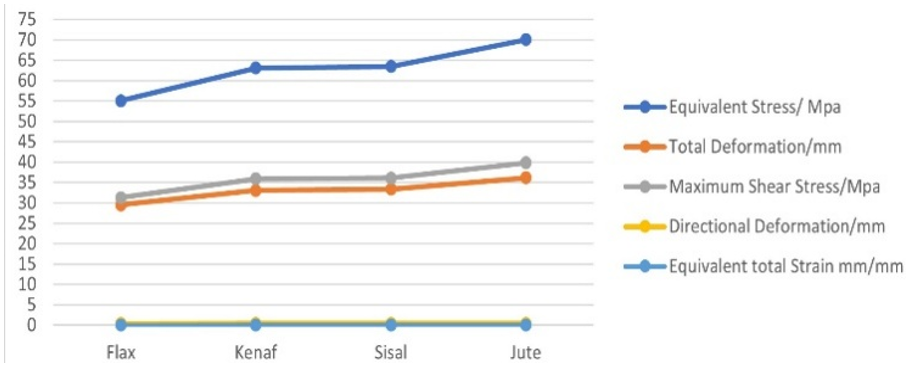
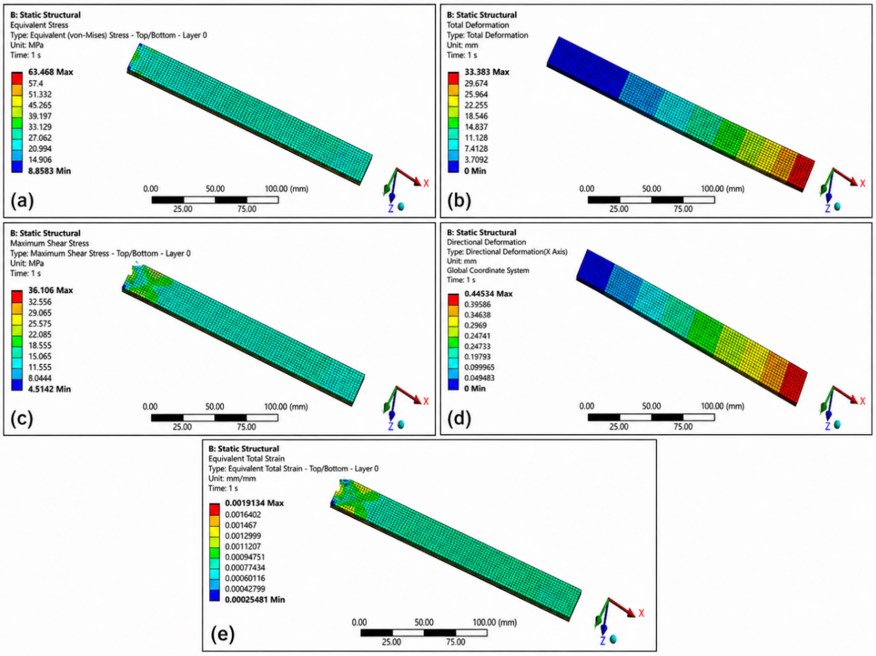
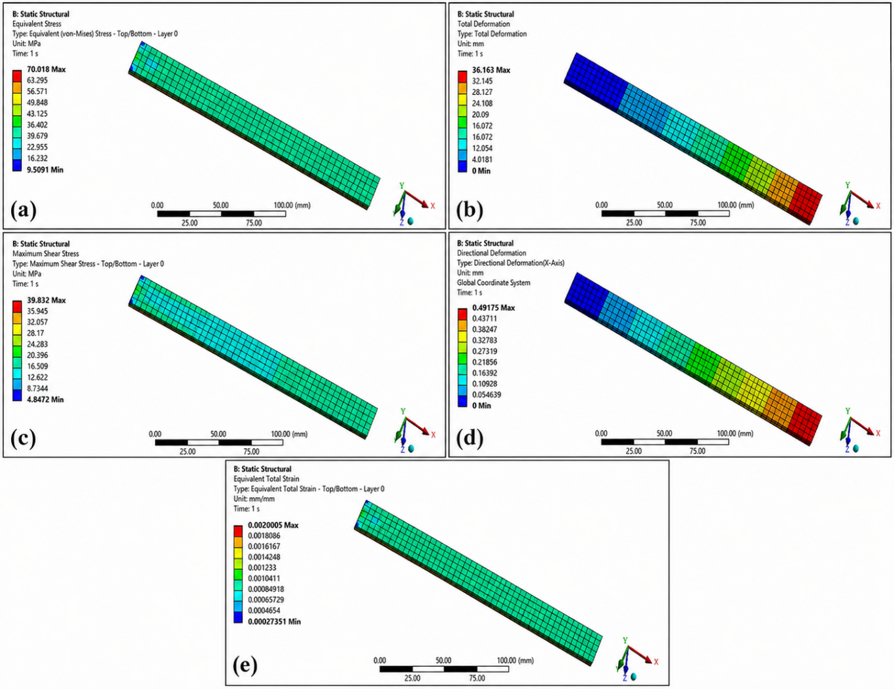
The structural performance of the natural fiber-reinforced epoxy composite laminates was evaluated by using ANSYS Workbench for the FEA. The four composite models were investigated under identical modeling conditions, including geometry, laminate configuration, mesh size, loading, and boundary conditions. The laminate consisted of five alternating layers of epoxy resin and natural fiber reinforcement. It was modelled as a cantilever structure with one end fixed and a tensile load of 1000 N applied to the other end. The obtained numerical results are summarized in Table 2, and the graphical and contour representations are shown in Figures 8-13.
Table 2. Comparative structural responses of the investigated natural fiber/epoxy laminates
|
Model |
Composite Materials |
Equivalent Stress [MPa] |
Total Deformation [mm] |
Maximum Shear Stress [MPa] |
Directional Deformation [mm] |
Equivalent Total Strain [mm/mm] |
|
1 |
Flax |
55.075 |
29.558 |
31.331 |
0.38542 |
0.0015736 |
|
2 |
Kenaf |
63.099 |
33.036 |
35.896 |
0.43944 |
0.0018028 |
|
3 |
Sisal |
63.468 |
33.383 |
36.106 |
0.44534 |
0.0018134 |
|
4 |
Jute |
70.018 |
36.163 |
39.832 |
0.49175 |
0.0020005 |
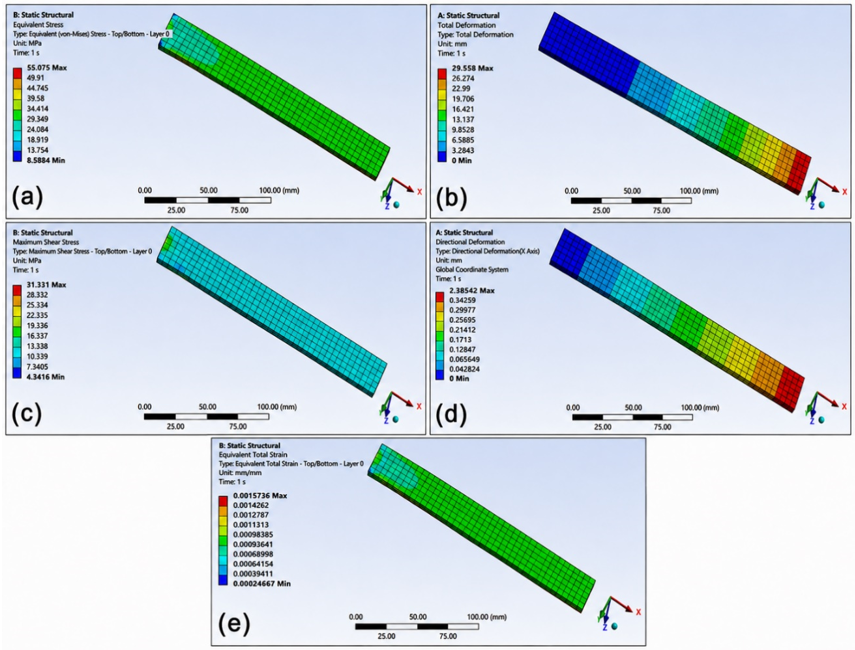
Figure 8. Structural response of the flax/epoxy composite laminate
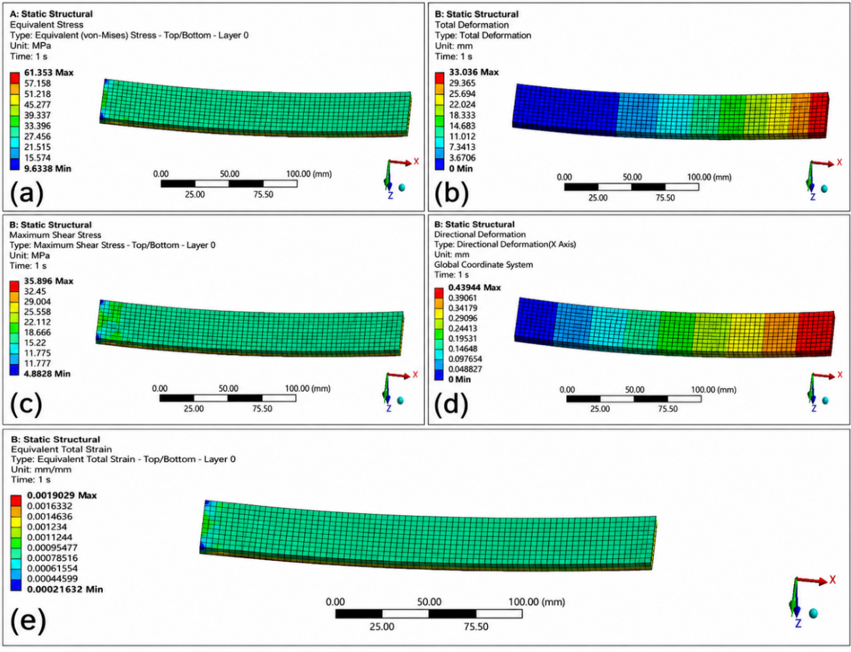
Figure 9. Structural response of the kenaf/epoxy composite laminate
Figures 10-13 compare the finite element contour distributions for the flax-, kenaf-, sisal-, and jute-reinforced epoxy laminates. The magnitude of the responses is different for the four material systems, but all models show the same general spatial behavior for the prescribed cantilever loading condition. It is observed that the maximum equivalent and shear stresses are located near the fixed end, where the bending effect is maximum and the maximum deformation takes place toward the free end. The similarity of these distribution patterns supports the uniform application of the geometry, loading, and boundary conditions for all models of the laminate.
Figure 10. Finite element contour distributions of the flax/epoxy laminate under static tensile loading (model 1)
Figure 11. Stress and deformation distribution of kenaf/epoxy composite laminate (model 2)
Figure 12. Finite element analysis (FEA) contour plots of sisal/epoxy composite laminate under static loading (model 3)
Figure 13. Structural response of jute/epoxy composite laminate: stress and deformation contours (model 4)
The output parameters studied were: equivalent von Mises stress, total deformation, maximum shear stress, directional deformation, and equivalent total strain. These parameters provide a full evaluation of the mechanical behavior of the composite laminates, mainly in terms of their load-carrying capacity, their stiffness, their resistance to deformation, and the strain development under the static loading. The results clearly show that the type of natural fiber reinforcement has a significant influence on the structural behavior of the composite laminate.
The response comparison is presented in Table 2. It can be observed that the improved numerical performance of the flax/epoxy laminate is mainly due to the higher elastic stiffness attributed to flax in the finite element model. The Young’s modulus of flax is 60 GPa, which is higher than that of kenaf (40 GPa), sisal (38 GPa), and jute (25 GPa) among the natural fibers studied. The difference in reinforcement stiffness becomes a governing factor for the relative structural response since the same laminate geometry, stacking sequence, fiber orientation, epoxy matrix, loading, and boundary conditions were used for all four models. The higher modulus of flax increases the effective stiffness of the laminate and limits elastic displacement under the applied load, which is in agreement with its lower total deformation and equivalent total strain. Its comparatively low density (1.4 g/cm3) in conjunction with the highest elastic modulus also yields the highest modulus/density ratio among the four fiber systems under consideration, supporting its favorable stiffness/weight response.
This same stiffness-based mechanism can also explain the differences that are observed in equivalent and shear stresses. The stiffer flax reinforcement in the present layered model results in improved load sharing within the laminate and lower predicted deformation and strain. The lower stiffness jute reinforcement results in the largest structural response. Kenaf and sisal have very similar Young’s moduli (40 and 38 GPa, respectively), and their numerical responses in Table 2 are almost the same. In contrast, a much lower modulus of jute (25 GPa) corresponds to higher deformation, strain, equivalent stress, and shear stress. Note that this interpretation is relative to the elastic material properties used in the present ANSYS model. The observed ranking cannot be explained by tensile strength alone, since sisal has a higher reported tensile strength than flax in Table 1; rather, the static elastic response herein is governed mainly by stiffness and the resultant load-transfer behavior under the chosen numerical conditions.
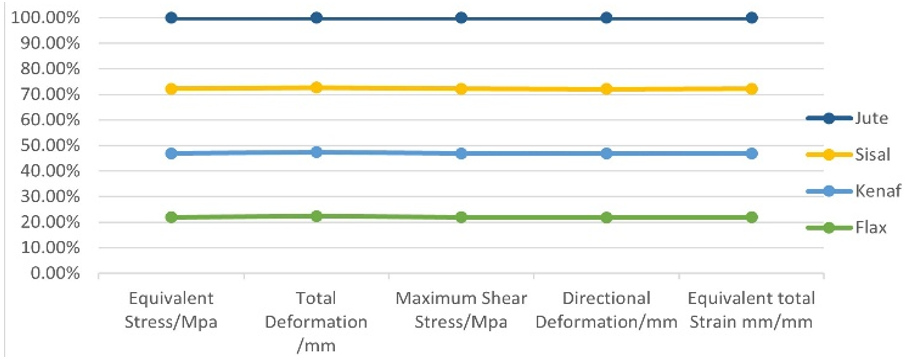
The numerical responses are summarized in Table 2, and Figures 8 and 9 show representative numerical responses of the flax/epoxy and kenaf/epoxy laminates, respectively. The plots clearly show the general material ranking, with flax being the lowest and jute the highest in terms of the structural response, while kenaf and sisal show similar intermediate behavior. These figures are therefore used as a visual aid to the comparative trends already discussed rather than to repeat the individual numerical values.
The principal material-dependent difference is then in the magnitude of the structural response, not in its spatial distribution. The lowest stress, deformation, and strain are observed in flax and the highest in jute. Kenaf and sisal have a very close intermediate range, which is in agreement with the similar elastic moduli and the quantitative results in Table 2. Therefore, the contour plots are mainly used to show and check the quantitative comparative trends obtained in Table 2, preventing the repetition of the individual values for each laminate.
The present static finite element results demonstrate that the flax/epoxy laminate presents the best numerical response, among the four studied material systems, in terms of stiffness, deformation, stress response, and equivalent strain. Thus, flax can be considered the most promising candidate among the investigated fibers for further evaluation in lightweight automotive components. However, this conclusion is limited to the material properties, laminate configuration, boundary conditions, and the static loading condition considered in the present numerical model and should not be taken as a complete demonstration of automotive service performance.
In addition to the static mechanical parameters evaluated in this study, other performance factors should be considered for practical automotive applications. Moisture exposure can affect fiber dimensional stability and fiber–matrix interfacial behavior in natural-fiber/epoxy laminates. Repeated cyclic loading can gradually introduce fatigue-related damage, while impact loading can generate localized damage mechanisms that are not modeled in the present static structural analysis. Long-term service performance can also be affected by environmental aging, changes in temperature and humidity, sustained loading, and gradual degradation of the fiber-matrix interface. The present work did not simulate or experimentally evaluate such effects. Therefore, the present results should be interpreted as a preliminary numerical screening of the four reinforcement systems under controlled static conditions. Further studies, including moisture-conditioning tests, fatigue loading, impact assessment, environmental aging and long-term durability evaluation, and experimental validation, are required to verify the suitability of the proposed laminates for actual automotive service.
Table 3 summarizes a thorough evaluation of prior studies and the current work on epoxy-based natural fiber-reinforced composites for structural and automotive applications. The table shows the main mechanical performance indicators, including equivalent (von Mises) stress, total deformation, maximum shear stress, directional deformation, and equivalent strain under the same loading and boundary conditions. The results demonstrate clearly that the structural response is strongly dependent on the type of natural fiber reinforcement, and epoxy laminates based on flax exhibit better mechanical performance, consistently with lower values of stress, deformation, and strain than other fiber systems. Furthermore, the current study shows better overall structural efficiency compared to the existing literature, particularly in terms of lower deformation and equivalent strain, indicating improved stiffness and load-carrying ability of the suggested laminate configurations. The results confirm the effectiveness of flax reinforcement and underline the potential of the developed composites for lightweight and sustainable automotive structural applications.
Table 3. Structural performance comparison of natural fiber epoxy laminates based on finite element analysis (FEA) and literature review
|
Ref. |
Material System |
Stress [MPa] |
Deformation [mm] |
Max Shear Stress [MPa] |
Directional Deformation [mm] |
Equivalent Strain |
Key Interpretation |
|
Faruk et al. [42] |
Natural fiber epoxy baseline composites |
62.4 |
25-40 |
31.2 |
0.12 |
0.021 |
Baseline behavior of natural fiber epoxy laminates. |
|
Aynalem and Sirahbizu [43] |
Flax/Al₂O₃ epoxy composite |
88.6 |
30-42 |
43.0 |
0.17 |
0.030 |
Nano-filler improves stiffness and impact resistance. |
|
Babu et al. [44] |
Automotive natural fiber composites (review-based FEA data) |
78.5 |
28-40 |
38.1 |
0.15 |
0.028 |
Fiber type strongly affects stiffness and deformation. |
|
Song et al. [45] |
Natural fibre metal laminate (ANSYS FEA) |
112.3 |
30-45 |
54.7 |
0.21 |
0.041 |
Interface quality strongly influences structural response. |
|
Ramesh et al. [46] |
Biosilica hybrid epoxy composite |
95.0 |
28-38 |
46.5 |
0.19 |
0.034 |
Hybridization improves fatigue resistance. |
|
KuMPati et al. [47] |
Hybrid natural fiber composites (ANSYS FEA) |
125.8 |
32-45 |
61.2 |
0.24 |
0.046 |
Hybrid systems show higher load capacity. |
|
Patel et al. [48] |
Natural fiber epoxy laminates (automotive) |
62.4 |
28-40 |
31.2 |
0.12 |
0.021 |
Validated FEA-experimental agreement. |
|
Batouche et al. [49] |
Flax/epoxy thick laminate |
140.7 |
35-45 |
66.9 |
0.28 |
0.051 |
Thickness increases stiffness but risks delamination. |
|
This work |
Flax/Kenaf/Sisal/Jute epoxy laminates (ASTM D3039, 1000 N cantilever FEA) |
55.075 63.099 63.468 70.018 |
29.558 33.036 33.383 36.163 (29.558–36.163) |
Flax: 31.331 |
Flax: 0.38542 |
Flax: 0.0015736 |
Flax shows the best structural efficiency among all cases. |
This paper proposed a comparative finite element assessment of flax-, kenaf-, sisal-, and jute- reinforced epoxy composite laminates under identical static cantilever loading conditions. The numerical results showed that the type of natural-fiber reinforcement has a significant influence on the structural behavior of the laminate. The study of materials revealed that the flax/epoxy laminate provided the best overall performance with the lowest equivalent stress of 55.075 MPa, total deformation of 29.558 mm, maximum shear stress of 31.331 MPa, directional deformation of 0.38542 mm, and equivalent total strain of 0.0015736 mm/mm. These results demonstrate that the flax-reinforced laminate offers better effective stiffness and resistance to elastic deformation for the adopted numerical conditions. In contrast, the jute/epoxy laminate showed the highest structural response with the equivalent stress of 70.018 MPa and total deformation of 36.163 mm, which indicates a relatively lower rigidity. The kenaf- and sisal-reinforced laminates displayed intermediate and nearly comparable responses, in accordance with their similar elastic properties. To summarize, flax/epoxy can be considered as the most promising among the four investigated laminate systems for further investigation in lightweight automotive applications. However, the present study's conclusions are limited to static FEA and do not establish complete suitability for automotive service. Critical properties like moisture sensitivity, cyclic fatigue, impact resistance, environmental aging, and long-term durability were not tested. Hence, future work should be focused on experimental validation and mesh-convergence verification, moisture-conditioning, fatigue, impact, and durability investigations under representative service conditions to establish the practical performance and long-term reliability of the proposed natural-fiber/epoxy laminates.
The authors would like to express their sincere gratitude to the University of Mosul, College of Science, Department of Physics, and the Northern Technical University, Mosul Medical Technical Institute, Department of Radiology Techniques, for their academic support and for providing the necessary facilities to complete this research.
|
ACP |
ANSYS Composite PrepPost |
|
ASTM |
American Society for Testing and Materials |
|
FEA |
Finite element analysis |
|
G |
Shear modulus, GPa |
|
L |
Length of composite laminate, mm |
|
N |
Number of laminate layers |
|
NFRPCs |
Natural fiber-reinforced polymer composites |
|
t |
Laminate thickness, mm |
|
W |
Width of laminate, mm |
|
Greek symbols |
|
|
ε |
Equivalent total strain, mm/mm |
|
ν |
Poisson's ratio |
|
σ |
Equivalent (von Mises) stress, MPa |
|
τ |
Maximum shear stress, MPa |
|
Subscripts |
|
|
f |
Fiber |
|
m |
Matrix (epoxy resin) |
[1] Kamarudin, S.H., Mohd Basri, M.S., Rayung, M., et al. (2022). A review on natural fiber-reinforced polymer composites (NFRPC) for sustainable industrial applications. Polymers, 14(17): 3698. https://doi.org/10.3390/polym14173698
[2] Carvalho, D., Ferreira, N., França, B., et al. (2024). Advancing sustainability in the automotive industry: Bioprepregs and fully bio-based composites. Composites Part C: Open Access, 14: 100459. https://doi.org/10.1016/j.jcomc.2024.100459
[3] Guo, X., Li, T., Liu, C.T., et al. (2025). Research advances and hotspot evolution of carbon fiber composite material recycling based on bibliometrics analysis. Carbon Research, 4(1): 25. https://doi.org/10.1007/s44246-024-00192-3
[4] Ahmed, R., Manik, K.H., Nath, A., Shohag, J.R., Mim, J.J., Hossain, N. (2025). Recent advances in sustainable natural fiber composites: Environmental benefits, applications, and future prospects. Materials Today Sustainability, 32: 101220. https://doi.org/10.1016/j.mtsust.2025.101220
[5] Risaliti, E., Del Pero, F., Arcidiacono, G., Citti, P. (2025). Optimizing lightweight material selection in automotive engineering: A hybrid methodology incorporating Ashby's method and VIKOR analysis. Machines, 13(1): 63. https://doi.org/10.3390/machines13010063
[6] Saha, S., Das, S., Rahman, M.Z. (2025). Hybridization in natural fiber composites: Enhanced performance and sustainability. Composites Part B: Engineering, 308: 112986. https://doi.org/10.1016/j.compositesb.2025.112986
[7] Kumar, S.S., Shyamala, P., Pati, P.R., et al. (2025). Investigation and machine learning-based prediction of mechanical properties in hybrid natural fiber composites. Scientific Reports, 15(1): 33700. https://doi.org/10.1038/s41598-025-18944-5
[8] Banhart, D., Monir, S., Durieux, O., et al. (2024). A review of experimental and numerical methodologies for impact testing of composite materials. Sensing Technology, 2(1): 2304886. https://doi.org/10.1080/28361466.2024.2304886
[9] Al-Fulayih, R.Z.A., Burjes, A.Y., Ghadeer, E.E. (2023). Study the stress analysis of a rectangular plate with a central cut for different mesh by Ansys. International Academic Journal of Science and Engineering, 10(2): 169-175. https://doi.org/10.9756/iajse/v10i2/iajse1021
[10] Burjes, A.Y. (2022). Studying some physical properties of an advanced composite material using of ANSYS program. International Academic Journal of Science and Engineering, 9(2): 57-65. https://doi.org/10.9756/iajse/v9i2/iajse0915
[11] Sayam, S. (2026). Natural fibers in sustainable materials: Extraction technologies, fiber modification, and performance-sustainability relationships. RSC Advances, 16(12): 10495-10537. https://doi.org/10.1039/D5RA09029F
[12] Mistry, P., Barman, N.K., Bihola, D. (2022). Natural fibre composites for sustainable and lightweight automotive materials. SAMRIDDHI: A Journal of Physical Sciences, Engineering and Technology, 14(04): 185-193. https://doi.org/10.18090/samriddhi.v14i04.37
[13] Raj, M.K.A., Kumar, P.M., Palanisamy, P., et al. (2025). Study on the mechanical characteristics of a natural Fiber-based hybrid polymer composite. Scientific Reports, 15: 45247. https://doi.org/10.1038/s41598-025-29459-4
[14] Shifa, S.S., Zhang, N. (2026). Progress and perspectives on plant-based natural fiber-reinforced polymer composites: Structure-property relationships and emerging design strategies. Journal of Polymer Research, 33(6): 254. https://doi.org/10.1007/s10965-026-04954-y
[15] Saini, M.K., Bagha, A.K., Kumar, S., Bahl, S. (2020). Finite element analysis for predicting the vibration characteristics of natural fiber-reinforced epoxy composites. Materials Today: Proceedings, 28: 223-227. https://doi.org/10.1016/j.matpr.2020.08.717
[16] Miliket, T.A., Ageze, M.B., Tigabu, M.T., Zeleke, M.A. (2022). Experimental characterizations of hybrid natural fiber-reinforced composite for wind turbine blades. Heliyon, 8(3): e09092. https://doi.org/10.1016/j.heliyon.2022.e09092
[17] Gupta, A., Shohel, S.M., Singh, M., Singh, J. (2024). Study on mechanical properties of natural fiber (Jute)/synthetic fiber (Glass) reinforced polymer hybrid composite by representative volume element using finite element analysis: A numerical approach and validated by experiment. Hybrid Advances, 6: 100239. https://doi.org/10.1016/j.hybadv.2024.100239
[18] Burjes, A.Y., Ghani, S.A., Mohammed, H.M. (2025). Effect of layer angle sequence on tensile strength of carbon fiber reinforced polymer composites using ANSYS. International Journal on Advanced Science, Engineering & Information Technology, 15(6): 1910-1915. https://doi.org/10.18517/ijaseit.15.6.13928
[19] Saravanan, K.G., Prabu, R., Sivapragasam, A., Daniel, N. (2021). Comparative analysis of natural fibre reinforced composite material using ANSYS. Advances in Materials Science and Engineering, 2021: 9391237. https://doi.org/10.1155/2021/9391237
[20] Mahmud, M.Z.A., Rabbi, S.M.F., Islam, M.D., Hossain, N. (2025). Synthesis and applications of natural fiber-reinforced epoxy composites: A comprehensive review. SPE Polymers, 6: e10161. https://doi.org/10.1002/pls2.10161
[21] Kumar, R., Kumar, A., Sharma, V., Purohit, S. (2025). Design and finite element analysis of the natural fiber-reinforced polymer hybrid composite automotive fuel tank. AIP Conference Proceedings, 3263(1): 040007. https://doi.org/10.1063/5.0261295
[22] Burjes, A.Y., Mohammed, M.H., Salah, H.K. (2025). Investigation of the orientation of fiber angles on the concentration of stress around holes in composite laminate. International Journal on Advanced Science, Engineering & Information Technology, 15(4): 1146-1154. https://ijaseit.insightsociety.org/index.php/ijaseit/article/view/13210.
[23] Singh, P., Bala, Y.G. (2022). Thermal and vibrational analysis of flax fiber composite and effect of the addition of expandable graphite. Proceedings of the Institution of Mechanical Engineers, Part L: Journal of Materials: Design and Applications, 236(10): 2116–2126. https://doi.org/10.1177/14644207221101961
[24] Huang, Y., Sultan, M.T.H., Shahar, F.S., Łukaszewicz, A., Oksiuta, Z., Grzejda, R. (2025). Kenaf fiber-reinforced biocomposites for marine applications: A review. Materials, 18(5): 999. https://doi.org/10.3390/ma18050999
[25] Madasamy, V., K, V. (2026). Sisal fiber as sustainable reinforcement in composite applications: A comprehensive review. Green Materials: 1-32. https://doi.org/10.1680/jgrma.25.00167
[26] Kanaginahal, G.M., Shahapurkar, K., Kakkamari, P., et al. (2026). Jute fiber and its composites: Processing, properties, and applications. Journal of Natural Fibers, 23(1): 2635010. https://doi.org/10.1080/15440478.2026.2635010
[27] Long, J.F., Zhu, W.B. (2026). Advancing carbon fiber reinforced epoxy composites with enhanced mechanical properties and liquid oxygen compatibility. Composites Part B: Engineering, 314: 113468. https://doi.org/10.1016/j.compositesb.2026.113468
[28] Eleutério, T., Trota, M.J., Meirelles, M.G., Vasconcelos, H.C. (2025). A review of natural fibers: Classification, composition, extraction, treatments, and applications. Fibers, 13(9): 119. https://doi.org/10.3390/fib13090119
[29] Puttegowda, M. (2025). Eco-friendly composites: Exploring the potential of natural fiber reinforcement. Discover Applied Sciences, 7: 401. https://doi.org/10.1007/s42452-025-06981-8
[30] Bunea, M. (2024). Damage mechanisms and mechanical behavior of epoxy composites after low velocity impact. Composite Materials-Science and engineering. https://doi.org/10.5772/intechopen.1007981
[31] Burjes, A.Y., Sulaiman, A.A., Najm, H.Y. (2022). Stress study by the finite element analysis of a plate with a central hole. Journal of Global Scientific Research, 7(8): 2542-2549.
[32] Elfaleh, I., Abbassi, F., Habibi, M., et al. (2023). A comprehensive review of natural fibers and their composites: An eco-friendly alternative to conventional materials. Results in Engineering, 19: 101271. https://doi.org/10.1016/j.rineng.2023.101271
[33] Owen, M.M., Wong, L.S., Achukwu, E.O., Shuib, S., Din, N.B.M. (2025). Characterization of resin-infused nonwoven natural fiber-reinforced epoxy composites for renewable energy structural applications: Comparative experimental and finite element analysis. Polymer Composites, 46(18): 16665-16687. https://doi.org/10.1002/pc.70064
[34] Fekiač, J.J., Krbata, M., Kohutiar, M., et al. (2025). Comprehensive review: Optimization of epoxy composites, mechanical properties, & technological trends. Polymers, 17(3): 271. https://doi.org/10.3390/polym17030271
[35] Abhinav, T., Praveena, B., Nagamadhu, M., Vishwanath, K.N. (2026). Composite laminate manufacturing and characterization: A comprehensive review of conventional methods, AI integration, standardization techniques, and future directions. Preprints. https://doi.org/10.20944/preprints202603.1192.v1
[36] Farahmand, B. (2025). Understanding of composite materials (constituents of composites). In Fundamentals of Composites and Their Methods of Fabrications, pp. 1-17. https://doi.org/10.1007/978-3-031-80201-0_1
[37] Tasgin, Y., Demircan, G., Kandemir, S., Acikgoz, A. (2024). Mechanical, wear and thermal properties of natural fiber-reinforced epoxy composite: Cotton, sisal, coir and wool fibers. Journal of Materials Science, 59: 10844-10857. https://doi.org/10.1007/s10853-024-09810-2
[38] Ključanin, D., Manđuka, A. (2019). The cantilever beams analysis by the means of the first-order shear deformation and the Euler-Bernoulli theory. Tehnički glasnik, 13(1): 63-67. https://doi.org/10.31803/tg-20180802210608
[39] Owen, M.M., Wong, L.S., Achukwu, E.O., Shuib, S., Akil, H.M. (2024). Finite element analysis of stress distribution in alkali-peroxide treated epoxy composites with various woven cotton structures. Journal of Natural Fibers, 21(1): 2434657. https://doi.org/10.1080/15440478.2024.2434657
[40] Reddy, J.N. (2026). An introduction to the finite element method. In Dynamics of Earth's Fluid System, pp. 199-226.
[41] Skarka, W., KuMPati, R., Skarka, M. (2024). Failure analysis of a composite structural spar and rib-to-skin joints. Procedia Structural Integrity, 54: 490-497. https://doi.org/10.1016/j.prostr.2024.01.111
[42] Faruk, O., Bledzki, A.K., Fink, H.P., Sain, M. (2012). Biocomposites reinforced with natural fibers: 2000-2010. Progress in Polymer Science, 37(11): 1552-1596. https://doi.org/10.1016/j.progpolymsci.2012.04.003
[43] Aynalem, G.F., Sirahbizu, B. (2021). Effect of Al₂O₃ on the tensile and impact strength of flax/unsaturated polyester composite for automobile applications. Advances in Materials Science and Engineering, 2021: 6641029. https://doi.org/10.1155/2021/6641029
[44] Babu, T.N., Shyam, S., Kaul, S., Prabha, D.R. (2022). Natural fibre composites-an alternative to plastics in the automotive industry: A review. Journal of Reinforced Plastics and Composites, 236: 2. https://doi.org/10.1177/14644207211041622
[45] Song, C.H., Giasin, K., Saifullah, A., Barouni, A. (2022). Investigation of the contact interface between natural fibre metal laminates under tension using finite element analysis. Polymers, 14(21): 4650. https://doi.org/10.3390/polym14214650
[46] Ramesh, G., Uvaraja, V.C., Jayaraja, B.G., Patil, P.P. (2022). Fatigue, fracture toughness and DMA of biosilica toughened epoxy with natural fiber hybrid composite (FML structure). Polymer Composites, 43(9): 6300-6309. https://doi.org/10.1002/pc.26938
[47] KuMPati, R., Skarka, W., Skarka, M. (2022). Ansys-based evaluation of natural fiber and hybrid fiber-reinforced composites. Sustainability, 14(23): 15992. https://doi.org/10.3390/su142315992
[48] Patel, R.V., Yadav, A., Winczek, J. (2023). Physical, mechanical, and thermal properties of natural fiber-reinforced epoxy composites for automotive applications. Applied Sciences, 13(8): 5126. https://doi.org/10.3390/app13085126
[49] Batouche, F., Ameur, M.F., Zitoune, R., Morel, C., Toubal, L. (2025). Static behavior of thick flax/epoxy composite laminates: Multi-instrumentation mechanical failure analysis. Journal of Composite Structures, 59(8): 1055-1071. https://doi.org/10.1177/00219983241304025