
Phumin Jullaphoe | Nongnapas Thiengkamol | Velu Sinvayupak | Sunantha Laowansiri*
© 2026 The authors. This article is published by IIETA and is licensed under the CC BY 4.0 license (http://creativecommons.org/licenses/by/4.0/).
OPEN ACCESS
This study examines the influence of Emerging Disease Opportunity (DO) and Emerging Disease Threat (DT) on Bangkok residents’ attainment of the Sustainable Development Goals (SDGs), both directly and indirectly through the mediating role of the Public Mind (PM). A cross-sectional survey was conducted with 400 participants selected via simple random sampling. The questionnaire comprised nine demographic items and 112 content items addressing DO, DT, PM, and SDGs. Content validity was confirmed by five experts (Item Objective Congruence (IOC) > 0.50 for all items), and internal consistency (Cronbach’s α) for DO, DT, PM, SDGs, and the overall instrument were 0.935, 0.925, 0.911, 0.908, and 0.915, respectively. Structural Equation Modeling (SEM) was employed to estimate direct and indirect effects and to assess model fit using conventional criteria (χ²/df < 5; Goodness-of-Fit Index (GFI) and Adjusted Goodness-of-Fit Index (AGFI) > 0.90; Root Mean Square Error of Approximation (RMSEA) < 0.05; Critical N > 200). The results reveal that DO exerted direct, indirect, and total effects on SDG attainment of 0.34, 0.21, and 0.55, respectively, while DT demonstrated corresponding effects of 0.27, 0.30, and 0.57; all were statistically significant at the 0.01 level. DO and DT directly influenced PM with path coefficients of 0.25 and 0.35 (p < 0.01), whereas PM exhibited a strong direct effect on SDG attainment (0.85, p < 0.01). The proposed model demonstrated good fit (χ²/df = 1.775, GFI = 0.94, AGFI = 0.92, RMSEA = 0.049, Critical N = 278.78). The findings underscore that perceptions shaped by emerging disease dynamics play a pivotal role in advancing SDG outcomes. Policymakers should therefore adopt sustained and coordinated strategies to prevent emerging diseases and foster environmentally friendly, health-oriented urban initiatives. Such measures will accelerate Bangkok’s progress toward Healthy City criteria and may be adapted by other provinces to promote sustainable urban development.
Emerging Disease Opportunity, Emerging Disease Threat, Public Mind, Sustainable Development Goals, Structural Equation Modeling, Bangkok
Emerging infectious diseases negatively affect economic growth through channels such as reduced labor supply, lower consumption, supply chain disruptions, and a decline in investment [1]. These diseases exert both direct effects, including illness and mortality, and indirect effects [2], such as behavioral changes like social distancing and government mitigation measures, including business closures. Ultimately, they can cause significant short-term shocks and long-term slowdowns in economic growth [3], with disproportionately greater impacts on developing countries due to weaker health systems and infrastructure [4, 5].
In Thailand, emerging infectious diseases significantly disrupt the economy by affecting tourism and travel, as observed during the global pandemic. The country’s reliance on a large tourism industry makes it particularly vulnerable to health crises that generate widespread fear, travel restrictions, and declining visitor numbers, thereby undermining economic growth and stability [3, 6, 7]. In Bangkok, the COVID-19 outbreak led to severe declines in growth, employment, and the tourism sector [3, 8, 9]. The economic consequences extend to infrastructure, key economic sectors, foreign direct investment, and private investment, while also underscoring the role of political stability in sustaining tourism demand within the ASEAN region [10].
The economy has become a major driver for strengthening public health systems, surveillance, and risk communication strategies to prepare for future health crises and mitigate their financial consequences [3, 6, 8, 11]. During the Spring Festival in 2020, the COVID-19 pandemic rapidly escalated, with confirmed cases in one month surpassing those of SARS in 2003. The World Health Organization (WHO) declared the outbreak a Public Health Emergency of International Concern (PHEIC) due to its speed, infectivity, and difficulty in prevention and control [11, 12]. In 2022, the emergence of more transmissible Delta and Omicron variants precipitated a surge in global infection rates, intensifying the struggle to contain the pandemic. This health crisis, compounded by the Russia–Ukraine conflict [11, 13], triggered escalating food and energy inflation. Consequently, international trade and economic stability deteriorated, particularly in the Asia-Pacific, Europe, and North America, where persistent pandemic conditions disrupted supply chains and slowed economic growth [3, 11].
Emerging infectious diseases also threaten progress toward health goals, affecting universal health coverage, vaccine access, and the control of diseases such as HIV, tuberculosis, malaria, and new threats like COVID-19. Addressing these challenges requires integrated global public health strategies that strengthen surveillance, research, and access to care, especially for vulnerable populations. Despite these threats, emerging infectious diseases also present opportunities for preparedness in areas such as food security, health security, Energy Saving (ES), and ecological restoration [14-18].
In this study, four variables are employed to explain the relationships among two causal factors: Emerging Disease Opportunity (DO), which encompasses food security, health security, ES, and ecological restoration [4, 16-19], and Emerging Disease Threat (DT), which involves infectious waste accumulation, economic recession, food deprivation, and health insecurity [3, 6, 16, 20-23]. These two variables directly influence both the Public Mind (PM) and Sustainable Development Goals (SDGs), and they also indirectly affect SDGs through the mediating role of the PM. The PM comprises self-PM, event impression, self-awareness, role modeling, and Environment Impression (EnI) [24-29], which collectively contribute to achieving SDG1 (No Poverty), SDG2 (Zero Hunger or Food Security), SDG3 (Good Health), and SDG8 (Decent Work and Economic Growth) [3, 8, 21, 30-33].
Emerging infectious diseases, in terms of both opportunities and threats, exert significant influence on SDGs. They expose critical gaps in the United Nations’ SDG framework by revealing that progress on goals such as universal health coverage (SDG3) has been reversed or stalled, underscoring challenges in health system resilience, equitable access to care, and sustainable financing. The COVID-19 pandemic demonstrated the interconnectedness of health, inequality, and poverty reduction (SDG1), with its impacts reversing years of progress and complicating efforts to achieve targets related to ending epidemics of HIV, tuberculosis, and malaria. Moreover, emerging infectious diseases also affect Zero Hunger (SDG2) and Decent Work and Economic Growth (SDG8) [2, 3, 21, 32, 34, 35].
From an urban environmental planning perspective, emerging infectious diseases create interconnected challenges for Bangkok’s infectious waste management systems, energy use, ecological conditions, and public health infrastructure. In this study, infectious waste accumulation (DT/IWA), energy saving (DO/ES), and natural restoration (DO/NR) therefore represent important links between disease management and sustainable urban development. Addressing these dimensions through coordinated municipal planning and public participation can strengthen Bangkok’s resilience and support healthy city development [36].
2.1 Emerging Disease Opportunity
DO lies in the application of advanced technologies, such as high-throughput sequencing and artificial intelligence, for early detection, surveillance, and diagnosis of novel pathogens. These opportunities also encompass proactive public health approaches, including recording, measuring, monitoring, and acting to mitigate the impacts of future outbreaks before they escalate into crises [37, 38]. In addition, reemerging infectious diseases provide opportunities for global collaboration, innovative funding mechanisms, and public-private partnerships to support research, surveillance, and preventive health programs [39, 40].
Nations therefore prioritize food security and health security to protect citizens from food deprivation and to strengthen preventive health strategies during emerging infectious disease outbreaks [10, 16, 41]. ES has also been observed during such outbreaks, particularly through reduced travel for both leisure and business. Lockdowns and restrictions on movement, common during these crises, directly decrease energy consumption in transportation sectors such as aviation, automobiles, and public transit, and indirectly reduce activity in hotels, restaurants, and related industries [18].
Emerging infectious diseases further contribute to natural restoration by reducing visits to national parks, thereby allowing ecosystems such as biodiversity to recover. The restoration of natural processes, including pollination and seed dispersal, can result directly from reduced human interference, improving overall ecosystem health. Nevertheless, governments must carefully design and implement effective policies to simultaneously restore ecosystems and safeguard human health [42].
DO thus encompasses food security, health security, ES, and natural restoration [18, 40, 42]. These dimensions challenge every nation to recognize the impacts of emerging infectious disease outbreaks and highlight the necessity of preparedness at both national and household levels, including maintaining adequate food stocks.
2.2 Emerging Disease Threat
Over the past decade, the first coronavirus (2019-nCoV) emerged from Wuhan, China, and was declared a PHEIC on January 30, 2020, by the WHO [13]. Since then, humanity has experienced novel and increasingly frequent waves of emerging infectious diseases, such as COVID-19, characterized by high morbidity and mortality rates. The COVID-19 pandemic has impacted the SDGs, leaving no country unaffected. It has altered political agendas and reshaped research priorities, while simultaneously frustrating global efforts to transition toward a more sustainable economic model [3, 21].
The extended effects of the COVID-19 pandemic, combined with the climate crisis, have contributed to health, environmental, economic, and social challenges. These include inefficient waste management, supply chain disruptions, adaptation to online education, and ES resulting from reduced travel [43, 44]. Although certain positive environmental impacts have been observed-such as reductions in air, water, and noise pollution, and cleaner landscapes-the negative impacts, including increased plastic production and consumption, higher waste generation from online activities, reduced recycling, and elevated energy use in vaccine manufacturing, pose considerable threats to the environment [44].
DT encompasses infectious waste accumulation, economic recession, food deprivation, and health insecurity [6, 22, 43, 44]. Infectious waste accumulation refers to the management of medical waste generated by healthcare activities during outbreaks [45]. This issue has highlighted the need for cost-effective waste-management services that minimize risks to public health. During the COVID-19 pandemic, Bangkok reportedly generated approximately 154-280 tons of biomedical waste per day, placing considerable pressure on existing waste-management systems [45]. Despite this surge, Thailand maintained sufficient disposal capacity, with 58.4% excess capacity under normal conditions and 20.1% excess capacity during the pandemic. Comprehensive monitoring of infectious waste requires mandatory reporting from all sources to effectively address management challenges [22, 43, 46].
Economic recession is defined as a significant and prolonged downturn in economic activity, marked by declines in real GDP, employment, industrial production, and trade. The COVID-19 pandemic triggered the largest global economic crisis in more than a century, dramatically impacting poverty and inequality worldwide [22]. Healthy populations are vital for sustained economic growth and development for at least four reasons: (1) they increase the supply of productive labor, raising national and personal income; (2) higher life expectancy and lower morbidity support human capital accumulation; (3) longer lifespans enable greater domestic savings and investment, potentially attracting foreign investment; and (4) reduced child mortality lowers fertility rates and increases female labor force participation.
Food deprivation refers to insufficient access to food, resulting in inadequate intake of energy and nutrients. During the COVID-19 pandemic, food insecurity triggered a global crisis, particularly in low- and middle-income countries where food systems were already fragile. These countries also bear the highest burden of malnutrition and food insecurity. Health insecurity, meanwhile, refers to the inability to access or afford adequate healthcare, as well as the risk of future financial hardship related to health. It encompasses the stress and anxiety of being unable to pay for necessary medical services, which can lead to poor health outcomes and mental distress. Health insecurity is distinct from health security, which focuses on protecting populations from large-scale threats such as pandemics and bioterrorism.
Thus, DT is conceptualized as a critical exogenous or causal variable used to predict its influence, mediated through the PM, in achieving SDGs [27, 28, 44].
2.3 Public Mind
PM refers to a collective attitude or a conceptual understanding of civic duty. It encompasses the overall opinion or mentality of a community and can also denote public consciousness oriented toward the common good, community benefit, social responsibility, and cooperation. This mindset is characterized by empathy and a willingness to contribute without expectation of personal reward [28, 47]. Moreover, the PM reflects a public spirit that prioritizes collective interests over individual gain. It is a desirable attribute that embodies care for others, collaboration, self-confidence, and ethical conduct.
From a social-psychological perspective, the concept of PM is also related to collective efficacy and social norms. Collective efficacy can strengthen pro-environmental intentions by increasing individuals’ perceived ability to contribute to collective action, while social and moral norms, attitudes, and perceived behavioral control are important determinants of environmentally responsible behavior [47, 48].
In this study, PM is conceptualized as a mediating variable comprising self-PM, event impression, self-awareness, role modeling, and EnI. Numerous studies have demonstrated that these observed variables stimulate environmental conservation behaviors, including air and water conservation, waste management, ES, and biodiversity preservation [28, 29, 46].
Self-PM refers to the aspect of an individual’s identity that is presented to others and shaped by social expectations, roles, and the awareness of being observed. It reflects how individuals perceive themselves based on how they believe others view them, leading them to adopt certain behaviors and adhere to social norms to gain acceptance [28, 29, 49, 50].
Event impression denotes the initial sensation and judgment of attendees regarding an event, which is a crucial factor for its success. EnIs serve as indicators of visibility, while positive event impressions foster attendee involvement, contribution, and positive attitudes toward appreciating the significance of the environment [28, 50].
Self-awareness is the ability to recognize one’s own thoughts, feelings, behaviors, and values, as well as how one is perceived by others. It is a fundamental skill for personal growth, enabling better decision-making, stronger relationships, and enhanced emotional intelligence. Developing self-awareness involves self-examination, mindfulness, and seeking feedback from others to gain a clearer and more objective perspective [28, 50, 51].
A role model is an individual who positively influences others through actions and words. Effective role models may include mentors, family members, or professional connections. By providing inspiration, leadership, and examples of positive behavior, role models encourage environmental stewardship and social responsibility. They can stimulate moral development, confidence, and ethical decision-making [28, 47, 50, 52].
2.4 Sustainable Development Goals
This study focuses on four SDGs that are particularly relevant to the impacts of emerging diseases on sustainable development. The four SDGs introduced are SDG1 (No Poverty), SDG2 (Zero Hunger), SDG3 (Good Health), and SDG8 (Decent Work and Economic Growth) [8, 32, 33].
SDG1 (No Poverty) refers to ensuring that all men and women have equal rights to economic resources and access to basic services. It emphasizes building resilience among the poor and vulnerable populations, reducing their exposure to climate-related, economic, social, and environmental shocks and disasters. Government support in health, education, and infrastructure contributes to growth by enhancing human and physical capital. Poverty alleviation also involves improving the living conditions of those already living in poverty [8].
SDG2 (Zero Hunger) aims to end hunger, achieve food security, improve nutrition, and promote sustainable agriculture by 2030. Key components include ensuring year-round access to safe and nutritious food, promoting sustainable food systems and climate-resilient farming practices, and supporting small-scale farmers through equitable access to land, technology, and markets. This goal addresses challenges such as conflict, climate change, and inequality, which exacerbate hunger and food insecurity [35].
SDG3 (Good Health) focuses on ensuring healthy lives and promoting well-being for all at every age. It addresses major health priorities such as reducing maternal and child mortality, ending epidemics, tackling non-communicable diseases, achieving universal health coverage, and ensuring access to safe medicines and vaccines. Key targets also include improving environmental health and strengthening health systems’ capacity for risk reduction and management [13, 53].
SDG8 (Decent Work and Economic Growth) emphasizes the promotion of inclusive and sustainable economic growth, full and productive employment, and decent work for all. This goal involves fostering innovation and entrepreneurship, supporting micro, small, and medium-sized enterprises (MSMEs), protecting labor rights, and decoupling economic growth from environmental degradation. However, significant challenges remain, including funding gaps, the ongoing impacts of the COVID-19 pandemic on employment, and gender disparities in social reproductive work [32, 53].
The results of this research will explain the relationships among these variables, specifically the two exogenous variables DO and DT and their influence on the PM as a mediating variable, ultimately contributing to the achievement of SDGs as the endogenous outcome variable [28-31, 33, 35].
•To examine the exogenous latent variables of DO and DT and their direct and indirect influences on endogenous latent variables in achieving SDGs among the population of Bangkok.
•To investigate the direct influence of the exogenous latent variables of DO and DT on the endogenous latent variable of the PM of the population of Bangkok.
•To analyze the mediating role of the PM as a latent variable influencing the endogenous latent variable of SDGs achievement among the population of Bangkok.
•To validate the proposed model against empirical data, considering χ²/df values less than 5, Goodness-of-Fit Index (GFI) and Adjusted Goodness-of-Fit Index (AGFI) values greater than 0.90, Root Mean Square Error of Approximation (RMSEA) less than 0.05, and a Critical N greater than 200.
H1: The exogenous latent variables of DO and DT exert both direct and indirect influences on endogenous latent variables related to the achievement of SDGs among the population of Bangkok.
H2: The exogenous latent variables of DO and DT have a direct influence on the endogenous latent variable of the PM of the population of Bangkok.
H3: The mediating latent variable of the PM directly influences the endogenous latent variable associated with the achievement of SDGs among the population of Bangkok.
H4: The proposed model demonstrates a good fit with the empirical data, as indicated by χ²/df values less than 5, GFI and AGFI values greater than 0.90, RMSEA less than 0.05, and a CN greater than 200.
5.1 Population and sample
5.1.1 Population
The study population comprised 5,455,020 registered residents of Bangkok in 2024, based on the latest official population data available prior to data collection, as reported in the Statistical Yearbook Thailand 2025 [54]. Fieldwork for data collection was conducted between January and March 2026.
5.1.2 Sample group
The sampling frame comprised 5,455,020 registered residents in 2024, based on the latest official population data available prior to data collection, as reported in the Statistical Yearbook Thailand 2025 [54]. The sampling method employed was simple random sampling, and the sample size was determined using Taro Yamane’s formula (Eq. (1)):
$n=\frac{N}{1+N e^2}$ (1)
where,
n = the sample size
N = the population size
e = the level of precision
Based on this calculation, the sample size was 399.97 individuals, with a confidence level of 95% and a margin of error of 5% [55]. Fieldwork for data collection was conducted between January and March 2026. Accordingly, the minimum required sample size was rounded up to 400 respondents, as shown in Eq. (2).
$n=\frac{5,455,020}{1+5,455,020(0.05)^2}=399.97$ (2)
5.2 Research instrument
A questionnaire using a five-point Likert scale was employed to evaluate each item, ranging from 1 (strongly disagree) to 5 (strongly agree). The content and structural validity were assessed using the Item Objective Congruence (IOC) method, with five experts specializing in environmental management, public health, social sciences, and research methodology [56]. An IOC value greater than 0.50 was considered acceptable.
Reliability testing was conducted with a pilot sample of 50 respondents from a province adjacent to Bangkok. Reliability was determined using Cronbach’s alpha. The coefficients for DO, DT, PM, SDGs, and the overall questionnaire were 0.935, 0.925, 0.911, 0.908, and 0.915, respectively [57]. These values exceed the accepted threshold of 0.800, indicating excellent internal consistency [58].
5.3 Sampling method
Simple random sampling was employed for data collection. This statistical technique ensures that every individual in the population has an equal and independent chance of being selected, thereby producing an unbiased and representative sample [59].
5.4 Data analysis
Descriptive statistics were employed to explain the demographic characteristics. Confirmatory Factor Analysis (CFA) and Linear Structural Relations (LISREL) analysis [60] were utilized to verify the proposed model. Data were collected through questionnaires administered to a sample of 400 individuals from the population of Bangkok.
Symbols used to present the results of model verification to ensure a common understanding in interpreting the meaning of the data, the following symbols and abbreviations are defined for data analysis and presentation:
Statistical values
Mean ($\bar{x}$)
Standard Deviation (S.D.)
Goodness of Fit Index (GFI)
Adjusted Goodness of Fit Index (AGFI)
Root Mean Square Error of Approximation (RMSEA)
Chi-Square (χ²)
Degree of Freedom (df)
Level of statistical significance (p-value)
Direct Effects (DE)
Indirect Effects (IE)
Total Effects (TE)
Latent variables
Causal Variables
Exogenous Variables: Emerging Disease Opportunity (DO), Emerging Disease Threat (DT)
Endogenous Variables: Public Mind (PM)
End-result Variable: Sustainable Development Goals (SDGs) of the population of Bangkok
Observed variables
$\mathrm{X}_1$: Food Security (FS)
$\mathrm{X}_2$: Health Security (HS)
$\mathrm{X}_3$: Energy Saving (ES)
$\mathrm{X}_4$: Natural Restoration (NR)
$\mathrm{X}_5$: Waste Accumulation (IWA)
$\mathrm{X}_6$: Economic Recession (ER)
$\mathrm{X}_7$: Food Deprivation (FD)
$\mathrm{X}_8$: Health Insecurity (HI)
End-result variables
$\mathrm{Y}_1$: Self-public Mind (SM)
$\mathrm{Y}_2$: Event Impression (EI)
$\mathrm{Y}_3$: Self-Awareness (SA)
$\mathrm{Y}_4$: Role Model (RM)
$\mathrm{Y}_5$: Environment Impression (EnI)
$\mathrm{Y}_6$: No Poverty (NP)
$\mathrm{Y}_7$: Zero Hunger (ZH)
$\mathrm{Y}_8$: Good Health and Well-being (GH)
$\mathrm{Y}_9$: Direct Effects (DE)
5.4.1 Inferential statistics
CFA and LISREL were employed to verify the proposed model. The model of emerging disease management affecting the SDGs of the population of Bangkok was validated using standard statistical criteria, including χ²/df, Critical N, GFI, AGFI, and RMSEA [60].
5.4.2 Descriptive statistics
Mean, standard deviation, skewness, and kurtosis were computed as part of the descriptive statistical analysis. The normality of the data was assessed by examining skewness and kurtosis coefficients in relation to their standard errors (S.E.), with values falling within the range of -1.96 to +1.96, thereby confirming data normality [61]. In addition, widely recognized tests of normality, including the Shapiro-Wilk and Kolmogorov-Smirnov tests, were employed. Normality was accepted when the p-value exceeded 0.05 for each item [62, 63].
The results for latent variables, observed variables, mean, standard deviation, skewness, kurtosis, and evaluation levels are presented in Table 1.
Table 1. Latent variable, observed variable, mean, standard deviation, skewness, kurtosis and evaluation level
|
Latent Variable |
Observed Variable |
$\overline{\mathrm{X}}$ |
S.D. |
Skew |
Kur |
Evaluation Level |
|
DO |
X1 |
4.53 |
0.36 |
-0.80 |
0.45 |
Highest |
|
X2 |
4.49 |
0.35 |
-0.22 |
0.46 |
High |
|
|
X3 |
4.47 |
0.40 |
-0.48 |
0.25 |
High |
|
|
X4 |
4.45 |
0.41 |
-0.46 |
0.51 |
High |
|
|
DT |
X5 |
4.53 |
0.39 |
-0.52 |
0.50 |
Highest |
|
X6 |
4.49 |
0.40 |
-0.80 |
0.34 |
High |
|
|
X7 |
4.55 |
0.38 |
-0.56 |
0.21 |
Highest |
|
|
X8 |
4.47 |
0.39 |
-0.28 |
0.37 |
High |
|
|
PM |
Y1 |
4.51 |
0.42 |
-0.63 |
0.25 |
Highest |
|
Y2 |
4.48 |
0.45 |
-0.54 |
0.13 |
High |
|
|
Y3 |
4.60 |
0.39 |
-0.72 |
0.70 |
Highest |
|
|
Y4 |
4.54 |
0.40 |
-0.81 |
0.72 |
Highest |
|
|
Y5 |
4.46 |
0.42 |
-0.58 |
0.27 |
High |
|
|
SDGs |
Y6 |
4.54 |
0.41 |
-0.25 |
-0.63 |
Highest |
|
Y7 |
4.57 |
0.42 |
-0.35 |
-0.48 |
Highest |
|
|
Y8 |
4.49 |
0.40 |
-0.32 |
-0.74 |
High |
|
|
Y9 |
4.47 |
0.37 |
-0.42 |
0.61 |
High |
5.4.3 Validity and reliability
The quality of the research instruments was evaluated in terms of validity and reliability. Content validity was confirmed through IOC, assessed by five experts in environmental management, public health, social sciences, and research methodology [64]. An IOC value greater than 0.50 was considered acceptable.
Reliability testing was conducted with a pilot group of 50 respondents from Nonthaburi Province. Nonthaburi was selected because it is geographically adjacent to Bangkok and forms part of the Bangkok Metropolitan Region, with closely connected urban environments, commuting patterns, public services, and exposure to outbreak-related health and environmental issues. The pilot participants met the same eligibility criteria as the main study participants, except for their place of residence, and were not included in the final study sample. Therefore, the group was considered appropriate for evaluating the clarity and internal consistency of the questionnaire before its administration to the target population in Bangkok. The questionnaire employed a five-point rating scale, ranging from 1 (strongly disagree), 2 (disagree), 3 (neutral), 4 (agree), to 5 (strongly agree). The IOC values and reliability coefficients of the research instruments are presented in Table 2.
Table 2. Item objective congruence (IOC) and reliability of latent variables and observed variables
|
Latent Variable |
Observed Variable |
Validity |
Reliability |
|
Emerging Disease Opportunity (DO) |
X1 |
1.00 |
0.915 |
|
X2 |
1.00 |
0.920 |
|
|
X3 |
1.00 |
0.937 |
|
|
X4 |
1.00 |
0.914 |
|
|
Total |
1.00 |
0.935 |
|
|
Emerging Disease Threat (DT) |
X5 |
1.00 |
0.917 |
|
X6 |
1.00 |
0.905 |
|
|
X7 |
1.00 |
0.922 |
|
|
X8 |
1.00 |
0.940 |
|
|
Total |
1.00 |
0.925 |
|
|
Public Mind (PM) |
Y1 |
1.00 |
0.910 |
|
Y2 |
1.00 |
0.924 |
|
|
Y3 |
1.00 |
0.905 |
|
|
Y4 |
1.00 |
0.906 |
|
|
Y5 |
1.00 |
0.907 |
|
|
Total |
1.00 |
0.911 |
|
|
Sustainable Development Goals (SDGs) |
Y6 |
1.00 |
0.902 |
|
Y7 |
1.00 |
0.905 |
|
|
Y8 |
1.00 |
0.902 |
|
|
Y9 |
1.00 |
0.912 |
|
|
Total |
1.00 |
0.908 |
|
|
Questionnaire |
Whole |
1.00 |
0.915 |
5.5 Ethical considerations
All experimental procedures involving human participants were conducted in accordance with ethical standards for human research. The study protocol was reviewed and approved by the Mahasarakham University Ethics Committee for Research Involving Human Subjects, under approval number 011-0005/2026 (B.E. 2569).
6.1 Demographic characteristics of the population in Bangkok
The demographic characteristics of the sample group comprising 400 individuals from the population of Bangkok are presented in Table 3.
Table 3 presents the demographic characteristics of a sample of 400 residents of Bangkok, Thailand, revealing that the participants were aged between 19 and 69 years, with a mean age of 37.35 years. The majority of the sample were female, accounting for 212 individuals or 53.00%. In terms of religion, most respondents were Buddhist (379 persons, 94.80%). All participants reported Bangkok as their domicile (100.00%).
Table 3. Demographic characteristics of 400 population of Bangkok
|
Demographic Characteristics of Sample Group |
Population of Bangkok |
|
|
Frequency |
Percentage |
|
|
1. Age: Mean= 37.35, Min= 19, Max= 69, S.D.= 11.089 years |
||
|
2. Gender: Male Female |
188 212 |
47.00 53.00 |
|
3. Religion: Buddhist Islam Christian |
379 16 5 |
94.80 4.00 1.20 |
|
4. Domicile: Bangkok Others |
400 - |
100.00 - |
|
5. Family characteristics: Nuclear family Extended family |
310 90 |
77.50 22.50 |
|
6. Current place of residence: Own home: Relatives' house Rental house Welfare house |
262 17 118 3 |
65.50 4.30 29.50 0.80 |
|
7. Income per month: Mean=50,347, Min=4,500, Max= 200,000, S.D.=23,130.385 Baht |
||
|
8. Marital status: Single Married Widowed / Divorced / Separated |
179 213 8 |
44.80 53.30 2.00 |
|
9. Education level lower secondary education: Upper secondary education/Vocational certificate Bachelor's degree Postgraduate degree |
28 120 246 6 |
7.00 30.00 61.50 1.50 |
|
10. Occupations civil servant/State enterprise employee: Company employee Business owner House wife Others |
58 217 50 30 45 |
14.50 54.30 12.50 7.50 11.30 |
|
Total sample |
400 |
100.00 |
Regarding family characteristics, the majority lived in nuclear families (310 persons, 77.50%). For current residential status, most were homeowners (262 persons, 65.50%). The average monthly household income ranged from 4,500 to 200,000 Baht, with a mean of 50,347 Baht.
In terms of marital status, the majority were married (213 persons, 53.30%). With respect to education, most respondents held a bachelor’s degree (246 persons, 61.50%). For occupation, the largest group was company employees (217 persons, 54.30%).
6.2 Confirmatory Factors Analysis
Each latent variable was constructed and verified through CFA to ensure the congruence of item content. The number of items was used to determine the observed variables, with at least seven items required for each observed variable. Furthermore, each latent variable necessitated a minimum of three observed variables for confirmation. The number of items employed to validate both observed and latent variable constructs is presented in Table 4.
Table 4. Latent variable, observed variable and number of items
|
Latent Variable |
Observed Variable |
Number of Items |
|
Emerging Disease Opportunity (DO) |
X1: FS |
7 |
|
X2: HS |
7 |
|
|
X3: ES |
7 |
|
|
X4: NR |
7 |
|
|
Emerging Disease Threat (DT) |
X5: IWA |
7 |
|
X6: ER |
7 |
|
|
X7: FD |
7 |
|
|
X8: HI |
7 |
|
|
Public Mind (PM) |
Y1: SM |
7 |
|
Y2: EI |
7 |
|
|
Y3: SA |
7 |
|
|
Y4: RM |
7 |
|
|
Y5: EnI |
7 |
|
|
Sustainable Development Goals (SDGs) |
Y6: NP |
7 |
|
Y7: ZH |
7 |
|
|
Y8: GH |
7 |
|
|
Y9: DE |
7 |
6.3 Exploratory and Confirmatory Factor Analysis of latent factors
This study examined four latent factors, namely DO, DT, PM, and SDGs. The latent factor DO was measured by FS, HS, ES, and NR. The latent factor DT was measured by IWA, ER, FD, and HI. The latent factor PM was measured by SM, EI, SA, RM, and EnI. Finally, the latent factor SDGs was confirmed by NP, ZH, GH, and DE.
The Exploratory Factor Analysis (EFA) of the four latent factors, namely DO, DT, PM, and SDGs, was conducted to examine the underlying factor structure and identify the observed variables associated with each latent factor. The results of the EFA are presented in Table 5. The confirmatory factors of DO, DT, PM, and SDGs are presented in Table 6.
Table 5. Exploratory Factor Analysis (EFA) of Emerging Disease Opportunity (DO), Emerging Disease Threat (DT), Public Mind (PM) and Sustainable Development Goals (SDGs)
|
Factor |
Component |
|||
|
Component 1 |
Component 2 |
Component 3 |
Component 4 |
|
|
FS |
0.788 |
0.169 |
0.146 |
0.170 |
|
HS |
0.772 |
0.214 |
0.210 |
0.067 |
|
ES |
0.728 |
0.179 |
0.262 |
0.177 |
|
NR |
0.722 |
0.258 |
0.198 |
0.237 |
|
IWA |
0.231 |
0.780 |
0.241 |
0.078 |
|
ER |
0.238 |
0.764 |
0.261 |
0.111 |
|
FD |
0.215 |
0.735 |
0.114 |
0.310 |
|
HI |
0.330 |
0.662 |
0.225 |
0.195 |
|
SM |
0.170 |
0.267 |
0.802 |
0.207 |
|
EI |
0.406 |
0.176 |
0.758 |
0.067 |
|
SA |
0.309 |
0.361 |
0.646 |
0.147 |
|
RM |
0.236 |
0.411 |
0.644 |
0.247 |
|
EnI |
0.109 |
0.463 |
0.602 |
0.223 |
|
NP |
0.159 |
0.235 |
0.151 |
0.781 |
|
ZH |
0.267 |
0.230 |
0.227 |
0.810 |
|
GH |
0.329 |
0.293 |
0.191 |
0.731 |
|
DE |
0.415 |
0.272 |
0.261 |
0.697 |
|
Extraction Method: Principal Component Analysis and Rotation Method: Varimax with Kaiser Normalization |
||||
|
a. Rotation converged in 7 iterations. |
||||
Table 6. Confirmatory Factor Analysis (CFA) results for the measurement model
|
Latent Construct |
EFA Factor Label |
LISREL Indicator |
Standardized Factor Loading (λ) |
Measurement Error (θ) |
Indicator Reliability (R2) |
Composite Reliability (CR) |
Average Variance Extracted (AVE) |
|
DO |
FS |
X1 |
0.54 |
0.18 |
0.82 |
0.749 |
0.428 |
|
HS |
X2 |
0.71 |
0.16 |
0.84 |
|||
|
ES |
X3 |
0.61 |
0.17 |
0.83 |
|||
|
|
NR |
X4 |
0.59 |
0.17 |
0.83 |
||
|
DT |
IWA |
X5 |
0.64 |
0.14 |
0.86 |
0.76 |
0.443 |
|
ER |
X6 |
0.60 |
0.15 |
0.85 |
|||
|
FD |
X7 |
0.61 |
0.17 |
0.83 |
|||
|
|
HI |
X8 |
0.63 |
0.20 |
0.80 |
||
|
PM |
SM |
Y1 |
0.62 |
0.15 |
0.85 |
0.824 |
0.485 |
|
EI |
Y2 |
0.57 |
0.16 |
0.84 |
|||
|
SA |
Y3 |
0.67 |
0.19 |
0.81 |
|||
|
RM |
Y4 |
0.63 |
0.18 |
0.82 |
|||
|
|
EnI |
Y5 |
0.62 |
0.12 |
0.88 |
||
|
SDGs |
NP |
Y6 |
0.43 |
0.21 |
0.79 |
0.743 |
0.424 |
|
ZH |
Y7 |
0.59 |
0.32 |
0.68 |
|||
|
GH |
Y8 |
0.63 |
0.60 |
0.40 |
|||
|
|
DE |
Y9 |
0.62 |
0.10 |
0.90 |
6.4 The relationship among causal variables, mediating variable and result variable
6.4.1 Influence of Emerging Disease Opportunity and Emerging Disease Threat on Sustainable Development Goals
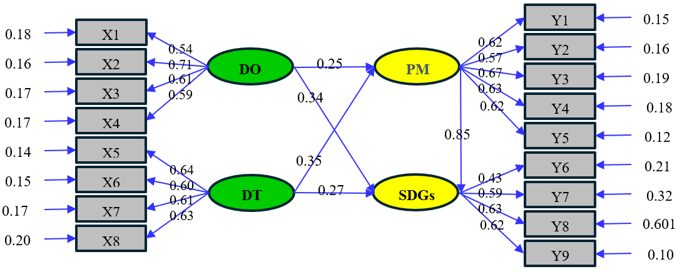
The exogenous latent variable of DO exerts both direct and indirect influences on the SDGs of the population of Bangkok, with coefficients of 0.34 and 0.21, respectively, at a statistical significance level of 0.01. Similarly, the exogenous latent variable of DT demonstrates direct and indirect influences on the endogenous latent variables associated with achieving the SDGs of the population of Bangkok, with coefficients of 0.27 and 0.30, respectively, at a statistical significance level of 0.01. The results supporting H1 are illustrated in Figure 1.
Moreover, the exogenous latent variable of DO exhibits a total influence on the SDGs of the population of Bangkok with a coefficient of 0.55 at a statistical significance level of 0.01, while DT shows a total influence of 0.57 at the same level of statistical significance, as presented in Figure 1.
6.4.2 Influence of Emerging Disease Opportunity and Emerging Disease Threat on Public Mind
The exogenous latent variable of DO has a direct influence on the endogenous latent variable of PM among the population of Bangkok, with a coefficient of 0.25 at a statistical significance level of 0.01. Similarly, the exogenous latent variable of DT exerts a direct influence on the endogenous latent variable of PM, with a coefficient of 0.35 at a statistical significance level of 0.01. The results supporting H2 are illustrated in Figure 1.
6.4.3 Influence of Public Mind on Sustainable Development Goals
The mediating latent variable of PM among the population of Bangkok has a direct influence on the endogenous latent variable of SDGs, with a coefficient of 0.85 at a statistical significance level of 0.01. The results supporting H3 are illustrated in Figure 1.
6.4.4 Model of emerging diseases management affecting Sustainable Development Goals
The criteria for the goodness-of-fit of the structural equation model were obtained as demonstrated in Table 7. The results for p-value, χ²/df, GFI, AGFI, RMSEA, RMR, and Critical N indicate acceptable values. Consequently, the structural equation model comprising DO, DT, PM, and SDGs is consistent with the empirical data.
The proposed model of emerging disease management influencing the SDGs of the population of Bangkok was developed and tested. The model demonstrates a good fit with the empirical data, as indicated by the following statistical values: χ²/df = 1.775 (less than 5), GFI = 0.94, and AGFI = 0.92 (both greater than 0.90). The RMSEA value is 0.049, which is below the threshold of 0.05, and the CN is 278.78, exceeding the minimum acceptable value of 200. The results supporting H4 are illustrated in Figure 1.
Table 7. Goodness-of-Fit Index (GFI) of the structural equation model for Emerging Disease Opportunity (DO), Emerging Disease Threat (DT), Public Mind (PM), and Sustainable Development Goals (SDGs)
|
Statistics of Measure Consistency |
Verification Model |
Degree Acceptance |
|
P-value |
0.42152 |
>0.05 |
|
χ²/df |
1.775 |
<5 |
|
GFI |
0.94 |
>0.90 |
|
AGFI |
0.92 |
>0.90 |
|
RMSEA |
0.049 |
<0.05 |
|
RMR |
0.0093 |
<0.05 |
|
Critical N |
278.78 |
>200 |
Table 8. Direct effects among research latent variables
|
Variable |
Estimate |
S.E. |
C.R. |
p-Value |
||
|
DO |
PM |
0.25 |
0.056 |
15.156 |
0.001*** |
|
|
DO |
SDGs |
0.34 |
0.058 |
12.055 |
0.001*** |
|
|
DT |
PM |
0.35 |
0.061 |
15.121 |
0.001*** |
|
|
DT |
SDGs |
0.27 |
0.059 |
10.561 |
0.001*** |
|
|
PM |
SDGs |
0.85 |
0.057 |
14.587 |
0.001*** |
|
Table 9. Direct, indirect, and total effects of DO → PM → SDGs and DT → PM → SDGs
|
Variable |
Direct Effect |
Indirect Effect |
Total Effect |
|
DO PMSDGs |
0.34 |
0.25*0.85 = 0.21 |
0.34 + 0.21 = 0.55 |
|
DT PMSDGs |
0.27 |
0.35*0.85 =0 .30 |
0.27 + 0.30 = 0.57 |
Furthermore, the relationships among causal variables, the mediating variable, and the outcome variable are presented in Table 8, Table 9, and Figure 1.
6.4.5 Hypothesis testing
Hypothesis testing of the structural equation model was conducted based on the regression coefficients of each path, with consideration given to the probability value (p < 0.01). This indicates that the effects are statistically significant at the 0.01 level. The results of the direct effects among the latent variables are presented in Table 8.
Table 8 presents the path analysis of all variables reveals positive relationships, consistent with the proposed hypotheses, and statistically significant at the 0.01 level. However, the hypothesis testing of direct effects, as shown in Table 8, indicates that DO and DT exert direct influences on PM and SDGs, thereby supporting H1. In addition, PM demonstrates a direct influence on SDGs, supporting H2. These findings are confirmed by the CR values of 15.156, 12.055, 15.121, 10.561, and 14.587, all of which exceed the threshold of 2.56, and by the p-values, which are statistically significant at the 0.01 level. Collectively, these results demonstrate that DO and DT have significant direct effects on PM and SDGs, while PM also exerts a significant direct effect on SDGs.
Table 9 presents the results related to H3 proposes that DO and DT exert indirect effects on SDGs. The results of hypothesis testing, as presented in Table 9, demonstrate that the indirect effects of DO and DT on SDGs are 0.21 and 0.30, respectively. Based on these calculations, DO and DT influence SDGs indirectly through PM, which functions as a mediating variable. This is evident because the total effects are greater than the direct effects (0.55 > 0.34 and 0.57 > 0.27). Therefore, the statistical test results provide evidence supporting H3, indicating that the indirect effects of DO and DT on SDGs are valid and acceptable.
7.1 Response to the first objective
The first objective of this study investigates the direct and indirect influences of the exogenous latent variables DO and DT on the endogenous latent variables associated with achieving the SDGs of the population of Bangkok. The findings reveal that DO exerts both direct and indirect influences on the SDGs, with coefficients of 0.34 and 0.21, respectively, at a statistical significance level of 0.01. Similarly, DT demonstrates direct and indirect influences on the endogenous latent variables related to achieving the SDGs, with coefficients of 0.27 and 0.30, respectively, at the same level of statistical significance. These results provide empirical support for H1 and H3.
In this study, DO was measured by the observed variables of food security, health security, ES, and natural restoration [18, 21, 40, 42, 44]. These findings are consistent with the research of Trivellone et al. [16], who examined food security and emerging infectious diseases, emphasizing that during outbreaks, people pay greater attention to food security by comprehensively preserving and stocking food. Nguyen and Nguyen [10] similarly studied decades of emerging infectious diseases and food safety in Vietnam, while Kruk et al. [41] emphasized the importance of resilient health systems that can respond effectively to disease outbreaks while maintaining essential health services. This perspective is consistent with Ukoaka et al. [44], who emphasized the need to strengthen public health preparedness for emerging pathogens with pandemic potential.
Furthermore, Ukoaka et al. [44] critically reviewed the positive and negative impacts of COVID-19 on the environment, noting sustainability approaches. Their findings revealed that ES occurred due to reduced activities such as remote working and decreased travel. Lockdowns and restrictions on movement directly reduced energy consumption in transportation sectors (aviation, automobiles, public transit) and indirectly reduced activity in hotels, restaurants, and related industries [65]. Natural restoration was also observed during outbreaks, as reported by Geng et al. [42], who found evidence of ecosystem recovery. Mousazadeh [66] further noted positive environmental effects during the COVID-19 pandemic, including reduced global energy use, improved air quality, decreased greenhouse gas emissions, and reduced traffic congestion.
The second part of the first objective focuses on DT, which was measured by the observed variables of infectious waste accumulation, economic recession, food deprivation, and health insecurity [1, 6, 22, 43]. Infectious waste accumulation is a critical issue during outbreaks, requiring proper management through segregation, safe transport, and disposal methods such as incineration or steam sterilization to prevent disease transmission. This is supported by Sharma et al. [45], who studied infectious waste management capacity in Thailand under normal circumstances and during COVID-19. Caraka et al. [6] examined the impacts of COVID-19 on food security and nutrition in low- and middle-income populations, revealing that these groups are disproportionately affected.
Economic recession, defined as a prolonged downturn in economic activity, was also evident during outbreaks. McKibbin and Fernando [3] analyzed the global economic impacts of COVID-19, emphasizing the dynamic role of public health responses in restoring confidence among economic actors. Wattanakomol [67] studied business strategies during epidemics, highlighting innovation and human resource development as key drivers of resilience and success. Collectively, these findings demonstrate that DT exerts significant direct and indirect influences on the SDGs of Bangkok’s population, thereby supporting H1 and H3.
The findings of this study highlight the significant direct and indirect influences of DO and DT on the SDGs of Bangkok’s population. These results provide important policy implications for urban health management, environmental sustainability, and socio-economic resilience in the context of emerging infectious diseases.
•Strengthening food and health security
1. Policymakers should prioritize integrated strategies to enhance food security and health system resilience during disease outbreaks.
2. Establishing emergency food reserves and strengthening public health infrastructure can mitigate vulnerabilities among low- and middle-income populations.
•Promoting ES and environmental restoration
1. The involuntary ES observed during outbreaks suggest opportunities for long-term energy efficiency policies.
2. Governments should encourage remote working, sustainable transportation, and eco-friendly practices to maintain reduced energy consumption and improved air quality beyond crisis periods.
•Improving infectious waste management
1. Effective waste segregation, safe transport, and environmentally sound disposal methods are essential to prevent secondary disease transmission.
2. Investment in modern waste treatment technologies and stricter regulatory frameworks will enhance preparedness for future pandemics.
•Mitigating economic recession risks
1. Economic resilience requires proactive measures, including financial safety nets, innovation-driven business models, and workforce development.
2. Public health responses must be harmonized with economic recovery strategies to restore confidence among businesses and communities.
•Enhancing PM as a Mediator
1. Public awareness, collective responsibility, and social participation play a critical mediating role in achieving SDGs during health crises.
2. Policies should foster civic engagement, environmental stewardship, and community-based initiatives to strengthen the PM as a driver of sustainable development.
In summary, the integration of health security, environmental sustainability, waste management, and economic resilience into urban policy frameworks is essential for managing emerging diseases and achieving the SDGs in Bangkok.
7.2 Response to the second objective
The second objective of this study investigates the direct influence of the exogenous latent variables DO and DT on the endogenous latent variable of the PM of the population of Bangkok. The results indicate that DO exerts a direct influence on PM with a coefficient of 0.25, while DT exerts a direct influence on PM with a coefficient of 0.35, both at a statistical significance level of 0.01. These findings provide support for H1.
Moreover, PM itself demonstrates a direct influence on the SDGs, with a coefficient of 0.85. PM functions as a mediating factor linking DO and DT to the SDGs. In this study, DO was measured by food security, health security, ES, and natural restoration [18, 39-42, 44, 66], while DT was measured by infectious waste accumulation, economic recession, food deprivation, and health insecurity [6, 21, 41, 44]. Although DO directly influences the SDGs, its impact is strengthened when PM is employed as a mediating factor, thereby enhancing the effectiveness of emerging disease management.
PM represents a collective disposition toward community and societal interests, reflected in behaviors such as helping others, cooperating, and demonstrating responsibility for the common good. It encompasses empathy, civic responsibility, and a willingness to act for the benefit of others without expectation of reward, thereby contributing to social well-being and sustainable development. This is consistent with numerous studies on PM and sustainable management [29, 47, 48-50].
For Bangkok, cultivating PM involves promoting three dimensions of consciousness: (1) self-awareness, (2) awareness of others, and (3) awareness of society. City executives must serve as role models to inspire citizens to strengthen their PM and actively participate in initiatives aimed at preventing emerging infectious diseases such as COVID-19. This aligns with the study of Thaworanun [29], which examined private hospital models in Rayong Province, showing that hospital policy, performance, and total quality positively influence personnel’s PM and customer satisfaction, with predictive variance reaching 97%.
Similarly, Rosário and Boechat [68] highlighted the role of sustainable leadership in advancing long-term economic, social, and environmental development through the integration of environmental, social, and governance (ESG) principles. Thus, the Bangkok governor must demonstrate leadership that fosters resilience, capital sustainability, and positive community impact. This perspective is consistent with Doppelt [69], who emphasized the importance of organizational change leaders in guiding institutions toward sustainable development, and with Guan et al. [30], who found that raising public awareness of the SDGs is crucial for their achievement.
The findings of this study emphasize the critical role of the PM as a mediating factor linking DO and DT to the SDGs. This highlights several policy directions for strengthening social resilience and sustainable development in Bangkok:
•Cultivating PM as a core social value
1. Policies should promote civic responsibility, empathy, and collective participation through education, community programs, and awareness campaigns.
2. Encouraging volunteerism, cooperation, and social responsibility will strengthen PM as a driver of sustainable development.
•Leadership development and role modeling
1. City executives and organizational leaders must act as role models, demonstrating integrity, responsibility, and commitment to public welfare.
2. Leadership strategies should integrate sustainability principles, aligning with ESG frameworks to inspire collective action.
•Integrating PM into emerging disease management
1. PM initiatives should be embedded into health and environmental policies to enhance community participation in disease prevention and crisis response.
2. Strengthening PM will amplify the effectiveness of DO (food security, health security, ES, natural restoration) and mitigate DT (infectious waste, economic recession, food deprivation, health insecurity).
•Promoting sustainable leadership for SDGs
1. Sustainable leadership must be prioritized to build resilience, drive capital sustainability, and positively impact communities.
2. Policies should encourage innovation, human resource development, and participatory governance to sustain long-term economic, social, and environmental progress.
•Enhancing community engagement and awareness
1. Raising public awareness of SDGs through campaigns, participatory projects, and inclusive governance will foster a stronger sense of responsibility among citizens.
2. Empowering communities to take part in decision-making processes ensures that PM becomes a collective force for sustainable development.
In summary, strengthening the PM through leadership, civic responsibility, and participatory governance is essential for managing emerging diseases and achieving the SDGs in Bangkok.
7.3 Response to the third objective
The third objective of this study focuses on the mediating latent variable of the PM of the population of Bangkok, which influences the endogenous latent variable of achieving the SDGs. The results indicate that PM exerts a direct influence on the achievement of the SDGs with a coefficient of 0.85, at a statistical significance level of 0.01, thereby supporting H3. PM, or public consciousness, plays a crucial role in ensuring sustainable management of human well-being in both physical and mental dimensions [2], particularly in the prevention of infectious disease pandemics, which contributes to achieving the SDGs. This also provides support for H2.
Further analysis revealed that DO and DT act as exogenous latent variables influencing PM, which in turn has the strongest effect, up to 85%, on achieving the SDGs. These goals encompass SDG1 (No Poverty), SDG2 (Zero Hunger), SDG3 (Good Health and Well-being), and SDG8 (Decent Work and Economic Growth) [3, 29, 31, 32, 53, 52, 70]. PM is conceptualized as comprising several dimensions: self-awareness, event impression, role modeling, and environmental concern. EnI refers to individuals’ perceptions of community practices and social management regarding environmental sustainability, which collectively shape awareness of the impact of personal behavior on society and governance.
DO encompasses food security, health security, ES, and natural restoration, while DT includes infectious waste accumulation, economic recession, food deprivation, and health insecurity. Effective leadership is required to mobilize citizen participation in preventing emerging infectious diseases and to achieve sustainable development outcomes. Citizens must be aware of their responsibilities and adopt a PM that promotes effective work for both personal and societal benefit.
Thaworanun [29] examined private hospital models in Rayong Province and found that hospital policy, performance, and total quality positively influenced personnel’s PM, with predictive variance reaching 97%. Guan et al. [30] also demonstrated that raising public awareness of the SDGs is essential, based on evidence from five Chinese cities.
Furthermore, Purba and Kusumawardani [50] demonstrated that social capital, particularly social participation, trust, and adherence to social norms, plays an important role in promoting pro-environmental behavior and collective responsibility.
Rosário and Boechat [68] highlighted the role of sustainable leadership in advancing long-term economic, social, and environmental development through the integration of ESG principles. Doppelt [69] similarly argued that organizational change leaders are critical in guiding institutions toward sustainable development. Collectively, these studies reinforce the importance of PM as a mediating factor that links DO and DT to the achievement of SDGs, underscoring its role in fostering sustainable management and societal resilience.
The findings of this study highlight the pivotal role of PM as a mediating factor that links DO and DT to the achievement of the SDGs. This underscores several policy directions for strengthening PM as a mechanism for sustainable development in Bangkok:
•Institutionalizing PM in policy frameworks
1. Policies should embed PM as a central value in urban governance, emphasizing empathy, civic responsibility, and collective participation.
2. Educational curricula and community programs should integrate PM principles to cultivate awareness and responsibility among citizens from an early age.
•Leadership and role modeling
1. City executives and organizational leaders must act as role models, demonstrating integrity, accountability, and commitment to the common good.
2. Leadership strategies should align with ESG principles to inspire collective action and resilience.
•Strengthening PM in emerging disease management
1. PM initiatives should be integrated into health and environmental policies to enhance citizen participation in disease prevention and crisis response.
2. By mobilizing PM, the effectiveness of DO (food security, health security, ES, natural restoration) can be amplified, while DT (infectious waste, economic recession, food deprivation, health insecurity) can be mitigated.
•Promoting sustainable leadership for SDGs
1. Sustainable leadership must be prioritized to build resilience, drive capital sustainability, and positively impact communities.
2. Policies should encourage innovation, human resource development, and participatory governance to sustain long-term economic, social, and environmental progress.
•Enhancing community engagement and awareness
1. Raising public awareness of SDGs through campaigns, participatory projects, and inclusive governance will foster a stronger sense of responsibility among citizens.
2. Empowering communities to take part in decision-making processes ensures that PM becomes a collective force for sustainable development.
In summary, strengthening the PM through education, leadership, and participatory governance is essential for managing emerging diseases and achieving the SDGs in Bangkok.
7.4 Response to the fourth objective
The fourth objective of this study is to verify the proposed model fit with the empirical data. The model was assessed using standard statistical criteria: χ²/df less than 5, GFI and AGFI greater than 0.90, RMSEA less than 0.05, and CN greater than 200. The results confirm the congruence with H4.
The relationship pattern between the SDGs of the population of Bangkok demonstrates both direct and indirect influences of the exogenous latent variables DO and DT on the endogenous latent variable of the PM and the achievement of the SDGs. The correlation pattern analysis confirmed that the model is consistent with the empirical data (χ²/df = 1.775, GFI = 0.94, AGFI = 0.92, RMSEA = 0.049, CN = 278.78, which is greater than 200) and explains 98.00% of the variance in SDGs.
DO encompasses food security, health security, ES, and natural restoration [18, 40-42], while DT involves infectious waste accumulation, economic recession, food deprivation, and health insecurity [6, 22, 43]. These factors may hinder progress toward SDG1 by reducing vulnerable populations’ access to essential services and economic resources [33], which emphasized that SDG1 (No Poverty) requires ensuring equal rights to economic resources, access to basic services, property and land control, natural resources, and new technologies, particularly for the poorest and most vulnerable groups. Emerging infectious diseases reduce people’s capacity to work effectively, thereby hindering poverty eradication.
In relation to SDG2 (Zero Hunger), emerging infectious diseases exacerbate malnutrition by weakening immune systems and increasing the risk of disease outbreaks, which in turn disrupt food supply chains and intensify food insecurity. SDG3 (Good Health and Well-being) aims to end specific epidemics, but emerging diseases pose broader threats by undermining progress toward SDG2, creating a vicious cycle of malnutrition and disease. These findings align with Wu [71], who examined gaps in the UN’s SDG framework. Carter et al. [72] further emphasized that strengthening genomic surveillance, timely access to sequencing, and coordinated pathogen data sharing can improve the detection, monitoring, and response to emerging public health threats.
SDG8 (Decent Work and Economic Growth) is also influenced by emerging infectious diseases. Rai et al. [73] demonstrated that SDG8 calls for sustained, inclusive, and sustainable economic growth, full and productive employment, and decent work for all, while also recognizing tensions with SDG5 (Gender Equality) regarding unpaid care and domestic work. Mpia et al. [74] similarly emphasized the need for governments to develop strategies to mitigate unemployment, which is critical for achieving target 8.6 of the SDGs.
Overall, DT directly and indirectly influences SDG2 (Zero Hunger) and SDG3 (Good Health and Well-being), making it particularly challenging for low-income populations in Bangkok to achieve these goals. The results reinforce the importance of integrating emerging disease management into strategies for poverty eradication, food security, health improvement, and sustainable economic growth.
The findings of this study confirm that the proposed model is consistent with empirical data and demonstrates the significant direct and indirect influences of DO and DT on the PM and the achievement of the SDGs of Bangkok’s population. These results highlight several important policy directions:
•Strengthening public health surveillance and response systems
1. Establish rapid detection and monitoring mechanisms for emerging infectious diseases to ensure timely interventions.
2. Enhance information-sharing platforms and mobilize coordinated responses to contain disease transmission effectively.
•Integrating emerging disease management into SDGs strategies
1. Align health security, food security, ES, and environmental restoration policies with SDG1 (No Poverty), SDG2 (Zero Hunger), SDG3 (Good Health and Well-being), and SDG8 (Decent Work and Economic Growth).
2. Address DT factors such as infectious waste, economic recession, food deprivation, and health insecurity through targeted interventions.
•Promoting resilience in vulnerable populations
1. Develop social protection programs and economic safety nets to support low-income groups disproportionately affected by emerging diseases.
2. Ensure equitable access to healthcare, nutrition, and employment opportunities to reduce vulnerabilities.
•Enhancing leadership and governance for sustainable development
1. City executives and policymakers must adopt sustainable leadership practices that integrate ESG principles.
2. Leadership strategies should prioritize resilience-building, participatory governance, and inclusive economic growth.
•Fostering PM as a mediating mechanism
1. Encourage civic responsibility, community participation, and collective awareness to strengthen PM as a driver of sustainable development.
2. Promote education and awareness campaigns to instill values of empathy, cooperation, and responsibility for the common good.
In summary, integrating emerging disease management into urban policy frameworks, strengthening public health systems, and cultivating the PM are essential strategies for Bangkok to achieve the SDGs while building resilience against future health crises.
7.5 Urban planning and Bangkok Healthy City policy implications
The significant influence of DT/IWA has direct implications for Bangkok’s waste-management infrastructure. The increase in Thailand’s infectious waste from 154 to 280 tons per day during COVID-19 demonstrates the need for outbreak-based capacity planning [45]. The Bangkok Metropolitan Administration should strengthen real-time reporting, contingency storage and transportation, reserve treatment capacity, and coordination among healthcare facilities, transport providers, and treatment operators. These measures should be integrated into Bangkok’s urban environmental and Healthy City policies.
8.1 Conclusions
It can be concluded that DO comprises recycling, ES, waste management, and water management, all of which contribute to reducing environmental impacts. DT involves infectious waste accumulation, economic recession, food deprivation, and health insecurity. Bangkok should therefore integrate outbreak-based infectious-waste capacity planning and real-time monitoring into its urban environmental and Healthy City policies. The PM consists of several dimensions, including self-awareness, public consciousness inspired by significant events (event impression), awareness of duty, and role modeling in demonstrating public-minded behavior.
The Bangkok governor holds a primary responsibility to support citizens in avoiding hunger and achieving good health and well-being by ensuring access to clean water and sufficient food. During the COVID-19 pandemic, numerous private initiatives emerged, such as households providing community food cabinets and private organizations delivering food to different areas of Bangkok. These activities exemplify Thailand’s cultural identity as a Buddhist country of compassion and generosity, often referred to as the “world’s kitchen,” reflecting the abundance of food and the spirit of kindness.
8.2 Recommendations
Based on the findings of this study, several recommendations can be proposed to strengthen the management of emerging diseases and to support the achievement of the SDGs in Bangkok:
•Strengthening public health infrastructure and surveillance
1. Establish comprehensive disease surveillance systems capable of early detection and rapid response to emerging infectious diseases.
2. Enhance coordination between public health agencies, hospitals, and community organizations to ensure timely interventions.
•Promoting food and health security
1. Develop emergency food reserves and nutrition programs to mitigate vulnerabilities among low- and middle-income populations.
2. Ensure equitable access to healthcare services, preventive measures, and vaccination programs to reduce health insecurity.
•Integrating environmental management into disease prevention
1. Implement policies that promote recycling, ES, waste management, and water management to reduce environmental impacts associated with disease outbreaks.
2. Strengthen regulations and infrastructure for infectious waste management to prevent secondary transmission.
•Enhancing PM as a mediating mechanism
1. Promote civic responsibility, empathy, and collective participation through education, awareness campaigns, and community engagement.
2. Encourage role modeling and leadership practices that inspire citizens to act for the common good, thereby reinforcing PM as a driver of sustainable development.
•Leadership and governance for sustainable development
1. The Bangkok governor and city executives must adopt sustainable leadership strategies that integrate ESG principles.
2. Policies should prioritize resilience-building, participatory governance, and inclusive economic growth to align with SDG1 (No Poverty), SDG2 (Zero Hunger), SDG3 (Good Health and Well-being), SDG6 (Clean Water and Sanitation), SDG7 (Affordable and Clean Energy), SDG8 (Decent Work and Economic Growth), and SDG12 (Responsible Consumption and Production).
•Strengthening collaboration with private and civil sectors
1. Encourage partnerships with private organizations, civil society, and local communities to provide resources and support during crises, as demonstrated during the COVID-19 pandemic.
2. Institutionalize community-based initiatives such as food cabinets and mobile food distribution to ensure social resilience in times of crisis.
In conclusion, integrating public health, environmental sustainability, and civic responsibility into urban policy frameworks, while fostering strong leadership and community participation, is essential for managing emerging diseases and achieving the SDGs in Bangkok.
This research project was financially supported by Mahasarakham University (Grant numbers: 6909048, 2569).
[1] Nugrahadi, E.W., Maipita, I., Fitrawaty, Hidayat, N., Rinaldi, M. (2023). Impact of labor and health on economic growth in Indonesia during the COVID-19 pandemic: A panel data regression analysis. International Journal of Sustainable Development and Planning, 18(12): 4015-4021. https://doi.org/10.18280/ijsdp.181232
[2] Lee, W.E., Park, S.W., Weinberger, D.M., et al. (2023). Direct and indirect mortality impacts of the COVID-19 pandemic in the United States, March 1, 2020 to January 1, 2022. eLife, 12: e77562. https://doi.org/10.7554/eLife.77562
[3] McKibbin, W., Fernando, R. (2023). The global economic impacts of the COVID-19 pandemic. Economic Modelling, 129: 106551. https://doi.org/10.1016/j.econmod.2023.106551
[4] Quinn, S.C., Kumar, S. (2014). Health inequalities and infectious disease epidemics: A challenge for global health security. Biosecurity and Bioterrorism, 12(5): 263-273. https://doi.org/10.1089/bsp.2014.0032
[5] Syaddam, M.M. (2021). Universal health coverage in developing countries: Barriers and strategic reforms. Journal of Health Literacy and Qualitative Research, 1(2): 99-112. https://doi.org/10.61194/jhlqr.v1i2.533
[6] Caraka, R.E., Lee, Y., Kurniawan, R., et al. (2020). Impact of COVID-19 large scale restriction on environment and economy in Indonesia. Global Journal of Environmental Science and Management, 6(Special Issue COVID-19): 65-84. https://doi.org/10.22034/GJESM.2019.06.SI.07
[7] Fakfare, P., Lee, J.S., Han, H. (2022). Thailand tourism: A systematic review. Journal of Travel & Tourism Marketing, 39(2): 188-214. https://doi.org/10.1080/10548408.2022.2061674
[8] United Nations. (2025). The 17 goals. https://www.un.org/sustainabledevelopment/development-goals.
[9] Thaicharoen, S., Meunrat, S., Leng-Ee, W., et al. (2023). How Thailand's tourism industry coped with COVID-19 pandemics: A lesson from the pilot Phuket Tourism Sandbox project. Journal of Travel Medicine, 30(5): taac151. https://doi.org/10.1093/jtm/taac151
[10] Nguyen, L.P., Nguyen, H.T. (2021). Factors impacting tourism demand: An analysis of 10 ASEAN countries. The Journal of Asian Finance, Economics and Business, 8(1): 385-393. https://doi.org/10.13106/jafeb.2021.vol8.no1.385
[11] Gao, L.P., Zheng, C.J., Shi, Q., et al. (2022). Evolving trend change during the COVID-19 pandemic. Frontiers in Public Health, 10: 957265. https://doi.org/10.3389/fpubh.2022.957265
[12] OECD, European Union. (2022). Health at a Glance: Europe 2022: State of Health in the EU Cycle. OECD Publishing. https://doi.org/10.1787/507433b0-en
[13] WHO. (2022). COVID-19 and Ukraine virtual press conference transcript-9 March 2022. https://www.who.int/publications/m/item/covid-19-and-ukraine-virtual-press-conference-transcript---9-march-2022.
[14] Metcalf, C.J.E., Lessler, J. (2017). Opportunities and challenges in modeling emerging infectious diseases. Science, 357(6347): 149-152. https://doi.org/10.1126/science.aam8335
[15] Rohr, J.R., Barrett, C.B., Civitello, D.J., et al. (2019). Emerging human infectious diseases and the links to global food production. Nature Sustainability, 2(6): 445-456. https://doi.org/10.1038/s41893-019-0293-3
[16] Trivellone, V., Hoberg, E.P., Boeger, W.A., Brooks, D.R. (2022). Food security and emerging infectious disease: Risk assessment and risk management. Royal Society Open Science, 9(2): 211687. https://doi.org/10.1098/rsos.211687
[17] Nguyen-Viet, H., Lam, S., Nguyen-Mai, H., et al. (2022). Decades of emerging infectious disease, food safety, and antimicrobial resistance response in Vietnam: The role of One Health. One Health, 14: 100361. https://doi.org/10.1016/j.onehlt.2021.100361
[18] Hu, T.R., Shang, S.J., Xie, J.C., Ji, Y., Xue, P., Zhang, N. (2025). Infectious diseases prevention and control with reduced energy consumption in an airport. Energy and Built Environment, 6(3): 524-533. https://doi.org/10.1016/j.enbenv.2024.01.012
[19] Mansuy, N. (2020). Stimulating post-COVID-19 green recovery by investing in ecological restoration. Restoration Ecology, 28(6): 1343-1347. https://doi.org/10.1111/rec.13296
[20] Brooks, D.R., Hoberg, E.P., Boeger, W.A., Trivellone, V. (2022). Emerging infectious disease: An underappreciated area of strategic concern for food security. Transboundary and Emerging Diseases, 69(2): 254-267. https://doi.org/10.1111/tbed.14009
[21] Elsamadony, M., Fujii, M., Ryo, M., Nerini, F.F., Kakinuma, K., Kanae, S. (2022). Preliminary quantitative assessment of the multidimensional impact of the COVID-19 pandemic on Sustainable Development Goals. Journal of Cleaner Production, 372: 133812. https://doi.org/10.1016/j.jclepro.2022.133812
[22] World Bank. (2022). Putting Pandemics Behind Us: Investing in One Health to Reduce Risks of Emerging Infectious Diseases. Washington, DC. https://doi.org/10.1596/38200
[23] Das, A.K., Islam, M.N., Billah, M.M., Sarker, A. (2021). COVID-19 pandemic and healthcare solid waste management strategy: A mini-review. Science of the Total Environment, 778: 146220. https://doi.org/10.1016/j.scitotenv.2021.146220
[24] Lubis, E.E., Siregar, Y.I., Nofrizal, Efni, N., Ananda, F. (2024). Perceptions of environmental awareness and pro-environmental behaviour of people in the riverfront city, Pekanbaru City, Riau, Indonesia. International Journal of Sustainable Development and Planning, 19(5): 1763-1771. https://doi.org/10.18280/ijsdp.190514
[25] Nguyen, T.P.L., Nguyen, D.T., Nguyen, V.H., Nguyen, T.V. (2024). Determinants of pro-environmental behavior at work among Vietnamese enterprise employees. International Journal of Sustainable Development and Planning, 19(11): 4431-4439. https://doi.org/10.18280/ijsdp.191130
[26] Fitriyah, N., Yuniarti, T., Wahyono, E., et al. (2024). Clean water issues, community behavior and communication models in Sustainable Development Goals 6 in Banten West Java Indonesia. International Journal of Sustainable Development and Planning, 19(1): 247-258. https://doi.org/10.18280/ijsdp.190123
[27] Islam, M.T., Islam, M.H., Kamal, M.A. (2024). Role of habit in household waste recycling behavior: Evidence from an emerging country. International Journal of Sustainable Development and Planning, 19(6): 2165-2175. https://doi.org/10.18280/ijsdp.190616
[28] Xu, L., Chu, X.J., Ling, M.L. (2021). Influence of role models on public participation in household waste separation: An examination of local contextual moderators. Sustainable Production and Consumption, 27: 1934-1943. https://doi.org/10.1016/j.spc.2021.04.032
[29] Thaworanun, W. (2023). Private hospital model in Rayong province that satisfied consumer needs. African Educational Research Journal, 11(4): 641-650. https://doi.org/10.30918/AERJ.114.23.103
[30] Guan, T., Meng, K., Liu, W., Xue, L. (2019). Public attitudes toward sustainable development goals: Evidence from five Chinese cities. Sustainability, 11(20): 5793. https://doi.org/10.3390/su11205793
[31] Bolton, M. (2021). Public sector understanding of sustainable development and the sustainable development goals: A case study of Victoria, Australia. Current Research in Environmental Sustainability, 3: 100056. https://doi.org/10.1016/j.crsust.2021.100056
[32] Mofijur, M., Fattah, I.M.R., Alam, M.A., et al. (2021). Impact of COVID-19 on the social, economic, environmental and energy domains: Lessons learnt from a global pandemic. Sustainable Production and Consumption, 26: 343-359. https://doi.org/10.1016/j.spc.2020.10.016
[33] United Nations Thailand. Our work on Sustainable Development Goals in Thailand. https://thailand.un.org/en/sdgs, accessed on Jan. 8, 2026.
[34] da Costa Guerra, R.J., dos Santos, N.N.P., Gonçalves, E.C. (2022). Health and wellness tourism: Contributions to a local sustainable development strategy. In Cultural Sustainable Tourism: Advances in Science, Technology and Innovation, pp. 219-233. Springer. https://doi.org/10.1007/978-3-031-07819-4_19
[35] FAO, IFAD, UNICEF, WFP, WHO. (2024). The State of Food Security and Nutrition in the World 2024: Financing to End Hunger, Food Insecurity and Malnutrition in All Its Forms. FAO. https://doi.org/10.4060/cd1254en
[36] Ziafati Bafarasat, A., Sharifi, A. (2024). How to achieve a healthy city: A scoping review with ten city examples. Journal of Urban Health, 101: 120-140. https://doi.org/10.1007/s11524-023-00798-9
[37] Grubaugh, N.D., Ladner, J.T., Lemey, P., et al. (2019). Tracking virus outbreaks in the twenty-first century. Nature Microbiology, 4: 10-19. https://doi.org/10.1038/s41564-018-0296-2
[38] Villanueva-Miranda, I., Xiao, G.H., Xie, Y. (2025). Artificial intelligence in early warning systems for infectious disease surveillance: A systematic review. Frontiers in Public Health, 13: 1609615. https://doi.org/10.3389/fpubh.2025.1609615
[39] Lewnard, J.A., Reingold, A.L. (2019). Emerging challenges and opportunities in infectious disease epidemiology. American Journal of Epidemiology, 188(5): 873-882. https://doi.org/10.1093/aje/kwy264
[40] Wang, F., Xiang, L.L., Leung, K.S.Y., et al. (2024). Emerging contaminants: A One Health perspective. The Innovation, 5(4): 100612. https://doi.org/10.1016/j.xinn.2024.100612
[41] Kruk, M.E., Myers, M., Varpilah, S.T., Dahn, B.T. (2015). What is a resilient health system? Lessons from Ebola. The Lancet, 385(9980): 1910-1912. https://doi.org/10.1016/S0140-6736(15)60755-3
[42] Geng, J., Haq, S.U., Abbas, J., et al. (2022). Survival in pandemic times: Managing energy efficiency, food diversity, and sustainable practices of nutrient intake amid COVID-19 crisis. Frontiers in Environmental Science, 10: 945774. https://doi.org/10.3389/fenvs.2022.945774
[43] Ouhsine, O., Ouigmane, A., Layati, E., Aba, B., Isaifan, R., Berkani, M. (2020). Impact of COVID-19 on the qualitative and quantitative aspect of household solid waste. Global Journal of Environmental Science and Management, 6(Special Issue COVID-19): 41-52. https://doi.org/10.22034/GJESM.2019.06.SI.05
[44] Ukoaka, B.M., Okesanya, O.J., Daniel, F.M., et al. (2024). Updated WHO list of emerging pathogens for a potential future pandemic: Implications for public health and global preparedness. Le Infezioni in Medicina, 32(4): 463-477. https://doi.org/10.53854/liim-3204-5
[45] Sharma, U., Kalra, S., Gupta, S., et al. (2022). The crisis of biomedical wastes associated with the COVID-19 pandemic and management using sustainable technologies for sound management of healthcare waste associated with pandemics. International Journal of Community Medicine and Public Health, 9(2): 1084-1090. https://doi.org/10.18203/2394-6040.ijcmph20220267
[46] Alzghoul, S., Smadi, O., Almomani, T., Alzghoul, M.B., Al-Bataineh, O.M. (2022). Solid medical waste management practices and awareness in COVID-19 screening stations. Global Journal of Environmental Science and Management, 8(3): 327-338. https://doi.org/10.22034/gjesm.2022.03.03
[47] Cojuharenco, I., Cornelissen, G., Karelaia, N. (2016). Yes, I can: Feeling connected to others increases perceived effectiveness and socially responsible behavior. Journal of Environmental Psychology, 48: 75-86. https://doi.org/10.1016/j.jenvp.2016.09.002
[48] Jugert, P., Greenaway, K.H., Barth, M., Büchner, R., Eisentraut, S., Fritsche, I. (2016). Collective efficacy increases pro-environmental intentions through increasing self-efficacy. Journal of Environmental Psychology, 48: 12-23. https://doi.org/10.1016/j.jenvp.2016.08.003
[49] Bamberg, S., Möser, G. (2007). Twenty years after Hines, Hungerford, and Tomera: A new meta-analysis of psycho-social determinants of pro-environmental behaviour. Journal of Environmental Psychology, 27(1): 14-25. https://doi.org/10.1016/j.jenvp.2006.12.002
[50] Purba, W.S., Kusumawardani, D. (2023). Pro-environmental behavior and social capital in Indonesia 2021: A micro data analysis. International Journal of Sustainable Development and Planning, 18(7): 2107-2119. https://doi.org/10.18280/ijsdp.180713
[51] Sutton, A. (2016). Measuring the effects of self-awareness: Construction of the self-awareness outcomes questionnaire. Europe's Journal of Psychology, 12(4): 645-658. https://doi.org/10.5964/ejop.v12i4.1178
[52] Núñez López, M.E., Huddleston, R., Martínez Lozano, R.P. (2020). Integrating sustainable development into the curriculum: A case study on the developing of sustainability competencies in industrial design students at a bachelor level in Mexico. In Integrating Sustainable Development into the Curriculum, pp. 57-71. Emerald Publishing Limited. https://doi.org/10.1108/S2055-364120200000018022
[53] Chigbu, B.I., Nekhwevha, F.H. (2023). Exploring the concepts of decent work through the lens of SDG 8: Addressing challenges and inadequacies. Frontiers in Sociology, 8: 1266141. https://doi.org/10.3389/fsoc.2023.1266141
[54] National Statistical Office. (2025). Statistical Yearbook Thailand 2025. Ministry of Digital Economy and Society. https://www.nso.go.th/public/e-book/Statistical-Yearbook/SYB-2025_webPage/Page_SYB_EN.html.
[55] Yamane, T. (1973). Statistics: An Introductory Analysis (3rd ed.). Harper and Row.
[56] Turner, R.C., Carlson, L. (2003). Indexes of item-objective congruence for multidimensional items. International Journal of Testing, 3(2): 163-171. https://doi.org/10.1207/S15327574IJT0302_5
[57] Cronbach, L.J. (1951). Coefficient alpha and the internal structure of tests. Psychometrika, 16(3): 297-334. https://doi.org/10.1007/BF02310555
[58] George, D., Mallery, P. (2003). SPSS for Windows Step by Step: A Simple Guide and Reference. Allyn & Bacon.
[59] Noor, S., Tajik, O., Golzar, J. (2022). Simple random sampling. International Journal of Education and Language Studies, 1(2): 78-82. https://doi.org/10.22034/ijels.2022.162982
[60] Joreskog, K.G., Sorbom, D. (1996). LISREL 8: User's Reference Guide. Scientific Software International.
[61] Malhotra, N.K. (2020). Marketing Research: An Applied Orientation (7th ed.). Pearson Education Limited.
[62] Shapiro, S.S., Wilk, M.B. (1965). An analysis of variance test for normality (complete samples). Biometrika, 52(3/4): 591-611. https://doi.org/10.2307/2333709
[63] Razali, N.M., Wah, Y.B. (2011). Power comparisons of Shapiro-Wilk, Kolmogorov-Smirnov, Lilliefors and Anderson-Darling tests. Journal of Statistical Modeling and Analytics, 2(1): 21-33. https://www.nbi.dk/~petersen/Teaching/Stat2017/Power_Comparisons_of_Shapiro-Wilk_Kolmogorov-Smirn.pdf.
[64] Likert, R. (1932). A technique for the measurement of attitudes. Archives of Psychology, 140: 5-55. https://psycnet.apa.org/record/1933-01885-001
[65] Nundy, S., Ghosh, A., Mesloub, A., Albaqawy, G.A., Alnaim, M.M. (2021). Impact of COVID-19 pandemic on socio-economic, energy-environment and transport sector globally and Sustainable Development Goal (SDG). Journal of Cleaner Production, 312: 127705. https://doi.org/10.1016/j.jclepro.2021.127705
[66] Mousazadeh, M., Paital, B., Naghdali, Z., et al. (2021). Positive environmental effects of the coronavirus 2020 episode: A review. Environment, Development and Sustainability, 23(9): 12738-12760. https://doi.org/10.1007/s10668-021-01240-3
[67] Wattanakomol, S. (2023). Business operation strategies in epidemics of emerging disease. Kurdish Studies, 11(2): 2318-2330.
[68] Rosário, A.T., Boechat, A.C. (2025). How sustainable leadership can leverage sustainable development. Sustainability, 17(8): 3499. https://doi.org/10.3390/su17083499
[69] Doppelt, B. (2010). Leading Change Toward Sustainability. Routledge. https://doi.org/10.4324/9781351278966
[70] Ismahene, Y. (2022). Infectious diseases, trade, and economic growth: A panel analysis of developed and developing countries. Journal of the Knowledge Economy, 13(3): 2547-2583. https://doi.org/10.1007/s13132-021-00811-z
[71] Wu, T. (2022). Emerging infectious diseases expose gaps in UN's SDG framework. Nature, 607(7917): 32. https://doi.org/10.1038/d41586-022-01825-6
[72] Carter, L.L., Yu, M.A., Sacks, J.A., et al. (2022). Global genomic surveillance strategy for pathogens with pandemic and epidemic potential 2022–2032. Bulletin of the World Health Organization, 100(4): 239-239A. https://doi.org/10.2471/BLT.22.288220
[73] Rai, S.M., Brown, B.D., Ruwanpura, K.N. (2019). SDG 8: Decent work and economic growth—A gendered analysis. World Development, 113: 368-380. https://doi.org/10.1016/j.worlddev.2018.09.006
[74] Mpia, H.N., Mwendia, S.N., Mburu, L.W. (2022). Predicting employability of Congolese information technology graduates using contextual factors: Towards sustainable employability. Sustainability, 14(20): 13001. https://doi.org/10.3390/su142013001