
Tuan Chu Van
© 2026 The author. This article is published by IIETA and is licensed under the CC BY 4.0 license (http://creativecommons.org/licenses/by/4.0/).
OPEN ACCESS
Against the backdrop of Politburo Resolution No. 57-NQ/TW dated 22 December 2024 on breakthroughs in the development of science, technology, innovation and national digital transformation, this paper systematises evidence relating to digital transformation, technological cooperation, human resource development, modernisation of governance and operational outcomes, based on an analysis of the annual reports of Vietnam Electricity (EVN) for the period 2015–2025. The findings indicate that EVN has established several key foundations for open innovation, including a digital ecosystem, international cooperation on energy technology, digital workforce training, data governance and the modernisation of customer services. However, evidence of open innovation remains largely descriptive, and no unified set of measurement indicators exists. Consequently, the paper proposes several implications to encourage EVN to shift from digital transformation and technological cooperation to a systematic open-innovation model.
open innovation, digital transformation, Vietnam Electricity, Resolution 57-NQ/TW, electricity sector, knowledge management
The Vietnamese electricity sector is facing the need for far-reaching transformation to ensure energy security, fulfil its commitment to net-zero emissions by 2050, adapt to the global energy transition, and meet the economy’s growing electricity demand. According to the 8th Power Development Master Plan and its revised version [1, 2], the electricity system must not only expand in scale but also enhance its flexibility, increase its capacity to integrate renewable energy, modernise the electricity grid, and accelerate digitalisation in the management, operation and commercialisation of electricity. Against the backdrop of rapid developments in digital technology, AI, the Internet of Things (IoT), big data and modern governance models, enhancing innovation capacity has become an urgent requirement for enterprises in the electricity sector.
Resolution 57-NQ/TW [3] establishes a new policy framework by identifying science, technology, innovation and digital transformation as key drivers for improving productivity, competitiveness and promoting growth. For Vietnam Electricity (EVN), this direction requires not only internal digital transformation but also research collaboration, technology adoption, developing high-quality human resources, and building an innovation ecosystem. Consequently, EVN’s modernisation process should be viewed as establishing the foundational conditions for open innovation.
In the electricity sector, open innovation is not merely a matter of internal initiatives; it also involves the ability to adopt, connect, share, and co-develop knowledge and technology with external stakeholders such as regulatory bodies, research institutes, universities, technology companies, international organisations, financial partners, equipment suppliers, and customers. Therefore, the level of readiness for open innovation must be assessed through the prism of digital transformation, technological collaboration, knowledge management, human resource development and governance modernisation.
EVN’s annual reports over the past 10 years, covering the period 2015–2025, have published extensive information on digital transformation, AI, digital platforms, smart meters, international cooperation in the fields of smart grids, energy storage, hydrogen, ammonia, workforce training, governance reform and improving service quality for customers [4-11].
Although previous studies have analysed digital transformation, technological cooperation and innovation within the electricity sector, three gaps remain. Firstly, few studies have examined the enabling conditions for open innovation within electricity sector enterprises. Secondly, the relationship between digital transformation, open collaboration, knowledge management and organisational governance has not been integrated into a unified analytical framework. Thirdly, little research has used time-series public data to identify how EVN accumulates open innovation capabilities. Two research questions are posed:
RQ1: What foundational conditions for open innovation has EVN established and developed in the recent period?
RQ2: What opportunities and gaps do these conditions present for implementing the science, technology, innovation, and digital transformation strategy set out in Resolution 57-NQ/TW from 2025 onwards?
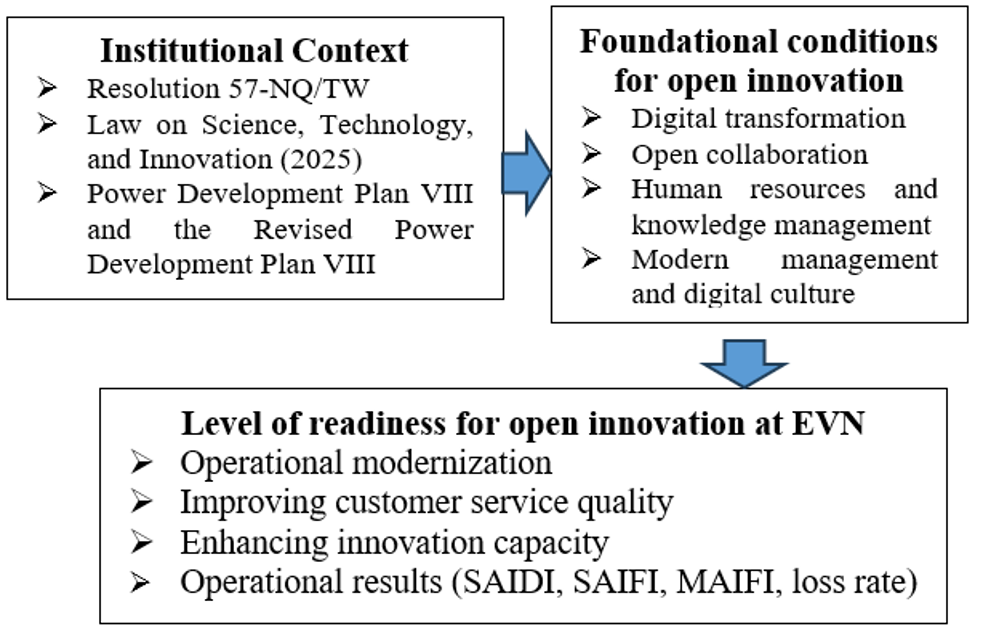
Figure 1 below presents a research framework that connects the institutional context and foundational conditions with EVN’s level of readiness for open innovation.
Figure 1. Research framework
To address these gaps, this study offers three novel contributions relative to existing research.
First, from a theoretical perspective, the study extends the Open Innovation framework [12] by applying it beyond private-sector industries to state-managed electric power enterprises, a sector with unique characteristics, particularly in Vietnam’s developing electricity market. The concept of "Open Innovation Readiness" is structured into a multidimensional framework comprising governance institutions, technical infrastructure, absorptive capacity, and ecosystem readiness.
Second, empirically, the study combines operational indicators collected from 2010–2024 with qualitative policy analysis to provide a framework for assessing the power sector's readiness during the energy transition.
Third, from a practical perspective, the study links macro-level resolutions (such as Resolution 55-NQ/TW and Power Development Plan VIII) with open innovation governance mechanisms, standardising data sharing and intellectual property management at the enterprise level.
2.1 Policy basis for open innovation in the Vietnamese electricity sector
Open innovation is an approach to innovation management that emphasises enterprises’ exploitation, adoption and sharing of knowledge with external stakeholders to enhance innovation capacity and create new value. In Vietnam, no specific legal instrument currently regulates ‘open innovation in the electricity sector’. However, this approach can be applied through the intersection of three policy levels: national guidelines on science, technology, innovation, and digital transformation; the legal framework governing scientific, technological, and innovation activities; and policies for developing the electricity sector towards modernisation, smart systems, and sustainability.
At the strategic policy level, Resolution 57-NQ/TW of 22 December 2024 identifies science, technology, innovation and digital transformation as key drivers for developing modern productive forces, enhancing labour productivity and strengthening national competitiveness. The Resolution emphasises the need to build an innovation ecosystem and foster collaboration between the State, businesses, research institutes, universities and scientific and technological organisations. Although it does not directly refer to open innovation, these guidelines align with the core spirit of the open innovation model: expanding cooperation, mobilising external knowledge, and promoting innovation through connections within the ecosystem [3].
At the legal level, the Law on Science, Technology and Innovation No. 93/2025/QH15 establishes a framework for research activities, technology transfer, the commercialisation of research outcomes and the development of the science and technology market. The Law also encourages collaboration between businesses and research institutes, universities and innovation organisations both domestically and internationally. This constitutes an important legal basis for enterprises in the electricity sector to implement technological cooperation, knowledge management, human resource development and the innovation of governance models [13].
At the sectoral policy level, Decision 500/QĐ-TTg on the 8th Power Development Master Plan [1] and Decision 768/QĐ-TTg amending the 8th Power Development Master Plan [2] set out a direction for modernising the electricity system through the development of renewable energy, smart grids, energy storage, and digital transformation in electricity dispatch, operations and business management, whilst also researching new technologies such as hydrogen, ammonia, battery energy storage systems (BESS) and high-voltage direct current (HVDC). These directions expand the scope for open innovation between electricity companies and technology partners, financial institutions, research institutes and international enterprises.
Thus, open innovation in the electricity sector does not stem from a specific legal document, but is shaped by a combination of national strategic directions, the legal framework for innovation, and the requirements for modernising the electricity sector. This forms the basis for analysing EVN’s readiness for open innovation through digital transformation, technological collaboration, human resource development and governance modernisation, as outlined in its annual report.
Table 1 shows that open innovation in Vietnam’s electricity sector is not regulated by a separate legal document, but has emerged from the intersection of three levels of policy: Resolution No. 57-NQ/TW on science, technology, innovation and digital transformation; the Law on Science, Technology and Innovation 2025; and Power Development Plan VIII (PDP8) and its amendments. Of these, Resolution 57-NQ/TW establishes the national strategic direction; the Law on Science, Technology and Innovation provides the legal framework for research, technology transfer and innovation cooperation; whilst the 8th Power Development Plan sets out the requirements for modernising the electricity sector through the development of smart grids, renewable energy, energy storage and digital transformation. Against this backdrop, EVN’s annual reports reflect its implementation of these policy directions through digital transformation, technological cooperation, human resource development, and governance modernisation. Therefore, within the scope of this study, open innovation is approached as an academic analytical framework to assess EVN’s readiness, rather than as an established legal concept. Based on the policy framework detailed in Table 1, Table 2 presents a comparative analysis that aligns the requirements of Resolution 57 with EVN’s activities, thereby examining how these policy mandates are reflected in the organization’s operational practices.
Table 1. Policy framework for the development of open innovation in the Vietnamese electricity sector
|
Document |
Content Relating to Open Innovation |
Significance for EVN |
|
Resolution No. 57-NQ/TW of 22 December 2024 of the Politburo |
Identifies science, technology, innovation, and digital transformation as top priorities; promotes the development of an innovation ecosystem; and strengthens links between the State, businesses, research institutes, and universities. |
Guides EVN to accelerate digital transformation, develop science and technology, expand cooperation and enhance innovation capacity. |
|
Law No. 93/2025/QH15 on Science, Technology and Innovation |
This law sets out the framework for developing science, technology, and innovation; encourages research, technology transfer, and the commercialisation of research outcomes; and promotes collaboration between businesses, research institutes, and universities. |
Establishes a legal framework for EVN to carry out research activities, technological innovation and scientific cooperation. |
|
Decision No. 500/QĐ-TTg of 15 May 2023 approving the 8th Power Development Plan |
Sets out the direction for the development of power generation, smart grids, renewable energy, digital transformation, energy storage and the modernisation of the electricity system. |
This serves as the basis for EVN to invest in new technologies, enhance operational capabilities and engage in technological cooperation. |
|
Decision No. 768/QĐ-TTg dated 15 April 2025 amending the 8th Power Development Plan. |
Adjusts the power system development objectives toward greater flexibility, increasing the share of renewable energy, BESS, hydrogen, ammonia, HVDC, and smart grids. |
Expanding opportunities for innovation and international cooperation during the energy transition. |
|
EVN’s Development Strategy to 2030, Vision 2045 and EVN’s Annual Reports for the period 2015–2025 |
To illustrate the process of implementing digital transformation, the application of AI, BIM, EVNConnect, smart meters, international cooperation, staff training and the modernisation of management practices. |
Provide practical evidence of the process of establishing the foundational conditions for open innovation at EVN. |
Table 2. Comparison between the requirements of Resolution 57 and EVN’s activities
|
Pillars of Resolution 57 |
Requirements |
EVN’s Activities |
|
Digital transformation |
Digital Infrastructure Development |
EVNConnect, AI, BIM, CMIS, Smart Meter |
|
Science and Technology |
Mastering Technology |
UAV, Digital Twin, R&D |
|
Cooperation |
Expanding partnerships |
JETP, IAEA, ASEAN, HVDC, Hydrogen |
|
Human Resources |
Development of high-quality human resources |
e-learning, expert training, expert exchanges |
|
Governance |
Modernisation of governance |
Digital governance, restructuring, governance in line with OECD best practice |
2.2 Open innovation in the electricity sector
Open innovation is the process by which a business combines and utilises internal and external knowledge sources to drive innovation in products, services, processes, and business models. According to Chesbrough’s approach [14], enterprises must not only rely on internal research and development (R&D) activities but also collaborate with universities, research institutes, technology firms, international organisations, customers, and partners within the innovation ecosystem to absorb, share, and co-develop knowledge. Expanding the theoretical framework, Dubickis and Gaile-Sarkane [15] and Ryszko and Szafraniec [16] classify open innovation into three streams: Inbound (acquiring knowledge or technology from external sources), Outbound (transferring or licensing out intellectual property), and Coupled (collaborative co-creation across the entire ecosystem).
For businesses in the electricity sector, open innovation is particularly significant because this essential infrastructure sector is highly technology-intensive, requires substantial capital investment, and is significantly affected by the energy transition [17, 18]. Challenges such as developing renewable energy, modernising the electricity grid, ensuring energy security, reducing emissions, and improving customer service often exceed a single enterprise's capacity to address them. Recent international studies indicate that major global power companies are shifting from traditional R&D models to open innovation to mitigate financial risks and accelerate the adoption of clean technologies amid the current rapid energy transition [19]. Notably, research on the utility company Iberdrola shows that integrating innovation into sustainable development strategies significantly improves corporate technical efficiency [20]. Furthermore, the success of open innovation within power companies depends heavily on the alignment between internal digital infrastructure and industry-specific policies [21]. Consequently, electricity companies need to collaborate with regulatory bodies, research institutes, universities, technology companies, financial institutions and international partners to access external knowledge, technology and management expertise [18].
Within the electricity sector, open innovation can be identified through several key manifestations. Firstly, the adoption and application of new technologies such as AI, BIM, UAVs, Smart Grids, BESS and HVDC [22]. Secondly, expanding international and technological cooperation through mechanisms such as the JETP, the IAEA, ASEAN, the GMS and regional energy cooperation networks [23]. Thirdly, it involves co-developing solutions with technology companies, equipment suppliers, consultancy firms, and research organisations in digital transformation, smart grids, big data, clean energy, and digital governance platforms [19]. Fourthly, it involves building capacity to absorb knowledge through e-learning, specialist training, technical staff exchanges, and collaborative training programmes.
The value of open innovation lies not only in adopting technology or expanding cooperation, but also in transforming knowledge into concrete operational outcomes. In the electricity sector, these outcomes can be reflected indirectly through improved electricity supply reliability, reductions in SAIDI, SAIFI, and electricity losses, optimised system operations, enhanced asset utilisation efficiency, and the digitalisation of customer services. From the perspective of organisational digital readiness and absorptive capacity [24, 25], technical operational metrics (SAIDI, SAIFI, MAIFI, and power loss rates) do not serve as direct measures of the outcomes of external open innovation collaborations; rather, they act as empirical proxies reflecting the state of technical infrastructure readiness and internal digital absorptive capacity. Electric utility companies must achieve a certain threshold of grid automation and basic operational stability before they can effectively adopt and integrate complex external open technology solutions [20]. Therefore, this study analyses open innovation at EVN through foundational conditions, including digital transformation, open collaboration, knowledge management, governance modernisation, and observable operational outcomes drawn from the annual report.
Table 3 shows that EVN's readiness for open innovation is not measured by a single indicator, but is identified through the simultaneous development of foundational conditions related to digital technology, open collaboration, knowledge governance, governance modernisation, and operational outcomes. These conditions form the basis for EVN to absorb, share and utilise external knowledge, thereby driving the innovation process within the electricity sector.
On this basis, within the scope of this paper, EVN’s readiness for open innovation is examined through four groups of foundational conditions, namely: (i) digital transformation and technology adoption; (ii) technological collaboration and international cooperation; (iii) human resource development and knowledge management; and (iv) governance modernisation alongside business process and customer service innovation. These groups of conditions form the basis for analysing data from EVN’s annual reports in the following sections.
Table 3. Foundational conditions and observable evidence of open innovation at EVN
|
Foundational Conditions |
Academic Basis |
Theoretical Content |
Observational Evidence in the Annual Report |
|
Digital Transformation |
- Enhancing Organisational Agility Through Knowledge Sharing and Open Innovation: The Role of Transformational Leadership in Digital Transformation [26]; - Energy Sector Enterprises in Digitalisation Programmes: Implications for Open Innovation [17]; - The Impact of Resources on Digital Transformation in Energy Sector Companies: The Role of Readiness for Digital Transformation [27]. |
Digital infrastructure, digital platforms, data, AI, process integration. |
EVNConnect; CMIS; AI; BIM; UAV; digital signatures; electronic invoices; smart meters; electronic transactions; data standardisation; cyber security. |
|
Open collaboration |
- Open Innovation for the Green Transition in the Energy Sector: A Literature Review [28]. |
Collaboration with external partners, adoption and co-development of technology. |
International cooperation; JETP; IAEA; ASEAN; GMS; cooperation on hydrogen, ammonia, BESS, HVDC, smart grids, AI; international technical and financial support. |
|
Knowledge management and human resource development |
- Relationship between Open Innovation and Innovation Performance within High-Tech Firms: The Mediating Role of Knowledge Management Capability [29]; - Enterprise Openness and Open Innovation Performance: The Dual Mediation of Knowledge Management Capability and Organisational Learning [30]. |
Knowledge creation, sharing, absorption and application. |
E-learning; specialist training; expert exchanges; training partnerships; digital workforce training; nuclear workforce training; development of a high-quality technical workforce. |
|
Modernisation of governance |
- The Choice of Cooperative Governance Mechanism in Open Innovation Projects under the Synergy of the Electricity–Carbon Market [18]. |
Digital governance, transparency, restructuring, data-driven decision-making. |
Restructuring; digital governance; decentralisation; transparency; adoption of OECD best practices; corporate culture; EVN Culture Handbook; separation of A0/NSMO. |
2.3 Theoretical mechanism model
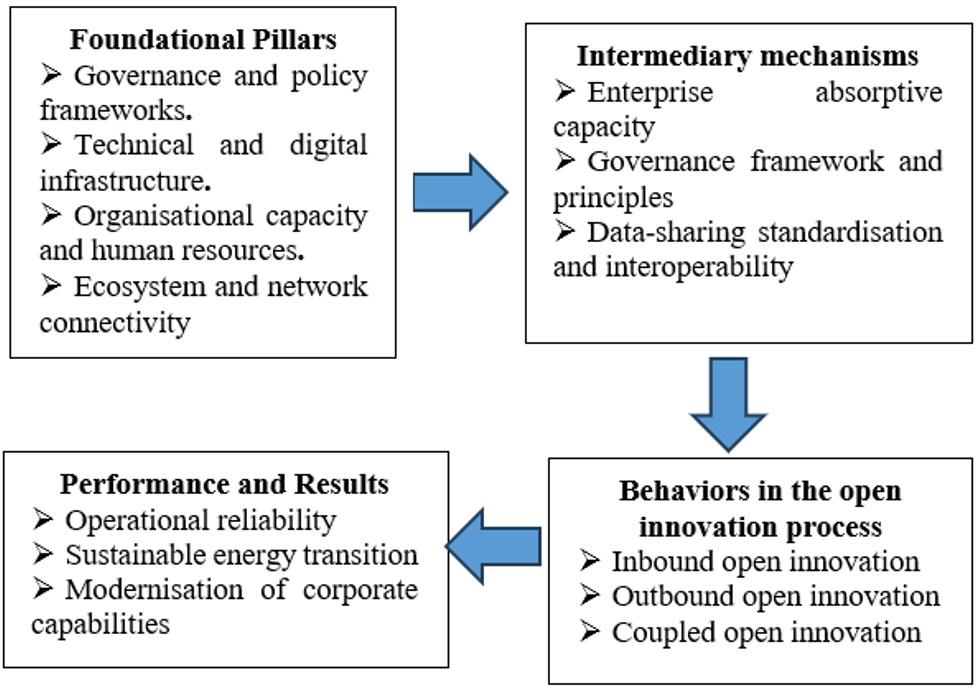
To establish a robust theoretical chain linking foundational conditions to open innovation outcomes, this study proposes a transmission mechanism model (Figure 2). The analytical framework examines causal relationships. Four pillars—governance and policy, digital infrastructure, organisational capabilities, and ecosystem networks—directly influence and foster both absorptive capacity and intellectual property governance mechanisms at the enterprise level. These intermediate capabilities, in turn, drive open innovation behaviours. Ultimately, these behaviours enhance reliability and operational efficiency metrics for enterprises within the power sector.
Figure 2 illustrates a comprehensive theoretical framework governing open innovation readiness in the power sector. This model reflects cause-and-effect relationships across four stages, drawing upon open innovation theory [14, 29, 30] and research on absorptive capacity [31]. Initially, input factors lay the foundation for readiness, comprising four structural pillars (Governance & Policy, Digital Infrastructure, Organisational Capabilities, and Ecosystem Networks) that establish necessary organisational prerequisites. These inputs directly influence mediating mechanisms, such as firm-level absorptive capacity, intellectual property governance frameworks, and data-sharing processes. Once activated, these capabilities facilitate three operational modes within the open innovation process: sourcing knowledge inputs, transferring technology outputs, and co-creation. Ultimately, these open innovation activities drive operational performance, evidenced by measurable improvements in operational reliability (metrics such as SAIDI, SAIFI, and grid loss rates) and support for the long-term sustainable energy transition.
Figure 2. Transmission mechanism model
2.4 Theoretical link between open innovation readiness and operational metrics in the electric power industry
According to Open Innovation theory [14, 25], enterprises seeking to survive in today’s volatile and rapidly evolving technological landscape cannot rely solely on internal R&D resources; they must also actively leverage internal and external knowledge flows to drive innovation. However, the successful adoption and application of open technological knowledge depend heavily on an organization's absorptive capacity and the readiness of its digital infrastructure [20, 25].
In the specialised electric power sector, a corporation cannot effectively absorb or integrate complex external open technology solutions if its internal technical infrastructure is rudimentary, outdated, and prone to frequent failures that disrupt power supply. Consequently, stabilising the system and minimising power supply interruption metrics (SAIDI, SAIFI) serve as prerequisites. A trend of continuous improvement in these operational metrics demonstrates that the enterprise has established the necessary technical foundation and digital infrastructure, thereby creating a favourable environment for adopting, piloting, and commercialising open innovation solutions from ecosystem partners [20, 25].
3.1 Analytical framework
Based on the policy and theoretical foundations presented, this paper develops an analytical framework to explain the relationship between the institutional environment, the underlying conditions within the organisation, and EVN's readiness for open innovation. Accordingly, national policies on science, technology, innovation, digital transformation and the development of the electricity sector act as external drivers, providing direction and an institutional environment for the organisation’s innovation process. On this basis, EVN has progressively established foundational conditions through digital transformation, expanded cooperation, human resource development, knowledge management and the modernisation of its management practices. The level of development of these conditions reflects the organisation’s readiness to implement open innovation, thereby contributing to improved operational efficiency, enhanced customer service quality, and support for the energy transition.
This analytical framework forms the basis for selecting the content to be analysed in EVN’s annual reports for the 2015–2025 period, assessing the organisation’s readiness for open innovation from the perspectives of governance and organisational development.
Table 4. Analytical framework for assessing readiness for open innovation at EVN
|
Component Analysis |
Content of Analysis |
Data Sources in EVN’s Annual Report |
|
Policy context |
Resolution 57-NQ/TW; the 2025 Law on Science, Technology and Innovation; the 8th Power Development Plan |
Policy documents and strategic directions for the electricity sector |
|
Digital Transformation |
Digital platforms, data, AI, BIM, UAVs, EVNConnect |
The section on digital transformation and commercial operations in the report. |
|
Open collaboration |
International cooperation, technology transfer, JETP, IAEA, BESS, HVDC |
International Cooperation section |
|
Knowledge management |
E-learning, expert training, expert exchanges |
Human Resources Development and Training Section |
|
Modernising governance |
Restructuring, digital governance, corporate culture, OECD practices |
Corporate Governance and Restructuring |
|
Intermediary mechanisms |
Data-driven approaches, automation, knowledge sharing, cross-organisational coordination |
Synthesis of evidence from foundational conditions |
|
Intermediate outcomes |
Electronic transactions, smart meters, CMIS 4.0, online services |
Commercial and customer services |
|
Operational outcomes |
SAIDI, SAIFI, MAIFI, electricity losses, commercial electricity |
EVN Operational Indicators Table |
Based on the theoretical framework and research objectives, this paper develops an analytical framework with five pillars that reflect the foundational conditions for open innovation in the electricity sector. For each pillar, the study identifies analytical questions and the evidence to seek in EVN’s annual reports to assess readiness for open innovation. Table 4 summarizes five analytical pillars, their corresponding analytical questions, and the evidence to be sought within EVN’s annual reports to assess the organization’s readiness for open innovation.
3.2 Data and research methods
3.2.1 Data
The study utilises secondary data collected from EVN’s publicly available reports. The primary data sources comprise the annual reports published by EVN between 2015 and 2025, with the 2024 and 2025 EVN Annual Reports selected as the key data sources for detailed coding and analysis, as they most comprehensively reflect content relating to digital transformation, science and technology, international cooperation, human resource development, corporate governance and electricity business operations.
For years in which annual reports have not been fully published, or where certain indicators have not been presented consistently, the study supplements the information with data from summary reports, thematic reports on digital transformation, science and technology, and other publicly available EVN documents to improve data completeness and comparability.
Because the data source consists of the company’s officially published documents, indicators and presentation formats vary across years and are not entirely consistent. Consequently, this study does not treat the dataset as a complete, continuous time series for 2015–2025, nor does it apply time-series regression analysis methods. Instead, the paper employs a content analysis approach combined with evidence-based comparison by phase to identify trends in the development of the enabling conditions for open innovation. This approach aligns with the study’s objective of assessing EVN’s readiness through qualitative evidence and operational indicators published in the annual reports.
Table 5 shows that the study uses a combination of policy, qualitative, and quantitative data from EVN’s annual reports. Because indicators relating to open innovation have not been published consistently over time, this paper does not use regression analysis; instead, it applies content analysis, an evidence matrix, and trend analysis using Excel.
Table 5. Data sources used in the study
|
Data Group |
Phase |
Content Analysed |
Purpose |
|
Policy documents |
2023–2025 |
Guidelines on science, technology, innovation, digital transformation and modernisation of the electricity sector |
Development of a policy framework |
|
EVN Annual Report |
2015–2025 |
Digital transformation, international cooperation, human resource development, corporate governance and production and business operations |
Primary data sources |
|
Operational Targets |
2018–2024 |
SAIDI, SAIFI, MAIFI, electricity loss ratio, commercial electricity |
Operational trend analysis |
|
Customer service indicators |
2020–2025 |
Electronic transactions, smart meters, online electricity services, time to connect |
Analysis of interim results |
|
Qualitative Evidence |
2015–2025 |
AI, BIM, UAVs, EVNConnect, JETP, IAEA, e-learning, digital governance and innovation activities |
Development of an evidence matrix |
Source: Compiled by the author
3.2.2 Research methodology
The study uses content analysis, descriptive statistics, and trend analysis based on secondary data from EVN’s annual reports for 2015–2024. Content analysis synthesises and codes information into thematic categories central to open innovation. Concurrently, quantitative indicators (such as SAIDI, SAIFI, MAIFI, and power loss rates) are analysed to elucidate the modernisation of the power utility's operational processes. Notably, the linear trend lines and R² coefficients shown in the charts serve solely as visual tools to describe historical trends; they do not constitute econometric regression models intended to imply causality or support extrapolative forecasting.
The content analysis process used deductive coding, in which the initial coding categories were established based on the study's theoretical and analytical frameworks. The four main coding categories include: (i) digital transformation and technology adoption; (ii) open collaboration; (iii) knowledge management and human resource development; and (iv) modernisation of governance and a culture supportive of innovation. Indicators relating to customer service and operational performance were not considered as a constituent pillar of readiness. However, they were used as a cross-referenced evidence base to identify the co-occurrence between the formation of foundational conditions and the process of modernising EVN’s operations.
An indicator is a specific activity, programme, project, governance mechanism or target presented in EVN’s public reports and documents. An item is selected as evidence when it demonstrates at least one of the following elements: a specific activity or programme; technology or solutions that have been researched, piloted or implemented; participating entities or partners; the scope or timeframe of implementation; and identifiable outcomes or implementation status. Statements of a general, guiding nature, without information on activities, entities, scope or implementation status, shall not be used as independent evidence of the extent to which foundational conditions have been established.
The coding process was carried out in three steps. Firstly, the documents were read, and passages of information related to the research content groups were extracted. Secondly, each piece of evidence was compared against the operational definitions of the coding groups and classified according to four underlying conditions. A piece of evidence may be assigned to multiple coding groups when it simultaneously reflects multiple aspects; for example, an international training cooperation programme may be coded under both the ‘open cooperation’ and ‘knowledge management’ groups. Thirdly, the evidence was organised into four phases: 2015–2018, 2019–2021, 2022–2023 and 2024–2025 to identify changes in the focus and scope of the foundational conditions over time. Activities that recur across multiple reports but show no change in content or implementation status are recorded only once within each analysis phase.
Following the initial coding round, the evidence was reviewed and cross-referenced against the original documents to verify consistency between the extracted content, coding groups and interpretations within the study. The study did not use keyword frequency or the number of published activities to calculate a readiness score, as mention frequency in reports may also be influenced by report structure and the organisation’s communication priorities. Consequently, the analysis focuses on the content, nature and significance of the evidence, rather than treating publication frequency as a direct measure of EVN’s open innovation capacity.
Because data on open innovation in annual reports are predominantly qualitative, and quantitative indicators are not consistently published year on year, the study does not use regression models or econometric methods. Instead, the paper uses a process-tracing approach to identify logical links between foundational conditions—such as digital transformation, open collaboration, knowledge management, and governance modernisation—and operational trends such as SAIDI, SAIFI, electricity losses, and commercial electricity sales. This approach facilitates the analysis of the co-evolution between the formation of the innovation foundation and operational improvements, but does not aim to establish a direct causal relationship. Table 6 systematises the qualitative evidence extracted from EVN’s annual reports across the four groups of foundational conditions. This evidence demonstrates that EVN’s modernisation process does not occur in isolation within individual activities but unfolds simultaneously across the dimensions of digital technology, open collaboration, knowledge management and corporate governance.
Table 6. Evidence matrix on the foundational conditions for open innovation at Vietnam Electricity Group (EVN)
|
Phase |
Focus of Transformation |
Key Evidence |
|
2015–2018 |
Digitalisation of services and initial improvements to governance |
Online e-services; application of the Fourth Industrial Revolution; workforce training; international cooperation; corporate restructuring |
|
2019–2021 |
Digital transformation in production, business operations and customer service |
Theme: “Digital transformation within EVN”; electronic transactions; e-learning; cooperation on renewable energy; governance innovation |
|
2022–2023 |
Strengthening the digital foundation and technological cooperation |
EVNConnect; completion of digital transformation tasks; digital customer services; COP26/JETP cooperation; expert development; restructuring |
|
2024–2025 |
Transition to a deeper open innovation platform |
AI; BIM; UAVs; digital signatures; e-invoicing; CMIS 4.0; smart meters exceeding 95 per cent; electronic transactions exceeding 99 per cent; JETP; IAEA; hydrogen; ammonia; BESS; HVDC; smart grids; digital governance; NSMO; OECD best practices |
The evidence matrix shows that from 2015 to 2018, EVN primarily focused on digitalising services and improving operational efficiency; by 2024–2025, the focus had expanded to include AI, data, smart meters, international cooperation on energy technology, and digital governance. Based on the coding process outlined above, the evidence has been synthesised according to the four development phases as presented in Table 6. This matrix is not a quantitative measure of readiness, but is used to identify changes in the focus, scope and content of the enabling conditions for open innovation at EVN.
4.1 Evidence of digital transformation
An analysis of EVN’s annual reports reveals that digital transformation is a key technical enabler for open innovation. In the electricity sector, the ability to absorb, integrate, and utilise external knowledge and technology depends heavily on data infrastructure, digital platforms, connectivity systems, and information-processing capabilities. EVN has implemented a roadmap to become a digital enterprise by digitising numerous management, operational and business processes within the electricity sector. Reports for the 2024–2025 period highlight numerous applications such as UAVs, BIM, digital signatures, electronic construction logs, EVNConnect, document management systems, digital reporting, electronic invoicing, data standardisation, AI applications and enhanced cybersecurity. These tools improve internal governance efficiency while laying the foundation for data sharing and coordination across the entire group. By mid-2025, EVN announced that over 99 per cent of transactions were carried out electronically and that smart meter penetration had exceeded 95 per cent. This demonstrates that digital transformation has expanded from internal administration to business operations and customer service. Smart meters also facilitate the collection of electricity consumption data, support load management, enable the development of smart energy services and lay the foundations for a smart grid.
From an open innovation perspective, this evidence suggests that EVN has established several technical conditions for adopting and applying external knowledge and technology. However, these data merely reflect the extent of technology deployment and process digitalisation; they are not sufficient to draw direct conclusions about the effectiveness of open innovation. Therefore, within the scope of this paper, digital transformation is treated as a foundational condition rather than conclusive evidence of open innovation outcomes.
4.2 Evidence of open collaboration
Alongside digital transformation, open collaboration is a key factor enabling EVN to access external knowledge, technology and resources to support the modernisation of the electricity sector. Against the backdrop of the energy transition, the requirements for smart grids, emissions reduction, energy security, and new technologies exceed the capabilities of a single enterprise, requiring EVN to expand its cooperation with international organisations, technology companies, regulatory bodies, and regional cooperation networks.
An analysis of the annual report for the 2024–2025 period shows that EVN has expanded its cooperation across numerous fields, including the energy transition, digital transformation, AI, hydrogen, ammonia, BESS, smart grids, HVDC transmission and nuclear power. At the same time, EVN actively participates in international cooperation mechanisms such as the JETP, the IAEA, ASEAN, the GMS, and HAPUA to access technology, technical standards, governance expertise, and financial resources to support electricity system modernisation. Notably, the collaboration with the IAEA on training human resources for the nuclear power sector shows that open cooperation extends beyond technology transfer to long-term capacity building through knowledge acquisition, technical standards, and international expertise. From an open innovation perspective, these collaborative activities reflect EVN’s trend of gradually expanding its network of connections within the innovation ecosystem to enhance technological capabilities and support the energy transition.
However, annual reports primarily document the existence of collaborative activities without providing sufficient information on mechanisms for joint technology development, knowledge sharing or the specific outcomes of individual cooperation programmes. Therefore, this study treats open collaboration as a foundational condition for open innovation, rather than direct evidence of the innovation process's effectiveness.
4.3 Evidence on knowledge management and human resource development
An analysis of EVN’s annual reports reveals that human resource development and knowledge management are key pillars in the enterprise’s modernisation process. Alongside technological investment, EVN prioritises building learning capacity through training, knowledge sharing, and developing a team of experts to enhance its ability to adopt, adapt to, and apply new technologies.
For 2024–2025, the annual reports document numerous activities, such as developing an online training system, specialist training, standardising training programmes, collaborating with educational institutions and international organisations, exchanging technical experts, and building capacity for management and technical staff. In particular, preparing human resources for the Ninh Thuận 1 Nuclear Power Project, with support from the IAEA and international partners, shows that EVN is absorbing external knowledge, technical standards, and management experience to build in-house capabilities to support new technologies. From an open innovation perspective, knowledge management bridges external knowledge and internal innovation capacity. Collaborative training activities, expert exchanges and the standardisation of competencies help EVN enhance its capacity for knowledge absorption, creating conditions for knowledge and technology to be received, transformed and applied to management and operations, as well as to the development of new solutions.
However, the currently available data primarily reflects the scale and direction of training programmes and does not provide sufficient indicators to assess effectiveness, such as the extent of knowledge transfer, learners’ capacity to absorb knowledge, or the impact of training on innovation outcomes. Therefore, within the scope of this paper, these activities are regarded as evidence of establishing a knowledge management framework, but do not yet constitute direct evidence of the effectiveness of open innovation.
4.4 Evidence of governance modernisation
An analysis of EVN’s annual reports shows that governance modernisation is a key organisational condition supporting open innovation. Alongside digital transformation, technological collaboration, and human resource development, EVN has implemented numerous activities to reform its governance model, enhance operational efficiency, and create a more conducive environment for adopting, coordinating, and implementing innovative ideas. For 2024–2025, the annual reports note that EVN will continue to restructure the organisation, strengthen decentralisation and devolution of authority linked to accountability, promote information transparency, and gradually adopt corporate governance principles in line with OECD best practice. At the same time, EVN is accelerating digital transformation in governance, standardising operational processes, digitising management activities, and developing a corporate culture that builds a professional, unified working environment better adapted to the demands of the innovation process. From an open innovation perspective, modernising governance helps EVN improve coordination between internal units and expand connections with external stakeholders within the innovation ecosystem. A transparent governance system, with clear mechanisms, flexible coordination processes, and an organisational culture that encourages learning, will create favourable conditions for the organisation to absorb knowledge, test new solutions, and implement technology cooperation programmes.
However, annual reports primarily reflect policies and governance activities already implemented; they do not provide sufficient direct indicators of the extent of cultural change towards innovation, the level of cross-unit collaboration, or the effectiveness of new governance mechanisms. Therefore, within the scope of this paper, governance modernisation is treated as evidence of establishing organisational conditions that support open innovation, but not as direct evidence of innovation effectiveness.
4.5 Comparison with operational and service outcomes
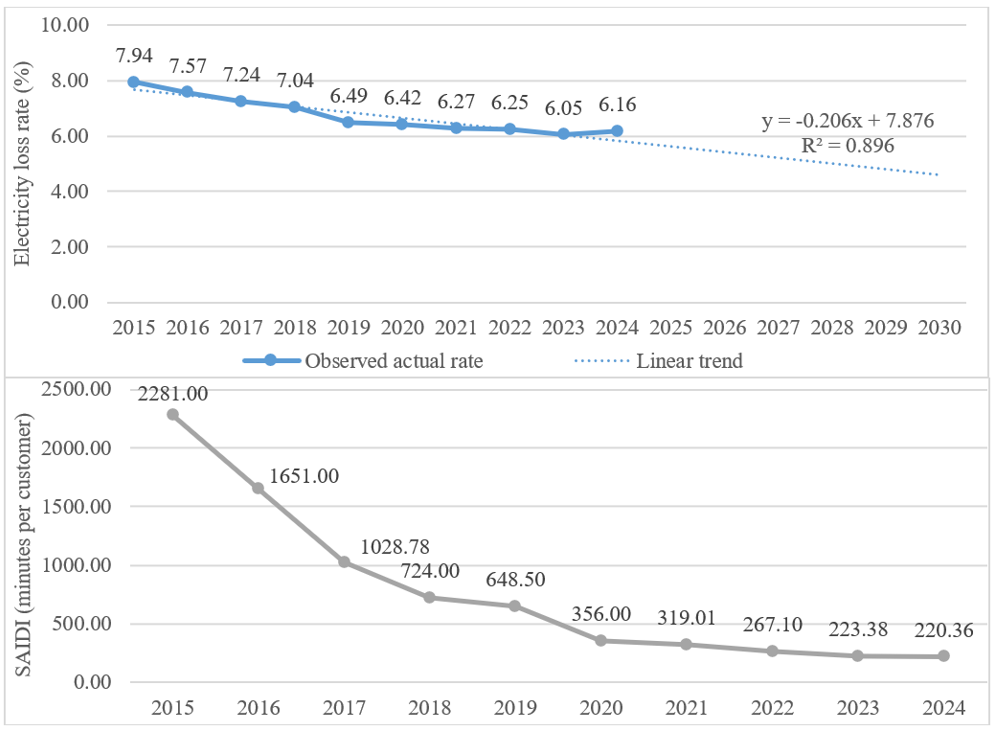
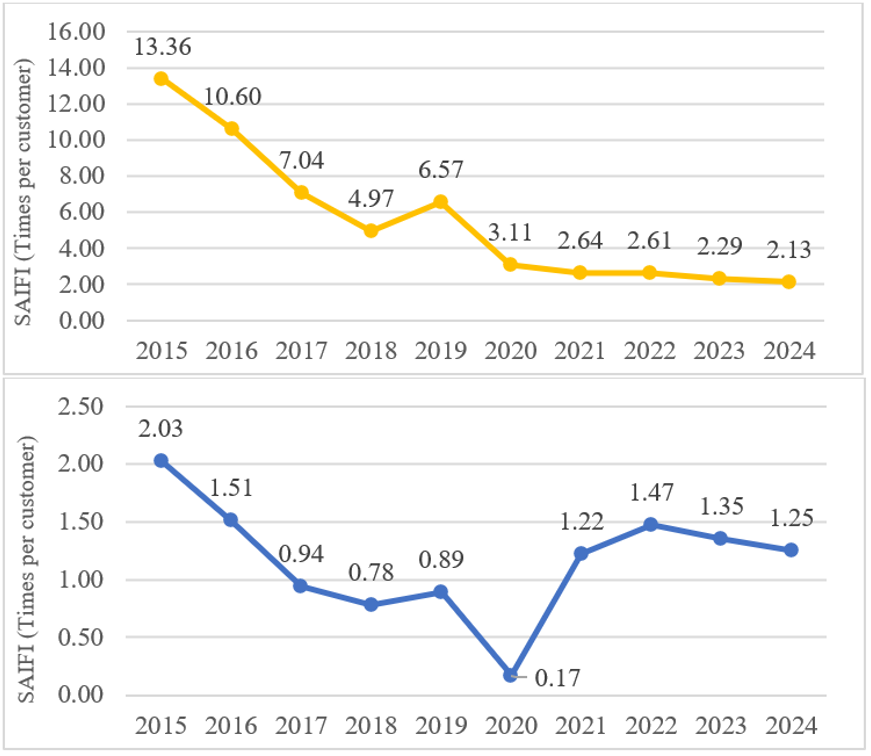
Operational indicators show that EVN has demonstrated a clear trend toward improved reliability in electricity supply and technical efficiency during 2015–2024. The SAIDI index fell from 2,281 minutes per customer in 2015 to 648.5 minutes in 2019 and is projected to continue falling to 220.36 minutes in 2024. The SAIFI index fell from 13.36 times per customer in 2015 to 2.13 times per customer in 2024. The electricity loss rate also fell from 7.94 per cent in 2015 to 6.16 per cent in 2024. These results show that EVN’s operational modernisation has significantly improved electricity supply quality and technical efficiency.
These improvements can be attributed to EVN’s efforts to accelerate the adoption of digital technology and modernise its operational methods. The 2019 report shows that EVN commissioned 57 control centres and implemented remote control of 625 unmanned 110–220 kV substations, accounting for 75.6 per cent of the total. Furthermore, EVN is progressively adopting UAVs, surveillance cameras and operational data analysis in the management, maintenance, repair and monitoring of transmission lines. These activities reflect a shift from traditional operational methods towards data-driven operations, automation and modern monitoring technology.
Figure 3 illustrates trends in electricity loss rates and the SAIDI index from 2015–2025, showing changes in both electricity losses and the average duration of power supply interruptions. Meanwhile, Figure 4 presents the corresponding trends for the SAIFI and MAIFI indices, helping to identify and clarify the frequency of sustained and momentary power supply interruptions during the same period.
While improvements in SAIDI, SAIFI, and power loss rates indicate a marked enhancement in EVN’s operational reliability, this article examines these results through the lens of theories of digital readiness and organisational absorptive capacity [25].
From an open innovation perspective, these operational outcomes do not directly measure open innovation behaviours such as the number of collaborative R&D projects with universities, intellectual property licensing agreements, or joint ventures within the ecosystem. Instead, they serve as significant empirical proxies. The transition from manual operations to automation, evidenced by 75.6% of 110–220 kV substations operating unmanned and the deployment of UAVs and AI-powered cameras, demonstrates EVN’s growing mastery of, and integration of, digital technology into its core systems. This provides empirical evidence of growing digital absorptive capacity and the readiness of technical infrastructure prerequisites for the enterprise to adopt, assimilate, and scale external innovation solutions.
However, the empirical analysis also identifies methodological boundaries: improvements in SAIDI, SAIFI, and power loss rates are influenced by various external factors, such as the scale of grid investment, weather conditions, the power generation mix, load profiles, and internal technical management policies. Therefore, these indicators are examined purely as indirect corroborating evidence of the trend toward platform modernisation, rather than as evidence demonstrating a direct causal relationship between open innovation and operational outcomes.
The analysis shows that EVN's digital transformation is shifting from operational digitisation to developing data platforms, technological collaboration, and knowledge management, thereby facilitating open innovation. In the electricity sector, open innovation is not necessarily reflected in start-up activities or the commercialisation of inventions. Instead, it is primarily manifested through technological collaboration, green finance, the energy transition, smart grids, energy storage, nuclear power, hydrogen, HVDC, and AI applications. Resolution No. 57-NQ/TW was not the direct cause of the outcomes achieved during the phase (2015–2024), as it was issued at the end of 2024. Instead, the research findings indicate that EVN gradually built a foundation for digital transformation, technological collaboration, knowledge management, and modernised governance during the preceding period; Resolution 57 serves as the policy framework and driving force for the enterprise to continue accelerating innovation and digital transformation from 2025 onwards.
Based on the research findings, this article proposes three groups of governance implications. These are:
1. Refine the open innovation governance mechanism. EVN needs to refine its open innovation governance mechanism by strengthening technology partnerships and standardising frameworks for data sharing and intellectual property management. To overcome institutional barriers facing state-owned enterprises, the EVN Board of Members should collaborate with the Ministry of Industry and Trade and the Ministry of Science and Technology to issue a legal framework for the controlled testing of new technologies. At the same time, the legal framework governing the allocation of intellectual property rights in collaborative research and development activities must be standardised.
2. Develop database platforms and digital infrastructure aligned with the operational goals of power sector entities. It is essential to continue developing data platforms and driving digital transformation in direct alignment with the power sector's specific operational objectives—namely, reducing SAIDI and SAIFI indices, minimising power losses, and enhancing customer service quality. Operational metrics serve as proxies for technical readiness. IT systems within EVN’s member enterprises need to develop open digital platforms that securely connect with external partners to enable grid automation and smart system management.
3. Strengthen knowledge absorption capacity and ecosystem development. EVN needs to strengthen its knowledge absorption capacity through continuous training, e-learning, international cooperation, and networks that connect with experts worldwide. At the same time, EVN needs to establish an Open Innovation Centre for the power sector as a focal point for ecosystem connections, expand training in open knowledge management, and leverage international networks to jointly develop new technologies tailored to the power industry. Table 7 presents a matrix linking policy recommendations to their corresponding implementation measures, clarifying the transition process and how the proposed recommendations translate into action.
Table 7. Matrix cross-referencing policy recommendations and implementation measures
|
Recognition Gap |
Objectives and Evaluation Indicators |
Policy Recommendation Group |
|
The institutional environment for enterprises and the state remains rudimentary, lacking mechanisms for experimentation, risk-sharing frameworks, and provisions on intellectual property rights for R&D partners. |
Develop and issue a framework for a regulatory sandbox, standardisation, and open data sharing. Establish rights regarding the division of intellectual property ownership. |
Refine governance mechanisms |
|
Lack of a digital infrastructure foundation to integrate complex external solutions (e.g., AI-based dispatch, BESS). |
Deploying a digital data platform for the power grid, smart meters, and automated dispatch. |
Developing digital platforms aligned with operational goals. |
|
Collaboration among industry, academia, and the government remains limited, lacking structural governance mechanisms and a central coordinating body for open innovation. |
Establish an open innovation centre for the power sector and R&D projects based on a three-pillar model. |
Enhancing absorptive capacity and the ecosystem network |
The research findings indicate that EVN has progressively established the foundational conditions for open innovation through digital transformation, technological collaboration, human resource development, knowledge management and the modernisation of governance. Evidence from annual reports reflects a shift from process digitisation to building data platforms, expanding collaboration, and strengthening governance capabilities. In the context of Resolution No. 57-NQ/TW, these foundations enable EVN to continue driving innovation and digital transformation after 2025.
From an academic perspective, the study proposes an approach to assessing readiness for open innovation based on publicly available corporate data, using four groups of foundational conditions - digital transformation, open collaboration, knowledge management, and modernisation of governance - combined with operational indicators to track development trends. This approach contributes to the empirical evidence on open innovation in Vietnamese electricity sector enterprises.
The study still has some limitations. Firstly, the data were collected from annual reports and publicly available documents and therefore depend on the scope of information EVN discloses. Secondly, the study does not directly measure open innovation through surveys or interviews. Thirdly, the study does not test the causal relationship between the foundational conditions and operational outcomes. Finally, as this is a case study of EVN, the findings cannot yet be generalised to all enterprises in Vietnam’s electricity sector. Future research could extend the scope to include power generation, transmission and distribution companies, whilst incorporating surveys or quantitative methods to examine the relationships between enabling conditions and open innovation in greater depth.
[1] Prime Minister of Vietnam. (2023). Decision approving the National Power Development Plan for the 2021–2030 period, with a vision to 2050. Vietnam: Prime Minister of Vietnam, pp. 1-69. (in Vietnamese). https://datafiles.chinhphu.vn/cpp/files/vbpq/2023/5/500-ttg.signed.pdf.
[2] Prime Minister of Vietnam. (2025). Decision approving the revised National Power Development Plan for the 2021–2030 period, with a vision to 2050. Vietnam: Prime Minister of Vietnam, pp. 1-24. (in Vietnamese). https://congbao.chinhphu.vn/van-ban/quyet-dinh-so-768-qd-ttg-44752/56097.htm.
[3] Communist Party of Vietnam, Politburo. (2024). Resolution No. 57-NQ/TW on breakthroughs in science and technology development, innovation and national digital transformation. Vietnam: Communist Party of Vietnam, Politburo, pp. 1-10. (in Vietnamese). https://xaydungchinhsach.chinhphu.vn/toan-van-nghi-quyet-ve-dot-pha-phat-trien-khoa-hoc-cong-nghe-doi-moi-sang-tao-va-chuyen-doi-so-quoc-gia-119241224180048642.htm.
[4] Vietnam Electricity (EVN). (2024). Annual Report 2024-2025. https://www.evn.com.vn/d/vi-VN/news-pdf/Bao-cao-thuong-nien-EVN-Annual-Report-2024-2025-60-50-506384.
[5] Vietnam Electricity (EVN). (2015). Annual Report 2015. Vietnam Electricity (EVN), pp. 1-23. https://evn.com.vn/UserFile/User/tcdl/BCTN%202015_Fi_Final.pdf.
[6] Vietnam Electricity (EVN). (2016). Vietnam Electricity Annual Report 2016. en.evn.com.vn/userfile/files/AnnualReport2016-20241115110714339.pdf.
[7] Vietnam Electricity (EVN). (2017). Annual Report 2017. https://en.evn.com.vn/userfile/files/AnnualReport2017-20241115110714620.pdf.
[8] Vietnam Electricity (EVN). (2018). Annual Report 2018. https://evn.com.vn/userfile/User/tcdl/files/2019/8/EVNAnnualReport2018.pdf.
[9] Vietnam Electricity (EVN). (2021). Annual Report 2021. https://www.evn.com.vn/d6/news/Bao-cao-thuong-nien-EVN-2021-Annual-Report-2021-2-50-29343.aspx.
[10] Vietnam Electricity (EVN). (2022). Annual Report 2022. https://en.evn.com.vn/d6/news/Annual-Report-2022-6-13-3727.aspx.
[11] Vietnam Electricity (EVN). (2022). Annual Report 2022-2023. https://www.evn.com.vn/d6/news/Bao-cao-thuong-nien-EVN-2022-2023-Annual-Report-2022-2023-2-50-124085.aspx.
[12] Abulrub, A.H.G., Lee, J. (2012). Open innovation management: Challenges and prospects. Procedia - Social and Behavioral Sciences, 41: 130-138. https://doi.org/10.1016/j.sbspro.2012.04.017
[13] National Assembly of Vietnam. (2025). Law No. 93/2025/QH15 on Science, Technology and Innovation. Vietnam: National Assembly of Vietnam, pp. 1-52. (in Vietnamese). https://vanban.chinhphu.vn/?pageid=27160&docid=214603.
[14] Chesbrough, H.W. (2003). Open Innovation: The New Imperative for Creating and Profiting from Technology. Boston, MA: Harvard Business School Press.
[15] Dubickis, M., Gaile-Sarkane, E. (2017). Transfer of know-how based on learning outcomes for development of open innovation. Journal of Open Innovation: Technology, Market, and Complexity, 3(1): 1-19. https://doi.org/10.1186/s40852-017-0053-4
[16] Ryszko, A., Szafraniec, M. (2022). Mapping the landscape of the business model and open innovation scientific field to set proposals for directions of future research. Journal of Open Innovation: Technology, Market, and Complexity, 8(3): 150. https://doi.org/10.3390/joitmc8030150
[17] Valeeva, Y., Kalinina, M., Sargu, L., Kulachinskaya, A., Ilyashenko, S. (2022). Energy sector enterprises in digitalization program: Its implication for open innovation. Journal of Open Innovation: Technology, Market, and Complexity, 8(2): 81. https://doi.org/10.3390/joitmc8020081
[18] Fang, P., Wan, L., Fang, W. (2023). The choice of cooperative governance mechanism in open innovation projects under the synergy of the electricity–carbon market. Energies, 16(17): 6110. https://doi.org/10.3390/en16176110
[19] Borda, F., Zangara, G., Coppoletta, F.N., Filice, L. (2025). Experiencing open innovation in academia: The case of the University of Calabria. Procedia Computer Science, 253: 2990-2999. https://doi.org/10.1016/j.procs.2025.02.023
[20] Alvarez-Meaza, I., Pikatza-Gorrotxategi, N., Rio-Belver, R.M. (2020). Sustainable business model based on open innovation: Case study of Iberdrola. Sustainability, 12(24): 10645. https://doi.org/10.3390/su122410645
[21] Bigliardi, B., Filippelli, S. (2022). Sustainability and open innovation: Main themes and research trajectories. Sustainability, 14(11): 6763. https://doi.org/10.3390/su14116763
[22] IEA. (2017). Digitalization & energy. https://www.iea.org/reports/digitalisation-and-energy.
[23] IEA. (2023). Electricity Grids and Secure Energy Transitions. https://www.iea.org/reports/electricity-grids-and-secure-energy-transitions.
[24] West, J., Bogers, M. (2014). Leveraging external sources of innovation: A review of research on open innovation. Journal of Product Innovation Management, 31(4): 814-831. https://doi.org/10.1111/jpim.12125
[25] Bux, A., Zhu, Y., Devi, S. (2025). Enhancing organizational agility through knowledge sharing and open innovation: The role of transformational leadership in digital transformation. Sustainability, 17(15): 6765. https://doi.org/10.3390/su17156765
[26] Jonek-Kowalska, I., Rupacz, S., Michalak, A. (2025). Open innovation for green transition in energy sector: A literature review. Energies, 18(24): 6451. https://doi.org/10.3390/en18246451
[27] Wu, J., Nachiangmai, S. (2024). Relationship between open innovation and innovation performance within high-tech firms: The mediating role of knowledge management capability. Journal of Infrastructure, Policy and Development, 8(5): 3887. https://doi.org/10.24294/jipd.v8i5.3887
[28] Yu, Z., Zhao, K., Yu, H. (2025). Enterprise openness and open innovation performance: The dual mediation of knowledge management capability and organizational learning. Sustainability, 17(22): 9993. https://doi.org/10.3390/su17229993
[29] Gupta, A.K., Dey, A.R., Shinde, C., et al. (2016). Theory of open inclusive innovation for reciprocal, responsive and respectful outcomes: Coping creatively with climatic and institutional risks. Journal of Open Innovation: Technology, Market, and Complexity, 2(3): 1-15. https://doi.org/10.1186/s40852-016-0038-8
[30] Lee, J., Min, J., Lee, H. (2016). The effect of organizational structure on open innovation: A quadratic equation. Procedia Computer Science, 91: 492-501. https://doi.org/10.1016/j.procs.2016.07.128
[31] Ramirez-Portilla, A. (2015). Which one goes well with? Exploring the link between theoretical perspectives and research contexts in open innovation research. Procedia - Social and Behavioral Sciences, 213: 1034-1039. https://doi.org/10.1016/j.sbspro.2015.11.522