
Ali Mustafa Qamar
© 2026 The author. This article is published by IIETA and is licensed under the CC BY 4.0 license (http://creativecommons.org/licenses/by/4.0/).
OPEN ACCESS
Bibliometric analysis is a quantitative research method that employs mathematical and statistical techniques to evaluate patterns within scholarly publications. It analyzes indicators such as authorship trends, institutional affiliations, research keywords, and country contributions. This study aims to conduct a comprehensive bibliometric analysis of academic research related to Saudi Vision 2030, Saudi Arabia’s national transformation program. The data for this analysis spans from 2016 to 2026 and is retrieved from the Web of Science (WoS) database to ensure high-quality and peer-reviewed sources. The bibliometric analysis was performed using R-Bibliometrix package, VOSviewer, and Microsoft Excel. The initial number of publications was 1,652 which reduced to 1,645 after removing the retractions and corrections. The number of publications showed an increasing trend with the maximum number (535) observed in 2025. As expected, Saudi Arabia appeared as the country with the most publications. Similarly, the most prolific universities are King Saud University (KSU) and King Abdulaziz University (KAU) with 260 and 246 papers, respectively. Amjad Ali published the highest number of papers (13) and Sustainability appeared as the most common source with 190 publications. The objective was to examine publication trends, identify leading authors and institutions, and map international collaboration networks associated with Vision 2030. The strongest collaborations are of Saudi Arabia with Egypt, UK, and USA. Apart from Saudi Arabia, sustainable development, renewable energy, and AI are some of the most common terms found in publication titles. Through this analysis, the study seeks to provide insights into research productivity, thematic development, and scholarly engagement with Saudi Arabia’s long-term strategic goals.
bibliometric analysis, metadata, Saudi Vision 2030, scientometric analysis
Saudi Vision 2030 was launched on April 25, 2016, under the patronage of His Royal Highness Crown Prince Mohammed Bin Salman, as a long-term national blueprint to transform the Kingdom of Saudi Arabia’s economy, society, and governance. The Vision enunciates three central pillars—a vibrant society, a thriving economy, and an ambitious nation—and seeks to reduce Saudi Arabia’s dependence on oil, diversify economic activities, and enhance public service sectors such as health, education, infrastructure, recreation, and tourism.
In just ten years since the inception of Vision 2030, Saudi Arabia has made remarkable progress towards many of its strategic goals, supported by a series of national programs and sector-specific initiatives. Achievements include major developments in renewable energy, digital transformation, women’s empowerment, tourism growth, and healthcare modernization. These transformations have stimulated a corresponding rise in academic and policy research aligned with Vision 2030’s objectives, both within Saudi Arabia and internationally.
Meanwhile, bibliometric analysis—sometimes also known as scientometric analysis—has become an increasingly powerful tool for evaluating and mapping the characteristics, structure, and evolution of scholarly literature. By quantitatively examining bibliometric indicators such as publication counts, citation patterns, authorship networks, and keyword co-occurrence, researchers can assess the trends, impact, and collaboration dynamics within a specific research domain. Databases such as Scopus, Web of Science (WoS), and PubMed provide structured metadata that facilitate this kind of quantitative assessment.
Applying bibliometric methods to the context of Saudi Vision 2030 can deliver valuable insights into how the academic community has engaged with the Vision’s goals, which disciplines have contributed most actively, and how research collaboration within and beyond Saudi Arabia has evolved. Such analysis not only brings out emerging themes and influential contributors but also identifies research gaps that policymakers, funding agencies, and academic institutions can address to more closely align scientific research with national development priorities.
Bibliometric analysis can support evidence-based environmental planning by showing how research has developed over time and which topics, institutions, and areas of expertise have received greater attention. This information can help planners and policymakers identify emerging environmental issues, research gaps, and areas where additional research may be needed. It can also show the institutions and research groups that are active in specific areas and help identify opportunities for collaboration. In this way, bibliometric evidence can complement other sources of information used in environmental planning and policy development.
Research landscape mapping can also help assess how scientific research is related to the national priorities of Saudi Vision 2030. By examining research themes, publication trends, and institutional contributions, it is possible to identify areas receiving substantial attention and those where further research may be needed. In the context of sustainability, this includes topics such as renewable energy, sustainable development, environmental management, healthcare, and technological development. Such mapping provides a broader view of whether research activity is developing in line with the priorities of the national transformation program.
Understanding the research ecosystem surrounding Vision 2030 is also important for environmental planners and policymakers. The research landscape shows which topics are being studied, which institutions are active, and where national and international research collaborations occur. This information can help identify available research expertise and areas that may require additional support. It can also provide a useful background for setting research priorities and assessing how the scientific community is responding to the broader sustainability goals of Vision 2030.
Therefore, this study conducts a comprehensive bibliometric study of scholarly publications on Saudi Vision 2030 to map research trends, collaboration networks, and thematic clusters from 2016 to the present. We have employed Biblioshiny, a Shiny app for Bibliometrix [1], VOSviewer, and Microsoft Excel for our study.
The rest of the paper is organized as follows: Section 2 presents the literature review, and Section 3 explains the methodology. Section 4 presents the results of the bibliometric analysis, including publication trends, sources, authors, institutions, countries, collaboration networks, research themes, subject categories, and open access (OA) patterns. Lastly, Section 5 details the conclusion and the future work.
Saudi Vision 2030 is a comprehensive government program launched in 2016, aimed at transforming and diversifying Saudi Arabia’s economy, society, and culture in accordance with the vision of His Royal Highness Crown Prince Mohammed Bin Salman. The Vision seeks to establish Saudi Arabia as a global investment powerhouse, a center for innovation, and a leader in sustainability and social well-being.
According to the Vision 2030 Annual Report [2], ten major realization programs are currently operational, including Quality of Life, Health Sector Transformation, Housing, Privatization, and Pilgrim Experience. The Vision is presently nearing the conclusion of its second implementation phase (2021–2025), with impressive socio-economic outcomes already evident. Notably, inbound Foreign Direct Investment (FDI) exceeded USD 20 billion in the fourth quarter of 2024, while the unemployment rate fell from 12.3% in 2023 to 7% in 2024, thereby achieving the Vision 2030 target six years ahead of schedule.
In this context of rapid progress, there is a growing need to understand how academic research output aligns with the goals and priorities of Vision 2030. One robust approach for doing so is bibliometric analysis, which quantitatively examines patterns in the metadata of scholarly publications. Bibliometric studies are largely descriptive and enable researchers to evaluate the quantity, quality, and patterns of academic output—such as publication count, citation impact, and collaboration networks among authors, institutions, and nations.
Several scholars have employed bibliometric and scientometric methods to study diverse research domains within Saudi Arabia. Bengana et al. [3] performed a comprehensive scientometric analysis of 417 digital health publications retrieved from the Scopus database. Using tools such as Biblioshiny and VOSviewer, they found a growing trend of collaboration between Saudi institutions and international partners, particularly those in the United Kingdom (UK) and the United States of America (USA). However, our research focuses on all aspects of Saudi Vision 2030; therefore, the number of publications exceeds the number of data points. Furthermore, our data are obtained from the WoS database.
Similarly, Kandeel et al. [4] conducted a bibliometric study focusing exclusively on disability-related research in Saudi Arabia between 1980 and 2024. Their dataset comprised 3,080 publications indexed in Scopus, exhibiting an annual growth rate exceeding 13%. Only English-language articles were considered. A considerable finding was the average of 19 authors per publication, with a median of 6, signaling a growing trend toward large-scale collaborative research. This study is also important in the context of Vision 2030’s stress on community participation and the inclusion of people with disabilities.
In another domain, Saqlain et al. [5] conducted a scientometric analysis of fuzzy research in Saudi Arabia, analyzing 5,719 publications from 1981 to 2024, again using Scopus data. The study identified King Abdulaziz University (KAU) and King Saud University (KSU) as the most prolific institutions, while IEEE Access and MDPI journals were among the top publishing venues. Worldwide collaborations were most frequent with Canada, China, Pakistan, and India.
Alangari [6] extended bibliometric inquiry into the field of translation and interpreting research in Saudi Arabia, analyzing 180 journal articles published between 1990 and 2019, collected from Scopus and the King Fahd National Library. The analysis demonstrated a steady increase in publication activity, particularly in the final decade of the study period, indicating increasing interest in language and cultural research.
Sasikala [7] carried out a bibliometric assessment of breast cancer research in Saudi Arabia using the PubMed Central database, identifying 2,482 publications. The study showed KSU and KAU as the most productive institutions in this domain. Breast cancer continues to be a major public health issue and the fifth leading cause of cancer-related deaths in Saudi Arabia as of 2020.
Khan and Khan [8] provided context on research, innovation, and entrepreneurship in Saudi Arabia, aligned with Vision 2030. Baljoun et al. [9] studied research priorities at Umm Al‑Qura University in the context of Saudi Vision 2030. Female Master’s and PhD researchers completed a four-part questionnaire, and results were analyzed with Statistical Package for the Social Sciences (SPSS). The top priorities were Digital Citizenship, Intellectual Security, Community Partnership, and Sustainable Development. The study recommends supporting research aligned with Vision 2030 and linking academic programs to societal requirements. Alqahtani [10] analyzed 516 academic outputs published in a time span of 25 years (2000–2025). The peak in the number of articles was observed in 2024 (61).
Alqurni [11] performed a Systematic Literature Review (SLR) on the role of AI in higher education in Saudi Arabia. The papers spanned from January 2022 to February 2026 and were retrieved from both Scopus and WoS. Nevertheless, only 66 relevant papers were obtained, where 52 were published in journals indexed by both databases, and 14 were indexed only by Scopus. The most prolific journal was Sustainability. The top contributing institutions include KAU, Qassim University, and KSU.
In another related study, Mohsen and Ho [12] conducted a bibliometric study of 30 years (1991-2010) of educational research in Saudi Arabia. The journals indexed in the Social Science Citation Index (SSCI) and Science Citation Index-Expanded (SCI-EXPANDED) were considered. Although the largest number of international collaborations was with researchers in the USA, the articles co-authored with researchers in Germany were the most impactful. Of all the organizations involved, KSU produced the most articles.
Kandeel and Al-Taher [13] performed a bibliometric analysis of the top 100 most cited papers in Scopus from Saudi Arabia. The research found medicine and health sciences as the most prolific subjects. Moreover, the most frequent journals are The Lancet, Nature, Science, and The New England Journal of Medicine. The authors used VOSviewer and the Bibliometrix R package for the analysis.
Collectively, these bibliometric studies show the growing breadth and advancement of Saudi research throughout diverse scientific disciplines. However, while a variety of bibliometric analyses have examined specific research areas—ranging from digital health and disability to fuzzy systems, translation, and oncology—no previous study has undertaken a bibliometric or scientometric analysis explicitly focusing on Saudi Vision 2030 itself.
The present study, therefore, seeks to fill this gap by carrying out a comprehensive bibliometric mapping of publications directly related to Saudi Vision 2030, exploring the volume, impact, themes, and collaborative structures of this body of literature. By doing so, it aims to present a clearer picture of how scholarly research corresponds to the Vision’s strategic pillars and contributes to Saudi Arabia’s ongoing transformation.
This section details the methodology used in the bibliometric study of research on Saudi Vision 2030. The WoS Core Collection was searched using the following exact topic-search query:
TS = ("Saudi Vision") AND TS = ("2030")
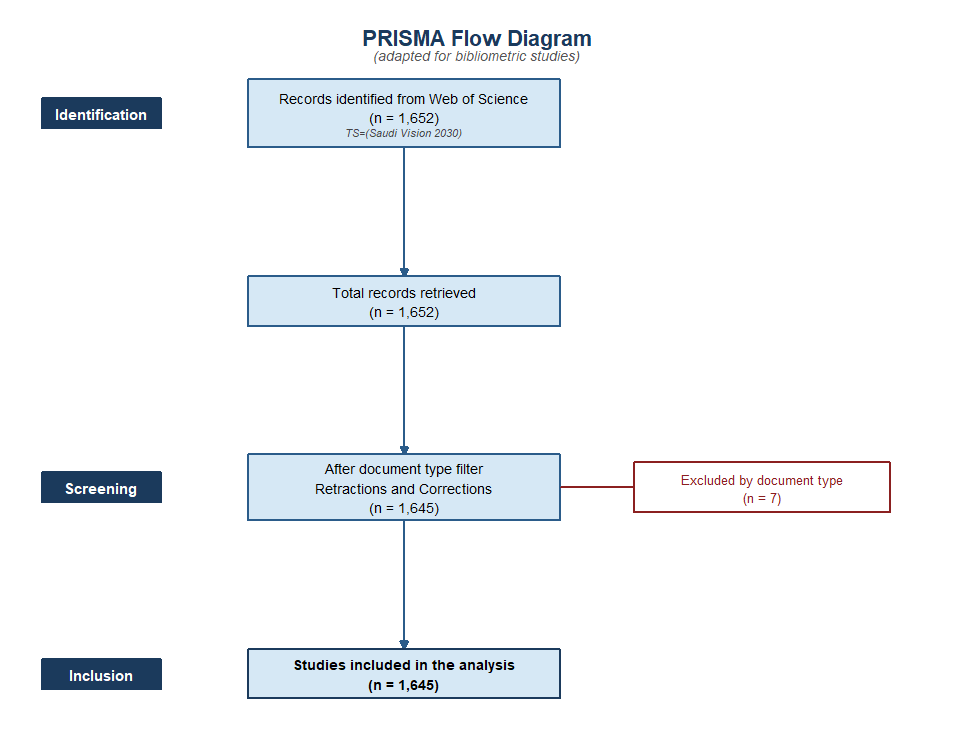
In WoS, TS represents the Topic field, which searches the title, abstract, author keywords, and Keywords Plus fields. The search was conducted on April 10, 2026, and returned 1,652 records before data cleaning. Later, five retracted publications and two corrections were systematically identified and removed during the data-cleaning phase in R, yielding a final analytical dataset of 1,645 valid articles as depicted by the Preferred Reporting Items for Systematic Reviews and Meta-Analyses (PRISMA) flow diagram in Figure 1. Furthermore, an initial analysis showed that seven papers lacked an abstract. However, since the percentage is negligible and the dataset is already quite limited, we did not remove these papers. Similarly, the corresponding author was not present in seven of the publications. The publications span from 2016, the year the Saudi Vision 2030 was launched, to 2026.
Figure 1. Flow diagram of the bibliometric research process
The records indexed in 2026 were included in the annual publication trend and life-cycle analyses. However, the database was searched on April 10, 2026, so the 2026 publication count represents only the records available during the first part of the year. Therefore, the 2026 value should be considered provisional and may increase as additional publications are indexed. Any projections involving 2026 should also be interpreted with caution, as the year is incomplete.
The publications’ metadata included authors’ names and affiliations, publication type, publication year, title, journal/conference details, total citations, keywords, keywords plus, abstracts, corresponding author, and Digital Object Identifier (DOI). We utilized two visualization and analysis tools, namely Biblioshiny and VOSviewer, along with Microsoft Excel. No major differences were observed in the results obtained by the two software programs.
In this section, we discuss the results of a detailed bibliographic analysis of publications on Saudi Vision 2030.
4.1 Publication and citation trends
We first present the annual scientific production, publication growth, citation trends, and publication life cycle / logistic growth.
The dataset consists of various document types (Articles, Editorials, Proceedings Papers, and Reviews) as mentioned in Table 1. Most of the papers are articles. Moreover, only 7.17% (118) of the publications are review papers. It is important to mention that all records were retained for analysis, regardless of the document type. The dataset, therefore, includes document types that are not original research articles, such as editorials, letters, and a book review. These records were retained because the study's objective was to examine the overall scholarly research landscape on Saudi Vision 2030. The different document types were therefore not excluded from the bibliometric analysis, although their differences should be considered when interpreting publication counts.
Table 1. Types of documents
|
Document Type |
Frequency (n) |
Percentage (%) |
|
Article |
1,363 |
82.86% |
|
Article (Early Access) |
67 |
4.07% |
|
Article (Proceedings Paper) |
4 |
0.24% |
|
Book Review |
1 |
0.06% |
|
Editorial Material |
10 |
0.61% |
|
Editorial Material (Early Access) |
1 |
0.06% |
|
Letter |
1 |
0.06% |
|
Proceedings Paper |
80 |
4.86% |
|
Review |
115 |
6.99% |
|
Review (Early Access) |
3 |
0.18% |
|
Total |
1,645 |
100% |
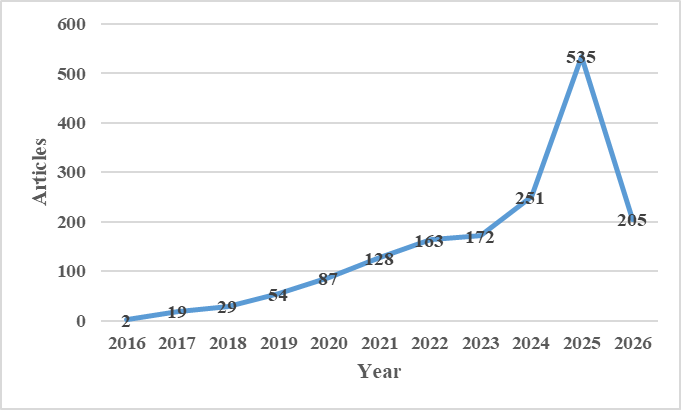
As depicted in Figure 2, the papers are published across 702 sources over an 11-year period (2016–2026). The annual growth rate is observed as 58.88%. 23.53% (387) of the papers are single-authored. The number of co-authors per document is 3.31. The percentage of international co-authorships is 31.06%.
Figure 2. Annual scientific production
Furthermore, the data were obtained on April 10, 2026. The evolution of the literature can be divided into three distinct phases: The first phase (2016–2021) represents a period of emerging development, characterized by a low but stable output of under 130 articles annually. The second phase (2022–2024) shows an accelerating ascending trajectory, with publications increasing from 163 to over 250, indicating expanding academic interest and diversification in the field.
The last phase exhibits a dramatic surge, culminating in an unprecedented peak in 2025 with 535 published articles, representing an increase of 113.15% compared with 2024. This exponential growth underscores a period of intense thematic relevance and high scientific productivity. Conversely, the sharp decline observed in 2026 does not indicate a declining interest in the domain; rather, it shows a common time-lag limitation in database indexing, as data collection took place in April. In fact, a closer look at the partial data shows that 205 publications have already been indexed during the first three months of 2026 alone. A simple linear extrapolation of this first-quarter output indicates that the total volume for 2026 is on track to surpass 800 publications, comfortably overcoming the record set in 2025. Overall, this steady, accelerating growth confirms that Saudi Vision 2030 remains a highly active, expanding field of scientific research.
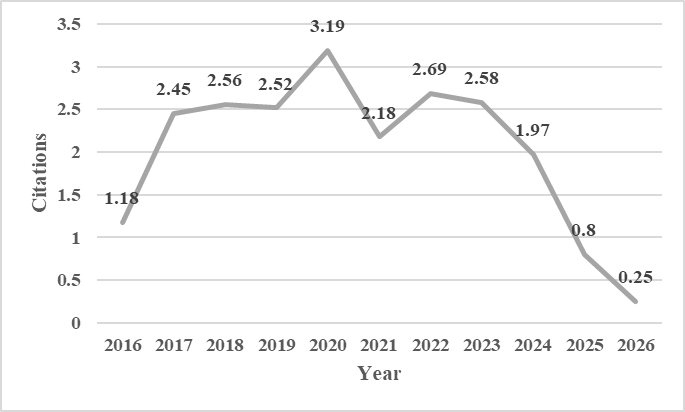
Figure 3 shows the average citations per publication over time. This graph shows the average academic impact and influence of the papers published each year. The average citation rate jumped quickly from 2016 and hovered consistently around 2.5 citations per paper. This indicates a solid baseline level of academic interest during the early phase. The maximum average citations (3.2) were observed in 2020. This indicates that papers published in 2020 contained highly influential fundamental work that received significant subsequent attention. Similarly, the major peaks are depicted for 2018 (2.6) and 2022 (2.7). Lastly, the average citations decreased continuously after 2022 and reached a minimum of 0.8 in 2025, excluding 2026. The sharp drop in recent years is a natural citation lag artifact, not a reflection of lower quality. The newer papers simply have not had enough calendar time to accumulate citations compared to papers published 5 or 10 years ago. Lastly, the average number of citations per document was 7.433, lower than the 8.9 observed in Qamar et al. [14].
Figure 3. Citations analysis
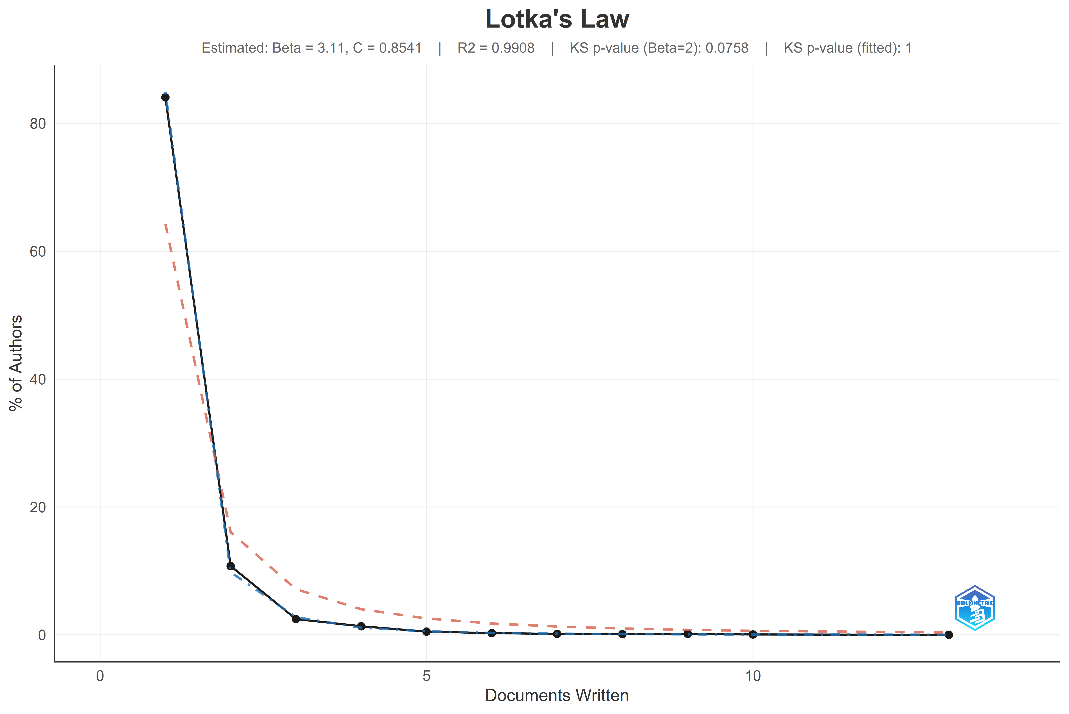
Figure 4 shows the application of Lotka’s Law to the data. It is one of the core laws of bibliometrics, first formulated by Lotka [15]. The law describes the frequency distribution of scientific productivity among authors, in which a large proportion publish just one paper, while a small proportion are highly prolific. More than 83% of the authors published just one article. Furthermore, 10.92% of authors published two articles. Lastly, three authors published ten articles, and only one author published 13 articles.
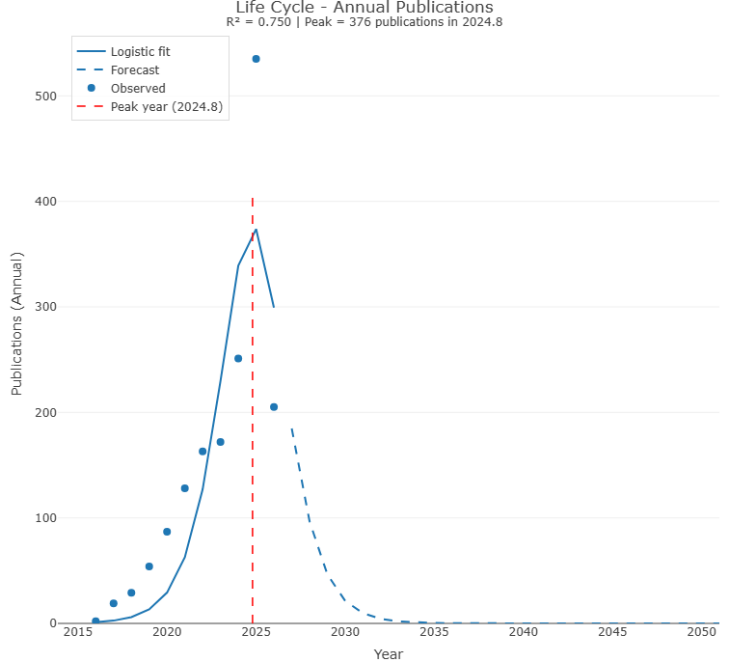
We used the Life Cycle of Scientific Production module to see how research on this topic has grown over time. This module fits a logistic growth curve to annual publication counts, helping identify whether a research field is just starting out, growing fast, maturing, or slowing down. Figure 5 shows the results of this life cycle model. The data suggest that the research topic is currently in its maturity phase, having reached between 50% and 90% of its saturation point, indicating that the overall growth rate is beginning to slow. The model shows a good fit with an R² value of 0.750. This score confirms that the model is reliable for tracking the overall trend, even if it cannot perfectly predict sudden spikes caused by real-world policy transitions or global events. According to the curve, the topic was expected to peak in late 2025, with roughly 374 publications. However, the actual data show a huge increase in 2025, with actual publications increasing beyond 500. This suggests that academic interest in Saudi Vision 2030 has been much stronger and faster than a standard statistical model would predict, likely driven by final-stretch evaluations as the country approaches its target decade. While the model's dashed line predicts a sharp drop after 2026, it is important to note a major limitation in this forecast. This sudden downward slope is an artifact caused by incomplete data indexing for 2026. Because the model reads the partial 2026 data as a permanent drop, it forces the entire future forecast downward much more quickly than it should. In reality, as the year 2030 approaches, we expect research to remain highly active as scholars shift from analyzing predictions to evaluating the vision’s real-world results.
Figure 4. Lotka’s Law of scientific productivity
Figure 5. Life cycle of scientific production
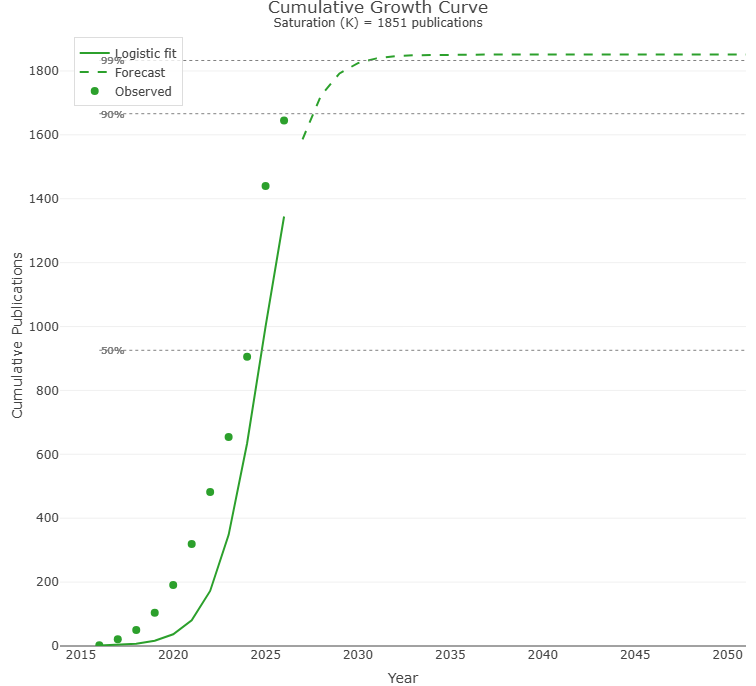
Figure 6 shows the cumulative growth curve of the literature. The cumulative publication trajectory was further examined using a logistic growth model. The model was fitted to the annual publication data to describe the overall growth pattern and to estimate a possible asymptotic level under the model's assumptions. The estimated carrying capacity (K) was approximately 1,851 publications, with an R² value of 0.750. This indicates a reasonable but imperfect fit to the observed data. It is important to mention that an R² value greater than 0.9 shows an excellent fit. The estimated value of K should not be considered an absolute limit for future publications. It represents the asymptotic level estimated from the available data and the logistic model's assumptions.
Figure 6. Cumulative growth curve of publications
The results should also be interpreted with caution because the study covers a relatively short period and the 2026 data are incomplete. Publication growth can also be affected by several factors, including research funding, policy priorities, institutional development, international collaboration, database coverage, and indexing practices. Therefore, the logistic model is used primarily to describe the overall publication trajectory rather than to make a definitive prediction of future publication counts.
The projected number of publications for 2031 is 1,839, and for 2035 is 1,851. The dashed line displays these forecasted values for the upcoming years spanning 2027 to 2051. A central observation is that the actual data points (the green dots) consistently sit above the logistic fit line from 2018 through 2026. This gap shows that real-world scientific output has grown much faster than expected. The sharp rise between 2023 and 2025 pushed the field past the 50% maturity threshold slightly ahead of schedule, quickly approaching the 90% saturation line by 2026. This rapid accumulation directly mirrors the intense global focus on Saudi Vision 2030 as its target deadline approaches. Because the cumulative total has nearly hit the estimated ceiling of 1,851 papers, the model predicts a flat plateau after 2031. In policy-driven research like this, a plateau does not mean the researchers have stopped caring about the topic. Instead, it suggests that the current research framework—which focuses on tracking the initial plans and setup of Vision 2030—is reaching completion. After 2030, the literature will likely pivot toward studying the long-term impact and toward post-2030 strategies.
4.2 Sources and publication outlets
In this subsection, our focus is on the most productive journals, source impact based on h-index, cumulative publication growth of leading journals and the application of Bradford's Law.
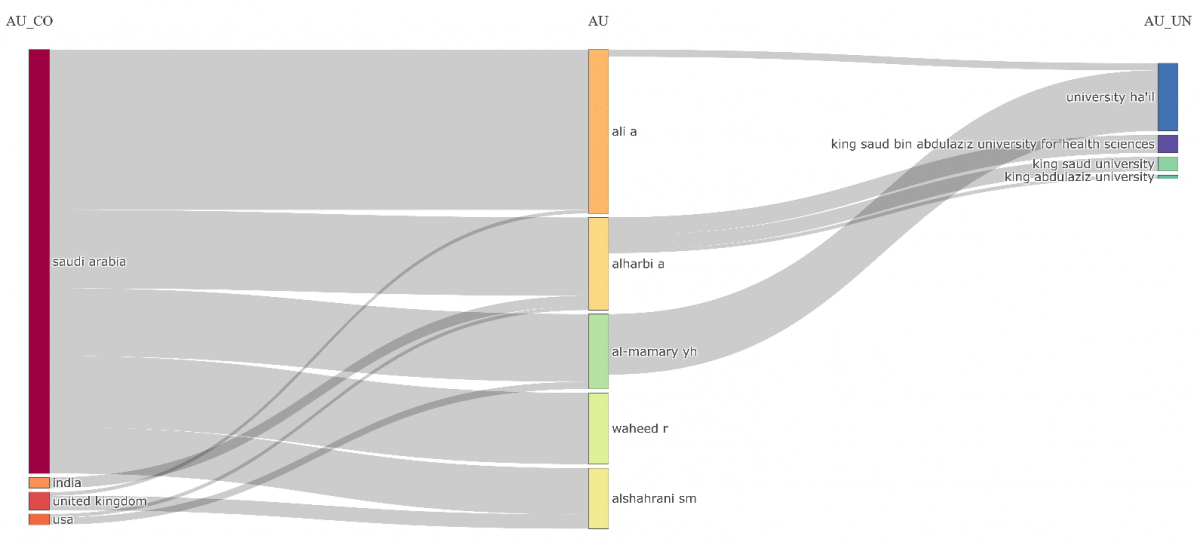
Figure 7 shows the three-field plot for authors, countries, and affiliations. Most of the authors are from Saudi Arabia. Other highly-represented countries include India, United Kingdom, and USA. Similarly, the most prolific universities are University of Hail, King Saud bin Abdulaziz University for Health Sciences, KSU, and KAU.
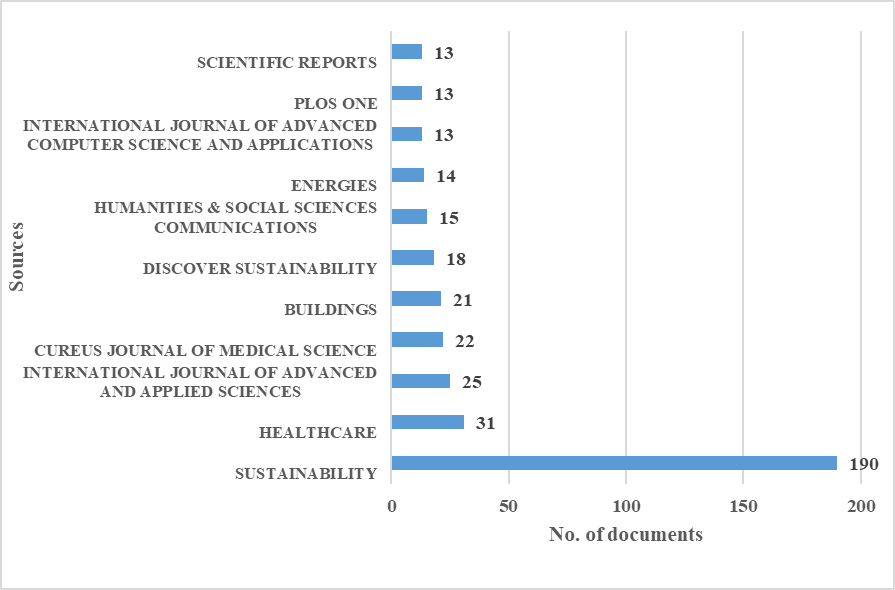
Figure 8 identifies the most relevant journals publishing research in this field based on their total document count. The data show that Sustainability is the clear leader by a wide margin, accounting for the largest share with 190 published papers, representing 11.55% of the publications. The next most productive source is Healthcare, with 31 documents (1.88%), followed closely by the International Journal of Advanced and Applied Sciences, with 25 documents (1.52%). Of the 702 sources, 20 have published ten or more papers. A massive gap is visible between Sustainability and all other competing journals. The high number of publications in Sustainability shows that sustainability-related research is an important part of the literature on Saudi Vision 2030. The journal covers topics such as sustainable development, renewable energy, environmental management, and resource efficiency, which are closely related to several Vision 2030 priorities. However, the high number of publications in a single journal does not mean that Vision 2030 research is primarily focused on the environment. The research is multidisciplinary and also covers areas such as economic development, infrastructure, healthcare, technology, and social transformation. The presence of healthcare, engineering, computer science, and multidisciplinary journals among the leading sources supports this broader view.
Figure 7. Three-field plot of authors, countries, and affiliations
Figure 8. Journal with the highest number of publications
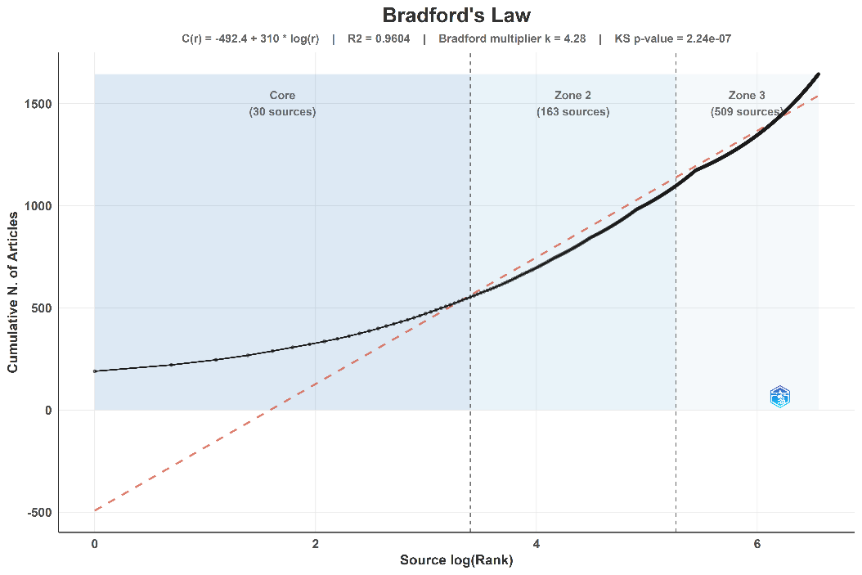
Figure 9 shows the application of Bradford’s Law, first formulated in 1934, on our data. It captures the concept of concentration and dispersion in research papers. The papers are divided into three zones: zone 1 contains core or highly productive publishing venues (30 in our case amounting to 4.3% of the sources), zone 2 is composed of moderately productive journals (163 sources amounting to 23.2%), whereas zone 3 contains peripheral journals which typically contribute only a few articles (509 in our case which amounts to 72.5% of the sources). Zone 3 contains the major chunk of publishing venues. The higher coefficient of determination (R2), 0.9604, indicates an excellent fit. Since the p-value is less than 0.05, we can infer that the empirical distribution varies substantially from Bradford's Law.
Figure 9. Bradford’s Law distribution of sources
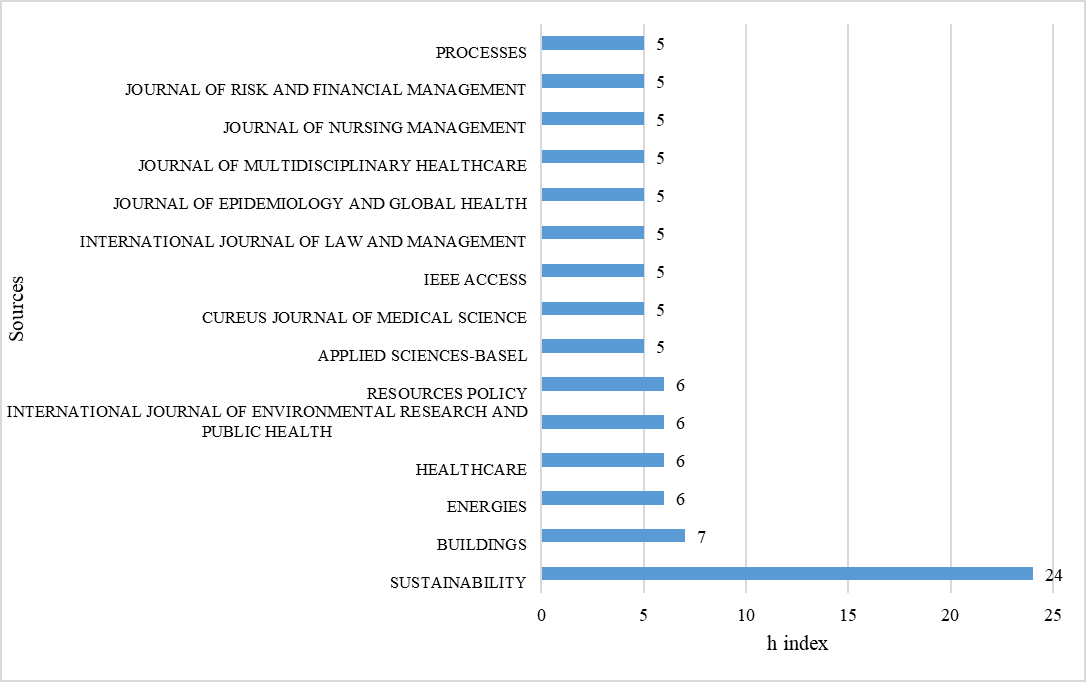
Figure 10 shows the sources’ local impact calculated on the basis of the h-index, which indicates that at least h articles in that source have been cited at least h times each. Sustainability has the maximum score of 24. The next journal on the list is Buildings, which has an h-index of 7. An important point is that papers published in Sustainability have been included in WoS since 2017. In comparison, the papers published in other key journals are included from 2019 onward. The number of citations for articles published in Sustainability is 1931, much higher than those observed for other key journals, such as Buildings (216), Energies (189), and Healthcare (148).
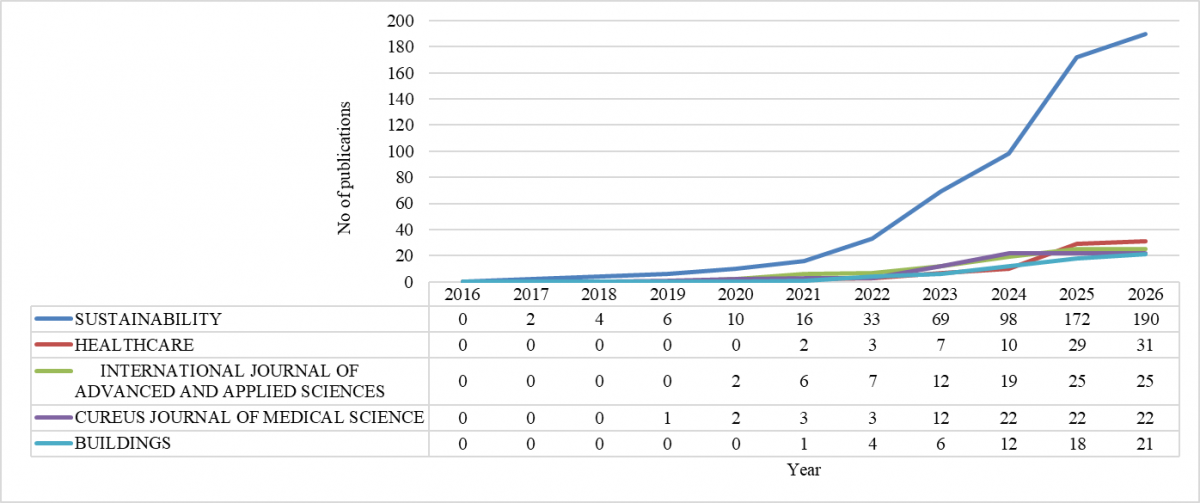
Figure 11 tracks the cumulative publication growth across the top five most productive journals over time. While all listed journals show a steady upward trend in publishing papers on this topic, the growth is particularly phenomenal in Sustainability. This journal experienced a massive 75.51% surge in cumulative papers between 2024 and 2025, followed by another 10.47% increase moving into 2026, putting its total output far ahead of the other sources. This dramatic rise in Sustainability publications directly reflects the core priorities of Saudi Vision 2030. The transformation plan places a major strategic focus on green energy, ecological urban planning, and national programs such as the Saudi Green Initiative. Because of this, scholars have heavily targeted sustainability-focused journals to publish their work on Saudi Arabia's changing landscape. The other four journals—Healthcare, International Journal of Advanced and Applied Sciences, Cureus Journal of Medical Science, and Buildings—show smaller but steady upward trajectories. These fields tie neatly into other main pillars of the vision, such as the major restructuring of the Saudi healthcare system and the ongoing construction of mega-projects like NEOM. Overall, the source distribution shows that while the literature spans medicine, applied sciences, and construction, sustainable development remains the dominant thematic focus in this research space.
Figure 10. Sources’ local impact based on h-index
Figure 11. Cumulative publication growth of the top productive journals
4.3 Authors and institutional productivity
In this subsection, we primarily present the most productive authors, the most productive institutions, along with the institutional contribution to Vision 2030 research.
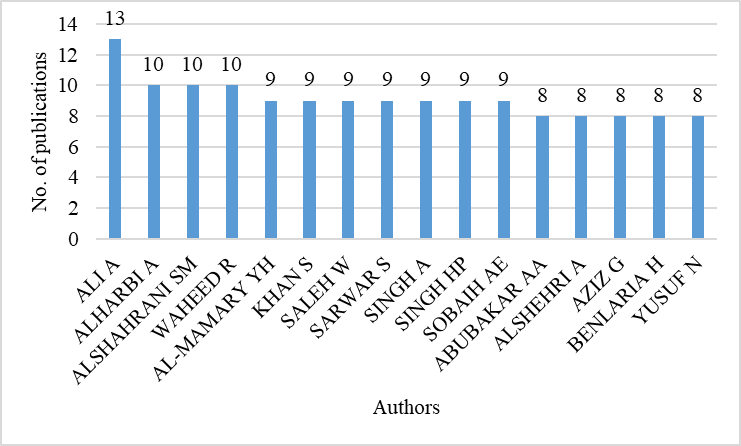
Figure 12 depicts the most relevant authors by publication count. Amjad Ali from KFUPM, having an h-index of 26, published the most papers (13), followed by Atika Alharbi from King Abdulaziz Medical City, having an h-index of 4, Sultan M. Alshahrani from King Khalid University, having an h-index of 19, and Rida Waheed from the University of Jeddah, having an h-index of 22, who all published 10 papers each. All of the aforementioned researchers are from Saudi Arabia. The total number of researchers is 4,272.
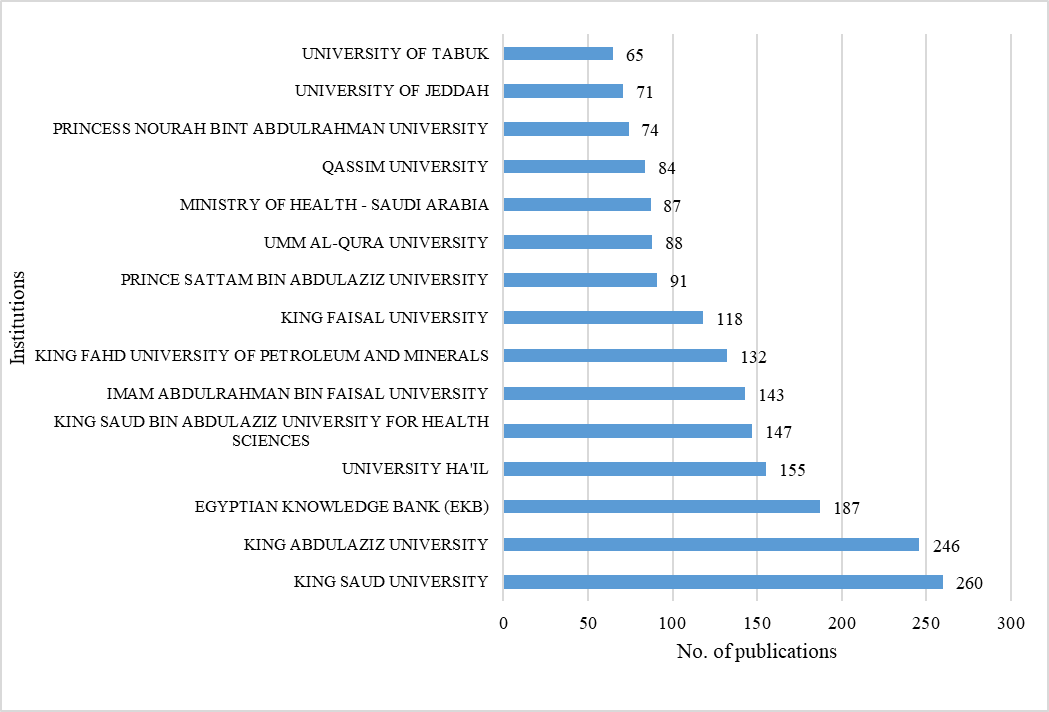
Figure 13 shows the top 15 institutions, out of 672, ranked by publication count. All but one of these institutions are from Saudi Arabia. The researchers affiliated with KSU published 260 (15.81%) papers. Similarly, KAU appeared in 246 papers (14.95%). The only non-Saudi institution is the Egyptian Knowledge Bank (EKB), with 187 papers, accounting for 11.37% of the total publications.
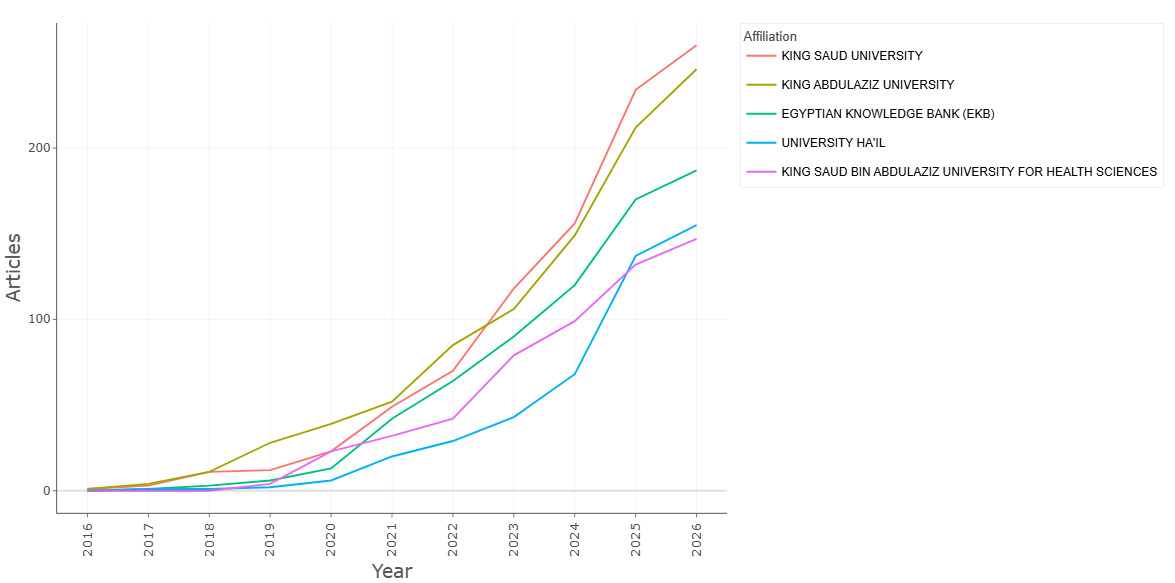
Figure 14 depicts the institutions’ production increase over time. One can note that until 2022, publications by KAU outnumbered those by KSU. In general, an upward trend is witnessed across all institutions over time.
Figure 12. Authors with the highest number of publications
Figure 13. Top 15 institutions according to the number of publications
Figure 14. Increase in publications for institutions
4.4 Country-level research contribution
In this subsection, we discuss corresponding author countries, single-country and multiple-country publications along with country citation impact.
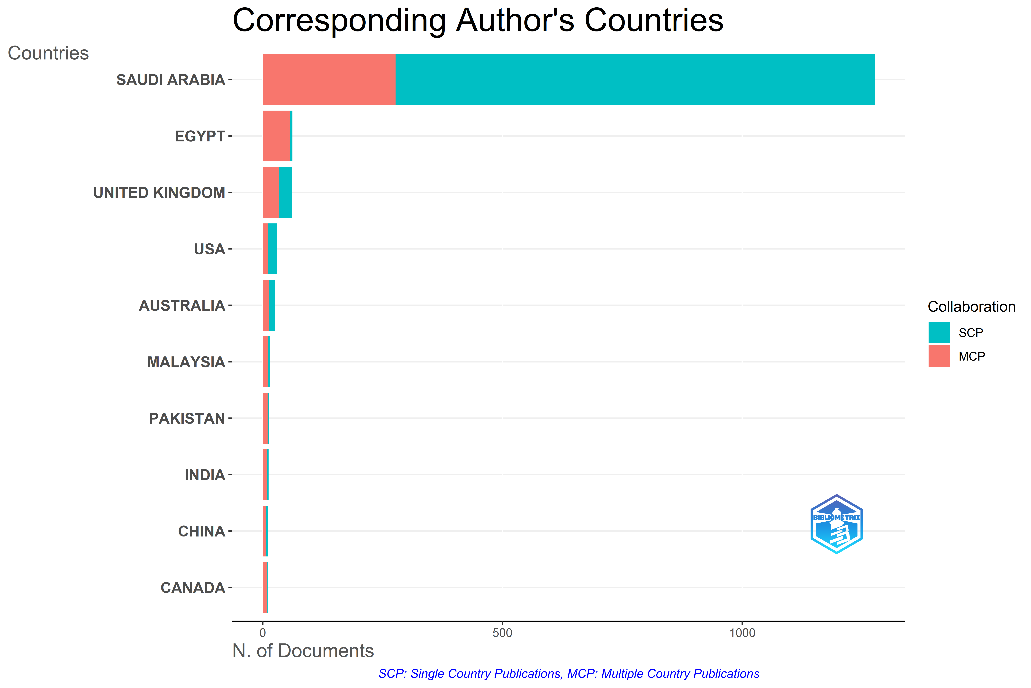
Figure 15 shows the corresponding authors’ countries. The number of Single Country Publications (SCP) and Multiple Country Publications (MCP) is shown for the top 10 countries. SCP counts articles in which all co-authors are from the same country. On the other hand, MCP counts articles co-authored by two or more countries. As expected, Saudi Arabia appears here also as the most prolific country. The MCP is 277, whereas the SCP is 999. The total number of articles containing the corresponding author from Saudi Arabia is 1,276 (77.57%). Egypt has 57 articles with MCP, but only 5 with SCP. Out of the 61 articles containing the UK as the corresponding author’s country, 34 appear as MCP and 27 as SCP.
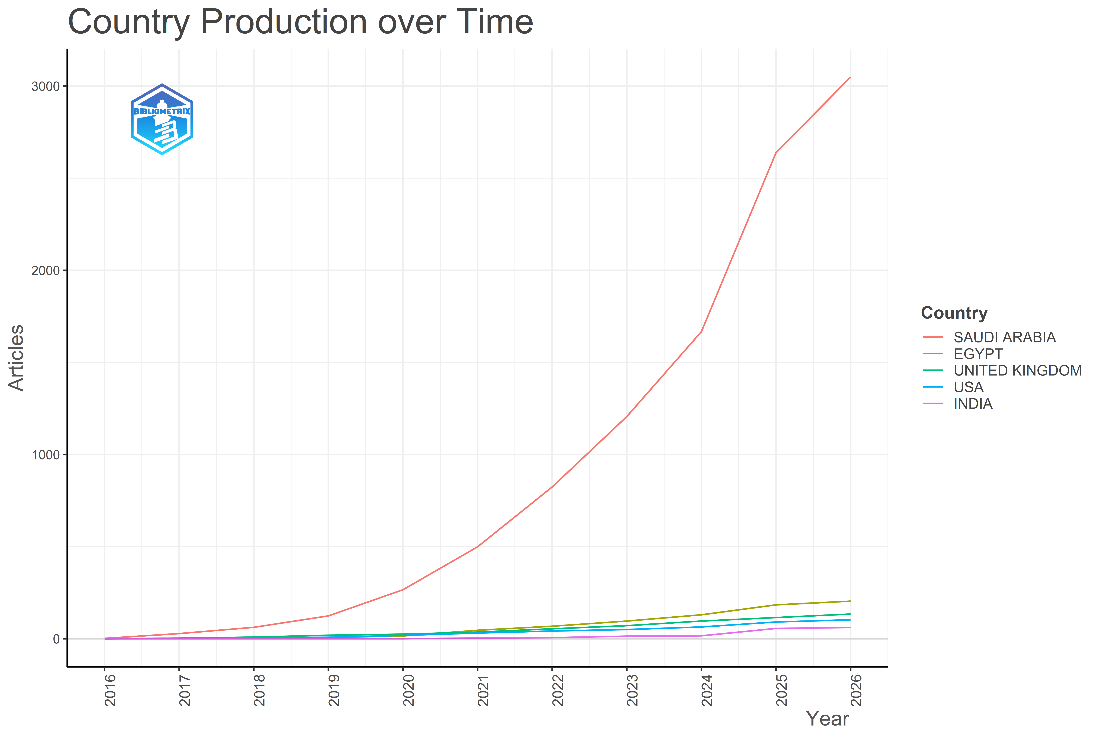
Figure 16 shows the cumulative scientific production of the top five countries based on author affiliations. A remarkable difference is observed between Saudi Arabia and the other countries (Egypt, the UK, the USA, and India). Saudi Arabia exhibits a steady increase until 2024, followed by a particularly sharp rise in 2025. Since country-level production is based on author affiliations, these values should not be interpreted as counts of unique publications.
Figure 15. Corresponding authors’ countries
Figure 16. Cumulative country-level scientific production over time
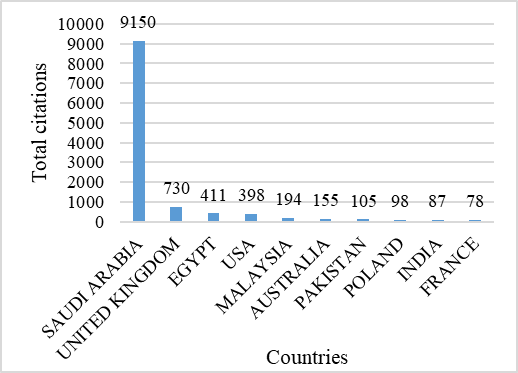
Figure 17 shows an additional significant difference in total citations between Saudi Arabia and other countries. The total citations for Saudi Arabia stand at 9,150. On the other hand, the next country with the most citations is the UK, with 730 citations. Only seven countries have more than 100 citations. We also analyzed the average article citations. Interestingly, Saudi Arabia has an average article citation of 7.2, well below Greece (46), Vietnam (37), and Romania (37). Among the top ten countries by total citations, Poland stands out with an average article citation value of 24.50. Similarly, the average value for the USA is 13.70, whereas for Malaysia it is 12.10.
Figure 17. Total citations by country
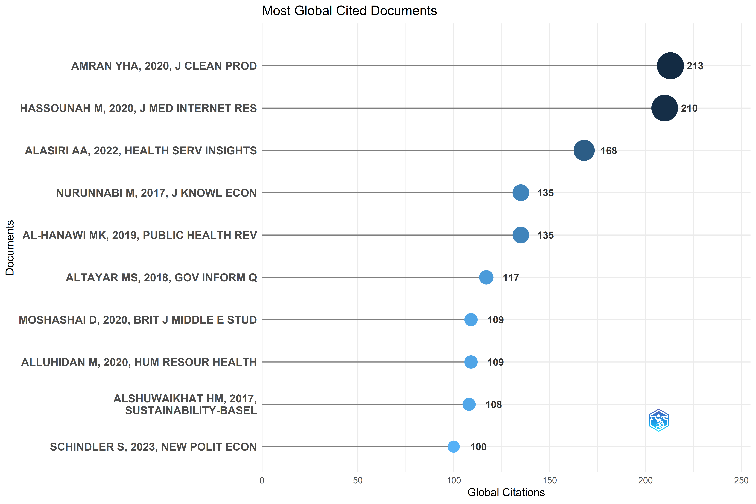
We also analyzed the top 10 most-cited publications globally. All of these were cited at least 100 times, as shown in Figure 18. The latest paper dates from 2023, and four are from 2020. The most-cited paper, with 213 citations, is a review by Amran et al. [16], published in Journal of Cleaner Production. The paper concerns the production of renewable and sustainable energy in Saudi Arabia and was written six years ago. The next one on the list was also written almost six years ago, in 2020, by Hassounah et al. [17], and was published in Journal of Medical Internet Research, garnering 210 citations. The paper studies Saudi Arabia’s digital response during the COVID-19 pandemic. The paper analyzed several domains, such as health, education, telecommunications, and commerce. The third most-cited paper garnered 168 citations. While looking at the total citations per year, the maximum value of 33.6 is observed for the paper by Alasiri and Mohammed [18]. There are 562 papers (34.16%) that have never been cited so far. 310 papers have been cited more than 10 times. Furthermore, the top five most-cited papers are listed in Table 2.
Table 2. Top five most-cited papers
|
Paper |
Total Citations (TC) |
TC per Year |
|
Renewable and sustainable energy production in Saudi Arabia according to Saudi Vision 2030; Current status and future prospects. Amran et al. [16], Journal of Cleaner Production, 2020 |
213 |
30.4 |
|
Digital response during the COVID-19 pandemic in Saudi Arabia. Hassounah et al. [17], Journal of Medical Internet Research, 2020 |
210 |
30 |
|
Healthcare transformation in Saudi Arabia: An overview since the launch of vision 2030. Alasiri and Mohammed [18], Health Services Insights, 2022 |
168 |
33.6 |
|
Healthcare human resource development in Saudi Arabia: Emerging challenges and opportunities—A critical review. Al-Hanawi et al. [19], 2019, Public Health Reviews |
135 |
16.9 |
|
Transformation from an oil-based economy to a knowledge-based economy in Saudi Arabia: The direction of Saudi vision 2030. Nurunnabi [20], 2017, Journal of the Knowledge Economy |
135 |
13.5 |
Figure 18. Citations for the most globally cited publications
4.5 Research collaboration
In this subsection, we present country collaboration, institutional collaboration, and international collaboration patterns.
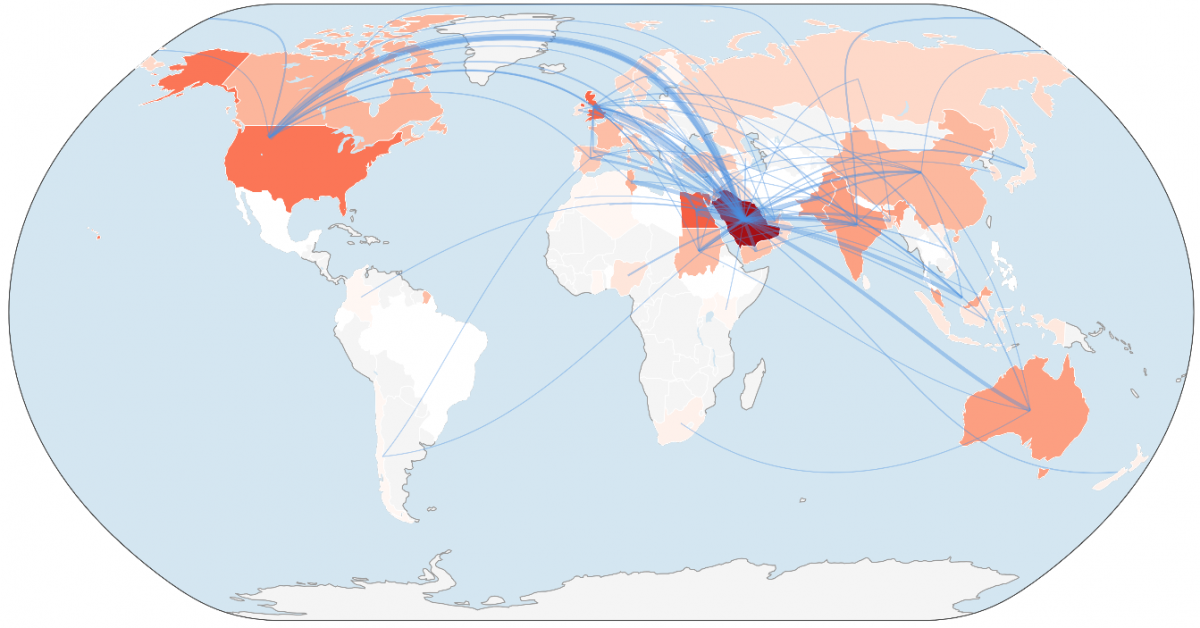
Figure 19 shows the world map of countries’ collaboration. Saudi Arabia is the most central country according to the research topic. The strongest bilateral collaboration was observed between Saudi Arabia and Egypt, with 128 collaborative links, followed by collaboration between Saudi Arabia and the USA, with 60 links. Collaboration involving Pakistan (29), India (28), and Tunisia (23) was also notable. Overall, the collaboration network shows that research related to Saudi Vision 2030 involves researchers from the Kingdom and several international partners.
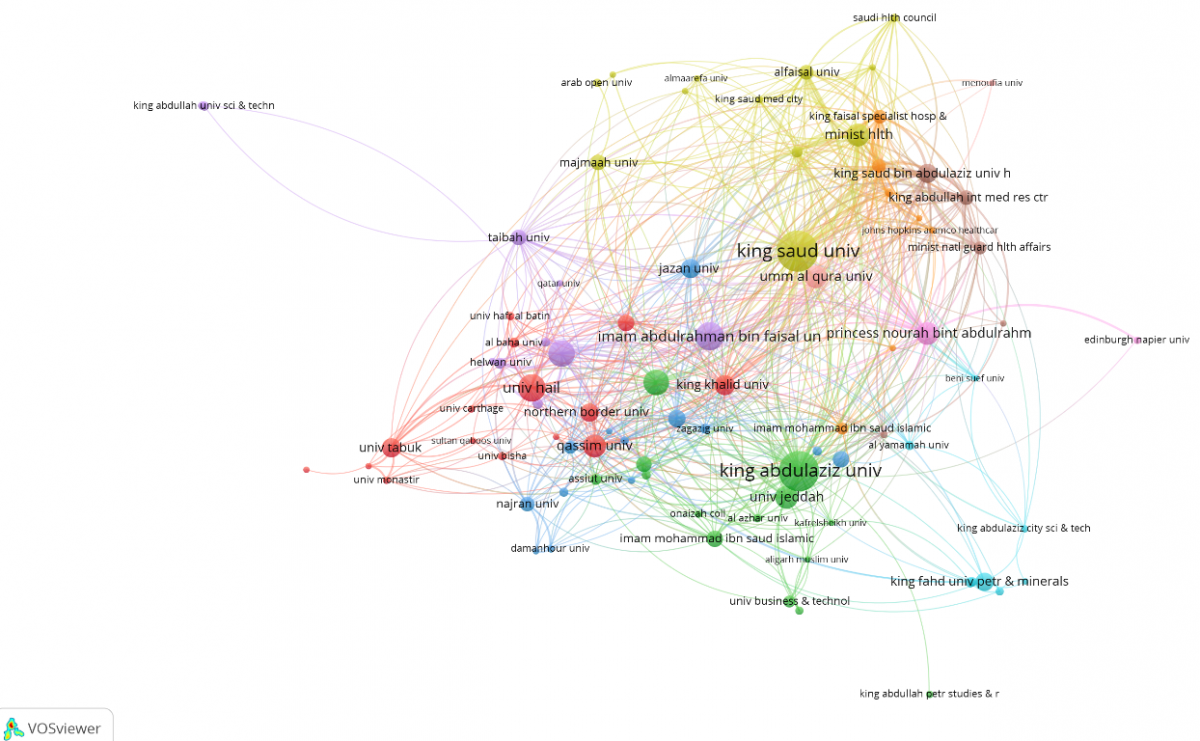
Figure 20 shows the institutional research collaborations. The network structure consists of ten collaboration clusters. The original number of institutions was 1,107, which was reduced to 90 after excluding those that published fewer than 5 research papers. KSU, with 189 papers, and KAU, with 183 publications, serve as the primary hubs of the network, showing the highest volume of collaborative research. These major institutions are closely connected and form dense research ties throughout the Kingdom's academic ecosystem. Cluster 1 includes 15 organizations such as AlBaha University, Islamic University Madinah, and King Khalid University. KSU is in the fourth cluster, whereas KAU is in Cluster 2. The clusters are not segregated, and inter-cluster collaborations were observed. However, several institutions belong to Saudi Arabia.
We also analyzed how many publications contained more than one institution. A majority of the papers (948, amounting to 57.6%) included more than one institution.
Figure 19. Country collaboration network
Figure 20. Institutional research collaboration network
4.6 Research themes and knowledge structure
Here, we present thematic maps of author keywords and abstracts, common author keywords, title terms, trending topics, bibliographic coupling, keyword co-occurrence, and title and abstract term analysis.
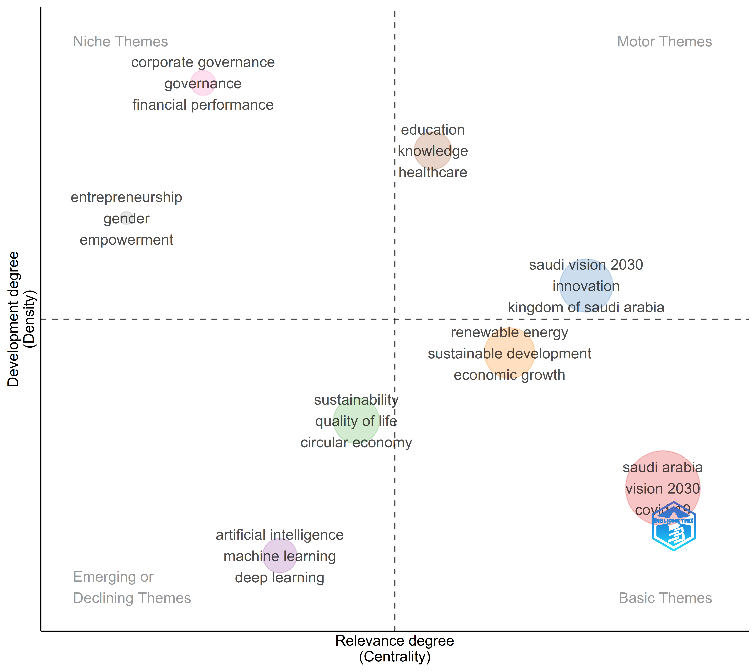
Figure 21 displays a thematic map based on author keywords to evaluate the conceptual structure of the research field. The map categorizes topics into four quadrants based on their density (degree of development) and centrality (degree of relevance). As shown, "education," "knowledge," "healthcare," "Saudi Vision 2030," "Innovation," and "Kingdom of Saudi Arabia" appear in the upper-right quadrant as Motor Themes. Education and healthcare emerge as motor themes because they are relatively well-developed and have strong connections to other topics in the research network. These areas have generated a considerable body of research related to Vision 2030. In the upper-left quadrant, "corporate governance," "gender," and "financial performance" are identified as Niche Themes, which are relatively well developed within specific research areas but have lower centrality in the overall research network. These topics are therefore more specialized and are less connected to the broader themes identified in the dataset. Their peripheral position should not be interpreted as indicating low importance. Instead, it suggests that research on these topics is concentrated within particular disciplinary or thematic groups.
Figure 21. Thematic map of author keywords
The lower-left quadrant highlights Emerging or Declining Themes, which are both peripheral and underdeveloped. Topics like "artificial intelligence," "machine learning," "deep learning," "sustainability," and "quality of life" fall into this zone. However, this does not imply that these technologies are unimportant to Vision 2030. Rather, their position suggests that they are less developed as separate thematic clusters within the dataset or are connected to other research areas. For example, AI-related research may be included in studies of healthcare, education, sustainability, or digital transformation. The thematic position should therefore be interpreted in relation to the structure of the research network rather than as a measure of the national importance of these technologies.
Lastly, themes like "vision 2030," "covid19," and "renewable energy" occupy the Basic Themes quadrant on the lower right, serving as the core, high-relevance building blocks that drive the entire research domain.
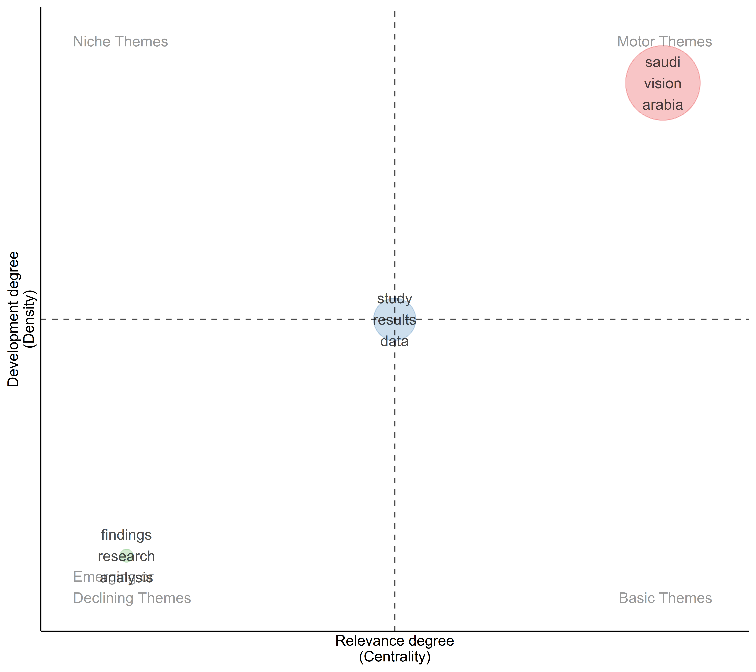
Figure 22 shows a secondary thematic map, this time generated using keywords extracted from article abstracts to provide a larger view of the literature. In this map, the cluster containing "saudi," "vision," and "arabia" is placed in the upper-right quadrant as a Motor Theme. This position confirms that the core theme of Saudi Vision 2030 is highly developed and drives the entire body of literature found in the abstracts. On the other hand, terms like "findings," "research," and "analysis" appear in the lower-left quadrant under Emerging or Declining Themes. Rather than showing a true decline in interest, their placement here represents a natural result of their generic nature. Because these common academic words appear across all types of papers rather than tied to a specific, specialized topic, the model treats them as low in both centrality and density. Interestingly, the cluster with "study," "results," and "data" sits right at the crosshair intersection of all four quadrants. This central positioning shows that data collection and empirical results form the baseline structural bridge connecting the generic research terms to the specialized policy themes of the vision.
Figure 22. Thematic map of abstracts
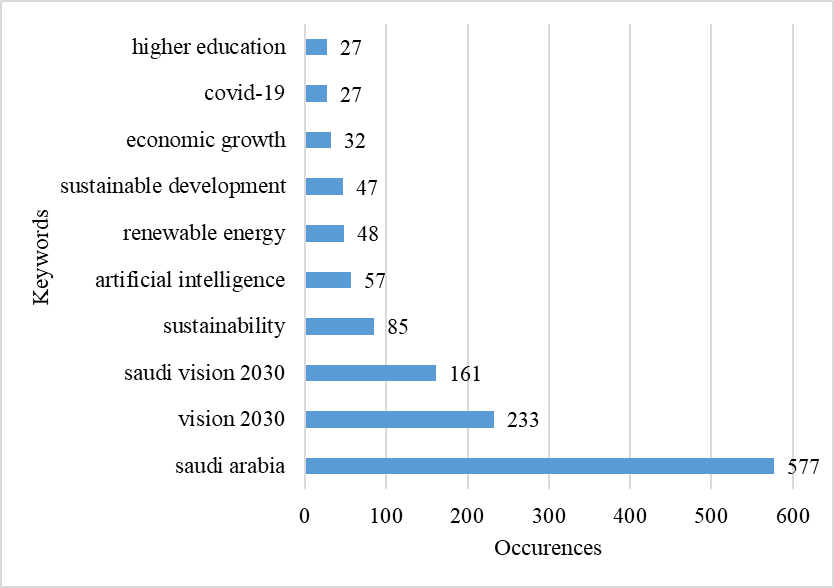
Figure 23 shows the occurrences of the top 10 keywords used by the authors. The most common words are Saudi Arabia (577, representing 31% of the total keywords), Vision 2030 (233, or 13%), Saudi Vision 2030 (161, or 9%), and Sustainability (85, or 5%). It is pertinent to note that the largest chunk of papers is also published in Sustainability.
Figure 23. Top 10 author keywords
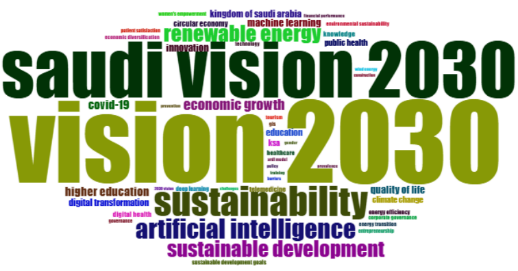
The corresponding word cloud of keywords employed by researchers is shown in Figure 24.
Figure 24. Word cloud of author keywords
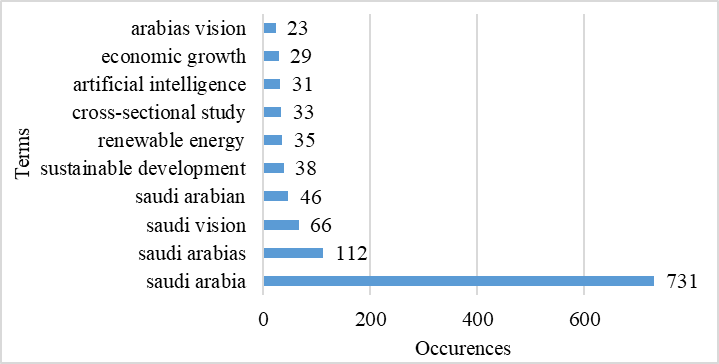
We also analyzed the most common terms employed in the publication titles as depicted in Figure 25. For analysis, we considered the bigrams. Saudi Arabia, with 731 occurrences (47% of the total terms), remains the most prevalent term, as observed for the authors’ keywords, as depicted in Figure 25. Sustainable development (38 or 2%), renewable energy (35 or 2%), and artificial intelligence (31) are other terms present among the top title terms. The abstracts of the articles show a similar picture, with Saudi Arabia most prevalent, at 2,097 occurrences, followed by Saudi Vision (603), Renewable Energy (281), Sustainable development (223), economic growth (211), and digital transformation (126).
Figure 25. Top 10 terms in publication titles
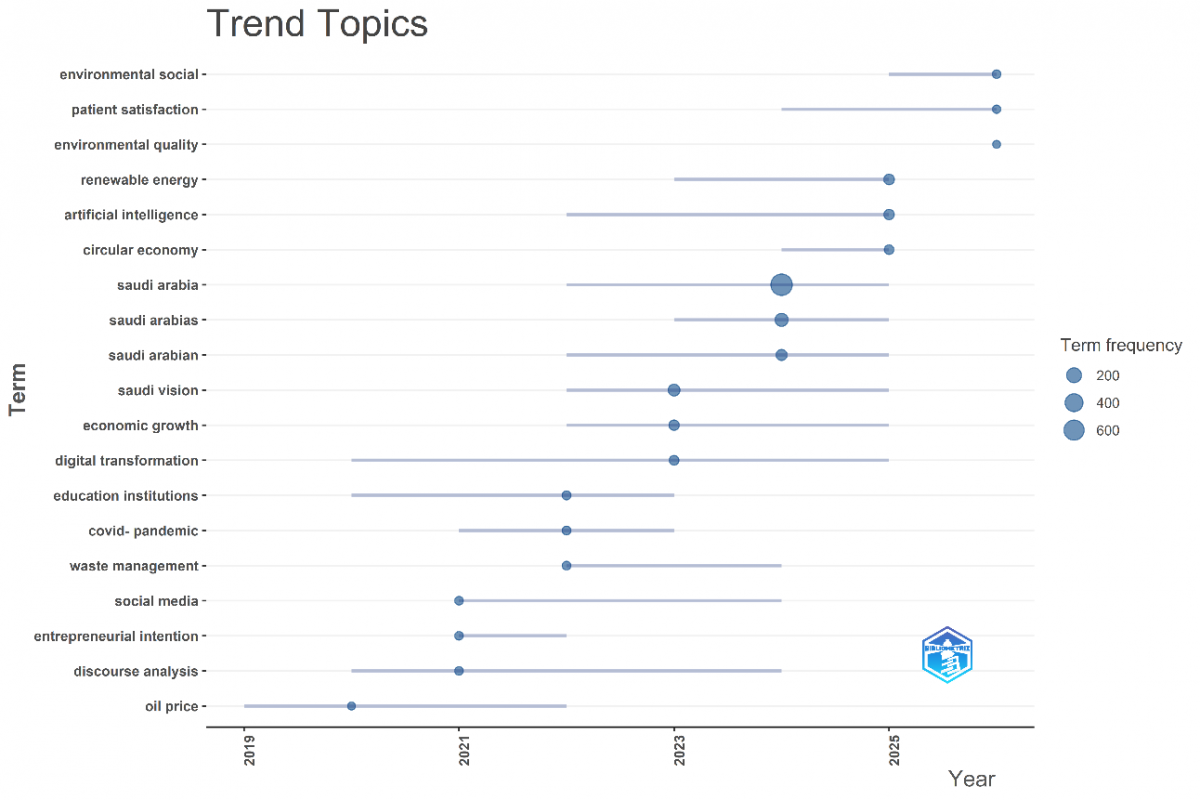
Lastly, an analysis of trending topics based on the ‘Titles’ is also carried out as shown in Figure 26. Some of the trending topics are environmental, social, and patient satisfaction. Similarly, renewable energy, AI, and the circular economy are other trending topics. The trend of the COVID-Pandemic started in 2021 and ended in 2023.
Figure 26. Trending topics based on titles
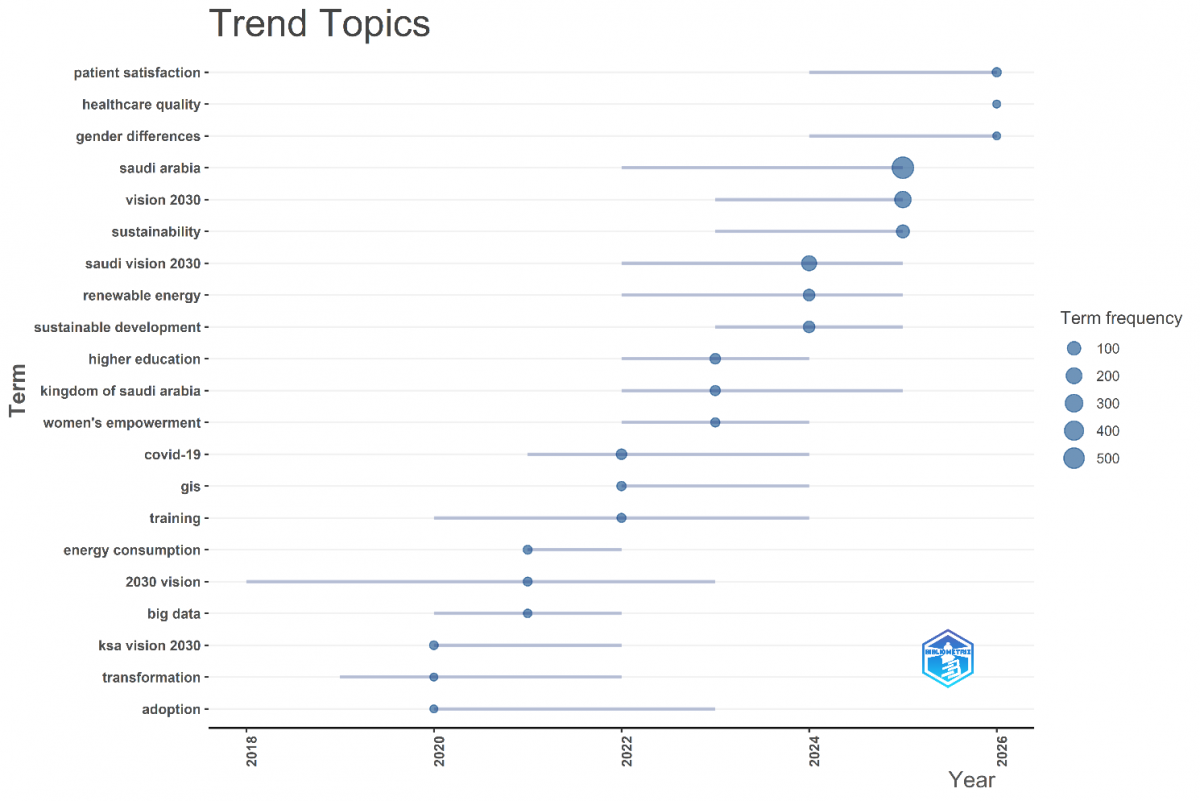
Some minor differences are observed between titles and authors’ keywords as shown in Figure 27. the most trending topics are patient satisfaction (just like the titles), healthcare quality, and gender differences. For the authors’ keywords, terms like Saudi Arabia, Vision 2030, and Sustainability reached their median values in 2025.
Figure 27. Trending topics based on author keywords
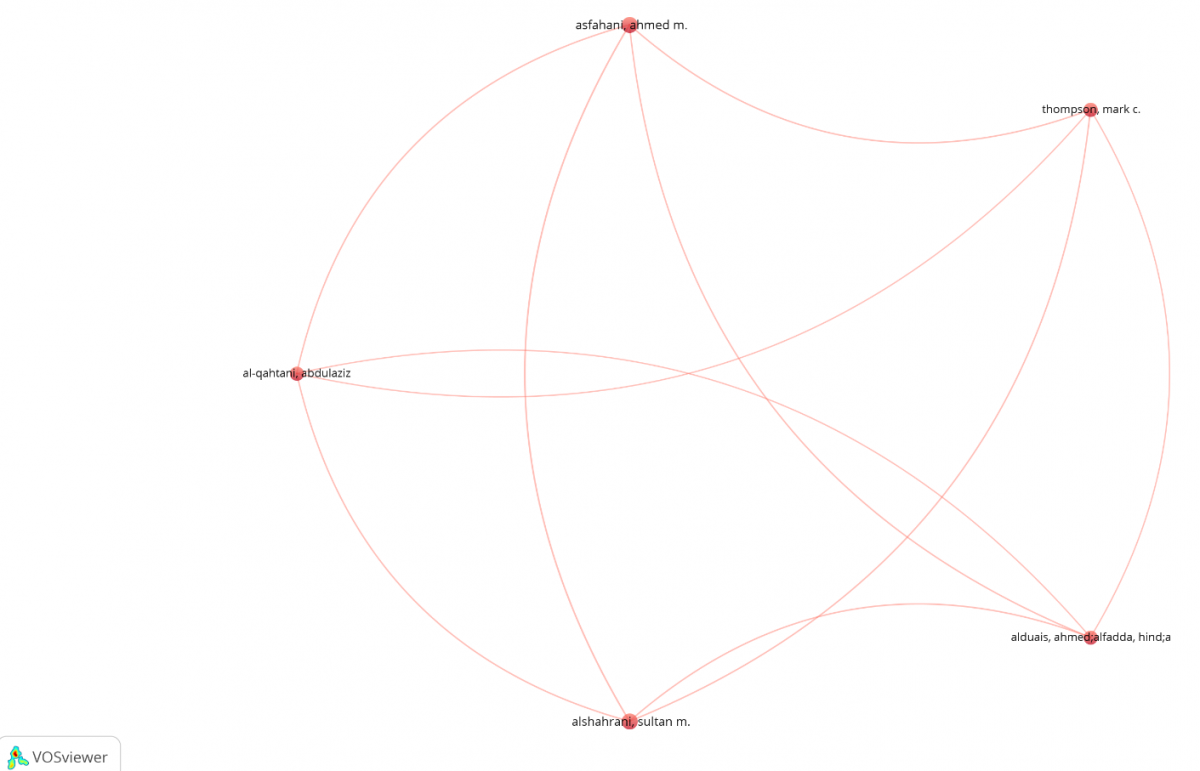
Figure 28 shows the bibliographic coupling among the most prominent researchers. The total number of authors is 1,561. However, by considering only authors who have published at least four relevant papers, the number is reduced to five, which form a single cluster.
Figure 28. Bibliographic coupling of the most prolific researchers
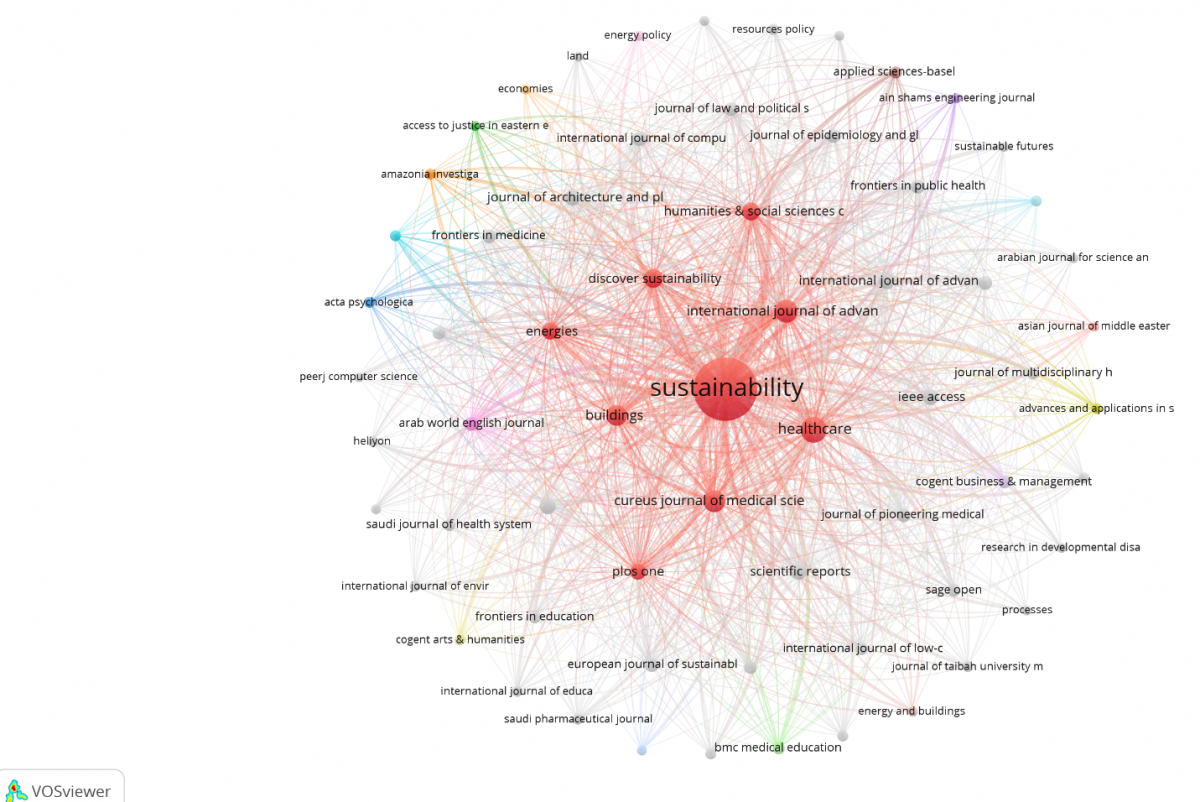
Figure 29 shows the bibliographic coupling among the sources. Once again, only sources that have published at least five related research papers are considered. This reduced the sources from 702 to 64, which are organized into 56 clusters. Cluster 1 contains 9 items, whereas the rest each include just one source. The journal Sustainability occupies a central place, and has published 190 related papers.
Figure 29. Bibliographic coupling of sources
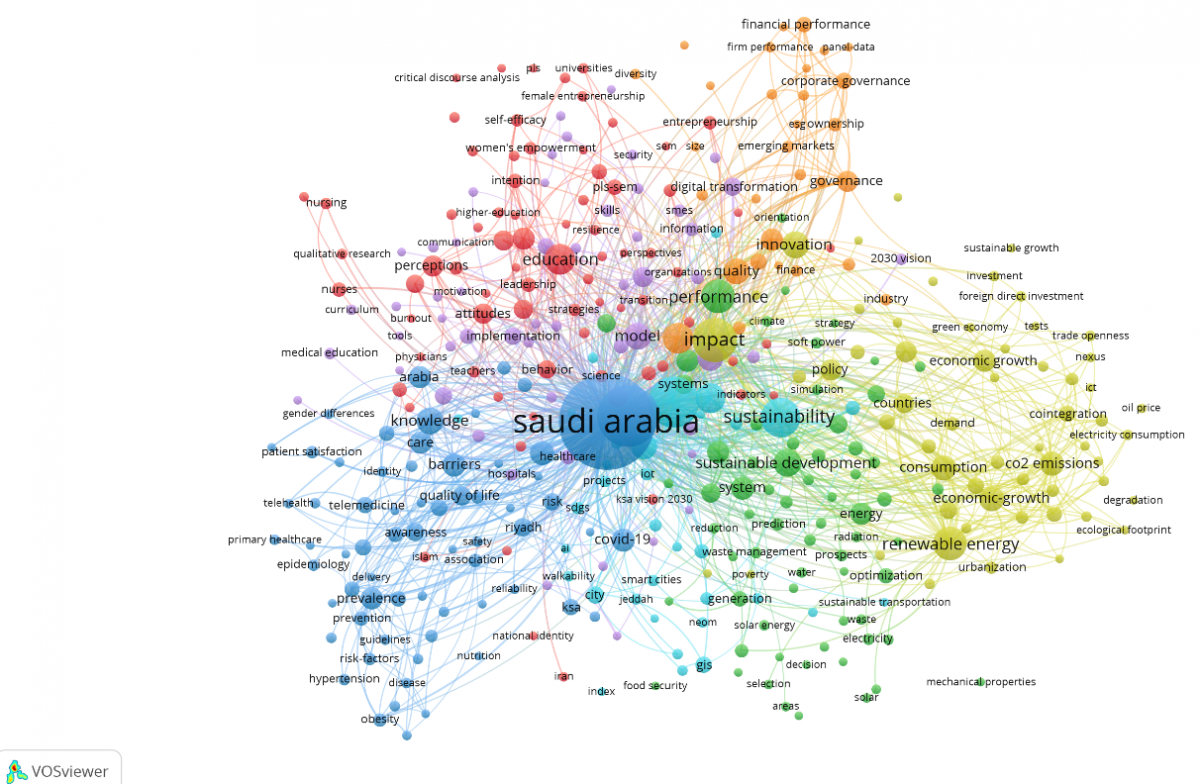
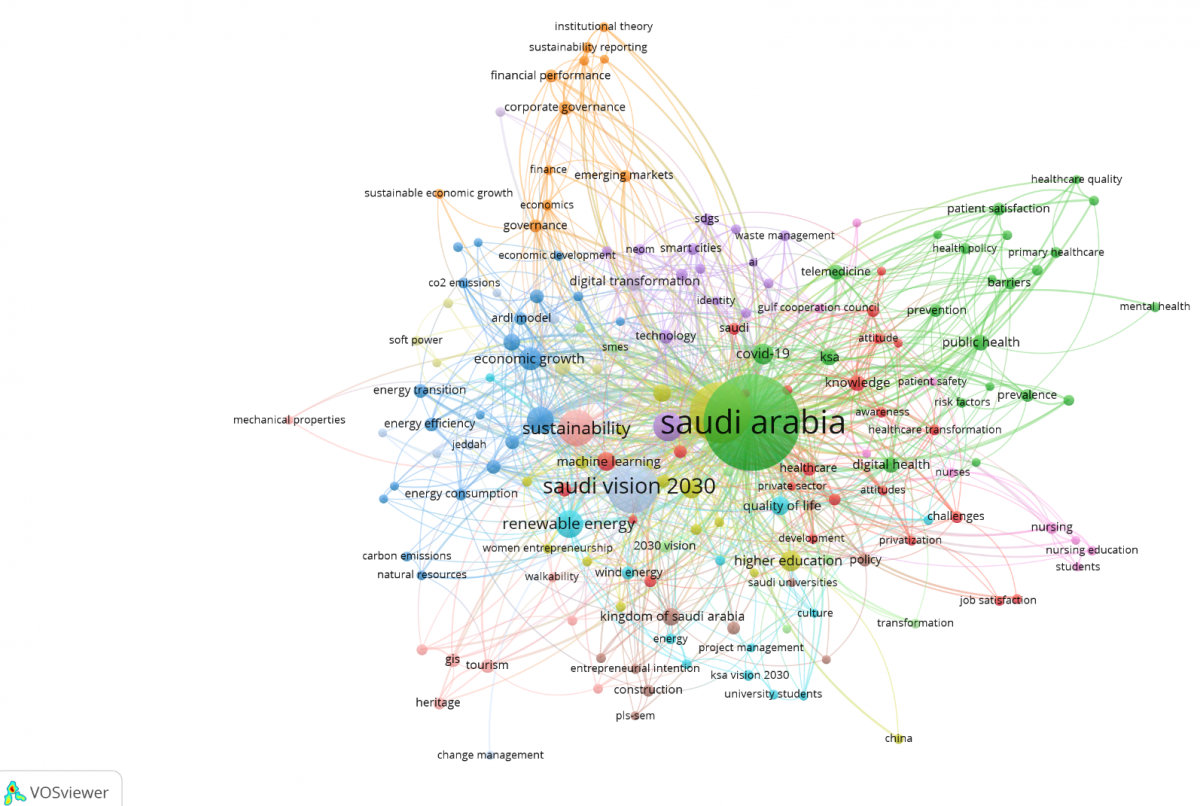
Figure 30 depicts the co-occurrence graph of all keywords used in related research. Initially, there are 7,027 keywords, which are reduced to 385 by selecting those that occur at least five times. The most common keyword is Saudi Arabia (574 occurrences), representing the most prominent central hub, followed by Vision 2030 (232). Other prominent keywords include impact, sustainability, renewable energy, performance, management, CO2 emissions, consumption, and economic growth. The keywords are divided into seven clusters. Cluster 1 contains the largest number of keywords (75), followed by Cluster 2 (67) and Cluster 3 (66). We also analyzed the keywords provided by the authors. Using a similar methodology, we obtained fewer than half of the keywords (172), divided into 14 clusters, as depicted in Figure 31. The number of links is 1,069, compared to 7,237 seen across all keywords, representing 14.77%.
Figure 30. Co-occurrence network of all keywords
Figure 31. Author keyword co-occurrence network
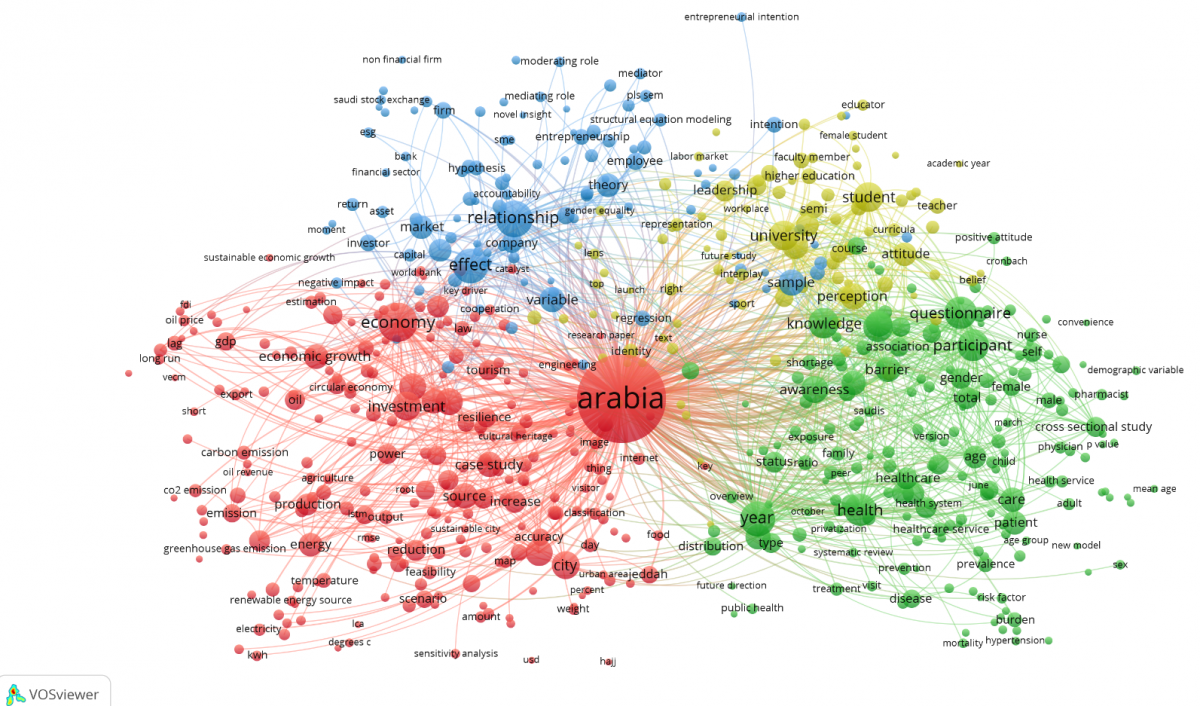
We also created a term-occurrence map based on the title and abstract fields, as shown in Figure 32. There are 37,753 terms, which are reduced to 1,057 when considering only those that occur at least 10 times. A relevance score was calculated for the shortlisted terms. Lastly, only the 60% most relevant terms (634) are considered and represented in four clusters. Cluster 1 contains 38.49% of the terms (244 items), whereas Cluster 2 contains 29.65% (188). Some of the most relevant terms include non-financial firms, FDI, Tadawul (Saudi Stock Exchange), hydrogen, and trade openness. The overlapping thematic clusters directly reflect the core multidimensional pillars of Saudi Vision 2030.
Figure 32. Title and abstract term-occurrence map
4.7 Research fields and subject categories
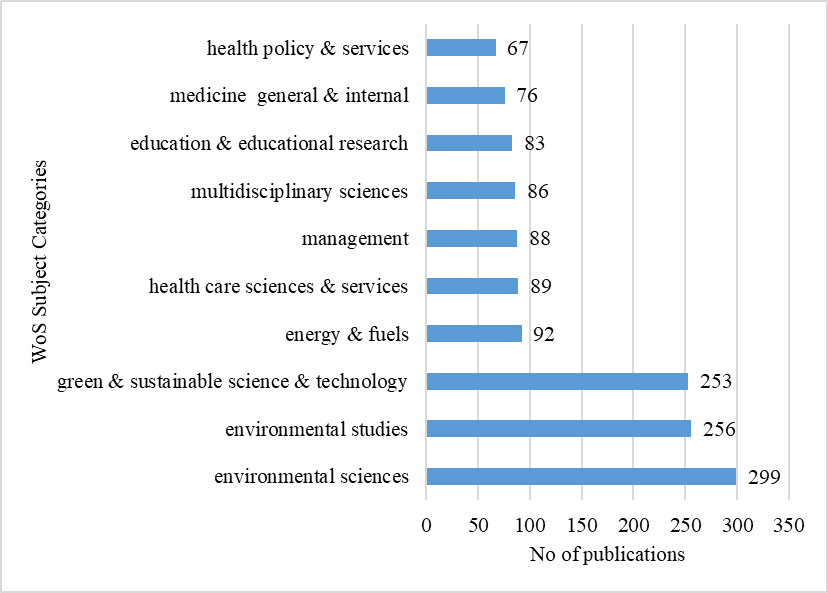
Figure 33 shows the top 10 WoS subject categories of the 157 categories. Only three categories are represented in more than 100 publications: Environmental Sciences (299, 12% of the total), Environmental Studies (256, 10%), and Green & Sustainable Science & Technology (253, 10% of the total). The percentages are also retrieved using TreeMaps.
Figure 33. Top 10 Web of Science (WoS) subject categories
4.8 Open access publication patterns
The OA status of the publications was analyzed to understand how research related to Saudi Vision 2030 has been made available to readers. Of the 1,645 publications, 1,148 had a recorded OA classification, while 497 (30.2%) had no OA status recorded in the dataset.
Among the records with an OA classification, “Green Submitted, Gold” was the largest category, with 674 publications. This represents 41.0% of the full dataset. Gold OA was the next largest single category, with 317 publications (19.3%), followed by Hybrid OA with 56 publications (3.4%) and Bronze OA with 18 publications (1.1%). Green Submitted accounted for 19 publications (1.2%). The remaining records were distributed across smaller combinations of Green, Gold, Bronze, and Hybrid OA routes.
The large “Green Submitted, Gold” category indicates that both Green Submitted and Gold OA were recorded for these publications. This shows that multiple OA routes are present in a substantial part of the dataset. Gold OA represents publications made openly available through the publisher, while Green OA is associated with repository-based availability of a manuscript version.
The 497 records without a recorded OA status should not necessarily be considered non-OA publications. The blank value indicates that an OA status was not available in the metadata used for this study. Therefore, the OA results should be interpreted as a description of the OA information recorded in the database rather than as a complete measure of the accessibility of every publication.
Overall, the OA results show that research related to Saudi Vision 2030 is available through different publication and repository-based routes. The relatively large number of Gold OA publications also indicates the use of immediate OA publishing, while the presence of Green OA categories shows the importance of repository-based dissemination.
4.9 Comparison with previous studies
In our research, the maximum number of publications is observed in 2025, whereas in Bengana et al. [3], it is in 2022. Nevertheless, they focused only on articles related to the health domain. Moreover, most related research [3-6] utilized Scopus data. By contrast, our research solely focused on WoS data.
Previous bibliometric studies have examined specific research areas related to Saudi Arabia, including digital health, education, disability, fuzzy systems, translation and interpreting, and breast cancer research. For example, Bengana et al. [3] examined digital health research, while Kandeel et al. [4] and Saqlain et al. [5] focused on disability and fuzzy systems, respectively. Alangari [6] examined translation and interpreting research, and Sasikala [7] examined breast cancer research. These studies provide useful information on individual research fields but do not capture the broader research landscape associated with Saudi Vision 2030.
In comparison, the present study examines 1,645 records from the WoS covering the period 2016–2026 and includes research from a range of fields. The analysis covers publication trends, sources, authors, institutions, countries, collaboration, citations, and research themes. This wider scope provides a Vision-wide view of how research has developed since the launch of Vision 2030. We found higher publication growth (58.88%) compared to disability research (13%) and digital health (reported trends). The results also show similarities to earlier studies, particularly the strong contributions of institutions such as KSU and KAU. However, the present study extends this perspective by examining research across environmental, sustainability, healthcare, education, technology, and economic domains rather than focusing on a single field.
Because the studies use different databases, time periods, and research topics, publication numbers should not be compared directly. The main difference, therefore, is the scope of the research landscape covered by each study.
This paper presents a bibliometric study of the publications related to Saudi Vision 2030. The data were obtained from WoS. After preprocessing, the number of research papers was reduced to 1,645. We carried out a thorough analysis of publication and citation trends, publication life cycles, the most common sources, and collaboration networks using Biblioshiny and VOSviewer. Sustainability is the most common journal with 190 publications, with a marked increase after 2021. Amjad Ali from KFUPM is the most prolific researcher with 13 papers. Furthermore, KSU (260) and KAU (246) were the most productive institutions. As expected, 14 of the 15 institutions with the most publications are from Saudi Arabia. Egypt, the UK, the USA, and India produced most of the research apart from Saudi Arabia. Although Saudi Arabia has the most citations, its average citation rate is 7.2, much lower than those of Greece (46) and Vietnam (37). The most-cited publication is from 2020 and concerns renewable and sustainable energy. Education, knowledge, and healthcare are the motor themes according to the thematic map. We also observed collaboration between different countries, researchers, and institutions. More than half of the publications (57.6%) contain more than one institution.
The findings also have practical implications for environmental planning and sustainability policy. The strong presence of sustainability, renewable energy, environmental sciences, and sustainable development shows that these areas have received considerable research attention and can provide useful evidence for environmental planning. The emerging and less central themes may also help research institutions and funding agencies identify areas that need further research. The patterns of institutional and international collaboration can support research partnerships and knowledge sharing. Regular bibliometric analysis can also be used as a supporting measure to monitor changes in research priorities, emerging topics, and research capacity related to Vision 2030. Overall, the findings can support environmental planning, sustainability research priorities, and the evaluation of national transformation goals.
The reliance on a single database may have overlooked non-indexed publications, thereby limiting the scope of analysis. In the future, we plan to conduct a similar study using data from Scopus. This would also allow for a comparison between multiple data sources.
The author would like to thank Qassim University, represented by the Deanship of Graduate Studies & Scientific Research, for financial support of this research (QU-ND95-2026).
[1] Aria, M., Cuccurullo, C. (2026). Science Mapping Analysis. A Primer with Biblioshiny. McGraw-Hill.
[2] Vision 2030 Annual Report. (2024). https://www.vision2030.gov.sa/media/r3ij40wu/en-annual-reportvision2030-2024.pdf.
[3] Bengana, I., Brika, S.K., Mili, K. (2025). Advancing healthcare through digital innovation: A bibliometric perspective on Saudi Arabia’s vision 2030. Edelweiss Applied Science and Technology, 9(3): 96-115. https://doi.org/10.55214/25768484.v9i3.5137
[4] Kandeel, M., Morsy, M.A., Al Khodair, K.M., Alhojaily, S. (2025). A bibliometric analysis of disability research in Saudi Arabia: Evolving trends, thematic mapping, and gaps. Saudi Medical Journal, 46(4): 406-417. https://doi.org/10.15537/smj.2025.46.4.20240591
[5] Saqlain, M., Merigó, J.M., Gulistan, M., Saeed, M., Razaq, F. (2025). Scientometric exploration of fuzzy research in Saudi Arabia. Multicriteria Algorithms with Applications, 9: 18-50. https://doi.org/10.61356/j.mawa.2025.9611
[6] Alangari, E. (2024). Translation and interpreting research in Saudi Arabia: A bibliometric analysis (1990–2019). The Translator, 30(2): 210-226. https://doi.org/10.1080/13556509.2023.2200054
[7] Sasikala, N. (2024). Insights in breast cancer research: A bibliometric analysis in Saudi Arabia. Cahiers Magellanes-NS, 6(2): 6065-6073. https://cahiersmagellanes.com/index.php/CMN/article/view/956.
[8] Khan, M.K., Khan, M.B. (Eds.). (2020). Research, Innovation and Entrepreneurship in Saudi Arabia Vision 2030. Routledge, Taylor & Francis Group.
[9] Baljoun, K.J.S., Altalhy, A.F.A., Alsaadi, R.K.H., Alharbi, N.A.M., Alqithami, F.R.A. (2024). Scientific research priorities in light of the Kingdom of Saudi Arabia's Vision 2030 from the researchers' point of view at Umm Al-Qura University. Journal of Umm Al-Qura University for Educational and Psychological Sciences, 16(1): 179-198. https://doi.org/10.54940/ep45097604
[10] Alqahtani, M.A. (2025). Knowledge sharing between theory and practice: A bibliometric analysis of the Saudi Arabian context. International Multilingual Academic Journal, 10(4): 160-170.
[11] Alqurni, J. (2026). AI applied to Saudi Arabia higher education: Systematic literature review—SLR with PRISMA and VOSviewer. Frontiers in Big Data, 9: 1846964. https://doi.org/10.3389/fdata.2026.1846964
[12] Mohsen, M.A., Ho, Y.S. (2024). Thirty years of educational research in Saudi Arabia: A bibliometric study. Interactive Learning Environments, 32(5): 1763-1778. https://doi.org/10.1080/10494820.2022.2127780
[13] Kandeel, M., Al-Taher, A. (2026). Bibliometric analysis of the top 100 most cited publications from Saudi Arabia reveals the predominance of medical fields. Saudi Medical Journal, 47(9): 1558-1566. https://doi.org/10.15537/1658-3175.8845
[14] Qamar, A.M., Altami, A.S., Alsamanni, A.A. (2024). Quantitative analysis of global research trends in crowd management for tawaf: A bibliometric study (1997-2023). International Journal of Safety & Security Engineering, 14(1): 71-82. https://doi.org/10.18280/ijsse.140107
[15] Lotka, A.J. (1926). The frequency distribution of scientific productivity. Journal of the Washington Academy of Sciences, 16(12): 317-323. https://www.jstor.org/stable/24529203.
[16] Amran, Y.A., Amran, Y.M., Alyousef, R., Alabduljabbar, H. (2020). Renewable and sustainable energy production in Saudi Arabia according to Saudi Vision 2030; Current status and future prospects. Journal of Cleaner Production, 247: 119602. https://doi.org/10.1016/j.jclepro.2019.119602
[17] Hassounah, M., Raheel, H., Alhefzi, M. (2020). Digital response during the COVID-19 pandemic in Saudi Arabia. Journal of Medical Internet Research, 22(9): e19338. https://doi.org/10.2196/19338
[18] Alasiri, A.A., Mohammed, V. (2022). Healthcare transformation in Saudi Arabia: An overview since the launch of Vision 2030. Health Services Insights, 15: 1-7. https://doi.org/10.1177/11786329221121214
[19] Al-Hanawi, M.K., Khan, S.A., Al-Borie, H.M. (2019). Healthcare human resource development in Saudi Arabia: Emerging challenges and opportunities—A critical review. Public Health Reviews, 40(1): 1. https://doi.org/10.1186/s40985-019-0112-4
[20] Nurunnabi, M. (2017). Transformation from an oil-based economy to a knowledge-based economy in Saudi Arabia: The direction of Saudi vision 2030. Journal of the Knowledge Economy, 8(2): 536-564. https://doi.org/10.1007/s13132-017-0479-8