
Dina A. Yaseen* | Zainab M. Al-Hasan | Maha A. Faroon
© 2026 The authors. This article is published by IIETA and is licensed under the CC BY 4.0 license (http://creativecommons.org/licenses/by/4.0/).
OPEN ACCESS
Domestic wastewater (DWW) is one of the main sources of environmental pollution, and the direct discharge of untreated or poorly treated DWW results in the deterioration of receiving watercourses with serious environmental problems. This study aimed to assess the performance of two moving bed biofilm reactors (MBBR1 and MBBR2) filled with prepared and commercial biofilm carriers, respectively, at a filling ratio of 50% for treating DWW. Both reactors operated under aerobic conditions in continuous mode with a retention time of 8 h. The treatment units successfully treated the DWW, and MBBR2 significantly (p < 0.001) outperformed the reactor MBBR1 containing prepared carriers. The MBBR1 achieved mean removal rates of 63.6%, 62%, 75.9%, 32%, and 33.9% for biological oxygen demand (BOD5), chemical oxygen demand (COD), ammonia (NH3), nitrate (NO3-), and phosphate (PO43-), respectively. However, MBBR2 achieved average removal of 77%, 74.9%, 88%, 38%, and 40%, for BOD5, COD, NH3, NO3-, and PO43-, respectively. The prepared carriers represent a promising, effective alternative, although their treatment efficiency is lower. This approach highlights the potential of reducing the dependence on commercial carriers while promoting the reuse of washing machine hoses as an alternative biofilm carrier for DWW treatment, thereby providing the benefit of reusing plastic waste that would otherwise need appropriate management or disposal.
biofilm, carriers, domestic, moving bed, plastic, organic matter, wastewater
The sustainable management and treatment of domestic wastewater (DWW) is one of the critical environmental and engineering challenges worldwide, especially in developing countries. Recently, both rapid population growth and urbanization have led to an increase in the quantities of wastewater that are highly concentrated with organic matter and nutrients. The direct discharge of such untreated or poorly treated wastewater can cause critical environmental threats to the ecosystem, receiving watercourses, and public health [1].
Although conventional wastewater treatment techniques that depend on suspended growth mechanisms can effectively treat the wastewater, their widespread application is often limited by their large area requirements, high energy consumption, and problems associated with sludge bulking and recirculation [2]. Therefore, attached-growth treatment processes, such as moving bed biofilm reactor (MBBR), have gained increasing attention as an alternative and effective technique that integrates the advantages of suspended and attached growth systems to overcome the limitations of conventional treatment systems [3]. MBBR treatment unit particularly relies on floating plastic carriers that move freely inside an aerated tank, providing more surface area for microbial attachment and biofilm development. This configuration increases the concentration of active biomass within the reactor without the need for sludge recirculation, thereby enhancing the system’s ability to save space requirements and accommodate high organic and hydraulic loads [4].
The MBBR system was used effectively for the treatment of domestic, industrial, dairy, and medical wastewaters under various operational conditions. The main operating conditions that affect the MBBR performance are: pollutant loading rate, type of carriers, hydraulic retention time (HRT), type of wastewater, mixing, oxygen level, and the filling ratio [4, 5]. Therefore, the target of previous researchers was to investigate the impact of various operating conditions to gain a comprehensive understanding of MBBR system operation. Prendergast et al. [6] implemented a laboratory-scale MBBR unit treating artificial DWW. The reactor achieved 94% and 44% removal efficiency of chemical oxygen demand (COD) and total orthophosphate, in that order. DWW was also treated in a comparison study between MBBR and sequencing batch reactor (SBR) [1, 7]. The MBBR enhanced COD removal by 16% more than the SBR unit. Mohammed et al. [8] examined the treatment of municipal wastewater by MBBR. The system achieved more than 80% removal of biological oxygen demand (BOD5), COD, and total suspended solids (TSS), and more than 70% removal of total nitrogen and phosphate (PO43-). The MBBR unit was also used for the treatment of pharmaceuticals in study [9], and the removal efficiency reached 80%. Whereas study [10] found that MBBR is an attractive option for treating textile wastewater, confirming around 68.40% COD removal. In terms of HRT, Chalipa et al. [11] confirmed a significant improvement in COD removal (around 50% to 90%) after increasing the HRT from 5 to 10 h. They verified that extending the HRT aids microorganisms in pollutant degradation. However, a high retention time of more than 10 h is not recommended due to the high operating cost without noticeable improvement in performance. Furthermore, the selection of optimum HRT for MBBR operation was also studied by the study [12], the authors operated MBBR filled with K3 Kaldnes for 3, 5, 8, and 12 h. They suggested that an HRT of 8 h (achieving 80% COD removal) is the optimal choice compared with 12 h, because only a 6% increment was achieved in COD removal at 12 h. Moreover, study [5] mentioned that a very low HRT of less than 3 h is linked to a low denitrification process. Sandi et al. [13] showed a significant increase in the MBBR efficiency for the removal of organic matter and nutrients from DWW when HRT increased from 3 to 9 h. Regarding the filling ratio of biofilm carriers in MBBR, a maximum filling of approximately 70% is recommended by the study [14] to allow enough carrier movement in suspension. In addition, study [15] reported that increasing the filling ratio from 40% to 60% improves COD removal. This is also confirmed by research [2]; they recommended a 60% filling ratio for achieving the development of biofilm attaching.
The type and characteristics of biofilm carriers are important and can affect the MBBR performance. Accordingly, study [16] compared commercial K1 carriers with corrugated tubes and high-density polyethylene (HDPE) flasks. They reported a comparable treatment performance between the studied carriers. In addition, study [17] compared HDPE and polypropylene (PPE) in treating municipal wastewater, confirming that HDPE outperformed PPE.
Despite the practical merits of MBBR units, the high capital cost of the commercial plastic carriers minimizes the utilization of this system, especially in low-income developing countries [18]. Therefore, the reusing of plastic wastes, such as plastic drain hoses or bottle caps, as a biofilm carry is low cost alternative aligning with the environmental sustainability and circular economy principles.
Several recent studies have examined waste-derived plastics as biofilm carrier alternatives. The main focus was linking wastewater treatment technologies with plastic waste valorization and circular economy principles. The potential of reused plastic caps as biofilm carriers for the treatment of DWW by MBBR units has been assessed by the study [19]; the authors confirmed their effectiveness in nitrogen and organic matter removal. Recycled plastic materials as an alternative to the conventional commercial biofilm carriers have been investigated in a comparative study by the researchers [20]; the recycled plastics showed appropriate treatment performance under the same operating conditions. In addition, the recycled polymer materials have been investigated as an effective circular alternative to conventional carriers and virgin polymers by the study [21]. However, the authors confirmed that the long-term stability, durability, leaching, and morphology of carriers remain important considerations. These outcomes encourage the importance of converting discarded plastic materials into biofilm carriers while emphasizing the need to evaluate plastic wastes for treatment purposes.
In this context, the utilization of discarded washing-machine hoses as biofilm carriers in MBBR units for the treatment of DWW has received limited attention. Therefore, further evaluation is needed to determine whether simply reproduced washing-machine hoses can achieve treatment performance comparable to that of commercial K3 carriers under the same operating conditions. This research addresses this knowledge gap by investigating these plastic wastes as alternative biofilm carriers for DWW treatment. The proposed approach highlights the potential of reducing the dependence on commercially manufactured carriers while promoting the reuse of washing machine hoses as an alternative biofilm carrier for DWW treatment, providing the benefit of reusing plastic waste that would otherwise need appropriate management or disposal.
1.1 Aim and objectives
The aim of this study is to assess the treatment performance of DWW using an MBBR system under aerobic conditions with continuous mode of operation. The objectives are: to assess the characteristics of real household DWW before and after settling; to assess the removal efficiency of organic matter and nutrients using an MBBR filled with low-cost biofilm carriers taken from corrugated hoses of washing machines, compared with commercial biofilm carriers (Kaldnes).
2.1 Experimental design approach
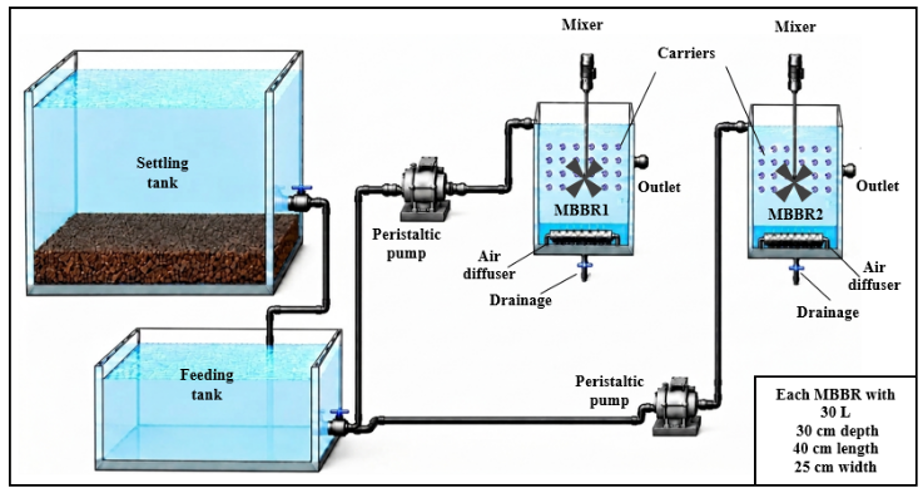
A small-scale experimental MBBR setup was developed and conducted in the outdoor garden of a residential house in Basrah city/Iraq for treating real DWW. The treatment system consisted of a settling tank, feeding tank, and two MBBR basins. The plastic settling tank (500 L capacity) was filled regularly with the raw wastewater from the main manhole by a mechanical pump. This tank functioned as a primary settling basin, where the raw wastewater was retained for 2 h to permit the settling of suspended solids. Then, the wastewater after settling was pumped to the feeding tank, which was used to feed two MBBR units in continuous mode by a peristaltic pump.
Both reactors were operated under the same conditions and were made of rectangular glass basins (30 L capacity) with dimensions of 30 cm depth, 40 cm length, and 25 cm width (Figure 1). The effective volume of each reactor was 25 L. Two taps were installed in each reactor, one placed near the base for drainage, and the other placed 20 cm above the base for sampling. A mechanical mixer was installed to promote oxygen distribution and carrier movement inside the MBBR unit. The mixer was equipped with blades with a length of 6.5 cm and operated at a mixing speed of 30 rpm. A diffused air system (consisting of an air compressor, piping, and air diffuser) was also connected to continuously supply air at a flow rate of 5 L/min to support microbial activity. The dissolved oxygen was maintained within specific values during the experimental period, as mentioned later.
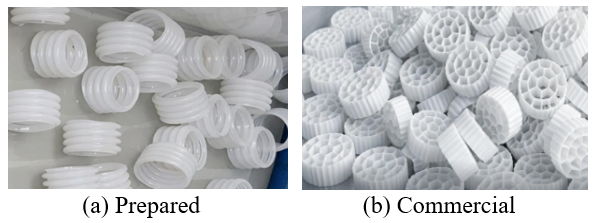
The first reactor (MBBR1) was filled with reused washing machine drain (corrugated) hoses as biofilm carriers, which are called prepared carriers. The flexible PPE hoses were washed and cut into rings with an axial length of 1 cm in the un-extended state, 2.5 cm outer diameter, 509 m2/m3 specific surface area, and 0.91 g/cm3 density. The second reactor (MBBR2) was filled with commercial biofilm carrier elements (Kaldnes, type K3) supplied by the Norwegian company (KMT). These Kaldnes were made of high-density polyethylene with 1 cm axial length, 2.5 cm diameter, 500 m2/m3 surface area, and 0.95 g/cm3 density.
Figure 1. Diagram of treatment stages using moving bed biofilm reactor (MBBR) tanks filled with prepared (MBBR1) and commercial (MBBR2) carriers
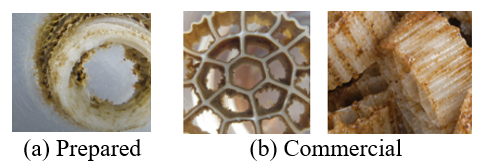
Both carriers (Figure 2) were added to the corresponding MBBR unit at the same filling ratio of 50%, the commonly recommended ratio [2, 15, 22]. The selected filling ratio is equivalent to a bulk carrier volume of 12.5 L per reactor (equivalent to 166 pieces). The weight of each piece of carrier is 0.53 g (prepared) and 0.88 g (commercial), resulting in a total mass of 87.98 g and 146.08 g, respectively.
Figure 2. Bio carriers utilized in moving bed biofilm reactor (MBBR) units
2.2 Experimental operation
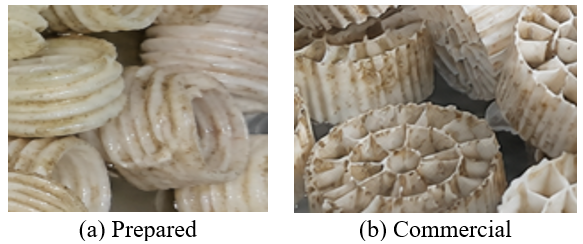
At the beginning, the reactors were operated in a batch mode with continuous aeration for one month as a startup phase. During this phase, the HRT was 8 h, and both units were inoculated with activated sludge taken from Al-Thagher wastewater treatment plant (north Basrah city). Both reactors were fed with inlet wastewater (after settling) at a flow rate of 3.125 L/h, and the biomass development on the carriers was clearly noticed between the third and fourth week (Figure 3).
At the end of the startup phase, the values of mixed liquid suspended solids (MLSS) were within the typical range mentioned by research [23], which were 3,101 mg/L and 3,320 mg/L in MBBR1 and MBBR2, respectively. Also, the ratio of mixed liquor volatile suspended solids to mixed liquor suspended solids (MLVSS/MLSS) was 0.72 in MBBR1 and 0.75 in MBBR2. The pH (6.5–8.5), dissolved oxygen (DO) (7.8–9.2 mg/L), and temperature (14.4–28.9 ℃) values were within the suitable range for biological treatment and for starting the main phase.
After that, the main experimental phase was started and operated for three months from 2/2/2026 to 28/4/2026. Both reactors were operated in parallel and fed with DWW after settling in a continuous mode with continuous aeration. The flow rate was 3.125 L/h, and HRT was kept at 8 h. The pH values (7.9–9.2), DO (5.1–6.9 mg/L), and MLSS (3,110 to 3,008 mg/L within MBBR1 and 3,295 to 3,083 mg/L within MBBR2) confirmed the reactors' suitability for treatment purposes. During the operation period, samples were collected regularly between 9 and 10 A.M. from each MBBR reactor at five-day intervals and directly transported to an independent laboratory for analyses. A five-day interval of sampling was selected based on preliminary monitoring indicating that daily sampling did not achieve meaningful variation in measured parameters. The regular sampling over time was treated as repeated measurements from each reactor rather than reactor replicates.
Figure 3. Biofilm development
All tests were implemented according to the standard methods of water and wastewater examination [24]. The removal efficiency of each studied parameter was calculated according to Eq. (1).
The organic and nitrogen loading rates were calculated according to the MBBR working volume (25 L), influent flow rate (3.125 L/h), and the influent concentrations using Eq. (2). The values of NH3 and NO3- were converted to NH3-N and NO3-N, respectively, for computing the nitrogen loading rate.
$R E(\%)=\frac{I C-O C}{I C} \times 100$ (1)
$L R=\frac{ {flow \,rate} \times I C}{{Reactor\,volume }}$ (2)
where, RE is removal efficiency, IC is inlet concentration, OC is outlet concentration, and LR is loading rate.
The values of organic loading rates were 1.223 ± 0.0899 kg BOD5/m3∙day and 2.497 ± 0.158 kg COD/m3∙day. The ammonia-nitrogen and nitrate-nitrogen loading rates were 1.462 ± 0.062 and 0.0203 ± 0.003 kg N/m3.day, in that order.
2.3 Data analysis
Microsoft Excel and IBM Statistics SPSS version 22 were used to analyze the data. The observed data for each reactor consisted of 18 observations (n = 18) for each parameter. Because the results of both reactors were collected on the same date, the measurements were treated as paired observations. Normality tests were implemented using the Shapiro-Wilk test.
The dataset of TSS, total dissolved solids (TDS), BOD5, COD, and PO43- were normally distributed (p > 0.05), and therefore a paired samples t-test was used. Both NO3- and NH3 data were non- normally distributed (p < 0.05), and therefore the Wilcoxon signed-rank test was applied for comparing the efficiency of MBBR1 and MBBR2 for pollutant removal.
3.1 Domestic wastewater characteristics
The collected DWW was analyzed regularly to assess the variation in the raw wastewater characteristics during the whole experimental period. Also, the characteristics of the DWW after settling to feed the MBBR unit (inlet DWW) were considered and evaluated by comparison with the Iraqi effluent limits. Table 1 presents the wastewater characteristics before and after settling. The standard deviation, maximum, and minimum values of raw DWW exhibited small variation in the wastewater characteristics along the study period. This variation is attributed to the difference between sampling months or daily domestic activities (Table 1).
Table 1. Raw and settled (inlet) wastewater characteristics
|
Parameter |
Raw |
Inlet |
Iraqi Standard |
Removal % |
||||
|
Mean |
Max |
Min |
Mean |
Max |
Min |
|||
|
Temp. (℃) |
20.83 |
28.9 |
14.4 |
20.83 |
28.9 |
14.4 |
- |
- |
|
pH (-) |
7.6 |
8.05 |
7.4 |
7.6 |
8.05 |
7.4 |
6–9.5 |
- |
|
DO (mg/L) |
0.2 |
0.8 |
0.0 |
0.14 |
0.5 |
0.0 |
- |
- |
|
TDS (mg/L) |
1477.7 |
2300 |
1200 |
1477.7 |
2300 |
1200 |
1500 |
- |
|
EC (µS/cm) |
2510.6 |
3841 |
2100 |
2510.6 |
3841 |
2100 |
400 |
- |
|
TSS (mg/L) |
701.3 |
822.0 |
605.0 |
334.4 |
488.0 |
277.0 |
60 |
52.3 |
|
BOD5 (mg/L) |
522.5 |
605 |
420 |
409.2 |
462 |
344.4 |
40 |
21 |
|
COD (mg/L) |
990.3 |
1090 |
920 |
832.2 |
939.6 |
754.4 |
100 |
16 |
|
NH3 (mg/L) |
629.3 |
670 |
591 |
591.7 |
626.5 |
549.2 |
10 |
6 |
|
NO₃- (mg/L) |
33.6 |
40 |
24 |
30 |
36 |
21.8 |
50 |
10.5 |
|
PO₄³- (mg/L) |
42.7 |
52 |
30 |
42.3 |
51.5 |
29.7 |
3 |
10.5 |
The raw DWW was collected directly from the main sewage manhole serving a single residential house in Hay Al-Ghadeer district, Basrah Governorate (Iraq). In terms of organic matter and nutrients, the wastewater showed relatively high-strength characteristics, which potentially reflect household activities and other drainage inputs linked with the residential property. Domestic sources included kitchen discharges containing food residues, fats, and oils; wastewater from toilets containing organics and nitrogenous compounds; and household detergents and other cleaning products. In addition, wastewater generated during car washing and residential garage cleaning, which contained dirt, oily residues, and cleaning agents, may have contributed to the organic load. A high organic load of raw DWW in Basrah city was confirmed by the study [25]. The authors reported COD concentrations between 240 mg/L and 1122 mg/L, which were within the values documented in this study (990–1090 mg/L).
Furthermore, the car-wash and garage cleaning drainage passed through the house garden before reaching the manhole. This drainage water may have transported fertilizer residues from the garden soil to the main manhole. Therefore, the nitrogenous domestic wastes and the potential mobility of residual fertilizer may be affecting the ammonia concentrations in the studied DWW. It is worth noting that a high ammonia concentration in raw DWW was also reported by the study [26]; the authors reported ammonia concentrations ranging between 722 and 1652 mg/L in raw greywater from residential houses in Basrah city (Abu Al-Khaseeb district), indicating similarly high ammonia values in locally collected residential houses.
The differences in values between the reported studies and the current study may be attributed to the sampling period, household activities, and the variation in local sewage conditions. Therefore, the studied wastewater characteristics represented the wastewater used in the experimental investigation and do not generalize to all DWW in Basrah city.
After settling, the characteristics of inlet DWW showed that the BOD5, COD, TSS, and NH3 were extremely higher than the Iraqi effluent limits [4], and therefore require a secondary treatment stage. The removal efficiency of the settling stage for BOD5, COD, and TSS was found to be 21.7%, 16%, and 52.3%, respectively. Some parameters are not affected by settling because they are dissolved and cannot be removed by sedimentation. The BOD5/COD ratio of both the raw and inlet DWW was more than 0.3, indicating the wastewater suitability for biological treatment [27].
3.2 Inlet and outlet concentrations of domestic wastewater treated by moving bed biofilm reactor
3.2.1 Organic matter concentrations
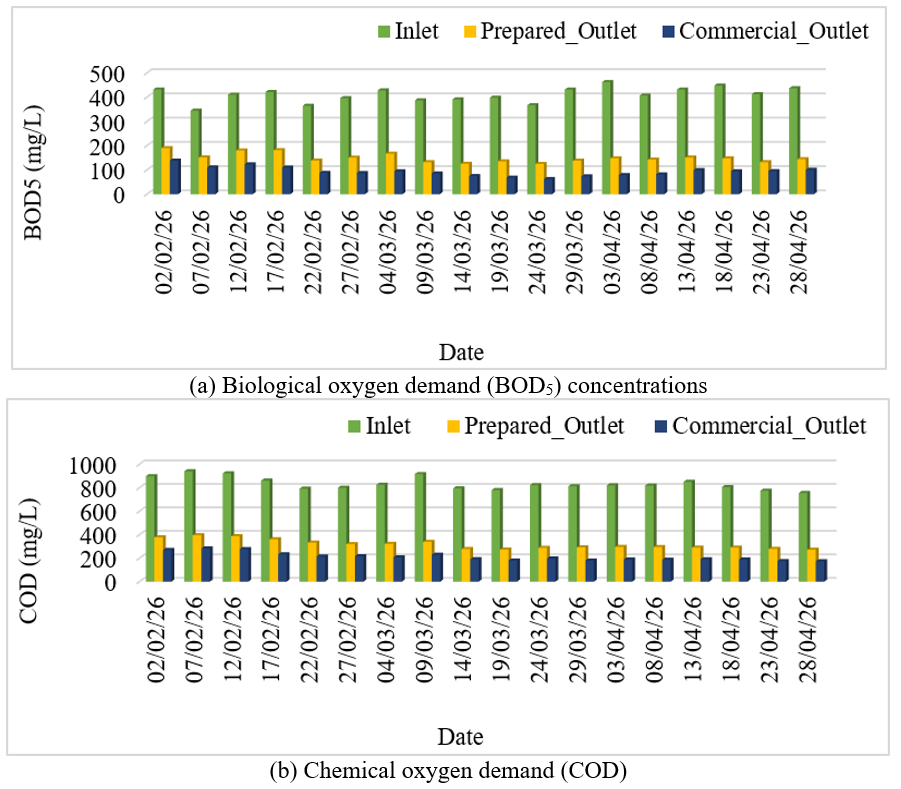
The results of DWW treatment by the MBBR unit filled with prepared and commercial carriers, based on BOD5 and COD inlet and outlet concentrations for the period between 2/2/2026 and 28/4/2026, are presented in Figure 4. The mean values of outlet organic matter concentrations are shown in Table 2. The inlet concentrations of BOD5 and COD indicated a high loading rate of organic matter, as the values ranged between 344–462 mg/L and 754–939.6 mg/L, respectively. The BOD5/COD ratio of inlet DWW was 0.45-0.5, indicating the wastewater biodegradability [27]. In both reactors, the outlet concentrations of BOD5 (Figure 4(a)) and COD (Figure 4(b)) decreased to 125–190 mg/L and 271.6–394.6 mg/L, respectively, in MBBR1 and 62–138 mg/L and 173.5-281.9 mg/L, respectively, in MBBR2.
Figure 4. Variation of inlet and outlet concentrations of organic matter along the experimental period
The mean outlet concentrations of BOD5 and COD treated by MBBR filled with commercial carriers were lower than those for MBBR filled with prepared carriers (Table 2). This is attributed to the manufacturing characteristics of commercial carriers in terms of porosity and the surface ability for high bacterial attachment [3]. The low variation in outlet concentrations along the study period reflects the variation of inlet concentrations and confirms the effect of the acclimatization step during the startup phase on the stability of both reactors. Note that the values of DO within the aerated reactors ensure the presence of enough oxygen for heterotrophic bacteria to grow fast and oxidize the biodegradable organic matter.
3.2.2 Nutrient concentrations
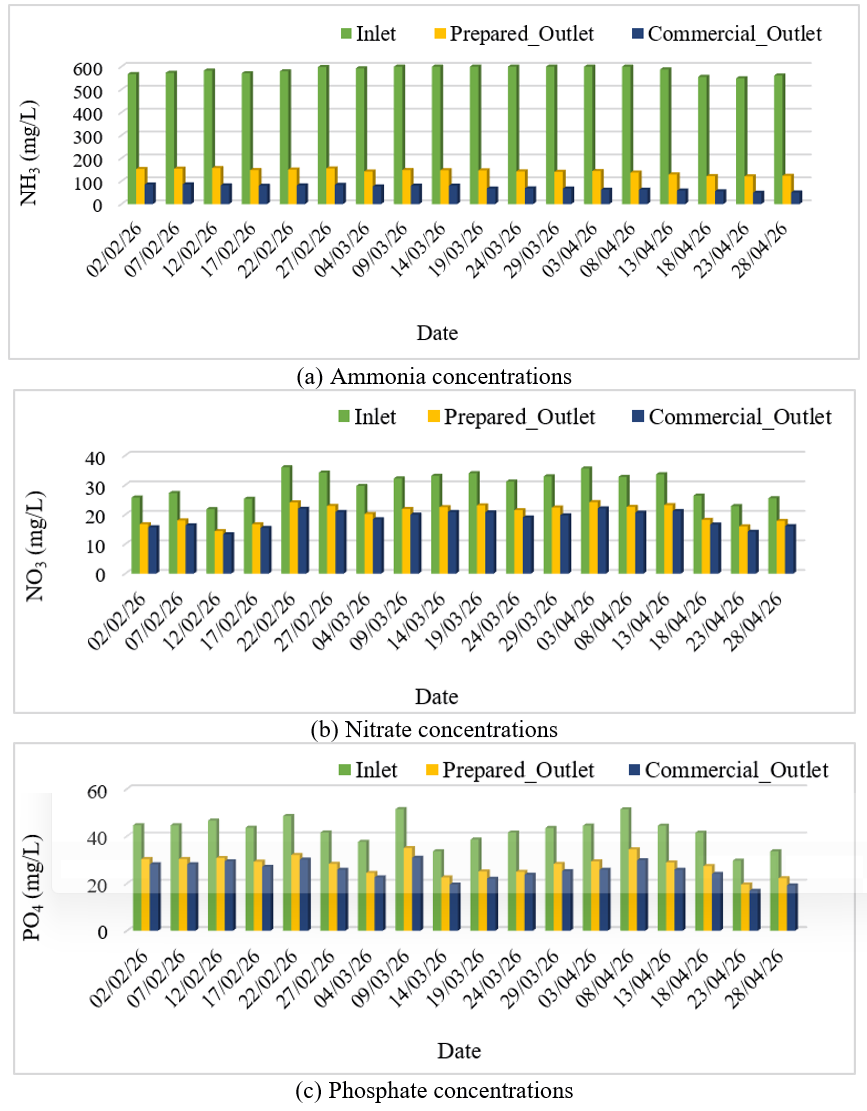
Figure 5 shows the concentrations of nutrients (NH3, NO3-, PO43-) before and after treating the DWW with the MBBR unit filled with prepared and commercial carriers over the period between 2/2/2026 and 28/4/2026. Table 2 presents the mean outlet values of nutrients.
The results showed extremely high and steady inlet concentrations of NH3 (549–626.5 mg/L) during the fourth month of experimental work. The outlet NH3 concentrations exhibited a progressive reduction to 157.3–121 mg/L in MBBR1 and 49.4–86 mg/L in MBBR2 (Figure 5(a)). This highlighted the day-by-day growth of autotrophic bacteria with continuous oxygen availability for ammonia oxidation by nitrification processes. Despite the high inlet concentrations, the steady drop ensured that there was no toxicity inhibition affecting the bacteria.
Table 2. Mean outlet concentrations of organic matter and nutrients
|
Parameter |
Inlet |
Outlet Prepared Carriers |
Outlet Commercial Carriers |
|
BOD₅ (mg/L) |
409.2 |
148.8 |
92.3 |
|
COD (mg/L) |
832.2 |
315.7 |
209.6 |
|
NH₃ (mg/L) |
591.7 |
142.6 |
71.0 |
|
NO₃- (mg/L) |
30.0 |
20.4 |
18.5 |
|
PO₄³- (mg/L) |
42.3 |
27.9 |
25.2 |
Although both reactors showed significant NH3 oxidation, which would be expected to promote NO3- formation by nitrification, the outlet concentrations of NO3- remained lower than the inlet values (Figure 5(b)). The outlet NO3- concentrations ranged between 14.4 and 24.2 mg/L in MBBR1, and 13.3 and 22.1 mg/L in MBBR2. Compared with the inlet values (21.8–36 mg/L). This drop in nitrate concentration may occur in addition to the nitrification process. This is possibly explained by oxygen gradients within the attached biofilm. Although aerobic conditions predominate in both reactors, as the DO level in the bulk liquid was maintained between 5.1–6.9 mg/L, the formation of a thick and dense biofilm on the carrier surface that may have established anoxic microzones within the deep layers of the biofilm could consequently provide favorable conditions for denitrifying bacteria and support denitrification [28]. Therefore, the possible contributing mechanism for the observed nitrogen removal could be simultaneous nitrification and denitrification.
The results in Figure 5(c) confirmed the presence of a linear correlation between the inlet (29.7–51.5 mg/L) and outlet PO43- values (19.6–34.99 mg/L in MBBR1, and 16.9–30.9 mg/L in MBBR2). This pattern of outlet concentrations may be attributed to the dominant mechanism responsible for phosphorus reduction in MBBR after the startup phase. The expected mechanism is possibly associated with microbial phosphorus assimilation based on biofilm thickness, which tends to be relatively stable after the startup, in addition to precipitation and/or adsorption. Also, the limited differences between the outlet PO43- concentrations using plastic carriers and commercial carriers suggest that the type of carriers has a limited impact on the overall PO4 reduction in the system [29]. The mean outlet concentrations (Table 2) of NH3, NO3-, and PO43- were higher in MBBR1 than the corresponding values in MBBR2.
Figure 5. Inlet and outlet concentrations of nutrients along the experimental period
3.3 Moving bed biofilm reactors removal efficiency
3.3.1 Organic matter removal
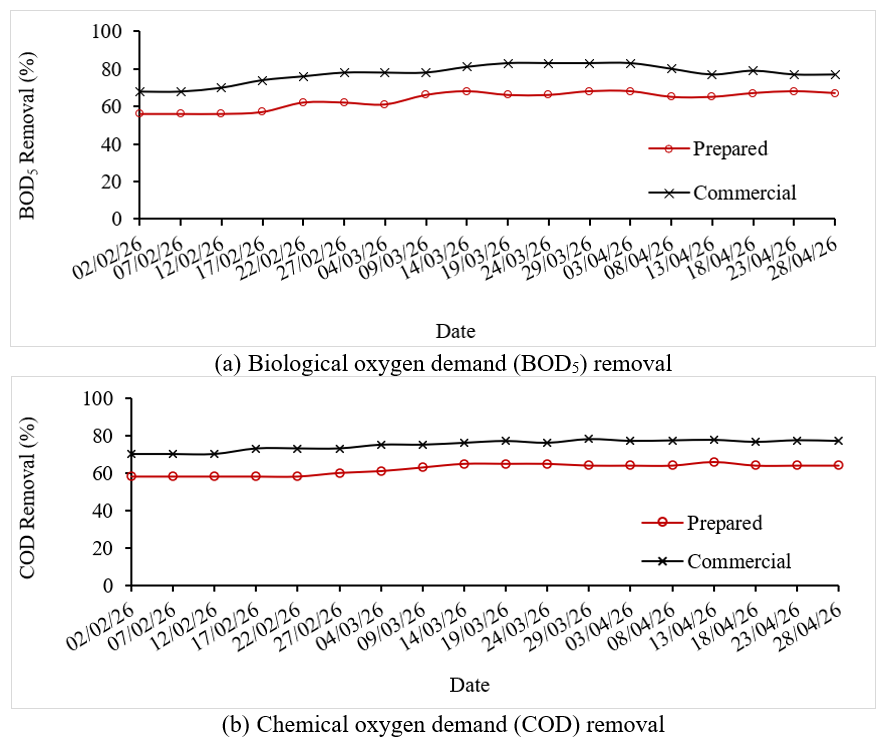
Figure 6 presents the removal efficiency of organic matter by MBBR units filled with prepared (MBBR1) and commercial (MBBR2) bio-carriers during the experimental period, after the startup phase.
The removal efficiency of BOD5 (Figure 6(a)) and COD (Figure 6(b)) showed a clear difference between the prepared and commercial carriers. The BOD5 removal efficiency was 56–68% in MBBR1 and 68–83% in MBBR2. Whereas COD removal efficiency was 58–66% in MBBR1 and 70–78% in MBBR2. Both reactors showed a gradual improvement in BOD5 and COD removal values along the study period, followed by relatively stable performance with some flocculation. This pattern is attributed to the state of microbial activity within the reactors. At the beginning of the main phase, organic matter degradation occurred due to the active biofilm, which is created by the heterotrophic microorganisms that occupy the carrier surfaces [30]. This was confirmed by the MLSS concentration at the end of the startup phase, which was 3101 mg/L in MBBR1 and 3220 in MBBR2 mg/L, linked with the presence of aerobic conditions validated by DO level (7.8–9.2 mg/L). Then, during the main experimental phase, MLSS values were varied between 3110 and 3008 mg/L within MBBR1 and 3295 and 3083 mg/L within MBBR2, indicating that the biomass development was relatively unchanged after acclimatization [30]. Although DO decreased (4.7–6.5 mg/L) and the treatment flocculation, the values were still within the aerobic conditions, confirming the reactors' efficiency and continuous biofilm activities. Both BOD5 and COD removal efficiencies in the last period of the experiment confirmed that both reactors reached relatively stable biological conditions. The remaining flocculation was attributed to the variation in raw wastewater characteristics day by day.
Similar outcomes were reported by the study [20], which confirmed the effectiveness of recycled plastic carriers for organic matter reduction from DWW. This indicates that discarded plastic hose can provide suitable surfaces for the development of biofilm to promote organic matter degradation using MBBR units.
Figure 6. Removal efficiency of organic matter treated by a moving bed biofilm reactor (MBBR) filled with prepared and commercial carriers
3.3.2 Nutrient removal
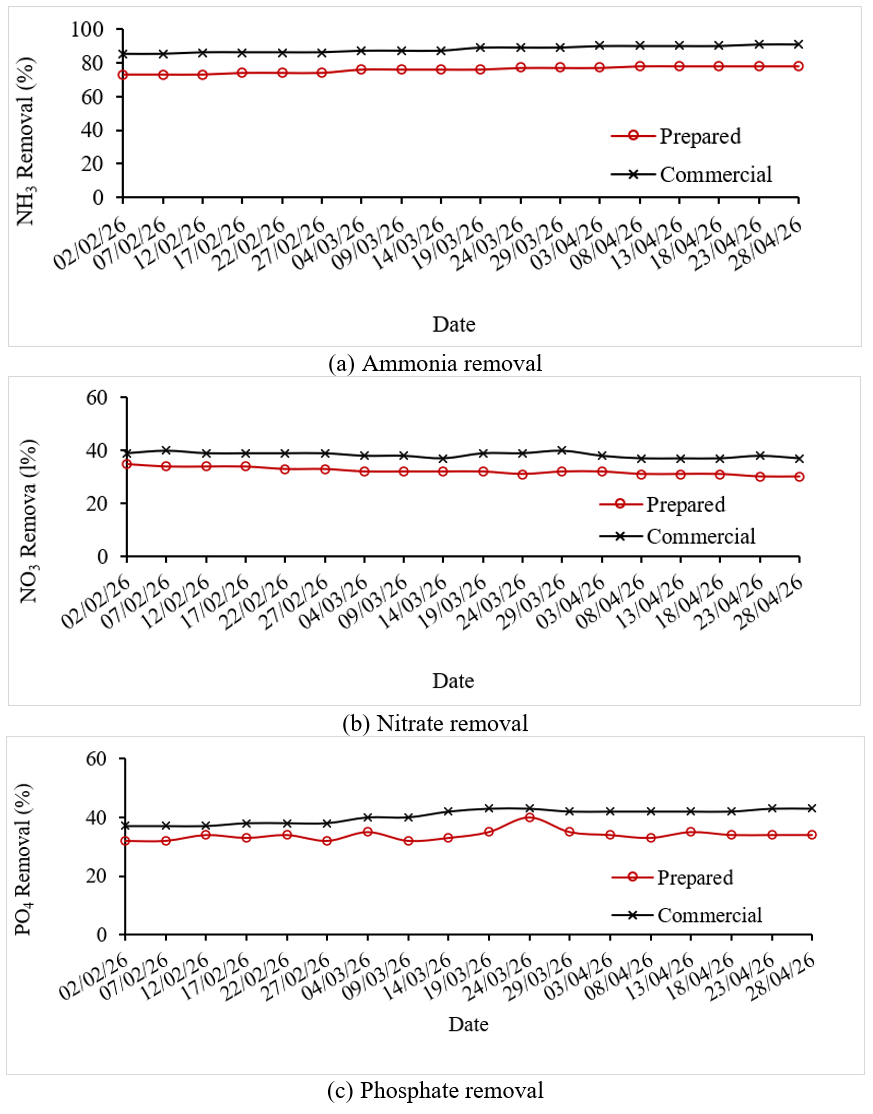
The trend of nutrient removal efficiency by MBBR along the study period from 2/2/2026 to 28/4/2026 is presented in Figure 7.
The results showed a significant difference in NH3 removal (Figure 7(a)) between the two reactors. The removal efficiency of NH3 (85–91%) in MBBR2 containing commercial carriers outperformed NH3 removal (73–78%) in MBBR1 containing prepared carriers. These data indicate effective nitrification in both reactors, which is supported by the presence of aerobic conditions (confirmed by DO level) as a suitable environment for activating nitrifying bacteria. Normally, the MBBR units are suitable for nitrification because the MBBR systems are characterized by their ability to retain the slow-growing nitrifying bacteria within the biofilm attached to carrier surface, as a result reducing the risk of their loss with the outlet water [31]. The gradual increase in removal, followed by a relatively stable pathway along the study period, likely confirmed that nitrifying microorganisms established and acclimatized during the startup phase, reaching maturation conditions during the main phase. In this study, the outcomes of a high rate of ammonia removal were consistent with reported values for MBBR units. Also, the authors confirmed high NH3 reduction in MBBR under specific conditions, including biofilm development, type of carriers, DO, HRT, loading rate, and temperature records [32].
In contrast to NH3, results showed low NO3- removal efficiency in both reactors, which is attributed to the absence of a fully anaerobic or anoxic environment during the operation of both reactors. Higher nitrate removal (Figure 7(b)) was observed in MBBR with commercial carriers (37–40%) than in MBBR with prepared carriers (30–35%). This may be due to the variation in biofilm thickness on the carrier surface and the consequent availability of limited oxygen micro-zones and biodegradable organic carbon. The outcomes of NO3- reduction combined with the aerobic conditions in both reactors may suggest the occurrence of simultaneous nitrification and denitrification within the biofilm [28, 32], which confirms that the outer surface of the biofilm supports the nitrification process. Whereas, the presence of limited oxygen micro-zones inside the deeper layer of thick biofilm likely provides favorable conditions for denitrification, in addition to the organic matter biodegradation (confirmed by COD and BOD5 removal, Figure 6) that works as an electron donor for nitrate removal.
The results presented in Figure 7(c) showed a small development in PO43- removal efficiency in both MBBRs along the experimental period. The values increased slightly from 32% to 40% in MBBR1 and from 37% to 43% in MBBR2, confirming the small effect of commercial carriers in phosphate removal. This is attributed to differences in carrier surface, formed biomass, and biofilm development. The high impact of biofilm thickness on PO43- removal is reported by the study [33], and this confirmed the study outcomes, because the visual monitoring showed small differences in attached biofilm thickness between the two types of carriers. reported by. From the longitudinal profile, it is clear that the removal increment before 29/3/2026 reflects the development of microbial biomass reaching the maturation stage after 29/3/2026, although the values did not improve significantly because the systems were relatively stable after the startup phase. The maintained DO level (4.7–6.5 mg/L) in MBBRs could confirm that the appropriate mechanism for PO43- reduction is microbial assimilation and retention within the biofilm instead of biological removal [34].
The efficiencies of nutrient removal achieved in this study were lower than those reported by the study [21], which may be attributed to the type of plastic carriers, loading rate, and plastic properties. Nevertheless, the achieved considerable nutrient removal confirms the effectiveness of the studied plastic carrier.
Figure 7. Removal efficiency of nutrients treated by a moving bed biofilm reactor (MBBR) filled with prepared and commercial carriers
3.4 Treatment comparison of prepared and commercial carriers
The mean removal efficiency of organic matter and nutrients in both reactors is presented in Table 3.
Table 3. Mean removal efficiency of moving bed biofilm reactor (MBBR) units
|
Parameter |
Removal (%) |
|
|
Prepared |
Commercial |
|
|
Biological oxygen demand |
63.6 ± 4.54 |
77.4 ± 4.82 |
|
Chemical oxygen demand |
62.2 ± 3 |
74.9 ± 2.77 |
|
Ammonia |
75.9 ± 1.91 |
88.0 ± 2.09 |
|
Nitrate |
32.2 ± 1.42 |
38.3 ± 1.03 |
|
Phosphate |
33.9 ± 1.86 |
40.4 ± 2.36 |
|
Total suspended solids |
87 ± 3.11 |
91 ± 2.71 |
|
Total dissolved solids |
10 ± 1.75 |
10 ± 1.11 |
Based on the mean removal efficiency, the results showed that the MBBR unit filled with commercial bio carriers is outperformed by the corresponding unit filled with prepared carriers from a washing machine hose. The mean removal values of BOD5, COD, PO43-, and TSS showed statistically significant differences (p < 0.001, paired t-test) between commercial and prepared carriers. The same results were obtained for NH3 and NO3- (p < 0.001, Wilcoxon signed-rank test). However, there were no significant differences in TDS removal using both carriers (p < 0.001, paired t-test), which may be because TDS removal in MBBR is very limited, and the carriers do not affect TDS reduction. It is important to notice that the MBBR filled with prepared bio-carriers achieved relatively considerable removal efficiency of pollutants, demonstrating the potential of these carriers as a viable alternative compared with the commercial ones. Therefore, utilizing locally prepared plastic carriers could be a good solution for achieving satisfactory treatment performance. The findings of this study are consistent with those reported by the study [19], which assessed the utilization of plastic caps as biofilm carriers in an MBBR unit.
3.5 Biofilm formation and scanning electron microscopy analyses
Although both MBBR units exhibited relatively stable performance, indicating stable biofilm growth on the carrier surface, visual observation at the end of the main phase revealed differences in biofilm development between the two types of carriers.
The prepared carriers showed a clear development in biofilm on the outer parts of the carrier surface compared with biofilm accumulation on the inner surface. Whereas, the commercial carriers exhibited relatively less biomass development on their outer surfaces compared with the inner surfaces (Figure 8).
Figure 8. Biofilm accumulation on carrier surface
Similar findings have been reported for K1 carriers in comparison with other types, confirming that carrier geometry and surface characteristics influence the biofilm attachment and distribution [35]. These outcomes suggest that long-term operation exceeding 12 months may be required to allow further biofilm development and uniform distribution of biomass across both inner and outer surfaces.
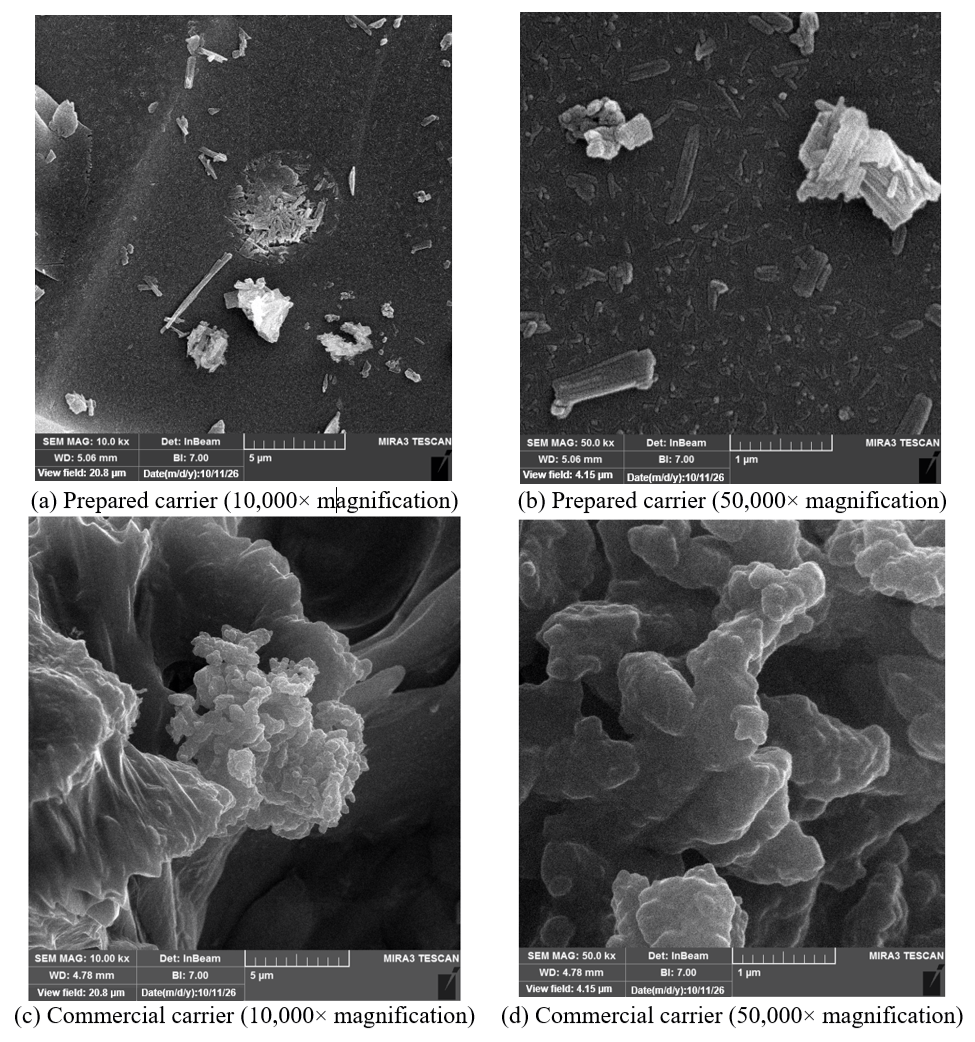
The scanning electron microscopy (SEM) analyses were used to assess the surface morphology and biofilm development of both carriers after treatment (Figure 9). The SEM images of prepared carriers derived from recycled washing machine hose (Figures 9(a) and (b)) showed irregular aggregates, flake-like structures, and heterogeneous surface deposits. These features may indicate the accumulation of biological and non-biological materials during the operation of the MBBR unit. In comparison, the SEM photo of commercial K3 carrier (Figures 9(c) and (d)) showed compact, irregular aggregates and an interconnected surface structure. These features may be linked with the accumulation of dense attached biomass and biofilm development on the surfaces of carriers. The engineering design and structure of K3 carriers may provide sheltered regions for the attached biomass, although this explanation needs more evidence. At higher magnification, the SEM images for both carriers showed interconnected structures and exhibited heterogeneous surface morphologies on plastic surfaces, which is consistent with previously reported SEM studies of biofilm on plastic surfaces [36, 37].
Figure 9. Scanning electron microscopy (SEM) micrograph
Table 4. Estimated carrier cost comparison
|
Parameter |
Recycled Washing Machine Hose (Prepared Carriers) |
K3 Media (Commercial Carriers) |
|
Market packaging unit: Length or volume |
Per meter length |
Per 6 US gallons (22.7 L) |
|
Market price per package (USD) |
New: 0.67; Used: 0.33 |
59.95 |
|
Quantity required per reactor (covered 50% filling ratio) |
166 pieces equivalent to 12.5 L (1.66 m length) |
|
|
Equivalent cost of material used in each reactor (USD) |
New: 1.11; Used: 0.55 |
33.0 |
|
Transport/ Shipping cost (USD) |
1.98 |
105.32 |
|
Estimated cost of preparation labor (USD) |
6.61 |
- |
|
Total cost (USD) |
New: 9.70; Used: 9.14 |
138.3 |
3.6 Cost comparison and plastic reuse
The values of preliminary estimated cost for both studied carriers are summarized in Table 4. These values are estimated based on the material used and the quantity of carriers in each reactor rather than life-cycle cost analyses. The total final cost was 9.7 USD (new)–9.14 USD (used) for washing machine hose versus 138.3 USD for commercial K3 carriers.
The plastic waste reduction in this study was not computed directly, but the quantity of reused washing machine hose that applied as a biofilm carrier was determined. It was calculated based on the mass of discarded plastic pieces (0.53 g) and their number (166). The mass of recycled hose in each reactor was approximately 88 g, giving a total of 176 g for both reactors. This quantity could be small at laboratory experimental scale; however, it could become valuable at large-scale wastewater treatment plants in the field.
3.7 Limitation of the study
Despite the study results, some limitations in this study should be acknowledged. The SEM analysis was implemented only for the carriers after utilization. Therefore, SEM provides surface morphology of the carriers after treatment, but no comparison between the original and used carriers is provided. In addition, roughness, porosity, and wettability measurements were not applied because of the limited availability of specialized characterization facilities in the country and the high financial cost linked with implementing these tests abroad. The evaluation of washing machine plastic hoses and K3 carriers was limited during the experimental period, and the long-term durability and lifespan evaluation could not be assessed. Only one MBBR unit for each type of carrier was implemented during the experimental operation, and multiple independent replicates were not included due to the limitations in space availability, financial resources, laboratory analysis costs, and experimental facilities.
This research assessed the performance of two MBBR units operated in a continuous flow mode under continuous aeration conditions for treating DWW. Each MBBR was filled with 50% of different carrier elements: conventional commercial carriers and prepared plastic carriers. The characteristics of raw and settled DWW were more than the standard limits for safe discharge, confirming the treatment importance. Both reactors, after acclimatization, achieved good removal efficiency for organic matter and nutrients with an HRT of 8 h. The commercial carriers achieved high BOD5 and COD removal efficiencies of approximately 77% and 75%, compared with 64% and 62% for the prepared carriers, respectively. Ammonia removal confirmed the effectiveness of biological activity in both reactors, and the commercial carriers achieved 88% compared with 76% for the prepared carriers. Both reactors showed low mean NO3- (38% and 32%) and PO43- (40% and 34%) removal rates using commercial and prepared carriers, in that order. SEM analysis revealed distinct surface morphologies on both carrier types. Although the commercial carriers significantly (p < 0.001) outperformed the prepared carriers, the latter showed its ability to consistently support biofilm development and achieve relatively considerable removal efficiency of DWW pollutants. This suggests the technical potential of prepared carriers as a low-cost and effective alternative biofilm carrier.
The findings of this study exhibit the potential of reusing discarded plastic material as biofilm carriers in MBBR units, highlighting their potential as an effective alternative for wastewater treatment and plastic waste valorization. Further research to improve the system efficiency by operating the system under consecutive aerobic-anaerobic conditions with different HRT is required. In addition, the evaluation of carrier lifespan, long-term operation, and cost-effectiveness is recommended in future studies.
The authors express appreciation to the Department of Civil Engineering (Basrah University) for supporting laboratories and the facilities to carry out the research.
[1] Shaha, S.S., Munavalli, G.R., Joshi, S.G. (2019). Study on domestic wastewater treatment by moving bed sequencing batch reactor. International Journal of Engineering Sciences and Management (VTU), 1(2): 71-79.
[2] Al-Aboodi, A.H., Hassan, A.A., Al-Shammari, M.H.J. (2020). Performance of combined A/O moving-bed biofilm reactors for biological nutrients removal from domestic wastewater under different gas/water ratios. Journal of Engineering, 2020: 9632010. https://doi.org/10.1155/2020/9632010
[3] Leyva-Díaz, J.C., Monteoliva-García, A., Martín-Pascual, J., Munio, M.M., García-Mesa, J.J., Poyatos, J.M. (2020). Moving bed biofilm reactor as an alternative wastewater treatment process for nutrient removal and recovery in the circular economy model. Bioresource Technology, 299: 122631. https://doi.org/10.1016/j.biortech.2019.122631
[4] Al-Sulaiman, A.M., Mhalhal, A.H. (2025). Improving the efficiency of the biological treatment of hospitals’ wastewater by using MBBR with K1 and K3 biofilm carriers. The Eurasia Proceedings of Science, Technology, Engineering and Mathematics (EPSTEM), 37: 1012-1025.
[5] Zhao, S., Liu, J.H., Wang, T., Liu, C.Y. (2026). Biofilm carriers and their application in wastewater treatment: A review. Water Science and Engineering, 19(3): 360-375. https://doi.org/10.1016/j.wse.2026.06.002
[6] Prendergast, J., Rodgers, M., Healy, M.G. (2005). The efficiency of a sequencing batch biofilm reactor in organic carbon and phosphorus removal. Journal of Environmental Science and Health, Part A, 40(8): 1619-1626. https://doi.org/10.1081/ESE-200060670
[7] Jariwala, H., Shah, D. (2018). A novel concept for treatment of the domestic sewage: Sequential batch biofilm reactor. In Proceedings of International Conference on ACAEE 2018. https://www.isca.co.in/SOUV_PROC/conference/ISBN%20978-93-86675-32-3.pdf.
[8] Mohammed, Z.B., Tarish, H.A., Jihad, H.A., Hasan, Y.R., Jaber, A.A. (2021). Municipal wastewater treatment using moving bed biofilm reactor (MBBR). Journal of Green Engineering, 11(1): 579-594.
[9] Casas, M.E., Chhetri, R.K., Ooi, G., et al. (2015). Biodegradation of pharmaceuticals in hospital wastewater by staged moving bed biofilm reactors (MBBR). Water Research, 83: 293-302. https://doi.org/10.1016/j.watres.2015.06.042
[10] Yang, X., López-Grimau, V., Vilaseca, M., Crespi, M. (2020). Treatment of textile wastewater by CAS, MBR, and MBBR: A comparative study from technical, economic, and environmental perspectives. Water, 12(5): 1306. https://doi.org/10.3390/w12051306
[11] Chalipa, Z., Hosseinzadeh, M., Nikoo, M.R. (2024). Performance evaluation of a new sponge-based moving bed biofilm reactor for the removal of pharmaceutical pollutants from real wastewater. Scientific Reports, 14: 14240. https://doi.org/10.1038/s41598-024-64442-5
[12] Ahmadlouydarab, M., Mehrazaran, M. (2019). Application of lab-scale MBBR to treat industrial wastewater using K3 carriers: Effects of HRT, high COD influent, and temperature. International Journal of Environmental Sciences & Natural Resources, 20(2): 35-42. https://doi.org/10.19080/IJESNR.2019.20.556031
[13] Sandi, M.W., Samawi, M.F., Lanuru, M. (2025). Analysis of the effectiveness of moving bed biofilm reactor and anaerobic-aerobic methods in reducing pollutants in domestic wastewater at the Kebun Melati reservoir wastewater treatment plant, Central Jakarta. Ecological Engineering & Environmental Technology, 26(7): 71-82. https://doi.org/10.12912/27197050/204788
[14] Ødegaard, H. (2006). Innovations in wastewater treatment: The moving bed biofilm process. Water Science & Technology, 53(9): 17-33. https://doi.org/10.2166/wst.2006.284
[15] Aygun, A., Nas, B., Berktay, A., Ates, H. (2014). Application of sequencing batch biofilm reactor for treatment of sewage wastewater treatment: Effect of power failure. Desalination and Water Treatment, 52(37-39): 6956-6965. https://doi.org/10.1080/19443994.2013.823354
[16] Freitas, B.D.O., Leite, L.D.S., Hoffmann, M.T., Lamon, A.W., Daniel, L.A. (2022). Application of alternative carriers without protected surface in moving bed biofilm reactor for domestic wastewater treatment. Water Practice & Technology, 17(2): 544-554. https://doi.org/10.2166/wpt.2022.003
[17] Pratap, V., Kumar, R., Kumar, S., Yadav, B.R. (2024). Optimization of moving bed biofilm reactors for the treatment of municipal wastewater. Environmental Research, 241: 117560. https://doi.org/10.1016/j.envres.2023.117560
[18] Barwal, A., Chaudhary, R. (2014). To study the performance of biocarriers in moving bed biofilm reactor (MBBR) technology and kinetics of biofilm for retrofitting the existing aerobic treatment systems: A review. Reviews in Environmental Science and Bio/Technology, 13(3): 285-299. https://doi.org/10.1007/s11157-014-9333-7
[19] Hong Anh, D., Son, T.H., Anh, T.T., Huyen Nga, T.T., Huyen, D.T.T. (2024). Reuse of plastic waste as bio-carriers for domestic wastewater treatment: An approach towards circular economy. Journal of Science and Technology in Civil Engineering, 18(3): 114-124. https://doi.org/10.31814/stce.huce2024-18(3)-09
[20] Pham, T.V., Huynh, T.L., Le, V.H., Kumar, P. (2026). Use of recycled single-use plastics as bio-carrier for wastewater treatment. Next Research, 10: 101870. https://doi.org/10.1016/j.nexres.2026.101870
[21] Frkova, Z., Cochereau, B., Plattes, M., Roussel, J. (2026). Circular-by-design biofiltration media from recycled polymers for decentralised wastewater treatment. Journal of Water Process Engineering, 93: 110888. https://doi.org/10.1016/j.jwpe.2026.110888
[22] Lanzetta, A., Papirio, S., Di Capua, F., et al. (2026). Comparing intermittent aeration strategies in a pilot-scale moving-bed biofilm reactor treating real municipal wastewater under variable carbon and nitrogen loadings. Water, 18(12): 1467. https://doi.org/10.3390/w18121467
[23] Deowan, S.A., Bouhadjar, S.I., Hoinkis, J. (2015). Membrane bioreactors for water treatment. In Advances in Membrane Technologies for Water Treatment, Woodhead Publishing Series in Energy, pp. 155-184.
[24] APHA. (2005). Standard Methods for the Examination of Water and Wastewater. 21st ed. American Public Health Association/American Water Works Association/Water Environment Federation, Washington, DC, USA.
[25] Mohammed, R.A., Mohammed, A.A., Hassan, I.H. (2012). Characteristics of raw domestic sewage for Basrah City. Basrah Journal for Engineering Sciences, 12(1): 60-71.
[26] Aylan, R.A., Al-Abbawy, D.A., Yaseen, D.A. (2025). Greywater treatment using constructed wetlands modified with biochar and ceramic media. Environmental Technology, 46(25): 5189-5213. https://doi.org/10.1080/09593330.2025.2530790
[27] Metcalf & Eddy, AECOM. (2014). Wastewater Engineering: Treatment and Resource Recovery. 5th ed. McGraw-Hill Education.
[28] Bhattacharya, R., Mazumder, D. (2021). Simultaneous nitrification and denitrification in moving bed bioreactor and other biological systems. Bioprocess and Biosystems Engineering, 44(4): 635-652. https://doi.org/10.1007/s00449-020-02475-6
[29] Sandeep, R., Muscolino, J.F., Macêdo, W.V., et al. (2023). Effect of biofilm thickness on the activity and community composition of phosphorus accumulating bacteria in a moving bed biofilm reactor. Water Research, 245: 120599. https://doi.org/10.1016/j.watres.2023.120599
[30] Fan, J., Ji, F., Xu, X., et al. (2015). Prediction of the effect of fine grit on the MLVSS/MLSS ratio of activated sludge. Bioresource Technology, 190: 51-56. https://doi.org/10.1016/j.biortech.2015.04.035
[31] Di Biase, A., Kowalski, M.S., Devlin, T.R., Oleszkiewicz, J.A. (2019). Moving bed biofilm reactor technology in municipal wastewater treatment: A review. Journal of Environmental Management, 247: 849-866. https://doi.org/10.1016/j.jenvman.2019.06.053
[32] Kumar, K., Sharma, R., Goyal, S.K. (2026). Performance of different biocarriers in MBBR and SBBR systems for wastewater treatment: A review. Water Science and Engineering, 19(1): 97-109. https://doi.org/10.1016/j.wse.2026.01.001
[33] Bhattacharya, R., Mazumder, D. (2023). Performance evaluation of moving bed bioreactor for simultaneous nitrification denitrification and phosphorus removal from simulated fertilizer industry wastewater. Environmental Science and Pollution Research, 30(17): 49060-49074. https://doi.org/10.1007/s11356-023-25708-z
[34] Zheng, Y., Wan, Y., Zhang, Y., et al. (2023). Recovery of phosphorus from wastewater: A review based on current phosphorous removal technologies. Critical Reviews in Environmental Science and Technology, 53(11): 1148-1172. https://doi.org/10.1080/10643389.2022.2128194
[35] Biswas, K., Taylor, M.W., Turner, S.J. (2014). Successional development of biofilms in moving bed biofilm reactor (MBBR) systems treating municipal wastewater. Applied Microbiology and Biotechnology, 98(3): 1429-1440.
[36] Hu, X.B., Xu, K., Wang, Z., Ding, L.L., Ren, H.Q. (2013). Characteristics of biofilm attaching to carriers in moving bed biofilm reactor used to treat vitamin C wastewater. Scanning, 35(5): 283-291. https://doi.org/10.1002/sca.21064
[37] Cowle, M.W., Webster, G., Babatunde, A.O., Bockelmann-Evans, B.N., Weightman, A.J. (2020). Impact of flow hydrodynamics and pipe material properties on biofilm development within drinking water systems. Environmental Technology, 41(28): 3732-3744. https://doi.org/10.1080/09593330.2019.1619844