Sri Ayu Andayani* | Tri Ferga Prasetyo | Miftah Dieni Sukmasari | Acep Atma Wijaya | Muhamad Dendi Purwanto | Yasyfi Anfau Syifa Ramdani
© 2026 The authors. This article is published by IIETA and is licensed under the CC BY 4.0 license (http://creativecommons.org/licenses/by/4.0/).
OPEN ACCESS
This research aims to develop an automated quality detection system for sacha inchi seeds utilizing the You Only Look Once version 8 (YOLOv8) algorithm based on computer vision. The implementation of this method is expected to replace manual assessment processes that are subjective, slow, and inconsistent. The dataset used comprises 1,034 images consisting of 954 images for training, 40 images for validation, and 40 images for testing. All images underwent preprocessing, including auto-orientation, resizing to 640 × 640 pixels, and data augmentation encompassing rotation, flipping, shear, saturation and exposure adjustments, as well as cropping portions of image areas. Training was conducted using the YOLOv8s model with the default configuration for 60 epochs. Evaluation results demonstrated a precision of 0.80, recall of 0.85, and mean Average Precision (mAP@0.5) above 0.85, as well as mAP@0.5:0.95 of approximately 0.50. Based on the confusion matrix, the model successfully classified the 'Good' and 'Broken' classes effectively, although minor errors remained in the 'Poor' class. These results indicate that YOLOv8 holds substantial potential for computer vision-based automated sorting systems for sacha inchi seeds. These findings demonstrate not only the substantial potential of YOLOv8 for implementation in automated sorting systems but also offer a measurable solution for quality assessment in sacha inchi seed processing within the commercialization of sacha inchi products and broader agricultural product applications.
YOLOv8, sacha inchi, computer vision, object detection, seed quality
The sacha inchi plant (Plukenetia volubilis L.) represents a crop with significant economic development potential as a high-nutrition food source [1-4]. Sacha inchi, as a nutrient-rich plant, contains substantial oil content (48-50%) and healthy protein (27-28%) [5-8]. Oil derived from sacha inchi seeds possesses valuable compounds in large quantities [9] and is rich in unsaturated fatty acids [10-14]. The sacha inchi plant contains essential fatty acids, particularly omega-3 and omega-6, which are excellent for dietary supplements [12, 15]. In Peru, sacha inchi oil (1 to 4%) is added to meet public health and safety requirements [16].
Seed quality serves as a critical factor in determining market value and oil extraction efficiency, particularly for sacha inchi seeds. However, seed quality classification processes are generally still conducted manually through human visual inspection, which is inherently prone to subjectivity. The limitations of manual inspection become especially apparent in large-scale processing facilities, where maintaining consistent quality standards for thousands of seeds presents a formidable challenge. Recent advances in computer vision and deep learning offer promising solutions to address these challenges [17, 18]. Among various object detection algorithms, the You Only Look Once (YOLO) family has distinguished itself through its remarkable balance between speed and accuracy—attributes highly valuable for real-time industrial applications [19]. YOLOv8, the latest iteration in this family, introduces several architectural innovations including anchor-free detection mechanisms, decoupled head design, and enhanced computational efficiency, making it exceptionally well-suited for agricultural sorting applications [20, 21].
Precision intelligent monitoring systems hold potential for enhancing efficiency in providing information about harvest quality and quantity, which can be applied to sacha inchi seeds [22]. Industry 4.0 brings transformative changes to agricultural business by integrating IoT and Artificial Intelligence technologies [23], while smart agriculture can produce more effective outcomes through data-driven precise decision-making [24]. This aligns with the principle that digital agriculture can leverage modern information technology in production [25]. For instance, sensors through digital imaging and deep learning can visualize fruit image segmentation at different maturity levels [26], thereby reducing information asymmetry through digital technology [27].
The integration of computer vision, IoT, and artificial intelligence also has relevance for sustainable agricultural development because more consistent post-harvest sorting can reduce human error, limit product loss, and support value-chain standardization. In the case of sacha inchi agribusiness, seed quality directly affects product quality, oil extraction efficiency, and downstream commercialization. For that reason, this study focused on a practical baseline problem: developing and evaluating a YOLOv8-based detection system for sacha inchi seed quality assessment. The expected contribution is not only technical classification performance, but also an initial digital tool that may support more efficient and more consistent post-harvest handling in future agribusiness workflows.
From a computer vision perspective, this study addresses a detection problem rather than a simple image-classification task. A single image may contain one seed or multiple seeds, and the system must localize each object and assign a quality label at the same time. This is why YOLOv8s is relevant in this context: the model supports end-to-end feature extraction, bounding-box regression, and class prediction within one pipeline. In practical terms, the computer vision contribution of this work lies in converting manual visual inspection into a computational workflow consisting of image acquisition, annotation design, preprocessing, augmentation, object detection, and confidence-based decision output. Such a workflow is important for informatics because it transforms a subjective post-harvest judgment process into a reproducible, data-driven inspection procedure that can later be connected to smart sorting, digital traceability, and AIoT-based monitoring systems. In light of these developments, this research aims to bridge the gap between traditional manual inspection and modern automated systems by developing and evaluating a YOLOv8-based detection system specifically designed for sacha inchi seed quality assessment through automated sorting in post-harvest processes.
2.1 Dataset collection and preparation
2.1.1 Image acquisition protocol
Dataset collection was conducted independently to obtain image variations more representative of actual field conditions. The image capture process was performed directly using a digital camera with natural daylight illumination to ensure clear recording of object details. Each object was placed on a flat surface with a plain background to enhance contrast between objects and background, facilitating easier recognition by the image processing system. The distance between the camera and object was maintained constant at approximately 5 to 10 centimeters, with a perpendicular shooting angle to the background plane to produce proportional visual displays. Each image was recorded in JPEG format with high resolution, approximately 3000 × 4000 pixels, to preserve sharpness of texture, color, and object shape. After the capture process, all images were manually inspected to ensure proper focus, lighting, and object positioning before use in the preprocessing stage.
2.1.2 Classification categories
Seeds were manually classified into five distinct categories based on visual characteristics:
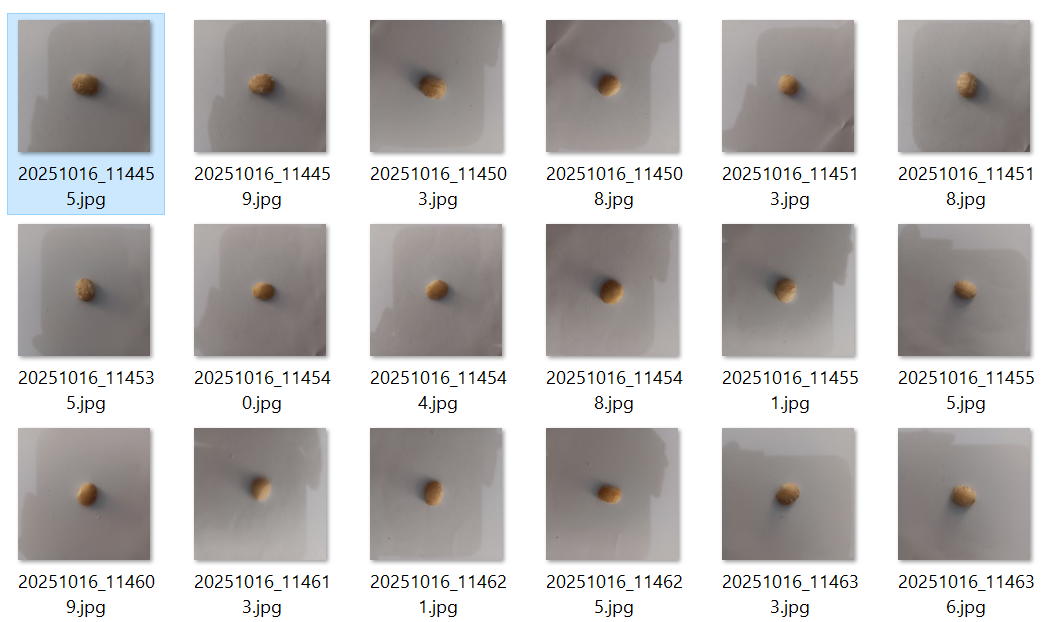
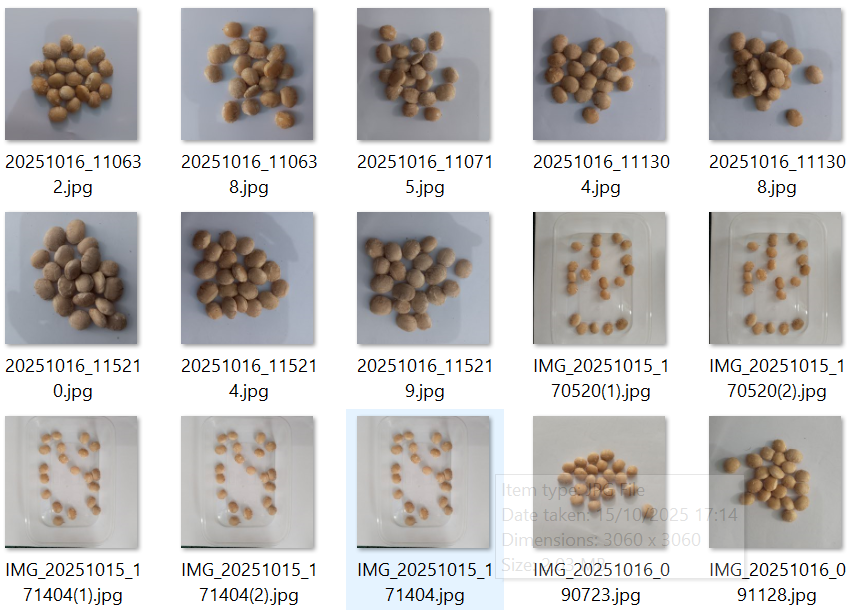
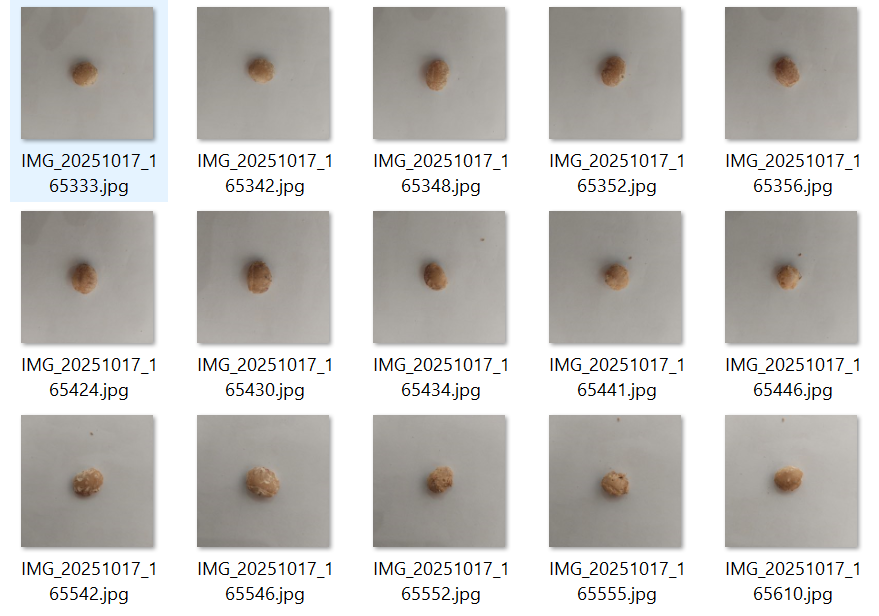
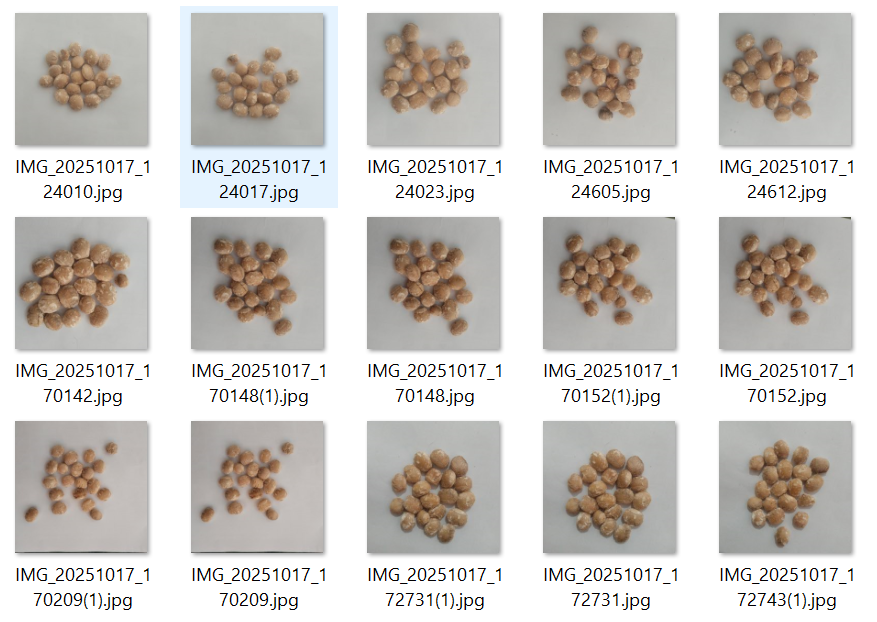
For model training, these five descriptive groups were consolidated into three final detection labels: good, poor, and broken. Good Cluster images were relabeled as good, and Poor Cluster images were relabeled as poor. Thus, the final detector learned quality status rather than image composition. The poor class was defined narrowly as seeds with visible but non-catastrophic defects, whereas broken was reserved for seeds with clear fracture or loss of shape. This distinction is important because the poor class showed the greatest visual overlap with good seeds during evaluation.
Figure 1 presents representative single-seed images assigned to the good class. These samples show intact seed structure, relatively uniform color, and no visible cracks or major surface defects, which form the visual basis of the good label during annotation.
Figure 1. Good sacha inchi dataset
Figure 2 shows representative cluster images of good-quality seeds. These images were collected to capture detection conditions in which several intact seeds appear close together or overlap, so the model can learn good-class features under denser object arrangements.
Figure 2. Good cluster sacha inchi dataset
Figure 3 displays representative single-seed images assigned to the poor class. The seeds in this group retain most of their body shape but exhibit minor visual defects, such as uneven color, slight deformation, or surface irregularity, which make this class more difficult to separate from the good class.
Figure 3. Poor sacha inchi dataset
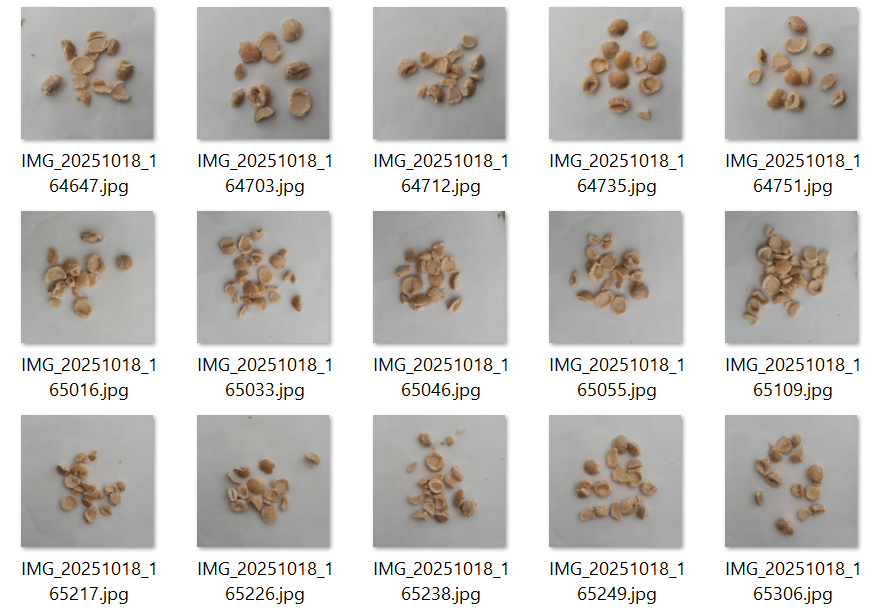
Figure 4 presents clustered poor-quality seeds. This figure is important because it combines minor-defect appearance with multi-object scenes, creating a more challenging condition in which the model must distinguish poor seeds when they are adjacent, partially overlapping, or arranged irregularly.
Figure 4. Poor cluster sacha inchi dataset
Figure 5 shows representative samples of the broken class. These seeds exhibit clear structural damage, including cracks, missing parts, and fragmented form, which makes the broken class visually more distinct than the poor class.
Figure 5. Broken sacha inchi dataset
The initial field data collection produced 1,077 image files. After removing blurred, duplicated, poorly exposed, and otherwise unsuitable images, 400 high-quality images were retained, uploaded to the Roboflow platform, and annotated for model development. Following augmentation, the working dataset consisted of 1,034 images acquired under several lighting conditions and viewing angles. Each visible seed instance was annotated with an individual bounding box whenever its boundaries could still be visually separated. Cluster images were therefore labeled at the seed level rather than with a single box around the full cluster. Images in which seed boundaries were too ambiguous were excluded during manual filtering. Representative labeled outputs are shown in Section 3.
The working dataset was split into 954 training images, 40 validation images, and 40 test images. All annotations used the three final labels: good, poor, and broken in YOLO format. Preprocessing included auto-orientation and resizing to 640 × 640 pixels. Augmentation included horizontal and vertical flipping, 90° rotation, random rotation between -15° and +15°, shear of ±10%, and saturation and exposure adjustments of ±15% and ±10%, respectively. Because the augmented dataset was organized within the platform workflow used in this study, possible similarity between augmented samples across splits cannot be fully excluded. This issue should be treated as a methodological limitation, and future work should split the original images first and apply augmentation only to the training subset.
2.2 Data preprocessing
The preprocessing stage standardized image orientation and input size before training. Each image underwent auto-orientation to correct image direction, followed by resizing to 640 × 640 pixels to match the YOLOv8 input requirement. This step improved consistency during feature extraction and reduced unnecessary variability unrelated to seed quality.
2.3 Data augmentation
Data augmentation was applied to increase image diversity and reduce overfitting risk. The augmentation pipeline included horizontal and vertical flipping, clockwise and counterclockwise 90° rotation, random rotation between -15° and +15°, horizontal and vertical shear of ±10%, and saturation and exposure adjustments of ±15% and ±10%, respectively. These transformations were intended to improve robustness to moderate changes in viewing angle and illumination, although they did not simulate all conditions of a real conveyor-based sorting environment.
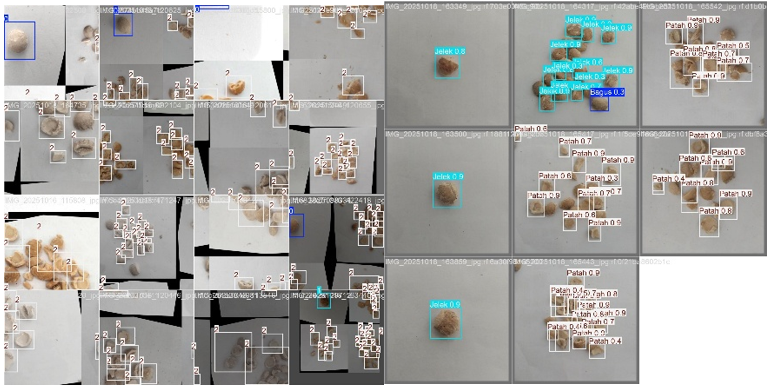
Figure 6 illustrates examples of augmented images generated from the original dataset. The transformed outputs reflect changes in orientation, spatial arrangement, and lighting-related appearance, which were introduced to improve model robustness against image variation during training.
Figure 6. Data augmentation results
2.4 Dataset partitioning
The final working dataset contained 1,034 images divided into 954 training images (92%), 40 validation images (4%), and 40 test images (4%). This split was adequate for an initial baseline experiment, but the validation and test subsets remain small for a multi-class object-detection study. Therefore, the reported metrics should be interpreted cautiously and should be strengthened in future work by using a larger independent test set and by reporting the number of annotated seed objects per class in each subset.
2.5 YOLOv8 model architecture and training configuration
The YOLOv8s model uses an anchor-free architecture with three main components: backbone, neck, and head. The backbone applies CSPDarknet-based feature extraction, the neck uses a Path Aggregation Network (PAN), and the head separates classification and bounding-box regression through a decoupled design. Training was conducted for 60 epochs in Google Colab on an NVIDIA T4 GPU with batch size 16 and the AdamW optimizer. The experiment used the standard pretrained YOLOv8s initialization available in the Ultralytics framework, while the remaining hyperparameters followed the framework defaults in the executed training configuration. Because this study did not perform systematic hyperparameter tuning or model comparison, the resulting performance should be treated as a baseline for sacha inchi seed detection rather than as an optimized benchmark.
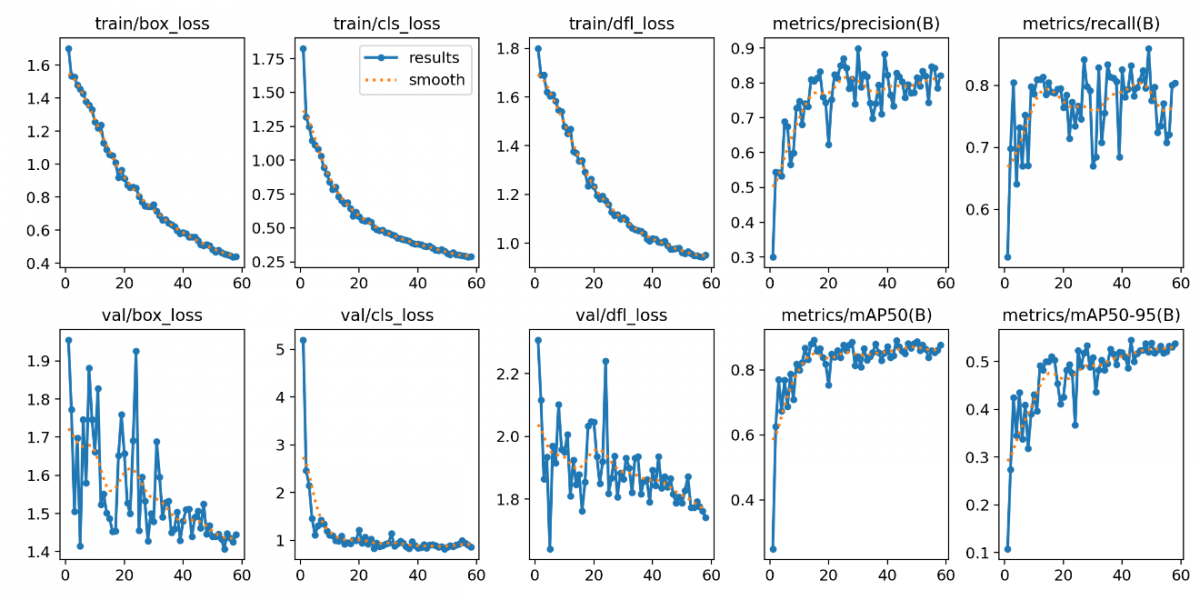
The model produced encouraging baseline performance. Overall precision reached 0.80, recall reached 0.85, mAP@0.5 exceeded 0.85, and mAP@0.5:0.95 was approximately 0.50. The training curves showed a general reduction in box loss, classification loss, and distribution focal loss across the 60-epoch training period.
Figure 7 summarizes the training dynamics of the YOLOv8s model. The training losses decrease steadily across epochs, while the validation curves fluctuate, indicating that learning progressed but evaluation stability was affected by the limited validation set size.
The model showed progressive learning during training, as reflected by the downward trend of the training losses. However, the validation losses and precision-recall curves also showed noticeable fluctuations. Given the small validation subset, these fluctuations should be interpreted carefully, and they do not allow a strong claim that overfitting was absent. Accordingly, the present results are better described as stable enough for a baseline experiment rather than fully converged for deployment.
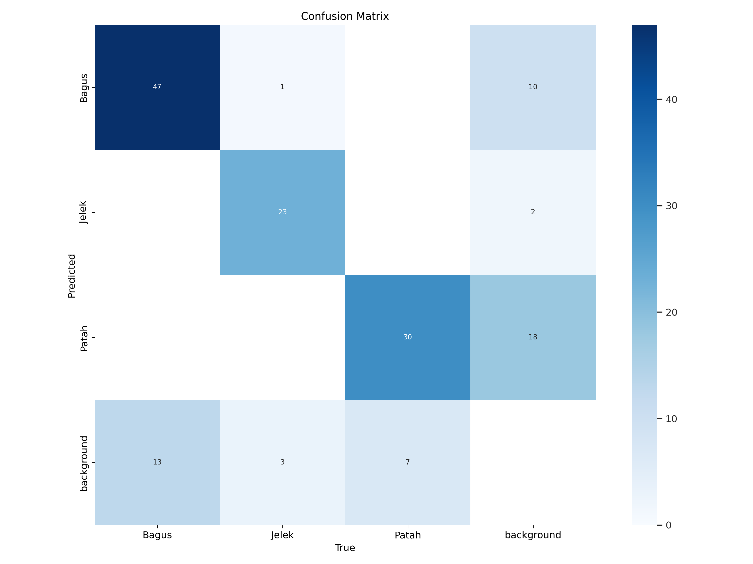
Confusion matrix analysis indicated that the model recognized the good and broken classes more consistently than the poor class. The main source of error appeared in the boundary between good and poor seeds, where visual differences were relatively subtle. Inference outputs commonly showed confidence values above 0.80 for clearly separable seeds, but errors increased in images with more ambiguous appearance.
Figure 8 presents the confusion matrix for the three final labels: good, poor, and broken. The stronger diagonal pattern for good and broken indicates better class separation, whereas the off-diagonal values involving poor confirm that this class was the main source of confusion.
Figure 7. YOLOv8s training curves for sacha inchi seed detection
Figure 8. Confusion matrix of the final seed-quality labels
Overall, YOLOv8s demonstrated promising detection and classification capability for sacha inchi seed quality assessment. The model can therefore be considered a feasible baseline for future automated sorting research, but the current study does not yet demonstrate operational readiness on an industrial sorting line.
From an application perspective, precision of 0.80 means that most positive detections were correct, while recall of 0.85 indicates that the model detected a large share of the target seed conditions. The mAP@0.5 value above 0.85 shows strong detection performance at a standard IoU threshold, whereas the mAP@0.5:0.95 value of about 0.50 suggests that localization accuracy still decreases under stricter overlap criteria. This pattern is reasonable for small and visually similar agricultural objects, especially when some seeds appear close together or partially overlap.
The results can also be interpreted from a computer vision standpoint. The relatively strong mAP@0.5 indicates that the detector was able to capture dominant visual cues such as overall seed shape, boundary integrity, fragmentation, and gross surface appearance. However, the drop in mAP@0.5:0.95 and the confusion between good and poor suggest that fine-grained feature discrimination remains challenging when defects are subtle. In other words, the current model is already effective for coarse visual quality separation, especially for clearly broken seeds, but it is still less robust for borderline samples that require finer texture, color, and contour interpretation. This finding confirms that the main technical challenge is not merely object presence detection, but fine-grained agricultural object assessment under visually similar class conditions.
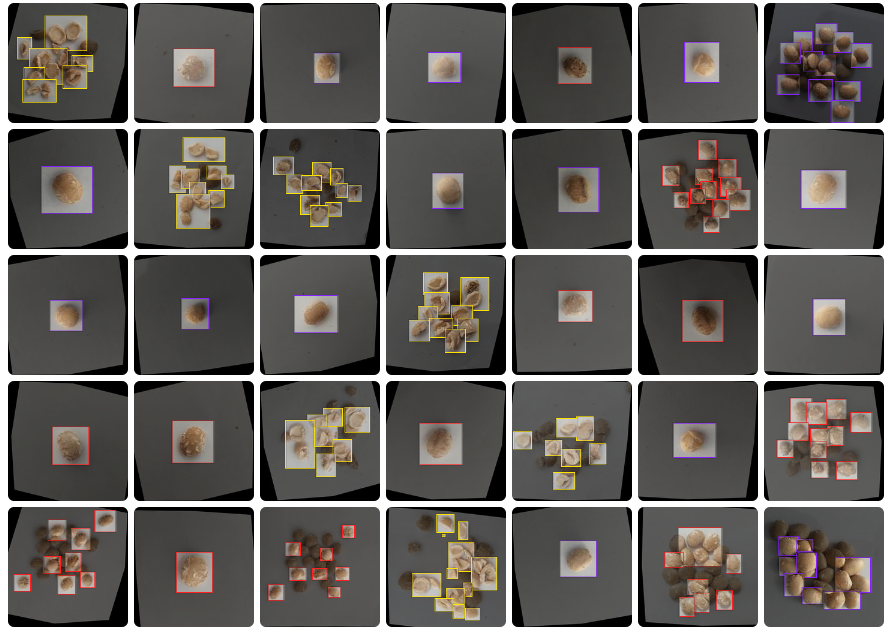
Figure 9. Representative detection outputs on validation and test images
Figure 9 shows representative detection outputs produced by the trained model on validation and test images. The predicted bounding boxes and confidence values indicate that the model was generally able to localize and classify individual seeds, although dense scenes and borderline poor samples remained more challenging.
The per-class behavior visible in the confusion matrix and detection outputs confirms that the good class achieved the strongest separation, whereas the poor class overlapped with good more often. This result is consistent with the class-definition problem itself, because poor seeds were defined by minor external defects rather than by severe structural damage. The finding suggests that future studies should refine the visual criteria of the poor class, involve more than one annotator for at least part of the dataset, and expand borderline examples during data collection.
The study also has practical relevance for sustainable agricultural development. More consistent seed sorting may reduce avoidable mixing between high-quality and lower-quality seed lots, support more standardized post-harvest handling, and improve traceability in sacha inchi agribusiness value chains. At the same time, the present experiment has three important limitations. First, image acquisition was relatively controlled. Second, only one model configuration, YOLOv8s, was tested. Third, no external test on conveyor footage, edge devices, or real throughput was performed. Therefore, the present findings should be interpreted as evidence of application potential, not proof of industrial deployment readiness.
Future research should address these limitations by splitting original images before augmentation, expanding the independent test set, reporting class-level precision, recall, F1-score, AP, and sample size, and comparing YOLOv8s with lighter and larger alternatives such as YOLOv8n and YOLOv8m. Additional work is also needed to test the model under real sorting-line conditions, including variable backgrounds, motion blur, shadows, reflections, and throughput constraints.
This study shows that YOLOv8s can support baseline detection and classification of sacha inchi seed quality from digital images. The model achieved precision of 0.80, recall of 0.85, mAP@0.5 above 0.85, and mAP@0.5:0.95 of about 0.50 under relatively controlled image-acquisition conditions. These results indicate application potential for computer vision-assisted post-harvest sorting, especially as an initial step toward more consistent and more efficient seed quality screening. Nevertheless, the present study used a small validation and test subset, evaluated only one model configuration, and did not include conveyor-based, edge-device, or external-field testing. Therefore, the proposed system should be regarded as a promising baseline and not as a deployment-ready industrial solution. From the viewpoint of computer vision, the study shows that automated seed-quality assessment can be formulated as a fine-grained object-detection problem in which localization and class discrimination must be solved simultaneously.
The authors gratefully acknowledge funding support from the 2025 BIMA Research Grant of the Ministry of Higher Education, Science, and Technology of Indonesia, support from Universitas Majalengka, and the contribution of all authors and collaborators involved in this study.
[1] Kittibunchakul, S., Hudthagosol, C., Sanporkha, P., Sapwarobol, S., Temviriyanukul, P., Suttisansanee, U. (2022). Evaluation of sacha inchi (Plukenetia volubilis L.) by-products as valuable and sustainable sources of health benefits. Horticulturae, 8(4): 344. https://doi.org/10.3390/horticulturae8040344
[2] Cárdenas, D.M., Gómez Rave, L.J., Soto, J.A. (2021). Biological activity of sacha inchi (Plukenetia volubilis Linneo) and potential uses in human health: A review. Food Technology and Biotechnology, 59(3): 253-266.
[3] Ningrat, R.G.P.K., Pamungkas, B. (2024). The review book of “sacha inchi: A rich nutrient superfood from amazon.” by tresno saras, tiram media publisher, 2023. Interdisciplinary International Journal of Conservation and Culture, 2(1): 1-4. https://doi.org/10.25157/iijcc.v2i1.3847
[4] Rodzi, N.A.R.M., Lee, L.K. (2022). Sacha inchi (plukenetia volubilis L.): Recent insight on phytochemistry, pharmacology, organoleptic, safety and toxicity perspectives. Heliyon, 8(9): e10572. https://doi.org/10.1016/j.heliyon.2022.e10572
[5] Gong, H.D., Geng, Y.J., Yang, C., Jiao, D.Y., Chen, L., Cai, Z.Q. (2018). Yield and resource use efficiency of plukenetia volubilis plants at two distinct growth stages as affected by irrigation and fertilization. Scientific Reports, 8(1): 80. https://doi.org/10.1038/s41598-017-18342-6
[6] Maurer, N.E., Hatta-Sakoda, B., Pascual-Chagman, G., Rodriguez-Saona, L.E. (2012). Characterization and authentication of a novel vegetable source of omega-3 fatty acids, sacha inchi (Plukenetia volubilis L.) oil. Food Chemistry, 134(2): 1173-1180. https://doi.org/10.1016/j.foodchem.2012.02.143
[7] Muangrat, R., Veeraphong, P., Chantee, N. (2018). Screw press extraction of sacha inchi seeds: Oil yield and its chemical composition and antioxidant properties. Journal of Food Processing and Preservation, 42(6): e13635. https://doi.org/10.1111/jfpp.13635
[8] Wang, S., Zhu, F., Kakuda, Y. (2018). Sacha inchi (Plukenetia volubilis L.): Nutritional composition, biological activity, and uses. Food Chemistry, 265: 316-328. https://doi.org/10.1016/j.foodchem.2018.05.055
[9] Rodríguez-Cortina, A., Rodríguez-Cortina, J., Hernández-Carrión, M. (2022). Obtention of sacha inchi (plukenetia volubilis linneo) seed oil microcapsules as a strategy for the valorization of amazonian fruits: Physicochemical, morphological, and controlled release characterization. Foods, 11(24): 3950. https://doi.org/10.3390/foods11243950
[10] Hidalgo, R., Eduardo, L., Valdiviezo Rogel, C.J., Bonilla Bermeo, S.M. (2019). Characterization of sacha inchi seed oil (plukenetia volubilis) from "canton san vicente, manabí, ecuador", obtained by non-thermal extrusion processes. LA GRANJA. Revista de Ciencias de la Vida, 30(2): 77-87.
[11] Gutierrez, L.F., Rosada, L.M., Jiménez, Á. (2011). Chemical composition of sacha inchi (Plukenetia volubilis L.) seeds and characteristics of their lipid fraction. Grasas y Aceites, 62(1): 76-83. https://doi.org/10.3989/gya044510
[12] Ramos-Escudero, F., Muñoz, A.M., Ramos Escudero, M., Viñas-Ospino, A., Morales, M.T., Asuero, A.G. (2019). Characterization of commercial sacha inchi oil according to its composition: Tocopherols, fatty acids, sterols, triterpene and aliphatic alcohols. Journal of Food Science and Technology, 56(10): 4503-4515. https://doi.org/10.1007/s13197-019-03938-9
[13] Fanali, C., Dugo, L., Cacciola, F., et al. (2011). Chemical characterization of sacha inchi (Plukenetia volubilis L.) oil. Journal of Agricultural and Food Chemistry, 59(24): 13043-13049. https://doi.org/10.1021/jf203184y
[14] Vicente, J., de Carvalho, M.G., Garcia-Rojas, E.E. (2015). Fatty acids profile of sacha inchi oil and blends by 1H NMR and GC–FID. Food Chemistry, 181: 215-221. https://doi.org/10.1016/j.foodchem.2015.02.092
[15] González-Cardozo, L.M., Mora-Huertas, C.E., Gutiérrez, L.F. (2021). Production of Sacha Inchi oil emulsions by high-shear and high-intensity ultrasound emulsification: Physical properties and stability. Journal of Food Processing and Preservation, 45(10): e15865. https://doi.org/10.1111/jfpp.15865
[16] Kodahl, N. (2020). Sacha inchi (Plukenetia volubilis L.)—From lost crop of the incas to part of the solution to global challenges? Planta, 251(4): 80. https://doi.org/10.1007/s00425-020-03377-3
[17] Kamilaris, A., Prenafeta-Boldú, F.X. (2018). Deep learning in agriculture: A survey. Computers and Electronics in Agriculture, 147: 70-90. https://doi.org/10.1016/j.compag.2018.02.016
[18] Liakos, K.G., Busato, P., Moshou, D., Pearson, S., Bochtis, D. (2018). Machine learning in agriculture: A review. Sensors, 18(8): 2674. https://doi.org/10.3390/s18082674
[19] Terven, J., Córdova-Esparza, D.M., Romero-González, J.A. (2023). A comprehensive review of YOLO architectures in computer vision: From YOLOv1 to YOLOv8 and YOLO-NAS. Machine Learning and Knowledge Extraction, 5(4): 1680-1716. https://doi.org/10.3390/make5040083
[20] Jocher, G., Chaurasia, A., Qiu, J. (2023). Ultralytics YOLOv8. https://github.com/ultralytics/ultralytics.
[21] Sohan, M., Sai Ram, T., Rami Reddy, C.V. (2024). A review on YOLOv8 and its advancements. In International Conference on Data Intelligence and Cognitive Informatics, pp. 529-545. https://doi.org/10.1007/978-981-99-7962-2_39
[22] Bono, A., Guaragnella, C., D'Orazio, T. (2025). A perspective analysis of imaging-based monitoring systems in precision viticulture: Technologies, intelligent data analyses and research challenges. Artificial Intelligence in Agriculture, 16(1): 62-84. https://doi.org/10.1016/j.aiia.2025.08.001
[23] Garg, D., Alam, M. (2023). Smart agriculture: A literature review. Journal of Management Analytics, 10(2): 359-415. https://doi.org/10.1080/23270012.2023.2207184
[24] Basso, B., Antle, J. (2020). Digital agriculture to design sustainable agricultural systems. Nature Sustainability, 3(4): 254-256. https://doi.org/10.1038/s41893-020-0510-0
[25] Zhang, J., Trautman, D., Liu, Y., et al. (2024). Achieving the rewards of smart agriculture. Agronomy, 14(3): 452. https://doi.org/10.3390/agronomy14030452
[26] Cai, C., Tan, J., Zhang, P., Ye, Y., Zhang, J. (2022). Determining strawberries’ varying maturity levels by utilizing image segmentation methods of improved deeplabv3+. Agronomy, 12(8): 1875. https://doi.org/10.3390/agronomy12081875
[27] Mustapha, U.F., Alhassan, A.W., Jiang, D.N., Li, G.L. (2021). Sustainable aquaculture development: A review on the roles of cloud computing, internet of things and artificial intelligence (CIA). Reviews in Aquaculture, 13(4): 2076-2091. https://doi.org/10.1111/raq.12559