Rully Yusuf | Herdis Herdiansyah* | Evi Frimawaty | Haruki Agustina
© 2026 The authors. This article is published by IIETA and is licensed under the CC BY 4.0 license (http://creativecommons.org/licenses/by/4.0/).
OPEN ACCESS
Community-based waste management, such as waste banks, has become an innovative solution for supporting waste reduction and fostering a circular economy in Jakarta and other urban contexts. However, many initiatives remain fragmented, with weak policy alignment, unstable funding, and limited digital integration, so the long-term sustainability of waste banks still depends on how effectively the government, the private sector, and local communities work together. This study aims to evaluate stakeholder synergy in supporting the sustainability of waste banks in Jakarta by examining the roles, responsibilities, and interactions among key actors, as well as the implementation challenges related to policy alignment, funding, and digital integration. A data-driven bibliometric analysis of 1,604 Scopus-indexed journal articles published between 2015 and 2024 was conducted using VOSviewer software to map global research trends, influential contributors, and thematic structures related to this research topic, and to identify research gaps and opportunities for multi-stakeholder collaboration in sustainable waste management, which then inform the analysis of stakeholder collaboration in the Jakarta case. The analysis shows growing academic attention to this issue, with 1,604 documents over the study period and a dominance of contributions from developed countries, while publications from developing countries such as Indonesia are beginning to show an upward trend. The thematic clusters that emerge emphasize that sustainable waste bank models require synergy between institutional arrangements, social participation, and technical aspects, so that waste banks can function as adaptive and inclusive mechanisms within community-based circular economy practices. This study provides practical recommendations for strengthening integrated cross-sectoral governance, especially in urban contexts such as Jakarta, and enriches scientific discourse on community-based waste management and circular economy practices; however, the findings are limited by the exclusive use of Scopus-indexed journal articles and the reliance on bibliometric mapping, which may not fully capture grey literature or the qualitative nuances of stakeholder interactions in specific local settings.
waste banks, stakeholder synergy, waste management, bibliometrics, circular economy
Waste management has become an increasingly urgent global issue, particularly in urban centers experiencing rapid population growth and changing consumption patterns [1]. Traditional disposal methods such as landfilling and incineration are no longer adequate to cope with the scale and complexity of contemporary waste streams [2, 3]. In many cities, rapid urbanization combined with limited infrastructure generates high volumes of waste that strain existing management systems [4]. Beyond these capacity constraints, previous studies highlight several misalignments in waste governance, including a gap between consumer behavior and the available information systems and regulations, which in practice hinders effective recycling [5]. The literature also identifies a mismatch between theoretically promising waste management technologies and the complex realities encountered in the field, particularly in developing contexts [5]. Consequently, the success of waste management systems, especially recycling, depends not only on technology and infrastructure but also on effective communication, environmental literacy, and system design and policy frameworks that are responsive to end users and local socio-economic conditions [6, 7].
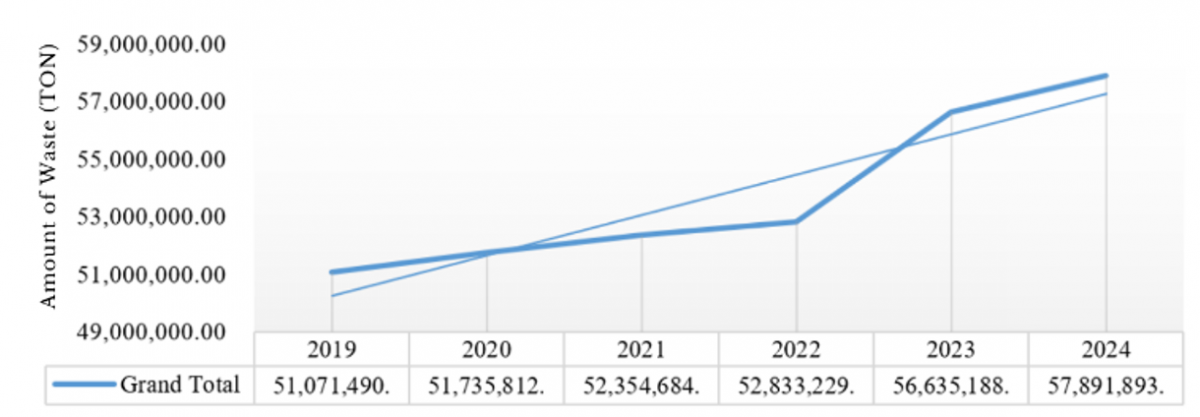
As demonstrated by case studies in Japan, India, and Singapore, waste management in Asia is shaped by intertwined economic, infrastructural, and regulatory challenges. In India, for instance, more inclusive policies are needed to formally integrate the informal sector into the national waste management system, while in Singapore stronger government support is required to scale up community-based circular economy initiatives as part of a more sustainable waste management framework [8]. Taken together, these examples show that even relatively advanced systems struggle to design mechanisms that effectively connect governments, industry, and communities in a coherent urban waste governance arrangement [9]. Population growth and activity in Indonesia's major cities have created challenges in waste management, with only 60% of waste being transported to landfills [10]. Figure 1 illustrates the annual increase in waste generation in Indonesia. Poor waste management leads to slums, flooding, pollution, and disease. Given the complexity of the waste problem, which involves many parties and is dynamic, limited landfill space demands alternative solutions. Therefore, a more comprehensive management approach and community involvement are essential.
The high volume of waste generated in Indonesia poses a serious threat to the environment, public health, and the national waste management system’s sustainability. Low public awareness of the importance of sorting and handling waste at the source is a major factor contributing to waste accumulation in landfills and water and soil pollution [11].
In four Asian countries, namely Japan, China, Singapore, and South Korea, different regulations apply for waste management and plastic recycling. However, in general, all countries show an increasing trend in the amount of waste, although the recycling rate is relatively stagnant or decreasing. For example, Japan recorded a decrease in plastic waste of about 11%, whereas China experienced a 27% increase in the amount of waste in general [9]. This increase can be triggered by the lack of synergy between stakeholders and the influence of environmental knowledge and attitudes that affect real behaviour in waste management, such as sorting and recycling [12].
Government policy support is a key determinant in achieving the transition to sustainable waste management. However, immature regulations, limited funding, and a lack of coordination among stakeholders ranging from the central government, regional authorities, operators, and communities pose significant challenges [13]. Gaps in coordination and synergy between the central government, regions, and technical agencies can weaken the potential benefits of waste management programs [14]. It is therefore important for community-based management models, including waste banks, to reorganize and strengthen synergy between stakeholders [15]. Such synergy enables the creation of an effective, sustainable, and equitable circular ecosystem, while bridging the gap between regulatory concepts and implementation in the field [16].
Conventional household waste disposal practices, which rely on unsegregated collection and the direct transport of mixed waste to landfills, significantly contribute to environmental degradation, accelerate natural resource depletion, and increase public health risks. In response to these challenges, waste banks have emerged as an innovative, community-based waste management model that integrates environmental care with socio-economic benefits. By enabling individuals to turn recyclable waste into financial value [17], the waste banks not only divert waste from landfills but also create meaningful economic incentives to encourage sustainable behavior at the grassroots level.
The waste bank model as a community-based waste management solution is gaining attention as the need for a participatory and adaptive approach to the complexity of urban waste problems increases. Ismiraj et al. [18] in Pangandaran Regency showed that waste banks function not only as a means of solid waste collection, sorting, and recycling. Six waste banks were established in coastal sub-villages, engaging 183 households (around 805 individuals), most of whom had low levels of formal education, and relying primarily on women as customers and committee members. Survey results indicated that customers gradually adopted waste sorting habits at home, reported higher awareness of the importance of separating organic and inorganic waste, and received supplementary income from the sale of recyclable materials, while the number of customers increased by roughly threefold within one to two years of operation. However, for this approach to be sustainable, active support and commitment from local governments are required [19]. This confirms that the success of waste management models, such as waste banks, is highly dependent on synergy between communities and local stakeholders. Synergy between stakeholders is key in creating an innovative and long-term oriented waste management [20, 21].
Sustainable waste management is a shared responsibility for controlling consumption and production patterns. In line with the earlier discussion on economic incentives as a driver of community participation in waste management, waste banks represent an innovative model that translates these incentives into concrete practices at the neighbourhood level. Waste banks encourage active community participation by teaching households to sort waste at source and to manage household waste more responsibly. In addition to providing environmental benefits through reducing the volume of waste sent to landfills, waste banks create local economic opportunities [22]. Residents who deposit waste receive financial incentives, typically in the form of community-based savings and loan schemes, which can be used to support microeconomic activities. These mechanisms function as economic incentives that reward regular waste separation and deposits, while generating a revolving pool of low-interest funds that helps secure the continuity of waste bank operations. As a result, waste banks simultaneously contribute to a healthier environment and strengthen citizens’ economic independence, reinforcing their role as community-based instruments for inclusive and sustainable waste management [23].
Despite its potential, the success and sustainability of waste banks cannot solely depend on the enthusiasm of the community. The foundation for forming a participatory and sustainable waste management model is the intensity of community group involvement and the supportive roles of non-governmental organizations (NGOs) and sub-district or village governments [24]. Its long-term sustainability relies heavily on the synergistic engagement of various stakeholders, including government agencies, private sector actors, NGOs, and local communities. Each of these actors plays a critical role in shaping supportive policies, securing financial and technological resources, and encouraging sustained public engagement [25].
The sustainability of waste banks is shaped by the combination of community-based grassroots participation and institutional support [26]. While waste banks are a promising approach to integrated waste management, their transformation from pilot initiatives into institutionalized programs requires cross-sectoral strategic alignment. Inconsistent policy frameworks, fluctuating community engagement, and unstable financial support remain persistent challenges that suggest there is still limited understanding of how stakeholder roles and governance arrangements can be configured most effectively [27]. Existing studies often describe these constraints at the program or policy level yet pay relatively less attention to the dynamics of stakeholder synergy that underpin the long term institutionalization of urban waste banks, particularly in large cities such as Jakarta. This study addresses that gap by combining a global bibliometric analysis with an empirical illustration from Jakarta to examine how multi-stakeholder collaboration can strengthen the sustainability of community-based waste bank models.
Beyond the institutional support and community participation described earlier, previous studies highlight that household-level factors are critical for the effectiveness of community-based waste management models. Specific environmental knowledge, pro-environmental intentions, and awareness of the importance of everyday waste practices positively influence household waste sorting and participation in community-based waste management initiatives [28], including schemes such as waste banks that also generate environmental, economic, and social benefits [29].
As an innovative approach to waste management, waste banks require not only clear government policy support and consistent community participation, but also effective cross-sector coordination within complex urban governance settings. In metropolitan areas such as Jakarta, high population density and increasing consumption intensify environmental pressures and expose structural weaknesses in conventional waste-management systems. While waste banks have been promoted as participatory solutions aligned with local waste-management policies, their long-term effectiveness depends on how well institutional arrangements, stakeholder roles, and governance mechanisms are aligned across administrative levels [30].
Within this context, stakeholder synergy is understood not merely as stakeholder involvement, but as the structured alignment of roles, resources, and decision-making processes among public, private, and community actors that enables coordinated action beyond individual mandates. To address this limitation, this study advances existing research by conducting a focused bibliometric analysis that explicitly positions waste banks as community-based governance instruments rather than peripheral components of waste-management systems. By analysing 1,604 Scopus-indexed journal articles published between 2015 and 2024, the study identifies distinct thematic clusters that frame stakeholder synergy in waste bank contexts across institutional, behavioural, technical, and conceptual dimensions. Importantly, the analysis reveals a governance–ecology gap in the literature, where institutional coordination and social participation dominate scholarly attention, while ecosystem services and environmental outcome perspectives remain marginal. This finding provides new insight into how current governance discourse may overlook the ecological foundations necessary for the long-term sustainability of waste bank models.
This study uses a quantitative approach with bibliometric analysis to identify and map research trends related to this research topic. Bibliometric analysis applies mathematical and statistical methods to evaluate scientific publications and is used here to uncover the dynamics of the topic, identify influential authors and institutions, and map dominant thematic clusters. Bibliometric data are obtained from the Scopus database, selected for its wide coverage and credibility in indexing international scientific journals, and the process of data collection, measurement, and analysis are conducted via the Scopus website (https://www.scopus.com).
A total of 1,604 documents were identified for the period 2015–2024 after a screening process that included only journal articles and excluded conference papers, book chapters, reviews, books, editorials, conference reviews, notes, short surveys, and data papers. The bibliometric mapping was carried out using VOSviewer version 1.6.20. The procedure began by selecting “text data” as the data type to map relationships between terms based on textual information. The data source was specified as reference manager files, because the dataset had been exported from Scopus in RIS format. In the next step, terms were extracted from the title and abstract fields, so that the co-occurrence structure reflected the conceptual content of each document. The calculation method applied was binary counting, which records only the presence or absence of a term in a document rather than its frequency.
To enhance methodological transparency, the selection of key bibliometric parameters was guided by established practices in bibliometric mapping. A minimum occurrence threshold of ten was applied to reduce noise from infrequently used terms and to ensure that the resulting network reflects conceptually relevant patterns rather than isolated mentions. Binary counting was employed to assign equal weight to each document and to prevent highly frequent generic terms from disproportionately influencing the co-occurrence structure. Furthermore, retaining the top 60% of terms based on relevance scores allowed a balance between thematic richness and visual interpretability of the maps, avoiding excessive complexity that could obscure meaningful relationships. These parameter choices collectively support the robustness and readability of the bibliometric analysis, particularly for readers less familiar with bibliometric techniques.
3.1 Global trends
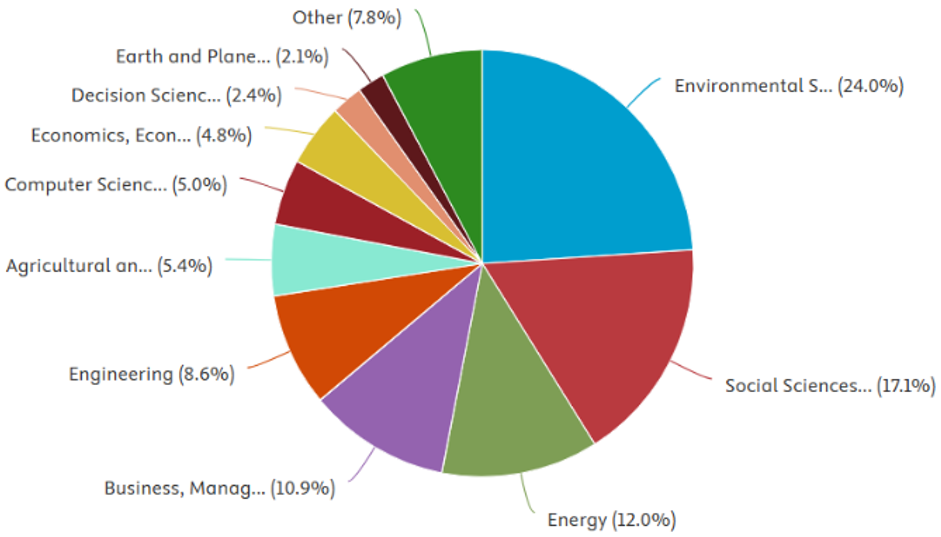
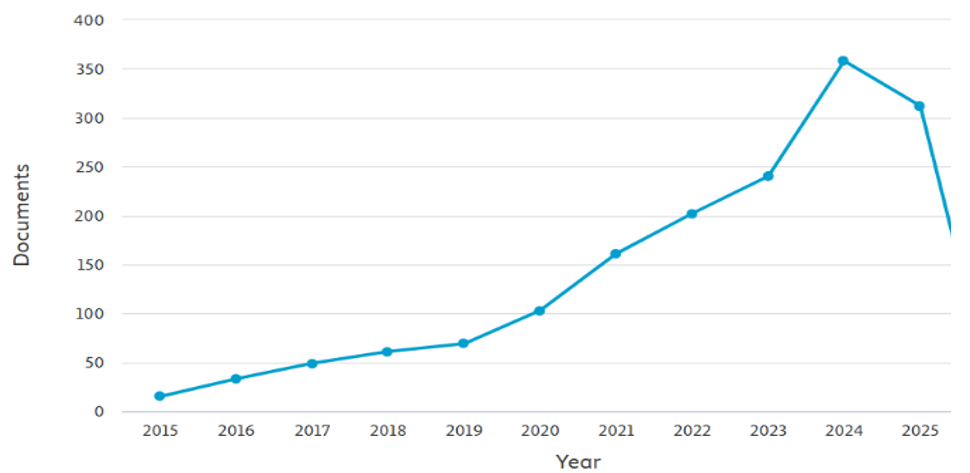
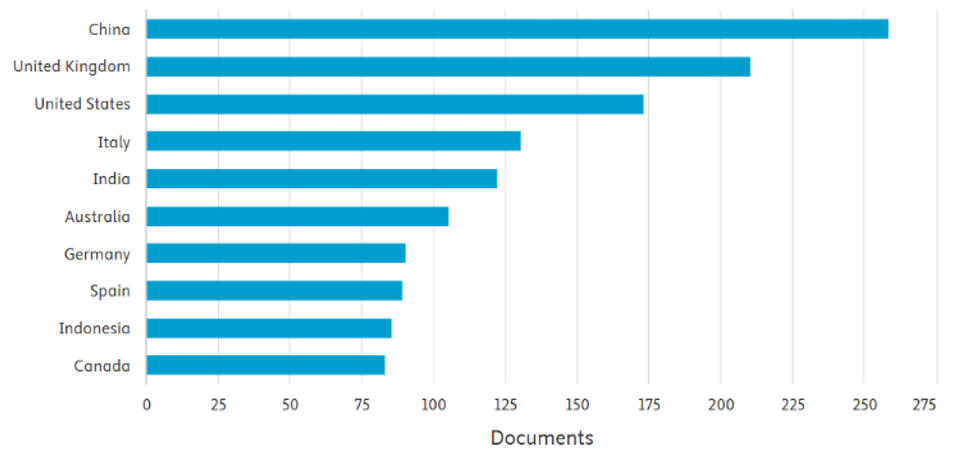
This chapter presents the main findings of a bibliometric analysis of global publications on stakeholder synergy in sustainable waste bank models for the period 2015–2024. The analysis maps the evolution of the literature in terms of subject areas (Figure 2), annual publication trends (Figure 3), leading contributing countries (Figure 4), disciplinary distribution (Figure 5), and emerging thematic clusters (Figure 6), using data retrieved from the Scopus database and visualized with VOSviewer software. The results indicate a marked increase in the volume of research, while also highlighting geographical imbalances and underexplored areas, particularly with respect to community-based applications in developing country contexts. These insights provide an empirical basis for refining future research agendas and informing policy design in sustainable waste management.
Significant growth in the number of publications has occurred since 2015 (15 documents), with a steady increase until reaching a peak in 2024 (358 documents). A slight decline appears in 2025 (312 documents), followed by a sharp drop in 2026 (1 document). This drop is not a prediction; rather, it reflects the fact that bibliometric data for 2026 are still incomplete because Scopus has not yet finished indexing publications for the current year (Figure 3). This pattern overall indicates increasing academic attention to sustainable waste management, especially in the last five years, driven by the growing global urgency of environmental and circular economy issues.
Figure 4. Articles by country of study
China was the largest contributor with 258 documents, followed by the United Kingdom (210 documents) and the United States (173 documents). European countries, such as Italy (130 documents), Germany (90 documents), and Spain (89 documents), also made significant contributions. Meanwhile, developing countries such as India (122 documents) and Indonesia (85 documents) showed strong participation, signalling the increasing attention to community-based waste management in the Asian region (Figure 4). These rankings are based on full counting of all author affiliations as indexed in Scopus, meaning that each country is credited whenever at least one author of a publication is affiliated with an institution in that country. This approach ensures a transparent and comprehensive representation of global research involvement. Overall, the data reflect the dominance of developed countries but also highlight meaningful contributions from developing regions.
Table 1. Literature review related to sustainable waste management and multistakeholder collaboration
|
Heading |
Author/Ref. |
Year |
Result |
Critical Analysis |
|
Charting a Greener Future: Collaborative Governance Dynamics in Sustainable Waste Management in Pekanbaru |
Saputra et al. [31] |
2025 |
The Pekanbaru City Government has successfully transformed from a centralized waste management approach to a collaborative governance model that involves synergy between the government, the private sector, and the community through schemes such as waste banks and public-private partnerships to realize sustainable waste management. |
This study reinforces governance-oriented research by demonstrating that institutional transformation and multi-stakeholder collaboration are critical for improving local waste-management-systems. It aligns with Munawir et al. [32], who similarly emphasized institutional capacity as a primary driver of system performance. However, it contrasts with Kurniawan et al. [33], who prioritized technological pathways for sustainability over governance reform. A key novel insight is the demonstration of how collaborative governance mechanisms, such as public-private partnerships and community-driven waste-bank schemes, can effectively replace centralized, rule-based approaches, offering a replicable model for other Indonesian cities. |
|
Unlocking synergies between waste management and climate change mitigation to accelerate decarbonization in Indonesia through circular economy digitalization |
Kurniawan et al. [33] |
2024 |
The digitalization of the circular economy has great potential to accelerate the decarbonization of the waste sector in Lombok by drawing lessons from Hainan's success, although its implementation still needs to be adjusted to digital readiness and local socio-economic conditions. |
This article introduces a technologically driven perspective, arguing that decarbonization in the waste sector can be significantly accelerated by digitalization. While it supports other studies regarding the need for multi-stakeholder coordination, it diverges from governance-centric studies (e.g., Saputra et al. [31], Munawir et al. [32]) by suggesting that the primary lever for sustainability is digital innovation, not institutional reform. This tension illustrates a disagreement in the literature regarding the prioritization of governance or technology. The novel contribution lies in the explicit linking of digital circular-economy mechanisms to national climate-mitigation pathways, expanding waste-management discourse beyond local operational challenges. |
|
Circular Economy in Chinese Heritage Conservation: Upcycling Waste Materials for Sustainable Restoration and Cultural Narrative Revitalization |
Cao et al. [34] |
2025 |
The success of community-based waste management programs relies heavily on active collaboration among governments, communities, and the private sector, with approaches that consider local contexts and ongoing support as key to long-term effectiveness. |
This study conceptually aligns with community-based waste management research by demonstrating that sustainability depends on context-sensitive collaboration among government actors, local communities, and private stakeholders, although it is situated in the cultural heritage sector. It departs from other studies by emphasizing cultural value and narrative restoration dimensions not addressed in the literature on governance or digitalization. The article’s novel insight is the integration of circular-economy principles with cultural revitalization, showing that material upcycling can simultaneously serve environmental goals and strengthen community identity, broadening the conceptual scope of CE beyond conventional waste-sector applications. |
|
Evaluation of Sustainable Tourism Development in Dachen Island, East China Sea: Stakeholders' Perspective |
Ali and Li [35] |
2024 |
Partnerships between the public and private sector in waste management systems provide significant benefits to operational efficiency, increased community participation, and system sustainability through incentive-based approaches and long-term collaboration. |
Consistent with Saputra et al. [31] and Munawir et al. [32], this study corroborates the importance of stakeholder synergy by demonstrating that sustainable development depends on balanced collaboration and perception alignment among government, community, and industry actors. Unlike technology-forward research (e.g., Kurniawan et al. [33]), this study shows that unresolved social tensions, economic inequality, cultural disruption, and perceived unfairness pose greater barriers than technological gaps. The novel insight lies in the identification of specific conflict patterns among stakeholder groups and the emphasis on incentive-based mechanisms as tools to strengthen participation and long-term system sustainability. |
|
Improving the Sustainability of Waste Management: The Role of Institutional Capacity and Program Objectives |
Munawir et al. [32] |
2024 |
The role of waste banks as local actors in community-based waste management is greatly influenced by regulatory support, multi-stakeholder partnerships, and citizens’ active participation in circular economy practices. |
This study empirically confirms that institutional capacity, not technology, is the foundation of sustainable waste management. It strongly supports the conclusions of Saputra et al. [31] and Ali and Li [35], emphasizing that system success requires coordinated roles, clear program objectives, and robust local governance structures. It diverges from Kurniawan et al. [33] by showing that technological interventions cannot be effectively implemented without strong institutional drivers. Its novel insight is the hierarchical mapping of institutional actors and program goals using ISM, revealing which elements act as system drivers and which are dependent, offering actionable guidance for policy and organizational. |
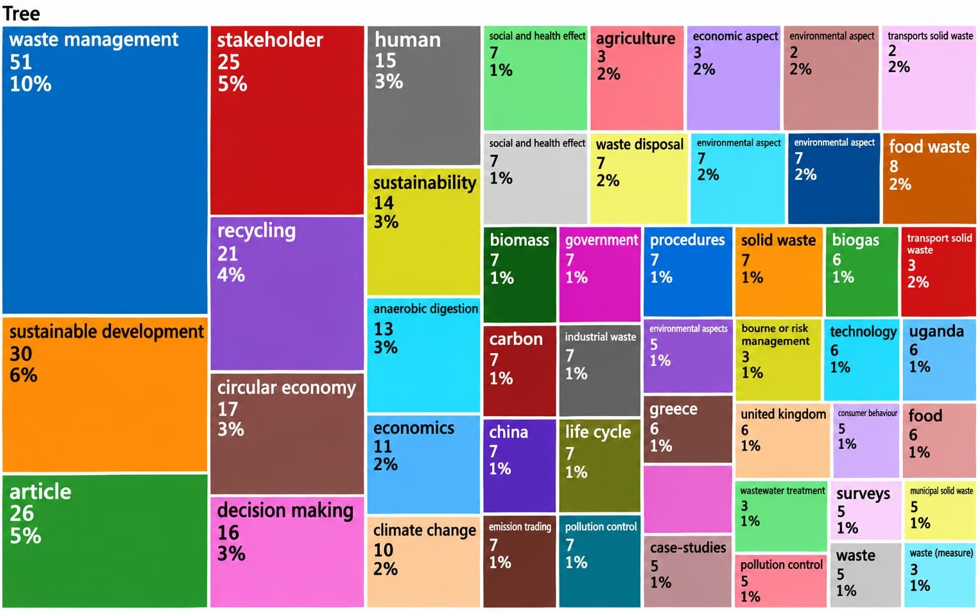
Figure 5 presents the visualization showing the distribution of documents across scientific fields related to the sustainable waste bank model. The field of Environmental Science dominates with 871 papers (24.0%), followed by Social Sciences (17.1%) and Energy (12.0%), reflecting the focus on environmental, social, and renewable energy issues. Other disciplines such as Business, Management and Accounting (10.9%), Engineering (8.6%), and Agricultural and Biological Sciences (5.4%) also make significant contributions, signalling the multidisciplinary nature of the topic. This diversity of fields reinforces the importance of a cross-sectoral and collaborative approach in building a sustainable and far-reaching waste banks model.
Based on the results of the Tree Map visualization in Figure 5, the dominant keywords in the literature were waste management (10%), sustainable development (6%), stakeholders (5%), recycling (4%), and circular economy (3%). These patterns show that community-based waste management is strongly linked to the sustainable development agenda and cross-stakeholder collaboration. The disciplinary interpretation of these keywords follows standard bibliometric practice, where clusters generated by VOSviewer reflect thematic proximity based on co-occurrence strength rather than arbitrary categorization. Technical, governance, and ecological terms naturally group together because they frequently appear within the same publication contexts. These findings align with prior studies emphasizing that the sustainability of waste banks relies not only on technical operations but also on stakeholder synergy, institutional support, and integration within circular-economy frameworks.
Based on the five reviewed studies, cross-stakeholder collaboration plays a central role in sustainable waste management success and the strengthening of waste bank models (Table 1). Saputra et al. [31] demonstrated that the shift from a centralized approach to collaborative governance in Pekanbaru has resulted in a more inclusive and adaptive model, leveraging synergy between the government, the private sector, and the community. Cao et al. [34] emphasized a similar point, highlighting the importance of considering local contexts and providing continuous support as key to the long-term effectiveness of community-based programs. These findings affirm that long-term success is highly dependent on the cohesive interaction among actors within the waste management system.
Saputra et al. [31] and Kurniawan et al. [33] introduced additional strategic dimensions, namely the importance of digitalization and incentive-based schemes in enhancing system efficiency and community participation. Kurniawan’s study shows the potential of digitalization to accelerate decarbonization in the waste sector, although challenges remain in terms of digital readiness and local socio-economic conditions. Ali and Li [35] also emphasized the value of public-private partnerships as mechanisms to improve operational efficiency and system sustainability. Furthermore, Munawir et al. [32] underlined the significance of institutional capacity and well-defined program objectives in reinforcing the role of waste banks within circular-economy practices. Collectively, these studies reinforce the argument that structured multi-stakeholder synergy supported by regulation, institutional capacity, and technological adaptation serves as a fundamental foundation for the sustainability of community-based waste management.
3.2 Stakeholder topic synergy gaps and opportunities for sustainable waste bank models
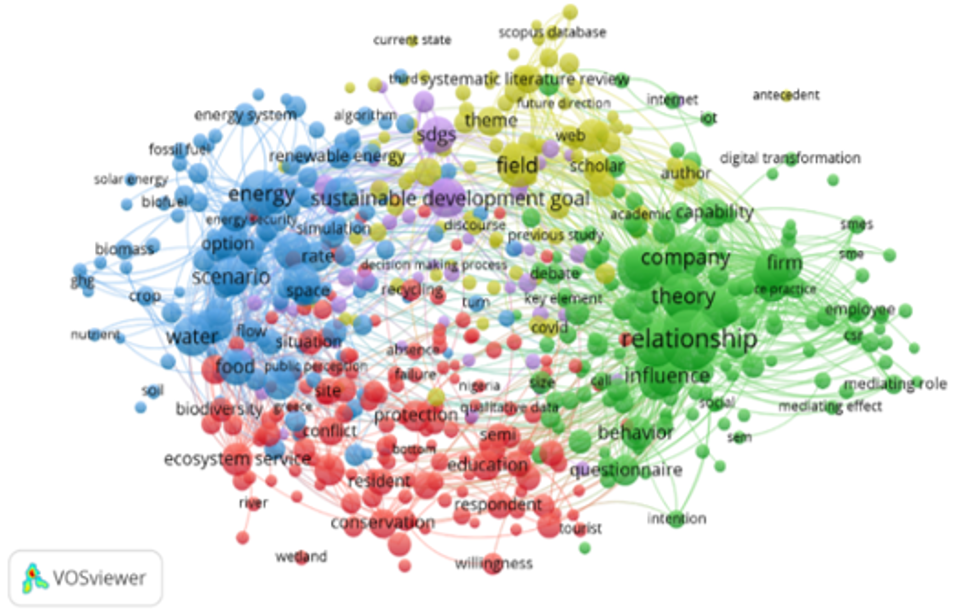
Visual mapping was carried out using VOSviewer software to deepen the understanding of thematic structures in the literature on Stakeholder Synergy for Sustainable Waste Bank Models, producing a co-occurrence map consisting of four main thematic clusters based on term frequency and relational strength. The green cluster reflects institutional and governance themes dominated by terms such as relationship, influence, company, firm, and mediating role, highlighting organizational behaviour and cross-stakeholder interactions. The red cluster captures social and behavioural dimensions, including behaviour, intention, participation, and questionnaire, indicating the prevalence of studies on community engagement and behavioural change. The blue cluster represents technical and ecological topics such as energy, water, biodiversity, ecosystem service, and scenario, signalling attention to environmental processes and biophysical considerations. Meanwhile, the yellow cluster encompasses conceptual and academic themes, with terms like sustainable development goal, theme, and systematic literature review, demonstrating the conceptual and methodological foundations of sustainability research. Together, these clusters provide an integrated overview of how institutional, social, technical, and conceptual aspects converge in shaping stakeholder synergy in sustainable waste bank models (Figure 6).
The visualization displays the co-occurrence keyword mapping of the articles analysed using VOSviewer, illustrating the thematic relationships between topics that often appear together in the literature related to stakeholders and sustainable waste bank management. The dots represent the keywords, and the size of the node indicates the frequency with which the word appears. The different colours indicate thematic clusters, each representing a closely related field of discussion. The connecting line between nodes indicates link strength; the thicker the line, the stronger the correlation between the keywords in a document.
The underrepresentation of ecosystem-service perspectives in the waste-bank literature is a critical gap because ecosystem services constitute the biophysical foundation upon which circular-economy systems operate. Ecosystem services, such as waste assimilation, nutrient cycling, carbon sequestration, and biodiversity support, are not peripheral benefits, but are core ecological functions that determine the long-term sustainability of human environment systems. Natural-capital framework demonstrates that community-based waste systems, including waste banks, directly influence regulating and supporting services by reducing pollution loads, improving soil and water quality, and restoring local ecological resilience. The fact that these dimensions receive limited attention in current research suggests a bias toward institutional, social, and managerial aspects at the expense of ecological outcomes. This imbalance is inconsistent with recent global assessments, such as the IPBES 2021 report and the Dasgupta Review (2021), which argue that to ensure that sustainability interventions genuinely contribute to the regeneration of natural capital, environmental governance must integrate ecosystem-service valuations. Therefore, addressing this gap is essential not only for strengthening theoretical alignment with contemporary ecological economics but also for positioning waste-bank models within broader nature-based solutions and climate-mitigation strategies.
Operationalizing ecosystem services within waste bank models requires translating abstract ecological functions into measurable and governance-relevant outcomes. In the context of community-based waste banks, ecosystem services can be assessed through several practical indicators. First, regulating services may be captured through reductions in landfill-bound waste volumes, avoided methane emissions from organic waste decomposition, and improvements in local soil and water quality resulting from composting and waste diversion. Second, supporting services can be reflected in enhanced nutrient cycling through organic waste processing and the reinforcement of local ecological resilience, particularly in dense urban environments. Third, provisioning services may emerge indirectly through the reuse of recovered materials and the integration of waste banks with urban agriculture or bio-based production systems.
From a governance perspective, adopting an ecosystem-services framework would alter waste-bank strategies in several ways. Policy priorities would shift from short-term waste diversion targets toward longer-term ecological performance indicators, encouraging local governments to recognize waste banks not only as social or economic instruments but also as contributors to urban ecosystem resilience. This perspective supports the integration of waste banks into broader environmental planning frameworks, such as climate mitigation, flood risk management, and nature-based solutions. Furthermore, ecosystem-service valuation can strengthen cross-sector collaboration by providing a shared metric through which government agencies, private-sector actors, and communities align incentives and responsibilities. In this way, ecosystem services move from a conceptual add-on to a functional governance tool that enhances the strategic role of waste banks within sustainable urban waste management systems.
Although the literature identifies multiple gaps, including ecological blind spots, limited grassroots engagement, and recurring implementation challenges, the absence of coherent cross-stakeholder governance remains the most urgent issue to address. Strong institutional alignment is foundational because neither ecological interventions nor community-based initiatives can function effectively without shared goals, regulatory coherence, and coordinated action. This prioritization aligns with collaborative governance perspectives, which argue that institutional capacity and joint action largely determine the success of sustainability programs. The ecological gap ranks second in importance, as ecosystem-service outcomes provide the biophysical basis upon which circular-economy systems operate. Grassroots participation, while essential, becomes impactful only when governance arrangements and ecological objectives are clearly established. However, this sequencing may vary in practice, particularly in regions experiencing acute ecological pressures where environmental restoration must precede institutional or community-level interventions. Overall, addressing these gaps through a structured pathway—first governance, second ecological outcomes, and third community empowerment supports the long-term sustainability of waste-bank models.
In this configuration, the relative marginality of the term ecosystem service becomes analytically important because it shows that ecological functions are recognized but not yet framed as core outcomes of waste-bank interventions. Compared with dominant concepts such as relationship, influence, or company, the term appears with low occurrence (below the minimum threshold for high-frequency keywords) and exhibits substantially lower normalized link strength in VOSviewer’s relevance scoring. When energy, water, and scenario dominate the technical cluster, ecosystem service is mentioned only alongside biodiversity and conservation, indicating that research still tends to conceptualize waste management as an engineering or operational problem rather than a socio-ecological process that maintains regulating, provisioning, and cultural services. This underrepresentation limits the capacity of waste-bank models to be positioned within broader nature-based and climate-resilience strategies widely employed in global environmental policy.
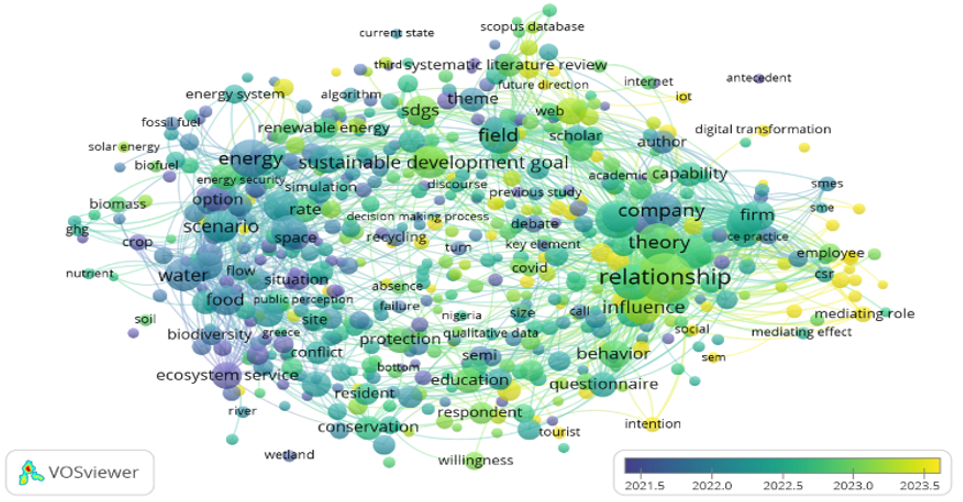
This overlay visualization shows the temporal distribution of keywords, marked with colors that reflect the average publication year. Dark blue represents earlier terms (around 2022), while yellow indicates emerging concepts (2023–2024). Some central terms, including production, framework, life cycle assessment, and circularity, appear in the centre of the network with large node sizes, signifying frequent use and strong linkages in sustainability-related discourse (Figure 7).
In the temporal context, earlier publications (circa 2022) were more heavily concentrated on engineering-oriented topics such as temperature, property, adsorption, and cement, shown on the left side in lighter shades. This pattern corresponds with the disciplinary dominance of Environmental Science and Engineering during that period, when global waste-to-energy, adsorption material research, and cement-based stabilization methods were widely explored. In contrast, newer studies reflected by brighter colors in the overlay emphasize institutional, behavioral, and governance-related themes, including barriers, participation, company, and survey. This transition signals a shift from predominantly technical investigations toward more integrative approaches combining social, institutional, and practical implementation strategies for the circular economy.
The overlay visualization thus illustrates a broader evolution in the research landscape of stakeholder synergy for sustainable waste-bank models. Early contributions tended to prioritize technical and environmental engineering perspectives, while recent studies (2023–2024) have increasingly incorporated governance, institutional capacity, and behavioral dimensions (Figure 7). This shift follows recent socio-technical transition perspectives, which argue that technological innovation, institutional restructuring, and socio-behavioral change need to evolve simultaneously in order to enable sustainability transitions. The rising prominence of terms such as framework, circularity, and life cycle assessment indicates a movement toward holistic perspectives that integrate systemic and participatory dimensions of the circular economy, reinforcing the importance of embedding technical innovations within collaborative governance arrangements for long-term sustainability.
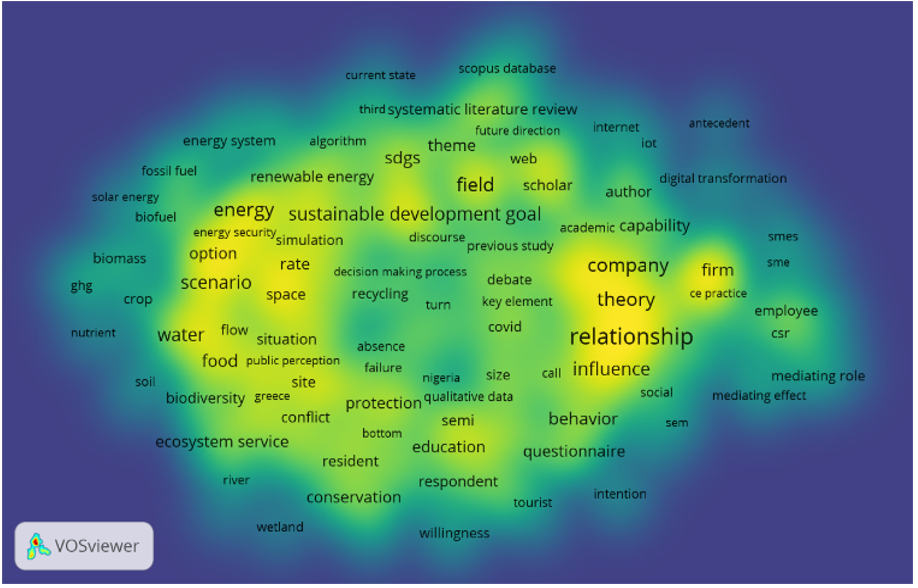
The density visualization generated by VOSviewer highlights the dominance of institutional and organizational concepts within the stakeholder-synergy literature. High-density nodes shown in yellow are occupied by terms such as relationship, influence, company, theory, energy, and sustainable development goal, indicating that institutional and theoretical themes represent more than half of the frequently occurring keywords in the dataset. In contrast, ecological terms such as ecosystem service, conservation, and wetland appear as low-density nodes in bluish areas, representing fewer than 10% of the mapped high-density terms. This quantitative imbalance underscores how community-based and ecological dimensions have not received comparable analytical attention (Figure 8).
The relatively limited density of ecological terms suggests that socio-ecological themes continue to be underrepresented in discussions of sustainable waste-bank models. This observation aligns with stakeholder and collaborative governance perspectives, which emphasize the importance of balanced attention to actor interactions and cross-sectoral collaboration. The visual evidence therefore underscores the need for future research to bridge the institutional–ecological gap by integrating ecosystem-service perspectives into stakeholder-engagement strategies.
3.3 Empirical illustration: Waste reduction performance of Jakarta’s waste banks
Building on the bibliometric findings presented in Sections 3.1 and 3.2, this empirical illustration is used to examine how globally identified thematic clusters and governance gaps manifest within an urban waste banks system. In particular, the dominance of institutional and behavioural themes, alongside the marginal attention to ecological outcomes observed in the bibliometric analysis, provides the analytical lens for interpreting Jakarta’s waste composition and stakeholder dynamics. Jakarta is selected as an empirical illustration because its metropolitan governance structure reflects conditions frequently highlighted in the global literature, including fragmented institutional coordination, regulatory misalignment, and uneven integration of ecological considerations. Accordingly, the waste generation data presented below are interpreted not merely as descriptive statistics, but as indicators of how governance structures shape waste reduction performance in practice.
This empirical profile shows that more than sixty percent of waste generation in the study area consists of organic fractions (Table 2). This condition indicates that waste management strategies cannot focus solely on inorganic recycling but must incorporate organic waste solutions such as composting, biodigesters, and integration with urban agriculture initiatives. At the same time, the high volumes of plastics and paper reveal significant potential for developing recycling value chains involving private actors as collectors, processors, and off-takers. The absence of recorded used cooking oil generation in the table suggests that this waste stream has not yet been systematically documented, which opens up room for improving data recording systems and expanding dedicated management schemes.
Table 2. Type of annual waste generation in three Jakarta clusters
|
Waste Type |
East Jakarta (kg/year) |
Central Jakarta (kg/year) |
South Jakarta (kg/year) |
Total (kg/year) |
Share of Total (%) |
|
Kitchen organic |
N/A |
N/A |
25,055,293.47 |
25,055,293.4 |
37.2 |
|
Other organic |
N/A |
N/A |
15,948,688.09 |
15,948,688.0 |
23.7 |
|
Plastics |
406,251.8 |
340,668.09 |
11,526,743.36 |
12,273,663.2 |
18.2 |
|
Paper |
754,624.63 |
490,121.91 |
8,661,113.55 |
9,905,860.09 |
14.7 |
|
Metals |
80,240.67 |
45,143.42 |
534,711.54 |
660,095.63 |
1.0 |
|
Glass |
8,940.47 |
48,433.20 |
742,442.64 |
799,816.31 |
1.2 |
|
Another inorganic |
514,405.15 |
104,691.9 |
2,109,797.16 |
2,728,894.21 |
4.1 |
From a governance perspective, these waste composition patterns are directly linked to the roles and coordination of key stakeholders within Jakarta’s waste banks system. The dominance of organic waste underscores the central role of municipal authorities and community-based organizations in enabling source separation, neighbourhood-level participation, and institutional support for decentralized organic waste processing, while the substantial presence of recyclable inorganic materials highlights the importance of market-based actors, pricing mechanisms, and relevant policy instruments in translating collection efforts into effective material recovery. Where coordination among public institutions, community initiatives, and private recyclers remains fragmented, waste banks tend to function as partial collection mechanisms rather than integrated governance platforms, thereby limiting their contribution to sustained waste reduction outcomes.
Within this context, stakeholder synergy is understood not merely as stakeholder involvement but as the structured alignment of roles, resources, and decision-making processes among public, private, and community actors, enabling coordinated action beyond individual mandates. This research shows that the success and sustainability of waste-bank models are strongly influenced by cross-stakeholder engagement involving governments, the private sector, civil society organizations, and local communities. The bibliometric analysis of global literature published between 2015 and 2025 revealed a substantial increase in research on community-based waste management, particularly waste banks, reflecting growing concerns about environmental sustainability and the circular economy.
The results of the bibliometric mapping show that studies related to waste banks largely focus on collaboration between actors, policy integration, and the relevance of institutional support. However, funding discontinuity, weak digital integration, and lack of policy coherence between levels of government remain the main challenges. This is consistent with the bibliometric finding that digital-related keywords appear with low frequency and weak link strength in dominant clusters, indicating that digital integration has not yet become a central analytical focus in waste banks research despite its practical importance. A more structured and systematic multi-stakeholder engagement is needed in the context of Jakarta as a case study to encourage the effectiveness and sustainability of waste banks, both in terms of operational, financing, and integration into urban waste management strategies.
Thus, this study emphasizes the importance of adaptive, inclusive, and coordinated cross-sector collaboration as the main prerequisite for sustainable waste bank governance. Future research may explore scalable digital solutions such as digital tracking systems, incentive platforms, and data-driven material flow analysis as well as develop policy frameworks that integrate technological, institutional, and community aspects to enhance both operational efficiency and environmental outcomes.
The authors would like to express their sincere gratitude to the Department of Environmental Science, Graduated School of Sustainable Development, Universitas Indonesia, for the continuous academicGraduate School of Sustainable Development, support, research environment, and institutional facilities that greatly contributed to the completion of this study. Also, for the Institute for Advanced Science, Social, and Sustainable Future (IASSSF), the guidance and encouragement provided by the faculty members and research colleagues throughout the research process have been invaluable in refining the analytical framework and strengthening this work’s overall quality.
[1] Leknoi, U., Painmanakul, P., Chawaloesphonsiya, N., Wimolsakcharoen, W., Samritthinanta, C., Yiengthaisong, A. (2024). Building sustainable community: Insight from successful waste management initiative. Resources, Conservation & Recycling Advances, 24: 200238. https://doi.org/10.1016/j.rcradv.2024.200238
[2] Hertati, D., Arif, L. (2022). Collaborative governance in the management of a waste bank. KnE Social Sciences, 7(9): 1-13. https://doi.org/10.18502/kss.v7i9.10923
[3] Karak, T., Bhagat, R.M., Bhattacharyya, P. (2012). Municipal solid waste generation, composition, and management: The world scenario. Critical Reviews in Environmental Science and Technology, 42(15): 1509-1630. https://doi.org/10.1080/10643389.2011.569871
[4] Batra, S., Srivastav, A.L., Chadha, P., Madaan, N. (2022). Challenges of waste management in Delhi (India) and its scope of improvement to achieve cities sustainability in developing nations: A review. Cities, 121: 103480. https://doi.org/10.1016/j.cities.2021.103480
[5] Shukla, K.A., Sofian, A.D.A.B.A., Singh, A., Chen, W.H., Show, P.L., Chan, Y.J. (2024). Food waste management and sustainable waste to energy: Current efforts, anaerobic digestion, incinerator and hydrothermal carbonization with a focus in Malaysia. Journal of Cleaner Production, 448: 141457. https://doi.org/10.1016/j.jclepro.2024.141457
[6] Li, J., Sun, W., Song, H., Li, R., Hao, J. (2021). Toward the construction of a circular economy eco-city: An emergy-based sustainability evaluation of Rizhao city in China. Sustainable Cities and Society, 71: 102956. https://doi.org/10.1016/j.scs.2021.102956
[7] Lee, K.J., Wong, S.F. (2023). Comparative environmental and socioeconomic assessment on mixed plastic waste management: A Singapore case study. Science of the Total Environment, 893: 164884. https://doi.org/10.1016/j.scitotenv.2023.164884
[8] Moshkal, M., Akhapov, Y., Ogihara, A. (2024). Sustainable waste management in Japan: Challenges, achievements, and future prospects: A review. Sustainability, 16(17): 7347. https://doi.org/10.3390/su16177347
[9] Vuk, A., Szűcs, I., Bauerné Gáthy, A. (2025). Waste management and plastic waste recycling in Japan, China, Singapore and South Korea–What trends can be observed under different regulations. International Review of Applied Sciences and Engineering, 16(1): 118-131. https://doi.org/10.1556/1848.2024.00841
[10] Wikurendra, E.A., Abdeljawad, N.S., Nagy, I. (2023). A review of municipal waste management with zero waste concept: Strategies, potential and challenge in Indonesia. International Journal of Environmental Science and Development, 14(2): 147-154. https://doi.org/10.18178/ijesd.2023.14.2.1427
[11] Shaibur, M.R., Siddique, A.B., Nahar, N., et al. (2025). Solid waste management in an urban community of a developing country: An overview of 5Rs strategies. World Development Sustainability, 7: 100254. https://doi.org/10.1016/j.wds.2025.100254
[12] Valentin, A.P.M., Bonifacio, P.B.S., Castro, S.I.C.O., Ruiz, J.C.A., Sy, T.I.L., Trinidad, E.L.O. (2024). Predicting waste management behaviors using an extended theory of reasoned action model. Cleaner Waste Systems, 9: 100193. https://doi.org/10.1016/j.clwas.2024.100193
[13] Agaton, C.B., Guno, C.S., Villanueva, R.O., Villanueva, R.O. (2020). Economic analysis of waste-to-energy investment in the Philippines: A real options approach. Applied Energy, 275: 115265. https://doi.org/10.1016/j.apenergy.2020.115265
[14] Li, J., Takeuchi, K. (2023). Do municipal mergers reduce the cost of waste management? Evidence from Japan. Regional Science and Urban Economics, 103: 103939. https://doi.org/10.1016/j.regsciurbeco.2023.103939
[15] van Leeuwen, J., Surya, I.R.F. (2024). Network power and exclusion of informal waste pickers when plastic flows change: A case study of community waste banks in Klaten Municipality in Indonesia. Marine Policy, 167: 106285. https://doi.org/10.1016/j.marpol.2024.106285
[16] Ramasubramanian, B., Reddy, V.S., Paul, P., Dalapati, G.K., Ramakrishna, S. (2024). Extended producer responsibility practices and prospects for waste management in Japan. Sustainable Chemistry One World, 2: 100009. https://doi.org/10.1016/j.scowo.2024.100009
[17] Moalem, R.M., Kerndrup, S. (2022). The entrepreneurial role of waste companies in transforming waste streams to value streams: Lessons from a Danish municipal waste company. Waste Management & Research, 41(3): 620-634. https://doi.org/10.1177/0734242X221124048
[18] Ismiraj, M.R., Wulansari, A., Setiadi, Y., Pratama, A., Mayasari, N. (2023). Perceptions of community-based waste bank operators and customers on its establishment and operationalization: Cases in Pangandaran, Indonesia. Sustainability, 15(14): 11052. https://doi.org/10.3390/su151411052
[19] Wynne, A.L., Nieves, P.M., Vulava, V.M., Qirko, H.N., Callahan, T.J. (2018). A community-based approach to solid waste management for riverine and coastal resource sustainability in the Philippines. Ocean & Coastal Management, 151: 36-44. https://doi.org/10.1016/j.ocecoaman.2017.10.028
[20] Xu, T., Yang, J., Shao, Z., et al. (2024). Life cycle assessment of plastic waste in Suzhou, China: Management strategies toward sustainable express delivery. Journal of Environmental Management, 360: 121201. https://doi.org/10.1016/j.jenvman.2024.121201
[21] Nuortimo, K., Härkönen, J., Breznik, K. (2026). Waste management–related trust, acceptance, and reputation: A multidisciplinary big data analysis across knowledge domains. Technological Forecasting and Social Change, 225: 124553. https://doi.org/10.1016/j.techfore.2026.124553
[22] Farahdiba, A.U., Warmadewanthi, I.D.A.A., Fransiscus, Y., Rosyidah, E., Hermana, J., Yuniarto, A. (2023). The present and proposed sustainable food waste treatment technology in Indonesia: A review. Environmental Technology & Innovation, 32: 103256. https://doi.org/10.1016/j.eti.2023.103256
[23] Solimun, Rinaldo Fernandes, A.A., Junianto, F.H., Sekarsari, C.R., Rismala, S.N., Amirullah, K.I. (2026). Extraction of waste economic variables through cluster analysis from web scraping results and latent Dirichlet allocation. Waste Management Bulletin, 4(2): 100302. https://doi.org/10.1016/j.wmb.2026.100302
[24] Xie, L., Zhu, J., Benson, D. (2022). Partnership building? Government-led NGO participation in China’s grassroots waste governance. Geoforum, 137: 32-41. https://doi.org/10.1016/j.geoforum.2022.10.004
[25] Adisa, M.O., Rosenthal, S., Oyedeji, S., Adaji, I., Porras, J. (2026). Bridging policy and grassroots action with technology: A framework for civic engagement in environmental sustainability. Sustainable Development, 34(1): 718-736. https://doi.org/10.1002/sd.70293
[26] Wijayanti, D.R., Suryani, S. (2015). Waste bank as community-based environmental governance: A lesson learned from Surabaya. Procedia-Social and Behavioral Sciences, 184: 171-179. https://doi.org/10.1016/j.sbspro.2015.05.077
[27] Bhandari, M., Tiwari, G., Dhakal, M. (2025). Assessing waste management practices and sustainable recycling opportunities in Nepal. Waste Management Bulletin, 3(3): 100228. https://doi.org/10.1016/j.wmb.2025.100228
[28] Lye, C.T., Ng, T.H., Law, J.W. (2024). The role of general and specific pro-environmental education in household waste management in Malaysia: Evidence from quantile regression. Environmental Challenges, 15: 100933. https://doi.org/10.1016/j.envc.2024.100933
[29] Asih, A.M.S., Prasetyo, D.H., Sopha, B.M. (2026). Household recycling behavior and community-based waste management: An agent-based modeling of socioeconomic heterogeneity in urban Indonesia. Journal of Environmental Management, 399: 128658. https://doi.org/10.1016/j.jenvman.2026.128658
[30] Afnan, D., Wijaya, M., Kartono, D.T., Wibowo, A. (2025). Community empowerment model in the refuse-derived fuel waste management program in Indonesia. Cleaner Waste Systems, 12: 100364. https://doi.org/10.1016/j.clwas.2025.100364
[31] Saputra, T., Zuhdi, S., Setiawan, I. (2025). Charting a greener future: Collaborative governance dynamics in Pekanbaru sustainable waste management. International Journal of Sustainable Development and Planning, 20(4): 1655-1663. https://doi.org/10.18280/ijsdp.200427
[32] Munawir, A., Rusdiyanto, E., Muna, S.U.N., Ali, F., Yunandar, Ihsan, M. (2024). Improving waste management sustainability: The role of institutional capacity and program objectives. Jurnal Pengelolaan Sumberdaya Alam dan Lingkungan (Journal of Natural Resources and Environmental Management), 14(3): 598. https://doi.org/10.29244/jpsl.14.3.598
[33] Kurniawan, T.A., Meidiana, C., Goh, H.H., et al. (2024). Unlocking synergies between waste management and climate change mitigation to accelerate decarbonization through circular-economy digitalization in Indonesia. Sustainable Production and Consumption, 46: 522-542. https://doi.org/10.1016/j.spc.2024.03.011
[34] Cao, W., Zhang, Y., Liu, J. (2025). Circular economy in Chinese heritage conservation: Upcycling waste materials for sustainable restoration and cultural narrative revitalization. Sustainability, 17(8): 3442. https://doi.org/10.3390/su17083442
[35] Ali, H., Li, Y. (2024). Evaluation of sustainable tourism development in Dachen Island, East China Sea: Stakeholders’ Perspective. Sustainability, 16(16): 7206. https://doi.org/10.3390/su16167206