Syafrial | Hasdi Aimon | Alpon Satrianto*
© 2026 The authors. This article is published by IIETA and is licensed under the CC BY 4.0 license (http://creativecommons.org/licenses/by/4.0/).
OPEN ACCESS
The conversion of agricultural land (CAL) threatens food security in agrarian economies by eroding the productive and ecological foundations of rural livelihoods. This study examined the effects of farmers’ welfare (FW), community social structure (CSS), environmental quality (EQ), and CAL on food security resilience (FSR) within sustainable regional development. A quantitative explanatory design was applied to survey data from 375 farming households selected through multistage sampling in Padang Pariaman District, West Sumatra, Indonesia. Data were collected using a structured questionnaire and analyzed using Partial Least Squares Structural Equation Modeling (PLS-SEM). The results showed that EQ was the strongest positive determinant of FSR and significantly reduced CAL. CSS strengthened FSR but was positively associated with CAL, indicating a dual role under development pressure. CAL significantly weakened FSR by reducing the productive capacity and ecological foundations of rural food systems. FW had no significant direct effect on FSR; however, it was the strongest factor reducing CAL. These findings indicate that FSR depends not only on household welfare but also on environmental conditions, collective social capacity, and farmland retention. The study contributes to socio-ecological research by positioning CAL as a central structural process linking environmental conditions and food-system resilience in agrarian regions. Policies should therefore integrate farmland protection with improvements in EQ, FW, and CSS.
agricultural land conversion, food security resilience, structural equation modeling, sustainable regional development
The conversion of agricultural land (CAL) is a major driver of food insecurity in agrarian regions. Across the Global South, urban expansion, infrastructure development, and market-driven land commodification frequently transform fertile farmland into non-agricultural uses, often prioritizing short-term economic returns over long-term ecological stability and food security [1, 2]. This process reduces the agricultural land base and disrupts the socio-ecological processes that sustain rural livelihoods, food availability, and regional development. It can also intensify environmental degradation, weaken community cohesion, and reduce the capacity of rural households to cope with external shocks [3]. Accordingly, contemporary food-security research increasingly emphasizes the durability, adaptability, and resilience of food systems under cumulative socio-economic and environmental pressures [4, 5].
Padang Pariaman District in West Sumatra, Indonesia, provides a relevant empirical setting for examining food security resilience (FSR) under agricultural land conversion. The district’s agrarian base has weakened in recent years, while its food security performance has remained relatively stable. Official local data show that paddy-field area declined from 22,856 ha in 2020 to 18,289 ha in 2024, indicating a loss of 4,567 ha or about 19.98% within five years. Paddy production also decreased from 222,922 tons in 2021 to 221,663 tons in 2023, although it partially recovered after the decline recorded in 2022. This pressure is compounded by environmental vulnerability, as the district’s Land Quality Index remained low at 41.99 in 2023, far below the West Sumatra provincial value of 68.98. At the same time, the Food Security Index increased from 81.14 in 2022 to 83.13 in 2023, suggesting that local food security may appear stable at the aggregate level while its productive and ecological foundations remain fragile. This condition is further reflected in household welfare, with 60.70% of farming households reporting that agricultural income was insufficient or highly insufficient to meet household needs. These contrasting trends make Padang Pariaman an important empirical setting for understanding how farmers’ welfare (FW), community social structure (CSS), environmental quality (EQ), and agricultural land conversion interact in shaping FSR.
In regions experiencing rapid land-use change, the determinants of FSR extend beyond agricultural output. They include governance effectiveness, farmers’ economic conditions, community social structure, and environmental quality [5, 6]. However, research on CAL remains fragmented. Many studies examine the issue through the separate lenses of economic efficiency, spatial planning, or environmental degradation. Some show that land-use transitions reduce regional production capacity and increase dependence on external food supplies [7], whereas others identify weak governance, fragmented policy, and ineffective spatial regulation as important drivers of uncontrolled conversion [8, 9].
Environmental studies further show that agricultural land conversion accelerates soil degradation, biodiversity loss, and climate vulnerability, thereby reducing the long-term sustainability of farming systems [10, 11]. At the same time, research on rural livelihoods indicates that economic vulnerability among smallholders increases the likelihood of farmland sales and land conversion, particularly under rising land values and development pressure [12]. Other studies emphasize that social cohesion and collective action can help protect agricultural land and reduce environmental decline [13, 14]. EQ has also been found to affect both productivity and adaptive capacity in farming systems [11, 15]. Nevertheless, most of these studies look at the economic, social, ecological, and governance dimensions in isolation instead of as interrelated structural factors.
This fragmentation constitutes the central research gap addressed in this study. Previous research has rarely examined how FW, CSS, and EQ operate simultaneously in shaping CAL and FSR. Land conversion is often treated either as an external contextual condition or as an endpoint, rather than as a structural process through which broader socio-economic and ecological pressures affect food-system resilience. The novelty of this study lies in positioning CAL within an integrated explanatory framework and conceptualizing FSR as an outcome embedded in interconnected socio-ecological relationships, rather than as a consequence of production efficiency or household welfare alone.
To address this gap, the study applies Partial Least Squares Structural Equation Modeling (PLS-SEM) to estimate the direct and interrelated effects among the principal constructs. This approach is suitable because FSR under land-conversion pressure involves multiple relationships that cannot be understood in isolation. By integrating household welfare, community social structure, environmental quality, land conversion, and food security resilience in a single model, the study provides a more comprehensive explanation of how agrarian systems respond to development pressure. The findings offer an empirical basis for designing regional development policies that protect agricultural land while strengthening the social, economic, and ecological foundations of food security.
2.1 Food security resilience
FSR refers to the capacity of a food system to withstand, adapt to, and recover from shocks while maintaining its essential functions. Economic disruptions, environmental change, and weakened social cohesion can affect food availability, access, utilization, and stability. A resilience perspective therefore extends conventional food-security analysis by emphasizing the capacity of food systems to absorb disturbances, reorganize, and transition toward more sustainable configurations [4, 16].
In agrarian regions, FSR is particularly relevant when agricultural land is being converted and development pressure is increasing. It integrates the four established dimensions of food security - availability, access, utilization, and stability - and examines whether these dimensions can be sustained during and after disturbances [9, 15, 17]. Together, these dimensions determine the capacity of local food systems to maintain essential functions under changing socio-ecological conditions.
2.2 Conversion of agricultural land
The CAL to non-agricultural uses is a complex response to urban expansion, economic restructuring, and changes in rural livelihoods. Although conversion may support short-term development objectives, it can undermine food security and sustainable regional development. Effective policy must therefore balance economic development with the protection of productive land and ecological resources [1, 4].
Declining land productivity, changing livelihood strategies, market and price volatility, and climate-related pressures can accelerate CAL [10]. These forces restructure rural economies and weaken the resilience of food systems under development pressure [14]. By reducing the productive base of agriculture, land conversion can lower local food production and increase dependence on food supplied from outside the region.
2.3 Farmers’ welfare
FW refers to the ability of farming households to generate sustainable income, maintain agricultural activities, access essential services, and achieve an acceptable standard of living. From a sustainable-livelihood perspective, welfare extends beyond income to include household capabilities, productive assets, and access to institutions and markets [6, 18]. It is therefore both a development outcome and a resource that shapes farmers’ capacity to respond to change.
In this study, FW is represented by access to basic services, farm income, market access, land diversification, and life satisfaction. These dimensions are important for sustaining rural livelihoods under CAL and other structural pressures [18, 19]. Stronger welfare may provide farmers with the capacity to retain productive land, continue farming, and adapt to changing conditions, whereas welfare vulnerability may increase pressure to sell or convert farmland.
2.4 Community social structure
CSS refers to the social relationships, norms, networks, and institutions that shape the organization of rural communities and their collective responses to change. These structures influence individual and collective behavior and facilitate the flow of information, trust, and resources needed to address shared problems [3, 20].
In rural areas, CSS includes social capital, cultural norms, institutional arrangements, and collective action. Together, these elements determine how communities mobilize resources and respond to changes in land use [21, 22]. A strong social structure can increase cooperation among farming households, protect livelihoods, and support collective adaptation to land-use and environmental change.
2.5 Environmental quality
EQ in agrarian systems refers to the condition of ecosystems and natural resources that support agricultural production and ecological balance. It reflects the capacity of soil, water, biodiversity, and related ecological processes to sustain farming while absorbing environmental stress [15, 23]. High environmental quality supports long-term productivity and reduces the vulnerability of agricultural systems.
Key dimensions of EQ include climate stability, soil fertility, biodiversity, water quality, and waste management. These dimensions are essential to the sustainability and resilience of agriculture, particularly in areas exposed to land-use conversion [23, 24]. Deteriorating ecological conditions can reduce farm viability, increase production risks, and weaken the resilience of food systems.
2.6 Hypotheses development
2.6.1 The effect of farmers’ welfare (X1) on food security resilience (Y2)
FW can strengthen the continuity and robustness of agrarian food systems. Farmers with stable incomes and adequate access to land, markets, infrastructure, and basic services are better positioned to maintain food production and respond to economic or climatic shocks [18, 25]. Previous studies indicate that improved household welfare can enhance adaptive capacity and support sustainable rural production systems [26, 27]. Therefore, the following hypothesis is proposed:
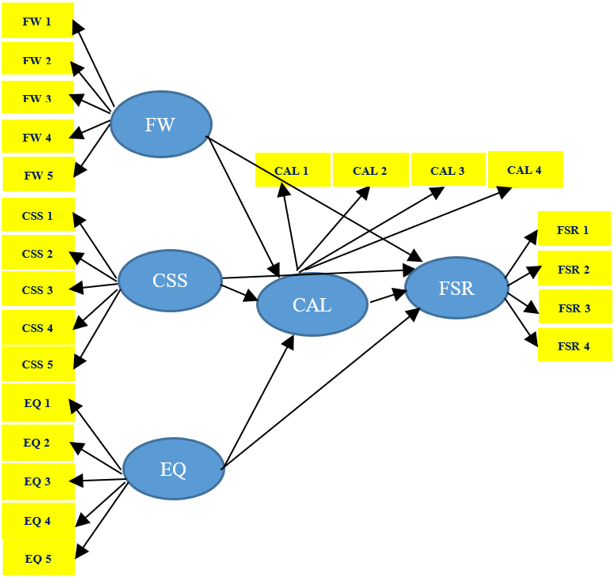
H1: FW has a positive and significant effect on FSR.
2.6.2 The effect of community social structure (X2) on food security resilience (Y2)
CSS is important to the sustainability of rural food systems. Social cohesion, community participation, and strong networks facilitate information exchange, collective action, resource mobilization, and coordinated responses to shocks. Social capital and civic engagement can therefore strengthen adaptive capacity and food-system stability [28, 29]. Empirical studies also show that well-connected rural communities are better able to sustain agricultural livelihoods and respond to environmental change [28, 30]. Accordingly, the following hypothesis is proposed:
H2: CSS has a positive and significant effect on FSR.
2.6.3 The effect of environmental quality (X3) on food security resilience (Y2)
EQ directly supports agricultural production and the stability of food systems. Healthy soils, reliable water resources, biodiversity, and climate-regulating ecosystem services enhance productivity and reduce exposure to environmental shocks [24, 31]. Conversely, environmental degradation increases production risks, disrupts food availability, and weakens the stability of agrarian food systems [10, 16]. Based on this reasoning, the following hypothesis is proposed:
H3: EQ has a positive and significant effect on FSR.
2.6.4 The effect of conversion of agricultural land (Y1) on food security resilience (Y2)
The CAL to non-agricultural uses poses a serious threat to the stability and sustainability of food systems, particularly in agrarian regions. It reduces local production capacity, increases dependence on external food sources, and heightens economic and environmental vulnerability [8, 32]. Accelerated and poorly controlled conversion can therefore weaken agricultural sustainability and disrupt the continuity of food supply [14, 33]. Based on this reasoning, the following hypothesis is proposed:
H4: CAL has a negative and significant effect on FSR.
2.6.5 The effect of farmers’ welfare (X1) on conversion of agricultural land (Y1)
Improved FW can reduce the pressure to convert agricultural land by enabling farmers to maintain viable agricultural livelihoods. Stable income, access to resources, and stronger market opportunities increase the incentives and capacity to retain productive farmland. By contrast, financial insecurity may encourage households to sell or convert land in response to short-term economic pressures [34, 35]. Empirical evidence indicates that economic vulnerability and limited livelihood resources can accelerate land-use conversion [19, 36]. Accordingly, the following hypothesis is proposed:
H5: FW has a negative and significant effect on CAL.
2.6.6 The effect of community social structure (X2) on conversion of agricultural land (Y1)
CSS may reduce CAL by strengthening shared norms, collective stewardship, and community-based control over land use. Strong social networks can support local monitoring, collective decision-making, and the protection of productive farmland [22, 37]. Empirical studies suggest that cohesive communities and effective local institutions can enhance self-governance and promote sustainable land management [20, 38]. Therefore, the following hypothesis is proposed:
H6: CSS has a negative and significant effect on CAL.
2.6.7 The effect of environmental quality (X3) on conversion of agricultural land (Y1)
EQ is expected to reduce CAL because favorable ecological conditions help sustain the productivity and economic value of farming. Fertile soil, reliable water resources, climate stability, and healthy ecosystems support agricultural production, reduce farming risk, and encourage farmers to maintain land in agricultural use. When EQ declines, agricultural productivity becomes less stable and farming may appear less viable, increasing the incentive to shift land to non-agricultural purposes [24, 39]. Previous studies also suggest that poor ecological conditions often accelerate land conversion by weakening the long-term viability of farming [16, 23]. Based on the arguments presented above, the following hypothesis is proposed:
H7: EQ has a negative and significant effect on CAL.
2.7 Conceptual framework
Based on the various hypotheses, the conceptual framework was developed in this study (Figure 1).
This study employed a quantitative explanatory design to examine the structural determinants of FSR under CAL within the context of sustainable regional development. The research was conducted among farming households in Padang Pariaman District, West Sumatra Province, Indonesia. The study area was selected because it has experienced substantial pressure from agricultural land conversion and a continuing decline in farmland associated with regional development. These conditions provide an appropriate setting for examining the relationships among socio-economic conditions, environmental quality, land conversion, and FSR.
A multistage sampling approach was used to obtain representation from farming households located in areas with different levels of land-conversion pressure. In the first stage, the sample size was calculated using the Slovin formula with a 5% margin of error. From a population of 5,809 farming households, 375 households were selected. In the second stage, the sample was proportionally allocated across subdistricts in Padang Pariaman District to obtain balanced territorial representation.
Primary data were collected through questionnaires administered directly to respondents. The instrument measured FW, CSS, EQ, CAL, and FSR. Before the full survey, the questionnaire was pre-tested to assess the clarity of the wording, relevance of the items, and content validity. The instrument was subsequently revised to improve comprehensibility and measurement consistency.
All study variables were specified as latent constructs measured by multiple indicators adapted from the literature and adjusted to the context of rural agrarian systems (Table 1). Each item was assessed using a five-point Likert-type scale ranging from 1 (strongly disagree) to 5 (strongly agree) [40]. Higher scores indicated stronger agreement with the construct being measured. For CAL, higher scores represented greater perceived land-conversion pressure. Descriptive statistics were used to summarize the mean score of each construct and indicator before the structural analysis.
Table 1. Variable, indicator and measurement items in the model
|
Variable |
Indicator/Code |
Item Wording |
|
FW (X1) |
Access to basic services (X1.1) |
Agricultural infrastructure in this area supports farming activities. |
|
Farm income (X1.2) |
Farm income is sufficient to meet household food needs. |
|
|
Market access (X1.3) |
Farmers in this area can sell agricultural products at fair prices. |
|
|
Land diversification (X1.4) |
Land diversification improves the availability of diverse food crops. |
|
|
Life satisfaction (X1.5) |
Farmers’ life satisfaction strengthens their motivation to continue farming. |
|
|
CSS (X2) |
Social cohesion (X2.1) |
Farming communities share responsibility for maintaining food availability. |
|
Social networks (X2.2) |
Farmers participate in farmer groups or agricultural organizations. |
|
|
Social norms (X2.3) |
Social norms encourage farmers to maintain agricultural land. |
|
|
Community solidarity (X2.4) |
Community solidarity helps farmers remain resilient during farming difficulties. |
|
|
Social resilience (X2.5) |
Farming communities adapt to environmental and economic changes. |
|
|
EQ (X3) |
Climate stability (X3.1) |
Predictable weather patterns help farmers determine planting and harvesting times. |
|
Soil fertility (X3.2) |
Soil fertility supports stable agricultural production in this area. |
|
|
Biodiversity (X3.3) |
Biodiversity in agricultural ecosystems helps reduce pests and crop diseases. |
|
|
Water quality (X3.4) |
Water quality in this area supports agricultural production. |
|
|
Waste management (X3.5) |
Waste management practices help protect agricultural land and food production. |
|
|
CAL (Y1) |
Land productivity effects (Y1.1) |
Agricultural land conversion reduces productive farmland in this area. |
|
Livelihood change (Y1.2) |
Agricultural land conversion reduces farmers’ livelihood opportunities. |
|
|
Food price stability disruption (Y1.3) |
Agricultural land conversion increases food price instability. |
|
|
Climate-related consequences (Y1.4) |
Land conversion worsens climate-related risks to agricultural production. |
|
|
FSR (Y2) |
Food availability (Y2.1) |
Local food production supports sufficient food availability. |
|
Food access (Y2.2) |
Local economic conditions enable households to access sufficient food. |
|
|
Food utilization (Y2.3) |
Remaining agricultural land is productively used to support food needs. |
|
|
Food stability (Y2.4) |
Local farming systems help maintain stable food supply. |
The data were analyzed using SmartPLS 4 and the PLS-SEM technique. PLS-SEM was selected because the model contains several latent constructs and simultaneous structural relationships. The analysis proceeded in two stages. First, the measurement model was evaluated using indicator loadings, Cronbach’s alpha, composite reliability, and average variance extracted (AVE). Second, the structural model was assessed using R², adjusted R², Q², path coefficients, t-statistics, and p-values to test the hypothesized relationships among FW, CSS, EQ, CAL, and FSR.
4.1 Respondent characteristics
The sample consisted of 375 farming households located in agrarian areas experiencing increasing CAL pressure. Respondent characteristics were described by gender, age, length of farming experience, and farmland location. Tables 2 and 3 present the profile of the respondents.
Table 2 shows that 79.47% of respondents were men and 20.53% were women. Most respondents were 46-60 years old (62.93%), followed by those aged 31-45 years (28.00%) and 18-30 years (9.07%). This distribution indicates that farming in the study area is concentrated among older age groups and that generational renewal remains limited. Such a pattern may create structural vulnerability because local food production increasingly depends on older farmers who also face growing competition from non-agricultural land uses.
Table 2. Respondent characteristics by gender and age
|
Characteristic |
Category |
n |
% |
|
Gender |
Male |
298 |
79.47% |
|
|
Female |
77 |
20.53% |
|
Age (years) |
18–30 years |
34 |
9.07% |
|
|
31–45 years |
105 |
28.00% |
|
|
46–60 years |
236 |
62.93% |
As shown in Table 3, most respondents had substantial farming experience. Approximately 34.70% had farmed for 11–20 years, 32.00% for more than 20 years, 22.70% for 5–10 years, and 10.70% for fewer than 5 years. Regarding farmland location, 56.00% cultivated land located approximately 1–3 km from their homes, 30.70% cultivated land near residential areas, and 13.30% farmed in distant or hilly areas. Farmland located near settlements may face greater conversion pressure because of its accessibility and development value.
Table 3. Respondent characteristics by length of farming experience and farmland location
|
Characteristic |
Category |
n |
% |
|
Length of Farming Experience (years) |
< 5 years |
40 |
10.70% |
|
5–10 years |
85 |
22.70% |
|
|
11–20 years |
130 |
34.70% |
|
|
> 20 years |
120 |
32.00% |
|
|
Farmland Location (sites) |
Near residential areas |
115 |
30.70% |
|
Quite far (± 1–3 km) |
210 |
56.00% |
|
|
Far/hilly areas |
50 |
13.30% |
4.2 Descriptive analysis of key constructs
Respondents’ perceptions of the principal constructs were summarized using mean scores for each variable and indicator on a five-point Likert scale. The interpretation interval was calculated as (5 - 1)/5 = 0.80, producing five categories ranging from very low to very high [41], as shown in Table 4.
Table 4. Average value category
|
Average Value |
Category |
|
1.00–1.80 |
Very Low |
|
1.81–2.60 |
Low |
|
2.61–3.40 |
Moderate |
|
3.41–4.20 |
High |
|
4.21–5.00 |
Very High |
Table 5 presents the descriptive statistics for each variable and indicator based on this classification.
Table 5. Description of variable value
|
Variable |
Average Value |
Category |
|
X1 |
4.20 |
High |
|
X1.1 |
4.18 |
High |
|
X1.2 |
4.19 |
High |
|
X1.3 |
4.19 |
High |
|
X1.4 |
4.19 |
High |
|
X1.5 |
4.26 |
Very High |
|
X2 |
4.21 |
Very High |
|
X2.1 |
4.15 |
High |
|
X2.2 |
4.14 |
High |
|
X2.3 |
4.21 |
High |
|
X2.4 |
4.12 |
High |
|
X2.5 |
4.43 |
Very High |
|
X3 |
4.26 |
Very High |
|
X3.1 |
4.25 |
Very High |
|
X3.2 |
4.27 |
Very High |
|
X3.3 |
4.27 |
Very High |
|
X3.4 |
4.26 |
Very High |
|
X3.5 |
4.27 |
Very High |
|
Y1 |
4.06 |
High |
|
Y1.1 |
4.01 |
High |
|
Y1.2 |
3.95 |
High |
|
Y1.3 |
4.06 |
High |
|
Y1.4 |
4.23 |
Very High |
|
Y2 |
4.31 |
Very High |
|
Y2.1 |
4.30 |
Very High |
|
Y2.2 |
4.35 |
Very High |
|
Y2.3 |
4.30 |
Very High |
|
Y2.4 |
4.30 |
Very High |
All principal constructs were rated in the high or very high categories. FSR (Y2) had the highest mean score (4.31), followed by EQ (X3 = 4.26), CSS (X2 = 4.21), FW (X1 = 4.20), and CAL (Y1 = 4.06). No construct or indicator fell within the moderate, low, or very low categories.
The descriptive results indicate that FW, CSS, EQ, and FSR were perceived at high to very high levels. However, the high CAL score should not be interpreted positively; it indicates substantial perceived pressure to convert agricultural land. Thus, the high FSR score may reflect the current adaptive capacity of rural households and local institutions under increasing land-use pressure rather than long-term structural stability.
4.3 Measurement model assessment
Before estimating the structural relationships, the measurement model was evaluated for indicator reliability, internal consistency reliability, and convergent validity. In PLS-SEM, outer loadings of 0.70 or higher indicate satisfactory indicator reliability [42]. As shown in Table 6, all indicators exceeded this threshold and were therefore retained.
Table 6. Convergent validity
|
Variable |
Code |
Loadings |
Description |
|
FW (X1) |
X1.1 |
0.941 |
Valid |
|
X1.2 |
0.936 |
||
|
X1.3 |
0.932 |
||
|
X1.4 |
0.933 |
||
|
X1.5 |
0.942 |
||
|
CSS (X2) |
X2.1 |
0.938 |
Valid |
|
X2.2 |
0.937 |
||
|
X2.3 |
0.938 |
||
|
X2.4 |
0.942 |
||
|
X2.5 |
0.944 |
||
|
EQ (X3) |
X3.1 |
0.938 |
Valid |
|
X3.2 |
0.940 |
||
|
X3.3 |
0.936 |
||
|
X3.4 |
0.944 |
||
|
X3.5 |
0.935 |
||
|
CAL (Y1) |
Y1.1 |
0.938 |
Valid |
|
Y1.2 |
0.936 |
||
|
Y1.3 |
0.932 |
||
|
Y1.4 |
0.937 |
||
|
FSR (Y2) |
Y2.1 |
0.897 |
Valid |
|
Y2.2 |
0.912 |
||
|
Y2.3 |
0.906 |
||
|
Y2.4 |
0.895 |
Convergent validity was further evaluated using AVE, while internal consistency reliability was assessed using Cronbach’s alpha and composite reliability. The results are presented in Tables 6 and 7.
Construct reliability was considered satisfactory when Cronbach’s alpha and composite reliability exceeded 0.70. Convergent validity was established when AVE exceeded 0.50 [42, 43]. As shown in Table 7, all constructs met these criteria, confirming adequate reliability and convergent validity for the subsequent structural analysis.
Table 7. Composite reliability and average variance extracted (AVE)
|
Variable |
Cronbach’s Alpha |
Composite Reliability |
AVE |
Description |
|
X1 |
0.965 |
0.966 |
0.878 |
|
|
X2 |
0.967 |
0.968 |
0.883 |
Valid and |
|
X3 |
0.966 |
0.966 |
0.881 |
Reliable |
|
Y1 |
0.953 |
0.953 |
0.876 |
|
|
Y2 |
0.924 |
0.924 |
0.814 |
|
4.4 Structural model results and hypothesis testing
The coefficient of determination (R²) indicates the proportion of variance in an endogenous construct explained by its predictors. R² values of approximately 0.75, 0.50, and 0.25 are commonly interpreted as substantial, moderate, and weak, respectively [43].
As reported in Table 8, the model explained 52.6% of the variance in CAL (R² = 0.526) and 55.7% of the variance in FSR (R² = 0.557). Both values indicate moderate explanatory power. The remaining variance, 47.4% for CAL and 44.3% for FSR, may be attributable to factors not included in the model.
Table 8. R² and adjusted R²
|
Variable |
R² |
Adjusted R² |
|
CAL |
0.526 |
0.523 |
|
FSR |
0.557 |
0.552 |
Predictive relevance was assessed using Q². Values greater than zero indicate that the model has predictive relevance for an endogenous construct, whereas values at or below zero indicate limited predictive relevance. Table 9 presents the Q² results.
Table 9. Predictive relevance (Q²)
|
Variable |
SSO |
SSE |
Q² (= 1-SSE/SSO) |
|
CAL (Y1) |
1496.000 |
815.596 |
0.455 |
|
FSR (Y2) |
1496.000 |
826.372 |
0.448 |
Table 9 shows that the model had predictive relevance for both endogenous constructs. CAL obtained a Q² value of 0.455, while FSR obtained a Q² value of 0.448. Because both values were greater than zero, the model demonstrated satisfactory predictive relevance. CAL had a slightly higher Q² than FSR, although the difference was small.
After confirming the model’s predictive relevance, the structural model was assessed by examining the path coefficients and testing the proposed hypotheses. This analysis was conducted to determine the direction, magnitude, and significance of the relationships among the constructs. The results are presented in Table 10.
Table 10. Path coefficients and hypotheses testing
|
Variable |
Original Sample |
t-Statistic |
p-Value |
|
FW-> FSR |
0.087 |
1.322 |
0.187 |
|
CSS-> FSR |
0.097 |
2.529 |
0.012 |
|
EQ-> FSR |
0.826 |
4.063 |
< 0.001 |
|
CAL-> FSR |
-0.128 |
2.926 |
0.004 |
|
FW-> CAL |
-0.936 |
6.625 |
< 0.001 |
|
CSS-> CAL |
0.331 |
5.475 |
< 0.001 |
|
EQ-> CAL |
-0.612 |
5.691 |
< 0.001 |
As shown in Table 10, FW had a positive but statistically insignificant effect on FSR (β = 0.087, t = 1.322, p = 0.187); therefore, H1 was not supported. CSS had a positive and significant effect on FSR (β = 0.097, t = 2.529, p = 0.012), supporting H2. EQ had the strongest positive and significant effect on FSR (β = 0.826, t = 4.063, p < 0.001), supporting H3. CAL had a negative and significant effect on FSR (β = -0.128, t = 2.926, p = 0.004), supporting H4. These results indicate that all hypothesized relationships were statistically significant except FW->FSR. However, H6 was not supported in the expected direction because CSS had a positive, rather than negative, effect on CAL. These findings indicate that FSR was shaped primarily by environmental conditions and community social capacity, while CAL acted as a significant constraint.
For CAL, FW had a negative and significant effect (β = -0.936, t = 6.625, p < 0.001), supporting H5. CSS had a positive and significant effect on CAL (β = 0.331, t = 5.475, p < 0.001). Because this direction was contrary to the hypothesized negative relationship, H6 was not supported. EQ had a negative and significant effect on CAL (β = -0.612, t = 5.691, p < 0.001), supporting H7. Thus, CAL pressure was reduced by stronger farmer welfare and better environmental quality but increased alongside stronger community social structure.
4.5 Discussion
This study examined the structural determinants of FSR in an agrarian region experiencing CAL. The results show that resilience was primarily associated with environmental quality and community social structure, whereas CAL directly weakened FSR. FW did not have a significant direct effect on FSR, although it was strongly associated with lower CAL. Because indirect effects were not formally reported, this result should be interpreted as evidence of a potential protective pathway through farmland retention rather than as a confirmed mediation effect. Overall, the findings support a socio-ecological interpretation of FSR in which household conditions, community capacity, environmental quality, and land-use change interact.
EQ was the strongest positive determinant of FSR and also had a substantial negative effect on CAL. This finding confirms the central role of environmental conditions in agrarian systems. Soil fertility, water quality, biodiversity, and climate stability provide the biophysical basis for agricultural productivity and reduce exposure to shocks. When these conditions deteriorate, farming becomes less stable and less economically viable, which may increase incentives to convert land to non-agricultural uses. The result is consistent with studies showing that environmental degradation reduces profitability, increases production risk, and undermines the long-term sustainability of farming [41, 44, 45]. It also accords with evidence that land conversion can intensify ecological degradation and vulnerability [46, 47].
CSS also had a positive effect on FSR. Social cohesion, local networks, and collective capacity can help rural households maintain food production and access during periods of stress. Strong social ties facilitate labor mobilization, mutual assistance, information exchange, and coordinated responses to shocks. This finding is consistent with evidence that cooperatives, farmers’ organizations, and community networks strengthen adaptive capacity and local food-system stability [17, 48]. It also supports research emphasizing the role of cooperation and collective decision-making in vulnerable rural areas [13, 29].
However, CSS had a positive effect on CAL, contrary to H6. This result demonstrates that social structure can perform a dual role. Strong networks may support resilience and mutual assistance while also facilitating collective responses to development opportunities, land-market incentives, or changes in dominant economic activities [33, 49]. Social cohesion therefore does not automatically protect farmland. Its effect depends on local institutions, shared incentives, land-use norms, and the direction in which collective action is mobilized.
FW showed a similarly differentiated pattern. Its direct effect on FSR was not significant, but it had the strongest negative effect on CAL. This finding suggests that welfare may be more important for maintaining the viability of farming and retaining agricultural land than for immediately improving food-system resilience. Farmers with greater economic security may be less compelled to sell or convert their land, while FSR itself remains dependent on broader environmental and social conditions.
This interpretation is consistent with evidence that welfare vulnerability increases the likelihood of farmland abandonment or sale when farmers face rising land values and conversion incentives [6, 47]. Improved welfare can also support investment in productivity-enhancing and sustainable practices [37, 50]. FW is therefore structurally important, but the present results indicate that its clearest role lies in reducing land-conversion pressure rather than directly increasing FSR.
The negative effect of CAL on FSR confirms that the loss or repurposing of farmland weakens the productive and ecological foundations of rural food systems. Continued conversion reduces local production capacity, narrows livelihood options, and increases dependence on external food supplies. It can also diminish the adaptive capacity of households and communities by reducing the resources available for responding to shocks. Accordingly, the high descriptive score for FSR should not be interpreted as evidence of structural equilibrium; it more likely reflects the current capacity of rural households and institutions to adapt under growing land-use pressure.
The study contributes an integrated explanation of how FW, CSS, and EQ are related to FSR and CAL. The empirical pattern shows that EQ was the strongest positive determinant of resilience, FW was the strongest negative determinant of land conversion, and CSS had a dual role: it strengthened FSR but was also positively associated with CAL. This pattern extends socio-ecological resilience and sustainable regional development research by showing that resilience emerges from interconnected structural relationships rather than isolated factors [46, 51]. The findings also reinforce broader concerns that unmanaged farmland conversion can increase food-system vulnerability and undermine sustainability [52, 53].
This study concludes that improving FW alone does not directly strengthen FSR in agrarian areas experiencing CAL. EQ was the strongest positive determinant of FSR, while CAL significantly weakened resilience. These results highlight the importance of environmental protection and farmland retention within sustainable regional development.
The findings show that FSR is a complex socio-ecological outcome shaped by environmental conditions, community capacity, and land-use dynamics. FW had its strongest role in reducing CAL, whereas CSS strengthened FSR but was also associated with greater CAL pressure. Land conversion should therefore be treated not as a background condition but as a central structural process linking socio-economic and ecological conditions to food-system resilience.
Policies to strengthen FSR should replace fragmented sectoral interventions with coordinated strategies that protect environmental quality, improve the economic viability of farming, and reinforce local institutions that support farmland retention. Spatial planning and land-conversion controls should be integrated with farmer protection instruments, sustainable agricultural practices, market support, and community-based land governance.
The positive relationship between CSS and CAL also indicates that social cohesion cannot automatically be assumed to protect farmland. Community networks may support land-use transformation when local economic incentives favor conversion. Sustainable regional development therefore requires coherent cross-sectoral policies that align community institutions with farmland protection, environmental management, and rural livelihood security.
This study is limited by its cross-sectional design, which does not allow strong causal or temporal conclusions. Future research should employ longitudinal and comparative designs to examine how CAL and FSR evolve over time and across different agrarian contexts. Spatial analysis and additional variables, including governance quality, climate risk, and gender-related factors, could also provide a more comprehensive understanding of the socio-ecological mechanisms associated with land-use change.
The authors sincerely thank the farming households in Padang Pariaman District who participated in this study.
[1] Kuang, W., Liu, J., Tian, H., et al. (2022). Cropland redistribution to marginal lands undermines environmental sustainability. National Science Review, 9(1): nwab091. https://doi.org/10.1093/nsr/nwab091
[2] Van Berkum, S. (2023). How urban growth in the Global South affects agricultural dynamics and food systems outcomes in rural areas: A review and research agenda. Sustainability, 15(3): 2591. https://doi.org/10.3390/su15032591
[3] Subedi, Y.R., Kristiansen, P., Cacho, O.J. (2022). Drivers and consequences of agricultural land abandonment and its reutilisation pathways: A systematic review. Environmental Development, 42: 100681. https://doi.org/10.1016/j.envdev.2021.100681
[4] Rahut, D.B., Aryal, J.P., Manchanda, N.K., Sonobe, T. (2022). Expectations for household food security in the coming decades: A global scenario. In Future Foods: Global Trends, Opportunities, and Sustainability Challenges, pp. 107-131. https://doi.org/10.1016/B978-0-323-91001-9.00002-5
[5] Sentosa, S.U., Satrianto, A., Akbar, U.U., Yeni, I.P. (2025). Study of income and food consumption expenditure households of wet-rice farmers in West Sumatra, Indonesia. Asian Journal of Agriculture and Rural Development, 15(3): 365-378. https://doi.org/10.55493/5005.v15i3.5513
[6] Appelt, J.L., Garcia Rojas, D.G., Verburg, P.H., van Vliet, J. (2022). Socioeconomic outcomes of agricultural land use change in Southeast Asia. Ambio, 51(5): 1094-1109. https://doi.org/10.1007/s13280-022-01712-4
[7] Dring, C., Newman, L., Wittman, H. (2023). Assessing governability of agricultural systems: Municipal agricultural planning in Metro Vancouver, Canada. Frontiers in Sustainable Food Systems, 6: 855684. https://doi.org/10.3389/fsufs.2022.855684
[8] Wei, H., Lu, C. (2022). Farmland change and its implications in the Three River Region of Tibet during recent 20 years. PLOS ONE, 17(4): e0265939. https://doi.org/10.1371/journal.pone.0265939
[9] Wahbeh, S.Y., Anastasiadis, F., Sundarakani, B., Manikas, I. (2022). Exploration of food security challenges towards more sustainable food production: A systematic literature review of the major drivers and policies. Foods, 11(23): 3804. https://doi.org/10.3390/foods11233804
[10] Sentosa, S.U., Satrianto, A., Akbar, U.U., Artha, D.P. (2025). Effect of internet access on food expenditure and nutrition of Indonesian agricultural households. Humanities and Social Sciences Letters, 13(3): 916-929. https://doi.org/10.18488/73.v13i3.4318
[11] Akanmu, A.O., Akol, A.M., Ndolo, D., Kutu, F.R., Babalola, O.O. (2023). Agroecological techniques: Adoption of safe and sustainable agricultural practices among the smallholder farmers in Africa. Frontiers in Sustainable Food Systems, 7: 1143061. https://doi.org/10.3389/fsufs.2023.1143061
[12] McElwee, P., Tuyen, N.P., Hue, L.T. (2023). Climate precarity in rural livelihoods: Agrarian transformations and smallholder vulnerability in Vietnam. Journal of Agrarian Change, 23(4): 661-686. https://doi.org/10.1111/joac.12555
[13] Huber, P.R., Baker, M., Hollander, A.D., et al. (2023). Linking biodiversity and human wellbeing in systematic conservation assessments of working landscapes. Sustainability, 15(13): 9912. https://doi.org/10.3390/su15139912
[14] Schilling, D. (2023). Sustainable farming in practice: Building resilient and profitable smallholder agricultural systems in sub-Saharan Africa. Sustainability, 15(7): 5731. https://doi.org/10.3390/su15075731
[15] McDermid, S.S., Hayek, M., Jamieson, D.W., Hale, G., Kanter, D.R. (2023). Research needs for a food system transition. Climatic Change, 176: 41. https://doi.org/10.1007/s10584-023-03507-2
[16] Du, Y., Fan, Y. (2023). Spatiotemporal dynamics of agricultural sustainability assessment: A study across 30 Chinese provinces. Sustainability, 15(11): 9066. https://doi.org/10.3390/su15119066
[17] Wood, A., Queiroz, C., Deutsch, L., et al. (2023). Reframing the local-global food systems debate through a resilience lens. Nature Food, 4(1): 22-29. https://doi.org/10.1038/s43016-022-00662-0
[18] Woodhill, J.R., Kishore, A., Njuki, J., Jones, K., Hasnain, S. (2022). Food systems and rural wellbeing: Challenges and opportunities. Food Security, 14(5): 1099-1121. https://doi.org/10.1007/s12571-021-01217-0
[19] Cui, H., Wang, Y., Wang, W., Liu, C. (2025). Rural households’ livelihood transitions in China: Processes, drivers and outcomes. China Agricultural Economic Review, 17(1): 171-190. https://doi.org/10.1108/CAER-11-2023-0346
[20] Golfínopoulos, S.K., Koumparou, D. (2024). Rural environmental governance: A communal irrigation system in Greece through the social-ecological system framework. Sustainability, 16(15): 6416. https://doi.org/10.3390/su16156416
[21] Yu, C., Zhou, Z., Gao, J. (2024). Rural network resilience: A new tool for exploring the mechanisms and pathways of rural sustainable development. Sustainability, 16(14): 5850. https://doi.org/10.3390/su16145850
[22] Addai, G., Guodaar, L., Amponsah, O., Ibrahiem, D.M., Felix, K.T., Antwi-Agyei, P. (2024). Role of social capital in agricultural diversification: Implications for sustainable development in rural regions. Sustainable Development, 32(5): 4844-4865. https://doi.org/10.1002/sd.2938
[23] Niu, H., Li, Z., Zhang, C., Li, M. (2024). Sustainable food systems under environmental footprints: The delicate balance from farm to table. Science of the Total Environment, 954: 176761. https://doi.org/10.1016/j.scitotenv.2024.176761
[24] Bilyera, N., Turner, B.L., Zhang, X., Zang, H., Dorodnikov, M., Kuzyakov, Y. (2025). Soil health under global change and human impact. Land Degradation & Development, 36(3): 683-688. https://doi.org/10.1002/ldr.5487
[25] Bhagwat, S.A. (2022). Catalyzing transformative futures in food and farming for global sustainability. Frontiers in Sustainable Food Systems, 6: 1009020. https://doi.org/10.3389/fsufs.2022.1009020
[26] Bui, H.H., Nguyen, T., Pham, V., Ho, K.L.P. (2025). Exploring the interplay of social, economic, and environmental factors on livelihood sustainability in Quang Tri’s coastal forest areas. Sustainability, 17(17): 7661. https://doi.org/10.3390/su17177661
[27] Vallury, S., Smith, A.P., Chaffin, B.C., et al. (2022). Adaptive capacity beyond the household: A systematic review of empirical social-ecological research. Environmental Research Letters, 17(6): 063001. https://doi.org/10.1088/1748-9326/ac68fb
[28] Albizua, A., Bennett, E.M., Larocque, G., Krause, R.W., Pascual, U. (2021). Social networks influence farming practices and agrarian sustainability. PLOS ONE, 16(1): e0244619. https://doi.org/10.1371/journal.pone.0244619
[29] Canfora, I., Leccese, V.S. (2024). Social sustainability as the milestone for a sustainable food system: The essential role of people working in agriculture. European Journal of Risk Regulation, 15: 253-264. https://doi.org/10.1017/err.2024.27
[30] Chao, K. (2024). Family farming in climate change: Strategies for resilient and sustainable food systems. Heliyon, 10(7): e28599. https://doi.org/10.1016/j.heliyon.2024.e28599
[31] De Grandpré, A., Elton, C., Senese, D.M., Mullinix, K. (2022). Soft adaptation: The role of social capital in building resilient agricultural landscapes. Frontiers in Agronomy, 4: 980888. https://doi.org/10.3389/fagro.2022.980888
[32] Dönmez, D., Isak, M.A., İzgü, T., Şimşek, Ö. (2024). Green horizons: Navigating the future of agriculture through sustainable practices. Sustainability, 16(8): 3505. https://doi.org/10.3390/su16083505
[33] Saqib, S.E., Yaseen, M., Ali, S., Visetnoi, S. (2024). Agricultural land conversion and challenges for tenant farmers: Empirical evidence from Pakistan. Land Degradation & Development, 36(3): 802-815. https://doi.org/10.1002/ldr.5395
[34] Zhang, Z., Ghazali, S., Miceikienė, A., et al. (2023). Socio-economic impacts of agricultural land conversion: A meta-analysis. Land Use Policy, 132: 106831. https://doi.org/10.1016/j.landusepol.2023.106831
[35] Li, M., Li, J., Haq, S.U., Nadeem, M. (2024). Agriculture land use transformation: A threat to sustainable food production systems, rural food security, and farmer well-being? PLoS ONE, 19(1): e0296332. https://doi.org/10.1371/journal.pone.0296332
[36] Chen, X., Xue, Z., Gao, Q. (2024). The impact of land consolidation on farmer income: Evidence from high-standard farmland construction in China. Frontiers in Sustainable Food Systems, 8: 1412095. https://doi.org/10.3389/fsufs.2024.1412095
[37] Wang, Z., Wang, Y., Li, H., Huang, X. (2025). Exploring the trade-offs and synergies among agricultural land use benefits and their principal influencing factors: Implications for sustainable agricultural development. Land Degradation & Development, 37(3): 840-857. https://doi.org/10.1002/ldr.70145
[38] Hodel, L., le Polain de Waroux, Y., Garrett, R. (2024). Characterizing culture’s influence in land systems. Nature Sustainability, 7: 973-982. https://doi.org/10.1038/s41893-024-01381-z
[39] Teodoro, J.D., Baird, J.W., Otung, I. (2023). Longitudinal network analysis on a farmers’ community of practice and their changes in agricultural systems management. Society & Natural Resources, 36(2): 91-108. https://doi.org/10.1080/08941920.2022.2135152
[40] Koo, M., Yang, S.W. (2025). Likert-type scale. Encyclopedia, 5(1): 18. https://doi.org/10.3390/encyclopedia5010018
[41] Cárceles Rodríguez, B., Durán-Zuazo, V.H., Soriano Rodríguez, M., García-Tejero, I.F., Gálvez Ruiz, B., Cuadros Tavira, S. (2022). Conservation agriculture as a sustainable system for soil health: A review. Soil Systems, 6(4): 87. https://doi.org/10.3390/soilsystems6040087
[42] Hair, J.F., Hult, G.T.M., Ringle, C.M., Sarstedt, M. (2017). A Primer on Partial Least Squares Structural Equation Modeling (PLS-SEM). Thousand Oaks, CA: SAGE Publications.
[43] Hair, J.F., Ringle, C.M., Sarstedt, M. (2011). PLS-SEM: Indeed a silver bullet. Journal of Marketing Theory and Practice, 19(2): 139-152. https://doi.org/10.2753/MTP1069-6679190202
[44] Popescu, G.C., Popescu, M., Pampana, S., et al. (2023). Introduction: Sustainability as an agroecological strategy toward resilience in agricultural systems. Agronomy Journal, 115(6): 2657-2664. https://doi.org/10.1002/agj2.21483
[45] Hu, Y., Zhang, J., Chang, B.J., Ni, C. (2025). Do agricultural ecology and food security promote each other? Evidence from China. Food and Energy Security, 14(3): e70059. https://doi.org/10.1002/fes3.70059
[46] Yin, X., Li, Z., Xu, G., Wan, C. (2024). Integrating resilience theory into a cultivated land system: Empirical insights from China’s key grain-producing regions. Land Degradation & Development, 35(17): 5425-5438. https://doi.org/10.1002/ldr.5307
[47] Li, R., Wang, X., Jiang, W., et al. (2025). Exploring impact and driving forces of land use transformation on ecological environment in urban agglomeration from the perspective of production-living-ecological spatial synergy. Sustainability, 17(18): 8235. https://doi.org/10.3390/su17188235
[48] Abebe, M.G. (2025). Strengthening household resilience for enhanced food security in northwestern Ethiopia: Insights from resilience pillars. Frontiers in Sustainable Food Systems, 9: 1528346. https://doi.org/10.3389/fsufs.2025.1528346
[49] Nesbitt, H.K., Metcalf, A.L., Floyd, T.M., et al. (2024). Social networks and transformative behaviours in a grassland social-ecological system. People and Nature, 6(5): 1877-1892. https://doi.org/10.1002/pan3.10695
[50] Zhao, X., Xiang, H., Zhao, F. (2023). Measurement and spatial differentiation of farmers’ livelihood resilience under the COVID-19 epidemic outbreak in rural China. Social Indicators Research, 166(2): 239-267. https://doi.org/10.1007/s11205-022-03057-7
[51] Sa, N., Zhao, J., Kou, X., et al. (2025). Transformation of social-ecological systems in the Songhua River Basin, Northeast China: Lessons for a more sustainable development. People and Nature, 7(7): 1749-1768. https://doi.org/10.1002/pan3.70086
[52] Estoque, R.C., Wu, J. (2024). The resilience-sustainability-quality of life nexus. Science of the Total Environment, 912: 169526. https://doi.org/10.1016/j.scitotenv.2023.169526
[53] Nyssen, J., Negash, E., Meaza, H., et al. (2025). Land system resilience amidst the ravages of war: Insights from Tigray (Northern Ethiopia). Environment and Planning E: Nature and Space, 8(6): 1930-1952. https://doi.org/10.1177/25148486251374659