Samerdanta Sinulingga* | Jonathan Liviera Marpaung | Agung Wahyudhi Atmanegara | Nasrullah | Fauzan Nurahmadi | Jhonson Pardosi | Ni Nyoman Harnika
© 2026 The authors. This article is published by IIETA and is licensed under the CC BY 4.0 license (http://creativecommons.org/licenses/by/4.0/).
OPEN ACCESS
This study examines how digital governance and Pentahelix collaboration can strengthen sustainable tourism governance in rural destinations vulnerable to revenue leakage and informal extortion practices. Although collaborative governance has become central to rural tourism development, existing studies rarely integrate multi-stakeholder dynamics with digital governance readiness and accountability mechanisms within a unified empirical framework. Using Kutagugung Village, Indonesia, as a case study, this research develops and tests a serial mediation model linking Pentahelix collaboration, stakeholder perceptions, digital governance readiness, and sustainable tourism governance outcomes. A quantitative approach was employed using Partial Least Squares Structural Equation Modeling (PLS-SEM) based on data collected from 400 residents and tourism stakeholders in Kutagugung Village, North Sumatra, spanning a range of occupational backgrounds including tourism workers, traders, farmers, and students. The model incorporates perceived transparency (PT), stakeholder trust, and past tourism experience (PTE) as bridging constructs influencing digital governance readiness and perceived digitalization needs. The findings demonstrate that transparency, trust, and tourism experience significantly strengthen digital governance readiness, which subsequently increases support for digitalization and contributes to more accountable and sustainable tourism governance. The results further reveal that collaborative governance alone is insufficient unless supported by institutional readiness, accountability mechanisms, and stakeholder alignment. The model explains a moderate share of variance in governance readiness constructs and a comparatively weaker share of variance in the ultimate governance outcome, indicating that Pentahelix collaboration and digital governance readiness strengthen the institutional conditions for accountable tourism governance, though additional factors outside the model likely also shape actual governance outcomes. Extortion and revenue leakage are treated as the motivating governance vulnerability of the study setting and were not measured directly; the model therefore tests the institutional and perceptual conditions under which such practices are theorised to become more difficult, rather than their observed incidence. This study contributes to the sustainable tourism governance literature by integrating collaborative governance and digital accountability into a unified rural tourism framework. The findings offer practical implications for policymakers seeking to implement transparent, cashless, and participatory tourism governance systems in emerging rural destinations.
digital governance readiness, Pentahelix collaboration, sustainable tourism governance, rural tourism transformation, Partial Least Squares Structural Equation Modeling serial mediation
Rural tourism has become an increasingly important driver of local economic development in many developing countries, particularly in Southeast Asia, where tourism villages are positioned as instruments for community empowerment, cultural preservation, and regional economic diversification. In Indonesia, rural tourism growth has accelerated substantially over the past decade, generating new opportunities for local income generation and employment. Despite these benefits, the rapid expansion of tourism villages has also exposed persistent governance vulnerabilities, especially in emerging destinations with limited institutional capacity. Fragmented stakeholder coordination, weak accountability mechanisms, informal revenue extraction, and inadequate digital oversight continue to undermine governance effectiveness within rural tourism systems. These conditions create significant risks of revenue leakage, institutional distrust, and unequal distribution of tourism benefits, particularly in destinations where tourism growth progresses faster than governance adaptation [1, 2].
In many rural tourism destinations, governance practices remain heavily dependent on manual transactions, informal agreements, and fragmented communication channels. Such arrangements reduce transparency in financial management, complicate monitoring processes, and create opportunities for unauthorized fee collection and rent-seeking behavior. In Indonesia, governance deficiencies are particularly visible in newly developed tourism villages where tourism flows increase rapidly while administrative systems remain underdeveloped. One of the most critical governance challenges is the persistence of pungutan liar (illegal levies or extortion) embedded within tourism revenue flows, including unauthorized ticketing, double charging, and informal collection practices managed by actors operating outside formal institutional structures. Beyond financial losses, these practices weaken stakeholder trust, reduce destination credibility, and threaten the long-term sustainability of tourism governance [3, 4]. Kutagugung Village represents an important example of these governance tensions. As an emerging tourism destination with growing visitor potential, the village faces structural challenges associated with limited governance infrastructure, fragmented coordination, and insufficient monitoring systems. Tourism transactions are still largely dependent on conventional administrative mechanisms, creating limited visibility over visitor flows and revenue distribution. The absence of integrated digital governance systems further increases vulnerability to leakage and informal revenue extraction. At the same time, the involvement of multiple stakeholders with different institutional interests creates coordination complexity that cannot be effectively managed through conventional governance arrangements alone. These conditions highlight the need for governance models capable of integrating collaborative institutional structures with digitally mediated accountability mechanisms [5, 6]. Collaborative governance frameworks such as the Pentahelix model have increasingly been adopted to address the multidimensional nature of tourism governance. By integrating government, private sector, community, academia, and media actors, the Pentahelix approach seeks to strengthen coordination, participation, innovation, and policy responsiveness within tourism ecosystems. Previous studies have demonstrated that multi-actor collaboration contributes positively to destination resilience, stakeholder participation, and sustainable tourism development [7-9]. Nevertheless, existing implementations frequently remain procedural rather than systemic. In many rural tourism settings, collaboration is constrained by weak institutional integration, inconsistent information sharing, limited transparency, and the absence of centralized governance platforms capable of supporting collective decision-making and accountability [10, 11].
Digital governance has consequently emerged as a critical mechanism for strengthening institutional accountability in tourism ecosystems. Technologies such as e-ticketing systems, cashless payment mechanisms, digital reporting platforms, and real-time monitoring dashboards provide opportunities to improve transparency, reduce informal revenue practices, and strengthen governance efficiency [12-19]. However, the effectiveness of digital governance extends beyond technological availability alone. Governance transformation depends substantially on stakeholder readiness, institutional trust, perceived transparency (PT), and collective willingness to adopt governance reforms [4, 20-24]. Without these enabling conditions, digital systems may remain underutilized or fail to generate meaningful governance improvements in rural tourism environments.
Existing tourism governance studies remain theoretically fragmented in several important ways. First, collaborative governance research has largely emphasized stakeholder participation and destination development without sufficiently explaining how multi-actor collaboration translates into measurable governance accountability outcomes. Second, digital tourism studies have predominantly focused on technological adoption and smart tourism infrastructures while underestimating the institutional and perceptual conditions required for effective implementation in rural destinations. Third, limited empirical attention has been given to governance integrity issues such as informal revenue extraction, extortion, and leakage within rural tourism systems, particularly through integrated quantitative models linking collaboration, transparency, trust, tourism experience, and digital governance readiness. As a result, the interaction between collaborative governance and digital accountability mechanisms remains insufficiently understood in the context of sustainable rural tourism governance [4, 15, 21, 24].
This study contributes to the sustainable tourism governance literature in three ways. Conceptually, it integrates collaborative governance and digital accountability into a unified framework for rural tourism governance. Methodologically, the study develops a serial mediation model linking Pentahelix collaboration, PT, stakeholder trust, past tourism experience (PTE), digital governance readiness, perceived need for digitalization, and sustainable tourism governance using Partial Least Squares Structural Equation Modeling (PLS-SEM). Practically, the study provides evidence-based insights for designing transparent, participatory, and extortion-resistant governance systems in emerging tourism destinations. Using Kutagugung Village, Indonesia, as an empirical setting, this study examines how Pentahelix collaboration influences sustainable tourism governance through the mediating roles of PT, stakeholder trust, PTE, and digital governance readiness. The study seeks to provide a governance-oriented understanding of how collaborative institutional structures and digital accountability mechanisms can jointly support more transparent and sustainable rural tourism systems.
2.1 Research design
This study employed a quantitative cross-sectional research design to examine the relationship between Pentahelix collaboration, digital governance readiness, and sustainable tourism governance within a rural tourism context. The study specifically investigated how collaborative governance mechanisms influence governance sustainability through the mediating roles of PT, stakeholder trust, PTE, and digital governance readiness. A PLS-SEM approach was adopted due to its suitability for analyzing complex causal relationships involving multiple latent constructs, serial mediation pathways, and predictive modeling within exploratory governance research contexts. PLS-SEM is particularly appropriate for governance studies characterized by multidimensional institutional interactions and non-normal data distributions [25, 26]. The conceptual framework integrates collaborative governance theory, digital governance perspectives, and institutional readiness approaches to explain how multi-actor collaboration contributes to sustainable tourism governance in environments vulnerable to governance fragmentation and informal revenue practices. The model positions Pentahelix collaboration as the primary governance mechanism influencing institutional perceptions and governance readiness, which subsequently shape sustainable tourism governance outcomes.
2.2 Study area
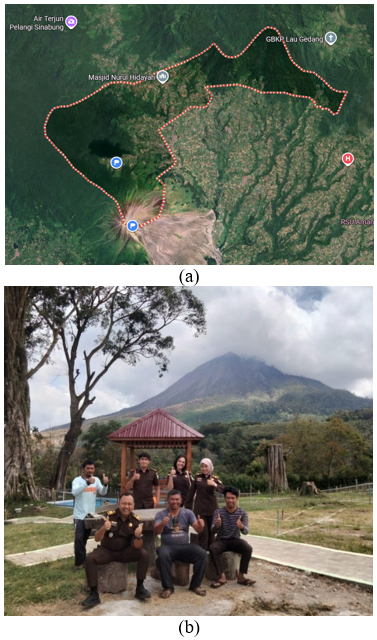
The study was conducted in Kutagugung Village, North Sumatra, Indonesia, an emerging rural tourism destination located near the Lau Kawar tourism area. Kutagugung Village was selected because of its rapid tourism development and its increasing exposure to governance challenges associated with fragmented stakeholder coordination, informal revenue collection practices, and limited digital governance infrastructure. The destination represents a relevant empirical setting for examining governance transformation because tourism growth in the area has expanded more rapidly than institutional monitoring and accountability systems. The topological of Kutagugung village shown at the Figure 1 below.
Figure 1. Potential collaboration between (a) Topological Kutagugung village and (b) Collaboration of Karo Government of Tourism
As shown in Figure 1, in recent years, tourism activities in Kutagugung Village have involved multiple stakeholder groups, including local communities, tourism operators, village authorities, private businesses, academic institutions, and digital media actors. However, tourism governance processes remain highly dependent on manual administrative systems and informal coordination mechanisms. This condition creates limited transparency in tourism revenue management and increases vulnerability to leakage and unauthorized fee collection. Consequently, the village provides a suitable context for evaluating the role of collaborative governance and digital accountability mechanisms in strengthening sustainable tourism governance.
Consistent with the Pentahelix framework applied in this study, each of the five actor groups plays a distinct and observable role in Kutagugung Village's tourism governance. The village government administers permits, coordinates entrance-fee collection points, and issues local tourism regulations, positioning it as the primary formal authority over revenue management. Private sector actors, comprising homestay operators, small food and beverage vendors, and local tour guides, deliver direct visitor services and represent the main channel through which tourism revenue circulates informally within the village economy. Community participation is organized through village-level tourism awareness groups (Kelompok Sadar Wisata) and farmer associations, which manage shared attractions such as the Lau Kawar viewpoint areas shown in Figure 1(a) and provide local legitimacy for governance decisions. Academic involvement has taken the form of periodic training and capacity-building support from nearby universities, including guidance on destination management and, in part, the survey instrument development underlying this study. Media and digital actors, primarily local social media promoters and regional tourism content creators, shape visitor expectations and public awareness of the village prior to arrival, and increasingly serve as an informal channel for reporting service or governance complaints. This distribution of roles, illustrated in Figure 1(b), motivates treating the five actors as separate governance inputs rather than as a single collaborative entity, consistent with how Pentahelix collaboration is operationalized in Section 2.6.
2.3 Population and sampling
The target population consisted of stakeholders directly or indirectly involved in tourism governance and tourism-related activities within Kutagugung Village. These stakeholders included local residents, tourism business operators, village government representatives, tourism community groups, academics, media participants, and visitors familiar with local tourism governance practices. A purposive sampling technique was employed to ensure that respondents possessed adequate knowledge, experience, or involvement related to tourism governance activities. Respondents were selected based on three criteria: (1) familiarity with tourism activities in Kutagugung Village, (2) involvement in tourism governance or tourism-related economic activities, and (3) willingness to participate voluntarily in the study. A total of 400 valid responses were collected and included in the final analysis. This sample size satisfies the minimum requirements for PLS-SEM analysis involving complex mediation models and multiple latent constructs. The sample size also exceeds the minimum recommendation based on the ten-times rule commonly applied in PLS-SEM studies [26].
2.4 Data collection procedure
Data were collected through a structured questionnaire survey administered directly to respondents between January and March 2025. The questionnaire distribution process involved trained field enumerators who provided explanations regarding the purpose of the study and ensured that respondents understood each survey item before completing the questionnaire. Prior to the main survey, a pilot test was conducted on a smaller group of respondents to evaluate questionnaire clarity, readability, and contextual relevance. Minor revisions were subsequently made to improve wording consistency and reduce ambiguity. Participation in the survey was voluntary, and respondents were informed that all responses would remain anonymous and confidential.
2.5 Measurement instrument
The measurement instrument was developed by adapting previously validated constructs from studies related to collaborative governance, digital governance, tourism management, institutional trust, and sustainable tourism development [1, 4, 7, 12, 14, 15]. All indicators were measured using a five-point Likert scale ranging from:
1 = strongly disagree
2 = disagree
3 = neutral
4 = agree
5 = strongly agree
The instrument consisted of eleven latent constructs representing collaborative governance dimensions, governance perception variables, digital readiness, and sustainable governance outcomes.
2.6 Research variables and constructs
The study employed five exogenous constructs representing the Pentahelix collaboration framework:
●Government Support (X1)
●Private Sector Involvement (X2)
●Community Participation (X3)
●Academic Contribution (X4)
●Media and Digital Influence (X5)
Three mediating governance perception constructs were included:
●Perceived Transparency (PT)
●Trust in Stakeholders (TS)
●Past Tourism Experience (PTE)
The model further incorporated:
●Digital Governance Readiness (M1)
●Perceived Need for Digitalization (M2)
●The endogenous construct was:
●Sustainable Tourism Governance (Y)
Table 1 presents the operational definitions of the study constructs, and Table 2 reports the complete set of measurement items, their item codes, and the sources from which each block of items was adapted.
Table 1. Operational definitions of the study constructs
|
Construct |
Code |
Operational Definition |
|
Government support |
X1 |
institutional and regulatory support for tourism governance |
|
Private sector involvement |
X2 |
business participation in tourism development and governance |
|
Community participation |
X3 |
community engagement in tourism decision-making and implementation |
|
Academic contribution |
X4 |
research, training, and knowledge support for tourism governance |
|
Media and digital influence |
X5 |
digital communication and information dissemination support |
|
Perceived transparency (PT) |
PT |
stakeholder perception regarding governance openness and accountability |
|
Trust in stakeholders (TS) |
TS |
degree of confidence among tourism stakeholders |
|
Past tourism experience (PTE) |
PTE |
previous involvement and experience in tourism activities |
|
Digital governance readiness |
M1 |
preparedness to implement digital governance systems |
|
Perceived need for digitalization |
M2 |
stakeholder perception regarding the necessity of digital governance |
|
Sustainable tourism governance |
Y |
governance effectiveness, accountability, and sustainability |
Table 2. Measurement items, item codes and adapted sources
|
Construct |
Code |
Measurement Item (English Translation) |
Outer Loading |
Adapted From |
|
Government Support (X1) |
X1_1 |
The village and district government issue clear regulations governing tourism activity in this destination. |
0.941 |
[7, 8] |
|
|
X1_2 |
The government provides budget, facilities, or infrastructure support for tourism development in this village. |
0.945 |
|
|
|
X1_3 |
Government officials respond to tourism problems reported by local stakeholders. |
0.931 |
|
|
|
X1_4 |
Rules on entrance-fee and levy collection are enforced consistently by the authorities. |
0.954 |
|
|
Private Sector Involvement (X2) |
X2_1 |
Local businesses (homestays, food vendors, guides) invest actively in tourism services here. |
0.940 |
[7, 11] |
|
|
X2_2 |
Private operators cooperate with the village administration in managing visitor services. |
0.922 |
|
|
|
X2_3 |
Private operators apply consistent and publicly displayed pricing. |
0.929 |
|
|
|
X2_4 |
Private operators take part in tourism planning forums in this village. |
0.940 |
|
|
Community Participation (X3) |
X3_1 |
Residents are involved in decisions about tourism development in this village. |
0.945 |
[8, 27] |
|
|
X3_2 |
Community tourism groups (Pokdarwis) actively manage local attractions. |
0.950 |
|
|
|
X3_3 |
Residents contribute labour, land, or other resources to tourism activities. |
0.957 |
|
|
Academic Contribution (X4) |
X4_1 |
Universities provide training or mentoring for tourism actors in this village. |
0.953 |
[7, 11] |
|
|
X4_2 |
Research findings are used to inform tourism management decisions here. |
0.957 |
|
|
|
X4_3 |
Academic institutions assist in preparing tourism plans or planning documents. |
0.948 |
|
|
Media and Digital Influence (X5) |
X5_1 |
Social media and online platforms actively promote this destination. |
0.964 |
[12, 28] |
|
|
X5_2 |
Information about this destination is easy to find online. |
0.968 |
|
|
|
X5_3 |
Media coverage shapes how visitors perceive this destination before arrival. |
0.962 |
|
|
Perceived Transparency (PT) |
PT_1 |
Information on tourism fees and levies in this village is openly available. |
0.938 |
[4, 14] |
|
|
PT_2 |
The use of tourism revenue is reported back to stakeholders. |
0.949 |
|
|
|
PT_3 |
Decision-making procedures in tourism management here are easy to follow. |
0.952 |
|
|
Trust in Stakeholders (TS) |
TS_1 |
I believe the parties managing tourism in this village act with integrity. |
0.941 |
[24, 27] |
|
|
TS_2 |
I trust those who collect tourism fees to handle the money properly. |
0.947 |
|
|
|
TS_3 |
Tourism stakeholders here keep the commitments they make to one another. |
0.943 |
|
|
Past Tourism Experience (PTE) |
PTE_1 |
I have been directly involved in tourism activities in this village. |
0.940 |
[29, 30] |
|
|
PTE_2 |
My previous experience helps me understand how tourism here is managed. |
0.945 |
|
|
|
PTE_3 |
I am familiar with the operational problems this destination faces. |
0.943 |
|
|
Digital Governance Readiness (M1) |
M1_1 |
Internet access and devices here are adequate for digital tourism administration. |
0.934 |
[12, 14] |
|
|
M1_2 |
Tourism actors in this village have sufficient skills to operate digital applications. |
0.943 |
|
|
|
M1_3 |
Village institutions are prepared to run a digital record-keeping system. |
0.941 |
|
|
|
M1_4 |
Stakeholders here are willing to move from manual to digital procedures. |
0.939 |
|
|
Perceived Need for Digitalization (M2) |
M2_1 |
Digital ticketing is needed so that visitor numbers are recorded accurately. |
0.933 |
[15, 24] |
|
|
M2_2 |
Cashless payment is needed to reduce unrecorded transactions. |
0.934 |
|
|
|
M2_3 |
A digital reporting system is needed to monitor tourism revenue. |
0.942 |
[31] |
|
Sustainable Tourism Governance (Y) |
Y_1 |
Tourism management in this village is accountable to its stakeholders (transparency and accountability). |
0.945 |
[1, 2] |
|
|
Y_2 |
Coordination among tourism actors runs effectively and agreed rules are enforced (institutional coordination and rule enforcement). |
0.947 |
|
|
|
Y_3 |
Decision-making in tourism management includes the groups affected by it (inclusiveness and participation). |
0.943 |
|
|
|
Y_4 |
The benefits of tourism in this village can be sustained over the long term (perceived long-term sustainability). |
0.953 |
|
Sustainable Tourism Governance (Y) is operationalised through four underlying dimensions rather than as a single undifferentiated outcome, each captured by one indicator: (1) governance transparency and accountability (Y_1), (2) institutional coordination and rule-enforcement effectiveness (Y_2), (3) inclusiveness and participatory decision-making (Y_3), and (4) perceived long-term sustainability of tourism benefits (Y_4). Pentahelix collaboration is likewise operationalised as five separate first-order exogenous constructs rather than as a higher-order construct, so that the contribution of each actor group can be estimated independently.
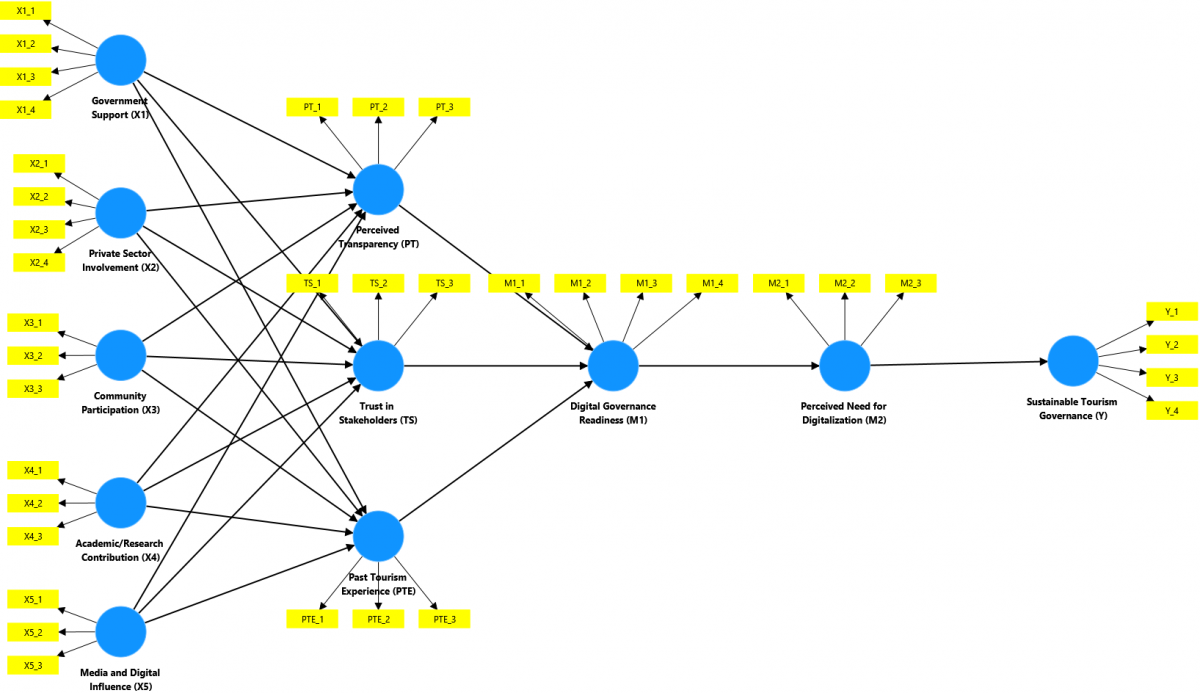
As illustrated in Figure 2, the proposed framework conceptualizes sustainable tourism governance as a sequential governance transformation process driven by multi-stakeholder collaboration and digitally mediated accountability mechanisms. The model assumes that Pentahelix collaboration comprising government, private sector, community, academia, and media actors positively shapes governance perceptions in the form of PT, trust in stakeholders (TS), and PTE. These socio-institutional perceptions subsequently strengthen digital governance readiness (M1), which further increases stakeholders’ perceived need for digitalization (M2) and ultimately contributes to sustainable tourism governance outcomes (Y).
Figure 2. Conceptual framework
The sequential pathway Pentahelix collaboration → governance perceptions → digital governance readiness → perceived need for digitalization → sustainable tourism governance captures both the direct and indirect mechanisms through which collaborative governance contributes to governance transformation in rural tourism destinations. The framework emphasizes that governance sustainability does not emerge solely from stakeholder participation, but rather from the interaction between institutional collaboration, governance legitimacy, stakeholder readiness, and digital accountability systems. The model additionally enables the examination of mediation effects across multiple governance pathways, allowing the study to identify how collaborative governance mechanisms influence sustainable tourism governance through transparency, institutional trust, experiential learning, and digital governance preparedness. This layered governance structure provides a more comprehensive understanding of how governance transformation occurs within tourism ecosystems vulnerable to fragmentation, informal revenue practices, and limited institutional oversight. The proposed model was empirically evaluated using PLS-SEM. This approach enables simultaneous assessment of both the measurement model and the structural relationships among latent constructs, including reliability, validity, path significance, and mediation effects. The analytical framework therefore provides empirical evidence for an integrated collaborative digital governance model applicable to sustainable rural tourism governance contexts.
2.7 Data analysis technique
Data analysis was conducted using SmartPLS 4 through a two-stage analytical procedure consisting of measurement model evaluation and structural model assessment. PLS-SEM was selected because it supports predictive analysis, accommodates complex mediation structures, and is appropriate for exploratory governance research involving multiple latent constructs [25, 26]. The measurement model evaluation examined:
●indicator reliability,
●internal consistency reliability,
●convergent validity,
●and discriminant validity.
Indicator reliability was assessed using outer loading values, with acceptable thresholds exceeding 0.70. Internal consistency reliability was evaluated using Cronbach’s alpha and composite reliability (CR), while convergent validity was assessed using Average Variance Extracted (AVE). Discriminant validity was examined using the Heterotrait-Monotrait ratio (HTMT). Because all constructs were measured through a single self-administered survey at one point in time, common method bias (CMB) was assessed prior to structural model testing using two complementary procedures. First, a full collinearity VIF test was conducted, in which every construct in the model was regressed on all remaining constructs; VIF values below the conservative threshold of 3.3 indicate that CMB is unlikely to be a serious concern. Second, a marker-variable technique was applied using a three-item, theoretically unrelated construct included in the survey instrument; the smallest positive correlation between this marker and the substantive constructs was used to adjust the inter-construct correlation matrix, and pairwise correlations were re-evaluated for significance before and after adjustment. The structural model evaluation examined:
●path coefficients,
●coefficient of determination (R²),
●predictive relevance,
●effect size,
●and mediation effects.
Hypothesis testing was performed using the bootstrapping procedure with 5,000 resamples (complete bootstrapping, two-tailed, 0.05 significance level) to estimate the significance of direct and indirect relationships among constructs. For every hypothesised path, the original-sample path coefficient (β), bootstrap standard error, t-statistic, p-value and 95% percentile confidence interval are reported. Because the sampling distribution of a specific indirect effect is the product of several coefficients and is therefore skewed, the significance of indirect effects is judged by whether the bootstrap confidence interval excludes zero rather than by the normal-approximation p-value. Serial mediation analysis was conducted to evaluate the governance pathway linking collaborative governance, institutional perceptions, digital governance readiness, and sustainable tourism governance outcomes. The analytical framework enabled the study to evaluate both the direct influence of Pentahelix collaboration and the indirect governance mechanisms through which institutional trust, transparency, and digital readiness contribute to governance sustainability in rural tourism destinations.
2.8 Hypotheses development
2.8.1 Pentahelix collaboration and governance perceptions
Governance perceptions represent the socio-institutional foundation underlying effective tourism governance. In rural tourism contexts, governance quality is not determined solely by formal regulations or administrative structures, but also by how stakeholders perceive transparency, trust, and collective experience within governance processes. PT reflects the extent to which tourism-related decisions, financial flows, and policy implementation are considered open, accountable, and accessible to stakeholders. TS refers to the degree of confidence among institutional actors regarding the integrity, competence, and commitment of governance participants. Meanwhile, PTE represents the accumulated knowledge, familiarity, and practical involvement gained through participation in tourism activities and governance processes.
In emerging rural tourism destinations, these governance perceptions are often weakened by fragmented coordination, informal practices, limited monitoring systems, and inconsistent information sharing. Such conditions reduce institutional trust, create uncertainty among stakeholders, and increase vulnerability to governance inefficiencies and informal revenue extraction. Consequently, strengthening governance perceptions becomes essential for improving collaborative governance capacity and preparing tourism destinations for digital governance transformation.
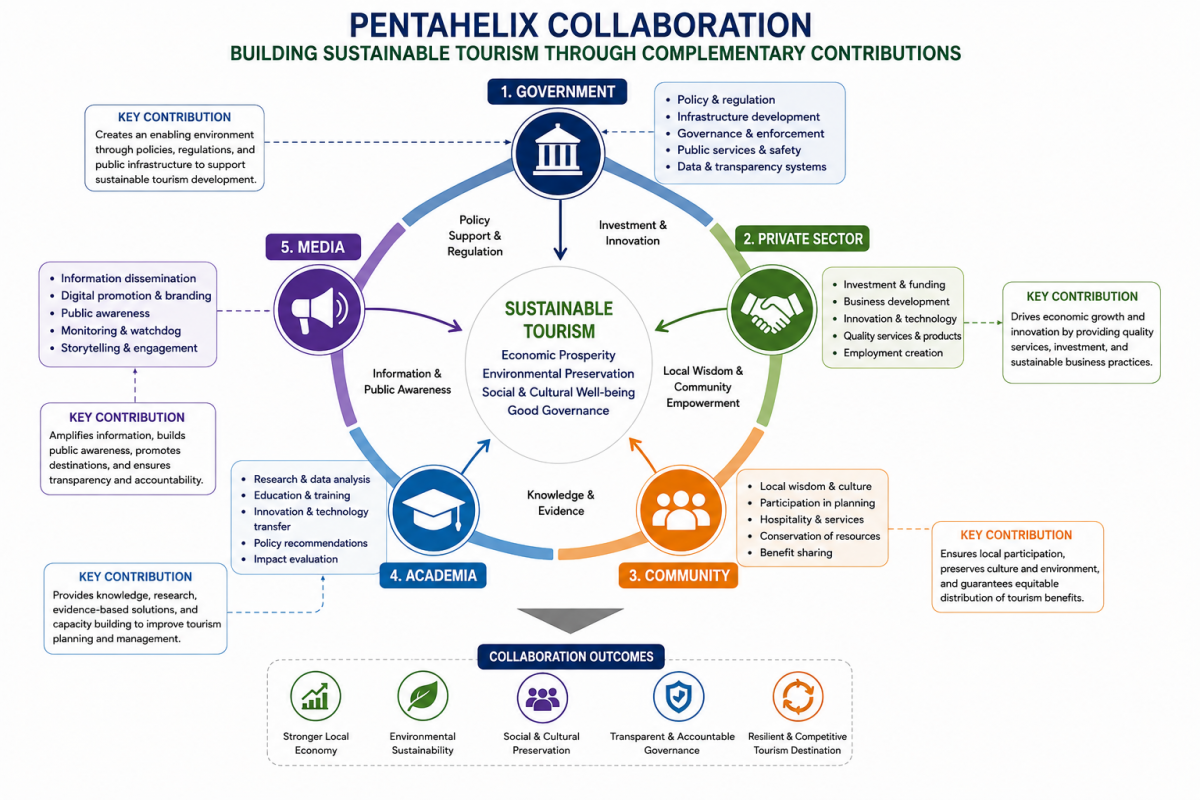
The Pentahelix collaboration framework consisting of government, private sector, community, academia, and media actors provides an integrated governance mechanism capable of strengthening these governance perceptions simultaneously. Government institutions contribute through policy enforcement, regulatory support, and institutional accountability. The private sector promotes professional management practices, investment transparency, and service reliability. Community participation strengthens social legitimacy by ensuring that local actors are directly involved in tourism planning and governance processes. Academic institutions contribute through research, training, evidence-based recommendations, and capacity-building programs that improve institutional competence. Media and digital actors further enhance governance perceptions by facilitating information dissemination, increasing public awareness, and strengthening transparency through digital communication channels.
When these actors collaborate effectively, they create overlapping systems of accountability and collective monitoring that improve governance openness, strengthen inter-stakeholder trust, and expand opportunities for experiential learning within tourism governance systems. Multi-actor collaboration also facilitates knowledge exchange, increases stakeholder engagement, and supports adaptive governance processes capable of responding to governance challenges in rapidly developing tourism destinations. As governance interactions become more transparent, participatory, and experience-driven, stakeholders are more likely to develop positive perceptions regarding institutional integrity and collaborative governance effectiveness. Previous studies have shown that collaborative governance mechanisms positively influence transparency, institutional trust, stakeholder participation, and tourism learning processes in sustainable tourism development [7-11, 27]. Multi-sector collaboration enables more inclusive decision-making processes, improves governance accountability, and strengthens institutional resilience in complex tourism environments. Within digitally transforming tourism ecosystems, these governance perceptions are particularly important because transparency, trust, and experiential familiarity shape stakeholders’ willingness to support governance innovation and digital transformation initiatives. Based on these arguments, this study proposes that Pentahelix collaboration positively influences governance perceptions consisting of PT, TS, and PTE in rural tourism governance contexts. Pentahelix collaboration is operationalized in this study as five separate first-order exogenous constructs, Government Support (X1), Private Sector Involvement (X2), Community Participation (X3), Academic Contribution (X4), and Media and Digital Influence (X5), rather than as a single higher-order construct. Accordingly, H1–H3 are tested as five distinct structural paths each, denoted a–e below.
H1a–e: Government Support (X1), Private Sector Involvement (X2), Community Participation (X3), Academic Contribution (X4), and Media and Digital Influence (X5) each positively and significantly influence PT.
H2a–e: Government Support (X1), Private Sector Involvement (X2), Community Participation (X3), Academic Contribution (X4), and Media and Digital Influence (X5) each positively and significantly influence TS.
H3a–e: Government Support (X1), Private Sector Involvement (X2), Community Participation (X3), Academic Contribution (X4), and Media and Digital Influence (X5) each positively and significantly influence PTE.
2.8.2 Governance perceptions and digital governance readiness
Digital governance readiness refers to the extent to which stakeholders and institutions are prepared to adopt, implement, and sustain digitally mediated governance systems within tourism environments. Readiness encompasses technological preparedness, digital literacy, institutional capability, infrastructure availability, and the collective willingness of stakeholders to transition from conventional governance mechanisms toward more integrated and transparent digital systems. In rural tourism destinations, digital governance readiness is particularly important because governance processes often remain dependent on manual administration, fragmented communication, and informal monitoring arrangements that limit accountability and transparency.
Governance perceptions play a critical role in shaping this readiness. Stakeholders are more likely to support digital governance transformation when they perceive tourism governance processes as transparent, trustworthy, and institutionally reliable. PT reduces uncertainty by ensuring that governance procedures, financial flows, and administrative decisions are visible and understandable to multiple actors. In such conditions, stakeholders tend to view digital systems as mechanisms that can further strengthen accountability and reduce opportunities for manipulation or informal revenue practices. TS similarly contributes to digital governance readiness by strengthening institutional confidence and reducing resistance to governance innovation. In collaborative governance environments characterized by mutual trust, stakeholders are more willing to share information, participate in coordinated digital platforms, and support collective governance reforms. Trust also reduces perceived risks associated with technology adoption, particularly in rural contexts where institutional capacity and technological familiarity may still be developing.
PTE further influences digital governance readiness because stakeholders with prior involvement in tourism management and governance activities generally possess greater operational familiarity and adaptive capability. Experience enables stakeholders to recognize governance inefficiencies, understand the limitations of conventional systems, and appreciate the practical value of digital monitoring, cashless transactions, and real-time reporting mechanisms. Stakeholders who have previously engaged in tourism governance processes are therefore more likely to support digital transformation initiatives aimed at improving governance efficiency and transparency.
Previous studies have demonstrated that institutional trust, governance transparency, and experiential familiarity significantly influence technology acceptance, governance innovation, and digital transformation readiness within public governance and tourism systems [4, 12-19, 21-24]. These studies suggest that governance transformation depends not only on technological availability but also on the socio-institutional conditions that shape stakeholders’ willingness to adopt digital governance mechanisms. Based on these arguments, this study proposes that governance perceptions positively influence digital governance readiness in rural tourism governance systems.
H4: PT positively and significantly influences digital governance readiness (M1).
H5: TS positively and significantly influences digital governance readiness (M1).
H6: PTE positively and significantly influences digital governance readiness (M1).
2.8.3 Digital governance readiness and sustainable governance
Digital governance readiness alone does not automatically guarantee governance transformation; however, it represents a critical enabling condition for establishing sustainable tourism governance systems. Sustainable tourism governance refers to governance arrangements that promote transparency, accountability, participation, inclusiveness, and long-term socio-economic and environmental sustainability within tourism ecosystems. In rural tourism destinations, sustainable governance also involves reducing governance fragmentation, minimizing informal revenue extraction, and strengthening institutional accountability across multiple stakeholders. As stakeholders become more prepared to adopt digital governance systems, the perceived need for governance digitalization also increases. Stakeholders who recognize the operational limitations of manual systems are more likely to support digital mechanisms such as e-ticketing, centralized databases, cashless transactions, digital reporting systems, and real-time monitoring platforms. Digital governance readiness therefore encourages a stronger collective perception that governance digitalization is necessary for improving transparency, coordination, and institutional control.
The perceived need for digitalization subsequently contributes to sustainable tourism governance by facilitating the implementation of accountable and traceable governance mechanisms. Digital governance systems enable tourism transactions and administrative activities to be recorded systematically, monitored transparently, and evaluated more effectively. Such systems reduce opportunities for unauthorized revenue collection, improve public oversight, strengthen institutional coordination, and support evidence-based decision-making processes. In addition, digitally integrated governance systems can increase stakeholder participation by expanding access to information and enabling more inclusive governance interactions.
Within tourism governance environments vulnerable to leakage and informal practices, digital governance mechanisms also function as institutional safeguards against governance manipulation and extortion. Real-time monitoring systems, automated reporting platforms, and digital audit trails create layers of accountability that are difficult to achieve under conventional governance arrangements. Consequently, digital governance readiness and perceived digitalization needs become important drivers of governance sustainability and institutional resilience.
Previous studies have shown that digital governance adoption positively contributes to transparency, accountability, governance efficiency, and sustainable public administration outcomes [4, 15-19, 24]. In tourism contexts, digital governance systems have also been associated with improved service quality, stronger destination management, and more transparent governance processes. Based on these arguments, this study proposes that digital governance readiness and perceived digitalization needs positively influence sustainable tourism governance.
H7: Digital governance readiness (M1) positively and significantly influences perceived need for digitalization (M2).
H8: Digital governance readiness (M1) positively and significantly influences sustainable tourism governance (Y).
H9: Perceived need for digitalization (M2) positively and significantly influences sustainable tourism governance (Y).
2.8.4 Serial mediation effects
Collaborative governance mechanisms rarely influence sustainable tourism governance through direct institutional interaction alone. Instead, governance transformation typically occurs through sequential socio-institutional and technological processes that shape stakeholder perceptions, governance readiness, and collective support for governance innovation. Within the context of rural tourism governance, the effectiveness of Pentahelix collaboration therefore depends on how collaborative interactions strengthen governance perceptions and facilitate digital governance transformation.
The present study conceptualizes governance transformation as a layered mediation process. First, Pentahelix collaboration strengthens governance perceptions in the form of transparency, trust, and tourism experience. These governance perceptions subsequently enhance stakeholders’ readiness to adopt digital governance systems. As digital governance readiness increases, stakeholders become more supportive of governance digitalization, which ultimately contributes to sustainable tourism governance outcomes characterized by accountability, transparency, reduced leakage, and institutional sustainability.
This serial mediation perspective is theoretically consistent with collaborative governance theory and digital governance literature, both of which emphasize that institutional transformation requires not only structural collaboration but also socio-institutional legitimacy and technological readiness. Collaborative governance creates the institutional environment necessary for trust-building and transparency, while digital governance readiness operationalizes these governance values into accountable governance systems. Consequently, sustainable governance outcomes emerge through interconnected governance mechanisms rather than isolated institutional interventions.
Previous research has shown that collaborative governance effectiveness is often mediated by institutional trust, stakeholder engagement, governance legitimacy, and technological readiness [4, 9-11, 21-24, 27]. However, limited empirical studies have examined these relationships simultaneously within an integrated rural tourism governance framework. This study therefore proposes a serial mediation structure linking Pentahelix collaboration, governance perceptions, digital governance readiness, perceived digitalization needs, and sustainable tourism governance outcomes. Consistent with the five-construct specification of Pentahelix collaboration used above, the serial mediation hypotheses (H10–H12) are likewise tested as five distinct indirect paths each, denoted a–e below, rather than as a single aggregate indirect effect.
H10a–e: Each of the five Pentahelix constructs (X1–X5) positively influences sustainable tourism governance (Y) indirectly through PT and digital governance readiness (M1).
H11a–e: Each of the five Pentahelix constructs (X1–X5) positively influences sustainable tourism governance (Y) indirectly through TS and digital governance readiness (M1).
H12a–e: Each of the five Pentahelix constructs (X1–X5) positively influences sustainable tourism governance (Y) indirectly through PTE, digital governance readiness (M1), and perceived need for digitalization (M2).
3.1 Demographics respondents profile
The demographic characteristics of the 400 respondents from Kutagugung Village are summarized in Table 3. These details provide contextual insights into the composition of the sample, ensuring that the perspectives analyzed in this study reflect the diversity of the local population in terms of gender, age, education, occupation, and length of residence. Such demographic diversity is essential for evaluating the dynamics of pentahelix collaboration and digital governance readiness in the context of sustainable tourism governance.
Table 3. Respondents profile
|
Category |
Sub-Category |
Frequency (n) |
Percentage (%) |
|
Gender |
Male |
208 |
52.0 |
|
|
Female |
192 |
48.0 |
|
Age Group |
18–25 years |
112 |
28.0 |
|
|
26–35 years |
122 |
30.5 |
|
|
36–45 years |
118 |
29.5 |
|
|
>45 years |
48 |
12.0 |
|
Education Level |
Primary |
42 |
10.5 |
|
|
Secondary |
152 |
38.0 |
|
|
Diploma |
87 |
21.8 |
|
|
Bachelor |
98 |
24.5 |
|
|
Postgraduate |
21 |
5.3 |
|
Occupation |
Farmer |
115 |
28.8 |
|
|
Tourism Worker |
112 |
28.0 |
|
|
Trader |
91 |
22.8 |
|
|
Student |
52 |
13.0 |
|
|
Other |
30 |
7.5 |
|
Length of Residence |
<5 years |
70 |
17.5 |
|
|
5–10 years |
141 |
35.3 |
|
|
>10 years |
189 |
47.3 |
The data in Table 3 show a relatively balanced gender distribution, with male respondents slightly outnumbering females. The age profile is concentrated in the productive range of 18-45 years (88%), which is significant for implementing tourism digitalization programs, as this age group is typically more adaptable to technological adoption. Education levels are varied, but the majority of respondents have completed secondary education, indicating a moderate level of formal learning that can support governance participation. Occupation data highlight that farmers and tourism workers dominate the sample, reflecting the village’s economic reliance on agriculture and tourism. Furthermore, nearly half of the respondents have resided in the village for more than 10 years, suggesting a strong familiarity with local governance issues and tourism practices.
3.2 Measurement model results
The measurement model assessment was conducted to evaluate the reliability and validity of the latent constructs used in the study. The evaluation included indicator reliability, internal consistency reliability, convergent validity, discriminant validity, and explanatory power of the structural model. The assessment followed the standard procedures commonly applied in PLS-SEM research. Indicator reliability was evaluated using outer loading values. All indicators exceeded the recommended threshold of 0.70, indicating that the measurement items adequately represented their respective constructs. Internal consistency reliability was assessed using Cronbach’s alpha and CR. As presented in Table 4, every construct returned a single final value for each reliability criterion: Cronbach’s alpha from 0.929 (M2) to 0.963 (X5), ρA from 0.930 (M2) to 0.964 (X5), and CR from 0.955 (M2) to 0.976 (X5), all above the acceptable threshold of 0.70, confirming satisfactory internal consistency reliability.
Table 4. Measurement model assessment: internal consistency, convergent validity and discriminant validity
|
Construct |
Items |
Outer Loading (Median) |
Cronbach's α |
ρA |
CR |
AVE |
HTMT (max) |
|
Government support (X1) |
4 |
0.943 |
0.958 |
0.958 |
0.970 |
0.888 |
0.455 |
|
Private sector involvement (X2) |
4 |
0.934 |
0.950 |
0.952 |
0.964 |
0.870 |
0.426 |
|
Community participation (X3) |
3 |
0.950 |
0.947 |
0.948 |
0.966 |
0.904 |
0.464 |
|
Academic contribution (X4) |
3 |
0.953 |
0.949 |
0.953 |
0.967 |
0.907 |
0.445 |
|
Media and digital influence (X5) |
3 |
0.964 |
0.963 |
0.964 |
0.976 |
0.930 |
0.464 |
|
Perceived transparency (PT) |
3 |
0.949 |
0.941 |
0.941 |
0.962 |
0.895 |
0.501 |
|
Trust in stakeholders (TS) |
3 |
0.943 |
0.938 |
0.939 |
0.961 |
0.890 |
0.501 |
|
Past tourism experience (PTE) |
3 |
0.943 |
0.937 |
0.939 |
0.960 |
0.889 |
0.491 |
|
Digital governance readiness (M1) |
4 |
0.940 |
0.956 |
0.957 |
0.968 |
0.882 |
0.497 |
|
Perceived need for digitalization (M2) |
3 |
0.934 |
0.929 |
0.930 |
0.955 |
0.876 |
0.472 |
|
Sustainable tourism governance (Y) |
4 |
0.946 |
0.962 |
0.962 |
0.972 |
0.897 |
0.467 |
Convergent validity was examined using the AVE. The results showed that all constructs achieved AVE values greater than 0.50, indicating that each construct explained more than half of the variance of its indicators. These findings confirm that the measurement model demonstrates adequate convergent validity. Discriminant validity was assessed using the HTMT. All HTMT ratios were below the conservative threshold of 0.85 (maximum HTMT = 0.501, Table 4), indicating that the constructs were empirically distinct from one another despite their high internal consistency. The explanatory power of the structural model, evaluated using the coefficient of determination (R²), followed a two-tier pattern rather than a uniform level across endogenous constructs: PT and Digital Governance Readiness reached the moderate threshold (R² = 0.333 and 0.332), while TS, PTE, Sustainable Tourism Governance, and Perceived Need for Digitalization fell in the weak-to-moderate range (R² = 0.198–0.247). This pattern, and its implications for how the model's contribution should be interpreted, is examined in detail in the structural model assessment reported below. The measurement model otherwise satisfies the recommended reliability and validity criteria, supporting the suitability of the constructs for subsequent structural analysis.
The results reported in Table 4 derived from this analysis not only offer theoretical contributions to the understanding of digital governance in rural tourism but also serve as practical guidance for policymakers seeking to strengthen transparency and accountability in rural tourism administration. It should be emphasised, however, that the reduction of illegal levies or revenue leakage was not measured in this study; the constructs assessed here capture the institutional and perceptual conditions under which such practices are theorised to become more difficult, not their actual incidence.
Because the CR values reported in Table 4 sit at the upper end of the acceptable range (0.955–0.976, AVE 0.870–0.930), the possibility of item redundancy was examined explicitly. Three considerations bear on this. First, each construct is measured by only three or four items drawn from a single response format, a configuration that mechanically produces high internal consistency even when items are conceptually distinct. Second, the full item wording reported in Table 2 shows that the items within each construct address different facets rather than restating a single proposition; for Sustainable Tourism Governance, for example, the four indicators correspond to accountability, coordination and enforcement, inclusiveness, and long-term benefit sustainability. Third, discriminant validity is not compromised: the maximum HTMT ratio across all construct pairs is 0.501, far below the conservative 0.85 threshold, indicating that the constructs remain empirically separable. Nevertheless, homogeneous item sets of this kind restrict the variance available within each construct and may inflate the magnitude of the estimated relationships between them. The structural coefficients reported below should therefore be read as upper-bound rather than conservative estimates of the modelled associations, and this measurement characteristic is revisited when the explanatory power of the outcome construct is interpreted.
To test this directly, a robustness check was performed in which the single most redundant indicator in each construct — the item with the highest correlation to another item in the same block — was deleted and the model re-estimated on the reduced 26-item instrument (X1_2, X2_1, X3_2, X4_1, X5_2, PT_2, TS_2, PTE_2, M1_1, M2_2 and Y_2 removed). CR fell as expected (0.952–0.971) while AVE rose (0.880–0.944), confirming that the high CR values reflect indicator homogeneity and block size rather than a validity problem. More importantly, the structural results were substantively unchanged: the largest shift in any of the twenty-one path coefficients was 0.039 (TS → M1, from 0.237 to 0.276), no path changed sign, no supported hypothesis became non-supported and no rejected hypothesis became supported, and the explanatory power of the outcome construct was stable (R² for Y = 0.219 in the full model and 0.221 in the reduced model). The full instrument is therefore retained for the results reported below, since removing items would sacrifice content coverage of each construct without altering the conclusions, while the stability of the estimates under item deletion indicates that the reported relationships are not artefacts of near-duplicate indicators.
The full collinearity VIF test produced values ranging from 1.384 to 1.802 across all eleven constructs (Table 5), well below the conservative threshold of 3.3, indicating that CMB does not pose a serious threat to the validity of the structural results. The marker-variable technique corroborated this conclusion with an important qualification: after adjusting the inter-construct correlation matrix using the smallest marker correlation (r = 0.199), 8 of 55 pairwise correlations lost statistical significance, all of which involved direct, non-hypothesized associations between the Pentahelix constructs (X1–X5) and Perceived Need for Digitalization (M2) or Sustainable Tourism Governance (Y). Critically, every correlation corresponding to the model's hypothesized structural paths — X1–X5 → PT/TS/PTE, PT/TS/PTE → M1, M1 → M2, and M2 → Y — remained significant after adjustment. Taken together, these results indicate that CMB does not materially threaten the hypothesized relationships tested in this study, though it may mildly inflate weaker, non-hypothesized associations; this pattern is consistent with the uniformly high CR values reported in Table 4, which are addressed further.
Table 5. Full collinearity VIF test (common method bias assessment)
|
Construct |
R² (Regressed on All Other Constructs) |
Full Collinearity VIF |
|
Government support (X1) |
0.312 |
1.454 |
|
Private sector involvement (X2) |
0.303 |
1.435 |
|
Community participation (X3) |
0.304 |
1.438 |
|
Academic contribution (X4) |
0.308 |
1.446 |
|
Media and digital influence (X5) |
0.364 |
1.572 |
|
Perceived transparency (PT) |
0.445 |
1.802 |
|
Trust in stakeholders (TS) |
0.380 |
1.613 |
|
Past tourism experience (PTE) |
0.360 |
1.563 |
|
Digital governance readiness (M1) |
0.380 |
1.613 |
|
Perceived need for digitalization (M2) |
0.344 |
1.525 |
|
Sustainable tourism governance (Y) |
0.277 |
1.384 |
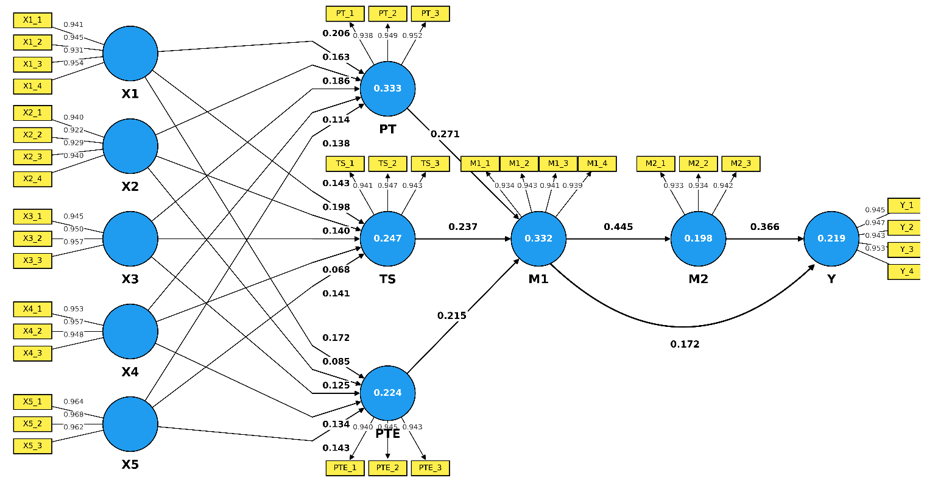
Figure 3. Structural model result
Figure 3 presents the structural model results examining the relationships among the five Pentahelix constructs, governance perceptions, digital governance readiness, perceived need for digitalization, and sustainable tourism governance. Of the twenty-one hypothesised paths, seventeen are statistically supported and four are not: two direct effects (H2d, Academic Contribution → TS; H3b, Private Sector Involvement → PTE) and two specific indirect effects (H11d, H12b), each discussed below. The five Pentahelix constructs contribute positively to the governance perception constructs, namely PT, TS, and PTE. Among the exogenous variables, government support and community participation exert the strongest effects on PT, while private sector involvement is the strongest single contributor to stakeholder trust, suggesting that institutional regulation, social oversight and business participation each strengthen a different dimension of accountability perception within rural tourism governance. Academic contribution and media influence also contribute positively, indicating that collaborative governance effectiveness depends on the interaction of multiple institutional actors rather than isolated sectoral interventions.
The structural pathways further reveal that governance perceptions significantly influence digital governance readiness (M1). PT and TS show positive effects on readiness for digital governance adoption, implying that stakeholders are more prepared to support digital governance systems when governance processes are considered open, accountable, and institutionally reliable. PTE also contributes positively to digital governance readiness, indicating that stakeholders with greater operational familiarity and tourism involvement are more adaptive toward governance innovation and digital transformation.
Digital governance readiness demonstrates a strong positive effect on the perceived need for digitalization (M2, β = 0.445), the largest single coefficient in the model. In turn, perceived need for digitalization significantly influences sustainable tourism governance (Y, β = 0.366), suggesting that stakeholders who recognise digital governance mechanisms as necessary are more likely to perceive governance outcomes as accountable and sustainable. Digital governance readiness additionally exerts a smaller but significant direct effect on sustainable tourism governance (β = 0.172, p = 0.002). Digital Governance Readiness achieved one of the higher explanatory values in the model (R² = 0.332), indicating that governance perceptions collectively play a meaningful role in shaping institutional preparedness for digital governance implementation. Sustainable Tourism Governance itself, however, achieved only weak-to-moderate explanatory power (R² = 0.219), indicating that Pentahelix collaboration and digital governance readiness are meaningful contributors to — but not the primary determinants of — governance sustainability in rural tourism destinations; this boundary is examined further in the structural model assessment below and in the Discussion.
3.3 Structural model assessment
The structural model assessment was conducted to evaluate the proposed hypotheses, examine the significance of the structural relationships, and assess the mediation effects within the governance framework. Hypothesis testing was performed using the bootstrapping procedure with 5,000 resamples to determine the statistical significance of direct and indirect effects among the latent constructs. The results indicate that Pentahelix collaboration significantly influences governance perception constructs consisting of PT, TS, and PTE. The positive path coefficients demonstrate that collaborative interactions among government, private sector, community, academia, and media actors contribute to more transparent governance processes, stronger institutional trust, and broader experiential learning within rural tourism governance systems. These findings support the argument that collaborative governance strengthens socio-institutional conditions necessary for governance transformation.
The structural relationships further reveal that governance perception variables significantly influence digital governance readiness (M1). PT exhibits a positive effect on digital governance readiness, indicating that stakeholders are more willing to support governance digitalization when administrative processes and financial flows are considered transparent and accountable. TS also demonstrates a significant positive relationship with digital governance readiness, suggesting that institutional trust reduces resistance toward governance innovation and digital transformation initiatives. Similarly, PTE positively contributes to governance readiness, implying that stakeholders with greater tourism familiarity and operational exposure possess stronger adaptive capacity toward digitally integrated governance systems.
The results additionally show that digital governance readiness significantly influences the perceived need for digitalization (M2). This finding suggests that institutional preparedness and technological capability strengthen stakeholders’ awareness regarding the importance of digital governance mechanisms in improving governance effectiveness and accountability. Both digital governance readiness and perceived need for digitalization further demonstrate significant positive effects on sustainable tourism governance (Y), confirming that governance sustainability depends substantially on institutional readiness and support for digitally mediated governance systems.
The mediation analysis further demonstrates that governance perceptions play important intermediary roles in linking Pentahelix collaboration and sustainable tourism governance outcomes. PT and TS indirectly strengthen governance sustainability through digital governance readiness, indicating that collaborative governance contributes to governance transformation by improving institutional legitimacy and governance preparedness. PTE also demonstrates a sequential mediation effect through digital governance readiness and perceived need for digitalization, suggesting that experiential familiarity supports stakeholders’ acceptance of governance innovation and digital accountability systems.
Table 6 shows that the five Pentahelix actors do not contribute uniformly to governance perceptions, and that their relative ranking shifts depending on which perception dimension is considered. For PT, Government Support exerts the strongest influence (β = 0.206), followed by Community Participation (β = 0.186) and Private Sector Involvement (β = 0.163), a pattern consistent with transparency being shaped most directly by the openness of formal authorities and by social oversight from the local community. For TS the ordering reverses at the top: Private Sector Involvement is the strongest contributor (β = 0.198), ahead of Government Support (β = 0.143), while Academic Contribution is the only Pentahelix actor whose effect is not statistically significant (H2d, β = 0.068, p = 0.163, 95% CI [−0.029, 0.160]). For PTE, Government Support is again the strongest predictor (β = 0.172), whereas Private Sector Involvement does not reach significance (H3b, β = 0.085, p = 0.089, 95% CI [−0.012, 0.184]). The two non-significant paths are informative rather than incidental: academic actors, whose contribution operates through training and evidence rather than through day-to-day interaction, do not measurably shape interpersonal trust, and the private sector's role in shaping experiential familiarity is weaker than its conventional association with direct visitor service delivery would suggest.
Table 6. Direct effects of the Pentahelix constructs on governance perceptions
|
Hyp. |
Path |
β |
SE |
t |
p |
95% CI |
Decision |
|
H1a |
X1 (Government) → PT |
0.206 |
0.047 |
4.374 |
<0.001 |
[0.114, 0.296] |
Supported |
|
H1b |
X2 (Private Sector) → PT |
0.163 |
0.046 |
3.501 |
<0.001 |
[0.073, 0.255] |
Supported |
|
H1c |
X3 (Community) → PT |
0.186 |
0.049 |
3.758 |
<0.001 |
[0.087, 0.281] |
Supported |
|
H1d |
X4 (Academic) → PT |
0.114 |
0.046 |
2.473 |
0.013 |
[0.024, 0.204] |
Supported |
|
H1e |
X5 (Media) → PT |
0.138 |
0.049 |
2.809 |
0.005 |
[0.041, 0.234] |
Supported |
|
H2a |
X1 (Government) → TS |
0.143 |
0.049 |
2.896 |
0.004 |
[0.045, 0.240] |
Supported |
|
H2b |
X2 (Private Sector) → TS |
0.198 |
0.050 |
3.991 |
<0.001 |
[0.101, 0.296] |
Supported |
|
H2c |
X3 (Community) → TS |
0.140 |
0.051 |
2.735 |
0.006 |
[0.041, 0.242] |
Supported |
|
H2d |
X4 (Academic) → TS |
0.068 |
0.049 |
1.394 |
0.163 |
[-0.028, 0.164] |
Not supported |
|
H2e |
X5 (Media) → TS |
0.141 |
0.058 |
2.439 |
0.015 |
[0.024, 0.249] |
Supported |
|
H3a |
X1 (Government) → PTE |
0.172 |
0.050 |
3.460 |
<0.001 |
[0.076, 0.271] |
Supported |
|
H3b |
X2 (Private Sector) → PTE |
0.085 |
0.050 |
1.701 |
0.089 |
[-0.013, 0.183] |
Not supported |
|
H3c |
X3 (Community) → PTE |
0.125 |
0.051 |
2.436 |
0.015 |
[0.023, 0.224] |
Supported |
|
H3d |
X4 (Academic) → PTE |
0.134 |
0.050 |
2.687 |
0.007 |
[0.036, 0.230] |
Supported |
|
H3e |
X5 (Media) → PTE |
0.143 |
0.053 |
2.699 |
0.007 |
[0.037, 0.244] |
Supported |
Table 7 indicates that the governance-readiness chain is strongest at the M1→M2 stage (β = 0.445), substantially exceeding the strength of any other stage in the model. Digital governance readiness is therefore a far stronger predictor of perceived digitalization need than governance perceptions (PT, TS, PTE, β = 0.215–0.271) are of readiness itself. The effect of M1 on Y is transmitted through two routes of comparable magnitude: a direct effect (β = 0.172, p = 0.002) and an indirect effect through M2 (0.445 × 0.366 = 0.163), giving a total effect of 0.335 and a variance-accounted-for ratio of 48.6%. This corresponds to complementary partial mediation: perceived need for digitalization carries about half of the influence of readiness on governance outcomes, and the two routes reinforce rather than substitute for one another. The practical implication is direct: infrastructure and capability alone (the direct route) deliver only about half of the achievable governance impact, and the other half depends on whether stakeholders come to regard digitalization as necessary.
Table 7. Direct effects along the digital governance readiness chain
|
Hyp. |
Path |
β |
SE |
t |
p |
95% CI |
Decision |
|
H4 |
PT → M1 |
0.271 |
0.048 |
5.647 |
<0.001 |
[0.174, 0.364] |
Supported |
|
H5 |
TS → M1 |
0.237 |
0.051 |
4.606 |
<0.001 |
[0.134, 0.337] |
Supported |
|
H6 |
PTE → M1 |
0.215 |
0.049 |
4.432 |
<0.001 |
[0.121, 0.310] |
Supported |
|
H7 |
M1 → M2 |
0.445 |
0.041 |
10.740 |
<0.001 |
[0.361, 0.525] |
Supported |
|
H8 |
M1 → Y (direct) |
0.172 |
0.055 |
3.137 |
0.002 |
[0.066, 0.280] |
Supported |
|
H9 |
M2 → Y |
0.366 |
0.052 |
6.980 |
<0.001 |
[0.260, 0.466] |
Supported |
Table 8 confirms this mediation pattern at the level of individual actors. Because the sampling distribution of a product of coefficients is skewed, significance is assessed by whether the 95% bootstrap confidence interval excludes zero rather than by the normal-approximation p-value. On that criterion 13 of the 15 specific indirect effects are significant. The two exceptions complement the direct-effect findings above: H11d (Academic Contribution → TS → M1 → Y, 95% CI [−0.0009, 0.0090]) and H12b (Private Sector Involvement → PTE → M1 → Y, 95% CI [−0.0005, 0.0087]) are not significant, mirroring the non-significant direct paths H2d and H3b from which they are constructed. Each actor therefore has a pathway of influence that fits and one that does not: academic contribution is better directed toward strengthening transparency (via PT, where H10d is significant) than toward trust, while the private sector is more effective through the transparency and trust pathways than through PTE. The generally small magnitude of the indirect effects (0.003–0.010) is mathematically expected, since each is the product of three sequential coefficients, and is consistent with the weak-to-moderate R² for Y (0.219), reinforcing that Pentahelix collaboration and digital readiness are meaningful but not singularly dominant contributors to sustainable governance outcomes.
Table 8. Indirect (serial mediation) effects of the Pentahelix constructs on sustainable tourism governance
|
Hyp. |
Path |
Indirect β |
SE |
t |
p |
95% CI (Percentile) |
Decision |
|
H10a |
X1 → PT → M1 → Y |
0.0096 |
0.0045 |
2.120 |
0.034 |
[0.0027, 0.0206] |
Supported |
|
H10b |
X2 → PT → M1 → Y |
0.0076 |
0.0037 |
2.027 |
0.043 |
[0.0018, 0.0164] |
Supported |
|
H10c |
X3 → PT → M1 → Y |
0.0086 |
0.0042 |
2.065 |
0.039 |
[0.0022, 0.0184] |
Supported |
|
H10d |
X4 → PT → M1 → Y |
0.0053 |
0.0031 |
1.690 |
0.091 |
[0.0007, 0.0126] |
Supported |
|
H10e |
X5 → PT → M1 → Y |
0.0064 |
0.0035 |
1.850 |
0.064 |
[0.0012, 0.0144] |
Supported |
|
H11a |
X1 → TS → M1 → Y |
0.0058 |
0.0033 |
1.782 |
0.075 |
[0.0011, 0.0137] |
Supported |
|
H11b |
X2 → TS → M1 → Y |
0.0081 |
0.0038 |
2.132 |
0.033 |
[0.0023, 0.0169] |
Supported |
|
H11c |
X3 → TS → M1 → Y |
0.0057 |
0.0030 |
1.876 |
0.061 |
[0.0011, 0.0127] |
Supported |
|
H11d |
X4 → TS → M1 → Y |
0.0028 |
0.0026 |
1.084 |
0.278 |
[-0.0009, 0.0090] |
Not supported |
|
H11e |
X5 → TS → M1 → Y |
0.0058 |
0.0034 |
1.702 |
0.089 |
[0.0007, 0.0137] |
Supported |
|
H12a |
X1 → PTE → M1 → Y |
0.0064 |
0.0035 |
1.823 |
0.068 |
[0.0014, 0.0147] |
Supported |
|
H12b |
X2 → PTE → M1 → Y |
0.0032 |
0.0024 |
1.333 |
0.182 |
[-0.0005, 0.0087] |
Not supported |
|
H12c |
X3 → PTE → M1 → Y |
0.0046 |
0.0027 |
1.718 |
0.086 |
[0.0006, 0.0110] |
Supported |
|
H12d |
X4 → PTE → M1 → Y |
0.0050 |
0.0032 |
1.537 |
0.124 |
[0.0007, 0.0131] |
Supported |
|
H12e |
X5 → PTE → M1 → Y |
0.0053 |
0.0031 |
1.711 |
0.087 |
[0.0009, 0.0128] |
Supported |
Interpretation of Table 9, The R² values reported in Table 9 exhibit a consistent two-tier pattern rather than a uniform level of explanatory power across the model. PT (R² = 0.333) and Digital Governance Readiness (R² = 0.332) fall at the moderate threshold, whereas TS, PTE, Sustainable Tourism Governance and Perceived Need for Digitalization (R² = 0.198–0.247) cluster in the weak-to-moderate range. This pattern is not incidental. PT and Digital Governance Readiness occupy the first receiving position at each stage of the model: transparency is predicted simultaneously by all five Pentahelix actors operating in a domain closely tied to their visible collaborative behaviour, and digital governance readiness aggregates three converging governance-perception inputs at once. Constructs positioned further along the causal chain consistently explain less variance, indicating that explanatory power attenuates as the model moves from proximal collaborative inputs toward distal governance outcomes.
Table 9. Coefficient of determination (R²) for the endogenous constructs
|
Endogenous Construct |
R² |
Interpretation |
|
Perceived transparency (PT) |
0.333 |
Moderate |
|
Trust in stakeholders (TS) |
0.247 |
Weak-Moderate |
|
Past tourism experience (PTE) |
0.224 |
Weak-Moderate |
|
Digital governance readiness (M1) |
0.332 |
Moderate |
|
Perceived need for digitalization (M2) |
0.198 |
Weak-Moderate |
|
Sustainable tourism governance (Y) |
0.219 |
Weak-Moderate |
This attenuation carries a substantive implication rather than being a limitation to note only in passing: it indicates that Pentahelix collaboration and digital governance readiness function as necessary enabling conditions for sustainable tourism governance rather than as sufficient determinants of it. For the outcome construct specifically, an R² of 0.219 means that approximately 78 percent of the variance in governance outcomes is attributable to factors outside the present model, most plausibly enforcement capacity, budget allocation, regulatory consistency, and local political dynamics, none of which the survey instrument captured. This value is interpreted as weak-to-moderate throughout the manuscript, and the same Chin (1998) thresholds are applied consistently to every endogenous construct in Table 9. The value supports the claim that Pentahelix collaboration and digital governance readiness are meaningful contributors to sustainable tourism governance. It does not support the claim that they are its primary drivers, and we do not make that claim in the discussion that follows.
Two further results in this manuscript corroborate the modest explanatory power for the outcome construct. First, the partial-mediation pattern reported in Table 7, in which roughly half of the effect of digital governance readiness on sustainable tourism governance is transmitted through perceived digitalization need rather than directly, implies that variance carried forward from the original predictors is attenuated at each successive mediating stage; a low R² for the final construct in a two-step mediation chain is therefore expected on structural grounds alone. Second, the uniformly high CR values reported in Table 4 (0.955–0.976) indicate that the indicators within each construct are highly homogeneous; this narrows the measured variance available to each construct and may itself constrain how much of that variance downstream predictors can explain, meaning the modest R² for the outcome construct likely reflects both the absence of unmeasured governance drivers and characteristics of the measurement instrument.
These results define the boundary of what this study can claim. The model demonstrates that Pentahelix collaboration builds governance perceptions and digital governance readiness effectively, and that readiness translates efficiently into perceived digitalization need. It demonstrates less completely how that readiness translates into actual governance outcomes on the ground, and we treat that gap as a substantive finding rather than a shortcoming to be minimized. It is also the empirical basis for the framing adopted throughout this manuscript: the evidence supports Pentahelix collaboration and digital governance as mechanisms that strengthen the institutional conditions for accountable tourism governance, not as mechanisms shown here to eliminate extortion or revenue leakage outright.
3.4 Discussions
The structural results indicate that governance perceptions mediate the link between Pentahelix collaboration and digital governance readiness. Fourteen of the fifteen paths from the Pentahelix constructs (X1–X5) to PT, TS and PTE are positive and significant (β = 0.068–0.206; R² = 0.333, 0.247 and 0.224 respectively), and these three perception constructs in turn explain a moderate share of Digital Governance Readiness (R² = 0.332), with PT (β = 0.271), TS (β = 0.237) and PTE (β = 0.215) each contributing independently. This pattern is consistent with governance literature describing rural tourism destinations as prone to “shadow governance” — informal coordination and undocumented transactions operating alongside formal structures [1, 5]. In Kutagugung Village, fragmented monitoring and limited digital oversight plausibly sustain this vulnerability; the moderate rather than strong R² values suggest that collaboration alone does not fully account for governance perceptions, and that institutional control mechanisms outside the model likely also matter [8].
Digital Governance Readiness shows a strong effect on Perceived Need for Digitalization (β = 0.445, R² = 0.198), and Perceived Need for Digitalization is the stronger of the two direct predictors of Sustainable Tourism Governance (β = 0.366) compared with the direct effect of Digital Governance Readiness (β = 0.172; R² = 0.219). The weak-to-moderate R² for sustainable tourism governance indicates that readiness and digitalization need jointly explain only about one-fifth of the variance in governance outcomes, with the remainder driven by factors outside the model such as policy enforcement intensity, budget constraints, and political will. This sequencing — readiness must precede perceived necessity, which then precedes governance outcomes — echoes technology-readiness findings elsewhere [29, 30, 32] and reinforces that governance digitalization in Kutagugung Village is a socio-institutional process rather than a purely technological one.
The results also caution against treating digitalization as automatically sufficient for governance legitimacy. Because Perceived Need for Digitalization (β = 0.366) outweighs the direct effect of Digital Governance Readiness (β = 0.172) as a predictor of sustainable governance outcomes, and carries 48.6% of the total effect of readiness on that outcome, stakeholders' perception that digital tools are necessary appears to matter at least as much as institutional readiness itself. Digital systems introduced without stakeholder buy-in therefore risk underutilization or resistance, consistent with prior socio-technical governance findings [6, 23, 24, 28]. Policymakers should accordingly prioritise building perceived necessity through transparent communication of governance gaps alongside technical readiness, rather than assuming infrastructure investment alone will shift outcomes.
The five Pentahelix actors contribute complementary governance functions: policy and regulatory support from government, investment and service delivery from the private sector, local legitimacy from community participation, knowledge transfer from academia, and information dissemination and public accountability from media and digital actors (Figure 4). Read alongside the path results above, these roles operate as enabling conditions for governance perceptions rather than as direct guarantees of reduced extortion or leakage, underscoring that Pentahelix collaboration strengthens the institutional groundwork for accountability without, on its own, eliminating informal revenue practices.
Theoretically, this study extends the sustainable tourism governance literature by testing collaborative governance and digital governance readiness within a single serial-mediation model, rather than treating them separately as most prior studies have done. Empirically, the comparatively low R² for the outcome construct suggests the model captures the socio-institutional antecedents of governance sustainability more successfully than it captures the outcome itself, a boundary condition that future models should address by incorporating additional predictors such as enforcement intensity, budget allocation, and political turnover.
Practically, four implications follow directly from the path results. First, government–private sector coordination, which showed the relatively strongest contribution to transparency and trust, should be prioritized. Second, community and academic involvement should be expanded to strengthen legitimacy and institutional learning. Third, media and digital actors should be integrated systematically into governance strategy, given their role in shaping PT. Fourth, because perceived need for digitalization outpredicts readiness in explaining governance outcomes, communication and change-management efforts, not infrastructure spending alone, should accompany any digital governance rollout.
This study has several limitations. The cross-sectional, single-destination design limits generalizability, and governance perceptions and digital readiness may shift as tourism systems mature and technology adoption deepens. Extortion and revenue leakage were addressed conceptually as the motivating governance vulnerability rather than measured through dedicated behavioural items, and respondent role was not recorded as a discrete Pentahelix category, which precluded testing whether these structural relationships differ across stakeholder types. A further limitation concerns the measurement instrument itself: each construct was measured with three or four closely specified items drawn from a single response format, producing CR values at the upper end of the acceptable range. Although discriminant validity was confirmed, such homogeneous item sets narrow the variance available within each construct and may inflate the estimated associations between them, and future replications would benefit from more heterogeneously worded and behaviourally anchored item pools. Future research should incorporate direct indicators of illegal-levy frequency, adopt stratified sampling by Pentahelix role to enable multi-group comparison, and employ longitudinal and multi-destination designs to test whether the governance-readiness sequence identified here holds as tourism systems and digital infrastructure mature.
Figure 4. Pentahelix for sustainable tourism
This study indicates that sustainable tourism governance in Kutagugung Village is shaped through the interaction between Pentahelix collaboration and digital governance readiness, operating through a sequential rather than direct pathway. Pentahelix collaboration, encompassing government, private sector, community, academia, and media actors, was associated with stronger governance perceptions, namely PT, stakeholder trust, and PTE (R² = 0.333, 0.247, and 0.224, respectively), although not every actor contributed significantly to every perception: academic contribution did not significantly predict stakeholder trust, and private sector involvement did not significantly predict PTE. These perceptions, in turn, contributed to digital governance readiness (R² = 0.332), which strengthened the perceived need for digitalization (β = 0.445) and ultimately supported more transparent and accountable governance outcomes, both directly (β = 0.172) and indirectly through perceived digitalization need (β = 0.366). However, digital governance readiness and perceived digitalization need together explained only a weak-to-moderate share of variance in sustainable tourism governance (R² = 0.219), indicating that collaboration and digital readiness are necessary but not sufficient conditions, and that other institutional factors outside this model, such as enforcement capacity and policy support, likely play a substantial complementary role. The findings also suggest that digital governance transformation is not solely a technological process but a socio-institutional one, in which mechanisms such as e-ticketing, cashless payment systems, centralized reporting, and real-time monitoring can support accountability only when introduced alongside institutional trust, governance legitimacy, and genuine stakeholder readiness.
This research contributes to the sustainable tourism governance literature by testing collaborative governance and digital governance readiness within a single serial-mediation framework rather than treating them as separate strands, and by showing empirically where the model's explanatory power is strong (governance perceptions and readiness) versus comparatively limited (governance outcomes themselves). This distinction offers a more precise basis for future theorizing on socio-technical governance in rural tourism settings than a framework that treats collaboration and digitalization as uniformly sufficient drivers of sustainability. Despite these contributions, the study is limited by its cross-sectional design, single-destination context, and reliance on perceptual rather than behavioral measures of governance outcomes; extortion and revenue leakage were addressed as the motivating governance vulnerability rather than measured directly. Future research should incorporate behavioral or administrative indicators of illegal-levy frequency, adopt sampling designs that capture respondents' Pentahelix roles to allow comparison across stakeholder types, and employ longitudinal and multi-destination designs to examine whether the governance-readiness sequence identified here holds as tourism systems and digital infrastructure mature.
This research was funded by Direktorat Penelitian dan Pengabdian kepada Masyarakat (DPPM) at Universitas Sumatera Utara scheme regular fundamental research Grant No. 50/UN5.4.10.K/PT.01.03/DPPM/2025.
[1] Rosalina, P.D., Dupre, K., Wang, Y., Putra, I.N.D., Jin, X. (2023). Rural tourism resource management strategies: A case study of two tourism villages in Bali. Tourism Management Perspectives, 49: 101194. https://doi.org/10.1016/j.tmp.2023.101194
[2] Hermawan, D., Hutagalung, S.S. (2024). Sustainable tourism development: A model of adaptive destination management in Lampung Province, Indonesia. International Journal of Sustainable Development and Planning, 19(9): 3699-3705. https://doi.org/10.18280/ijsdp.190938
[3] Rahaman, M.A., Amin, S.N., Rahman, M.A., Amin, M.N. (2025). Security concerns, public perceptions and safety initiatives at tourist destinations in Bangladesh: Effective tourist police interventions for sustainable tourism. Sustainable Futures, 10: 101004. https://doi.org/10.1016/j.sftr.2025.101004
[4] Setor, T.K., Senyo, P.K., Addo, A. (2021). Do digital payment transactions reduce corruption? Evidence from developing countries. Telematics and Informatics, 60: 101577. https://doi.org/10.1016/j.tele.2021.101577
[5] Sinulingga, S., Nauly, M., Marpaung, J.L. (2025). ASTACITA as a Pentahelix collaboration model in building independent tourism villages: A case study of Kuta Gugung. Abdimas Talenta: Jurnal Pengabdian Kepada Masyarakat, 10(1): 78-84. https://doi.org/10.32734/abdimastalenta.v10i1.22037
[6] Sinulingga, S., Nasution, V.A., Meutia, A., Indra, S., Kesuma, F.T., Marpaung, J.L. (2024). Automated and measured managerial systems in the management of independent tourism villages: A case study of Parsingguran II Village. Polung Subdistrict, Humbang Hasundutan Regency, 3: 527-540.
[7] Basyar, M.R., Mardiyanta, A., Setijaningrum, E. (2025). Multi-stakeholder analysis in building tourism resilience: Collaborative governance implementation in the Majapahit house heritage area, Indonesia. Tourism and Hospitality, 6(1): 5. https://doi.org/10.3390/tourhosp6010005
[8] Sari, Y.R., Handayani, D.W., Marta, A., Desiana, V., Wiranata, I.J. (2022). Penta helix collaboration on village tourism development program in Indonesia post Covid-19 pandemic. In Proceedings of the Universitas Lampung International Conference on Social Sciences (ULICoSS 2021). https://doi.org/10.2991/assehr.k.220102.004
[9] Noviana, L., Situmorang, M.T.N., Cahyaputri, B., Farida, F., Sukwika, T. (2025). Analysis of pentahelix tourism village for ecotourism development in Batu City, East Java. International Journal of Sustainable Development & Planning, 20(3): 1273-1282. https://doi.org/10.18280/ijsdp.200332
[10] Parra-López, C., Reina-Usuga, L., Garcia-Garcia, G., Carmona-Torres, C. (2024). Functional analysis of technological innovation systems enabling digital transformation: A semi-quantitative multicriteria framework applied in the olive sector. Agricultural Systems, 214: 103848. https://doi.org/10.1016/j.agsy.2023.103848
[11] Ferdian, F., Zahari, M.S.M., Abrian, Y., et al. (2024). Driving sustainable tourism villages: Evaluating stakeholder commitment, attitude, and performance: Evidence from West Sumatra, Indonesia. Sustainability, 16(14): 6066. https://doi.org/10.3390/su16146066
[12] Gretzel, U., Sigala, M., Xiang, Z., Koo, C. (2015). Smart tourism: Foundations and developments. Electronic Markets, 25(3): 179-188. https://doi.org/10.1007/s12525-015-0196-8
[13] Navío-Marco, J., Ruiz-Gómez, L.M., Sevilla-Sevilla, C. (2018). Progress in information technology and tourism management: 30 years on and 20 years after the internet - Revisiting Buhalis & Law's landmark study about eTourism. Tourism Management, 69: 460-470. https://doi.org/10.1016/j.tourman.2018.06.002
[14] Mandić, A., Kennell, J. (2021). Smart governance for heritage tourism destinations: Contextual factors and destination management organization perspectives. Tourism Management Perspectives, 39: 100862. https://doi.org/10.1016/j.tmp.2021.100862
[15] Sustacha, I., Banos-Pino, J.F., Del Valle, E. (2023). The role of technology in enhancing the tourism experience in smart destinations: A meta-analysis. Journal of Destination Marketing & Management, 30: 100817. https://doi.org/10.1016/j.jdmm.2023.100817
[16] Sustacha, I., Banos-Pino, J.F., Del Valle, E. (2024). How smartness affects customer-based brand equity in rural tourism destinations. Journal of Destination Marketing & Management, 34: 100949. https://doi.org/10.1016/j.jdmm.2024.100949
[17] Torabi, Z.A., Rezvani, M.R., Hall, C.M., Allam, Z. (2023). On the post-pandemic travel boom: How capacity building and smart tourism technologies in rural areas can help-evidence from Iran. Technological Forecasting and Social Change, 193: 122633. https://doi.org/10.1016/j.techfore.2023.122633
[18] Hussain, S., Ahonen, V., Karasu, T., Leviäkangas, P. (2023). Sustainability of smart rural mobility and tourism: A key performance indicators-based approach. Technology in Society, 74: 102287. https://doi.org/10.1016/j.techsoc.2023.102287
[19] Wang, L. (2024). Enhancing tourism management through big data: Design and implementation of an integrated information system. Heliyon, 10(20): e38256. https://doi.org/10.1016/j.heliyon.2024.e38256
[20] Rodrigues, V., Breda, Z., Rodrigues, C. (2024). The implications of industry 4.0 for the tourism sector: A systematic literature review. Heliyon, 10(11): e31590. https://doi.org/10.1016/j.heliyon.2024.e31590
[21] Yang, L., Ning, W. (2025). Mechanisms and effects of the sustainable integration of digital-driven rural cultural tourism from the perspective of symbiosis. Sustainable Futures, 10: 100867. https://doi.org/10.1016/j.sftr.2025.100867
[22] Yan, S., Yu, X., Zhang, Z., Gan, L. (2024). Understanding the acceptance of online tourism programs: Perspectives of generic learning outcomes and theory of planned behavior. Heliyon, 10(15): e35500. https://doi.org/10.1016/j.heliyon.2024.e35500
[23] Long, X., Chen, W. (2024). Construction framework of smart tourism big data mining model driven by blockchain technology. Heliyon, 10(14): e34159. https://doi.org/10.1016/j.heliyon.2024.e34159
[24] Gozgor, G., Lau, C.K., Lin, Z., Zeng, Y. (2024). The impact of digital governance on tourism development. Journal of Digital Economy, 3: 1-13. https://doi.org/10.1016/j.jdec.2024.05.003
[25] Gultom, P., Marpaung, J.L., Weber, G.W., et al. (2024). Optimizing the selection of the sustainable micro, small, and medium-sized enterprises development center using a multi-criteria approach for regional development. Mathematical Modelling of Engineering Problems, 11(11): 2977-2987. https://doi.org/10.18280/mmep.111110
[26] Sofiyah, F.R., Dilham, A., Lubis, A.S., Hayatunnufus, Marpaung, J.L., Lubis, D. (2024). The impact of artificial intelligence chatbot implementation on customer satisfaction in Padangsidimpuan: Study with structural equation modelling approach. Mathematical Modelling of Engineering Problems, 11(8): 2127-2135. https://doi.org/10.18280/mmep.110814
[27] Shafieisabet, N., Haratifard, S. (2020). The empowerment of local tourism stakeholders and their perceived environmental effects for participation in sustainable development of tourism. Journal of Hospitality and Tourism Management, 45: 486-498. https://doi.org/10.1016/j.jhtm.2020.10.007
[28] Garay-Tamajón, L.A., Roelofsen, M. (2024). Tourism content on twitter (X) during a crisis. Annals of Tourism Research Empirical Insights, 5(2): 100132. https://doi.org/10.1016/j.annale.2024.100132
[29] Juliana, Sihombing, S.O., Antonio, F., Sijabat, R., Bernarto, I. (2024). The role of tourist experience in shaping memorable tourism experiences and behavioral intentions. International Journal of Sustainable Development and Planning, 19(4): 1319-1335. https://doi.org/10.18280/ijsdp.190410
[30] Hung, V.V., Dey, S.K., Vaculcikova, Z., Anh, L.T.H. (2021). The influence of tourists’ experience on destination loyalty: A case study of Hue City, Vietnam. Sustainability, 13(16): 8889. https://doi.org/10.3390/su13168889
[31] Haniza, Puspita, R., Sutrisno, N., et al. (2025). Enhanced production management in energy storage: Parameter estimation and modeling of lithium-ion batteries under dynamic loads. International Journal of Energy Production and Management, 10(1): 31-41. https://doi.org/10.18280/ijepm.100104
[32] Bazzanella, F., Schnitzer, M., Peters, M., Bichler, B.F. (2023). The role of sports events in developing tourism destinations: A systematized review and future research agenda. Journal of Sport & Tourism, 27(2): 77-109. https://doi.org/10.1080/14775085.2023.2186925