Andi Chairil Ichsan* | Bambang Dipokusumo | Muhamad Husni Idris | Irwan Mahakam Lesmono Aji | Hairil Anwar | Fitrah Maulidi Amin
© 2026 The authors. This article is published by IIETA and is licensed under the CC BY 4.0 license (http://creativecommons.org/licenses/by/4.0/).
OPEN ACCESS
Social forestry is a strategy for sustainable forest management that empowers local communities to utilize forest resources fairly and responsibly. However, its sustainability level varies across regions, including in West Nusa Tenggara Province. This study aims to assess the sustainability status of social forestry in village forests and formulate strategies for its improvement using the Multi Aspects Sustainability (MSA) approach. The selection of the three primary aspects in the MSA method-institutional, area, and business-is grounded in the principle of balance between social, ecological, and economic dimensions, which are the pillars of sustainable development. Theoretically, the integration of these three aspects is necessary to create a comprehensive forest management model, where economic success (business) must be supported by clear access rights (area) and robust group governance (institutional). The research was conducted in three villages: Lenek and Toya (East Lombok) and Lunyuk Rea (Sumbawa). Primary data were obtained through surveys and interviews with 48 respondents, while secondary data came from official documents and reports. The analysis combined qualitative and quantitative methods covering three main aspects: institutional, area, and enterprise. Results show that the overall sustainability status is in the low sustainable category, with an average index of 40-50%. The institutional aspect is the weakest due to weak internal management and limited participation, while the area aspect remains vulnerable because of inadequate mapping and rehabilitation. The business aspect performs better but faces capital and technology constraints. Applying a gradual improvement scenario increases the sustainability status to Sustainable, while the optimal scenario raises it to Very Sustainable (index > 80%). Strengthening institutions and area management, along with developing productive, market-oriented forest-based enterprises, is crucial for long-term sustainability.
social forestry, sustainability, village forest, institutional, Multi Aspects Sustainability
Indonesia, an agricultural nation, has been referred to as the "lungs of the world" due to its extensive forest areas [1-3]. A substantial portion of the population is employed in the agricultural and plantation sectors [4]. However, despite the abundance of natural resources in the forestry sector, Indonesia still faces various environmental problems, one of which is the practice of illegal logging, which causes a reduction in forest area [5, 6]. According to the findings, Indonesia has been identified as one of the countries experiencing the most extensive forest degradation on a global scale [7]. The ongoing escalation in deforestation, spanning from 2001 to 2023, has led to the conversion of 30.8 million hectares of forest land [8, 9]. The rate of forest damage in Indonesia has been reported to reach approximately 1.7 million hectares per year [10]. This condition underscores the significance of forest management initiatives that are more sustainable and promote the well-being of the community [11].
One of the strategic steps taken by the government in sustainable forest management is through the Social Forestry program [12, 13]. This program includes various schemes, such as Village Forests (HD). This initiative aspires to enhance community well-being through the implementation of forest management practices that are executed by local communities and subsequently utilized for the benefit of the surrounding community [14, 15]. Village forest management is granted for a period of 35 years and may be extended based on the results of an evaluation conducted every five years [16].
The implementation of Social Forestry (PS) as a sustainable forest management system in state forest areas and customary/private forests is specifically regulated in PERMEN LHK No. 9 of 2021. In this system, local communities or customary law communities function as the primary agents responsible for enhancing welfare, preserving environmental equilibrium, and fortifying social and cultural dynamics [16]. However, the implementation of the Social Forestry program is not without its challenges, as it necessitates a comprehensive and integrated approach.
A methodology that has been employed in the context of social forestry management is the Multi Aspects Sustainability (MSA) method. This approach encompasses the simultaneous consideration of three primary components: area management, institutional management, and business management. This approach aligns with the concept of sustainable development, which underscores the balance between social, ecological, and economic dimensions [17]. As posited by Pokharel et al. [18], the evaluation of sustainability can be conducted through the lens of four distinct criteria: forest resources, socio-economic benefits, forest management practices, and institutional and governance frameworks. This approach enables the evaluation of not only the financial aspects but also the environmental and social impacts of forest management activities [19, 20]. The integration of these three aspects is expected to result in the development of a social forestry management model that will ensure the continued sustainability of forests while concurrently enhancing community well-being and contributing to the local economy.
Therefore, a study was conducted to determine the sustainability status of social forestry in village forests. The study also sought to identify the stakeholders involved in the social forestry scheme. In addition, the study sought to determine the driving factors for the sustainability of village forest management. Finally, the study sought to determine the policy scenario in developing a sustainable village forest model in West Nusa Tenggara Province. The selection of the three primary aspects in the MSA method-institutional, area, and business-is grounded in the principle of balance between social, ecological, and economic dimensions. This approach aligns with the Institutional Analysis and Development (IAD) framework [21], which posits that robust institutional arrangements, defined resource boundaries (area), and economic viability (business) are fundamental prerequisites for the sustainable management of common-pool resources.
The research was conducted in three social forestry villages in West Nusa Tenggara Province. The following villages have been identified as areas of interest for further study: Lenk and Toya Villages in East Lombok Regency and Lunyuk Rea Village in Sumbawa Regency. The selection of these three locations was predicated on the presence of active forest farmer groups (KTH) and the demonstration of robust interaction between the community and the forest area.
The data utilized in this study encompasses both primary and secondary sources [22-25]. Primary data was obtained through surveys and in-depth interviews [26] with communities surrounding the forest, KTH managers, and stakeholders. The data set encompasses social dimensions, including participation and institutional factors, economic factors, such as sources of livelihood and forest products, and ecological factors, such as land cover conditions and conservation. Secondary data were obtained from a variety of sources, including literature studies [27, 28], official documents, government reports, scientific publications, and statistical data from related agencies such as BPS and the Forestry Service. The survey was conducted using a census method on all respondents who met the research criteria, namely 16 people per village, for a total of 48 respondents.
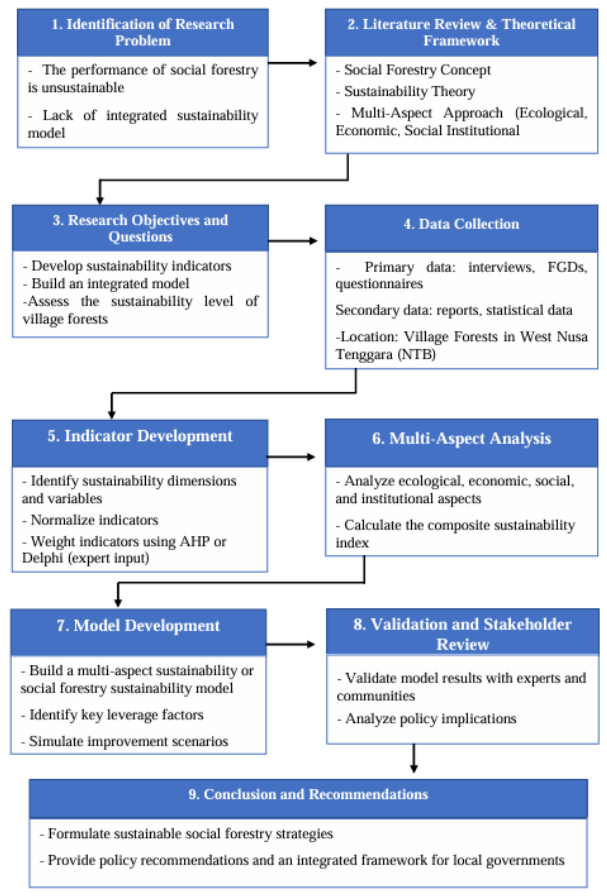
The analysis was conducted using qualitative and quantitative approaches, as outlined in the works [28-31]. The qualitative analysis process involves a multifaceted approach that encompasses data reduction, presentation, and the formulation of conclusions. This methodological framework is instrumental in elucidating the intricacies of social and institutional dynamics. Quantitative analysis was conducted through the processing of survey data, employing both descriptive and inferential statistics. The results of both analyses were integrated within the MSA method framework to identify key factors for social forestry sustainability [32-35]. Furthermore, a sustainable social forestry model was developed and tested on a limited basis through field implementation, monitoring, and systematic evaluation to assess its effectiveness and potential for replication in other areas [36-38]. The research flowchart is depicted in Figure 1.
Figure 1. Research flow diagram
3.1 Dynamics and scenarios for improving the sustainability of social forestry in Lenek Village
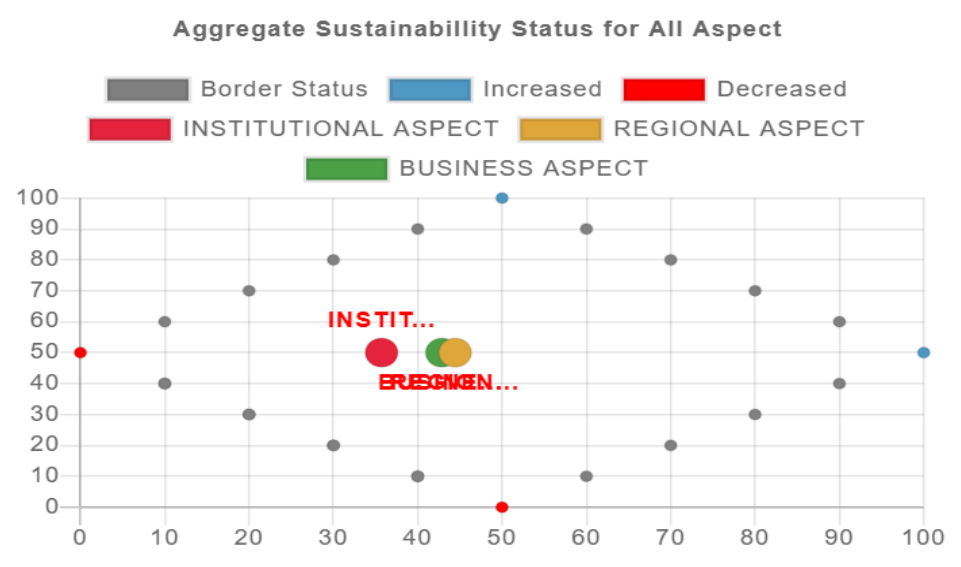
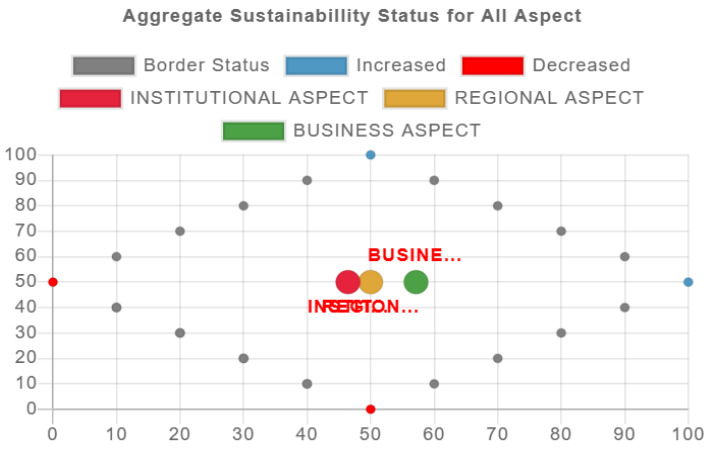
The results of the analysis of institutional, regional, and business aspects in aggregate (Figure 2) indicate that all three are still in the less sustainable category (Low Sustainable) with index values below 50%. The institutional aspect obtained 35.71%, the regional aspect obtained 44.44%, and the business aspect obtained 42.86%. The 50% index value in this analysis is defined as a critical threshold or a transition point of dynamic sustainability. Scores below this threshold indicate that the management system is still highly vulnerable to external disturbances and functional failures, requiring intervention in sensitive factors to push the status toward the "Sustainable" category. The value of 50 on the y-axis delineates a condition of sustainability that is still dynamic, meaning that the sustainability status can increase or decrease depending on the management of sensitive factors [38-40]. This finding underscores the need for a robust and well-managed institutional framework, regional initiatives, and business practices to ensure the sustainability of social forestry in Lenek Village.
Figure 2. Aggregate sustainability status of all aspects in Lenek Village
As illustrated in Table 1, the institutional aspect is the least robust and most susceptible, with a percentage of 35.71%. Consequently, it is imperative to prioritize its enhancement, particularly with regard to the organizational structure, internal regulations, and the administration of KTH. This condition is consistent with the findings of Yatim et al. [40], which emphasized that the effectiveness of community forest management is contingent upon the clarity of access rights and local institutional governance. The ambiguity in the regulation of management rights and coordination between institutions frequently leads to suboptimal participation and efficiency in decision-making processes [41-43]. Consequently, institutional strengthening in Lenek Village must prioritize the enhancement of organizational structure, the augmentation of cadres' capacity, and the affirmation of the rights and responsibilities of KTH. These measures are essential for ensuring that the management system operates in a more participatory and sustainable manner.
Table 1. Sustainability status of all aspects in Lenek Village
|
Aspect |
Status |
Future Condition |
|
Institutional |
35.71 |
50 |
|
Area |
44.44 |
50 |
|
Business |
42.86 |
50 |
Conversely, the area aspect exhibits a marginally higher value of 44.44%, yet this remains less than optimal due to persistent deficiencies in mapping potential and rehabilitation activities. The business aspect, with a value of 42.86%, also demonstrates that KTH economic activities have not been optimal in encouraging sustainability, primarily due to limited capital, minimal technology application, and negligible government support. These results align with the findings of research conducted by Astaman et al. [44], which demonstrated that the economic sustainability of communities in social forestry areas is significantly influenced by the presence of natural resource capital and the adequacy of institutional support. Consequently, there is a necessity for collaboration among local governments, financial institutions, and local business actors to enhance access to financing, post-harvest technology, and markets for non-timber forest products. This collaboration is essential for the development of sustainable business mechanisms and the enhancement of the well-being of KTH members [45, 46].
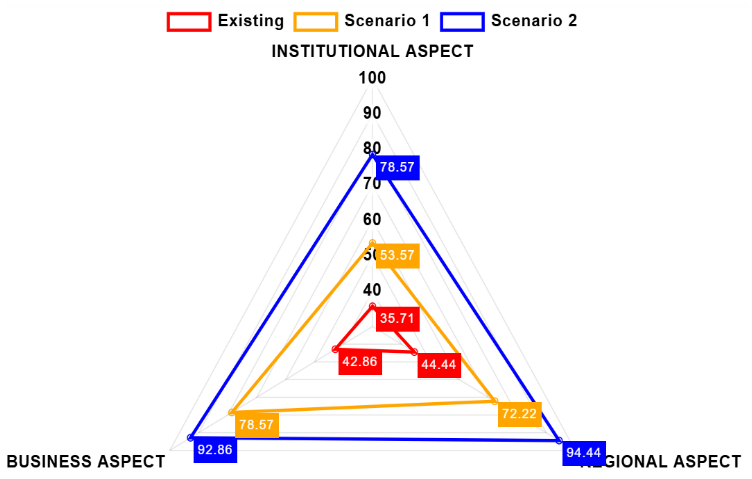
The social forestry sustainability index value for each aspect is depicted in a triangle diagram (Figure 3), where the red line indicates the current sustainability status of each aspect. The diagram indicates that there are several aspects that require further attention and enhancement. The results of the analysis of the social forestry sustainability index for the three main aspects, namely institutions, areas, and businesses, show that the current condition is still in the low sustainable category with an average value of 41% (Table 2). This value indicates that the institutional management of KTH, area utilization, and economic business activities of KTH still experience several obstacles. These obstacles include the lack of KTH participation in government programs, suboptimal mapping of regional potential, and limited capital and technology in business aspects [45-48].
Figure 3. Diagram of the index and sustainability status of social forestry in Lenek Village
Table 2. Sustainability values of actual conditions and scenarios of Lenek Village
|
No. |
Aspect |
Current Data |
Scenario 1 |
Scenario 2 |
|
1 |
Institutional |
35.71 |
53.57 |
78.57 |
|
2 |
Area |
44.44 |
72.22 |
94.44 |
|
3 |
Business |
42.86 |
78.57 |
92.86 |
|
Total average |
41 |
68.12 |
88.63 |
|
|
Sustainability status |
Low Sustainable |
Sustainable |
Very Sustainable |
|
In the event that improvements are implemented in a gradual manner (Scenario 1), the sustainability score of social forestry in Lenek Village will undergo a substantial increase, reaching 68.12% (Sustainable). This increase is indicative of the strengthening of sensitive indicators, including the participation of KTH in government programs, the mapping of area potential, and business support through capital and technology. Conversely, comprehensive and optimal improvements (Scenario 2) result in a substantial increase in the average sustainability index, reaching 88.63% (Very Sustainable). This condition is indicative of robust group institutions, optimal management of the area according to potential and carrying capacity, and the growth of businesses supported by technology and robust market access.
As demonstrated in Table 3, each aspect exhibits a distinct improvement pattern. The institutional aspect demonstrated an increase of 17.86 points in Scenario 1 and 42.86 points in Scenario 2, with a ΔS2S/ΔS1S ratio of 2.4, suggesting that institutions exhibited a high degree of responsiveness to the observed overall improvements. The regional aspect exhibited an increase of 27.78 points in Scenario 1 and 50 points in Scenario 2, with a ratio of 1.8, signifying a substantial impact from potential mapping, the development of superior commodities, and rehabilitation activities. The business aspect demonstrated a 35.71-point increase in Scenario 1 and a 50-point increase in Scenario 2, exhibiting a ratio of 1.4, suggesting a swift response to initial interventions. However, the subsequent increase was less substantial compared to the other two aspects.
Table 3. Priority scenarios for social forestry in Lenek Village
|
No. |
Aspect |
∆S1S |
∆S2S |
∆S2S/∆S1S |
|
1 |
Institutional |
17.86 |
42.86 |
2.4 |
|
2 |
Area |
27.78 |
50 |
1.8 |
|
3 |
Business |
35.71 |
50 |
1.4 |
|
Average Scenario Priority |
1.87 |
|||
The mean ratio of 1.87 indicates that the optimal improvements (Scenario 2) yield nearly twice the improvement compared to moderate improvements (Scenario 1). According to the established order of priorities, institutional aspects are identified as the primary area of focus for enhancement. Subsequent to these institutional concerns are the domains of areas and businesses. Consequently, the strategy for enhancing the sustainability of social forestry in Lenek Village must prioritize the reinforcement of institutions and areas as the fundamental foundation, subsequently complemented by the promotion of business development as a catalyst for the group's economy [49-51].
3.2 Dynamics and scenarios for improving the sustainability of social forestry in Toya Village
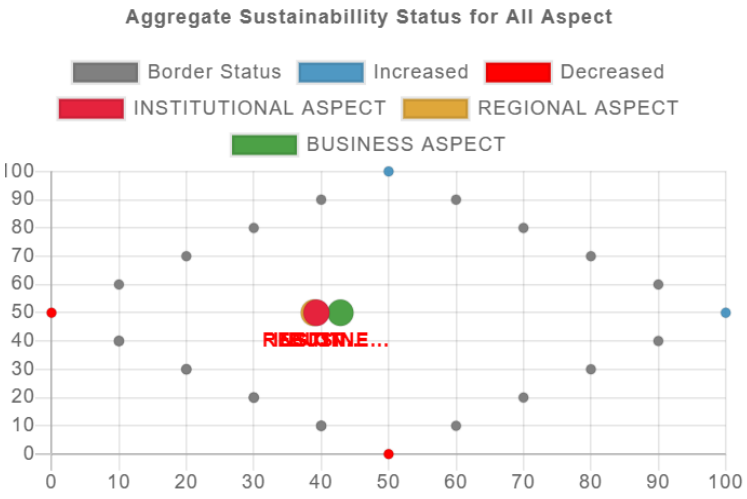
The results of the analysis presented in Figure 4 indicate that the three components of social forestry in Lenek Village remain in the low sustainable category, with index values below 50%. Specifically, the index values for institutions are 39.29%, for areas are 38.89%, and for businesses are 42.86%. This condition indicates that the sustainability of social forestry is not yet stable and is still greatly influenced by the management of sensitive factors in each aspect. Consequently, improvement efforts are needed to achieve a more sustainable condition [1].
Figure 4. Aggregate sustainability status of all aspects in Toya Village
As indicated by the findings presented in Table 4, institutional and regional aspects emerge as the primary areas necessitating enhancement, given their attainment of the lowest sustainability scores, with values of 39.29% and 38.89%, respectively. The low scores for the institutional aspect indicate problems in the organizational structure, lack of training, and low member participation in capacity building activities for KTH. This condition is consistent with the findings of Galudra [51], which emphasized that the successful implementation and achievement of KTH program objectives are highly dependent on institutional capacity development and the effectiveness of extension services.
Table 4. Sustainability status of all aspects in Toya Village
|
Aspect |
Status |
Future Condition |
|
Institutional |
39.29 |
50 |
|
Area |
38.89 |
50 |
|
Business |
42.86 |
50 |
Analogous to the institutional dimension, the regional aspect evinces suboptimal management, particularly with respect to potential mapping, the identification of regional carrying capacity, and the limitation of regional rehabilitation activities. Conversely, the business aspect attained the highest sustainability score, at 42.86%, yet it was classified within the low sustainable category. This situation suggests that KTH economic enterprises have encountered challenges in achieving optimal development due to limited capital, minimal technology implementation, and inadequate support for business capacity building.
A close examination of these three aspects reveals a consistent pattern: the pursuit of sustainability remains unattained. Consequently, enhancing the sustainability of social forestry in Toya Village cannot be achieved by focusing solely on a single aspect. A multifaceted, integrated approach is imperative to achieve comprehensive sustainability. This approach must encompass institutional strengthening, area management, and business development to ensure the effectiveness and comprehensiveness of the resulting sustainability efforts [52].
The social forestry sustainability index value for each aspect is depicted in a triangle diagram (Figure 5), where the red line indicates the current sustainability condition. The diagram indicates that all aspects still require attention and improvement. The results of the analysis of the social forestry sustainability index for the three main aspects, namely institutions, areas, and businesses in Toya Village, show that the current condition is still in the low sustainable category with an average value of 40.35% (Table 5). This value indicates that the institutional management of KTH, area utilization, and economic business activities of KTH still experience several obstacles. These obstacles include the lack of KTH participation in government programs, suboptimal mapping of area potential, and limited capital and technology in business aspects.
Figure 5. Diagram of the index and sustainability status of social forestry in Toya Village
Table 5. Sustainability values of actual conditions and scenarios of Toya Village
|
No. |
Aspect |
Current Data |
Scenario 1 |
Scenario 2 |
|
1 |
Institutional |
39.29 |
57.14 |
75 |
|
2 |
Area |
38.89 |
66.67 |
94,44 |
|
3 |
Business |
42.86 |
71.43 |
92,86 |
|
Total average |
40,35 |
65.08 |
87.43 |
|
|
Sustainability status |
Low Sustainable |
Sustainable |
Very Sustainable |
|
As illustrated in Table 5, the gradual improvements (Scenario 1) resulted in a notable enhancement in the sustainability score of social forestry in Toya Village, elevating it from the low sustainable category (40.35%) to the sustainable category (65.08%). This increase indicates that initial steps, such as institutional strengthening, optimizing area utilization, and providing capital and technology support for economic enterprises, have been quite effective in improving sustainability.
In the event that improvements are executed in a comprehensive and optimal manner (Scenario 2), the average sustainability index experiences a substantial increase, reaching 87.43% and thereby entering the Very Sustainable category. At this stage, the forest farmer group institution is strengthened by good governance and member participation. The area is managed according to its potential and carrying capacity, and business aspects develop with the support of technology, market access, and more stable economic networks [53, 54].
In the area aspect, the increase in the index value from the actual condition to Scenario 1 reached 27.78 points, and to Scenario 2 by 55.55 points with a ∆S2S/∆S1S ratio of 2. This indicates that the area aspect is very strategic and provides a high response to optimal management. Consequently, activities such as potential mapping, the development of superior commodities, and the rehabilitation and conservation of the area are pivotal in enhancing the sustainability of social forestry in Toya Village.
Concurrently, the business aspect demonstrated an index increase from the actual condition to Scenario 1 by 28.57 points and to Scenario 2 by 50 points, exhibiting a ΔS2S/ΔS1S ratio of 1.75 (see Table 6). This value indicates that the group's business increased rapidly in the initial stage of improvement, but the increase in the optimal stage was not as large as the other two aspects. The mean ratio of 1.92 indicates that optimal improvement is capable of providing nearly twice the increase compared to gradual improvement. Accordingly, institutional and regional considerations are identified as the primary objectives in the strategy to enhance sustainability. The business aspect, however, is identified as a potential area for further development as an economic catalyst for KTH.
Table 6. Priority scenarios for social forestry in Toya Village
|
No. |
Aspect |
∆S1S |
∆S2S |
∆S2S/∆S1S |
|
1 |
Institutional |
17.85 |
35,71 |
2 |
|
2 |
Area |
27.78 |
55.55 |
2 |
|
3 |
Business |
28.57 |
50 |
1.75 |
|
Average Scenario Priority |
1.92 |
|||
3.3 Dynamics and scenarios for improving the sustainability of social forestry in Lunyuk Rea Village
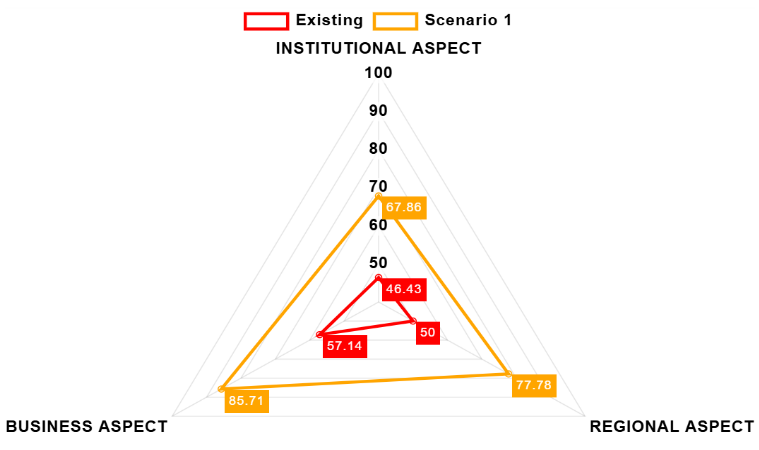
The results of the analysis presented in Figure 6 demonstrate that the level of sustainability of social forestry in Lunyuk Rea Village varies between aspects, with values ranging from less than 50% to more than 50%. The institutional component exhibits a value of 46.43%, thereby being designated as "Low Sustainable." This designation signifies the presence of residual impediments, including the dearth of leadership cadres, the underutilization of local knowledge, and the limited engagement of KTH in government and non-governmental organization (NGO) initiatives. This condition indicates that institutions require special attention because they are the main foundation in maintaining the sustainability of social forestry in the village [1, 52].
Figure 6. Sustainability status of all aspects in Lunyuk Rea Village in aggregate
The regional aspect exhibits a sustainability index value of 50%, situated at the threshold between the categories of Low Sustainable and Sustainable. This condition suggests that regional management may be superior to institutional management, yet it is inherently unstable and contingent upon the caliber of management. To ensure the region attains stable sustainability, it is imperative to fortify ongoing initiatives such as identifying the region's potential carrying capacity, mapping regional issues, rehabilitation activities, and increasing land cover.
Conversely, the business aspect attained the highest score of 57.14%, thereby being classified as Sustainable. This finding indicates that the economic activities of the KTH in Lunyuk Rea Village have achieved a comparatively higher level of development in comparison to the other two aspects. This is attributable to the group's initial capital, minimal business obstacles, and effective monitoring and evaluation mechanisms. However, given that its score remains proximate to the established threshold, there is an imperative for the business aspect to undergo further fortification. This enhancement is crucial for enhancing its contribution to the well-being of KTH members and the broader sustainability of social forestry initiatives.
The analysis results indicate that the level of sustainability of social forestry in Lunyuk Rea Village exhibits variability across different aspects. This condition is consistent with the findings of Lawasi [53], which identified three primary challenges in the implementation of social forestry programs in Indonesia: structural constraints, internal farmer dynamics, and limited information and technology input. The low score on the institutional aspect in Lunyuk Rea Village indicates the still weak managerial and organizational capacity of farmer groups, as well as minimal synergy between stakeholders, which hinders institutional independence. Concurrently, the analysis of regions approaching sustainability reveals that initiatives such as potential mapping and rehabilitation remain suboptimal due to constrained funding and technical assistance. The relatively high business aspect indicates the existence of local economic initiatives that are beginning to develop, although these initiatives are still hampered by limited access to training, technology, and market information. Consequently, these findings substantiate the necessity of an integrated approach encompassing institutional strengthening, optimization of area management, and the development of knowledge- and technology-based enterprises to enhance the sustainability of social forestry.
Based on Table 7, a future condition score of 50% across all aspects indicates that the sustainability status of social forestry in Lunyuk Rea Village remains dynamic, meaning each aspect has the potential to improve or decline depending on the management strategy implemented. A comparative analysis reveals that the village exhibits a comparatively superior level of sustainability, particularly in the business sector, which is indicative of a more robust group economic development. However, institutional and regional aspects remain vulnerable areas that necessitate reinforcement to ensure the effective and organized implementation of social forestry. This concept is illustrated in a triangular diagram (Figure 7), where the red line signifies the current state of each aspect, while the orange line delineates potential improvement scenarios that could be implemented to enhance overall sustainability in the future.
Table 7. Sustainability status of all aspects in Lunyuk Rea Village
|
Aspect |
Status |
Future Condition |
|
Institutional |
46.43 |
50 |
|
Area |
50 |
50 |
|
Business |
57.14 |
50 |
Figure 7. Diagram of the index and sustainability status of social forestry in Lunyuk Rea Village
The aggregate sustainability score for social forestry in Lunyuk Rea Village is currently 51.19%, which is categorized as "Sustainable." The business aspect received the highest score, at 57.14%, while the institutional aspect received the lowest score, at 46.43%. The incorporation of leverage factors into the simulation models for various improvement scenarios resulted in a substantial enhancement in the sustainability score. In the realistic improvement scenario, the aggregate score increased to 77.12%, categorizing it as Very Sustainable. This change indicates that targeted interventions in the institutional, regional, and business aspects have strengthened the overall sustainability of social forestry, as demonstrated in Table 8.
Table 8. Sustainability values of actual conditions and scenarios
|
No. |
Aspect |
Current Data |
Scenario 1 |
|
1 |
Institutional |
46.43 |
67.86 |
|
2 |
Area |
50 |
77.78 |
|
3 |
Business |
57.14 |
85.71 |
|
Total average |
51.19 |
77.12 |
|
|
Sustainability status |
Sustainable |
Very Sustainable |
|
The results of the priority scenario analysis in Table 9 demonstrate that each facet of social forestry in Lunyuk Rea Village possesses a distinct potential for enhancement. The highest priority aspect is business, with a ΔS1S value of 28.57. This finding suggests that enhancing the business aspect, particularly through the development of the community's productive economy, will contribute most significantly to improving overall sustainability.
Table 9. Priority scenarios for social forestry in Lunyuk Rea Village
|
No. |
Aspect |
∆S1S |
|
1 |
Institutional |
21.43 |
|
2 |
Area |
27.78 |
|
3 |
Business |
28.57 |
The regional aspect is the second priority, with a ∆S1S value of 27.78, indicating the importance of improving forest biophysical management and more optimal area utilization. Advancements in this domain are of paramount importance in preserving ecological equilibrium and ensuring the economic viability of communities situated in forest ecosystems. Conversely, the institutional aspect exhibits a ∆S1S value of 21.43, which, while lower than other aspects, remains a vital element in maintaining long-term sustainability. Previous studies indicate that efforts to strengthen institutional capacity, improve internal mechanisms, and increase participation among forest-farmer group members should be prioritized [43, 44].
The findings of this study demonstrate that the primary focus for enhancing the sustainability of social forestry in Lunyuk Rea Village should be initiated with a business-oriented approach, followed by an area-based strategy, and subsequently an institutional framework. This priority order provides strategic direction for strengthening social forestry so that sustainability improvements can be achieved more effectively and sustainably.
3.4 Dynamics and scenarios for improving the sustainability of social forestry institutional aspects in three villages
3.4.1 Institutional aspect
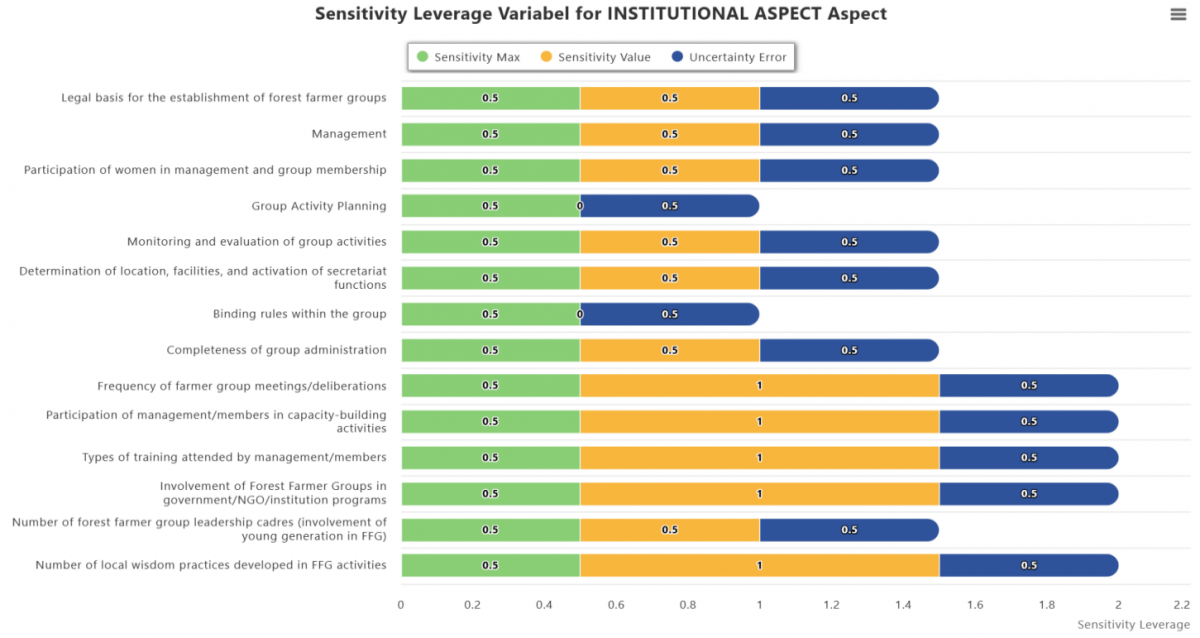
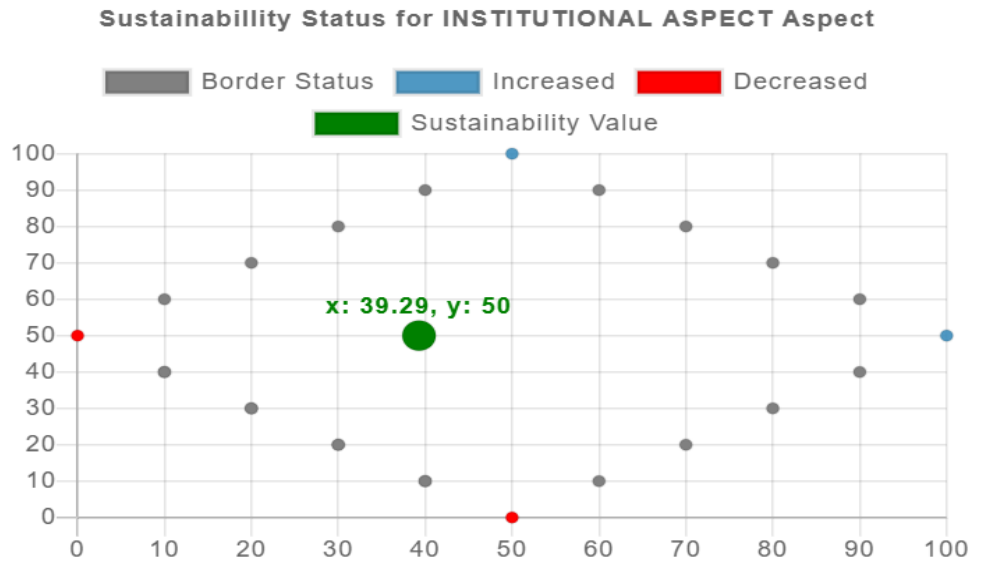
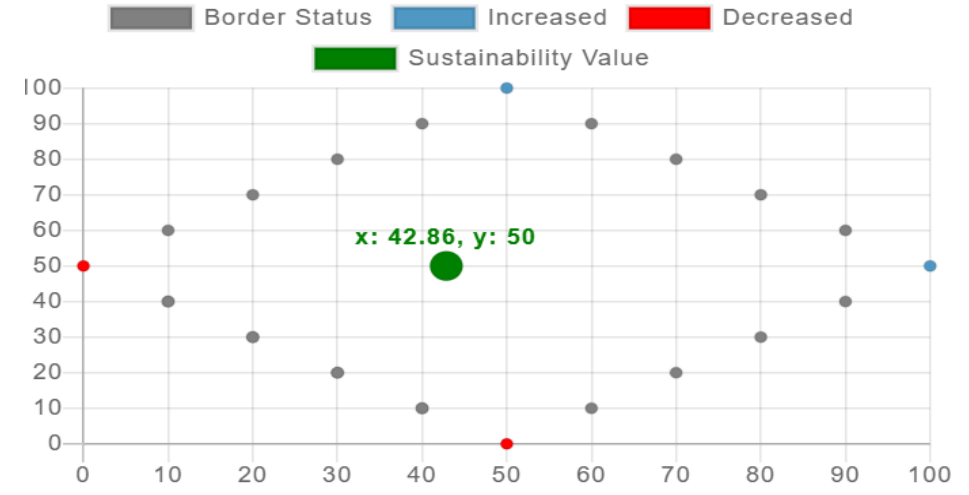
The MSA analysis results (Figure 8) indicate that the institutional sustainability index is at coordinates x = 39.29; y = 50, categorized as low sustainability. This condition suggests that the KTH institution has been established and is operational; however, it exhibits internal weaknesses with the potential to diminish its sustainability level.
The analysis yielded several indicators that have been identified as potential driving factors for improving institutional sustainability. These indicators include the frequency of group discussions, participation in capacity-building activities, types of training attended, involvement in government or NGO programs, and the development of local wisdom. This finding is consistent with the results of the sensitivity leverage analysis, which identified these five indicators as the most sensitive variables influencing the sustainability of social forestry institutions.
The most sensitive factor influencing the sustainability of social forestry from an institutional perspective is the frequency of farmer group meetings, indicating that the intensity of internal communication is a key factor in institutional strengthening (Figure 8). The frequency of group meetings is identified as the most sensitive leverage variable because it serves as the primary vehicle for building social capital through increased trust and active participation. Regular meetings function to reduce information asymmetry and strengthen collective decision-making processes, which ultimately determine institutional effectiveness in managing conflicts and resources. Meetings play a role in decision-making, evaluation, and increasing member participation. The infrequency of group meetings may be attributed to a deficiency in community trust and an absence of comprehension regarding the regulations governing village forest management.
This finding aligns with the perspective put forth by Putra et al. [2], Lawasi [53], and Wulandari and Kurniasih [54] which posited that the extent of community trust and understanding can be gauged by the active involvement and backing of farmer groups in the implementation of collectively established forest management regulations. The high level of trust exhibited by the group members also suggests the presence of ongoing communication between the group's administrators and its members.
The subsequent salient factor pertains to the involvement of administrators and members in capacity-building initiatives, which underscores the significance of human resource quality for institutional sustainability. Institutional effectiveness plays a crucial role in increasing human resource capacity through the provision of various training and mentoring opportunities [54]. Training tailored to specific needs, including agroforestry, silviculture, and forest farming management, has been shown to enhance the technical and managerial competencies of the group. Moreover, the involvement of KTH in government and NGO programs is a crucial factor in strengthening institutions by providing access to capital, production facilities, and technical assistance. This finding aligns with the assertion in the aforementioned study [54] that external entities, including local governments, villages, NGOs, and academic institutions, play a pivotal role in fostering the enhancement of community institutional capacity.
The final factor to be considered is the development of local wisdom in KTH activities. Local values and practices, including customary rules, mutual cooperation, and environmental rituals, encourage community participation and promote forest sustainability through the application of conservation principles that have been transmitted across generations. Indigenous communities residing in proximity to forests are significantly reliant on the surrounding natural resources. Consequently, they have devised and implemented a variety of regulations and customs to ensure the effective management and conservation of these forests. Various conservation concepts, such as prohibitions on cutting down trees or digging holes, are forms of local wisdom that function to protect forests from damage caused by human activities, including investment and corporations [55].
3.4.2 Area aspect
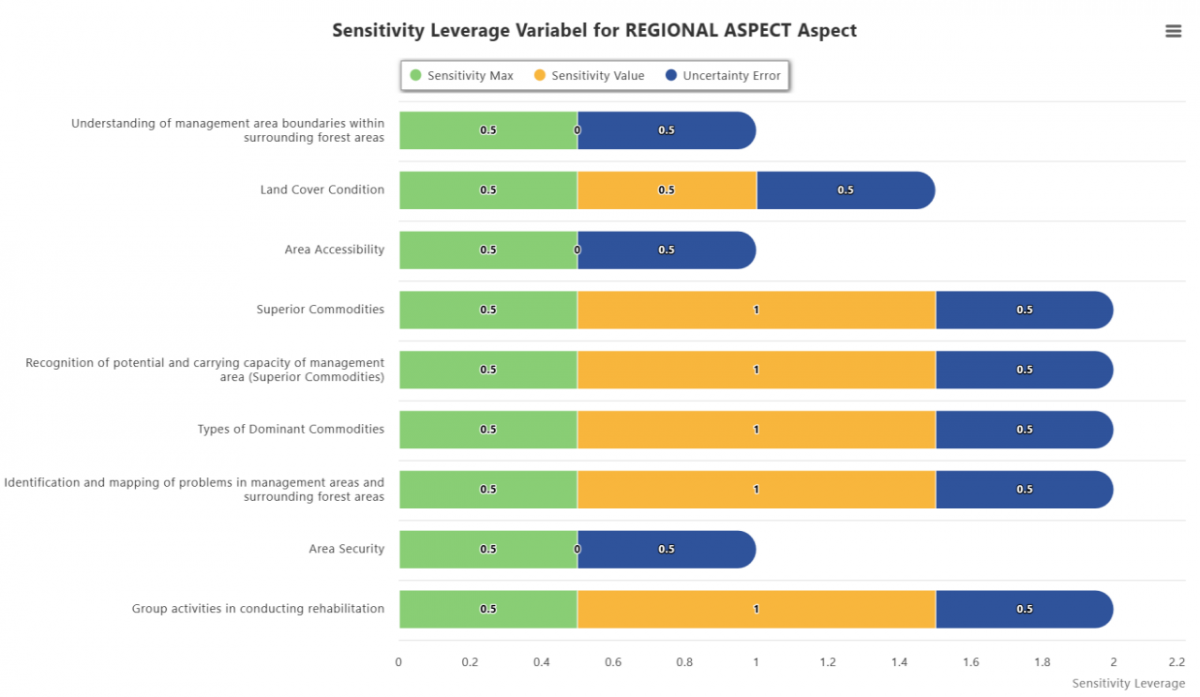
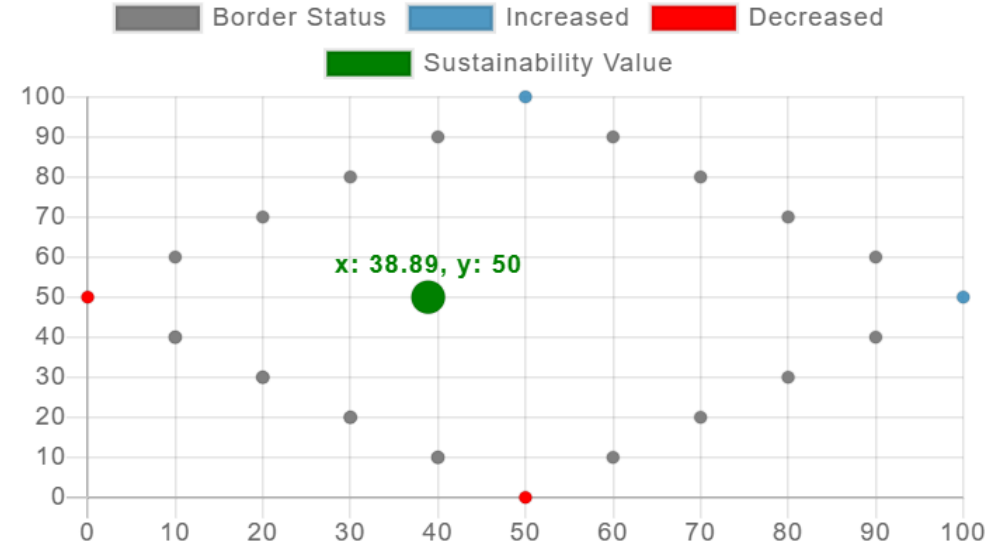
The MSA analysis results indicate that the regional sustainability index for the three villages was 38.89%, which is categorized as low sustainability (see Figure 9). This finding suggests that the forest area can be maintained, but it requires the strengthening of several key factors. Indicators that have the potential to improve sustainability include the development of superior commodities, mapping regional potential, identifying management issues, and forest rehabilitation activities. A sensitivity analysis indicates that these factors are the most influential variables on the regional sustainability aspect.
The most sensitive factor affecting the sustainability of regional aspects is the absence of consistently managed superior commodities (Figure 9). Superior commodities play a crucial role in driving the local economy and determining regional identity; without them, the competitiveness and economic value of forest products decline. One strategy to promote regional development is to foster the development of superior sectors [55]. This sector is expected to strengthen regional economic growth and improve community welfare. Consequently, the development of strategies aimed at identifying local resource potential and determining superior commodities with high economic, ecological, and social value is imperative.
Another salient factor is the absence of comprehensive mapping of potential managed areas, which engenders ambiguous business planning and decision-making. The predominant commodity type is also a sensitive factor; the overreliance on a single crop increases the risk of failure and reduces biodiversity. This necessitates the improvement of the implementation of agroforestry patterns.
Additionally, the inadequate mapping of managed area issues and the insufficient level of rehabilitation activities further compromise sustainability. Spatial data plays a crucial role in land-use planning, both through terrestrial spatial data for small-scale areas and remote sensing data for larger areas. However, the limited availability of quality spatial data and the lack of comprehensive information on land characteristics and suitability for various cropping patterns hinder the implementation of forest management [56, 57]. In order to maintain the ecological function and productivity of social forestry areas, efforts must be made to map critical land, control degradation, and increase rehabilitation activities.
3.4.3 Business aspect
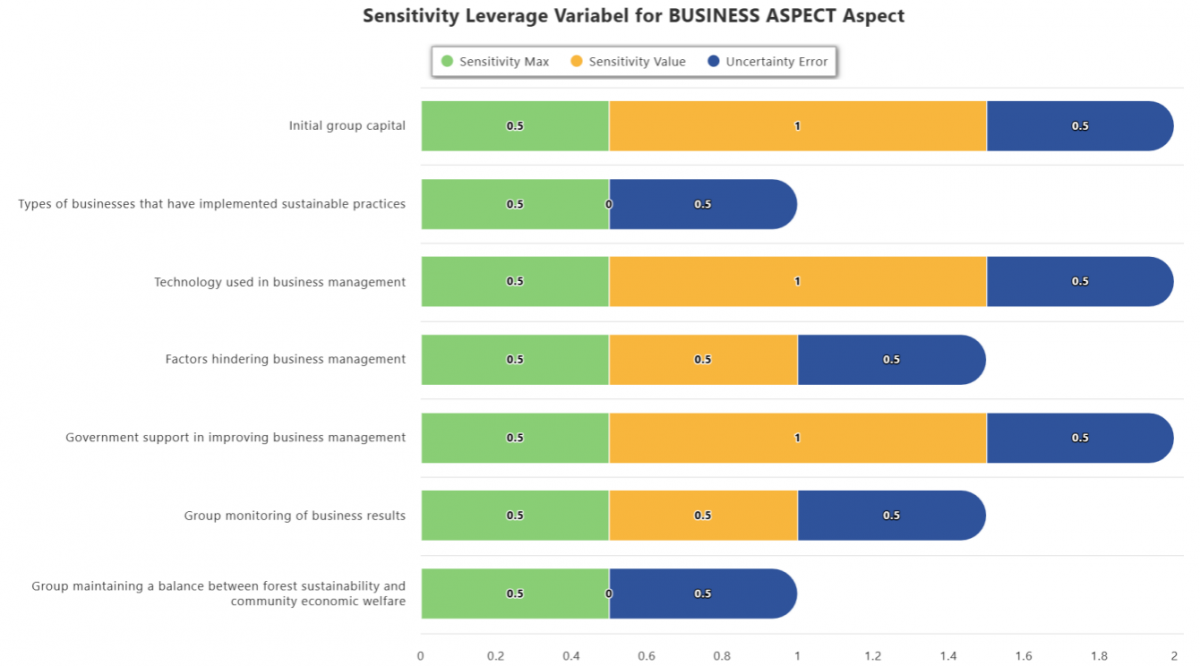
The results of the MSA analysis demonstrate that the business aspect sustainability index in the three villages is at coordinates x = 42.86; y = 50 (42.86%), indicating a less sustainable category (Low Sustainability). This value suggests that the KTH economic activities have not been adequately supporting the sustainability of social forestry. The position on the y-axis, set at 50, signifies the possibility of enhanced or diminished performance in the future, contingent on the present management of business aspects. A number of sensitive factors have been identified as having the potential to increase sustainability. These factors include the group's initial capital, the use of technology in business management, and government support for the strengthening of social forestry businesses.
A business perspective on the sustainability of social forestry reveals several sensitive factors that must be taken into consideration. These include the group's initial capital, the technology used, and government support (Figure 10). The majority of KTHs have not yet attained independent capital and are, as a result, dependent on government assistance. This reliance poses significant challenges, particularly with regard to the continuity of business operations upon the termination of assistance. The marginal business income after more than three years of implementation is attributed to structural barriers, particularly the high dependency on government assistance and low adoption of processing technology. Without technological innovation and product diversification, KTH remain trapped in a subsistence business model that lacks a competitive advantage in the market. It also impedes the adoption of innovations, including product diversification, forest product processing, and the development of marketing networks. An increase in capital has been demonstrated to positively impact income, as greater capital facilitates business growth [58-60]. Consequently, there is an imperative for initiatives aimed at cultivating autonomous capital sources through the sustainable utilization of forestry products, thereby ensuring the continuity of the group's economic cycle.
In addition to capital, technology, and business training, other factors are also crucial to the sustainability of social forestry activities. The limited adoption of technological advancements has been identified as a key factor in constraining production capacity and quality. Concurrently, the absence of government-sponsored training programs has been cited as a contributing factor to the dearth of knowledge among community forestry unit members with regard to the processing, packaging, and marketing of forest products. This phenomenon gives rise to products that are characterized by simplicity and lack competitiveness within the market.
The utilization of digital technology has the capacity to furnish business entities with sustainable competitive advantages by means of expanding market access and increasing production efficiency [59]. Consequently, a strategy is required that encompasses the provision of ongoing training coupled with technical assistance in the field. This strategy is intended to facilitate the monitoring and maintenance of an augmented KTH business capacity. Increased productivity and market certainty have been demonstrated to contribute to increased group income, which, in the long term, supports the achievement of KTH welfare [61].
3.4.4 Repair scenario
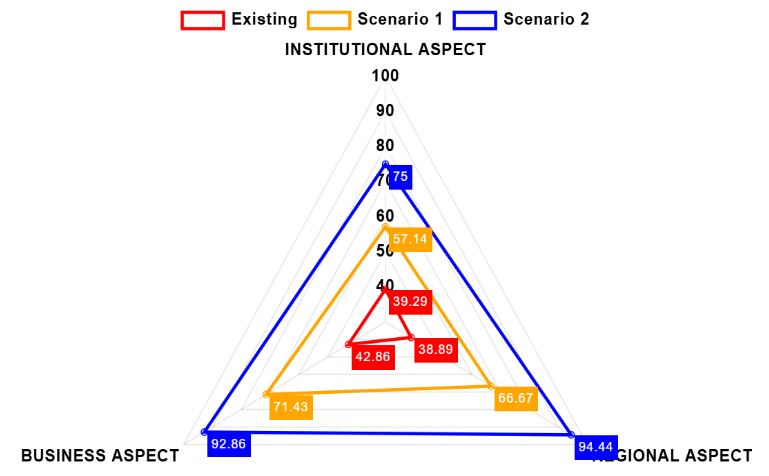
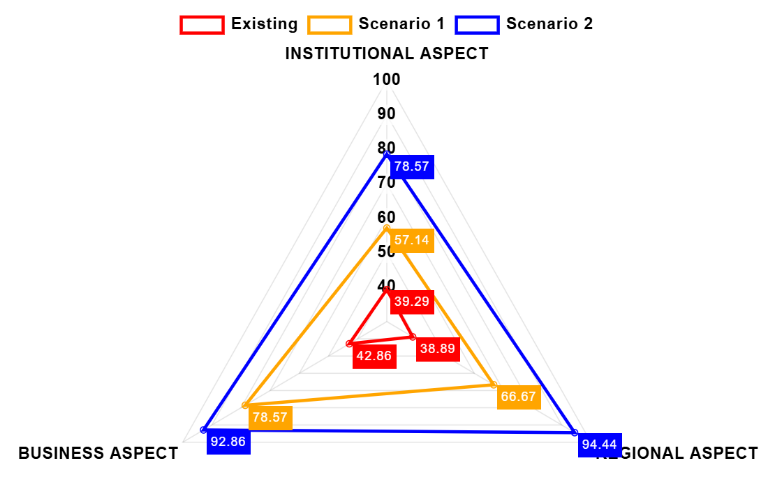
The social forestry sustainability index value for each aspect is shown in a triangle diagram (Figure 11), where the red line depicts the current sustainability condition. The diagram indicates that there are several aspects that require further attention and enhancement. The orange line signifies a realistic improvement scenario (Scenario 1), while the blue line delineates the optimal improvement scenario (Scenario 2). The findings of the present study indicate that the three primary domains (institutions, areas, and businesses) continue to be classified within the low sustainable category, exhibiting an average value of 40.35% (see Table 10). Scenario simulations are conducted by comparing gradual (Scenario 1) and optimal (Scenario 2) improvements to measure the system's responsiveness to policy interventions. Scenario 2 demonstrates a multiplier effect, where comprehensive improvements in area and institutional aspects simultaneously can double the sustainability index compared to partial improvements. This value indicates that the institutional management, area utilization, and economic business activities of the KTH have not been operating at their optimal level. This is primarily due to three factors: first, low participation in government programs; second, suboptimal mapping of area potential; and third, limited capital and technology in the business aspect.
Figure 11. Diagram of the index and sustainability status of social forestry in the three villages
Table 10. Sustainability values of the actual conditions and scenarios of the three villages
|
No. |
Aspect |
Current Data |
Scenario 1 |
Scenario 2 |
|
1 |
Institutional |
39.29 |
57.14 |
78.57 |
|
2 |
Area |
38.89 |
61.11 |
88,89 |
|
3 |
Business |
42.86 |
78.57 |
92.86 |
|
Total average |
40.35 |
65.61 |
86.77 |
|
|
Sustainability status |
Low Sustainable |
Sustainable |
Very Sustainable |
|
In the event that improvements are made incrementally (Scenario 1), the sustainability score increases to 65.61%, which is categorized as "Sustainable." This enhancement underscores the efficacy of fortifying sensitive indicators, including member participation, the identification of superior commodities, and capital and technological support, in enhancing sustainability status. Conversely, comprehensive and optimal improvements (Scenario 2) propelled the average sustainability index to a substantial increase of 86.77% (Very Sustainable), indicative of robust group institutions, area management in accordance with potential and carrying capacity, and expanding group businesses bolstered by technology and stable market networks.
As illustrated in Table 11, each facet of social forestry exhibited enhancements, exhibiting disparate degrees of responsiveness. With respect to the institutional aspect, the index demonstrated an increase of 17.85 points in Scenario 1 and 39.28 points in Scenario 2, exhibiting a ratio of ∆S2S/∆S1S = 2.2. This finding suggests that comprehensive improvements exert a more than twofold impact compared to moderate improvements. This finding suggests that institutions exhibit a high degree of responsiveness to the enhancement of regulations, administration, leadership, and member participation. Conversely, the area aspect demonstrated a marked increase in the index, with an increase of 22.22 points in Scenario 1 and 50 points in Scenario 2, resulting in a ratio of 2.25. This observation signifies the area aspect as the most strategic, given its capacity to elicit a pronounced response to optimal improvements, particularly through potential mapping, the development of superior commodities, and heightened area rehabilitation and conservation activities. This finding aligns with the perspective outlined by Firmansyah [62], who asserted that scenario determination is derived from a comparative analysis of changes in value between actual conditions and the reference scenarios, with the value in Scenario 2 being at least twice as substantial as that in Scenario 1. This provision delineates the degree of ease in making adjustments to driving factors to augment the level of sustainability.
Table 11. Social forestry priority scenarios for the three villages
|
No. |
Aspect |
∆S1S |
∆S2S |
∆S2S/∆S1S |
|
1 |
Institutional |
17.85 |
39.28 |
2.2 |
|
2 |
Area |
22.22 |
50 |
2.25 |
|
3 |
Business |
35.71 |
50 |
1.4 |
|
Average Scenario Priority |
1.95 |
|||
From a business perspective, the index demonstrated a 35.71-point increase in Scenario 1 and a 50-point increase in Scenario 2, exhibiting a ratio of 1.4. This suggests that the business aspect exhibited a swift improvement in the initial stage; however, the subsequent enhancement was less substantial in comparison to the other two aspects over an extended period. The mean ratio value between scenarios was 1.95, indicating that optimal improvements resulted in nearly twice the improvement compared to moderate improvements. In light of these findings, the primary focus of efforts to enhance the sustainability of social forestry should be directed towards the regional and institutional dimensions that demonstrate the most significant potential for enhancement. Subsequently, attention should be given to the business aspect, recognizing its role as a catalyst for the group's economic growth.
The findings of this study indicate that the sustainability of social forestry in village forests in West Nusa Tenggara Province is predominantly classified as "less sustainable" (Low Sustainable), with an average index of approximately 40-50%. The institutional aspects of the business are the weakest link, as the area is in a vulnerable position. While the business aspects are relatively stronger, they are still constrained by factors such as capital, technology, and market conditions. The primary factors contributing to this initiative's success include institutional strengthening, optimization of area management, and the development of village forest-based economic enterprises. The implementation of suitable policy scenarios has the potential to elevate the level of sustainability to the Sustainable or Very Sustainable category, provided that it is executed in an integrated manner and aligns with local characteristics.
[1] Rustiadi, E., Veriasa, T.O. (2022). Towards inclusive Indonesian forestry: An overview of a spatial planning and agrarian perspective. Journal Management Forest Tropica, 28(1): 60-72. https://doi.org/10.7226/jtfm.28.1.60
[2] Putra, A.B., Lee, C.B. (2024). Indonesia's tropical peatlands revisited: Area, depth, carbon potential, and their importance. Journal of Tropical Forest Science, 36(1): 105-116. https://doi.org/10.26525/jtfs2024.36.1.105
[3] Achard, F., Eva, H.D., Mayaux, P., Stibig, H.J., Belward, A. (2014). Improved estimates of net carbon emissions from land cover change in the tropics for the 1990s. Indonesian Journal of Geography, 18(2): GB2008. https://doi.org/10.1029/2003GB002142.
[4] Christmas, S.K., Hardiyanti, M., Prawira, S.A. (2021). Role in the forest village community-based forest management sustainable development. Journal of Judicial Review, 23(1): 115-128. https://doi.org/10.37253/jjr.v23i1.4387
[5] Nijman, V. (2024). The illegal trade in rosewood in Indonesia. European Journal of Forest Research, 143(3): 1047-1055. https://doi.org/10.1007/s10342-024-01674-0
[6] Handoko, P. (2023). Law enforcement on deforestation forests conservation in Indonesia. International Journal of Community Service, 3(4): 342-352. https://doi.org/10.51601/ijcs.v3i4.193
[7] Centauri, F.A., Seva, T.A., Dynasty, G.A., Pamungkas, H.B. (2024). Practice of the social forestry development program as a forest conservation strategy in Yehembang Kangin Village. Influence: International Journal of Science Reviews, 6(1): 115-122.
[8] Climate Scorecard. (2024). Indonesia’s forests: A critical biodiversity and carbon hub. https://www.climatescorecard.org/2024/11/indonesias-forests-a-critical-biodiversity-and-carbon-hub/.
[9] Rahmawati, A.D., Elias. (2025). Literature study of land forest rehabilitation methods in Indonesia. Journal of Indonesian Forestry, 2(1): 174-191. https://journal.ipb.ac.id/forestrindo-journal/article/view/62211.
[10] Ramadhan, R., Afiq, M.D., Anggara, A., Triwanto, J. (2025). Community welfare and forest sustainability in social forestry programs: A case study of KTH Bhakti Alam Lestari in Malang, East Java. Indonesian Journal of Forestry Research, 12(1): 13-26. https://doi.org/10.59465/ijfr.2025.12.1.13-26
[11] Aziz, F., Tresiana, N. (2025). Comparison of sustainable development between community forestry schemes and village forests in improving community welfare in South Lampung Regency. Administrativa: Jurnal Birokrasi, Kebijakan dan Pelayanan Publik, 7(3): 304-324.
[12] Zamhari, A., Harbi, J. (2024). Impacts of social forestry on land cover in Makarti Jaya District, Banyuasin Regency. Journal of Global Sustainable Agriculture, 5(2): 122-127. https://doi.org/10.32502/jgsa.v5i2.290
[13] Mangkunegara, R.M.A., Fitriah, Martini, R., AlFirdaus, L.K. (2024). Overlapping policies public forestry social. Journal of Global Legal Review, 2(1): 65-78. https://doi.org/10.59963/jglegar.v2i1.409
[14] Ichsan, A.C., Aji, I.M.L., Anwar, H., Waru, T., Febryano, I.G. (2020). The implementation of conservation village model program in Mount Rinjani National Park (a regulation perspective). Ecology, Environment and Conservation, 26(3): 1100-1109.
[15] Markum, Ichsan, A.C., Saputra, M., Lestari, A.T., Anugrah, G. (2021). The patterns of agroforestry: The implementation and its impact on local community income and carbon stock in Sesaot Forest, Lombok, Indonesia. IOP Conference Series: Earth and Environmental Science, 917(1): 012043. https://doi.org/10.1088/1755-1315/917/1/012043
[16] Nurhidayah, A., Rusdi, A.M. (2025). Strengthening the role of indigenous communities in sustainable natural resource governance. Jurnal Sosial dan Sains, 5(9): 6985-6991. https://doi.org/10.59188/jurnalsosains.v5i9.32477
[17] Sukwika, T., Fransisca, L. (2021). The policy model for sustainable community forests: A factor analysis. Indonesian Journal of Forestry Research, 8(2): 135-157. https://doi.org/10.59465/ijfr.2021.8.2.135-157
[18] Pokharel, R.K., Neupane, P.R., Tiwari, K.R., Köhl, M. (2015). Assessing the sustainability in community based forestry: A case from Nepal. Forest Policy and Economics, 58: 75-84. https://doi.org/10.1016/j.forpol.2014.11.006
[19] Andani, N.N., Wahyuni, W., Nilawati, N., Ridwan, I. (2024). The impact of social and ecological accounting in forest management. Jurnal Indonesia Impresi, 3(7): 529-535. https://doi.org/10.58344/jii.v3i7.5238
[20] Gunawan, H., Yeny, I., Karlina, E., et al. (2022). Integrating social forestry and biodiversity conservation in Indonesia. Forests, 13(12): 2152. https://doi.org/10.3390/f13122152
[21] Ostrom, E. (1990). Governing the Commons: The Evolution of Institutions for Collective Action. Cambridge University Press. https://doi.org/10.1017/CBO9780511807763
[22] Liu, T.F., Fan, S.C., Jiang, X.L. (2025). How can qualitative in-depth interviews optimize cross-cultural measurement of academic resilience? Frontiers in Psychology, 16: 1444978. https://doi.org/10.3389/fpsyg.2025.1444978
[23] Xu, Z.J., Wang, Y., Qian, Y. (2025). The design and application of in-depth interviews in primary care research. Chinese General Practice Journal, 2(2): 100062. https://doi.org/10.1016/j.cgpj.2025.100062
[24] Wells, G., Bowden, J., Colyer, D., et al. (2024). Exploratory interviews with Australian clinical research staff on how they communicate with participants. BMC Medical Research Methodology, 24: 319. https://doi.org/10.1186/s12874-024-02417-w
[25] Woudstra, K., Tummers, M., Klijn, C.J.M., et al. (2024). Participatory methods used in the evaluation of medical devices: A comparison of focus groups, interviews, and a survey. BMC Health Services Research, 24: 462. https://doi.org/10.1186/s12913-024-10887-3
[26] Putri, H.J., Murhayati, S. (2025). Metode pengumpulan data kualitatif. Jurnal Pendidikan Tambusai, 9(2): 13074-13086. https://jptam.org/index.php/jptam/article/view/27063.
[27] Budiono, G.K.S., Syafii, I., Ribhi, A.A. (2025). Utilizing big data analytics to improve the competitiveness and performance of MSMEs in Sukoharjo: Strategy analysis and implementation. Tambusai Education Journal, 9(1): 11897-11903. https://id.scribd.com/document/964422905/1550-JPT-Pemanfaatan-Analitik-Big-Data-Untuk-M-11897-11903.
[28] Rapia, A., Guntur, P., Iddi, W., Istan, M. (2023). Research tips using the literature review approach model. Journal of Library and Information Science, 7(1): 117-126. https://doi.org/10.29240/tik.v7i1.6494
[29] Miraz, M.H., Sham, R., Annamalah, S. (2025). Advancing mixed-methods research through PLS-SEM and NVivo: A methodological integration in AI literacy studies. Quality & Quantity, 60: 3419-3441. https://doi.org/10.1007/s11135-025-02401-6
[30] Ojoboh, T.M., Igben, H.G. (2024). Impact of research methodology on data quality and research findings. JPPUMA: Jurnal Ilmu Pemerintahan dan Sosial Politik UMA, 12(1): 34-42. https://doi.org/10.31289/jppuma.v12i1.11793
[31] Costa, J. (2024). Mixed methods in educational large-scale studies: Integrating qualitative perspectives into secondary data analysis. Education Sciences, 14(12): 1347. https://doi.org/10.3390/educsci14121347
[32] Apriyanto, H., Warseno, W., Mukti, S.H., et al. (2025). Sustainability assessment and sustainable management scenario of Lake Batur in Bali, Indonesia: Insights from a multi-aspect approach. Resources, 14(9): 135. https://doi.org/10.3390/resources14090135
[33] Kusumadewi, P.O., Susrusa, K.B., Dewi, N.L.P.K. (2025). Multiaspect sustainability analysis of household-scale coconut sugar enterprises in Besan Village, Klungkung. SOCA: Jurnal Sosial Ekonomi Pertanian, 19(1): 28-42. https://doi.org/10.24843/SOCA.2025.v19.i01.p03
[34] Hamzah, B., Hasanuddin, D.A.L. (2025). Circular economy integration in community-based forest management: A sustainability analysis in Indonesia. Jurnal Hutan Dan Masyarakat, 17(1): 73-87. https://doi.org/10.24259/jhm.v17i1.44325
[35] Rachmina, D., Herawati, Feryanto, Mahdi, Wibowo, R.P., Azriani, Z. (2024). Business sustainability analysis of the social forestry program in West Sumatra Province. AGRARIS: Journal of Agribusiness and Rural Development Research, 10(2): 215-235. https://doi.org/10.18196/agraris.v10i2.550
[36] Djumari, Sholahuddin, A., Wahyudi, C. (2025). Implementation of social forestry management in forest areas with special management. International Journal of Research in Social Science and Humanities, 6(5): 147-157. https://doi.org/10.47505/IJRSS.2025.5.16
[37] Situmorang, R.O., Sanudin, Widiyanto, A., Fauziyah, E. (2025). Assessment of community sustainability on social forestry program implementation in Indonesia: Insights from agroforestry model in Java and Sumatra. Trees, Forests and People, 23: 101124. https://doi.org/10.1016/j.tfp.2025.101124
[38] Heldmann, J., Brückner, T., Dang, H.D. (2025). Financial returns of going green: Evidence from MSCI indices. Journal of Asset Management, 26: 768-787. https://doi.org/10.1057/s41260-025-00404-4
[39] Asadikia, A., Rajabifard, A., Kalantari, M. (2024). Navigating sustainability: Key factors in prioritising sustainable development goals. Sustainability Science, 19: 2041-2063. https://doi.org/10.1007/s11625-024-01561-y
[40] Yatim, H., Pakanyamong, A.A.K., Yatim, H., Zaman, N. (2025). Managing community forest resources: Dynamics of property rights and institutional effectiveness in Nambo District. Jurnal Ilmu Kehutanan, 19(1): 36-48. https://doi.org/10.22146/jik.v19i1.13272
[41] Chen, J., Wang, Y.M. (2024). Formalizing ambiguous property rights as a panacea? Informal urban regeneration in Shanghai. Eurasian Geography and Economics, 67(1): 72-96. https://doi.org/10.1080/15387216.2024.2363371
[42] Handoyo, S. (2024). Public governance and national environmental performance nexus: Evidence from cross-country studies. Heliyon, 10: e40637. https://doi.org/10.1016/j.heliyon.2024.e40637
[43] Radtke, J., Renn, O. (2024). Participation in energy transitions: A comparison of policy styles. Energy Research & Social Science, 118: 103743. https://doi.org/10.1016/j.erss.2024.103743
[44] Astaman, P., Hikmah, A.N., Dassir, M., Nadirah, S. (2024). Natural resource capital for sustainable livelihoods in social forestry areas: A case study from Enrekang Regency. Tarjih: Agribusiness Development Journal, 4(02): 197-208. https://doi.org/10.47030/tadj.v4i02.875
[45] Harbi, J., Cao, Y., Milantara, N., Mustafa, A.B. (2023). Assessing the sustainability of NTFP-based community enterprises: A viable business model for Indonesian rural forested areas. Forests, 14(6): 1251. https://doi.org/10.3390/f14061251
[46] Peerzada, I.A., Islam, M.A., Chamberlain, J., Dhyani, S., Reddy, M., Saha, S. (2022). Potential of NTFP based bioeconomy in livelihood security and income inequality mitigation in Kashmir Himalayas. Sustainability, 14(4): 2281. https://doi.org/10.3390/su14042281
[47] Widiyanto, A., Nurrochmat, D.R., Trison, S., Subarudi. (2025). An IAD framework analysis of social forestry institutional transformation: A case of forest areas with special management (KHDPK) in Indonesia. Social Sciences & Humanities Open, 12: 101928. https://doi.org/10.1016/j.ssaho.2025.101928
[48] Herman, H., Susilowati, I., Astuti, R.S., Warsono, H. (2023). Constraints to community empowerment: A study of communities around forests in Pelalawan Regency, Riau Province. Publisia: Journal of Public Administration Science, 8(2): 172-182. https://doi.org/10.26905/pjiap.v8i2.9560
[49] Limbong, C., Samsuri, Ahmad, A.F. (2023). Strategy to strengthening forest farming for sustainable mangrove forest management in the coastal area, Deli Serdang, Indonesia. Jurnal Sylva Indonesiana, 6(01): 29-43. https://doi.org/10.32734/jsi.v6i01.9154
[50] IPCC. (2023). Climate change 2023: Synthesis report. Intergovernmental Panel on Climate Change. https://doi.org/10.59327/IPCC/AR6-9789291691647
[51] Galudra, G. (2019). Focusing on facilitation: Issues and challenges of capacity development in Indonesia's social forestry reforms. Forest and Society, 3(1): 133-136. https://doi.org/10.24259/fs.v3i1.5995
[52] Riyanto, S., Ismail, M.H., Bidin, S. (2025). Review of social capital in sustainable forest management. Indonesian Journal of Forestry Research, 12(2): 233-253. https://doi.org/10.59465/ijfr.2025.12.2.233-253
[53] Lawasi, M.A. (2024). Unveiling the shortcomings of social forestry programs in Indonesia: A critical analysis of farmer empowerment initiatives. Jurnal Sylva Lestari, 12(3): 866-889. https://doi.org/10.23960/jsl.v12i3.945
[54] Wulandari, C., Kurniasih, H. (2019). Community preferences for social forestry facilitation programming in Lampung, Indonesia. Forest and Society, 3(1): 114-132. https://doi.org/10.24259/fs.v3i1.6026
[55] Helmi, H., Pebrianto, D.Y., Hafrida, Kusniati, R., Saputra, B. (2023). Local wisdom in Indonesia: Assessing its legal status and role in forest protection. Jambe Law Journal, 6(2): 125-141. https://doi.org/10.22437/jlj.6.2.125-141
[56] Soraya, E., Senawi, S., Wardhana, W., Larasati, B. (2022). Spatial modeling of land suitability in agroforestry blocks of Gadjah Mada University's teaching forest. Jurnal Ilmu Kehutanan, 16(2): 219-233. https://doi.org/10.22146/jik.v16i2.1820
[57] Salampessy, M.L., Febryano, I.G., Ichsan, A.C. (2021). Community knowledge and involvement in mangrove ecosystem management in the coastal of Muara Gembong Bekasi. IOP Conference Series: Earth and Environmental Science, 891(1): 012024. https://doi.org/10.1088/1755-1315/891/1/012024
[58] Ichsan, A.C., Markum, Anwar, H., et al. (2022). Analysis of the implementation of Regional Regulation No. 14 of 2019 concerning forest management to drive improvements of forest resources governance in the Province of West Nusa Tenggara. IOP Conference Series: Earth and Environmental Science, 1107(1): 012094. https://doi.org/10.1088/1755-1315/1107/1/012094
[59] Ichsan, A.C., Markum, Aji, I.M.L., et al. (2025). Policy analysis to support the implementation of fiscal incentives based on environmental conservation in West Nusa Tenggara Province. International Journal of Environmental Impacts, 8(5): 836-845. https://doi.org/10.56578/ijei080501
[60] Akpan, I.J., Udoh, E.A.P., Adebisi, B. (2022). Small business awareness and adoption of state-of-the-art technologies in emerging and developing markets, and lessons from the COVID-19 pandemic. Journal of Small Business & Entrepreneurship, 34(2): 123-140. https://doi.org/10.1080/08276331.2020.1820185
[61] Asmoro, H., Sumardjo, S., Susanto, D., Tjitropranoto, P. (2021). Empowerment quality improvement of forest farmer groups in non-timber forest products management. Jurnal Penelitian Sosial dan Ekonomi Kehutanan, 18(1): 15-25. https://doi.org/10.20886/jpsek.2021.18.1.15-25
[62] Firmansyah, I. (2022). Multiaspect sustainability analysis (theory and application). Expert Simulation Program Article, 1: 1-14. https://exsimpro.com/wp-content/uploads/2025/02/Multiaspect-Sustainability-Analisys-Exsimpro-Article-2022.pdf.