Candra Ayu* | Lalu Sukardi| Tajidan Tajidan| Hayati
© 2026 The authors. This article is published by IIETA and is licensed under the CC BY 4.0 license (http://creativecommons.org/licenses/by/4.0/).
OPEN ACCESS
The Mandalika Special Economic Zone (SEZ) excels in the marine tourism sector and was developed to accelerate equitable national economic growth by strengthening the economy of the surrounding areas. This study aims to analyze the sustainability of agricultural systems in the Mandalika SEZ buffer zone and formulate sustainability scenarios. The study is conducted in the dryland agricultural area of the Mandalika SEZ buffer zone, with 130 respondents comprising farmers, community leaders, experts, and stakeholders. Data analysis used Multiaspect Sustainability Analysis (MSA) with Exsimpro software. The results show that the dryland agricultural system in the buffer zone is Low Sustainable, with a score of 42.09. The social aspect has the sustainable (56.6), while the economic (38.46), ecological (43.4), technological (43.4), and legal and institutional (28.57) aspects are Low Sustainable. The study recommends priority policies to improve 11 sustainability indicators, including crop diversification, organic pest control, rainwater harvesting technology, agro-climate-adaptive seeds, increasing a dryland-based productive economy, a culture of cooperation, low-synthetic-input farming, mixed farming, women's empowerment, land conversion control and extension, and institutional strengthening.
dry land, buffer zone, Mandalika, sustainable, multiaspect, analysis
Special Economic Zones (SEZs) are designated geographic areas that provide fiscal incentives, regulatory concessions, and infrastructure support to promote industrial activity [1]. The Mandalika SEZ is one of 20 SEZs in Indonesia, located on the southern coast of Lombok Island and facing the Indian Ocean. It covers an area of 1,035.67 hectares with advantages in the marine tourism sector and has been officially operational since October 2017 [2, 3]. The Mandalika SEZ is strategically located between two world-class tourist destinations, namely Bali Island and Komodo Island. This means that the SEZ can accommodate the abundance of tourists from both destinations [4]. The Mandalika SEZ is the only one in Indonesia that focuses on sports tourism because it is equipped with an international-standard MotoGP racing circuit [5]. The MotoGP event in Mandalika presents an opportunity for Indonesia to advance its cultural diplomacy on the international stage [6].
SEZs can significantly contribute to economic growth in many developing nations [7]. By utilising the unique strengths and resources of each country, specific strategies for SEZs can be developed to attract investment, promote technological advancement, and sustainable economic growth [8]. However, the development of SEZs in Indonesia as a whole has not had a significant impact due to physical limitations, infrastructure availability, and the industrial structure in the region [9]. The Mandalika SEZ was developed to encourage more massive and equitable infrastructure development that supports the tourism sector [10]. The development of the Mandalika SEZ has had the effect of creating new jobs [11] and influencing the performance of the agricultural sector in the surrounding area [12]. The area surrounding the SEZ functionally serves as a buffer zone for the ecosystem [13]; it acts as the primary source of livelihood and supports food security for the local community, and has the potential to be developed sustainably for environmental conservation [14].
The Mandalika SEZ's buffer zone is largely a dryland agricultural area and falls under the administrative jurisdiction of Pujut District, Central Lombok Regency. The main characteristics of this agricultural system are its vulnerability to climate change, its use of limited resources with cropping patterns dependent on rainfall, and its limited access to capital and technology. These conditions result in low agricultural productivity and low income and economic welfare for farmers [12, 15]. Another major challenge is the high rate of land conversion for infrastructure and public sector development, including the construction of hotels, residential areas, and offices. SEZ development in Myanmar has led to the loss of valuable land resources, including farmland, mangrove ecosystems, and forests [7]. In Indonesia, the Mandalika SEZ has resulted in the conversion of once-productive cropland that previously supported food crop production [16]. This has led to land scarcity and negative externalities, such as increased unemployment in the buffer zone [17, 18], because the tourism industry requires specific education and skills that are not available to farmers. This is supported by Kim et al. [19], who found that of the 74% of people interested in doing business around the Mandalika SEZ, only 3% were still willing to farm, and 18% were willing to become fishermen. In comparison, 54% were interested in becoming traders and general service providers, and the rest were interested in becoming support workers in the tourism sector. Low skills constitute a significant problem in the tourism industry. Previous studies [19, 20] argue that upskilling local residents in the Mandalika SEZ’s buffer zone is necessary to facilitate their transition into the tourism sector.
Mandalika SEZ was developed to accelerate economic development and the welfare of the surrounding community [2]. Conversely, the surrounding area, which is generally dryland agriculture, has become the buffer zone for Mandalika SEZ. Administratively, this buffer zone includes Pujut Subdistrict, which is one of the food production centres of Central Lombok Regency [21]. However, this capacity has declined with the increase in land conversion practices due to economic development and settlement expansion [22]. Therefore, maintaining the sustainability of the dryland farming system is imperative so that it can function as a buffer zone, supporting food security and the economic stability of the local community. A multi-faceted analysis consisting of ecological, economic, social, technological, legal, and institutional aspects is crucial as a basis for agricultural management policies in buffer zones that are inclusive and sustainable [23-25]. Sustainable agriculture is an essential component in achieving the Sustainable Development Goals (SDGs) because it supports efforts to end poverty and hunger, promote sustainable consumption and production, and address climate change.
This study aims to analyse the sustainability status of dryland agricultural systems in the Mandalika SEZ buffer zone using a multidimensional approach (ecological, economic, social, technological, legal, and institutional) and to determine the sensitive factors that determine sustainability and its scenarios.
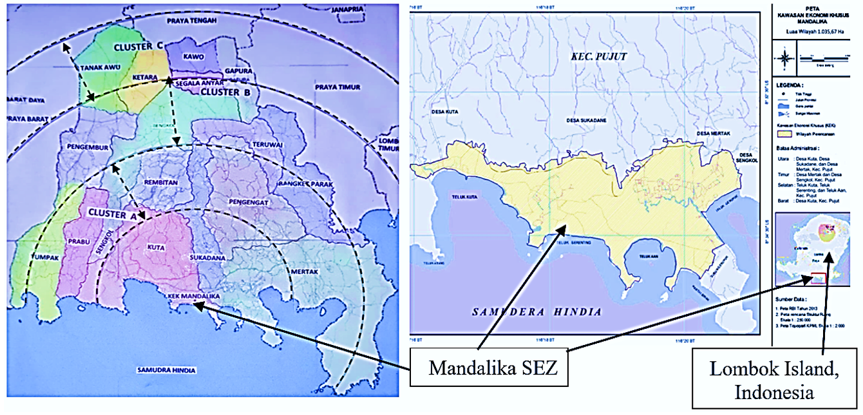
The research location was in the buffer zone of the Mandalika SEZ (Figure 1), and the farmer respondents were determined using cluster sampling, namely cluster A (nearest zone, Sengkol Village area); cluster B (middle zone; Segala Anyar Village and Sengkol Village areas), and cluster C (far zone; Kawo Village and Tanaq Awu Village areas). This study employs an exploratory descriptive design. Primary data were collected through surveys, observations, and in-depth interviews, while secondary data were obtained from a literature study [26].
The primary data collection involved 130 respondents, consisting of 90 dryland farmers (30 respondents per zonation area), 30 community leaders (10 respondents per zonation area), and 10 stakeholders, experts, and institutional representatives. Respondents were selected purposively based on their experience, involvement, and understanding of dryland agricultural systems within each zonation area. The respondents have assessed each sustainability dimension, including ecological, economic, social, technological, and legal-institutional aspects, based on their knowledge, experience, and understanding of local conditions in their respective zonation areas. The assessment was conducted using structured questionnaires with an ordinal scoring system based on the MSA approach.
The assessment results from all respondents were then aggregated using the mode value for each sustainability attribute before being processed in the multidimensional sustainability analysis. The use of mode values was intended to represent the most dominant perception among respondents for each attribute assessment. To improve consistency and reduce subjectivity, the assessment process was supported by field observations, secondary data, and validated by experts. Secondary data were collected from relevant government agencies, including the Agriculture Offices, Statistics Agencies, Food Security Agency, Forest Management Unit, and Environmental Agency of Central Lombok Regency and West Nusa Tenggara Province, Indonesia.
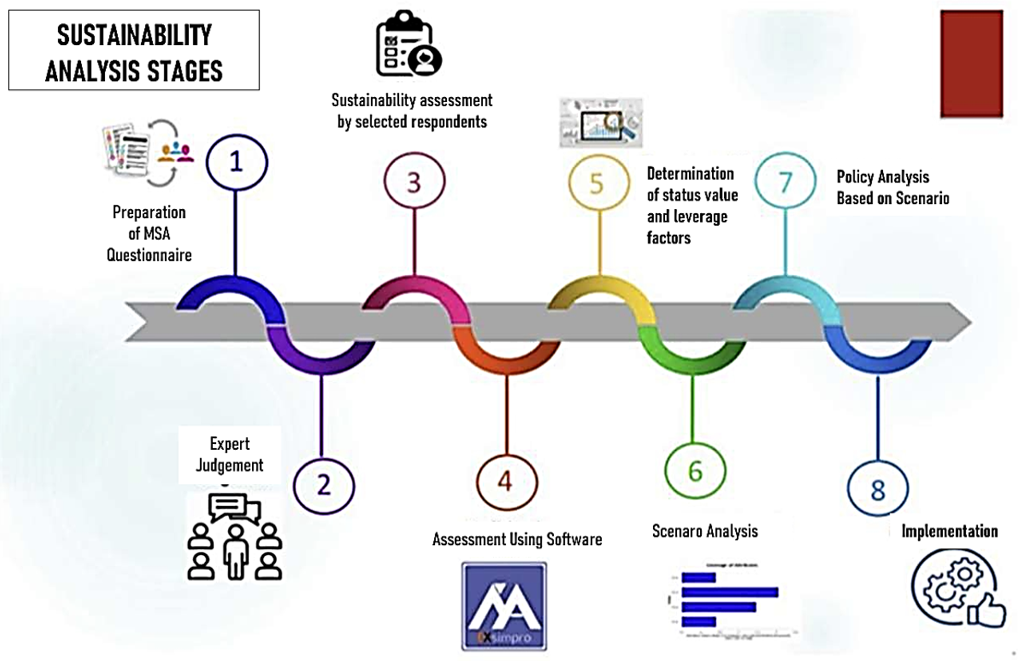
The sustainability analysis of the dryland agricultural system in the buffer area of the Mandalika SEZ uses Multiaspect Sustainability Analysis (MSA) from Exsimpro software, which is an extension of the RAPFISH software [27]. MSA provides an integrated assessment of sustainability by examining ecological, economic, social, technological, legal, and institutional dimensions simultaneously [28, 29]. The stages of Sustainability Analysis using MSA are shown in Figure 2 [27]:
Determination of factors and indicators per aspect based on literature review/research results from experts, which in this study consisted of 45 factors in 5 aspects; with a score of (0) for poor conditions, a score of (1) for less than ideal conditions, a score of (2) for fairly good conditions, and a score of (3) for the best conditions. The final value is based on the mode value to determine the sustainability position relative to the "good" or "bad" category (Table 1). The sustainability status value per aspect is illustrated in the ordinal visualisation. Leverage analysis was conducted to identify sensitive attributes that have the strongest influence on the sustainability index in each dimension [27, 28]. The sensitivity value was determined based on the Root Mean Square (RMS) change in the ordination results when a particular attribute was modified. Higher sensitivity values indicate that an attribute contributes more significantly to changes in the sustainability index and therefore has greater priority for policy intervention and sustainability improvement. In this study, sensitivity values approaching 1 indicate a strong influence on sustainability status, while lower values indicate weaker effects. The leverage analysis results were subsequently used as the basis for determining priority attributes in the development of sustainability improvement scenarios [27].
Table 1. Classification of ecological, economic, social, technological, legal, and institutional
|
Factors |
Class |
|||
|
Bad |
Good |
|||
|
Ecology: |
|
|
||
|
1 |
Slope |
0 |
3 |
|
|
2 |
Pollution from the tourism industry |
0 |
2 |
|
|
3 |
Number of plant species |
0 |
2 |
|
|
4 |
Pest/disease/weed control |
0 |
2 |
|
|
5 |
Crop index |
0 |
3 |
|
|
6 |
Quality of seeds/seedlings |
0 |
3 |
|
|
7 |
Dryland agricultural productivity |
0 |
3 |
|
|
8 |
Water and soil conservation efforts |
0 |
3 |
|
|
9 |
Type of fertiliser used |
0 |
3 |
|
|
10 |
Availability of local organic materials |
0 |
3 |
|
|
Economy: |
|
|
||
|
1 |
Fluctuations in agricultural product prices |
0 |
3 |
|
|
2 |
Dryland farming income |
0 |
2 |
|
|
3 |
Food consumption ratio |
0 |
2 |
|
|
4 |
Diversification of income sources |
0 |
3 |
|
|
5 |
Savings value |
0 |
3 |
|
|
6 |
Dryland farming subsidies |
0 |
3 |
|
|
7 |
Level of involvement of women and youth in farming |
0 |
3 |
|
|
8 |
Post-harvest handling |
0 |
3 |
|
|
9 |
Existence of capital institutions |
0 |
3 |
|
|
10 |
Existence of marketing institutions |
0 |
2 |
|
|
11 |
The role of farmers as suppliers of agricultural products for the Mandalika Special Economic Zone |
0 |
3 |
|
|
12 |
Proportion of dryland agricultural income to total household income |
0 |
2 |
|
|
13 |
Existence of family members' businesses in the Mandalika Special Economic Zone |
0 |
3 |
|
|
Social: |
|
|
||
|
1 |
Land ownership status |
0 |
2 |
|
|
2 |
Culture of cooperation |
0 |
3 |
|
|
3 |
Conflict intensity |
0 |
3 |
|
|
4 |
Frequency of agricultural extension |
0 |
3 |
|
|
5 |
Farmer involvement in village deliberations |
0 |
3 |
|
|
6 |
Involvement of mothers and daughters in extension activities |
0 |
2 |
|
|
7 |
Education of mother/wife |
0 |
3 |
|
|
8 |
Farmer education |
0 |
3 |
|
|
9 |
Access to health services |
0 |
2 |
|
|
10 |
Farming practices on dry land |
0 |
3 |
|
|
Technology: |
|
|
||
|
1 |
Dryland farming system |
0 |
2 |
|
|
2 |
Inorganic fertiliser dosage |
0 |
2 |
|
|
3 |
Suitability of agricultural development programme technology |
0 |
3 |
|
|
4 |
Farmers' belief in the benefits of environmentally friendly agriculture |
0 |
3 |
|
|
5 |
Availability of appropriate technology for dryland farming |
0 |
2 |
|
|
Legal and Institutions: |
|
|
||
|
1 |
Existence of women farmers' groups |
0 |
2 |
|
|
2 |
Existence of farmer groups (farmer leaders) |
0 |
3 |
|
|
3 |
Compliance with social norms |
0 |
2 |
|
|
4 |
Existence of extension services for land use conversion control |
0 |
3 |
|
|
5 |
The existence of formal, environmentally friendly technology extension services |
0 |
3 |
|
|
6 |
Community compliance with state laws |
0 |
3 |
|
|
7 |
Understanding of the General Spatial Plan |
0 |
3 |
|
The sustainability status of dryland farming systems is grouped into four categories, as detailed in Table 2. Development of policy scenarios to ensure sustainability based on sustainability status values and leverage factors, applying an optimistic scenario (focusing on variables with strong leverage) [27]:
Table 2. Classification of sustainability status based on index value
|
Index Value |
Category |
|
0–25 |
Unsustainable |
|
> 25–50 |
Low Sustainable |
|
> 50–75 |
Sustainable |
|
> 75–100 |
Very Sustainable |
3.1 Assessment of the sustainability status of the dryland agricultural system under existing conditions
The average sustainability status of the ecological, economic, social, technological, legal, and institutional aspects of the MSA analysis was 42.09. This means that, overall, the dryland agricultural system in the Mandalika SEZ buffer zone falls into the low sustainability category. Strategic interventions are required in various aspects to ensure the sustainability of the dryland agricultural system.
The social aspect has the Sustainable value, namely 56.60, which is classified as sustainable. This condition reflects strong social capital, such as low conflict among farmers, privately owned land, and a relatively high-quality education, that has the capacity to promote sustainable dryland agricultural development. Farming is the primary source of livelihood for communities in buffer zones, so they refuse to convert agricultural land to other uses. This condition supports the sustainability of the agricultural system. The conversion of agricultural land for economic development results in the unsustainability of that economic development and destroys the agricultural system [36]. Strong land ownership and adequate education enable farmers to adopt new technologies more effectively and increase production [37-39]. Increased production is a special incentive that strengthens farmers' resolve to develop agriculture sustainably.
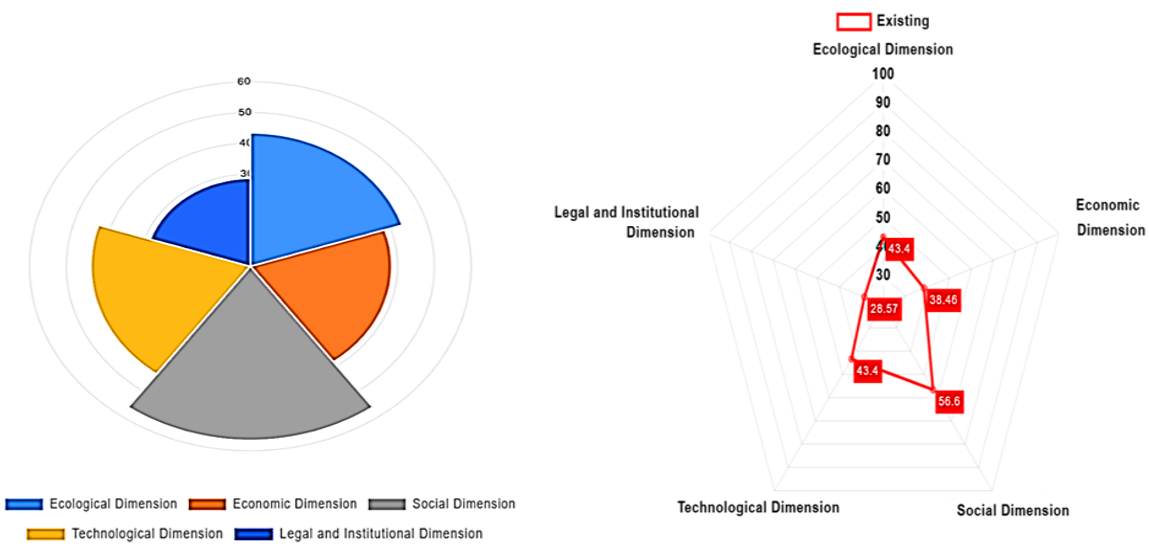
The sustainability analysis results for the economic dimension were 38.46, the ecological dimension was 43.4, and the technological dimension was 43.4; all of which were considered unsustainable. This indicates limitations in the productivity and income of dryland agriculture, farmers' and families' access to businesses within the SEZ, adoption of innovation, and low levels of environmentally friendly agricultural practices. Meanwhile, the legal and institutional dimension is the weakest, with a score of 28.57. This is mainly due to the weak role of women's groups, the lack of education on controlling agricultural land conversion, the lack of environmentally friendly technology, a weak understanding of spatial planning, and the ineffective role of farmer groups. Details of the sustainability level of the dryland farming system in the Mandalika SEZ buffer zone are presented in Table 3.
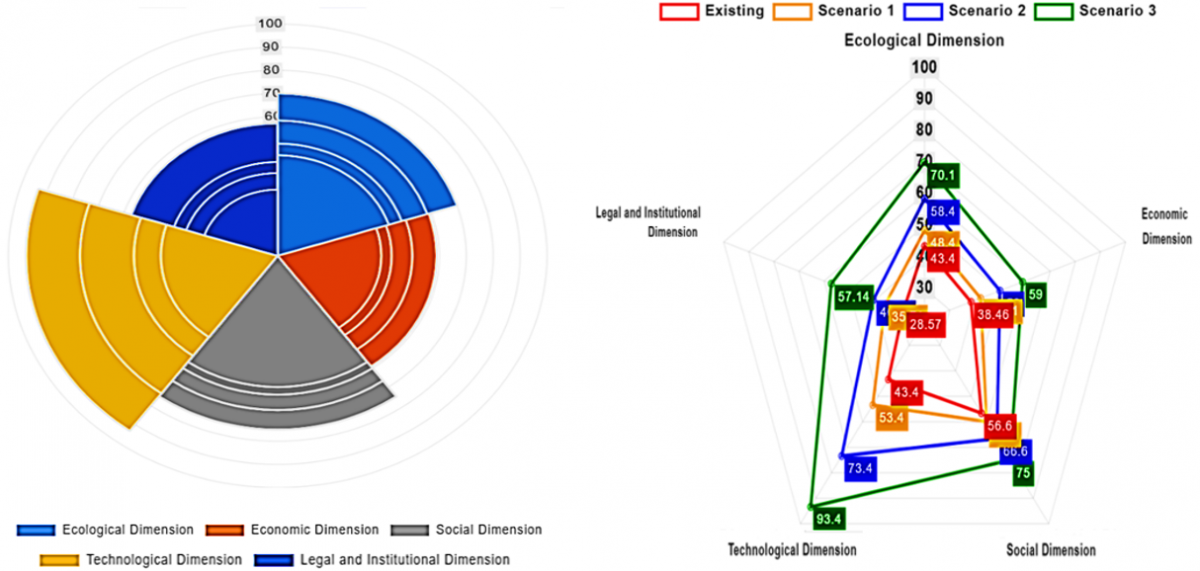
Visualisation of the existing sustainability conditions of the dryland farming system in the Mandalika SEZ buffer zone in the form of a polar diagram and a flying diagram in Figure 3.
Table 3. Sustainability status of dryland agricultural systems in the Mandalika SEZ buffer zone, Mandalika SEZ, Indonesia
|
No. |
Dimension |
Existing |
|
1 |
Ecological |
43.40 |
|
2 |
Economic |
38.46 |
|
3 |
Social |
56.60 |
|
4 |
Technological |
43.40 |
|
5 |
Legal and Institutional |
28.57 |
|
|
Total Average |
42.09 |
|
|
Sustainability Status |
Low Sustainability |
3.2 Sensitivity analysis (Leverage analysis)
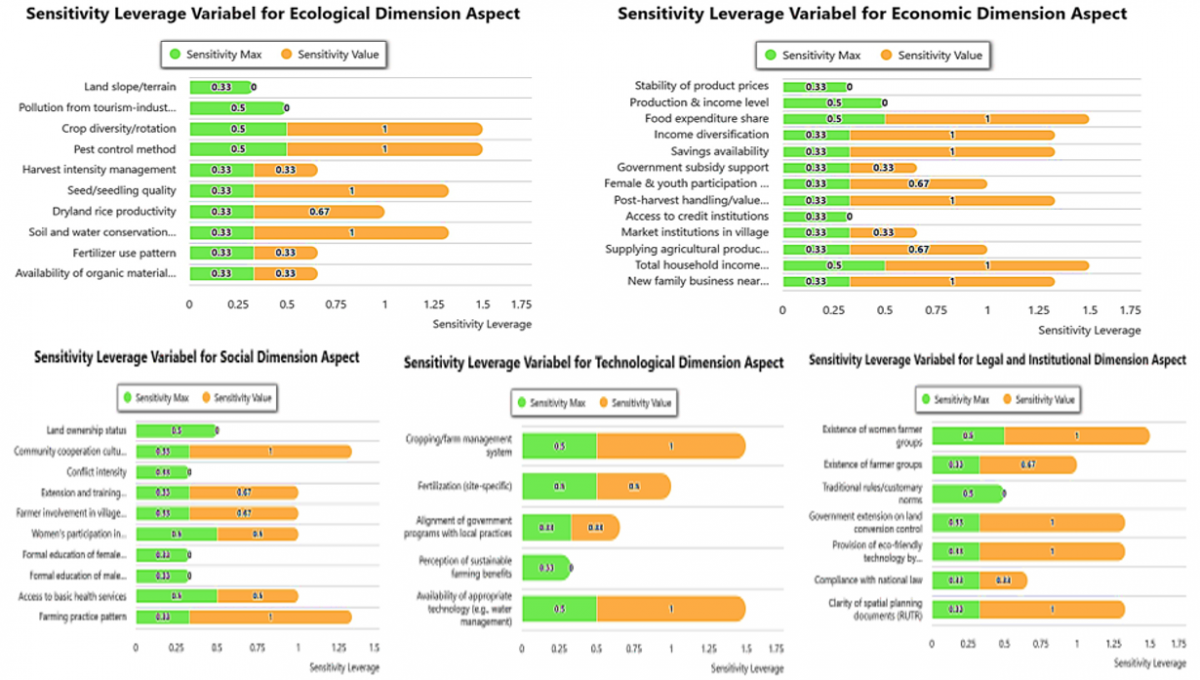
Sensitivity analysis (leverage analysis) is used to identify the factors that leverage the sustainability of each aspect and the overall status in the Mandalika SEZ buffer zone. Details of the sensitivity analysis per dimension are shown in Figure 4.
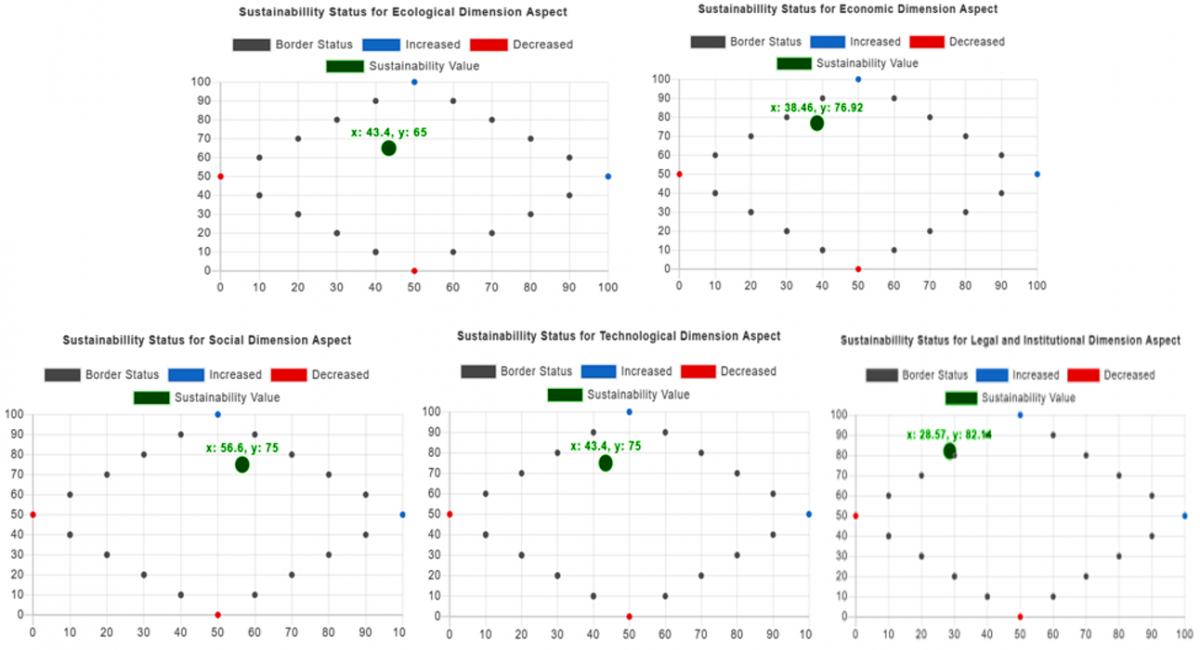
Determination of conditions based on ordination illustrates the status value in each analysed aspect and its future value [27]. In Figure 5, the x-axis represents the current sustainability index values for the five dimensions or aspects that determine the sustainability of dryland farming systems, while the y-axis represents the projected future sustainability values. The future values indicate potential changes in sustainability performance if current management conditions continue without major intervention. Future conditions were assessed using five categories: greatly increasing, increasing, constant, decreasing, and greatly decreasing. Higher projected changes indicate greater uncertainty; therefore, the uncertainty level was maintained within 10% of the ordination boundary values [27].
3.2.1 Ecological dimension
Leverage analysis of the ecological dimension indicates that the main drivers of sustainability are the number of plant species per year and chemical control of plant pests/diseases. These factors have the highest sensitivity, with a maximum sensitivity of 0.5 and a sensitivity of 1, resulting in the highest combined value and making them the most sensitive factors affecting ecological sustainability. These factors are the main drivers (driving factors) for improving ecological sustainability. Under current conditions, these factors need to be improved to achieve optimal sustainability of the dryland farming system.
Land slope and pollution from the tourism industry's waste have the same maximum sensitivity value as the driving factors (number of plant species per year and chemical pest/disease control), but their sensitivity values are zero. This means that these factors are relatively good and are not a priority for improvement. The results show that the Mandalika SEZ buffer zone is not contaminated by waste from the tourism sector. In contrast, the establishment of SEZs in China to accelerate coastal economic growth has accelerated the degradation of coastal ecosystems since the 1950s [40]. At the same time, in Myanmar, it has sacrificed valuable resources, including mangrove forests, forests, and agricultural land [7]. A study of the Pearl River Delta SEZ also revealed that rapid economic growth has caused severe environmental degradation in the region [41].
The ecological sustainability value in Figure 5 (x-axis) is 43.3 and is included in group III as an urgent, undesirable condition because it is low. However, it may be improved, as the y-axis value is 65 (above 50, which is considered good). Therefore, its management needs to be prioritised.
3.2.2 Economic dimension
In the economic dimension, the MSA analysis results show that the proportion of household food consumption to total expenditure and to total household income is the most sensitive factor. This acts as a lever for sustainability. The maximum sensitivity for these variables is 0.5, while the maximum sensitivity is 1. This means these factors have great potential to improve the economic sustainability by improving current conditions.
The two highly sensitive variables that determine the sustainability of dryland farming systems are closely related to agricultural production and income. However, the sensitivity values for production and revenue are zero, which means that the actual conditions of these factors are already relatively good and do not need to be prioritised for improvement. Priority enhancements to the lever variables are achieved by reducing the share of food expenditure in total household expenditure for farmers and by increasing the income of farmer households.
Improvements to these lever variables are related to efforts to improve other variables with a maximum sensitivity value slightly lower than 0.5, but a sensitivity value of 1.
The variables of income source diversification, the presence of savings, and the presence of new businesses run by family members within the Mandalika SEZ have maximum sensitivity values of 0.35 and 1, respectively, ranking them second in priority for the sustainability of the agricultural system in the Mandalika SEZ buffer zone. Non-agricultural income diversification in Ghana has resulted in improved welfare for farming households, increased food consumption among less prosperous farming households, and increased adoption of organically degraded dryland rehabilitation technology [42]. This has improved land productivity and agricultural income. Income diversification is regarded as a risk-mitigation and opportunity-capturing strategy employed by households to enhance welfare [43]. It is thus considered one way out of the poverty trap.
Diversification into various businesses based on agricultural products, including trade and agro-industry, increases the income of farming households. The availability of agricultural processing industries can increase product added value and its development through two approaches [44]: private-sector partnerships and the provision of basic training and technology to farmers. With increasing household income, the food expenditure share decreases. Based on the study’s results, the food share of consumption expenditure exceeds 60% for most respondents. If food expenditure exceeds 60% [34], the family is not prosperous; a small proportion in the 50-60% range indicates it is pre-prosperous. The smaller the proportion of food expenditure, the better the welfare of farmers and the better their capital capacity for farming on dry land.
The existence of savings and new businesses among farmer family members within the Mandalika SEZ will increase farmers' household income and capitalisation capacity. Abagna [45] revealed that the development of SEZs in Ethiopia enhanced local economic activity. Violita and Khoirunurrofik [9] showed that in Indonesia, tourism-based SEZs contributed to regional economic development more rapidly than manufacturing SEZs. However, the Mandalika SEZ, as a tourism SEZ, has not had a significant impact on the economic activity of the surrounding community.
The variables of agricultural product price stability, production levels, and the role of capital institutions have a maximum sensitivity value of 0.5. Still, their sensitivity value is zero, so they are not categorised as drivers because they are already in good condition. The economic sustainability status in Figure 5 (x-axis) is 36.46, which falls in group III and is considered an undesirable condition because it has a low value (less than 50). However, with more prioritised handling, it is likely to improve because the Y-axis value is 76.92 (classified as good).
3.2.3 Social dimension
The social dimension is the most influential factor for the sustainability of the dryland farming system in the Mandalika SEZ buffer zone. The main driving factors are the community's culture of cooperation and farming practices. The two factors have a maximum sensitivity value of 0.33. A sensitivity value of 1 suggests that they are key leverage factors for the sustainability of the social dimension and require priority improvement. The culture of cooperation in agricultural activities in the buffer zone is generally no longer practised. However, this activity helps overcome labour shortages and accelerate the completion of farming activities, especially during early planting, when the rainy season begins. A sense of unity and local identity/social attachment can enhance a culture of cooperation [46]. To that end, the government needs to involve farmers, particularly women farmers, through farmer groups in the implementation of farming activities. Curry et al. [47] found that strong social ties in traditional agricultural systems can create resistance among farmers to externally promoted technologies and innovations. Farmers consider these innovations to be disruptive to the underlying social and moral infrastructure. Furthermore, revealed the unsustainability of social development in China’s Pearl River Delta Economic Zone, driven by rapid urbanization. This has led to irrational exploitation of land resources, degrading the region’s ecological services and ultimately constraining social development [41].
Land ownership status, conflict intensity, and the educational levels of farmers' mothers and fathers are relatively good. Still, they lack sensitivity and do not determine the sustainability of the agricultural system. The study's results reveal that farmers generally own their land. Traditionally, they form farmer groups based on kinship, so social conflict is low. Conflict is an inherent element of group dynamics and can enhance the socio-ecological sustainability of agricultural systems under cooperative arrangements [48]. The sustainability of the social aspect in Figure 5 (x-axis) is 56.6. It is included in group I as a good condition, which is highly desirable because it has a good value (more than 50). There is a possibility of further improvement, as the Y-axis value is greater than 50 (75), so it needs to be maintained.
3.2.4 Technological dimension
Leverage analysis of the technology dimension identifies crop planting/diversification systems, dryland farming management, and the availability of appropriate technology as the main factors with the highest sensitivity values. These factors have a combination of maximum sensitivity of 0.5 and a sensitivity value of 1, indicating that although they have great potential to influence sustainability, the actual conditions still need improvement. Crop diversification needs to be carried out for a sustainable agricultural system because diversification helps enhance climate resilience and land conversion [49, 50]. Agricultural yields show that dryland farming in the Mandalika SEZ buffer zone generally has a biannual harvest, with a tradition of prioritising rice cultivation in the first planting season (rainy season) and corn or tobacco in the second planting season. Rice is prioritised to ensure the family's staple food supply. The application of Indigenous peoples’ socioeconomic norms and practices continues to influence land tenure arrangements, farm investment decisions, and subsistence and market-oriented crop production [47]. Furthermore, Amare and Darr [51] revealed that adopting agricultural innovations contributes significantly to crop yield. Still, the level of adoption of externally promoted technology remains low, and adoption remains sluggish among smallholders in developing countries. The availability of appropriate technology also plays a role as a lever for sustainability, especially in rainwater management. Community-based conservation funds are managed by Village-owned Enterprises, with local non-governmental organizations (NGOs) providing oversight [52]. The results of the study show that, during the rainy season, a small number of farmers harvest rainwater by creating small reservoirs with areas of 1–3 acres. The benefits are for irrigating land in the second planting season and, if possible, the third planting season. The development of reservoirs is a form of local wisdom, but it is only practised by a small number of farmers. Therefore, increasing farmers' capacity and strengthening environmental regulations are key to maintaining the sustainability of this sector. There is a need for stronger policy implementation, including greater cooperation with village-owned enterprises and the private sector, as well as improved educational programmes to help farmers adopt sustainable agricultural technologies.
The sustainability value of the technological aspect in Figure 5 (x-axis) is 43.3 and is included in group III as an unexpectedly important condition. Efforts to improve the value are likely to be successful because the Y-axis value is 76 (classified as good). Therefore, this issue needs to be addressed first.
3.2.5 Institutional and legal dimension
In the institutional and legal dimension, the analysis shows that the presence of women's farmer groups is the primary driver of sustainability. This factor combines the maximum sensitivity of 0.5 with a sensitivity of 1, indicating that institutional sustainability still needs to be strengthened, even though its influence on the system is substantial. Farmers with their groups are more likely to adopt technology, and their empowerment can increase the sustainability of agricultural systems [53-56].
An important factor in improving agricultural sustainability is education about the threat of agricultural land conversion and clarity in spatial planning in the Mandalika SEZ buffer zone. This prevents agricultural land conversion. Extension services play a key role in providing information on agricultural land conversion for non-agricultural uses [47]. The government needs to offer incentives to those who choose to continue farming to prevent land conversion [57]. The most significant impact of land conversion is an increase in crime and a threat to farmers' household income, making development unsustainable [36].
In addition, the availability of environmentally friendly technology for dryland farming supports agro-ecological sustainability in the Mandalika SEZ buffer area and strengthens climate-resilient food production in arid areas via organic cultivation methods [58], including the use of organic fertilisers, botanical pesticides, efficient irrigation systems, and precision farming. The aim is to increase productivity while reducing dependence on synthetic chemicals and maintaining soil fertility, and environmental quality [59-61]. Sustainable agriculture in Indonesia combines traditional practices and modern technology to increase productivity while protecting the environment [62]. Core sustainable practices comprise diversified cropping systems, agroforestry integration, organic nutrient management, biological pest control, optimized irrigation techniques, and precision agriculture using sensor technologies. However, Gamage et al. [63] revealed that awareness of technology is uncommon in Asia, especially among small-scale farmers. As a result, excessive use and waste of agricultural resources have significant adverse effects, creating significant obstacles to sustainable agricultural practices in the region. Variables such as customary rules/practices have a high Maximum Sensitivity but a Sensitivity Value of zero, indicating that they are already in good condition and not a priority for improvement.
The sustainability status value for the technology aspect in Figure 5 (x-axis) is 28.57 and is included in group III as an unexpectedly important condition. Efforts to improve the value are likely to be successful because the Y-axis value is 82 (classified as good). Therefore, this needs to be addressed first.
3.3 Determination of scenarios for the sustainability of dryland agricultural systems
The sustainability level of the existing dryland agricultural system within the Mandalika SEZ buffer area, derived from the overall MSA analysis, is in the "Low Sustainable" category with an average value of 42.09. At this level of sustainability, the social dimension score is 56.6; the economic dimension is 38.46; the ecological dimension is 43.4, and the technological dimension is 43.4; while the legal and institutional dimension is the weakest, with a score of 28.57. In general, these results illustrate that, for the agricultural system to be sustainable, it needs to be strengthened through institutional capacity-building, the application of appropriate technologies, and synergy among government policies, research institutions, and farming communities to encourage a transition to a more adaptive and sustainable agricultural system.
Derived from MSA analysis results, three sustainability improvement scenarios were developed to project potential increases in the sustainability level of dryland agricultural systems. The existing condition is classified as “Low Sustainable,” with an average score of 42.09, indicating that the system remains vulnerable from ecological, economic, technological, and institutional perspectives. The scenarios were constructed through gradual improvements in sensitive indicators identified in the leverage analysis, particularly those related to ecological management, technology adoption, economic capacity, social participation, and institutional support. The scenario development did not modify the weighting structure of the MSA model; instead, it focused on adjusting the performance values of selected sensitive attributes based on different levels of intervention intensity and policy assumptions.
Scenario 1 represents moderate improvements under existing policy and management conditions through limited interventions, such as strengthening farmer capacity, agricultural extension services, and the adoption of simple cultivation technologies. Scenario 2 reflects intermediate improvements through stronger technological and institutional interventions, including improved land and water management, better access to agricultural technology, strengthening farmer organizations, and increased market and financial support. Scenario 3 represents the most optimistic condition through integrated and intensive interventions across all sustainability dimensions, including adaptive technological innovation, institutional strengthening, sustainable environmental management, infrastructure improvement, and stronger collaboration among government agencies, research institutions, and farming communities. The sustainability values for Scenarios 1, 2, and 3 are presented in Table 4. Figure 6 illustrates the sustainability scenarios for dryland agricultural systems in the Mandalika SEZ buffer zone.
Table 4. Sustainability values under Scenario 1–3
|
No. |
Aspect |
Existing |
Scenario 1 |
Scenario 2 |
Scenario 3 |
|
1 |
Ecological Dimension |
43.40 |
48.40 |
58.40 |
70.10 |
|
2 |
Economic Dimension |
38.46 |
42.31 |
50.00 |
59.00 |
|
3 |
Social Dimension |
56.60 |
59.90 |
66.60 |
75.00 |
|
4 |
Technology Dimension |
43.40 |
53.40 |
73.40 |
93.40 |
|
5 |
Legal and Institutional Dimensions |
28.57 |
28.57 |
40.43 |
57.14 |
|
|
Average Total |
42.09 |
46.52 |
57.77 |
70.93 |
|
|
Sustainability Status |
Low Sustainable |
Low Sustainable |
Sustainable |
Sustainable |
In Scenario 1, the average sustainability score increased to 46.52, but the dryland farming system in the Mandalika SEZ buffer zone remained in the Low Sustainable category. This result indicates that the initial policy package, including extension services, improved input efficiency, and water conservation, was not sufficient to significantly improve system sustainability. In Scenario 2, the average score increased to 57.77, changing the status to moderately sustainable. This improvement shows that a more integrated policy package, such as environmentally friendly technologies, farming diversification, and stronger social and institutional participation, began to effectively improve the balance among sustainability dimensions. Scenario 3 achieved the highest average score of 70.93, with all dimensions categorized as sustainable. This finding demonstrates that a combination of adaptive technological innovation, agroecological practices, institutional strengthening, and community empowerment provided the most optimal impact on dryland farming sustainability. The greatest improvements occurred in the technological and ecological dimensions, emphasizing the importance of innovation and environmental management in supporting sustainability.
Based on Table 4, the priority scenario is Scenario 3 because it has the highest score in all aspects, indicating the most optimal sustainability performance. Scenario 2 is in the middle position and is already sustainable, while Scenario 1 serves as the baseline with the lowest score. Table 5 compares the priority scenario values with the existing conditions for each aspect. The most significant increase occurred in the technology dimension (ΔS3S of 50), followed by legal and institutions (28.57) and ecology (26.7), indicating that strengthening the technological and institutional aspects is key to improving sustainability. The average change ratio between scenarios (ΔS3S/ΔS1S) of 5.25 means that each increase in intervention has a multiplicative impact on the system's sustainability. Thus, the results of the Multiaspect Sustainable Analysis (MSA) of this scenario show that a combination of innovative technological policies, strong institutional governance, and adaptive ecological practices can transform dryland agricultural systems from low sustainability to overall sustainability.
Table 5. Comparison of priority scenario values and existing conditions per aspect
|
Aspect |
ΔS1S |
ΔS3S |
ΔS3S/ΔS1S |
|
Ecological Dimension |
5.00 |
26.70 |
5.34 |
|
Economic Dimension |
3.85 |
20.54 |
5.34 |
|
Social Dimension |
3.30 |
18.40 |
5.58 |
|
Technological Dimension |
10.00 |
50.00 |
5.00 |
|
Legal and Institutional Dimension |
0.00 |
28.57 |
5.00 |
|
Average Priority Scenarios |
|
2.41 |
5.25 |
Scenario 3 is a priority scenario that can serve as the basis for determining sustainable agricultural development policies in the Mandalika SEZ buffer zone. The recommendations proposed based on the results of the priority scenario to improve the 11 indicators that determine the sustainability of the agricultural system include increasing crop diversification by adding types of crops other than carbohydrate producers, developing organic pest/disease/weed control and other harmful substances, developing simple technology for rainwater harvesting, increasing the use of seeds/plant seedlings that are adaptable to the local agroclimate, increasing productive economic activities based on dryland agricultural products such as agro-industry development, efforts to revive the culture of cooperation in the community and in farming, developing low synthetic input agriculture, developing mixed farming, empowering women, providing extension services for land use change control, and strengthening institutions for agricultural development in the Mandalika SEZ buffer zone.
The study found that the sustainability status of the dryland agricultural system in the Mandalika SEZ buffer zone is low, with a value of 42.09. The Sustainable score was in the social aspect, at 56.6, which is classified as sustainable; In contrast, the other aspects are classified as Low Sustainable, with sustainability scores of 38.46 for the economic aspect, 43.4 for the ecological and technological aspects, and 28.57 for the legal and institutional aspect.
The recommendation based on the results of scenario 3 (priority scenario) is the need to develop policies based on this scenario to improve 11 sustainability indicators, including increasing crop diversification, controlling pests/diseases/weeds and other harmful substances organically, developing simple technology for rainwater harvesting, increased use of seeds/seedlings that are adaptable to the local agroclimate, increased productive economic activities based on dryland agricultural products such as agro-industry development, enhancing a culture of cooperation, developing low synthetic input agriculture, developing mixed farming, empowering women, providing extension services for land use control, and strengthening institutions for agricultural development in the Mandalika SEZ buffer zone.
This work was supported by the University of Mataram, as well as farmers, community leaders, and village officials in the Mandalika SEZ buffer zone, especially in Sengkol Village, Segala Anyar Village, Kawo Village, and Tanaq Awu Village, as well as stakeholders from the NTB and Central Lombok regional government agencies, and experts who have contributed to this research.
[1] UNCTAD. (2019). World investment report 2019: Special economic zones. https://unctad.org/publication/world-investment-report-2019.
[2] National Council for Special Economic Zones of Indonesia. KEK Mandalika. https://kek.go.id/id/investment/distribution/kek-mandalika, accessed on Jan. 14, 2026.
[3] Central Lombok Regency Government. (2021). Legal product details: Regent regulation number 105 of 2021 concerning the detailed spatial plan for the Mandalika special economic zone for 2021-2041. https://jdih.lomboktengahkab.go.id/home/detail-produk-hukum/185.
[4] Adam, L. (2019). Promoting the Indonesian special economic zones for tourism: Lessons from Mandalika and Tanjung Kelayang. Economics and Finance in Indonesia, 65(1): 3. https://doi.org/10.47291/efi.v65i1.609
[5] Drianawati, S. (2023). Diplomasi MotoGP Mandalika dalam meningkatkan pariwisata terhadap nation branding Indonesia. Jurnal Perceka, 1(1): 44-55.
[6] Pratama, M.A.B., Harahap, A.M. (2023). Indonesian culture diplomacy through MotoGP in the KEK Mandalika international circuit. Mediasi Journal of International Relations, 6(2): 49-71.
[7] Aung, T.S., Overland, I., Vakulchuk, R., Xie, Y.H. (2022). The environmental burdens of special economic zones on the coastal and marine environment: A remote sensing assessment in Myanmar. Remote Sensing Applications: Society and Environment, 28: 100809. https://doi.org/10.1016/j.rsase.2022.100809
[8] Danja, I.I., Wang, X.P. (2024). Matching comparative advantages to special economic zones for sustainable industrialization. Heliyon, 10(14): e34411. https://doi.org/10.1016/j.heliyon.2024.e34411
[9] Violita, R., Khoirunurrofik, K. (2025). The role of special economic zones (SEZs) in regional economic growth: A spatial externality analysis. Jurnal Ekonomi dan Pembangunan Indonesia, 25(1): 95-111. https://doi.org/10.7454/jepi.v25i1.1483
[10] DPMPTSP Provinsi Nusa Tenggara Barat. (2020). KEK Mandalika. https://investasi-perizinan.ntbprov.go.id/2020/10/21/kek-mandalika-2/.
[11] Heriyanto, Basuki, P., Diswandi. (2021). The economic impacts of the development of the Mandalika exclusive economic zone in Central Lombok Regency. American Journal of Humanities and Social Sciences Research (AJHSSR), 5(2): 427-441.
[12] Ayu, C., Wuryantoro, W., Sari, N.M.W. (2024). Economic performance of food crop farms and its contribution to the welfare of farmers in villages around the mandalika special economic area, Lombok Central District. Jurnal Ilmu Pertanian Indonesia, 29(4): 633-641. https://doi.org/10.18343/jipi.29.4.633
[13] Danareksa Research Institute. (2023). Global special economic zones: The role of special economic zones and industrial zones in the indonesian economy. PT Danareksa (Persero). https://www.danareksa.co.id/publikasi/dri-pulse-check-peran-kawasan-industri-dan-kawasan-ekonomi-khusus.
[14] Sa'di, F.A., Salahudin. (2024). Analisis perencanaan inovasi pemerintahan desa dalam pengembangan pariwisata di desa tapak Kabupaten Magetan. JPkM Jurnal Pengabdian kepada Masyarakat, 1(2): 59-71. https://doi.org/10.70214/dt417933
[15] Aryani, D.N., Andarini, D., Idris, H., et al. (2024). Hubungan status stunting dengan faktor ekonomi: Literature riview. Jurnal Lentera Kesehatan Masyarakat, 3(1): 45-52. https://doi.org/10.69883/72jst350
[16] Yudha, V.P., Saputra, I.A., Anggani, N.L. (2024). Spatiotemporal analysis of land surface temperature changes by vegetation density in central lombok regency. IOP Conference Series: Earth and Environmental Science, 1357: 012007. https://doi.org/10.1088/1755-1315/1357/1/012007
[17] Widianto, Y.W. (2021). Kawasan ekonomi khusus dan pertumbuhan ekonomi daerah: Bukti empiris kek sei mangkei. Jurnal Anggaran Dan Keuangan Negara Indonesia (Akurasi), 3(2): 1-15. https://doi.org/10.33827/akurasi2021.vol3.iss2.art130
[18] Suryade, L., Fauzi, A., Achsani, N.A., Anggraini, E. (2022). Variabel-variabel kunci dalam pengembangan kawasan ekonomi khusus pariwisata (KEK) berkelanjutan di Mandalika, Lombok Tengah, Indonesia. Juenal Kepariwisataan, 6(1): 16-30. https://doi.org/10.34013/jk.v6i1.327
[19] Kim, Y.R., Williams, A.M., Park, S., Chen, J.L. (2021). Spatial spillovers of agglomeration economies and productivity in the tourism industry: The case of the UK. Tourism Management, 82: 104201. https://doi.org/10.1016/j.tourman.2020.104201
[20] Hizmi, S., Rizkiyah, P., Herman, Royanow, A.F., Aswad, M., Nawawi, N. (2023). Human resources capacity building at the Mandalika special economic in supporting the MOTOGP event. MITRA: Jurnal Pemberdayaan Masyarakat, 7(1): 62-73. https://doi.org/10.25170/mitra.v7i1.4160
[21] Ayu, C., Wuryantoro, W., Nursan, M. (2021). Analisis tingkat potensi berswasembada pangan Kabupaten Lombok Tengah Provinsi NTB. Media Agribisnis, 5(2): 83-94. https://doi.org/10.35326/agribisnis.v5i2.1622
[22] Ayu, C., Wuryantoro, W. (2023). Perkembangan kemampuan berswasembada pangan Kabupaten Lombok Tengah. Agroteksos Agronomi Teknologi dan Sosial Ekonomi Pertanian, 33(2): 690-703. https://doi.org/10.29303/agroteksos.v33i2.967
[23] Sadikin, P.N., Mulatsih, S., Arifin, H.S., Noorachmat, B.P. (2020). Analysis of sustainability status of ecotourism in Mount Rinjani National Park. Jurnal Analisis Kebijakan Kehutanan, 17(1): 33-51. https://doi.org/10.20886/jakk.2020.17.1.33-51
[24] Mucharam, I., Rustiadi, E., Fauzi, A., Harianto. (2022). Signifikansi pengembangan indikator pertanian berkelanjutan untuk mengevaluasi kinerja pembangunan pertanian Indonesia. Rumusan Kajian Strategis Bidang Pertanian Dan Lingkungan, 9(2): 61-81. https://doi.org/10.29244/jkebijakan.v9i2.28038
[25] Arifin, Z., Suparwata, D.O., Rijal, S., Ramlan, W. (2023). Revitalisasi ekonomi pedesaan melalui pertanian berkelanjutan dan agroekologi. Jurnal Multidisiplin West Science, 2(9): 761-769. https://doi.org/10.58812/jmws.v2i09.627
[26] Nazir, M. (2014). Metode Penelitian (Cet. 10). Ghalia Indonesia.
[27] Firmansyah, I. (2022). Multiaspect sustainability analysis. Expert Simulation Program Article, (1): 1-14. https://exsimpro.com/wp-content/uploads/2025/02/Multiaspect-Sustainability-Analisys-Exsimpro-Article-2022.pdf.
[28] Santoso, A.B., Manurung, E.D., Siagian, D.R., Purba, H.F.P., Sembiring, P. (2023). Sustainability study of horticultural development in Mandailing Natal District with Rapfish-MDS analysis. Agro Bali Agricultural Journal, 6(2): 286-302. https://doi.org/10.37637/ab.v6i2.1170
[29] Widiatmaka, Ambarwulan, W., Firmansyah, I., Munibah, K., Santoso, P.B.K., Sudarsono. (2014). Land suitability and dynamic system modelling to define priority areas of soybean plantation in paddy fields in Karawang, West Java. Agrivita Journal of Agricultural Science, 36(3): 235-248. https://doi.org/10.17503/agrivita-2014-36-3-235-248
[30] Tangge, N.A., Hartati, T.M., Idris, S.A., Nengkeula, D. (2025). Arahan penggunaan lahan berbasis kemampuan lahan menggunakan metode land classification and landuse planning. Jurnal Penelitian Pendidikan Geografi, 10(1): 117-128. https://doi.org/10.36709/jppg.v10i1.404
[31] BPS NTB. (2025). Harvested area, yield, and production of paddy by regency/municipality in Nusa Tenggara Barat Province, 2025. https://ntb.bps.go.id/en/statistics-table/3/WmpaNk1YbGFjR0pOUjBKYWFIQlBSU3MwVHpOVWR6MDkjMw%3D%3D/luas-panen-produktivitas-dan-produksi-padi-menurut-kabupaten-kota-di-provinsi-nusa-tenggara-barat.html.
[32] BPS Kabupaten Lombok Tengah. Harga-Harga Tabel Statistik. BPS. https://lomboktengahkab.bps.go.id/id/statistics-table?subject=536.
[33] Sumodiningrat, G., Santosa, B., Maiwan, M. (1999). Kemiskinan: Teori, fakta, dan kebijakan.
[34] Ilham, N., Sinaga, B.M. (2007). Penggunaan pangsa pengeluaran pangan sebagai indikator komposit ketahanan pangan. SOCA: Jurnal Sosial Ekonomi Pertanian, 7(3).
[35] Firmansyah, I., Widiatmaka, Pramudya, B., Budiharsono, S. (2016). Sustainability status of rice fields in the rice production center of Citarum Watershed. Advances in Agriculture & Botanics, 8(1): 13-25.
[36] Zhang, Z.H., Ghazali, S., Miceikienė, A., et al. (2023). Socio-economic impacts of agricultural land conversion: A meta-analysis. Land Use Policy, 132: 106831. https://doi.org/10.1016/j.landusepol.2023.106831
[37] Bukchin, S., Kerret, D. (2020). Character strengths and sustainable technology adoption by smallholder farmers. Heliyon, 6(8): e04694. https://doi.org/10.1016/j.heliyon.2020.e04694
[38] Tulu, D., Aleme, M., Mengistu, G., Bogale, A., Bezabeh, A., Mendesil, E. (2020). Improved beekeeping technology in Southwestern Ethiopia: Focus on beekeepers' perception, adoption rate, and adoption determinants. Cogent Food & Agriculture, 6(1): 1814070. https://doi.org/10.1080/23311932.2020.1814070
[39] Ngango, J., Musabanganji, E., Maniriho, A., Nkikabahizi, F., Mukamuhire, A. (2023). Examining the adoption of agroforestry in Southern Rwanda: A double hurdle approach. Forest Science and Technology, 19(4): 260-267. https://doi.org/10.1080/21580103.2023.2254317
[40] He, Q., Bertness, M.D., Bruno, J.F., et al. (2014). Economic development and coastal ecosystem change in China. Scientific Reports, 4: 5995. https://doi.org/10.1038/srep05995
[41] Gao, L., Ma, C.M., Wang, Q.X., Zhou, A.G. (2019). Sustainable use zoning of land resources considering ecological and geological problems in Pearl River Delta Economic Zone, China. Scientific Reports, 9: 16052. https://doi.org/10.1038/s41598-019-52355-7
[42] Abbeam, G.D., Dagunga, G., Ehiakpor, D.S. (2020). Rural non-farm income diversification: Implications on smallholder farmers' welfare and agricultural technology adoption in Ghana. Heliyon, 6(11): e05393. https://doi.org/10.1016/j.heliyon.2020.e05393
[43] Ellis, F. (2010). Strategic dimensions of rural poverty reduction in sub-Saharan Africa. In The Comparative Political Economy of Development.
[44] Muflikh, Y.N., Smith, C., Brown, C., Aziz, A.A. (2021). Analysing price volatility in agricultural value chains using systems thinking: A case study of the Indonesian chilli value chain. Agricultural Systems, 192: 103179. https://doi.org/10.1016/j.agsy.2021.103179
[45] Abagna, M.A. (2025). Special economic zones and local economic activities in Ethiopia. Review of World Economics. https://doi.org/10.1007/s10290-025-00598-0
[46] Hoogesteger, J., Bolding, A., Sanchis-Ibor, C., et al. (2023). Communality in farmer-managed irrigation systems: Insights from Spain, Ecuador, Cambodia and Mozambique. Agricultural Systems, 204: 103552. https://doi.org/10.1016/j.agsy.2022.103552
[47] Curry, G.N., Nake, S., Koczberski, G., et al. (2021). Disruptive innovation in agriculture: Socio-cultural factors in technology adoption in the developing world. Journal of Rural Studies, 88: 422-431. https://doi.org/10.1016/j.jrurstud.2021.07.022
[48] Rasekhi, S., Sharifian, A., Shahraki, M., Silvano, R.A.M. (2023). Indigenous fishers' knowledge on fish behavior, fishing practices and climatic conditions in a conservation priority coastal ecosystem in the Caspian Sea. Reviews in Fish Biology and Fisheries, 33: 629-648. https://doi.org/10.1007/s11160-022-09746-3
[49] Harini, R.H., Ariani, R.D., Yulianda, Y., Widyantari, R. (2022). Strategi adaptasi ketahanan pangan terhadap perubahan iklim di pinggiran Kota Yogyakarta. Majalah Geografi Indonesia, 36(1): 1. https://doi.org/10.22146/mgi.60245
[50] Sidiq, R.S.S., Sugiyanto, S., Sinaga, E.E., et al. (2023). Penguatan ketahanan pangan melalui budidaya akuaponik di Desa Rimbo Panjang Kabupaten Kampar. Reswara: Jurnal Pengabdian Kepada Masyarakat, 4(1): 445-451. https://doi.org/10.46576/rjpkm.v4i1.2476
[51] Amare, D., Darr, D. (2020). Agroforestry adoption as a systems concept: A review. Forest Policy and Economics, 120: 102299. https://doi.org/10.1016/j.forpol.2020.102299
[52] Sukardi, L., Yakin, A., Amiruddin. (2024). Self-financing strategy for water conservation through payment of environmental services for domestic water users in the upper areas of renggung watershed. International Journal of Environmental Impacts, 7(1): 75-80. https://doi.org/10.18280/ijei.070109
[53] Iyabano, A., Klerkx, L., Faure, G., Toillier, A. (2022). Farmers' organizations as innovation intermediaries for agroecological innovations in Burkina Faso. International Journal of Agricultural Sustainability, 20(5): 857-873. https://doi.org/10.1080/14735903.2021.2002089
[54] Zhou, X.S., Ma, W.L., Zheng, H.Y., Li, J.P., Zhu, H.Y. (2024). Promoting banana farmers' adoption of climate-smart agricultural practices: The role of agricultural cooperatives. Climate and Development, 16(4): 301-310. https://doi.org/10.1080/17565529.2023.2218333
[55] Tejakusuma, I.G., Sittadewi, E.H., Handayani, T., et al. (2025). Innovative strategies for sustainable agroforestry in landslide-affected Sukajaya, Bogor, Indonesia. International Journal of Design & Nature and Ecodynamics, 20(3): 489-500. https://doi.org/10.18280/ijdne.200304
[56] Kangah, H., Atampugre, G. (2022). Farmer adoption of planned climate adaptation: Institutional constraints and opportunities in the Upper East Region of Ghana. Cogent Social Sciences, 8(1): 2035048. https://doi.org/10.1080/23311886.2022.2035048
[57] Zeng, Y.M., Tian, Y., He, K., Zhang, J.B. (2020). Environmental conscience, external incentives and social norms in rice farmers' adoption of pro-environmental agricultural practices in rural Hubei province, China. Environmental Technology, 41(19): 2518-2532. https://doi.org/10.1080/09593330.2019.1574907
[58] Al-Ghumaiz, N.S. (2019). Sustainable agriculture in organic wheat (Triticum Aestivum L.) growing in arid region. International Journal of Design & Nature and Ecodynamics, 14(1): 1-6. https://doi.org/10.2495/DNE-V14-N1-1-6
[59] Achmad, D.S., Nurdin, M.S., Yasin, I.A., et al. (2021). A preliminary study on the size structure and sex ratio of orange-spotted grouper (Epinephelus coioides Hamilton, 1822) harvested from Kwandang Bay, Sulawesi Sea, Indonesia. Aceh Journal of Animal Science, 6(2): 34-38. https://jurnal.usk.ac.id/AJAS/article/view/19389.
[60] Toansiba, M., Katmo, E.T.R., Krisnawati, Wambrauw, Y.L.D. (2021). Pengelolaan tanah dalam pengetahuan lokal dan praktik pertanian berkelanjutan pada masyarakat Arfak, Papua Barat. Jurnal Ilmu Pertanian Indonesia, 26(3): 370-378. https://doi.org/10.18343/jipi.26.3.370
[61] Untari, D.W., Wastutiningsih, S.P., Irham, I. (2007). Implementation of sustainable agriculture principles by farmers in Kulon Progo District. Jurnal Ilmu-Ilmu Pertanian, 3(2): 144-155. https://jiip.polbangtanyoma.ac.id/index.php/jiip/article/view/247.
[62] Apriyelita, A., Marviano, F.R. (2025). Sustainable agriculture in Indonesia: A review article on strategies, challenges, and opportunities from a scientific perspective. Jurnal Biologi Tropis, 25(4b): 47-52. https://doi.org/10.29303/jbt.v25i4b.10386
[63] Gamage, A., Gangahagedara, R., Subasinghe, S., et al. (2024). Advancing sustainability: The impact of emerging technologies in agriculture. Current Plant Biology, 40: 100420. https://doi.org/10.1016/j.cpb.2024.100420