Maha A. Alsarhan | Khawola F. Mahmoud*
© 2026 The authors. This article is published by IIETA and is licensed under the CC BY 4.0 license (http://creativecommons.org/licenses/by/4.0/).
OPEN ACCESS
Biophilic design is founded on the connection people have with nature, and it is now a rapidly growing area of study in interior design due to the many positive impacts it can have on individuals’ physical health and mental well-being. However, its role in advancing social sustainability within commercial interior environments remains underexplored. This study addresses this gap by examining the relationship between biophilic interior design dimensions and social sustainability outcomes in shopping malls. A comparative case study was conducted in three major malls in Erbil, Kurdistan Region of Iraq, using systematic observation and user perception surveys (n = 151). Biophilic design strategies were categorized into Nature in The Space, Natural Analogues, and Nature of the Space, while social sustainability was assessed through indicators of inclusivity, psychological comfort, sense of place, and perceived safety.The findings indicate that biophilic interior design contributes significantly to social sustainability, with spatial qualities such as openness, visual depth, and prospect–refuge emerging as the most influential factors. The study also provided empirical evidence of the linkages between biophilic interior design strategies and social sustainability, and demonstrated the potential of biophilic interior design strategies to create shopping malls as inclusive and restorative urban interiors.
biophilic interior design, commercial interiors, Nature of the Space, shopping malls, social sustainability, user perception
Biophilic design has emerged as a critical approach in interior architecture, emphasizing the integration of natural elements into built environments to enhance human well-being and performance [1]. Rooted in Wilson’s biophilia hypothesis, which suggests an innate human affinity for nature [2], biophilic design seeks to reconnect occupants with natural systems [3, 4]. In interior environments, particularly public and commercial spaces, biophilic design has been shown to improve psychological comfort, reduce stress, and promote positive user experiences [5-7]. Within interior design practice, social sustainability promotes well-being, supports community and cultural identity, and promoting equality within shared spaces [8]. As such, the intersection between biophilic design and social sustainability presents a promising area for advancing the quality of interior environments.
Shopping malls are no longer merely retail establishments; they are social spaces in contemporary urban environments where people gather, engage in leisure activities, and participate in community functions [9]. The interior design of shopping malls (i.e., spatial configuration, environmental comfort, visual connections to nature, and availability of common areas) influences user behavior and social interactions [10-12]. Notwithstanding the increasing awareness of biophilic interior design as an effective tool to improve humans' quality of life, its effects on social sustainability in commercial interior spaces have been understudied. Most of the existing literature emphasizes benefits related to psychology and the environment but pays little attention to the impact of biophilic interior design on larger-scale phenomena, such as interactions, inclusion, and perception of belonging. There is also an absence of empirical studies involving real-life cases of shopping malls and a data-driven comparative analysis of relationships between certain biophilic design dimensions and specific social sustainability indicators.
Consequently, the purpose of this study is to examine empirically the relationship between biophilic interior design and social sustainability in the context of shopping malls. Using multiple case studies conducted under similar urban conditions, the researcher attempts to analyze the effect of different biophilic design dimensions on the perceptions of users. These dimensions include Nature in the Space, Natural Analogues, and Nature of the Space. In order to answer the following research questions, several shopping malls located within the same urban space will be compared.
1. What is the effect of different biophilic interior design dimensions on users' perceptions of social sustainability in shopping malls?
2. Which biophilic design dimension affects social sustainability indicators most significantly?
3. Are there significant differences in biophilic design implementation and social sustainability perceptions among the selected shopping malls?
2.1 Biophilic design theory
Biophilic design theory emerges from the concept of biophilia, which refers to the innate human tendency to seek connections with nature. According to recent review studies by Tekin et al. and Wijesooriya et al. [13, 14], biophilic design is rooted in Wilson’s notion of biophilia and was subsequently developed and expanded within the field of design through the work of Kellert and colleagues. Building on this foundation, Browning et al. and Ryan et al. [4, 15] advanced the theory through the 14 Patterns of Biophilic Design, which organize design strategies into three categories (Figure 1): Nature in the Space (direct presence of vegetation, water, and daylight), Natural Analogues (use of materials, textures, colors, and patterns that mimic natural forms), and Nature of the Space (spatial configurations such as prospect, refuge, and complexity that evoke natural experiences).
Figure 1. 14 patterns of biophilic design (adapted from [4])
These patterns provide a practical guide for designers, linking empirical evidence of nature’s restorative effects to architectural applications.
Several subsequent reviews have indicated that the 14 Patterns is one of the most inclusive frameworks available and offers many ways in which designers can incorporate design strategies that will elicit positive physical (physiological), cognitive, and psychological reactions [14]. Commercial environments have been increasing their use of biophilic elements in order to create comfortable environments that will help to decrease users' levels of stress and increase their level of satisfaction [16], thereby placing biophilic design at the intersection of aesthetics and functionality for creating sustainable interior spaces.
2.2 Social sustainability in the built environment
Social sustainability refers to the capacity of built environments to support human well-being, inclusivity, and community cohesion. Unlike environmental and economic sustainability, it remains less defined, yet it is critical in shaping equitable and resilient societies. Scholars emphasize that socially sustainable spaces foster belonging, encourage participation, and enhance quality of life, making it a vital dimension of sustainable architecture.
In identifying indicators of social sustainability, Kefayati and Moztarzadeh [17] found social interaction, architectural identity, security, flexibility, and participation to be fundamental characteristics of incorporating social sustainability into architectural designs. Similarly, Lami and Mecca [18] suggested that equity, social networks, well-being, safety, and design identity are also important considerations; authors further emphasize that culturally responsive and inclusive spaces will have a positive impact on the quality of life [19].
Collectively, these studies confirm that accessibility, cultural sensitivity, identity, and psychological comfort are indispensable dimensions of socially sustainable built environments across different architectural scales.
2.3 Social sustainability in interior architecture
Extending this discourse to interior environments, previous studies highlight that interior design plays a significant role in supporting social sustainability. Altamimi et al. [20] demonstrate that workplace interiors influence social sustainability through spatial qualities related to comfort, privacy, social interaction, and spatial organization, highlighting the importance of indoor environmental quality in promoting collaboration, inclusion, and user satisfaction. Similarly, in housing contexts, Ebbini and Bleibleh [21] emphasized that sense of place, dignity, and social belonging are essential factors shaping residents’ well-being, underscoring the need to integrate social and psychological considerations into the evaluation of interior environments.
2.4 Shopping malls as social spaces
Shopping malls are rapidly changing from just retail stores into multi-use spaces for social gathering. This change is evidenced by shopping malls being "third places” for people to go and meet each other outside of their homes or workplaces. The research shows that interior space design has a large impact on these experiences. How people interact with one another, whether they feel included, and how they experience a space are all influenced by the way that space is designed, including how it is laid out, how people circulate through it, what kind of environmental conditions exist in it, and what kinds of communal spaces exist in it [22].
Biophilic design can further amplify the social aspects of an interior space. As demonstrated in studies conducted in Surabaya and Kuwait, incorporating natural elements, such as green walls, water features, daylight, and organic shapes, reduces stress, increases well-being, and promotes restorative experiences in shopping malls [22, 23]. Furthermore, empirical evidence supports that biophilic malls are perceived as being more attractive, restorative, and socially interactive by shoppers, thus increasing their likelihood to visit again and refer friends and family [24]. Similarly, Rosenbaum et al. [25] found that lifestyle centers (shopping malls that have been designed to provide additional amenities, such as gardens, fountains, and natural lighting) act as transformative services capes that provide opportunities for prolonged social interaction and relief from mental fatigue.
Therefore, shopping malls that incorporate biophilic elements expand their use beyond commerce to become important urban social spaces. By creating environments that promote restoration, socialization, inclusion, and community cohesion, shopping malls serve an increasingly significant role in providing sustainable and socially responsible centers in today's cities.
2.5 Previous empirical studies
Existing empirical research continually illustrates how biophilic design positively impacts human health and wellness across different types of buildings. For example, when it comes to healthcare environments, there is a significant body of evidence showing that adding natural light, plants, water features and using natural products in the built environment, all contribute to reducing stress, creating healthy environments for healing and improving patient satisfaction; and overall support the use of multisensory and environmentally responsive designs that support physiological and psychological recovery [26, 27].
In addition, biophilic strategies have been used successfully in hospitality settings to create better indoor environmental quality, comfort, user satisfaction, and encourage users to spend more time in those spaces and engage in positive behaviors [1, 28-30]. Similarly, researchers have also demonstrated that biophilic elements such as skylights, vertical gardens, and water features in commercial environments create better sensory experiences and support the emotional well-being of visitors, and ultimately lead to increased levels of visitor engagement. Restorative experiences are further related to increased lengths of visit and consumers' positive behaviors [23, 24, 31, 32].
While numerous studies have investigated the effects of biophilic design in individual functional contexts and the resultant psychological/behavioral outcomes, relatively little research exists regarding the relationships between biophilic design and social sustainability measures, including inclusiveness, sense of place, and community engagement—specifically in shopping mall environments. Therefore, this study seeks to address this research gap by conducting comparative, user-based research that investigates the relationships between specific biophilic interior design strategies and social sustainability measures in shopping malls. Malls are environments where collective experiences and community-oriented spaces can provide greater societal impact than other environments.
2.6 Research gap
Biophilic design has been demonstrated to enhance both the psychological comfort of occupants and their overall satisfaction; however, research focused on shopping malls primarily examines a consumption-based focus. Specifically, previous research has examined the ability of biophilic design to promote a restorative experience for shoppers as well as positively affect retail performance, yet has neglected to address the broader social sustainability outcomes of this type of environment. Although social sustainability includes aspects such as inclusivity, social interaction, sense of place, comfort, and perceived safety, the theoretical foundation is rare in terms of its implementation within interior design research focused on commercial environments.
Additionally, prior research has rarely investigated which specific biophilic interior design dimensions contribute to social sustainability. As a result, the differentiated impacts of Nature in the Space (direct natural elements), Natural Analogues (materials, textures, and forms), and Nature of the Space (spatial configuration, openness, and prospect–refuge) have rarely been investigated in comparison to measurable social sustainability indicators. In general, comparative, quantitative examinations of the linkages among these three dimensions and users' social perceptions in shopping malls are very limited. This provides evidence of a research gap that indicates the need for empirical research that specifically links each of the three biophilic interior design dimensions to social sustainability outcomes in shopping mall environments.
To address the identified research gap, this study develops a conceptual framework that examines the relationship between biophilic interior design and social sustainability in shopping malls. Grounded in biophilic design theory and social sustainability principles, the framework explains how design strategies influence users’ spatial experiences and social outcomes.
The framework conceptualizes biophilic interior design dimensions—namely Nature in the Space, Natural Analogues, and Nature of the Space—as independent variables that directly influence social sustainability indicators within shopping mall environments. Social sustainability is represented through four dimensions: Social interaction and participation, Inclusivity and accessibility, Psychological and physical comfort, and Psychological and physical comfort. The framework assumes that different biophilic design strategies contribute to users' perceptions of social sustainability through their influence on the overall quality of interior environments. Figure 2 illustrates the proposed direct relationships between biophilic interior design dimensions and social sustainability indicators, while Table 1 provides a detailed description of each construct.
Figure 2. Conceptual framework illustrating the direct relationships between biophilic interior design dimensions and social sustainability indicators
Table 1. Conceptual framework of the relationship between biophilic interior elements and social sustainability indicators (by author)
|
Variables |
Dimension |
Description |
|
Biophilic Elements (Independent) |
Nature in the Space |
Direct presence of natural elements such as indoor vegetation, water features, natural daylight, and visual connections to outdoor environments [15]. |
|
Natural Analogues |
Use of natural materials (e.g., wood, stone), organic forms, textures, and nature-inspired colors within interior spaces [15]. |
|
|
Nature of the Space |
Spatial configurations inspired by natural environments, including openness, prospect and refuge, visual depth, and quality of circulation [15]. |
|
|
Social Sustainability Indicators (Dependent) |
Social Interaction and Participation |
Degree to which the interior environment encourages social engagement and communal activities among users [33]. |
|
Inclusivity and Accessibility |
Extent to which the interior design accommodates diverse user groups and promotes equal access [33]. |
|
|
Psychological and Physical Comfort |
Users’ perceived comfort resulting from environmental quality, spatial organization, and sensory experience [33]. |
|
|
Perceived Safety and Well-being |
Users’ feelings of security, relaxation, and overall well-being within the interior space [33]. |
In this study, a quantitative comparative approach was used to establish the connection between the use of biophilic interior design elements and social sustainability within shopping malls. In order to improve the credibility of the findings and minimize the possibility of single-source bias, the research utilized mixed methods for collecting the data by combining systematic observation with surveys assessing the users' perception of the malls. The focus of the comparative analysis was made on three different shopping malls located in the same urban environment (the city of Erbil), to control contextual variables while capturing variation in the extent and type of biophilic interior design implementation.
4.1 Case study
A comparative case study approach was adopted to evaluate shopping malls with different levels of biophilic interior integration. Three major shopping malls in Erbil, Kurdistan Region of Iraq—Grand Majidi Mall, Family Mall, and Gulan Mall, were purposively selected (Figure 3). The selection criteria included:
(1) Scale and multifunctional role as major commercial and social spaces.
(2) High accessibility and diverse user groups.
(3) Variation in the degree of biophilic interior design implementation. This approach enabled a controlled comparative analysis while maintaining contextual consistency across the selected cases.
Figure 3. Case study locations on the Erbil City map
Erbil was selected as the study context due to its rapid urban development and the increasing role of shopping malls as primary social and recreational destinations. The selected malls represent some of the most prominent and frequently visited commercial centers in the city, making them appropriate cases for examining user experience and spatial qualities within a consistent urban context.
4.2 Data collection
Data were collected using two complementary methods:
The observation checklist was developed based on existing literature on biophilic design principles and specifically the 14 patterns of biophilic design. Standardized evaluation criteria were adopted to ensure consistency in measuring biophilic qualities across all cases. quality was scored using a rating scale ranging from (1 = absent/very weak to 5 = strongly present). Observations were conducted at three time periods (morning, afternoon, and evening) to capture temporal variations in environmental conditions, including daylight availability, visitor density, and activity levels. The same observational procedure was applied across all case studies to ensure comparability.
The second stage of data collection involved the use of questionnaires that were distributed to users of the shopping malls to assess their perceptions of biophilic qualities and social sustainability. The questionnaires were distributed both online and in-person to obtain a representative sample of users. The sampling technique used was non-probability convenience sampling. In total, 151 responses were collected, all of which were complete and valid for analysis.
4.3 Measurement and instrument development
Survey items were developed based on established literature on biophilic design and social sustainability. Biophilic perception was operationalized through three constructs: Nature in the Space, Natural Analogues, and Nature of the Space. Social sustainability was measured using four indicators: Social interaction and participation, Inclusivity and accessibility, psychological and physical comfort, and perceived safety and well-being.
Psychological and physical comfort was defined as users’ perceived environmental and emotional ease within the interior space, influenced by factors such as lighting quality, thermal conditions, noise levels, and spatial organization. Perceived safety and well-being referred to users’ feelings of security, relaxation, and overall well-being within the shopping mall environment [18, 21]. Social interaction and participation reflected the extent to which the interior environment encouraged communication, social engagement, and communal activities among users, while Inclusivity and accessibility referred to the degree to which the space accommodated diverse user groups and promoted equal access to facilities and services.
These indicators were selected based on their consistent identification in the literature as core dimensions of social sustainability in the built environment. They reflect key aspects of user experience in interior spaces, particularly in commercial settings, where factors such as comfort, inclusivity, social interaction, and perceived safety play a significant role in shaping overall spatial satisfaction and user well-being. All items were measured using a five-point Likert scale ranging from 1 (strongly disagree) to 5 (strongly agree). Prior to distribution, the questionnaire was reviewed to ensure clarity and face validity, and minor revisions were made to improve comprehensibility and reduce ambiguity.
The final questionnaire items are presented in Appendix A, including Nature in the Space (Table A1), Natural Analogues (Table A2), Nature of the Space (Table A3), social interaction and participation (Table A4), inclusivity and accessibility (Table A5), psychological and physical comfort (Table A6), and perceived safety and well-being (Table A7).
4.4 Reliability and internal consistency
Internal consistency reliability was assessed using Cronbach’s alpha coefficient for each construct. Cronbach’s alpha values of 0.70 or above are generally considered acceptable; however, lower values may be tolerated in exploratory studies within the social and built environment fields. Following the initial reliability assessment, the construct "Sense of Place & Identity" was excluded from further analysis due to its extremely low reliability (α = 0.178), indicating insufficient internal consistency among its items. The remaining constructs were retained for subsequent analyses after scale refinement. The final reliability results are presented in Table 2.
Table 2. Reliability results (Cronbach’s alpha)
|
Variable |
Construct / Scale |
No. of Items |
Cronbach’s Alpha (α) |
|
Biophilic Element |
Nature in the Space |
4 |
.677 |
|
Natural Analogues |
5 |
.827 |
|
|
Nature of the Space |
5 |
.695 |
|
|
Social Sustainability |
Social Interaction & Participation |
3 |
.563 |
|
Inclusivity & Accessibility |
3 |
.677 |
|
|
Psychological & Physical Comfort |
4 |
.593 |
|
|
Perceived Safety & Well-being |
4 |
.615 |
Although some constructs yielded Cronbach’s alpha values slightly below the commonly recommended threshold of 0.70, they were retained because the study is exploratory in nature and the scales were adapted from previous literature to suit the shopping mall context. Several methodological studies have noted that reliability coefficients between 0.50 and 0.70 may be considered acceptable in exploratory social science and built environment research, particularly when constructs consist of a limited number of items. Therefore, the retained constructs were considered sufficiently reliable for subsequent correlation, regression, and comparative analyses. The final questionnaire items retained after scale refinement are presented in Appendix A.
4.5 Data analysis
Quantitative data were analyzed using the IBM Statistical Package for the Social Sciences (SPSS) Statistics. Descriptive statistics including Frequencies, percentages, means, and standard deviations, were used to summarize respondent characteristics and key variables. One-way analysis of variance (ANOVA) was conducted to examine differences between the selected shopping malls, followed by Tukey post-hoc tests where significant differences were identified. Pearson correlation was used to determine the association between biophilic design and social sustainability variables. Regression analysis was performed to evaluate the predictive contribution of biophilic design variables on social sustainability.
Before interpreting the regression model results, key assumptions were examined, include normality of residuals, homoscedasticity, independence of errors, and multicollinearity. All assumptions were satisfied within acceptable ranges. Homoscedasticity was confirmed through residual scatterplots. While normality was verified using Q-Q plots and the Shapiro-Wilk test. Independence of errors was supported by the Durbin-Watson statistic 1.970. Multicollinearity was not a concern, as Variance Inflation Factor (VIF) values ranged between 1.945 and 2.399 and Tolerance values between 0.417 and 0.514.
5.1 Sample characteristics (descriptive statistics)
Tables 3 and 4 outline the demographics and visit-related attributes of the subjects (N = 151). The sample has a varied composition in terms of age, gender, and education level, with the most common education level among the respondents being that of a bachelor's degree. In terms of shopping mall visit attributes, the sample largely consists of people who visit malls to shop and relax, spending an average of one to two hours on the premises. Such attributes indicate that the sample is representative of shopping mall users.
Table 3. Respondents’ demographic characteristics
|
Criteria |
Category |
Frequency |
% |
|
Gender |
Male |
61 |
40.4% |
|
Female |
90 |
59.6% |
|
|
Age group |
18-25 |
20 |
13.2% |
|
26-35 |
63 |
41.7% |
|
|
36-45 |
30 |
19.9% |
|
|
46-55 |
25 |
16.6% |
|
|
Over 55 |
13 |
8.6% |
|
|
Educational level |
Secondary or lower |
2 |
1.3% |
|
Diploma/Institute |
15 |
9.9% |
|
|
Bachelor’s degree |
98 |
64.9% |
|
|
Master’s degree or higher |
36 |
23.8% |
|
|
Total |
151 |
100% |
|
Table 4. Respondents’ visit characteristics
|
Criteria |
Category |
Frequency |
% |
|
Mall distribution |
Gulan Mall |
40 |
26.5% |
|
Family Mall |
48 |
31.8% |
|
|
Grand Majidi Mall |
63 |
41.7% |
|
|
Total |
151 |
100% |
|
|
Purpose of visit |
Shop |
128 |
46.4% |
|
Dine & Entertainment |
98 |
35.5% |
|
|
Watch a movie |
12 |
4.3% |
|
|
Business or meetings |
0 |
0% |
|
|
Casual visit |
29 |
10.5% |
|
|
Other |
9 |
3.3% |
|
|
Total |
276 |
100% |
|
|
Duration of stay |
Less than 30 min |
0 |
0% |
|
30–60 min |
26 |
17.2% |
|
|
1–2 h |
66 |
43.7% |
|
|
More than 2 h |
59 |
39.1% |
|
|
Time of visit |
Morning |
26 |
17.2% |
|
Afternoon |
73 |
48.3% |
|
|
Evening |
50 |
33.1% |
|
|
Late evening |
2 |
1.3% |
|
|
Total |
151 |
100% |
|
5.2 Biophilic interior observation checklist
The results of the analysis based on the observation checklist reveal differences between the presence and quality of biophilic design aspects in the case study areas (Table 5). Overall, Grand Majidi Mall demonstrates the highest level of biophilic integration, followed by Family Mall and Gulan Mall. Among the evaluated dimensions, “Nature of the Space” shows relatively stronger implementation compared to direct natural elements (Nature in the Space), particularly in terms of openness, spatial configuration, and visual depth. In contrast, features such as water elements and vegetation were limited or weakly represented across all cases. These findings indicate that spatial qualities rather than direct natural elements dominate the biophilic design strategies within the selected shopping malls.
Table 5. Observation checklist results for the case studies
|
|
Indicator |
Gulan Mall (1–5) |
Family Mall (1–5) |
Grand Majidi Mall (1–5) |
|
|
Biophilic element |
Nature in the Space |
Vegetation |
3 |
2 |
3 |
|
Water features |
1 |
1 |
2 |
||
|
Daylight access |
2 |
4 |
5 |
||
|
Visual connection to nature |
2 |
3 |
4 |
||
|
Natural Analogues |
Natural materials |
4 |
1 |
3 |
|
|
Organic forms |
4 |
3 |
4 |
||
|
Nature-inspired colors/textures |
2 |
2 |
2 |
||
|
Nature of the Space |
Openness |
2 |
4 |
4 |
|
|
Prospect–refuge |
2 |
4 |
4 |
||
|
Visual depth |
2 |
3 |
3 |
||
|
Spatial configuration |
2 |
3 |
3 |
||
|
BIOC Score |
— |
2.4 |
2.7 |
3.3 |
|
5.3 Users’ perceptions of biophilic interior elements
As shown in Table 6, users generally reported moderate to high perceptions of biophilic interior qualities, with “Nature of the Space” receiving the highest mean scores across all malls.
Table 6. Mean ± standard deviation of users’ perceptions of biophilic interior elements
|
Biophilic Category |
Gulan Mall (Mean ± SD) |
Family Mall (Mean ± SD) |
Grand Majidi Mall (Mean ± SD) |
|
Nature in the Space |
2.19 ± 0.66 |
2.36 ± 0.67 |
3.22 ± 0.61 |
|
Natural Analogues |
3.09 ± 0.58 |
2.65 ± 0.59 |
3.42 ± 0.55 |
|
Nature of the Space |
3.25 ± 0.44 |
3.08 ± 0.57 |
3.64 ± 0.54 |
Grand Majidi Mall consistently achieved higher scores compared to the other examples, indicating stronger perceived biophilic integration.
On the contrary, “Nature in the Space” scored significantly lower because of the limited presence of direct presence of nature, which could be confirmed based on the observations made during the evaluation process.
5.4 Social sustainability indicators results
The results presented in Table 7 indicate that users perceived relatively high levels of inclusivity and accessibility, as well as psychological and physical comfort, across the selected shopping malls. In contrast, Social interaction and participation showed comparatively moderate levels. Grand Majidi Mall recorded the highest scores across most social sustainability indicators, suggesting stronger overall performance in creating a socially supportive and user-friendly environment. The findings further highlight the importance of interior spatial qualities and biophilic design features in shaping users’ perceptions of social sustainability within shopping mall environments.
Table 7. Mean ± standard deviation of social sustainability indicators by shopping mall
|
Social Sustainability Indicator |
Gulan Mall (Mean ± SD) |
Family Mall (Mean ± SD) |
Grand Majidi Mall (Mean ± SD) |
|
Social interaction |
2.92 ± 0.45 |
2.87 ± 0.64 |
3.30 ± 0.57 |
|
Inclusivity & Accessibility |
3.88 ± 0.40 |
3.49 ± 0.63 |
3.93 ± 0.47 |
|
Psychological & Physical Comfort |
3.54 ± 0.36 |
3.53 ± 0.53 |
3.83 ± 0.51 |
|
Perceived Safety & Well-Being |
3.42 ± 0.43 |
3.10 ± 0.55 |
3.46 ± 0.58 |
5.5 Comparison between case studies (analysis of variance results)
One-way ANOVA results (Tables 8–11) reveal statistically significant differences between the three shopping malls across most biophilic design elements and several social sustainability indicators.
Post-hoc comparisons indicate that Grand Majidi Mall significantly outperforms the other malls in key variables, particularly those related to spatial qualities such as visual depth, openness, and circulation.
However, despite these statistically significant differences, the overall variation between malls remains moderate, suggesting that the primary distinction lies in the quality of spatial configuration rather than the presence of entirely different design strategies.
Table 8. One-way analysis of variance (ANOVA) results for biophilic interior elements by shopping mall
|
Biophilic Element |
Indicator |
F |
p-Value |
|
Nature in the Space |
Indoor vegetation |
21.37 |
<0.001 |
|
Water features |
27.23 |
<0.001 |
|
|
Natural daylight |
28.07 |
<0.001 |
|
|
Visual connections to outdoor environments. |
11.99 |
<0.001 |
|
|
Natural Analogues |
Natural materials |
20.58 |
<0.001 |
|
Nature-inspired forms |
11.19 |
<0.001 |
|
|
Textures inspired by nature |
13.35 |
<0.001 |
|
|
Use of natural colors |
13.35 |
<0.001 |
|
|
Lighting and color scheme |
10.66 |
<0.001 |
|
|
Nature of the Space |
Spatial layout |
4.20 |
0.017 |
|
Circulation |
8.17 |
<0.001 |
|
|
Openness and open spaces |
4.12 |
0.018 |
|
|
Visual depth |
23.13 |
<0.001 |
|
|
Prospect–refuge |
7.15 |
0.001 |
Table 9. Tukey HSD post-hoc comparisons for biophilic interior elements
|
Variables |
Biophilic Element Indicators |
Significant Differences (p < 0.05) |
|
Nature in the Space |
Indoor vegetation |
Grand Majidi > Gulan, Family |
|
Water features |
Grand Majidi > Gulan, Family |
|
|
Natural daylight |
Grand Majidi > Gulan |
|
|
visual connections to outdoor environments. |
Grand Majidi > Gulan, Family |
|
|
Natural Analogues |
Natural materials |
Grand Majidi > Gulan > Family |
|
Nature-inspired forms |
Grand Majidi > Gulan, Family |
|
|
Textures inspired by nature |
Grand Majidi > Family |
|
|
Use of natural colors |
Grand Majidi > Family |
|
|
Lighting and color scheme |
Grand Majidi > Family |
|
|
Nature of the Space |
Spatial layout |
Grand Majidi > Family |
|
Circulation |
Grand Majidi > Family |
|
|
Openness and open spaces |
Grand Majidi > Gulan |
|
|
Visual depth |
Grand Majidi > Gulan, Family |
|
|
Prospect–refuge |
Grand Majidi > Family |
Table 10. One-way analysis of variance (ANOVA) results for social sustainability indicators by shopping mall
|
Variable |
Social Sustainability Indicator |
F |
p-Value |
|
Social Interaction |
Social interaction |
0.21 |
0.813 |
|
Social activities |
8.50 |
<0.001 |
|
|
Use of communal spaces |
11.99 |
<0.001 |
|
|
Inclusivity & Accessibility |
Accessibility |
8.33 |
<0.001 |
|
Disability services |
6.80 |
0.001 |
|
|
Inclusiveness |
5.51 |
0.005 |
|
|
Psychological & Physical Comfort |
General comfort |
3.38 |
0.037 |
|
Lighting comfort |
15.30 |
<0.001 |
|
|
Ventilation |
6.71 |
0.002 |
|
|
Noise level |
3.05 |
0.050 |
|
|
Perceived Safety & Well-Being |
Safety |
4.06 |
0.019 |
|
Privacy |
7.15 |
0.001 |
|
|
Crowd level |
4.03 |
0.020 |
|
|
Quiet areas |
1.95 |
0.146 |
Table 11. Tukey HSD post-hoc comparisons for social sustainability indicators
|
Variable |
Social Sustainability Indicator |
Significant Differences (p < 0.05) |
|
Social Interaction |
Social activities |
Grand Majidi > Gulan, Family |
|
Use of communal spaces |
Grand Majidi > Gulan, Family |
|
|
Inclusivity & Accessibility |
Accessibility |
Gulan > Family; Grand Majidi > Family |
|
Disability services |
Grand Majidi > Family; Gulan > Family |
|
|
Inclusiveness |
Grand Majidi > Family |
|
|
Psychological & Physical Comfort |
Lighting comfort |
Grand Majidi > Gulan; Grand Majidi > Family |
|
Ventilation |
Grand Majidi > Family |
|
|
Noise level |
Grand Majidi > Family |
|
|
Perceived Safety & Well-Being |
Safety |
Gulan > Family |
|
Privacy |
Grand Majidi > Family |
|
|
Crowd level |
Gulan > Family |
5.6 Correlation between biophilic design and social sustainability
Results from the Pearson correlation coefficient analysis (Figure 4) demonstrate significant positive correlations between all dimensions of biophilic design and social sustainability factors (p < 0.01). In terms of these three dimensions, Nature of the Space exhibited the strongest correlations with social sustainability indicators, particularly with Psychological and physical comfort (r = 0.736). Natural Analogues also showed consistent moderate-to-strong positive relationships with all social sustainability factors, while Nature in the Space demonstrated significant but comparatively weaker associations, especially with Inclusivity and accessibility (r = 0.284).
Figure 4. Correlation heatmap using a blue–red gradient to illustrate the strength of relationships between biophilic design dimensions and social sustainability indicators (p < 0.01)
5.7 Regression analysis results
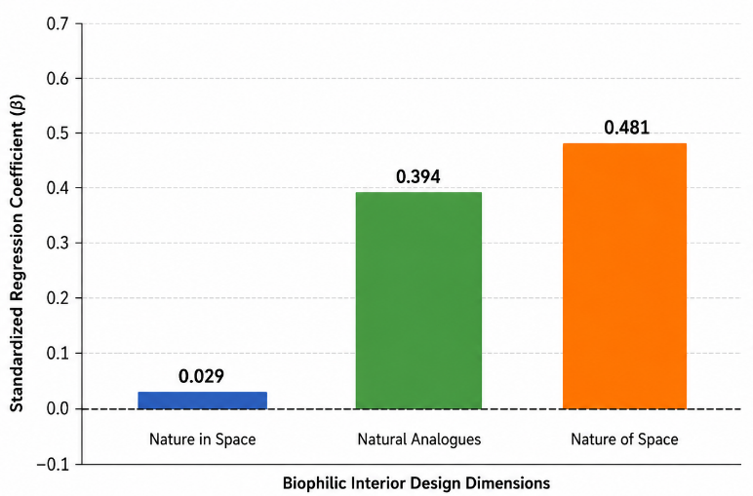
Multiple linear regression analysis (Table 12) was conducted to assess the predictive effect of biophilic design dimensions on social sustainability. The model was statistically significant (F = 108.788, p < 0.001), explaining 68.9% of the variance (R² = 0.689). The results indicate that Nature of the Space is the strongest predictor of social sustainability (β = 0.481, p < 0.001), followed by Natural Analogues (β = 0.394, p < 0.001). In contrast, Nature in the Space did not show a statistically significant effect (β = 0.029, p = 0.648). To enhance interpretation, the regression results are visually summarized in Figure 5, highlighting the dominant influence of spatial characteristics and nature-inspired design elements over the direct presence of natural features.
Table 12. Regression coefficients for predicting social sustainability
|
Predictor Variable |
β (Standardized) |
t |
p-Value |
|
Nature in the Space |
0.097 |
1.573 |
0.118 |
|
Natural Analogues |
0.337 |
4.906 |
<0.001 |
|
Nature of the Space |
0.497 |
7.515 |
<0.001 |
Figure 5. Graphical representation of standardized regression coefficients (β) showing the relative influence of biophilic interior design dimensions on social sustainability
5.8 Summary of key finding
Overall, the results reveal several consistent patterns across the analyses. First, it is important to note that the most significant dimension in terms of the observed influence on social sustainability of shopping mall spaces is the Nature of the Space category. This variable demonstrates excellent performance in all of the employed methods – observations, evaluations, correlations and regressions.
Natural Analogues is another category demonstrating moderately strong but still noticeable influence on social sustainability. Apparently, indirect representation of nature in spatial composition (materials, textures, forms) contributes to psychological comfort of the users and their ability to perceive the space positively. At the same time, the dimension of Nature in the Space reveals low level of influence and even statistical significance.
The statistically significant differences between the two examined shopping malls do not imply that the level of variability in terms of design solutions is high; hence, the essential difference should be sought for in the quality of spatial design.
This section discusses the key findings of the study by interpreting the relationship between biophilic interior design and social sustainability in shopping mall environments, with reference to biophilic design theory and social sustainability literature.
6.1 Interpretation of key findings
The findings of this study provide empirical evidence that biophilic interior design contributes positively to social sustainability in shopping malls; however, the degree of influence varies across different biophilic design dimensions. Among these dimensions, nature of the space emerged as the most influential factor in shaping users’ perceptions of social sustainability. The spatial characteristics of interior spaces, such as openness, visual depth, legibility of circulation paths, and prospect-refuge conditions, are the aspects of the physical environment that contribute to an individual’s sense of safety, comfort, and connection to a given environment. It follows that socially sustainable interiors are largely influenced by the way space is organized and experienced rather than simply through the incorporation of natural elements. From a practical perspective, this finding suggests that designers should prioritize spatial configuration strategies, such as openness, visual connectivity, and clear circulation systems over the mere addition of decorative natural elements. In commercial environments like shopping malls, these spatial qualities enhance users’ sense of orientation, safety, and comfort, thereby supporting more inclusive and socially interactive environments.
The findings of this study support the theoretical underpinnings of biophilic design proposed by Browning et al. [4]. Specifically, the Nature of the Space pattern types, which identify the importance of spatial experiences that mimic those of the natural environment for psychological restoration and well-being. In the context of shopping malls, coherently organized space encourages intuitive movement and visual connectivity resulting in prolonged time spent in the environment thus creating a socially supportive environment. In addition to enhancing users' sense of comfort and emotional attachment to interior spaces, natural materials, organic forms and nature inspired textures also have a positive impact on the psychological experience of the interior environment. Given the constraints associated with incorporating large amounts of vegetation or water features into commercial interior space settings, the use of indirect representations of nature are especially valuable.
Finally, whereas the use of natural elements in the space (i.e., vegetation, water features, and daylight) are highly valued by users of shopping malls, the results of this study suggest that their ability to predict social sustainability is contingent upon their spatial integration. Thus, while users perceive these elements as having a positive impact, it appears that the inclusion of these elements functions as supplementary components of social sustainability in the shopping mall setting, rather than primary drivers of social sustainability, especially if they are incorporated in a decorative or fractured manner. Overall, the findings of this study indicate that social sustainability of shopping malls is more significantly impacted by the quality of the spatial experience generated by the application of biophilic design principles, rather than the amount of biophilic elements that are utilized. Therefore, biophilic design approaches that prioritize spatial coherence and experiential continuity are more likely to create commercially inclusive, comfortable, and socially sustainable environments.
6.2 Theoretical and practical contributions
The theoretical contributions of this study provide empirical evidence for a connection between biophilic interior design and social sustainability in shopping mall spaces. In contrast to much of the prior literature, the results of this study demonstrate how biophilic design is a key component of social sustainability in terms of inclusivity, sense of community, and perceived safety, three important aspects of social sustainability. The practical implications of this study are that designers and other decision makers should place a greater emphasis on developing and using space planning principles based upon nature (using analogues of natural forms, materials, and processes) to create spaces with open views, continuous sightlines, clear paths through buildings and prospect/refuge spaces instead of simply decorating spaces with biophilic elements. If designers incorporate these principles into their designs, it could lead to shopping malls being able to act as commercially viable, but socially sustainable, urban interiors. These findings reinforce the argument that biophilic design should be approached as an integrated spatial strategy rather than a collection of isolated natural elements.
6.3 Limitations and future research
This study has several limitations. First, the sampling method employed was a non-probability convenience sampling approach, and the study was limited to three shopping malls within a single city, which may restrict the generalizability of the findings to other urban contexts. Second, the cross-sectional nature of the study captures users’ perceptions at a single point in time and does not account for potential changes in perceptions resulting from repeated exposure to biophilic environments. Longitudinal studies could provide deeper insights into how users’ social experiences evolve over time.
Third, although the use of a structured observation checklist contributed to methodological triangulation, some degree of subjectivity may remain in the evaluation process. Future studies may strengthen reliability by incorporating inter-rater reliability assessments and objective environmental measurements, such as daylight levels, vegetation coverage ratios, thermal comfort indicators, and acoustic performance metrics. Future studies may expand the research to different urban contexts and commercial environments while employing larger and more diverse samples.
In addition, advanced analytical techniques such as Structural Equation Modeling (SEM), Partial Least Squares Structural Equation Modeling (PLS-SEM), or PROCESS-based mediation analysis could be used to investigate whether psychological and physical comfort, perceived safety and well-being, and social interaction mediate the relationship between biophilic design dimensions and broader social sustainability outcomes. Such approaches would provide a more comprehensive understanding of the mechanisms through which biophilic interior design contributes to social sustainability.
This study explores the linkages between biophilic interior environments and social sustainability outcomes within shopping malls by comparing and contrasting three shopping malls in the city of Erbil (Grand Majidi Mall, Family Mall, and Gulan Mall). Using systematic observation with surveys to gather users’ perceptions on their experiences in shopping malls with high and low degrees of biophilic design integration, this paper presents evidence that biophilic design strategies have a significant impact on social sustainability indicators (Social interaction and participation, inclusivity and accessibility, perceived safety and well-being, and psychological and physical comfort) in shopping malls.
A key finding from this study is that shopping malls with greater biophilic integration (specifically Grand Majidi Mall) consistently produced higher scores in all of the perception categories related to biophilic design and in all of the social sustainability indicator categories. In addition, spatial configurations with openness, prospect-refuge, and visual depth were found to be the most effective characteristics in creating inclusiveness, comfort, and community engagement. As a result, it was confirmed that biophilic design represents an effective approach to advancing social sustainability in urban commercial spaces through embedding natural elements and nature-inspired qualities into the interior designs of shopping malls. Therefore, designers can use the inclusion of natural elements and nature-inspired qualities to create restorative environments that promote inclusivity, positive social experiences, and user well-being within shopping mall environments. This paper bridges the gap between biophilic theory and social sustainability practice, providing evidence that biophilic interiors can be used as catalysts to create a socially sustainable urban life.
To further develop the understanding of how biophilic design strategies can be optimized to create commercially viable, inclusive, and sustainable environments, future research should increase the comparative context to other cultures and geographies and employ longitudinal methodologies to measure the changes in users' perceptions over time. Ultimately, the findings of this paper provide strong justification for the intentional incorporation of biophilic principles into the design of shopping malls to enhance both human well-being and collective urban sustainability.
We sincerely thank all survey participants and the management of the malls in Erbil for their cooperation. Their support and contributions made this study possible.
Appendix A. Final questionnaire items used in the analysis
Table A1. Nature in the Space
|
Code |
Item |
|
NIS1 |
The presence of green spaces or plant-based decorative elements positively affected my comfort level. |
|
NIS2 |
There are indoor green spaces or open areas for sitting and relaxation. |
|
NIS3 |
There are windows or openings that provide views of outdoor natural scenery. |
|
NIS4 |
Natural lighting (sunlight) is available and positively influences the overall atmosphere. |
Table A2. Natural Analogues
|
Code |
Item |
|
NA1 |
Natural materials such as wood, stone, or plants are clearly incorporated into the interior design. |
|
NA2 |
The design includes forms inspired by nature, such as leaves or organic patterns. |
|
NA3 |
The colors and materials used in the design enhance the feeling of comfort. |
|
NA4 |
Water features contribute to the attractiveness and comfort of the space. |
|
NA5 |
The mall design allows interaction with nature through natural lighting or indoor vegetation. |
Table A3. Nature of the Space
|
Code |
Item |
|
NOS1 |
The interior environment is balanced and does not cause discomfort. |
|
NOS2 |
The spatial layout encourages movement and exploration with ease and comfort. |
|
NOS3 |
Open spaces such as atriums and central halls provide psychological comfort. |
|
NOS4 |
Quiet zones or areas for relaxation are available away from commercial noise. |
|
NOS5 |
Open or semi-outdoor spaces allow natural airflow or provide outdoor views. |
Table A4. Social interaction and participation
|
Code |
Item |
|
SIP1 |
Shared spaces encouraged interaction and communication with other visitors. |
|
SIP2 |
The mall design provides places that encourage people to meet and gather together. |
|
SIP3 |
Biophilic elements create an environment that encourages social interaction. |
Table A5. Inclusivity and accessibility
|
Code |
Item |
|
IA1 |
The mall accommodates cultural and linguistic diversity through signage and services. |
|
IA2 |
Accessibility and services are equally available for different user groups. |
|
IA3 |
Facilities for people with disabilities are satisfactory. |
Table A6. Psychological and physical comfort
|
Code |
Item |
|
PPC1 |
Temperature and ventilation were appropriate and comfortable throughout the visit. |
|
PPC2 |
Interior lighting was sufficient and non-intrusive. |
|
PPC3 |
Noise levels did not negatively affect my experience. |
|
PPC4 |
Seating quality and resting areas were comfortable and adequately provided. |
Table A7. Perceived safety and well-being
|
Code |
Item |
|
PSW1 |
I felt safe and respected regardless of my background or physical abilities. |
|
PSW2 |
The distribution of seating areas and public facilities supports privacy and psychological comfort. |
|
PSW3 |
The levels of lighting and colors created a pleasant and relaxing atmosphere. |
|
PSW4 |
Crowd density during my visit was appropriate and not excessively congested. |
[1] Kansal, S., Rana, D.P. (2024). Bringing nature indoors: Exploring the impact of biophilic interior design in restaurants. International Journal of Architecture and Infrastructure Planning, 10(1): 9-28.
[2] Patil-Mohabansi, M., Kohli, J., Mohabansi, A. (2023). Application of biophilic design in architecture. International Research Journal of Engineering and Technology (IRJET), 10(5): 53-60. https://www.irjet.net/archives/V10/i5/IRJET-V10I507.pdf.
[3] Fulara, A. (2025). Healing through nature: A study of biophilic elements in rehabilitation environments. International Journal of Scientific Research & Engineering Trends, 11(4): 1483-1488. https://ijsret.com/wp-content/uploads/IJSRET_V11_issue4_181.pdf.
[4] Browning, W., Ryan, C., Clancy, J. (2014). 14 patterns of biophilic design: Improving health and well-being in the built environment. Terrapin Bright Green, LLC.
[5] Berto, R., Barbiero, G., Nasar, J.L. (2022). Editorial: Biophilic design rationale: Theory, methods, and applications. Frontiers in Psychology, 13: 978689. https://doi.org/10.3389/fpsyg.2022.978689
[6] Youn, C., Kang, M., Lee, J. (2025). Biophilic design and restorative effects: A neuropsychological study of healthy indoor workspaces in urban contexts. International Journal of Environmental Research and Public Health, 22(10): 1571. https://doi.org/10.3390/ijerph22101571
[7] Xing, Y.G., Stevenson, N., Thomas, C., Hardy, A., Knight, A., Heym, N., Sumich, A. (2025). Exploring biophilic building designs to promote wellbeing and stimulate inspiration. PLoS ONE, 20(3): e0317372. https://doi.org/10.1371/journal.pone.0317372
[8] Sokienah, Y. (2024). Behind the designs: An exploration of sustainability attitudes among interior design students in Jordan. Heliyon, 10(17): e36443. https://doi.org/10.1016/j.heliyon.2024.e36443
[9] Ali, L.A., Ali, A.S., Muhammed, S.A. (2017). Design elements affecting the using of atriums in shopping malls in Erbil city. Sulaimani Journal for Engineering Sciences, 4(5): 47-64. https://doi.org/10.17656/sjes.10054
[10] Zhao, X.X., Guo, D.J., Chen, Y.L., Wu, Y.H., Zhu, X.P., Du, C.H., Chen, Z.L. (2025). Sustainable comfort design in underground shopping malls: A user-centric analysis of spatial features. Sustainability, 17(6): 2717. https://doi.org/10.3390/su17062717
[11] Riaz, H., Amina, N., Khan, M.A., Iqbal, A., Irfan, A., Ishitaq, H., Noshin, S., Mohsin, H., Shahbaz, I. (2024). Role of spatial efficiency, layout planning, and sustainability in the success of shopping malls. Advances in Civil and Architectural Engineering, 15(28): 58-75. https://doi.org/10.13167/2024.28.5
[12] Efeoglu, H.E., Joutsiniemi, A., Mozuriunaite, S. (2025). Retail landscape and urban form: A systematic review of the literature. Journal of Planning Literature. https://doi.org/10.1177/08854122251400214
[13] Tekin, B.H., Tunahan, G.I., Disci, Z.N., Ozer, H.S. (2025). Biophilic design in the built environment: Trends, gaps and future directions. Buildings, 15(14): 2516. https://doi.org/10.3390/buildings15142516
[14] Wijesooriya, N., Brambilla, A., Markauskaite, L. (2023). Biophilic design frameworks: A review of structure, development techniques and their compatibility with LEED sustainable design criteria. Cleaner Production Letters, 4: 100033. https://doi.org/10.1016/j.clpl.2023.100033
[15] Ryan, C.O., Browning, W.D., Clancy, J.O., Andrews, S.L., Kallianpurkar, N.B. (2014). Biophilic design patterns: Emerging nature-based parameters for health and well-being in the built environment. Archnet-IJAR: International Journal of Architectural Research, 8(2): 62-76. https://doi.org/10.26687/archnet-ijar.v8i2.436
[16] Aristizabal, S., Byun, K., Porter, P., Clements, N. (2021). Biophilic Office design: Exploring the impact of a multisensory approach on human well-being. Journal of Environmental Psychology, 77: 101682. https://doi.org/10.1016/j.jenvp.2021.101682
[17] Kefayati, Z., Moztarzadeh, H. (2015). Developing effective social sustainability indicators in architecture. Bulletin of Environment, Pharmacology and Life Sciences, 4(5): 40-56.
[18] Lami, I.M., Mecca, B. (2021). Assessing social sustainability for achieving sustainable architecture. Sustainability, 13(1): 142. https://doi.org/10.3390/su13010142
[19] Lami, I.M., Mecca, B., Todella, E. (2025). Architecture that listens: Unlocking sustainability through social awareness. Italian Journal of Planning Practice, 15(1): 1-29.
[20] Altamimi, S., Iranmanesh, A., Denerel, S.B. (2023). Exploring the spatial dimensions of social sustainability in the workplace through the lens of interior architects in Jordan. Buildings, 13(6): 1448. https://doi.org/10.3390/buildings13061448
[21] Ebbini, G.W., Bleibleh, S. (2024). GROW-J: An empirical study of social sustainability, sense of place, and subjective well-being in Jordanian Housing Development. Frontiers in Sustainable Cities, 6: 1448061. https://doi.org/10.3389/frsc.2024.1448061
[22] Zuhri, S., Ghozali, I. (2020). Architectural design practices in Surabaya: Shopping mall design with biophilic design approach. International Journal of Architecture, Arts and Applications, 6(2): 17-22. https://doi.org/10.11648/j.ijaaa.20200602.11
[23] Alzamil, A.F. (2023). Biophilic design in shopping malls: An assessment of cases in Kuwait. Saudi Journal of Art and Design, 3(3): 258-288. https://doi.org/10.57194/2351-003-003-008
[24] Cheng, T., Marzuki, A. (2023). Investigating the influence of introducing biophilic elements into the shopping mall environment: Perception of public visitors. Journal of Sustainability Research, 5(3): e230011. https://doi.org/10.20900/jsr20230011
[25] Rosenbaum, M.S., Ramirez, G.C., Camino, J.R. (2018). A dose of nature and shopping: The restorative potential of biophilic lifestyle center designs. Journal of Retailing and Consumer Services, 40: 66-73. https://doi.org/10.1016/j.jretconser.2017.08.018
[26] Mohamad, J.B., Ahmad, N., Ismam, J.N.B., Azman, N.B. (2021). Virtual Go-Green 2020: Sustainable Environment, Resilience and Social Well-Being (e-Proceedings). Universiti Teknologi MARA (UiTM), Perak, Malaysia. https://ir.uitm.edu.my/id/eprint/73799/1/73799.pdf.
[27] Al Khatib, I., Samara, F., Ndiaye, M. (2024). A systematic review of the impact of therapeutical biophilic design on health and wellbeing of patients and care providers in healthcare services settings. Frontiers in Built Environment, 10: 1467692. https://doi.org/10.3389/fbuil.2024.1467692
[28] Talukdar, M.M.A., Kaur, H. (2020). Impact of biophilia in interiors of future restaurants. International Journal of Science and Research (IJSR), 9(12): 263-266. https://doi.org/10.21275/SR201120122039
[29] Alabdalia, M.M., Salama, M.B., Ahmed, O.M.M. (2024). Biophilic Design as participative design (restaurant case study). International Journal of Research and Scientific Innovation (IJRSI), 11(14, Special Issue): 104-116. https://doi.org/10.51244/IJRSI.2024.1114SDAICO12
[30] Berman, M.G., Jonides, J., Kaplan, S. (2008). The cognitive benefits of interacting with nature. Psychological Science, 19(12): 1207-1212. https://doi.org/10.1111/j.1467-9280.2008.02225.x
[31] Andria, S., Salim, L. (2024). Do biophilic atmosphere, convenience and accessibility encourage intention to visit with mediation of visitor’s affective states? (Case study: The Breeze BSD City Mall). Ekonomi Bisnis, 29(2): 81-98. https://doi.org/10.17977/um042v29i1p24-41
[32] Bahauddin, A., Prihatmanti, R., Ong, J. (2021). Biophilic design patterns and local knowledge of plants application in Baba-Nyonya heritage shophouses’ courtyard. ARTEKS: Jurnal Teknik Arsitektur, 6(2): 305-314. https://doi.org/10.30822/arteks.v6i2.757
[33] Dempsey, N., Bramley, G., Power, S., Brown, C. (2011). The social dimension of sustainable development: Defining urban social sustainability. Sustainable Development, 19(5): 289-300. https://doi.org/10.1002/sd.417