Hasil Fataliyev | Gunay Hajiyeva | Umida Majnunlu* | Naile Mammadova | Vugar Mikayilov
© 2026 The authors. This article is published by IIETA and is licensed under the CC BY 4.0 license (http://creativecommons.org/licenses/by/4.0/).
OPEN ACCESS
The object of the study is the production of functional bread from winery residues and the processes occurring during this production. Although numerous studies have been conducted on the recycling of winery residues, the composition of grape pomace and wood flour formed during grape processing and pruning, as well as their dietary fiber content and the extraction and use of these components in bread production, have not been sufficiently investigated. The iodine content in pomace obtained from the Bayanshira grape variety was 11.25 mg/kg, while in the Madrasa variety it was 4.05 mg/kg. The richness of pomace flour in amino acids, iron, and other minerals, as well as iodine, provides a basis for its use as a functional additive. The total amount of amino acids in pomace flour obtained from the Bayanshira variety was 2.61% higher compared to wood flour, while in the Madrasa variety, it was 3.21% higher. Compared to the dry perennial part of the grapevine, the content of easily soluble polysaccharides in one-year shoots obtained from pruning was almost 8 times higher. The moisture content of dried and fermented grape pomace samples varied between 0.830–3.955%. It was found that drying temperature and method have a significant effect on the moisture content of pomace. Although an increase in temperature to 90 ℃ in conventional dryers led to a decrease in some compositional indicators and antiradical activity, both the content of phenolic compounds and antiradical activity were better preserved during freeze-drying. Bread samples were prepared by adding 3, 5, 7, and 10% (w|w, based on flour) pomace pectin extract to the dough and compared with a control (without addition) sample. It was found that in the bread sample with 5% pectin extract, porosity increased from 71% to 79% compared to the control, i.e., an increase of 8%; specific volume increased from 290.0 cm³/100 g to 308.1 cm³/100 g, i.e., by 18.1 cm³/100 g. At the same time, an increase in the sorption capacity of bread from 104 to 186 mg Pb²⁺/g and in volume from 855 to 890 cm³ was observed. All these were reflected in the organoleptic evaluation, where the experimental sample was rated 0.25 points higher than the control.
grape pomace, woody material, bark, pomace pulp, dietary fiber, functional bread, antioxidant, porosity
During wine production, 20–30% of residues or waste is generated, which is rich in sugars, fibers, phenolic compounds, pigments, and other organic compounds [1]. The residues formed in winemaking, including grape seeds and pomace waste, as well as leaves and branches, are rich in condensed tannins, while the skins contain higher amounts of flavonols and phenolic acids [2]. Grape pomace (GP), which is the main solid residue formed during vinification, retains a significant portion of grape polyphenols, making it a valuable source of natural antioxidants [3]. Scientific evidence confirms the food application of winery by-products and their use as functional foods for the prevention of chronic human diseases [4].
High levels of total dietary fiber (57.24%) have been detected in dietary fiber extracts, of which the main fraction consists of insoluble fiber (51.70%) [5]. It has been determined that dietary fibers obtained from grape pomace, when subjected to ultra-fine grinding, are affected in terms of functional and antioxidant properties [6]. Controlled instantaneous pressure drop alters the morphology and polyphenolic profile of grape pomace, leading to simpler phenolic structures with enhanced antioxidant properties [7]. Replacement of 8% of bread with grape pomace powder increases the nutritional value of bread, particularly increasing protein, total dietary fiber, and total phenolic content, without negatively affecting texture and sensory properties [8]. The addition of grape pomace not only increases antioxidant dietary fibers but also provides functionality to these products, improves human health, and extends the shelf life of food products [9]. It has been shown that optimized extraction methods not only increase extraction yield but also preserve bioactive integrity, opening prospects for the use of polyphenols obtained from grape pomace in the treatment of chronic wounds [10]. The production of a fermented milk beverage using a formulation containing 1.5% grape pomace and 16% whey has been recommended [11]. It has been determined that microencapsulation of phenolic compounds in grape pomace extract using maltodextrin and Arabic gum via spray drying and their addition to Greek yogurt is an effective means of improving human health [12]. It has been found that the addition of 0.5% and 1% grape pomace fibers to yogurt not only does not deteriorate product quality but even improves it [13]. In cakes prepared by replacing wheat flour with 4, 6, 8, and 10% grape pomace powder, free phenolic content increased significantly, and the nutritional value, technological, and sensory properties of the obtained samples improved [14]. The addition of 5, 10, and 15% grape pomace flour from red Syrah and white Arinto varieties to dark chocolate increases fiber content, enriches composition, and softens texture [15]. It has been shown that grape pomace additions provide health benefits for consumers of functional foods [16]. It has been determined that when Tannat grape pomace powder is used at 10–20% of the total dough mass and sweetener sucralose at 2–4%, oxidative stress, glucose, and fatty acid levels in biscuit samples improve, and sensory quality increases [17]. It has been found that grape pomace extracts with different particle size distributions affect stickiness, hardness, color, sensory, and other parameters [18]. This study shows that adding only 3.5% pomace powder significantly increases the polyphenol content of milk chocolate [19]. The results of studies on in vitro simulated digestion and colonic fermentation of soluble and insoluble dietary fibers obtained from grape pomace are presented [20]. Based on literature data from the last five years, research results related to new extraction methods and integrated extraction approaches are reviewed [21]. Systematic analysis of the chemical composition of Vitis vinifera L. grapes is presented, indicating the practical importance of these studies in terms of quality control of grape products [22].
The analysis of the review shows that these studies do not address the sequential technological processes related to the extraction of dietary fiber, particularly pectin extracts from grape pomace, as well as other related issues. At the same time, insufficient research has been carried out on the use of pectin extracts in bread production and the effect of their added amounts on the quality and composition of functional products.
The aim of the study is to investigate the use of grape pomace in the production of functional bakery products. In order to achieve this aim, the following tasks must be solved:
The objects of the study are grape clusters, berries, pomace, pomace flour, wood flour, production technology, and equipment. The main idea of the study is to determine the effect of processing method and grape variety on the physicochemical composition indicators and antioxidant properties of pomace components, wood flour, and pomace flour.
After juice separation, the remaining pomace from each variety was used. The pomace was separated into seed and skin fractions and studied. Fermentation of the seeds was carried out in a manner similar to that of stems and pomace. This operation involves drying either the pomace or the seeds by spreading them in a thin layer (4–5 cm thickness). The process can be carried out naturally under sunlight or by using specialized drying equipment.
In the course of the study, both indigenous grape varieties (Madrasa and Bayanshira) and introduced varieties (Isabella, Merlot, and Rkatsiteli) were utilized. The grape harvest was conducted in October 2025. The sugar content of the grape varieties varied depending on the cultivar, ranging from 16.0 to 20.1 g/dm³. The varieties were ranked in ascending order according to their sugar content as follows: Isabella (16.0 g/dm³), Bayanshira (17.4 g/dm³), Madrasa (19.1 g/dm³), Merlot (19.3 g/dm³), and Rkatsiteli (20.1 g/dm³).
The soil types were gray-brown and light chestnut, while the climate is characterized as moderately warm, semi-desert, and dry steppe. Summers are hot and arid (30 ℃ and above), whereas winters are mild (0 to +5 ℃). Annual precipitation ranges from 300 to 500 mm. Due to its arid climate and mineral-rich soils, the region is considered suitable for the cultivation of technical grape varieties.
The grapes were harvested in October, crushed at AzGranata LLC, the stems were separated, then the mash was pressed to extract juice, and the obtained pomace was washed with water and fermented under indirect sunlight at 25–30 ℃ with periodic turning. Fermentation under sunlight lasts 5–6 days, depending on the thickness of the pomace layer.
The process may vary depending on environmental conditions such as sunlight and humidity. It is continued until signs of active fermentation on the pomace surface—such as odor development, foaming, and temperature increase—are observed. Under sunlight, the temperature can naturally fluctuate within the range of 25–40 ℃. Excessively high temperatures (>40 ℃) are undesirable, as beneficial microorganisms may weaken or die. At night, the temperature decreases, which somewhat slows down the process.
The process mainly proceeds due to natural (wild) yeasts and bacteria present on the grape skins. No specific inoculation (i.e., addition of cultured yeast) is applied. Control is carried out mainly through indirect methods: spreading the pomace in a thin layer (4–5 cm) ensures oxygen penetration and prevents undesirable anaerobic spoilage. Periodic mixing (in some cases) reduces the risk of mold formation and decay. Visual and olfactory control is also applied: if mold or unpleasant odors appear, the process is stopped, or the material is removed. Maintaining hygiene and using clean surfaces is essential.
The aim of this process is the fermentation of residual sugars and the formation of alcohol, the extraction of aroma and extractive compounds (from skins and seeds), and the preparation of pomace for subsequent stages. In some cases, partial drying and a concentration effect are also achieved. In short, this method provides a low-cost and natural fermentation; however, due to limited control, the results may not always be consistent.
This method is not purely a “self-occurring” spontaneous process; rather, it is a semi-controlled fermentation approach guided by human intervention but based on natural microflora. In other words, it has two aspects:
Therefore, this method is more accurately described as a controlled stimulation of natural fermentation. If the goal is classical wine production, this method is not a primary stage; rather, it is more related to the further processing of pomace or its preparation for distillation.
Finally, it should be emphasized that this method is not purely a spontaneous natural accumulation process, but a semi-controlled fermentation approach directed by humans while relying on natural microflora.
This process can be completed in a shorter time in artificial dryers. In order to obtain dietary fiber from pomace, the study was carried out in the following sequence. Pomace obtained from the studied grape varieties was dried in a drying oven at different temperatures (70, 80, 90 ℃) and durations (50, 30, and 20 hours, respectively), as well as by freeze-drying.
The obtained dry pomace samples were ground in a coffee grinder into powder and sieved through a fine mesh sieve (0.3–0.5 mm). Shoots obtained from pruning were also ground into flour and used. The obtained pomace powder was stored in sealed polyethylene bags at −20 ℃ until analysis.
The possibility of using pomace obtained from processing different grape varieties in the production of bread and bakery products was investigated. For this purpose, pomace samples obtained from different varieties were fermented separately. Babaturk flour is a finely milled, light cream-colored flour obtained from high-quality wheat. Since this flour has a good gluten content, it ensures dough elasticity and gas retention capacity, resulting in high volume and quality in bread and confectionery products. It is widely used in both industrial and household conditions. The protein content in Babaturk flour is usually around 10–12%, which ensures good gluten-forming ability. Its moisture content is approximately 13–15%, which positively affects the storage and technological properties of the flour.
The bread preparation process was carried out as follows. In laboratory conditions, 600 ml of water, 10 g of dry yeast, 20 g of salt, 10–15 g of sugar, and pectin extract were added in amounts of 3, 5, 7, and 10% per 1 kg of flour. First, the yeast was activated in water for 5–10 minutes. Then the pectin extract was mixed into water and added to the flour, and salt was added at the end; the dough was kneaded for 10 minutes. Fermentation was carried out at 28–30 ℃ for 60–90 minutes. Then the dough was divided into 400–500 g portions and left to rest for 10–15 minutes; final proofing was carried out at 30–32 ℃ for 40–60 minutes. Baking was carried out in an oven with an initial temperature of 220–230 ℃. Then the temperature was reduced to 200–210 ℃. Baking was completed within 20–25 minutes.
Baking was carried out according to different variants. A control sample without extract addition was used. Then a comparative evaluation of the samples was performed.
Pectin is extracted from pomace by a water-acid extraction method. For pectin extraction, the pomace is ground and mixed with water. The ratio of water to pomace in the mixture is 10:1. A 0.1 N hydrochloric acid solution is used, and acid addition continues until the pH is adjusted to 1.5–2.0.
Extraction is carried out at 80–90 ℃ for 60–90 minutes with continuous stirring. During this process, protopectin is converted into pectin.
Then the mixture is cooled and filtered. The liquid phase is the pectin product. For precipitation of pectin, 96% ethyl alcohol (in a ratio of 1:2 or 1:3) is added to the filtrate. After standing for 30–60 minutes, pectin separates as a jelly-like precipitate. To minimize color and impurities, the precipitate is washed again with ethanol. The obtained pectin is dried at 40–50 ℃, ground into powder, stored in a dark place in a hermetic container, and when needed, solutions of different concentrations (3, 5, 7, 10%, etc.) are prepared with distilled water.
In the samples, pH analysis (pH meter, Sartorius PB-II, Germany), total acidity, dry matter, ash, and reducing sugar content were determined. The total monomeric anthocyanin content in juice was determined by the pH differential method and expressed as malvidin-3-glucoside equivalents in mg/dm³.
The physicochemical and organoleptic characteristics of raw materials, semi-finished products, and finished products are determined by the general analysis methods available in enochemistry [23, 24].
Modern analytical techniques, including High Performance Liquid Chromatography (HPLC), statistical analyses, and calculations were performed using IBM SPSS Statistics 18.0 (IBM Corp. Released 2012. IBM SPSS Statistics for Windows, Version 21.0. Armonk, NY: IBM Corp.) and MS Excel 2007 software. The level of statistical significance was accepted as p < 0.05.
The mean ± standard deviation values are presented in the descriptive statistics of the variables included in the study. To compare the measurement values obtained at different time points for the control and experimental samples, ANOVA and t-tests were used. The Tukey method was applied for pairwise comparisons of variables that showed significant differences between groups. To compare the measurement values of the control and experimental samples obtained at different measurement times, repeated measures ANOVA and paired t-tests were also used [25, 26].
The mass concentration of phenolic compounds in wine was determined by the Folin-Chocolate method. The Folin-Chocolate reagent, when added to the wine, oxidizes the phenolic groups and reduces them to a blue compound. At this time, the intensity of the color is proportional to the concentration of phenolic compounds.
Sensory evaluation was carried out using a 9-point hedonic scale method. A panel group consisting of 16 participants took part in the analysis. The panelists consisted of individuals engaged in teaching and scientific research in the fields of food engineering and winemaking. Nevertheless, they were provided with additional prior instructions.
The group comprised 16 members, including 14 females and 2 males. Among them, 5 participants were aged 30–40, 5 were 40–50, 3 were 50–60, 2 were 60–70, and 1 participant was between 70 and 80 years old. None of the panelists was a smoker.
The group was given brief instructions in advance regarding the evaluation procedure and the use of the scale. The samples were presented to the panelists in coded (blind test) form. Each sample was presented in equal portions, and water was provided for rinsing the mouth between samples.
In the evaluation, appearance (shape, crust, and color), odor (aroma), taste, texture (softness and elasticity), porosity, and chewing sensation, as well as the overall acceptability as an integral indicator, were considered. Each parameter was rated on a scale from 1 to 9 (1 – dislike extremely, 9 – like extremely).
The same sample was presented to each panelist in 2–3 replicates. Evaluations were conducted multiple times under standardized conditions and verified through statistical analysis. Results were accepted in cases where no significant differences were observed between determinations.
Variability was controlled through both the experimental design (sample presentation and panelist selection) and statistical analysis. This approach ensures greater accuracy, objectivity, and reliability of the results obtained using the 9-point hedonic evaluation scale.
3.1 Determination of the effect of grape variety on the composition and antioxidant properties of pomace and wood flour
A comparative analysis of flour obtained from the pomace of white and red grape varieties was carried out. It was found that, depending on the grape variety, the content of nutrients in pomace flour varies within a wide range. Data on the composition of pomace flour for the varieties used in the study are presented in the table (Table 1).
Table 1. Chemical composition of pomace flour obtained from different grape varieties
|
Cardinal Number |
Indicators |
Pomace Flour by Grape Variety |
|
|
Bayanshira |
Madrasa |
||
|
1. |
Crude protein, % |
10.3 |
12.8 |
|
2. |
Crude fat, % |
0.91 |
0.95 |
|
3. |
Crude fiber, % |
22.6 |
23.9 |
|
4. |
Calcium, g/kg |
15.6 |
15.1 |
|
5. |
Phosphorus, g/kg |
2.31 |
3.62 |
|
6. |
Carotene, mg/kg |
0.20 |
0.26 |
|
7. |
Copper, mg/kg |
6.0 |
6.8 |
|
8. |
Manganese, mg/kg |
8.9 |
9.5 |
|
9. |
Cobalt, mg/kg |
0.31 |
0.22 |
|
10. |
Zinc, mg/kg |
19.0 |
25.0 |
|
11. |
Iron, mg/kg |
145.0 |
170.0 |
|
12. |
Iodine, mg/kg |
11.25 |
4.05 |
The analysis of the chemical composition of pomace flour obtained from the Bayanshira and Madrasa grape varieties showed that the crude protein content in the pomace flour from the Madrasa variety was 2.5% higher than that of the Bayanshira variety. Examination of the data in the table indicates that pomace flour is not only a good source of protein but also rich in minerals. The mineral content of flour derived from Madrasa grape pomace was as follows: iron 170 mg/kg, iodine 4.05 mg/kg, zinc 25 mg/kg, manganese 9.5 mg/kg, phosphorus 3.62 g/kg, calcium 15.10 g/kg, and cobalt 0.22 mg/kg.
Notably, the iron content, essential for hemoglobin formation in the blood, ranged from 145 to 170 mg/kg, highlighting the functional significance of these products. Additionally, the presence of other functionally relevant elements such as cobalt, zinc, manganese, and others further supports their nutritional value. As is well known, cobalt is a component of vitamin B12, zinc is involved in numerous enzymatic processes, manganese activates oxidation reactions, and copper regulates erythrocyte maturation, among other functions. Collectively, these factors make the use of pomace flour as a functional feed ingredient not only feasible but also highly advantageous.
Pomace flour is also notable for its high iodine content. The iodine content was 11.25 mg/kg in the Bayanshira variety and 4.05 mg/kg in the Madrasa variety.
Research has shown that grape pomace is rich in essential amino acids, which are readily and efficiently assimilated by the human body. These amino acids play critical roles in several vital physiological processes, including the synthesis of skin proteins and certain hormones, the regulation of fat metabolism (methionine), the formation of urinary metabolites (arginine), and the stimulation of growth processes (lysine), among others.
Studies indicate that the amino acid profile of flour obtained from grape pomace is comparable to that of other valuable plant flours, particularly in lysine, arginine, histidine, threonine, serine, asparagine, and glutamine content [27].
A comparative analysis of the amino acid composition of pomace flour from Bayanshira and Madrasa grape varieties revealed that most amino acids were present in higher amounts in the Madrasa variety compared to Bayanshira (Table 2). Specifically, lysine was 0.18% higher, histidine 0.10% higher, serine 0.07% higher, proline 0.16% higher, glutamic acid 0.39% higher, and aspartic acid 0.8% higher. Regarding essential amino acids, the Madrasa variety also showed superior content for lysine, valine, methionine, leucine, threonine, and phenylalanine. Overall, the total amino acid content in pomace flour from the Madrasa variety was 1.15% higher than that from the Bayanshira variety.
Table 2. Amino acid composition of pomace flour obtained from different grape varieties
|
Cardinal Number |
Amino Acids |
Content in Pomace Flour by Variety, % |
|
|
Bayanshira |
Madrasa |
||
|
1. |
Lysine |
0.37 |
0.55 |
|
2. |
Histidine |
0.24 |
0.34 |
|
3. |
Serine |
0.38 |
0.45 |
|
4. |
Alanine |
0.51 |
0.46 |
|
5. |
Leucine |
0.68 |
0.70 |
|
6. |
Methionine |
0.23 |
0.24 |
|
7. |
Arginine |
0.45 |
0.46 |
|
8. |
Proline |
0.46 |
0.62 |
|
9. |
Valine |
0.43 |
0.48 |
|
10. |
Tyrosine |
0.28 |
0.37 |
|
11. |
Cystine |
0.17 |
0.17 |
|
12. |
Threonine |
0.36 |
0.40 |
|
13. |
Glycine |
0.62 |
0.61 |
|
14. |
Isoleucine |
0.44 |
0.43 |
|
15. |
Phenylalanine |
0.40 |
0.42 |
|
16. |
Glutamic acid |
1.30 |
1.69 |
|
17. |
Aspartic acid |
0.68 |
0.76 |
|
|
Total |
8.0 |
9.15 |
Research shows that viticulture and winemaking are production sectors in which almost all products are utilized. In particular, in viticulture, all parts of the vine, from green leaves to the green and dry shoots formed during pruning, are not discarded but can be subjected to recycling and returned to production.
Analyses show that the woody part of the grapevine contains a considerable amount of mono and polysaccharides depending on its age (Table 3).
Table 3. Composition of shoots obtained from grape pruning
|
Type of Raw Material |
Polysaccharides |
Protein |
Fat |
Ca |
P |
Ash |
|
|
Easily Digestible |
Hard to Digest |
||||||
|
Dried perennial part of the grapevine |
5.3 |
29.1 |
5.43 |
2.37 |
1.22 |
0.475 |
6.75 |
|
One-year-old part of the vine (immediately after pruning) |
41 |
29.0 |
5.55 |
3.0 |
1.35 |
0.450 |
7.35 |
It was found that the one-year-old dry shoots obtained from grape pruning have a composition similar to that of the perennial woody parts of the vine. Although the content of easily digestible polysaccharides in the one-year-old shoots is several times higher than in the perennial parts, other compositional characteristics are comparable.
After grinding, the pruned shoots can be incorporated into feed flour and used as animal feed. The residues obtained from green pruning can be ensiled. Moreover, unless other options are considered, grape pomace can also be processed into feed flour.
The one-year-old shoots obtained from dry pruning stand out in terms of composition and nutritional content, being rich in the components of vine wood and other essential nutrients (Table 4).
Table 4. Chemical composition of flour obtained from one-year-old dry shoots produced during grape pruning
|
Indicators |
Amount According to Different Varieties |
|
|
Bayanshira |
Madrasa |
|
|
Water, % |
6.21 |
5.98 |
|
Crude protein, % |
5.92 |
5.74 |
|
Crude fiber, % |
25.03 |
26.12 |
|
Crude fat, % |
0.98 |
0.98 |
|
Crude ash, % |
4.35 |
4.51 |
|
Minerals |
||
|
Calcium, % |
0.69 |
0.68 |
|
Phosphorus, % |
0.09 |
0.11 |
|
Sodium, % |
0.05 |
0.07 |
|
Magnesium, % |
0.11 |
0.14 |
|
Selenium, mg/kg |
0.89 |
0.88 |
|
Manganaese, mg/kg |
16.00 |
16.5 |
|
Iron, mg/kg |
55.1 |
56.4 |
|
Copper, mg/kg |
9.80 |
10.1 |
|
Zinc, mg/kg |
43.15 |
41.96 |
|
Iodine, mg/kg |
0.23 |
0.30 |
|
Lead, mg/kg |
1.01 |
1.0 |
|
Cadmium, mg/kg |
0.05 |
0.05 |
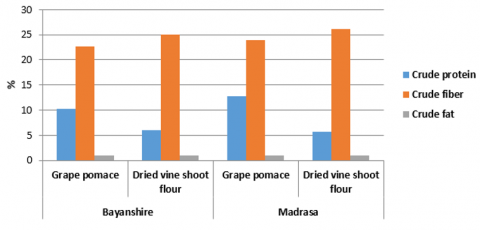
Figure 1. Comparison of the composition of flour obtained from residues of different grape varieties
As can be seen, the flour obtained from one-year-old dry shoots generated during grape pruning is inferior to pomace flour in terms of several compositional parameters, including crude protein, crude fat, crude fiber (Figure 1).
The flour obtained from one-year-old dry shoots generated during vine pruning also differed from pomace flour in terms of amino acid composition (Table 5).
Table 5. Amino acid composition of flour obtained from one-year-old dry shoots produced during grape pruning
|
Amino Acids |
Amount, % |
|
|
Bayanshira |
Madrasa |
|
|
Lysine |
0.27 |
0.34 |
|
Histidine |
0.19 |
0.22 |
|
Serine |
0.71 |
0.75 |
|
Alanine |
0.25 |
0.28 |
|
Leucine |
0.32 |
0.31 |
|
Methionine |
0.09 |
0.12 |
|
Arginine |
0.71 |
0.70 |
|
Proline |
0.22 |
0.36 |
|
Valine |
0.26 |
0.29 |
|
Triozin |
0.13 |
0.15 |
|
Cysteine |
0.09 |
0.10 |
|
Treonin |
0.17 |
0.19 |
|
Glycine |
0.22 |
0.23 |
|
Izoleucine |
0.23 |
0.26 |
|
Phenylalanine |
0.27 |
0.29 |
|
Glutamine |
0.83 |
0.89 |
|
Asparagine |
0.43 |
0.46 |
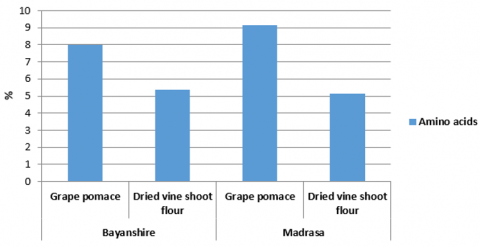
As can be observed, in terms of chemical richness, pomace flour was superior to the flour obtained from one-year-old dry shoots produced during vine pruning. Specifically, the total amino acid content in pomace flour from the Bayanshira and Madrasa varieties was 8.0% and 9.15%, respectively, whereas in the corresponding woody flour from these varieties, the values were 5.39% and 5.54%, respectively (Figure 2).
Figure 2. Comparison of total amino acid content in flour obtained from residues of different grape varieties
In other words, the total amino acid content in pomace flour from the Bayanshira variety was 2.61% higher than in the corresponding woody flour, while in the Madrasa variety, it was 3.21% higher. This difference is also reflected in the balanced amino acid profile along with the content of minerals, particularly iron, iodine, and other beneficial elements.
The systematic study of these compounds has only begun in recent years. As a result, nutrients such as tannins and related compounds, as well as color substances like anthocyanins, have been extensively investigated, and research in this area continues successfully. The attention given to phenolic compounds is not coincidental, as these compounds play a crucial role in determining the taste, color, body, and ultimately the organoleptic properties of grapes, juice, wine, and related products. Additionally, the therapeutic properties of phenolic compounds in wine and wine-based products have enhanced their significance in food product technology. Since these compounds are mainly concentrated in the solid parts of the grape clusters, particular emphasis has been placed on the study of these fractions.
3.2 Investigation of the effect of drying method on the extraction of dietary fibers from grape skins
Previous studies have shown that grape pomace varies in both chemical and mechanical composition depending on the grape variety and processing technology. The grape skin serves as the direct raw material for dietary fiber extraction (Grape Dietary Fiber, GDF), and its content varies widely depending on the grape type and processing method.
During the research, it was found that Isabella grapes cultivated in the foothill areas of the Goygol region in western Azerbaijan exhibit more intense aroma and different compositional characteristics compared to those grown in lowland areas. After processing this grape material, the physical and chemical properties of the wet pomace obtained from the press were analyzed (Table 6).
Table 6. Some physicochemical properties of wet grape pomace
|
Physicochemical Indicators |
Value |
|
|
Samux |
Goygol |
|
|
Titrable acid, % |
1.36 |
1.54 |
|
pH |
3.16 |
3.05 |
|
Moisture, % |
78.15 |
76.42 |
It was found that the pomace obtained from Isabella grapes grown in the foothill region exhibited a titratable acidity that was 0.18% higher, a moisture content that was 1.73% lower, and a pH value that was 0.11 units lower compared to pomace from lowland areas.
The color values of the analyzed pomace samples, measured using the Hunter L, a, b system, also differed notably (Table 7).
Table 7. Hunter color values (L, a, b) of wet pomace samples
|
Hunter Colours Values |
Value |
|
|
Samux |
Goygol |
|
|
L |
9.36 |
9.76 |
|
a |
17.22 |
17.11 |
|
b |
1.72 |
1.71 |
According to the analysis, the L value of wet pomace from the Goygol region was 0.40 units higher compared to Samukh; the a value was 0.11 units lower, and the b value remained nearly the same.
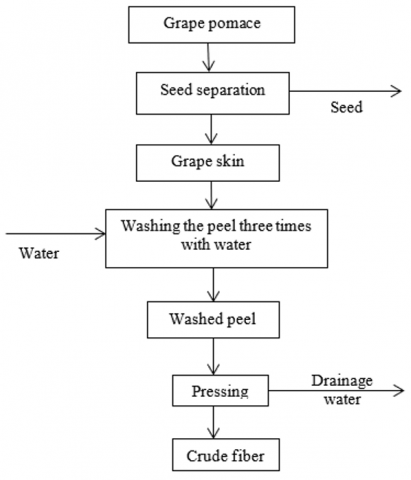
The mechanical composition analysis of grape pomace indicated that it contains various extraneous materials, including parts of the grapevine itself. Therefore, it is necessary to remove these impurities to obtain a homogeneous mass. To minimize the loss of biologically valuable compounds, washing the pomace with water is preferred. In this process, water is poured over the pomace, which is then manually washed, and the remaining mass is stirred in water.
During the study, it was observed that when the pomace was washed in a container with water, some of its color leached into the water, and the water contained a significant amount of suspended particles from the pomace. Microscopic examination of the wash water revealed a high microbial load. Consequently, the pomace was washed several times, and the microbiological quality of the final solution was strictly monitored (Figure 3).
Figure 3. Purification of grape pomace and extraction of dietary fiber
Accordingly, the pomace was washed several times, and the microbiological quality of the final solution was strictly monitored.
Table 8 presents the composition of grape skins from the investigated varieties. The sugar content in the skins varies depending on the ripening stage of the berries and differs significantly from the carbohydrate content in the pulp. For instance, if the pulp of one ton of grapes contains 140–170 g of sugars, the corresponding grape skins contain 0.6–2.9 g of sugars. Approximately 20% of the skin consists of cellulose, pectin, and proteins. The skins also contain organic acids, including citric, tartaric, and malic acids.
Polyphenols are present in the skins of various grape varieties. It has been reported that the polyphenol content in red grape skins is approximately twice as high as that in white grape varieties. Additionally, wide varieties contain yellow and red pigments as well as aromatic compounds. Anthocyanins are located in several cell layers beneath the epidermis of the skin.
Table 8. Selected compositional characteristics of grape skins from different varieties
|
Grape Variety |
Peel, % |
pH |
Acids, meq/kg |
Total Cation Content |
Acids, meq/kg |
Total Anion Content |
Soluble Polyphenols, g |
|||
|
Free |
In the form of Salts |
Wine |
Malic |
Citric |
||||||
|
Bayanshira |
15.4 |
4.10 |
90 |
139 |
223 |
97 |
129 |
8 |
238 |
2.7 |
|
İsabella |
16.1 |
4.20 |
92 |
139 |
214 |
97 |
129 |
8 |
203 |
2.9 |
|
Madrasa |
19.7 |
4.20 |
78 |
95 |
172 |
77 |
74 |
4 |
157 |
6.2 |
|
Merlot |
16.5 |
3.9 |
56 |
67 |
126 |
82 |
45 |
3 |
126 |
6.3 |
Table 9. Physicochemical properties of Isabella grape skin powders obtained by drying under different temperatures and durations
|
Physicochemical Parameters |
Drying Temperature in Dryers, ℃ |
Freeze Drying |
||
|
50 |
70 |
90 |
||
|
Moisture, % |
3.35 |
2.02 |
0.83 |
3.96 |
|
pH |
3.24 |
3.28 |
3.41 |
3.22 |
|
Titratable acids, % |
4.85 |
5.01 |
4.36 |
5.18 |
|
Total phenolic compounds, mg GAE/g |
23.9 |
25.6 |
18.8 |
31.5 |
|
Antiradical activity, (C50) mg/dm3 |
16.2 |
15.8 |
17.6 |
13.8 |
|
Hunter Colours Values |
||||
|
L |
22.5 |
22.7 |
21.9 |
25.4 |
|
a |
16.2 |
13.1 |
11.0 |
21.9 |
|
b |
5.01 |
4.99 |
6.79 |
3.14 |
The skins of fully ripened berries also contain significant amounts of xanthophylls, carotenoids, and chlorophyll, which are largely degraded as the berries reach full maturity. The brighter coloration of the berries develops during ripening and reaches its maximum at full maturity.
Table 9 presents the results of drying the peel derived from the Isabella grape variety under various temperature and time conditions.
As can be seen from Table 9, the moisture content of dried and fermented grape pomace samples varied between 0.830 and 3.955%. It was found that the drying temperature and method have a significant effect on the moisture content of pomace.
The content of titratable acids in pomace samples varied between 4.36 and 5.18%. As can be seen, with increasing temperature, the amount of titratable acids first increased and then decreased. When dried in a sublimator, the amount of titratable acids was higher, reaching 5.18%.
Hunter color values were determined in skin powders obtained by drying with different methods. It was found that L values ranged between 21.994–25.446, a values between 11.020–21.960, and b values between 3.146–6.790, depending on different variants. Both L and a values were higher in the powder obtained by sublimation drying, while the b value was higher (6.790) in samples dried at a higher temperature (90 ℃) in drying chambers.
Phenolic compounds and antiradical activity of powder obtained from dried pomace of the Isabella grape variety were studied. It was found that these indicators vary depending on the drying method and temperature.
During drying in conventional drying chambers at three different temperatures, total phenolic compounds were observed to vary between 18.760 and 25.630, while in sublimation drying, the total phenolic compounds reached a maximum of 31.520 mg/g. Antiradical activity in experimental samples varied between 13.860 and 17.640 mg/dm³, and the highest value was observed in freeze (sublimation) drying.
Researchers consider the drying of grape pomace to be essential in order to prevent its spoilage and ensure its year-round utilization. Studies have evaluated the nutrient composition, in vitro digestibility, gas production, and phenolic profile of dried grape pomace processed using various micronization and air-classification techniques [28]. Additionally, research has been conducted on the development of functional products using dried grape pomace obtained through different drying methods [29], as well as on the production of value-added extracts derived from it [30, 31].
During drying in conventional dryers, with increasing temperature, a slight increase in antiradical activity was first observed, and at 90 ℃, a decrease was recorded. At 50 ℃, partial degradation of the cell wall occurs, allowing phenolic compounds to be more extracted, and bound phenolic compounds are partially released. Extraction efficiency increases, and the yield of bioactive compounds rises. At 80–90 ℃, a large number of cells are destroyed, transfer of substances into the medium increases, and thermal degradation of phenolic compounds occurs, followed by polymerization and loss of active form. At 90 ℃, degradation outweighs extraction. As can be seen, while extraction dominates at 50 ℃, degradation becomes the main process at 80–90 ℃. Thus, the decrease in antiradical activity at 80–90°C is associated with thermal oxidative degradation and structural changes of phenolic compounds due to high temperature. Although the release of bioactive compounds continues, their degradation rate predominates, resulting in reduced overall antioxidant activity.
At elevated temperatures, thermal oxidation occurs, during which phenolic compounds are oxidized in the presence of oxygen to form quinones. These reactive quinones subsequently interact with other compounds. As a result, antioxidant activity decreases, and browning intensifies.
Under conditions of high temperature and acidic medium, hydrolysis processes take place, leading to the breakdown of phenolic glycosides and the formation of free phenolic aglycones. Consequently, phenolic compounds initially increase due to their release, but are later oxidized and degraded.
In such conditions, polymerization and condensation reactions also occur, resulting in the formation of high-molecular-weight polymers from oxidized phenols. These compounds exhibit low solubility and reduced antioxidant activity, making their extraction more difficult. Additionally, high temperatures induce structural changes in the aromatic rings of phenolic compounds, including the degradation of hydroxyl groups, which further contributes to the decline in antiradical activity.
The degradation of phenolic compounds follows first-order kinetics and accelerates with increasing temperature; thus, higher temperatures lead to a faster rate of degradation.
An increase in drying temperature exerted a complex effect on both the content of phenolic compounds and their antiradical activity in grape peel powder. The obtained results indicate that the level of phenolic compounds was higher at 50 ℃, whereas it decreased within the 80–90 ℃ range. These changes can be explained by the balance between extraction and degradation processes.
At 50 ℃, partial disruption of the cell wall occurs, facilitating the release of phenolic compounds from the intracellular matrix. Under these conditions, a portion of bound phenolics is converted into free forms, resulting in more efficient extraction. The relatively low temperature helps preserve the thermal stability of phenolics and limits the rate of oxidative reactions. Consequently, extraction predominates over degradation, leading to an increased overall yield of bioactive compounds.
In contrast, increasing the temperature to 80–90 ℃ significantly alters the process mechanism. At these temperatures, cell structures are extensively disrupted, intensifying the release of phenolic compounds into the medium. However, high temperature simultaneously accelerates both thermal and oxidative degradation of phenolics. In the presence of oxygen, phenolic compounds are oxidized to reactive quinones, which further react with other components to form more complex, high-molecular-weight compounds. These polymerization and condensation products generally exhibit lower solubility and reduced antioxidant activity.
Additionally, under high temperature and acidic conditions, hydrolysis of phenolic glycosides occurs, leading to the formation of free aglycones. Although a temporary increase in phenolic content may be observed at this stage, these free forms are more susceptible to rapid oxidation and degradation. Structural modifications in the aromatic ring and the loss of hydroxyl groups reduce their radical-scavenging capacity.
Furthermore, oxidation processes at elevated temperatures also affect color parameters. The formation of quinones and their derivatives leads to product darkening, which is consistent with the changes observed in Hunter color values.
From a kinetic perspective, the degradation of phenolic compounds follows first-order reaction behavior, and the rate of these processes increases exponentially with temperature. Therefore, at 90 ℃, degradation predominates over extraction, resulting in a decrease in both total phenolic content and antiradical activity.
In summary, it was determined that extraction processes dominate at 50 ℃, whereas at 80–90 ℃, thermal degradation, oxidation, and polymerization reactions become predominant. Thus, although the release of bioactive components continues at higher temperatures, their reduced stability leads to a decline in the overall antioxidant potential.
As with total phenolic compounds, higher antiradical activity was also observed in sublimation drying. It is also known that freeze-dried grapes are used in beverage production.
The analysis of Isabella grape pomace shows that it is a product rich in biologically active substances, especially antioxidants. The use of such residues in the production of combined products is important for obtaining functional food products.
3.3 Investigation of functional bakery production using grape pomace extracts
Bread and bakery products are basic food products, and their quality does not always fully meet modern scientific nutritional requirements. One of the main directions for solving this problem is the creation of new safe functional bread varieties to regulate human nutrition.
A number of studies indicate that grape pomace is a heterogeneous yet rich source of bioactive compounds, supporting its targeted use as a functional ingredient in future food and nutraceutical applications [32, 33].
The possibility of using pomace powder obtained from the processing of white and red grape varieties, as well as seed extract, in the production of bakery products was studied. For this purpose, the obtained pomace samples are fermented separately according to a specific methodology. Using high-quality wheat flour, bread samples are prepared with the application of pomace-based additives. Bread samples prepared with different amounts of additives are evaluated in comparison with the control.
Quality indicators of pectin extracts obtained from different grape varieties are presented (Table 10).
Table 10. Pectin extracts obtained from the grape pomace of various varieties
|
Grape Variety |
Dry Matter, % |
Pectin Extract Yield from Pomace, mL/100g |
Purity Level, CU |
Mass Fraction of Pectin Extract (Alcohol-Containing), % (w/w) |
|
Bayanshira |
4.6 |
486 |
0.13 |
0.74 |
|
Rkatsiteli |
5.7 |
512 |
0.12 |
0.65 |
|
Shardone |
4.3 |
478 |
0.14 |
0.68 |
|
Aliqout |
4.5 |
480 |
0.13 |
0.76 |
It was observed that among the grape varieties studied, the Rkasiteli variety exhibited the highest dry matter content, which corresponded to the maximum pectin yield per 100 g of pomace. However, in terms of pectin extract purity (conventional unit), the Chardonnay variety demonstrated superior quality.
During the study, pectin extract in powder form was used. The yield of dry pectin obtained from the pomace of different grape varieties is presented (Table 11).
Table 11. Dry pectin yield from 100 g of pomace of different grape varieties
|
Grape Varieties |
Extract, g |
Pectin Content, % |
Dry Pectin, g |
|
Bayanshira |
486 |
0.74 |
3.60 |
|
Rkatsiteli |
512 |
0.65 |
3.33 |
|
Shardone |
478 |
0.68 |
3.25 |
|
Aligote |
480 |
0.76 |
3.65 |
As can be seen, Rkatsiteli showed the highest extractability among the varieties; however, due to its lower pectin proportion compared to the other varieties, the pectin yield from 100 g of pomace in this cultivar was 3.33 g. Among the grape varieties, Aligote and Bayanshira demonstrated slightly higher pectin yields compared to the others.
A production technology for traditional bread products enriched with pectin extract powder has been developed. Traditional wheat-based bakery products served as the research objects. To elucidate the effect of pectin extract powder, laboratory-scale serial baking experiments were conducted.
Researchers have conducted a study aimed at producing wheat bread with desirable texture and slow starch digestibility by incorporating citrus pectin. The study demonstrates that the addition of an appropriate amount of citrus pectin has the potential to produce bread with both a lower glycemic index and improved textural properties [34].
Pectin extracts were// added to the dough at concentrations ranging from 3% to 10% (w|w, based on flour) of the flour mass. The results indicated that the addition of pectin extract promoted acid development and resulted in more intensive fermentation (Table 12).
It was found that as the amount of pectin extract powder added to the dough increases, the amount of gluten remains almost unchanged. However, as the amount added increases, there is a decrease in the extensibility. This is especially evident at a 10% addition.
Table 12. Effect of pectin extract on the quality of wheat dough
|
Experimental Variants |
Quality Parameters |
|
|
Gluten Content, % |
Extensibility, cm |
|
|
Control (without addition) |
29.1 |
15.8 |
|
3% |
29.0 |
15.6 |
|
5% |
29.2 |
15.3 |
|
7% |
29.3 |
15.0 |
|
10% |
29.3 |
14.6 |
To determine the leavening power of baker's yeast, dough samples prepared with a certain composition are fermented under standard conditions. The time it takes for the dough to reach a height of 7 cm is measured. The shorter the time, the greater the leavening power.
The leavening power of the bread dough was measured as follows: with 3% pectin extract, the dough required 4.09 min; with 5%, 4.0 min; with 7%, 5.49 min; and with 10%, 8.53 min. It was determined that the dough with 5% (w|w, based on flour) pectin extract exhibited the optimal leavening capacity.
Laboratory-scale baking tests were conducted using dough enriched with pectin extract powder, and the quality of the resulting bread was evaluated (Table 13).
Table 13. Effect of grape pomace pectin extract on the quality of bread
|
Experimental Variants |
Quality Parameters |
|||
|
Specific Volume, cm3/100 g |
Acidity, ° |
Porosity, % |
Organoleptic Score, Points |
|
|
Control (without addition) |
290.0 |
1.5 |
71 |
7.10 |
|
3% |
300.0 |
1.8 |
76 |
7.24 |
|
5% |
308.1 |
2.0 |
79 |
7.35 |
|
7% |
295.0 |
2.3 |
73 |
7.01 |
|
10% |
288.0 |
2.7 |
69 |
6.75 |
Laboratory-scale baking tests revealed that increasing the amount of pectin extract added to the dough enhanced the dough’s acid retention and fermentation activity. The dough’s leavening capacity, the bread’s absolute volume, and the structural-mechanical properties of the dough improved with higher extract content.
Organoleptic evaluation of the laboratory samples showed that the overall shape of the bread was preserved across all experimental variants. However, as the addition level increased (10%), the dough and crust developed a duller color, while the bread volume and dough porosity decreased.
In another study, grape pomace, as a major by-product of the wine industry, is considered an important source of dietary fiber and phenolic compounds. Grape pomace powder (GPP) was used in bread formulations by partially replacing wheat flour at levels of 8, 10, 12, 15, and 25% [35].
Based on these indicators and the results of the organoleptic assessment, it is recommended to incorporate 5% (w|w, based on flour) pectin extract (by dough weight) to produce functional bread. At this dosage, the bread maintained its characteristic taste and aroma, with a subtly pleasant aftertaste. It was also observed that a lower addition (3%) of grape pomace extract did not result in significant differences compared to the control.
With the determined optimal dosage, significant improvements in the quality of bread enriched with pectin extract were observed (Table 14).
It was found that in the bread sample with 5% (w|w, based on flour) pectin extract, compared to the control, porosity increased by 2.8%, specific volume increased by 18.1 cm³/100 g, and an increase in the sorption properties and volume of the bread was also observed. All these changes were reflected in the organoleptic evaluation, where the experimental sample was rated 0.25 points higher than the control (Table 15).
Table 14. Quality characteristics of prepared bread samples
|
Indicators |
Experimental Variants |
|
|
Control (without Addition) |
Experiment (with Addition) |
|
|
Porosity, % |
71.0 |
79.0 |
|
Dough moisture content, % |
45.0 |
43.4 |
|
Specific volume, cm3/100g |
290.0 |
308.1 |
|
Absorption capacity, mg pb2+/g |
104 |
186 |
|
Bread volume, cm3 |
855 |
890 |
|
Organoleptic score, points |
7.10 |
7.35 |
Table 15. Results of sensory evaluation
|
Variants |
Appearance |
Odor |
Taste |
Texture |
Overall Acceptability |
|
Control |
7.20 |
7.10 |
7.0 |
7.5 |
7.10 |
|
3% |
7.30 |
7.25 |
7.20 |
7.20 |
7.24 |
|
5% |
7.45 |
7.40 |
7.35 |
7.30 |
7.35 |
|
7% |
7.10 |
7.05 |
6.90 |
7.00 |
7.01 |
|
10% |
6.80 |
6.75 |
6.60 |
6.85 |
6.75 |
The results obtained from sensory evaluation were statistically processed, and mean values and standard deviation were calculated. The significance of differences between samples was evaluated using analysis of variance (ANOVA), and differences were considered statistically significant at the p < 0.05 level.
1. The analyses showed that compared to the Bayanshira grape variety, pomace flour obtained from the Madrasa variety contained 2.5% more crude protein and 1.15% higher amino acid content. In Bayanshira pomace flour, the total amount of amino acids was 2.61% higher compared to wood flour, while in the Madrasa variety, it was 3.21% higher. The Merlot and Madrasa grape varieties were found to contain higher levels of biologically active substances and antioxidant properties, and it was determined that these bioactive compounds are mainly located in the skin and seeds. The dry perennial part of the grapevine and the one-year shoots after pruning were studied, and it was found that the content of easily soluble polysaccharides in one-year shoots was almost 8 times higher than in the perennial part.
2. During drying in conventional drying chambers at three different temperatures, the total phenolic compounds ranged between 18.760–25.630, while in freeze (sublimation) drying, the maximum value reached 31.520 mg/g. During drying in conventional dryers, with increasing temperature, antiradical activity first slightly increased and then decreased after 90 ℃. At high temperatures, alongside the extraction of phenolic compounds, parallel reactions such as thermal oxidation, hydrolysis, and polymerization also occur. As temperature increases, the kinetic rate of these reactions rises, and consequently, degradation processes begin to dominate over extraction. This leads to a reduction in the content of bioactive components as well as a decrease in their antiradical activity. As with total phenolic compounds, antiradical activity was also higher in freeze drying.
3. During laboratory baking trials, it was found that the addition of pectin extracts to flour increases acid production capacity and enhances fermentation activity. Dough rising ability, specific volume of bread products, and structural-mechanical properties of the dough improved. Organoleptic evaluation showed that the shape of the product was maintained in all experimental variants. As the level of addition increased (10%), the dough and crust developed a darker color, while bread volume and dough porosity decreased. Based on these results and organoleptic evaluation, the addition of 5% (w|w, based on flour) pectin extract to flour was considered optimal for the production of functional bakery products.
In this case, the overall tasting score of the sample was 7.35 points, which was significantly higher than the control sample (7.10 points) by +0.25 points. The significance of the differences between the samples was assessed using analysis of variance (ANOVA) and was considered statistically significant at the p < 0.05 level.
[1] Nirmal, N., Mahale, K.R., Rathod, N.B., Siddiqui, S.A., Dhar, B.K. (2024). Winery waste: A sustainable approach for bioactive compound extraction and various industrial applications. Process Safety and Environmental Protection, 193: 760-771. https://doi.org/10.1016/j.psep.2024.11.106
[2] Echave, J., Pereira, A.G., Jorge, A.O.S., Barciela, P., Nogueira-Marques, R., Yuksek, E.N., Oliveira, M.B.P.P., Barros, L., Prieto, M.A. (2025). Grape winemaking by-products: Current valorization strategies and their value as source of tannins with applications in food and feed. Molecules, 30(13): 2726. https://doi.org/10.3390/molecules30132726
[3] Karastergiou, A., Gancel, A., Jourdes, M., Teissedre, P. (2025). Transforming winemaking waste: Grape pomace as a sustainable source of bioactive compounds. OENO One, 59(2): 9202. https://doi.org/10.20870/oeno-one.2025.59.2.9202
[4] Ferrer-Gallego, R., Silva, P. (2022). The wine industry by-products: Applications for food industry and health benefits. Antioxidants, 11(10): 2025. https://doi.org/10.3390/antiox11102025
[5] Zhang, L., Zhu, M., Shi, T., Guo, C., Huang, Y., Chen, Y., Xie, M. (2016). Recovery of dietary fiber and polyphenol from grape juice pomace and evaluation of their functional properties and polyphenol compositions. Food & Function, 8(1): 341-351. https://doi.org/10.1039/c6fo01423b
[6] Zhu, F., Du, B., Li, J. (2013). Effect of ultrafine grinding on physicochemical and antioxidant properties of dietary fiber from wine grape pomace. Food Science and Technology International, 20(1): 55-62. https://doi.org/10.1177/1082013212469619
[7] Martínez-Meza, Y., Pérez-Jiménez, J., Rocha-Guzmán, N.E., Rodríguez-García, M.E., Alonzo-Macías, M., Reynoso-Camacho, R. (2021). Modification on the polyphenols and dietary fiber content of grape pomace by instant controlled pressure drop. Food Chemistry, 360: 130035. https://doi.org/10.1016/j.foodchem.2021.130035
[8] Muñoz-Bernal, Ó.A., Coria-Oliveros, A.J., Vazquez-Flores, A.A., Subiria-Cueto, C.R., De La Rosa, L.A., Reyes-Vega, M.d.l.L., Rodrigo-García, J., Martinez-Ruiz, N.d.R., Alvarez-Parrilla, E. (2024). Functional and sensory evaluation of bread made from wheat flour fortified with wine byproducts. Food Production, Processing and Nutrition, 6(1): 1-15. https://doi.org/10.1186/s43014-024-00271-3
[9] Tseng, A., Zhao, Y. (2013). Wine grape pomace as antioxidant dietary fibre for enhancing nutritional value and improving storability of yogurt and salad dressing. Food Chemistry, 138(1): 356-365. https://doi.org/10.1016/j.foodchem.2012.09.148
[10] Geana, E., Marinas, I.C., Ciucure, C.T., Stan, M.S., Gaboreanu, M.D., Ionete, R.E., Chifiriuc, M.C. (2025). Valorisation of grape pomace for functional antioxidant and antimicrobial agents in chronic wound care. Industrial Crops and Products, 238: 122399. https://doi.org/10.1016/j.indcrop.2025.122399
[11] de Mello, D.L.L., Sumera, L.C., Sampaio, A.R., Barros, B.C.B. (2025). Effect of whey and grape pomace addition on the physicochemical and sensory characteristics of fermented dairy beverages. Food and Humanity, 4: 100628. https://doi.org/10.1016/j.foohum.2025.100628
[12] López-Astorga, M., Leon-Bejarano, M., Gámez-Meza, N., Del Toro-Sánchez, C.L., Simsek, S., Ovando-Martínez, M. (2025). Microencapsulated grape pomace extract as an antioxidant ingredient added to Greek-style yogurt: Storage stability an in vitro bioaccessibility. Food Chemistry, 477: 143550. https://doi.org/10.1016/j.foodchem.2025.143550
[13] Sıçramaz, H., Ayar, A. (2024). The effect of grape pomace fiber addition on quality parameters of yogurt. Sakarya University Journal of Science, 28(4): 719-725. https://doi.org/10.16984/saufenbilder.1440835
[14] Nakov, G., Brandolini, A., Hidalgo, A., Ivanova, N., Stamatovska, V., Dimov, I. (2020). Effect of grape pomace powder addition on chemical, nutritional and technological properties of cakes. LWT, 134: 109950. https://doi.org/10.1016/j.lwt.2020.109950
[15] Freitas, D., Coelho, A.R.F., Dias, J., Floro, M., Marques, A.C., Ribeiro, C., Simões, M., Amaral, O. (2025). Valorization of grape pomace through integration in chocolate: A functional strategy to enhance antioxidants and fiber content. Sci, 7(3): 125. https://doi.org/10.3390/sci7030125
[16] Kurćubić, V.S., Stanišić, N., Stajić, S.B., Dmitrić, M., Živković, S., Kurćubić, L.V., Živković, V., Jakovljević, V., Mašković, P.Z., Mašković, J. (2024). Valorizing grape pomace: A review of applications, nutritional benefits, and potential in functional food development. Foods, 13(24): 4169. https://doi.org/10.3390/foods13244169
[17] Olt, V., Báez, J., Curbelo, R., Boido, E., Amarillo, M., Gámbaro, A., Alborés, S., García, N.G., Cesio, M.V., Heinzen, H., Dellacassa, E., Fernández-Fernández, A.M., Medrano, A. (2023). Tannat grape pomace as an ingredient for potential functional biscuits: Bioactive compound identification, in vitro bioactivity, food safety, and sensory evaluation. Frontiers in Nutrition, 10: 1241105. https://doi.org/10.3389/fnut.2023.1241105
[18] Spinei, M., Oroian, M. (2023). Characterization of Băbească Neagră grape pomace and incorporation into jelly candy: Evaluation of phytochemical, sensory, and textural properties. Foods, 13(1): 98. https://doi.org/10.3390/foods13010098
[19] Bolenz, S., Glöde, L. (2020). Technological and nutritional aspects of milk chocolate enriched with grape pomace products. European Food Research and Technology, 247(3): 623-636. https://doi.org/10.1007/s00217-020-03651-4
[20] Li, Y., Chen, X., Wang, G., Xu, L., Liu, Y., Yuan, C., Li, J. (2025). The release patterns and potential prebiotic characteristics of soluble and insoluble dietary fiber-bound polyphenols from pinot noir grape pomace in vitro digestion and fermentation. Food Chemistry: X, 29: 102694. https://doi.org/10.1016/j.fochx.2025.102694
[21] Abreu, T., Sousa, P., Gonçalves, J., Hontman, N., Teixeira, J., Câmara, J.S., Perestrelo, R. (2024). Grape pomace as a renewable natural Biosource of value-added compounds with potential food industrial applications. Beverages, 10(2): 45. https://doi.org/10.3390/beverages10020045
[22] Antonić, B., Jančíková, S., Dordević, D., Tremlová, B. (2020). Grape pomace valorization: A systematic review and meta analysis. Foods, 9(11): 1627. https://doi.org/10.3390/foods9111627
[23] Fataliyev, H.K. (2013). Winemaking Practicum. Baku: Elm, 328.
[24] Fataliyev, H., Malikov, A., Lezgiyev, Y., Gadimova, N., Musayev, T., Aliyeva, G. (2024). Identifying of the wine-making potential of the autochthon madrasa grape variety of different colors and quality. Eastern-European Journal of Enterprise Technologies, 2(11): 56-63. https://doi.org/10.15587/1729-4061.2024.302971
[25] Sheskin, D.J. (2020). Handbook of parametric and nonparametric statistical procedures. Taylor & Francis. https://doi.org/10.1201/9780429186196
[26] Gadimova, N., Fataliyev, H., Heydarov, E., Lezgiyev, Y., Isgandarova, S. (2023). Development of a model and optimization of the interaction of factors in the grain malting process and its application in the production of functional beverages. Eastern-European Journal of Enterprise Technologies, 5(11): 43-56. https://doi.org/10.15587/1729-4061.2023.289421
[27] Gadimova, N., Fataliyev, H., Allahverdiyeva, Z., Musayev, T., Akhundova, N., Babashli, A. (2022). Obtaining and investigation of the chemical composition of powdered malt and polymalt extracts for application in the production of non-alcoholic functional beverages. Eastern-European Journal of Enterprise Technologies, 5(11): 66-74. https://doi.org/10.15587/1729-4061.2022.265762
[28] Maggiolino, A., Greco, R., Blando, F., Tsiplakou, E., Casalino, E., De Palo, P. (2025). Nutritional, phenolic and in vitro digestion characteristics of dried grape pomace processed with different micronization/air-classification protocols. Italian Journal of Animal Science, 24(1): 393-410. https://doi.org/10.1080/1828051x.2025.2454922
[29] Mammadova, S.M., Fataliyev, H.K., Gadimova, N.S., Aliyeva, G.R., Tagiyev, A.T., Baloglanova, K.V. (2020). Production of functional products using grape processing residuals. Food Science and Technology, 40(2): 422-428. https://doi.org/10.1590/fst.30419
[30] Fataliyev, H., Gadimova, N., Huseynova, S., Isgandarova, S., Heydarov, E., Mammadova, S. (2024). Enrichment of functional drinks using grape pomace extracts, analysis of physicochemical indicators. Eastern-European Journal of Enterprise Technologies, 3(11): 37-45. https://doi.org/10.15587/1729-4061.2024.307039
[31] Fataliyev, H., Hajiyeva, G., Isgandarova, S., Gadimova, N., Baloghlanova, K. (2025). Study of the production of functional food products through the application of resource-conserving technologies. International Journal of Innovative Research and Scientific Studies, 8(6): 322-337. https://doi.org/10.53894/ijirss.v8i6.9593
[32] Čeryová, N., Lidiková, J., Musilová, J., Tóth, T., Trebichalský, P. (2026). Phenolic composition and antioxidant potential of grape pomace. Future Foods, 13: 100987. https://doi.org/10.1016/j.fufo.2026.100987
[33] Redha, A.A., Yücetepe, A., Esatbeyoglu, T. (2026). Impact of drying technologies on bioactive composition of fruit pomace: A critical review and future perspectives. Food Chemistry: X, 36: 103929. https://doi.org/10.1016/j.fochx.2026.103929
[34] Qi, K., Cao, S., Li, C. (2024). Possible interaction between pectin and gluten alters the starch digestibility and texture of wheat bread. International Journal of Biological Macromolecules, 269(1): 131907. https://doi.org/10.1016/j.ijbiomac.2024.131907
[35] Boff, J.M., Strasburg, V.J., Ferrari, G.T., de Oliveira Schmidt, H., Manfroi, V., de Oliveira, V.R. (2022). Chemical, technological, and sensory quality of pasta and bakery products made with the addition of grape pomace flour. Foods, 11(23): 3812. https://doi.org/10.3390/foods11233812