Misnar Sitriwanti* | Ismi Dwi Astuti Nurhaeni | Roni Ekha Putera | Indah Adi Putri
© 2025 The authors. This article is published by IIETA and is licensed under the CC BY 4.0 license (http://creativecommons.org/licenses/by/4.0/).
OPEN ACCESS
This research has a novelty by researching the local community of Bakaum to deal with the pandemic crisis in a traditional way. Bakaum is a community of matrilineal kinship systems. The majority of previous studies have explained the local community's response to the pandemic by emphasizing social capital, NGOs and other informal actors. However, this study elaborates from a policy perspective. The approach used is qualitative descriptive with data collection techniques, documents, videos, and in-depth interviews with state apparatus and racial groups. The "Bakaum" policy has four policies, namely food security, prevention of COVID-19, policies for residents returning from the region; and Rumah Gadang (houses inhabited by women and their relatives) isolation. Each policy cycle is inseparable from the racial pattern and traditional values by the Minangkabau people which are matrilineal. The process of policy formulation (deliberation), policy implementation (data collection of comunitty-based programs, communication patterns in the traditional way, and consideration of local resources), as well as monitoring and evaluation of policies with Ninik Mamak and the COVID-19 Task Force at the Nagari level. This research is useful by allocating traditional values in the policies that have an impact on accelerating crisis handling and disaster emergency conditions.
bakaum, crisis, local community, niniak mamak, public policy processes, Rumah Gadang
Clan is a community of close relatives or relatives based on maternal or female lineage (matrilineal) [1, 2], which plays an important role in the formulation, implementation, monitoring, and evaluation of policies carried out by the government in handling COVID-19. In the following discussion, the meaning of kaum will be the same as Clan. The magnitude of the role of Bakaum in dealing with COVID-19 in Nagari Pasia Laweh, Palupuah District, Agam Regency, needs to be a lesson at the local level in handling the crisis. Research on Bakuam, especially how local communities handle crisis from a policy perspective, is important because only local communities know the conditions and impacts that occur due to the COVID-19 pandemic in their environment. The COVID-19 pandemic disaster occurred quickly and unpredictably and was spread across all regions, so the government's capacity to deal with the impact of the disaster was also limited.
Research on Bakaum has focused on a community-based government model in responding to the COVID-19 pandemic crisis [3, 4]. This article only explains how stakeholder elements, namely the state government, universities, and the community responded to the pandemic. Furthermore, research on the use of village funds in Nagari Pasia Laweh by involving the community base in various COVID-19 handling programs [5]. But, the difference with this article is that it focuses on the policy perspective, discussing the policy stages of handling COVID-19 carried out by the Nagari people and the government, starting from the policy formulation stage, policy implementation, monitoring, and policy evaluation. This study not only discusses policies for handling COVID-19 in health aspects but also other aspects, such as social, cultural, and food security policies that trigger crisis in the community during the COVID-19 pandemic.
The strength of the community as a local community is an important resource that needs to be considered in the process of formulation, implementation, monitoring and evaluation of policies carried out by Nagari in handling COVID-19. The strong role of the community in dealing with COVID-19 in Nagari Pasia Laweh, Palupuah District, Agam Regency, needs to be a lesson in handling crisis in local areas. In the past 2 decades, community-based disaster management has been one of the appropriate and recommended risk reduction strategies [6]. The presence of local communities in disaster management is very influential, as the priorities of handling and recovery depend on the social resilience of the communities in the disaster area [7]. Locally-based disaster management by allocating resources that can be used in making and intervening decisions, including local knowledge through capital social and community experiences in responding to disasters, so that decisions made are in accordance with the real and specific conditions of the groups affected by the disaster [8]. Local-based disaster management practices have communities that are adaptive to conditions and able to strengthen resilience to external shocks [9]. Along with the times, community-based disaster management is able to collaborate traditional values with modern technology [10]. It is undeniable that elements of culture, customary practices, and religion affect disaster recovery [11].
Various perceptions that have developed in the community related to COVID-19 include The level of public trust in the pandemic in West Sumatra; namely, 39.9% of respondents stated that the COVID-19 pandemic is a conspiracy of a major country in the world [12]. This result states that the level of public trust is still low. After a year of the government overcoming COVID-19, Spektrum Politika also remeasured the level of public trust in the government in handling COVID-19, which was 57.8%. The survey consisted of 1240 samples with a margin of error of 2.8% and a confidence level of 95% [13]. It can be concluded that only some people believe in the government's performance in handling the pandemic, but others do not believe that the government has not succeeded in handling the COVID-19 pandemic.
The COVID-19 pandemic is the first non-natural disaster on a national scale, as stipulated by the government in Presidential Decree Number 12 of 2020 [14]. Various government policies have paralyzed the social and economic conditions of the community. Such as PSBB (Large-Scale Social Restrictions) to PPKM with various levels 1-4 [15]. Furthermore, to overcome the impact of this crisis, the government has issued various policies aimed at enabling the community to survive during the pandemic and the recovery of post-pandemic community conditions. The response to the COVID-19 pandemic at the local level is regulated in the Circular Letter of the Minister of Villages Number 8 of 2020 and is carried out by all the lowest governments [16]. However, the limitations of the nagari in disaster management are overcome by various collaborations with stakeholders in the community [17]. Good relations between local governments and informal actors within the country help to address disaster mitigation quickly and appropriately.
There is one Nagari in West Sumatra that has been able to manage the COVID-19 crisis and gradually restore the local economy, namely Nagari Pasia Laweh, Palupuah District, Agam Regency. Nagari Pasia Laweh is one of the best Nagari in 2021 as a result of the assessment of the 2021 West Sumatra Village/Nagari and Village Competition Assessment Team initiated by the West Sumatra Province Village and Nagari Empowerment Office [18]. Nagari Pasia Laweh was able to overcome the problem of the Clan-based COVID-19 pandemic by bringing their local wisdom. This nagari is inhabited by the majority of the Minangkabau ethnic community, who uphold the values of Islamic customs and religious norms. The people of Nagari Pasia Laweh are still thick with tribal traditions, also known as tribes. This article will explain in detail how local communities, local actors, and government actors are handling COVID-19 from a public policy perspective. This study explains how communities interact with each other in strengthening collective actions to face food crisis, information crisis and the problem of the spread of the COVID-19 virus, policies for overseas (ethnic citizens in the Region and ethnic people returning from the Region). The importance of policy arrangements related to regional people because due to the economic crisis in the Region, unemployment occurred, so the residents of these tribes returned to their hometowns. Meanwhile, the same conditions of economic difficulties also occur in their hometowns. The policy of community isolation houses is a form of mutual solidarity to overcome various conditions due to COVID-19.
2.1 Local communities in disaster management
Research on disaster management from a local perspective has been conducted by many previous researchers but has not specifically looked at these issues from a policy perspective at each policy stage (policy formulation, implementation, and evaluation).
This study describes the perspectives of public health professionals and non-governmental organization (NGO) affiliates on the role of community-based response during the COVID-19 pandemic in Sri Lanka. Findings show that community organizations are assisting in the COVID-19 response through various forms of direct support, the most common of which include fundraising and the provision of resources, food, safety equipment, and educational materials [19].
The study looked at community responses to the COVID-19 pandemic in socioeconomically disadvantaged areas of Malmo, Sweden, where there were information gaps. The aim is to improve understanding of how social capital can drive collective action and help understand the resilience of communities in the face of risk, uncertainty, and adversity. It shows that a bottom-up model is needed for community-based crisis planning approaches and discusses how the public and civil sectors can help recognize the importance of social capital in building resilience [20].
How social capital can be harnessed in disaster response during crisis and found that individuals, organizations, and communities become more resilient not only when they have social capital but also when they can quickly harness it in crisis situations. This paper offers practical policy advice for governmental and non-governmental organizations involved in humanitarian supply networks to respond quickly to the upcoming pandemic through an in-depth examination of the components that enable and hinder the utilization of social capital during COVID-19 [21].
In this case, the government's strategy and the response of the Bengaluru and Shanghai communities to the COVID-19 pandemic were described. The study found that the country's inadequacies during the crisis led to increased community engagement in Shanghai, while the Population Welfare Association (RWA) in Bengaluru mainly focused on the middle class and only affected vulnerable groups. During the pandemic, the response of people in India and China went beyond the usual. Although Shanghai has a different political and governmental system than Bengaluru, Shanghai's territorial structure differs in its association approach. However, the outcome of the Shanghai pandemic during the health disaster was largely influenced by local government and community efforts [22].
In this study, the ethnomedical system is described in the context of socio-ecological resilience. It discusses how these systems adapt and respond to existing challenges, threats, and risks. Seven case studies from Indigenous peoples and local communities in South America (Argentina, Brazil, and Paraguay) living close to forest ecosystems provide an overview and offer strategies for research and public policy related to biocultural diversity and health. We discuss the adaptation, transformation, and resilience of ethnomedical systems, as well as the role of local ecological knowledge in this process, based on these case studies conducted at various spatial scales (individual, local community, metacommunity, and macrosystem level). We point to new prospects for research, initiatives, and public policies that can help local communities and indigenous peoples in terms of quality of life and health [23].
This article discusses how local practices and community production contributed to the resilience of food systems in rural Pacific areas during the COVID-19 pandemic [9]. This article explains how the food security system was maintained during the COVID-19 pandemic through local practices run by the community.
This article is about Disaster Preparedness Villages (KSB) in the Special Region of Yogyakarta Province (DIY) [24] about the importance of social capital, especially networks, norms, and trust in building collaboration on community resilience to disasters. This article explains the response to the COVID-19 pandemic at the local level, regulated in the Circular Letter of the Minister of Villages Number 8 of 2020 [17]. This article focuses on how collaborative leadership and understanding and leadership capabilities through innovation can more effectively handle disasters.
This article is about the importance of social capital in disaster planning and disaster management strategies. This article describes the objective of evaluating the community's response to the COVID-19 pandemic in Georgia, with a focus on marginalized communities, particularly Black and Latinx. [25]. In this article, communication strategy development, involvement of community members and community members in handling the COVID-19 pandemic.
This article aims to investigate the use of social capital in the allocation of sound public policies by communities in Northeastern Thailand [26]. This article explains how the role of social capital in deliberation can allocate health policies in the community.
There have been many articles that tell about how local communities are handling disasters and crisis, including the COVID-19 pandemic. However, in this study, it is presented how traditional values are adopted and used in managing the pandemic crisis from the perspective of policy stages described from the stages of policy formulation, implementation, monitoring and evaluation. In the case of Nagari Pasia Laweh, the policy made by the nagari and carried out by the nagari was adopted using the Bakaum pattern that developed in the community. Through this policy stage, it is explained how the local community and Nagari formulate policies that are in accordance with local needs and crisis experienced during the pandemic. In the implementation phase, it was explained how the local community and Nagari, with a traditional approach, carry out the decisions that have been taken. In the monitoring phase, it will be explained how the actors involved in supervising the implementation of the policies that have been implemented, and in the policy evaluation phase, how local communities and the state government are held accountable and accountable for all policies that have been determined and implemented.
2.2 Public policy
According to the studies [27, 28], public policy should contain the goals, values and social practices that exist in society. Public policy must not conflict with the social values and practices that exist in society. Conflicting public policies receive public resistance when implemented, meaning that a public policy must be able to accommodate social values and practices that develop in society.
Public policy is a process of decision-making and activities as a result of interaction between public and private actors, which is influenced by resources, general institutional rules (related to the functioning of political systems), and special institutional rules. The policy consists of identified stages (agenda-setting, programming, implementation, evaluation) [29]. According to Howlett and Ramesh, the term Stage in the policy cycle is Agenda setting, formulation, Decision making, policy implementation, and policy evaluation. Agenda-setting refers to the process by which the government pays attention to problems; decision-making is the process by which the government decides whether to act or not; and policy evaluation is a process by which state and community actors see how policies are implemented. The result can be a reconsolidation of problems and policy solutions [30]. However, in this study, three stages of policy are explained, namely, policy formulation, policy implementation, and policy monitoring and evaluation.
The government's inability to provide public goods has greatly affected public trust in the government in managing the pandemic. In handling the pandemic, the problem of public trust is caused by the government's inability to provide public goods, which greatly affects efforts to manage the pandemic [31]. The existence of a conspiracy about the COVID-19 pandemic that the public believes has an impact on policymakers in the form of support and rejection [32]. The existence of the tribal community in Nagari Pasia Laweh can help the nagari government in managing and finding solutions to deal with the pandemic, not only in aspects of health, social, and other food policies.
Policymakers must consider risks during a pandemic crisis. To create effective risk policies and communication, it is critical to understand how citizens react to disasters. Government responsibility, informed consent, and accountability are risks associated with individual decision-making outcomes and community behaviour. Effective policy development can be aided by structures that analyze individual responses to crisis driven by risk attitudes and perceptions [32]. Throughout the pandemic, policies changed as the acceptance of negative effects changed, epistemic contexts changed, new tools changed, and public attitudes changed [33]. The drivers of local government policy response vary greatly from one policy area to another, especially in terms of how local governments consider different factors and respond to different cues when dealing with different types of policy issues [34]. In handling disasters carried out by the tribal community and the Nagari government, it is very important to consider the condition of the people in Nagari in terms of material and non-material, including traditional patterns carried out in daily life, which are outlined in the stages of public policy. The following can be described as the stages of public policy developed in this study.
1. Policy formulation
The policy formulation process is the initial stage that produces various policy decisions that will be implemented. In decision-making, strategic uncertainty is overcome through coordination, collaboration, and communication with internal and external actors. Institutional uncertainty involves using pre-existing experiences, structures, and relationships to build new institutions and processes [35]. Involving non-state actors, collaborative governance is a collective decision-making method based on consensus and consideration. The new study shows stakeholder participation and interaction at the stage before public consultation or notice and comment. The study's explanation is that public comment is essential to ensure the establishment of high-quality voluntary standards, especially when stakeholder participation is lacking at the rule-making stage [36].
2. Policy implementation
The policy implementation process emphasizes the implementation of the results of the decisions that have been set. The success of the implementation of this policy is highly dependent on the capacity of the organization, which includes the quality of human resources, coordination between sectors, the management of available resources, compliance of implementers, and the capabilities of implementers [37, 38]. Policy capability factors include leadership, policy quality systems, human capabilities, and engagement [39] . As part of a mutually reinforcing policy infrastructure, critical elements of policy capabilities must work together [40]. The importance of institutions, implementation processes, political factors, time, expectations, and memories shows that there is still a way to achieve good governance. Narrative assessments emphasize how important the story behind the policy is and influence how stakeholders and the public perceive policy success [41]. Organizational capacity includes human resources, management systems, and coordination between stakeholders, with the quality of human resources significantly affecting the success of the program. Organizations depend on their capacity, including resource management, sector coordination, human resources, and active community engagement [37].
3. Policy monitoring and policy evaluation
The last stage that will be reviewed in the policy is monitoring and evaluating the policy. It is important to carry out the monitoring and monitoring stages of policy so that the policies implemented are in accordance with the plan that has been set. Social audits provide important information about what is happening inside the "black box" through monitoring of policy processes. Social audits consist of two types of processes: multi-resource and transformation. The monitoring approach consists of different types of controls and the necessary information. Monitoring has four functions in policy analysis, namely, compliance, auditing, accounting, and explanation [42].
In policy evaluation, there are important factors, including clear objectives, stakeholder engagement, ability to integrate adjacent policies, specific objectives, both quantitative and qualitative, that have been set when the policy instrument is introduced called the target, and the extent to which the policy instrument achieves the target is called the target achievement [43]. Studying the impact of public policy is known as policy evaluation. There are several more complicated definitions for this term, but one of the simplest is: A policy evaluation is an assessment of the overall effectiveness of a national program in achieving its goals or an assessment of the relative effectiveness of two or more programs in achieving a common goal [28]. While the terms "impact" and "outcome" refer to how a policy impacts the social arena, the concept of formal implementation actions identifies the end product of the political-administrative process (i.e., the tangible outcome of implementation). To assess the impact of public action, analysts collect data on the behaviour of target groups both before and after the implementation of the action. This information typically includes data on violations, monitoring results, sanctions, and unofficial estimates of criminal acts [29].
2.3 Community involvement
In the context of the policy cycle, experts distinguish different types of participation, including consultation, cooperation, and information. Almost every phase of the policy cycle involves public participation. When using a policy cycle, the design of the participation process should consider who is involved, when and how participation should occur, as well as the financial, personal, temporal, and contextual conditions that depend on the situation [44]. Policy perspectives on community involvement in disaster management distinguish community engagement for equity from equitable community engagement [45]. Community involvement is influenced by experience factors. These experiences are influenced by socioeconomic status, gender, and residence history. Expectations are largely aimed at young people and immigrants, reflecting accountability and a renegotiation of responsibility [46].
Cultural values and beliefs, experiences, socioeconomic status, and policy implications are some of the multilevel and interrelated factors that influence engagement challenges. Channel selection (ethnically language media), messaging (bilingual staff and culturally relevant content), socioeconomic and political factors, the formation of trust and interpersonal relationships, and two-way interaction led by the community are factors that shape the preferred engagement strategy. Positive outcomes of community empowerment include helping community members feel owned and belong to themselves, as well as increasing individual and collective productivity [47].
This study uses a qualitative approach with a descriptive method. This research collected primary data from various informants and documents owned by the Nagari government at the research site. The data collection technique used interviews and analysis of documents, videos, and presentation materials about COVID-19 available at Nagari Pasia Laweh. The informants in this study were selected using purposive sampling techniques with the consideration that the selected informants were actors/actors in the COVID-19 confectionery in Nagari Pasia Laweh, namely Wali Nagari, Secretary of Nagari, Nagari Apparatus (government actors involved in all stages of policy). Ninik Mamak, the representative of the Ninik Mamak Tribe (Tanjung Tribe, Sikumang Tribe, and Caniago Tribe), is a representative of the tribe. The Chairman of the Nagari Customary Density is the institutional leader of Ninik Mamak. The Chairman of the Nagari Consultative Body is the parliament at the nagari level and the organizer of the Nagari deliberations. Nephew's children are actors involved in the policy process and representatives of tribal citizens as target policy recipients.
Source triangulation is used to test the validity of the data so that this research can be scientifically accountable. Source triangulation is carried out through a process of cross-checking data from various parties on the information provided. Regarding information on the handling of COVID-19 carried out by government actors and tribal actors, data cross-checks were carried out on children, nephews and tribal residents.
4.1 Actors involved in handling COVID-19
Nagari Pasia Laweh is the best nagari in handling COVID-19 in West Sumatra Province. In handling this non-natural disaster, there are several actors involved, from the Nagari government, the central government, and the local governments. These actors cooperate with each other in the handling process, especially related to health. Formal actors consist of the Nagari government, Palupuah health centre apparatus, Babinsa (TNI), and Bhabinkantibmas. Meanwhile, the non-formal actors are Ninik mamak, tribal residents, Chairman of the Nagari Customary Density, Bundo Kanduang, Chairman of the Nagari Consultative Body, and Parik Paga Nagari. All of these actors are part of the Nagari Pasia Laweh COVID-19 Handling Unit Team.
Each actor involved has a different role. The formal actors of the nagari government are key formal actors who play a major role in the process of handling COVID-19 in the field supported by health workers from the Puskesmas, Babinsa, and Babhinkantibmas who are on duty in the Nagari Pasia Laweh area. Meanwhile, Ninik Mamak is an informal actor who plays an important role because the pattern of handling COVID-19 applied by the Pasia Laweh nagari takes into consideration existing local values. According to AA Navis, groups and community groups have leaders who are in the hands of Mamak. The meaning of mamak literally is the mother's brother, but sociologically, mamak is a man from the older generation. Mamak is a leader, as the Minangkabau traditional philosophy says, “kamanakan barajo ka mamak, mamak barajo ka penghulu, pengulu barajo ka nan bana, nan bana badiri sandirinyo”; the tribal leaders are called mamak, and the tribal leaders are called penghulu [48]. The obligation of the headman is the audio of his people and the king of his nephew and functions as the head of government, being the leader, judge, and peacemaker of his people. The dignity of the headman lies in the honor of his position [48].
4.2 Analysis of Clan-based COVID-19 handling policy
Clan-based handling of COVID-19 is a form of disaster mitigation with consideration of local values embraced by the Pasia Laweh community known as "Bakaum." The Bakaum tradition is adopted in various government policies carried out by Nagari, including the COVID-19 disaster, which is a non-natural disaster that has a major impact on the community. The Clan in the Minangkabau Tribe is a kinship seen from the maternal lineage, which can be seen in the Figure 1.
These properties and waveforms are based on maternal lineage, called matrilineal kinship [48]. The racial pattern in the above levels is the basis of the network of policies for handling COVID-19 that is imposed on racial communities. The community, especially the link mamak group, tribal citizens, and the nagari government made an "agreement," or it can be said that it is a local policy to overcome the spread of COVID-19 and as a form of community resilience solution in the face of the crisis conditions that occur. There are four main groups of policies made to overcome this pandemic crisis:
4.2.1 Food security policy
Nagari Pasia Laweh depends on the agriculture, food and fisheries sectors and is located between the two Provincial Highways, namely West Sumatra and North Sumatra. The community's economy depends on agriculture and plantations. The community's agricultural products are sold to the market of Bukittinggi City and other cities in West Sumatra, even outside the Region or outside the province of West Sumatra. The COVID-19 period made people panic, especially the Large-Scale Social Restrictions (PSBB) policy to PPKM. The activity of selling crops to the market has stopped with these various policies. As a result, this condition is very disruptive to the community's economy.
In the past, the people in Minangkabau traditionally had a "Rangkiang" in every yard of the house as a rice storage barn when a crisis occurred. In addition, there are also "Sawah Abuan and Pangulu Kagadangan" as food and tribal cash. Along with the times, currently rangkiang no longer exists, and plumbing and grey rice fields or the kagadangan of the people no longer exist. So, the link mamak as traditional leaders gathered with the Nagari government to find solutions so that food security is maintained during the COVID-19 pandemic and set several agreements as follows:
Ninik Mamak and the Nagari Government jointly established an agreement and informed the entire community and the community. Ninik mamak is the person who is most heard by the people of the Clan because the ninik mamak is the leader of the Clan and is highly trusted by the children of the nephews of the Clan. In addition, the purpose of this policy is to foster a sense of help or cross-subsidization with fellow citizens. This is in accordance with the term "Harato Padindiang Malu, Indak ado bareh atah digisiak". “Suku indak dapek dianjak dan dunsanak indak barubah" Some basic understandings related to philosophy above are as follows:
This philosophy is used as the basic principle of thinking about Clan-based community resilience policies and is outlined in various forms of programs and policies to handle the pandemic crisis. The existence of Ninik Mamak in the people is inventoried and well coordinated. Ninik mamak plays a big role in the lives of the people of the Clan and is an extension of the hands of the people in every decision made by the nagari. Ninik Mamak Nagari Pasia Laweh is called Ninik Mamak 100 Dikato, which consists of 4 tapatans: Ninik Mamak 27 Dikato houses the Pili, Tanjuang, Koto, and Jambak tribes, Ninik Mamak Nan 12 Di Kato Angge Palimbatan (Tanjuang, Caniago, Jambak, Koto, Pili, and Sikumbang), Ninik Mamak Nan 36 Pasia Laweh (Koto, Jambak, Caniago, Pili, Tanjuang, and Malayu), and Ninik Mamak Nan 36 Dikato (Jambak, Caniago, Koto, Pisang, and Sikumbang). Each of these ninik mamak groups oversees the family that is in the same tribe as them.
Ninik Mamak plays a role in leading the tribe and taking care of the nephew's children. Whatever is imposed by the nagari government on the people, it must be known that the ninik mamak of their indigenous people.
4.2.2 Policies to address the spread of the COVID-19 virus
In overcoming the spread of the COVID-19 virus, various supporting policies have been set, including:
4.2.3 Policies for ethnic citizens returning from the region and overseas
Merantau is part of the tradition of the Minangkabau people. Nomads are people who go to other areas outside the country or even outside the province, or even abroad and settle there. In general, nomads have a high sense of love for their hometown. In Minang society it is called "raso banagari", the sense of belonging to nagari. One form of manifestation of raso banagari is to participate in the development of nagari, either directly or indirectly [49].
The regions of the Pasia Laweh community are Jakarta, Malaysia, Bandung, Pekanbaru, Riau Islands, and the closest is Padang City. Every year, especially Eid al-Fitr, there is a culture that is always carried out, namely returning basamo. During this COVID-19 period, this culture should not be possible. He fears that the tradition of returning home will make the spread of the virus worse. However, on the other hand, pandemic conditions overseas have caused many regional residents to return to their hometowns. So, to overcome the increase in the spread of the virus, it is necessary to tighten the guard for the residents who return to their villages. During the COVID-19 condition, data on returning residents was collected according to the day of their arrival and collected by the nagari based on their jorong and tribe. This monitoring data can be seen as follows:
Table 1. Data on the condition of the people returning from the Region
|
No. |
Date Range |
Jorong |
Tribe |
Number of Returning Migrants |
|
|
15-31 March 2020 |
Jorong Palupuah |
Pili, Tanjuang, Caniago, Jambak, and Koto |
32 person |
|
|
18-26 March 2020 |
Jorong Lurah Dalam |
Tanjuang and Jambak |
2 person |
|
|
March 29, 2020 |
Jorong Angge |
Tanjuang |
1 person |
|
|
March 20, 2020 |
Jorong Aur Kuning |
Jambak |
1 person |
|
|
March 19-31, 2020 |
Jorong Palimbatan |
Tanjuang, Sikumbang, and Jambak |
10 person |
|
|
March 20 -30, 2020 |
Jorong Pasia Laweh |
Tanjuang, Pili, Koto, Malayu, and Jambak |
6 person |
From Table 1, it appears that the Rantau people who returned home were monitored according to their ethnicity. This is used to facilitate coordination with the ninik mamak of the tribe. In overcoming and anticipating the spread of the COVID-19 virus, the return of the Rantau people has become an object of mutual concern between the ninik mamak of the people and the Nagari government. So that Ninik Mamak and the Nagari government give an appeal to nomads:
Supervision of people in and out of Nagari Pasia Laweh is very strict, and community members, through community posts, are required to report the progress of residents' arrivals during the pandemic situation as a measure to handle the spread of the COVID-19 virus. The existence of honest information disclosure from the ninik mamak about the mobility of the members of the community makes it easier for the government to control the spread of the pandemic in the area where the people live. In addition, the establishment of community posts facilitates the coordination of the set handling programs.
4.2.4 Clan-based COVID-19 isolation house policy
The origin of the idea of the community isolation house policy is due to the distance to the COVID-19 hospitals and Quarantine Centers in the Baso area as an isolation place for people who are infected with COVID-19. So, through the agreement of the ninik mamak, it was decided and ratified by the Nagari government through the Nagari Deliberation, namely the Community-Based Isolation House Policy in accordance with the Decree of the Wali Nagari Pasia Laweh Number 41.B of 2020. The number of Rumah Gadang that is used as a house for racial isolation is 32 Rumah Gadang spread across Nagari Pasia Laweh in Table 2.
In Table 2, it can be seen that the gadang house that is used as an isolation place is spread across 7 locations and under the auspices of their respective tribes. The data on the isolation of the community consists of land area, facilities (Living Room, Bedroom, and Bathroom), and capacity. Before the gadang house was used as an isolation house, a Ninik Mamak Meeting was held in determining the Clan-based Rumah Gadang and handing over the gadang house to the Nagari Apparatus accompanied by a Ninik Mamak Statement and handover from certain tribes. In the agreement, in addition to the tribal residents who will be isolated in the gadang house, there is also an agreement that the empty gadang house can be occupied by immigrant residents who must self-isolate in the gadang house closest to the resident's residence. During the isolation process, the food and daily needs of the residents of the isolated community are provided by the residents of the community concerned under the auspices of the bundo kanduang. The role of bundo kanduang is to maintain the logistical resilience of the people who are in isolation homes by taking turns delivering food and necessities. The process of delivering food in turn by the community residents under the supervision and arrangement of the local Bundo Kanduang.
Table 2. Data of Number Rumah Gadang
|
No. |
Jorong |
Tribe |
Number of Houses |
|
1. |
Palupuah |
Jambak |
2 |
|
|
|
Koto |
1 |
|
|
|
Pili |
3 |
|
|
|
Tanjuang |
2 |
|
2. |
Lurah Dalam |
Tanjuang |
1 |
|
|
|
Caniago |
1 |
|
3. |
Palimbatan |
Tanjuang |
3 |
|
|
|
Jambak |
2 |
|
|
|
Caniago |
1 |
|
4. |
Angge |
Koto |
1 |
|
|
|
Tanjuang |
1 |
|
|
|
Pili |
1 |
|
5. |
Pasia Laweh |
Jambak |
4 |
|
|
|
Koto |
3 |
|
|
|
Caniago |
2 |
|
|
|
Pili |
1 |
|
6. |
Sungai Guntung |
Koto |
1 |
|
|
|
Jambak |
1 |
|
7. |
Aur Kuning |
Jambak |
1 |
Regarding health checks for isolation residents and sample delivery, they are carried out periodically by the Nagari government, Babhinkantibmas, Babinsa, and the Health Center. The community post coordinated with the Nagari Task Force team, who were tasked with visiting the location of the racial isolation house.
4.3 Analysis of Clan-based COVID-19 handling policy
4.3.1 Policy formulation
Public involvement in the policy-making process is essential. In the context of Indonesia, other actors are needed to proactively manage potential criticism from various stakeholders. This process can prevent public dissatisfaction with the policies decided [52]. The Clan-based decision-making process uses consensus deliberation. Deliberation is one of the decision-making mechanisms by allocating local values [26]. The deliberations at Pasia Laweh will not be completed if consensus and decisions have not been reached which are the result of discussions and studies of many people who come in the deliberation process, especially ninik mamak representatives of the Clan.
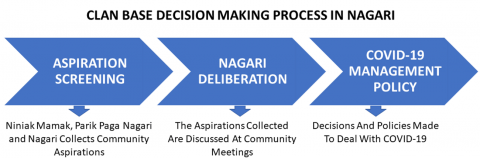
This is similar to the deliberative democracy model, which is how public opinion can change through discussion and can gather data that is relevant and contextual to the needs of decision-making [53]. The Clan-based COVID-19 handling policy is a representation of local decisions in handling COVID-19 in accordance with the needs and potential of local communities. In this policy process, the composition of actors consists of government and non-government actors. The dominant government actor is the state government assisted by other actors who support Clan-based programs, namely Babinsa, Babinkhantibmas, and Puskesmas Apparatus in the work area of Nagari Pasia Laweh. The role of local actors such as ninik mamak, alim ulama (urang surau or community leaders in the field of religion), cadiak pandai (retirees and people who are smart in the country), parik paga nagari (from parik paga kaum/representatives of the people), and bundo kanduang. In local policies in Minangkabau, indigenous people have a great influence, especially related to the values and traditions embraced by local residents. Thus, Clan-based handling of COVID-19 is a collaborative policy between the government and the tribal community. Non-Formal Actors, especially ninik mamak in the formulation process, are as a connector of the aspirations of the people. The collaborative policy network between the ninik mamak and the government has an important role in determining policy outcomes However, if the collaborative network is not formed effectively in the decision-making process, it can result in policy outcomes that do not reflect the interests of all parties [54]. The following is the Clan-based decision-making cycle in Figure 2:
Figure 2. Clan base decision making process in Nagari
A series of Clan-based decision-making activities:
4.3.2 Policy implementation
The policy implementation process is an advanced stage after policy formulation. At this stage, the decision that has been determined by the tribe and Nagari is implemented. The Nagari government as an implementer has set various steps that must be taken and are contained in various Clan-based COVID-19 decrees and regulations. Several factors affect the implementation of the implementation:
1) The policies carried out are in accordance with the aspirations of the community, and there are Standard Operating Procedures prepared by the Nagari.
Policy design affects the interaction and response of the formal and informal organizations involved [59]. Network analysis can describe the relationships between actors, patterns of cooperation, and interactions within the policy framework. Policy integration is a procedural dimension that involves the coordination and integration of policy actions across subsystems [60]. The policies decided are the results of mapping the crisis conditions experienced, which are outlined in strategic programs with consideration of the urgent needs of the community. Operational Standards Procedures of various programs have been prepared and socialized by the Nagari Government to ninik mamak and tribal residents. Thus, the program is carried out in accordance with the set SOPs. The standard operating procedures are made simple and easy for members of the Nagari Task Force to understand. The SOP that has been prepared is used as a reference in carrying out the program. Even though the program is Clan-based, managerial activities must still be carried out, so that the implementing actors have a clear reference in carrying out policy activities.
2) Clan database.
The behaviour patterns of certain social groups influence interactions in the policy process. Prominent social identities play an important role in individual behavior and preferences in certain social contexts [61]. In the implementation of the assistance and distribution program, it uses Clan-based data. Clan-based data collection carried out in each handling program has an impact on the achievement of policy objectives, namely assistance and programs received by the program targets. In deciding who will be the target of the policy, the ninik mamak kaum is proposed, after which the data is verified by the nagari. Tribal residents will be more open to ninik mamak in telling about the conditions experienced. There has been a collaborative process in collecting data and determining the recipients of aid can avoid conflicts that arise when the aid has been disbursed.
3) Policy communication using the values of the bakaum pattern.
Communication strategies tailored to culture, Clan, and ethnicity are essential. Effective and open communication can build trust. Involvement of community organizations and community members in the dissemination of accurate information, building trust and effectiveness of decision-making interventions [25, 62]. Socialization of appropriate policies and acceptance by tribal residents through Ninik Mamak. The meaning is that all information that comes outside the Clan will be more effectively received by the citizens if they are the ones who convey the information. All the words conveyed by Ninik Mamak are considered to be the basis for the action of the tribal members. This traditional pattern is very comfortable and used in the daily life of the people. When faced with a crisis, the way policies are communicated can affect public reactions and perceptions of the success of the policy [63].
Likewise, in the process of policy monitoring. The role of ninik mamak is very large, especially in the enforcement of sanctions in overcoming hoax information among racial citizens. For example: there are nephews who spread hoax news related to vaccines. So, the nagari did not directly reprimand the nephew's son. However, conveying to the ninik mamak of the people to reprimand the nephew's children and straighten out the information that was circulating. This pattern of information delivery is heard more by the tribal people, than by the nagari government who directly reprimands the children of the nephews who have made the mistake. Some factors that affect policy communication in handling COVID-19:
The right communicator factor.
Ninik Mamak is an accurate communicator and trusted by the community. The people of the community are very obedient and appreciate ninik mamak. So that the process of conveying information is easily accepted by the public.
The intensity of communication between Ninik Mamak and the Bumim people.
In the agreement made with the nagari, it is stated that link mamak is obliged to control the condition of the community and report immediately if there is a problem. Ninik Mamak intensively visited her nieces and nephews during COVID-19. Through this visit, information can be explored on what happened to the community during the crisis. So, every problem that occurs can be responded to quickly by the nagari.
Openness in providing information.
Ninik Mamak is the closest relative of the respected leaders of the people, so the information provided is accurate because it will have an impact on the dignity of Ninik Mamak.
4) Well-identified local potential-based resources.
Understanding the situation/area by analyzing aspects of community resilience has an impact on accurate resource-based decision-making [64]. The Nagari government and other non-formal actors know in detail the potential that exists in Nagari so that the policies made have a strong foundation and are in accordance with needs. The potential of Rumah Gadang as a place of racial isolation as many as 32 gadang houses is considered very appropriate. Members of the closest community took turns meeting the needs of residents who were isolated in the gadang house. The traditional pattern of helping between tribal residents who are bound by kinship relationships makes it very easy for the isolation house program to be carried out. Other financial potentials are from the Village Fund and Nagari Fund, as well as Regional assistance. The following are the COVID-19 funds: In 2020, there was a Village Fund budgeted for COVID-19 of IDR 238,023,808 and a Regional donation fund of 28,300,000; in 2021, a village fund of IDR 77,838,000, and in 2022, a village fund of IDR 91,962,500,-. This funding is realized in various nagari programs, both food security in the form of basic food assistance (nagari funds, Bank Negara Indonesia (BNI), and regional donations). Related to other assistance are Fish Seeds and Plant Seeds. Various plant seeds provided for household resilience are spinach, long beans, lettuce, and kale. The source of this seed assistance varies, some are from nagari and local governments.
There are 250 productive fish ponds seeded to improve local food security in Nagari and opportunities for Rantau children who have returned home and lost their jobs.
Mapping another potential for local food security and the affected Micro, Small, and Medium Enterprises (MSME) sector makes it easier for all actors to map the form of policy, scale policy priorities, and map the goals of the assistance program. In addition, the potential for village funds/nagari funds, according to the government's appeal, are allocated in various COVID-19 handling programs. Another resource is the contribution of migrants in handling COVID-19, which is coordinated by the nagari and ninik mamak in various Clan-based programs.
4.3.3 Policy monitoring and evaluation
Coordination effectiveness will be achieved if there is the involvement of actors and various sectors (such as government, civil society, and the private sector) that play an important role in coordination. A pattern of collaboration is created by involving stakeholders that have an impact on policy success [65]. The policy monitoring process is carried out with the collaboration of various elements of actors that have been stated in the Nagari Pasia Laweh COVID-19 Task Force Team. Informal actors of ninik mamak played an important role in controlling tribal residents during the pandemic crisis. In addition, the participation of tribal residents in reporting the condition of residents returning from the Region is transparent and honest. In the isolation policy in the gadang house, the role of the bundo kanduang in maintaining the food security of isolated residents is very good. Residents voluntarily took turns delivering the needs of the houses of the people in isolation or who were self-isolating in their respective homes. In addition, the state government establishes intense communication with the ninik mamak of the people and always involves the ninik mamak in every stage of policy. Monitoring of policies is carried out by all parties involved. The principles of information disclosure, please help, and togetherness are upheld in breaking the chain of COVID-19 in Nagari Pasia Laweh.
The policy evaluation process is very transparent. State government actors in each meeting provided an overview of the condition of the community and the development of the crisis situation during the pandemic. If there is a clash and differences in information, it is resolved in the nagari deliberations. In addition, the existence of Clan-based policy recipients as a database used by the state government in every policy program makes it easier for Ninik Mamak to control whether the policy targets of aid recipients are in accordance with the proposal or not. The openness of the nagari with ninik mamak as a representative of the community in the development of the COVID-19 handling program raises high confidence that this program is in accordance with the initial agreed goals. The policy evaluation process is carried out in the form of various transparency activities, namely, displaying reports on the implementation of policies in Nagari, besides that everyone has the right to access information on the condition of the policy carried out. All processes of policy activities are documented in writing and video and stored in Nagari.
4.4 Success factors for handling Clan-based COVID-19 in Nagari Pasia Laweh
1) Policy formulation
If you look back at the COVID-19 handling policy, it is Top Down from the central government and local governments, but the nagari wali understands the limitations of the nagari in handling the crisis at that time and understands the strong bakaum cultural pattern in Nagari Pasia Laweh. Thus, Wali Nagari provides an open space for the local community, especially in mamak, to jointly find solutions to deal with the crisis and the consequences of the pandemic. This is also supported by the opportunities provided by the local government and the central government through the Village and Nagari Funds which can be managed independently for handling COVID-19 in the Nagari environment. In addition, the harmonious relationship between the nagari wali and other external parties (donors, such as banks) helps with additional funds for the COVID-19 handling activities program carried out by Nagari. The success of this stage is due to decision-making that can present all representatives of both elements from the government and the tribal community. Wali Nagari th,e leader of the government, comes from the Caniago tribe. So that the democratic pattern approach to actors involved in the deliberation pattern by understanding the characteristics of the ninik mamak pattern in making decisions. Ninik Mamak's active involvement in policy formulation as a connector for the aspirations of tribal members because his role is highly respected by the community, including from the regional community. The Rantau network is well coordinated in the form of Rantau ties at the jorong level, Nagari level, and even in one sub-district. The involvement of migrants in the policy formulation process is not direct. However, nomads are a source of donations from the community and the nagari government and ninik mamak also asked for the views of the Region's representatives through the bond management on all policies taken. Ninik mamak of each tribe collected various material assistance from the Region, coordination related to the use of their gadang house which was used as a house of isolation. This statement proves that the collaboration between Ninik Mamak and Wali Nagari is very strong in this stage of kau-based policy formulation.
The importance of civil society participation and the need for improvements in risk and disaster management [66]. The need to collaborate with community leaders in the community to achieve their communication goals efficiently [67]. The roles, responsibilities, and performance of stakeholders involved in local risk management activities are a concern [68]. Approaches to social capital and reliance on mitigation need to be considered [69]. Ninik Mamak gets space to play a role in every stage of Clan-based COVID-19 handling policies. In the policy formulation phase, the role of ninik mamak as a source of information on the needs of the people and the process of lobbying and policy negotiations will be decided at the state level.
2) Implementation phase
People with a high level of trust tend to be more compliant with the policies implemented [70]. The existence of effective communication between the government and various stakeholders affects the success of handling COVID-19 [17]. Active transformational leadership encourages community participation and facilitates community development efforts to make a greater contribution to building the community's adaptive capacity [71]. State capacity, which includes bureaucratic and resource management capabilities, is proving to be a key factor in determining the speed and effectiveness of policy responses to the COVID-19 crisis [72]. The capacity of individuals, organizations, and political systems is essential to create effective policy design [73]. The government is aware of its capacity to handle the crisis that occurs. The local knowledge possessed by the nagari apparatus can support the programs carried out, especially when dealing with the citizens, the nagari apparatus has a good emotional relationship with the ninik mamak kaum. The nagari apparatus also comes from the nephews of the ethnic group who are selected through the selection process for the selection of the nagari apparatus. This supports knowledge based on local values and is influential in implementing Clan-based policies.
Multi-actor collaboration can generate different types of public value. The findings show that public value is not only generated through managerial actions, but also through interaction and collaboration between the various actors involved [74]. The number of nagari devices is not proportional to the number of residents who must be supervised which only amounts to 14 people and plus 7 volunteers who help the nagari. The formation of task forces and posts up to the level of the people closest to the community is a way for the government to control and ensure that the policy programs made run smoothly. The existence of handling posts on a smaller scale makes it easier to monitor the activities of community members in the field and the implementation of policies implemented. This tribal post functions to convey every condition and situation in the community to the ninik mamak and the nagari task force. Furthermore, in the isolation house policy, the role of the bundo kanduang actor as a female leader maintains food stability for residents who self-isolate at home and in the village gadang house.
The important role of local communities and governmental and non-governmental organizations in implementation. Reviewing existing policy frameworks, several factors such as institutional, financial, managerial, and technical gaps are important to integrate new interventions [75]. Each program that is carried out is made a Standard Operating Procedure (SOP) by the state government. This SOP is jointly known by the Nagari Task Force which consists of government actors, ninik mamak actors, tribal representatives, and nephews gathered in the Nagari Task Force. SOPs are the flow and action guide for all tribal members in running the program.
3) Monitoring and evaluation phase
The strength of monitoring and evaluation is the collaboration between ninik mamak and wali nagari in overseeing the Clan-based programs that are carried out. Ninik Mamak is a supervisor in the field and intensely coordinates with nephews at the tribal post. Meanwhile, the guardian of the nagari acts quickly and communicates intensely when various violations occur by the children of the nephews. The role of ninik mamak as an advisor to the people is used to supervise the COVID-19 handling program that is being carried out.
The success of Clan-based COVID-19 handling in the perspective of policy stages (formulation, implementation, monitoring and evaluation) in the main policy of Clan-based COVID-19 handling can be concluded: food security policy in the form of an appeal for people to consume available local food is balanced with various food assistance such as fish seeds and other plant seeds in the family yard. In addition, food security is also through basic food assistance and money from the government. Assistance with village funds and nagari funds for people who are not registered in central and regional government assistance. Data on Clan-based aid recipients is well recorded in Nagari, and assistance has been appropriately distributed to the tribal community. So that there is no target community that does not receive government assistance or the assistance of the community-based program that has been determined. The availability of community food is sufficient and well-distributed. In addition, the cross-subsidy mechanism imposed by the nagari is well coordinated, namely in the form of purchasing local nagari products and distributing them to the community, as well as between fellow communities. The COVID-19 prevention policy in addition to education for the community, also an appeal was made to ninik mamak to take care of her nephew's children. In mitigating residents affected by COVID-19, in addition to self-isolation, there are also 32 community isolation houses under the coordination of the group's bundo. Furthermore, data on the monitoring of returns from Rantau is recorded at the tribal post and monitored periodically by the Nagari Task Force Team. In this case, the traditional approach cannot be separated from the implementation of government policies that tend to be top-down in handling COVID-19 in particular or disasters in general. In this case, the government must be aware that traditional communities are more supportive of policies that are tailored to the local approach by allocating the values adhered to. The society lives with the principles and views of the philosophy of life that are held. In the policy at the nagari level, the involvement of ninik mamak kaums needs to be considered, because the way of the community gets more support than all decisions determined by the nagari government or local government. In this case, the Bottom up approach is more appropriate and quickly used, especially during disaster emergencies. This also applies to policies from the local government and the central government that are enforced in Nagari, the implementation pattern should be adapted to the pattern of the tribal community.
The limitation of this research is that it only involves core informants from the ninik mamak and nephews and the nagari task force involved not all tribal representatives.
[1] Kamus Besar Bahasa Indonesia (KBBI) Kamus versi online/daring (dalam jaringan). https://kbbi.web.id/kaum.
[2] Sukmawati, E. (2019). Filosofi Sistem Kekerabatan Matrilineal Sebagai Perlindungan Sosial Keluarga Pada Masyarakat Minangkabau. EMPATI: Jurnal Ilmu Kesejahteraan Sosial, 8(1): 12-26. https://doi.org/10.15408/empati.v8i1.16403
[3] Putri, A.A., Sari, M.V., Dharma, M.S.A., Silfiana, W. (2021). Lineage empowerment as community governance model in response to the Covid-19 outbreak in Pasia Laweh Village. In International Conference on Social Science, Political Science, and Humanities (ICoSPOLHUM 2020), pp. 56-61. https://doi.org/10.2991/assehr.k.210125.011
[4] Safitri, C., Valentina, T.R., Wicaksono, A. (2021). Forms of government collaboration at the local level in handling the COVID-19 disaster. In E3S Web of Conferences, p. 02003. https://doi.org/10.1051/e3sconf/202133102003
[5] Safitri, C., Valentina, T.R., Putera, R.E. (2024). The utilization of Kaum-based village funds as a form of strengthening the capacity of the Nagari government during the COVID-19 pandemic. Sosiohumaniora, 26(1): 86-96. https://doi.org/10.24198/sosiohumaniora.v26i1.44998
[6] Wu, J., Yang, S., Wang, W., Jaeger, C. (2023). How effective are community‐based disaster reduction strategies? Evidence from the largest‐scale program so far. Risk Analysis, 43(8): 1667-1681. https://doi.org/10.1111/risa.14043
[7] Busic-Sontic, A., Schubert, R. (2024). Social resilience indicators for pandemic crises. Disasters, 48(2): e12610. https://doi.org/10.1111/disa.12610
[8] Hirono, M., Nurdin, M.R. (2024). Local knowledge as the basis of disaster management and humanitarian assistance. Disasters, 48(S1): e12634. https://doi.org/10.1111/disa.12634
[9] Ferguson, C.E., Tuxson, T., Mangubhai, S., Jupiter, S., et al. (2022). Local practices and production confer resilience to rural Pacific food systems during the COVID-19 pandemic. Marine Policy, 137: 104954. https://doi.org/10.1016/j.marpol.2022.104954
[10] Paudel, P.K., Parajuli, S., Sinha, R., Bohara, M., Abedin, M.A., Adhikari, B.R., Gautam, S., Bastola, R., Pal, I., Huntington, H.P. (2024). Integrating traditional and local knowledge into disaster risk reduction policies: Insights from Nepal, India and Bangladesh. Environmental Science & Policy, 159: 103825. https://doi.org/10.1016/j.envsci.2024.103825
[11] Nurdin, M.R. (2024). Islamic faith‐based organisations and their role in building social capital for post‐disaster recovery in Indonesia. Disasters, 48(S1): e12635. https://doi.org/10.1111/disa.12635
[12] Redaksi. (2020). Survei Spektrum Politika: 39,9 Persen Warga Sumbar Anggap Covid-19 Konspirasi. https://langgam.id/survei-spektrum-politika-399-persen-warga-sumbar-anggap-covid-19-konspirasi/.
[13] Yuniarto, N.I. (2021). Survei: Kepuasan Warga ke Pemerintah Atasi Covid 57,8 Persen. https://www.cnnindonesia.com/nasional/20210819165424-32-682577/survei-kepuasan-warga-ke-pemerintah-atasi-covid-578-persen.
[14] Indonesia, P.R. (2020). KEPPRES NO 12 TH 2O2O Tentang Penetapan Bencana Nonalam Penyebaran Corona Virus Disease 2019 Sebagai Bencana Nasional. Fundamental of Nursing, 1: 18-30.
[15] Yuniarto, N.I. (2021). Ini Daftar Lengkap Wilayah di Sumbar yang Terapkan PPKM Level 3 dan 4. https://sumbar.inews.id/berita/ini-daftar-lengkap-wilayah-di-sumbar-yang-terapkan-ppkm-level-3-dan-4.
[16] dan T.R. (2020). I. Menteri Desa, Pembangunan Daerah Tertinggal, Surat Edaran Nomor 8 Tahun 2020. https://kedesa.id/id_ID/repository/surat-edaran-menteri-desa-pdtt-nomor-8-tahun-2020-desa-tanggap-covid_19-dan-penegasan-padat-karya-tunai-desa/.
[17] Rizaldi, S., Ariany, R., Putri, A.A. (2021). Collaborative leadership of Wali Nagari in mitigation of the Covid-19 pandemic in Nagari Rancak. Journal of Governance and Public Policy, 8(1): 37-49. https://doi.org/10.18196/jgpp.811341
[18] Redaksi. (2021). Terbaik di Sumbar, Nagari Pasia Laweh Agam Melaju ke Tingkat Nasional. https://langgam.id/terbaik-di-sumbar-nagari-pasia-laweh-agam-melaju-ke-tingkat-nasional/.
[19] Carter-Tod, F., Ford, J.V., Weissman, J.L. (2025). “You start with the community”: The value of community-based approaches to COVID-19 in Sri Lanka. Community Health Equity Research & Policy. https://doi.org/10.1177/2752535X251337660
[20] Cuadra, C.B., Rämgård, M. (2025). A community-based response to the COVID-19 pandemic: Social capital in action. International Journal of Disaster Risk Reduction, 116: 105158. https://doi.org/10.1016/j.ijdrr.2024.105158
[21] Travers, C.L. (2024). Leveraging local capital in humanitarian supply networks during pandemic response. International Journal of Disaster Risk Reduction, 106: 104421. https://doi.org/10.1016/j.ijdrr.2024.104421
[22] Xu, Z., Sridhar, K.S., Xu, Q., Ravi, V. (2024). Governing pandemics: Resilience and community responses for COVID-19 in Bengaluru and Shanghai. Journal of Urban Affairs, 1-20. https://doi.org/10.1080/07352166.2024.2407358
[23] Zank, S., Júnior, W.S.F., Hanazaki, N., Kujawska, M., Ladio, A.H., Santos, M.L.M., Blanco, G.D., do Nascimento, A.L.B. (2022). Local ecological knowledge and resilience of ethnomedical systems in a changing world–South American perspectives. Environmental Science & Policy, 135: 117-127. https://doi.org/10.1016/j.envsci.2022.04.018
[24] Ruslanjari, D., Putri, R.A., Puspitasari, D., Sulistiyo, S. (2024). Embracing leadership of local actors and community in disaster risk reduction of Yogyakarta. Jàmbá: Journal of Disaster Risk Studies, 16(1): 1-9. https://doi.org/10.4102/jamba.v16i1.1679
[25] Henry Akintobi, T., Quarells, R.C., Bednarczyk, R.A., Khizer, S., Taylor, B.D., Nwagwu, M.N., Hill M, Ordóñez, C.E., Sabben, G., Spivey, S., Davis, K., Best, M.L., Chen, A.Z., Lovell, K., Craig, L.S., Mubasher, M. (2023). Community-centered assessment to inform pandemic response in Georgia (US). International Journal of Environmental Research and Public Health, 20(9): 5741. https://doi.org/10.3390/ijerph20095741
[26] Intharaphan, C., Ayuwat, D., Laohasiriwong, W. (2017). Social capital for healthy public policy formulation by the community in Northeastern Thailand. The International Journal of Interdisciplinary Social and Community Studies, 12(1): 29-41. https://doi.org/10.18848/2324-7576/CGP/v12i01/29-41
[27] Subarsono, A.G. (2012). Analisis kebijakan publik: Konsep, teori dan aplikasi.
[28] Cairney, P. (2019). Understanding Public Policy: Theories and Issues (Vol. 2). Bloomsbury Publishing. https://doi.org/10.1007/978-0-230-35699-3
[29] Knoepfel, P., Larrue, C., Varone, F., Hill, M. (2007). Public Policy Analysis. The Policy Press.
[30] Howlett, M., Ramesh, M. (2003). Studying Public Policy: Policy Cycles and Policy Subsystems. Oxford University Press. https://books.google.co.id/books/about/Studying_Public_Policy.html?hl=id&id=eRytQgAACAAJ&redir_esc=y.
[31] Abayomi, K.Q. (2024). Public trust and state management of the COVID-19 pandemic in Nigeria. Frontiers in Political Science, 6: 1334827. https://doi.org/10.3389/fpos.2024.1334827
[32] Pennings, J.M., Grossman, D.B. (2008). Responding to crises and disasters: The role of risk attitudes and risk perceptions. Disasters, 32(3): 434-448. https://doi.org/10.1111/j.1467-7717.2008.01048.x
[33] Esmonde, K., Jones, J., Johns, M., Hutler, B., Faden, R., Barnhill, A. (2024). “Lives versus livelihoods”: Conflict and coherence between policy objectives in the COVID-19 pandemic. Social Science & Medicine, 357: 117188. https://doi.org/10.1016/j.socscimed.2024.117188
[34] Hughes, S., Miller Runfola, D., Cormier, B. (2018). Issue proximity and policy response in local governments. Review of Policy Research, 35(2): 192-212. https://doi.org/10.1111/ropr.12285
[35] Asthana, S., Mukherjee, S., Phelan, A.L., Gobir, I.B., Woo, J.J., Wenham, C., Husain, M.M., Shirin, T., Govender, N., Al Nsour, M., Ukponu, W., Ihueze, A.C., Lin, R., Asthana, S., Mutare, R.V., Standley, C. J. (2025). Decision-making under epistemic, strategic and institutional uncertainty during COVID-19: Findings from a six-country empirical study. BMJ Global Health, 10(2): e018124. https://doi.org/10.1136/bmjgh-2024-018124
[36] Zhang, C., Liu, N., Yuan, M. (2024). More is better? Stakeholder participation in regulatory rule-setting towards green transition. Journal of Environmental Management, 349: 119484. https://doi.org/10.1016/j.jenvman.2023.119484
[37] Sumaryana, A., Komara, S.R., Pancasilawan, R. (2025). Organizational capacity in implementing the “Kang Pisman” program: A case study of waste management in Bandung City. Journal of Ecohumanism, 4(1): 1912-1919. https://doi.org/10.62754/joe.v4i1.6011
[38] Genda, E.A., Hakim, A., Noor, I., Setyowati, E. (2025). Smart policing: The impact of E-TLE implementation on traffic behavior in South Sumatra, Indonesia. Journal of Ecohumanism, 4(1): 2119-2126. https://doi.org/10.62754/joe.v4i1.6035
[39] Audia, N., Putera, R.E., Aromatica, D., Bisri, M.B. (2021). Capabilities of the city government in combating COVID-19 in the city of Padang. In E3S Web of Conferences, p. 01009. https://doi.org/10.1051/e3sconf/202133101009
[40] Washington, S. (2023). An infrastructure for building policy capability–lessons from practice. Policy Design and Practice, 6(3): 283-298. https://doi.org/10.1080/25741292.2022.2139952
[41] Dowding, K., Leslie, P., Taflaga, M. (2025). Policy success and failure in Australia. Australian Journal of Public Administration. https://doi.org/10.1111/1467-8500.12690
[42] Dunn, W.N. (2003). Public Policy Analysis. New Jersey: Pearson Prentice Hall.
[43] Harmelink, M., Nilsson, L., Harmsen, R. (2008). Theory-based policy evaluation of 20 energy efficiency instruments. Energy Efficiency, 1: 131-148. https://doi.org/10.1007/s12053-008-9007-9
[44] Edelmann, N., Albrecht, V. (2023). The Policy Cycle: A framework for knowledge management of practitioners' expertise and role in participatory processes. Frontiers in Political Science, 5: 1223013. https://doi.org/10.3389/fpos.2023.1223013
[45] Nickel, P.M., Hunt, C. (2024). Community engagement, equity, and cross-sector public health practice. Public Health Reports®, 139(6): 669-674. https://doi.org/10.1177/00333549241249671
[46] Lengerer, F. (2025). Local community participation of older village residents: Social differences and the role of expectations. Journal of Rural Studies, 115: 103591. https://doi.org/10.1016/j.jrurstud.2025.103591
[47] Ni, L., De la Flor, M., Wang, Q., Romero, V. (2021). Engagement in context: Making meaning of the Latino community health engagement process. Public Relations Review, 47(2): 102036. https://doi.org/10.1016/j.pubrev.2021.102036
[48] Navis, A.A. (1984). Alam Terkembang Jadi Guru (Adat dan kebudayaan Minangkabau). Jakarta: PT Temprint.
[49] Syamsurizaldi, S., Putri, A.A., Sari, M.V., Yoliandri, R. (2020). Raso Banagari: Ekspresi Sosial Perantau terhadap Pembangunan Kampung Halaman. JSW (Jurnal Sosiologi Walisongo), 4(1): 1-16. https://doi.org/10.21580/jsw.2020.4.1.5171
[50] Laweh, P.N.P. (2020). Database Warga Kaum yang Pulang Dari Rantau.
[51] Laweh, P.N.P. (2020). Data Rumah Gadang (Isolasi Kaum) Nagari Pasia Laweh.
[52] Choi, T.H., Wong, Y.L. (2024). Does public consultation affect policy formulation? Negotiation strategies between the administration and citizens. Journal of Education Policy, 39(3): 455-479. https://doi.org/10.1080/02680939.2023.2269373
[53] Stark, A., Thompson, N.K., Marston, G. (2021). Public deliberation and policy design. Policy Design and Practice, 4(4): 452-464. https://doi.org/10.1080/25741292.2021.1912906
[54] Marta, A., Suwaryo, U., Sulaeman, A., Agustino, L. (2021). Collaborative policy networks analysis in the policy-making process: Communal (Ulayat) land policy case in Riau Province, Indonesia. Human Systems Management, 40(1): 31-47. https://doi.org/10.3233/HSM-190585
[55] Loureiro, R., Markovitch, O., Riley, C.S., Cleaves, H.J., Mogoșanu, I.H., Paulino-Lima, I.G., Marlow, J.J., Som, S.M. (2020). Perspective: Science policy through public engagement. Science and Public Policy, 47(6): 890-891. https://doi.org/10.1093/scipol/scaa039
[56] Rainey, S., Mormina, M., Lignou, S., Nguyen, J., Larsson, P. (2021). The post-normal challenges of COVID-19: Constructing effective and legitimate responses. Science and Public Policy, 48(4): 592-601. https://doi.org/10.1093/scipol/scab037
[57] Kim, S., Andrew, S.A., Ramirez de la Cruz, E., Kim, W.J., Feiock, R.C. (2024). Impacts of local government perceptions of disaster risks on land resilience planning implementation. Land, 13(7): 1085. https://doi.org/10.3390/land13071085
[58] Koduah, A., Van Dijk, H., Agyepong, I.A. (2015). The role of policy actors and contextual factors in policy agenda setting and formulation: Maternal fee exemption policies in Ghana over four and a half decades. Health Research Policy and Systems, 13: 1-20. https://doi.org/10.1186/s12961-015-0016-9
[59] Capano, G., Lepori, B. (2024). Designing policies that could work: Understanding the interaction between policy design spaces and organizational responses in public sector. Policy Sciences, 57(1): 53-82. https://doi.org/10.1007/s11077-024-09521-0
[60] Dorado-Rubín, M.J., Guerrero-Mayo, M.J., Navarro-Yáñez, C.J. (2025). Policy integration in urban policies as multi-level policy mixes. Policy Sciences, 58: 45-67. https://doi.org/10.1007/s11077-024-09562-5
[61] Hornung, J., Bandelow, N.C., Vogeler, C.S. (2019). Social identities in the policy process. Policy Sciences, 52(2): 211-231. https://doi.org/10.1007/s11077-018-9340-6
[62] Alam, E., Han, X., Islam, A.R.M.T., Alvarez, E., Islam, M.K., Dominey-Howes, D. (2024). The local governance of COVID‐19: Lessons learned and ways forward in rural Bangladesh. Asian Politics & Policy, 16(2): 165-190. https://doi.org/10.1111/aspp.12737
[63] Weible, C.M., Nohrstedt, D., Cairney, P., Carter, D.P., Crow, D.A., Durnová, A.P., Heikkila, T., Ingold, K., McConnell, A., Stone, D. (2020). COVID-19 and the policy sciences: Initial reactions and perspectives. Policy Sciences, 53: 225-241. https://doi.org/10.1007/s11077-020-09381-4
[64] Mello, B.J., de Moraes Souza, C.M., Kantamaneni, K., Wilhelm, I.J., Silva, J.I.A.O., Martendal, A.G., Bhattacharya-Mis, N. (2024). Community resilience to socio-environmental disasters in Itajaí Valley, Brazil. International Journal of Disaster Risk Reduction, 113: 104828. https://doi.org/10.1016/j.ijdrr.2024.104828
[65] von Lüpke, H., Leopold, L., Tosun, J. (2023). Institutional coordination arrangements as elements of policy design spaces: Insights from climate policy. Policy Sciences, 56(1): 49-68. https://doi.org/10.1007/s11077-022-09484-0
[66] de Melo, T.L., de Oliveira Guimarães, L., Cortese, T.T.P.P. (2024). Disaster governance and the role of civil society: A study of the mining disaster in Brumadinho, Brazil. International Journal of Disaster Risk Reduction, 114: 104945. https://doi.org/10.1016/j.ijdrr.2024.104945
[67] Xie, M., Chen, L. (2024). Turning every disaster into an opportunity: An exploratory study on refugees’ perceived emergency management capacity and community resilience. International Journal of Disaster Risk Reduction, 111: 104727. https://doi.org/10.1016/j.ijdrr.2024.104727
[68] Wanninayake, S.B., Nianthi, R., Dayarathne Banda, O.G. (2024). Roles and responsibilities of stakeholders involved in local-level flood risk management: A study in the Deduru Oya basin in Sri Lanka. International Journal of Disaster Resilience in the Built Environment, 15(4): 680-698. https://doi.org/10.1108/IJDRBE-12-2023-0128
[69] Alexander Priest, A. (2023). Under pressure: Social capital and trust in government after natural disasters. Social Currents, 10(4): 381-400. https://doi.org/10.1177/23294965231153066
[70] Zaki, B.L., Nicoli, F., Wayenberg, E., Verschuere, B. (2022). In trust we trust: The impact of trust in government on excess mortality during the COVID-19 pandemic. Public Policy and Administration, 37(2): 226-252. https://doi.org/10.1177/09520767211058003
[71] Davies, A. (2009). Understanding local leadership in building the capacity of rural communities in Australia. Geographical Research, 47(4): 380-389. https://doi.org/10.1111/j.1745-5871.2009.00586.x
[72] Yen, W.T., Liu, L.Y., Won, E., Testriono. (2022). The imperative of state capacity in public health crisis: Asia's early COVID-19 policy responses. Governance, 35(3): 777-798. https://doi.org/10.1111/gove.12695
[73] Mukherjee, I., Coban, M.K., Bali, A.S. (2021). Policy capacities and effective policy design: A review. Policy Sciences, 54(2): 243-268. https://doi.org/10.1007/s11077-021-09420-8
[74] Thabit, S., Sancino, A., Mora, L. (2025). Strategic public value (s) governance: A systematic literature review and framework for analysis. Public Administration Review, 85(3): 885-906. https://doi.org/10.1111/puar.13877
[75] Rakha, A., Jabbar, A., Rasheed, H., Tul-Muntaha, S., Munir, A., Fatima, A., Anwar, R., Sohail, M., Aadil, R.M. (2025). Nutrition crisis management after floods: A multisectoral perspective. International Journal of Disaster Risk Reduction, 116: 105141. https://doi.org/10.1016/j.ijdrr.2024.105141