Kaushik Chowdhury | M. Abeedur Rahman* | Shuvo Kumar Mallik | Lutfun Nahar Chowdhury | Noushin Akhter Nova
© 2025 The authors. This article is published by IIETA and is licensed under the CC BY 4.0 license (http://creativecommons.org/licenses/by/4.0/).
OPEN ACCESS
The world is very much lopsided without digitalization in agriculture. Differences in access to advanced agricultural technologies, particularly artificial intelligence (AI) technologies, constrain productivity, sustainability, and food security. We show how AI can fill that gap by helping to equalize access to technology. Precision farming, predictive analytics, and automated decision-making are just a few example of AI-driven solutions that could equip farmers with real-time insights, enable resource optimization, and enhance crop yields. Nonetheless, barriers like high costs, the absence of digital infrastructure, and limited technological skills hinder broad adoption. This paper also looks at ways these can be tackled, such as government policies in place, public-private partnerships and localized AI applications that suit the different agricultural ecosystems. AI thus has a significant role to play in democratizing agricultural advancements by enabling inclusivity in digital transformation, ensuring farmers across the world that they can benefit from technological advancements, all of which can further be beneficial to global food security and economic resilience.
artificial intelligence (AI), digital divide, precision agriculture, AI ethics, sustainability, farmers across
Modern digital technologies have been rapidly evolving and have been the driving force behind the transformations in many industries, sectors, and even some socio-economic developments [1]. Given that agriculture is one of the primary and critical sectors to ensure food security across the globe and economic stability in many countries, it is also subject to and could benefit from the newly developed digital and Artificial intelligence technologies in recent years [2]. Despite all of the benefits and potential outcomes of the expansion, there is a critical challenge that affects all countries, including developed ones [3]. This challenge is the digital divide, which is especially threatening to the global southern countries. The digital divide is a gap between those regions, communities, and people who have access to modern information and communication technologies and those who lack it [4]. The digital divide in the global south exists due to insufficient infrastructure, economic affordability, and level of digital literacy among the population of developing countries [5]. This divide in the context of agriculture is critical, as it limits the access of smallholder farmers, rural communities, and developing countries from obtaining and utilizing possible benefits of AI-driven agricultural solutions [6].
AI promises to transform agriculture by providing data-driven decisions, process optimization, yield optimization and lower resource costs and environmental footprints [7]. But its advantages are often not shared evenly. If left unaddressed, the digital divide will expand as the power of technology becomes the privilege of the few who can afford to access or even learn how to use it [8]. Focus on mitigating the digital divide in agriculture A World Bank report looks at how AI can tackle the global digital divide in agriculture [9]. There are two other highlights that capture the main ideas: It shows the struggle of marginalized communities in accessing digital resources and the transformative potential of AI for shifting these imbalances. Moreover, the paper highlights several strategies, initiatives, and policies that can promote the implementation of AI in agriculture in underserved areas and prevent technology from being a basis for more inequality and instead an enabler of empowerment and inclusive growth.
Agriculture is one industry where technology can make a difference. From precision farming to climate-smart agriculture, the promise of AI-powered digital tools in driving efficiency, sustainability, and profitability in agriculture has been well documented. But they are not universally available benefits. Smallholder farmers struggle to adopt and integrate digital into their farming practices, especially in many parts of the world, such as developing countries and rural areas [10]. Several factors shape the digital divide in agriculture. Primarily, there is no infrastructure in rural places [11]. In order to implement AI-driven solutions, people must have reliable internet, electricity and mobile networks and countless rural spaces throughout the world have yet to be reached by these basic capabilities [12]. In areas where there is not adequate infrastructure, farmers are excluded from the opportunity to benefit from advances such as remote sensing, predictive analytics, or automated machinery [13].
Second, economic barriers contribute to the widening of the digital divide [14]. Smallholder farmers often lack financial resources, which makes the cost of initial investment in digital tools and technologies prohibitive [15]. Drones, sensors and other AI-powered solutions are expensive, and many farmers are not able to access the technology [16]. Additionally, the costs of maintaining and updating digital tools are exorbitant, and such costs can be particularly daunting among farmers living in poverty or struggling with the capital risks of agriculture.
Another critical challenge is farmers' lack of digital literacy and skills. Many rural areas, especially in the Global South, are far behind in terms of digital fluency and lack the technical know-how to use AI-driven solutions [17]. To effectively adapt AI to the agriculture industry, farmers need to be aware of these technologies in addition to having the ability to use them properly [18]. Farmers will not have the opportunity to utilize the full potential of AI if there is no adequate training or set of skills provided for them to use it to its fullest potential. Many of the challenges in these fields can be tackled through AI. AI relies on massive amounts of data to aid farmers in making more informed (and ultimately, better) decisions as it relates to crop management, pest control, irrigation, and planning a farm in general [19]. Artificial intelligence (AI) and machine learning (ML) can also be used to make real-time recommendations for optimizing current farming practices based on data analysis of soil conditions, weather patterns, and crop health, which improves overall efficiency and reduces waste.
AI will also help in improving food security and safety. AI-based precision farming methods can promote the optimal use of water and Agri-chemicals, further reducing environmental pollution and economic loss to farmers [20]. Additionally, AI-enabled software programs like predictive models allow farmers to foresee climate change impacts like weather extremes and pest outbreaks and make other preemptive decisions, thus increasing their resilience to an era of increasing climate uncertainty. While there has been encouraging use of AI, the advantages of AI appear to be clustered in areas with more infrastructure, investment and digital literacy [21]. To effectively bridge the digital divide in agriculture, we must ensure that AI technologies are affordable, accessible, and usable by farmers in underserved regions [22]. Closing this global digital divide requires an emphasis on equitable access to AI and digital technologies across agriculture sectors. Multiple tactics and elands are available to accomplish this goal [23].
Improving infrastructure in rural and underserved locations is among the most essential steps to bridge the digital divide [24]. These involve developing reliable internet and electricity access and mobile networks that can support AI-powered applications [25]. This requires investment in robust infrastructure by governments, development organizations, and the private sector to enable the mass use of digital technologies across the agri-food system. Smallholder farmers must be able to access the costs of AI tools and solutions [26]. This may mean creating affordable, scalable solutions that are specifically designed for farmers in the global south. The same goes for mobile-based applications that hit on AI algorithms for good crop management, which, at a fraction of the cost of high-tech solutions, could become available to a much larger population of users [27].
Farmers should be well prepared to adopt and use AI solutions, making increasing digital literacy across the agriculture sector a necessity to ensure that farmers can work with these tools [22]. Farmers should be trained on AI tool adoption and intelligent decision-making processes using data [28]. These training programs should also consciously address the human capital in the agricultural domain to develop technical skills that will enable farmers to manage and run digital systems autonomously.
Governments have a key role to play in ensuring equitable access to technology. Governments can implement policies that promote digital inclusion, create financial incentives for the adoption of technology, and stimulate innovation in agriculture to initiate equitable opportunities for marginalized groups [29]. Finally, global collaboration is critical to ensure that developing nations have access to the resources and support necessary to19 integrate artificial intelligence into their agricultural industries. Therefore, reducing the global digital disparity in agriculture is a significant step to attaining a more just and sustainable future for all farmers, no matter their location or economic situation [22]. AI undoubtedly shows excellent promise in revolutionizing agriculture, yet without targeted efforts to ensure these technologies are accessible and beneficial to all, its promise will go unfulfilled [30]. We can build a more inclusive agricultural sector by ensuring that the benefits of AI are spread across the board by addressing infrastructure development, affordable technology solutions, digital literacy, and supportive policies. By doing so, we enable a future of AI-driven ag-tech that is equitable socially and economically in its global use.
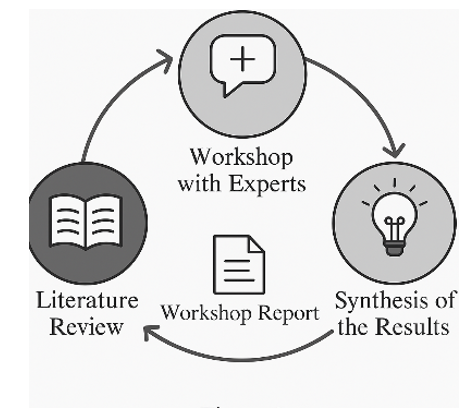
In this study, we have performed a descriptive desk study and have done a physically brief interview/chat with 35 different persons, including business developers, directors, scientific coordinators, computer scientists, economists and policymakers, at a prominent agricultural university and research institute. We analyzed the literature on empirical studies about AI in agriculture and focused on relevant agricultural domains. Figure 1 illustrates the workflow steps of the adopted research approach. The literature review aimed to review the current state of knowledge on agricultural AI by analyzing original academic papers published in pertinent fields (computer science and engineering, ethics, and economics). Using the Scopus database while applying the same criteria for the three areas, we did get a different number of returned articles (technology 2150 but only for ethics 50). So, we felt that such a large body of papers across a wide range of disciplines would not cohere into anything meaningful through systematic review due to such disproportionate representation. During the interview, we raised various questions on the technology, digital divide, Al ethics, precision agriculture, and social impact and received support.
Therefore, we applied these exclusion criteria to the abstracts and methodology sections. Through exclusion and preliminary screening, we narrowed our search down to a review of approximately 20 articles per discipline related to agricultural AI topics, resulting in a relatively balanced review. These articles were then screened for relevance/citation/subject matter and whether they were adding different insights/feedback relative to other literature. We then selected articles to read more closely. We analyzed the contexts in which they appeared, extracting technical, environmental, social, economic, and ethical challenges of AI in usage and development in agriculture. Following the literature review, we organized a focus group with academics and researchers who work in the field of agricultural AI, aiming to create multi-disciplinary expert groups. Accordingly, this topic was designed to inspire and map opinions, experiences, and perceptions among scholars and researchers in different domains of AI. To this end, the focus group was to discuss the literature findings and explore solutions forward and potential pathways for some of the discussed challenges. We also sought to understand how much interdisciplinary consultation and solutions were needed to address the disciplinary challenges identified in the literature. Afterward, we synthesized the findings towards an outline of an interdisciplinary approach to applying AI in agriculture.
Figure 1. Flow diagram of the adopted research methodology
Agricultural AI is not just another tech solution. It is a potential game-changer for our most pressing needs: food security, resource management, and sustainable practices [31]. However, as the global landscape of agriculture transforms, cutting-edge AI technologies are stretching the limits of potential to contribute to bridging the digital divide between the developed and developing worlds. One of the most important fields in which AI has been able to progress, in particular, is precision agriculture, where AI-powered tools allow farmers to tailor inputs like water, fertilizers and pesticides [32]. They use satellite imagery, soil health information, and weather patterns to give farmers actionable insights [33]. Tools like Climate Field View and John Deere's Operations Center, for instance, use AI to optimize crops and predict with incredible accuracy. Cross-field, these tools identify the areas requiring attention, reducing wastage, increasing efficiency and improving productivity.
One of these advancements is the application of computer vision and robotics in the agricultural sector. AI-powered image recognition systems can be mounted on autonomous robots to help them with functions like weeding, planting and harvesting [34]. Robots developed by companies like Blue River Technology and Technologies can identify crops and weeds to target with precision to reduce herbicides [35]. Likewise, AI-driven drones are being utilized more frequently to observe expansive fields, determine plant well-being, and identify illnesses or pest infestations at an early stage [36]. AI also helps manage livestock in a very crucial way. Artificial Intelligence (AI) is ushering in a new era of farm animal welfare by transforming how farmers monitor animal health, nutrition, and productivity through the use of intelligent sensors and AI algorithms. Connecterra's Ida platform, for instance, uses AI to analyze data collected from wearable sensors on livestock animals to deliver real-time insights that will help optimize milk production and isolate health issues before they worsen. Another area with significant advancement of AI is crop disease and pest detection [37]. Advanced machine learning models can analyze smartphone and drone images to identify a disease and enable farmers to take corrective action immediately. There are two platforms, Plantix and PEAT, that offer low-cost solutions for small-scale farmers, diagnosing by images and suggesting treatments [38].
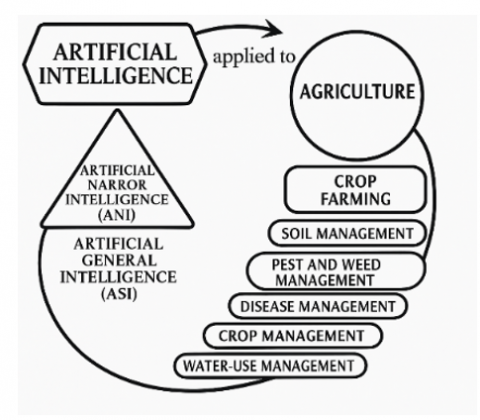
We mainly concentrated on the use of AI in crop applications, such as soil management, pest and weed management, disease management, crop management, and water use management, even though there is a lot less literature on this topic. The following illustrations illustrate how AI approaches relate to agriculture (Figure 2). We can infer from the literature that in selective agriculture areas, current methods are comparatively more focused on narrow AI (and more focused on selected crop applications). Agricultural AI occasionally combines a wide range of data, including high-resolution aerial photos, temperature, humidity, rainfall, soil samples, terrain categorization, equipment used, planting rates, applications, and different learning techniques.
Figure 2. AI types and agriculture domains
The new generation of AI-driven marketplaces and supply chain solutions is also transforming the economics of agriculture [39]. AI also connects farmers with buyers, predicts market trends, and streamlines logistics on digital platforms [10]. For instance, several startups such as Taranis and AgroStar are using AI to assist farmers in selling their harvest at a just price and minimizing post-harvest wastage. In Climate-Resilient Agriculture, AI Is Another Breakthrough. Machine Learning predictive models feed data on climate-induced risks and recommendations on crop choice and sowing periods to farmers, who can choose the crops that will give them the least risk for loss [40]. AI-enabled weather prediction software like IBM’s Watson Decision Platform for Agriculture gives farmers hyper-local predictions to help them adjust to fluctuating climate conditions [41]. However, the uptake of agricultural AI is uneven between regions due to the existence of infrastructure obstacles and the digital divide. Addressing this gap will need investment in internet connectivity, affordable technologies and capacity building of small-scale farmers, especially in developing countries [42]. With the latest advancements in agricultural AI, farming practices all over the world are being transformed. If these innovations can also lead to improved productivity, sustainability and resilience for farmers, access to these technologies must be equitable so that their benefits are shared across the spectrum of agricultural contexts.AI has also been used to map crop growth cycles, determine when to harvest, and deliver information on market prices [43]. Table 1 displays the five primary uses of agricultural AIs. Despite the fact that precision agriculture has been practiced for a few decades, artificial intelligence presents both fresh opportunities and obstacles. In the following sections, the most important technological, social, ethical, environmental, and economic ramifications of using AI in the greenhouse were examined.
Table 1. Five main applications of agricultural AI
|
Application |
Description of the Application Area |
|
Management of Soils |
AI-based management modeling, decision support systems, reasoning, and artificial neural networks are used for soil management. For example, neural networks have a high demand for the ability to predict soil composition, temperature, structure, nutrients, and moisture. However, these techniques require large amounts of data, which are not always available, and they can be sensitive to unexpected weather conditions when they fail. |
|
Management of Weeds and Pests |
AI for pest and weed management helps farmers monitor plants accurately, identify infected ones, manage diseases quickly, and reduce their spread. With real-time data available, farmers can take swift action to prevent damage. AI used for weed management includes artificial neural networks, genetic algorithms, sensor-based machine learning, digital image analysis, vector quantization, and artificial neural networks for weed detection. |
|
Managing Illnesses |
AI can improve pest management in agriculture by enabling the early detection of diseases, which is crucial for effective disease management. AI inputs include images of crops and animals, such as leaf images, which are analyzed to identify both healthy and infected areas before they become visible to the human eye. AI-based image recognition systems can identify plant diseases with high accuracy. Computer vision systems used for disease management include genetic algorithms, trained artificial neural networks, web-based intelligent diagnostic systems, fuzzy logic, and web-based expert systems. |
|
Crop Management |
AI for crop management provides valuable recommendations for crop selection, seed choice, optimal pest management, and where crops need water, fertilizers, and pesticides. This allows farmers to take proactive actions. Tools like CALEX, PROLOG, FARMSYS, ROBOTICS, Demeter, and artificial neural networks are used to manage crop growth and health. In larger farms, AI is employed to map and monitor thousands of acres of crops. It can predict crop yields and detect nutritional deficiencies with up to 90% accuracy. |
|
Water-Use Optimization |
Soil and plant moisture sensors send real-time data to AI-based management systems, where optimal water usage is calculated. Optimizing water usage can lead to increased yields. When irrigation systems are managed by smart systems and combined with soil characteristics and weather data, it can result in higher crop production. |
Artificial Intelligence (AI) is one of the most significant breakthroughs of all time and is changing the economy of many industries. Agriculture is at the forefront, and they have seen exponential growth in economic performance because of their efficient use of resources, decreased operational costs, and increased efficiency. This shift is significant for both large-scale agricultural businesses and smallholder farmers, who have the potential to ensure better lives for themselves as long as equitable access to AI technology is provided [29]. Yield optimization is a key aspect of how AI will affect the agricultural economy. Using predictive analytics and machine learning models, AI-powered systems analyze vast datasets, from weather patterns to soil conditions to past crop performance [44]. These insights allow farmers to make better choices about when to plant, how much to irrigate, how much fertilizer to add, and how and when to apply pest controls and to maximize yields. For example, AI platforms like CropX and Granular deliver personalized recommendations, allowing farmers to optimize output for lower inputs and improving profitability.
AI also leads to savings by increasing resource efficiency. Precision agriculture technology leverages AI-enabled sensors, drones and satellite imagery to monitor soil conditions and crop health in real-time [45]. This targeted strategy minimizes the use of water, fertilizers and pesticides, meaning substantial cost savings. Take, for instance, businesses such as Blue River Technology, which has designed AI-driven machinery that accurately dispenses herbicides in the locations where they are needed, thereby eliminating the overuse of chemicals and saving companies money [46]. AI has also been pivotal in supporting risk mitigation in agriculture, which is critical for economic stability beyond cost efficiency. AI models can help anticipate extreme weather conditions, as well as pest or disease outbreaks, giving farmers time to adjust and adapt. IBM’s Watson Decision Platform for Agriculture, for example, provides farmers with hyper-local weather forecasting and actionable insights that minimize crop losses while maximizing the income they can reliably expect.
Table 2 summary of irrigation automation using different artificial intelligence Technologie.
AI has transformed marketplace dynamics, as well as agricultural economics. AI algorithms leverage the data on digital platforms that help farmers connect directly with buyers and remove the intermediaries to get them fair prices for their produce [47]. For instance, firms like AgroStar and Taranis study market trends, enabling farmers to determine the most profitable time to sell their crops. Furthermore, AI-based supply chain optimization minimizes post-harvest losses by optimizing storage and transportation. Another crucial use case for the application of AI in agriculture is financial inclusion [48]. Limited financial data makes it challenging to extend formal credit to smallholder farmers [49]. On the other hand, AI-driven tools can determine creditworthiness by examining alternative sources of data like transaction histories, weather patterns and farming practices [50]. It is here that organizations such as Sat Sure and Farm Drive are using AI to extend financial services to the underserved class of farmers, who can then channel these funds into modern vehicles and scale their businesses.
Table 2. An overview of different artificial intelligence technologies for irrigation automation
|
S.No. |
Algorithms |
Method of Evapotranspiration / Desired Calculation |
Other Technologies |
Advantages / Results |
|
1 |
PLSR and other regression Algorithms |
Evapotranspiration model |
Sensors for data collection, IOT Hardware Implementation |
In-creased efficiency and economic feasibility |
|
2 |
Artificial Neural Network based control system |
Evapotranspiration model |
Sensors for measurement of soil, temperature, wind speed, etc. |
Automation |
|
3 |
Fuzzy Logic |
FAO Penman-Monteith method |
|
Optimization |
|
4 |
ANN (multilayer neural model), Levenberg Marquardt, Backpropagation |
Penman–Monteith method |
|
Evaporation decreased due to schedule and savings observed in water and electrical energy |
|
5 |
Fuzzy Logic |
- |
WSN, Zigbee |
Experimental results verification. Can be applied to home gardens and grass |
|
6 |
ANN Feed Forward, Backpropagation |
- |
|
Optimization of water resources in a smart farm |
|
7 |
Fuzzy Logic Controller |
Penman Monteith method |
Wireless sensors |
Drip irrigation prevents wastage of water and evaporation |
|
8 |
Machine Learning algorithm |
- |
Sensors, Zigbee, Arduino microcontroller |
Prediction and tackles drought situations |
Equally compelling is AI's impact on livestock economics. These wearable sensors work with AI algorithms to monitor livestock's health, reproduction patterns, and even productivity, allowing farmers to optimize milk and meat production [51]. Tools such as Connecterra's Ida platform can also automate the monitoring of animal behavior and health in real-time, cutting veterinary costs and increasing profitability. Yet if AI in agriculture benefits are to be equitable, there's a digital divide to bridge. Farmers in developing economies are primarily confronted with a lack of internet access and the high cost of AI tools and technical skills. AI must have a wider reach and be made affordable, accessible and user-friendly for smallholder farmers so that they become mainstream, i.e., have a reasonable price mechanism in place with a commitment from the scale of government, private organizations and NGOs.
Emerging economies with larger populations and higher food demand have agriculture-specific challenges, including material limitations, sustainable efficiencies and climate vulnerabilities [52]. In "these" regions, AI is revolutionizing the way agriculture is practiced by providing innovative approaches to enhance productivity, efficient resource management, and better economic outcomes [53]. Yet, the potential for AI technology will never be achieved unless equitable access to it is achieved as well. Precision Farming is one of the most impactful applications of AI in developing nations. AI-driven devices such as soil sensors, satellite images, and machine learning models assist farmers in optimizing the use of inputs like water, fertilizers, and pesticides [54].
AI also helps to detect crop diseases and pests early, a significant challenge facing farmers in emerging economies, where agricultural extension services are often limited [55]. AI-powered mobile applications like Plantix and PEAT apply image recognition through mobile-based features to diagnose diseases and suggest remedies, thus providing farmers with actionable information. These tools are especially effective in rural regions, where professional agronomists are few and far between. AI and Climate-resilient Farming: Another transformative application of AI to be highlighted is in the field of climate-resilient farming. These are typically more vulnerable to climate change, and farmers depend on seasonal rainfall and generations of traditional knowledge. AI models that can analyze weather patterns, predict droughts or offer optimal planting windows can mitigate these risks. For example, IBM has brought localized predictions and recommendations for crops with its Watson Decision Platform for Agriculture to various developing regions.
AI also improves access to markets for smallholder farmers, who intermediaries often exploit. AI algorithmic-based digital platforms facilitate a direct connection between farmers and buyers, providing fair pricing for farmers and minimizing post-harvest waste [15]. One example is Agri Buddy, a Southeast Asian startup that uses AI to study market trends and deliver production advice to farmers so they can be more profitable [29]. Moreover, AI-powered financial inclusion initiatives are tackling the problem of credit accessibility. In emerging economies, smallholder farmers often do not have formal credit histories and are, therefore, unable to invest in conventional farming technologies [56]. Farm Drive & Sat Sure are using AI solutions by analyzing alternative data (weather conditions, crop yields and more) to determine the creditworthiness of rural farmers and give them access to loans and insurance. However, the adoption of AI in agriculture in emerging economies is met with significant barriers. The regional disparity in internet access, the high cost of AI platforms and a lack of technical expertise have limited the execution on a wide scale [57]. Most rural farmers may not have proper literacy levels and a good command of the English language, thus making such AI tools impractical. Governments, NGOs, and private enterprises must come together to invest in infrastructure, capacity building, and affordable technologies in order to address these challenges. Low-cost mobile apps, localized language interfaces and community training programs are vital in helping smallholder farmers access AI enhancements.
AI in Agriculture: Redefining the Way We Cultivate Our Food The advancement of artificial intelligence (AI) is increasingly transforming agriculture around the world, and as we face challenges ranging from food security to climate change to resource efficiency, it has the potential to help us redefine the way we grow our food. Despite the technological and economic advantages AI can provide in agriculture being heavily covered, the salience of its social dimensions specifically the global digital divide – is also pressing [57]. AI is reshaping agriculture, and its societal implications are profound, everything from empowering marginalized communities to ethical questions of equity, inclusivity, and technology access [58].
AI in agriculture can bring benefits to marginalized groups, smallholder farmers, women, and rural communities [59]. In states across the world, such as in socioeconomic developing countries, smallholder farmers make up a large part of the agricultural workers yet have little access to modern tools and resources [60]. AI-powered solutions like mobile-based advisory platforms offer these farmers timely insights regarding crop health, weather forecasts & market prices [18]. For example, mobile applications like PEAT’s Plantix and AI tools like IBM’s Watson Decision Platform for Agriculture help farmers make decisions based on data. These technologies provide smallholder farmers with knowledge that was difficult to access due to geographic and infrastructural barriers. This allows AI to fill in knowledge gaps and support marginalized communities to compete in local and international markets.
Women, who make up a significant proportion of the agricultural workforce in so many parts of the world, will also benefit from AI [61]. Targeted training programs and easily accessible tools can empower women farmers with knowledge and skills to help bridge the gender gap in agriculture, enabling them to boost productivity and improve livelihoods with AI [62]. While AI can drive agricultural advancements, it can also widen existing social inequities, making equitable access and delivery essential if AI technology is to be used to its fullest potential. Any introduction of AI technologies could compound existing inequalities, as many rural and underprivileged communities lack the digital infrastructure, financial resources, and technical skills needed to adopt the technology [63]. This has an additional risk of leaving the poorer regions even more on the margins as the more prosperous and more developed regions enjoy the benefits of AI.In contrast, the poorer ones are left behind. Some problems with using AI in agriculture are language barriers and lower literacy rates. Most AI tools are built with the English-speaking user in mind, leaving communities outside of that at a loss [64]. Ensuring inclusivity naturally involves localizing AI tools, from supporting regional languages to more simplified user interfaces.
We must respond as a world: governments, NGOs, and private enterprises alike, each bringing their complementary skills and resources to this problem. We need to invest in rural digital infrastructure as well as subsidized access to AI technologies and training programs at community levels to ensure a level playing field. There will be considerable gaps in AI developments and applications across the global and local landscape, and initiatives like Microsoft’s AI for Earth program and similar public-private partnerships can fill this void.
I hope this helps you build a new perspective on how AI can influence agriculture practice. AI tools are often trained on vast amounts of data, analyzing satellite imagery and weather data, as well as information input by farmers [65]. Frequently, farmers do not have a clear picture of how their data is being utilized or who owns it. This lack of transparency might allow exploitation in cases where the data is used to help corporations rather than farmers. Keeping farmers in control of their data and the benefits it provides is a vital social good. Legal/regulatory frameworks need to be in place to ensure that data privacy is protected and ethical practices are modeled. These concerns can be addressed through open data initiatives and farmer cooperatives [66].
The cultural adaptability and acceptance of AI are integral to its effectiveness and prowess in agriculture [67]. In many communities, cultural and historical roots are embedded in traditional farming practices. AI techniques could be met with resistance if they go against the local customs or beliefs [68]. In certain areas, for instance, the deployment of UAVs or robotic workers powered by AI may be viewed as invasive or superfluous, requiring a more personal touch [69]. In order for these tools to be successfully adopted, they will need to be adapted to local contexts and co-designed with the communities that they are trying to serve. Farmers will be much more receptive to AI technology that is initiated through participatory approaches such as farmer constitutive development of AI solutions. Moreover, such a hybrid approach through AI can help preserve or enrich cultural values while fostering innovation.
AI is completely changing agriculture, making it a greener option and solving some significant environmental problems. AI is helping to lower agriculture’s impact on the planet, all the way from improving resource efficiency to minimizing climate consequences [70]. With the help of analytics-based insights and next-gen technologies, farmers can adopt sustainable practices for food security.
One of the prominent advancements in promoting environmental sustainability is the deployment of AI-enabled precision agriculture [71]. Real-time soil health, crop health, and water requirements are tracked by AI systems that depend on data gained from sensors, drones and satellite imagery. This allows farmers to ration water, fertilizers, and pesticides, preventing waste and saturation of the soil. AI-based irrigation systems like CropX and FarmBot, for instance, deliver targeted water according to the needs of the crop and can lead to significant water savings in parts of the world where shortages are a real possibility [19]. Similarly, Blue River Technology’s See & Spray system applies herbicides through AI so that chemicals are only directed to invasive plants, minimizing runoff that can contaminate soil and water sources. Such practices help conserve natural products and prevent the degradation of habitats.
Agriculture is also a significant source of greenhouse gas emissions from livestock, synthetic fertilizers and land-use changes. It is in this respect that AI provides solutions to lower these emissions through improved farm management practices. AI tools can enrich the way fertilizer is used by applying nutrients that address crop needs on an ongoing basis and preventing the excessive release of nitrous oxide into the air, another potent greenhouse gas [72]. In Ida thetical agribusiness, the platform provided by Connecterra’s Ida platform leverages AI to monitor the health and productivity of livestock, allowing farmers to optimize feed efficiency and minimize methane emissions. AI also contributes to carbon farming efforts by mapping the levels of carbon present in soil and suggesting practices such as cover cropping and reduced tilling [73].
Because climate change is altering things right now, farmers need to have the right decision-making tools to figure out how to adapt to the changes. Machine learning models use historical and real-time weather data to forecast climate-related hazards like droughts, floods and temperature extremes [74]. Such insights allow farmers to take timely actions during the planting season, like altering schedules or choosing climate-resilient crops [75]. Platforms such as IBM’s Watson Decision Platform for Agriculture offer hyper-local weather forecasts and actionable recommendations, enabling farmers to avert losses while reducing environmental impact. AI also strengthens the resilience of agricultural systems as it promotes adaptive strategies for climate variability.
Integration of Artificial Intelligence (AI) in Agriculture: It Offers Transformative Opportunities, but Raises Key Ethical Concerns Overcoming these issues is crucial to finding that AI technologies are responsibly and somewhat released in our society [76]. The highest and most pressing ethical dimension is the digital divide, as smallholder and marginalized farmers do not have easy access and comfort with AI-based solutions. In developing regions, farmers are disproportionately affected by high costs, lack of digital infrastructure, and low technical literacy, reinforcing iron bars in existing inequalities. It will take the joint initiatives of governments, NGOs, and the private sector to invest in affordable tools, digital literacy programs, and rural connectivity to ensure these forms of AI are equitably accessible to all.
Agricultural AI relies on large amounts of data collected from farms, leading to concerns over data privacy and ownership. Large corporations can ultimately push farmers out of their data, potentially profiting from it without fair compensation. Transparent data governance policies must be put in place to uphold farmers’ rights to their data and ensure they benefit from it. Another ethical issue is bias in AI systems. Just like the popular AI tools, if the ones to help the agriculture sector are developed on the basis of data gathered from large-scale farms, they may not serve smallholder farmers or various other agricultural settings pretty well. AI model design that is participatory, along with localization of the AI models based on existing farming practices and norms, needs to be the first principle of being inclusive of the local farming community [77].
AI should be aligned with environmentally sustainable practices to leave behind a minimal carbon footprint and not displace generations of sustainable farming practices [78]. Ethical Artificial Intelligence should respect cultural practices and enhance environmental conservation. Ultimately, it will be essential to use AI for the greater good in farming, with consideration for fairness, openness, inclusiveness, and sustainability. Closing the digital divide and empowering farmers worldwide are key to a fair and sustainable agricultural future.
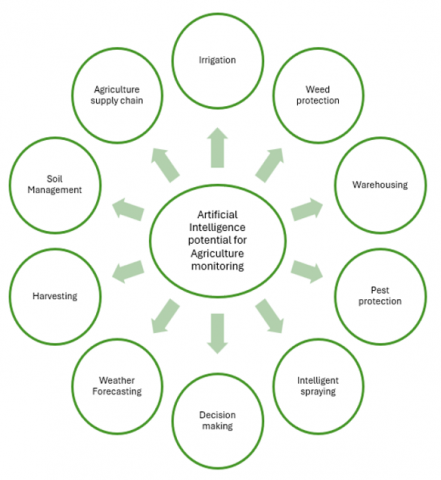
AI in Agriculture AI is revolutionizing agriculture with cutting-edge solutions and improvements in productivity, efficiency and sustainability. With global food demand soaring, AI has emerged as an essential solution to the challenges of our time, from limited resources and labor shortages to climate change and the digital divide [79]. AI can contribute to closing the technology gap by making farmers everywhere more equal. An essential technological facet of AI in agriculture is its capability to process and analyze large datasets. The IoT, devices, sensors, and drones used are key to this data-driven approach [80]. Such tools gather data in real-time on the health of the soil, weather conditions, crop growth, pest infestations and irrigation need. With data collected, AI algorithms analyze it for actionable insights so the farmers can make informed and correct decisions. For example, artificial intelligence systems can help with weather pattern analysis, identifying the best times for planting, or suggesting the right volume of water, fertilizers, or pesticides. By practicing precision agriculture, resource wastage is minimized, costs are cut, and crop yield goes up [81]. AI makes the agricultural industry more dynamic and adaptable by incorporating technology that has never been used in the field before. Biosensors have even made the monitoring of soil fertility and moisture possible. Instead of using basic linear regression models, the data is appropriately connected, raw data is acquired, and various techniques are used. Neural networks have been used to calculate and forecast past weather trends using non-linear dependencies. Thus, we may use AI to plant seeds at the appropriate time for essential items like rice, wheat, and manse because, aside from each one being specifically grown, they all essentially need a lot of rainfall to grow. Examples of these AI-monitored agricultural metrics are shown in Figure 3.
This infographic shows the functions of AI in agriculture and the areas in which AI will enhance irrigation, pest and weed control, warehousing and decision-making. It also helps with intelligent spraying, weather prediction, harvesting, netting and supply chain management, enhancing the efficiency, productivity and sustainability of contemporary farming.
Irrigation AI helps optimize water usage through intelligent irrigation systems that analyze soil moisture and weather conditions. Weed Protection AI-powered systems can detect and manage weeds using image recognition and automated weed removal techniques. Warehousing AI improves inventory management, reduces waste, and ensures optimal storage conditions for agricultural products. Pest Protection AI detects pest infestations early and suggests appropriate control measures, minimizing the use of harmful pesticides. Intelligent Spraying AI enhances precision spraying by targeting specific areas that require treatment, reducing chemical usage and environmental impact. Decision-Making AI-driven analytics assist farmers in making informed decisions regarding crop management, resource allocation, and risk assessment. Weather Forecasting AI improves weather predictions, helping farmers plan activities such as planting and harvesting more effectively. Harvesting AI-powered robotic harvesters increase efficiency by automating the picking and sorting of crops. Soil Management AI analyzes soil health and nutrient levels, recommending appropriate fertilizers and farming practices for better yield. Agriculture Supply Chain AI optimizes logistics, demand forecasting, and market trends, ensuring a smoother supply chain from farm to market.
Figure 3. Artificial Intelligence monitoring some agriculture parameters
AI has also found cases of use in crop monitoring and disease detection. Using high-resolution imaging from drones and satellite-based systems and processing the data through machine learning algorithms, early signs of crop stress, nutrient diseases or deficiencies can be detected [82]. AI-driven applications leverage image recognition technologies to assess plant health, pinpointing problems when remedial action is still possible to avert widespread crop loss. These technologies enable farmers to safeguard their crops and keep food production stable by identifying problems early, thus keeping food security on track [83]. Another area where AI is a game changer in agriculture is robotics and automation. Tractors on Autopilot, Planters, and Harvesters Will Change Conventional Agriculture. These advanced machines use artificial intelligence to operate. They can work wee hours without human labor, making them effective in regions where labor is scarce. Robotic harvesters can be programmed to identify fresh produce (ripe fruit) while avoiding less fresh (underripe) fruits, reducing wastage and improving produce quality [84]. Automatic planting systems also allow individual seeds to be placed at optimized depths and distances, improving germination rates is transforming livestock management, too [85] AI increases farmers' profitability by minimizing delays and reducing spoilage, helping consumers access fresh, high-quality products. In the past, a variety of physical techniques were used to emphasize the physical engagement with the weeds. Still, many automated technologies are now constructed in the modern world (see Table 3). asserted that weeding depends on weed position and weed count. Classic spring or duck foot tines were used for intra-row weeding. By tillage, the tines broke up the soil and the root contact, which encouraged the weeds to wilt [86]. However, this approach is not advised because tillage might ruin the crop-soil contact. Therefore, there should be no touch, and other methods like the development of laser treatments and micro spraying are safe for interaction between roots and soil. Outlined the method of employing agricultural robotics to manage the robots' postures and suppress weeds in rice fields when the fields are uneven. The robot's posture was controlled, and weeds were suppressed using the Laser Range Fielder (LRF) technique.
Table 3. Categorization of AI based applications for weeding operations
|
S.No |
Application |
Crop |
Algorithms for Weed Detection |
Weed Removal Methods |
Accuracy |
|
1 |
Precision Weed Management |
Pepper plants, artificial plants |
Machine Vision, Artificial Intelligence |
A smart sprayer |
- |
|
2 |
Autonomous Weeding Robot. |
Sugar beet |
Machine vision algorithm |
High power lasers for intra-row weeding proposed. |
- |
|
3 |
Weeds Detection in Agricultural Fields |
- |
Data augmentation for image preprocessing; Convolutional neural networks for weed detection |
Herbicide Spray |
70.5% |
|
4 |
Robot for weed control |
Sugar Beets |
Machine Vision |
Rotatory hoe/ Mechanical removal |
- |
|
5 |
Weeding Robot |
Rice |
- |
Motion of robot prevents weed growth |
- |
|
6 |
Weed Prevention Robot |
Rice |
- |
Motion of robot |
92.9% |
|
7 |
Weed Detection |
Sugarcane |
Color Based and Texture Based algorithms; Greenness Identification; Fuzzy Real Time Classifier |
Robotic arms for mechanical removal |
- |
|
8 |
Weed Control System |
Lettuce |
Machine Vision |
Electrical Discharge |
|
|
9 |
Robotic Weed Control |
Cotton |
Machine Vision algorithm based on Mathematical morphology |
Chemical spraying |
88.8% sprayed |
Beyond these direct uses, AI is serving a crucial role in making agriculture more inclusive and assisting with bridging the digital divide [22]. Cloud-based AI solutions and mobile applications help bring advanced technologies within reach of a smallholder farmer residing in a far-flung corner of the world. They are pitched as simple and cost-effective, with local languages and cultural nuances for easier adoption. AI-powered mobile applications, for example, offer farmers tailored guidance on farming techniques, pest control strategies and market prices. AI is democratizing access to technology, empowering marginalized communities, and encouraging equitable development in agriculture.
In the context of agriculture, the global digital divide refers to unequal access to technology and information, particularly between developed and developing regions. Artificial Intelligence (AI) has the potential to bridge this divide by providing underserved areas with the tools they need to improve productivity, sustainability, and food security. Successful adoption of AI in some regions can offer insights into how technology can be more equitably distributed.
Successful Adoption of AI in Agriculture: AI has been successfully adopted in various regions to address the global digital divide, especially in agriculture. In countries like India, Kenya, and Brazil, AI-powered technologies have played a crucial role in improving agricultural productivity, enhancing access to information, and providing real-time data to farmers. For instance, AI-driven platforms help farmers with weather predictions, pest control, and crop management, even in remote areas with limited internet connectivity. In India, AI tools like CropIn and AgriDigital have enabled farmers to access precision farming tools and market insights through smartphones. However, adoption is not without challenges. To ensure equitable technology access, there needs to be a focus on infrastructure development, affordable internet, and digital literacy programs, especially in rural and underserved areas. AI can be a powerful tool in bridging the digital divide. Still, it must be accompanied by policies that ensure equal access, promote local innovation, and consider the needs of smallholder farmers across the globe.
Technological Impact: Enhancing Efficiency and Innovation: AI in agriculture can improve technological accessibility by providing affordable, scalable solutions. With tools like AI-driven sensors, drones, and satellite imaging, farmers can access real-time data on soil health, water usage, and crop growth. These innovations allow smallholder farmers to optimize their operations, reduce waste, and increase yields. Importantly, these technologies are becoming more accessible via mobile apps, which are crucial in regions with limited internet infrastructure, providing vital information directly to farmers' phones.
Economic Impact: Boosting Productivity and Market Access: AI can have a profound economic impact on farming communities by improving efficiency and profitability. Precision farming, powered by AI, allows farmers to use resources more effectively, which can reduce input costs such as fertilizers, water, and labor. Additionally, AI applications that offer market price data and supply chain insights help farmers make informed decisions, reducing intermediaries and potentially increasing their income. For example, AI tools that predict demand trends can help farmers align their production with market needs, reducing waste and improving sales.
Social Impact: Empowering Farmers and Enhancing Equity: AI has the potential to empower marginalized communities by democratizing access to advanced agricultural technologies. By offering tailored advice, AI applications can help farmers increase their crop yields and reduce the risk of failure due to environmental factors like droughts or pests. In regions where agricultural knowledge is often passed down through informal networks, AI-based education platforms can provide scalable and standardized training, empowering farmers with the knowledge they need to adapt to changing conditions. Moreover, these technologies can promote gender equality by providing women, who often face barriers in accessing resources, with tools to improve their productivity and incomes.
Bridging the global digital divide in agriculture through AI offers significant potential, but challenges remain in its implementation across various socio-economic contexts.
1. Infrastructure Limitations: In many rural areas, especially in developing countries, poor internet connectivity and limited access to digital devices can hinder the adoption of AI technologies. Without a reliable infrastructure, farmers cannot fully utilize AI-driven solutions.
2. Affordability: The high cost of AI solutions, including smartphones, sensors, and data access, may be prohibitive for smallholder farmers with limited financial resources. This could prevent equitable access to these technologies, leaving behind those who need them most.
3. Knowledge and Training: There is often a gap in digital literacy, particularly among older farmers or those without formal education. Training programs that are simple and accessible are necessary to help farmers understand and use AI tools effectively.
4. Cultural and Language Barriers: AI systems often assume a certain level of education and language proficiency. In multilingual and culturally diverse regions, localizing AI tools to cater to various languages and cultural contexts is essential for broader adoption.
5. Data Privacy and Trust: Farmers may be hesitant to share data with AI platforms due to concerns over privacy and security. Building trust and ensuring transparent data usage practices are critical to fostering adoption.
Despite these challenges, with the proper policy support, infrastructure development, and local partnerships, AI has the potential to significantly reduce the digital divide and provide equitable access to agricultural technology.
With climate change being a top concern, the agriculture industry is changing with the integration of Artificial Intelligence (AI) in agriculture, which supports sustainability, efficiency, and productivity. Sensors, satellite imagery and drones remotely monitor soil health, crop conditions, and irrigation needs, allowing AI-based precision farming to use resources more effectively. Sensor-enabled irrigation solutions, such as CropX and AI-powered pest control systems, help to avoid environmental damage by reducing the excess use of chemicals. AI increasing efficiency in the application of fertilizer and management of livestock also mitigates greenhouse gas emissions, which is key to climate resilience. Moreover, AI underpins weather forecasting, allowing farmers to adjust to climate change and increasing supply chain efficiency, which cuts down on food waste. Yet this development also raises challenges in terms of limited digital access, high costs, and ethical issues such as who owns the data and bias. Responsible and inclusive integration of artificial intelligence into the agriculture sector requires collaboration across fields, including computer science, agronomy, environmental science, and economics. AI fosters a more sustainable and resilient agriculture future by bridging the digital divide.
Next Steps for Research and Policy Implementation
To fully realize AI’s potential in bridging the digital divide in agriculture, several key steps are necessary:
The authors are grateful to the anonymous referees of journal for their extremely useful suggestion to improve the quality of the article.
[1] Litvinenko, V.S. (2020). Digital economy as a factor in the technological development of the mineral sector. Natural Resources Research, 29(3): 1521-1541. https://doi.org/10.1007/s11053-019-09568-4
[2] Xing, L., Cao, C., Elahi, E. (2025). Advancing coupling coordination: Bridging China's digital economy and green agriculture for sustainable rural development. Information Technology for Development, 2025: 1-22. https://doi.org/10.1080/02681102.2024.2447595
[3] Patonia, A. (2025). Green hydrogen and its unspoken challenges for energy justice. Applied Energy, 377: 124674. https://doi.org/10.1016/j.apenergy.2024.124674
[4] Shou, M., Jia, F., Yu, J., Wu, Y. (2025). Challenges in developing information and communication technology (ICT) use for rural e-governance: An ecology perspective. Information Systems Journal, 35(1): 247-278. https://doi.org/10.1111/isj.12540
[5] Assefa, Y., Gebremeskel, M.M., Moges, B.T., Tilwani, S.A., Azmera, Y.A. (2025). Rethinking the digital divide and associated educational in (equity) in higher education in the context of developing countries: The social justice perspective. The International Journal of Information and Learning Technology, 42(1): 15-32. https://doi.org/10.1108/IJILT-03-2024-0058
[6] Bampasidou, M., Goldgaber, D., Gentimis, T., Mandalika, A. (2024). Overcoming ‘Digital Divides’: Leveraging higher education to develop next generation digital agriculture professionals. Computers and Electronics in Agriculture, 224: 109181. https://doi.org/10.1016/j.compag.2024.109181
[7] Hamed, M.A., El-Habib, M.F., Sababa, R.Z., Al-Hanjor, M.M., Abunasser, B.S., Abu-Naser, S.S. (2024). Artificial intelligence in agriculture: Enhancing productivity and sustainability. International Journal of Engineering and Information Systems (IJEAIS), 8(8): 1-8.
[8] Reis, R.S., Curzi, Y., Bolzani, D. (2025). Walking the Digital Tightrope: Diversity and voice in creative platform work. Organization Studies, 46(1): 35-61. https://doi.org/10.1177/01708406241290032
[9] Chamorro-Padial, J., Virgili-Gomá, J., Gil, R., Teixidó, M., García, R. (2025). Agriculture data sharing review. Heliyon, 11(1): e41109. https://doi.org/10.1016/j.heliyon.2024.e41109
[10] Morepje, M.T., Sithole, M.Z., Msweli, N.S., Agholor, A.I. (2024). The influence of E-commerce platforms on sustainable agriculture practices among smallholder farmers in Sub-Saharan Africa. Sustainability, 16(15): 6496. https://doi.org/10.3390/su16156496
[11] Feng, L., Yang, W., Hu, J., Wu, K., Li, H. (2025). Exploring the nexus between rural economic digitalization and agricultural carbon emissions: A multi-scale analysis across 1607 counties in China. Journal of Environmental Management, 373: 123497. https://doi.org/10.1016/j.jenvman.2024.123497
[12] Obaideen, K., Albasha, L., Iqbal, U., Mir, H. (2024). Wireless power transfer: Applications, challenges, barriers, and the role of AI in achieving sustainable development goals-A bibliometric analysis. Energy Strategy Reviews, 53: 101376. https://doi.org/10.1016/j.esr.2024.101376
[13] Fuentes-Peñailillo, F., Gutter, K., Vega, R., Silva, G.C. (2024). Transformative technologies in digital agriculture: Leveraging Internet of Things, remote sensing, and artificial intelligence for smart crop management. Journal of Sensor and Actuator Networks, 13(4): 39. https://doi.org/10.3390/jsan13040039
[14] Bircan, T., Özbilgin, M.F. (2025). Unmasking inequalities of the code: Disentangling the nexus of AI and inequality. Technological Forecasting and Social Change, 211: 123925. https://doi.org/10.1016/j.techfore.2024.123925
[15] Benyam, A.A., Soma, T., Fraser, E. (2021). Digital agricultural technologies for food loss and waste prevention and reduction: Global trends, adoption opportunities and barriers. Journal of Cleaner Production, 323: 129099. https://doi.org/10.1016/j.jclepro.2021.129099
[16] Qazi, S., Khawaja, B.A., Farooq, Q.U. (2022). IoT-equipped and AI-enabled next generation smart agriculture: A critical review, current challenges and future trends. IEEE Access, 10: 21219-21235. https://doi.org/10.1109/ACCESS.2022.3152544
[17] Henadirage, A., Gunarathne, N. (2025). Barriers to and opportunities for the adoption of generative artificial intelligence in higher education in the global south: Insights from Sri Lanka. International Journal of Artificial Intelligence in Education, 35(1): 245-281. https://doi.org/10.1007/s40593-024-00439-5
[18] SS, V.C., Hareendran, A., Albaaji, G.F. (2024). Precision farming for sustainability: An agricultural intelligence model. Computers and Electronics in Agriculture, 226: 109386. https://doi.org/10.1016/j.compag.2024.109386
[19] Thilakarathne, N.N., Bakar, M.S.A., Abas, P.E., Yassin, H. (2025). Internet of things enabled smart agriculture: Current status, latest advancements, challenges and countermeasures. Heliyon, 11(3): e42136. https://doi.org/10.1016/j.heliyon.2025.e42136
[20] Godara, S., Toshniwal, D., Bana, R.S., Singh, D., Bedi, J., Parsad, R., Marwaha, S. (2023). AgrIntel: Spatio-temporal profiling of nationwide plant-protection problems using helpline data. Engineering Applications of Artificial Intelligence, 117: 105555. https://doi.org/10.1016/j.engappai.2022.105555
[21] Arias Hernández, R., Rockembach, M. (2025). Building trustworthy AI solutions: Integrating artificial intelligence literacy into records management and archival systems. AI & SOCIETY, 2025: 1-18. https://doi.org/10.1007/s00146-025-02194-0
[22] Njuguna, E., Daum, T., Birner, R., Mburu, J. (2025). Silicon Savannah and smallholder farming: How can digitalization contribute to sustainable agricultural transformation in Africa? Agricultural Systems, 222: 104180. https://doi.org/10.1016/j.agsy.2024.104180
[23] Lud, D., Holsteg, K., Gallas, C. (2025). From hard coal mining to a learning space for digitally supported participatory management of biodiversity. International Journal of Sustainability in Higher Education, 26(4): 804-826. https://doi.org/10.1108/IJSHE-12-2023-0609
[24] Espín, A., Rojas, C. (2024). Bridging the digital divide in the US. International Journal of Industrial Organization, 93: 103053. https://doi.org/10.1016/j.ijindorg.2024.103053
[25] Khalid, M. (2024). Energy 4.0: AI-enabled digital transformation for sustainable power networks. Computers & Industrial Engineering, 193: 110253. https://doi.org/10.1016/j.cie.2024.110253
[26] De la Peña, N., Granados, O.M. (2024). Artificial intelligence solutions to reduce information asymmetry for Colombian cocoa small-scale farmers. Information Processing in Agriculture, 11(3): 310-324. https://doi.org/10.1016/j.inpa.2023.03.001
[27] Kasera, R.K., Gour, S., Acharjee, T. (2024). A comprehensive survey on IoT and AI based applications in different pre-harvest, during-harvest and post-harvest activities of smart agriculture. Computers and Electronics in Agriculture, 216: 108522. https://doi.org/10.1016/j.compag.2023.108522
[28] Crumbly, J., Pal, R., Altay, N. (2025). A classification framework for generative artificial intelligence for social good. Technovation, 139: 103129. https://doi.org/10.1016/j.technovation.2024.103129
[29] Pillai, S.V. (2025). Urban agriculture: A sustainability guide for developing countries. Social Responsibility Journal, 21(4): 725-750. https://doi.org/10.1108/SRJ-07-2024-0433
[30] Iram, A., Dong, Y., Ignea, C. (2024). Synthetic biology advances towards a bio-based society in the era of artificial intelligence. Current Opinion in Biotechnology, 87: 103143. https://doi.org/10.1016/j.copbio.2024.103143
[31] SaberiKamarposhti, M., Ng, K.W., Yadollahi, M., Kamyab, H., Cheng, J., Khorami, M. (2024). Cultivating a sustainable future in the artificial intelligence era: A comprehensive assessment of greenhouse gas emissions and removals in agriculture. Environmental Research, 250: 118528. https://doi.org/10.1016/j.envres.2024.118528
[32] Avasthi, S., Chauhan, R., Tripathi, S.L. (2025). Artificial intelligence-powered agriculture and sustainable practices in developing countries. In Hyperautomation in Precision Agriculture, Academic Press, pp. 49-62. https://doi.org/10.1016/B978-0-443-24139-0.00005-9
[33] Makokha, J.W., Barasa, P.W., Khamala, G.W. (2025). Enhancing climate resilience: A data-driven north rift weather prediction system for real-time forecasting and agricultural decision support. Heliyon, 11(4): e42549. https://doi.org/10.1016/j.heliyon.2025.e42549
[34] Ashwini, A., Sriram, S.R., Prabhakar, J.M., Kadry, S. (2025). Farming 4.0: Cultivating the future with internet of things empowered on smart agriculture solutions. Networked Sensing Systems, 10: 247-271. https://doi.org/10.1002/9781394310890.ch10
[35] Fennimore, S.A., Cutulle, M. (2019). Robotic weeders can improve weed control options for specialty crops. Pest Management Science, 75(7): 1767-1774. https://doi.org/10.1002/ps.5337
[36] Aarif KO, M., Alam, A., Hotak, Y. (2025). Smart sensor technologies shaping the future of precision agriculture: Recent Advances and future outlooks. Journal of Sensors, 2025(1): 2460098. https://doi.org/10.1155/js/2460098
[37] Jafar, A., Bibi, N., Naqvi, R.A., Sadeghi-Niaraki, A., Jeong, D. (2024). Revolutionizing agriculture with artificial intelligence: Plant disease detection methods, applications, and their limitations. Frontiers in Plant Science, 15: 1356260. https://doi.org/10.3389/fpls.2024.1356260
[38] Wang, S., Di Tommaso, S., Faulkner, J., Friedel, T., Kennepohl, A., Strey, R., Lobell, D.B. (2020). Mapping crop types in southeast India with smartphone crowdsourcing and deep learning. Remote Sensing, 12(18): 2957. https://doi.org/10.3390/rs12182957
[39] Ali, Z.A., Zain, M., Pathan, M.S., Mooney, P. (2024). Contributions of artificial intelligence for circular economy transition leading toward sustainability: An explorative study in agriculture and food industries of Pakistan. Environment, Development and Sustainability, 26(8): 19131-19175. https://doi.org/10.1007/s10668-023-03458-9
[40] Jovović, Z., Velimirović, A., Yaman, N. (2025). Climate and crop production crisis. In Agriculture and Water Management Under Climate Change, Nature Switzerland, pp. 1-28. https://doi.org/10.1007/978-3-031-74307-8_1
[41] Agrawal, S., Kumar, V., Kumar, S., Shahi, S.K. (2022). Plant development and crop protection using phytonanotechnology: A new window for sustainable agriculture. Chemosphere, 299: 134465. https://doi.org/10.1016/j.chemosphere.2022.134465
[42] Dhillon, R., Moncur, Q. (2023). Small-scale farming: A review of challenges and potential opportunities offered by technological advancements. Sustainability, 15(21): 15478. https://doi.org/10.3390/su152115478
[43] Mustafa, G., Moazzam, M.A., Nawaz, A., Ali, T., Alsekait, D.M., Alattas, A.S., AbdElminaam, D.S. (2025). ECP-IEM: Enhancing seasonal crop productivity with deep integrated models. PloS One, 20(2): e0316682. https://doi.org/10.1371/journal.pone.0316682
[44] Elbasi, E., Mostafa, N., Zaki, C., AlArnaout, Z., Topcu, A.E., Saker, L. (2024). Optimizing agricultural data analysis techniques through ai-powered decision-making processes. Applied Sciences, 14(17): 8018. https://doi.org/10.3390/app14178018
[45] Agrawal, J., Arafat, M.Y. (2024). Transforming farming: A review of AI-powered UAV technologies in precision agriculture. Drones (2504-446X), 8(11): 664. https://doi.org/10.3390/drones8110664
[46] Soto Laveaga, G. (2024). Reshaping the field: technocratic facts, high wheat yields, and the making of an ecological disaster. Tapuya: Latin American Science, Technology and Society, 7(1): 2395730. https://doi.org/10.1080/25729861.2024.2395730
[47] Koshy, N.S., Jagadeesh, K., Govindan, S., Sami, N. (2021). Middlemen versus middlemen in agri-food supply chains in Bengaluru, India: Big data takes a byte. Geoforum, 127: 293-302. https://doi.org/10.1016/j.geoforum.2021.11.013
[48] Zhang, L., Zhang, M., Mujumdar, A.S., Chen, Y. (2024). From farm to market: Research progress and application prospects of artificial intelligence in the frozen fruits and vegetables supply chain. Trends in Food Science & Technology, 153: 104730. https://doi.org/10.1016/j.tifs.2024.104730
[49] Marr, A., Winkel, A., Van Asseldonk, M., Lensink, R., Bulte, E. (2016). Adoption and impact of index-insurance and credit for smallholder farmers in developing countries: A systematic review. Agricultural Finance Review, 76(1): 94-118. https://doi.org/10.1108/AFR-11-2015-0050
[50] Kumar, A., Sharma, S., Mahdavi, M. (2021). Machine learning (ML) technologies for digital credit scoring in rural finance: A literature review. Risks, 9(11): 192. https://doi.org/10.3390/risks9110192
[51] Neethirajan, S. (2020). Transforming the adaptation physiology of farm animals through sensors. Animals, 10(9): 1512. https://doi.org/10.3390/ani10091512
[52] Gandhi, V.P., Zhou, Z. (2014). Food demand and the food security challenge with rapid economic growth in the emerging economies of India and China. Food Research International, 63: 108-124. https://doi.org/10.1016/j.foodres.2014.03.015
[53] Usigbe, M.J., Asem-Hiablie, S., Uyeh, D.D., Iyiola, O., Park, T., Mallipeddi, R. (2024). Enhancing resilience in agricultural production systems with AI-based technologies. Environment, Development and Sustainability, 26(9): 21955-21983. https://doi.org/10.1007/s10668-023-03588-0
[54] Shaikh, T.A., Rasool, T., Lone, F.R. (2022). Towards leveraging the role of machine learning and artificial intelligence in precision agriculture and smart farming. Computers and Electronics in Agriculture, 198: 107119. https://doi.org/10.1016/j.compag.2022.107119
[55] Tzachor, A., Devare, M., King, B., Avin, S., Ó hÉigeartaigh, S. (2022). Responsible artificial intelligence in agriculture requires systemic understanding of risks and externalities. Nature Machine Intelligence, 4(2): 104-109. https://doi.org/10.1038/s42256-022-00440-4
[56] Kipkogei, S., Han, J., Mwalupaso, G., Tanui, J., & Brenya, R. (2025). The synergistic effects of microcredit access and agricultural technology adoption on maize farmer’s income in Kenya. PLoS One, 20(1): e0316014. https://doi.org/10.1371/journal.pone.0316014
[57] Dwivedi, Y.K., Hughes, L., Ismagilova, E., Aarts, G., Coombs, C., Crick, T., Williams, M. D. (2021). Artificial Intelligence (AI): Multidisciplinary perspectives on emerging challenges, opportunities, and agenda for research, practice and policy. International Journal of Information Management, 57: 101994. https://doi.org/10.1016/j.ijinfomgt.2019.08.002
[58] Foster, L., Szilagyi, K., Wairegi, A., Oguamanam, C., de Beer, J. (2023). Smart farming and artificial intelligence in East Africa: Addressing indigeneity, plants, and gender. Smart Agricultural Technology, 3: 100132. https://doi.org/10.1016/j.atech.2022.100132
[59] Rotz, S., Gravely, E., Mosby, I., Duncan, E., Finnis, E., Horgan, M., Fraser, E. (2019). Automated pastures and the digital divide: How agricultural technologies are shaping labour and rural communities. Journal of Rural Studies, 68: 112-122. https://doi.org/10.1016/j.jrurstud.2019.01.023
[60] Giller, K.E., Delaune, T., Silva, J.V., Descheemaeker, K., Van De Ven, G., Schut, A.G., van Ittersum, M.K. (2021). The future of farming: Who will produce our food? Food Security, 13(5): 1073-1099. https://doi.org/10.1007/s12571-021-01184-6
[61] Christiaensen, L., Rutledge, Z., Taylor, J.E. (2021). The future of work in agri-food. Food Policy, 99: 101963. https://doi.org/10.1016/j.foodpol.2020.101963
[62] Kingiri, A.N. (2013). A review of innovation systems framework as a tool for gendering agricultural innovations: Exploring gender learning and system empowerment. The Journal of Agricultural Education and Extension, 19(5): 521-541. https://doi.org/10.1080/1389224X.2013.817346
[63] Gehl Sampath, P. (2021). Governing artificial intelligence in an age of inequality. Global Policy, 12: 21-31. https://doi.org/10.1111/1758-5899.12940
[64] Zhai, C., Wibowo, S., Li, L.D. (2024). Evaluating the AI dialogue System's intercultural, humorous, and empathetic dimensions in English language learning: A case study. Computers and Education: Artificial Intelligence, 7: 100262. https://doi.org/10.1016/j.caeai.2024.100262
[65] Bhat, S.A., Huang, N.F. (2021). Big data and AI revolution in precision agriculture: Survey and challenges. IEEE Access, 9: 110209-110222. https://doi.org/10.1109/ACCESS.2021.3102227
[66] Zhang, J., Zhang, Z.M. (2023). Ethics and governance of trustworthy medical artificial intelligence. BMC Medical Informatics and Decision Making, 23(1): 7. https://doi.org/10.1186/s12911-023-02103-9
[67] Holzinger, A., Fister, I., Kaul, H.P., Asseng, S. (2024). Human-centered AI in smart farming: Toward agriculture 5.0. IEEE Access, 12: 62199-62214. https://doi.org/10.1109/ACCESS.2024.3395532
[68] Hsiao, R.L. (2003). Technology fears: Distrust and cultural persistence in electronic marketplace adoption. The Journal of Strategic Information Systems, 12(3): 169-199. https://doi.org/10.1016/S0963-8687(03)00034-9
[69] Firouzi, F., Farahani, B., Daneshmand, M., Grise, K., Song, J., Saracco, R., Luo, A. (2021). Harnessing the power of smart and connected health to tackle COVID-19: IoT, AI, robotics, and blockchain for a better world. IEEE Internet of Things Journal, 8(16): 12826-12846. https://doi.org/10.1109/JIOT.2021.3073904
[70] Khallaf, A.N. (2024). Using AI to help reduce the effect of global warming. Power System Technology, 48(1): 1927-1947.
[71] Shaikh, T.A., Rasool, T., Lone, F.R. (2022). Towards leveraging the role of machine learning and artificial intelligence in precision agriculture and smart farming. Computers and Electronics in Agriculture, 198: 107119. https://doi.org/10.1016/j.compag.2022.107119
[72] Xing, Y., Wang, X. (2024). Impact of agricultural activities on climate change: A review of greenhouse gas emission patterns in field crop systems. Plants, 13(16): 2285. https://doi.org/10.3390/plants13162285
[73] Lamichhane, S., Kumar, L., Wilson, B. (2019). Digital soil mapping algorithms and covariates for soil organic carbon mapping and their implications: A review. Geoderma, 352: 395-413. https://doi.org/10.1016/j.geoderma.2019.05.031
[74] Haggag, M., Siam, A.S., El-Dakhakhni, W., Coulibaly, P., Hassini, E. (2021). A deep learning model for predicting climate-induced disasters. Natural Hazards, 107: 1009-1034. https://doi.org/10.1007/s11069-021-04620-0
[75] Kundu, S., Morgan, E.A., Smart, J.C. (2024). Farmers perspectives on options for and barriers to implementing climate resilient agriculture and implications for climate adaptation policy. Environmental Science & Policy, 151: 103618. https://doi.org/10.1016/j.envsci.2023.103618
[76] Holzinger, A., Saranti, A., Angerschmid, A., Retzlaff, C.O., Gronauer, A., Pejakovic, V., Stampfer, K. (2022). Digital transformation in smart farm and forest operations needs human-centered AI: Challenges and future directions. Sensors, 22(8): 3043. https://doi.org/10.3390/s22083043
[77] Altieri, M.A. (2002). Agroecology: The science of natural resource management for poor farmers in marginal environments. Agriculture, Ecosystems & Environment, 93(1-3): 1-24. https://doi.org/10.1016/S0167-8809(02)00085-3
[78] Alzoubi, Y.I., Mishra, A. (2024). Green artificial intelligence initiatives: Potentials and challenges. Journal of Cleaner Production, 468: 143090. https://doi.org/10.1016/j.jclepro.2024.143090
[79] Mhlanga, D. (2021). Artificial intelligence in the industry 4.0, and its impact on poverty, innovation, infrastructure development, and the sustainable development goals: Lessons from emerging economies? Sustainability, 13(11): 5788. https://doi.org/10.3390/su13115788
[80] Paul, K., Chatterjee, S.S., Pai, P., Varshney, A., Juikar, S., Prasad, V., Dasgupta, S. (2022). Viable smart sensors and their application in data driven agriculture. Computers and Electronics in Agriculture, 198: 107096. https://doi.org/10.1016/j.compag.2022.107096
[81] Finger, R., Swinton, S.M., El Benni, N., Walter, A. (2019). Precision farming at the nexus of agricultural production and the environment. Annual Review of Resource Economics, 11(1): 313-335. https://doi.org/10.1146/annurev-resource-100518-093929
[82] Phang, S.K., Chiang, T.H.A., Happonen, A., Chang, M.M.L. (2023). From satellite to UAV-based remote sensing: A review on precision agriculture. IEEE Access, 11: 127057-127076. https://doi.org/10.1109/ACCESS.2023.3330886
[83] Feng, H., Wang, X., Duan, Y., Zhang, J., Zhang, X. (2020). Applying blockchain technology to improve agri-food traceability: A review of development methods, benefits and challenges. Journal of Cleaner Production, 260: 121031. https://doi.org/10.1016/j.jclepro.2020.121031
[84] Zhang, J., Kang, N., Qu, Q., Zhou, L., Zhang, H. (2024). Automatic fruit picking technology: A comprehensive review of research advances. Artificial Intelligence Review, 57(3): 54. https://doi.org/10.1007/s10462-023-10674-2
[85] Nath, P.C., Mishra, A.K., Sharma, R., Bhunia, B., Mishra, B., Tiwari, A., Sridhar, K. (2024). Recent advances in artificial intelligence towards the sustainable future of agri-food industry. Food Chemistry, 447: 138945. https://doi.org/10.1016/j.foodchem.2024.138945
[86] Hayat, M.K., Khan, A.R., Klutse, S., Rasool, M.W., Mohsin, M. (2025). Empowering crops: How organic, agronomic practices and technology can fortify our fields. World News of Natural Sciences, 59: 358-383.