Khuc Dai Long | Tran Hai Yen* | Dang Thu Huong
© 2025 The authors. This article is published by IIETA and is licensed under the CC BY 4.0 license (http://creativecommons.org/licenses/by/4.0/).
OPEN ACCESS
Amidst the rise of environmental awareness and e-commerce growth in Vietnam, understanding customer loyalty (CL) towards online-purchased environmentally friendly products (EFPs) remains an underexplored yet critical issue. This study examines the influence of website personalization (WP) and hedonic quality enjoyment (ENJ), in conjunction with customer trust (CT) and customer satisfaction (CS), on customer loyalty among Vietnamese e-commerce consumers. This study tested a model integrating these constructs using a quantitative survey of 668 Vietnamese online EFP buyers and Partial Least Squares Structural Equation Modeling (PLS-SEM). Findings reveal that ENJ significantly enhances CS, while WP indirectly influences CS through ENJ and CT, ultimately driving CL. CT and CS positively affect CL, with CS showing a stronger effect. This research offers novel insights into the mediating roles of experiential and trust factors in fostering online EFP loyalty in an emerging market context. It underscores the importance of e-commerce platforms strategically enhancing hedonic experiences and trust to cultivate loyalty among environmentally conscious consumers in Vietnam. These findings contribute to green marketing and e-commerce literature by clarifying indirect personalization mechanisms in a unique cultural setting. These findings provide actionable insights for e-commerce platforms to enhance user experiences and foster sustainable consumption in emerging markets.
sustainability, green consumption, e-commerce, customer loyalty, website personalization, hedonic quality enjoyment
Globally and in Vietnam, two significant trends are converging: a growing awareness and demand for EFPs and the rapid expansion of e-commerce. The emphasis on green consumption stems from the urgent impacts of climate change and consumers’ increasing recognition of their environmental responsibilities [1]. Simultaneously, e-commerce has emerged as a dominant purchasing channel, fueled by technological advancements and widespread internet access, particularly in Vietnam, where online shopping behaviors are surging [2]. This intersection raises a critical question: How do consumers develop loyalty when purchasing EFPs through e-commerce platforms?
While existing studies have explored factors influencing CL in e-commerce, such as service quality and trust, significant gaps remain, especially concerning EFPs in the Vietnamese context. Most prior research has focused on general e-commerce behaviors in Western or developed markets, often overlooking emerging economies like Vietnam, where cultural and economic dynamics uniquely shape consumer preferences [3, 4]. Furthermore, limited attention has been paid to the specific roles of online experiential factors, such as WP and ENJ, in enhancing CS and CL during EFP purchases [5, 6]. This research gap underscores the need to examine how experiential and relational factors interact to foster loyalty among Vietnamese online green consumers.
This study aims to investigate the key factors influencing CL in purchasing EFPs via e-commerce platforms in Vietnam, focusing on the interplay of experiential and trust-related elements. By addressing these gaps, the research seeks to contribute to the literature on consumer behavior at the nexus of green consumption and e-commerce while offering practical insights for businesses to enhance customer experiences and loyalty towards EFPs in an emerging market context.
Based on the identified research gaps and the unique characteristics of Vietnam's e-commerce landscape, this study addresses the following specific research questions:
(1) How does website personalization influence customer loyalty toward environmentally friendly products in Vietnamese e-commerce platforms?
(2) What role does hedonic quality enjoyment play in mediating the relationship between website personalization and customer satisfaction among Vietnamese green consumers?
(3) To what extent do customer trust and customer satisfaction mediate the effects of website personalization on customer loyalty in Vietnam's online green product market?
(4) How do the relationships among website personalization, hedonic enjoyment, customer trust, customer satisfaction, and customer loyalty manifest in the context of Vietnamese collectivist culture?
These research questions guide the empirical investigation and provide a structured framework for understanding the complex interplay of factors that drive customer loyalty in Vietnam's emerging online green product market. By addressing these questions, this study aims to contribute to the literature on consumer behavior at the nexus of green consumption and e-commerce while offering practical insights for businesses to enhance customer experiences and loyalty towards EFPs in an emerging market context.
The rapid development of e-commerce in Vietnam has significantly transformed the retail landscape, which has been influenced by broader global trends in consumer behavior, particularly regarding environmentally friendly products. According to a study by Binh et al. [7], the Vietnamese e-commerce sector is experiencing substantial growth, benefiting firms that adopt e-commerce strategies. This trend aligns globally, where increasing awareness of environmental issues influences consumer preferences toward sustainable products. In Vietnam, consumers are increasingly inclined to prefer eco-friendly options, driven by both environmental concern and health consciousness, which has been reflected in their response to brands that promote environmental responsibility [8].
Understanding the factors influencing CS and CL is crucial in online shopping for eco-friendly products. Research indicates that CS is pivotal in fostering loyalty toward eco-friendly brands [9, 10]. Key elements such as perceived value, green satisfaction, and trust are important in establishing a framework for examining consumer behavior toward green products [11, 12]. For instance, Chen's [12] work highlights how the perceived value of green products significantly affects satisfaction, influencing CL. Additionally, maintaining high CS can mediate the relationship between marketing strategies and loyalty levels in online contexts [9, 13].
Despite the insights gathered from these studies, there is a notable gap in the literature regarding how these influences operate specifically within the Vietnamese e-commerce landscape. Most existing research primarily focuses on Western markets or generalized consumer behaviors, resulting in a lack of localized studies that validate these findings in Vietnam [7, 8]. Therefore, a pressing need exists to rigorously test and validate models in the Vietnamese context, ensuring they consider the unique cultural, economic, and environmental factors that influence consumer behavior.
This review aims to present foundational theories relevant to green marketing, summarize prior research regarding CS and CL variables in online shopping, and propose hypotheses for future empirical testing. Such insights will be critical for companies operating in Vietnam's burgeoning e-commerce ecosystem as they seek to strategically position themselves to cater to the growing demand for eco-friendly products while enhancing CL and CS through effective marketing practices.
2.1 Theoretical framework
This research is primarily grounded in the Stimulus-Organism-Response (S-O-R) Model, which serves as the overarching theoretical framework for understanding how website features influence customer loyalty toward environmentally friendly products in Vietnamese e-commerce. The S-O-R framework elucidates how external stimuli (S) affect an organism's internal states (O) and, eventually, lead to a response (R). This framework is particularly powerful in e-commerce and marketing scenarios. For example, WP can stimulate hedonic experiences, influencing psychological states like belief and satisfaction, ultimately driving CL. Studies applying this model have shown that personalizing user interactions significantly impacts user satisfaction and loyalty, thus providing a structured approach to understanding consumer responses [14].
Within the S-O-R framework, website personalization functions as the primary stimulus that triggers internal psychological and emotional states (organism), which subsequently influence customer loyalty behaviors (response). To comprehensively explain the mechanisms underlying these relationships, this study integrates insights from three complementary theories: the Theory of Planned Behavior (TPB), the Technology Acceptance Model (TAM), and the Social Exchange Theory (SET).
TPB provides theoretical support for understanding the attitudinal and behavioral control components within the organism phase of the S-O-R model. According to TPB, three key components—attitudes towards the behavior, subjective norms, and perceived behavioral control—influence individuals' behavioral intentions. Researchers have widely validated this theory in various contexts, including consumer behavior and environmental choices. For instance, in the study by Le and Nguyen [15], TPB is applied to understand the factors influencing consumer purchasing intentions towards a specific herbal product. Phan and Pham [16] also utilized TPB to examine travelers' intentions to choose eco-friendly hotels. The consistent applicability of TPB in examining purchasing intentions emphasizes its relevance in dissecting the psychological components that govern consumer decisions within our S-O-R framework.
TAM complements the S-O-R model by explaining how technology-related stimuli (such as website features) are processed within the organism phase. TAM focuses on adopting new technologies, suggesting that perceived ease of use and usefulness are paramount determinants of user acceptance. In educational technology, studies have integrated TAM with TPB to analyze students' online learning effectiveness during the COVID-19 pandemic [17]. Such integration showcases how these models can jointly enhance the understanding of user intentions and behaviors in technology adoption, particularly relevant to understanding how Vietnamese consumers process website personalization features.
SET enriches the theoretical foundation by explaining the exchange mechanisms that occur within the organism phase of the S-O-R model. This theory explains social behavior through an exchange process, where individuals weigh the benefits and costs of social interactions. It is particularly relevant in community support and tourism development contexts, as seen in the analysis of local support for tourism in Hue [18]. SET underlines the necessity for perceived benefit in supporting initiatives, thereby providing insights into how individual benefits can drive behavioral intentions in various contexts, including eco-friendly behaviors and community engagement [19]. In the context of this study, SET helps explain how customers evaluate the benefits of personalized experiences and trust-building efforts in their loyalty formation process.
By integrating these theoretical perspectives within the S-O-R framework, this study provides a comprehensive understanding of how website stimuli influence internal customer states and ultimately drive loyalty responses in Vietnam's online green product market.
By employing these theories, this study aims to clarify how various stimuli, such as WP, affect internal psychological states (like trust and satisfaction), ultimately influencing responses such as CL. TPB will guide the model's analysis of attitudes and perceived behavioral control, while TAM will offer insights into the acceptance of technology-related features in the digital environment. The influences of social norms and perceived benefits outlined in SET will further enrich the understanding of consumer motivations, shaping strategic recommendations.
2.2 Literature review and hypothesis development
2.2.1 Customer loyalty
In the context of e-commerce, researchers commonly define CL as the customer's commitment to repurchase or continue using the services of an online retailer, which leads to repeat purchasing behavior. Researchers characterize it as a favorable attitude toward a particular brand, and numerous factors within the online shopping environment influence it. Specifically, CL can manifest in both behavioral dimensions (such as purchasing frequency) and attitudinal dimensions (such as perceived value and satisfaction) [1, 20]; these studies confirm that effective service quality, perceived trust, and overall satisfaction are critical in fostering CL within the e-commerce sector [21-23].
Moreover, the dynamics of the e-commerce landscape introduce additional complexities. Factors such as perceived risks, especially concerning financial loss and product delivery [1], significantly influence CT and CL. The transition from mere transaction-based relationships to emotional attachments and brand loyalty necessitates a robust understanding of how these elements interact in online shopping.
The significance of CL in e-commerce, particularly in the green product market, cannot be overstated. As consumers increasingly prioritize sustainability and ethical considerations, adopting green marketing strategies becomes paramount for e-commerce businesses [9, 17]. Loyalty leads to sustainable competitive advantages, such as reducing marketing costs and increasing customer lifetime value through repeat purchases [24].
In sectors catering to environmentally conscious consumers, establishing loyalty to green products often hinges on the perceptions of quality and trust associated with these products. Research indicates that CS derived from their perceived value of green products significantly influences loyalty intentions and repurchase behavior [9, 17]. This study suggests that as customer awareness of and demand for green products grow, companies that develop and market such offerings effectively will likely enjoy heightened levels of loyalty and customer retention.
Prior studies have identified several key factors that affect CL in e-commerce. Among these, researchers have highlighted the relationship between CS and CL as the most significant. CS mediates between service quality and CL, indicating that higher service quality correlates with enhanced CS and CL [24-26].
Additionally, trust has emerged as a crucial antecedent to loyalty, particularly in online shopping, where customers experience higher levels of uncertainty and perceived risk [27]. E-service quality dimensions, such as responsiveness, reliability, and fulfillment, also significantly shape customer perceptions and satisfaction [28, 29].
Empirical studies have established that positive online shopping experiences increase CT and satisfaction, which is pivotal in nurturing long-term loyalty [5, 27, 30]. Furthermore, green marketing factors enrich the loyalty framework, integrating consumers' growing preferences for sustainable practices alongside traditional quality metrics [9, 17].
In summary, enhancing CL in e-commerce requires a multidimensional approach encompassing service quality, customer satisfaction, trust, and alignment with emerging consumer values, particularly sustainability.
2.2.2 Customer satisfaction
Researchers define CS as a customer's overall attitude toward a service or product, which stems from their experience before, during, and after the purchase. In online shopping, researchers specifically relate CS to how well the online shopping experience meets or exceeds customer expectations. Factors such as website usability, ease of navigation, product quality, and the customer service offered during and after the transaction can influence this satisfaction. Recent studies have posited essential determinants of CS in e-commerce, highlighting that attributes such as service quality, product quality, and the overall online experience play foundational roles in shaping consumer perceptions [31-33].
CS plays a pivotal mediating role in fostering CL. It has been well-documented that satisfied customers are more likely to demonstrate repeat purchasing behavior and convey positive word-of-mouth recommendations, both critical for establishing loyalty [32, 34]. A study by Jovović et al. [32] reinforces this perspective, indicating that CS is a significant predictor of loyalty across numerous sectors, including banking and e-commerce. Furthermore, Lin et al. [35] elucidate how the interplay of customer emotions, influenced by nonverbal interactions in service settings, directly correlates with satisfaction and subsequently fosters loyalty intentions.
Numerous studies have consistently affirmed the positive relationship between CS and CL across various contexts, including e-commerce, hospitality, and banking. Research indicates that enhanced CS leads to increased loyalty, which encompasses not only repeat purchases but also a predisposition to advocate for the brand [36-38]. Tsai and Yao-Qiu's [37] work strengthens this connection, indicating that higher satisfaction levels tangibly improve consumer loyalty behaviors, often reflected in increased usage and preference for specific brands or services. A comprehensive review further synthesized by Valvi and Fragkos [38] illustrates that CS is critical in shaping e-loyalty, emphasizing that satisfaction must precede loyalty in the consumer decision journey.
Based on the accrued evidence from various scholarly works, researchers frame Hypothesis H6 as follows: "CS has a positive impact on CL." This hypothesis aligns with established literature, affirming that satisfied customers will likely cultivate brand loyalty [31, 39]. Furthermore, Chen's exploration of customer value pivots on the insights that satisfaction reflects the customer's contentment with products and services and significantly influences their loyalty [40]. Additionally, findings by Raza et al. [41] corroborate the strong relationship between electronic CS and CL, indicating that achieving deep CS is essential for fostering long-term consumer loyalty. Thus, the evidence strongly supports the proposition that enhanced satisfaction leads positively to loyalty within the framework of online and traditional purchasing environments.
2.2.3 Customer trust
CT refers to customers' confidence in the seller, the e-commerce platform, and the product information they receive. Researchers highlight the particular significance of this construct in e-commerce, an environment often characterized by information asymmetry. CT plays a pivotal role in customer decision-making, helping to mitigate perceived risk associated with online transactions [42, 43]. Research indicates that trust stems from confidence in the product or service itself and the company's reputation and consistent support throughout the customer service process [44, 45].
Purchasing green products via online platforms is characterized by information uncertainty, as customers cannot physically inspect the products beforehand. Consequently, CT becomes a decisive factor in customers' purchase intentions [46, 47]. Studies suggest that when customers trust the information sellers provide about green products, they tend to exhibit higher levels of satisfaction and loyalty toward those products [47], which is particularly pertinent in the current context where consumer interest in green products escalates.
- The relationship between CT and CS: Researchers cannot overlook the significant influence of CT on CS. Numerous studies have identified CT as a key driver of CS, primarily by reducing perceived risk during purchasing [43, 48]. Some research suggests that CT directly impacts satisfaction and acts as a mediator between service quality and satisfaction [49]. CT is considered an antecedent for the sustainable development of customer-supplier relationships, thereby maximizing satisfaction [50].
- The relationship between CT and CL: The cultivation of CL is also intrinsically linked to CT. Research indicates that enhanced CT makes customers more loyal to the brand or supplier [51, 52]. This loyalty often stems from the comfort customers feel in their relationship with the brand, resulting in repeat purchase behavior and recommendations to others [53]. Studies suggest that CL can be viewed as an indicator of the relationship strength between the customer and the brand, with CT playing a crucial mediating role [54].
- Hypothesis development:
Based on the literature, researchers propose the following hypothesis:
H5: CT positively influences CS.
Researchers support the rationale for this hypothesis with the Trust-Commitment Theory. Researchers note that this theory posits that CT forms the foundation for trust and is profoundly linked to customer commitment and loyalty [45].
Empirical studies have demonstrated that CT directly influences CS, underscored by the impact of corporate reputation and service quality [49, 55].
- Hypothesis development:
Furthermore, the literature suggests a direct link between trust and loyalty, leading to the following hypothesis:
H7: CT positively influences CL.
The theoretical underpinnings for H7 suggest that CT is a pivotal element in building CL. Research indicates that trust fosters increased CL by reducing uncertainty and strengthening customer attachment to the brand [49]. CT is not merely an independent variable but also a key factor shaping customer retention strategies for many businesses today.
In summary, based on the theoretical arguments and empirical evidence reviewed, CT is essential in fostering CS and CL, particularly within the e-commerce domain for increasingly popular green products.
2.2.4 Hedonic quality enjoyment
ENJ refers to the intrinsic pleasure and emotional gratification that consumers experience during the online shopping process, independent of external website features or functionalities [56, 57]. Unlike utilitarian motivations focused on task completion, ENJ emphasizes the inherent fun, entertainment, and positive emotions that arise from the shopping activity itself, which contrasts sharply with utilitarian motivations, which focus on functional aspects such as convenience and cost-efficiency [58, 59]. This construct captures consumers' spontaneous feelings of joy, excitement, and pleasure during browsing and purchasing, reflecting the experiential and affective dimensions of online shopping behavior rather than responses to specific website design elements. Online shopping platforms have increasingly catered to hedonic values to enhance consumer experiences, suggesting that enjoyment plays a crucial role in shaping purchasing behaviors [58, 59].
The interplay between hedonic and utilitarian factors significantly influences consumers' shopping behaviors in online environments. Past research indicates that while utilitarian advantages like cost savings and convenience are important, hedonic motivations—including enjoyment and entertainment—often drive consumers' decisions to engage with online shopping platforms [60, 61]. The online shopping experience can invoke feelings of excitement and joy, which are essential for cultivating positive attitudes toward online retailers [62, 63]. Furthermore, studies reveal that the hedonic quality of online shopping not only enhances enjoyment but also correlates positively with CL and repeat purchasing intentions [64, 65].
- Relationship between ENJ and CS: Much literature emphasizes the link between ENJ and CS. When consumers report high levels of enjoyment from their shopping experiences, their satisfaction with the overall service increases correspondingly [60, 61]. Researchers have shown that enhanced ENJ directly contributes to elevated CS levels; consumers often equate enjoyable shopping experiences with high-quality service [66, 67]. For instance, unique features like personalized recommendations and interactive interfaces can amplify enjoyment and CS metrics [68]. This relationship also highlights retailers' need to balance utilitarian and hedonic attributes in their service offerings to optimize CS [64, 69].
- Hypothesis development:
Based on the reviewed literature, we propose the following hypothesis:
H1: ENJ positively influences CS.
Researchers ground this hypothesis in the premise that enhancing the enjoyment of online shopping experiences will inevitably lead to greater CS. As consumers increasingly seek pleasure in their shopping endeavors, platforms that facilitate enjoyable experiences can expect improved user satisfaction levels [58, 62]. In essence, satisfaction is fostered not merely through achieving goals but equally through enjoying the shopping process [56, 67]. Thus, enriching the hedonic dimensions of online shopping experiences is imperative for e-retailers aiming to achieve higher CS rates.
2.2.5 Website personalization
WP has garnered increasing attention in digital marketing and e-commerce, particularly concerning its impact on enhancing the user experience. WP involves tailoring website elements, such as product recommendations and layout, based on individual user behavior and preferences. This method personalizes the browsing experience and aims to align with users' expectations, thereby enriching their hedonic experience and satisfaction levels. By leveraging consumer data effectively, websites can create an engaging atmosphere that addresses specific user needs, ultimately leading to a more fulfilling online shopping experience [70].
A significant facet of WP is its influence on the ENJ, which refers to the enjoyment and pleasure derived from interactions with the website. Studies have shown that personalization can stimulate user engagement and emotional reactions, enhancing their enjoyment using e-commerce platforms [70, 71]. For instance, Ballantine et al. [70] emphasize how atmospheric cues, facilitated by personalization, can create a positive shopping experience that correlates directly with increased hedonic outcomes. Researchers echo this sentiment in findings highlighting how personalization leads to improved emotional responses, further supporting the hypothesis that WP positively influences ENJ [71].
It is crucial to distinguish WP from ENJ in this research context. While WP represents external technological stimuli (customized content, personalized recommendations, tailored interfaces) that platforms provide to users, ENJ represents internal emotional responses (pleasure, fun, excitement) that consumers experience during shopping. WP functions as a stimulus that can trigger ENJ, but they are conceptually distinct: WP is a website feature (what the platform does), while ENJ is a consumer state (what the consumer feels). This distinction aligns with the S-O-R framework, where WP serves as the Stimulus and ENJ as part of the Organism's internal state.
CT is another critical domain that benefited from WP. Personalization signifies to consumers that a platform understands their preferences and exhibits a genuine interest in their needs, thus fostering a sense of trust [72]. Studies indicate that customers are more likely to trust brands that engage with them through personalized content, as it reflects a commitment to their satisfaction and strengthens their relationship with the brand [72, 73], which aligns with the notion that WP can convey a platform's attentiveness, enhance trust perceptions among users, and position the hypothesis that WP positively influences CT as plausible [72].
The relationship between WP and CS yields mixed findings in the literature, suggesting a complex dynamic at play. While many studies assert that optimized personalization can drastically improve CS ratings by delivering tailored content and enhancing usability [74], other research points to the possibility of diminishing returns if the personalization features become intrusive or misaligned with customer expectations [34]. The conflicting results highlight the necessity for further exploration of how WP strategies instinctively cater to customer needs and contribute to CS, leading to the formulation of the hypothesis that WP positively impacts CS, even amid divergent findings in earlier research [34].
In summary, the interplay between WP, ENJ, CT, and CS illuminates a multifaceted domain worthy of continued research. The hypotheses herein assert that WP cultivates enriched hedonic experiences, engenders CT, and may influence CS tailored to user expectations. However, the contrasting evidence regarding CS stresses the need for a nuanced understanding of personalization effects within e-commerce contexts, making it essential for future inquiries to focus on refining WP strategies that serve diverse consumer needs and preferences.
- Hypothesis development:
H4: WP positively influences ENJ. This hypothesis posits that external personalization features (stimulus) trigger internal emotional responses (organism state). When websites provide customized content, personalized recommendations, and tailored interfaces, these technological stimuli can evoke positive emotional experiences such as pleasure and excitement. The relationship represents a stimulus-response mechanism where website features influence consumer emotions, consistent with the S-O-R framework. Empirical evidence supports this relationship, showing that personalized website features enhance user enjoyment by creating more engaging and relevant experiences [71].
H3: WP positively impacts CT, as the display of tailored experiences indicates attentiveness from platforms [72].
H2: Despite conflicting evidence, researchers hypothesize that WP positively affects CS, as it potentially fulfills customer needs more effectively [34].
2.3 Proposed research framework
Based on the theoretical foundations and the empirical evidence discussed in the preceding literature review, this study proposes a conceptual model to investigate the factors influencing CL in the context of purchasing green products via e-commerce platforms in Vietnam. Figure 1 visually depicts this proposed research framework, illustrating the hypothesized relationships among the core constructs: WP, ENJ, CT, CS, and CL.
The specific hypotheses derived from the literature review and integrated into the model are summarized as follows:
H1: ENJ positively influences CS.
H2: WP positively influences CS.
H3: WP positively influences CT.
H4: WP positively influences ENJ.
H5: CT positively influences CS.
H6: CS positively influences CL.
H7: CT positively influences CL.
This framework provides a structured approach to empirically test the interplay between WP, user experiences (ENJ), cognitive and affective states (CT, CS), and behavioral outcomes (CL) within the specified research context.
Figure 1. Proposed research framework
This study employed a quantitative, cross-sectional survey approach to investigate the relationships among WP, ENJ, CT, CS, and CL among Vietnamese consumers purchasing EFPs online. This research used a structured questionnaire as the primary data collection tool.
3.1 Measures
All constructs were measured using multi-item scales adapted from validated instruments in prior literature to ensure reliability and content validity. The researchers recorded responses on a five-point Likert scale (1 = Strongly disagree to 5 = Strongly agree). The measurement scales included:
- CS: A three-item scale adapted from Fornell [75] to assess overall satisfaction with the product and online purchase experience.
- CT: A five-item scale from Rita et al. [76] focusing on confidence in the reliability and credibility of online platforms for EFPs.
- CL: A three-item scale from Rita et al. [76] evaluating intentions to repurchase EFPs online and maintain relationships with the platform.
- WP: A three-item scale adapted from Rodríguez et al. [77] measuring perceived customization of website content to user preferences.
- ENJ: A four-item scale from Rodríguez et al. [77] capturing enjoyment and pleasure derived from the online shopping experience.
To ensure conceptual clarity and avoid construct overlap, the measurement scales were carefully selected to capture distinct aspects:
WP scale focuses on the perceived customization of website features, and ENJ scale captures internal emotional experiences. This distinction ensures that WP measures external technological features while ENJ measures internal emotional states, preventing conceptual overlap between constructs.
Additionally, the researchers collected demographic data (e.g., age, gender, income, and frequency of online EFP purchases) for descriptive and control purposes. The questionnaire was translated into Vietnamese, culturally adapted, and pilot-tested with a sample of relevant consumers to ensure clarity and comprehension.
3.2 Sampling and data collection
The minimum sample size was calculated using G*Power 3.1.9.7 software, considering a medium effect size (f² = 0.15), significance level (α = 0.05), and statistical power (1-β = 0.80) for PLS-SEM analysis, following established guidelines [78]. This study set a target sample size of over 600 respondents to ensure robust statistical power and account for potential data attrition.
The target population included Vietnamese consumers with prior experience purchasing EFPs through e-commerce platforms. Convenience sampling was adopted due to time and resource constraints, targeting Vietnamese online EFP consumers through accessible online channels. While this limits generalizability, it ensures a focused sample of relevant respondents. Additionally, this study chose the cross-sectional design to capture data at a specific time, reflecting current consumer behaviors and attitudes toward online EFP purchases. However, this design restricts the ability to infer causality over time. Future studies should employ stratified random sampling to ensure representativeness across demographics such as age, gender, and geographic regions and adopt longitudinal designs to examine causal relationships and behavioral changes over time.
From August to October 2024, this research distributed 700 survey invitations online, targeting environmentally conscious consumers and frequent online shoppers. After screening for incomplete or invalid responses, the researchers retained a final dataset of 668 valid responses for analysis. Participants were informed about the study’s objective—to explore factors influencing loyalty in online EFP purchasing—and assured of data confidentiality and anonymity. Participation was voluntary.
3.3 Common method bias considerations
To address potential common method bias (CMB), the researchers implemented procedural remedies such as ensuring respondent anonymity, emphasizing voluntary participation, and refining questionnaire items based on pilot feedback. Harman’s single-factor test via exploratory factor analysis (EFA) was also conducted as a preliminary diagnostic to check for CMB [78]. Recognizing the limitations of this test under current standards, a marker variable technique was also applied to estimate and adjust for CMB, ensuring the robustness of the findings [79].
3.4 Data analysis technique
After data collection, this study cleaned responses, screened for outliers, and coded for analysis. The primary analytical method was PLS-SEM using SmartPLS 4 software [80], chosen for its suitability for predictive models and flexibility with data normality [80, 81].
The analysis followed a two-stage procedure [82]:
- Measurement model assessment: Evaluated reliability (Cronbach’s Alpha and CR > 0.70), convergent validity (AVE > 0.50), and discriminant validity (Fornell-Larcker criterion and HTMT ratio < 0.85 or 0.90).
- Structural model assessment: Tested hypothesized relationships via path coefficients (β) and significance (p-values), assessed explanatory power (R²), predictive relevance (Q² > 0), and checked multicollinearity (Variance Inflation Factor < 5).
This rigorous approach ensured the validity and robustness of findings regarding drivers of CL in Vietnam’s online EFP market.
This section presents the findings from empirical data analysis conducted using PLS-SEM with SmartPLS software (version 4.0). The analysis followed the two-step procedure Hair et al. [82] recommended, beginning with measurement model assessment, followed by structural model evaluation.
4.1 Sample characteristics
Researchers retained 668 valid responses after data cleaning and quality checks. Table 1 presents the demographic profiles of the final sample.
The sample demonstrates characteristics representative of Vietnamese online shopping consumers, with a female majority (75.0%) and predominantly young consumers aged 18-25 (86.8%). Shopping frequency patterns reveal regular engagement, with 51.5% of respondents making more than 10 purchases annually. Platform preference analysis indicates Shopee's market dominance (68.3%), followed by TikTok (20.1%), reflecting the current Vietnamese e-commerce landscape.
Table 1. Sample demographics (N = 668)
|
Characteristic |
Category |
Frequency |
Percentage (%) |
|
Gender |
Male |
167 |
25.0 |
|
Female |
501 |
75.0 |
|
|
Age |
< 18 |
5 |
0.7 |
|
18-25 |
580 |
86.8 |
|
|
26-35 |
66 |
9.9 |
|
|
36-45 |
12 |
1.8 |
|
|
46-55 |
4 |
0.6 |
|
|
56-65 |
1 |
0.1 |
|
|
> 65 |
0 |
0.0 |
|
|
Shopping Frequency |
Rarely (0-2 times) |
45 |
6.7 |
|
Around 4 times |
89 |
13.3 |
|
|
Around 6 times |
78 |
11.7 |
|
|
Around 8 times |
45 |
6.7 |
|
|
Around 10 times |
67 |
10.0 |
|
|
> 10 times |
344 |
51.5 |
|
|
Platform Preference |
Shopee |
456 |
68.3 |
|
TikTok |
134 |
20.1 |
|
|
Lazada |
12 |
1.8 |
|
|
Tiki |
22 |
3.3 |
|
|
Sendo |
8 |
1.2 |
|
|
Others |
36 |
5.4 |
4.2 Measurement model evaluation
The initial phase involved a rigorous assessment of the psychometric properties of the measurement model, including indicator reliability, internal consistency reliability, convergent validity, and discriminant validity.
Table 2. Outer loadings
|
Indicator |
CL |
CS |
CT |
ENJ |
WP |
|
CL1 |
0.889 |
|
|
|
|
|
CL2 |
0.894 |
|
|
|
|
|
CL3 |
0.882 |
|
|
|
|
|
CS1 |
|
0.879 |
|
|
|
|
CS2 |
|
0.866 |
|
|
|
|
CS3 |
|
0.888 |
|
|
|
|
CT1 |
|
|
0.875 |
|
|
|
CT2 |
|
|
0.844 |
|
|
|
CT3 |
|
|
0.870 |
|
|
|
CT4 |
|
|
0.871 |
|
|
|
CT5 |
|
|
0.859 |
|
|
|
ENJ1 |
|
|
|
0.873 |
|
|
ENJ2 |
|
|
|
0.849 |
|
|
ENJ3 |
|
|
|
0.855 |
|
|
ENJ4 |
|
|
|
0.877 |
|
|
WP1 |
|
|
|
|
0.887 |
|
WP2 |
|
|
|
|
0.875 |
|
WP3 |
|
|
|
|
0.870 |
- Indicator Reliability: Assessed via outer loadings (Table 2), all individual item loadings surpassed the recommended threshold of 0.70 [82]. The loadings ranged from 0.844 (CT2) to 0.894 (CL2), confirming that each indicator reliably measured its intended latent construct.
- Internal consistency reliability: Evaluated using Cronbach's Alpha and Composite reliability (CR), the results (Table 3) demonstrated strong internal consistency for all constructs. Cronbach's Alpha values ranged from 0.850 (WP) to 0.915 (CT), and CR scores ranged from 0.909 (WP) to 0.936 (CT). All values exceeded the 0.70 benchmark [82], confirming scale reliability.
- Convergent validity: Confirmed by examining the AVE (Table 3). The AVE values were 0.789 for CL, 0.771 for CS, 0.746 for CT, 0.746 for ENJ, and 0.770 for WP. As all values substantially surpassed the minimum threshold of 0.50, adequate convergent validity was established [82, 83].
Table 3. Construct reliability and validity
|
Latent variable |
Cronbach's Alpha |
rho_A |
CR |
AVE |
|
CL |
0.867 |
0.867 |
0.918 |
0.789 |
|
CS |
0.851 |
0.851 |
0.910 |
0.771 |
|
CT |
0.915 |
0.915 |
0.936 |
0.746 |
|
ENJ |
0.886 |
0.888 |
0.921 |
0.746 |
|
WP |
0.850 |
0.851 |
0.909 |
0.770 |
Table 4. Fornell-Larcker criterion
|
|
CL |
CS |
CT |
ENJ |
WP |
|
CL |
0.888 |
|
|
|
|
|
CS |
0.767 |
0.878 |
|
|
|
|
CT |
0.674 |
0.706 |
0.864 |
|
|
|
ENJ |
0.765 |
0.763 |
0.699 |
0.863 |
|
|
WP |
0.545 |
0.558 |
0.707 |
0.603 |
0.877 |
- Discriminant validity: Assessed using the Fornell-Larcker criterion (Table 4), which showed that the square root of the AVE for each construct (diagonal values) was greater than its correlation with any other construct (off-diagonal values), satisfying this criterion. Additionally, the HTMT values (Table 5) were below the conservative threshold of 0.90, further confirming discriminant validity.
Table 5. HTMT criterion
|
|
CL |
CS |
CT |
ENJ |
|
CL |
|
|
|
|
|
CS |
0.893 |
|
|
|
|
CT |
0.757 |
0.800 |
|
|
|
ENJ |
0.872 |
0.877 |
0.774 |
|
|
WP |
0.635 |
0.656 |
0.802 |
0.694 |
4.3 Structural model evaluation
Following the validation of the measurement model, researchers assessed the structural model to test the hypothesized relationships and evaluate the model's predictive capabilities.
- Collinearity assessment: The Variance Inflation Factor (VIF) examined potential multicollinearity among predictor constructs. All VIF values ranged from 1.960 to 2.783, substantially below the threshold of 5 [82], indicating that multicollinearity was not a concern.
Researchers assessed the coefficient of determination (R²) to evaluate explanatory power to determine the variance explained by the endogenous constructs (Table 6). The model demonstrated substantial explanatory power: ENJ explained 36.4% of its variance (R² = 0.364), CT explained 50.0% (R² = 0.500), CS explained 64.1% (R² = 0.641), and CL explained 62.3% (R² = 0.623).
- Hypothesis testing (Path coefficients): A bootstrapping procedure with 5,000 resamples was performed to assess the significance of hypothesized paths. Table 7 presents the results for the direct effects.
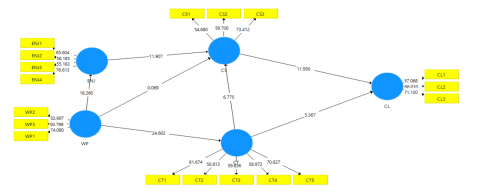
Among the seven hypothesized relationships, an unexpected finding emerged with H2, which posited a direct positive effect of WP on CS. The results indicate that H2 was not supported (β = 0.003, p = 0.944, f² = 0.000), suggesting no significant direct impact of WP on CS. This finding contrasts with prior studies suggesting a direct link between personalization and satisfaction [74] but aligns with research indicating mixed or context-dependent effects [34]. Several reasons may explain this unexpected result. First, in the Vietnamese cultural context, characterized by collectivist values, consumers may prioritize relational factors such as CT over individual-focused personalization features, diminishing the direct effect of WP on CS. Second, if personalization efforts are perceived as intrusive or misaligned with user expectations, they may fail to enhance satisfaction directly. Finally, as supported by the mediation analysis (Table 8), WP significantly influences CS indirectly through ENJ (β = 0.318, p < 0.001) and CT (β = 0.238, p < 0.001), indicating that the impact of personalization is contingent on these mediating factors rather than being direct. This finding underscores the importance of culturally nuanced personalization strategies. It highlights the need for e-commerce platforms to focus on enjoyment and trust as pathways to satisfaction in Vietnam’s green consumer market.
- Mediation analysis: The mediating effects were investigated by examining the significance of specific indirect effects via bootstrapping. Researchers present the results in Table 8.
The results of the complete structural model are shown in Figure 2.
Table 6. Coefficient of determination (R² and adjusted R²)
|
Endogenous Construct |
R² |
Adjusted R² |
|
ENJ |
0.364 |
0.363 |
|
CT |
0.500 |
0.500 |
|
CS |
0.641 |
0.639 |
|
CL |
0.623 |
0.622 |
Table 7. Results of hypothesis testing (Direct effects)
|
Hypothesis |
Path |
β |
T-Value |
P-Value |
f² |
Effect size |
Support |
|
H1 |
ENJ → CS |
0.527 |
12.476 |
0.000 |
0.377 |
Large |
Supported |
|
H2 |
WP → CS |
0.003 |
0.070 |
0.944 |
0.000 |
None |
Not Supported |
|
H3 |
WP → CT |
0.707 |
23.991 |
0.000 |
1.001 |
Large |
Supported |
|
H4 |
WP → ENJ |
0.603 |
16.202 |
0.000 |
0.572 |
Large |
Supported |
|
H5 |
CT → CS |
0.336 |
6.724 |
0.000 |
0.120 |
Small to medium |
Supported |
|
H6 |
CS → CL |
0.580 |
12.182 |
0.000 |
0.448 |
Large |
Supported |
|
H7 |
CT → CL |
0.264 |
5.406 |
0.000 |
0.093 |
Small to medium |
Supported |
Table 8. Mediation analysis results (Indirect effects)
|
Indirect Path |
Β |
T-Value |
P-Value |
95% BC Bootstrap CI |
Mediation |
|
WP → ENJ → CS |
0.318 |
10.489 |
0.000 |
[0.261, 0.383] |
Yes |
|
WP → CT → CS |
0.238 |
6.878 |
0.000 |
[0.170, 0.304] |
Yes |
|
WP → CT → CL |
0.187 |
5.340 |
0.000 |
[0.119, 0.258] |
Yes |
|
ENJ → CS → CL |
0.306 |
7.930 |
0.000 |
[0.230, 0.383] |
Yes |
|
CT → CS → CL |
0.195 |
5.732 |
0.000 |
[0.128, 0.265] |
Yes |
|
WP → ENJ → CS → CL |
0.184 |
7.578 |
0.000 |
[0.139, 0.233] |
Yes |
|
WP → CT → CS → CL |
0.138 |
5.732 |
0.000 |
[0.093, 0.187] |
Yes |
Figure 2. Research model with PLS-SEM results
4.4 Model fit assessment
- Model fit indices: The Standardized Root Mean Square Residual (SRMR) value of 0.105 was acceptable, though slightly above the ideal threshold of 0.08. The elevated SRMR indicates meaningful discrepancies between the observed and model-implied covariance matrices, suggesting our theoretical model does not perfectly capture the complexity of relationships among constructs. This misspecification could stem from: (1) omitted pathways between variables that exist in Vietnamese consumer behavior but are not hypothesized in Western-derived frameworks, (2) potential non-linear relationships that our linear SEM cannot accommodate, (3) cultural-specific interaction effects not captured in our model specification, or (4) measurement model issues where some indicators may not perform equivalently across Vietnamese cultural contexts. The Normed Fit Index (NFI) of 0.895 approached the recommended value of 0.90, indicating a reasonable model fit given the complexity of structural relationships.
- Predictive relevance (Q²): The researchers calculated Stone-Geisser's Q² values using the blindfolding procedure to assess the model's predictive relevance. All endogenous constructs demonstrated positive Q² values: ENJ (Q² = 0.267), CT (Q² = 0.370), CS (Q² = 0.489), and CL (Q² = 0.486), confirming satisfactory predictive relevance [82].
In summary, the structural model evaluation confirmed significant relationships among most constructs as hypothesized (six out of seven hypotheses supported), demonstrated substantial explanatory power, and established adequate predictive relevance, supporting the overall validity of the proposed research model. The only non-significant relationship was the direct effect of WP on CS (H2), suggesting that WP influences CS primarily through mediation via ENJ and CT rather than directly.
This study set out to uncover the intricate dynamics driving CL towards environmentally friendly products (EFPs) purchased through e-commerce platforms in Vietnam—a rapidly growing market with unique cultural and economic characteristics. By focusing on the roles of WP, ENJ, CT, and CS, this research provides groundbreaking insights into online green consumer behavior. The findings, derived from PLS-SEM analysis of data from 668 Vietnamese online consumers, not only confirm the interplay of these constructs but also reveal novel pathways that distinguish this study from prior literature, offering substantial contributions to both theory and practice.
5.1 Interpretation of key findings
The analysis validated six out of seven hypothesized relationships, underscoring the pivotal roles of experiential and relational factors in shaping Satisfaction and loyalty among Vietnamese online EFP consumers. These findings illuminate critical insights:
- The dominance of hedonic experience: ENJ emerged as a powerful driver of CS (β = 0.527, p < 0.001), aligning with prior studies on the role of enjoyment in online shopping [60, 61]. However, unlike previous research that often focused on hedonic value in general e-commerce contexts, this study uniquely highlights its significance even for ethical and utilitarian products like EFPs in Vietnam, suggesting that pleasure in the shopping journey is not a secondary concern but a primary motivator for Satisfaction, urging platforms to design captivating user experiences beyond merely promoting "green" credentials.
- WP as a dual catalyst: WP significantly boosts both ENJ (H4: β = 0.603, p < 0.001) and CT (H3: β = 0.707, p < 0.001), consistent with findings by Wu [71] and Bimaruci et al. [84]. What sets this study apart is the discovery of WP's exceptionally strong impact on trust in the Vietnamese context, where physical product verification is challenging for EFPs. This dual effect on enjoyment and trust positions WP as a cornerstone for online green retail success, a nuance less emphasized in prior studies focusing on Western or individualistic markets.
- Indirect impact of personalization on satisfaction: Strikingly, the direct link between WP and CS was non-significant (H2: β = 0.003, p = 0.944), diverging from some prior assertions [74] but echoing mixed results elsewhere [34]. The non-significant relationship between WP and CS presents an important finding that requires deeper interpretation within the Vietnamese cultural context. This result challenges assumptions about the universal applicability of personalization-satisfaction relationships. In Vietnam's relationship-oriented business culture, individual personalization may not directly translate to satisfaction. Vietnamese consumers might prioritize collective experiences and social validation over individual customization, explaining why personalization alone fails to enhance satisfaction directly. The significant indirect effect through trust reveals that personalization's impact on satisfaction is contingent upon trust establishment. This finding suggests that in the Vietnamese context, consumers require confidence in platform reliability before personalization features can contribute to satisfaction. The trust-mediated pathway indicates that personalization serves as a trust-building mechanism rather than a direct satisfaction driver. The non-significant direct relationship suggests that other factors may be more critical for Vietnamese consumers' satisfaction. The significant relationships of ENJ→CS and CT→CS indicate that emotional engagement and trust-building are more influential satisfaction determinants than personalization features. This finding contributes to understanding cultural variations in e-commerce satisfaction drivers, highlighting the importance of trust as a mediating factor in technology-consumer relationships within emerging markets.
Unlike findings in Thailand, where WP directly enhances CS due to a focus on individualistic user experiences, Vietnamese consumers, shaped by collectivist cultural values, prioritize trust and enjoyment as mediators [85]. Mediation analysis (Table 8) confirms WP's indirect influence on CS via ENJ (β = 0.318, p < 0.001) and CT (β = 0.238, p < 0.001). This novel finding challenges the universal applicability of direct personalization effects and highlights the culturally contingent nature of consumer responses in Vietnam.
- Core role of trust and satisfaction: CT significantly impacts both CS (H5: β = 0.336, p < 0.001) and CL (H7: β = 0.264, p < 0.001), corroborating extensive literature [43, 48]. Likewise, CS strongly predicts CL (H6: β = 0.580, p < 0.001) [31, 32]. While Western studies often attribute satisfaction to functional factors like price or delivery speed [38], this research uniquely reveals that in Vietnam, relational and experiential elements—rooted in cultural values of trust and community [8]—play a more decisive role in fostering loyalty for EFPs.
5.2 Theoretical contributions
This study marks a significant leap forward in the academic discourse on online consumer behavior, particularly in the underexplored realm of EFP purchasing in emerging markets like Vietnam. Its novelty and contributions to theory are multifaceted:
- Contextual innovation: Unlike prior research predominantly conducted in Western or developed e-commerce markets [1], this study fills a critical geographical and contextual gap by validating a comprehensive model of EFP loyalty in Vietnam [7, 8]. It addresses the scarcity of research on green online consumption in Southeast Asia, offering a culturally nuanced perspective.
- Reconciliation of conflicting findings: By demonstrating that WP influences CS indirectly through ENJ and CT, this research resolves inconsistencies in prior studies about personalization's direct effects [34, 74]. This mediated pathway provides a fresh lens on how website features translate into loyalty in collectivist societies.
- Hedonic value in ethical consumption: While existing literature often prioritizes utilitarian or ethical motives in green purchasing, this study uniquely underscores the indispensable role of hedonic enjoyment, proving that even in ethical consumption, pleasurable experiences are non-negotiable for loyalty.
- Extension of S-O-R framework: The findings reinforce and extend the S-O-R model by illustrating how website features (Stimulus) shape internal states like enjoyment and trust (Organism), ultimately driving loyalty (Response) in the specific context of online EFP shopping in Vietnam [14]. This application enriches the theoretical utility of S-O-R in culturally distinct, emerging market settings.
In contrast to the broader literature reviewed, which often examines isolated factors or general e-commerce behaviors without accounting for cultural or product-specific nuances (e.g., Valvi & Fragkos [38]; Ahmad et al. [60]), this study integrates experiential, relational, and cultural dimensions into a cohesive framework tailored to Vietnam's green e-commerce landscape. This holistic approach sets it apart as a pioneering contribution to the field.
5.3 Practical implications
The findings offer transformative, actionable strategies for e-commerce platforms targeting green consumers in Vietnam, addressing real-world challenges with precision:
- Revolutionizing personalization for cultural fit: Given WP's indirect but powerful role, platforms must design personalization strategies that resonate with Vietnam's collectivist culture, including tailoring content to emphasize community-oriented benefits (e.g., shared environmental impact) rather than purely individual preferences, enhancing enjoyment and trust as pathways to satisfaction.
- Elevating user enjoyment for young demographics: With a sample dominated by young female users on platforms like Shopee (68.3% of respondents) and TikTok, platforms should integrate interactive, gamified features such as personalized quizzes or virtual "green" rewards for EFP purchases to boost ENJ. For instance, Shopee could launch gamified product recommendations tied to sustainability challenges, making shopping a fun, engaging experience for tech-savvy youth.
- Building unshakable trust for green credibility: Trust is paramount in Vietnam's cultural context and for credence goods like EFPs. E-commerce businesses must prioritize transparency by displaying verified green certifications, authentic customer reviews, and detailed sourcing information. Partnering with local environmental organizations to endorse products can further solidify CT, addressing consumer skepticism about green claims.
- Sustaining satisfaction as a loyalty engine: As CS is the strongest driver of CL, platforms should implement real-time feedback mechanisms (e.g., post-purchase surveys on Shopee or TikTok Shop) to monitor and swiftly address user concerns, ensuring continuous improvement in the shopping experience.
- Targeted marketing for key segments: Leveraging the demographic insights from this study, marketing campaigns should focus on young female consumers through visually rich, socially engaging content on dominant platforms like Shopee and TikTok. Collaborations with influencers who advocate for sustainability can amplify trust and enjoyment simultaneously.
These recommendations diverge from generic strategies in prior studies (e.g., focusing solely on price or functionality) by embedding cultural relevance and platform-specific tactics, ensuring feasibility and impact in Vietnam's unique e-commerce ecosystem.
5.4 Limitations and future research
Despite its contributions, this study has limitations that pave the way for future exploration. Convenience sampling restricts generalizability, as it primarily captures young, tech-savvy respondents, potentially overlooking diverse age groups, geographic regions, and socioeconomic backgrounds critical to EFP consumption patterns in Vietnam. Future studies should employ probability sampling (e.g., stratified random sampling) to enhance representativeness. The cross-sectional design limits insights into temporal changes; longitudinal research could track how loyalty evolves with shifting market or cultural trends. Additionally, self-reported data may carry biases like social desirability, suggesting a need for mixed-method approaches incorporating behavioral data.
This study did not explore price sensitivity, perceived green value, or social influence, which could significantly shape EFP loyalty. Future research should investigate these variables and examine the moderating effects of demographics or product categories. Comparative studies with other Southeast Asian nations could further elucidate cultural and economic differences in online green consumption, building on this study's foundational finding.
This study investigates the drivers of customer loyalty toward environmentally friendly products (EFPs) in Vietnam's e-commerce market through a comprehensive model integrating website personalization (WP), hedonic quality enjoyment (ENJ), customer trust (CT), and customer satisfaction (CS). Analysis of 668 Vietnamese consumers reveals three key findings that advance our understanding of online green consumption behavior.
Key Findings: First, WP influences customer loyalty indirectly through ENJ and CT rather than directly through CS, highlighting the culturally contingent nature of personalization effects in collectivist societies. Second, ENJ emerges as the strongest predictor of CS (β = 0.527), demonstrating that pleasure-seeking motivations are crucial even in ethical consumption contexts. Third, the mediating roles of trust and enjoyment underscore the importance of experiential and relational factors in fostering loyalty among Vietnamese green consumers.
Theoretical Contributions: This research addresses a critical gap in green e-commerce literature by providing the first comprehensive model validated in Vietnam's emerging market context. It extends the S-O-R framework to online green consumption and reconciles conflicting findings about personalization effects by demonstrating their cultural dependency. The non-supported H2 advances theoretical understanding of cultural moderation in technology-consumer relationships, suggesting that Western-derived personalization theories require adaptation for Asian collectivist contexts. However, these theoretical contributions must be interpreted within the context of our sample's demographic concentration. The young, female-dominated sample may have amplified certain theoretical relationships while potentially masking others, suggesting that future theoretical development should account for demographic moderating effects.
Practical Implications: E-commerce platforms should prioritize culturally relevant personalization strategies that enhance enjoyment and trust rather than focusing solely on individual customization. For Vietnam's dominant platforms like Shopee and TikTok, implementing gamified sustainability features, transparent green certifications, and community-oriented content will more effectively drive customer loyalty among the predominantly young female user base. The WP→CS non-relationship suggests Vietnamese e-commerce platforms should prioritize trust-building mechanisms over sophisticated personalization algorithms, focusing on transparent policies and community validation rather than individual customization. Practitioners should exercise caution when applying these findings, particularly given the sample's demographic skewness. The strong emphasis on enjoyment and trust may reflect young, female consumer preferences rather than universal Vietnamese e-commerce behaviors. Platforms targeting broader demographics should validate these relationships across different age groups and gender distributions.
Future Research: Given the study's limitations with convenience sampling and cross-sectional design, future research should employ probability sampling across diverse demographics and longitudinal approaches to examine loyalty evolution. Comparative studies across Southeast Asian markets and exploration of additional factors such as price sensitivity and social influence would further enrich our understanding of online green consumption dynamics. Future research should prioritize demographic diversification to address the current study's sample limitations. Specifically, studies should: (1) achieve gender balance to understand male vs. female satisfaction drivers, (2) include older consumer segments to examine age-related variations in trust and personalization acceptance, (3) compare behaviors across multiple e-commerce platforms to identify platform-specific vs. universal patterns, and (4) investigate socioeconomic moderating effects on the proposed relationships.
This study provides a strategic foundation for businesses seeking to cultivate loyalty among environmentally conscious consumers in emerging digital markets while contributing valuable insights to the intersection of sustainability and e-commerce research.
[1] Tzavlopoulos, I., Gotzamani, K., Andronikidis, A., Vassiliadis, C. (2019). Determining the impact of e-commerce quality on customers’ perceived risk, satisfaction, value and loyalty. International Journal of Quality and Service Sciences, 11(4): 576-587. https://doi.org/10.1108/IJQSS-03-2019-0047
[2] Tsai, J., Ngo, H., Che, Z., Lin, M. (2024). Sustainable solutions in e-commerce: An examination of customer acceptance of automated delivery stations in Vietnam. Sustainability, 16(11): 4570. https://doi.org/10.3390/su16114570
[3] Kristanto, F., Rahma, H., Nahrowi, M. (2022). Factors affecting e-commerce customer loyalty in Indonesia. Jurnal Syntax Transformation, 3(9): 1150-1164. https://doi.org/10.46799/jst.v3i09.613
[4] Cahyanti, A., Sudarmiatin, S., Dhewi, T. (2022). Effect of e-service quality and e-trust on e-loyalty of e-payment through e-satisfaction of Shopee Pay users. International Journal of Humanities Education and Social Sciences (IJHES), 2(1). https://doi.org/10.55227/ijhess.v2i1.234
[5] Muharam, H., Chaniago, H., Endraria, E., Harun, A. (2021). E-service quality, customer trust and satisfaction: market place consumer loyalty analysis. Jurnal Minds Manajemen Ide Dan Inspirasi, 8(2): 237-254. https://doi.org/10.24252/minds.v8i2.23224
[6] Hride, F., Ferdousi, F., Jasimuddin, S. (2022). Linking perceived price fairness, customer satisfaction, trust, and loyalty: A structural equation modeling of Facebook-based e-commerce in Bangladesh. Global Business and Organizational Excellence, 41(3): 41-54. https://doi.org/10.1002/joe.22146
[7] Binh, D., Duong, V., Nguyen, D., Nguyen, C., Nguyen, D. (2022). The impact of e-commerce on the performance of firms in Vietnam. International Journal of Electronic Commerce Studies, 13(2): 163. https://doi.org/10.7903/ijecs.2012
[8] Nguyen-Viet, B. (2022). The impact of green marketing mix elements on green customer based brand equity in an emerging market. Asia-Pacific Journal of Business Administration, 15(1): 96-116. https://doi.org/10.1108/apjba-08-2021-0398
[9] Safitri, R., Ngatno, N., Farida, N. (2024). The influence of green marketing on repurchase intention and customer loylaty through customer satisfaction as a mediation variable. Journal of Tourism Economics and Policy, 4(1): 82-87. https://doi.org/10.38142/jtep.v4i1.972
[10] Martínez, P. (2015). Customer loyalty: Exploring its antecedents from a green marketing perspective. International Journal of Contemporary Hospitality Management, 27(5): 896-917. https://doi.org/10.1108/ijchm-03-2014-0115
[11] Braga, S., Martínez, M., Correa, C., Moura-Leite, R., Silva, D. (2019). Greenwashing effect, attitudes, and beliefs in green consumption. RAUSP Management Journal, 54(2): 226-241. https://doi.org/10.1108/rausp-08-2018-0070
[12] Chen, Y. (2010). Towards green loyalty: Driving from green perceived value, green satisfaction, and green trust. Sustainable Development, 21(5): 294-308. https://doi.org/10.1002/sd.500
[13] Pakutandang, F., Indrawati, I. (2024). The impact of green marketing mix on green loyalty in Oatside plant based milk product with green satisfaction as intervening variable. International Journal of Current Science Research and Review, 7(5): 3505-3516. https://doi.org/10.47191/ijcsrr/v7-i5-106
[14] Chu, D.T., Vu Thi, H., Nguyen Thi, Y.V., Nguyen, M.A., Bui, N.L., Hoang, V.T., Nam, D.H., Do, D.L., Than, V.T., Al-Tawfiq, J.A. (2022). Willingness to receive COVID-19 vaccine booster doses for adults and their children in Vietnam. Journal of Human Behavior in the Social Environment, 33(2): 212-224. https://doi.org/10.1080/10911359.2022.2046235
[15] Le, T.H.N., Nguyen, T.N. (2021). Factors affecting consumer’s purchase intention for Ngoc Linh gingseng products in Kon Tum market. Journal of Finance and Marketing Research, 57: 42-51. https://doi.org/10.52932/jfm.vi57.111
[16] Phan, H.L., Pham, T.T.U. (2020). Theory of planned behaviour towards tourists’ intention to stay in green hotels in Danang. Hue University Journal of Science Economics and Development, 129(5C): 79-93. https://doi.org/10.26459/hueunijed.v129i5c.5999
[17] Cutinha, Z., Mokshagundam, S. (2024). Sustainability practices in e-commerce: Opportunities and challenges for digital marketers. International Journal of Research Publication and Reviews, 5: 1068-1075. https://doi.org/10.55248/gengpi.5.0224.0435
[18] Chau, T.M.N., Dam, L.T.A. (2017). A study on local residents’ support for tourism development in Hue City. Hue University Journal of Science Econosmics and Development, 126(5D): 139. https://doi.org/10.26459/hueuni-jed.v126i5d.4502
[19] Hoang, T.H., Huynh, T.T.Q., Huynh, T.N. (2018). Factors influencing green consumption behavior of consumers in Hue City. Hue University Journal of Science Economics and Development, 127(5A): 199. https://doi.org/10.26459/hueuni-jed.v127i5a.5070
[20] Rahman, S., Fadrul, F., Momin, M., Yusrizal, Y., Marlyn, R. (2022). Improving satisfaction and loyalty of online shop customer based on e-commerce innovation and e-service quality. Gadjah Mada International Journal of Business, 24(1): 56. https://doi.org/10.22146/gamaijb.58783
[21] Al-dweeri, R., Moreno, A., Montes, F., Obeidat, Z., Al-Dwairi, K. (2019). The effect of e-service quality on Jordanian student’s e-loyalty: An empirical study in online retailing. Industrial Management & Data Systems, 119(4): 902-923. https://doi.org/10.1108/imds-12-2017-0598
[22] Lin, M., Chiu, Y., Huang, C., Wu, Y. (2017). Exploring the impact of service quality on online customer loyalty. International Journal of E-Education E-Business E-Management and E-Learning, 7(4): 230-238. https://doi.org/10.17706/ijeeee.2017.7.4.230-238
[23] Hidayat, M., Rasyid, A., Pasolo, F. (2024). Service quality on customer loyalty: Mediation of customer satisfaction. ABIM, 2(3): 150-163. https://doi.org/10.60079/abim.v2i3.158
[24] Rizan, M., Febrilia, I., Wibowo, A., Pratiwi, R. (2020). Antecedents of customer loyalty: Study from the Indonesia’s largest e-commerce. Journal of Asian Finance Economics and Business, 7(10): 283-293. https://doi.org/10.13106/jafeb.2020.vol7.n10.283
[25] Solimun, S., Fernandes, A. (2018). The mediation effect of customer satisfaction in the relationship between service quality, service orientation, and marketing mix strategy to customer loyalty. The Journal of Management Development, 37(1): 76-87. https://doi.org/10.1108/jmd-12-2016-0315
[26] Rahman, S., Fadrul, F., Momin, M., Yusrizal, Y., Marlyn, R. (2022). Improving satisfaction and loyalty of online shop customer based on e-commerce innovation and e-service quality. Gadjah Mada International Journal of Business, 24(1): 56. https://doi.org/10.22146/gamaijb.58783
[27] Lova, A., Budaya, I. (2023). Behavioral of customer loyalty on e-commerce: The mediating effect of e-satisfaction in Tiktok shop. Journal of Scientific Research Education and Technology (JSRET), 2(1): 61-73. https://doi.org/10.58526/jsret.v2i1.43
[28] Suhartanto, D., Ali, M., Tan, K., Sjahroeddin, F., Kusdibyo, L. (2018). Loyalty toward online food delivery service: The role of e-service quality and food quality. Journal of Foodservice Business Research, 22(1): 81-97. https://doi.org/10.1080/15378020.2018.1546076
[29] Sukendia, N. (2021). The impact of e-service quality on customer engagement, customer experience and customer loyalty in B2C e-commerce. Turkish Journal of Computer and Mathematics Education (Turcomat), 12(3): 3170-3184. https://doi.org/10.17762/turcomat.v12i3.1556
[30] Holloway, S. (2024). Exploring the relationship between supply chain responsiveness and customer loyalty in the e-commerce sector. Preprints 2024. https://doi.org/10.20944/preprints202406.1616.v1
[31] Naini, N., Santoso, S., Andriani, T., Claudia, U. (2022). The effect of product quality, service quality, customer satisfaction on customer loyalty. Journal of Consumer Sciences, 7(1): 34-50. https://doi.org/10.29244/jcs.7.1.34-50
[32] Haris, A., Rahman, A., Yusriadi, Y., Farida, U. (2021). Analysis of determinant factors affecting retail business customer loyalty. Linguistics and Culture Review, 5(S3): 310-318. http://doi.org/10.21744/lingcure.v5nS3.1529
[33] Atmajaya, I., Negara, G., Santoso, T., Junaedi, W. (2024). The influence of service quality and brand image on customer satisfaction and customer loyalty at the Pratama Marga Ayu Clinic in Badung, Bali. The Eastasouth Management and Business, 3(1): 151-164. https://doi.org/10.58812/esmb.v3i1.312
[34] Ichsan, C., Guritno, B., Hendrajaya, H. (2023). The effect of product and service quality on customer loyalty mediated by customer satisfaction in micro small business multi Cipta Semarang. ICTMT, 1(1): 361-375. https://doi.org/10.56910/ictmt.v1i1.80
[35] Lin, H., Zhang, M., Gürsoy, D. (2020). Impact of nonverbal customer-to-customer interactions on customer satisfaction and loyalty intentions. International Journal of Contemporary Hospitality Management, 32(5): 1967-1985. https://doi.org/10.1108/ijchm-08-2019-0694
[36] Angelovska, N. (2023). Studying customer e-loyalty to online intermediary: Case of group buying site. International Journal of Electronic Commerce Studies, 14(2): 1. https://doi.org/10.7903/ijecs.2120
[37] Tsai, R., Yao-qiu, W. (2013). Interrelation between customer satisfaction and loyalty in third-party logistics distribution. Proceedings of the 2013 International Conference on Advances in Social Science, Humanities, and Management. https://doi.org/10.2991/asshm-13.2013.33
[38] Valvi, A., Fragkos, K. (2012). Critical review of the e-loyalty literature: A purchase-centred framework. Electronic Commerce Research, 12(3): 331-378. https://doi.org/10.1007/s10660-012-9097-5
[39] Zhong, Y., Moon, H. (2020). What drives customer satisfaction, loyalty, and happiness in fast-food restaurants in China? Perceived price, service quality, food quality, physical environment quality, and the moderating role of gender. Foods, 9(4): 460. https://doi.org/10.3390/foods9040460
[40] Chen, S. (2015). Customer value and customer loyalty: Is competition a missing link? Journal of Retailing and Consumer Services, 22: 107-116. https://doi.org/10.1016/j.jretconser.2014.10.007
[41] Raza, S., Umer, A., Qureshi, M., Dahri, A. (2020). Internet banking service quality, e-customer satisfaction and loyalty: The modified e-servqual model. The TQM Journal, 32(6): 1443-1466. https://doi.org/10.1108/tqm-02-2020-0019
[42] Rodi, R., Ahmad, S., Rahman, F. (2023). The influence of service quality, product quality and trust on customer loyalty of CV. Ferdi Mandiri. Journal of Economics Finance and Management Studies, 6(12): 5873-5877. https://doi.org/10.47191/jefms/v6-i12-13
[43] Chimezie, M., Benyeogor, A., Nkamnebe, A., Liu, Y. (2025). Trust as a mediator in Nigerian e-commerce: Impacts on consumer behavior, product quality, and convenience. Open Journal of Business and Management, 13: 258-277. https://doi.org/10.4236/ojbm.2025.131016
[44] Fauzi, A., Suryani, T. (2019). Measuring the effects of service quality by using carter model towards customer satisfaction, trust and loyalty in Indonesian Islamic banking. Journal of Islamic Marketing, 10(1): 269-289. https://doi.org/10.1108/jima-04-2017-0048
[45] Sapoetra, D., Basuki, R. (2019). Effect of service quality, religiosity, relationship closeness, and customer trust on customer satisfaction and loyalty at Bank Jatim Syariah. Russian Journal of Agricultural and Socio-Economic Sciences, 87(3): 200-219. https://doi.org/10.18551/rjoas.2019-03.25
[46] Wang, C., Mao, Z., Johansen, J., Luxhøj, J., et al. (2015). Critical success criteria for b2b e-commerce systems in Chinese medical supply chain. International Journal of Logistics Research and Applications, 19(2): 105-124. https://doi.org/10.1080/13675567.2015.1032228
[47] Hartanto, B., Aprianingsih, D. (2022). The effect of website quality, trust, and ease of use on customer loyalty: Customer satisfaction as a mediation. Frontiers in Business and Economics, 1(1): 16-23. https://doi.org/10.56225/finbe.v1i1.81
[48] Tabrani, M., Amin, M., Nizam, A. (2018). Trust, commitment, customer intimacy and customer loyalty in Islamic banking relationships. The International Journal of Bank Marketing, 36(5): 823-848. https://doi.org/10.1108/ijbm-03-2017-0054
[49] Nguyen, N., Leclerc, A., LeBlanc, G. (2013). The mediating role of customer trust on customer loyalty. Journal of Service Science and Management, 6(1): 96-109. https://doi.org/10.4236/jssm.2013.61010
[50] Rahmani, Z., Ranjbar, M., Gara, A., Gorji, M. (2017). The study of the relationship between value creation and customer loyalty with the role of trust moderation and customer satisfaction in Sari hospitals. Electronic Physician, 9(6): 4474-4478. https://doi.org/10.19082/4474
[51] Donny, J., Juju, U., Jusuf, E., Rosmadi, M. (2018). The factors that affect customer value and its impact on the customer loyalty. Budapest International Research and Critics Institute (Birci-Journal) Humanities and Social Sciences, 1(4): 299-305. https://doi.org/10.33258/birci.v1i4.122
[52] Klaysung, C., Klaysung, S., Promsiri, T. (2022). Corporate social responsibility (CSR) relationship between customer trust and customer satisfaction on customers loyalty in retail business in Thailand. International Journal of Health Sciences, 6(S5): 286-298. https://doi.org/10.53730/ijhs.v6ns3.5227
[53] Angelie, M., Elgeka, H., Tjahjoanggoro, A. (2023). “I won't shop anywhere else!”: Tokopedia customer’s love and trust. Journal of Educational Health and Community Psychology, 1(1): 1. https://doi.org/10.12928/jehcp.v1i1.24935
[54] Ru, D., Hamzah, A., Jantan, B. (2023). Relationship between of customer value, customer trust, customer commitment and customer loyalty in hospitality industry in China. Journal of International Business and Management, 6(9): 1-15. https://doi.org/10.37227/jibm-2023-08-6248
[55] Rua, S., Saldanha, E., Amaral, A. (2020). Examining the relationships among product quality, customer satisfaction and loyalty in the bamboo institute, Dili, Timor-Leste. Timor Leste Journal of Business and Management, 2: 33-44. https://doi.org/10.51703/bm.v2i2.28
[56] Kim, M. (2016). The sources of utilitarian benefits and hedonic shopping enjoyment, and purchasing intention in an online shopping mall. International Journal of U- And E -Service Science and Technology, 9(10): 375-386. https://doi.org/10.14257/ijunesst.2016.9.10.34
[57] Kim, J., Forsythe, S. (2010). Adoption of dynamic product imagery for online shopping: Does age matter? The International Review of Retail Distribution and Consumer Research, 20(4): 449-467. https://doi.org/10.1080/09593969.2010.504011
[58] Budiharseno, R., Handani, N., Hwan, S. (2020). Impact of utilitarian value and hedonic value on purchase in online store in Indonesia. Research Society and Development, 9(10): e1159108305. https://doi.org/10.33448/rsd-v9i10.8305
[59] Agrawal, D. (2022). Determining behavioural differences of Y and Z generational cohorts in online shopping. International Journal of Retail & Distribution Management, 50(7): 880-895. https://doi.org/10.1108/ijrdm-12-2020-0527
[60] Ahmad, A., Rahman, O., Khan, M.N. (2017). Exploring the role of website quality and hedonism in the formation of e-satisfaction and e-loyalty: Evidence from internet users in India. Journal of Research in Interactive Marketing, 11(3): 246-267. https://doi.org/10.1108/JRIM-04-2017-0022
[61] Suciati, P., Maulidiyanti, M., Wiwesa, N.R., Primadini, I., Zainodin, W.H.W. (2025). Beyond clicks: Navigating e-commerce attitudes in Southeast Asia’s digital landscape of news, easy payment, and exclusive discounts. International Journal of Innovative Research and Scientific Studies, 8(1): 2042-2058. https://doi.org/10.53894/ijirss.v8i1.4876
[62] Dewi, I., Mahemba, U. (2024). Utilitarian and hedonic shopping motives and attitude towards online shopping of generation Z in Indonesia. Ilomata International Journal of Management, 5(2): 542-558. https://doi.org/10.61194/ijjm.v5i2.1135
[63] Günüç, S., Keskin, A. (2016). Online shopping addiction: Symptoms, causes and effects. Addicta the Turkish Journal on Addictions, 3(3): 353-364. https://doi.org/10.15805/addicta.2016.3.0104
[64] Ho, T.N., Olsen, S.O., Nguyen, T.M.T. (2020). Shopping value, trust, and online shopping well-being: A duality approach. Marketing Intelligence & Planning, 38(5): 545-558. https://doi.org/10.1108/mip-08-2019-0411
[65] Lee, C., Wu, J. (2017). Consumer online flow experience. Industrial Management & Data Systems, 117(10): 2452-2467. https://doi.org/10.1108/imds-11-2016-0500
[66] Jain, R., Aagja, J., Bagdare, S. (2017). Customer experience – A review and research agenda. Journal of Service Theory and Practice, 27(3): 642-662. https://doi.org/10.1108/jstp-03-2015-0064
[67] Kempa, S., Vebrian, K., Bendjeroua, H. (2020). Sales promotion, hedonic shopping value, and impulse buying on online consumer websites. SHS Web of Conferences, 76: 01052. https://doi.org/10.1051/shsconf/20207601052
[68] Mihić, M., Milaković, I. (2017). Examining shopping enjoyment: Personal factors, word of mouth and moderating effects of demographics. Economic Research-Ekonomska Istraživanja, 30(1): 1300-1317. https://doi.org/10.1080/1331677x.2017.1355255
[69] Lin, S., Tseng, H., Shirazi, F., Hajli, N., Tsai, P. (2023). Exploring factors influencing impulse buying in live streaming shopping: A stimulus-organism-response (SOR) perspective. Asia Pacific Journal of Marketing and Logistics, 35(6): 1383-1403. https://doi.org/10.1108/apjml-12-2021-0903
[70] Ballantine, P.W., Parsons, A., Comeskey, K. (2015). A conceptual model of the holistic effects of atmospheric cues in fashion retailing. International Journal of Retail & Distribution Management, 43(6): 503-517. https://doi.org/10.1108/IJRDM-02-2014-0015
[71] Wu, I.L. (2014). The antecedents of customer satisfaction and its link to complaint intentions in online shopping: An integration of justice, technology, and trust. International Journal of Information Management, 33(1): 166-176. https://doi.org/10.1016/j.ijinfomgt.2012.09.001
[72] Ridho Mahaputra, M., Ali, H., Rafqi Ilhamalimy, R. (2024). Determining purchase decisions: Brand image and trust (marketing management literature review). Siber Nusantara of Economic and Finance Review, 1(1): 8-13. https://research.e-siber.org/SNEFR/article/view/245.
[73] Nugraha, R., Insani, A., Meini, Z. (2024). Influence of service quality and brand image on customer satisfacation at BMR tour and travel agent. WSIST, 2(1): 152-159. https://doi.org/10.58812/wsist.v2i01.845
[74] Chen, J., Yidan, L. (2013). The theory and empirical research of customer marketing based on satisfaction. Research Journal of Applied Sciences Engineering and Technology, 5(20): 4900-4904. https://doi.org/10.19026/rjaset.5.4339
[75] Fornell, C. (1992). A national customer satisfaction barometer: The Swedish experience. Journal of Marketing, 56(1): 6-21. https://doi.org/10.1177/002224299205600101
[76] Rita, P., Oliveira, T., Farisa, A. (2019). The impact of e-service quality and customer satisfaction on customer behavior in online shopping. Heliyon, 5(10): e02690. https://doi.org/10.1016/j.heliyon.2019.e02690
[77] Rodríguez, P.G., Villarreal, R., Valiño, P.C., Blozis, S.A. (2020). A PLS-SEM approach to understanding E-SQ, E-Satisfaction and E-Loyalty for fashion E-retailers in Spain. Journal of Retailing and Consumer Services, 57: 102201. https://doi.org/10.1016/j.jretconser.2020.102201
[78] Hair, J.F., Risher, J.J., Sarstedt, M., Ringle, C.M. (2019). When to use and how to report the results of PLS-SEM. European Business Review, 31(2): 2-24. https://doi.org/10.1108/EBR-11-2018-0203
[79] Podsakoff, P.M., MacKenzie, S.B., Lee, J.Y., Podsakoff, N.P. (2003). Common method biases in behavioral research: A critical review of the literature and recommended remedies. Journal of Applied Psychology, 88(5): 879-903. https://doi.org/10.1037/0021-9010.88.5.879
[80] Ringle, C.M., Wende, S., Becker, J.M. (2022). SmartPLS 4. SmartPLS. https://www.smartpls.com/.
[81] Hair, J.F., Sarstedt, M., Ringle, C.M., Gudergan, S.P. (2021). Advanced Issues in Partial Least Squares Structural Equation Modeling. Sage Publications.
[82] Hair, J.F., Hult, G.T.M., Ringle, C.M., Sarstedt, M. (2017). A Primer on Partial Least Squares Structural Equation Modeling (PLS-SEM) (2nd ed.). Sage Publications.
[83] Fornell, C., Larcker, D.F. (1981). Evaluating structural equation models with unobservable variables and measurement error. Journal of Marketing Research, 18(1): 39-50. https://doi.org/10.1177/002224378101800104
[84] Bimaruci, H., Mahaputra, M.R., Rafqi Ilhamalimy, R. (2021). Model of purchasing decisions and customer satisfaction: analysis of brand image and product quality (Marketing management literature review). Dinasti International Journal of Economics, Finance & Accounting, 1(6): 1124-1136. https://doi.org/10.38035/dijefa.v1i6.748
[85] Hofstede, G. (2001). Culture's Consequences: Comparing Values, Behaviors, Institutions, and Organizations across Nations (2nd ed.). Sage Publications.