Mia Rosmiati* | Rahmadi Wijaya | Fanni Husnul Hanifa | Rahmat Hidayat | Arief Yusuf Winata | Muhammad Atthariq Maulana
© 2025 The authors. This article is published by IIETA and is licensed under the CC BY 4.0 license (http://creativecommons.org/licenses/by/4.0/).
OPEN ACCESS
The development of beef cattle farming in Indonesia has significant potential, but is faced with various challenges, including monitoring optimal housing environments, limited monitoring technology, and automatic device control processes. Like WS Farm which is in Subang Regency. The condition of the WS Farm cage is an open cage, the condition of this cage is greatly influenced by the conditions of the external environment. This can affect the health of the cows in the cage. Therefore, through smart cages, cage managers can monitor the temperature, humidity and smell of the cage via a mobile device-based application. This system can monitor temperature, humidity and ammonia gas levels in the cow cage in real-time. Through the automatic fan and light control feature, the system is expected to be able to maintain the temperature of the pen according to the needs of the cows. This system was created using DHT 21 and MQ 135 sensors and Arduino as the microcontroller, while the storage process uses Firebase Realtime Database and to access the interface using an Android application. Based on the results of field testing, this system shows data measurement can be done continuously and data transmission can be done in real time.
smart kandang, IoT, mobile application, WS Farm, monitoring
The livestock industry is an important sector in the economy, especially in terms of meeting the needs of food and animal products [1, 2]. One crucial aspect in cattle farming is optimal management of the pen environment to ensure the health and productivity of livestock. The temperature and humidity of the pen have a significant role in influencing the comfort and welfare of cattle. Suboptimal management of the pen environment can result in stress in animals, decreased productivity, and even the risk of disease [3].
In the era of increasingly advanced technology, the Internet of Things (IoT) offers innovative solutions [4] to monitor and manage the barn environment in real-time [5]. Using IoT technology, data on barn temperature and humidity can be collected continuously and analyzed to make more accurate and responsive decisions. This not only improves livestock welfare but also the operational efficiency of the farm [6].
IoT technology is a technology that connects several devices in a communication network so that data communication can occur between the devices [7, 8]. Through the use of IoT connected to a wireless sensor network and using a user interface on a mobile application, users will find it easier to monitor cage conditions in real time.
WS Farm is a cattle farm located in Subang Regency, Indonesia. This farm has a land area of 7 × 12 m. The cattle pen owned by WS Farm is an open pen type, so the condition outside the pen greatly affects the condition inside the pen, this can directly affect the health of the cows. If the temperature of the cow pen is too high, it can cause stress to the cows so that it can threaten the health of the cows, in addition, if the cow dung accumulates too much, the smell of the pen will spread to the surrounding environment so that it can cause air pollution for the surrounding community.
WS Farm's cattle pen only has one guard to monitor the condition of 9-12 cattle. So the condition of the pen is not well maintained. This causes the health of the cattle not to be monitored properly which causes the growth and development of the cattle to be less than optimal. Even causing one of the cattle to die. The lack of human resources to manage the pen causes the growth of the cattle not to be monitored optimally, in addition, the guard tends to be slow to recognize the temperature and humidity conditions of the pen that are not in accordance with the needs of the cattle because they do not have devices that are accurate enough and easy to find out the temperature of the cattle pen. So the process of managing the cattle pen is still conventional. Based on these problems, WS Farm requires better management of the pen so that the condition of the pen can be cleaner and the temperature inside the pen is maintained according to the temperature needed by the cows.
Therefore, in this study, a real-time temperature, humidity, and odor monitoring system was built with an interface that makes it easy for barn owners to monitor information on temperature, humidity, and odor directly. The development of a cattle barn monitoring system was made using a sensor of DHT 21 and MQ135. The sensors connected to a wireless sensor network, so that the data obtained by the sensor can be displayed via an android application. This system can be one of the solutions to the problems experienced by the WS Farm cattle barn. This system can help the barn keeper to easily find out the ambient temperature of the barn so that the barn keeper can take quick and appropriate steps when there is a change in the condition of the cow due to a change in temperature that does not match the condition of the cow.
Temperature is a variable that greatly influences the comfort of cows in a pen, so that the appropriate temperature will influence the growth and development of cows in a pen. This shows the importance of a cattle barn monitoring system using a temperature sensor. Another important parameter in a cattle barn is the odor parameter of the barn which will directly indicate the level of cleanliness of the barn. A clean barn will directly support the health of the cows. Apart from that, ammonia levels that are too high can affect the health of cattle breeders [9]. Therefore, a system is needed to monitor the temperature and odor of the cow shed that can send data in real time to its users, with an attractive interface that is easy for users to use.
Several studies have discussed IoT-based cage monitoring systems, including: A fully automated Internet of Things (IoT) system is implemented to monitor various parameters such as feeding, drinking, temperature, and gas levels in rabbit cages. This system can be accessed remotely. The system utilizes sensors, Arduino Mega 2560, relays, and actuators to effectively handle the cages [10], besides that, NodeMCU microcontrollers and DHT22 sensors are utilized in smart chicken coops for poultry farming to regulate temperature and humidity. These sensors enable the automatic activation of fans, triggered by the measurements they provide [11]. Meanwhile, in the research of the modern chicken cage, Sensor that used enable farmers to monitor conditions via mobile applications, which helps them respond promptly to environmental changes. For instance, the Blynk program allows for the remote control of chicken coop conditions, hence improving management efficiency.[12]
The other research is Cloud computing-enabled IoT systems employing AI techniques monitor cow farms through sensor devices that check health and temperature, assisting farmers in properly managing livestock [13]. Meanwhile, for the use of communication protocols in IoT systems, this research refers to research Multi-Sensor Fusion (MSF) in conjunction with IoT technology for livestock monitoring employs diverse sensors to capture real-time biometric data, hence improving health insights via Message Queuing Telemetry Transport (MQTT) for effective data transmission and communication [14]. WS Farm is an open cage type so the process of placing the temperature sensor must be in accordance with the cage conditions, therefore this research refers to research about The IoT-based Outdoor Livestock Monitoring System described in the study paper employs sensors such as GPS, temperature, and heart rate to remotely monitor livestock, thereby improving management efficiency and minimizing losses [15]. To display sensor data in an application, a communication medium is required that can send sensor data to an application, such as the IoT-enabled wearable collar remotely monitors the health and where abouts of cattle on large-scale farms through GSM/GPRS connectivity, thereby improving livestock management oversight [16].
Based on the problems faced by WS Farm and referring to previous studies, this paper will discuss the development of a temperature, humidity and odor monitoring system using DHT 21 and MQ 135 sensors. So that sensor data can be easily viewed by users, this paper will explain the use of the HTTP protocol so that sensor data can be displayed in mobile-based applications. In addition, the condition of the WS Farm cattle pen is an open pen with a temperature outside the pen quite high so that it can affect the temperature inside the pen, therefore the placement of the DHT 21 sensor must be placed in the middle of the pen so that temperature, ammonia and humidity data inside the pen can be read properly by the sensor.
Based on the literature review, the system built has the same parameters that are monitored, namely temperature, humidity and odor of the animal pen. But the animals studied are different because this study focuses on cows. In addition, the microcontroller used in this study is EPS8266 which has a dual function, namely in addition to being a microcontroller, this tool also has a function as a wireless-based data transmission media. Another difference is the user interface, this application uses a mobile application created using the Kotlin framework so that the appearance of the features used is more flexible, different from the application in the previous study using blynk. Another difference used in the development of the monitoring system is that this system uses the HTTP protocol for its data communication protocol, while in the previous study the use of the MQTT protocol was the main choice in developing the system.
This research has several new features that can be used in managing cattle pens.
This paper consists of 5 sections, consisting of an introduction explaining the condition of the WS Farm cage and the need for a cage monitoring system using Internet of Things technology. The second section explains the literature review discussing previous studies that underlie the creation of smart cages. While section three explains the research method used in smart cage research. This method also explains the stages of research to create a smart cage system. While the discussion of the research results is discussed in section 4. This section explains the data and application system built on the smart cage. Section 5 writes the conclusions of each test result of the smart cage system. In addition to discussing the conclusions, section 5 also provides research recommendations that can be carried out in the next smart cage research.
3.1 Method of prototype
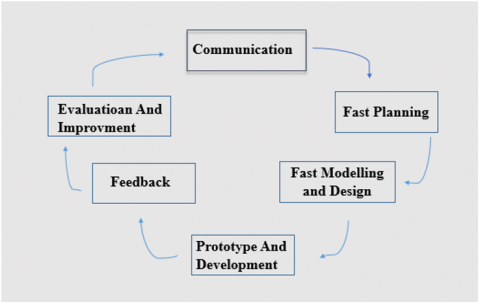
The method used in developing the smart cage application is the prototype method. The prototype method is a system development method that uses a prototype to describe the system [17, 18], so that users have a clear picture of the system to be built by the development team, this is because during the system development process there is active interaction between the system developer and the user. The purpose of using this method is to avoid fatal errors that can hinder the functionality of the system. Figure 1 shows the Prototype method.
Figure 1. Model of prototype
Figure 1 shows the process of making smart cages using the prototyping research method. The stages of this method are carried out through the following stages:
a. Communication
The first stage in system development is to conduct effective communication between users and developers. Through this stage, research will be conducted related to the needs of the barn owners in managing their cattle barns. The output of this stage is the features that will be developed by the developer.
b. Fast Planning
After the user explains the needs related to the development of a cattle barn monitoring system, the next step is to make a quick plan related to fulfilling the user's needs. The plan that is made is then discussed again with the user so that the plan that is decided is in accordance with the user's needs.
c. Fast Modelling and Design
At this stage, the developer models the IoT system requirements and designs the IoT system. If the design results are appropriate, the design results are transferred into the form of hardware components.
d. Prototype Development
Prototype development is the most important stage to answer user needs in managing cow sheds. To ensure that the prototype built can function properly, this prototype will be tested in the field so that the resulting value is in accordance with field conditions.
e. Feedback
Feedback is a stage to see user satisfaction with the smart cage prototype that has been created. At this stage, the cage owner will provide an assessment of the functionality of all the features that have been created and provide input if there are features that do not work.
f. Evaluation and Improvement
Evaluation is a stage to analyze the feedback obtained from the user. After going through the analysis, the repair and improvement process can be carried out so that the system that is built can be directly implemented by the user.
3.2 Blok diagram
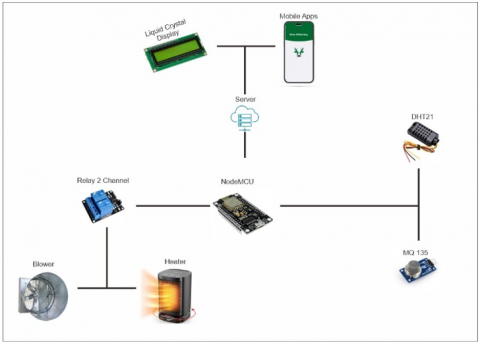
The smart cage system is a combination of wireless sensor network with android application. The smart cage system that was built is shown in Figure 2.
Figure 2. Blok diagram of smart kandang
Figure 2 shows the block diagram of the smart cage. This system uses a DHT 21 sensor to detect humidity and an MQ 135 sensor that functions to measure ammonia levels to detect the smell of the cow cage. The temperature and humidity values read by the DHT 21 sensor and the ammonia level read by the MQ 135 sensor will be input for the nodeMCU (esp8266). NodeMCU functions as a microcontroller that can process data and provide output that will activate the relay to activate the blower and heater automatically. In addition to being a microcontroller, the nodeMCU also functions as a communication medium for sending sensor data to the server using wireless waves. The frequency used by the nodeMCU in this system is 80 MHz which is used for data processing and running programs and 2.4 GHz which is used for sending data to the server so that the results of data processing can be displayed via the Android application. This entire system uses electrical energy from the state power plant (PLN), so the power required is stable.
In addition to the monitoring system, the smart cage is also equipped with automatic blower and heater settings that work based on the cage temperature point set by the cage owner. Changes in the environmental data of the pen captured by the sensor will be sent to the server and then displayed on the LCD. Through the LCD, the owner of the pen will easily monitor the cow pen. In addition to being displayed via the LCD, if the temperature value is too high, the system will send a notification via SMS so that the owner of the pen can directly monitor the condition of the cow when the temperature is high.
3.3 Flowchart
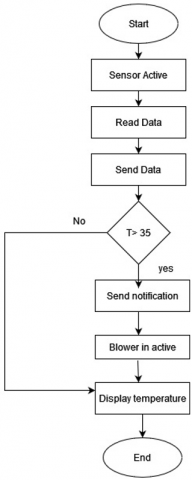
Each feature in the smart cage works according to the flowchart shown in Figure 3.
Figure 3. Flowchart of smart kandang
Figure 3 shows the flowchart of the smart cage system. Where the initial stage of this process is to activate the sensor, then read the sensor. Data that has been read by the sensor will be sent via the nodemcu esp8266 then the sensor data will be displayed on the LCD.
The smart cage system also has a notification feature, if the cage temperature is above 35℃, the system will send a notification via a smartphone application. This process aims to provide information to the cage keeper regarding the hot temperature felt by the cow, so that the cage keeper can take early action to return the cage temperature to a more stable one.
3.4 Use case diagram
Use case diagram is a diagram that describes the interaction between the user and the system. Or in other words, use case diagram shows the functions contained in a system and shows the actors who have the right to access the function [19]. Figure 4 shows the use case diagram of smart Kandang.
Figure 4 shows the features contained in the smart cage application. This application has 5 main features, namely the login page, view of cage's status which shows the identity of the cage owner and the location of the cage being tested. View of temperature to see the temperature conditions of the cage in real time. In addition, another feature is the view of ammonia level which functions to see the level of ammonia in the cage which is correlated with the cleanliness of the cage. Another feature of this application is to send notification which functions to send notifications automatically when the cage temperature is above 35ο C. In addition to the monitoring system, smart cages are also equipped with light or blower settings that will be activated automatically when the cage temperature does not reach the ideal cage temperature.
Figure 4. Use case diagram of smart kandang
4.1 WS Farm cow shed
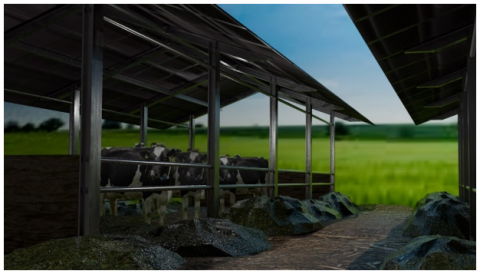
WS Farm is a cattle farm located in Margasari, Dawuan District, Subang Regency, West Java 41271. WS Farm has a pen area of 7 × 12 m, with the condition of the pen that tends to have large openings causing air and wind circulation in this location to be quite good. This farm carries out the process of raising cattle from calves to ready-to-sell sizes. Based on information from farmers, the number of cattle in this cattle pen is around 9-12 cows. Figure 5(a) shows the layout of cattle pen and Figure 5(b) shows the condition of the cattle pen at WS Farm.
(a)
(b)
(c)
Figure 5. (a) Layout cattle pen WS Farm, (b) WS farm cow shed, and (c) Smart cage device location
Figures 5(a) and (b) show that the cow pens in the WS Farm are open so that the temperature and humidity conditions of the pen are greatly influenced by the environmental conditions outside the pen. This condition will affect the psychological condition of the cows so that it can affect the quality of the cows. The area of the cow pen at WS Farm is 7 x 12 m which is occupied by 12 cows, so with this area, a number of devices are needed that can monitor temperature and humidity in real time to ensure that the condition of the pen remains in a comfortable environment for the cows.
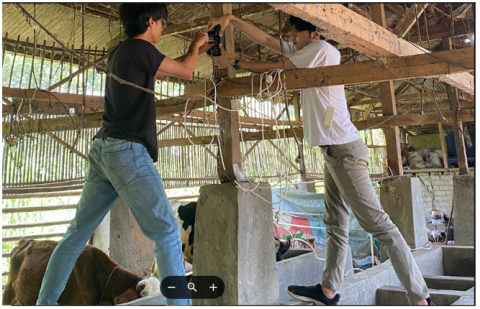
Figure 5(c) shows the location of smart Cage Device Location. The process of placing the monitoring device is carried out in the cow shed, on the part of the support pole of the shed that is close to the position of the cow. this aims to ensure that the environmental temperature read by the sensor is the temperature of the environment closest to the cow. because the temperature value of the cow shed displayed on the LCD is greatly influenced by the temperature of the outside environment. to maintain the performance of the IOT system that is built, the IoT system placed in the cow shed consists of two. so that the barn keeper can compare each temperature value displayed by each LCD to obtain consistent sensor data.
4.2 Internet of Things (IoT) based cattle pen monitoring system
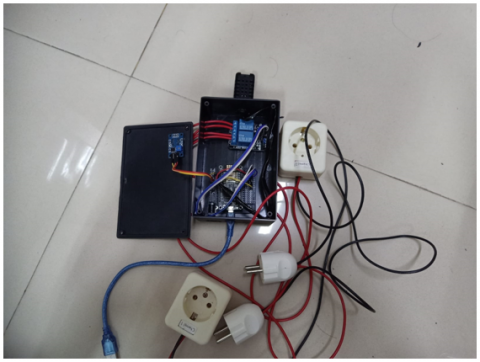
The smart cage monitoring system is an application that can monitor the cow cage in real time, in addition, this system can also control the fan and heater so that the cage temperature remains stable according to the needs of the cow cage. The integration system is divided into two parts, namely the monitoring system infrastructure consisting of an Arduino that functions as a microcontroller. DHT 21 which functions as a temperature sensor and humidity sensor, and the MQ 135 sensor which functions as an ammonia sensor. This monitoring system is shown in Figure 6.
Figure 6 shows the IoT system of the cow shed monitoring system. The figure shows the DHT 21 sensor and the MQ135 sensor connected directly to the microcontroller. The sensor will observe the temperature and humidity conditions and the smell of the cow shed in real time and send the data every 5 minutes. This is intended so that the memory condition does not fill up quickly. In addition, this system is also connected to a relay so that the control of the fan and lights can be controlled automatically, for example by using a temperature limit of 35ο Celsius to activate the blower automatically, while the humidity limit is 80. The device used for the smart shed are shown in Figure 7.
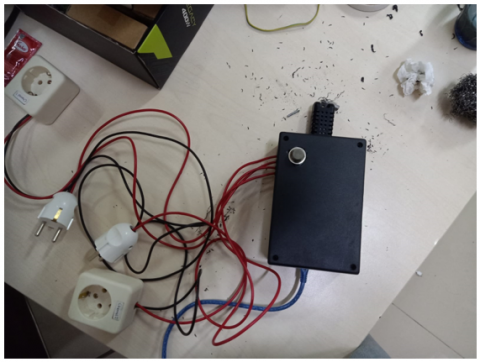
Figure 7 shows a cattle barn monitoring system device that has a special box to keep the components used to work optimally. The use of a box in this system is to protect the components from dust, water so that the system will be in a safe condition and can continuously measure temperature and humidity and the smell of the barn.
Figure 6. Smart kandang device
Figure 7. System of smart kandang
4.3 Temperature and humidity measurement data
The process of reading temperature and humidity values carried out by the DHT 21 sensor and reading ammonia values carried out by the MQ 135 sensor, is carried out continuously, while data sending to the sensor is carried out every 5 minutes. Table 1 shows the results of sensor readings carried out for 3 hours.
Table 1 shows the temperature, humidity and ammonia values of the smart cage for the WS Farm cage. The measurement process was carried out for 3 consecutive hours. Based on the table, it shows that the sensor used is able to monitor the WS Farm cage and send data to the server in real time. The temperature at the cage location tends to be hot with a minimum temperature of 34.5℃. While the minimum humidity has a value of 54.2. In addition, the minimum ammonia value is 100.
Based on the table, it shows that this system can help the barn keeper to monitor the condition of the cow barn at any time easily and quickly.
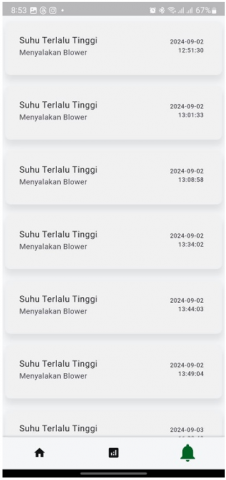
The smart cage system is also equipped with notifications via a mobile-based application. Notifications will be sent if there is a temperature change exceeding the set value. This notification aims to remind the cage owner regarding the condition of the cow cage so that the cage owner can take preventive measures so that the condition of the cow can continue to be healthy. Figure 8 shows the SMS notification display from the smart cage.
Table 1. Data of sensor in smart kandang system
|
Devices_ID |
Time |
Temperature |
Humidity |
Ammonia |
|
1 |
12:51:30 |
36.7 |
54.2 |
122 |
|
1 |
13:01:33 |
37 |
56.2 |
136 |
|
1 |
13:08:58 |
37.5 |
53.5 |
104 |
|
1 |
13:29:00 |
36.9 |
53.2 |
103 |
|
1 |
13:34:02 |
37.1 |
54.2 |
102 |
|
1 |
13:39:02 |
37 |
55.9 |
104 |
|
1 |
13:44:03 |
37.8 |
54.3 |
103 |
|
1 |
13:49:04 |
37.1 |
56.6 |
100 |
|
1 |
13:54:06 |
36.8 |
57.2 |
103 |
|
1 |
13:59:07 |
36.5 |
57.9 |
104 |
|
1 |
14:04:07 |
36 |
58.6 |
104 |
|
1 |
14:09:10 |
36.6 |
57.8 |
103 |
|
1 |
14:19:11 |
36.8 |
57.2 |
103 |
|
1 |
14:24:11 |
36.6 |
58.5 |
105 |
|
1 |
14:29:11 |
35.8 |
60.3 |
104 |
|
1 |
14:34:13 |
35.5 |
59.5 |
103 |
|
1 |
14:39:14 |
35.7 |
60.1 |
103 |
|
1 |
14:44:14 |
35 |
62 |
103 |
|
1 |
14:49:15 |
34.5 |
63.5 |
103 |
|
1 |
14:54:15 |
34.7 |
63.2 |
104 |
|
1 |
15:04:21 |
34.9 |
62.9 |
103 |
4.4 Aplication of “Moonitoring”
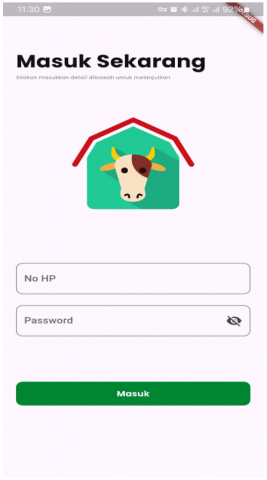
The smart cage monitoring application is equipped with an application called "Moonitoring" which is made using an android application with the Kotlin framework [20]. This application aims to make it easier for users to monitor cages. Figure 8 shows the login page for users of this application.
Figure 8 is a display of the login page of the smart kandang application user. This page is used by the user to ensure that the person who will control the cow shed is the officer or owner of the cow shed concerned. This is very important because users can set the smart cage system either manually or automatically. So that when controlling automatically, field officers must ensure that the temperature, humidity and odor parameters of the cage have been set according to the needs of the cow shed so that the cows get a comfortable environment. Figure 9 shows the cow shed information page based on the sensor values used in the smart cage. The process of sending data from the sensor to the application is carried out using wireless media using the Hypertext Transfer Protocol (HTTP) protocol.
Figure 9 shows the display of DHT 21 sensor values and MQ 135 sensor values. This display presents the temperature, humidity, and ammonia values in the WS Farm cage. While the graphic display of this application is shown in Figure 10.
Figure 10 shows a graph of changes in temperature, humidity and ammonia sensor values. Based on the graph, it shows that the sensor can measure data continuously and in real time. Figure 11 shows the notification display in the smart cage application when the cage temperature exceeds the temperature set by the user.
Figure 12 shows a display for controlling fan and lighting devices automatically so that the temperature and humidity of the cage can be kept stable even if the cage keeper is not around the cage location.
Figure 12 shows the display of smart cage device control. In this system, the application provides two modes in controlling how the fan and lights work. The fan is used to keep the environmental temperature stable according to the temperature value of the cage needed by the cow. While the lamp aims to warm the cage if the environmental temperature is cold and does not match the needs of the cow.
Figure 8. Aplication of smart kandang
Figure 9. Sensor value display
Figure 10. Graph of temperature, humidity and ammonia sensor values
Figure 11. Notification of smart kandang
Figure 12. Smart cage device control display
The smart cage setting process is done manually directly by the cage operator by turning the lights on or off, while automatic settings are done by first setting the temperature value on the smart cage system and then the operator moves the button to the automatic setting. Through this setting, the smart cage system will turn on the lights and fans when there is a change in temperature value from the value previously set by the operator.
The development of the WS Farm cattle pen monitoring system based on mobile applications and the Internet of Things (IoT) offers an innovative and efficient solution in managing the livestock environment. This system allows farmers to monitor the temperature and humidity conditions of the pen in real time via mobile devices, providing easy access to information anytime and anywhere.
The implementation of IoT technology in monitoring cattle pens shows several significant benefits. First, this system improves livestock welfare by ensuring optimal environmental conditions in the pen, thereby reducing the risk of stress and disease in cattle. Second, the use of mobile applications as a user interface provides convenience in data management and decision making, which in turn increases the efficiency of farm operations. Third, with real-time monitoring, farmers can immediately respond to critical situations, such as drastic changes in temperature or humidity, thereby reducing potential losses.
In addition to the benefits mentioned, this study also identified several challenges in implementing an IoT-based monitoring system. These challenges include the need for adequate technological infrastructure, such as a stable internet network in the livestock area, as well as the cost of implementing and maintaining IoT devices. Training and technical knowledge for livestock farmers are also important factors in the successful use of this technology.
This cow barn monitoring system research is still wide open to be developed. Such as providing alternative energy using solar panels, this is because the intensity of sunlight in the Subang area is quite high so that it has the potential to produce electrical energy that can be used as a source of electrical energy for the IOT cow barn monitoring system. In addition, other research is automatic feeding through a scheduling system. By storing feed in a certain container and having a feed container opening and closing system, cow feeding can be done automatically. Other research that can be developed is monitoring cow behavior that can be monitored via CCTV, so that if CCTV has been integrated into this monitoring system, cow behavior can be monitored remotely without having to come to the cow barn. Through the development of an IOT system for cow barns, it can make it easier for barn keepers to manage cow barns better.
This work is supported by Research and Community service Directorate of Telkom University (PPM Universitas Telkom).
[1] Das, A, Raju, R, Patnaik, N.M. (2020). Present scenario and role of livestock sector in rural economy of India: A review. International Journal of Livestock Research, 10(11): 23-30.
[2] Sugiyama, M., Iddamalgoda, A., Oguri, K., Kamiya, N. (2002). Development of livestock sector in Asia: An analysis of present situation of livestock sector and its importance for future development. Gifu Shiritsu Joshi Tankidaigaku, 52: 1-9. https://doi.org/10.24516/00000429
[3] Erlina, T. (2017). Sistem monitoring suhu, kelembaban dan gas amonia pada kandang sapi perah berbasis teknologi Internet of Things (IoT). Journal of Information Technology and Computer Engineering, 1(1): 1-7. https://doi.org/10.25077/jitce.1.01.1-7.2017
[4] Aissaoua, H., Laouid, A., Kara, M., Bounceur, A., Hammoudeh, M., Chait, K. (2024). Integrating homomorphic encryption in IoT healthcare blockchain systems. Ingénierie des Systèmes d’Information, 29(5): 1667-1677. https://doi.org/10.18280/isi.290501
[5] Alonso, R.S., Sittón-Candanedo, I., García, Ó., Prieto, J., Rodríguez-González, S. (2020). An intelligent edge-IoT platform for monitoring livestock and crops in a dairy farming scenario. Ad Hoc Networks, 98: 102047. https://doi.org/10.1016/j.adhoc.2019.102047
[6] Fernandes, J.N., Hemsworth, P.H., Coleman, G.J., Tilbrook, A.J. (2021). Costs and benefits of improving farm animal welfare. Agriculture, 11(2): 104. https://doi.org/10.3390/agriculture11020104
[7] Akpakwu, G.A., Silva, B.J., Hancke, G.P., Abu-Mahfouz, A.M. (2018). A survey on 5G networks for the Internet of Things: Communication technologies and challenges. IEEE Access, 6: 3619-3647. https://doi.org/10.1109/ACCESS.2017.2779844
[8] Čolaković, A., Hadžialić, M. (2018). Internet of Things (IoT): A review of enabling technologies, challenges, and open research issues. Computer Networks, 144: 17-39. https://doi.org/10.1016/j.comnet.2018.07.017
[9] Tresna Utama, A., Panji Sasmito, A., Faisol, A. (2021). Implementasi logika fuzzy pada sistem monitoring online suhu sapi potong berbasis IoT. JATI: Jurnal Mahasiswa Teknik Informatika, 5(1): 16-24. https://doi.org/10.36040/jati.v5i1.3226
[10] Kharisma, A., Sintawati, A. (2023). An automatic Internet of Things-based system for rabbit cage. Ultima Computing: Jurnal Sistem Komputer, 15(2): 52-57. https://doi.org/10.31937/sk.v15i2.3404
[11] Rahmatulloh, A., Wahyudin, D., Widiyasono, N., Darmawan, I. (2022). IoT-based temperature monitoring system for smart cage. In 2022 International Conference on Advanced Creative Networks and Intelligent Systems (ICACNIS), pp. 1-6. https://doi.org/10.1109/ICACNIS57039.2022.10055769
[12] Alexander, H. (2021). Scaling up access to health services beyond Tanzania and Kenya borders through wananchi afya digital mobile application. Masters, Nelson Mandela African Institution of Science and Technology, Arusha. https://doi.org/10.58694/20.500.12479/1341
[13] Rahayu, R.S., Wahyu Wibowo, A.P. (2024). Monitoring cattle farms using cloud computing-based Internet of Things (IoT) tools using artificial intelligence methods. Brilliance: Research of Artificial Intelligence, 4(1): 61-67. https://doi.org/10.47709/brilliance.v4i1.3736
[14] Ronald, B.S., Raman, R. (2024). Multi-sensor fusion in livestock with IoT for biometric sensing and MQTT for enhanced health insights. In 2024 2nd International Conference on Disruptive Technologies (ICDT), Greater Noida, India, pp. 935-940. https://doi.org/10.1109/ICDT61202.2024.10489625
[15] Chairunnas, A., Putra, A.P. (2024). Optimization of livestock monitoring system in outdoor based on Internet of Things (IoT). JITK: Jurnal Ilmu Pengetahuan dan Teknologi Komputer, 9(2): 323-329. https://doi.org/10.33480/jitk.v9i2.5312
[16] Rajapakse, T., Maduranga, M., Dissanayake, M. (2022). IoT-enabled cattle health and location monitoring system. International Journal of Applied Science and Development, 1: 64-74. https://doi.org/10.37394/232029.2022.1.8
[17] Naumann, D., Jenkins, A.M. (1982). Prototyping: The new paradigm for systems development. MIS Quarterly, 6(3): 29. https://doi.org/10.2307/248654
[18] Miller, D. (2021). The best practice of teach computer science students to use paper prototyping. International Journal of Technology, Innovation and Management (IJTIM), 1(2): 42-63. https://doi.org/10.54489/ijtim.v1i2.17
[19] Vranić, V., Lang, J., Nores, M.L., Arias, J.J.P., Solano, J., Laseca, G. (2024). Use case modeling in a research setting of developing an innovative pilgrimage support system. Universal Access in the Information Society, 23(4): 1543-1560. https://doi.org/10.1007/s10209-023-01047-1
[20] Joshi, V. (2024). Convert any android device into a programmable IoT device with the help of IoT Everywhere Framework. arXiv preprint arXiv:2405.01568. https://doi.org/10.48550/ARXIV.2405.01568