Peter Sahupala | Reinyelda D. Latuheru*
© 2026 The authors. This article is published by IIETA and is licensed under the CC BY 4.0 license (http://creativecommons.org/licenses/by/4.0/).
OPEN ACCESS
This study experimentally evaluates the technical performance of a prototype-scale photovoltaic irrigation pumping system (PVIPS) using integrated electrical and hydraulic performance indicators under controlled laboratory conditions representative of tropical irrigation applications in Merauke, South Papua, Indonesia. The prototype consisted of a 100 Wp polycrystalline photovoltaic module, a 30 A pulse width modulation (PWM) charge controller, a 12 V 100 Ah valve-regulated lead-acid (VRLA) battery, and a 12 V DC centrifugal irrigation pump. Experimental measurements were conducted hourly between 08:00 and 16:00 under varying solar irradiance. The photovoltaic operating voltage ranged from 11.7 to 14.6 V, current from 1.21 to 2.11 A, and operating power from 15.07 to 27.23 W. The battery-assisted PVIPS maintained stable pump operation with an input power of 145.6–178.1 W, a constant total dynamic head (TDH) of 4.0 m, and a rated discharge of 15 L min⁻¹. Daily water production ranged from approximately 3600 to 7200 L day⁻¹, depending on the effective pump operating duration under different weather conditions. Hydraulic output was estimated at approximately 9.81 W based on the measured TDH and the manufacturer's rated discharge. The economic assessment indicated an initial investment of USD 449.44, an annual operation and maintenance cost of USD 28.09, and a payback period of approximately 0.57 years. The results demonstrate the technical and economic feasibility of the proposed prototype as a sustainable irrigation solution for small-scale agricultural applications in regions with abundant solar resources.
photovoltaic irrigation pumping system, solar-powered irrigation, photovoltaic module, pulse width modulation charge controller, hydraulic performance, renewable energy, techno-economic analysis, sustainable agriculture
Agriculture accounts for approximately 70% of global freshwater withdrawals and remains one of the most energy-intensive sectors because irrigation is essential for sustaining crop productivity. Growing food demand, climate variability, and rising energy costs have increased the need for irrigation technologies that improve water-use efficiency while reducing energy consumption and environmental impacts [1-6]. Conventional irrigation systems powered by diesel engines or grid electricity remain widely used in developing countries but are constrained by high operating costs, fuel dependence, unstable energy supplies, and greenhouse gas emissions.
Among renewable energy technologies, photovoltaic irrigation pumping systems (PVIPS) have emerged as one of the most practical and economically attractive solutions for decentralized agricultural water supply because of continuous reductions in photovoltaic module costs, improvements in conversion efficiency, and advances in power electronics [5-12]. Compared with conventional diesel-powered pumping systems, PVIPS provide lower operating costs, reduced maintenance requirements, and environmentally sustainable irrigation. Recent developments integrating battery energy storage and appropriate charge-control strategies have further improved system reliability. In this study, the prototype employed a conventional 30 A pulse width modulation (PWM) charge controller without maximum power point tracking (MPPT); therefore, all reported results correspond exclusively to the PWM-based configuration.
Extensive research has demonstrated the technical feasibility and economic benefits of PVIPS under diverse environmental conditions. Previous studies consistently reported substantial reductions in fuel consumption, operating costs, and greenhouse gas emissions compared with conventional diesel-powered irrigation systems while confirming the potential of photovoltaic technology for sustainable agricultural water supply [13-19]. Recent investigations have improved PVIPS performance through battery-supported operation, intelligent energy management, hybrid renewable-energy configurations, advanced control strategies, and optimized hydraulic design. These studies have significantly advanced photovoltaic irrigation technologies and demonstrated their technical reliability for agricultural applications.
Nevertheless, several important limitations remain. Many published investigations rely primarily on numerical simulations, optimization models, or laboratory evaluations of individual system components, whereas comparatively fewer studies provide experimentally validated prototype-scale performance under operating conditions representative of practical agricultural applications. In addition, photovoltaic electrical performance, battery-assisted pump operation, hydraulic behaviour, effective pump operating duration, and daily irrigation water production are frequently evaluated independently rather than as an integrated system. Consequently, experimentally validated engineering data describing the interaction among photovoltaic power generation, battery-supported operation, hydraulic performance, and irrigation water production under representative tropical operating conditions remain limited, restricting practical implementation of photovoltaic irrigation systems [5, 13, 15].
The need for experimentally validated photovoltaic irrigation systems is particularly important in tropical agricultural regions, where solar irradiance, ambient temperature, irrigation demand, and hydraulic loading vary considerably throughout the year. These factors directly influence both electrical energy availability and water delivery performance, making local experimental validation essential for reliable system design and implementation [1, 3].
Despite substantial progress in photovoltaic irrigation technologies, important research gaps remain. Most previous studies have focused on numerical simulation, system optimization, or individual component performance, whereas relatively few have experimentally evaluated prototype-scale systems by integrating photovoltaic electrical characteristics, battery-assisted pump operation, hydraulic performance, effective operating duration, and daily irrigation water production within a single framework. Furthermore, the interaction between solar energy availability and daily irrigation performance under representative tropical operating conditions remains insufficiently validated. Addressing these gaps requires experimentally validated engineering data to support the design, evaluation, and practical implementation of PVIPS for agricultural applications [19-21].
Merauke Regency, South Papua, Indonesia, is one of the country's major agricultural production areas and has been designated as a strategic national food production region. The region possesses abundant solar energy resources and extensive agricultural land, providing favorable conditions for implementing PVIPS. However, irrigation in many agricultural areas still depends on diesel-powered pumps or grid electricity, resulting in high operating costs, fuel dependence, and greenhouse gas emissions. These conditions highlight the need for reliable, cost-effective, and environmentally sustainable irrigation technologies capable of supporting agricultural productivity while reducing dependence on conventional energy sources [22].
The novelty of this study lies in the experimental evaluation of a prototype-scale PVIPS through an integrated assessment of photovoltaic electrical performance, battery-assisted pump operation, hydraulic characteristics, effective operating duration, and daily irrigation water production under representative tropical operating conditions. Unlike previous studies that primarily investigated individual components or simulation-based system performance, this study provides experimentally validated engineering evidence that integrates electrical and hydraulic performance within a single evaluation framework. The resulting experimentally validated dataset supports the design, performance evaluation, and techno-economic assessment of PVIPS for sustainable small-scale agricultural applications in tropical regions.
Accordingly, this study experimentally evaluates a prototype-scale PVIPS through an integrated assessment of photovoltaic electrical characteristics, battery-assisted pump operation, hydraulic performance, effective operating duration, and daily irrigation water production under representative tropical operating conditions. The study also evaluates the technical feasibility and techno-economic performance of the proposed system and provides experimentally validated engineering data for the design and practical implementation of PVIPS in sustainable small-scale agricultural applications.
2.1 Methods
2.1.1 Research methodology
This study designs and experimentally evaluates the performance of a prototype-scale PVIPS using a systems-based engineering approach combined with experimental and evaluative analyses. The experimental investigation was conducted under representative operating conditions through measurements of photovoltaic electrical output, battery operating performance, pump electrical characteristics, and hydraulic operational performance. The collected data were subsequently analyzed to assess the operational behavior and technical performance of the prototype PVIPS. The study consisted of four stages: prototype design, system installation, experimental measurements, and performance evaluation.
Experimental Test Facility and Hydraulic Configuration. All experimental data reported in this study were obtained at the Mechanical Engineering Laboratory, Musamus University, Merauke, South Papua, Indonesia. The laboratory facility was designed to simulate the hydraulic operating conditions of a small-scale irrigation pumping system under controlled conditions. The water source consisted of a storage reservoir that continuously supplied clean water to the pumping system. During testing, water was recirculated from the storage reservoir through the hydraulic circuit and returned to the same reservoir, enabling repeated measurements under identical operating conditions [17, 19].
The prototype configuration adopted in this study follows the general design principles of standalone photovoltaic water pumping systems, including the integration of the photovoltaic module, battery storage, charge controller, and DC irrigation pump under a fixed hydraulic configuration [23].
The system employed a DC centrifugal pump operating under suction-lift conditions, in which the pump was installed above the water surface. The suction pipeline was constructed using a 2-inch PVC pipe with a length of 5 m, while the discharge pipeline consisted of a 1-inch PVC pipe with a length of 2 m. The static head between the water surface in the storage reservoir and the discharge outlet was approximately 1 m, whereas the total dynamic head (TDH) measured during operation ranged from 4 m, including static head and hydraulic losses due to pipe friction and fittings.
The hydraulic circuit consisted of the suction line, discharge line, flow meter, and flow-control valve. Water discharge was measured using a calibrated flow meter installed on the discharge line, while total head was determined from the elevation difference and hydraulic pressure losses within the piping system.
The hydraulic test configuration consisted of a recirculating water reservoir, a 2-inch suction pipe (5 m), a 1-inch discharge pipe (2 m), and an inline flow meter. The pump operated under suction-lift conditions with a static head of approximately 1.0 m. Considering the friction losses in the suction and discharge pipelines together with pipe fittings, the TDH during the experiments was 4.0 m.
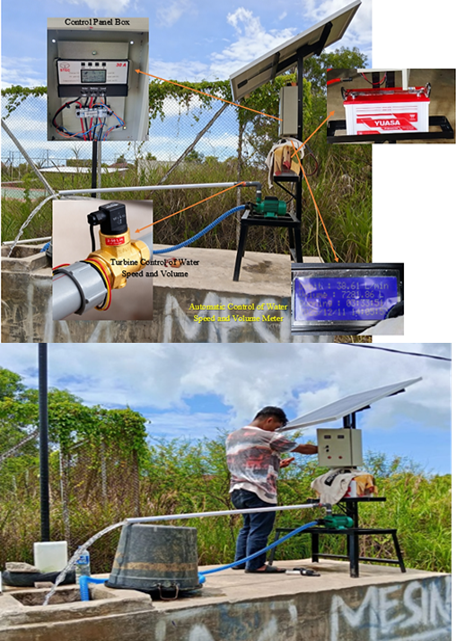
Figure 1. Solar powered irrigation pump system
As seen in Figure 1, the photovoltaic modules are positioned to maximize solar radiation receipt at an angle tailored to Merauke's topographical characteristics. In low solar radiation situations, the energy storage system uses a 12 V 100 Ah battery (Figure 1) to stabilize the power supply and support pump operation. The depth of discharge limit is taken into consideration when evaluating the battery's energy capacity based on usable energy. The TDH calculation, which takes into account the suction head, pressure head, and energy losses from pipe and connection friction, is the first step in the hydraulic system design. It is represented as follows [19, 21]:
$H_{T D H}=H_s+H_d+H_f$ (1)
where,
HTDH = total dynamic head (m);
Hs = suction head (m);
Hd = discharge head (m);
Hf = head loss due to pipe friction and fittings (m).
The Darcy–Weisbach equation is used to compute pressure loss (Hf), accounting for pipe diameter, length, flow velocity, and friction factor [22]. A flow meter mounted on the discharge pipe is used to verify the actual flow rate and flow velocity. The hydraulic output power of the irrigation pump was estimated from the measured TDH and the pump discharge using [17, 19]:
$P_h=\rho \times g \times Q \times H_{T D H}$ (2)
where,
Ph = hydraulic output power (W);
ρ = water density (kg m⁻³);
g = gravitational acceleration (9.81 m s⁻²);
Q = volumetric flow rate (m³ s⁻¹);
HTDH = total dynamic head (m).
2.1.2 Pump selection and control system
Based on how well the flow rate, head, and electrical power from the solar system work together, a DC water pump was chosen. Efficiency, dependability, and simplicity of integration with solar energy sources are taken into consideration while choosing a pump. As seen in Figure 1, the digital control system is capable of controlling the battery charging process, safeguarding the system from overcharge and overdischarge situations, and continuously monitoring electrical parameters [10, 11].
The performance of the prototype irrigation pumping system was experimentally evaluated through measurements of photovoltaic electrical output, pump electrical operational performance, and hydraulic operating conditions under representative operating conditions. Hydraulic performance was evaluated using the measured TDH (4.0 m) together with the manufacturer's rated pump discharge of 15 L min⁻¹. The measured electrical operational performance of the photovoltaic module and the irrigation pump were subsequently analyzed to evaluate the operational behaviour and technical performance of the integrated prototype system. The measured operating data were also compared with the design specifications to verify the functionality and operational performance of the prototype PVIPS [18, 19, 21].
Electrical parameters, including photovoltaic voltage, current, battery voltage, pump voltage, and pump current, were measured using calibrated digital electrical instruments. Solar irradiance was measured adjacent to the photovoltaic module using a solar power meter. Hydraulic measurements were performed using an inline flow meter installed on the discharge pipeline. The TDH was calculated by considering the measured static head together with friction losses occurring in the suction and discharge pipelines. All measurements were repeated under different solar radiation conditions to evaluate the operational stability of the system.
Figure 1 illustrates the energy flow from the PV module to the irrigation pump through the PWM controller and battery storage. The photovoltaic electrical parameters were recorded hourly between 08:00 and 16:00. The irrigation pump was operated only during this daytime observation period. The effective daily operating duration depended on the prevailing weather conditions. Under clear weather conditions, the pump operated for approximately 8 h day⁻¹, whereas under overcast conditions the effective operating duration decreased to approximately 4 h day⁻¹ due to reduced photovoltaic energy availability. No additional pumping operation was performed outside the observation period.
2.2 Materials
2.2.1 Research materials
The research materials are the main components used in the design and testing of the solar-powered irrigation pump system. The technical specifications of the research materials are presented in Table 1.
Photovoltaic module specification. The experimental system employed a single 100 Wp polycrystalline photovoltaic module with overall dimensions of 100 × 67 × 3 cm, an effective surface area of approximately 0.67 m², and a weight of approximately 8 kg. According to the manufacturer's specifications under Standard Test Conditions (STC: 1000 W m⁻², 25 ℃, AM 1.5), the module has a rated maximum power (Pmax) of 100 W, maximum power voltage (Vmp) of 17.8 V, maximum power current (Imp) of 5.62 A, open-circuit voltage (Voc) of 21.8 V, and short-circuit current (Isc) of 6.05 A. During the experiments, the photovoltaic module supplied electrical energy to a 12 V battery through a 30 A PWM solar charge controller, which subsequently powered the DC irrigation pump.
Table 1. Technical specifications of research materials
|
Material |
Technical Specifications |
Functions |
|
Photovoltaic module |
Polycrystalline type, nominal voltage 12 V DC, peak power 100 Wp |
Convert solar radiation energy into electrical energy |
|
Solar panel frame |
Steel/hollow iron material, static construction, adjustable tilt angle |
Support and stabilize solar panels |
|
Solar charge controller (SCC) |
System voltage 12 V, PWM 12 V, 30 A |
Regulate battery charging and maintain system stability |
|
Batteries |
Valve-regulated lead-acid (VRLA), voltage 12 V, capacity 100 Ah |
Storage electrical energy converted by solar panels |
|
DC water pump |
Working voltage 12 V DC, power 180 W, DC centrifugal pump type |
Distribute water from the source to the irrigation channel |
|
Water pipes and hoses |
Diameter 1 inch, PVC/rubber material |
Provide water flow from the pump to the outlet |
|
DC power cables |
Insulated copper cable, cross-section 2.5 mm² |
Connect the panels, SCC, battery, and pump |
|
Electrical connectors |
DC terminals and safety socket |
Ensure a safe and stable electrical connection |
2.2.2 Research tools
The research equipment was used to measure electrical, hydraulic, and environmental parameters during the testing process. The technical specifications of the research equipment are shown in Table 2.
Table 2. Technical specifications of research tools
|
Tools |
Technical Specifications |
Measured Parameters |
|
Digital multimeter |
Voltage range DC up to 1000 V, current up to 10 A |
Voltage and current of the panel, battery, and pump |
|
DC wattmeter |
Voltage 0–60 V, current 0–100 A |
System power |
|
Flow meter/measuring cup |
Accuracy ±1% |
Water flow rate (L/min) |
|
Stopwatch |
Precision 0.01 s |
Test time and operating duration |
|
Digital thermometer |
Temperature range 0–50 ℃ |
System ambient temperature |
|
Stationery and datasheets |
Manual |
Recording of test results |
Table 3. Experimental configuration of the prototype photovoltaic irrigation pumping system (PVIPS)
|
Component |
Specification Used in This Study |
|
Photovoltaic module |
Single polycrystalline PV module |
|
Rated Photovoltaic (PV) capacity |
100 Wp |
|
PV nominal voltage |
12 V DC |
|
PV area |
0.67 m² |
|
Charge controller |
PWM, 30 A |
|
Maximum Power Point Tracking (MPPT) |
Not used |
|
Battery type |
VRLA |
|
Battery rating |
12 V, 100 Ah |
|
Pump type |
DC centrifugal irrigation pump |
|
Pump voltage |
12 V DC |
|
Pump rated power |
180 W |
|
Rated discharge |
15 L min⁻¹ |
|
Measured total dynamic head (TDH) |
4.0 m |
|
Operating period |
08:00–16:00 |
|
Effective operating duration |
4–8 h day⁻¹ |
|
Experimental site |
Mechanical Engineering Laboratory, Musamus University |
For consistency throughout this manuscript, all analyses were performed using the prototype configuration summarized in Table 3. The same photovoltaic module, battery, PWM charge controller, and irrigation pump specifications were used throughout the experimental investigation and subsequent performance analyses.
2.2.3 Experimental procedure
The experimental evaluation was conducted under controlled laboratory conditions using the prototype PVIPS described in Section 2.2. Prior to each experiment, all electrical and hydraulic measuring instruments were inspected and functionally verified according to the manufacturers' operating instructions before data acquisition [15, 16].
Solar irradiance was measured hourly between 08:00 and 16:00 using a calibrated solar power meter positioned adjacent to the photovoltaic module. The instrument was functionally verified according to the manufacturer's recommendations prior to each experimental measurement session. For each experimental day, the values reported in Tables 4 and 5 represent the daily average of the hourly measurements collected during the scheduled observation period (08:00–16:00). Simultaneously, ambient temperature and prevailing weather conditions (bright, cloudy, or overcast) were recorded throughout the experimental period. Photovoltaic module surface temperature was not directly measured during the experiments. Therefore, the measured photovoltaic operating power represents the actual operating performance of the integrated photovoltaic–battery–pump system under naturally varying environmental conditions rather than the intrinsic electrical performance of the photovoltaic module under Standard Test Conditions (STC).
Electrical performance was evaluated by simultaneously measuring the photovoltaic voltage, photovoltaic current, battery voltage, pump voltage, and pump current using calibrated digital electrical instruments. The electrical operating parameters were calculated using the measured voltage and current values. Eq. (3) was used only to evaluate the electrical power transfer characteristics between the photovoltaic module and the irrigation pump and was not used to determine the overall energy conversion efficiency of the complete photovoltaic–battery–pump system because the individual photovoltaic and battery energy contributions were not measured separately.
$\eta_{{electrical}}=\frac{V_{{out}} \times I_{{out}}}{V_{{in}} \times I_{{in}}}$ (3)
where,
ηelectrical = electrical power conversion efficiency of the irrigation pumping system (-) or (%);
Vout = output voltage supplied to the DC irrigation pump (V);
Iout = output current supplied to the DC irrigation pump (A);
Vin = input voltage from the photovoltaic module to the PWM charge controller (V);
Iin = input current from the photovoltaic module to the PWM charge controller (A).
Hydraulic performance was evaluated using the measured TDH together with the manufacturer's rated pump discharge of 15 L min⁻¹. Water discharge was verified using an inline flow meter installed on the discharge pipeline. Hydraulic output power and pump efficiency were subsequently estimated according to Eq. (4).
$\eta_{{pump}}=\frac{\rho \times g \times Q \times H}{P_{{in}}}$ (4)
where,
ρ = water density (kg m⁻³);
g = gravitational acceleration (9.81 m s⁻²);
Q = volumetric flow rate (m³ s⁻¹);
H = total dynamic head (m);
Pin = electrical input power to the pump (W).
Because the discharge remained at the manufacturer's rated value throughout the experiments, the hydraulic output power reported in this study represents an engineering estimation based on the measured TDH of 4.0 m and the rated pump discharge rather than a direct hydraulic power measurement.
All experimental measurements were repeated under different solar irradiance conditions to evaluate the operational performance of the prototype PVIPS. The recorded dataset included solar irradiance, ambient temperature, weather conditions, photovoltaic electrical parameters, battery voltage, pump electrical parameters, operating duration, and hydraulic performance indicators for subsequent technical analysis.
3.1 Results
3.1.1 Photovoltaic Electrical Performance
The measured photovoltaic electrical performance under varying solar irradiance is summarized in Table 4.
Table 4 summarizes the measured photovoltaic electrical performance during the experimental period. Solar irradiance varied from 102.35 to 1648.27 W m⁻², while the photovoltaic operating voltage ranged from 11.7 to 14.6 V. The measured operating current varied between 1.21 and 2.11 A, resulting in an operating power output of 15.07–27.23 W. Overall, photovoltaic voltage, current, and operating power generally increased with increasing solar irradiance, although minor fluctuations were observed at similar irradiance levels. The measured results demonstrate stable photovoltaic electrical performance throughout the experimental period.
Table 4. Measured photovoltaic electrical performance
|
No. |
Solar Panel Tilt |
Intensity (W/m²) |
Voltage (V) |
Current (A) |
Panel Power (W) |
|
1 |
47 |
228.5 |
12.9 |
1.77 |
22.85 |
|
2 |
49 |
238.22 |
12.44 |
1.91 |
23.82 |
|
3 |
49 |
238.22 |
12.7 |
1.88 |
23.82 |
|
4 |
50 |
243.1 |
12.8 |
1.90 |
24.31 |
|
5 |
50 |
243.1 |
13.1 |
1.86 |
24.31 |
|
6 |
35 |
170.16 |
12.1 |
1.41 |
17.02 |
|
7 |
35 |
170.16 |
12.3 |
1.38 |
17.02 |
|
8 |
41 |
199.33 |
12.2 |
1.63 |
19.93 |
|
9 |
45 |
218.78 |
12.1 |
1.81 |
21.88 |
|
10 |
47 |
228.5 |
12.9 |
1.80 |
22.85 |
|
11 |
47 |
228.5 |
12.8 |
1.79 |
22.85 |
|
12 |
47 |
228.5 |
13.1 |
1.74 |
22.85 |
|
13 |
34 |
165.3 |
13 |
1.27 |
16.53 |
|
14 |
40 |
194.47 |
12.7 |
1.53 |
19.45 |
|
15 |
40 |
194.47 |
12.5 |
1.56 |
19.45 |
|
16 |
50 |
243.1 |
12.5 |
1.94 |
24.31 |
|
17 |
56 |
272.26 |
13.9 |
1.96 |
27.23 |
|
18 |
56 |
272.26 |
12.9 |
2.11 |
27.23 |
|
19 |
56 |
272.26 |
13 |
2.09 |
27.23 |
|
20 |
32 |
155.57 |
12.9 |
1.21 |
15.56 |
|
21 |
42 |
204.19 |
12.5 |
1.63 |
20.42 |
|
22 |
42 |
204.19 |
12.9 |
1.58 |
20.42 |
|
23 |
42 |
204.19 |
12.5 |
1.63 |
20.42 |
|
24 |
51 |
247.95 |
12.3 |
2.02 |
24.80 |
|
25 |
51 |
247.95 |
12.7 |
1.95 |
24.80 |
|
26 |
31 |
150.71 |
11.7 |
1.29 |
15.07 |
|
27 |
35 |
170.16 |
12.5 |
1.36 |
17.02 |
|
28 |
35 |
170.16 |
12.4 |
1.37 |
17.02 |
|
29 |
35 |
170.16 |
12.4 |
1.37 |
17.012 |
|
30 |
49 |
238.22 |
12.9 |
1.85 |
23.82 |
|
31 |
50 |
243.1 |
12 |
2.03 |
24.31 |
|
32 |
45 |
218.78 |
12.6 |
1.74 |
21.88 |
|
33 |
45 |
218.78 |
13.1 |
1.67 |
21.88 |
|
34 |
40 |
194.47 |
13.1 |
1.48 |
19.45 |
|
35 |
40 |
194.47 |
13.7 |
1.42 |
19.45 |
|
36 |
47 |
228.5 |
13.4 |
1.711 |
22.85 |
|
37 |
49 |
238.22 |
13.8 |
1.73 |
23.82 |
|
38 |
49 |
238.22 |
14.6 |
1.63 |
23.82 |
|
39 |
37 |
179.88 |
13 |
1.38 |
17.99 |
|
40 |
37 |
179.88 |
12.4 |
1.45 |
17.99 |
|
41 |
48 |
233.36 |
12.2 |
1.91 |
23.34 |
|
42 |
48 |
233.36 |
12.3 |
1.90 |
23.34 |
|
43 |
52 |
252.81 |
13.4 |
1.89 |
25.28 |
|
44 |
52 |
252.81 |
13.4 |
1.89 |
25.28 |
|
45 |
52 |
252.81 |
13 |
1.94 |
25.28 |
|
46 |
52 |
228.5 |
12.9 |
1.77 |
22.85 |
|
47 |
30 |
238.22 |
12.44 |
1.91 |
23.82 |
|
48 |
45 |
238.22 |
12.7 |
1.88 |
23.82 |
|
49 |
45 |
243.1 |
12.8 |
1.90 |
24.31 |
|
50 |
49 |
243.1 |
13.1 |
1.86 |
24.31 |
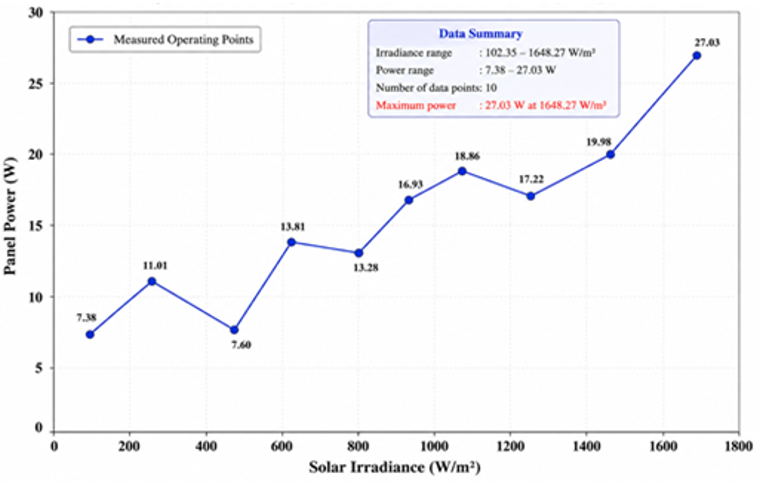
Figure 2 shows the measured relationship between solar irradiance and photovoltaic operating power. As solar irradiance increased from 102.35 to 1648.27 W m⁻², the photovoltaic operating power increased from 15.07 to 27.23 W. Although minor fluctuations were observed, the overall trend demonstrates a positive relationship between solar irradiance and photovoltaic operating power.
Figure 2. Relationship between solar irradiance and photovoltaic module power
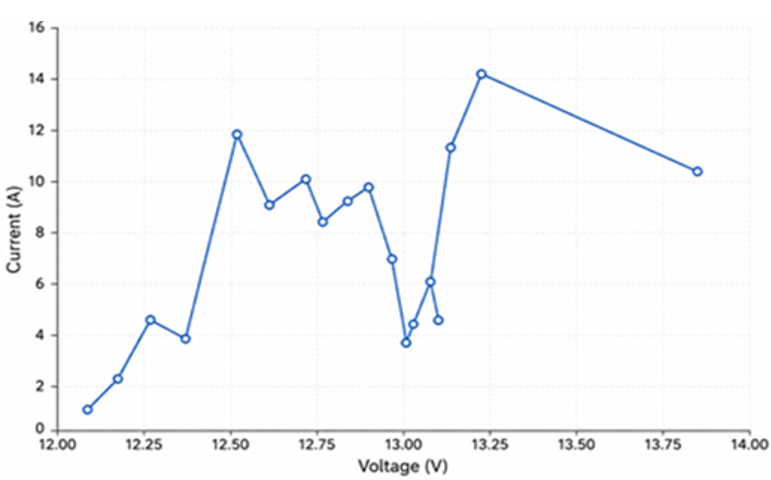
Figure 3 presents the measured current–voltage operating characteristics of the photovoltaic module. The operating voltage ranged from 11.7 to 14.6 V, while the corresponding operating current varied between 1.21 and 2.11 A. The measured current–voltage characteristics confirm stable photovoltaic electrical operation throughout the experimental period.
Figure 3. Measured current–voltage (I–V) characteristics of the prototype photovoltaic irrigation pumping system
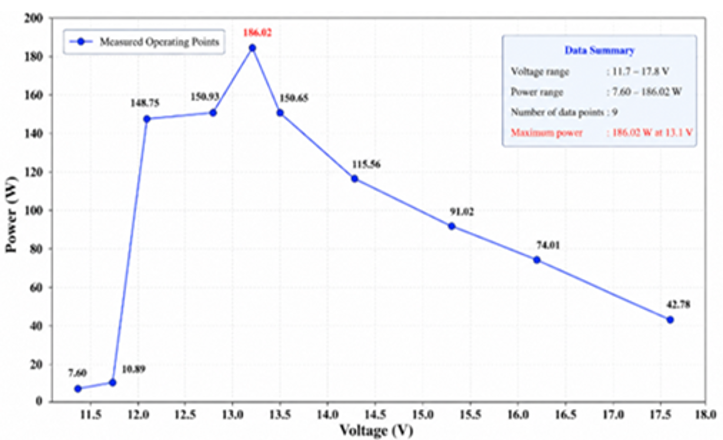
Figure 4 presents the measured voltage–power operating characteristics of the photovoltaic module. Photovoltaic operating power varied from 15.07 to 27.23 W within the measured operating voltage range of 11.7–14.6 V. The measured voltage–power characteristics confirm consistent photovoltaic electrical performance throughout the experimental period.
Figure 4. Measured voltage–power (V–P) characteristics of the prototype photovoltaic irrigation pumping system
3.1.2 Battery-assisted pump electrical performance
The measured electrical operating performance of the battery-assisted irrigation pump is summarized in Table 5.
Table 5. Measured battery-assisted pump electrical performance
|
1 |
2 |
3 |
4 |
5 |
6 |
7 |
8 |
|
12.9 |
12.3 |
13 |
159.9 |
8 |
7200 |
31.6 |
Bright |
|
12.1 |
11.6 |
13 |
150.8 |
8 |
7200 |
32.4 |
Bright |
|
12.2 |
11.6 |
13 |
150.8 |
8 |
7200 |
31.1 |
Bright |
|
11.8 |
11.3 |
13 |
146.9 |
8 |
7200 |
30.6 |
Bright |
|
12.2 |
12.2 |
13 |
158.6 |
8 |
7200 |
31.1 |
Bright |
|
11.9 |
11.5 |
13 |
149.5 |
4 |
3600 |
27.5 |
Cloudy |
|
11.9 |
11.4 |
13 |
148.2 |
4 |
3600 |
25.5 |
Cloudy |
|
11.5 |
11.6 |
13 |
150.8 |
4 |
3600 |
26 |
Cloudy |
|
12.7 |
11.9 |
13 |
154.7 |
4 |
3600 |
26.8 |
Cloudy |
|
12.6 |
12.0 |
13 |
156.0 |
8 |
7200 |
31.6 |
Bright |
|
12.2 |
11.4 |
13 |
148.2 |
8 |
7200 |
30.3 |
Bright |
|
12.4 |
11.7 |
13 |
152.1 |
8 |
7200 |
31.0 |
Bright |
|
12.5 |
12.2 |
13 |
158.6 |
8 |
7200 |
29.6 |
Bright |
|
12.1 |
11.5 |
13 |
149.5 |
8 |
7200 |
30.8 |
Bright |
|
12.2 |
11.5 |
13 |
149.5 |
8 |
7200 |
33.3 |
Bright |
|
12.0 |
11.4 |
13 |
148.2 |
8 |
7200 |
33.3 |
Bright |
|
12.8 |
12.2 |
13 |
158.6 |
8 |
7200 |
33.3 |
Bright |
|
12.3 |
11.2 |
13 |
145.6 |
8 |
7200 |
32.8 |
Bright |
|
11.9 |
11.3 |
13 |
146.9 |
8 |
7200 |
34.1 |
Bright |
|
12.6 |
12.0 |
13 |
156.0 |
8 |
7200 |
29.1 |
Bright |
|
12.1 |
11.6 |
13 |
150.8 |
8 |
7200 |
29.9 |
Bright |
|
12.5 |
11.8 |
13 |
153.4 |
8 |
7200 |
30.7 |
Bright |
|
12.0 |
11.4 |
13 |
148.2 |
8 |
7200 |
32.5 |
Bright |
|
11.8 |
11.3 |
13 |
146.9 |
8 |
7200 |
29.8 |
Bright |
|
12.3 |
11.8 |
13 |
153.4 |
8 |
7200 |
31.2 |
Bright |
|
12.1 |
12.7 |
13 |
165.1 |
8 |
7200 |
29.1 |
Bright |
|
12.3 |
11.7 |
13 |
152.1 |
8 |
7200 |
29.3 |
Bright |
|
12.4 |
11.7 |
13 |
152.1 |
8 |
7200 |
31.1 |
Bright |
|
12.3 |
11.5 |
13 |
149.5 |
8 |
7200 |
31.9 |
Bright |
|
12.1 |
11.5 |
13 |
149.5 |
8 |
7200 |
31.7 |
Bright |
|
12.7 |
12.2 |
13 |
158.6 |
8 |
7200 |
32.2 |
Bright |
|
12.0 |
11.5 |
13 |
149.5 |
8 |
7200 |
32.4 |
Bright |
|
11.9 |
11.7 |
13 |
152.1 |
8 |
7200 |
34.9 |
Bright |
|
12.7 |
11.9 |
13 |
154.7 |
8 |
7200 |
31.1 |
Bright |
|
13.3 |
12.9 |
13 |
167.7 |
4 |
3600 |
26.3 |
Cloudy |
|
13.1 |
12.7 |
13 |
165.1 |
4 |
3600 |
28.1 |
Cloudy |
|
13.4 |
13.0 |
13 |
169.0 |
4 |
3600 |
26.4 |
Cloudy |
|
14.2 |
13.7 |
13 |
178.1 |
4 |
3600 |
27.6 |
Cloudy |
|
12.6 |
12.0 |
13 |
156.0 |
8 |
7200 |
30.1 |
Bright |
|
11.9 |
11.4 |
13 |
148.2 |
4 |
3600 |
27.4 |
Cloudy |
|
11.8 |
11.4 |
13 |
148.2 |
4 |
3600 |
25.5 |
Cloudy |
|
12.7 |
13.2 |
13 |
171.6 |
4 |
3600 |
27.2 |
Cloudy |
|
12.9 |
12.6 |
13 |
163.8 |
4 |
3600 |
27.5 |
Cloudy |
|
13.7 |
13.2 |
13 |
171.6 |
4 |
3600 |
26.7 |
Cloudy |
|
12.7 |
12.2 |
13 |
158.6 |
8 |
7200 |
32.3 |
Bright |
|
11.9 |
11.4 |
13 |
148.2 |
8 |
7200 |
33.2 |
Bright |
|
12.7 |
12.2 |
13 |
158.6 |
8 |
7200 |
33.1 |
Bright |
|
12.7 |
12.2 |
13 |
158.6 |
8 |
7200 |
30.4 |
Bright |
|
11.9 |
11.4 |
13 |
148.2 |
8 |
7200 |
30.6 |
Bright |
|
12.2 |
11.5 |
13 |
149.5 |
8 |
7200 |
32.7 |
Bright |
Table 5 summarizes the measured electrical operating performance of the battery-assisted irrigation pump during the experimental period. Battery voltage ranged from 11.5 to 14.2 V, while the pump operating voltage varied between 11.2 and 13.7 V. The measured pump current remained relatively stable, ranging from 12.5 to 13.0 A, resulting in an electrical input power of 145.6–178.1 W. These results indicate stable electrical operation of the irrigation pump throughout the experimental period despite variations in photovoltaic power generation.
3.1.3 Hydraulic and water production performance
The hydraulic operating conditions remained constant during the experimental period, with a pump discharge of 15 L min⁻¹ under a TDH of 4.0 m. Consequently, variations in daily water production were determined primarily by the effective operating duration rather than changes in hydraulic performance. Under bright weather conditions, the system operated for approximately 8 h day⁻¹, producing about 7200 L day⁻¹ of water. During cloudy conditions, the operating duration decreased to approximately 4 h day⁻¹, resulting in a daily water production of approximately 3600 L day⁻¹.
Overall, the experimental results demonstrate stable operation of the prototype photovoltaic irrigation pumping system under varying solar irradiance conditions. Variations in photovoltaic electrical output influenced the effective operating duration of the irrigation pump, which consequently affected daily water production. Throughout the experimental period, the integrated photovoltaic–battery configuration maintained continuous pump operation and consistent hydraulic performance under the tested operating conditions.
3.2 Discussion
3.2.1 Effect of solar irradiance on photovoltaic power output
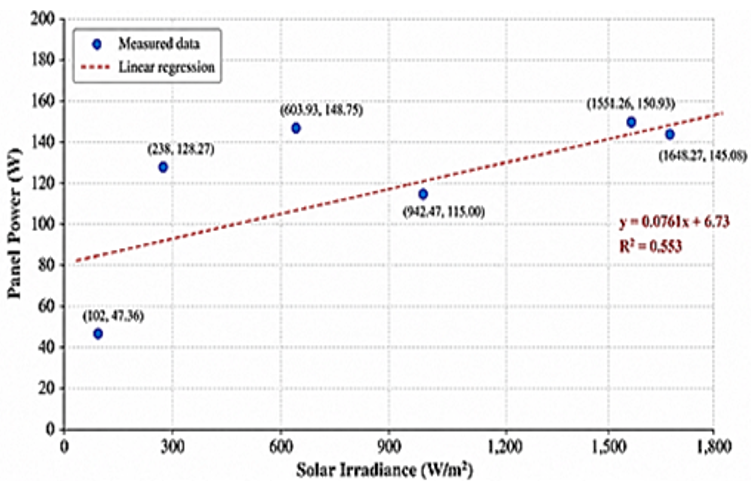
According to the test results, solar radiation intensity varied from 102.35 W/m² to 1648.27 W/m², resulting in photovoltaic module power ranging from 7.38 W to 186.02 W. Although the connection between intensity and power is not entirely linear as seen in Figure 5, this data shows that the photovoltaic system can adapt well to variations in solar radiation.
Figure 5. Relationship between solar radiation intensity and photovoltaic power output
The panel generated 148.75 W of electricity at an intensity of 603.93 W/m², but only 150.93 W at a far higher intensity of 1551.26 W/m². The panel's power dropped somewhat to 145.08 W even at the maximum intensity of 1648.27 W/m². This phenomenon demonstrates that power does not always rise proportionately to solar radiation. Among the influencing factors are:
These results are in line with photovoltaic theory, which claims that even as radiation intensity rises, rising solar cell temperatures result in a drop in module voltage and efficiency.
3.2.2 Interpretation of photovoltaic electrical performance
The measured results indicate that photovoltaic electrical output increased with increasing solar irradiance, confirming that solar radiation was the primary factor governing the electrical performance of the prototype system. However, the relationship was not perfectly linear, indicating that photovoltaic output under outdoor operation was influenced by naturally varying environmental conditions rather than solar irradiance alone.
This behavior is consistent with previous studies reporting that stand-alone photovoltaic irrigation systems operate under continuously changing environmental conditions, resulting in fluctuations in electrical operating characteristics. The stable electrical response observed throughout the experiments demonstrates that the photovoltaic subsystem provided a reliable power supply for irrigation pumping under representative tropical operating conditions.
3.2.3 Battery-assisted system operation
The stable electrical operation observed during the experiments indicates that the battery-assisted configuration effectively compensated for short-term fluctuations in photovoltaic power generation. As a result, the irrigation pump continued to operate under naturally varying solar irradiance without significant interruption. This operating behavior demonstrates the important role of battery storage in maintaining continuous electrical power delivery under outdoor operating conditions.
The present findings are consistent with previous studies reporting that battery-supported photovoltaic irrigation systems improve operational reliability by reducing the impact of intermittent solar energy on pump performance. Although the system employed a PWM charge controller rather than MPPT, the measured operating characteristics demonstrate that the adopted configuration provided sufficient electrical stability for reliable irrigation pumping under the tested conditions. These findings support the practical application of battery-assisted photovoltaic irrigation systems for small-scale agricultural water supply.
3.2.4 Hydraulic performance and water supply capability
The experimental results indicate that the irrigation pump maintained stable hydraulic operation throughout the testing period. The consistent hydraulic performance suggests that the electrical energy supplied by the photovoltaic–battery system was sufficient to sustain continuous pump operation under the tested operating conditions. Consequently, changes in daily water production were governed primarily by the availability of solar energy rather than by variations in pump hydraulic performance.
The observed variation in daily water production reflects differences in effective operating time between bright and cloudy weather conditions. Similar behavior has been reported in previous studies of photovoltaic-powered irrigation systems, where water availability depends largely on daily solar energy input. These findings demonstrate that the prototype system can provide a reliable water supply under favorable solar conditions while maintaining stable hydraulic performance, supporting its technical feasibility for prototype-scale agricultural irrigation applications.
3.2.5 Practical implications, limitations, and future perspectives
The present study demonstrates the technical feasibility of a prototype-scale photovoltaic irrigation pumping system for sustainable agricultural water supply under representative tropical operating conditions. The stable electrical and hydraulic performance observed during the experiments indicates that the proposed system has potential as an alternative irrigation technology for regions with abundant solar resources, such as Merauke, where reliable and environmentally sustainable water supply is essential for agricultural development. The experimental results provide engineering reference data for the design and operation of small-scale photovoltaic irrigation systems under comparable environmental conditions.
Nevertheless, the findings should be interpreted within the scope of the present study. The evaluation was conducted on a laboratory-scale prototype and has not yet been validated under long-term field operating conditions. In addition, the hydraulic performance was not evaluated using a complete pump characteristic curve or Best Efficiency Point (BEP) analysis, while standardized photovoltaic I–V characterization, daily energy balance analysis, and long-term operational monitoring were beyond the scope of this investigation. Future studies should therefore focus on field-scale validation, long-term performance monitoring, comprehensive electrical characterization, and integrated techno-economic evaluation to support broader implementation of photovoltaic irrigation systems.
3.2.6 Energy conversion efficiency
The overall energy conversion performance of the prototype-scale PVIPS was evaluated by comparing the electrical energy supplied to the pump with the resulting hydraulic output under different operating conditions. Throughout the experiments, the photovoltaic module supplied electrical energy to a 12 V battery through a PWM charge controller, which subsequently powered the DC irrigation pump. Consequently, the electrical power delivered to the pump was influenced not only by instantaneous solar irradiance but also by the battery charging condition and the PWM charging characteristics [10-12].
The experimental results indicate that the photovoltaic module generated operating power between 15.07 W and 27.23 W, depending on solar irradiance and panel operating voltage, while the pump electrical input varied between approximately 145.6 W and 178.1 W. The relatively stable pump electrical power demonstrates the important role of the battery energy storage system in maintaining continuous pump operation despite fluctuations in solar radiation. This behavior is characteristic of battery-assisted photovoltaic pumping systems employing PWM charge controllers, where the operating power measured at the photovoltaic module does not necessarily represent the instantaneous electrical demand of the pump.
Hydraulically, the system maintained a nearly constant discharge of approximately 15 L min⁻¹ during pump operation, whereas the daily pumped water volume varied between 142.20 L day⁻¹ and 8917.10 L day⁻¹. These variations primarily reflect differences in the effective operating duration caused by changing solar radiation rather than significant variations in instantaneous hydraulic performance. Therefore, the prototype system demonstrated stable energy conversion behavior whenever sufficient electrical energy was available to sustain pump operation.
It should be emphasized that the present study evaluates the operational performance of a prototype-scale PVIPS rather than the intrinsic conversion efficiency of an individual photovoltaic module. The experimental system employs a PWM charge controller and operates under naturally varying solar irradiance and battery-assisted operating conditions. Consequently, the measured electrical data represent the actual operational performance of the prototype system under the experimental conditions and should not be interpreted as the intrinsic photovoltaic conversion efficiency determined under standardized laboratory testing [16, 8, 24].
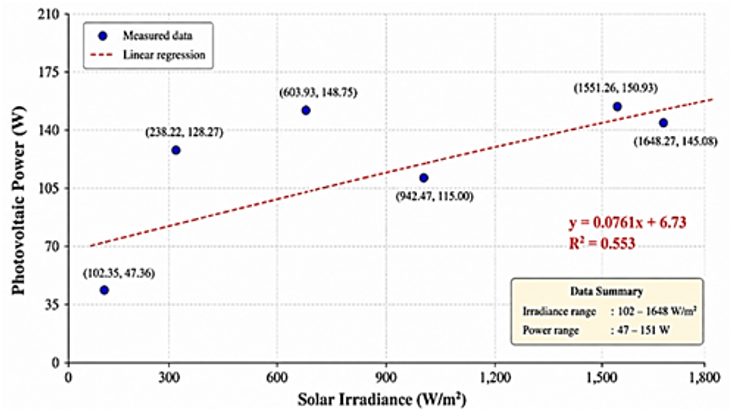
Figure 6 illustrates how a photovoltaic module output power typically increases with rising solar radiation intensity. The panel power ranged from 7.38 to 186.02 W throughout testing, whereas the radiation intensity varied from 102.35 to 1648.27 W/m². The solar cell surface receives more photons, which raises the panel output current and causes the power to grow. Nevertheless, there isn't a totally linear pattern in this relationship. The panel generated 128.27 W of electricity at an intensity of 238.22 W/m², but only 115.00 W at a far higher intensity of 942.47 W/m². This phenomenon shows the impact of outside variables including panel temperature, tilt angle, battery charging condition, and the system's incapacity to reliably run at maximum power. Panel power is mostly constant at 145–151 W at intensities above 1500 W/m², suggesting a propensity toward system saturation as a result of limited load capacity and energy storage.
Figure 6. Relationship between solar radiation intensity and generated photovoltaic power
3.2.7 System investment cost analysis
Table 6 summarizes the estimated investment cost of the prototype PVIPS evaluated in this study. The total initial investment was estimated at USD 449.44, including the 100 Wp photovoltaic module, PWM charge controller, 12 V 100 Ah VRLA battery, DC irrigation pump, mounting structure, electrical accessories, and installation materials. All monetary values were converted using an exchange rate of 1 USD = IDR 17,800. The economic evaluation was intended to assess the financial feasibility of the prototype configuration under the experimental operating conditions rather than to provide a comprehensive life-cycle optimization [1, 2].
The annual operation and maintenance (O&M) cost was estimated from routine photovoltaic module cleaning, periodic inspection, and replacement of minor electrical components, resulting in an annual O&M cost of USD 28.09. Because the photovoltaic irrigation system utilizes solar energy as its primary power source, no direct fuel cost was incurred during operation. For comparison, the economic benefit of the photovoltaic system was evaluated against an equivalent diesel-powered irrigation pump operating under the same irrigation duty. The comparison assumed a diesel fuel consumption of 0.8 L h⁻¹, a diesel price of USD 0.56 L⁻¹, and a representative annual operating duration consistent with the experimentally observed daily operation of approximately 4–8 h day⁻¹, resulting in an estimated annual fuel expenditure of USD 820.22. Consequently, the annual economic benefit of the photovoltaic irrigation system was estimated from the difference between the avoided diesel operating cost and the annual photovoltaic system O&M cost [3, 25, 26].
Table 6. Estimated investment cost of the prototype photovoltaic irrigation pumping system
|
Components |
Specifications |
Cost (USD) |
|
Solar Panels |
100 Wp polycrystalline |
112.36 |
|
Charge Controller/PWM |
20 A |
28.09 |
|
Batteries |
12 V 100 Ah |
123.60 |
|
DC Irrigation Pump |
12 V |
84.27 |
|
Mounting structure |
Light steel |
84.27 |
|
Cables and Accessories |
- |
28.09 |
|
Installation |
- |
30.90 |
|
Total Investment |
449.44 |
|
Based on these assumptions, the economic performance was evaluated using the Payback Period (PBP), Net Present Value (NPV), Benefit–Cost Ratio (BCR), and Levelized Cost of Water (LCOW). The calculations assumed a project lifetime of 20 years and a discount rate of 8%, while the annual economic benefit was estimated from the avoided diesel operating cost. Under these assumptions, the calculated PBP was approximately 0.57 years, indicating that the initial investment could theoretically be recovered within the first year of operation. Likewise, the calculated NPV of approximately USD 7,328 and the BCR of 17.30 demonstrate favorable economic feasibility under the adopted operating assumptions [27].
The Levelized Cost of Water (LCOW) was estimated using the projected lifetime water production of the prototype system. Based on the maximum measured daily water production of 8.917 m³ day⁻¹, the estimated annual water production was approximately 3,254.7 m³, corresponding to approximately 65,094 m³ over the assumed 20-year project lifetime. Using these assumptions, the estimated LCOW was approximately USD 0.016 m⁻³, indicating that irrigation water can be supplied at a relatively low unit cost under the operating conditions adopted in this study [26, 27].
Overall, the economic assessment indicates that the prototype PVIPS has promising potential for small-scale agricultural irrigation because solar energy substantially reduces annual operating costs compared with conventional diesel-powered irrigation systems. Although the initial capital investment is higher than that of a diesel pump, the elimination of fuel consumption and the relatively low maintenance requirements produce favorable economic indicators, including a short payback period, positive net present value, and high benefit–cost ratio. These results suggest that photovoltaic irrigation systems constitute a financially attractive alternative for agricultural regions with abundant solar resources, such as Merauke.
Nevertheless, the present economic assessment represents a prototype-scale evaluation based on the component prices, exchange rate, diesel fuel price, operating schedule, and maintenance assumptions adopted in this study. The photovoltaic module, irrigation pump, and supporting structure were assumed to operate throughout the project lifetime under routine maintenance, whereas battery replacement costs were not explicitly included because the objective of this study was to evaluate the economic feasibility of the prototype based on its initial investment and measured operational performance. Furthermore, the analysis does not explicitly account for inflation, battery degradation, future fuel-price fluctuations, interest-rate uncertainty, or sensitivity to long-term operating conditions. Therefore, the reported values of PBP, NPV, BCR, and LCOW should be interpreted as representative economic indicators for the evaluated prototype configuration rather than universally applicable values. Future investigations should incorporate long-term field operation, battery replacement scheduling, inflation, and sensitivity analyses to provide a more comprehensive techno-economic assessment [2, 20, 27].
This study comprehensively evaluated the technical performance of a prototype-scale PVIPS based on the electrical operational performance of the photovoltaic module and the hydraulic operating performance of the irrigation system under representative operating conditions. The experimental results demonstrate that the prototype system was capable of maintaining stable electrical and hydraulic operation despite variations in solar irradiance, confirming its potential application for small-scale agricultural irrigation.
During the experimental period, the photovoltaic module operated under measured solar irradiance ranging from approximately 150.71 W m⁻² to 272.26 W m⁻². The corresponding photovoltaic operating voltage varied between 11.7 V and 14.6 V, while the measured operating current ranged from approximately 1.21 A to 2.11 A. Consequently, the measured photovoltaic operating power varied between approximately 15.07 W and 27.23 W under the tested operating conditions. These values represent the actual operational performance of the photovoltaic module while supplying the battery-assisted irrigation pumping system through a PWM charge controller rather than the rated module performance under Standard Test Conditions (STC).
The highest operating power recorded during the experimental measurements was obtained at 13.1 V. This operating point should not be interpreted as the photovoltaic MPP, since the present study did not perform controlled current–voltage (I–V) sweep measurements. Instead, the recorded values represent the operating conditions of the photovoltaic module while supplying a battery-assisted pumping load under varying solar irradiance. Throughout the experimental period, the electrical operating conditions of the prototype irrigation pumping system remained relatively stable despite fluctuations in solar irradiance. The battery voltage varied between 11.5 V and 14.2 V, while the pump input voltage ranged from 11.2 V to 13.7 V. The pump operating current remained nearly constant at approximately 13 A, indicating that the battery and PWM charge controller effectively stabilized the electrical supply delivered to the irrigation pump under varying photovoltaic power generation conditions.
From the hydraulic perspective, the prototype system operated with a nominal discharge of 15 L min⁻¹ under the laboratory hydraulic configuration. The TDH during the experiments was maintained at approximately 4.0 m. Daily water production varied substantially, ranging from 142.20 L day⁻¹ to 8917.10 L day⁻¹. This variation was primarily attributed to differences in the duration of pump operation resulting from changes in solar irradiance rather than changes in the instantaneous hydraulic operating conditions. The relatively stable pump voltage, operating current, discharge, and hydraulic head demonstrate that the battery-assisted photovoltaic system was capable of maintaining continuous pump operation throughout the experimental period. These results indicate that the integrated photovoltaic, PWM charge controller, battery, and DC pump configuration provided stable operating performance under naturally varying solar radiation conditions. The energy conversion analysis focused on the measured electrical operational performance of the prototype PVIPS together with an engineering estimation of its hydraulic output. During the experiments, the electrical input power supplied to the irrigation pump ranged from 145.6 W to 178.1 W, while the hydraulic output was estimated to be approximately 9.81 W based on the measured TDH = 4 m and the manufacturer's rated pump discharge of 15 L min⁻¹. Because the discharge value was adopted from the manufacturer's rated specifications rather than obtained from continuous experimental flow measurements, the hydraulic output should be interpreted as an engineering estimation rather than a directly measured hydraulic performance parameter. The experimental results demonstrate that the battery-assisted PVIPS maintained stable electrical operation under varying solar irradiance conditions within the defined experimental configuration. These findings provide practical reference data for the performance assessment and future development of prototype-scale PVIPS employing conventional PWM charge controllers.
The economic assessment demonstrates the practical feasibility of the prototype PVIPS under the assumptions adopted in this study. The estimated initial investment was approximately USD 449.44, while the annual operation and maintenance cost was estimated at USD 28.09, substantially lower than the estimated annual operating cost of an equivalent diesel-powered irrigation pump (USD 820.22). The resulting economic indicators, including a payback period of approximately 0.57 years, a positive net present value (NPV) of approximately USD 7,328, and a benefit–cost ratio (BCR) greater than one, indicate that the prototype system has favorable economic potential under the assumed operating conditions. The experimental results also demonstrate the technical feasibility of operating a battery-assisted PVIPS under the environmental conditions of Merauke, South Papua. The region possesses abundant solar energy resources and extensive agricultural land, making photovoltaic-powered irrigation a promising alternative energy source for small-scale agricultural water supply. However, the present study represents a prototype-scale experimental evaluation conducted under controlled operating conditions. Therefore, the findings should be interpreted as technical reference data rather than validation of large-scale irrigation implementation. The stable electrical and hydraulic operational performance observed during the experiments indicates that the proposed prototype can support reliable irrigation pump operation under naturally varying solar irradiance. These findings provide an engineering basis for future prototype development and more comprehensive field evaluations, including larger irrigation areas, long-term operation, and crop-specific irrigation requirements, before wider agricultural implementation is considered.
Future work should focus on improving the experimental evaluation of prototype-scale PVIPS by incorporating continuous measurements of photovoltaic electrical output, battery charging and discharging characteristics, pump electrical consumption, and hydraulic discharge under varying solar irradiance conditions. Such improvements would enable a more comprehensive assessment of system performance and reduce uncertainties associated with engineering estimations of hydraulic output. In addition, extended field testing under representative agricultural operating conditions is recommended to evaluate the long-term reliability, operational stability, and scalability of the prototype system for practical irrigation applications.
In conclusion, the prototype-scale the PVIPS evaluated in this study demonstrated stable electrical and hydraulic operational performance under the tested operating conditions. The experimental results confirmed that the integration of a photovoltaic module, PWM charge controller, battery storage system, and 12 V DC irrigation pump was capable of maintaining reliable pump operation despite variations in solar irradiance. The economic assessment also indicated favorable feasibility under the assumptions adopted in this study, as reflected by a low estimated operating cost, a short payback period, a positive net present value, and a benefit–cost ratio greater than one. These findings provide technical and economic reference data for the future development and optimization of PVIPS. Nevertheless, because the present work represents a prototype-scale experimental evaluation, further long-term field studies and larger-scale validation are required before broader agricultural implementation can be recommended. This study represents a prototype-scale experimental evaluation of a battery-assisted PVIPS under representative operating conditions. Therefore, the reported results should be interpreted as technical evidence of the electrical operational performance of the photovoltaic module, pump operating performance, and hydraulic operational performance of the prototype system under the tested conditions rather than as validation for large-scale agricultural irrigation applications. Future research should include continuous measurements of photovoltaic electrical output, battery charging and discharging characteristics, pump electrical consumption, and hydraulic discharge, together with long-term field evaluations under representative agricultural conditions. Additional studies involving larger prototype configurations, crop-specific irrigation requirements, and extended operational periods are recommended to further assess the practical applicability and scalability of PVIPS. A complete daily energy balance involving photovoltaic energy generation, battery charging/discharging energy, pump electrical energy consumption, and hydraulic energy output was beyond the scope of the present prototype evaluation. Future investigations should incorporate continuous energy monitoring to enable comprehensive system energy-balance analysis and more rigorous efficiency assessment.
Through this statement, the author would like to express his gratitude to the Institute for Research and Community Service, which has funded this research, and the Department of Mechanical Engineering, Musamus University, Merauke, which provided equipment support during the research process.
|
A |
PV module area, m² |
|
H |
Total Dynamic Head, m |
|
I |
Current, A |
|
P |
Power, W |
|
Q |
Flow rate, m³ s⁻¹ |
|
V |
Voltage, V |
|
g |
Gravitational acceleration, m s⁻² |
|
BCR |
Benefit–Cost Ratio |
|
LCOW |
Levelized Cost of Water |
|
MPPT |
Maximum Power Point Tracking |
|
NPV |
Net Present Value |
|
PBP |
Payback Period |
|
PV |
Photovoltaic |
|
PVIPS |
Photovoltaic Irrigation Pumping System |
|
PWM |
Pulse Width Modulation |
|
SCC |
Solar Charge Controller |
|
STC |
Standard Test Conditions |
|
TDH |
Total Dynamic Head |
|
VRLA |
Valve-Regulated Lead-Acid |
|
Greek symbols |
|
|
η |
Efficiency, % |
|
ρ |
Water density, kg m⁻³ |
[1] Guno, C.S. (2024). Diesel to solar irrigation system: Economic, environmental, and social acceptability analyses by small-scale farmers of Calapan, Oriental Mindoro. Journal of Human Ecology and Sustainability, 2(1): 3. https://doi.org/10.56237/jhes23015
[2] Heard, B., Porker, M., Armstrong, D., et al. (2012). The economics of subsurface drip irrigation on perennial pastures and fodder production in Australia. Agricultural Water Management, 111: 68-78. https://doi.org/10.1016/j.agwat.2012.05.005
[3] Hilarydoss, S. (2023). Suitability, sizing, economics, environmental impacts and limitations of solar photovoltaic water pumping system for groundwater irrigation: A British review. Environmental Science and Pollution Research, 30: 71491-71510. https://doi.org/10.1007/s11356-021-12402-1
[4] Campana, P.E., Olsson, A., Li, H., Yan, J. (2016). An economic analysis of photovoltaic water pumping irrigation systems. International Journal of Green Energy, 13(8): 813-839. https://doi.org/10.1080/15435075.2016.1161631
[5] Li, G., Jin, Y., Akram, M., Chen, X. (2017). Research and current status of the solar photovoltaic water pumping system – A review. Renewable and Sustainable Energy Reviews, 79: 440-458. https://doi.org/10.1016/j.rser.2017.05.055
[6] Narvarte, L., Fernández-Ramos, J., Martínez-Moreno, F., Carrasco, L., Almeida, R., Carrêlo, I. (2018). Solutions for adapting photovoltaics to large power irrigation systems for agriculture. Sustainable Energy Technologies and Assessments, 29: 119-130. https://doi.org/10.1016/j.seta.2018.07.004
[7] Gevorkov, L., Dom, L., Romero, L.T. (2023). Review on solar photovoltaic-powered pumping systems. Energies, 16(1): 94. https://doi.org/10.3390/en16010094
[8] Sontake, V.R., Kalamkar, V.C. (2016). Solar photovoltaic water pumping system - A comprehensive review. Renewable and Sustainable Energy Reviews, 59: 1038-1067. https://doi.org/10.1016/j.rser.2016.01.021
[9] Girma, A., Assefa, M., Molinas, M. (2015). Feasibility study of a solar photovoltaic water pumping system for rural Ethiopia. International Journal of Energy and Environmental Science, 2(3): 697-717. https://doi.org/10.3934/environsci.2015.3.697
[10] Imene, Y., Maher, C., Tadeo, F. (2015). Energy management for photovoltaic irrigation with a battery bank. International Journal of Energy Optimization and Engineering (IJEOE), 4(3): 18-32. https://ideas.repec.org/a/igg/jeoe00/v4y2015i3p18-32.html.
[11] Azuatalam, D., Paridari, K., Ma, Y., Förstl, M., Chapman, A.C., Verbič, G. (2019). Energy management of small-scale PV-battery systems: A systematic review considering practical implementation, computational requirements, quality of input data and battery degradation. Renewable and Sustainable Energy Reviews, 112: 555-570. https://doi.org/10.1016/j.rser.2019.06.007
[12] Yadav, N., Pattabiraman, B., Tummuru, N.R., et al. (2024). Toward improving water-energy-food nexus through dynamic energy management of solar powered automated irrigation system. Heliyon, 10(4): e25359. https://doi.org/10.1016/j.heliyon.2024.e25359
[13] Chandel, S.R., Naik, M.N., Chandel, R. (2017). Review of performance studies of direct coupled photovoltaic water pumping systems and case study. Renewable and Sustainable Energy Reviews, 76: 163-175. https://doi.org/10.1016/j.rser.2017.03.019
[14] Chandel, S.S., Naik, M.N., Chandel, R. (2015). Review of solar photovoltaic water pumping system technology for irrigation and community drinking water supplies. Renewable and Sustainable Energy Reviews, 49: 1084-1099. https://doi.org/10.1016/j.rser.2015.04.083
[15] Herraiz, J.I., Almeida, R.H., Castillo-Cagigal, M., Narvarte, L. (2023). Experimental performance evaluation of a PV-powered operation period. Energies, 16(9): 3654. https://doi.org/10.3390/en16093654
[16] Ahmed, N.M., Hassan, A.M., Kassem, M.A., Hegazi, A.M., Elsaadawi, Y.F. (2023). Reliability and performance evaluation of a solar PV-powered underground water pumping system. Scientific Reports, 13: 14174. https://doi.org/10.1038/s41598-023-41272-5
[17] Loxsom, F., Durongkaveroj, P. (1994). Estimating the performance of a photovoltaic pumping system. Solar Energy, 52(2): 215-219. https://doi.org/10.1016/0038-092X(94)90071-X
[18] Abdolzadeh, M., Ameri, M., Mehrabian, M.A. (2009). The effects of an operating head on the performance of photovoltaic water pumping systems: An experimental investigation. In Proceedings of the Institution of Mechanical Engineers, Part A: Journal of Power and Energy, 223(4): 341-347. https://doi.org/10.1243/09576509JPE693
[19] Bora, M., Prasad, B., Sastry, B., Kumar, O., Bangar, A. (2017). Optimum sizing and performance modeling of solar photovoltaic (SPV) water pumps for different climatic conditions. Solar Energy, 155: 1326-1328. https://doi.org/10.1016/j.solener.2017.07.058
[20] Habib, S., Liu, H., Tamoor, M., et al. (2023). Heliyon technical modelling of solar photovoltaic water pumping system and evaluation of system performance and their socio-economic impact. Heliyon, 9(5): e16105. https://doi.org/10.1016/j.heliyon.2023.e16105
[21] Abdelfattah, A. (2022). Solar powered water lifting for irrigation. Food and Agriculture Organization of the United Nations, Rome, Italy. https://openknowledge.fao.org/server/api/core/bitstreams/5acdaf17-afe8-496b-9bb8-50af56f2002e/content.
[22] Paudel, P.P., Adhikari, S. (2025). Technical feasibility and economic analysis of solar photovoltaic water pumping system for sustainable irrigation in Nepal: A case study. International Journal of Sustainable Engineering, 18(1). https://doi.org/10.1080/19397038.2025.2590115
[23] Khatib, T. (2020). Photovoltaic water pumping systems: Concept, design, and methods of optimization, 1st ed. Academic Press.
[24] Ahmed, M.M., Bawayan, H.M., Enany, M.A., Elymany, M.M., Shaier, A.A. (2025). Modern advancements of energy storage systems integrated with hybrid renewable energy sources for water pumping application. Engineering Science and Technology, an International Journal, 62: 101967. https://doi.org/10.1016/j.jestch.2025.101967
[25] Tayel, S.A., Lithy, A.M., Hegazi, A., El-Saadawi, Y.F. (2019). Performance evaluation of water pumping system powered by solar energy. Misr Journal of Agricultural Engineering, 36(1): 283-302. https://doi.org/10.21608/mjae.2019.94460
[26] Karki, A., Lohani, S.P. (2020). Techno-economic analysis of solar water pumping system for irrigation in Nepal. Kathmandu University Journal of Science, Engineering and Technology, 14(2). https://doi.org/10.3126/kuset.v14i2.63456
[27] Ibrik, I.H. (2020). Techno-economic feasibility of energy supply of water pumping in Palestine by photovoltaic-systems, diesel generators and electric grid. International Journal of Energy Economics and Policy, 10(3): 69-75. https://doi.org/10.32479/ijeep.8816