John Friadi* | Diana Titik Windayati | Abdul Malik Made | M. Ansyar Bora | Ririt Dwiputri Permatasari | Luki Hernando | Alhamidi | Angelita Herlyna Mbaru | Alyion Nita
© 2026 The authors. This article is published by IIETA and is licensed under the CC BY 4.0 license (http://creativecommons.org/licenses/by/4.0/).
OPEN ACCESS
Micro, Small, and Medium Enterprises (MSME) face various challenges in digital transformation, such as unintegrated business processes, limited data utilization in decision-making, and low adoption of intelligent technology. This study aims to develop an artificial intelligence (AI)-based MSME information system that integrates Human-Machine Interaction (HMI) principles to support the realization of a Smart MSME ecosystem. The developed system is equipped with AI features, including sales predictions, customer analysis, product recommendations, promotion recommendations, and AI chatbots, emphasizing ease of user interaction, interface consistency, and usability aspects. System development was carried out using the Prototyping Model and evaluated through User Acceptance Testing (UAT) involving 20 respondents consisting of MSME actors, administrators, and end users. The evaluation instrument covers six aspects, namely usability, system performance, AI acceptance, business decision support, security, and user satisfaction. The results showed that the system achieved a user acceptance rate of 89.19%, which is included in the Very Acceptable category. The business decision support aspect received the highest score of 89.83%, followed by system performance at 89.50% and user satisfaction at 89.33%. These results indicate that the integration of AI and HMI principles can improve user experience, technology acceptance, operational efficiency, and support data-driven business decision-making. This study demonstrates that a user-oriented AI-based system can support digital transformation and enhance the competitiveness of MSMEs in the Smart MSME ecosystem.
artificial intelligence, Human-Machine Interaction, Smart Micro, small, and medium enterprises, user acceptance testing, information systems, digital transformation
Micro, Small, and Medium Enterprises (MSME) are one of the main pillars of the national economy, which have a significant contribution to economic growth, job creation, and equitable development [1]. In addition to acting as a driver of the local economy, MSME also serves as a platform for the development of various superior regional products, such as culinary delights, handicrafts, traditional textiles, souvenirs, and various other creative products [2]. The existence of MSME not only contributes to Gross Domestic Product (GDP), but also plays a role in strengthening national economic resilience through community empowerment and local wisdom-based economic development [3]. Therefore, increasing the competitiveness of MSME is a strategic agenda in supporting sustainable economic growth.
Despite their significant potential, most MSME still face various challenges in running their businesses. Limited market access, low marketing effectiveness, suboptimal business information management, and limited use of digital technology are key obstacles to increasing business competitiveness [4-6]. Furthermore, many MSME still rely on conventional marketing methods, making it difficult to reach a wider consumer base and obtain market information quickly and accurately. This situation demonstrates the need for technological support that can improve operational effectiveness and expand market opportunities in the digital economy era.
The development of digital technology has opened up new opportunities to increase the productivity and competitiveness of MSME. The use of digital platforms, social media, e-commerce technology, and web-based information systems enables businesses to expand their marketing reach, improve customer service quality, and optimize business data management. Digital transformation also drives a paradigm shift from conventional business management to more integrated, responsive, and data-driven management [7-9]. In this context, information systems play a crucial role as a means of connecting businesses with customers, while also supporting more effective decision-making processes.
Digital transformation has become a strategic agenda for enhancing the competitiveness of MSME in various countries. The use of digital technology serves not only as a marketing tool but also as an enabler for business process integration, supply chain management, customer behavior analysis, and data-driven decision-making [10]. Various studies have shown that adopting digital technology can increase productivity, expand market reach, and strengthen the resilience of MSME in the face of increasingly complex economic dynamics. However, the success of digital transformation is determined not only by the availability of technology but also by the ability of users to adopt and utilize it effectively [11].
In recent years, artificial intelligence (AI) has emerged as one of the most influential technologies supporting digital transformation. AI enables systems to automatically analyze data, identify customer behavior patterns, generate more personalized recommendations, and provide real-time decision-making support [12]. In the MSME sector, the application of AI has the potential to help businesses overcome human resource constraints, improve operational efficiency, and accelerate response to changing market needs. Technologies such as intelligent chatbots, recommendation systems, customer analytics, and sales forecasting are becoming increasingly relevant solutions to support more adaptive and competitive business management.
However, the implementation of AI in MSME environments still faces various challenges. Most MSMEs have varying levels of digital literacy, often struggling to understand and utilize AI-based features. Many digital systems offer advanced analytical capabilities, but pay little attention to how information is presented and how users interact with them. As a result, even technically high-performance technologies do not always translate to high user acceptance. This demonstrates that the success of AI implementation depends not only on technological sophistication but also on the quality of the interactions between humans and systems.
Various previous studies have developed digital platforms to support MSME marketing and management through e-commerce technology, business information systems, and AI-based applications [2, 13]. However, most research still focuses on the functional aspects of systems and improving digital services without considering the quality of user-system interactions. Furthermore, the implementation of AI on MSME platforms is generally limited to specific automation functions and has not been fully integrated to support user experience and business decision-making. As a result, many digital systems are technically functional but fail to provide an optimal user experience for MSME with varying levels of digital literacy. This gap highlights the need to develop Electronic Micro, Small, and Medium Enterprises (E-MSME) platforms that are not only technologically intelligent but also designed based on user needs and characteristics.
In this context, Human-Machine Interaction (HMI) is becoming an increasingly important aspect in the development of AI-based systems. HMI emphasizes how systems are designed to support effective, intuitive, easy-to-learn interactions that are tailored to user needs. In AI-based systems, the quality of interaction is crucial because the information generated by the system must be understandable, trustworthy, and usable by users in the decision-making process [14]. HMI principles such as ease of use, interface consistency, reduced cognitive load, ease of learning, and increased user satisfaction play a crucial role in increasing technology acceptance. However, the application of HMI to AI-based MSME digital platforms is still relatively limited and has not been widely explored in previous research, particularly in supporting the development of the Smart MSME ecosystem.
Based on the problems and research gaps, this study aims to develop an AI-based E-MSME information system that integrates the principles of HMI to support the realization of a Smart MSME ecosystem. The developed system is equipped with various AI features, such as AI chatbots, product recommendations, promotion recommendations, customer analysis, and sales predictions, designed to help MSME manage business activities more effectively. In addition, the system is designed with usability and user experience aspects to improve the quality of interaction between humans and the system.
The main contributions of this research include three aspects. First, this research develops an E-MSME information system that integrates various AI services in a single integrated digital platform. Second, this research applies the principles of HMI in designing user interfaces to improve the quality of interaction, ease of use, and technology acceptance by MSME actors. Third, this research evaluates the level of user acceptance of the system through a User Acceptance Testing (UAT) approach that covers aspects of usability, system performance, AI acceptance, business decision support, security, and user satisfaction. The results of this research are expected to provide theoretical and practical contributions to the development of a Smart MSME ecosystem that is more adaptive, user-oriented, and able to support sustainable digital transformation.
2.1 Smart Micro, Small, and Medium Enterprises (MSME) concept and digital transformation of Indonesian MSME
Digital transformation has become a crucial factor in enhancing the competitiveness and sustainability of MSME in the technology-driven economy. Advances in digital technology enable MSME to optimize business processes, expand market access, improve service quality, and leverage data for decision-making [13, 15]. In its development, digital transformation is no longer limited to the digitization of business processes, but has evolved towards the concept of Smart MSME, which integrates intelligent technology in operational and managerial activities.
Smart MSME refers to a business ecosystem that leverages integrated information systems, AI, data analytics, and automation technologies to improve operational efficiency and support data-driven decision-making [16-18]. By utilizing this technology, MSME can manage business information more effectively, understand customer behavior, optimize marketing strategies, and improve their responsiveness to changing market needs. Therefore, Smart MSME are seen as a strategic approach to strengthening MSME competitiveness in an increasingly dynamic business environment.
One of the technologies that plays an important role in the development of Smart MSME is AI [18-20]. The integration of AI through features like chatbots, recommendation systems, customer analytics, and sales forecasting allows for the automation of various business activities while improving the quality of customer service. The presence of AI not only helps improve operational efficiency but also supports faster, more accurate, and more adaptive decision-making in response to changes in the business environment.
However, the success of Smart MSME implementation is determined not only by the capabilities of the technology used, but also by the user's ability to interact with the system effectively. Therefore, the development of a Smart MSME ecosystem needs to be supported by an HMI approach that ensures the technology can be used intuitively, is easy to learn, and is tailored to user needs. The integration of AI and HMI is a crucial foundation for creating digital systems that are not only technologically intelligent but also capable of improving user acceptance and experience in the MSME environment.
2.2 Adoption and implementation of information systems in Indonesian Micro, Small, and Medium Enterprises
The adoption of information systems is a critical factor in supporting the digital transformation of MSME and enhancing business competitiveness. The success of IS implementation is determined not only by the availability of technology but also by the level of digital readiness, which encompasses infrastructure, human resource competency, and the organization's ability to integrate technology into business processes [21-23]. In the context of Indonesian MSME, ease of use, digital competence, and market demand are key determinants of successful technology adoption.
The development of AI has expanded the role of information systems from simply managing data to supporting decision-making. The integration of technologies such as chatbots, recommendation systems, customer analytics, and sales forecasting enables MSME to improve operational efficiency, service quality, and respond to market needs more quickly and accurately [18, 22, 24].
However, the implementation of AI-based systems still faces various challenges, particularly the gap between technological complexity and user capability in utilizing available features. Many systems possess advanced technical capabilities, but fail to fully address the quality of user interactions, resulting in varying levels of technology adoption. This demonstrates that the success of digital transformation depends not only on technological sophistication but also on ease of use and user experience.
Therefore, developing MSME information systems requires an approach that integrates AI with HMI principles. This approach allows for systems to be designed to be more intuitive, easy to learn, and tailored to user needs, thereby increasing technology acceptance and supporting the ongoing digital transformation of MSME.
2.3 AI and chatbots for Indonesian Micro, Small, and Medium Enterprises services
AI has become a key technology driving digital transformation in MSME. Utilizing AI enables businesses to optimize limited resources through business process automation, customer data analysis, recommendation systems, and data-driven decision-making support [25]. With these capabilities, AI not only improves operational efficiency but also helps MSME increase their competitiveness in an increasingly dynamic business environment.
One rapidly growing implementation of AI is the use of intelligent as digital customer service. Chatbots are capable of providing automated, fast, and consistent responses to customer inquiries, thereby improving service quality while reducing operational burdens [26]. In addition to supporting 24/7 customer service, chatbots also play a role in providing product recommendations, assisting with marketing processes, and enhancing the user experience on digital platforms.
Despite having various benefits, the effectiveness of chatbot implementation is not only determined by the technological capabilities it has, but also by the quality of interaction between the user and the system [27]. Chatbots that are difficult to understand, have complex navigation, or are unable to adapt to the user's communication context can reduce the technology's acceptance rate. Therefore, chatbot development on E-MSME platforms requires attention to HMI aspects, such as ease of use, interface consistency, ease of learning, and user interaction convenience [28].
In the context of Indonesian MSMEs, the integration of AI-based chatbots supported by HMI principles has the potential to improve the quality of digital services while strengthening technology adoption among businesses with varying levels of digital literacy. Thus, chatbots function not only as service automation tools but also as intelligent interaction tools capable of supporting the transformation toward a Smart MSME ecosystem.
2.4 AI recommendation systems
AI recommendation systems have emerged as pivotal tools for enhancing decision-making in MSMEs. Unlike large-scale enterprise systems, recommendation engines in MSME environments must operate under significant low-data constraints, necessitating algorithms that are efficient with sparse datasets. Recent studies emphasize that for MSME adoption, these systems must move beyond 'black-box' models toward explainable AI (XAI), which provides users with insights into why a specific product or service is recommended, thereby fostering trust and long-term engagement. Furthermore, integrating data governance frameworks into these AI models is essential to ensure the reliability and security of business operations. By leveraging hybrid recommendation approaches that combine collaborative filtering with content-based logic, MSMEs can effectively personalize their offerings even with limited historical transaction data [29, 30].
2.5 Chatbot trust and explainability
In the context of MSME-focused AI systems, fostering user trust is a multidimensional challenge that extends beyond mere technical accuracy. As MSME owners often operate in resource-constrained environments, they require AI tools that are not only performant but also transparent and predictable. The integration of Explainable AI (XAI) is critical in this regard; by moving away from 'black-box' models toward systems that provide human-interpretable justifications for their recommendations, AI can effectively reduce user skepticism and promote long-term adoption. For chatbot-based interactions, providing context-aware and clear explanations of the decision-making process—such as why a particular product is recommended or how data is handled significantly enhances perceived transparency and customer trust. Consequently, embedding XAI principles into MSME digital tools serves as a vital strategy to ensure that AI-driven support is viewed as a reliable, accountable, and trustworthy business partner [31, 32].
2.6 Data governance and data scarcity
The implementation of AI systems in MSMEs is inherently challenged by low-data constraints, where the scarcity of high-quality, labeled historical data limits the training of robust deep learning models. To overcome this, recent literature emphasizes the importance of data-efficient AI techniques, such as transfer learning and synthetic data augmentation, which allow for effective prediction even with limited datasets. Concurrently, rigorous data governance is essential to ensure that data collection and processing in MSME environments comply with security standards while maintaining data integrity. Effective governance frameworks help mitigate risks associated with data privacy and bias, providing a structured foundation that enables small businesses to leverage their limited digital assets more strategically for competitive decision-making [33, 34].
2.7 Human-Machine Interaction in intelligent information systems
HMI refers to the design and interface that facilitates communication between the user (human) and the machine system or application. In the context of MSME information systems, effective HMI is crucial to ensuring that MSME stakeholders can operate the system efficiently, increase productivity, and minimize errors in both data input and decision-making. Human-Computer Interaction (HCI) is a subset of HMI that focuses on the design, evaluation, and implementation of user-oriented interactive computer systems. One of the main approaches in HCI is User-Centered Design (UCD), an approach that places user needs, abilities, and characteristics as the basis for the system development process [35]. In an MSME environment with varying levels of digital literacy, this approach is essential to ensure that the system can be used easily without requiring complex training.
In addition, cognitive ergonomics aspects need to be considered in designing intelligent information systems. Cognitive ergonomics focuses on the user's mental processes, such as perception, information comprehension, and decision-making [36-38]. Simple information presentation, consistent navigation, and the integration of AI-based chatbots can help reduce users' cognitive load, making interactions with the system more effective [39]. The success of HMI implementation in information systems is generally measured through usability aspects, which include ease of learning, ease of use, interaction efficiency, and user satisfaction. Therefore, this study applies HMI principles in the design of an AI-based E-MSME information system to improve user experience, support technology acceptance, and strengthen the transformation towards a Smart MSME ecosystem.
This study adopts the System Development Life Cycle (SDLC) using the Prototyping model as the software development approach (Figure 1). The prototyping model was selected because it enables iterative development and continuous user feedback, which are essential for designing AI-enabled HMI interfaces suitable for MSME users.
The SDLC method has systematic stages and rules in the information systems development process. Each stage is designed to ensure that the system being built can meet user needs effectively and efficiently [40-42].
Figure 1. Prototyping model
3.1 Software architecture
The software architecture proposed in this research is designed using a multi-tier architecture approach consisting of a presentation layer, an application layer, an AI layer, and a data layer [24]. This architecture was developed to support the digital transformation of MSME through the integration of AI technology into business management processes, digital marketing, customer analysis, and data-driven decision-making [23].
Figure 2 shows the software architecture of an AI-based E-MSME information system designed to support the transformation towards a Smart MSME. The system architecture consists of four main components: a Mobile Application, Backend Server, AI Engine, and Database Layer, all integrated through a RESTful API.
At the application level, users can access services through a mobile app to manage products, transactions, inventory, and other business activities. All business processes are managed by the Backend Server, which includes authentication services, inventory management, transaction processing, and reporting and analytics.
The AI layer of the proposed system is designed as an extensible intelligent service architecture. In the current implementation, the operational AI functionality is provided by a Google Gemini-based conversational agent that supports intelligent interaction between users and the E-MSME platform. Additional AI services, such as sales forecasting, product recommendation, customer analysis, sentiment analysis, anomaly detection, and promotion recommendation, are included in the architectural design as future intelligent modules and are outside the scope of the present implementation [26].
Figure 2. AI-based Electronic Micro, Small, and Medium Enterprises (E-MSME) information system software architecture
All data is stored in a relational database and integrated with various external services, such as the QRIS Payment Gateway, Notification Service, social media, and e-commerce platforms. With this architecture, the system not only supports MSME digital operations but also provides intelligent analytics capabilities that can sustainably improve MSME efficiency, productivity, and competitiveness.
3.2 AI chatbot implementation
To improve the technical clarity of the proposed AI-enabled E-MSME information system, this study explicitly distinguishes between implemented AI components and planned intelligent services. The AI functionality implemented in the current version of the system consists of a Generative AI chatbot powered by the Google Gemini API.
The chatbot supports natural language interaction, business consultation, product information retrieval, and location-based assistance through integration with the system's HMI interface and Geographic Information System (GIS). Unlike conventional rule-based chatbots, the proposed chatbot employs Google's Large Language Model (LLM) to perform semantic language understanding, intent recognition, contextual reasoning, and natural language generation. User queries are enriched with contextual information retrieved from the MSME knowledge base, including product catalogues, MSME profiles, frequently asked questions (FAQ), business services, and GIS-based location information, before being processed by the Gemini model. The software architecture has also been designed to accommodate additional AI services, including sales forecasting, product recommendation, customer analysis, sentiment analysis, anomaly detection, and promotion recommendation. However, these modules represent future system enhancements and have not been implemented or experimentally evaluated in the current study. Consequently, they are presented only as conceptual extensions of the AI-enabled architecture.
The AI layer of the proposed system is designed as an extensible intelligent service architecture. In the current implementation, the operational AI functionality is provided by a Google Gemini-based conversational agent that supports intelligent interaction between users and the E-MSME platform. Additional AI services, such as sales forecasting, product recommendation, customer analysis, sentiment analysis, anomaly detection, and promotion recommendation, are included in the architectural design as future intelligent modules and are outside the scope of the present implementation.
3.3 User interface design
The user interface design in the Integrated E-MSME information system is carried out by prioritizing the principles of usability, accessibility, user-centred design, and HMI [36, 37]. The interface is designed to provide ease of navigation, consistent appearance, and an intuitive user experience for all system actors, namely administrators, MSME, and customers. Furthermore, the interface design also accommodates the integration of AI services through the presentation of simple, informative information and supports data-driven decision-making processes. The application of HMI principles aims to reduce cognitive load, increase the ease of system learning, improve interaction efficiency, minimize user errors, and increase user satisfaction. With this approach, the system is expected to increase efficiency of use, reduce interaction complexity, and improve the user experience in accessing MSME digital services. The interface design guidelines applied in this study are presented in Table 1.
Table 1. Guidelines for designing user interfaces in AI-based Electronic Micro, Small, and Medium Enterprises (E-MSME) information systems
|
UI Design Aspects |
Applied Design Principles |
Design Goals in the Context of Smart MSME |
|
Interface Simplicity |
Minimalist look with relevant and uncluttered visual elements |
Reduce the cognitive load of users and make it easier for MSME to operate digital systems |
|
Navigation |
Consistent and easy-to-understand menu structure across all pages |
Makes it easier for users to access system features without requiring intensive training |
|
Layout Consistency |
Uniform placement of buttons, icons, and interface components |
Improve ease of learning and reduce user interaction errors |
|
Use of Colour and Icons |
Use of contrasting colours and familiar icons |
Improve readability of information and speed up recognition of system functions |
|
Number of Interaction Steps |
Simplification of transaction processes, recording, and data management |
Improve operational efficiency and reduce data input errors |
|
System Feedback |
Provision of notifications and status indicators for each user action |
Provides certainty about ongoing processes and increases user confidence |
|
Network Condition Adaptation |
Local data storage and automatic synchronization |
Ensures continuity of system use even when the internet connection is unstable. |
|
AI Insight Dashboard |
Presentation of AI analytical results in the form of easy-to-understand visualizations |
Helping MSME understand business trends and make data-driven decisions |
|
AI-Based Recommendations |
Automatic presentation of product recommendations, promotions, and business strategies |
Supports faster, more accurate and adaptive decision making to market conditions. |
|
User Personalization |
Customize displays and recommendations based on user profile and activity |
Improve user experience and relevance of information received |
Table 1 shows that the interface design is carried out systematically to support effective interaction between users and the system, so that it can improve ease of use, operational efficiency, and user experience in utilizing AI-based Smart MSME services.
3.4 Evaluation of user acceptance level of AI-based Electronic Micro, Small, and Medium Enterprises information system
System testing was conducted using the UAT method to evaluate the level of user acceptance of the AI-based E-MSME Information System that had been developed [43]. UAT is a testing phase aimed at ensuring that the system meets user needs, both in terms of functionality, ease of use, and the benefits it provides to support MSME business activities. This testing involves end users, including MSME, system administrators, and customers, representing the primary actors who interact directly with the system.
The UAT implementation was conducted by providing respondents with a number of usage scenarios to test the system's key features, such as user authentication, product management, sales transactions, inventory management, location-based services, and AI features including product recommendations, sales predictions, and customer analysis. After completing each test scenario, respondents were asked to rate the system using a five-level Likert-based questionnaire, ranging from 1 (strongly disagree) to 5 (strongly agree).
Aspects evaluated in UAT testing include ease of use, ease of understanding system features, speed of information access, accuracy of system functions, interface quality, and the usefulness of AI features in supporting business decision-making. Furthermore, testing is conducted to assess user satisfaction with the overall system experience.
UAT was conducted involving 20 participants representing the primary stakeholders of the proposed AI-enabled E-MSME Information System. To ensure a comprehensive evaluation, the participants were categorized into three groups: MSME owners 8, system administrators 4, and end users/customers 8 (Table 2). MSME owners evaluated business management functions, transaction processing, AI-assisted business consultation, and reporting features. System administrators assessed user management, system configuration, data management, and system security. End users evaluated the usability of the HMI interface, product catalog browsing, purchasing processes, GIS-based location services, and interactions with the Google Gemini-based AI chatbot. This participant grouping ensured that all major functionalities of the AI-enabled E-MSME Information System were evaluated from the perspectives of different user roles and interaction experiences.
Table 2. Participant composition in the user acceptance testing
|
Participant Group |
Number |
Main Features Evaluated |
|
Micro, Small, and Medium Enterprises (MSME) Owners |
8 |
Product management, transactions, AI consultation, reports |
|
System Administrators |
4 |
User management, security, database |
|
End Users |
8 |
Product browsing, GIS, AI chatbot |
|
Total |
20 |
In addition to evaluating user acceptance, this study also interprets UAT results from an HMI perspective. This approach is used to assess the quality of interaction between users and AI-based systems without adding new measurement instruments. The HMI dimensions analysed include ease of interaction, ease of system learning, user cognitive load, interface consistency, and user control over the system. These dimensions are represented through usability indicators, system performance, and user satisfaction that have been evaluated in the UAT process. The UAT questionnaire can be seen in Table 3.
3.4 Validity and reliability of the instrument
The research instrument used to measure user acceptance (UAT) consists of 36 statement items developed to evaluate system effectiveness. To ensure data quality, this instrument has undergone a series of testing procedures as follows:
Table 3. User acceptance testing questionnaire
|
No. |
Code |
Aspect |
Statement |
Type |
|
1 |
U1 |
Usability |
The E-MSME Information System is easy for users to learn. |
Positive |
|
2 |
U2 |
Usability |
The system menus and features are easy to understand and use. |
Positive |
|
3 |
U3 |
Usability |
System navigation helps users find information quickly. |
Positive |
|
4 |
UN1 |
Usability |
The E-MSME Information System is difficult for new users to learn. |
Negative |
|
5 |
UN2 |
Usability |
The menus and features on the system are confusing to use. |
Negative |
|
6 |
UN3 |
Usability |
System navigation makes it difficult for users to find the information they need. |
Negative |
|
7 |
SP1 |
System Performance |
The system runs stably during use. |
Positive |
|
8 |
SP2 |
System Performance |
The system is able to process transactions quickly. |
Positive |
|
9 |
SP3 |
System Performance |
The system responds well to user commands. |
Positive |
|
10 |
SN1 |
System Performance |
The system often experiences problems during use. |
Negative |
|
11 |
SN2 |
System Performance |
The transaction process on the system is running slowly. |
Negative |
|
12 |
SN3 |
System Performance |
The system is often late in responding to user commands. |
Negative |
|
13 |
AI1 |
AI Acceptance |
AI-generated product recommendations are relevant to user needs. |
Positive |
|
14 |
AI2 |
AI Acceptance |
Sales predictions provided by AI are beneficial for businesses. |
Positive |
|
15 |
AI3 |
AI Acceptance |
The results of AI analysis are easy for users to understand. |
Positive |
|
16 |
AN1 |
AI Acceptance |
AI-generated product recommendations do not match user needs. |
Negative |
|
17 |
AN2 |
AI Acceptance |
Sales predictions provided by AI do not provide benefits to businesses. |
Negative |
|
18 |
AN3 |
AI Acceptance |
The information generated by AI is difficult for users to understand. |
Negative |
|
19 |
BD1 |
Business Decision Support |
The system helps make business decisions more effectively. |
Positive |
|
20 |
BD2 |
Business Decision Support |
The customer analysis provided by the system helps in developing marketing strategies. |
Positive |
|
21 |
BD3 |
Business Decision Support |
The promotional recommendations provided by the system support increased sales. |
Positive |
|
22 |
BN1 |
Business Decision Support |
The system does not help in business decision making. |
Negative |
|
23 |
BN2 |
Business Decision Support |
The customer analysis provided by the system is less useful in developing marketing strategies. |
Negative |
|
24 |
BN3 |
Business Decision Support |
The promotional recommendations provided by the system do not support increased sales. |
Negative |
|
25 |
SC1 |
Security |
Account data and business data are stored securely in the system. |
Positive |
|
26 |
SC2 |
Security |
Login and authentication mechanisms provide a sense of security to users. |
Positive |
|
27 |
SC3 |
Security |
The system is able to maintain the confidentiality of user information and business transactions. |
Positive |
|
28 |
SNC1 |
Security |
I am worried that my account data and business data can be accessed by unauthorized parties. |
Negative |
|
29 |
SNC2 |
Security |
The system's security mechanisms are less than convincing to use. |
Negative |
|
30 |
SNC3 |
Security |
The system is not yet able to guarantee the security of user information and business transactions. |
Negative |
|
31 |
US1 |
User Satisfaction |
I am satisfied using the AI-based E-MSME Information System. |
Positive |
|
32 |
US2 |
User Satisfaction |
The system meets my business operational needs. |
Positive |
|
33 |
US3 |
User Satisfaction |
I am willing to use this system on an ongoing basis. |
Positive |
|
34 |
USN1 |
User Satisfaction |
I am not satisfied using the AI-based E-MSME Information System. |
Negative |
|
35 |
USN2 |
User Satisfaction |
The system is not yet able to meet the operational needs of my business. |
Negative |
|
36 |
USN3 |
User Satisfaction |
I have no interest in using this system on an ongoing basis. |
Negative |
The summary of the reliability test results is presented in Table 4 as follows.
By implementing the validity and reliability procedures outlined above, this study ensures that the data obtained from the UAT instrument maintains a high level of confidence and is valid for analysis. These methodological steps are designed to minimize subjective bias and ensure that the presented system evaluation results are an objective reflection of user perceptions regarding the functionality and ease of use of the developed system.
Table 4. Validity and reliability of the instrument
|
User Acceptance Testing (UAT) Dimension |
Number of Items |
Cronbach’s Alpha |
Description |
|
System Functionality |
12 |
0.85 |
Reliable |
|
Ease of Use |
12 |
0.82 |
Reliable |
|
User Satisfaction |
12 |
0.88 |
Reliable |
Initial research was conducted through interviews and observations to collect and directly observe research objects related to MSME for analysis and design needs, supported by literature studies as a reference and conceptual and theoretical basis for developing Smart MSME applications through E-MSME based on AI chatbots in accordance with functional needs that describe how the application is built.
4.1 Unified Modeling Language
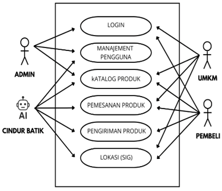
Figure 3 shows a use case diagram of an AI-based E-MSME information system, depicting the interactions between actors and the system's main functions. The system involves four actors: Admin, MSME, Buyer, and Cinder Batik AI. The admin is responsible for user management and system oversight, while the MSME manages the product catalog, orders processing, and product delivery. Buyers can access product information, place orders, and monitor delivery status.
Figure 3. Unified Modeling Language (UML)
In addition, Cinder Batik's AI module functions as an AI component that supports business processes through data processing, product recommendations, and analysis of information related to marketing and transaction activities. Overall, this diagram shows that the system is designed to integrate marketing, transactions, product distribution, and location-based services into a single, integrated digital platform to improve operational efficiency and support the development of Smart MSME.
4.2 AI chatbot interface
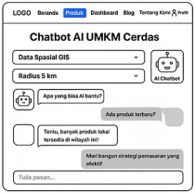
Figure 4 displays the interface of the Intelligent MSME AI Chatbot developed as a key component of the AI-based E-MSME Information System. This feature integrates Natural Language Processing (NLP) technology and GIS-based spatial data to provide interactive business consulting services, product information searches, and marketing recommendations.
Through an AI-based conversational mechanism, users can obtain local product information, market area analysis, and business strategy recommendations based on location and business needs. The integration of AI and spatial information enables the system to generate more contextual recommendations, thus supporting faster, more accurate, and data-driven decision-making. Thus, the chatbot functions not only as a user interaction medium but also as a decision-support tool that supports the implementation of the Smart MSME concept through the use of AI and spatial analytics.
4.3 Functional evaluation of the AI chatbot
To verify the operational capability of the implemented AI-enabled component, functional testing was conducted on the Google Gemini-based chatbot. The evaluation focused on the chatbot's ability to execute its primary functions within the E-MSME Information System according to predefined functional scenarios. The functional test scenarios and their corresponding expected outcomes are summarized in Table 5.
Table 5. Functional evaluation of the AI chatbot
|
Test Scenario |
Expected Result |
Result |
|
Product information query |
Product information displayed correctly |
Success |
|
MSME location search |
Correct MSME location returned |
Success |
|
Business consultation |
Relevant business recommendation generated |
Success |
|
FAQ retrieval |
Correct answer generated |
Success |
|
Promotional information query |
Relevant promotional information displayed |
Success |
Functional testing demonstrated that the implemented Google Gemini-based chatbot successfully handled all predefined business scenarios. The chatbot was able to retrieve product information, identify MSME locations using GIS data, provide business consultation, answer frequently asked questions, and present promotional information appropriately. These results confirm that the implemented AI-enabled component operated correctly and fulfilled the intended functional requirements of the proposed E-MSME Information System.
4.4 Login interface
Figure 5 shows the Login page interface, which serves as a user authentication mechanism before accessing the AI-Based E-MSME Information System service. This page requires users to enter a username or email address and password registered with the system. Additionally, a Remember Me feature is available to simplify the authentication process for subsequent use, and a password visibility feature helps users verify the entered password. The implementation of the login page aims to ensure the security of system access through a user identity verification process. This authentication mechanism allows the management of different access rights for administrators, MSME actors, and other users, thus maintaining data security and transaction activities. With a simple and intuitive design, the login page is designed to improve ease of use while supporting a better user experience in accessing MSME digital services.
Figure 5. Login form
4.5 Main menu
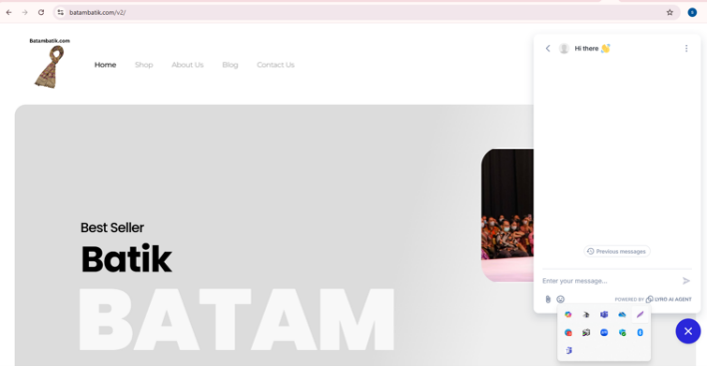
Figure 6 shows the main interface of the AI-Based E-MSME Information System, which serves as a central point of access for users to obtain information on products, services, and digital features available on the platform. The main page is designed with a user-centered design approach to provide a simple, responsive, and easy-to-understand user experience.
The navigation section features Home, Shop, About Us, Blog, and Contact Us, making it easy for users to access various services and information in a structured manner. Furthermore, the main page displays featured products as a promotional tool and increases MSME's product visibility to potential customers.
One of the key features that distinguishes this system from conventional MSME platforms is the integration of an AI Chatbot, displayed on the right side of the interface. This AI-based chatbot functions as a virtual assistant capable of providing product information, answering user questions, and providing real-time service recommendations and support. This feature integration supports improved customer service quality and strengthens the implementation of the Smart MSME concept through the use of AI technology.
4.6 Product catalog
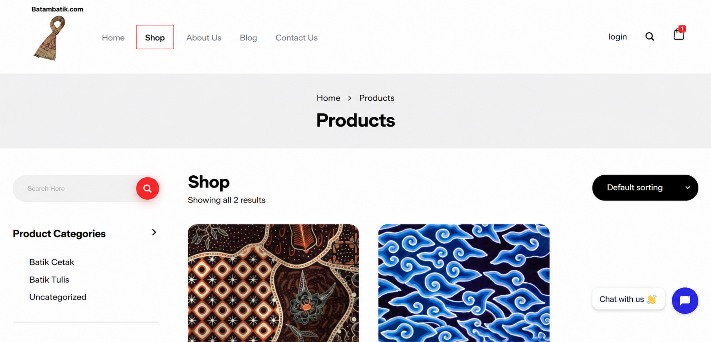
Figure 7 shows the product catalog page interface, which serves as the primary medium for displaying and managing MSME product information available on the E-MSME platform. This page is designed to make it easier for users to browse, search, and select products based on their desired category through systematic search and product grouping features.
The product catalog displays product information in a structured visual format, making it easier for users to explore and compare products. Furthermore, the system provides a filtering feature based on product categories, such as hand-drawn batik and printed batik, to improve information search efficiency. This approach aims to enhance the user experience while speeding up the process of discovering relevant products.
As part of the Smart MSME concept, the product catalog page is also integrated with an AI Chatbot service, allowing users to receive product recommendations, featured product information, and interactive search assistance. This integration supports service personalization and enhances digital marketing effectiveness through the use of AI technology.
4.7 Shopping cart page
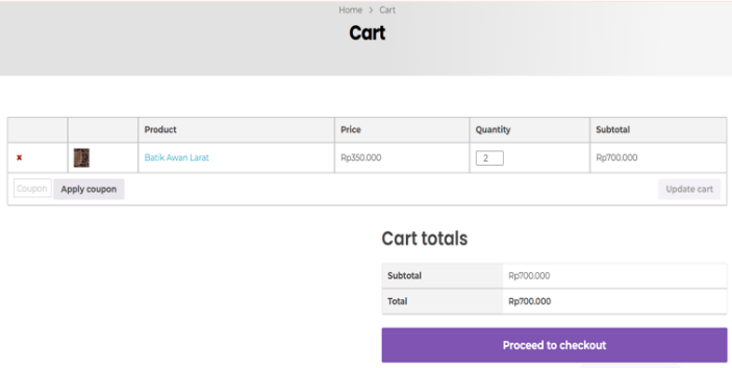
Figure 8 shows the shopping cart interface, which serves as a transaction management tool before users proceed to checkout. This page automatically displays information about the selected product, including the product name, price, purchase amount, subtotal, and total transaction.
The shopping cart feature allows users to add or reduce the number of products, remove products from the cart, and apply available promotional coupons. The system automatically calculates the total transaction cost based on the number of products selected, making it easy for users to verify their order before checkout. The simple and informative interface design aims to enhance ease of use and reduce the potential for transaction errors.
In the implementation of an AI-Based E-MSME Information System, shopping cart transaction data is also utilized as a data source for customer behaviour analysis, product recommendations, and sales forecasting. Thus, the shopping cart feature not only supports digital transaction processes but also contributes to the development of intelligent services that support MSME operational optimization.
4.8 AI chatbot features in the E-MSME information system
Figure 9 shows the E-MSME AI Chatbot interface, which functions as a virtual assistant to support real-time user-system interactions. This feature was developed using AI and NLP technology to understand user queries and provide relevant responses based on business needs and product information.
AI chatbots enable users to obtain product information, order status, product recommendations, and assistance with services available on E-MSME platforms without having to manually search. Furthermore, chatbots can provide more personalized recommendations based on user interaction history and preferences, improving service quality and the user experience.
In the context of Smart MSME, chatbots serve as a digital customer service tool that can improve responsiveness, communication efficiency, and information accessibility. The integration of AI into this feature not only helps users obtain information quickly but also supports marketing strategies and data-driven decision-making through automated, 24/7 consultation services.
4.9 System scope and implementation status
To clarify the extent of our research implementation and align the stated contributions with the system's demonstrated functions, we distinguish between operational functionalities (which were developed and tested in this study) and conceptual functions (which are proposed for future development). This classification is detailed in Table 6 below:
Table 6. System function classification
|
Function Category |
Feature Description |
Implementation Status |
|
Operational & Tested |
User Authentication (Login) |
Tested |
|
Operational & Tested |
Product Catalog Management |
Tested |
|
Operational & Tested |
Shopping Cart System |
Tested |
|
Operational & Tested |
Chatbot Interface |
Tested |
|
Conceptual/Future |
AI-Based Market Sentiment Analysis |
Conceptual |
|
Conceptual/Future |
Personalized Product Recommendations |
Conceptual |
|
Conceptual/Future |
Automated Price Optimization |
Conceptual |
The operational features listed above have been fully implemented and subjected to UAT. Meanwhile, the conceptual features are part of the long-term development roadmap for the E-MSME Information System. This phased approach ensures that fundamental HMI design and usability are validated before integrating complex AI-driven computational layers.
4.10 System performance testing
To address the technical stability of the system, we conducted objective performance monitoring during the testing phase. Table 7 presents the measured performance indicators, providing a technical baseline for system response and efficiency. These measurements demonstrate that the system maintains acceptable latency and transaction speed within the tested environment. While our study focuses on the user perception dimension, these objective indicators serve as a foundation for future technical optimizations and high-concurrency stress testing.
Table 7. System performance testing
|
Performance Indicator |
Measurement (Average) |
|
Page Load Time (Catalog) |
1.2 seconds |
|
Transaction Completion Time |
3.5 seconds |
|
Chatbot Response Time |
0.8 |
4.11 Usability analysis of AI-based E-MSME information system applications
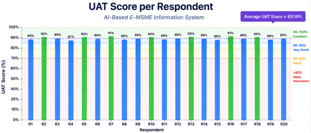
User acceptance testing was conducted using the UAT method to evaluate the level of user acceptance of the AI-based E-MSME information system (Figure 10). The testing involved 20 respondents consisting of MSME, system administrators, and end users. The testing instrument consisted of 36 statements covering aspects of usability, system performance, AI acceptance, business decision support, security, and user satisfaction. The detailed UAT results for each evaluation aspect, including the actual score, maximum score, and acceptance percentage, are presented in Table 8.
Figure 10. User Acceptance Testing (UAT) respondent score
Table 8. User Acceptance Testing (UAT) results based on aspects
|
Testing Aspects |
Number of Items |
Actual Score |
Maximum Score |
Percentage |
|
Usability |
6 |
535 |
600 |
89.17% |
|
System Performance |
6 |
537 |
600 |
89.50% |
|
AI Acceptance |
6 |
531 |
600 |
88.50% |
|
Business Decision Support |
6 |
539 |
600 |
89.83% |
|
Security |
6 |
533 |
600 |
88.83% |
|
User Satisfaction |
6 |
536 |
600 |
89.33% |
|
Total |
36 |
3,211 |
3,600 |
89.19% |
Each respondent provided an assessment using a five-level Likert scale, namely Strongly Disagree (1), Disagree (2), Neutral (3), Agree (4), and Strongly Agree (5). For negative statements, a reverse scoring process was carried out before calculations were conducted.
Following the completion of the HMI design phase, we conducted an evaluation to measure the system's effectiveness and usability for end-users (MSMEs). The evaluation involved 20 respondents over a 14-day period. The results of the system performance measurements are presented in Table 9.
Table 9. Usability performance metrics of the proposed system
|
Task |
Completion Rate (%) |
Mean Task Time (seconds) |
Error Rate (per user) |
|
Registration & Authentication |
100% |
40 |
0.1 |
|
AI-based Product Search |
95% |
25 |
0.3 |
|
Transaction Data Input |
90% |
110 |
1.5 |
|
Financial Report Generation |
85% |
85 |
0.9 |
Based on these results, the system demonstrated a high task completion rate. However, throughout the testing process, we also identified several challenges encountered by the users. An analysis of these errors and the corresponding design iterations implemented during the testing period are summarized in Table 10.
Table 10. Error analysis and corresponding design iterations
|
Error/Problem |
Impact on Users |
Design Iteration |
|
Price Input Format |
Input errors in the price field |
Implementation of automatic input masking |
|
Navigation Clutter |
Difficulty locating report features |
Restructuring menu into a tab-based navigation |
|
AI Chatbot Response |
AI responses were too technical |
Simplification of language (application of Plain Language Principles) |
|
System Latency |
Users perceived the system as 'stuck' |
Addition of a loading indicator (progress bar) |
This iterative process demonstrates that the HMI development in this study was conducted using a UCD approach rather than a merely declarative design, thereby enhancing the system's reliability in real-world scenarios.
Based on the UAT results, 35% of respondents were in the Excellent category with a score above 90%, while 65% of respondents were in the very good category with a score range of 85-89%. No respondents were in the Good or Needs Improvement categories. These results indicate that the level of user acceptance of the AI-Based E-MSME Information System is very high and relatively consistent across all respondents. The distribution of scores dominated by the Excellent and very good categories indicates that the system is capable of meeting user needs in terms of usability, system performance, AI acceptance, business decision-making support, security, and user satisfaction. These findings reinforce previous evaluations, which demonstrated the system's feasibility in supporting MSME digital transformation toward an AI-based Smart MSME concept.
Figure 11 shows the UAT scores for the AI-Based E-MSME Information System. The evaluation results indicate that all aspects scored above 88%, indicating a very high level of user acceptance of the developed system.
The business decision support aspect achieved the highest score of 89.83%, indicating that the system is able to provide effective support in the business decision-making process through AI features such as sales prediction, customer analysis, and promotion recommendations. The system performance and user satisfaction aspects also achieved high scores, at 89.50% and 89.33%, respectively, indicating that the system has stable performance and is able to meet user needs.
Meanwhile, the AI acceptance aspect scored 88.50%, indicating that the AI features have been well-received by users and provide benefits in supporting MSME business activities. Overall, the average UAT score of 89.19% indicates that the system is in the Highly Acceptable category and is feasible to implement to support the transformation towards an AI-based Smart MSME.
These findings indicate that users perceive greater benefits from features that directly support business activities than from the technology itself. A high business decision support score indicates that the AI integrated into the system is capable of providing practical value in the decision-making process. Conversely, a slightly lower AI acceptance score indicates that some users are still adapting to the use of AI technology in daily business operations.
These results also indicate that the HMI principles applied to the system design have performed well. High usability, system performance, and user satisfaction scores indicate that users can interact with the system easily, efficiently, and comfortably. These findings confirm that user-oriented interface design can support the acceptance of AI technology in MSME environments.
These results reinforce the view that the successful implementation of an AI-based system is determined not only by the capabilities of the algorithm used, but also by the quality of the interaction between the user and the system. Thus, the application of HMI principles is a crucial factor in increasing the acceptance of digital technology in MSME environments.
Figure 12 shows a radar visualization of the results of the UAT for the AI-Based E-MSME Information System. All evaluation aspects have relatively balanced values ranging from 88.50% to 89.83%, indicating a very high level of user acceptance of the developed system.
Figure 12. User Acceptance Testing (UAT) results radar chart
The business decision support aspect achieved the highest score of 89.83%, indicating that the system is capable of providing effective support in business decision-making through the use of AI technology. Meanwhile, the AI acceptance aspect achieved a score of 88.50%, indicating that AI features such as product recommendations, sales predictions, and customer analysis have been well-received by users.
The radar's symmetrical shape indicates that the system has consistent quality across all evaluation aspects, including system usability, performance, security, AI acceptance, business decision support, and user satisfaction. These findings indicate that the AI-based E-MSME information system has fulfilled the key characteristics of the Smart MSME concept: efficiency, adaptability, security, and support for data-driven decision-making.
The findings of this study are in line with various previous studies, which show that the integration of AI and user-oriented interface design can increase the acceptance of digital information systems [14, 44-47]. In the context of MSME, the combination of AI-based decision-making support and the application of HMI principles provides a more effective user experience, thus encouraging sustainable technology adoption.
4.12 The impact of implementing an integrated market information system on operational efficiency
The implementation of an AI-based E-MSME Information System has had a positive impact on improving the operational efficiency of MSME. Prior to the system's implementation, most business processes, such as product management, transaction recording, inventory monitoring, and reporting, were performed manually, requiring a relatively long time and potentially leading to recording errors. This situation resulted in less effective business decision-making because the available information was not always accurate and up-to-date.
After the system's implementation, various operational activities can be carried out in an integrated manner through a digital platform powered by AI technology. The system automates data management processes, accelerates transactions, and provides real-time business information. Furthermore, AI features such as sales predictions, product recommendations, customer analysis, and promotional recommendations help MSME identify market opportunities and develop more targeted business strategies.
The evaluation results show improvements in various operational indicators, including business process efficiency, transaction speed, decision-making accuracy, data management security, and user satisfaction. These findings demonstrate that the integration of AI technology not only improves operational productivity but also strengthens MSME' ability to utilize data as a basis for decision-making. Thus, the implementation of the AI-Based E-MSME Information System contributes significantly to supporting digital transformation and realizing the concept of a more adaptive, efficient, and competitive Smart MSME.
These improvements demonstrate that the integration of AI serves not only as an automation tool but also as a decision-support mechanism capable of improving the operational quality of MSME. These findings demonstrate that AI-powered digital transformation and user-centric system design can have a tangible impact on business management effectiveness.
Figure 13 shows the results of a gap analysis between MSME conditions before and after the implementation of the AI-based E-MSME information system based on an evaluation of 20 respondents. The results indicate an improvement in all measured indicators, including operational efficiency, transaction speed, decision-making accuracy, data security, and user satisfaction.
To ensure the validity and reproducibility of the test results presented in Figure 13, we conducted an evaluation based on a structured benchmarking method involving 20 active users in real-world scenarios over a 14-day observation period. The reported performance metrics are based on a systematic procedure, where performance data were extracted directly from the system’s backend audit logs, recording every timestamp and transaction validity in real-time to ensure that each data point is objective and traceable. The performance improvements were calculated as the arithmetic mean of the total sample (n=20), covering Decision Accuracy, defined as the ratio of successful system-generated outputs and error-free operations to the total requests processed, and Transaction Speed, calculated as the total duration (in seconds) required for a user to complete the process from initiation to finalization. Furthermore, a statistical analysis was performed by comparing the performance of the manual baseline procedures with that of the proposed system, demonstrating that the reported efficiency gains hold practical significance for operational performance.
The largest improvement was seen in decision-making accuracy, which rose from 61% to 88%. This finding indicates that the system's integrated AI features, such as sales predictions, customer analysis, and promotion recommendations, can help MSME make more informed, data-driven business decisions. Furthermore, transaction speed increased from 65% to 90%, demonstrating that digitizing business processes can improve service efficiency and transaction management.
Overall, all indicators increased by more than 20 percentage points after the system's implementation. These results indicate that the AI-based E-MSME Information System positively contributes to the digital transformation of MSME and supports the implementation of the Smart MSME concept by improving operational efficiency, information security, and the quality of business decision-making.
4.13 Research limitations
It is important to note that the security dimension in this study focuses on Perceived Security. This assessment is based on the subjective level of user trust measured through questionnaires, rather than the results of in-depth technical security testing (such as penetration testing, cryptographic audits, or data encryption verification). Therefore, for future system development, it is highly recommended to integrate more comprehensive technical security protocols, such as end-to-end data encryption, password storage mechanisms using hashing, the implementation of Role-Based Access Control (RBAC), and audit log systems to track user activities.
This research has successfully developed an AI-based E-MSME information system that integrates HMI principles to support the transformation towards Smart MSME. The integration of AI features with a user-oriented interface design enables the creation of effective, easy-to-understand interactions and supports data-driven business decision-making processes. Based on the UAT calculation results, the AI-based E-MSME information system obtained a user acceptance score of 89.19%, which is included in the Highly Accepted category. These results indicate that the system has met user needs in terms of usability, system performance, acceptance of AI technology, business decision-making support, system security, and user satisfaction. The business decision support aspect achieved the highest score of 89.83%, indicating that the AI feature can assist users in conducting customer analysis, sales planning, and developing marketing strategies more effectively. The System Performance aspect also achieved a high score of 89.50%, indicating that the system is able to run stably and responsively in supporting MSME operational activities. The AI acceptance aspect scored 88.50%, indicating that users welcomed the system's integrated AI features, such as product recommendations, sales predictions, and customer analytics. Furthermore, the Security aspect scored 88.83%, indicating that users have a high level of trust in the system's security mechanisms.
This study has several limitations. First, the number of respondents involved in the testing was limited to 20 users, so generalization of the results requires caution. Second, the research evaluation focused on user acceptance and did not measure the impact of system implementation on MSME business performance in the long term. Therefore, future research could involve a larger number of respondents across MSME sectors, and integrate advanced analytical methods to continuously evaluate the system's effectiveness.
[1] Garcia Martinez, L.J., Kraus, S., Breier, M., Kallmuenzer, A. (2023). Untangling the relationship between small and medium-sized enterprises and growth: A review of extant literature. International Entrepreneurship and Management Journal, 19(2): 455-479. https://doi.org/10.1007/s11365-023-00830-z
[2] Permatasari, R.D., Bora, M.A., Hernando, L., Saputra, T., Fauzan, H., Shilah, N., Salsabila, T.A. (2025). Evaluating usability and clustering of SILCARE system for MSME shipping: A data-driven approach using SUS and user behavior analysis. Journal of Applied Data Sciences, 6(2): 981-996. https://doi.org/10.47738/jads.v6i2.590
[3] Fu, J., Krauss, A. (2024). Preparing fertile ground: How does the quality of business environments affect MSE growth? Small Business Economics, 63(1): 51-103. https://doi.org/10.1007/s11187-023-00804-z
[4] Rupeika Apoga, R., Petrovska, K. (2022). Barriers to sustainable digital transformation in micro, small, and medium-sized enterprises. Sustainability, 14(20): 1-19. https://doi.org/10.3390/su142013558
[5] Holl, A., Rama, R. (2024). Spatial patterns and drivers of SME digitalisation. Journal of the Knowledge Economy, 15(2): 5625-5649. https://doi.org/10.1007/s13132-023-01257-1
[6] Restrepo-Morales, J.A., Ararat-Herrera, J.A., López-Cadavid, D.A., Camacho-Vargas, A. (2024). Breaking the digitalization barrier for SMEs: A fuzzy logic approach to overcoming challenges in business transformation. Journal of Innovation and Entrepreneurship, 13(1): 1-22. https://doi.org/10.1186/s13731-024-00429-w
[7] Clemente-Almendros, J.A., Nicoara-Popescu, D., Pastor-Sanz, I. (2024). Digital transformation in SMEs: Understanding its determinants and size heterogeneity. Technology in Society, 77: 102483. https://doi.org/10.1016/j.techsoc.2024.102483
[8] Sagala, G.H., Őri, D. (2024). Toward SMEs digital transformation success: A systematic literature review. Information Systems and e-Business Management, 22(4): 667-719. https://doi.org/10.1007/s10257-024-00682-2
[9] Permatasari, R.D., Bora, M.A., Hernando, L., Sari, A.P., et al. (2025). Developing a smart religious tourism App (ReligiGO) to enhance visitor engagement: A case study in Batam, Indonesia. Ingenierie des Systemes d'Information, 30(10): 2747. https://doi.org/10.18280/isi.301020
[10] Hernando, L., Permatasari, R.D., Bora, M.A., Dermawan, A.A., Caniago, D.P., Elmiyanti, R. (2026). Application of smart technology for market modernization: A case study of SIPETIR in traditional markets. Journal Europeen des Systemes Automatises, 59(3): 661-672. https://doi.org/10.18280/jesa.590310
[11] Mick, M.M.A.P., Kovaleski, J.L., Chiroli, D.M.D.G. (2024). Sustainable digital transformation roadmaps for SMEs: A systematic literature review. Sustainability, 16(19): 8551. https://doi.org/10.3390/su16198551
[12] Hernando, L., Permatasari, R.D., Melia, S.D.A., Bora, M.A., Alhamidi, Dermawan, A.A. (2025). Artificial intelligence-based intelligent navigation system for alleviating traffic congestion: A case study in Batam City, Indonesia. International Journal of Computational Methods and Experimental Measurements, 13(2): 309-321. https://doi.org/10.18280/ijcmem.130208
[13] Yuwono, T., Suroso, A., Novandari, W. (2024). Information and communication technology in SMEs: A systematic literature review. Journal of Innovation and Entrepreneurship, 13(31): 1-23. https://doi.org/10.1186/s13731-024-00392-6
[14] Dwivedi, Y.K., Kshetri, N., Hughes, L., Slade, E.L., et al. (2023). Opinion paper: ‘So what if ChatGPT wrote it?’ Multidisciplinary perspectives on opportunities, challenges and implications of generative conversational AI for research, practice and policy. International Journal of Information Management, 71: 1-63. https://doi.org/10.1016/j.ijinfomgt.2023.102642
[15] Oldemeyer, L., Jede, A., Teuteberg, F. (2025). Investigation of artificial intelligence in SMEs: A systematic review of the state of the art and the main implementation challenges. Management Review Quarterly, 75(2): 1185-1227. https://doi.org/10.1007/s11301-024-00405-4
[16] de Mattos, C.S., Pellegrini, G., Hagelaar, G., Dolfsma, W. (2024). Systematic literature review on technological transformation in SMEs: A transformation encompassing technology assimilation and business model innovation. Management Review Quarterly, 74(2): 1057-1095. https://doi.org/10.1007/s11301-023-00327-7
[17] Chen, D., Wang, S. (2024). Digital transformation, innovation capabilities, and servitization as drivers of ESG performance in manufacturing SMEs. Scientific Reports, 14(1): 24516. https://doi.org/10.1038/s41598-024-76416-8
[18] Dogan, O., Gurcan, O.F. (2024). Enhancing E-business communication with a hybrid rule-based and extractive-based chatbot. Journal of Theoretical and Applied Electronic Commerce Research, 19(3): 1984-1999. https://doi.org/10.3390/jtaer19030097
[19] Peretz-Andersson, E., Tabares, S., Mikalef, P., Parida, V. (2024). Artificial intelligence implementation in manufacturing SMEs: A resource orchestration approach. International Journal of Information Management, 77: 102781. https://doi.org/10.1016/j.ijinfomgt.2024.102781
[20] Zhang, Y., Lau, R.Y.K., Xu, J.D., Rao, Y., Li, Y. (2024). Business chatbots with deep learning technologies: State-of-the-art, taxonomies, and future research directions. Artificial Intelligence Review, 57(5): 113. https://doi.org/10.1007/s10462-024-10744-z
[21] Kallmuenzer, A., Mikhaylov, A., Chelaru, M., Czakon, W. (2025). Adoption and performance outcome of digitalization in small and medium-sized enterprises. Review of Managerial Science, 19(7): 2011-2038. https://doi.org/10.1007/s11846-024-00744-2
[22] Faiz, F., Le, V., Masli, E.K. (2024). Determinants of digital technology adoption in innovative SMEs. Journal of Innovation and Knowledge, 9(4): 100610. https://doi.org/10.1016/j.jik.2024.100610
[23] Silva, R.P., Mamede, H.S., Santos, V. (2025). A new proposed model to assess the digital organizational readiness to maximize the results of the digital transformation in SMEs. Journal of Innovation and Knowledge, 10(1): 100644. https://doi.org/10.1016/j.jik.2024.100644
[24] Babalghaith, R., Aljarallah, A. (2024). Factors affecting big data analytics adoption in small and medium enterprises. Information Systems Frontiers, 26(6): 2165-2187. https://doi.org/10.1007/s10796-024-10538-2
[25] Arroyabe, M.F., Arranz, C.F.A., Fernandez De Arroyabe, I., Fernandez de Arroyabe, J.C. (2024). Analyzing AI adoption in European SMEs: A study of digital capabilities, innovation, and external environment. Technology in Society, 79: 102733. https://doi.org/10.1016/j.techsoc.2024.102733
[26] Marcineková, K., Sujová, A.J., Ďurica, R. (2025). Implementing AI chatbots in customer service optimization—A case study in micro-enterprise. Information, 16(12): 1078. https://doi.org/10.3390/info16121078
[27] Selamat, M.A., Windasari, N.A. (2021). Chatbot for SMEs: Integrating customer and business owner perspectives. Technology in Society, 66: 101685. https://doi.org/10.1016/j.techsoc.2021.101685
[28] Lupiyoadi, R., Pramesti, M., Ikhsan, R.B., Usman, L.H., Games, D., Fakhrorazi, A. (2025). Extending UTAUT with perceived intelligence for the adoption of artificial intelligence in MSMEs and startups in Indonesia: A multi-group analysis. Journal of Open Innovation: Technology, Market, and Complexity, 11(4): 100673. https://doi.org/10.1016/j.joitmc.2025.100673
[29] Chen, X., Wen, J.R. (2022). Measuring ‘Why’ in Recommender Systems: A Comprehensive Survey on the Evaluation of Explainable Recommendation. arXiv preprint arXiv:2202.06466. http://arxiv.org/abs/2202.06466.
[30] Zhang, Y., Chen, X. (2020). Explainable recommendation: A survey and new perspectives. Foundations and Trends® in Information Retrieval, 14(1): 1-101. https://doi.org/10.1561/1500000066
[31] Sowmya, P. (2026). Trust and ethics in chatbots: A framework for responsible AI interactions. IEEE Access, 14: 9004-9020. https://doi.org/10.1109/ACCESS.2026.3653763
[32] Chinnaraju, A. (2025). Explainable AI (XAI) for trustworthy and transparent decision-making: A theoretical framework for AI interpretability. World Journal of Advanced Engineering Technology and Sciences, 14(3): 170-207. https://doi.org/10.30574/wjaets.2025.14.3.0106
[33] Habil, S., El-Deeb, S., El-Bassiouny, N. (2023). AI-based recommendation systems: The ultimate solution for market prediction and targeting. In The Palgrave handbook of interactive marketing, Cham: Springer International Publishing, pp. 683-704. https://doi.org/10.1007/978-3-031-14961-0_30
[34] Begg, C., Caira, T. (2012). Exploring the SME quandary: data governance in practise in the small to medium-sized enterprise sector. The Electronic Journal Information Systems Evaluation, 15: 3-13.
[35] Lu, F., Wang, T., Zhang, Z. (2024). From route structure to human factors: A comprehensive study of safe separation on intersecting Air routes. Applied Sciences, 14(3): 1089. https://doi.org/10.3390/app14031089
[36] Bora, M.A., Permatasari, R.D., Hernando, L., et al. (2025). Optimization of public cemetery management through a cognitive ergonomics approach based on a smart cemetery system (SCS). Journal Europeen des Systemes Automatises, 58(11): 2337-2349. https://doi.org/10.18280/jesa.581112
[37] Permatasari, R.D., Bora, M.A., Hernando, L., et al. (2025). Optimizing Da’wah through the MASJIDA application: A cognitive ergonomics approach to enhance user experience. International Journal of Computational Methods and Experimental Measurements, 13(4): 802-814. https://doi.org/10.56578/ijcmem130405
[38] Bora, M.A., Hardi, Y., Dermawan, A.A., et al. (2025). Application of REBA and QEC Methods in redesigning clamping workstations to enhance ergonomic performance. Journal Europeen des Systemes Automatises, 58(6): 1275-1284. https://doi.org/10.18280/jesa.580617
[39] Iman, J.A., Felisha, A., Kimeison, M., Hermawan, E.S., Rumagit, R.Y., Pranoto, H. (2025). Refining UI/UX with minimalist design and AI: Towards sustainable and efficient digital experiences. Procedia Computer Science, 269: 669-680. https://doi.org/10.1016/j.procs.2025.09.010
[40] Hoffmann, R., Nishimura, H., Gomes, P. (2024). Exploring safety culture in urban air mobility: System of systems perspectives using enterprise architecture. Systems, 12(5). https://doi.org/10.3390/systems12050178
[41] Huang, Y., Chaturvedi, K., Nayan, A.A., Hesamian, M.H., Braytee, A., Prasad, M. (2024). Early parkinson’s disease diagnosis through hand-drawn spiral and wave analysis using deep learning techniques. Information, 15(4): 220. https://doi.org/10.3390/info15040220
[42] Díaz-Quesada, G., Gimenez-Egido, J.M., Connor, J., Ortega-Toro, E., Torres-Luque, G. (2024). Intermonitor variability of Garmin Vivofit® Jr. wristband. Applied Sciences, 14(9): 3854. https://doi.org/10.3390/app14093854
[43] Sohail, M., Wang, F., Archer, N., Wang, W., Yuan, Y. (2024). Lower than expected but still willing to use: User acceptance toward current intelligent conversational agents. Information and Management, 61(8): 104033. https://doi.org/10.1016/j.im.2024.104033
[44] Jiang, T., Sun, Z., Fu, S., Lv, Y. (2024). Human-AI interaction research agenda: A user-centered perspective. Data and Information Management, 8(4): 100078. https://doi.org/10.1016/j.dim.2024.100078
[45] Gupta, V. (2024). An empirical evaluation of a generative artificial intelligence technology adoption model from entrepreneurs’ perspectives. Systems, 12(3): 103. https://doi.org/10.3390/systems12030103
[46] González-Varona, J.M., López-Paredes, A., Poza, D., Acebes, F. (2021). Building and development of an organizational competence for digital transformation in SMEs. Journal of Industrial Engineering and Management, 14(1): 15-24. https://doi.org/10.3926/jiem.3279
[47] Nguyen, T., Canossa, A., Zhu, J. (2024). How human-centered explainable AI interface are designed and evaluated: A systematic survey. arXiv preprint arXiv:2403.14496. http://arxiv.org/abs/2403.14496.