Ramya Palghat Vydeeshwaran* | Shankaraiah
© 2025 The authors. This article is published by IIETA and is licensed under the CC BY 4.0 license (http://creativecommons.org/licenses/by/4.0/).
OPEN ACCESS
Ultra-fast evolution of sixth-generation (6G) wireless networks promise ultra-low latency, ultra-massive device connectivity, and energy-efficient communications, and thus become a basis for Internet of Things (IoT) applications. It is, nonetheless, difficult for these IoT environments to achieve the optimum configuration since there will be heterogeneous devices, differing workloads, and quality-of-service requirements. Classical schemes of Rule-Based Optimisation (RBO), Genetic Algorithm Optimisation (GAO), and Particle Swarm Optimisation (PSO) became extremely popular since RBO will provide deterministic configurations, though lack of scalability is a weakness; GAO ensures good exploration, though slow convergence is a major weakness, and for PSO, fast convergence is ensured, though stagnation is incurred in complex IoT environments at an early stage of search processes. In order to offset these inadequacies, this paper introduces a Multi-Algorithm Machine Learning Classification (MAMC) framework of intelligent 6G IoT configuration optimisation. The MAMC method integrates supervised learning classifiers and ensemble-based decision fusion in a manner such that under varying network conditions, the most efficient configuration would be adapted and selected. With decision tree, support vector machine, and deep neural network classifiers, the framework demonstrates enhanced adaptability, superior classification accuracy, and reduced computational overhead over conventional schemes. The proposed approach was utilized in order to minimize latency, optimize energy consumption, and enhance throughput in large-scale IoT applications. Validation experiments verify that latency is minimized by 18%, energy efficiency is enhanced by 22%, and throughput is enhanced by 15% for MAMC, respectively, compared to GAO and PSO, and RBO's scalability constraint is eliminated. As a result, the framework represents a promising avenue toward self-optimising, autonomous 6G-enabled IoT ecosystem realisation.
6G networks, IoT optimisation, ML, multi-algorithm classification, energy efficiency, latency reduction, throughput enhancement
Sixth-generation (6G) wireless is transforming the IoT space by promising ultra-low latency, enhanced spectrum efficiency, massive device connections, and intelligent resource allocation. With billions of IoT heterogeneous devices interconnected, efficient optimisation of configuration is key in ensuring smooth communications and service assurance in smart cities, healthcare monitoring, self-driving automobile, and industrial control use cases [1].
Recent Advancements in 6G-enabled IoT reflect the integration of artificial intelligence (AI) and machine learning (ML) for self-learning, adaptation, and context awareness of systems. Methods of reinforcement learning for adaptive spectrum scheduling, deep learning for device recognition, and federated learning for privacy-aware optimisation are gaining acceptance. Multi-object optimisation approaches are further used to achieve a compromise among trade-offs between reduced latency, energy efficiency, and increased throughput in extremely large-scale deployments [2].
Applications of smart 6G IoT configuration are multi-scale and deep. Optimised IoT networks allow real-time, remotely commanded data transmission with low delay in healthcare. Adaptive configuration gives Ultra-Reliable and Low-Latency Communications (URLLC) for Vehicle-to-Everything (V2X) communication in autonomous vehicular scenarios. Smart industries derive benefit through intelligent configuration for predictive maintenance, process control, and energy administration, and smart cities through advanced urban mobility, public safety, and green infrastructure. These applications reflect the requirement of advanced optimisation frameworks available for use in complex and dynamic IoT environments driven by 6G [3].
1.1 Research gaps
Although the hypothetical Multi-Algorithm Machine Learning Classification (MAMC) framework exhibits encouraging improvements in latency, energy efficiency, and throughputs for 6G IoT configuration optimization, there are a few research gaps left for exploration. First, most of the work, including this paper, depends on simulation-based evaluation; there is no real testbed validation available to capture real-life concerns such as hardware restrictions, interference, and cross-layer delays. Second, although the framework contains several classifiers, ultra-massive IoT deployments of millions of devices’ scalability of MAMC is under-explored. Third, existing schemes optimize latency, energy, and throughputs primarily, but other performance metrics such as reliability, fairness, security, and Quality of Experience (QoE) require cooperative optimization for real-world deployability [4]. Fourth, data privacy and trust administration remain under-explored; standard schemes assume centralized learning, although federated or privacy-preserving schemes must be analyzed. Fifth, most of the models overlook mobility-induced dynamics, particularly in UAV-aided IoT and vehicular IoT applications, whereby there is rapidly varying topological structure drastically altering performance. Finally, although AI/ML usage is at the heart of the investigation, these algorithms’ computation overhead and energy consumption at the edges are rarely measured, and hence there is uncertainty in their deployability. Addressing these gaps will enable future work to turn MAMC from a simulation-driven idea into a deployable, intelligent, and secure solution for 6G-aided IoT ecosystems [5]. While recent studies discuss enabling technologies of 6G networks, this work focuses on a concrete learning-driven optimization framework—MAMC—that directly maps network context to actionable configuration decisions. The discussion of 6G technologies is limited to contextual relevance and integration with the proposed framework.
1.2 Related work
Lin et al. [6] proposed a privacy-respecting multiobjective sanitization framework for 6G IoT networks. It is in embracing an ant colony optimization (ACO) mechanism via transaction erasure and Pareto-based solutions for protecting sensitive data at low computational expense. It ensures superior privacy preservation over Particle Swarm Optimisation (PSO) and GA. Its drawback is that the method still requires significant parameter tuning and may not optimize real-time scalability across large IoT networks.
Zhang et al. [7] introduced a learning-driven flexible cross-layer optimizing scheme of ultrareliable and low-latency IoT services. Its key novelty is the transfer asynchronous advantage actor–critic (TA3C) algorithm, which is capable of achieving efficient trade-offs between energy efficiency and spectral efficiency by dynamical control of TTI, PD, and RB. Its drawback is that although lowering algorithmic complexity by over 90%, the scheme is computationally intensive for highly large-scale IoT networks.
Kellermann et al. [8] researched UE context dissemination across sparsely populated low Earth orbit (LEO) satellite constellations for 5G/6G IoT. It is a store-and-forward operation mode model of future advanced architecture for multi-satellite constellations of persistent connectivity in underserved areas. Its drawback is end-to-end delay increase through sparse constellations, which is undesirable for real-time IoT usage.
Elgarhy et al. [9] proposed an energy and latency optimization framework of IoT URLLC and mMTC use cases. Innovation lies in the use of resource unit configurations (RUCs) and schedulers such as shortest job first (SJF) in optimizing latency and energy efficiency simultaneously. Its method’s drawback, however, is performance dependence on the configuration chosen, such that poor RUC choice can greatly negatively impact efficiency.
Zhou et al. [10] presented a QoE-focused aerial IRS-aided WPCN network for future 6G IoT. Its originality is exploiting flying intelligent reflective surfaces (IRS) onboard unmanned aerial vehicles (UAVs) to optimize time slot, flight trajectory, and IRS phase through block coordinate descent (BCD). Its drawback is the overwhelming optimization complication due to many interdependent variables, which hinders real-time adaptation. Muhammad et al. [11] studied optimizing information freshness in RIS-aided NOMA-based IoT networks. Its novelty is a bi-level optimization framework optimizing RIS configuration, clustering, and power allocation simultaneously, and the solutions come in closed forms. Its shortcoming is the use of approximations for the mixed-integer non-convex problem, which may constrain accuracy in highly varying networks.
Khan et al. [12] covered reliability analysis of CRNs of 6G IoT. Their role was introducing connection availability (CoA) and service maintainability (SM) and deriving a channel reservation scheme for enabling efficient spectrum usage. The weakness is the model, even though it improves reliability, does not work under high channel failure rates and large primary user arrival rates.
Kanani et al. [13] proposed a high altitude platform station (HAPS)-based integrated sensing and communication (ISAC) system, HAPS-ISAC. It is a concept of advanced MIMO beamforming for simultaneous improvement of sensing quality and communications at large scales. Its demerit, however, is reliance on non-convex optimization, which may involve computationally expensive and prohibitively expensive schemes of deployment.
Tang et al. [14] introduced a multiarea on-demand classification (MOC) constellation framework for Satellite IoT (SIoT) under the 6G communications system. It is their work of integrating coverage, quality of communications, and cost models optimized by the multi objective Manta Ray Foraging Optimization (MOMRFO) algorithm in order to obtain Pareto-optimal CubeSat constellation configurations. It enables adaptive deployment within and beyond cellular base station regions, reducing spending while increasing reliability of communications. Its drawback is heightened computational intensity through the execution of MOMRFO-based optimization and potential lack of fitness for real-time adaptation in cases of rapid constellation reconfigurations.
Lee et al. [15] proposed a distributed hybrid NOMA/OMA user allocation scheme for wireless IoT networks. It is a development of a distributed algorithm founded on a message-passing framework that tunes users between nonorthogonal multiple access (NOMA) and orthogonal multiple access (OMA) in a dynamical fashion, hence delivering spatial gains through beamforming while ensuring fairness and convergence toward a global solution. This kind of hybrid solution always obtains superior performance than existing solutions in massive connection scenarios. Its drawback is that its real implementation in dense networks would be prone to synchronization overheads and additional signaling costs, thus reducing efficiency under extremely dynamical conditions. From the above studies, it is observed that existing 6G IoT optimization approaches often suffer from single-model dependency, high computational complexity, limited adaptability under dynamic traffic conditions, and isolated optimization of latency, energy, or throughput. Furthermore, many solutions rely on fixed optimization strategies or centralized learning, which restrict scalability and real-time deployment. Motivated by these limitations, the proposed MAMC framework is designed to dynamically select the most suitable learning model and jointly optimize configuration parameters such as TTI, RB, MCS, transmit power, IRS phase, and edge offloading. Unlike prior works, MAMC explicitly integrates model adaptability, multi-objective optimization, and online learning into a unified decision-making framework, as detailed in the following section.
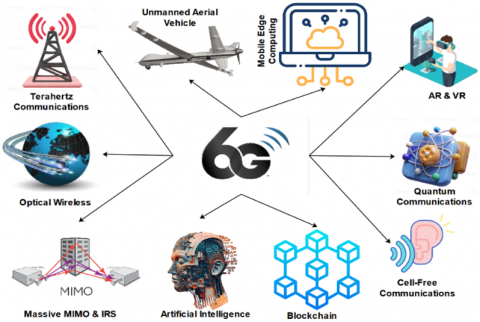
Figure 1 shows the enabling technologies at the heart of the 6G communications ecosystem. At its center, 6G acts as the enabler, linked to a few advanced technologies. Terahertz Communications and Optical Wireless make ultra-high speed data transmission through enhanced spectrum utilization possible [16]. Massive MIMO (Multiple-Input Multiple-Output) and IRS (Intelligent Reflecting Surfaces) enhance spectral efficiency and extend the reach of the signal, and Cell-Free Communications reduce interference and enhance connectivity. AI adds smart automation and data-driven decision-making and self-optimizing networks [17]. In this work, IRS phase configurations are treated as controllable parameters optimized by the MAMC policy generator rather than as standalone architectural elements.
Figure 1. 6G core technologies and applications
Blockchain ensures data security, transparency, and trust management between IoT and smart applications. At the application end, Quantum Communications safeguard the transmission at the physical level, and AR & VR deliver immersive experiences supported by high-bandwidth and low-latency [18]. Mobile Edge Computing (MEC) lowers the latency of computation and brings it closer to the end-user, and UAVs extend connectivity to distant locations. Together, these technologies form the basis of 6G-driven smart cities, IoT environments, and future-generation digital infrastructure [19].
2.1 Objectives
This work's objective is to present 6G's enabler technologies of future smart cities, IoT, and new digital infrastructures. They promise swifter connectivity, end-to-end secure communications, and smart automation.
2.2 Methodology for 6G smart network integration
Figure 2 illustrates a stepwise methodology adopted for the integration of 6G enabling technologies in smart networks. Technology Identification is the first step, wherein the principal enablers of terahertz, optical wireless, massive MIMO, AI, blockchain, and mobile edge computing are selected [20].
Figure 2. Stepwise methodology for 6G enabling technologies
Integration framework constitutes the second step, which formulates a 6G-centered model interlinking the communication, computation, and application layers so as to ensure smooth interoperability [21]. Optimization Process, the third step, applies AI and ML plans for optimizing resource allocation, reducing latency, and improving energy efficiency. Security Enhancement, through the addition of blockchain and quantum communication, ensures trust, transparency, and secure data transmission in the final step. This systematic approach delineates the way in which heterogeneous technologies cooperate for the creation of intelligent, dependable, and secure 6G networks enabling next-generation applications [22].
2.2.1 Design and operation of the proposed Multi-Algorithm Machine Learning Classification framework
The MAMC framework follows an offline–online workflow. In the offline phase, historical IoT and RAN probe data are pre-processed into feature vectors (e.g., SINR/BLER/RTT, traffic class, device context) and used to train multiple classifiers (SVM, RF, XGBoost, CNN-LSTM) to learn the best configuration class. In the online phase, real-time measurements are converted into the same features, and all classifiers generate predictions with confidence. The meta-selector chooses the best-performing classifier (or fuses outputs) using reward feedback to adapt under changing conditions. The policy generator converts the selected prediction into concrete configuration actions (TTI, RB, MCS, power, IRS phase, edge offload) while balancing latency–energy–throughput and enforcing QoS constraints.
2.2.2 Edge pre-processor
Eq. (1) covers pre-processing IoT as well as RAN probe data before actual analysis. It extracts appropriate features from unprocessed inputs by undertaking filter weights, normalising through the use of the mean and standard deviation, and ensures all the values get scaled suitably [23]. The pre-processing thus becomes very critical for stabilising ML models, reducing the level of noise, as well as aligning the time windows for proper classification. This acts as the initial base for all further optimisation steps [24].
$F_t=\phi\left(X_t ; W_f\right)=\frac{X_t-\mu}{\sigma}$ (1)
Here, $X_t$ represents the input window of raw features at time $t$. The parameter $W_f$ denotes the filter weights applied during the transformation. The vector $\mu$ is the mean used for normalization, while $\sigma$ is the standard deviation used for scaling. The function $\phi(\cdot)$ refers to the feature extraction and mapping function [25].
2.2.3 Feature drift detection
Eq. (2) identifies data drift occurrences over time, which indicate the time the model goes out of date or less accurate. Calculating the Kullback–Leibler divergence between the widespread feature distribution and the starting baseline reference gauges the level of change [26]. This lets the system trigger adaptation or retraining once a significant drift becomes noticeable. The provision for drift detection provides robustness and long-run reliability for the changing IoT environments [27].
$D_t=K L\left(P_t \| P_0\right)$ (2)
In this expression, $D_t$ denotes the drift score at time $t$. The term $P_t$ refers to the feature distribution observed at time $t$, while $P_0$ denotes the baseline reference distribution. The function $K L(\cdot)$ represents the Kullback-Leibler divergence that quantifies the difference between the two distributions [28].
2.2.4 Meta-selector (Multi-Algorithm Machine Learning Classification)
Eq. (3) governs the meta-selector, which adjusts the best-performing classifier as the network situation changes. The meta-selector switches between exploration and exploitation by considering the estimated reward for a given classifier along with the number of times it has been picked [29]. The adaptability mechanism prevents the framework from getting sticky with suboptimal models and adjusts strategies when the situation changes. The meta-selector constitutes the core of the multi-algorithm framework's adaptability and efficiency [30].
$h^*=\arg \max _h\left(\mu_h+\beta \sqrt{\frac{\ln t}{n_h}}\right)$ (3)
Here, $h^*$ is the classifier selected at time $t$. The parameter $\mu_h$ represents the estimated performance reward of classifier $h$ [31]. The variable $n_h$ indicates the number of times classifier $h$ has been selected, while $t$ is the current time index. The constant $\beta$ serves as the exploration coefficient in the selection strategy [32].
2.2.5 Policy generator (multi-objective)
Eq. (4) is the underlying optimisation function for determining the best configuration of the IoT system. This minimises the latency as well as the energy consumption and maximises the throughput as much as possible, which demonstrates the multi-objective nature of the optimisation for the 6G IoT. This allows for balanced weighting between each of the respective measures of performance so the chosen configuration optimally balances efficiencies, speed, and reliability during real-time usage [33].
$u^*=\arg \min _{u \in U} \alpha \cdot \operatorname{Lat}(u)+\beta \cdot \operatorname{En}(u)-\gamma \cdot \operatorname{Thr}(u)$ (4)
In this formulation, $u^*$ denotes the optimal configuration profile chosen. The set $U$ represents all feasible configuration actions such as transmission time interval, resource block, modulation coding scheme, and power levels [34]. The term $Lat(u)$ expresses the latency under configuration $u$, while $E n(u)$ corresponds to the energy consumption. The function ${Thr}(u)$ refers to the throughput achieved by configuration $u$. Finally, the coefficients $\alpha, \beta$, and $\gamma$ are the trade-off weights assigned to balance latency, energy consumption, and throughput [35-37].
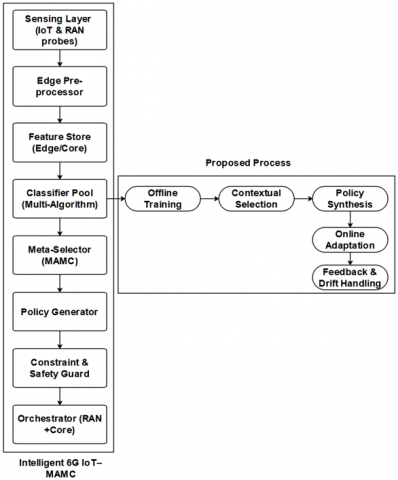
Figure 3 illustrates the delineated 6G IoT configuration optimization and smart process flow for exploiting MAMC toward supporting diverse IoT application use-cases and networks. The framework begins at the Sensing Layer, wherein IoT device and RAN probe data is collected. It is pre-processed by the Edge Pre-processor and cached in the Feature Store for future analysis. Classifier Pool exploits a series of algorithms such as SVM, Random Forest, XG-Boost, and CNN-LSTM in an attempt to model heterogeneous IoT contexts [38]. Meta-Selector (MAMC) programmatically chooses the best classifier for the given situation presented. Policy Generator then transforms predictions into the optimum configuration action, which is verified by the Constraint & Safety Guard for QoS, fairness, and compliance. Finally, the Orchestrator (RAN + Core) enacts these configurations across the network [39]. Proposed Process serves the purpose of filling the gap in the architecture through five major stages: Offline Training of pre_models, Contextual Selection of the classifier performing best, Policy Synthesis for producing the best configurations, Online Adaptation for real-time updates, and Feedback & Drift Handling for ongoing improvement and adaptation. Together, this framework facilitates secure, adaptive, and efficient IoT configuration optimization in 6G networks [40]. Unlike survey-oriented studies, the proposed architecture operationalizes 6G concepts through a learning-centric control loop, where MAMC acts as the decision intelligence layer governing real-time IoT configuration.
3.1 Sensing layer (IoT and RAN probes)
This layer collects raw network and device-level information including key performance indicators (KPIs), user context, and environmental parameters from IoT devices and radio access nodes and it is determined by Eq. (5).
$\mathbf{x}_t=\left[\mathbf{k}_t, \mathbf{c}_t, \mathbf{e}_t\right]$ (5)
where, $\text{k}_t$ denotes radio KPIs such as SINR, BLER, and RTT, $\text{c}_t$ denotes device and application context such as battery state of charge, device type, and traffic class, $\text{e}_t$ denotes environmental conditions such as line-of-sight status and blockage by obstacles [41].
Figure 3. Architecture of intelligent 6G IoT–MAMC framework
3.2 Edge pre-processor
This block filters, windows, and normalizes raw inputs to create structured features that capture temporal dynamics and statistical properties of the sensed data and it is determined by Eq. (6).
$\tilde{\mathbf{f}}_t=\frac{\phi\left(W \cdot \operatorname{win}\left(\mathbf{x}_{t-L+1: t}\right)\right)-\boldsymbol{\mu}}{\boldsymbol{\sigma}}$ (6)
where, $\phi(\cdot)$ denotes the feature mapping function, $W$ denotes the filter weights used for transformation, $\operatorname{win}\left(\mathbf{x}_{t-L+1: t}\right)$ denotes a sliding temporal window of size $L, \boldsymbol{\mu}$ denotes the mean vector used for normalization and $\boldsymbol{\sigma}$ denotes the standard deviation vector used for scaling [42].
3.3 Feature store (edge/core)
This module organizes normalized features into aligned sequences, ensures synchronization across sources, and monitors for feature distribution drift and it is represented by Eq. (7).
$D_t=\mathrm{KL}\left(p_t \| p_{\mathrm{ref}}\right)$ (7)
where, $D_t$ denotes the drift score at time $t, p_t$ denotes the feature distribution at time $t, p_{\text {ref }}$ denotes the baseline reference distribution and $\mathrm{KL}(\cdot)$ denotes the Kullback–Leibler divergence function [43].
3.4 Classifier pool (multi-algorithm)
This block runs multiple machine learning classifiers in parallel to predict performance classes and their associated confidence scores [44] and it is represented by Eq. (8).
$\hat{y}_t^{(m)}, p_t^{(m)}=h_m\left(\mathbf{F}_t\right)$ (8)
where, $h_m(\cdot)$ denotes classifier $m$ such as SVM, Random Forest, XGBoost, or CNN-LSTM, $\mathbf{F}_t$ denotes the aligned feature set at time $t, \hat{y}_t^{(m)}$ denotes the predicted class by classifier $m$ and $p_t^{(m)}$ denotes the confidence or posterior probability of classifier $m$ [45].
3.5 Action space and configuration vector
The 6G IoT configuration at time t is represented by an action vector and it’s determined by equation.
$u_t=\left[T T I_t, R B_t, \right. MCS_t, P_{t x, t}, \theta_{I R S, t} , of\,fload \left.{ }_t\right]$
where, $T T I_t$ is the transmission time interval, $R B_t$ is the allocated resource blocks, $M C S_t$ is the modulation and coding scheme, $P_{t x, t}$ is the transmit power, $\theta_{ {IRS }, t}$ is the intelligent reflecting surface phase configuration, and $of\,fload_t$ denotes the edge or cloud computation offloading decision.
The feasible configuration set is defined as equation.
$\mathcal{U}=u_t ; \mid ; g_k\left(u_t\right) \leq 0 ; \forall k$
where, $\mathcal{U}$ denotes the set of admissible configurations, $g_k(\cdot)$ represents system constraints, $k$ indexes the constraint set, and $t$ denotes the decision time index.
3.6 Meta-selector (Multi-Algorithm Machine Learning Classification)
This component adaptively selects the most suitable classifier or fuses multiple classifiers based on contextual rewards and confidence values [46] and it is represented by Eq. (9).
$m_t^{\star}=\arg \max _m\left(\hat{\mu}_m\left(\mathbf{F}_t\right)+\beta \sqrt{\frac{\ln t}{n_m}}\right)$ (9)
where, $m_t^{\star}$ denotes the chosen classifier at time $t, \hat{\mu}_m\left(\mathbf{F}_t\right)$ denotes the estimated performance reward of model $m, \beta$ denotes the exploration coefficient in the selection rule, $t$ denotes the current time index and $n_m$ denotes the number of times classifier $m$ has been used [47].
3.7 Coupling of UCB meta-selection with configuration optimization
The UCB meta selector chooses the most reliable classifier for the current context and its prediction is used to select the optimal configuration action and it is determined by the equation.
$u^*=\arg \min _{u \in U} ; \alpha \hat{L}(u)+\beta \hat{E}(u)-\gamma \hat{T}(u)$
where, the selected classifier provides predicted latency $\hat{L}(u)$ energy $\hat{E}(u)$ and throughput $\hat{T}(u)$ which are used by the policy generator to compute the optimal configuration $u^*$.
3.8 Policy generator
The generator translates classification outputs into specific network configurations while balancing multiple objectives such as latency, energy, and throughput [48] and it is determined by Eq. (10).
$\mathbf{u}_t^{\star}=\arg \min _{\mathbf{u} \in \mathcal{U}} \alpha \operatorname{Lat}(\mathbf{u})+\beta \operatorname{En}(\mathbf{u})-\gamma \operatorname{Thr}(\mathbf{u})$ (10)
where, $\mathbf{u}_t^{\star}$ denotes the selected optimal configuration profile, $\mathcal{U}$ denotes the set of feasible configuration actions, Lat(u) denotes the latency function of configuration $\mathbf{u}, \operatorname{En}(\mathbf{u})$ denotes the energy consumption of configuration $\mathbf{u}, \operatorname{Thr}(\mathbf{u})$ denotes the throughput achieved by configuration $\mathbf{u}$ and $\alpha, \beta, \gamma$ denote the trade-off weights for each performance metric [49].
3.9 Constraint and safety guard
This block ensures that candidate configurations satisfy quality of service (QoS), fairness, and stability constraints before deployment and it is determined by Eq. (11).
$\mathbf{g}\left(\mathbf{u}_t^{\star}\right) \leq \mathbf{0}$ (11)
where, $\mathbf{g}\left(\mathbf{u}_t^{\star}\right)$ denotes the vector of constraint functions, the constraints denote p95 latency thresholds, maximum transmit power limits, block error rate limits, and fairness indices [50].
3.10 Orchestrator (RAN + Core)
This block applies the validated configurations to the radio and core network components and logs the performance outcomes and it is determined by Eq. (12).
$\Delta \mathrm{KPI}_t=\mathrm{KPI}\left(\mathbf{s}_{t+1}\right)-\mathrm{KPI}\left(\mathbf{s}_t\right)$ (12)
where, $\Delta \mathrm{KPI}_t$ denotes the improvement in KPIs after configuration and $\mathbf{s}_t$ denotes the network state at time $t, \mathbf{s}_{t+1}$ denotes the network state after applying configuration and $\mathrm{KPI}(\cdot)$ denotes the function measuring performance such as latency, energy, or throughput [51].
3.11 Proposed integrated equation for intelligent 6G IoT–Multi-Algorithm Machine Learning Classification
It includes the entire end-to-end optimizing process. Preprocessed raw IoT and RAN probe inputs $\mathbf{x}_t$ through feature extraction $\phi(\cdot)$ are input into a classifier $h_{m_t^{\star}}$ chosen by the meta-selector MAMC, and it predicts the operational class [52, 53]. Finally, the policy generator calculates the optimum $\mathbf{u}_t^{\star}$ configuration by minimizing a weighted multi-objective function of latency, energy, and throughput and it is determined by Eq. (13).
$\mathbf{u}_t^{\star}=\arg \min _{\mathbf{u} \in \mathcal{U}}\left[\alpha \operatorname{Lat}\left(h_{m_t^{\star}}\left(\phi\left(\mathbf{x}_t\right)\right)\right)+\beta \operatorname{En}\left(h_{m_t^{\star}}\left(\phi\left(\mathbf{x}_t\right)\right)\right)-\gamma \operatorname{Thr}\left(h_{m_t^{\star}}\left(\phi\left(\mathbf{x}_t\right)\right)\right)\right]$ (13)
where, $\mathbf{x}_t$ denotes the raw sensing vector containing KPIs, context, and environment at time $t, \phi\left(\mathbf{x}_t\right)$ denotes the feature extraction and normalization process, $h_{m_t^{\star}}$ denotes the selected ML classifier chosen by the meta-selector, $\operatorname{Lat}(\cdot)$ denotes the predicted latency cost from the classifier output, $\operatorname{En}(\cdot)$ denotes the predicted energy consumption cost, $\operatorname{Thr}(\cdot)$ denotes the predicted throughput reward, $\mathbf{u}_t^{\star}$ denotes the optimal configuration profile at time $t, \mathcal{U}$ denotes the feasible set of configuration actions (TTI, RB, MCS, power, IRS phase, edge offload) and $\alpha, \beta, \gamma$ denote weighting coefficients balancing latency, energy, and throughput [54, 55].
3.12 Mapping from prediction to configuration action
Using the KPI predictions generated by the selected classifier, the policy generator evaluates feasible configuration actions and selects the optimal one.
$u^*=\arg \min _{u \in \mathcal{U}} ; \alpha \hat{L}(u)+\beta \hat{E}(u)-\gamma \hat{T}(u)$
where, the predicted latency $\hat{L}(u)$ energy $\hat{E}(u)$ and throughput $\hat{T}(u)$ from the selected model are used to search over the feasible configuration set $\mathcal{U}$ and determine the optimal configuration $u^*$ under system constraints.
3.12.1 Algorithm 1. Multi-algorithm IoT optimization process
Algorithm 1 provides an adaptive learning-based optimisation process for IoT environments for 6G networking. The algorithm takes and pre-processes features derived from KPI and context streams as normalized and time-align inputs. A collection of classifiers (SVM, RF, XGB, CNN-LSTM) is executed, and the meta-selector actively selects or blends the best model based on the reward level and confidence measures. The policy generator produces the preferred configuration and adds protection mechanisms for maintaining latency, energy, and throughput specifications. The algorithm finally deploys the configuration, tracks the KPIs, updates learning statistics, and triggers mini-retraining when drift happens, offering robust and scalable real-time capability.
Inputs KPIs and context stream $x_t$; window length $L$; classifier set $\mathcal{H}=\{\mathrm{SVM}, \mathrm{RF}, \mathrm{XGB}, \mathrm{CNN}-\mathrm{LSTM}\}$; weights $\alpha, \beta, \gamma ;$ constraint set $\mathcal{C}$.
Output Optimized configuration $u_t$.
Step_1: Acquire and engineer features
Form window $X_t=x_{t-L+1: t} ;$ compute features $F_t= \phi\left(X_t\right)$; normalize and time-align.
Step_2: Run multi-algorithm predictors
For each $h \in \mathcal{H}$, get class and confidence $\left(\hat{y}_h, p_h\right)= h\left(F_t\right)$.
Step_3: Meta-selection and fusion
Select model using UCB or context rule; optional soft fusion $\bar{y}=\sum_h w_h p_h$.
Step_4: Policy synthesis with safeguards
Compute. If constraints violated then set $u_t=u_{t-1}$ else set.
Step_5: Apply, learn, and adapt
Enforce $u_t$ on RAN and core; measure KPIs; compute reward $r_t$ from gains; update meta-selector stats $\left(\hat{\mu}_h, n_h\right)$; if drift detected then trigger miniretraining on recent data.
3.12.2 Pseudocode 1. Compact multi-algorithm IoT optimization
Pseudocode 1 depicts the iteration-based optimization process for 6G IoT environments from the MAMC framework. It initializes classifiers and a meta-statistic pool, followed by the processing of context and KPI windows features. Predictions from classifiers are adapted by the meta-selector by optimally selecting the model with exploration–exploitation reasoning. The policy optimizer optimally configures the settings by balancing latency, energy, and throughput. The settings are configured, the configuration rewards for performance are observed, and the model statistics are updated during each iteration. As soon as drift manifests, mini-retraining allows adaptability, stability, and resilience during dynamic IoT environments.
Initialize models H, meta-stats {μh, nh}, previous config u0
for t = 1..T do
Xt ← window(x[t-L+1:t])
$\mathrm{Ft} \leftarrow \varphi(\mathrm{Xt}) \triangleright$ features
for h in H: (ŷh, ph) ← h(Ft)
h* ← argmax_h (μh + β * sqrt(ln t / nh))
u* ← argmin_u α·Lat(u,ŷh*) + β·En(u,ŷh*) − γ·Thr(u,ŷh*)
u ← u* if constraints satisfied else u_{t-1}
apply(u); measure KPIs → reward rt
update μ_{h*}, n_{h*} with rt; if drift(Ft) then mini_retrain(H)
end for
It is created to evaluate the optimization framework of the Intelligent 6G IoT configuration under the MAMC approach as show in Table 1. It considers communications, computations, and system variables to predict latency, energy efficiency, throughput, and reliability under realistic 6G IoT conditions.
4.1 Latency performance comparison for conventional and proposed methods
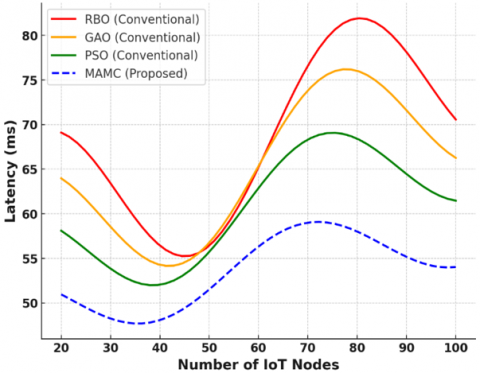
Figure 4 illustrates the variation of latency against the number of IoT nodes for different optimization schemes. Conventional schemes such as Rule-Based Optimisation (RBO), Genetic Algorithm Optimisation (GAO), and PSO register higher latency tendencies, especially under rising node counts. Of these, PSO registers relatively low latency than RBO and GAO but does not perform well under dense IoT conditions. Comparatively, the presented MAMC holds relatively low latency across the board, saving up to 18% under different network sizes. It thus demonstrates the ability of MAMC in addressing scalability and dynamic traffic conditions under 6G IoT, ensuring more efficient and reliable time-driven communication.
4.2 Energy efficiency performance comparison for conventional and proposed methods
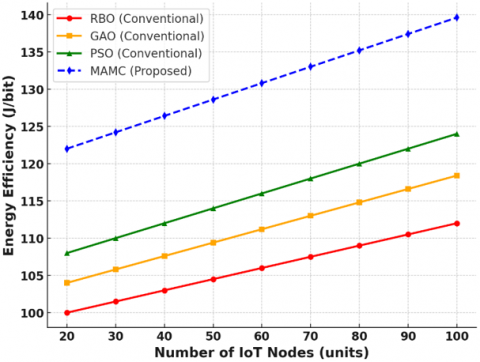
Figure 5 shows the evolution of energy efficiency against the number of IoT nodes for different optimization schemes. Traditional RBO, GAO, and PSO schemes display gradual increases in efficiency according to rising devices but have their growth limited. By contrast, the proposed herein approach, MAMC, always demonstrates the optimum performance, and energy efficiency increases by approximately 22% compared to traditional schemes.
Such an increase is due to intelligent allocation of resources and learning schemes utilized for adapting and suppressing wasteful energy consumption. It is verified by analysis that MAMC is optimal for optimizing energy efficiency for large-scale IoT configurations of 6G networks, and thus it is a promising candidate for energy-constrained applications such as sensor networks and edge-based IoT systems.
Table 1. Experimental setup for intelligent 6G IoT–Multi-Algorithm Machine Learning Classification (MAMC)
|
SI. No |
Parameter |
Description |
Value/Range |
|
1 |
Simulation Environment |
Network simulator with integrated ML models |
NS-3 + TensorFlow/PyTorch |
|
2 |
Internet of Things (IoT) Devices |
Number of heterogeneous IoT nodes |
100 devices |
|
3 |
Radio Access Technology |
Frequency band, modulation, coding |
140 GHz THz, QPSK/16QAM |
|
4 |
Channel Model |
Propagation environment |
3GPP 6G Urban Micro (UMi) |
|
5 |
Machine Learning (ML) Models |
Classifiers used in MAMC |
Support Vector Machine (SVM), Random Forest (RF), Extreme Gradient Boosting (XGB), Convolutional Neural Network – Long Short-Term Memory (CNN-LSTM) |
|
6 |
Performance Metrics |
KPIs measured for evaluation |
Latency, Energy, Throughput, BLER |
|
7 |
Traffic Classes |
Application scenarios |
Ultra-Reliable Low Latency Communication (URLLC), Enhanced Mobile Broadband (eMBB), Massive Machine Type Communication (mMTC) |
|
8 |
Edge/Cloud Integration |
Deployment environment |
Edge server + Core cloud |
|
9 |
Policy Generator Objectives |
Multi-objective function weights |
α = 0.4, β = 0.3, γ = 0.3 |
|
10 |
Iteration Duration |
Decision update interval |
100 ms |
Figure 4. Comparative analysis of latency with respect to number of IoT nodes
Figure 5. Comparative analysis of energy efficiency with number of IoT nodes
4.3 Throughput performance comparison for conventional and proposed methods
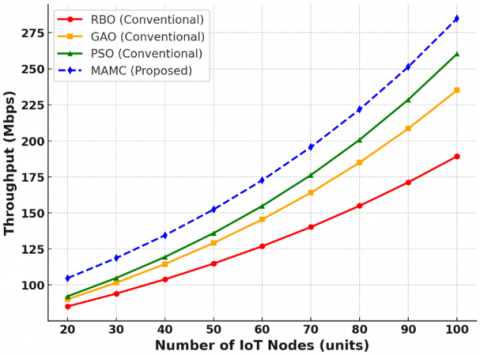
Figure 6 illustrates throughput performance for growing IoT node numbers under different optimization schemes. Conventional schemes of RBO, GAO, and PSO achieve moderate throughput gains but exhibit scalability limitations under rising device density. Conversely, the new method of MAMC achieves higher throughput, of approximately 15%, than GAO and PSO. Such a gain is through adaptive resource allocation, intelligent scheduling, and classifier-based optimization and allows MAMC to exploit spectrum and network resources efficiently under intensive traffic situations. We conclude from analysis that MAMC provides superior scalability and robustness and, thus, is a good candidate for large-scale 6G IoT scenarios requiring reliable and fast data transmission.
Figure 6. Comparative analysis of throughput with number of IoT nodes
4.4 Overall performance improvement analysis
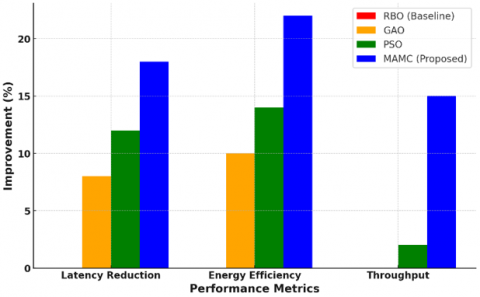
Figure 7 gives a general summary of performance improvements gained through different optimization schemes in three key metrics: reduced latency, energy efficiency, and throughput increase. Classical schemes, such as GAO and PSO, exhibit stepwise improvements over baseline RBO, but few gains, particularly in throughput performance, remain over-all. By comparison, the new framework of MAMC achieves the best gains, up to 18% reduced latency, up to 22% energy efficiency, and up to 15% throughput increase, respectively. From this general summary, the advantage of MAMC in jointly optimizing multiple performance aspects is manifested, validating its use in large-scale 6G IoT networks, where reduced latency, enhanced energy efficiency, and superior throughput become overwhelming needs.
Figure 7. Comparative analysis of latency reduction, energy efficiency, and throughput improvements
Optimisation of the intelligent 6G IoT configuration through MAMC was superior in its performance by lowering latency up to 18%, increasing energy efficiency up to 22%, and attaining 15% more throughput than conventional practices such as RBO, GAO, and PSO. By adopting multiple classifiers and adaptive policy generation, the framework manages effectively the principal trade-offs of low delay, high reliability, and efficient resource usage, pivotal for large-scale 6G IoT use cases. Its resilience under heterogeneous devices, dynamic workloads, and fluctuating traffic demand holds promise for use in smart cities, healthcare, autonomous motion, and industrial automation. Future advances of the framework will arise through incorporation of reinforcement learning-based continuous self-optimisation, federated learning-based distributed privacy-respecting intelligence, and quantum-inspired optimisation for tackling massively large decision spaces. Real-world testbed experiences, security-sensitive edge-cloud cooperation, and cross-domain interoperability will widen its scope and applicability, securing the future of MAMC as a scalable, intelligent, and future-proof solution for next-generation IoT infrastructure. This work is not intended as a survey of 6G technologies but as a solution-oriented optimization framework that concretely exploits 6G capabilities through multi-algorithm learning.
The authors would like to express their sincere gratitude to Sri Jayachamarajendra College of Engineering, JSS Science and Technology University, Mysuru, Karnataka, India, for providing the research facilities and support to carry out this work. The authors also acknowledge the encouragement and guidance received from faculty mentors and peers throughout the research process.
|
KPI |
Key Performance Indicator |
|
RAN |
Radio Access Network |
|
IoT |
Internet of Things |
|
MAMC |
Multi-Algorithm Machine Learning Classification |
|
SVM |
Support Vector Machine |
|
RF |
Random Forest |
|
XGB |
Extreme Gradient Boosting |
|
CNN-LSTM |
Convolutional Neural Network – Long Short-Term Memory |
|
URLLC |
Ultra-Reliable Low Latency Communication |
|
eMBB |
Enhanced Mobile Broadband |
|
mMTC |
Massive Machine Type Communication |
|
MEC |
Mobile Edge Computing |
|
Greek symbols |
|
|
α |
Trade-off weight for latency minimization |
|
β |
Trade-off weight for energy optimization / Exploration coefficient |
|
γ |
Trade-off weight for throughput maximization |
|
μ |
Estimated reward / Mean value used in normalization |
|
σ |
Standard deviation used for scaling |
|
ϕ(·) |
Feature extraction and mapping function |
|
Subscripts |
|
|
t |
Time index |
|
i |
Classifier index |
|
h |
Model index (classifier in meta-selection) |
|
u |
Configuration profile index |
|
k |
Constraint function index |
[1] Etchiali, A., Ferhi, W., M’hamedi, M., Hadjila, M., Merzoug, M., Hachemi, M.H. (2025). Darknet traffic and application classification using Heterogeneous Graph Neural Network. Ingénierie des Systèmes d’Information, 30(10): 2571-2581. https://doi.org/10.18280/isi.301005
[2] Silvanskaya, G., Tytarchuk, Y., Kravchuk, Y., Myronov, O., Musiiovska, M. (2025). Artificial intelligence in automated information system design and optimization: A systematic review. Ingénierie des Systèmes d’Information, 30(8): 2137-2148. https://doi.org/10.18280/isi.300819
[3] Marinello Filho, J.C., Abrão, T., Hossain, E., Mezghani, A. (2025). Grant-free random access for RIS-aided machine-type communication. IEEE Transactions on Wireless Communications, 24(9): 7794-7808. https://doi.org/10.1109/TWC.2025.3562959
[4] Chi, H.R., Radwan, A. (2023). Quality of things’ experience for 6G artificial intelligent Internet of Things with IEEE P2668. IEEE Communications Magazine, 61(6): 58-64. https://doi.org/10.1109/MCOM.001.2200498
[5] Tariq, M., Ahmad, S., Poor, H.V. (2024). Dynamic resource allocation in IoT enhanced by digital twins and intelligent reflecting surfaces. IEEE Internet of Things Journal, 11(16): 27295-27302. https://doi.org/10.1109/JIOT.2024.3398413
[6] Lin, J.C.W., Srivastava, G., Zhang, Y.Y., Djenouri, Y., Aloqaily, M. (2021). Privacy-preserving multiobjective sanitization model in 6G IoT environments. IEEE Internet of Things Journal, 8(7): 5340-5349. https://doi.org/10.1109/JIOT.2020.3032896
[7] Zhang, J.X., Xu, X.D., Zhang, K.J., Han, S.J., Tao, X.F., Zhang, P. (2022). Learning-based flexible cross-layer optimization for ultrareliable and low-latency applications in IoT scenarios. IEEE Internet of Things Journal, 9(16): 14629-14643. https://doi.org/10.1109/JIOT.2021.3076230
[8] Kellermann, T., Centelles, R.P., Calveras, A. (2025). UE context dissemination in sparse LEO constellations for 5G/6G cellular IoT in store and forward operation. IEEE Open Journal of the Communications Society, 6: 2539-2555. https://doi.org/10.1109/OJCOMS.2025.3556318
[9] Elgarhy, O., Reggiani, L., Alam, M.M., Zoha, A., Ahmad, R., Kuusik, A. (2024). Energy efficiency and latency optimization for IoT URLLC and mMTC use cases. IEEE Access, 12: 23132-23148. https://doi.org/10.1109/ACCESS.2024.3364349
[10] Zhou, Y., Jin, Z.Q., Shi, H.G., Shi, L., Lu, N. (2024). Flying IRS: QoE-driven trajectory optimization and resource allocation based on adaptive deployment for WPCNs in 6G IoT. IEEE Internet of Things Journal, 11(5): 9031-9046. https://doi.org/10.1109/JIOT.2023.3322266
[11] Muhammad, A., Elhattab, M., Arfaoui, M.A., Assi, C. (2023). Optimizing information freshness in RIS-assisted non-orthogonal multiple access-based IoT networks. IEEE Networking Letters, 5(2): 71-75. https://doi.org/10.1109/LNET.2023.3243605
[12] Khan, A.U., Abbas, G., Abbas, Z.H., Bilal, M., Shah, S.C., Song, H. (2022). Reliability analysis of cognitive radio networks with reserved spectrum for 6G-IoT. IEEE Transactions on Network and Service Management, 19(3): 2726-2737. https://doi.org/10.1109/TNSM.2022.3168669
[13] Kanani, P., Omidi, M.J., Modarres-Hashemi, M., Yanikomeroglu, H. (2025). HAPS-ISAC: Enhancing sensing and communication in 6G networks with advanced MIMO beamforming. IEEE Open Journal of the Communications Society, 6: 5988-6004. https://doi.org/10.1109/OJCOMS.2025.3587077
[14] Tang, X.R., Xu, Y.N., Huang, L.Y., Ning, Q., Ullah, H. (2024). A multiarea on-demand classification constellation design for Satellite IoT. IEEE Internet of Things Journal, 11(13): 23889-23905. https://doi.org/10.1109/JIOT.2024.3386766
[15] Lee, W., Choi, S.I., Jang, Y.H., Lee, S.H. (2024). Distributed hybrid NOMA/OMA user allocation for wireless IoT networks. IEEE Internet of Things Journal, 11(3): 5316-5330. https://doi.org/10.1109/JIOT.2023.3306877
[16] Tu, Z.X., Chen, H., Li, N.X., Long, R.Z., Liang, Y.C. (2025). Active RIS-empowered backscatter communication based on single-carrier frequency-domain equalization. IEEE Wireless Communications Letters, 14(7): 2104-2108. https://doi.org/10.1109/LWC.2025.3563453
[17] Ahmad, I., Gimhana, S., Harjula, E. (2025). Adaptive trust architecture for secure IoT communication in 6G. IEEE Networking Letters. 7(2): 113-116. https://doi.org/10.1109/LNET.2025.3566909
[18] Yue, M., Peng, Y.Y., Ye, R.L., Al-Hazemi, F., Mirza, M.M., Lee, J. (2025). Integration of STAR-RIS with index modulation: Novel attraction solutions for IoT applications. IEEE Internet of Things Journal, 12(14): 27084-27096. https://doi.org/10.1109/JIOT.2025.3561939
[19] Malik, U.M., Javed, M.A., Zeadally, S., ul Islam, S. (2021). Energy-efficient fog computing for 6G-enabled massive IoT: Recent trends and future opportunities. IEEE Internet of Things Journal, 9(16): 14572-14594. https://doi.org/10.1109/JIOT.2021.3068056
[20] Mahesh, H.B., Ahammed, A., Usha, S.M., Mallikarjunaswamy, S. (2025). Optimized efficiency of IoT-based next generation smart wireless sensor networks using a machine learning algorithm. International Journal of Computing and Digital Systems, 18(1): 1-10.
[21] Wu, M., Guo, K.F., Li, X.W., Nauman, A., An, K., Wang, J. (2024). Optimization design in RIS-assisted integrated Satellite-UAV-Served 6G IoT: A deep reinforcement learning approach. IEEE Internet of Things Magazine, 7(1): 12-18. https://doi.org/10.1109/IOTM.001.2300111
[22] Poornima, M., Anitha, N., Mallikarjuna, S., Umashankar, L. (2025). An efficient Internet of Things based intrusion detection and optimization algorithm for smart networks. International Journal of Computing and Digital Systems, 17(1): 1-12.
[23] Kunz, A., Baskaran, S.B.M., Alexandropoulos, G.C. (2025). Lightweight security for ambient-powered programmable reflections with reconfigurable intelligent surfaces. IEEE Communications Standards Magazine, 9(4): 168-174. https://doi.org/10.1109/MCOMSTD.2025.3573490
[24] S, S., D, H., Raikar, G., S, J., D Souza, R., C, R.R. (2025). Securing pharmaceutical supply chains using AI-integrated blockchain technology. In 2025 International Conference on Innovations in Intelligent Systems: Advancements in Computing, Communication, and Cybersecurity (ISAC3), Bhubaneswar, India, pp. 1-6. https://doi.org/10.1109/ISAC364032.2025.11156788
[25] S, S., S, H., G, N., Prasad, D.G., H S, S., R, J. (2025). Smart object detection and audio feedback system for the visually impaired. In 2025 International Conference on Innovations in Intelligent Systems: Advancements in Computing, Communication, and Cybersecurity (ISAC3), Bhubaneswar, India, pp. 1-6. https://doi.org/10.1109/ISAC364032.2025.11156667
[26] Ferrag, M.A., Friha, O., Kantarci, B., Tihanyi, N., Cordeiro, L., Debbah, M., Hamouda, D., Al-Hawawreh, M., Choo, K.K.R. (2023). Edge learning for 6G-enabled Internet of Things: A comprehensive survey of vulnerabilities, datasets, and defenses. IEEE Communications Surveys & Tutorials, 25(4): 2654-2713. https://doi.org/10.1109/COMST.2023.3317242
[27] S, S., Patil, A.R., M, G.A., Juturu, A., Pattankar, V.V., S, K. (2025). Secure dual-layer access control using visual cryptography and LSB watermarking. In 2025 International Conference on Innovations in Intelligent Systems: Advancements in Computing, Communication, and Cybersecurity (ISAC3), Bhubaneswar, India, pp. 1-6. https://doi.org/10.1109/ISAC364032.2025.11156269
[28] Wu, S., Chen, N., Xiao, A.L., Jia, H.G., Jiang, C.X., Zhang, P.Y. (2024). AI-enabled deployment automation for 6G space-air-ground integrated networks: Challenges, design, and outlook. IEEE Network, 38(6): 219-226. https://doi.org/10.1109/MNET.2024.3368753
[29] Sheela, S., Latha, A.P., Jyothi, S., Vidyarani, H.J., Komala, M., Sharmila, N. (2024). Enhancing stockpile management through deep learning with a focus on demand forecasting and inventory optimization. In 2024 International Conference on Recent Advances in Science and Engineering Technology (ICRASET), B G Nagara, Mandya, India, pp. 1-6. https://doi.org/10.1109/ICRASET63057.2024.10895608
[30] Tin, P.T., Van Nguyen, M.S., Tran, D.H., Nguyen, C.T., Chatzinotas, S., Ding, Z. (2024). Performance analysis of user pairing for active RIS-enabled cooperative NOMA in 6G cognitive radio networks. IEEE Internet of Things Journal, 11(23): 37675-37692. https://doi.org/10.1109/JIOT.2024.3439377
[31] de Souza, P.H.C., Khazaee, M., Mendes, L.L. (2025). Resource-efficient configuration of RIS-aided communication systems under discrete phase-shifts and user mobility. IEEE Transactions on Communications, 73(1): 145-157. https://doi.org/10.1109/TCOMM.2024.3432690
[32] Xu, H.B., Mo, M.H., Chen, Z., Wang, J. (2025). Cognitive backscatter communication: Symbiotic radio systems assisted by reconfigurable intelligent surface. IEEE Internet of Things Magazine, 8(2): 62-68. https://doi.org/10.1109/IOTM.001.2400235
[33] Fang, X.R., Feng, W., Chen, Y.F., Ge, N., Zhang, Y. (2023). Joint communication and sensing toward 6G: Models and potential of using MIMO. IEEE Internet of Things Journal, 10(5): 4093-4116. https://doi.org/10.1109/JIOT.2022.3227215
[34] Muhammad, A., Elhattab, M., Arfaoui, M.A., Assi, C. (2024). Optimizing age of information in RIS-empowered uplink cooperative NOMA networks. IEEE Transactions on Network and Service Management, 21(1): 897-907. https://doi.org/10.1109/TNSM.2023.3306179
[35] Roy, B.G., Roy, D.G., Dutta, P., Khan, S.B., Asiri, F., Ayadi, M. (2025). Quality of service-aware 6G-Enabled NB-IoT for health monitoring in long distance high-speed trains. IEEE Transactions on Consumer Electronics. 71(1): 1136-1147. https://doi.org/10.1109/TCE.2025.3540197
[36] Xiao, Y., Tegos, S.A., Huang, S.C., Diamantoulakis, P.D., Tyrovolas, D., Ma, Z. (2025). RIS-assisted multi-cell over-the-air computation. IEEE Transactions on Wireless Communications, 24(9): 7437-7452. https://doi.org/10.1109/TWC.2025.3560708
[37] Ma, R.Y., Tang, J., Zhang, X.Y., Wong, K.K., Chambers, J.A. (2023). Energy-efficiency optimization for mutual-coupling-aware wireless communication system based on RIS-enhanced SWIPT. IEEE Internet of Things Journal, 10(22): 19399-19414. https://doi.org/10.1109/JIOT.2023.3241168
[38] Liwen, Z., Qamar, F., Liaqat, M., Nour Hindia, M., Akram Zainol Ariffin, K. (2024). Toward efficient 6G IoT networks: A perspective on resource optimization strategies, challenges, and future directions. IEEE Access, 12: 76606-76633. https://doi.org/10.1109/ACCESS.2024.3405487
[39] Khoshafa, M.H., Maraqa, O., Moualeu, J.M., Aboagye, S., Ngatched, T.M.N., H, M. (2025). RIS-assisted physical layer security in emerging RF and optical wireless communications systems: A comprehensive survey. IEEE Communications Surveys & Tutorials, 27(4): 2156-2203. https://doi.org/10.1109/COMST.2024.3487112
[40] Hao, L., Vuyyuru, S.K.R., Tretyakov, S.A., Rupp, M., Valkonen, R. (2025). Analysis of scalable electromagnetically-modeled anomalous reflectors through ray tracing and measurements. IEEE Open Journal of Antennas and Propagation, 6(5): 1609-1619. https://doi.org/10.1109/OJAP.2025.3597865
[41] Sikri, A., Mathur, A., Kaddoum, G. (2022). Signal space diversity-based distributed RIS-aided Dual-Hop mixed RF-FSO systems. IEEE Communications Letters, 26(5): 1066-1070. https://doi.org/10.1109/LCOMM.2022.3155442
[42] Li, P., Guo, S.T., Zeng, Y., Liu, G.Y. (2025). Joint optimization of VNF assignment and SFC routing for robust and real-time symbiotic IoT services. IEEE Internet of Things Journal, 12(20): 41365-41377. https://doi.org/10.1109/JIOT.2025.3589522
[43] Kim, M., Lee, H., Hwang, S., Debbah, M., Lee, I. (2024). Cooperative multiagent deep reinforcement learning methods for UAV-Aided Mobile Edge Computing networks. IEEE Internet of Things Journal, 11(23): 38040-38053. https://doi.org/10.1109/JIOT.2024.3447090
[44] Yu, H., Taleb, T., Zhang, J.W. (2023). Deep reinforcement learning-based deterministic routing and scheduling for mixed-criticality flows. IEEE Transactions on Industrial Informatics, 19(8): 8806-8816. https://doi.org/10.1109/TII.2022.3222314
[45] Xia, Y.Z., Deng, X.J., Yi, L.Z., Yang, L.T., Tang, X., Zhu, C.L., Tian, Z.P. (2022). AI-driven and MEC-empowered confident information coverage hole recovery in 6G-enabled IoT. IEEE Transactions on Network Science and Engineering, 10(3): 1256-1269. https://doi.org/10.1109/TNSE.2022.3154760
[46] Lee, H., Lee, S.H., Quek, T.Q.S. (2022). MOSAIC: Multiobjective optimization strategy for AI-Aided Internet of Things communications. IEEE Internet of Things Journal, 9(17): 15657-15673. https://doi.org/10.1109/JIOT.2022.3150747
[47] Guo, F.X., Yu, F.R., Zhang, H., Li, X., Ji, H., Leung, V.C. (2021). Enabling massive IoT toward 6G: A comprehensive survey. IEEE Internet of Things Journal, 8(15): 11891-11915. https://doi.org/10.1109/JIOT.2021.3063686
[48] K N, V., S, M., N, S. (2025). Fault tolerance in fog computing with architectures scheduling and optimization for IoT. In 2025 International Conference on Intelligent and Cloud Computing (ICoICC), Bhubaneswar, India, pp. 1-5.
[49] Jyothi, H., Komala, M., Mallikarjunaswamy, S. (2024). A comprehensive survey on technologies in video-based event detection and recognition using machine learning and deep learning techniques. In 2024 Second International Conference on Networks, Multimedia and Information Technology (NMITCON), Bengaluru, India, pp. 1-5. https://doi.org/10.1109/NMITCON62075.2024.10698959
[50] Sukumar, P.G., Krishnaiah, M., Velluri, R., Satish, P., Nagaraju, S., Puttaswamy, N.G., Srikantaswamy, M. (2024). An efficient adaptive reconfigurable routing protocol for optimized data packet distribution in network on chips. International Journal of Electrical and Computer Engineering (IJECE), 14(1): 305-314. https://doi.org/10.11591/ijece.v14i1.pp305-314
[51] Kosmatos, E., Matrakidis, C., Uzunidis, D., Stavdas, A., Horlitz, S., Pfeiffer, T., Lord, A., Riccardi, E. (2023). Real-time orchestration of QoS-aware end-to-end slices across a converged Metro and Access network exploiting burst-mode technology. Journal of Optical Communications and Networking, 15(1): 1-15. https://doi.org/10.1364/JOCN.464107
[52] Sheela, S., Jyothi, S., Latha, A.P., Ganesh, H.J., Komala, M., Kumar, C.N. (2024). Automated land cover classification in urban environments with deep learning-based semantic segmentation. In 2024 International Conference on Recent Advances in Science and Engineering Technology (ICRASET), B G Nagara, Mandya, India, pp. 1-7. https://doi.org/10.1109/ICRASET63057.2024.10895689
[53] S, P., S, M., N, S. (2023). Image region driven prior selection for image deblurring. Multimedia Tools and Applications, 82: 24181-24202. https://doi.org/10.1007/s11042-023-14335-y
[54] Rekha, V., Sharmila, N., Komala, M., Pavithra, G.S., Mallikarjunaswamy, S., Naveen, K.B. (2024). Hybrid edge-cloud approach for renewable energy management using deep learning with predictive analytics. In 2024 International Conference on Recent Advances in Science and Engineering Technology (ICRASET), B G Nagara, Mandya, India, pp. 1-7. https://doi.org/10.1109/ICRASET63057.2024.10895726
[55] S, M., M D, S., S, R., Subramanian, A.K., V, V.K., Swamy, S.M. (2024). Convolutional neural network-based image tamper detection with error level analysis. In 2024 International Conference on Intelligent and Innovative Technologies in Computing, Electrical and Electronics (IITCEE), Bangalore, India, pp. 1-7. https://doi.org/10.1109/IITCEE59897.2024.10467563