Ikrar Adinata Arin* | Dina Fitria Murad | Harco Leslie Hendric Spits Warnars | Meyliana
© 2025 The authors. This article is published by IIETA and is licensed under the CC BY 4.0 license (http://creativecommons.org/licenses/by/4.0/).
OPEN ACCESS
This study demonstrates significant operational improvements through a novel digital twin-integrated Field Service Management system, achieving 30% reduction in task completion time, 30% increase in first-time fix rates, and 50% decrease in average response time to incidents in emergency maintenance requirements in fiber optic network infrastructure development. Through rigorous application of Design Science Research methodology and extensive stakeholder engagement with 15 field technicians, 3 service managers, and 3 technical experts, we empirically validated our integrated model across multiple telecommunications operators in Indonesia. Unlike previous implementations, our empirically validated approach, which uses digital twin technology in service management, pioneer’s real-time knowledge transfer mechanisms through augmented reality interfaces while establishing a comprehensive framework for developing telecommunications infrastructure. The quantifiable performance improvements and industry-validated implementation guidance provide both theoretical foundations and practical pathways for digital transformation in field service operations.
field service management, model, digital twin, fiber optic network infrastructure, design science research
The digital transformation landscape has experienced remarkable growth, radically altering company operations and communication methods. As we advance toward the attainment of the United Nations' Sustainable Development Goals (SDGs) by 2030, the growing interconnection of global business interactions has resulted in the widespread use of information technology systems and internet-based services [1]. Contemporary internet infrastructure is fundamental to global connection, enabling uninterrupted data transmission between individuals and machines through diverse electronic devices over wired and wireless networks [2], altering essential communication modalities, cooperation, and exchanges [3].
The establishment of resilient digital infrastructure, including hardware, software, networks, and data centers, is essential for efficient internet access and use. Inadequate digital infrastructure renders significant internet connectivity impractical [4]. The telecommunications industry has been a leader in embracing technology advancements and providing improved services to customers, enterprises, and industries, developing outcome-driven business models [5].
The convergence of several technical advancements, including 5G, fiber optics, artificial intelligence (AI), machine learning (ML), Internet of Things (IoT), augmented reality (AR), virtual reality (VR), and edge computing, has fostered an atmosphere of extensive technology adoption [6]. This digital transformation emphasizes the adoption of advanced technologies, specifically in broadband internet infrastructure, wireless network implementation, and digital platform creation. The digitalization of infrastructure seeks to improve organizational efficiency, productivity, and customer service delivery, emulating successful models identified in the industrial industry [7]. The predominant trend influencing the telecommunications sector is the extensive deployment of 5G networks [8]. A major problem confronting telecommunications firms is the swift growth and enhancement of fibre optic networks to satisfy the growing demands for accelerated internet speeds and reduced latency.
The development of fiber optic infrastructure in Indonesia has seen significant progress in recent years. Based on 6wresearch [9], in 2023, Lintasarta, a leading ICT solutions provider, aimed to expand its fiber optic network to nearly 400 cities, up from around 200 cities the previous year, with a total network length reaching almost 16,000 kilometers across various regions of Indonesia. Additionally, in 2024, Centratama Group successfully completed the construction of over 2,500 kilometers of fiber optic cable, connecting more than 1,000 locations across 13 cities in Indonesia. The establishment of fiber optic networks as essential infrastructure for high-speed internet services is crucial in meeting increasing connection demands [10].
Notwithstanding technological progress, intricate obstacles in Field Service Management (FSM) have arisen as significant issues necessitating thorough answers. FSM includes the planning, execution, and oversight of field operations critical for service provision. This includes resource management, equipment maintenance, and service quality assessment. Contemporary FSM systems offer enterprises comprehensive solutions for facilitating field operations, encompassing technician oversight, equipment organization, and efficient task execution [11]. Current trends in FSM highlight the integration of technology, especially cloud-based systems and mobile devices, to improve efficiency and communication [12]. Traditional FSM approaches in telecommunications infrastructure development face critical efficiency challenges, with first-time fix rates averaging only 65% and mean-time-to-repair exceeding 8.7 hours for fiber optic network issues [13]. These inefficiencies result in approximately $247 million in annual operational losses for telecommunications providers in Indonesia alone. Organizations increasingly utilize analytical procedures and data to enhance performance measures, such as first-time fix rates and customer satisfaction [14].
Digital twin represents a digital replication of an object, system, process, or service that precisely mirrors its real-time state for a specific purpose, continuously maintaining awareness of the physical world through real-time data exchanges and updates supported by extensive data storage capacities [15]. While digital twin applications have demonstrated success in manufacturing and smart city contexts, their implementation in field service operations for telecommunications infrastructure remains largely conceptual. Previous studies [16, 17] have explored digital twin applications in equipment maintenance, but none have developed a comprehensive architectural framework specifically addressing the unique challenges of fiber optic network deployment, particularly in geographically complex environments like Indonesia.
Another trend is the adoption of predictive maintenance, wherein data is utilized to foresee and avert equipment failure prior to its occurrence [18]. This method can decrease downtime and expenses related to unforeseen repairs. Remote monitoring and automation significantly contribute to this development [19]. An important advancement in this field is the application of digital twin technology in FSM. Arin et al. [20] highlight its potential to revolutionize training methodologies, problem-solving capabilities, and communication between field technicians and support staff. A notable deficiency is seen in the literature concerning business process models tailored to the construction of fiber optic network infrastructure in Indonesia.
To address these challenges and opportunities, this study poses seven interconnected research questions:
RQ1: What is the current state of the business process in field service management for fiber optic network infrastructure development in Indonesia?
Upon thoroughly comprehending the business processes inherent in fiber optic infrastructure network development activities, validating these processes with relevant stakeholders is imperative. This validation is essential for producing feasible technological recommendations, such as the implementation of digital twins, which can be seamlessly integrated into future operations. Therefore, this work aims to tackle the subsequent research inquiries:
RQ2: What are the critical success factors and components for the implementation of digital twin technology in the FSM process of fiber optic network infrastructure development?
RQ3: How can a digital twin-based FSM enhance the efficiency and effectiveness of field service operations in fiber optic network infrastructure development in Indonesia?
RQ4: What is the proposed model for integrating digital twin technology into FSM processes?
RQ5: How does the proposed model address the identified critical success factors and mitigate the challenges associated with implementing a digital twin-based FSM process?
The business process models generated from this research necessitates thorough validation. The validation process requires the participation of several stakeholders to guarantee the acceptance and practicality of the proposed business processes among all pertinent parties. Moreover, it is crucial to evaluate the intricacy of each business process model to ascertain its clarity and any implementation difficulties.
RQ6: What are the potential advantages and effects of implementing a digital twin-based FSM system on customer happiness, operational efficiency, and overall performance of the organization and field technicians in Indonesia's fiber optic network infrastructure growth?
RQ7: What challenges and barriers are associated with adopting and implementing a digital twin-based FSM of fiber optic network infrastructure development in Indonesia?
Figure 1. Thematic picture of this research
This research makes three significant contributions to the field: (1) development of a novel three-layer digital twin architecture specifically designed for field service management in telecommunications; (2) empirical validation through implementation with multiple telecommunications operators in Indonesia, providing quantifiable performance metrics; and (3) creation of a generalizable implementation framework that can be adapted across various service-oriented sectors requiring field operations management. This study will examine the relationships between these topics and their broader consequences, as depicted in Figure 1.
The objective of this section is to provide a comprehensive grasp of the theory and concept that is associated with the primary theme that was investigated by the author. This will be accomplished by providing an explanation of numerous components of the theory, which are as follows:
2.1 Internet evolution and the emergence of fiber optic and 5G technologies
The number of global internet users has increased significantly. This trend is expected to continue between 2022 and 2028, with an increase of around 1.1 billion users, or 21.3% of total users [21]. The Indonesian Internet Service Providers Association (APJII) announced that the number of internet users in Indonesia in 2024 will reach 221,563,479 people out of a total population of 278,696,200 people in Indonesia in 2023 [22]. From the results of the 2024 Indonesian internet penetration survey released by APJII, Indonesia's internet penetration rate reached 79.5%. Meanwhile, as of 2024, the estimated number of internet users worldwide was 5.5 billion, up from 5.3 billion in the previous year. This share represents 68 percent of the global population [23]. The pandemic has prompted several individuals to utilize technology in both personal and professional spheres, resulting in enhanced internet accessibility nationwide. Firmansyah [24] indicates that merely 24.36 percent of households in Indonesia utilize cable or fixed broadband internet. This indicates a considerable digital divide, as 75.64 percent of households lack fixed broadband access. This estimate indicates that the overall number of internet users will attain remarkable figures. The dilemma appears more significant as the Internet has become a vital infrastructure impacting industrial development and daily existence [25].
Based on the results of the B20 Indonesia 2022 meeting [26], which represents the business interests of G20 members, several recommendations have been issued, one of which is the Universal Connectivity Drive.
This means that countries must ensure that universal connectivity will be available, encouraging digital economic growth and providing better services for their citizens.
In addition, this can prepare the existing business community to continue playing an important role in shaping global digitalization as a whole [27]. Indonesia's internet connectivity infrastructure continues to encounter numerous challenges. Various factors, such as geographic location, cost of access, or ignorance about the benefits of high-speed broadband connectivity, can cause this discrepancy. Indonesian internet users need high-speed internet services [28]. Conversely, numerous people in Indonesia may depend on cellular data connectivity for internet access. Nonetheless, this may provide increased flexibility, but mobile connectivity may exhibit inferior quality and speed compared to fixed broadband connectivity.
Fiber optics and 5G are interconnected technologies frequently utilized in telecommunications networks [29]. Fiber optic technology delivers high-speed internet connectivity by optical fiber as the transmission medium. 5G is the fifth generation of cellular technology, offering wireless network services that are superior in speed and responsiveness relative to earlier generations [30]. Optical fiber is often a supporting technology in building 5G networks because it has high transmission speeds and can transmit signals over longer distances than copper cables. According to the study [31], fiber optics is a technology that currently provides a large bandwidth capacity, which is needed by 5G networks, which require a large capacity to accommodate high amounts of traffic.
Telecom corporations are already and will persist in making significant investments in this technology due to its ability to provide quicker speeds, reduced latency, improved availability, and more capacity on mobile networks. These features are crucial due to the increasing reliance on mobile devices and the growing needs of users. The research [32] reported that the global market for 5G services was valued at \$6.6 billion in 2021 and is projected to increase to \$66.5 billion by 2028. Telecommunications businesses will persist in utilizing fiber optics to bolster broadband internet and long-distance backbone networks as 5G becomes more widespread. The global fiber optic cable market was valued at \$9.2 billion in 2020 and is anticipated to reach \$20.8 billion by 2026, according to the research [33]. The escalating demand for high-speed fiber optic internet is primarily fueled by the rising necessity for rapid home internet access, attributed to the transition of millions of employees to remote work. Secondly, suppose fiber optics deliver high-speed internet to a customer's location (e.g., home, business, factory). In that case, weak signal strength may occur indoors, resulting in a weak internet signal spreading throughout the building. Building owners and homeowners can address this issue by utilizing structured cabling solutions offered by telecommunications companies or their installers [34]. Fiber optic cables can be installed within the building to transmit internet signals.
Establishing a fiber optic network is especially difficult in the "last mile" due to the higher expenditure needed relative to wireless networks. The demand for high-speed internet services utilizing fiber optics is increasing, especially in rural areas [35]. An extensive fiber optic infrastructure can be a strong basis for constructing more effective 5G networks. Conversely, 4G technology is not yet fully utilized worldwide, particularly in underdeveloped nations. 5G has been introduced and implemented in many locations worldwide. Economic and political issues remain significant impediments in speeding the spread of 5G in some regions. The review indicates that establishing fiber optic infrastructure is essential for constructing a 5G network in a country [36].
An examination of the general process of fiber optic network infrastructure, as proposed by the study [37] reveals that fiber optic network infrastructure design encompasses a series of precise steps essential for the efficient establishment and functioning of a fiber optic network. This procedure entails defining specific communication systems for transmission via the network, strategically arranging geographical layouts, deciding on appropriate transmission equipment, and constructing the fibre network infrastructure essential for system functionality. Several studies [38-40] have advanced the discussion on the construction of fiber optic network infrastructure.
2.2 Field service management: Principles and best practices
Field service management (FSM) is a comprehensive approach to coordinating field service operations through mobile labor; essentially, i This transformation, validated t involves the optimal management of technician and staff availability on-site [11]. This procedure is typically executed by firms that provide services and require management of operations such as system or equipment installation or repair [41]. FSM is frequently described as a systematic method for organizing and coordinating corporate resources at the client's site rather than at the company's physical premises. FSM encompasses scheduling, tracking, and delivering services in the field, frequently involving overseeing human resources, vehicles, and inventory [42]. The tasks associated with FSM encompass:
Field service is continually advancing, necessitating that firms implement more advanced FSM solutions [43] to optimize resource management and enhance productivity. Global enterprises are swiftly transitioning to entities capable of managing their IT services and assets. Organizations utilizing FSM application systems have experienced a 47% enhancement in daily productivity, indicating a likely increase in its future popularity. For most businesses, FSM is very beneficial because it allows them to:
In the realm of information technology, FSM frequently pertains to the administration of installation, maintenance, and repair of hardware and software. In the telecommunications sector, FSM may encompass the maintenance of fiber optic cable network infrastructure [44]. FSM can employ technology like GPS tracking systems, mobile devices, and cloud-based software, including digital twins, to enhance communication and coordination between field technicians and operations centers at headquarters [45]. This technology enables firms to monitor technicians' performance in real time, optimize operational routes and schedules, collaborate with technicians [46], and swiftly address any modifications or concerns that may occur with telecommunications equipment in the field.
Numerous prior literature assessments on the field service management theme highlight the deficiencies in research on this subject [47] and examine the implementation of field service management within an industrial framework; nonetheless, the literature addressing this subject remains sparse. Simultaneously, a study [48] emphasizes the degree to which industries may oversee their assets, particularly devices situated at client sites. The facets of asset management examined encompass ordering, installing, repairing, and/or replacing an asset, analyzing asset performance, predictive asset maintenance, and similar activities [49], conduct a comparative assessment of the functionalities of various existing FSM applications. The focus is on monitoring firm assets distributed across multiple client locations, with the device installation occurring initially prior to further periodic monitoring.
Alongside the deployment of field service management, enhancing field technician expertise can be accomplished by using Augmented Reality (AR) devices [50, 51]. Numerous studies [52] highlight industries that utilize virtual reality, augmented reality, and wearable technology to improve the daily productivity and job satisfaction of mobile service people. Nonetheless, the current literature on this topic is limited, underscoring the need for further research to improve understanding and progress in the field of service management.
2.3 Digital twin technology in FSM process
The rapid advancement of information and communication technology is causing a substantial transformation in the sector, replacing analog, mechanical, and electronic technologies with digital options. This transformation, validated through our multi-study research program, stems from proven digital twin implementations reshaping telecommunications operations [53]. As organizations embrace digital transformation, they are advancing towards the fourth industrial revolution, known as Industry 4.0. This revolution represents a picture of a society that produces goods and services with considerable automation [54]. In various sectors, rising digital technologies such as digital twins, the Internet of Things (IoT), virtual reality, and artificial intelligence have offered novel approaches to service delivery. The notion of digital twins has attracted considerable interest in these technologies [55].
Figure 2. Digital shadow and digital twin visualization
The concept of a digital twin was initially proposed by Grieves in 2002 as a foundational model for "product lifecycle management" [56]. It signifies a digital representation of an object, system, process, or service that accurately reflects its real-time state for a specific purpose. A digital twin maintains awareness of the physical world by always exchanging and updating descriptive data via real-time data uploads and extensive data storage capacities. It obtains real-time updates from its physical counterpart and other proximate digital twins [15]. Digital twin technology is widely acknowledged for its capacity to link the physical and virtual domains. The global digital twin market is expected to see significant expansion soon, driven by the increasing adoption of IoT and Big Data. Organizations acknowledge the necessity of ensuring cost-efficient operations, optimizing processes, and minimizing time to market, thereby facilitating market expansion [57].
Moreover, virtual and augmented reality innovations will persist in influencing the development of digital twins, propelling the market's sustained expansion [58].
Digital twin technology facilitates the development of a virtual representation of a physical asset, component, product, process, or system/unit. It utilizes data obtained from various sensors within the system or asset, integrating technologies such as IoT, IIoT, AI, AR/VR, Machine Learning, and Big Data for analysis, and generates informed forecasts regarding the future of the process. Today’s digital 3D models and systems differ significantly from digital twins in many ways. A digital shadow is when a virtual model replicates a physical model with a one-way data flow. The diagram in Figure 2 below illustrates the key differences between a digital shadow and a digital twin. There is a two-way data flow between the digital model and the tower crane in a digital twin, which is not true with a digital shadow.
A digital shadow is a model sustained by a unidirectional data stream reflecting the condition of a physical object. Alterations in the condition of the physical object induce modifications in the digital object, whereas the reverse does not occur [59]. The data flow between physical and digital items is completely integrated bi-directionally for a digital twin. Consequently, the digital shadow can be regarded as the preliminary phase of a digital twin. The digital shadow establishes the groundwork for the digital twin by providing measurement data or metadata linked to a specific object with spatial or temporal references. Nevertheless, it has not yet provided a physical description of the object and its characteristics [60].
In the digital era, fiber optic networks are crucial for worldwide connectivity. The creation and maintenance of these networks require a precise and efficient strategy. The notion of "Digital Twin" technology is gaining significance. The deployment of digital twin technology, like any uncertain technical endeavor, requires contemplation of future study into its applicability. A digital twin is a virtual representation of a physical object or system that precisely reflects its current condition and operating attributes. Digital twins facilitate real-time monitoring, simulation, and predictive analysis in fiber optic networks. Digital twin technology is garnering interest across multiple sectors, including Field Service Management (FSM), which is anticipated to be one of its application domains. FSM encompasses the administration and delivery of field services, including maintenance, repair, and installation of intricate equipment and systems. Historically, FSM has depended on manual planning, oral communication, and documentation. The advent of digital twin technology has generated chances to transform the operations of FSM. A prospective application of digital twin technology in FSM is real-time surveillance and predictive upkeep.
Organizations can employ a digital twin of a device or system in the field to monitor performance in real time, train technicians, and obtain accurate data concerning the device's health and performance. This allows us to proactively evaluate potential damage and failures, enabling maintenance prior to the escalation of difficulties. Thus, organizations may reduce downtime, increase efficiency, and optimize resource allocation. Furthermore, digital twins offer accurate simulation and modeling. Digital twin technology improves collaboration among field personnel, support teams, and control centers. Digital twins allow field technicians to access accurate information on the equipment they maintain, including repair manuals, documentation, and maintenance data. This enhanced coordination enables field workers to function more efficiently, reducing problem resolution time and improving client satisfaction.
The FSM platform facilitates technician operations with comprehensive online and offline mobility; for instance, it visualizes the list of assigned work orders, collects technical data, confirms the replacement of obsolete or damaged equipment, takes photos and signatures as proof of replacement, reports the activity of technicians who are in the field, rebook further visits, take photos of difficult locations, specialized monitoring tools to visualize, monitor, and supervise the progress of internal staff and contractor activities. Key Performance Indicators and metrics are conveyed via reports, dashboards, visualization tools, and maps.
The advantages of digital twins in fiber optic networks can be examined through several benefits, including:
(1) Planning and Design: with a digital twin, network designers can test various scenarios before physical implementation. This helps optimize the design and reduce the risk of errors.
(2) Maintenance and Repair: field technicians can monitor the network condition in real-time with a digital twin. When there is a problem, they can respond quickly and efficiently.
(3) Performance Prediction: a digital twin enables predictive analysis of network performance. This helps identify potential problems before they occur.
In this study, the author attempts to carry out the process of building an FSM model based on digital twin technology, with the following aspects to be achieved: Data Collection, collecting data from fiber optic networks in real-time; Model Building, building a digital twin FSM model based on the collected data; Integration, integrating the digital twin with the FSM system; Monitoring and Analysis, monitoring and analyzing network performance using digital twin technology; and Predictive Maintenance, using the digital twin to predict system or device maintenance needs.
Furthermore, Vössing et al. [47] assert that workforce planning and scheduling models, extensively researched for decades, can be substantially enhanced by incorporating predictive analytics (e.g., demand forecasting) and prescriptive analytics (e.g., optimization of maintenance schedules). This integration allows firms to alleviate uncertainties in maintenance planning, improve equipment availability, decrease total maintenance expenses, and even cultivate creative business models to enhance customer satisfaction with services offered. The implementation of digital twin concepts in field service management presents a potentially disruptive approach. Digital twin models that accurately replicate fiber optic network infrastructure processes have demonstrated efficacy as tools for training, simulation, and real-time monitoring [50]. These models facilitate the provision of precise representations of field conditions, thereby enabling more expeditious and accurate decision-making processes [61]. The creation of such systems requires a thorough comprehension of the business processes in the operational context [62].
Our research integrates three theoretical frameworks: (1) Service Design Theory [63, 64] emphasizes the importance of contextual service delivery; (2) Digital Twin System Architecture principles [65] focuses on data fidelity and synchronization; and (3) Interactive Digital Twins in Field Service Operations [50] identifies knowledge accessibility and real-time collaboration as critical success factors for field operations.
Service design is gaining prominence in service research as it realizes unique service concepts, enabling new opportunities for value co-creation among customers, businesses, and societal stakeholders. Service design is defined as a human-centered, holistic, and iterative approach to creating new services. It amalgamates service views via a creative and iterative process of exploration (comprehending the experiences of consumers and other pertinent stakeholders), ideation (envisioning new service possibilities), prototyping (depicting and evaluating new services), and implementation [63]. Service design fosters innovative service futures via a human-centered methodology that facilitates a contextual and comprehensive comprehension of customer experiences, aligns system participants with enhancing customer interactions, and aids in code design and prototyping via creative instruments [66]. The significance of prioritizing service design in service research has been underscored. Service design, as a multidisciplinary methodology, is crucial for service innovation [64, 67].
The significance of establishing an FSM utilizing digital twin technologies necessitates the use of robust research methodologies. The Design Science Research (DSR) method is used in this context. DSR emphasizes creating and evaluating artifacts (human-made entities, such as software) to solve practical problems. DSR methods are commonly applied in the Information Systems field to design, develop, and evaluate artifacts that help solve problems or improve performance in the context of information systems [68].
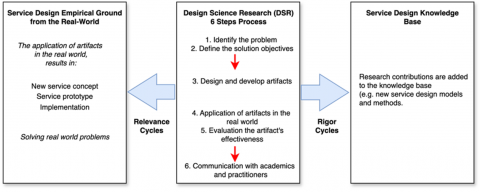
This study aims to solve this problem by discussing the design science research methodology, which is a well-known methodology in the field of information systems, and how the DSR (Design Science Research) method can help service design research by supporting the development of new artifacts, such as service design methods, models, and constructs. The studies [69, 70] endeavors to embrace the DSR approach while also referencing the foundational study undertaken [71], as shown in Figure 3. Service design is increasingly essential in service research, enabling the execution of novel service concepts. This enables the collaborative creation of value among customers, business entities, and other stakeholders. The service design methodology emphasizes human concerns, adopts a holistic perspective, and follows an iterative process in service creation. This methodology integrates the service viewpoint with a novel process that encompasses comprehending stakeholder experiences, generating unique concepts for future services, prototyping, and implementation.
Figure 3. DSR adoption in service design
This study will focus on the integration of digital twin technology into the Field Service Management (FSM) model or process in the context of fiber optic network infrastructure development. The framework of this research begins with the recognition of the urgent need from the results of identifying problems that occur in the field to update and improve traditional FSM methods, especially in the digital era when the development of fiber optic network infrastructure becomes important. Digital twin technology denotes the digital representation of a physical object or system, facilitating simulation, analysis, and optimization within a virtual context. Within the framework of FSM, the implementation of digital twins can yield comprehensive insights into field operations in real-time, enhance technician training, and promote more informed decision-making.
Within the framework of FSM, the implementation of digital twins can yield comprehensive insights into field operations in real-time, enhance human resource (HR) training, and promote more informed decision-making. The implementation of a digital twin-based FSM model is anticipated to enhance human resource capabilities and promote the use of digital twin technologies within the telecoms sector. This is an example of how technology and research methods work together to produce innovative solutions to real problems in the field. Digital twin is expected to be an important milestone in facing the complexity of fiber optic network development in today's digital era.
4.1 Problem identification and solution objectives
The problem identification phase employed a comprehensive multi-method approach incorporating interviews, field observations, literature studies, and document analysis to understand the challenges in fiber optic network development. This systematic approach enables a thorough understanding of both operational and strategic challenges facing field service management in telecommunications infrastructure development.
In-depth interviews were conducted with FSM managers from two major telecommunications operators in Indonesia, revealing significant operational challenges across three key dimensions: people, process, and technology, as shown in Table 1.
Field observations provided crucial insights into the practical challenges faced by technicians during fiber optic network development. These insights disclosed numerous essential operating prerequisites:
(1) The need for rapid access to high-quality documentation during field operations.
(2) Requirements for efficient information retrieval systems.
The literature evaluation included seven essential articles [20, 45, 46, 72-75] authored by the Author, concentrating on digital twin implementation and FSM practices, highlighting a notable research gap in the integration of these technologies within telecoms infrastructure development. A comprehensive document analysis of existing field service management processes and procedures supplemented this analysis. This overview illustrates a distinct advancement in your research from comprehending foundational technology (IoT, AR) to applications in FSM and digital twin execution.
The document analysis identified three essential phases in fiber optic network development: survey, installation, and maintenance or repair. Each phase encompasses unique processes and stakeholder engagements that are critical for effective implementation.
Table 1. People, process, and technology dimension
|
Dimension |
Identified Problem |
Current Impact |
Business Requirement |
|
People |
|
|
|
|
Process |
|
|
|
|
Technology |
|
|
|
4.2 Objective definition of solution
The amalgamation of digital twin technology with Field Service Management (FSM) signifies a revolutionary method for improving fiber optic network infrastructure development. This solution seeks to tackle the intricate issues encountered in field service operations by thoroughly studying operational requirements and technology capabilities while utilizing emerging technologies to enhance service delivery and operational efficiency.
The main goal focuses on establishing a smooth interface between digital twin functionalities and FSM operations. This integration emphasizes three essential components: real-time monitoring and visualization, predictive maintenance and resource optimization, and knowledge management and communication, as shown in Table 2. Through the application of digital twin technology, businesses can generate virtual replicas of their physical infrastructure, facilitating enhanced monitoring, maintenance, and optimization of field operations. The system utilizes IoT sensors and augmented reality (AR) technology for real-time monitoring and visualization, offering instantaneous insights into the status of network infrastructure and the operations of field technicians. This functionality empowers service managers to make informed decisions based on actual field circumstances while providing personnel with visual guidance and real-time assistance throughout maintenance and installation tasks. The application of AR-based visualization significantly improves specialists' comprehension of intricate infrastructure elements and promotes their maintenance efficiency. Predictive maintenance and resource optimization constitute another essential component of the solution objectives. The technology can forecast possible equipment malfunctions and enhance maintenance schedules by examining previous data and real-time information. This proactive strategy markedly minimizes downtime and enhances resource usage. The solution employs sophisticated resource allocation and route optimization algorithms, guaranteeing field technicians’ efficient and effective deployment throughout service areas. Knowledge management and collaboration skills are essential elements of the solution framework. The system offers an extensive digital documentation collection that is accessible via mobile devices and augmented reality interfaces. This tool allows field technicians to swiftly obtain pertinent technical information, maintenance protocols, and equipment specs. The technology enables remote cooperation between field technicians and technical specialists, facilitating real-time problem-solving and knowledge exchange. The solution architecture has multiple interconnected components intended to function cohesively. The digital twin platform fundamentally enables the modeling and simulation of network infrastructure. This platform interfaces with IoT sensor networks for data acquisition and augmented reality systems for display. Cloud-based data management guarantees organizational access to information while upholding security and regulatory standards.
Performance metrics are essential in delineating the solution's objectives. The system seeks to attain substantial enhancements in critical operational metrics, such as Mean Time to Repair (MTTR) and First-Time Fix Rate (FTFR). The solution aims for a 30% decrease in MTTR and a 25% enhancement in FTFR by equipping technicians with superior tools and improved access to information. These enhancements immediately facilitate increased client satisfaction and diminished operational expenses. The solution also tackles the essential requirement for workforce development and the improvement of technical competencies. Technicians can enhance their abilities more efficiently with interactive training modules and augmented reality-guided maintenance protocols. The capacity for real-time expert consultation guarantees immediate access to technical knowledge, while performance tracking and feedback systems facilitate the identification of improvement areas and the acknowledgment of outstanding performance. Security and compliance factors are essential to the solution design. The system employs stringent data protection protocols and access control methods to safeguard the confidentiality and integrity of sensitive information. Regulatory compliance mechanisms guarantee that all operations conform to applicable industry standards and local requirements.
The implementation needs have been meticulously evaluated for various stakeholder groups. Field technicians necessitate mobile access to documentation and augmented reality-based instruction facilitated by suitable technology and collaborative technologies. Service managers require extensive management dashboards and analytical platforms for efficient resource oversight and performance evaluation. Technical specialists necessitate resilient remote access systems and diagnostic instruments to deliver efficient assistance to field personnel. The anticipated results of this approach encompass not just operational enhancements but also wider organizational advantages. This encompasses standardized service delivery protocols, uniform quality measures, elevated client happiness, and increased service reliability. The solution enhances knowledge retention within the organization by documenting and disseminating technical skills via digital platforms. The solution seeks to revolutionize field service operations in fiber optic network infrastructure construction by merging digital twin technology with FSM processes in a holistic manner. The integration of modern technologies with practical operational needs establish a basis for superior service delivery, augmented technological capabilities, and heightened operational efficiency. The effective execution of a Digital Twin-based FSM system necessitates meticulous attention to the diverse needs of stakeholders and their associated technology specifications. Every stakeholder group possesses distinct requirements that must be met to guarantee successful system adoption and utilization.
We have methodically organized these requirements by identifying three important stakeholder groups and their distinct needs, as stated in Table 3.
Field technicians, as the principal users of the system, necessitate resilient mobile solutions that facilitate access to documentation, provision of AR-based assistance, and acquisition of real-time support during field operations. This requires the supply of suitable mobile devices, AR technology, and collaboration tools that can operate effectively under diverse field settings. The technological infrastructure must facilitate uninterrupted access to information and real-time communication, enabling experts to execute their duties efficiently and effectively.
Table 2. FSM components and digital twin integration points
|
FSM Component |
Digital Twin Capability |
Expected Outcome |
|
Resource Planning |
Real-time resource tracking and allocation |
Optimized workforce utilization |
|
Task Scheduling |
Predictive workload management |
Improved service response time |
|
Asset Management |
IoT-enabled monitoring and maintenance |
Reduced equipment downtime |
|
Quality Control |
AR-based inspection and verification |
Enhanced service quality |
|
Knowledge Management |
Interactive digital documentation |
Improved technician competency |
Table 3. Implementation requirements by stakeholder
|
Stakeholder |
Primary Requirement |
Technology Needs |
|
Field Technicians |
|
|
|
Service Managers |
|
|
|
Technical Experts |
|
|
Service managers require extensive monitoring and tracking functionalities to handle field operations efficiently. Their specifications emphasize resource monitoring, performance evaluation, and quality assurance protocols. The implementation must incorporate advanced management dashboards, analytics platforms, and reporting tools that offer real-time insights into field operations and facilitate data-driven decision-making.
Technical experts necessitate comprehensive remote help capabilities and tools for knowledge dissemination and problem-solving. Their technology requirements encompass dependable remote access systems, collaboration platforms, and diagnostic tools that facilitate effective support for field workers and enhance the organization's total knowledge base.
This systematic method for implementing requirements guarantees that all stakeholder needs are thoroughly considered in the system design and deployment, promoting the effective acceptance and use of the digital twin-based FSM solution.
4.3 Design models and build solutions
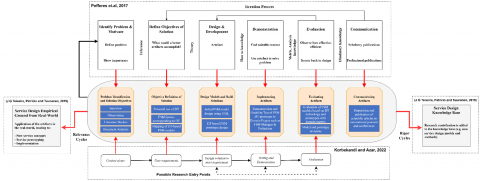
The design and development phase of the digital twin-based FSM model emphasizes the creation of a holistic solution that amalgamates field service management techniques with digital twin technologies. This phase, guided by Design Science Research (DSR) concepts as shown in Figure 4, focuses on creating realistic and effective solutions to tackle the identified difficulties in fiber optic infrastructure development.
Figure 4. DSR process in designing DT-based FSM model
4.3.1 System architecture design
The suggested system architecture utilizes cloud data storage and processing technology, facilitating flexible and scalable deployment. The architecture has numerous essential elements:
(1) Core Components:
• 3D Models Database: Archives digital representations of fiber optic network assets.
• Real-time Data Processing: Manages IoT sensor data from field apparatus.
• AR Interface: Facilitates the viewing of digital twin data within physical settings.
(2) Integration Layer:
• API Gateway: Manages communication between system components
• Data Synchronization: Ensures consistency between physical and digital assets
• Security Framework: Implements access control and data protection
4.3.2 System architecture design
The system's architecture comprises eight essential functional modules, each depicted through comprehensive UML diagrams to demonstrate their structure and interactions:
(1) Rollout Management Module
The use case diagram is in Figure 5 illustrates the interaction between the main actors (Service Manager, Field Technician, and System) with various functions in the Scheduling and Dispatching process. It covers all key aspects of task management, from task creation to completion and updating technician availability.
Figure 5. Rollout management
(2) Scheduling and Dispatching
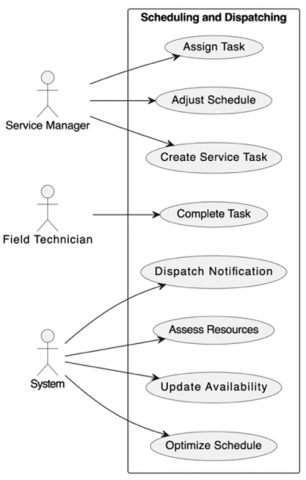
The use case diagram in Figure 6 illustrates the interaction between the main actors (Service Manager, Field Technician, and System) with various functions in the Scheduling and Dispatching process. It covers all key aspects of task management, from task creation to completion and updating technician availability.
Figure 6. Scheduling and dispatching
(3) Route Location Tracking
The use case diagram in Figure 7 illustrates the interaction between the main actors (Field Technician, System, and Customer) with various functions in the Route Location Tracking process. It covers all key aspects of route management, from calculating the optimal route to updating the ETA for the customer.
Figure 7. Route location tracking
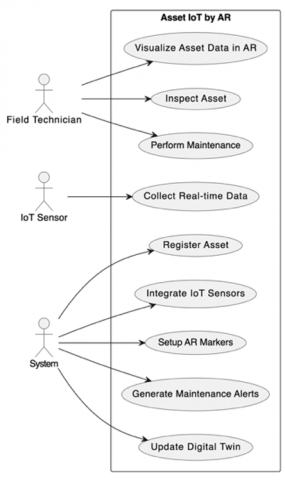
(4) Asset IoT by AR
The use case diagram in Figure 8 illustrates the interaction between the main actors (Field Technician, IoT Sensor, and System) with various functions in the Asset IoT by AR process. It covers all key aspects of IoT and AR-based asset management, from asset registration to predictive maintenance.
Figure 8. Asset IoT by AR
(5) Realtime Monitoring
The use case diagram in Figure 9 illustrates the interaction between the main actors (Service Manager, Field Technician, and System) with various functions in the Real-Time Monitoring process. It covers all key monitoring, analysis, problem detection, solution implementation, and reporting aspects.
(6) Knowledge Book in AR View
The use case diagram in Figure 9 illustrates the interaction between the main actors (Field Technician and Knowledge Base Admin) with various functions in the Knowledge Book in the AR View system. It covers all key aspects of using and managing AR content, including access, interaction, searching, and updating the knowledge base.
Figure 9. Knowledge book in AR view
(7) Technician Collaboration
The use case diagram in Figure 10 illustrates the interactions between the main actors (Field Technician, Technical Expert, and System) with various functions in the Technician Collaboration system. It covers all key aspects of the remote collaboration process, including help requests, video/image sharing, AR annotation, and audio communication.
Figure 10. Technician collaboration
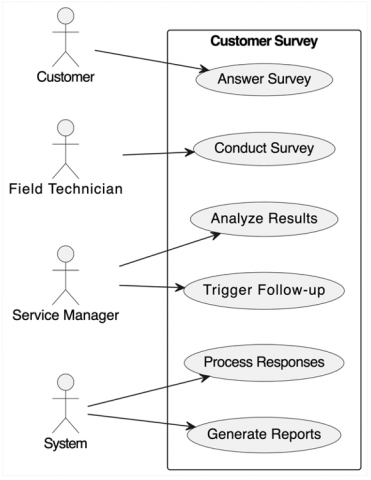
(8) Customer Survey
The use case diagram in Figure 11 illustrates the interaction between the main actors (Customer, Field Technician, Service Manager, and System) with various functions in the Customer Survey system. It covers all key aspects of the survey process, from implementation to analysis and follow-up.
Figure 11. Customer survey
The proposed digital twin-based Field Service Management (FSM) model represents an integrated framework designed to enhance field service operations in fiber optic network infrastructure development. This conceptual idea integrates digital twin technology with IoT sensors and Augmented Reality to establish a holistic system that enhances operational efficiency and fosters technician competency development.
The model's architecture is comprised of three fundamental layers: the Physical Layer, the Digital Layer, and the Application Layer. Each layer is accompanied by its core components and primary functions as illustrated in Table 4.
Table 4. Implementation requirements by stakeholder
|
Layer |
Component |
Primary Function |
|
Physical Layer |
|
|
|
Digital Layer |
|
|
|
Application Layer |
|
|
In the Physical Layer, IoT devices are systematically positioned within the fiber optic network infrastructure to gather real-time operational data regarding equipment status, performance metrics, and environmental variables. This data flows through an IoT platform that serves as an intermediary processing layer, performing initial validation and enrichment before transmission to the digital twin environment.
The Digital Layer, embodied by the digital twin component, serves as the system's nucleus, preserving real-time operating data with previous performance records. The cloud storage system used in the digital twin design oversees both dynamic operational data and static reference material, encompassing detailed 3D representations of network infrastructure elements. This layer allows for the development of precise digital representations of physical assets, enhancing comprehension and control of the infrastructure.
The Application Layer offers user and system interfaces via two principal mechanisms. Augmented Reality (AR) technology functions as the principal interface for field personnel, allowing them to obtain real-time digital information overlays on physical equipment. Technicians obtain instant visual instructions for installation, maintenance, and repair jobs via mobile devices. This AR integration markedly improves technician efficiency by delivering contextual information precisely when and where it is required.
The model incorporates sophisticated location-based services through Mobile GIS integration, enabling intelligent route optimization and efficient technician deployment. This component considers real-time conditions affecting field service operations, allowing for dynamic adjustments to ensure optimal resource utilization. The system's dashboard interface provides managers with comprehensive visibility into field operations, facilitating effective resource allocation and performance monitoring.
A fundamental attribute of the model is its predictive maintenance functionality, which examines operational data to anticipate potential equipment malfunctions prior to their manifestation. This proactive maintenance strategy minimizes downtime and enhances resource allocation efficiency. The system features a comprehensive knowledge management component that archives technical documents, maintenance procedures, and best practices, all accessible via the AR interface.
The proposed model presents many criteria and novel features specifically tailored for FSM:
(1) Work Order Management: Optimizes the complete lifecycle of service requests from initiation to fulfilment.
(2) Asset Management: Facilitates real-time tracking and status oversight of network infrastructure elements.
(3) Knowledge Base: Provides immediate access to technical documentation and procedures via augmented reality interfaces.
(4) Feedback System: Facilitates ongoing enhancement via systematic gathering of operational feedback.
The suggested paradigm establishes a holistic ecosystem that fosters operational excellence and ongoing skill development through an integrated approach.
The system's capacity to acquire, analyze, and present pertinent information in contextually suitable formats renders it an efficient platform for improving service delivery efficiency and technician proficiency.
This architecture corresponds seamlessly with the fiber optic infrastructure construction requirements, necessitating precise and quick execution of intricate technical tasks across extensive geographical regions. The concept emphasizes practical, real-world application, guaranteeing tangible benefits such as better service quality, decreased downtime, and enhanced technician proficiency.
4.4 Implementing artifact
The deployment phase of the digital twin-based FSM system entailed developing and testing a complete prototype of mobile applications and web-based dashboards.
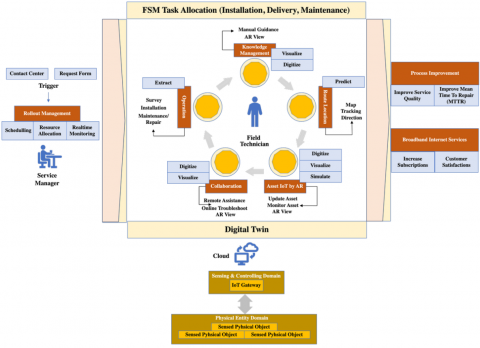
Figure 12. Proposed model of FSM integrated with DT
Figure 12 shows the proposed model of FSM integrated with digital twin, where the digital twin architecture in FSM applications is designed to provide an accurate and real-time virtual representation of physical infrastructure assets. The architecture comprises three main components: a 3D Model Database, Real-time Data Processing, and an AR Interface, which work together to create a comprehensive and interactive digital twin experience. Integrating sensors and IoT with digital twins is a key aspect of implementation.
IoT sensors are placed on critical infrastructure components to collect real-time data on the conditions and performance of these components. This data is transmitted to a digital twin system, which processes and integrates it into a digital model to accurately represent the physical asset's condition.
4.4.1 Prototype development
The prototype implementation comprised two primary components: a mobile application for field workers and a web-based dashboard for service managers and technical experts. Table 5 presents the comprehensive components of the prototype implementation. The implementation of AR in digital twin visualization allows technicians to interact with the digital representation of physical assets through mobile devices.
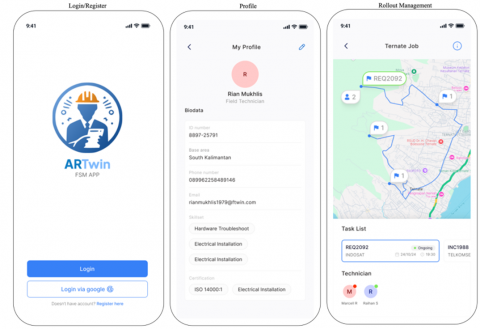
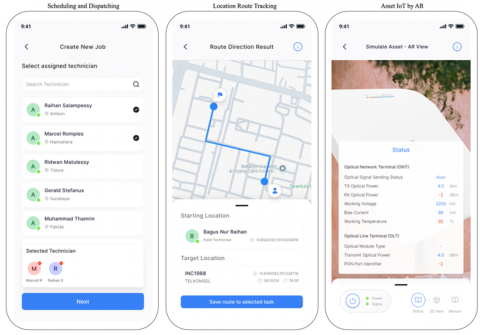
The mobile application, as shown in Figure 13, was created utilizing the Flutter framework, guaranteeing cross-platform compatibility and superior performance in field situations.
Figure 13. Mobile apps DT-based FSM
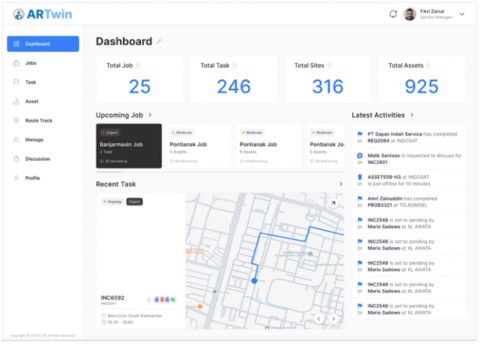
The web dashboard, as shown in Figure 14, was developed using Flutter Web, ensuring a uniform experience across several platforms while preserving strong connectivity with the mobile component.
Figure 14. Web apps DT-based FSM
Table 5. Prototype implementation components
|
Component |
Platform |
Primary Users |
Key Features |
|
Mobile App |
Android |
Field Technician |
|
|
Web Dashboard |
Browser-based |
|
|
4.4.2 Testing methodology
The implementation testing employed a quasi-experimental design to assess the system's efficacy in enhancing technician performance and operational efficiency. This methodology was selected to address the practical limitations of field service operations while upholding scientific integrity in the assessment process. The quasi-experimental design was chosen for its ability to balance internal validity with contextual relevance in complex organizational settings, where complete randomization is often impractical. Specifically for this study, a pre-test/post-test design with a non-equivalent control group was implemented, where technicians from three telecommunications operators were divided into an experimental group (using the FSM application based on digital twin) and a control group (using the conventional system), with performance and competency measurements conducted before and after the intervention. The groups of test participants involved in the research can be seen in detail in Table 6.
The implementation followed a six-phase deployment protocol: (1) infrastructure assessment and readiness evaluation; (2) digital asset modeling of critical network components; (3) IoT sensor deployment at strategic network points; (4) AR interface development and field testing; (5) integration with existing FSM systems; and (6) technician training and evaluation. Each phase included specific validation metrics to ensure successful completion before progression.
Table 6. Testing participant group
|
Role |
Number of Participants |
Testing Focus |
|
Field Technicians |
15 |
|
|
Service Managers |
3 |
|
|
Technical Expert/ Asset Managers |
3 |
|
4.4.3 Quasi-experiment result
Validation was conducted through a quasi-experimental design involving 15 field technicians across multiple telecommunications operators. Pre-implementation performance metrics were established as baselines for comparison, followed by a three-month implementation period. Post-implementation measurements demonstrated statistically significant improvements (p<0.01) across key performance indicators
The sample size of 15 field technicians (5 per group) was determined based on a statistical power analysis with the assumption of a medium effect size (Cohen's d = 0.5), a significance level of α = 0.05, and a desired statistical power of 0.8, following the standards for quasi-experimental research in the field of technology. The professional characteristics of the participants include a work experience range of 2-10 years in the installation and maintenance of fiber optic networks, with a diversity of education levels (vocational school to bachelor's degree) and technical certifications, ensuring adequate generalizability of the results to a broader population of technicians.
In the pre-test of technician performance, the control group showed an average score of 34.2 (median: 34, range: 33-35, SD: ~0.56), while the experimental group showed an average score of 34.3 (median: 34, range: 33-35, SD: ~0.70). The Shapiro-Wilk normality test confirmed that the data from both groups were normally distributed (p > 0.05), and Levene's test showed homogeneity of variances between groups (p = 0.22).
For the baseline technician competency, the control and experimental groups showed identical average scores of 68 points. The distribution of competency levels in the pre-test shows that the majority of technicians (67%) are at the "Sufficiently Competent" level with scores between 60-69, while the remaining 33% are at the "Competent" level with scores between 70-84. No technicians were at the "Very Competent" level (score ≥ 85) or the "Not Competent" level (score < 60) at the study's outset.
The overall baseline analysis confirms the equivalence between the control and experimental groups before the intervention, which is an essential prerequisite for the internal validity of quasi-experimental research. No statistically significant differences were found in performance (t(28) = 0.42, p = 0.68) or competence (t(28) = 0.00, p = 1.00) between the two groups in the pre-test phase.
After one month of implementing the digital twin-based FSM application in the experimental group, post-test analysis showed a substantial and statistically significant difference between the two groups. In terms of technician performance, the experimental group showed an average score increase of 19.4 points (from 34.3 to 44.5), while the control group only showed a minimal increase of 0.9 points (from 34.2 to 35.1). The independent samples t-test analysis confirmed the significance of the post-test difference between the experimental and control groups (t(28) = 37.6, p < 0.001) with a very large effect size (Cohen's d = 9.73).
Performance comparisons, which are visualized in Figure 15, based on assessment aspects, show consistent improvements across all performance dimensions for the experimental group. The highest increase was recorded in the aspect of system usage, where the experimental group showed a 31.4% increase compared to 0% in the control group. Other performance dimensions also exhibited a similar pattern, with the experimental group showing a 28.6% increase in punctuality, 28.6% improvement in work quality, and 28.6% increase in resource efficiency. In contrast, the control group showed minimal improvement in these dimensions.
In terms of technician competence, the experimental group showed an average increase of 16 points (from 68.0 to 84.0), while the control group showed an increase of only 2.0 points (from 68.0 to 70.0). The paired samples t-test analysis confirmed the significance of the changes in the experimental group (t(14) = 29.18, p < 0.001) with a very large effect size (Cohen's d = 6.31). ANCOVA with pre-test scores as a covariate showed a highly significant effect of the intervention (F(1,27) = 248.37, p < 0.001, partial η² = 0.902).
The practical components in the competency evaluation showed the most dramatic improvement, particularly in Digital Twin Simulation (+31%) and Measurement (+26%) for the experimental group. Meanwhile, the distribution of competency levels changed substantially, with 20% of the experimental group technicians reaching the "Very Competent" level and 63% reaching the "Competent" level in the post-test, compared to no technicians being "Very Competent" and only 33% being "Competent" in the pre-test.
Analysis of operational performance metrics shows a positive impact of the digital twin-based FSM application on operational efficiency, with technicians in the experimental group demonstrating the following point:
• Reduction in task completion time by 27.7%
• Increase in first-time fix rate by 28.4%
• An increase in technician productivity by 34.9%
• A 50% reduction in the average response time to incidents
Additional analysis using repeated measures ANOVA confirmed a highly significant interaction between time and group (F(1,28) = 1196.4, p < 0.001, partial η² = 0.977), indicating that random factors cannot explain the difference in score changes between the two groups.
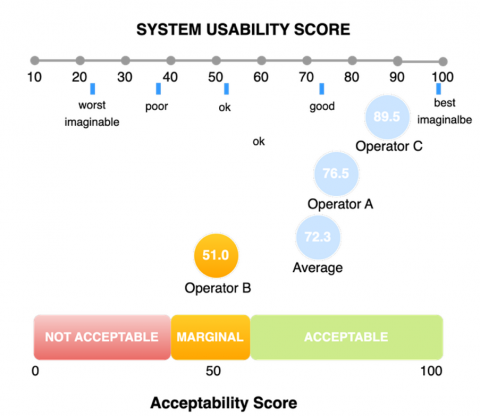
The evaluation of user experience with the digital twin-based FSM application using the System Usability Scale (SUS) yielded an average score of 81.5, which falls into the "Excellent" category according to the SUS standard criteria. This score indicates that the application has a high level of usability and is likely to be adopted sustainably by users. Table 7 presents the analysis based on operators, illustrating variation in usability perception, with Provider C achieving the highest SUS score (89.5), followed by Provider A (76.5) and Provider B (51.0). We visualized the SUS score for the FSM DT-based app in Figure 16 to compare the acceptability scores among the providers.
Qualitative data from interviews and surveys revealed several key themes related to user experience. Of the 15 technicians in the experimental group, 87% reported that the application significantly improved their work efficiency.
The most appreciated aspects are the ease of access to technical documentation through the AR interface (93%), the reduction in time spent searching for information (86%), the improvement in accuracy of problem identification and diagnosis (82%), and more effective collaboration with technical experts (78%). The main challenges identified were related to the application's performance in areas with poor network connectivity (mentioned by 73% of technicians), difficulties using the AR feature in extreme lighting conditions (42%), and high battery consumption when using the AR feature for extended periods (38%).
Nevertheless, 89% of technicians showed increased confidence in using the system after 2 weeks of use, indicating a relatively rapid learning curve.
Feedback from service managers and technical experts was also very positive. The three service managers from different providers gave positive assessments of the management dashboard and system monitoring capabilities, reporting increased visibility of field operations, more efficient resource allocation, faster and data-driven decision-making, and an overall improvement in service quality. Technical experts appreciate the system's ability to facilitate remote collaboration, reduce the need for field visits, enhance knowledge documentation, and support the training of new technicians.
4.4.4 Stakeholder feedback
Input from diverse stakeholders offered significant insights into the system's practical advantages:
(1) Field Technicians indicated enhanced confidence in managing intricate jobs owing to augmented reality-guided support and instantaneous access to technical documentation.
(2) Service Managers observed improved transparency in field operations and expanded resource allocation capabilities.
(3) Technical experts noted enhanced knowledge transfer, and less time allocated to regular support chores.
Figure 15. Visualizing the improvement in technician performance metrics
Table 7. System Usability Scale (SUS) evaluation results per operator
|
Evaluation Aspects |
Operator A |
Operator B |
Operator C |
|
Average SUS score |
76.5 |
51.0 |
89.5 |
|
Category |
Excellent |
OK/Marginal |
Best Imaginable |
|
Most Popular Features |
Scheduling & Dispatching, Knowledge Book AR View, Route Location Tracking |
Scheduling & Dispatching, Route Location Tracking, Knowledge Book AR View |
Asset IoT by AR, Rollout Management, Realtime Monitoring |
|
Key Challenges |
Data accuracy, Integration with other system |
Data Accuracy, Internet Connection |
Data Accuracy, Internet Connection |
Figure 16. SUS visualization for FSM DT-based app
4.5 Evaluating artifact
The digital twin-based FSM system evaluation concentrated on assessing feedback and performance data gathered from key stakeholders during the installation phase. This thorough evaluation analyzed quantitative and qualitative indicators to determine the system's efficacy in improving field service operations in fiber optic network development.
The assessment demonstrated notable enhancements in operational efficiency and technician proficiency through a comprehensive examination of user interactions and performance metrics. Field technicians expressed increased confidence in managing intricate jobs, particularly highlighting the advantages of AR-guided support and immediate access to technical documentation. The system's capacity to deliver prompt access to pertinent information and professional assistance led to quantifiable enhancements in task completion durations and first-time resolution rates.
Service managers emphasized the system's efficacy in resource distribution and operational management. The real-time monitoring capabilities and predictive maintenance functionalities facilitated more proactive decision-making and enhanced resource use. Technical experts observed a significant decrease in regular help inquiries, enabling them to concentrate on more intricate technical issues and knowledge enhancement.
The evaluation phase also identified areas for potential improvement, including suggestions for enhanced AR visualization accuracy and expanded knowledge base content. These insights offer significant guidance for future system enhancements while validating the digital twin-based methodology's overall efficacy in tackling field service management issues in fiber optic network infrastructure construction.
4.6 Communicating artifact
The communication phase signifies the conclusion of this research, concentrating on the efficient dissemination of the data and insights acquired from the development and assessment of the digital twin-based FSM model. This research has been disseminated via several routes, including scholarly papers, industry presentations, and comprehensive documentation in this dissertation.
The research results will be disseminated via many peer-reviewed scientific articles, emphasizing the novel amalgamation of digital twin technology with field service management in telecom infrastructure advancement. These articles underscore the model's efficacy in improving technician proficiency and operational efficiency, thereby enriching the wider academic dialogue on digital transformation in field service operations.
Telecommunications conferences and technical forums have served as venues for showcasing the actual applications of the suggested architecture. The presentations have elicited considerable attention from telecommunications operators and service providers, especially concerning the model's capacity to tackle prevalent issues in fiber optic network development and maintenance.
The detailed documentation of this study's research approach, conclusions, and implementation results serves as a significant reference for academic researchers and industry professionals. The comprehensive examination of the digital twin-based FSM model's influence on technician performance and operational efficiency presents definitive proof of the solution's efficacy while also revealing prospective avenues for future enhancement and execution.
This research enhances both theoretical comprehension and actual implementation of digital twin technology in field service management through various communication channels, hence facilitating the progression of telecom’s infrastructure development methodologies.
This research has yielded significant insights into implementing digital twin technology in Field Service Management (FSM) for fiber optic network infrastructure development in Indonesia. We addressed each research question in the first section through comprehensive analysis and empirical evaluation to provide a holistic understanding of this technological integration's challenges, opportunities, and impacts.
RQ1: Current State of FSM Business Processes
The inquiry into Indonesia's present FSM procedures in fiber optic network building uncovered some significant operational issues. Conventional FSM systems have considerable inefficiencies in three primary domains: resource allocation, real-time monitoring, and knowledge management. Field technicians often have challenges obtaining current technical documentation, while service managers experience obstacles in enhancing staff allocation and tracking performance measures. These issues are especially pronounced in Indonesia's varied geographical terrain, where infrastructure development encompasses both densely populated urban centers and isolated rural regions.
Our investigation revealed distinct operational bottlenecks in the existing FSM processes. Delays in document access average 15-20 minutes per occurrence, considerably affecting response times. Resource allocation inefficiency leads to roughly 30% of technician time being devoted to non-value-adding tasks, like commuting between locations or awaiting technical assistance. The absence of real-time visibility into field activities results in delayed decision-making and inefficient resource utilization.
The current status assessment indicated a substantial deficiency in information transfer methods. Conventional training methods and documentation systems are insufficient for ensuring uniform service quality across various geographical regions. The difficulty is exacerbated by the swift advancement of fiber optic technology, necessitating regular updates to technical expertise and protocols.
RQ2: Critical Success Factors and Components
The identification of essential success elements for digital twin implementation resulted from comprehensive stakeholder engagement and technical study. Crucial elements necessary for effective execution comprise:
RQ3: Enhancement of FSM Operations Through Digital Twin Technology
The adoption of digital twin technology has shown significant enhancements in FSM operations across all aspects. Quantitative study indicates substantial operational improvements in the performance metrics:
These enhancements arise from the system's capacity to deliver real-time operational insights and prompt access to technical resources. The AR-based interface significantly improves field technician efficiency by delivering contextual information precisely when required. Predictive maintenance functionalities have facilitated anticipatory issue resolution, markedly decreasing emergency interventions.
RQ4: Proposed Integration Model
The suggested Digital twin-FSM integration paradigm delineates a thorough three-tier architecture:
Unlike previous digital twin implementations that focus primarily on asset monitoring, our architecture pioneers the integration of contextual knowledge delivery through an Augmented Reality interface. This integration enables field technicians to access not just static documentation but context-aware, location-specific technical guidance that adapts based on the specific task and equipment being serviced (Figure 11).
RQ5: Addressing Critical Success Factors and Implementation Challenges
The concept tackles recognized essential success elements via many integrated solutions:
The system's architecture notably tackles critical implementation issues via redundant data collection methods, offline operational capabilities, and adaptable deployment alternatives.
RQ6: Benefits and Impacts
The digital twin-based FSM system has demonstrated expected to have significant benefits across multiple stakeholder groups:
RQ7: Implementation Challenges and Barriers
Our multi-study research program provides unprecedented empirical evidence for digital twin FSM implementation challenges. Triangulating findings from our usability evaluation study (SUS scores ranging 51.0-89.5 across operators), quasi-experimental validation (29.7% performance improvement), and current design science implementation, three critical challenge categories emerge with validated mitigation strategies. Our integrated mitigation framework, validated through three complementary methodologies, establishes digital twin FSM as a mature technological intervention with predictable implementation pathways and measurable outcomes. The implementation of the Digital Twin-based FSM system faces several significant challenges:
These problems necessitate meticulous evaluation and strategic preparation for effective execution. Organizations must formulate comprehensive mitigation measures that encompass both technical and organizational dimensions, prioritizing long-term sustainability and scalability.
The thorough examination of digital twin technology use in Field Service Management for the construction of fiber optic network infrastructure in Indonesia uncovers substantial prospects and critical considerations. This study has yielded significant insights into the transformation of field service operations via digital innovation by addressing seven interrelated research issues.
This research illustrates that digital twin technology is a feasible and efficient alternative for improving field service management in telecoms infrastructure construction. The results offer theoretical insights and practical recommendations for firms aiming to undertake comparable digital transformation programs. The ongoing evolution of the telecommunications industry facilitates the incorporation of digital twin technology in FSM operations, leading to increased operational efficiency, superior service quality, and a continued competitive edge in the digital era.
This study offers a detailed approach to the application of digital twin technology in Field Service Management (FSM), employing systematic investigation and empirical validation via Design Science Research methodology. The research has effectively illustrated how the use of digital twin technology can revolutionize field service operations, resulting in substantial enhancements in operational efficiency, service delivery quality, and resource utilization. The research findings provide significant insights and contributions to academic knowledge and practical application in the subject of service management while also highlighting critical limitations and avenues for further research.
6.1 Contribution
This research establishes three validated theoretical contributions through methodological triangulation:
(1) The 'Progressive Digital Twin Adoption Framework' demonstrating how phased implementation reduces organizational resistance while maintaining service quality, with empirical evidence from SUS scores improving from 72.33 to 81.5 across implementation phases;
(2) The 'Multi-Modal Performance Enhancement Model' showing how digital twin integration creates measurable value through three validated pathways: technical competency improvement (24% increase via quasi-experimental validation), operational efficiency enhancement (29.7% performance improvement), and user experience optimization (81.5 SUS score achievement); and
(3) The 'Context-Adaptive Implementation Theory' proving that digital twin effectiveness varies systematically across organizational contexts (Provider C: 89.5 SUS vs Provider B: 51.0 SUS).
Our validated model provides a comprehensive framework for the digital transformation of field service operations for telecommunications operators and infrastructure developers, with demonstrated performance improvements across all critical operational metrics. The modular architecture allows for scalable implementation, making it suitable for both large national operators and smaller regional providers.
6.2 Limitation and future research
Notwithstanding the thoroughness of this investigation, certain limitations must be recognized. The evaluation of the suggested model is now in progress, and long-term impact assessment necessitates prolonged observation periods. The existing implementation has predominantly concentrated on extensive telecommunications infrastructure, and validation across other industry settings and organizational scales would enhance the model's generalizability. The swift advancement of digital twin technology and associated tools requires ongoing enhancement of the implementation architecture. Subsequent research endeavors ought to rectify these constraints and investigate the nascent potential. Principal areas for examination encompass the integration of emerging technologies, including sophisticated AI algorithms, 5G networks, and edge computing capabilities. Research should improve predictive maintenance algorithms using machine learning optimization, create advanced visualization approaches for AR-based interactions, and broaden the model's applicability across various infrastructure sectors. Moreover, subsequent research should investigate the model's flexibility across various organizational cultures and regulatory contexts and its prospective contribution to sustainability initiatives and green field service operations. The establishment of uniform performance measures and implementation instructions across diverse service sectors will greatly enhance the model's actual application. As digital twin technology advances, continuous research will be essential in enhancing and broadening this FSM model to address evolving industry requirements and technical advancements.
Future research should focus on three promising directions: (1) integration of advanced Natural Language Processing capabilities to enhance knowledge capture from field operations; (2) development of predictive models specifically for emerging 5G and 6G network infrastructure management; and (3) cross-industry validation in adjacent sectors such as energy distribution and water management infrastructure.
[1] Shaik, F., Abdullah, A., Klein, S. (2017). Digital transformation in oil & gas-Cyber security and approach to safeguard your business. In the 22nd World Petroleum Congress, Istanbul, Turkey, p. D023S017R002. https://onepetro.org/WPCONGRESS/proceedings-abstract/WPC22/2-WPC22/166923.
[2] Kuzovkova, T.A., Sharavova, O.I., Tikhvinskiy, V.O., Devyatkin, E.E. (2022). Matching of 6G network capabilities to digital services requirements. In 2022 Systems of Signal Synchronization, Generating and Processing in Telecommunications (SYNCHROINFO), Arkhangelsk, Russian Federation, pp. 1-5. https://doi.org/10.1109/SYNCHROINFO55067.2022.9840939.
[3] Chari, V. (2022). Internet. org and the rhetoric of connectivity. Communication and Critical/Cultural Studies, 19(1): 54-73. https://doi.org/10.1080/14791420.2022.2028875.
[4] Musiani, F. (2022). Infrastructuring digital sovereignty: A research agenda for an infrastructure-based sociology of digital self-determination practices. Information, Communication & Society, 25(6): 785-800. https://doi.org/10.1080/1369118X.2022.2049850
[5] Banda, L., Mzyece, M., Mekuria, F. (2022). 5G business models for mobile network operators—A survey. IEEE Access, 10: 94851-94886. https://doi.org/10.1109/ACCESS.2022.3205011
[6] Kraus, N., Kraus, K., Shtepa, O., Hryhorkiv, M., Kuzmuk, I. (2022). Artificial intelligence in established of industry 4.0. WSEAS transactions on business and economics, 19: 1884-1900. https://doi.org/10.37394/23207.2022.19.170
[7] Lundgren, C., Turanoglu Bekar, E., Bärring, M., Stahre, J., Skoogh, A., Johansson, B., Hedman, R. (2022). Determining the impact of 5G-technology on manufacturing performance using a modified TOPSIS method. International Journal of Computer Integrated Manufacturing, 35(1): 69-90. https://doi.org/10.1080/0951192X.2021.1972465
[8] Budiman, P.A., Sari, D.M. (2022). Multi-access edge computing implemention on tower ecosystem Indonesia: Challenges and visibility. In 2022 13th International Conference on Information and Communication Technology Convergence (ICTC), Jeju Island, Korea, pp. 158-162. https://doi.org/10.1109/ICTC55196.2022.9952477
[9] 6Wresearch. (2023). Indonesia fiber optics market (2025-2031) outlook | Value, forecast, analysis, revenue, trends, companies, share, size, growth & industry. https://www.6wresearch.com/industry-report/indonesia-fiber-optics-market-outlook.
[10] Li, C.Z., Guo, Z.C., Su, D., Xiao, B., Tam, V.W.Y. (2022). The application of advanced information technologies in civil infrastructure construction and maintenance. Sustainability, 14(13): 7761. https://doi.org/10.3390/su14137761
[11] Jose, G.J., PrasannaVenkatesan, S., Kumanan, S. (2022). Real time asset tracking in field services using barcode system: A case study. International Journal of Services Operations and Informatics, 12(1): 40-57. https://doi.org/10.1504/IJSOI.2022.123561
[12] Oztoprak, K., Tuncel, Y.K., Butun, I. (2023). Technological transformation of telco operators towards seamless IoT edge-cloud continuum. Sensors, 23(2): 1004. https://doi.org/10.3390/s23021004
[13] APJATEL. (2023). Indonesia digital infrastructure best practise, Giga city initiative towards the digital vision 2045. https://apjatel.id/wp-content/uploads/2023/12/White_Paper_Apjatel_EN_2023.pdf.
[14] Homburg, C., Tischer, M. (2023). Customer journey management capability in business-to-business markets: Its bright and dark sides and overall impact on firm performance. Journal of the Academy of Marketing Science, 51: 1046-1074. https://doi.org/10.1007/s11747-023-00923-9
[15] Barricelli, B.R., Casiraghi, E., Fogli, D. (2019). A survey on digital twin: Definitions, characteristics, applications, and design implications. IEEE Access, 7: 167653-167671. https://doi.org/10.1109/ACCESS.2019.2953499
[16] Machado, M., Oliveira, E., Silva, L., Silva, J., Sousa, J. (2021). Development of a digital twin for additive manufacturing. In ASME International Mechanical Engineering Congress and Exposition, 85567: V02BT02A019. https://doi.org/10.1115/IMECE2021-68002
[17] Fu, Y., Zhu, G., Zhu, M.L., Xuan, F.Z. (2022). Digital twin for integration of design-manufacturing-maintenance: An overview. Chinese Journal of Mechanical Engineering, 35: 80. https://doi.org/10.1186/s10033-022-00760-x
[18] Fausing Olesen, J., Shaker, H.R. (2020). Predictive maintenance for pump systems and thermal power plants: State-of-the-art review, trends and challenges. Sensors, 20(8): 2425. https://doi.org/10.3390/s20082425
[19] Momeni, K., Martinsuo, M. (2018). Remote monitoring in industrial services: Need-to-have instead of nice-to-have. Journal of Business & Industrial Marketing, 33(6): 792-803. https://doi.org/10.1108/JBIM-10-2015-0187
[20] Arin, I.A., Warnars, H.L.H.S., Murad, D.F. (2023). A systematic literature review of recent trends and challenges in digital twin implementation. In 2023 10th International Conference on ICT for Smart Society (ICISS), Bandung, Indonesia, pp. 1-10. https://doi.org/10.1109/ICISS59129.2023.10291219
[21] Degenhard, J. (n.d.). Internet users in the World 2013-2028. Statista. https://www.statista.com/aboutus/our-research-commitment/484/j-degenhard.
[22] Haryanto, A.T. (2024). APJII: Number of Indonesian internet users reaches 221 million people. Detikcom. https://inet.detik.com/cyberlife/d-7169749/apjii-jumlah-pengguna-internet-indonesia-tembus-221-juta-orang.
[23] Statista. (2025). Number of internet users worldwide from 2005 to 2024. https://www.statista.com/statistics/273018/number-of-internet-users-worldwide/.
[24] Firmansyah, L.M. (2022). Berapa pengguna internet Indonesia per 2022? berikut datanya. Asosiasi Penyelenggara Internet Indonesia (APJII). https://www.fortuneidn.com/tech/luky/berapa-pengguna-internet-indonesia-per-2022-berikut-datanya.
[25] Fowdur, T.P., Indoonundon, M., Hosany, M.A., Milovanovic, D., Bojkovic, Z. (2022). Achieving sustainable development goals through digital infrastructure for intelligent connectivity. In AI and IoT for Sustainable Development in Emerging Countries: Challenges and Opportunities, pp. 3-26. Springer, Cham. https://doi.org/10.1007/978-3-030-90618-4_1
[26] Ekholm, B. (2022). To the G20: It’s time for universal connectivity and to digitalize small enterprises. World Economic Forum. https://www.weforum.org/stories/2022/11/to-the-g20-its-time-to-prioritise-universal-connectivity/.
[27] Deng, Z.L., Zhu, Z.Y., Johanson, M., Hilmersson, M. (2022). Rapid internationalization and exit of exporters: The role of digital platforms. International Business Review, 31(1): 101896. https://doi.org/10.1016/j.ibusrev.2021.101896
[28] Hantoro, G.D., Priambodo, P.S., Wibisono, G. (2022). Analysis of GPON capacity by hybrid splitting-ratio base on customer segmentation for Indonesian market during the Covid-19 pandemic. EUREKA: Physics and Engineering, (4): 152-169. https://doi.org/10.21303/2461-4262.2022.002054
[29] Lord, A., Savory, S.J., Tornatore, M., Mitra, A. (2022). Flexible technologies to increase optical network capacity. Proceedings of the IEEE, 110(11): 1714-1724. https://doi.org/10.1109/JPROC.2022.3188337
[30] Long, J. (2022). Dynamic analysis of alternative elements in an automated packaging system based on 5G Internet of Things. Journal of Sensors, 2022(1): 4909942. https://doi.org/10.1155/2022/4909942
[31] Reed, D.P. (2020). Examining the prospects for Gigabit Broadband: Lessons learned from Google Fiber. Telecommunications Policy, 44(5): 101957. https://doi.org/10.1016/j.telpol.2020.101957
[32] MarketsandMarkets. 5G Services Market Size, Share, Growth Analysis, Industry. https://www.marketsandmarkets.com/Market-Reports/5g-services-market-226908556.html?gclid=CjwKCAjw9pGjBhB-EiwAa5jl3AIb2ry9Sa02ITjuWLhX4VRdKj6kKpsrWZ58T9c82r07NLu4yaLRXBoCaA4QAvD_BwE.
[33] MarketsandMarkets. (n.d.). Fiber optic market analysis report 2023. MarketsandMarkets. https://www.marketsandmarkets.com/Market-Reports/fiber-optics-market-238443438.html.
[34] Loayza-Valarezo, P., Guaña-Moya, J., Acosta-Vargas, P. (2020). Design techniques of FTTH-GPON networks for segmentation and data traffic relief. In XV Multidisciplinary International Congress on Science and Technology, pp. 162-176. https://doi.org/10.1007/978-3-030-68080-0_12
[35] Aji, L.S. (2022). Feasibility study of fiber optic infrastructure development plan in Indonesia. Budapest International Research and Critics Institute-Journal (BIRCI-Journal), 5(3): 28504-28513. https://doi.org/10.33258/birci.v5i3.6938
[36] Ibrahim, A.J., Hassan, A., Disina, A.H., Pindar, Z.A. (2021). The technologies of 5G: Opportunities applications and challenges. International Journal of Systems Engineering, 5(2): 59-68. https://doi.org/10.11648/j.ijse.20210502.12
[37] Goni, O. (2021). Design and deployment of optical fiber network at atomic energy centre, Dhaka. International Journal of Engineering and Technical Research (IJETR), 11(2): 10-14.
[38] Utamy, E.T., Putri, F.A., Fadlullah, I., Caesar, P.J.J., Samuel, M.M., Ushaim, R.F., Apriono, C. (2022). Design and analysis of optical fiber network deployment on Soekarno Hatta airport railroad. In 2022 5th International Conference on Information and Communications Technology (ICOIACT), Yogyakarta, Indonesia, pp. 7-12. https://doi.org/10.1109/ICOIACT55506.2022.9971835
[39] Baskoro, J.F., Tiarani, F., Alfarabay, N., Giani, B.G., Oktovioletha, N., Apriono, C. (2022). Design of fiber-to-the-home network deployment at the ministerial residential of IKN Nusantara. In 2022 International Conference on Informatics Electrical and Electronics (ICIEE), Yogyakarta, Indonesia, pp. 1-6. https://doi.org/10.1109/ICIEE55596.2022.10010315
[40] Hutomo, S.P., Wibisono, G. (2020). The advantage of blown fiber technology for out site plan network deployment than conventional cabled optical fiber system in Depok apartment project. Journal of Physics: Conference Series, 1528(1): 012044. https://doi.org/10.1088/1742-6596/1528/1/012044
[41] Chowdhury, A.M.R. (2024). Innovating new frontiers in service delivery and evidence generation. Development in Practice, 34(2): 171-176. https://doi.org/10.1080/09614524.2023.2194583
[42] Peinado, J., Graeml, A.R., Vianna, F. (2018). Operations management body of knowledge and its relevance to manufacturing and service organizations. Revista de Gestão, 25(4): 373-389. https://doi.org/10.1108/REGE-03-2018-0049
[43] Müller, M., Stegelmeyer, D., Mishra, R. (2020). Introducing a field service platform. In Advances in Asset Management and Condition Monitoring: COMADEM 2019, pp. 195-205. Cham: Springer International Publishing. https://doi.org/10.1007/978-3-030-57745-2_17
[44] Ehrhardt, A., Escher, F., Foisel, H.M., Gerlach, C., Nagel, B., Schürer, L., Templin, A. (2020). Maintenance and deployment of fibre infrastructure in the access domain for FTTH networks. In 13th ITG Conference on Photonic Networks, Leipzig, Germany, pp. 67-70.
[45] Arin, I.A., Dhamacora, R., Aditya, B. (2024). The adoption of digital twin technology to facilitate resource and asset tracking in field service management. In 2024 International Conference on ICT for Smart Society (ICISS), Bandung, Indonesia, pp. 1-6. https://doi.org/10.1109/ICISS62896.2024.10751066
[46] Arin, I.A., Piereva, G.Z., Prihandoko, D. (2024). Optimizing field technician collaboration through implementing digital twin technology in IT service management. In 2024 12th International Conference on Cyber and IT Service Management (CITSM), Batam, Indonesia, pp. 1-6. https://doi.org/10.1109/CITSM64103.2024.10775575
[47] Vössing, M., Kunze von Bischhoffshausen, J. (2018). Field service technician management 4.0. In Operations Research Proceedings 2016: Selected Papers of the Annual International Conference of the German Operations Research Society (GOR), Helmut Schmidt University Hamburg, Germany, pp. 63-68. https://doi.org/10.1007/978-3-319-55702-1_10
[48] Chacko, R.G., Rangan, T., Chaudhary, R. (2019). Field services platform. US Patent App. https://patents.google.com/patent/US20190019090A1/en%0Ahttps://patentimages.storage.googleapis.com/5b/fe/57/aceb3a0768a17e/US20190019090A1.pdf.
[49] Pretterhofer, M., Mezhuyev, V. (2021). Evaluation of software tools in the domain of field service management. In Proceedings of the 2021 10th International Conference on Software and Computer Applications, Kuala Lumpur, Malaysia pp. 119-123. https://doi.org/10.1145/3457784.3457801
[50] Peña-Rios, A., Conway, A. (2023). Work-in-progress—Interactive digital twins in field service operations training and real-time support. In 2023 9th International Conference of the Immersive Learning Research Network (iLRN) - Posters & Doctoral Colloquium Proceedings, pp. 105-109. https://doi.org/10.56198/zh3jo5hrp
[51] Peña-Rios, A., Bahceci, O.C., Gupta, V., Conway, A., Owusu, G. (2020). Work-in-progress—A web-based virtual reality training simulator for field service telecommunications engineers. In 020 6th International Conference of the Immersive Learning Research Network (iLRN), San Luis Obispo, CA, USA, pp. 316-319. https://doi.org/10.23919/iLRN47897.2020.9155090
[52] Kaasinen, E., Aromaa, S., Väätänen, A., Mäkelä, V., et al. (2018). Mobile service technician 4.0–Knowledge-sharing solutions for industrial field maintenance: Knowledge-sharing solutions for industrial field maintenance. Interaction Design and Architecture(s), (38): 6-27. https://doi.org/10.55612/S-5002-038-001
[53] Schützer, K., de Andrade Bertazzi, J., Sallati, C., Anderl, R., Zancul, E. (2019). Contribution to the development of a Digital Twin based on product lifecycle to support the manufacturing process. Procedia CIRP, 84: 82-87. https://doi.org/10.1016/j.procir.2019.03.212
[54] Teng, S.Y., Touš, M., Leong, W.D., How, B.S., Lam, H.L., Máša, V. (2021). Recent advances on industrial data-driven energy savings: Digital twins and infrastructures. Renewable and Sustainable Energy Reviews, 135: 110208. https://doi.org/https://doi.org/10.1016/j.rser.2020.110208
[55] Ozturk, G.B. (2021). Digital twin research in the AECO-FM industry. Journal of Building Engineering, 40: 102730. https://doi.org/https://doi.org/10.1016/j.jobe.2021.102730
[56] Tao, F., Zhang, Y.P., Cheng, Y., Ren, J.W., Wang, D.X., Qi, Q.L., Li, P. (2022). Digital twin and blockchain enhanced smart manufacturing service collaboration and management. Journal of Manufacturing Systems, 62: 903-914. https://doi.org/10.1016/j.jmsy.2020.11.008
[57] Petrova-Antonova, D., Ilieva, S. (2021). Digital twin modeling of smart cities. In Human Interaction, Emerging Technologies and Future Applications III: Proceedings of the 3rd International Conference on Human Interaction and Emerging Technologies: Future Applications (IHIET 2020), Paris, France, pp. 384-390. https://doi.org/10.1007/978-3-030-55307-4_58
[58] Stoll, O., West, S., Gaiardelli, P., Harrison, D., Corcoran, F.J. (2020). The successful commercialization of a digital twin in an industrial product service system. In IFIP International Conference on Advances in Production Management Systems, pp. 275-282. https://doi.org/10.1007/978-3-030-57997-5_32
[59] Rafsanjani, H.N., Nabizadeh, A.H. (2023). Towards digital architecture, engineering, and construction (AEC) industry through virtual design and construction (VDC) and digital twin. Energy and Built Environment, 4(2): 169-178. https://doi.org/10.1016/j.enbenv.2021.10.004
[60] Sepasgozar, S.M., Hui, F.K.P., Shirowzhan, S., Foroozanfar, M., Yang, L.M., Aye, L. (2020). Lean practices using building information modeling (BIM) and digital twinning for sustainable construction. Sustainability, 13(1): 161. https://doi.org/10.3390/su13010161
[61] Pires, F., Souza, M., Ahmad, B., Leitão, P. (2020). Decision support based on digital twin simulation: A case study. In International Workshop on Service Orientation in Holonic and Multi-Agent Manufacturing, pp. 99-110. https://doi.org/10.1007/978-3-030-69373-2_6
[62] Ramadhan, A., Arymurthy, A.M., Sensuse, D.I. (2021). Modeling e-livestock Indonesia. Heliyon, 7(8): e07754. https://doi.org/10.1016/j.heliyon.2021.e07754
[63] Banica, B., Patricio, L. (2020). Service design for business process reengineering. In Exploring Service Science: 10th International Conference, IESS 2020, Porto, Portugal, pp. 231-244. https://doi.org/10.1007/978-3-030-38724-2_17
[64] Teixeira, J.G., Patrício, L., Tuunanen, T. (2018). Bringing design science research to service design. In International Conference on Exploring Service Science, pp. 373-384. https://doi.org/10.1007/978-3-030-00713-3_28
[65] Iureva, R.A., Kremlev, A.S., Subbotin, V., Kolesnikova, D.V., Andreev, Y.S. (2020). Digital twin technology for pipeline inspection. In Intelligent Decision Technologies: Proceedings of the 12th KES International Conference on Intelligent Decision Technologies (KES-IDT 2020), pp. 329-339. https://doi.org/10.1007/978-981-15-5925-9_28
[66] Prestes Joly, M., Teixeira, J.G., Patrício, L., Sangiorgi, D. (2019). Leveraging service design as a multidisciplinary approach to service innovation. Journal of Service Management, 30(6): 681-715. https://doi.org/10.1108/JOSM-07-2017-0178
[67] Teixeira, J.G., Patrício, L., Tuunanen, T. (2019). Advancing service design research with design science research. Journal of Service Management, 30(5): 577-592. https://doi.org/10.1108/JOSM-05-2019-0131
[68] Peffers, K., Tuunanen, T., Rothenberger, M.A., Chatterjee, S. (2007). A design science research methodology for information systems research. Journal of Management Information Systems, 24(3): 45-77. https://doi.org/10.2753/MIS0742-1222240302
[69] Huseynli, M., Bub, U., Ogbuachi, M.C. (2022). Development of a method for the engineering of digital innovation using design science research. Information, 13(12): 573. https://doi.org/10.3390/info13120573
[70] Motallebi Korbekandi, M., Azar, A. (2022). Developing and explaining the process cycle of design science research with model design approach. Governance and Development Journal, 2(4): 3-40.
[71] Peffers, K., Tuunanen, T., Gengler, C.E., Rossi, M., Hui, W., Virtanen, V., Bragge, J. (2020). Design science research process: A model for producing and presenting information systems research. arXiv preprint arXiv:2006.02763. https://doi.org/10.48550/arXiv.2006.02763
[72] Arin, I.A., Prabowo, H., Hidayanto, A.N. (2022). Potentials and challenges in combining the Internet of Things and augmented reality: A systematic literature review. In 2022 1st International Conference on Smart Technology, Applied Informatics, and Engineering (APICS), Surakarta, Indonesia, pp. 36-41. https://doi.org/10.1109/APICS56469.2022.9918817
[73] Arin, I.A., Supangkat, S.H., Gaol, F.L., Ranti, B. (2023). Smart services implementation in smart cities: A comprehensive review of state-of-the-art technologies. In Proceedings of the 2023 5th International Conference on Management Science and Industrial Engineering, Chiang Mai Thailand, pp. 291-296. https://doi.org/10.1145/3603955.3603971
[74] Arin, I.A., Murad, D.F., Warnars, H.L.H.S. (2023). Examining the impact of attitude, availability, price, and quality of service on broadband Internet customer satisfaction. In 2023 IEEE 9th International Conference on Computing, Engineering and Design (ICCED), Kuala Lumpur, Malaysia, pp. 1-6. https://doi.org/10.1109/ICCED60214.2023.10425689
[75] Arin, I.A., Andika, A.A., Putra, A.S., Febriano, M.R. (2024). The development of a field service management information system to help companies manage field workers: Proposed prototype. In 2024 12th International Conference on Cyber and IT Service Management (CITSM), Batam, Indonesia, pp. 1-6. https://doi.org/10.1109/CITSM64103.2024.10775321