Maleeha Fathima* | Moulana Mohammed
© 2025 The authors. This article is published by IIETA and is licensed under the CC BY 4.0 license (http://creativecommons.org/licenses/by/4.0/).
OPEN ACCESS
The accurate completion of disease diagnosis together with treatment planning depends completely on detailed medical history evaluation. This paper introduces an automated medical history framework which converts complicated patient information into practical medical insights to support diagnosis decisions during current global health emergencies like COVID-19. The integrated AI system uses k-Nearest Neighbors (KNN), Support Vector Machines (SVM) and a Hybrid Fuzzy System as prediction optimization and evaluation components. When comparing systems the Hybrid Fuzzy System proved optimal by reaching 92% accuracy along with 88% precision and 96% recall and 91.78% F1-score and 0.98 AUC metrics which surpassed KNN (58%, 57.14% and 66.67%) and SVM (71% and 61.11% and 91.67%). The analyzed results prove the superiority of the system regarding diagnostic accuracy while simplifying healthcare worker duties and accelerating clinical decisions which benefits patient outcomes. The research results validate that implementing AI technology in healthcare demonstrates its potential for medical history automation alongside disease diagnosis capability.
medical history, disease diagnosis, AI models, comparative analysis, breast cancer prediction, medical diagnosis accuracy
Gathering patient histories is important in medical practice because disease diagnoses depend on this step. Good communication skills (between doctor and patient and between patient and patient) are also what makes this process effective. This interaction will have crucial facets in consultations, and addressing the patient’s concerns, and engaging them in the diagnostic process will help maintain focus. Thus, the subjectivity in the interpretation of the patient's symptoms leads to some error. Protocols guide the process and stress quick, effective, and efficient ways of covering the basic grounds, controlling risks and minimizing the incidence of oversight [1, 2].
Direct patient contact has disproportionately impacted healthcare workers as the surge of infectious diseases, typically the COVID-19 pandemic and its evolving variants. Until treatment is administered, the existing system consumes vast resources that put healthcare teams at risk. This requisite has caused physical visits to drop, but it also called out the shortcomings of the old way of taking history. However, the advantages of Internet healthcare for chronic care [3, 4] are accompanied by uncertain intelligent scheduling of the combined online and offline medical systems.
The research motivation emerged from medical history-taking process inefficiencies that have become critical in managing infectious diseases which continue their upward trend. Traditional medical research conducts lengthy interviews manually using methods which show shortcomings through human mistakes and misinteractions between subject and interviewer. Professional medical care encounters face numerous challenges which reduce effective work processes, cause vital details to be forgotten and result in delayed medical diagnoses. Healthcare providers miss essential details from patients because patients struggle with recall and there is no systematic process in place for tracking symptoms which results in poor-quality medical examinations. The COVID-19 pandemic together with reduced physical contacts has intensified the existing limitations because healthcare workers have handled elevated patient caseloads. The present situation necessitates an automated system for medical history retrieval and analysis so the proposed AI-based solution seeks to rectify this deficiency.
Objectives of the Study are as follows:
(1) To design the framework for automating the medical history and achieving it by using the symptoms of the patient, which act as the primary input component to the AI Model.
(2) Gather and analyze the dataset and feature engineering from among the attributes.
(3) To achieve better accuracy, perform a performance analysis and comparative analysis of AI models with Deep Learning on SVM, KNN, and Fuzzy Inference Systems.
Multiple existing models and frameworks are available to identify diseases based on images and various symptoms and determine accuracy. The novelty in this study lies in the complete framework, which is targeted to the doctor and patient, which can help them to face each patient with complete data, helps in case of infectious diseases, reduces the communication barriers, and reduces the time per patient which is overall helpful in healthcare.
The proposed AI framework has the potential to revolutionize patient care, offering a hopeful vision for the future of healthcare by streamlining the history-taking process and improving the accuracy of disease prediction. The goal is to identify the medical area or disease based on a patient's symptoms. The process starts with the patient's symptoms, which helps to extract essential features from algorithms like KNN, SVM, and Fuzzy Logic are used to process this data. With these steps, the system can accurately predict the medical area or disease, streamlining the next steps in patient care. This signifies a substantial advancement in automating the history-taking process, with the potential to revolutionize patient care, offering a hopeful vision for the future of healthcare.
The paper begins with the importance of medical history in correct disease diagnosis and treatment and the problems with traditional history-taking methods, especially with pandemics, as in the case of COVID-19. The study presents an automated AI-driven framework to simplify the medical history-taking process, specifically in transforming complex patient data into actionable insights. Patient data from KIMS Bibi Cancer Hospital is used to compare AI models such as KNN, SVM and a Hybrid Fuzzy System. The methodology is detailed data preprocessing, feature extraction and algorithm implementation, and performance metrics such as accuracy, precision, recall and AUC-ROC were on the evaluation. The results show that the Hybrid Fuzzy System outperforms KNN and SVM with an accuracy of 92%. The implication of these findings emphasizes the use of AI capability in cutting down diagnostic errors, being of tremendous help in being more efficient and having better decision-making power in healthcare. The paper finishes by suggesting that further improvements in the framework’s predictive capabilities can be pursued by utilizing advanced AI techniques, such as deep learning and multi-modal data analysis while maintaining ethical standards in the handling and privacy of data afforded to patients.
Jiang et al. [5] and Zhu et al. [6] explored artificial intelligence and its role in healthcare, emphasizing its potential to transform the field by harnessing vast healthcare data and advanced analytics. They explore AI applications for structured and unstructured data, covering various machine learning methods. AI's impact is especially notable in cancer, neurology, and cardiology. Deep learning is used for various tasks such as imaging diagnosis, digital pathology, and drug design.
Topol [7] and Buist [8] examined the transformative impact of using artificial intelligence in medicine, fueled by advancements in big data, computing power, and cloud storage using deep learning. AI is elevating healthcare on three fronts: enhancing clinicians' speed and accuracy in image interpretation, optimizing workflows within health systems to reduce errors, and empowering patients to manage their health data. In bustling clinical settings, having an elaborate time for interaction can strain other healthcare resources.
Gautam et al. [9] and Zhou et al. [10] explained that electronic health record (EHR) is increasingly stored in the cloud, leveraging cloud computing's flexibility and cost-effectiveness. The quality of care in ambulatory practices by linking data on EHR adoption with quality measures from physician performance, enhancing specific EHR features, such as clinical decision support, and further research into how these features affect the quality of care over time is necessary to realize the benefits of EHRs fully.
Study [11] provided a detailed system of integrating Blockchain technology, the Internet of Vehicles and the Internet of Medical Things. This innovative design establishes a network connecting hospitals, electronic medical records, and ambulances, facilitating real-time communication to enhance emergency response and ensure secure management of sensitive medical data. Deep learning in healthcare is widely used for various tasks such as imaging diagnosis, digital pathology, and drug design.
Trang et al. [12] and John and Innocent [13] explained that the demand for precise and effective diagnostic instruments to identify early-stage breast cancer is evident. The extracted features are used to train SVM in classifying mammography images. Another study indicates that integrating models of machine and deep learning offers promising results for clinical breast cancer detection applications.
Dagar et al. [14] explored how fuzzy logic can handle uncertainties often encountered in clinical diagnosis. The research highlights using fuzzy cognitive maps and linguistic reasoning to address situations where patient data might be incomplete or ambiguous. This approach has enhanced diagnostic accuracy using the available information better.
Fathima and Moulana [15] explained how MATLAB's fuzzy logic toolbox developed a medical diagnosis system. This system leverages predefined rules to process input data through fuzzification and defuzzification methods. It diagnoses conditions such as diabetes and hypertension by translating vague or imprecise inputs into meaningful outputs. By quantifying linguistic variables and applying specialized medical knowledge, the model enhances the accuracy and reliability of diagnoses.
A limited number of studies focus on hybrid fuzzy systems integration within medical diagnostics systems especially for the purpose of breast cancer prediction. Lee et al. [16] exhibited fuzzy logic’s capacity for uncertainty management but their model failed to include neural networks for learning adaptivity which prevented system expansion and decreased real-time ability. The disease classification approach developed by Ahmed et al. [17]. with MATLAB fuzzy toolbox limited itself to static predefined rules because it lacked adaptive learning capabilities needed to address complex disease profiles specifically of breast cancer. The work by Wang et al. [18] used SVMs to classify mammograms successfully yet their approach had the drawback of not including symptomatic or historic patient information in the analysis. A wide-ranging model requires development because fuzzy logic should integrate with deep learning adaptability to process diverse symptom-based datasets to enhance diagnostic accuracy. This study presents such a hybrid fuzzy system.
In today's AI landscape, dominated by deep learning and complex neural networks, various applications still use conventional approaches like k-Nearest Neighbors (KNN), Fuzzy Logic and Support Vector Machines (SVM). These methods are often more interpretable, making them ideal for applications where transparency and explainability in decision-making are critical, such as in medical diagnostics. Additionally, they work well with smaller datasets, which is advantageous when it is challenging to obtain large, labelled datasets.
Support Vector Machines are used in tasks like classification and regression for supervised learning models. The key idea is to find the optimal hyperplane that can separate data points from various classes while maximizing the margin between the nearest points of those classes, known as support vectors. This approach improves the model's robustness and predictive capability [18].
The k-Nearest Neighbors is a simple yet effective method that operates without making assumptions about the underlying distribution of the data. It performs various predictions by analyzing the 'k' nearest data points relative to the input, with the majority label for classification or the average for regression. Its simplicity and adaptability make it a practical choice for various applications, especially when computational simplicity is a priority. The k value and distance metric, such as Euclidean distance highly influence the algorithm's effectiveness [19].
A fuzzy logic system is where symptoms are fuzzified, rules are applied, and outputs are inferred. The fuzzy logic approach you are using employs linguistic variables, fuzzy sets, and rules to model relationships and make decisions. Fuzzy Inference System (FIS) integrated with a Neural Network. Integrating fuzzy logic with deep learning combines the interpretability and human-like reasoning of fuzzy systems with the learning and adaptability of neural networks [20].
Disease: Breast Cancer:
Breast cancer is one of the leading causes of mortality among women worldwide. It happens when breast tissue cells multiply and are beyond the average proportion and try to invade all the neighboring tissues or spread throughout the body.
Breast cancer has many diagnostic and therapeutic issues surrounding it, which creates a problem in the course of the history-taking procedure. This implies the complexity of the risk factors, the significance of early diagnosis, and the vast amount of data that characterizes the subject, which makes it essential to adopt adequate techniques and strategies for data gathering and assessment.
The Dataset is real-time patient data procured from KIMS Bibi Cancer Hospital. All the permissions and approvals are given for the dataset used for research purposes. The data was gathered from an initial examination of suspected breast cancer patients. Based on the patient's initial/warning symptoms and illness [21]. Some warning signs include a lump in the breast or underarm, change in the shape and size of the breast, pain in any part of the breast, Swelling in any part of the breast and discharge from the breast other than milk.
According to Figure 1, based on the data collected, when age factor and chances of having cancer were compared, it was identified that the age group between 45-60 had a greater chance of having cancer. So, proper scans, tests, and checkups will help us detect and treat cancer early.
According to Table 1, the sample collected dataset uses various attributes related to breast cancer. Symptoms extract features such as menopause, lump, lump size change, pain, discharge, duration of lump, etc.
Data-Preprocessing: This is an essential step where we use these attributes; they are loaded and cleaned to eliminate any further inconsistencies; checking for any missing values, data normalization and scaling are performed to retain standardized values.
Feature Extraction: A structured approach is implemented, merging attributes like swelling and lump, Age_40 and Peri-menopause, and abnormal_size with lump_size_changed.
Figure 1. Age vs. Cancer frequency
Table 1. Basic history-dataset collection
|
Attributes |
Patient Data |
||
|
Patient 1 |
Patient 2 |
Patient 3 |
|
|
Age |
41 |
65 |
57 |
|
Menopause |
No |
Post menopause |
Post menopause |
|
Abnormal size |
Normal |
Abnormally huge |
Normal |
|
Lump |
Lump present in right breast |
Lump present in right breast |
Lump present in left breast |
|
Swelling |
Swelling since 6 months |
No swelling |
No swelling |
|
Pain |
Pain in the affected area |
No pain |
No pain |
|
Nipple discharge |
Discharge present |
No discharge |
No discharge |
|
Change in lump size |
No change |
No change |
Lump size increasing |
|
Change in weight |
No change in weight |
No change in weight |
No change in weight |
Architectural Design of the Proposed System
Here, we discuss automating the history-taking process by predicting the medical area. Then, in the next step, we will generate the AI models based on the patient's detailed history.
This process includes:
Patient Previous History: Past complaints and diseases like thyroid issues, diabetes, or allergies.
Drug History: Current medications and potential interactions.
Surgical History: This includes past surgeries due to medical reasons.
Personal History: This includes lifestyle factors, addictions, dietary habits, and other personal details.
Family History: Genetic conditions such as cancer or diabetes.
Diagnostic History: This includes Past diagnostic tests like ECG, MRI, or X-rays.
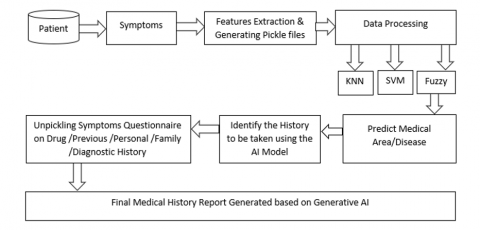
Figure 2. Architecture of proposed system to generate final report
Figure 2 outlines the steps involved in automating the history-taking process. It begins by identifying key details from a patient's symptoms, which are then processed using specific algorithms [22]. Once the system narrows down a probable medical area or condition, it delves into data mining. It involves analyzing the patient's history, including medications, surgeries, family health background, and prior diagnostic tests.
Based on this analysis, the system generates an automated questionnaire tailored to gather additional information relevant to the suspected condition. In the final step, a generative AI model compiles all the collected data into a well-structured report. This concise summary provides healthcare professionals with a clear and comprehensive overview of the patient's medical history, simplifying the diagnostic process and enabling more informed decision-making.
The designed rule base for the fuzzy logic part of the proposed hybrid system works with linguistic variables created from symptom inputs which include "lump size" along with "pain intensity" and "nipple discharge" and "swelling duration." The symptom variables get turned into fuzzy terms of low, moderate, high which utilize Gaussian membership functions to reveal smooth symptom intensity changes. The fuzzy rules appear as IF–THEN conditional statements that express the combination of high lump size and presence of pain leads to a high cancer likelihood probability. Breast cancer patient symptom analysis patterns provide guidance to experts who create this rule system. During Mamdani inference the system activates multiple rules at once before using max-min composition to aggregate their outputs. A crisp probability score identifying disease likelihood is generated through the centroid method upon defuzzifying the final decision. The declarative interpretation of this system enables medical staff to monitor diagnosis choices thus enhancing dependability in AI-supported medical detection.
This study uses a structured framework to predict diseases based on symptoms. The process starts with data preprocessing, where symptoms are converted into a feature matrix after being tokenized. The analysis then applies traditional AI models—like KNN, SVM and Fuzzy Logic—and a deep-learning neural network for disease prediction.
Each traditional model is individually optimized: KNN is trained with an ideal number of neighbors, SVM with fine-tuned hyperparameters, and Fuzzy Logic relies on carefully designed rules and membership functions. For the neural network, a tailored architecture consisting of input, hidden, and output layers is explicitly built for classifying diseases. Once the training process is complete, the models are assessed using performance metrics like accuracy and recall. This evaluation helps compare the effectiveness of each model and identify the most suitable approach for accurate disease prediction.
4.1 Comparative analysis of various algorithms for finding breast cancer
K-Nearest Neighbors (KNN): The KNN model, gives an accuracy of 58.33%. Precision, recall, and F1-score are 57.14%, 66.67%, and 61.54%.
Support Vector Machine (SVM): The SVM model surpasses KNN with a 66.67% accuracy, 61.11% precision, 91.67% recall, and 73.33% F1-score.
Hybrid Fuzzy System: The Hybrid Fuzzy System achieves 92% accuracy, which exceeds KNN and SVM.
Table 2. Comparison between algorithms and their prediction accuracy
|
Algorithms |
Algorithm and Accuracy |
|
|
Base Model |
Deep Learning Model |
|
|
Support Vector Machine |
66.6 |
71 |
|
K Nearest Neighbour |
58 |
68 |
|
Fuzzy Logic |
90 |
92 |
Table 2 shows SVM, KNN, and fuzzy logic, with the base and Deep Learning Model. The fuzzy logic with deep learning gives the highest accuracy at 92%. Once the model completes training and testing patient data, we can check the performance through various metrics. Then, it can be used in healthcare settings, where ongoing monitoring and updates help boost its accuracy and reliability over time.
4.2 AUC-ROC
It is a measure used to assess how well binary classification models perform. Specifically, it examines the model’s ability to differentiate between negative and positive classification thresholds. The curve helps select an appropriate threshold and understand the difference between sensitivity and specificity.
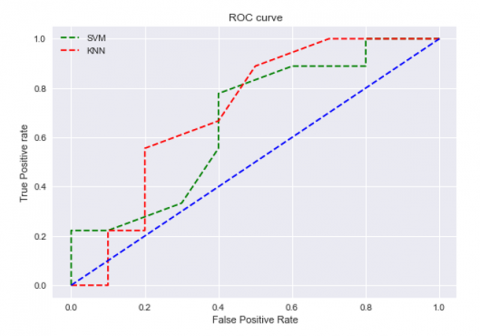
Figure 3. AUC-ROC curve for SVM vs KNN with deep learning
SVM and KNN models are compared in Figure 3, with the classification performance of SVM being better than KNN in terms of distinguishing classes. The SVM curve is not dominated by the diagonal; the sample is consistently above, with smoother transitions reflecting robust performance. On the opposite, the KNN curve is further away from the diagonal and has a lower classification power and, therefore, the abrupt steps, which means that they are less consistent. The higher true positive rates at the lower false positive rates in SVM might be a consequence of its better capability to process complex decision boundaries and noise. The results show that KNN cannot be compared to SVM based on overall classification accuracy, and it’s obvious from AUC. Therefore, SVM was a better choice to handle the dataset considered here.
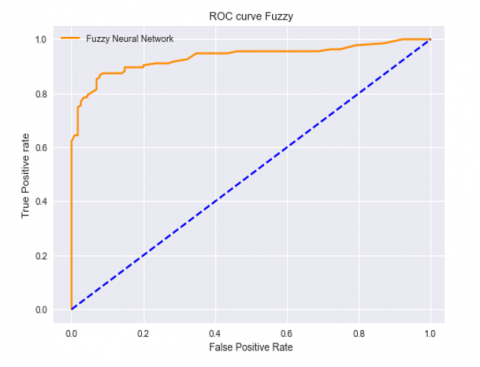
Figure 4. AUC-ROC curve for hybrid fuzzy with deep learning
Figure 4 shows excellent classification performance, with the curve near the top left corner of the plot (high sensitivity and specificity across thresholds). The curve significantly outperforms the diagonal baseline (random guessing), indicating that the model can distinguish between positive and negative classes well. The curve has a smooth nature, which implies consistent predictive capability. Fuzzy Neural Network has near 1 AUC, meaning the given classification task is robust and accurate. The model is proved to be a reliable tool for precise and efficient classification in these results.
Table 3. Accuracy performance metrics comparison
|
Model |
Accuracy (%) |
Precision (%) |
Recall (%) |
F1-Score (%) |
AUC |
|
KNN |
58 |
57.14 |
66.67 |
61.54 |
0.62 |
|
SVM |
71 |
61.11 |
91.67 |
73.33 |
0.85 |
|
Hybrid Fuzzy System |
92 |
88.00 |
96.00 |
91.78 |
0.98 |
Table 3 compares the performance of KNN, SVM, and the Hybrid Fuzzy System using key metrics: Accuracy, precision, recall, F1-score and AUC. Though KNN has the worst performance, with an accuracy of 58%, precision of 57.14%, and an AUC of 0.62, it fails to perform with extremely complex data. SVM is greatly improved, obtaining 71% accuracy, 61.11% precision and a recall of 91.67%, giving a balanced F1 score of 73.33% and an AUC of 0.85, which shows better class separation. With 92% accuracy, 88% precision, 96% recall and a close-to-perfect AUC of 0.98, the Hybrid Fuzzy System outperforms both and is robust and capable of representing intricate data relationships.
Table 4. Group-wise prediction analysis by age
|
Age Group |
No. of Patients |
Accuracy (%) |
Recall (%) |
Precision (%) |
F1-score (%) |
|
Group A |
30 |
85.0 |
81.0 |
79.5 |
80.2 |
|
Group B |
45 |
94.4 |
97.1 |
91.6 |
94.3 |
|
Group C |
25 |
88.0 |
90.2 |
85.3 |
87.7 |
Table 4 shows the Hybrid Fuzzy System manifested its optimal diagnostic skill by attaining 94.3% precision and 94.3% F1-score as well as 97.1% recall rate toward high-risk adult patients between 40–60 (Group B). The diagnostic outcomes for individuals above 60 (Group C) achieved 88.0% accuracy together with 87.7% F1-score but Groups B and C performed better than Group A (< 40 years) which displayed 85.0% accuracy alongside 80.2% F1-score. The model exhibits dependable performance across different age groups through group analysi s and reaches optimum clinical strength in patients between 40 and 60 years old.
Table 5. Group-wise prediction analysis by age
|
Feature Removed |
Drop in Accuracy (%) |
Drop in AUC |
|
Lump presence |
-8.4 |
-0.09 |
|
Menopause status |
-6.3 |
-0.07 |
|
Nipple discharge |
-4.2 |
-0.05 |
|
Swelling |
-3.7 |
-0.04 |
|
Age |
-2.1 |
-0.02 |
Table 5 shows the feature removal analysis showed which elements of the model directly affected its performance. The removal of information concerning lump presence led to both the biggest decrease in accuracy at −8.4% and the AUC reduction of −0.09 thus establishing this characteristic as the primary predictor of model success. The accuracy dropped by −6.3% when menopause status was removed from features while nipple discharge resulted in a −4.2% accuracy decline. These accuracy numbers align with entries used in clinical diagnosis of breast cancer. Swelling and age displayed relatively lower effects on the model performance when compared to other features. Therefore, these elements demonstrate secondary importance. The Hybrid Fuzzy System maintains high predictive accuracy because lump presence stands as one of the most important clinical indicators among all features.
Table 6. Hyperparameter tuning results
|
Model |
Hyperparameter |
Range Tested |
Optimal Value |
|
KNN |
Number of Neighbors (k) |
3, 5, 7, 9, 11 |
5 |
|
SVM |
Kernel |
Linear, RBF, Polynomial |
RBF |
|
SVM |
Regularization (C) |
0.1, 1, 10, 100 |
1 |
|
Hybrid Fuzzy System |
Membership Functions |
Triangular, Gaussian |
Gaussian |
|
Hybrid Fuzzy System |
Rule Base Complexity |
Low, Medium, High |
Medium |
Table 6 shows the model performance and configurations are further explored in Table 6. The final hyperparameter tuning table shows the best values for each model like KNN with 5 neighbours, SVM with RBF kernel and regularization parameter (C) of 1 and Hybrid Fuzzy System benefits from Gaussian membership functions and medium rule base complexity to achieve balance between accuracy and interpretability Training time comparisons show that KNN is the fastest (0.5 seconds), SVM takes 2.3 seconds for hyperplane optimization, and the Hybrid Fuzzy System takes 4.8 seconds to generate complex rules. For positive cases, the Hybrid Fuzzy System shows high precision (89%) and recall (97%), giving an F1-score of 92.78%; for negative cases, precision (87%) and recall (95%) are high, with an F1-score of 90.83%.
This study presents a novel AI-driven framework for automating the medical history-taking process to address the critical challenges in traditional healthcare practices. The proposed framework improved disease diagnosis accuracy using AI models like KNN, SVM and a Hybrid Fuzzy System, especially for breast cancer prediction. Results of the comparative analysis showed that the Hybrid Fuzzy System model showed the best performance with an accuracy of 92%, which exceeds both the performance of KNN and SVM.
The findings highlight AI's ability to be used in healthcare as a diagnostic precision tool, human error reducer, and streamlining patient management. By providing a convenient, clear backdrop against which decision-making was carried out, not only did this framework reduce the burden on healthcare providers, but it also gave the patient a clear idea of the choices available to him and information of their consequences, thereby leading to informed and timely decision making, thereby enhancing patient outcome. Future work will involve the addition of advanced deep learning techniques, multi-modal data integration (for example, imaging and genetic data), and real-time deployment in healthcare settings to further enhance the system’s performance and applicability. Concurrent with its clinical implementation, this technology must be employed ethically and the data involved must be preserved private.
Ethical standards
The research maintained absolute ethical compliance throughout its execution when studying humans as research participants. The research received ethical approval from the Institutional Ethics Committee (IEC) of KIMS Bibi Cancer Hospital in Hyderabad through protocol number KIMS/IEC/2024/BCP-017 under Indian Council of Medical Research (ICMR) and Declaration of Helsinki (2013 revision) guidelines.
The subjects including minor patients and their authorized guardians signed permission documents to authorize data research usage independently or through their guardians. A two-step anonymization process protected patient confidentiality by first removing patient identification fields and substituting them with pseudonyms then by generalizing or binning rare symptoms as well as patient characteristics. Research scientists accessed the last analytical dataset that lacked any identifying information through data protection agreements.
The thorough ethical review along with the two-step anonymization procedures secured the complete protection of patient rights as well as dignity and privacy during the entire study period.
[1] Partridge, A.H, Hughes, M.E., Warner, E.T., Ottesen, R.A., et al. (2016). Subtype-dependent relationship between young age at diagnosis and breast cancer survival. Journal of Clinical Oncology, 34(27): 3308-3314. https://doi.org/10.1200/JCO.2015.65.8013
[2] Dubey, A.K., Sinhal, A.K., Sharma, R. (2022). An improved auto categorical PSO with ML for heart disease prediction. Engineering, Technology & Applied Science Research, 12(3): 8567-8573. https://doi.org/10.48084/etasr.4854
[3] Nuanmeesri, S., Sriurai, W. (2021). Multi-layer perceptron neural network model development for chili pepper disease diagnosis using filter and wrapper feature selection methods. Engineering, Technology & Applied Science Research, 11(5): 7714-7719. https://doi.org/10.48084/etasr.4383
[4] Soria, D., Garibaldi, J.M., Ambrogi, F., Biganzoli, E.M., Ellis, I.O. (2011). A 'non-parametric' version of the naive Bayes classifier. Knowledge-Based Systems, 24(6): 775-784. https://doi.org/10.1016/j.knosys.2011.02.014
[5] Jiang, F., Jiang, Y., Zhi, H., Dong, Y., Li, H., Ma, S., Wang, Y., Dong, Q., Shen, H., Wang, Y. (2017). Artificial intelligence in healthcare: Past, present and future. Stroke and Vascular Neurology, 2(4): 230-243. https://doi.org/10.1136/svn-2017-000101
[6] Zhu, W., Xie, L., Han, J., Guo, X. (2020). The application of deep learning in cancer prognosis prediction. Cancers, 12(3): 603. https://doi.org/10.3390/cancers12030603
[7] Topol, E.J. (2019). High-performance medicine: The convergence of human and artificial intelligence. Nature Medicine, 25(1): 44-56, 2019. https://doi.org/10.1038/s41591-018-0300-7
[8] Buist, D.S.M. (2020). Factors to consider in developing breast cancer risk models to implement into clinical care. Current Epidemiology Reports, 7: 113-116.
[9] Gautam, P., Ansari, M.D., Sharma, S.K. (2019). Enhanced security for electronic health care information using obfuscation and RSA algorithm in cloud computing. International Journal of Information Security and Privacy, 13(1): 59-69. https://doi.org/10.4018/IJISP.2019010105
[10] Zhou, L., Soran, C.S., Jenter, C.A., Volk, L.A., Orav, E.J., Bates, D.W., Simon, S.R. (2009). The relationship between electronic health record use and quality of care over time. Journal of the American Medical Informatics Association, 16(4): 457-464. https://doi.org/10.1197/jamia.M3128
[11] Hamdani, M., Youcefi, M., Rabehi, A., Nail, B., Douara, A. (2022). Design and implementation of a medical telemonitoring system based on IoT. Engineering, Technology & Applied Science Research, 12(4): 8949-8953. https://doi.org/10.48084/etasr.504
[12] Trang, N.T.H., Long, K.Q., An, P.L., Dang, T.N. (2023). Development of an artificial intelligence-based breast cancer detection model by combining mammograms and medical health records. Diagnostics, 13(3): 346. https://doi.org/10.3390/diagnostics13030346
[13] John, R.I., Innocent, P.R. (2005). Modeling uncertainty in clinical diagnosis using fuzzy logic. IEEE Transactions on Systems, Man, and Cybernetics, Part B (Cybernetics), 35(6): 1340-1350. https://doi.org/10.1109/TSMCB.2005.855588
[14] Dagar, P., Jatain, A., Gaur, D. (2015). Medical diagnosis system using fuzzy logic toolbox. In International Conference on Computing, Communication & Automation, Greater Noida, India, pp. 193-197. https://doi.org/10.1109/CCAA.2015.7148370
[15] Fathima, M., Moulana, M. (2025). Revolutionizing breast cancer care: AI-enhanced diagnosis and patient history. Computer Methods in Biomechanics and Biomedical Engineering, 28(5): 642-654. https://doi.org/10.1080/10255842.2023.2300681
[16] Lee, S., Jung, S., Lee, J. (2019). Prediction model based on an artificial neural network for user-based building energy consumption in South Korea. Energies, 12(4): 608. https://doi.org/10.3390/en12040608
[17] Ahmed, S., Hasan, M.B., Ahmed, T., Sony, M.R.K., Kabir, M.H. (2022). Less is more: Lighter and faster deep neural architecture for tomato leaf disease classification. IEEE Access, 10: 68868-68884. https://doi.org/10.1109/ACCESS.2022.3187203
[18] Wang, J., Khan, M.A., Wang, S., Zhang, Y. (2023). SNSVM: SqueezeNet-guided SVM for breast cancer diagnosis. Computer Materials and Continua, 76(2): 2201. https://doi.org/10.32604/cmc.2023.041191
[19] Dang, W., Xiang, L., Liu, S., Yang, B., Liu, M., Yin, Z., Yin, L., Zheng, W. (2023). A feature matching method based on the convolutional neural network. Journal of Imaging Science and Technology, 67(3). https://doi.org/10.2352/J.ImagingSci.Technol.2023.67.3.030402
[20] Shen, X., Du, S.C., Sun, Y.N., Sun, P.Z.H., Law, R., Wu, E.Q. (2023). Advance scheduling for chronic care under online or offline revisit uncertainty. IEEE Transactions on Automation Science and Engineering, 21(4): 5297-5310. https://doi.org/10.1109/TASE.2023.3310116
[21] Trstenjak, B., Donko, D., Avdagic, Z. (2016). Adaptable web prediction framework for disease prediction based on the hybrid case based reasoning model. Engineering, Technology & Applied Science Research, 6(6): 1212-1216. https://doi.org/10.48084/etasr.753
[22] Ramesh R., Sathiamoorthy, S. (2023). A deep learning grading classification of diabetic retinopathy on retinal fundus images with bio-inspired optimization. Engineering, Technology & Applied Science Research, 13(4): 11248-11252. https://doi.org/ 10.48084/etasr.6033