Ari Rahman* | Diva Ramadhani Jatnika | Betanti Ridhosari | Eri Aryani
© 2025 The authors. This article is published by IIETA and is licensed under the CC BY 4.0 license (http://creativecommons.org/licenses/by/4.0/).
OPEN ACCESS
This research represents a crucial advancement in enhancing workplace safety within the construction sector. It investigates the evaluation of both physical and mental workloads among workers involved in electronic installations at the Building X construction site. The objective of the study was to evaluate physical workload using the Cardiovascular Load (CVL) method and to assess mental workload through interviews, along with the distribution of the National Aeronautics and Space Administration-Task Load Index (NASA-TLX) questionnaires. The findings show that ten employees aged between 21 and 45 recorded a %CVL value of under 30%, suggesting they did not encounter significant physical workload in their tasks. Nevertheless, the assessment of mental workload indicated that three employees faced a very high mental demand. According to the comparative analysis of the NASA-TLX categories, the effort is the most prominent factor, which underscores the necessity for intense focus and the capacity to meet established goals within this position. The primary three elements affecting mental workload are fatigue/saturation, the work environment, and air dust pollution. Recommendations for alleviating workload should be adhered to by referencing the Hierarchy of Risk Control in Occupational Safety and Health, in accordance with ISO 45001.
physical workload, mental workload, CVL, national aeronautics and space administration-task load index (NASA-TLX), employees of electronic installations
Technological developments and innovations in the industrial world always align with the times. This fosters a competitive attitude and supports the company's competitiveness to achieve efficient and optimal performance [1]. Additionally, the role of human resources must be a priority for the company, as it significantly influences the promotion of good occupational safety and health. A critical consideration for the company is the workload experienced by employees. If the workload exceeds the standard, it can adversely affect employee performance and productivity [2].
The concept of workload can stem from the demands of tasks or jobs and the employee's skills, work environment, perceptions, and behaviors [3]. Human activities can be divided into two categories: physical work, which requires physical energy (muscles), and mental work, which requires concentration (brain) as the primary cognitive function [4]. Each person experiences different levels of workload in their work. Therefore, assessing or measuring workload levels is essential to achieve an optimal balance [5]. Companies must thoroughly evaluate the workload of their employees, as it significantly impacts their safety and health, particularly in electronic installations that require considerable physical and mental exertion [6]. However, many companies continue to overlook the critical nature of this analysis. Both physical and mental workloads are essential factors that influence employee productivity [7]. It is imperative for organizations to conduct assessments of employee workload, as these evaluations can directly affect overall health and safety within high-demand work environments such as electronic installations [6]. Unfortunately, a substantial number of companies fail to acknowledge the importance of this analysis, despite its relevance in shaping employee productivity [7].
In a construction project, electronic installation work involves a complex system that requires physical and mental health. One of the ongoing construction projects, particularly in Jakarta City, is the Building X construction project, which currently aims to complete the electronic installation section. This project was chosen for the study due to its scale and the variety of electronic systems involved. Electronics work includes telecommunication systems, sound systems, nurse station equipment, CCTV, IP-TV, computer networks/LAN, and smoke and heat detectors. To finish this section, employees are experiencing physical and mental workload. The workload experienced by employees can be due to several factors, such as age, gender, body size, physical and mental health, skill level, and nutritional state [8].
Ergonomics researchers have identified several methodologies for assessing workload. To evaluate physical workload, researchers may employ objective measurements such as pulse rate, Cardiovascular Load (CVL), eye blink frequency, flicker tests, and salivary acid levels [9]. In contrast, the measurement of mental workload is generally conducted through subjective assessments utilizing various techniques. Prominent methods in this regard include the Subjective Workload Assessment Technique (SWAT), the National Aeronautics and Space Administration Task Load Index (NASA-TLX), Modified Cooper Harper Scaling (MCH), the Rating Scale Mental Effort (RSME), and the Defense Research Agency Workload Scale (DRAWS) [10].
In this study, electronic installation employees' physical and mental workloads were measured using the CVL and the National Aeronautics and Space Administration-Task Load Index (NASA-TLX) methods. The CVL method, based on pulse or heart rate, is essential for indicating a person's overall physical health or fitness [11]. Factors such as physical activity can affect a person's pulse rate. The electronic installation work, particularly in construction projects, requires high physical energy and can lead to physical fatigue [12]. The NASA-TLX method is widely used to measure the workload experienced by individuals. This method allows respondents to provide subjective feedback based on their views, perceptions, and feelings, making it a more sensitive assessment system [13]. The method involves a questionnaire with six subscales for assessment, which is easier for respondents to understand than other subjective measurement methods [14].
Based on the aforementioned background, this study will employ two methodologies to assess the physical and mental workload of employees involved in electronic installation: the measurement of pulse rate, which reflects the CVL method and the NASA-TLX method. According to the findings of Dias et al. [15] and Yoopat et al. [16], both the CVL and NASA-TLX methods present several notable advantages, including cost-effectiveness, ease of application, and high sensitivity, which collectively minimize the potential for errors. Consequently, these methods are deemed appropriate for evaluating physical and mental workload. The analysis derived from these methodologies will facilitate an understanding of the levels of physical and mental workload experienced by employees engaged in electronic installation. Furthermore, the study will offer actionable recommendations for improvement strategies aimed at effectively managing the workload encountered by these employees.
This research was conducted directly using objective and subjective measurement methods. Objective research will be carried out using a physiological approach to employees that can be quantified by changes in the function of the employee's body. In contrast, subjective research is carried out based on the perception/subjectivity of the employee. In addition, this study's first data collection method was observation, which measured the pulse rate using the Pulse Oximeter type LED AB-98 (Mixio, Indonesia) directly when employees carried out work and when resting. This pulse measurement is carried out to determine the physical workload of employees. The pulse measurement method or CVL method refers to research [17] where pulse data will be carried out two times at the time before work at 08.00–09.00 and at work time 09.00-11.30, and the measurement is carried out for seven days.
The second method of data collection is to conduct interviews and disseminate NASA-TLX questionnaires, where employees will be asked to determine rating values against six subscales on NASA-TLX consisting of Mental Demand (MD), Physical Demand (PD), Temporal Demand (TD), Performance (PF), Frustration Level (FR), and Effort (EF).
2.1 CVL method
CVL is a method used to measure a person's physical workload by monitoring their pulse rate [18]. This method involves identifying respondents based on age, gender, length of service, type of work, and hours of work and rest. The employee's pulse is measured by clamping the Oximeter tool to their fingers. Pulse measurement is carried out twice: first, when the employee is not working, and second, when the employee is performing their work. Based on the outcomes of the two pulse measurements, we can calculate the percentage of CVL by applying Eq. (1). This equation allows us to quantify the variability or concentration of the measured parameters, providing valuable insights into the data collected from the measurements [19].
$\% C V L=\frac{100 x(working\,pulse-resting\,pulse)}{(max. working\,pulse-resting\, pulse)}$ (1)
Information:
The maximum pulse rate for men is 220-age.
The maximum pulse rate for women is 200-age.
The maximum working pulse for men can be calculated using the formula (220-age), while for women it is (200-age). Once the results have been calculated using the CVL percentage equation, the physical workload can be studied based on the classification standards listed in Table 1 [20].
Table 1. CVL classification standards
|
Category |
Value (%) CVL |
Information |
|
Light |
<30% |
No significant workload occurs |
|
Medium |
30-60% |
Repairs are needed but not urgent |
|
Heavy |
60-80% |
Allowed to work in a short time |
|
Heavy |
80-100% |
Immediate corrective action is required |
|
Very heavy |
>100% |
Work activities should not be carried out |
2.2 National aeronautics and space administration-task load index (NASA-TLX)
The NASA-TLX method, developed by the National Aeronautics and Space Administration, measures an individual's mental workload. This method involves distributing questionnaires to respondents, who then provide subjective ratings on six different subscales using a scale of 0 to 100. The NASA-TLX method, on the other hand, involves conducting interviews and disseminating questionnaires to employees, where they will be asked to determine rating values against six subscales on NASA-TLX consisting of as follows: (1) Mental Demand (MD) refers to the cognitive effort required for task completion, including perception, decision-making, and memory load; (2) Physical Demand (PD) refers to the physical activity, strength, and endurance required to perform a task, encompassing factors such as manual handling, repetitive motions, and overall bodily exertion; (3) Temporal Demand (TD) refers to the stress associated with performing tasks under time constraints or pressure; (4) Performance (PF) refers to how effectively and efficiently tasks are executed, encompassing output quality, accuracy, and speed of completion; (5) Frustration Level (FR) refers to the degree of annoyance or dissatisfaction experienced by individuals when facing obstacles or challenges during task performance. It is associated with the emotional response to difficulties encountered during task execution; (6) Effort (EF) involves the physical and mental exertion invested in task performance, including energy, concentration, and determination [21].
Six subscales of the NASA-TLX are necessary to evaluate the workload of workers involved in electronic installations through a comprehensive mental analysis that encompasses various types of work, including (1) installation of telecommunications systems, (2) testing of horn strobe/fire alarms, and (3) testing of telecommunications systems. Work in the field of electronic installations requires both mental and physical efforts, as it demands high levels of concentration and the capacity to achieve specific objectives while delivering results that meet or exceed expectations. When organizational targets are set high and employees are unable to complete their tasks within the designated working hours, they may find themselves compelled to work overtime, ultimately affecting their ability to meet these targets [22].
Table 2. Subscales comparing NASA-TLX factors
|
MD/PD |
PD/TD |
TD/FR |
|
MD/TD |
PD/PF |
TD/EF |
|
MD/PF |
PD/FR |
PF/FR |
|
MD/FR |
PD/EF |
PF/EF |
|
MD/EF |
TD/PF |
EF/FR |
Table 3. Mental Workload Interpretation of NASA-TLX Methods
|
No. |
Workload Intervals |
Value |
|
1 |
Low |
0-9 |
|
2 |
Medium |
10-29 |
|
3 |
High |
30-49 |
|
4 |
High |
50-79 |
|
5 |
Very high |
80-100 |
According to Hart and Staveland [18], the NASA-TLX method for measuring mental workload involves the following steps: (a) explain the six NASA-TLX measurement subscales to respondents to determine rating values; (b) compare and assign weights to 15 paired subscales as shown in Table 2 [18].
a. Calculate the value of the product by multiplying the predetermined rating value by the weighting result using Eq. (2) as follows [17]:
$Product= rating\, x \, weight \, factor $ (2)
b. Calculate the workload value (weighted workload) using Eq. (3) as follows [17]:
$W W L=\Sigma \, product$ (3)
c. Calculate the average score to determine the category of mental workload experienced by employees using Eq. (4) as follows [17]:
$ Average\, score =\frac{W W L}{15}$ (4)
d. Determine the category of mental workload and determine the interpretation of the workload experienced by respondents based on the mental workload intervals of the NASA-TLX method, which can be seen in Table 3 [18].
The construction project for Building X is located in Jakarta. Currently, the construction work is focused on electronics and involves ten male employees aged 21 to 45. These employees have been working on the project for 5 to 24 months.
3.1 CVL analysis
In this study, the CVL method was used to measure the pulse rate of electronic installation employees. The method involved using a pulse oximeter to collect data on resting pulse and working pulse over seven working days. Subsequently, the average resting pulse, work pulse, and %CVL for ten electronic installation employees were calculated and summarized in Table 4.
Table 4. Recapitulation of pulse measurement data
|
I.D. |
Age (Year) |
Max. Pulse |
Average Resting Pulse (Beats/Minute)* |
Average Working Pulse (Beats/Minute) ** |
%CVL |
Information |
|
Employee 1 |
33 |
187 |
94.9 |
106.0 |
12.1 |
No significant workload occurs |
|
Employee 2 |
21 |
199 |
100.7 |
104.7 |
4.1 |
No significant workload occurs |
|
Employee 3 |
29 |
191 |
86.6 |
95.9 |
8.9 |
No significant workload occurs |
|
Employee 4 |
38 |
182 |
69.7 |
85.9 |
14.4 |
No significant workload occurs |
|
Employee 5 |
32 |
188 |
56.0 |
56.9 |
0.6 |
No significant workload occurs |
|
Employee 6 |
22 |
198 |
105.4 |
106.4 |
1.1 |
No significant workload occurs |
|
Employee 7 |
27 |
193 |
97.4 |
100.1 |
2.8 |
No significant workload occurs |
|
Employee 8 |
45 |
175 |
57.3 |
63.7 |
5.5 |
No significant workload occurs |
|
Employee 9 |
25 |
195 |
91.9 |
102.6 |
10.4 |
No significant workload occurs |
|
Employee 10 |
23 |
197 |
88.1 |
94.1 |
5.5 |
No significant workload occurs |
*Average summation results from resting pulse measurement data for seven days.
**Average summation results from working pulse measurement data for seven days.
Based on the resting pulse and working pulse data collected over seven days, the %CVL formula in Eq. (1) was used to calculate the %CVL results for ten employees. It was found that all ten employees had a %CVL value of less than 30%, indicating that they did not experience significant physical workload while performing their jobs. Based on the resting heart rate and working heart rate data collected over a period of seven days, the %CVL values were calculated using the formula presented in Eq. (1). The analysis revealed that out of ten employees who demonstrated %CVL results below 30%, these individuals did not encounter significant physical demands in the course of their respective job responsibilities. Notably, among the employees analyzed, three exhibited the highest %CVL values: Employee 4 at 14.4%, Employee 1 at 12.1%, and Employee 9 at 10.4%.
However, upon further analysis, it was discovered that one employee, employee 4, had the highest %CVL value at 14.4%. It is important to note that age and workload, when considered together, do not directly correlate with fatigue or a specific burden. While age and weight can individually relate to fatigue, no direct relationship was found between fatigue and the combination of age and workload [23]. The level of fatigue experienced by individuals of different ages and with different life experiences can be the same despite having the same workload. However, younger employees may experience a more severe workload than older employees due to factors such as additional activities, psychological factors (emotions), length of service, decreased body function (degeneration), or a history of certain diseases [24, 25]. A study conducted by Susanti and Pangesti [26] examined physical workload utilizing the Continuous Vibration Level (CVL) method in the finishing area of a metal company located in Klaten, Central Java. The investigation revealed that performance measurements for employees had not been previously undertaken, despite the fact that employees frequently engaged in overtime to fulfill their work responsibilities. The findings indicated that 50% of employees required improvements in their performance, while the remaining 50% did not report experiencing fatigue.
3.2 National aeronautics and space administration-task load index (NASA-TLX) analysis
The NASA-TLX method involves collecting feedback from 10 employees at electronic installations to ascertain their subjective experiences related to mental workload. This assessment covers six key aspects: Mental Demand (MD), Physical Demand (PD), Temporal Demand (TD), Performance (PF), Frustration Level (FR), and Effort (EF), each ranging from 0 to 100. The result of this evaluation is displayed in Table 5 for detailed review and analysis.
Table 5. NASA-TLX rating data
|
Name |
Category |
Rating |
Weight |
Rating X Weight |
Average Score |
Interpretation |
|
Employee 1 |
MD |
50 |
3 |
150 |
64 |
High |
|
PD |
70 |
4 |
280 |
|||
|
TD |
50 |
2 |
100 |
|||
|
PF |
20 |
0 |
0 |
|||
|
FR |
30 |
1 |
30 |
|||
|
EF |
80 |
5 |
400 |
|||
|
Sum |
|
300 |
15 |
960 |
|
|
|
Employee 2 |
MD |
60 |
3 |
180 |
60.7 |
High |
|
PD |
50 |
2 |
100 |
|||
|
TD |
40 |
1 |
40 |
|||
|
PF |
30 |
0 |
0 |
|||
|
FR |
60 |
4 |
240 |
|||
|
EF |
70 |
5 |
350 |
|||
|
Sum |
|
310 |
15 |
910 |
|
|
|
Employee 3 |
MD |
80 |
3 |
240 |
80.7 |
Very High |
|
PD |
100 |
5 |
500 |
|||
|
TD |
60 |
2 |
120 |
|||
|
PF |
30 |
1 |
30 |
|||
|
FR |
30 |
0 |
0 |
|||
|
EF |
80 |
4 |
320 |
|||
|
Sum |
|
380 |
15 |
1210 |
|
|
|
Employee 4 |
MD |
60 |
2 |
120 |
72 |
High |
|
PD |
75 |
4 |
300 |
|||
|
TD |
50 |
1 |
50 |
|||
|
PF |
0 |
0 |
0 |
|||
|
FR |
70 |
3 |
210 |
|||
|
EF |
80 |
5 |
400 |
|||
|
Sum |
|
335 |
15 |
1080 |
|
|
|
Employee 5 |
MD |
50 |
2 |
100 |
63.7 |
High |
|
PD |
60 |
4 |
240 |
|||
|
TD |
55 |
3 |
165 |
|||
|
PF |
30 |
0 |
0 |
|||
|
FR |
50 |
1 |
50 |
|||
|
EF |
80 |
5 |
955 |
|||
|
Sum |
|
325 |
15 |
|
|
|
|
Employee 6 |
MD |
60 |
3 |
180 |
61 |
High |
|
PD |
60 |
2 |
120 |
|||
|
TD |
50 |
1 |
50 |
|||
|
PF |
40 |
0 |
0 |
|||
|
FR |
65 |
5 |
325 |
|||
|
EF |
60 |
4 |
240 |
|||
|
Sum |
|
335 |
15 |
915 |
|
|
|
Employee 7 |
MD |
60 |
2 |
120 |
69.7 |
High |
|
PD |
50 |
1 |
50 |
|||
|
TD |
65 |
3 |
195 |
|||
|
PF |
40 |
0 |
0 |
|||
|
FR |
70 |
4 |
280 |
|||
|
EF |
80 |
5 |
400 |
|||
|
Sum |
|
365 |
15 |
1045 |
|
|
|
Employee 8 |
MD |
90 |
4 |
360 |
74.7 |
High |
|
PD |
100 |
5 |
500 |
|||
|
TD |
60 |
3 |
180 |
|||
|
PF |
30 |
2 |
60 |
|||
|
FR |
20 |
1 |
20 |
|||
|
EF |
10 |
0 |
0 |
|||
|
Sum |
|
310 |
15 |
1120 |
|
|
|
Employee 9 |
MD |
100 |
5 |
500 |
81 |
Very High |
|
PD |
80 |
3 |
240 |
|||
|
TD |
50 |
0 |
0 |
|||
|
PF |
50 |
2 |
100 |
|||
|
FR |
20 |
1 |
20 |
|||
|
EF |
90 |
4 |
360 |
|||
|
Sum |
|
390 |
15 |
1220 |
|
|
|
Employee 10 |
MD |
70 |
1 |
70 |
93 |
Very High |
|
PD |
100 |
5 |
500 |
|||
|
TD |
100 |
4 |
400 |
|||
|
PF |
20 |
0 |
0 |
|||
|
FR |
80 |
2 |
160 |
|||
|
EF |
90 |
3 |
270 |
|||
|
Sum |
|
460 |
15 |
1400 |
|
|
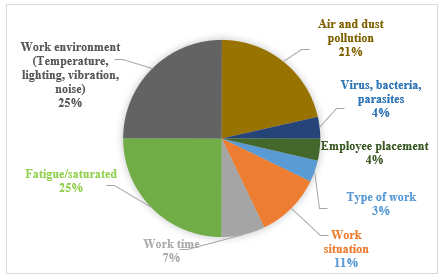
Figure 1. Factors affecting the mental workload of electronic installation employees
According to the results obtained from measuring mental workload using the NASA-TLX method, out of 10 employees of electronic installations, seven employees scored in the high category of NASA-TLX (50-79), while the other three employees scored in the very high category (80-100). The challenge of mental workload can lead to transformative changes in human performance and behavior [27]. These results suggest that employees of electronic installations require extensive mental effort when performing their duties, indicating a high workload. High workloads can lead to fatigue, increasing the risk of work accidents and occupational diseases [28].
Based on the comparison of the 15 selected paired subscales, it can be concluded that the weights for each subscale are as follows: Mental Demand (MD) 28, Physical Demand (PD) 35, Temporal Demand (TD) 21, Performance (PF) 5, Frustration Level (FR) 21, and Effort (EF) 40. The dominant subscale, which can significantly impact the mental workload of electronic installation employees, is Effort (EF), which weighs 40. This indicates that employees must make a significant effort to meet their daily targets. If the targets are high and employees cannot complete their work within regular working hours, they would need to work overtime, leading to difficulties meeting the targets. This suggests the presence of three dominant aspects [29].
The mental workload of electronic installation employees was evaluated using the NASA-TLX questionnaire on ten employees. Figure 1 shows additional information about several factors affecting the mental workload. The top three factors influencing the mental workload are fatigue/saturation with the situation, the work environment, and air and dust pollution. It is noted that the physical conditions of the environment or existing working conditions can contribute to fatigue [30].
Some work areas still need proper lighting, impacting work effectiveness and employee posture. Many work areas in the room are small and need better air circulation. Additionally, certain work areas are affected by noisy activities, such as welding, and there is a significant amount of dust on the work area floor and in the air [31].
Based on the findings of the NASA-TLX questionnaire, the mental fatigue or saturation experienced by electronic installation employees may be influenced by factors such as individual conditions, including age, level of education/experience, genetics, and culture [32]. The degree of mental fatigue can also be significantly influenced by personality traits such as introversion or extroversion. Individuals with an introverted personality tend to have a more introverted or individualistic lifestyle, which can lead to increased mental fatigue. On the other hand, individuals with extroverted personalities tend to be more active and may be less affected by monotony [33]. Another critical factor is the social cognitive aspect or social support within the surrounding environment. Social cognitive factors have a significant impact on an individual's mental load. When people enter a new environment, they face the demand to adapt and adjust to their new surroundings. An individual's inability to adapt can negatively affect mental and physical health [34]. The last factor is having a strategy or solution for managing every mental or stressful workload. When a person encounters a mental or stressful workload that they cannot cope with or control, it can impact their performance. This may lead to feeling cynical and having negative judgments about themselves, others, or their work [35].
Based on the results of measuring physical and mental workloads, the top three factors causing mental workload are the work environment (temperature, lighting, vibration, and noise), fatigue/saturation, and air and dust pollution. To reduce the workload experienced by employees of electronic installations, improvement efforts can be proposed by referring to the Hierarchy of Risk Control in Occupational Safety and Health based on ISO 45001:
4.1 Engineering controls
To address and reduce the issue of an unsafe work environment and activities that may pose a danger, design, and engineering controls can be implemented by providing a proper lighting environment. Certain working areas need more lighting sources or have no lighting at all. The absence of adequate lighting in these areas can lead to eye strain and fatigue, as employees are forced to work in low-light conditions. By examining the various factors that impact work performance, valuable insight can be obtained to optimize lighting design and operation for better overall performance. The research conducted by Konstantzos et al. [36] found that task performance improves with brighter lighting, contrast ratios between 7:1 and 11:1 (while ensuring glare is avoided), and higher correlated color temperatures. Moreover, adjusting the lighting spectrum towards red or blue wavelengths has also demonstrated beneficial effects [36].
4.2 Administrative controls
The division of duties can be adjusted as part of our administrative controls to reduce the workload on employees. By reorganizing the allocation of tasks, the high mental load experienced by employees can be addressed. This may be due to imbalanced task distribution and differing employee abilities, leading to fatigue and decreased productivity. To ensure effective and efficient distribution of employee duties, clearly defining job specifications in written form is essential. This includes outlining the required employee qualities, educational qualifications, physical, technical, emotional, and communication skills, and work experience needed to carry out the responsibilities associated with a particular job effectively.
Ensuring job satisfaction is essential for driving employee productivity and reducing organizational turnover. Inegbedion et al. [37] proposed a model outlining the significant factors influencing job satisfaction. They emphasized that employees' satisfaction with their jobs is heavily impacted by how they perceive the balance of their workload. They focused on three key factors: comparing their workload to that of their coworkers, the organization's staffing levels, and how well their roles align with their responsibilities [37].
4.3 Personal protective equipment
One way to improve working conditions for electronic installation employees is by providing appropriate personal protective equipment (PPE). The work environment, including temperature, lighting, noise, vibration, and dust pollution, can contribute to mental workloads. Personal protective equipment, such as earplugs and masks, can help address these challenges. Earplugs can protect employees from excessive noise in the project area, while disposable paper, cotton, or gauze masks can shield employees from dust, ensuring better breathing conditions [38].
Over seven days, measurements were taken to assess the physical workload of employees in the electronic installation department using the CVL method and resting pulse measurements. The results indicated the employees did not experience a significant workload, as the %CVL value was below 30%. Additionally, the mental workload of the employees was evaluated using the NASA-TLX questionnaire method. The results showed that seven employees experienced a high mental workload, while 3 experienced a very high mental workload. Employee 10 had the highest average mental workload score, with a score of 93. The analysis of the NASA-TLX scores reveals that a critical factor influencing mental load is the social cognitive aspect, specifically the availability of social support within the surrounding environment. Social cognitive factors exert a substantial influence on an individual's cognitive and emotional processing, thereby impacting overall mental load. Based on the findings from the physical and mental workload measurements, it is recommended that improvements be implemented following the hierarchy of risk control in occupational safety and health (ISO 45001). These improvements include design/engineering steps such as providing additional work lights, administrative controls like rearranging the division of duties based on employee abilities and providing personal protective equipment such as earplugs and masks to reduce the workload experienced by employees. Conversely, mental plays a significant role in influencing employee performance, encompassing critical factors such as social support and the overall working environment. Fostering healthy professional relationships and emotional connections among employees may alleviate their workload and enhance their productivity.
[1] Natalia, I., Ellitan, L. (2019). Strategies to achieve competitive advantage in industrial revolution 4.0. International Journal of Research Culture Society, 3(6): 10-16.
[2] Hauke, A., Flaspöler, E., Reinert, D. (2020). Proactive prevention in occupational safety and health: How to identify tomorrow's prevention priorities and preventive measures. International Journal of Occupational Safety and Ergonomics, 26(1): 181-193. https://doi.org/10.1080/10803548.2018.1465677
[3] Tentama, F., Rahmawati, P.A., Muhopilah, P. (2019). The effect and implications of work stress and workload on job satisfaction. International Journal of Scientific and Technology Research, 8(11): 2498-2502.
[4] Pärkkä, J. (2011). AAnalysis of Personal Health Monitoring Data for Physical Activity Recognition and Assessment of Energy Expenditure, Mental Load and Stress, VTT.
[5] Matthews, G., De Winter, J., Hancock, P.A. (2020). What do subjective workload scales really measure? Operational and representational solutions to divergence of workload measures. Theoretical Issues in Ergonomics Science, 21(4): 369-396. https://doi.org/10.1080/1463922X.2018.1547459
[6] Mutia, M. (2014). Pengukuran beban kerja fisiologis dan psikologis pada operator pemetikan teh dan operator produksi teh hijau di PTMitra kerinci. Jurnal Optimasi Sistem Industri, 13(1): 503-517. https://doi.org/10.25077/josi.v13.n1.p503-517.2014
[7] Rahmah, S.A. (2018). Analisis beban kerja fisik dan mental dengan menggunakan metode cardiovascular load dan Nasa-TLX pada PT. XYZ. (Doctoral dissertation, Universitas Sumatera Utara).
[8] Adams, R., Nino, V. (2024). Work-Related psychosocial factors and their effects on mental workload perception and body postures. International Journal of Environmental Research and Public Health, 21(7): 876. https://doi.org/10.3390/ijerph21070876
[9] Widyanti, A., Johnson, A., Waard, D.D. (2010). Pengukuran beban kerja mental dalam searching task dengan metode rating scale mental effort (RSME). J@ti Undip: Jurnal Teknik Industri, 5(1): 1-6. https://doi.org/10.12777/jati.5.1.1-6
[10] Firmanda, A.R. (2018). Implementasi subjective workload assesment technique (SWAT) untuk mengukur beban kerja mental karyawan produksi studi kasus di UD. Nagawangi Alam Sejahtera-Singosari. Jurnal Valtech, 1(1): 200-205. https://doi.org/10.36040/valtech.v1i1.207
[11] Ludwig, M., Hoffmann, K., Endler, S., Asteroth, A., Wiemeyer, J. (2018). Measurement, prediction, and control of individual heart rate responses to exercise-Basics and options for wearable devices. Frontiers in Physiology, 9: 778. https://doi.org/10.3389/fphys.2018.00778
[12] Aryal, A., Ghahramani, A., Becerik-Gerber, B. (2017). Monitoring fatigue in construction workers using physiological measurements. Automation in Construction, 82: 154-165. https://doi.org/10.1016/j.autcon.2017.03.003
[13] de Winter, J.C. (2014). Controversy in human factors constructs and the explosive use of the NASA-TLX: A measurement perspective. Cognition, Technology & Work, 16(3): 289-297. https://doi.org/10.1007/s10111-014-0275-1
[14] Nur, I., Iskandar, H., Ade, R.F. (2020). The measurement of nurses’mental workload using nasa-TLX method (A case study). Malaysian Journal of Public Health Medicine, 20(Special1): 60-63. https://doi.org/10.37268/mjphm/vol.20/no.Special1/art.705
[15] Dias, M., Silva, L., Folgado, D., Nunes, M.L., Cepeda, C., Cheetham, M., Gamboa, H. (2023). Cardiovascular load assessment in the workplace: A systematic review. International Journal of Industrial Ergonomics, 96: 103476. https://doi.org/10.1016/j.ergon.2023.103476
[16] Yoopat, P., Vanwonterghem, K., Intaranont, K. (1998). An assessment of workload in the Thai steel industry. Applied Ergonomics, 29(4): 267-271. https://doi.org/10.1016/S0003-6870(97)00014-8
[17] Kirk, P.M., Parker, R.J. (1996). An ergonomic evaluation of Douglas Fir manual pruning in New Zealand. Journal of Forest Engineering, 7(2): 51-58. https://doi.org/10.1080/08435243.1996.10702685
[18] Hart, S.G., Staveland, L.E. (1988). Development of NASA-TLX (Task Load Index): Results of empirical and theoretical research. In Advances in Psychology. North-Holland, 52: 139-183. https://doi.org/10.1016/S0166-4115(08)62386-9
[19] Puteri, R.A.M., Sukarna, Z.N.K. (2017). Analisis beban kerja dengan menggunakan metode CVL dan NASA-TLX di PT. ABC. Spektrum Industri, 15(2): 211-221. https://doi.org/10.12928/si.v15i2.7554
[20] Rahmah, S.A. (2018). Analisis beban kerja fisik dan mental dengan menggunakan metode cardiovascular load dan nasa-TLX pada PT. XYZ (Doctoral dissertation, Universitas Sumatera Utara). Medan.
[21] Galy, E., Paxion, J., Berthelon, C. (2018). Measuring mental workload with the NASA-TLX needs to examine each dimension rather than relying on the global score: An example with driving. Ergonomics, 61(4): 517-527. https://doi.org/10.1080/00140139.2017.1369583
[22] Putri, U.L., Handayani, N.U. (2017). Analisis beban kerja mental dengan metode NASA TLX pada departemen logistik PT ABC. Industrial Engineering Online Journal, 6(2).
[23] Overgaard, D., Gamborg, M., Gyntelberg, F., Heitmann, B.L. (2004). Psychological workload is associated with weight gain between 1993 and 1999: Analyses based on the Danish Nurse Cohort Study. International Journal of Obesity, 28(8): 1072-1081. https://doi.org/10.1038/sj.ijo.0802720
[24] Meijman, T.F., Mulder, G. (2013). Psychological aspects of workload. In A Handbook of Work and Organizational Psychology. Psychology Press, pp. 5-33.
[25] Krause, N., Scherzer, T., Rugulies, R. (2005). Physical workload, work intensification, and prevalence of pain in low wage workers: Results from a participatory research project with hotel room cleaners in Las Vegas. American Journal of Industrial Medicine, 48(5): 326-337. https://doi.org/10.1002/ajim.20221
[26] Susanti, D.A., Pangesti, D. (2021). Analisis beban kerja fisik menggunakan metode cardiovascular load (CVL) pada area finishing (Studi Kasus di Salah Satu Perusahaan Logam di Klaten, Jawa Tengah). IEJST (Industrial Engineering Journal of the University of Sarjanawiyata Tamansiswa), 5(1): 13-18. https://doi.org/10.30738/iejst.v5i1.10432
[27] Tao, D., Tan, H., Wang, H., Zhang, X., Qu, X., Zhang, T. (2019). A systematic review of physiological measures of mental workload. International Journal of Environmental Research and Public Health, 16(15): 2716. https://doi.org/10.3390/ijerph16152716
[28] MacDonald, W. (2003). The impact of job demands and workload on stress and fatigue. Australian Psychologist, 38(2): 102-117. https://doi.org/10.1080/00050060310001707107
[29] Invernizzi, P.L., Signorini, G., Scurati, R., Michielon, G., Benedini, S., Bosio, A., Staiano, W. (2022). The UP150: a multifactorial environmental intervention to promote employee physical and mental well-Being. International Journal of Environmental Research and Public Health, 19(3): 1175. https://doi.org/10.3390/ijerph19031175
[30] Weber, C., Golding, S.E., Yarker, J., Teoh, K., Lewis, R., Ratcliffe, E., Munir, F., Wheele, T., Windlinger, L. (2023). Work fatigue during COVID-19 lockdown teleworking: The role of psychosocial, environmental, and social working conditions. Frontiers in Psychology, 14: 1155118. https://doi.org/10.3389/fpsyg.2023.1155118
[31] Loupa, G. (2013). Case study: Health hazards of automotive repair mechanics: Thermal and lighting comfort, particulate matter and noise. Journal of Occupational and Environmental Hygiene, 10(10): D135-D146. https://doi.org/10.1080/15459624.2013.818222
[32] Finsterer, J., Mahjoub, S.Z. (2014). Fatigue in healthy and diseased individuals. American Journal of Hospice and Palliative Medicine®, 31(5): 562-575. https://doi.org/10.1177/1049909113494748
[33] Jafari, M., Kazempour, M. (2013). Mental processing of human subjects with different individual characters exposed to low frequency noise. International Journal of Occupational Hygiene, 5(2): 64-70.
[34] Denckla, C.A., Cicchetti, D., Kubzansky, L.D., Seedat, S., Teicher, M.H., Williams, D.R., Koenen, K.C. (2020). Psychological resilience: An update on definitions, a critical appraisal, and research recommendations. European Journal of Psychotraumatology, 11(1): 1822064. https://doi.org/10.1080/20008198.2020.1822064
[35] Ghanbary, A., Haghshanas, B., Habibi, E., Abedi, M. (2019). The investigation relationship between mental workload and occupational fatigue in the administrative staffs of a communications service company. Iranian Journal of Health, Safety and Environment, 6(1): 1221-1225.
[36] Konstantzos, I., Sadeghi, S.A., Kim, M., Xiong, J., Tzempelikos, A. (2020). The effect of lighting environment on task performance in buildings-A review. Energy and Buildings, 226: 110394. https://doi.org/10.1016/j.enbuild.2020.110394
[37] Inegbedion, H., Inegbedion, E., Peter, A., Harry, L. (2020). Perception of workload balance and employee job satisfaction in work organisations. Heliyon, 6(1): e03160. https://doi.org/10.1016/j.heliyon.2020.e03160
[38] Brown, L. (2019). Use of personal protective equipment in nursing practice. Nursing standard, 34(5): 49. https://doi.org/10.7748/ns.2019.e11260