Iqbal Aidar Idrus* | Kasmad Kamal | Syahiruddin Syah
©2025 The authors. This article is published by IIETA and is licensed under the CC BY 4.0 license (http://creativecommons.org/licenses/by/4.0/).
OPEN ACCESS
The urgency of taking cases in North Luwu lies in the high risk of flood and landslide disasters that threaten the community's safety and welfare. This research aims to identify the main challenges in disaster mitigation policies in North Luwu Regency and explore strategic approaches that local governments can adopt to strengthen post-disaster resilience in North Luwu Regency. This research method adopts a qualitative approach by collecting data through interviews, documentation, and field observations involving informants, as well as collecting relevant official documents to understand disaster mitigation in North Luwu Regency. The data obtained was analyzed using Nvivo 12 Plus with a coding approach and validated through triangulation and member checking to ensure the consistency and accuracy of the findings. The findings of this study show that the significant challenges faced include a lack of coordination between agencies, which causes fragmentation in disaster management, overlapping programs, which result in waste of resources, inadequate funding, and a lack of skilled human resources in disaster management. This is also exacerbated by distrust towards the government, which affects public participation. Recommendations for overcoming this challenge include building inter-agency coordination through forums involving many parties, increasing transparency and accountability through integrated information systems, encouraging active community participation in recovery planning, and developing human resource capacity through disaster management training and building public trust in the government, through effective communication and open dialogue.
post-disaster resilience, disaster mitigation, disaster risk, flood, funding
Disaster mitigation in North Luwu Regency, South Sulawesi, is crucial, considering that this zone is prone to disasters [1]. The North Luwu Regional Disaster Management Agency (BPBD) stated that in 2024, there were 157 villages in vulnerable areas in this region [2]. This trend also shows local communities' high risk and vulnerability to disasters. In order to overcome this problem, a response from many parties, including the government, is needed [3]. In general, natural disasters can cause major damage to infrastructure, harm the economy, and threaten the safety and welfare of society by increasing the risk of injury, loss of life, and psychological trauma [4]. Natural disasters can also disrupt water supplies, food, and health and cause long-term environmental damage [5].
This problem requires mitigation policies to reduce risks, protect communities, and strengthen resilience against the threat of frequent natural disasters [6]. Through a proactive and strategic approach, mitigation policies can help reduce the impacts caused by natural disasters [7]. Disaster mitigation policies are efforts to reduce the risks, vulnerabilities, and impacts caused by natural disasters. This includes strategic steps such as disaster risk mapping, building disaster resilient infrastructure, preparing disaster response plans, and community preparedness training, as well as increasing coordination and collaboration between government, related institutions, and civil society [8]. Participating in implementing effective mitigation policies is expected to increase community resilience to disasters and reduce losses caused by the threat of natural disasters [9].
Policy implementation has significant implications for strengthening post-disaster resilience [10]. By prioritizing prevention and preparation efforts before a disaster, communities, and infrastructure can become more resilient and responsive to disaster threats [11]. Steps such as developing disaster-resilient infrastructure, preparedness training, and preparing disaster response plans will help strengthen the community's ability to survive and recover after a disaster [12]. Thus, disaster mitigation policies not only have an impact on risk reduction during a disaster but also on the ability of communities to bounce back and improve their conditions after a disaster occurs, bringing a positive impact in strengthening post-disaster resilience [13].
Various previous studies have discussed disaster mitigation policies in general. However, they are still limited in exploring approaches appropriate to the specific geographic, social and economic conditions in North Luwu Regency. Studies on the impact of disasters on infrastructure, the economy and community welfare show that areas with high levels of vulnerability require more adaptive and locally based mitigation strategies. In addition, previous research on mitigation policies and the government’s role in strengthening community resilience emphasizes that effective policy implementation must consider coordination between stakeholders and infrastructure readiness. By referring to these findings, this research seeks to identify the main challenges in formulating disaster mitigation policies in North Luwu and explore strategies that local governments can implement to increase the effectiveness of these policies so that they are more responsive to local needs and characteristics.
The problem formulation in this research includes two key questions. First, questions were asked about the main challenges faced by North Luwu Regency in developing and implementing disaster mitigation policies, especially considering that the area is vulnerable to floods and landslides. Second, this research explores approaches and strategies that local governments can adopt to overcome challenges and formulate effective and sustainable disaster mitigation policies. This study adopts problem-solving with a participatory and holistic approach by involving various stakeholders, including local government, related institutions, and civil society, to formulate mitigation policies that suit local needs and characteristics. In addition, it also considers successful examples of such policies from other countries' cases. Thus, this approach is hoped to produce more sustainable and effective solutions to overcome disaster risks in North Luwu Regency.
This study aims to explore the main challenges faced by North Luwu Regency in developing and implementing disaster mitigation policies, especially considering the vulnerability of this region to floods and landslides. The first main focus is to identify concrete obstacles that affect the implementation of mitigation policies, such as vulnerable infrastructure and limited resources. Second, this study also explores approaches and strategies that local governments can adopt to address these challenges effectively and sustainably. Implementing a participatory and holistic problem-solving approach involving local governments, related institutions, and civil society will make the formulated mitigation policies more responsive to local needs and characteristics. This study also considers the unique geographical, social, cultural, and economic aspects of North Luwu Regency, thus allowing the development of solutions that are both timely and sustainable in reducing disaster risk in the region. More current research needs to be conducted that specifically investigates the unique challenges and potential solutions relevant to the local context, such as the case in North Luwu.
Although many studies have been conducted on disaster mitigation policies in general, very few studies explore mitigation policy issues specific to the geographic, social, and economic conditions of North Luwu Regency. Therefore, further research exploring appropriate mitigation approaches, strategies, and policies for North Luwu Regency will provide valuable insights and can be a basis for developing more effective and sustainable mitigation models in the region. The novelty in this context is the focus on developing mitigation policies appropriate to the specific needs and challenges of North Luwu Regency, taking into account the region's unique geographic, social, cultural, and economic aspects.
This research positions itself as an important first step in bridging the existing knowledge gap with the practical needs of North Luwu Regency in managing disaster risk. By exploring relevant mitigation approaches, strategies, and policies, this research aims to fill the gap in the literature regarding crucial policy issues for the region. Current state-of-the-art research shows that many disaster mitigation studies tend to be general and poorly accommodate local complexity. Therefore, this research seeks to establish a solid theoretical and practical basis for developing policies that are effective and right on target for North Luwu Regency by holistically considering the aspects that influence the success of disaster mitigation at the local level. With this approach, the research results can significantly contribute to strengthening the resilience capacity of communities and local governments in facing disaster challenges in the future.
This research method adopts a qualitative approach using the main data sources: interviews, documentation, and observation. Interviews were conducted with the Regional Disaster Management Agency, the community, and other related agencies relevant to disaster mitigation in North Luwu Regency. This research involved 15 informants selected purposively, consisting of officials from the Regional Disaster Management Agency, affected communities, and other related agencies. The informant selection technique used in this research was purposive sampling, where informants were selected based on their direct involvement, knowledge and experience in disaster mitigation in North Luwu Regency.
The interviews aimed to gain an in-depth understanding of perceptions, experiences, and practices related to disaster mitigation. The second data source is documents, consisting of facts and data on disaster cases in North Luwu, which are used to complement and support the interview findings. The documentation focuses on news sources and official government documents such as North Luwu Regent's regulation Number 54 of 2020 concerning rehabilitation and reconstruction plans after the 2020 flood and landslide disaster. This documentation was chosen because it provides official and reliable data regarding post-disaster rehabilitation and reconstruction efforts in North Luwu Regency. These sources also strengthen the policy analysis and mitigation steps the government has taken.
Field observations are carried out by directly observing disaster-affected locations to understand the conditions and challenges faced by the community and related parties in disaster mitigation efforts. They are carried out to get a direct picture of the impact of the disaster as well as the condition of the local infrastructure and environment. This approach is important for concretely understanding challenges that are only sometimes recorded in official documents or conveyed in interviews. Thus, observations provide deeper contextual data related to the reality on the ground.
The results of the collected data were then analyzed using the Nvivo 12 Plus analysis tool, and the tendencies of the data obtained were then analyzed. The research results obtained are then compiled and reported to inform the progress of the research results. Data were analyzed using Nvivo 12 Plus with a coding approach using analysis units in the form of nodes. Nodes are chosen to group themes and patterns from the collected data, facilitating the systematic thematic analysis process. The use of nodes allows researchers to identify data trends more efficiently and map relationships between thematic categories to understand research results in depth.
Data validation in this research was done through data triangulation by comparing and confirming findings from various data sources, such as interviews, documentation, and field observations. Triangulation techniques ensure that the data obtained is consistent and accurate, reducing bias from a single source. In addition, member checking is carried out by asking informants to review the results of their interviews to ensure that the researcher's interpretation is to their original intentions. This validation process aims to increase the credibility and reliability of research results so that the findings are more accurate and represent the reality being studied.
3.1 Disaster in North Luwu Regency 2020
Flash floods and landslides hit North Luwu Regency, with six sub-districts affected, namely Masamba, Baebunta, Sabbang, South Baebunta, Malangke, and West Malangke Districts. This incident occurred on July 13, 2020, at 22.00, and according to the analysis of several experts, the main cause was the high rainfall, which hit almost the entire North Luwu area. This triggers land movement, especially in the upstream areas of the Masamba River, Radda River, and Rongkong River [14].
Figure 1. Areas affected by flash floods in North Luwu
Figure 1 depicts the impact of the flash flood and landslide disaster in North Luwu Regency, which occurred in July 2020. Based on North Luwu Regency BPBD data as of August 21, 2020, this disaster caused 39 fatalities; 9 people were not yet found, 106 were injured, and 20,430 were evacuated. The disaster also destroyed houses and public and social facilities with varying degrees of damage, ranging from heavy to light. Responding to this emergency, the Regent of North Luwu issued Decree Number 188.4.45/317/VII/2020 on July 14, 2020, determining the disaster emergency response status in the area.
The response of the North Luwu Regency government to the flash floods and landslides that hit its area shows a strong commitment to dealing with the impact of the disaster. After the determination of the emergency response status through Decree Number 188.4.45/317/VII/2020, steps taken by the local government included extending the emergency response status on August 11, 2020, to ensure that emergency repairs can continue to be carried out until conditions on the ground begin to improve. Extending this status is the right decision, considering the scale of damage, the number of victims, and the many residents who are still displaced and need immediate assistance.
The North Luwu Regent's decision to establish a transition from emergency to recovery status on September 14, 2020, shows that the government is starting to focus on the rehabilitation and reconstruction phase. This step is important in ensuring that efforts to rebuild damaged infrastructure and restore the socio-economic conditions of affected communities can begin with clear and directed planning after a disaster. The Rehabilitation and Reconstruction Plan document prepared during the transition period becomes the main foundation for recovery steps, ensuring that all parties involved have integrated guidance.
However, the government's response to this disaster also needs to be criticized in terms of readiness and capacity to implement the plan. Through BPBD (Regional Disaster Management Agency), Bappeda (Regional Development Planning Agency), and other technical OPDs (Regional Device Organization), local governments bear a large responsibility in coordinating rehabilitation and reconstruction activities. However, there are often challenges in terms of funding and implementation. The policies and strategies stated in planning documents must be accompanied by appropriate budget allocation and consistent monitoring so that they do not just become plans on paper.
Apart from that, the involvement of various stakeholders, including BNPB through the Deputy for Rehabilitation and Reconstruction, shows that handling this disaster is collaborative. However, often in situations like this, inter-agency coordination challenges arise that can slow down the recovery process. For this reason, a strong monitoring and evaluation mechanism is needed so that each program/activity runs according to plan and community needs are truly met. The North Luwu Regency government's response has been quite responsive and well-planned. However, implementation in the field must continue to be evaluated and improved so that rehabilitation and reconstruction efforts can be carried out effectively and efficiently. The impact of this disaster affected several crucial aspects, as seen in Figure 2.
Figure 2. The impact of the disaster in North Luwu
The disaster impact scheme is divided into three main categories: social, cultural, and political development, human development, and physical, environmental, and economic development. This illustrates that natural disasters do not only affect one aspect of life but also spread to various dimensions of human life and the environment [15].
The first aspect is the impact on social, cultural, and political aspects. Disasters affect the social structure of society, change cultural dynamics, and put pressure on political stability in the affected areas. For example, social solidarity may be eroded in a disaster situation due to resource conflicts, while local cultural values may be displaced due to migration or population movement. At the political level, local governments must adapt to the crisis and make quick decisions to overcome the impact of the disaster [16].
The second and third aspects are closely related to human development and physical, environmental, and economic development. The impact of disasters on human development includes loss of life, displacement, and prolonged trauma. On the other hand, physical, environmental, and economic development is hampered by infrastructure damage, environmental degradation, and significant economic losses. Disasters can damage physical assets and the environment, ultimately affecting a region's economic sustainability and slowing down previously planned development processes.
3.2 Challenges faced in developing and implementing post-disaster recovery policies
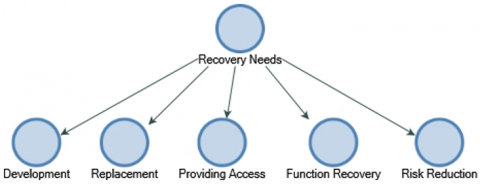
Previously, the government had mapped post-disaster recovery needs by emphasizing five main aspects [15]. This can be seen in Figure 3.
Figure 3. Mapping post-disaster recovery needs
In the development aspect, the focus is on rebuilding damaged infrastructure to function optimally and support community activities. Replacement includes replacing assets lost or damaged due to a disaster, ensuring that society can return to its original condition. Access makes it easier for people to get basic services such as health, education, and transportation. Functional restoration aims to restore social, economic, and environmental functions disrupted by the disaster. Meanwhile, risk reduction is focused on future disaster mitigation efforts by increasing community resilience and strengthening early warning systems to minimize the risk of disaster impacts.
In this case, further analysis regarding the challenges faced in developing and implementing post-disaster recovery policies is very important because this will help identify existing obstacles and find effective solutions to increase the capacity and readiness of local governments to face future disasters. The main challenges that have been identified can be seen in Figure 4.
Interagency coordination in post-disaster recovery is a very crucial but often overlooked aspect. The lack of synergy between various government agencies and stakeholders can result in fragmentation in disaster management. Each agency usually has a different focus, goals, and procedures, creating difficulties in unifying an effective recovery vision and strategy. This slows the recovery process and can confuse affected communities, who often do not know which party is responsible for assisting [17]. In emergencies, speed and efficiency are critical; Therefore, integration between institutions is non-negotiable.
In addition, overlapping programs run by various agencies often become a source of waste of resources and budget. When two or more agencies implement similar programs without proper coordination, this results in waste and can reduce the positive impact of recovery efforts [18]. For example, assistance provided by one institution may be sufficient to meet community needs. However, with other programs that are not coordinated, there can be duplication of assistance, which ultimately does not provide maximum benefits [19]. Therefore, there needs to be a clear and effective mechanism to improve coordination between agencies so that post-disaster recovery can be carried out more efficiently and in a targeted manner.
Figure 4. Challenges faced in developing and implementing post-disaster recovery policies
Funding and resources are also critical challenges that often hinder the implementation of post-disaster recovery policies [20]. Inadequate or late budget allocations can create significant delays in the rehabilitation and reconstruction process [21]. With sufficient financial support, efforts to rebuild infrastructure, assist affected communities, and implement other recovery programs will be improved, resulting in a longer and less effective recovery process. In addition, uncertainty in funding can also reduce the motivation of relevant agencies to plan and implement recovery programs proactively [22].
Apart from the issue of funding, the need for more skilled human resources is another problem that is no less important in North Luwu. Workers with skills and experience in disaster management must ensure that recovery programs are implemented well [23]. When skilled human resources are available, the recovery process can be improved due to appropriate decisions or implementation that align with community needs. This shows that to achieve effective and sustainable recovery, more attention must be paid to allocating funding and developing human resource capacity in disaster management.
Planning that needs to be integrated is also a challenge in post-disaster recovery efforts that are often ignored, not only in North Luwu. Recovery policies aligned with long-term development planning can create a mismatch between recovery needs and sustainable development strategies [24]. When recovery policies focus only on immediate rehabilitation aspects without considering the long-term vision, major risks will arise, where the infrastructure built cannot support future economic growth or community needs. This has the potential to result in a waste of resources and time and increase the community's vulnerability to disasters in the future.
In addition, policies that need to be integrated can also cause infrastructure built after a disaster not to meet expected standards or not be appropriate to the local context. For example, constructing roads, bridges, or public buildings that do not consider local geographic and social conditions could be dysfunctional or even risk causing new problems. In this context, governments and stakeholders need to ensure that recovery planning is responsive to emergency situations and integrated within a broader development framework to create sustainable and adaptive solutions to future challenges.
The emergence of distrust towards the government is also a significant challenge in implementing post-disaster recovery policies. When people experience a disaster, their hopes of getting help and support from the government are very high [25]. However, trust in government institutions may be eroded if they feel that the government response has been slow, non-transparent, or insufficient [26]. This dissatisfaction is often fueled by a need for more clear and consistent communication about recovery measures and unfair distribution of aid [27]. Feeling ignored or not heard can trigger wider dissatisfaction and even protests against government policies.
Growing distrust can hinder effective recovery efforts as communities become reluctant to participate in recovery programs proposed by the government. Community involvement in the recovery process is essential to ensure that their needs are met and that the programs implemented are appropriate to the local context. When trust is lost, communities tend to refuse to engage or support government initiatives, which can ultimately slow down the recovery process and reduce the success of implemented policies. Therefore, the government needs to rebuild this trust through transparency, accountability, and active community involvement in every stage of recovery.
Inter-agency coordination, adequate resource allocation, integrated planning, and community trust must be strengthened to achieve effective and sustainable post-disaster recovery. Without collaboration between government agencies and stakeholders, recovery efforts risk becoming fragmented, inefficient, and not aligned with long-term development goals. Overcoming this challenge requires a structured coordination mechanism to clarify the division of responsibilities, prevent program overlap, and optimize resource utilization. In addition, the availability of timely and adequate funding, as well as investment in the development of skilled human resources, is critical so that recovery efforts are reactive and proactive in building resilience to future disasters.
Beyond the technical and logistical aspects, restoring public trust in government institutions plays a crucial role in the success of recovery policies [28]. Transparent Communication, inclusive decision-making, and fair aid distribution are key factors in maintaining public trust and encouraging community participation [29]. When disaster-affected populations feel heard and supported, they are more likely to collaborate in reconstruction efforts, ultimately building more resilient and adaptive communities. Therefore, post-disaster recovery must not only focus on physical reconstruction alone but also on strengthening institutional capacity and social cohesion to ensure better disaster preparedness and sustainability in the future.
3.2 Strengthening post-disaster resilience: Approaches and strategies that can be adopted by local governments
Strengthening post-disaster resilience in North Luwu requires an integrated and collaborative approach between various stakeholders. One of the main steps is to build effective inter-agency coordination. Establishing a coordination forum involving government agencies, non-government organizations (NGOs), and local communities is very important. For example, after the earthquake and tsunami disaster in Japan in 2011, the government formed a disaster recovery committee of various ministries and organizations to design an integrated and rapid recovery strategy [30]. With this forum, each institution can collaborate and communicate effectively so that recovery efforts can be carried out more efficiently.
Furthermore, increasing transparency and accountability in the recovery process is very crucial. Implementing an integrated information system that allows the public to access information about the assistance provided can build public trust. Following the major earthquake in 2015, Nepal launched an “Open Government Partnership” initiative to increase transparency in aid distribution [31]. Through digital platforms, the public can see information about ongoing recovery projects, including detailed budgets and completion schedules, thereby increasing organizer accountability.
The importance of community participation in the recovery process must be addressed. Involving communities in discussion forums and consultations to explore their needs will increase the effectiveness of recovery programs. For example, following a major earthquake in Chile in 2010, the government involved communities in recovery planning, ensuring that programs implemented aligned with local community expectations and needs [32]. This not only helped with physical recovery but also strengthened the sense of community and solidarity.
Developing skilled human resource capacity is also a key factor in strengthening resilience. Training programs for local workers in disaster management, such as those in Bangladesh, where the government and NGOs provide training to communities to prepare them for disasters, are very effective [33]. This training helps communities understand risk management and prepare for future disasters, increasing community resilience.
Furthermore, building public trust in the government is a challenge that must be overcome. Governments can rebuild lost trust through effective communication and community involvement in decision-making. Following the Christchurch earthquake in New Zealand in 2011, the government strengthened relationships with communities through open dialogue and engagement programs, which helped communities feel involved in the recovery process [34]. This shows that building trust is about providing assistance and ensuring that people feel heard and valued at every step of recovery.
The implications of the approach and strategy adopted to strengthen post-disaster resilience in North Luwu are closely related to previously determined recovery needs, namely infrastructure development, replacement of lost assets, provision of access to basic services, restoration of social and economic functions, and disaster risk reduction. By building effective coordination between stakeholders and involving communities in the planning process, the government can ensure that recovery programs focus on physical development and social and psychological aspects that support community sustainability. Transparency in aid distribution and risk management training programs will help communities feel more involved and prepared to face potential disasters in the future. In addition, building public trust in the government through open dialogue and active involvement in decision-making will strengthen the legitimacy and effectiveness of recovery efforts so that recovery goals can be achieved better and more sustainably.
Thus, strengthening post-disaster resilience in North Luwu requires a comprehensive and sustainable approach integrating coordination, transparency, community participation, capacity building, and trust-building measures. The success of recovery efforts depends not only on physical reconstruction but also on the ability of local governments and stakeholders to foster social cohesion and long-term preparedness. By learning from global best practices and adapting them to the local context, North Luwu can develop a disaster recovery framework that is more responsive, inclusive, and effective. Ensuring that resilience strategies are institutionalized within governance structures will help create a more disaster-ready community, minimizing future risks and enhancing overall disaster preparedness.
The flash floods and landslides that hit North Luwu Regency in July 2020 have resulted in significant impacts, including 39 fatalities, hundreds of injured people, and more than 20,000 refugees. Although the government's response, although fast in establishing emergency status and starting rehabilitation planning, faces challenges in rebuilding damaged infrastructure to function optimally, replacing assets lost or damaged due to disasters, providing access to basic services such as health and education, and restoring social functions, economic and environmental disruption, and risk reduction.
The main challenges faced include coordination between agencies, which is often neglected, resulting in fragmentation in disaster management and confusion among the community; overlapping programs that create waste of resources and budget; inadequate funding and resources, which hamper rehabilitation and reconstruction; as well as a lack of human resources skilled in disaster management, which can slow down the recovery process. Apart from that, planning that is not integrated between recovery policies and long-term development also creates inconsistencies, increases community vulnerability, and causes the infrastructure being built not to meet expected standards. Finally, the emergence of distrust towards the government due to slow or non-transparent responses also hinders community involvement in the recovery process, thereby slowing down policy implementation and reducing the overall success of recovery efforts.
Strengthening post-disaster resilience in North Luwu requires an integrated and collaborative approach between various stakeholders, with the main step being to build inter-agency coordination through forums involving many parties. Transparency and accountability in the recovery process must also be improved through an integrated information system that allows the community to track aid distribution. Active community participation in recovery planning is also needed to increase program effectiveness by reflecting local needs while developing human resource capacity through disaster management training, which can strengthen community resilience. In addition, building community trust in the government through effective communication and open dialogue is essential to ensure community involvement in the recovery process. By adopting this strategy, the government can ensure that recovery programs focus on physical development and social and psychological aspects that support community sustainability, making recovery efforts more legitimate and effective.
Future research needs to focus on evaluating the effectiveness of post-disaster recovery strategies that have been implemented, including in-depth analysis of inter-agency coordination, the effectiveness of transparency in aid distribution, and the level of community participation in recovery planning. In addition, further studies can examine more adaptive and evidence-based policy models to increase community resilience to disasters by considering the integration of long-term planning and environmental sustainability aspects. The use of technology, such as data-based risk mapping systems and digital platforms for aid coordination, could also be a focus of research to improve disaster response efficiency. Furthermore, it is important to explore the role of social and cultural factors in building public trust in the government so that post-disaster recovery is oriented towards infrastructure and sustainable social and economic aspects.
This work is supported by the Directorate General of Higher Education, Research, and Technology, Indonesia.
[1] Abdullah, M.T.R., Cangara, H., Arianto. (2021). The Analysis of communication strategies of North Luwu Regency Government in socio-economic recovery after landslides and flash flood. In Proceedings of the 2nd International Conference on Science, Technology, and Modern Society (ICSTMS 2020), 576(24): 453-461. https://doi.org/10.2991/assehr.k.210909.098
[2] Riyas, M. (2024). BPBD Luwu Utara Tetapkan 157 Desa Rawan Bencana Banjir-Longsor. detikSulsel. Luwu Utara. Retrieved from https://www.detik.com/sulsel/berita/d-7174076/bpbd-luwu-utara-tetapkan-157-desa-rawan-bencana-banjir-longsor.
[3] Uddin, M.S., Haque, C.E., Khan, M.N. (2021). Good governance and local level policy implementation for disaster-risk-reduction: Actual, perceptual and contested perspectives in coastal communities in Bangladesh. Disaster Prevention and Management: An International Journal, 30(2): 94-111. https://doi.org/10.1108/DPM-03-2020-0069
[4] Anwar, K. (2024). Analysis of community participation based approach to disaster mitigation reduction. Disaster Advances, 17(2): 31-39. https://doi.org/10.25303/172da031039
[5] Syamsidik, Oktari, R.S., Nugroho, A., Fahmi, M., Suppasri, A., Munadi, K., Amra, R. (2021). Fifteen years of the 2004 Indian Ocean Tsunami in Aceh-Indonesia: Mitigation, preparedness and challenges for a long-term disaster recovery process. International Journal of Disaster Risk Reduction, 54: 102052. https://doi.org/10.1016/j.ijdrr.2021.102052
[6] Ji, H., Lee, D. (2021). Disaster risk reduction, community resilience, and policy effectiveness: The case of the Hazard Mitigation Grant Program in the United States. Disasters, 45(2): 378-402. https://doi.org/10.1111/disa.12424
[7] Zheng, J., Xu, W., Tao, A., Fan, J., Xing, J., Wang, G. (2023). Synergy between coastal ecology and disaster mitigation in China: Policies, practices, and prospects. Ocean and Coastal Management, 245: 106866. https://doi.org/10.1016/j.ocecoaman.2023.106866
[8] Hakkim, A., Deb, A. (2023). Empowering local response and community-based disaster mitigation through legislative policies: Lessons from the Kerala floods of 2018-19. Journal of Emergency Management, 20(4): 347-353. https://doi.org/10.5055/jem.0766
[9] Zhang, Y., Fung, J.F., Johnson, K.J., Sattar, S. (2022). Review of seismic risk mitigation policies in earthquake-prone countries: Lessons for earthquake resilience in the United States. Journal of Earthquake Engineering, 26(12): 6208-6235. https://doi.org/10.1080/13632469.2021.1911889
[10] Yonson, R., Noy, I. (2020). Disaster risk management policies and the measurement of resilience for Philippine Regions. Risk Analysis, 40(2): 254-275. https://doi.org/10.1111/risa.13394
[11] Yang, Q., Yang, D., Li, P., Liang, S., Zhang, Z. (2021). A bibliometric and visual analysis of global community resilience research. International Journal of Environmental Research and Public Health, 18(20): 10857. https://doi.org/10.3390/ijerph182010857
[12] Parker, D.J. (2020). Disaster resilience–A challenged science. Environmental Hazards, 19(1): 1-9. https://doi.org/10.1080/17477891.2019.1694857
[13] Tariq, H., Pathirage, C., Fernando, T. (2021). Measuring community disaster resilience at local levels: An adaptable resilience framework. International Journal of Disaster Risk Reduction, 62: 102358. https://doi.org/10.1016/j.ijdrr.2021.102358
[14] Local government. (2020). Rencana Rehabilitasi dan Rekonstruksi pascabencana Banjir dan Tanah Longsor tahun 2020. Retrieved from https://drive.google.com/file/d/1ewrjtwFYAzUXat0BMdCy6EY1Yl_uNg0L/view?usp=drive_link.
[15] Local Government. (2020). Pengkajian Kebutuhan Pemulihan Pascabencana. Retrieved from https://drive.google.com/file/d/1lkZOcgz15oI3_k13IpIuwquTSLICtXnl/view?usp=drive_link.
[16] Sultana, Z., Mondal, P., Roy, T., Biswas, B., Mallick, B. (2021). Socio-political distancing amid disaster: Empirical evidence from Bangladesh. In Climate Vulnerability and Resilience in the Global South: Human Adaptations for Sustainable Futures. Springer, pp. 353-370. https://doi.org/https://doi.org/10.1007/978-3-030-77259-8_18
[17] Ali, R.A., Mannakkara, S. (2024). Phased post-disaster recovery challenges: 2016–2017 floods and landslides in Colombo and Kalutara, Sri Lanka. International Journal of Disaster Risk Reduction, 111: 104728. https://doi.org/10.1016/j.ijdrr.2024.104728
[18] Bakhshi, A., Aghsami, A., Rabbani, M. (2023). A scenario-based collaborative problem for a relief supply chain during post-disaster under uncertain parameters: A real case study in Dorud. Journal of Modelling in Management, 18(3): 906-941. https://doi.org/10.1108/JM2-06-2021-0138
[19] Sapat, A., Esnard, A.M., Kolpakov, A. (2019). Understanding collaboration in disaster assistance networks: Organizational homophily or resource dependency? American Review of Public Administration, 49(8): 957-972. https://doi.org/10.1177/0275074019861347
[20] Poling, K., Shealy, T. (2024). Barriers to long-term disaster recovery in rural Appalachia: A retrospective analysis of the 2016 West Virginia flood. International Journal of Disaster Risk Reduction, 110: 104648. https://doi.org/10.1016/j.ijdrr.2024.104648
[21] Jayasiri, G.P., Prasanna, R. (2022). Citizen science for supporting disaster management institutions in Sri Lanka. Proceedings of the International ISCRAM Conference, 2022-Novem, pp. 77-88.
[22] Jufri, Farida, U., Tamsah, H., Zacharias, T., Yusriadi, Y., Ivana, Bugis, M. (2021). The effect of leadership and work climate on employee efficiency by employee work encouragement in the west sulawesi province regional disaster management agency. Proceedings of the International Conference on Industrial Engineering and Operations Management, pp. 7318-7327. https://doi.org/10.46254/an11.20211276
[23] Beniya, S. (2021). Achievements and challenges of governmental human resource support system in japanese disaster response for affected local governments in the aftermath of the great east Japan earthquake. Journal of Disaster Research, 16(6): 967-971. https://doi.org/10.20965/jdr.2021.p0967
[24] Mokhele, M.O., Ncube, A., Kunguma, O. (2024). Disaster risk management challenges towards integrated disaster risk management at the South African Municipalities. In Challenges, Strategies, and Resiliency in Disaster and Risk Management, IGI Global, pp. 242-276. https://doi.org/10.4018/979-8-3693-2721-0.ch011
[25] Fukasawa, M., Kawakami, N., Umeda, M., Akiyama, T., Horikoshi, N., Yasumura, S., Yabe, H., Suzuki, Y., Bromet, E.J. (2020). Long-lasting effects of distrust in government and science on mental health eight years after the Fukushima nuclear power plant disaster. Social Science and Medicine, 258: 113108. https://doi.org/10.1016/j.socscimed.2020.113108
[26] Baharuddin, T., Jubba, H., Nurmandi, A., Qodir, Z. (2022). Online social trust in government: Analysis of government policy during the COVID-19 pandemic. In Proceedings of the First International Conference on Democracy and Social Transformation, ICON-DEMOST 2021, EAI. https://doi.org/10.4108/eai.15-9-2021.2315575
[27] Rivera, J.D., Nickels, A.E. (2014). Social capital, community resilience, and faith-based organizations in disaster recovery: A case study of Mary Queen of Vietnam Catholic Church. Risk, Hazards and Crisis in Public Policy, 5(2): 178-211. https://doi.org/10.1002/rhc3.12050
[28] Baharuddin, T., Sairin, S., Nurmandi, A., Qodir, Z., Jubba, H. (2022). Building social capital online during the COVID-19 transition in Indonesia. Jurnal Komunikasi Ikatan Sarjana Komunikasi Indonesia, 7(1): 130-142. https://doi.org/10.25008/jkiski.v7i1.607
[29] Iskandar, I., Anas, A., Bahri, S., Menne, F., Baharuddin, T. (2024). Social vulnerability and climate change: A bibliometric analysis. Cogent Social Sciences, 10(1): 2402849. https://doi.org/10.1080/23311886.2024.2402849
[30] Fraser, T., Aldrich, D.P., Small, A., Littlejohn, A. (2021). In the hands of a few: Disaster recovery committee networks. Journal of Environmental Management, 280: 111643. https://doi.org/10.1016/j.jenvman.2020.111643
[31] Poiani, T.H., Rocha, R.D.S., Degrossi, L.C., De Albuquerque, J.P. (2016). Potential of collaborative mapping for disaster relief: A case study of openstreetmap in the Nepal earthquake 2015. In 2016 49th Hawaii International Conference on System Sciences (HICSS), Koloa, HI, USA, pp. 188-197. https://doi.org/10.1109/HICSS.2016.31
[32] Moreno, J. (2018). The role of communities in coping with natural disasters: Lessons from the 2010 Chile earthquake and Tsunami. Procedia Engineering, 212: 1040-1045. https://doi.org/10.1016/j.proeng.2018.01.134
[33] Grandgirard, J., Poinsot, D., Krespi, L., Nénon, J.P., Cortesero, A.M. (2002). Costs of secondary parasitism in the facultative hyperparasitoid Pachycrepoideus dubius: Does host size matter? Entomologia Experimentalis et Applicata, 103(3): 239-248. https://doi.org/10.1046/j.1570-7458.2002.00982.x
[34] He, L., Dominey-Howes, D., Aitchison, J.C., Lau, A., Conradson, D. (2021). How do post-disaster policies influence household-level recovery? A case study of the 2010-11 Canterbury earthquake sequence, New Zealand. International Journal of Disaster Risk Reduction, 60: 102274. https://doi.org/10.1016/j.ijdrr.2021.102274