
Rumpapak Luekveerawattana
© 2026 The author. This article is published by IIETA and is licensed under the CC BY 4.0 license (http://creativecommons.org/licenses/by/4.0/).
OPEN ACCESS
This study examines the relationships among perceived destination attractiveness (PDA), perceived community participation (PCP), perceived accessibility by public transport (PAP), behavioral intention (BI), and tourists’ travel behavior (TB) in religious and historical tourism. Drawing on theories of tourist behavior, destination perception, and community participation, the study proposes a structural model in which PDA and PCP influence PAP, while PAP and BI function as mediating mechanisms associated with TB. A quantitative survey was conducted among 400 tourists visiting religious and historical attractions in the Dusit district of Bangkok, Thailand. Cluster sampling was used to identify major tourism sites within the study area, and convenience sampling was subsequently employed to recruit respondents at those locations. Data were analyzed using partial least squares structural equation modeling (PLS-SEM). The results indicate that PDA positively influences PAP, BI, and TB, while PCP positively influences PAP. PAP significantly affects both BI and TB, and BI positively influences TB. The model explains 31.3% of the variance in PAP, 49.6% in BI, and 43.8% in TB. Mediation analysis further demonstrates significant indirect relationships among the constructs. Beyond explaining tourist behavior, the findings highlight the policy relevance of public transport accessibility and community participation in supporting sustainable tourist mobility within urban heritage districts. The study provides implications for tourism planners, transport authorities, and local governments seeking to enhance accessibility, visitor management, and sustainable religious tourism development.
religious tourism, community participation, public transport accessibility, behavioral intention
Religious and cultural tourism plays a vital role in preserving historical identity, particularly in capital cities that serve as centers of significant religious and cultural heritage. Dusit District in Bangkok exemplifies this context, as it is home to numerous temples, palaces, and religious sites of considerable historical and social value. However, tourism activities in inner-city areas often face challenges such as traffic limitations, congestion, and environmental impacts arising from the extensive use of private vehicles. Consequently, the development of tourism routes supported by public transportation has gained increasing attention as a key mechanism for promoting sustainable tourism [1, 2].
While public transportation plays an important role in reducing environmental impacts and enhancing access to urban attractions, much tourism research continues to focus primarily on route planning or the assessment of an area’s physical potential, such as accessibility [3]. In contrast, key dimensions related to tourists’ perceptions—such as perceived destination attractiveness (PDA), behavioral intention (BI), and perceived community participation (PCP)—have not been systematically integrated into existing research models. This gap is particularly evident in studies of religious tourism within urban contexts in Thailand.
In addition, research on religious tourism has predominantly focused on faith-based motivations [4, 5] while largely neglecting the role of travel behavior (TB) and access via public transportation. These factors can significantly influence tourists’ perceptions of the value and attractiveness of tourism routes in tangible ways. At the same time, studies on transportation and urban tourism often concentrate on average travelers or regular transit users, rather than on tourists, whose behavioral patterns, motivations, and expectations may differ substantially.
1.1 Research gap
Based on the literature review, several important research gaps can be identified:
1. Limited integration of public transportation accessibility into religious tourism research. Existing studies have paid relatively limited attention to how tourists perceive the accessibility of religious tourism destinations through public transportation, particularly in inner-city tourism contexts. This leaves insufficient understanding of how transport accessibility may shape tourists’ destination perceptions and subsequent travel-related responses [6].
2. Lack of an integrated behavioral model. Much of the existing literature examines transportation accessibility, destination attractiveness, tourist behavior, BI, and community participation as separate dimensions. Consequently, few studies have integrated these constructs into a single structural model to explain how destination attractiveness and community participation relate to public transport accessibility, BI, and tourists’ TB [7].
3. Insufficient attention to the mediating mechanisms linking destination perceptions to TB. Although previous research has examined destination attractiveness and accessibility, less attention has been given to the mechanisms through which these perceptions translate into tourists’ BI and actual TB [8]. Examining the mediating roles of perceived accessibility by public transport (PAP) and BI can therefore provide a more comprehensive explanation of tourists’ TB in religious and historical tourism contexts.
4. Existing religious tourism studies rarely examine how public transport accessibility and community participation contribute to sustainable tourist mobility and the management of environmental pressures in heritage districts. As a result, limited evidence is available to guide transport planning and tourism policy aimed at reducing congestion and improving accessibility in urban heritage destinations [9].
1.2 Innovation and contribution of the research
This study proposes an integrated framework for understanding religious tourism supported by public transportation from a tourist-centered perspective. It examines the relationships among PDA, PCP, PAP, BI, and tourists’ TB within the context of sustainable urban tourism. The main contribution of the study lies in integrating destination attractiveness and community participation with public transport accessibility and tourist behavioral responses in a single structural model. In particular, the model provides insight into how destination perceptions and community participation are associated with perceived accessibility, BI, and subsequent TB. This integrated perspective extends existing research by connecting transportation accessibility with tourist decision-making in religious and historical tourism contexts. The findings also offer practical implications for policymakers, local authorities, and tourism stakeholders in designing and managing more accessible, attractive, and community-supported religious tourism routes. Such insights may contribute to the development of sustainable urban tourism strategies that encourage public transport use and strengthen the cultural and social value of historic areas in Thailand and other comparable urban destinations.
The contribution of this study extends beyond tourist behavior by examining public transport accessibility as a policy-relevant mechanism within sustainable urban tourism. In religious heritage districts, improving accessibility may support more sustainable tourist mobility patterns and reduce dependence on private vehicles. The findings therefore provide insights for tourism planners, transport authorities, and local governments responsible for managing visitor flows in historically significant urban destinations.
1.3 Theoretical foundation
This study draws on and extends the Theory of Planned Behavior (TPB) proposed by Ajzen [10] to examine tourists’ TB in religious and historical tourism. Rather than testing the complete original TPB model, the study adopts its central intention–behavior mechanism and integrates tourism-specific contextual factors into the framework. In particular, PDA, PAP, and PCP are incorporated to reflect destination, transportation, and community conditions that are particularly relevant to tourism contexts. The theoretical framework assumes that tourists’ perceptions of the destination and its surrounding tourism environment are associated with their perceptions of accessibility, BI, and reported TB. BI represents the psychological mechanism derived from TPB, whereas TB represents the reported behavioral outcome. PDA, PAP, and PCP extend the conventional TPB framework by introducing contextual tourism conditions that may influence tourists’ behavioral responses. The proposed framework therefore integrates three complementary perspectives. First, the TPB provides the behavioral mechanism linking intention to behavior. Second, the destination perspective explains how tourists’ evaluations of destination attractiveness may influence their behavioral responses. Third, transportation and community perspectives explain how perceived accessibility and community involvement may contribute to tourists’ experiences and behavioral responses. The integration of these perspectives provides a tourism-specific framework for examining the relationships among destination perceptions, accessibility, community participation, BI, and TB.
1.4 Theory of Planned Behavior
The TPB proposes that BI is a proximal determinant of behavior and that intention is influenced by attitudes, subjective norms, and perceived behavioral control [10]. The intention–behavior relationship has been widely applied in tourism research because tourists’ intentions to revisit, recommend, or engage in tourism activities can provide an important indication of subsequent behavioral responses. In the present study, BI represents tourists’ intention to revisit [11], recommend, and support tourism-related activities, while TB represents their reported travel-related behavior. Accordingly, the BI–TB relationship constitutes the core behavioral mechanism adopted from TPB. However, the study does not claim to test the complete original TPB. Attitude, subjective norm, and perceived behavioral control are not modeled as separate antecedents of BI. Instead, TPB is used selectively as the theoretical foundation for the intention–behavior mechanism, while tourism-specific contextual constructs are incorporated to reflect characteristics of religious and historical tourism destinations. This approach represents a contextual extension of TPB rather than a replication of the original model. It allows the study to examine whether destination attractiveness, public transport accessibility, and community participation provide additional explanatory perspectives beyond the psychological intention–behavior mechanism.
1.5 Integration of tourism-specific contextual factors
Tourist behavior is influenced not only by individual psychological intentions but also by characteristics of the destination and its surrounding environment [12]. In religious and historical tourism, destination attractiveness, transportation accessibility, and community involvement can shape tourists’ perceptions of the feasibility, convenience, and value of visiting and experiencing a destination. PDA is therefore conceptualized as a destination-level contextual perception reflecting tourists’ evaluation of the overall attractiveness of the destination. PAP represents a transportation-related perceptual condition concerning the ease and convenience of accessing the destination by public transport. PCP represents a community-level contextual perception concerning the visible involvement of local communities in tourism development and tourism-related activities. These constructs are theoretically complementary. Destination attractiveness provides a reason for tourists to visit, accessibility influences the perceived feasibility of reaching and moving around the destination, and community participation reflects the local social environment supporting tourism activities. Together, these contextual factors extend the TPB intention–behavior mechanism into a tourism-specific framework.
1.6 Perceived destination attractiveness
PDA is conceptualized as tourists’ overall evaluation of the appeal and value of a destination. In religious and historical tourism, attractiveness may arise from cultural and architectural resources, heritage significance, tourism activities, route characteristics, and the overall value perceived by visitors [13]. Within the proposed framework, PDA is treated as a destination-level perception that precedes tourists’ behavioral responses. A destination perceived as attractive may increase tourists’ willingness to revisit, recommend, and participate in tourism-related activities. Destination attractiveness may also influence how tourists evaluate the practical conditions associated with visiting the destination, including the accessibility of available transportation options. PDA is therefore positioned as an antecedent rather than an outcome of TB in the proposed structural model. Although previous tourism research has recognized that actual experiences may subsequently influence destination evaluations, the present study focuses on the proposed directional relationships within its cross-sectional structural model.
1.7 Perceived accessibility by public transport
PAP represents tourists’ subjective evaluation of the ease, convenience, availability, connectivity, information, and affordability of public transportation for reaching and moving within a tourism destination. PAP is treated as a perceived condition rather than an objective measurement of transportation infrastructure. This distinction is important because tourists may evaluate the same transportation system differently depending on their travel experience, familiarity with the destination, perceived convenience, and information available to them [14]. Within the framework, PAP functions as a transportation-related mechanism connecting destination and community conditions with tourists’ behavioral responses. A destination that is perceived as accessible may involve fewer perceived travel barriers and may consequently support stronger BI and more favorable reported TB. The framework also allows PAP to have direct relationships with BI and TB, thereby recognizing that transportation accessibility may influence tourists’ behavioral responses not only through intention but also through its practical implications for travel.
1.8 Perceived community participation
PCP refers to tourists’ perceptions of the involvement of local communities in tourism planning, tourism-route management, cooperation with relevant organizations, visitor assistance, and tourism-related activities and services [15]. PCP is conceptualized as a community-level contextual factor rather than as a direct component of the TPB. In religious and historical tourism, local communities are closely connected to the cultural, social, and service environment surrounding heritage and religious attractions. Visible community involvement may therefore contribute to the organization of tourism activities, provision of visitor information, local coordination, and assistance to tourists. In the proposed framework, PCP is positioned as an antecedent of PAP. The underlying theoretical rationale is that active community involvement can contribute to local coordination, tourism information, visitor assistance, and the organization of tourism services, which may subsequently influence tourists’ perceptions of accessibility. Thus, PCP extends the framework beyond individual psychological factors by incorporating the local community environment as a contextual condition associated with tourists’ perceptions of transportation accessibility.
1.9 Theoretical integration and model logic
The theoretical contribution of this study lies in integrating the TPB intention–behavior mechanism with tourism-specific contextual perspectives. The resulting framework distinguishes between contextual conditions and psychological responses. At the contextual level, PDA and PCP represent destination- and community-related perceptions. PAP represents a transportation-related perceptual mechanism that connects these contextual conditions with tourists’ behavioral responses. BI represents the psychological mechanism derived from TPB, while TB represents the reported behavioral outcome.
The theoretical sequence can therefore be summarized as:
Destination and community perceptions → perceived accessibility → BI → reported TB
The model additionally permits direct relationships between PDA, PAP, BI, and TB where theoretically justified. Consequently, the framework does not assume that BI is the only mechanism through which contextual tourism conditions influence TB. Importantly, the proposed framework should be interpreted as an extension of TPB rather than as a test of the original TPB model. Its contribution is to examine how the intention–behavior mechanism operates within a tourism environment in which destination attractiveness, public transport accessibility, and community participation may provide important contextual explanations of tourists’ behavioral responses. Because the study uses cross-sectional perceptual data, the proposed relationships should be interpreted as theoretically specified structural associations rather than definitive causal effects. The framework provides the basis for empirically examining the relationships among the constructs through the proposed structural model.
2.1 Behavioral intention
BI refers to an individual’s willingness or planned tendency to perform a particular behavior in the future. In tourism research, BI commonly encompasses intentions to revisit a destination, recommend it to others, and participate in tourism-related activities [16]. The importance of BI in tourism behavior research is strongly associated with the TPB, which identifies intention as an immediate determinant of behavior [10]. Previous studies have demonstrated that BI provides an important explanation of tourists’ decision-making and subsequent behavioral responses [17, 18]. In the present study, BI is particularly important because it represents the psychological mechanism connecting tourists’ perceptions of the tourism environment with their reported TB. Accordingly, the literature supports examining BI as a key behavioral construct and as a potential predictor of TB.
2.2 Travel behavior
TB refers to tourists’ observable or self-reported patterns of movement and travel activity, including travel frequency, transportation choices, destination-related activities, and on-site mobility. TB reflects the interaction between tourists’ individual preferences and the practical conditions within which travel takes place [19]. Previous research indicates that TB may be influenced by psychological factors, transportation conditions, infrastructure, and social or environmental contexts [20, 21]. In particular, accessibility can affect tourists’ ability and willingness to reach and move within destinations, while BI may provide an important psychological explanation of subsequent travel responses. In contrast to studies that examine TB as a determinant of destination evaluations, the present study treats TB primarily as a behavioral outcome within the proposed structural framework. This distinction is important because the current research examines whether tourists’ destination perceptions, perceived accessibility, community-related perceptions, and BI are associated with their reported TB.
2.3 Perceived destination attractiveness
PDA refers to tourists’ overall evaluation of a destination’s ability to satisfy their travel needs, expectations, and desires. It may encompass tangible characteristics, such as infrastructure and tourism facilities, as well as intangible characteristics, including atmosphere, authenticity, cultural value, and opportunities for meaningful experiences [22]. Destination attractiveness is closely related to destination evaluation and tourists’ destination-choice processes. Previous research suggests that tourists’ perceptions of attractiveness are influenced by destination characteristics as well as their experiences and evaluations of the tourism environment [23]. Destination attractiveness may therefore influence tourists’ willingness to revisit, recommend, and engage with a destination. In religious and historical tourism, attractiveness can be particularly important because visitors may be motivated by cultural heritage, architectural significance, religious meaning, historical resources, and the uniqueness of the destination experience. These characteristics provide a theoretical basis for examining PDA as a contextual factor associated with tourists’ accessibility perceptions, BI, and TB.
2.4 Perceived accessibility by public transport
PAP refers to tourists’ subjective evaluation of how easily a destination can be reached and experienced through public transportation. Unlike objective measures of transport infrastructure, perceived accessibility emphasizes tourists’ individual judgments and travel experiences [24]. Accessibility is widely recognized as an important condition for destination competitiveness and sustainable tourism development. In urban tourism destinations, public transportation can be particularly important because congestion, parking limitations, and environmental concerns may restrict dependence on private vehicles [25, 26]. Previous studies have also reported relationships between transportation accessibility, tourist satisfaction, and destination evaluation [27]. These findings suggest that accessibility is not simply a technical transportation characteristic but can form part of tourists’ overall evaluation of the tourism experience. Accordingly, the present study examines PAP as a perceptual mechanism that may be associated with tourists’ BI and reported TB. The study also considers whether destination and community perceptions are associated with tourists’ evaluations of public transport accessibility.
2.5 Perceived community participation
PCP refers to tourists’ perceptions of the extent to which local residents are involved in tourism planning, decision-making, service provision, destination management, and interactions with visitors. The construct reflects tourists’ perceptions of community involvement rather than an objective assessment of residents’ actual level of participation [28]. Research on community-based and sustainable tourism emphasizes the importance of local participation in strengthening destination authenticity, social support, and long-term tourism sustainability [29]. Community involvement may also influence tourists’ perceptions of the destination by contributing to trust, emotional attachment, positive destination evaluations, and meaningful visitor experiences [30]. For religious and historical tourism, community participation is particularly relevant because local residents frequently contribute to the preservation, interpretation, management, and presentation of cultural and religious resources. Community involvement may also support visitor information, local coordination, and tourism services. Based on this perspective, PCP is examined in the present study as a contextual factor associated with PAP. Rather than assuming a direct effect of community participation on all behavioral outcomes, the proposed model focuses specifically on the role of community involvement in supporting tourists’ perceptions of accessibility.
2.6 Tourist area life cycle perspective
The tourist area life cycle (TALC) proposed by Butler [31] provides a complementary destination-development perspective. The model conceptualizes tourism destinations as evolving through different stages of development, with changes in tourist numbers, infrastructure, local involvement, destination attractiveness, and management conditions occurring over time. Although TALC is not used as the primary behavioral theory of the present study, it provides a useful contextual perspective for understanding why destination attractiveness, accessibility, and community involvement may change as tourism destinations develop. Destination attractiveness is not necessarily static; it may be influenced by infrastructure development, tourism management, community involvement, visitor experiences, and changing patterns of accessibility. Accordingly, TALC complements rather than replaces TPB in the present framework. TPB provides the behavioral logic for understanding the relationship between intention and behavior, whereas the destination-development perspective highlights the importance of contextual tourism conditions. The combination supports the rationale for incorporating destination attractiveness, public transport accessibility, and community participation into a tourism-specific behavioral framework.
2.7 Synthesis of the literature
The reviewed literature indicates that tourists’ behavioral responses cannot be fully understood through psychological intention alone. Destination characteristics, transportation conditions, and community involvement may also shape tourists’ perceptions and behavioral responses.
The present study therefore integrates these perspectives into a single framework. BI represents the psychological mechanism derived from TPB, while PDA, PAP, and PCP represent tourism-specific contextual perceptions. TB represents the reported behavioral outcome.
The literature provides support for examining the following theoretical relationships: destination attractiveness and community participation as contextual factors; perceived accessibility as a transportation-related mechanism; BI as a psychological mechanism; and TB as the behavioral outcome. The proposed structural model consequently provides an integrated framework for examining how destination, transportation, community, and behavioral factors are associated within the context of religious and historical tourism.
2.8 Literature review and hypothesis development
•PDA and PAP
PDA reflects tourists’ evaluation of the desirability and value of a destination. In urban religious and historical tourism, attractiveness is associated with the cultural, architectural, experiential, and tourism-related qualities that make destinations worthwhile to visit.
Accessibility, however, is not necessarily evaluated independently from destination perceptions. Tourists may evaluate the convenience of reaching a destination in relation to its perceived value and attractiveness. In particular, when a destination is perceived as attractive and worthwhile, tourists may be more attentive to the availability and convenience of transportation options that enable access to that destination.
In this study, PAP represents a subjective evaluation of whether public transportation is convenient, understandable, connected, and reasonably priced. Therefore, destination attractiveness is expected to be positively associated with tourists’ perceptions of public transport accessibility.
H1: PDA has a positive effect on PAP.
•PCP and PAP
Community participation represents the involvement of local communities in tourism development, management, coordination, and tourism-related activities. In religious and historical destinations, community involvement may contribute to the organization and communication of tourism routes and to the creation of a visitor-oriented environment.
Although accessibility is commonly discussed in terms of physical infrastructure, tourists’ perceptions of accessibility can also be influenced by contextual conditions surrounding transportation. Local communities may contribute to route information, visitor assistance, coordination with relevant agencies, and communication of transportation options. Consequently, tourists who perceive greater community participation may also perceive the tourism route as easier to access and navigate.
H2: PCP has a positive effect on PAP.
•PDA and BI
Destination attractiveness is an important factor in tourists’ evaluations and future behavioral responses. When tourists perceive a destination as culturally valuable, interesting, and worthwhile, they are more likely to develop favorable intentions toward the destination.
In the context of religious and historical tourism, favorable destination perceptions may encourage tourists to revisit, recommend the destination to others, and support tourism-related activities. Therefore, PDA is expected to have a positive relationship with BI.
H3: PDA has a positive effect on BI.
•PAP and BI
Transportation accessibility can influence tourists’ evaluations of the feasibility and convenience of visiting a destination. When public transportation is perceived as convenient, clearly communicated, well connected, and reasonably priced, practical barriers to tourism participation may be reduced.
From a behavioral perspective, lower perceived travel barriers may strengthen tourists’ willingness to revisit, recommend, and engage with a destination. Accordingly, PAP is expected to be positively associated with BI.
H4: PAP has a positive effect on BI.
•PDA and TB
Tourists’ perceptions of destination attractiveness may also be associated with their reported TB. Attractive destinations may encourage tourists to make greater efforts to visit, plan their routes, use available transportation, and organize their travel in ways that facilitate engagement with the destination.
Thus, destination attractiveness may have a direct association with reported TB in addition to its relationship with BI.
H5: PDA has a positive effect on TB.
•PAP and TB
Accessibility represents an important contextual condition for tourism mobility. When tourists perceive public transportation as convenient and easy to understand, they may be more likely to use public transport, plan their routes, and make travel decisions that facilitate movement among tourism attractions.
This relationship is particularly relevant to urban religious tourism routes, where tourists may need to travel between multiple sites and transportation options. Therefore, PAP is expected to be positively associated with reported TB.
H6: PAP has a positive effect on TB.
•BI and TB
The relationship between BI and behavior represents the central behavioral mechanism adopted from the TPB. TPB proposes that intention is an important proximal determinant of subsequent behavior.
In tourism, tourists who express stronger intentions to revisit, recommend, or support tourism activities may be more likely to report corresponding TB. Therefore, BI is expected to be positively associated with TB.
H7: BI has a positive effect on TB.
•PAP as a mediator
Destination attractiveness may influence BI directly, but this relationship may also operate through tourists’ perceptions of accessibility. An attractive destination may generate stronger BIs when tourists perceive that it can be reached conveniently through public transportation.
Thus, PAP is proposed as an intervening mechanism linking destination attractiveness with BI.
H8: PAP mediates the relationship between PDA and BI.
Similarly, community participation may contribute to BI indirectly by creating a more coordinated and visitor-oriented environment that strengthens perceptions of accessibility. Accordingly, PAP may mediate the relationship between PCP and BI.
H9: PAP mediates the relationship between PCP and BI.
•BI as an intervening mechanism
The relationship between accessibility and TB may also operate through BI. When tourists perceive public transportation as convenient and accessible, they may develop stronger intentions to revisit, recommend, or engage with the destination, which may subsequently be reflected in their reported TB.
H10: BI mediates the relationship between PAP and TB.
•Sequential indirect relationship between PDA and TB
The structural model also indicates that PDA may be associated with TB through a sequence involving perceived accessibility by PAP and BI. Conceptually, tourists with higher levels of PDA may evaluate public transport accessibility more positively, develop stronger BI, and subsequently report more favorable TB.
H11: PDA has a significant indirect relationship with TB through PAP and BI.
This hypothesis should be interpreted as a sequential indirect relationship, rather than as a test of a behavioral-intention-only mediation effect, because the model contains multiple indirect pathways between PDA and TB.
2.9 Research objective
This study aims to examine how PDA and PCP influence tourists’ TB through PAP and BI.
3.1 Population and sample
The research population comprised approximately 3,240,000 tourists in Bangkok [32]. The target sample size was determined with reference to the sample size table developed by Krejcie and Morgan [33], which indicated a minimum sample of approximately 400 respondents for a population of this magnitude. Accordingly, a target sample of 400 tourists was established for the present study. Because the final respondents were recruited through a non-probability procedure at the selected sites, the sample size was used to provide an adequate basis for the planned statistical analysis rather than to claim probability-based representation of the entire tourist population.
The sampling procedure involved two stages. First, a cluster-based site selection procedure was used to identify the major heritage and religious tourism sites within the Dusit District of Bangkok. Three sites were selected as the data-collection clusters: Wat Benchamabophit Dusit Wanaram, Wat Thewarat Kunchorn Worawiharn, and Wat Rajathiwat. These sites were selected because they are prominent religious and cultural heritage attractions within the district and represent important visitor destinations associated with the historical and cultural development of the early Rattanakosin period.
Second, convenience sampling was employed within the selected site clusters. Eligible tourists who were present at the sites during the data-collection period were approached directly by the researchers and invited to participate voluntarily. Data collection was conducted across all three selected sites and at different periods to obtain responses from visitors with varying visit times and visitor circumstances. No proportional allocation of respondents across the three sites was imposed because the objective was to obtain observations from each selected site rather than to construct a probability-proportional sample of visitors by destination.
This sampling strategy was adopted because a complete sampling frame of tourists visiting the selected religious heritage sites was not available, and the flow of visitors varied by site and time. The use of multiple site-based clusters provided coverage of different heritage attractions within the study area, while the subsequent convenience recruitment enabled the researchers to access eligible visitors in the actual tourism setting. Nevertheless, because respondents within the selected clusters were not randomly selected and did not have a known or equal probability of inclusion, the sample should not be interpreted as statistically representative of all tourists in Bangkok. Accordingly, the findings are interpreted in relation to the observed respondents and the study context, and generalization beyond the selected sites and study population should be made with caution.
3.2 Research tools
This study employed a questionnaire as the primary research instrument to measure tourists’ attitudes. The questionnaire was developed based on theoretical principles drawn from consumer behavior and social science research. Previous studies, including those by Butler [31] and Ajzen [10], have emphasized that fundamental demographic factors—such as gender, age, occupation, and educational level—significantly influence travel patterns and perceptions of travel experiences. Collecting such demographic information is therefore essential for analyzing differences among samples and enabling a more accurate interpretation of the research findings. The development of the questionnaire in Part 2, which focuses on opinions regarding religious tourism, was guided by a theoretical framework and an extensive review of the literature related to TB. The questionnaire incorporates key constructs, including recognition of the value of tourist attractions, accessibility by public transport, attitudes and BI, and community participation.
The TB items were developed to capture tourists’ reported travel-related practices and decisions in the context of religious tourism. The items address the reported use of public transportation, route planning before travel, perceived convenience when using public transportation, and the selection of travel times to avoid congestion. Because the construct is measured through self-reported questionnaire responses, TB is interpreted as reported TB rather than objectively observed or independently verified TB. This distinction is particularly important given the cross-sectional nature of the study.
PDA refers to the overall attractiveness of a religious tourism destination as perceived by tourists, encompassing the destination characteristics that contribute to its appeal as a place to visit. In the context of religious tourism, attractiveness may arise from cultural and architectural characteristics, the appeal of tourism routes, the capacity of the surrounding destination environment to accommodate visitors, and perceived benefits associated with tourism development. In this study, PDA is specified as an emergent construct using Mode B measurement. The indicators are therefore treated as complementary dimensions that jointly contribute to the overall construct rather than as interchangeable manifestations of a single underlying latent trait. Consequently, the indicators do not need to exhibit high internal consistency in the same manner as reflective measures. The inclusion of destination-related community and economic dimensions reflects the contextual nature of attractiveness in religious tourism. Tourists may evaluate the attractiveness of a tourism route not only from the intrinsic cultural and architectural qualities of religious sites but also from the extent to which the surrounding destination environment is prepared to accommodate visitors and generate local tourism benefits. Nevertheless, these dimensions are interpreted as contextual components contributing to the emergent assessment of destination attractiveness rather than as direct measures of community participation or economic benefit as separate constructs. Because PDA is modeled as an emergent construct, its measurement quality is assessed primarily through the theoretical relevance and content coverage of its indicators, indicator weights, and collinearity diagnostics, rather than through Cronbach’s alpha, composite reliability, or AVE.
PCP refers to tourists’ perceptions of the involvement and contribution of local communities in the development, management, and delivery of tourism-related activities. In religious tourism destinations, community participation may involve involvement in tourism route management, cooperation with public-sector organizations, contribution to tourism development, and the provision of locally based products or activities for visitors. In this study, PCP is specified as an emergent construct using Mode B measurement. The indicators are therefore understood as complementary aspects of tourists’ overall perception of community involvement rather than as interchangeable manifestations of a single latent characteristic. In particular, indicators concerning community benefits and the provision of local products or activities are interpreted as observable manifestations of community contribution to tourism development, rather than as direct measures of participatory decision-making alone. This specification recognizes that community participation in tourism is multidimensional and may extend beyond formal involvement in decision-making to include cooperation, contribution, and participation in tourism-related activities. Nevertheless, the distinction between participation and community benefit is acknowledged when interpreting the construct. Accordingly, the measurement quality of PCP is evaluated through the theoretical relevance and content coverage of the indicators, indicator weights, and collinearity diagnostics, rather than through internal-consistency reliability measures such as Cronbach’s alpha, composite reliability, or AVE.
The decision to model PDA and PCP as emergent (Mode B) constructs was based on established criteria for formative measurement [34-36]. Formative measurement is appropriate when indicators collectively define the construct, are not interchangeable, and may not necessarily exhibit high intercorrelations. In the present study, the indicators represent conceptually distinct dimensions that jointly contribute to the overall perception of destination attractiveness and community participation. For example, cultural appeal, infrastructure readiness, and tourism benefits constitute different aspects of destination attractiveness, while cooperation, contribution, management involvement, and provision of local tourism products represent different forms of community participation. Because omitting any indicator would alter the conceptual domain of the construct, PDA and PCP were specified as Mode B constructs and assessed using indicator weights and collinearity diagnostics rather than internal-consistency reliability measures.
BI refers to tourists’ stated willingness or readiness to engage in future destination-related behaviors, including revisiting a destination, recommending it to others, and supporting tourism-related activities. In the present study, BI represents the future-oriented behavioral component of the proposed model and serves as a proximal behavioral mechanism linking tourists’ perceptions of the destination and accessibility to their reported TB.
The measurement of BI includes items concerning intention to revisit, willingness to recommend the route to friends, and willingness to support tourism activities. One item, concerning tourists’ feeling of pride in visiting religious sites in the area, reflects an affective evaluation associated with the destination rather than a BI in the strict sense. This item was retained as part of the operationalization of BI because the study treats favorable affective responses as supporting tourists’ future-oriented behavioral responses. Nevertheless, this conceptual distinction is acknowledged when interpreting the construct and represents a limitation of the measurement design. Therefore, the present study should not be interpreted as a direct test of the complete original TPB. Rather, BI is used as a behavioral mechanism consistent with the intention–behavior component of TPB.
This study received an ethics exemption from the institutional review board in July 2025. Following the approval, the questionnaire survey and field data collection were carried out between August and September 2025.
3.3 Research instrument validity and reliability
The research instrument was developed from relevant theoretical perspectives and previous research on tourism behavior, destination attractiveness, public transport accessibility, and community participation. Content validity was assessed using the Index of Item-Objective Congruence (IOC). Three experts in tourism management and research methodology reviewed the questionnaire to evaluate the correspondence between the individual items and the intended research constructs. All items achieved IOC values above the minimum acceptable level of 0.50, indicating satisfactory expert agreement regarding their relevance to the research objectives.
The measurement model was subsequently assessed according to the measurement specification of each construct. PAP, BI, and TB were modeled as reflective constructs (Mode A). Their measurement quality was therefore assessed using Dijkstra–Henseler’s rho (ρA), composite reliability, Cronbach’s alpha, and average variance extracted (AVE), together with discriminant validity assessment.
In contrast, PDA and PCP were specified as emergent constructs using Mode B measurement. Because their indicators represent complementary dimensions that jointly form the constructs, internal-consistency measures such as Cronbach’s alpha, composite reliability, and AVE were not used as criteria for their measurement quality. Instead, the assessment focused on the theoretical relevance and content coverage of the indicators, their indicator weights, and collinearity diagnostics.
This distinction between reflective and emergent measurement models was maintained throughout the analysis to ensure that the evaluation criteria corresponded to the conceptualization of each construct.
3.4 Research analysis
The data were analyzed using partial least squares structural equation modeling (PLS-SEM). The methodological choice was based on the objective and measurement characteristics of the present study rather than on the number of constructs alone. The study aims to examine the explanatory and predictive relationships among PDA, PCP, PAP, BI, and reported TB, including the indirect pathways through which these constructs are associated.
PLS-SEM was considered appropriate for three methodological reasons. First, the structural model contains several endogenous constructs and specifies multiple direct and indirect relationships, with the analysis emphasizing the explained variance of PAP, BI, and TB. Second, the measurement model combines reflective constructs (PAP, BI, and TB) with emergent/formative constructs (PDA and PCP). PLS-SEM is well suited to models that combine reflective and formative measurement specifications because formative indicators can be incorporated without requiring them to be interchangeable manifestations of a common latent factor. Third, PLS-SEM is appropriate when the research places emphasis on explaining variance and examining predictive relationships among constructs rather than on reproducing the empirical covariance matrix as the primary objective [36-38].
This does not imply that covariance-based SEM (CB-SEM) is incapable of estimating models containing formative constructs. Rather, the choice of PLS-SEM reflects the composite/formative measurement specifications, the variance-explanation orientation of the study, and the objective of examining the predictive relationships among the endogenous constructs. The analysis therefore follows a variance-based SEM approach consistent with the conceptual and measurement characteristics of the proposed model.
The analysis was conducted in two stages. First, the measurement models were evaluated according to their respective specifications. For reflective constructs, internal consistency reliability was assessed using Dijkstra–Henseler's ρA, composite reliability, Cronbach's alpha, and AVE, while discriminant validity was examined using the heterotrait–monotrait ratio (HTMT). For the emergent/formative constructs, the assessment focused on indicator relevance, indicator weights, collinearity diagnostics, and theoretical content coverage. Second, the structural model was evaluated using path coefficients, bootstrap standard errors, t-values, confidence intervals, R², and f². Bootstrapping with 5,000 resamples was used to evaluate the statistical significance of direct and indirect effects.
Because the data were collected at a single point in time and all constructs were measured through respondents' questionnaire responses, the estimated structural coefficients are interpreted as statistically significant associations within the theoretically specified model rather than as definitive causal effects.
3.5 Ethical considerations
The study received an ethics exemption from the Human Research Ethics Committee of Suan Sunandha Rajabhat University in July 2025 (Certificate No. COE.2-526/2025). It was conducted in accordance with ethical principles for research involving human participants. All participants were adults aged 18 years or above, and participation was voluntary. Written informed consent was obtained from all participants before questionnaire administration. Participants were informed of the study purpose, procedures, confidentiality measures, and their right to decline or withdraw at any time without penalty. No personal identifying information was collected. Signed consent forms were stored separately from the questionnaires, and all data were kept confidential and used solely for academic purposes.
3.6 Informed consent
Written informed consent was obtained from all participants before participation. Participants received information regarding the study purpose, procedures, voluntary nature of participation, confidentiality, and their right to withdraw without consequence. Only those who signed the consent form were invited to complete the questionnaire. Signed consent forms were stored separately from survey responses to preserve participant confidentiality.
From the collection of 400 respondents, females accounted for a slightly larger proportion than males, with 53.3% female and 46.8% male. In terms of age, the largest groups were those aged 21–30 years (35.5%) and 31–40 years (34.8%), together comprising nearly 70% of the sample. This reflects that the majority of respondents were in the early to middle stages of their working lives. By contrast, respondents under 20 years (6.3%) and those over 50 years (6.5%) represented relatively small proportions. With respect to occupation, private company employees (31.3%) formed the largest group, followed by students (27.5%) and government officials/state enterprise employees (27.5%), which were equal in proportion. Meanwhile, 11.3% were self-employed and only 2.5% belonged to other occupational categories. These findings suggest that the sample was primarily composed of individuals engaged in formal employment and education, reflecting the diversity of the local population. Regarding educational attainment, most respondents held a bachelor’s degree (75.5%), followed by those with less than a bachelor’s degree (20.3%), while 4.3% had a master’s degree or higher. Overall, 79.8% of respondents had completed at least undergraduate studies, indicating that the sample was relatively well educated. In terms of visitation frequency to religious sites in Dusit District, the largest proportion of respondents reported visiting once per month (38.8%), followed by those who visited daily (22.8%) and once or twice per year (16.3%). A further 15.8% visited once per week, while only 6.5% were first-time visitors. Notably, the groups that visited regularly (daily) and those who visited monthly together accounted for more than half of the sample, underscoring the consistent engagement of local residents and tourists with religious sites in the district. Building on the demographic profile of respondents, Table 1 presents the descriptive statistics of their TB, perceptions, attitudes, and community participation related to religious tourism in Dusit District.
Table 1. Descriptive statistics of key variables (N = 400)
|
Item |
Min |
Max |
Mean |
Std. Deviation |
|
I usually use public transport to travel to religious sites in Dusit District. |
1 |
5 |
3.12 |
1.28 |
|
I plan my route before traveling every time. |
1 |
5 |
3.74 |
0.92 |
|
I feel convenient when traveling by public transport. |
1 |
5 |
3.53 |
1.11 |
|
I choose travel times to avoid congestion. |
1 |
5 |
3.84 |
0.94 |
|
Religious sites in Dusit District have cultural and architectural value. |
1 |
5 |
3.77 |
0.93 |
|
Religious tourism routes in Dusit District are interesting. |
1 |
5 |
3.70 |
0.89 |
|
Communities around religious sites have potential to accommodate tourists. |
1 |
5 |
3.73 |
0.97 |
|
Developing these tourism routes will generate income for the community. |
1 |
5 |
3.97 |
0.77 |
|
Public transport systems are convenient for traveling to religious sites. |
1 |
5 |
3.67 |
0.85 |
|
There are clear signs or route information for tourists. |
1 |
5 |
3.74 |
0.89 |
|
Different transport systems can be connected smoothly. |
1 |
5 |
3.71 |
0.98 |
|
Public transport fares are appropriate for the services provided. |
1 |
5 |
3.78 |
0.84 |
|
I intend to travel to religious sites in Dusit District again in the future. |
1 |
5 |
3.87 |
0.85 |
|
I feel proud to visit religious sites in this area. |
1 |
5 |
3.94 |
0.86 |
|
I will recommend and encourage friends to visit this route. |
1 |
5 |
3.94 |
0.81 |
|
I am willing to support tourism activities related to religious sites in Dusit District. |
1 |
5 |
4.01 |
0.80 |
|
Local communities participate in managing tourism routes. |
1 |
5 |
3.41 |
1.17 |
|
Communities cooperate with government agencies in tourism development. |
1 |
5 |
3.53 |
1.16 |
|
Communities benefit from the development of religious tourism routes. |
2 |
5 |
3.99 |
0.75 |
|
Communities present local products or activities to visitors. |
1 |
5 |
3.76 |
1.05 |
SEM was conducted to confirm these relationships within a comprehensive structural model and to test the theoretical assumptions underlying the proposed framework.
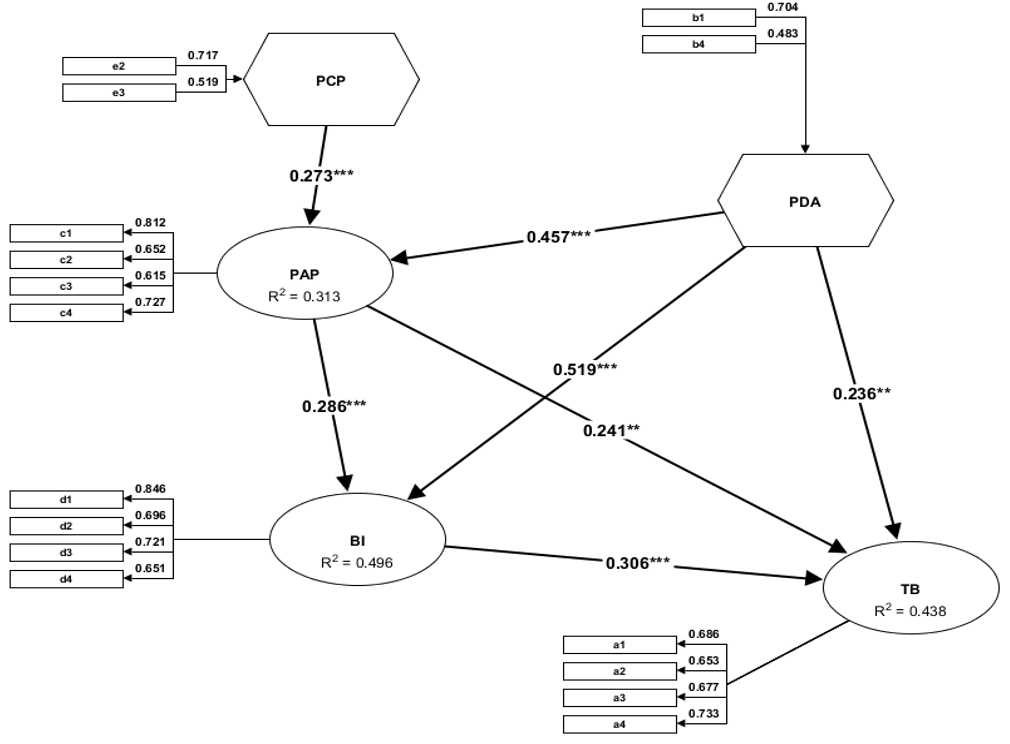
Figure 1 presents the final structural model after measurement-model refinement. Only the retained formative indicators are shown in the figure (PDA: b1 and b4; PCP: e2 and e3). Indicators removed during the formative measurement assessment are not included in the final model.
4.1 Model fit assessment
Model fit was assessed using the Standardized Root Mean Square Residual (SRMR) for both the saturated and estimated models. The SRMR value was 0.0816 for the saturated model and 0.0836 for the estimated model. These values are slightly above the commonly referenced threshold of 0.08 but remain below the more lenient criterion of 0.10 often considered acceptable in PLS-SEM applications. The relatively small difference between the saturated and estimated models (0.0020) suggests that the structural restrictions imposed by the proposed model have only a limited impact on the overall discrepancy between the observed and model-implied correlations. Overall, the SRMR results indicate a reasonable and acceptable level of approximate model fit, although the values do not indicate exceptionally strong fit. Therefore, the structural model can be considered suitable for evaluating the hypothesized relationships among the constructs, while the results should be interpreted in conjunction with the measurement-model assessment and structural model evaluation. Future research may further refine the conceptual and measurement specifications to improve the model's overall fit.
The reflective constructs demonstrated acceptable internal consistency reliability, with Cronbach’s alpha values ranging from 0.783 to 0.821, ρA values ranging from 0.784 to 0.829, and composite reliability values ranging from 0.782 to 0.821. BI demonstrated acceptable convergent validity (AVE = 0.536). The AVE values for PAP (AVE = 0.498) and TB (AVE = 0.474) were marginally below the recommended 0.50 threshold and should therefore be interpreted cautiously. Discriminant validity among the reflective constructs was supported, as all HTMT values ranged from 0.512 to 0.591, below the 0.85 threshold. PDA and PCP were assessed as formative constructs using outer VIF values and bootstrapped outer weights rather than internal-consistency reliability, AVE, HTMT, or Fornell–Larcker statistics, as Tables 2-4.
Table 2. Reliability and convergent validity of reflective constructs
|
Construct |
Cronbach’s Alpha (α) |
Dijkstra–Henseler’s Rho (ρA) |
Composite Reliability (ρC) |
AVE |
|
Perceived Accessibility by Public Transport (PAP) |
0.8013 |
0.8061 |
0.7966 |
0.4977 |
|
Behavioral Intention (BI) |
0.8206 |
0.8292 |
0.8207 |
0.5360 |
|
Travel Behavior (TB) |
0.7831 |
0.7837 |
0.7823 |
0.4736 |
Table 3. Discriminant validity of reflective constructs: HTMT
|
Construct |
PAP |
BI |
TB |
|
PAP |
— |
|
|
|
BI |
0.5257 |
— |
|
|
TB |
0.5118 |
0.5909 |
— |
Table 4. Discriminant validity of reflective constructs: Fornell–Larcker criterion
|
Construct |
PAP |
BI |
TB |
|
PAP |
0.706 |
|
|
|
BI |
0.2912 |
0.732 |
|
|
TB |
0.2719 |
0.3501 |
0.688 |
For the formative measurement constructs, collinearity was assessed using outer VIF values. The VIF values for the retained indicators of PDA ranged from 1.189 to 1.189, whereas those for PCP ranged from 1.092 to 1.092. All values were below the recommended threshold of 3.3, indicating that multicollinearity among the formative indicators was not a concern.
Only the retained indicators were included in the final formative measurement model. Other initial indicators were excluded during measurement-model refinement because they did not demonstrate sufficient statistical contribution and/or conceptual relevance to the respective formative construct. Their removal helped produce a more parsimonious measurement model while retaining indicators that best represented the conceptual domains of PDA and PCP. The retained indicators—b1 and b4 for PDA, and e2 and e3 for PCP—showed acceptable collinearity statistics and were therefore retained for the structural-model analysis as in Table 5.
Table 5. Formative-construct collinearity assessment
|
Formative Construct |
Indicator |
Outer VIF |
Interpretation |
|
Perceived Destination Attractiveness (PDA) |
b1 |
1.189 |
Acceptable |
|
|
b4 |
1.189 |
Acceptable |
|
Perceived Community Participation (PCP) |
e2 |
1.092 |
Acceptable |
|
|
e3 |
1.092 |
Acceptable |
To assess the potential presence of common method bias arising from the use of self-reported data, Harman's single-factor test was conducted. The results revealed that the first unrotated factor accounted for 34.245% of the total variance, which is below the recommended threshold of 50%, indicating that common method bias is unlikely to be a serious concern. Furthermore, indicator-level collinearity diagnostics showed VIF values ranging from 1.092 to 2.482, well below the conservative threshold of 3.3. Therefore, the findings suggest that common method bias is unlikely to substantially affect the validity of the study results, as Table 6.
Table 6. Assessment of common method bias
|
Assessment Method |
Criterion |
Result |
Conclusion |
|
Harman's Single-Factor Test |
First factor < 50% of total variance |
34.245% |
No substantial common method bias |
|
Indicator Multicollinearity (VIF) |
VIF < 3.3 |
1.092-2.482 |
No critical collinearity issue |
|
Overall Assessment |
Harman's test < 50% and VIF < 3.3 |
Satisfied |
Common method bias is unlikely to be a major concern |
4.2 Structural equation modeling
The PLS-SEM results indicate that the proposed structural model provides moderate explanatory power for the endogenous constructs. PAP has an R² value of 0.313, indicating that 31.25% of its variance is explained by PDA and PCP. BI has an R² of 0.496, showing that the model explains 49.63% of its variance, while TB has an R² of 0.438, indicating that 43.78% of its variance is explained by the proposed predictors. PDA and PCP are specified as exogenous/emergent constructs in the model; therefore, R² values are not reported for these constructs in Figure 1.
The structural paths show that PDA has a positive effect on PAP (β = 0.4570) and BI (β = 0.5191), indicating that higher PDA is associated with stronger perceptions of public transport accessibility and BI. PDA also has a positive direct effect on TB (β = 0.2358). In addition, PCP positively influences PAP (β = 0.2728), suggesting that greater PCP is associated with more favorable perceptions of public transport accessibility.
PAP positively influences BI (β = 0.2858) and TB (β = 0.2407), indicating that PAP is associated with both stronger BI and TB. BI also has a positive direct effect on TB (β = 0.3064), supporting the proposed relationship between BI and actual TB.
The total effects further demonstrate the indirect relationships within the model. The total effect of PDA on BI is β = 0.6497, comprising a direct effect of 0.5191 and an indirect effect through PAP of 0.1306. Similarly, the total effect of PDA on TB is β = 0.5449, with an indirect effect of 0.3091 in addition to its direct effect of 0.2358. The total effect of PAP on TB is β = 0.3283, consisting of a direct effect of 0.2407 and an indirect effect through BI of 0.0876. These results indicate that PAP and BI function as important pathways linking destination attractiveness with TB.
PCP also demonstrates indirect effects through PAP. Its indirect effect on BI is β = 0.0780, while its indirect effect on TB is β = 0.0896. Because no direct PCP → BI or PCP → TB paths are specified in the reported structural model, these relationships operate through the intervening construct(s), particularly PAP and BI.
The effect-size results provide additional evidence regarding the relative importance of the structural relationships. PDA → BI shows the largest effect (f² = 0.4070), followed by PDA → PAP (f² = 0.2997), indicating relatively substantial contributions to the explained variance of BI and PAP, respectively. The effects of PAP → BI (f² = 0.1234), PCP → PAP (f² = 0.1068), and BI → TB (f² = 0.0841) are smaller but meaningful, whereas PAP → TB (f² = 0.0698) and PDA → TB (f² = 0.0535) represent relatively smaller effects.
Regarding model fit, the SRMR is 0.0816 for the saturated model and 0.0836 for the estimated model. These values are close to the commonly used 0.08 guideline, although the estimated-model value is slightly above this threshold. Therefore, the model should be described as showing acceptable or marginal approximate fit rather than strong model fit. The estimated-model dULS and dG values are 0.9503 and 0.2879, respectively.
Overall, the findings indicate that PDA is an important antecedent of both PAP and BI, while PAP contributes to BI and TB, and BI contributes directly to TB. The indirect effects further suggest that accessibility and BI serve as important mechanisms through which destination attractiveness and community participation are associated with tourists' TB.
Based on Tables 7 and 8, the bootstrap results provide strong evidence for the proposed structural relationships. PDA emerges as the most influential exogenous construct in the model. PDA has a significant positive effect on PAP (β = 0.4570, t = 7.698, p < 0.001, 95% CI [0.3401, 0.5692]) and an even stronger direct effect on BI (β = 0.5191, t = 7.357, p < 0.001, 95% CI [0.3719, 0.6455]). PDA also has a significant positive direct effect on TB (β = 0.2358, t = 3.132, p = 0.002, 95% CI [0.0815, 0.3820]). These findings indicate that tourists who perceive the destination as more attractive tend to report greater perceived accessibility, stronger BI, and more favorable TB.
Table 7. Bootstrap results of direct effects in the structural equation model
|
Hypothesis/Path |
β |
SE |
t-Value |
p-Value (2-tailed) |
95% CI |
Decision |
|
PAP → BI |
0.2858 |
0.0765 |
3.7364 |
<0.001 |
[0.1433, 0.4455] |
Supported |
|
PAP → TB |
0.2407 |
0.0874 |
2.7548 |
0.006 |
[0.0861, 0.4282] |
Supported |
|
BI → TB |
0.3064 |
0.0907 |
3.3797 |
<0.001 |
[0.1282, 0.4870] |
Supported |
|
PDA → PAP |
0.4570 |
0.0594 |
7.6977 |
<0.001 |
[0.3401, 0.5692] |
Supported |
|
PDA → BI |
0.5191 |
0.0706 |
7.3573 |
<0.001 |
[0.3719, 0.6455] |
Supported |
|
PDA → TB |
0.2358 |
0.0753 |
3.1317 |
0.002 |
[0.0815, 0.3820] |
Supported |
|
PCP → PAP |
0.2728 |
0.0635 |
4.2948 |
<0.001 |
[0.1511, 0.3962] |
Supported |
Table 8. Bootstrap results of indirect effects in the structural equation model
|
Indirect Relationship |
Type of Effect |
β |
SE |
t-Value |
p-Value (2-tailed) |
95% CI |
Decision |
|
PAP → BI → TB |
Specific indirect effect |
0.0876 |
0.0336 |
2.6101 |
0.009 |
[0.0313, 0.1609] |
Supported |
|
PDA → PAP → BI |
Specific indirect effect |
0.1306 |
0.0457 |
2.8556 |
0.004 |
[0.0563, 0.2362] |
Supported |
|
PDA → TB |
Total indirect effect |
0.3091 |
0.0544 |
5.6863 |
<0.001 |
[0.2071, 0.4249] |
Supported |
|
PCP → PAP → BI |
Specific indirect effect |
0.0780 |
0.0324 |
2.4054 |
0.016 |
[0.0284, 0.1521] |
Supported |
|
PCP → TB |
Total indirect effect |
0.0896 |
0.0301 |
2.9736 |
0.003 |
[0.0357, 0.1564] |
Supported |
PAP also plays an important role in the model. PAP positively influences BI (β = 0.2858, t = 3.736, p < 0.001, 95% CI [0.1433, 0.4455]) and TB (β = 0.2407, t = 2.755, p = 0.006, 95% CI [0.0861, 0.4282]). Furthermore, the indirect effect of PAP on TB through BI is significant (β = 0.0876, t = 2.610, p = 0.009, 95% CI [0.0313, 0.1609]). This indicates that accessibility contributes to TB both directly and indirectly through BI.
BI has a significant positive effect on TB (β = 0.3064, t = 3.380, p < 0.001, 95% CI [0.1282, 0.4870]). This result is theoretically important because it supports the basic behavioral mechanism in which tourists' intentions are translated into actual TB.
PCP significantly influences PAP (β = 0.2728, t = 4.295, p < 0.001, 95% CI [0.1511, 0.3962]). Although the model does not specify direct PCP → BI or PCP → TB paths, PCP demonstrates significant indirect effects on both outcomes. The indirect effect of PCP on BI is β = 0.0780 (t = 2.405, p = 0.016, 95% CI [0.0284, 0.1521]), while its indirect effect on TB is β = 0.0896 (t = 2.974, p = 0.003, 95% CI [0.0357, 0.1564]). This suggests that community participation contributes to tourists' behavioral outcomes primarily through perceived accessibility and subsequent behavioral processes, rather than through a specified direct relationship.
The mediation analysis reveals a significant specific indirect effect of PDA on BI through PAP (β = 0.1306, t = 2.856, p = 0.004, 95% CI [0.0563, 0.2362]), supporting the mediating role of perceived public transport accessibility in linking destination attractiveness and BI. Furthermore, PDA demonstrates a significant total indirect effect on TB (β = 0.3091, t = 5.686, p < 0.001, 95% CI [0.2071, 0.4249]). This total indirect effect reflects the combined influence of all indirect pathways connecting PDA and TB. As specific bootstrapped estimates for individual indirect pathways were not available from ADANCO, no claims are made regarding the statistical significance of any particular sequential mediation chain. Accordingly, the findings support the presence of a significant overall indirect relationship between PDA and TB while avoiding causal interpretations beyond the evidence provided by the cross-sectional data.
The mediation analysis revealed significant specific indirect effects of PAP on TB through BI (β = 0.0876, p = 0.009), PDA on BI through PAP (β = 0.1306, p = 0.004), and PCP on BI through PAP (β = 0.0780, p = 0.016). In addition, PDA demonstrated a significant total indirect effect on TB (β = 0.3091, p < 0.001), while PCP showed a significant total indirect effect on TB (β = 0.0896, p = 0.003). These total indirect effects represent the combined influence of multiple indirect pathways linking the antecedent constructs to TB. As ADANCO reports total indirect effects rather than bootstrapped estimates for individual sequential pathways, the results should not be interpreted as evidence of statistically confirmed sequential mediation. Rather, the findings indicate the presence of significant overall indirect relationships among the constructs within the proposed model. Furthermore, given the cross-sectional nature of the data, the mediation findings should be interpreted as associative rather than causal relationships.
4.3 Construct reliability
Construct reliability was assessed using Dijkstra–Henseler’s rho (ρA), which is considered an appropriate reliability coefficient for evaluating the internal consistency of reflective constructs in PLS-SEM. The results indicate that BI (ρA = 0.8292), PAP (ρA = 0.8061), and TB (ρA = 0.7837) all exceed the commonly recommended threshold of 0.70, indicating satisfactory internal consistency among their respective indicators.
In contrast, PDA and PCP were specified as emergent constructs using Mode B measurement, rather than reflective latent constructs. Consequently, conventional internal-consistency reliability coefficients such as ρA, composite reliability, and Cronbach’s alpha, as well as AVE, are not reported or interpreted for these constructs. Their measurement quality should instead be evaluated based on the appropriateness and theoretical relevance of their indicators and the specification of the emergent construct.
Overall, the reliability results provide satisfactory evidence for the reflective constructs in the model, with all three reflective constructs demonstrating ρA values above 0.70. The distinct measurement specification of PDA and PCP is retained because these constructs represent composite/emergent concepts formed from their respective indicators rather than latent variables assumed to cause the observed indicators.
5.1 Discussion of direct effects
The findings provide support for all seven hypotheses concerning the direct relationships among PDA, PCP, PAP, BI, and TB. Overall, the results suggest that tourists’ perceptions of the destination and community environment are associated with their perceptions of transport accessibility, BI, and subsequent TB.
H1: PDA → PAP
H1 was supported, indicating that PDA has a positive effect on PAP (β = 0.457, p < 0.001). This finding suggests that when tourists perceive a religious tourism destination as attractive and worthwhile, they are also more likely to perceive the available public transportation system as accessible and convenient [39]. The relatively strong effect indicates that accessibility is not perceived independently from the attractiveness of the destination. Rather, tourists may evaluate the ease of reaching a destination in relation to the value and attractiveness they associate with the destination. This finding supports the view that destination attractiveness and accessibility are interconnected components of the overall tourism experience.
H2: PCP → PAP
H2 was supported, with PCP having a positive effect on PAP (β = 0.273, p < 0.001). This result suggests that tourists who perceive greater community involvement in tourism development also tend to perceive the destination as more accessible through public transportation [40]. Community participation may contribute indirectly to accessibility through local involvement in tourism-route development, information provision, coordination with public agencies, and improvements in the visitor environment. The finding therefore highlights the potential role of community participation in supporting the functional accessibility of religious tourism destinations.
H3: PDA → BI
H3 was supported, as PDA had a positive and relatively strong effect on BI (β = 0.519, p < 0.001). This finding indicates that tourists who perceive the religious tourism destination as attractive are more likely to develop favorable BI, such as revisiting, recommending the destination [41], and supporting tourism-related activities. The result is consistent with the behavioral logic underlying the TPB, in which favorable perceptions of a behavioral context can contribute to stronger intentions. In the present study, destination attractiveness appears to be an important antecedent of tourists’ intention to engage with the destination.
H4: PAP → BI
H4 was supported, with PAP positively affecting BI (β = 0.286, p = 0.0002). This result indicates that convenient and understandable public transportation can strengthen tourists’ willingness to revisit, recommend [42], and support the tourism route. Accessibility reduces practical barriers associated with travel and may consequently make tourists more willing to engage with the destination in the future. The finding emphasizes that transport accessibility should be considered not merely as a physical transportation issue but also as a factor contributing to tourists’ behavioral responses [43].
H5: PDA → TB
H5 was supported, with PDA having a positive direct effect on TB (β = 0.236, p = 0.0018). This finding suggests that tourists’ perceptions of the attractiveness and value of the destination are associated with how they actually approach their travel, including their use of public transportation, route planning, and travel-time decisions. The result indicates that destination perceptions may extend beyond intention and be reflected in tourists’ reported TB [44].
H6: PAP → TB
H6 was supported, as PAP had a positive effect on TB (β = 0.241, p = 0.0060). This finding demonstrates that when public transportation is perceived as convenient, understandable, well connected, and reasonably priced, tourists are more likely to demonstrate favorable TB [2]. The result reinforces the importance of transportation accessibility in facilitating tourism mobility, particularly in urban religious tourism routes where visitors may depend on public transportation to move among multiple attractions.
H7: BI → TB
H7 was supported, with BI positively affecting TB (β = 0.306, p = 0.0008). This finding is consistent with the central proposition of the TPB that BI is an important proximal determinant of behavior. Tourists who express stronger intentions to revisit, recommend, and support tourism activities are also more likely to report corresponding TB. The result therefore provides empirical support for incorporating BI as an explanatory mechanism linking tourists’ perceptions to their TB [45].
5.2 Perceived accessibility by public transport as a mediator
H8: PAP mediates the relationship between PDA and BI
H8 was supported, with PAP significantly mediating the relationship between PDA and BI (indirect effect β = 0.131, p = 0.004). This finding indicates that destination attractiveness influences tourists’ BI not only directly but also through their perceptions of public transport accessibility. In other words, an attractive destination is more likely to generate favorable BI when tourists also perceive that the destination can be conveniently accessed by public transportation. The finding demonstrates the complementary role of transportation accessibility in translating destination attractiveness into tourists’ behavioral responses [46].
H9: PAP mediates the relationship between PCP and BI
H9 was also supported, with PAP significantly mediating the relationship between PCP and BI (indirect effect β = 0.078, p = 0.016). This finding suggests that community participation can contribute to tourists’ BI through improvements or positive perceptions of public transport accessibility [47]. Community involvement may help create a more coordinated and visitor-oriented tourism environment, which can enhance tourists’ perceptions of accessibility and subsequently strengthen their intention to revisit, recommend, or support tourism activities. The result highlights that the contribution of local communities to tourism development may extend beyond cultural and social dimensions to include conditions that facilitate tourist mobility.
5.3 Behavioral intention as a mediator
H10: BI mediates the relationship between PAP and TB
H10 was supported, with BI significantly mediating the relationship between PAP and TB (indirect effect β = 0.088, p = 0.009, 95% CI [0.031, 0.161]). This finding indicates that PAP is associated with TB partly through BI. Tourists who perceive public transportation as convenient, well connected, understandable, and accessible tend to report stronger intentions to revisit, recommend, and support the destination, which are subsequently associated with more favorable TB. This finding is consistent with the intention-behavior mechanism underlying the TPB, suggesting that perceived transport accessibility may influence TB through both a direct pathway and an indirect pathway operating through BI. Given the cross-sectional nature of the data, however, the findings should be interpreted as evidence of significant associations rather than definitive causal effects.
5.4 Indirect relationship between destination attractiveness and travel behavior
H11: PDA has a significant indirect relationship with TB through PAP and BI
H11 was supported, as PDA demonstrated a significant total indirect effect on TB (β = 0.309, p < 0.001). Because the structural model contains multiple indirect pathways between PDA and TB, this coefficient represents a total indirect effect rather than a specific indirect effect or a statistically confirmed sequential mediation pathway. Therefore, the result should not be interpreted as evidence that the specific chain PDA → PAP → BI → TB was directly verified. Instead, the finding indicates that destination attractiveness is associated with TB through the combined influence of indirect pathways involving PAP and BI. These results suggest that tourists who perceive a destination as attractive are more likely to report favorable accessibility perceptions, stronger BI, and ultimately more favorable TB. However, because ADANCO reports only the total indirect effect and the data were collected using a cross-sectional survey design, these relationships should be interpreted as theoretically specified associations rather than definitive causal mechanisms.
5.5 Theoretical and practical implications
From a theoretical perspective, this study contributes to tourism behavior research by integrating PDA, PCP, public transport accessibility, BI, and TB within a unified PLS-SEM framework. The findings highlight the importance of PDA as a key antecedent of both perceived accessibility and BI, while also demonstrating the role of public transport accessibility as an intervening mechanism through which destination and community-related perceptions can influence tourists’ BI. In addition, the significant relationship between BI and TB provides empirical support for the behavioral logic underlying the TPB, in which intention represents an important proximal determinant of behavior. The findings therefore extend the application of behavioral theory to religious tourism by incorporating transport accessibility and community participation into the explanation of tourists’ TB.
From a practical perspective, the findings suggest that destination managers should not treat destination attractiveness, transportation accessibility, community participation, and tourist behavior as separate management issues. First, maintaining and communicating the cultural, architectural, and experiential attractiveness of religious tourism destinations is important because destination attractiveness has a substantial positive association with BI. Second, improving public transport accessibility—including ease of access, route information, intermodal connectivity, and fare convenience—can strengthen tourists’ BI and TB. Third, community participation should be supported as part of an integrated destination-management approach because its positive relationship with perceived accessibility suggests that local involvement can contribute to a more visitor-oriented tourism environment. Finally, destination managers should encourage favorable BI, such as intentions to revisit, recommend, and support tourism activities, because these intentions are positively associated with tourists’ TB. Together, these strategies can support more accessible, community-oriented, and behaviorally responsive religious tourism destinations.
5.6 Comparison with previous studies
The findings of this study are broadly consistent with previous research on destination attractiveness [1, 48], tourism accessibility, community participation, and tourist behavior, while extending existing knowledge by examining these relationships within an integrated structural model. The positive effect of PDA on PAP indicates that tourists’ evaluations of a destination are closely associated with their perceptions of the ease and convenience of reaching it. This finding supports previous research emphasizing accessibility as an important component of destination competitiveness and tourist experience [43]. The relatively strong relationship observed in the present study further suggests that accessibility should be considered as an integral component of destination evaluation rather than merely as a supporting transportation factor.
The positive relationship between PDA and BI is also consistent with previous tourism research showing that favorable destination evaluations are associated with tourists’ intentions to revisit, recommend, and engage with a destination. In the present study, this relationship was particularly strong (β = 0.519), indicating that perceived attractiveness represents an important determinant of tourists’ BI. This finding reinforces previous evidence that destination-related evaluations can play a substantial role in shaping tourists’ future behavioral responses.
The positive effect of PAP on BI is consistent with studies that identify transportation accessibility as an important condition facilitating positive tourist responses [43]. The present findings extend this perspective by demonstrating that accessibility is associated not only with the physical feasibility of reaching a destination but also with tourists’ intentions toward future engagement with the destination. This is particularly relevant for religious tourism routes, where tourists may need to move between multiple sites and therefore depend on convenient and understandable transport connections.
The positive relationship between PCP and PAP provides an additional contribution to the literature. Community-based tourism research has emphasized the importance of local participation in creating supportive tourism environments and enhancing the visitor experience. In the present study, community participation was positively associated with perceived accessibility (β = 0.273), suggesting that local involvement may contribute to conditions that make tourism routes more accessible and visitor-oriented. This finding broadens the conventional understanding of community participation by highlighting its potential connection with the functional dimension of destination accessibility.
The findings concerning BI and TB are consistent with the central proposition of the TPB. BI had a significant positive effect on TB (β = 0.306), indicating that stronger intentions are associated with more favorable reported TB. This finding is consistent with previous TPB-based tourism studies that identify BI as an important proximal determinant of subsequent behavior. The present study extends this perspective by embedding BI within a broader destination-accessibility framework rather than examining intention as an isolated predictor.
Finally, the mediation findings provide additional insight into how these relationships operate. PAP significantly mediated the relationships of PDA and PCP with BI. BI also demonstrated a significant indirect relationship between perceived accessibility and TB. These findings suggest that destination-related perceptions do not necessarily translate directly into travel responses; rather, accessibility and BI provide important intervening mechanisms. This integrated perspective extends previous studies that have often examined destination attractiveness, transportation accessibility, community participation, or BI separately. The results therefore support a more interconnected explanation of tourist behavior in religious tourism settings.
5.7 Managerial and policy implications
The findings of this study provide implications for religious tourism destination managers and policymakers, particularly for improving accessibility and visitor mobility within religious heritage districts. Rather than treating destination management, public transport, and community participation as separate concerns, the findings support a more integrated approach to destination and mobility planning.
First, the significant positive relationship between PDA and PAP suggests that destination characteristics and transport accessibility should be considered together in planning religious tourism districts. Destination managers and local authorities should identify major visitor attractions and connect them systematically with public transport routes, transfer points, and visitor information systems. In practice, this may include integrated transport–tourism route maps, coordinated information on public transport and heritage sites, multilingual journey information, and digital journey-planning tools showing how visitors can travel between religious attractions using public transport. Such measures can reduce uncertainty in route planning and make available mobility options more visible to visitors.
Second, the significant effects of PAP on both BI and reported TB indicate that accessibility should be addressed not only through the availability of transport services but also through the usability of the visitor journey. Policymakers and transport authorities should consider integrated ticketing systems, coordinated transport–tourism planning, last-mile connections between transit stations and heritage sites, multilingual route information, and clearly coordinated transfer information. For religious tourism routes involving multiple sites, these measures could help visitors understand how to move between attractions, where to transfer, and the approximate time required for different stages of the journey. Destination managers could also coordinate with transport agencies to ensure that information provided at heritage sites is consistent with information available through public transport channels and digital platforms.
Third, the significant relationship between BI and reported TB suggests that destination management should complement infrastructure and service improvements with interventions that facilitate visitors' translation of intentions into reported travel practices. Destination managers may provide mobility-oriented visitor information before and during the visit, including public transport options, transfer instructions, estimated journey times, and access information for multiple heritage sites. Digital communication and destination storytelling can also incorporate practical mobility information rather than focusing exclusively on destination promotion. These measures should be implemented as complementary interventions alongside improvements in transport accessibility and service quality, rather than as substitutes for them.
Fourth, the significant relationship between PCP and PAP highlights a potential role for local communities in supporting visitor mobility. Local governments and destination managers may establish community-based visitor assistance programs in which trained local residents provide route guidance, first- and last-mile information, wayfinding assistance, and locally relevant information about access to religious heritage sites. Community representatives could also participate in identifying accessibility problems, communicating visitor mobility needs to relevant authorities, and developing locally appropriate visitor information. Such arrangements would connect community participation with practical destination-management functions rather than treating participation solely as a general principle of tourism development.
Fifth, the mediation findings indicate that destination attractiveness and community participation are associated with tourist responses partly through perceived public transport accessibility and BI. This finding supports a coordinated rather than fragmented approach to policy implementation. Local governments may establish joint governance mechanisms involving transport agencies, tourism authorities, heritage-site managers, and community representatives to coordinate accessibility improvements and visitor-mobility planning within religious heritage districts. Such mechanisms could be used to coordinate transport information, identify last-mile accessibility gaps, align visitor-management practices across heritage sites, and review visitor mobility issues collectively. Where appropriate, these arrangements could also support coordinated planning of transport services, tourism information, and community-based visitor assistance.
Finally, the policy implications should be interpreted within the scope of the evidence provided by this study. The findings demonstrate relationships among destination attractiveness, community participation, perceived public transport accessibility, BI, and reported TB; they do not directly measure changes in congestion, emissions, modal share, parking demand, or heritage-site carrying capacity. Accordingly, the proposed measures should be viewed as planning and management mechanisms informed by behavioral evidence, rather than as demonstrated interventions for reducing environmental impacts. Future destination-planning initiatives could combine the present behavioral evidence with objective mobility indicators, such as public transport-use records, pedestrian flows, traffic conditions, or emissions data, to evaluate whether improvements in public transport accessibility translate into measurable sustainable-mobility outcomes.
5.8 Implications for sustainable urban tourism and heritage planning
Although this study did not directly measure environmental outcomes such as congestion or emissions, the findings suggest that public transport accessibility may support more sustainable tourist mobility in urban heritage districts [49]. Improving transport accessibility may encourage greater reliance on public transportation when visiting religious and historical attractions. In turn, such mobility patterns may contribute to broader sustainable tourism objectives associated with accessibility, visitor management, and transportation planning.
This study examined the relationships among PDA, PAP, BI, TB, and PCP within an integrated model of religious tourism. Using PLS-SEM, the study provides empirical evidence that these constructs are interconnected through both direct and indirect relationships.
The findings identify PDA as an important antecedent of perceived accessibility, BI, and TB. PCP also contributes positively to PAP. In turn, perceived accessibility positively influences both BI and TB, while BI is positively associated with TB. These findings indicate that tourists’ travel responses are shaped by the combined influence of destination-related perceptions, transportation conditions, community involvement, and BI.
The mediation results further demonstrate that PAP provides an important pathway linking PDA and PCP to behavioral intention. Behavioral intention also represents an important intervening mechanism in the relationship between perceived accessibility and TB. These findings support an integrated perspective in which destination attractiveness, accessibility, community participation, and behavioral intention jointly contribute to tourists’ TB rather than operating as isolated factors.
From a theoretical perspective, the study extends tourism behavior research by integrating destination attractiveness, public transport accessibility, community participation, and behavioral intention within a single structural framework. The findings also provide empirical support for the role of behavioral intention as an important proximal determinant of TB, while demonstrating that transportation accessibility can function as an important mechanism connecting destination and community perceptions with tourists’ behavioral responses.
From a practical perspective, the findings suggest that improving religious tourism competitiveness requires more than enhancing the attractiveness of individual sites. Effective destination management should combine the preservation and communication of destination attributes with accessible public transportation, strategies that encourage favorable BI, and meaningful community participation. Such an integrated approach can support more accessible, visitor-oriented, and socially sustainable religious tourism development.
Despite these contributions, the study has several limitations. Its cross-sectional design limits the ability to establish causal relationships, while the focus on a specific religious tourism context may constrain the generalizability of the findings to other destinations. In addition, the study relies on tourists’ self-reported perceptions and behavior, which may introduce common method and response biases. Future research could employ longitudinal or multi-site designs to examine how these relationships develop over time and across different tourism contexts. Comparative studies involving different destinations and stakeholder groups could further clarify the roles of accessibility, community participation, and behavioral intention in shaping tourist behavior.
Overall, this study demonstrates that religious tourism development should be understood as an interconnected system in which destination attractiveness, transport accessibility, community participation, and behavioral intention jointly contribute to tourists’ TB. The findings provide a basis for both theoretical development and practical destination-management strategies aimed at creating more accessible, attractive, and sustainable religious tourism destinations.
While the study focuses on tourists’ perceptions and reported TB, the findings have broader implications for sustainable urban tourism planning. Public transport accessibility and community participation emerge as important mechanisms that may support sustainable tourist mobility in religious heritage districts. By encouraging transit-based travel and strengthening coordination among local stakeholders, these factors can contribute to more sustainable destination management and reduced pressure on urban heritage environments.
We would like to extend our heartfelt gratitude to Suan Sunandha Rajabhat University for providing a research scholarship and access to research facilities, which made it possible to complete this study.
[1] Han, B., Song, J. (2025). Is it personal emotion or immersive atmosphere? An analysis of the components of tourist satisfaction at theme parks today. Social Sciences & Humanities Open, 12: 102141. https://doi.org/10.1016/j.ssaho.2025.102141
[2] Yeap, P.F., Liow, M.L.S. (2024). Tourist walkability and sustainable community-based tourism: Conceptual framework and strategic model. International Journal of Tourism Cities, 10(1): 78-104. https://doi.org/10.1108/IJTC-05-2022-0117
[3] Iamtrakul, P., Chayphong, S., Seo, D., Trinh, T.A. (2025). Promoting accessibility for sustainable tourism: A spatial analysis of tourist attractions and public transportation networks in Bangkok. City, Territory and Architecture, 12(1): 13. https://doi.org/10.1186/s40410-025-00266-8
[4] Carvache-Franco, M., Regalado-Pezúa, O., Carvache-Franco, O., Carvache-Franco, W. (2024). Segmentation by motivations in religious tourism: A study of the Christ of Miracles Pilgrimage, Peru. PLoS ONE, 19(5): e0303762. https://doi.org/10.1371/journal.pone.0303762
[5] Kalyan, P., Ekka, P.M. (2024). The intersection of faith and tourism: An exploratory study on halal tourism motivations among Indian millennials. Journal of Islamic Marketing, 15(12): 3304-3322. https://doi.org/10.1108/JIMA-04-2023-0105
[6] Drăguleasa, I.A., Niță, A., Mazilu, M., Constantinescu, E. (2024). Religious tourism and pilgrimage in Vâlcea county, South-West Oltenia Region: Motivations, belief and tourists’ perceptions. Religions, 15(3): 294. https://doi.org/10.3390/rel15030294
[7] Song, H., Qiu, R.T., Park, J. (2023). Progress in tourism demand research: Theory and empirics. Tourism Management, 94: 104655. https://doi.org/10.1016/j.tourman.2022.104655
[8] Chotisarn, N., Phuthong, T. (2025). Impact of artificial intelligence-enabled service attributes on customer satisfaction and loyalty in chain hotels: Evidence from coastal tourism destinations in western Thailand. Social Sciences & Humanities Open, 11: 101306. https://doi.org/10.1016/j.ssaho.2025.101306
[9] Davras, Ö., Özperçin, İ. (2023). The relationships of motivation, service quality, and behavioral intentions for gastronomy festival: The mediating role of destination image. Journal of Policy Research in Tourism, Leisure and Events, 15(4): 451-464. https://doi.org/10.1080/19407963.2021.1968881
[10] Ajzen, I. (1991). The theory of planned behavior. Organizational Behavior and Human Decision Processes, 50(2): 179-211. https://doi.org/10.1016/0749-5978(91)90020-T
[11] Ariesta, D., Sukotjo, E., Suleman, N.R. (2020). The effect of attraction, accessibility and facilities on destination images and its impact on revisit intention in the marine tourism of the Wakatobi Regency. International Journal of Scientific & Technology Research, 9(3): 6605-6613.
[12] Hassan, T.H., Fazia, C., Abdelmoaty, M.A., et al. (2024). Sustainable pathways: Understanding the interplay of environmental behavior, personal values, and tourist outcomes in farm tourism. Discover Sustainability, 5: 153. https://doi.org/10.1007/s43621-024-00354-8
[13] Gorji, A.S., Garcia, F.A., Mercadé-Melé, P. (2023). Tourists' perceived destination image and behavioral intentions towards a sanctioned destination: Comparing visitors and non-visitors. Tourism Management Perspectives, 45: 101062. https://doi.org/10.1016/j.tmp.2022.101062
[14] Han, H., Sangkaew, N., Cheng, X., Au, W.C.W., Tsang, K.F.N., Wichupankul, S. (2025). Promoting tourists’ sustainable transportation use, walking tour and recycling activities for air pollution minimization at overseas urban tourism destinations. Journal of Hospitality and Tourism Insights, 8(9): 3557-3583. https://doi.org/10.1108/JHTI-03-2025-0336
[15] Iddagoda, S.L., Jayakodi, C., Jayakodi, I., Umanga, I., Karunarathna, N., Dayapathirana, N. (2025). Exploring female participation and challenges in the Sri Lankan logistics sector: A qualitative inquiry. Social Sciences & Humanities Open, 12: 102321. https://doi.org/10.1016/j.ssaho.2025.102321
[16] Praprom, C., Laipaporn, J. (2025). Tourist's behavioral intention to visit Sukhirin in Narathiwat province: An ecotourism destination of Thailand. Geo Journal of Tourism and Geosites, 59(2): 563-571. https://doi.org/10.30892/gtg.59205-1437
[17] Kaur, S., Kaur, M. (2020). Behavioral intentions of heritage tourists: Influential variables on recommendations to visit. Journal of Heritage Tourism, 15(5): 511-532. https://doi.org/10.1080/1743873X.2019.1692852
[18] Yuan, F., Vui, C.N. (2023). The influence of destination image on tourists’ behavioural intentions: Explore how tourists’ perceptions of a destination affect their intentions to visit, revisit, or recommend it to others. Journal of Advanced Zoology, 44(S6): 1391-1397. https://doi.org/10.17762/jaz.v44iS6.2471
[19] Acharya, S., Mekker, M., De Vos, J. (2023). Linking travel behavior and tourism literature: Investigating the impacts of travel satisfaction on destination satisfaction and revisit intention. Transportation Research Interdisciplinary Perspectives, 17: 100745. https://doi.org/10.1016/j.trip.2022.100745
[20] Rahman, M., Sciara, G.C. (2022). Travel attitudes, the built environment and travel behavior relationships: Causal insights from social psychology theories. Transport Policy, 123: 44-54. https://doi.org/10.1016/j.tranpol.2022.04.012
[21] Hwang, H.J., Kim, Y.R., Park, S., Chung, N. (2025). Effects of weather and air quality on travel behavior. Tourism Management Perspectives, 57: 101366. https://doi.org/10.1016/j.tmp.2025.101366
[22] Yin, J., Cheng, Y., Bi, Y., Ni, Y. (2020). Tourists perceived crowding and destination attractiveness: The moderating effects of perceived risk and experience quality. Journal of Destination Marketing & Management, 18: 100489. https://doi.org/10.1016/j.jdmm.2020.100489
[23] Pompurová, K., Šimočková, I., Rialti, R. (2024). Defining domestic destination attractiveness: Gen-Y and Gen-Z perceptions. Current Issues in Tourism, 27(12): 2004-2022. https://doi.org/10.1080/13683500.2023.2220953
[24] Negm, H., El-Geneidy, A. (2025). Subjectivity matters: Investigating the relationship between perceived accessibility and travel behaviour. Transportation Research Part A: Policy and Practice, 193: 104399. https://doi.org/10.1016/j.tra.2025.104399
[25] Jamei, E., Chan, M., Chau, H.W., Gaisie, E., Lättman, K. (2022). Perceived accessibility and key influencing factors in transportation. Sustainability, 14(17): 10806. https://doi.org/10.3390/su141710806
[26] Luekveerawattana, R. (2022). Factors affecting the economic impact for managing cycling cultural tourism route. Cogent Social Sciences, 8(1): 2099563. https://doi.org/10.1080/23311886.2022.2099563
[27] Masiero, L., Hrankai, R. (2022). Modeling tourist accessibility to peripheral attractions. Annals of Tourism Research, 92: 103343. https://doi.org/10.1016/j.annals.2021.103343
[28] Stroope, J., Garn, A.C. (2024). Perception of place, active transportation, and community participation: A mediation analysis. Journal of Transport & Health, 36: 101812. https://doi.org/10.1016/j.jth.2024.101812
[29] Zhang, Y., You, C., Pundir, P., Meijering, L. (2023). Migrants' community participation and social integration in urban areas: A scoping review. Cities, 141: 104447. https://doi.org/10.1016/j.cities.2023.104447
[30] Reindrawati, D.Y. (2023). Challenges of community participation in tourism planning in developing countries. Cogent Social Sciences, 9(1): 2164240. https://doi.org/10.1080/23311886.2022.2164240
[31] Butler, R. (2025). Tourism destination development: The tourism area life cycle model. Tourism Geographies, 27(3-4): 599-607. https://doi.org/10.1080/14616688.2024.2325932
[32] Ministry of Tourism and Sports. (2024). Tourism statistics: International tourist arrivals to Thailand. https://www.mots.go.th/news/category/759.
[33] Krejcie, R.V., Morgan, D.W. (1970). Determining sample size for research activities. Educational and Psychological Measurement, 30(3): 607-610. https://doi.org/10.1177/001316447003000308
[34] Jarvis, C.B., MacKenzie, S.B., Podsakoff, P.M. (2003). A critical review of construct indicators and measurement model misspecification in marketing and consumer research. Journal of Consumer Research, 30(2): 199-218. https://doi.org/10.1086/376806
[35] Petter, S., Straub, D., Rai, A. (2007). Specifying formative constructs in information systems research. MIS Quarterly, 31(4): 623-656. https://doi.org/10.2307/25148814
[36] Hair, J.F., Hult, G.T.M., Ringle, C.M., Sarstedt, M. (2015). A primer on partial least squares structural equation modeling (PLS-SEM). International Journal of Research & Method in Education, 38(2): 220-221. https://doi.org/10.1080/1743727X.2015.1005806
[37] Hair, J., Alamer, A. (2022). Partial least squares structural equation modeling (PLS-SEM) in second language and education research: Guidelines using an applied example. Research Methods in Applied Linguistics, 1(3): 100027. https://doi.org/10.1016/j.rmal.2022.100027
[38] Sarstedt, M., Hair, J.F., Cheah, J.H., Becker, J.M., Ringle, C.M. (2019). How to specify, estimate, and validate higher-order constructs in PLS-SEM. Australasian Marketing Journal, 27(3): 197-211. https://doi.org/10.1016/j.ausmj.2019.05.003
[39] Ngeoywijit, S., Kruasom, T., Ugsornwongand, K., et al. (2022). Open innovations for tourism logistics design: A case study of a smart bus route design for the medical tourist in the City of Greater Mekong Subregion. Journal of Open Innovation: Technology, Market, and Complexity, 8(4): 173. https://doi.org/10.3390/joitmc8040173
[40] Pazzini, M., Lantieri, C., Vignali, V., et al. (2022). Comparison between different territorial policies to support intermodality of public transport. Transportation Research Procedia, 60: 68-75. https://doi.org/10.1016/j.trpro.2021.12.010
[41] Stylidis, D., Woosnam, K.M., Kim, S. (2022). Perceptions of attractions, residents as “more knowledgeable others” and destination image: Evidence from two destinations. International Journal of Tourism Research, 24(3): 472-486. https://doi.org/10.1002/jtr.2515
[42] Tse, S., Tung, V.W.S. (2022). Measuring the valence and intensity of residents’ behaviors in host–tourist interactions: Implications for destination image and destination competitiveness. Journal of Travel Research, 61(3): 565-580. https://doi.org/10.1177/0047287521997576
[43] Zhang, C., Wang, M., Dong, J., et al. (2022). Factors and mechanism affecting the attractiveness of public transport: Macroscopic and microscopic perspectives. Journal of Advanced Transportation, 2022(1): 5048678. https://doi.org/10.1155/2022/5048678
[44] Thio, S., Jokom, R., Widjaja, D.C. (2024). The contribution of perceived food consumption value on destination attractiveness and revisit intention. Journal of Culinary Science & Technology, 22(4): 727-743. https://doi.org/10.1080/15428052.2022.2074331
[45] Luekveerawattana, R. (2025). Understanding the drivers of human interaction and local engagement in tourist destinations. Journal of Asian Architecture and Building Engineering, 1-20. https://doi.org/10.1080/13467581.2025.2605734
[46] İştin, A.E., Ertaş, Ç. (2023). The mediation effect of satisfaction on the relationship between travel motivations and behavioral intentions. Journal of Recreation and Tourism Research, 10(3): 1-16. https://doi.org/10.5281/zenodo.8393216
[47] Cui, L., Song, X., Song, M. (2022). Residents’ perception and its impact on community participation of tourism development. In Tourism, Aviation and Hospitality Development During the COVID-19 Pandemic, pp. 139-151. Springer Singapore. https://doi.org/10.1007/978-981-19-1661-8_9
[48] Mareh, M., Subphonkulanan, L., Ali, W.B., Alam, M.M., Kim, L. (2025). The impact of perceived benefits on cryptocurrency adoption among business travelers: Evidence from MICE tourists in Thailand. Social Sciences & Humanities Open, 11: 101377. https://doi.org/10.1016/j.ssaho.2025.101377
[49] Jeelani, P., Shah, S.A., Dar, S.N., Rashid, H. (2023). Sustainability constructs of mountain tourism development: The evaluation of stakeholders’ perception using SUS-TAS. Environment, Development and Sustainability, 25: 8299-8317. https://doi.org/10.1007/s10668-022-02401-8