
Zainab Alridha | Othman Hameed Zinkaah* | Abbas Abdulhussein Abd Noor
© 2026 The authors. This article is published by IIETA and is licensed under the CC BY 4.0 license (http://creativecommons.org/licenses/by/4.0/).
OPEN ACCESS
National regulations focusing on sustainability are crucial tools for reducing negative environmental and socioeconomic consequences associated with building materials. However, the degree to which sustainability is incorporated into regulations on building materials in developing nations has not been explored enough yet. In the present study, the integration of sustainability in the Iraqi Guide for Building Materials (2017) has been investigated using qualitative content analysis (QCA) and the Triple Bottom Line (TBL) approach consisting of environmental, economic, and social aspects. A coding scheme containing 28 indicators (10 environmental, 8 economic, and 10 social) has been used for the analysis. As a result, 77 sustainability-related references have been revealed which corresponded to 87 code occurrences throughout the 17 chapters of the Guide. The findings indicated an obvious imbalance among the three elements of sustainability. Environmental indicators were by far the most common, with 82.8% of total occurrences, whereas 12.6% and 4.6% corresponded to social and economic indicators, respectively. Only 10 out of 28 predefined indicators have been found. The most frequent indicator was durability/longevity (54.0% of total occurrences) followed by use of natural resources (11.5%), toxicity to humans/environment (10.3%), and material impact on public health (8.0%). On the other hand, such contemporary sustainability criteria as embodied carbon, emissions during processing, water use, end-of-life disposal, compatibility with green certifications, local availability, market accessibility, integration in the supply chain, innovation support, affordability, social equity, and engagement of stakeholders are absent. Therefore, it can be concluded that the guide represents a technical basis that includes some sustainability requirements, but still faces several limitations related to the sustainability of construction materials. Future revision of the Guide may consider including sustainability requirements that belong to the scope of the Guide, such as criteria for the life-cycle assessment, calculation of embodied carbon, circular economy, economic resilience, and social inclusion in order to facilitate the alignment with the Sustainable Development Goals (SDGs), the Paris Agreement, and national goals in Iraq.
sustainability assessment, building materials regulation, Triple Bottom Line, qualitative content analysis, sustainable construction, developing countries, Iraqi Guide for Building Materials
The construction industry is one of the largest emitters of carbon dioxide, accounting for approximately 34% of total global emissions, while around 18% of total emissions result only from the production of building materials such as cement and steel. The sector is also highlighted by its high energy and resources demand, representing about 32% of global energy consumption, and nearly 50% of global materials extraction. Additionally, construction and demolition waste is also a critical environmental challenge, with global waste exceeding 2 billion tonnes by 2025 and more than 75% of the waste not being reused or recycled [1-3].
Therefore, adopting and developing sustainable building practices is no longer merely a voluntary value, but has become an urgent international necessity considering the growing need to take steps to address climate change [4].
In this context, the application of technical regulations, green policies, and building material specifications is considered a key tool for guiding the construction industry towards sustainability [5]. Recent studies on policies have highlighted the growing importance of incorporating the issue of embodied energy and embodied carbon into regulations and policies at the material and building level [5, 6].
In Iraq, as in other developing countries, regulations and specifications that could help promote sustainable building materials are often outdated, inconsistent and not properly enforced. Although Iraq has set its national development plans, the country still faces critical climate challenges such as rising temperatures and water scarcity, making it ever more necessary for the country to adopt more sustainable developmental strategies [7].
To address these issues, the Ministry of Construction, Housing, Municipalities, and Public Works in Iraq, with technical bodies and experts, launched the National Project for Technical Specifications and Codes (Iraqi Unified Technical Codes and Specifications Project) in the early 2010s.
The project aims to standardise, update, and unify all technical specifications in the construction sector [8]. One of the key outcomes of this initiative was the Iraqi Guide for Building Materials, first released in 2017, which covers the physical and chemical specifications, classification, and testing procedures for common building materials such as cement, gypsum, steel, aggregates, insulation, paints, polymers, and adhesives.
Since Iraq has committed to the Paris Agreement, the United Nations Sustainable Development Goals (SDGs), and national development strategies such as Iraq Vision 2030, it is reasonable to question whether such regulation, though exhaustive in engineering terms, is actually aligned with these sustainability commitments and can assist in the development of more sustainable construction practices in Iraq [9-11].
This study aims to evaluate the level of sustainability integration in the 2017 Iraqi Guide for Building Materials using a qualitative content analysis (QCA) approach based on the Triple Bottom Line (TBL) framework, which covers the three dimensions of sustainability: environmental, economic, and social [12].
By this evaluation, the study seeks to strengthen any future revisions of the Guide by highlighting feasible opportunities for improvement to contribute more effectively to national sustainability objectives.
2.1 Sustainability assessment of building materials
The Brundtland Commission defines sustainability as "meeting the needs of the present without compromising the ability of future generations to meet their own needs." This definition shows that sustainability is all about balancing economic development, environmental protection, and social justice to meet the needs of both present and future generations [13].
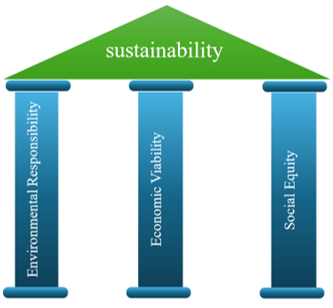
Figure 1. The three pillars of sustainability
While this general definition makes it more applicable on a wide scale in many fields, it also makes the concept of sustainability a bit unclear and largely dependent on each context. A widely recognised approach that addresses the ambiguity of sustainability definition is the TBL Framework introduced by Elkington [12], which translates the initial definition of the Brundtland Commission into three equally important dimensions: environmental, economic, and social [12]. Figure 1 illustrates the three pillars of sustainability.
Many researchers have studied the sustainability of building materials from this multidimensional perspective rather than focusing on traditional technical performance criteria.
Bakhoum and Brown [14] developed a sustainable scoring framework to assess building material sustainability from extraction to demolition. Their framework consists of ten key factors such as resource use, recyclability, human health and safety, and practicability.
Akadiri and Olomolaiye [15] expanded the scope of sustainability assessment with 24 factors categorized under three categories: socio-economic, environmental, and technical factors.
Park et al. [16] performed a comparative analysis of the material criteria embedded in building sustainability assessment tools. The TBL of sustainability (environment, economy, and society) was used as the basis of the analysis. In their study, it was concluded that it is essential that adequate attention be paid to all three dimensions.
Danso [17] identified 25 critical sustainability indicators which were grouped under three categories, thus environmental dimension, social equity dimension and economic dimension.
Opon and Henry [18] developed a holistic indicator framework for concrete sustainability assessment. Their framework integrated the three pillars of sustainability (environment, economy, society) and the SDGs. The framework promoted 42 factors such as energy consumption, toxicant emissions, durability, and human toxicity potential.
Dinh et al. [19] set up a list of 18 sustainability criteria that were ranked and used to calculate the importance of weightings based on the Analytic Hierarchy Process method and a Likert scale.
Sahlol et al. [20] proposed a set of parameters that affects the selection of sustainable building materials. These parameters were derived from rating systems, previous studies, and experts' opinions. The proposed model makes the selection of building materials based on the three pillars of sustainability to evaluate building materials based on different parameters and select the most appropriate material among various alternatives.
Alridha [21] proposed a simple framework for preliminary sustainability assessment of emerging construction materials. The framework consists of ten key criteria divided into three dimensions, environmental responsibility, economic viability, and social equity.
In general, these studies form the basis for evaluating building materials through a multidimensional sustainability perspective.
2.2 Construction-materials regulation in Iraq
In the early 2010s, the Iraqi Ministry of Construction, Housing, Municipalities, and Public Works launched a major initiative to bring the Iraqi construction standards up to date and ensure its adherence by creating a cohesive set of technical documents that are consistent and up-to-date covering different aspects of the construction sector. The Ministry oversees this project while other bodies such as The Iraqi Central Organization for Standardization, Metrology, and Quality, along with experts and academic institutions, offer technical assistance and collaborate [8].
The Iraqi Building Materials Guide, which came out in 2017, is one of the project's outcomes and has become mandatory for all public construction projects in Iraq. It represents the key reference for the classification, technical specifications, testing standards and techniques to ensure the quality, safety, and performance of materials used in construction projects. These standards outline procedures for testing a wide range of construction materials covered in its 17 chapters such as concrete, cement, asphalt, steel, aggregates, ceramics, paints, clay bricks, and natural stone [8].
The guide is mostly based on Iraqi standard specifications. If these aren't available, it uses international standards like American Society for Testing and Materials (ASTM) and European Standards (EN) specifications to determine the suitable specifications [8].
Sustainability transitions in the built environment usually start with governmental actions such as setting new policies, regulations, and standards that reshape industry practices [11].
Chang et al. [22] investigated Chinese laws, policies and regulations that are related to facilitating the transition to sustainable construction. The results showed that the actions of relevant stakeholders involved in the construction industry are highly influenced by these laws and regulations. Bucci Ancapi et al. [23] conducted a systematic literature review the relation between the circular built environment and policy instruments and concluded that there is a clear tendency towards regulation as a tool for influence. Dziedzic et al. [24] investigated the effect of different types of policies in promoting construction circularity. The study reviewed thirty-seven instruments which were classified into five categories: regulatory, economic, technical, operational, and communicative. The implementation of each of these instruments was investigated in 19 countries. The results suggested that economic, technical, operational, and regulatory instruments are most effective, while communicative instruments showed lower effectiveness. This suggests that awareness-raising and guidance measures may be insufficient and should be supported by regulation.
In the context of Iraq, the most relevant previous research related to sustainability in the regulations of construction is presented by Mansor et al. [25]. This paper evaluates the practice of green building in Iraqi construction and environment laws using the method of documentary analysis based on LEED 2009, along with a questionnaire to examine the engineers' perception of applying these principles.
Assessing the level of sustainability integration in the 2017 Iraqi Guide for Building Materials is crucial because the guide serves as an official mandatory technical reference for material specifications in Iraq and can influence material selection and construction practices in Iraq.
A QCA method is used in this study to assess sustainability integration level in the Iraqi Building Materials Guide based on the TBL framework. This framework takes into consideration the environmental, economic, and social dimensions. QCA is an established data interpreting technique in which the text content is analyzed through a systematic process of coding and patterns identification, which has been effectively used in analyzing policies and technical reports as it enables examining text data in a structured way to extract themes and patterns [26-29].
In this study, the Iraqi Guide for Building Materials represents the primary textual data. To enable systematic analysis, the TBL concept was expressed as a sustainability assessment matrix. This matrix consists of 28 sustainability indicators that reflect the three dimensions of sustainability: 10 environmental indicators, 8 economic indicators, and 10 social indicators. These indicators were derived from the well-established principles of the TBL and were also supported by criteria available in related literature [14-21].
Each sustainability indicator was given a unique code as shown in Table 1 to form a clear coding matrix that simplifies the coding and analysis processes. It should be noted that the guide is available only in Arabic and there is no English version available, therefore, for the purpose of this study the codified indicators were translated into Arabic to enable direct coding of the original text.
Table 1. Triple Bottom Line (TBL) coding matrix
|
Category |
Indicator |
Code Label |
|
Environmental |
Embodied carbon |
ENV1 |
|
Recyclability |
ENV2 |
|
|
Use of natural resources |
ENV3 |
|
|
Emissions during processing |
ENV4 |
|
|
Water use |
ENV5 |
|
|
Durability/longevity |
ENV6 |
|
|
End-of-life disposal |
ENV7 |
|
|
Toxicity to humans/environment |
ENV8 |
|
|
Energy performance |
ENV9 |
|
|
Compatibility with green certifications |
ENV10 |
|
|
Economic |
Local availability |
ECO1 |
|
Initial cost |
ECO2 |
|
|
Life-cycle cost |
ECO3 |
|
|
Market accessibility |
ECO4 |
|
|
Operational efficiency |
ECO5 |
|
|
Maintenance cost |
ECO6 |
|
|
Integration in supply chain |
ECO7 |
|
|
Scalability and innovation support |
ECO8 |
|
|
Social |
Worker safety and exposure |
SOC1 |
|
Job creation (local economy) |
SOC2 |
|
|
Cultural and community relevance |
SOC3 |
|
|
Accessibility and affordability for users |
SOC4 |
|
|
Material impact on public health |
SOC5 |
|
|
Inclusion of vulnerable groups |
SOC6 |
|
|
Educational or training value |
SOC7 |
|
|
Resilience in crisis contexts |
SOC8 |
|
|
Equity in distribution and application |
SOC9 |
|
|
Stakeholder engagement |
SOC10 |
The content analysis was fully manual to provide a proper contextual understanding that can capture implicit sustainability references that could be overlooked in an automated text search. Furthermore, the manual process was considered necessary due to potential poor accuracy of content analysis tools when dealing with Arabic texts, especially because the Guide was only available in an encrypted PDF format, which was difficult to extract as accurate Arabic text.
The whole guide was reviewed carefully by the research team, quoting any paragraph with an explicit or implicit sustainability reference. The quoting and coding decisions were systematically reviewed and thoroughly discussed by the team to ensure that any disagreement happened during the analysis is resolved through consensus before developing the final QCA matrix.
A unit of analysis was defined as any technical requirement or interpretive text unit detected during the analysis process. These units included sentences, phrases, and paragraphs that explicitly or implicitly related to a predefined indicator and were defined as "sustainability reference". Some "sustainability reference" represent multiple codes because they clearly refer to several sustainability indicators. Thus, a "code occurrence" could exceed "sustainability reference".
Implicit sustainability references were identified through their contextual relationships with the predefined sustainability indicators, rather than depending on the presence of direct sustainability terms. For example, requirements related to durability, service life, and resistance to degradation processes like moisture, corrosion, and sulphate attack were coded under "Durability/Longevity" (ENV6). The same way was followed for other implicit references; for example, the uses of natural sand, gravel, rock, or natural asphalt were classified under "Natural Resource Use" (ENV3).
For example, the technical requirement in section 1/3 of chapter 8 specified the storage requirement for bagged cement, which should be stored in warehouses having moisture-insulated floors and good ventilation. This was coded as an implicit ENV6 reference because the objective was the prevention of material damage, despite the fact that durability was not been mentioned directly.
Similarly, the statement in chapter 17, section 5/1, describes the asphalt resources which are obtained from natural resources. This description was implicitly linked to ENV3 because it indicates direct dependence on naturally available resources, even though resource use or sustainability is not explicitly discussed.
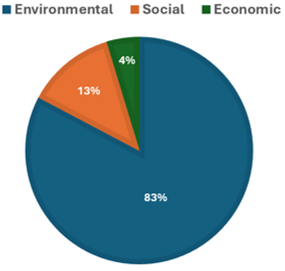
The QCA of the Iraqi Guide for Building Materials revealed 77 sustainability references in the text, which corresponded to 87 code occurrences throughout the 17 chapters of the Guide. The findings indicated an obvious imbalance among the three elements of sustainability. Environmental indicators were by far the most common, with 72 occurrences (82.8%). Social indicators were only seen 11 times (12.6%), and economic indicators were only seen 4 times (4.6%). Figure 2 shows the relative distribution of each sustainability dimension.
Figure 2. Distribution of sustainability dimensions across the Iraqi Guide for Building Materials
Table 2. The number of sustainability references identified in each chapter in the Iraqi Guide for Building Materials (2017)
|
Chapter No. |
Chapter Title |
No. of Identified Sustainability References |
Relevant Codes |
|
1 |
General |
1 |
ENV6 |
|
2 |
Soil |
3 |
ECO2, SOC5 |
|
3 |
Gypsum, Lime, and Their Products |
4 |
ENV8, ENV6, ENV2 |
|
4 |
Refractory Products for Building Purposes |
2 |
ENV6, SOC1 |
|
5 |
Wood and Its Products |
4 |
ENV6 |
|
6 |
Aggregate |
3 |
ENV3 |
|
7 |
Glass |
5 |
ENV9, SOC5, SOC1 |
|
8 |
Cement |
4 |
ENV6, ENV2, ECO6 |
|
9 |
Mortar |
3 |
ENV8, ENV6 |
|
10 |
Concrete and Its Products |
6 |
ENV6, ENV8 |
|
11 |
Concrete Admixtures |
5 |
ENV6 |
|
12 |
Steel Reinforcement, Steel Sections and Metals |
6 |
ENV6, SOC1, SOC5, ENV8, ENV2, ECO3 |
|
13 |
Ceramic Tiles |
2 |
ENV6 |
|
14 |
Paints |
7 |
ENV6, ENV8, SOC5, SOC1 |
|
15 |
Clay Products |
8 |
ENV6, SOC5 |
|
16 |
Rocks and Stones |
9 |
ENV3, ENV6 |
|
17 |
Sundries |
5 |
ENV3, ENV6, SOC5 |
|
|
Total |
77 |
|
The analysis only identified 10 of the 28 predefined sustainability indicators, which means a total absence of about two-thirds of the total predefined indicators. Even the remaining third, which was found in the text, was mainly focused on a small number of sustainability issues. Table 2 shows the number of sustainability references identified in each chapter, while the detailed QCA matrix is deposited in the data repository Figshare. This matrix shows the exact quotations that were captured, along with their relevant codes. The matrix has been translated from Arabic into English for the purpose of reporting and publishing.
Durability/longevity (ENV6) was by far the most frequent indicator, with 47 occurrences (54.0%). Next was use of natural resources (ENV3) with 10 occurrences (11.5%), toxicity to humans/environment (ENV8) with 9 occurrences (10.3%), and material impact on public health (SOC5) with 7 occurrences (8.0%). In contrast, numerous crucial indicators were missing, such as embodied carbon (ENV1), emissions during processing (ENV4), water use (ENV5), end-of-life disposal (ENV7), and compatibility with green certifications (ENV10). Most economic and social indicators recorded zero occurrences. The sustainability indicator frequencies and percentages are presented in Table 3.
Table 3. Frequencies and percentages of sustainability indicators identified in the Iraqi Guide for Building Materials (2017)
|
Dimension |
Indicator |
Code |
Frequency |
Percentage |
|
Environmental |
Embodied carbon |
ENV1 |
0 |
0.00% |
|
Environmental |
Recyclability |
ENV2 |
3 |
3.45% |
|
Environmental |
Use of natural resources |
ENV3 |
10 |
11.49% |
|
Environmental |
Emissions during processing |
ENV4 |
0 |
0.00% |
|
Environmental |
Water use |
ENV5 |
0 |
0.00% |
|
Environmental |
Durability/Longevity |
ENV6 |
47 |
54.02% |
|
Environmental |
End-of-life disposal |
ENV7 |
0 |
0.00% |
|
Environmental |
Toxicity to humans/environment |
ENV8 |
9 |
10.34% |
|
Environmental |
Energy performance |
ENV9 |
3 |
3.45% |
|
Environmental |
Compatibility with green certifications |
ENV10 |
0 |
0.00% |
|
Economic |
Local availability |
ECO1 |
0 |
0.00% |
|
Economic |
Initial cost |
ECO2 |
2 |
2.30% |
|
Economic |
Life-cycle cost |
ECO3 |
1 |
1.15% |
|
Economic |
Market accessibility |
ECO4 |
0 |
0.00% |
|
Economic |
Operational efficiency |
ECO5 |
0 |
0.00% |
|
Economic |
Maintenance cost |
ECO6 |
1 |
1.15% |
|
Economic |
Integration in supply chain |
ECO7 |
0 |
0.00% |
|
Economic |
Scalability and innovation support |
ECO8 |
0 |
0.00% |
|
Social |
Worker safety and exposure |
SOC1 |
4 |
4.60% |
|
Social |
Job creation (local economy) |
SOC2 |
0 |
0.00% |
|
Social |
Cultural and community relevance |
SOC3 |
0 |
0.00% |
|
Social |
Accessibility and affordability for users |
SOC4 |
0 |
0.00% |
|
Social |
Material impact on public health |
SOC5 |
7 |
8.05% |
|
Social |
Inclusion of vulnerable groups |
SOC6 |
0 |
0.00% |
|
Social |
Educational or training value |
SOC7 |
0 |
0.00% |
|
Social |
Resilience in crisis contexts |
SOC8 |
0 |
0.00% |
|
Social |
Equity in distribution and application |
SOC9 |
0 |
0.00% |
|
Social |
Stakeholder engagement |
SOC10 |
0 |
0.00% |
|
Total |
— |
— |
87 |
100% |
The QCA of the Iraqi Guide for Building Materials indicated that some sustainability principles are integrated in the guide, although their integration is limited and imbalanced among the three sustainability dimensions: environmental, economic, and social dimensions.
The analysis identified 77 sustainability references which corresponded to 87 occurrences throughout the 17 chapters of the guide. However, the environmental dimension references showed an obvious dominance accounting for 82.8% of all occurrences, while the social dimension references ranked second with 12.6% and only 4.6% for the economic dimension.
This distribution indicates that integration of sustainability principles in the guide is mainly achieved by the incorporation of traditional technical materials characteristics with positive environmental impact rather than balancing environmental, economic, and social dimensions. This does not fully align with the definition of sustainability, which is all about balancing economic development, environmental protection, and social aspects to meet the needs of both present and future generations [13].
An important aspect in this regard is the prevalence of the indicator of durability/longevity (ENV6), which contributed by itself as much as 54.0% of all occurrences found. This means that sustainability within the guide is achieved via traditional engineering considerations regarding durability and longevity, rather than via the explicitly stated sustainability-related ones. In spite of the fact that durability of materials plays an important role in sustainable construction because of the potential reduction of the replacement rate, resource use and waste production over the life cycle of a building [30], this focus on a single indicator demonstrates a limited approach to sustainability.
Consequently, other factors come into play, generating another set of concerns. The critical indicators, which include embodied carbon, manufacturing emissions, water use, end-of-life management, and compatibility with the green building certification system, were not included at all in the Guide. This fact becomes relevant considering the international tendencies that become increasingly focused on life-cycle environmental performance and embodied carbon accounting for building materials [31, 32]. As building materials account for a significant part of global greenhouse gas emissions and resource use, the lack of any carbon-related or life-cycle criteria means that the Guide is not yet adapted to the contemporary international practice of low-carbon construction and circular economy implementation [2, 33].
The analysis of the Guide also indicates its limited scope from the perspective of life-cycle considerations. Though recyclability, life cycle costs, and maintenance cost can be found in the guide, their prevalence is quite small. Modern sustainability frameworks rely on the application of such concepts as Life Cycle Assessment and Environmental Product Declarations that allow measuring the performance of the material beyond the construction process and throughout extraction, manufacturing, use, and disposal stages [32, 34, 35].
Regarding the economic dimension, sustainability incorporation is the least integrated component. Four coded occurrences relate to economic indicators only, and issues such as local sourcing, supply chain resilience, market availability, operational efficiency, and innovation support were not addressed. Thus, economic sustainability was interpreted in the guide by focusing mainly on material cost. In relation to the situation in Iraq, such an approach is crucial since increasing the production of materials and reduction of dependency on foreign sources can help to develop a sustainable economy and promote post-war reconstruction [7, 9].
Socially, sustainability integration is also limited in scope. The references were found almost solely related to worker safety and issues connected with the toxicity of the materials. This aspect is crucial and can be considered consistent with the internationally accepted requirements [36]; however, there were no other social sustainability indicators, such as affordability, social equity, social well-being, stakeholder involvement, labor development, and engagement of vulnerable populations. In that regard, the concept of social sustainability can be regarded as risk prevention rather than promoting social value and inclusiveness.
It is important to understand these findings in light of the technical nature and specific remit of the Guide. Some indicators that were not identified, like embodied carbon, manufacturing emissions, water use, end-of-life management, local sourcing, supply chain resilience, market availability, operational efficiency, and innovation support, could be relevant to material selection and performance and thus could be included in future editions of the Guide. Other absent indicators, such as job creation, social equity, social well-being, stakeholder involvement, labour development, and engagement of vulnerable populations, may go beyond the immediate remit of a technical materials guide; however, identifying the lack of these indicators still helps in highlighting further possibilities for future revisions to encourage the selection of more sustainable materials both directly and indirectly.
The present study investigated the extent of sustainability integration within the Iraqi Guide for Building Materials (2017) through QCA using the TBL framework.
The results show that sustainability factors are included in the guide, but the inclusion of these factors is partial and inconsistent in environmental, economic, and social aspects.
The environmental factor was predominant as more than two-thirds of the factors belonged to this category, followed by the social factor and economic factor with a marginal share.
Durability/longevity was identified as the most prevalent factor among all the sustainability factors, comprising more than half of all factors. This finding indicates a positive result in the aspect of resource conservation and performance of the materials, but it means that sustainability is understood through traditional technical requirements.
Other findings showed that there is a gap in certain areas of sustainability. Environmental factors like embodied carbon, manufacturing emissions, water consumption, end-of-life treatment, and green building rating system were completely missing. Economic indicators such as supply chain resilience, local sourcing, innovation support, and operational efficiency were either missing or insufficiently considered. The same applies to social sustainability. The Guide addresses this indicator only through issues of health and safety of workers. However, other aspects of affordability, social equity, stakeholder participation, community well-being, and social inclusion remain ignored. However, the lack of some indicators that may go beyond the immediate remit of a technical materials guide should not be considered a shortcoming in the current version of the guide. Rather, it can be seen as an opportunity to broaden the scope of sustainability integration within the future revisions by incorporating more indicators, both directly and indirectly. Furthermore, the findings of this study should be viewed merely as an analysis for the Iraqi Building Materials Guide itself rather than a comprehensive assessment of the level of sustainability integration within Iraq's broader regulatory framework.
[1] UNEP. (2025). Not just another brick in the wall: The solutions exist—Scaling them will build on progress and cut emissions fast. Global Status Report for Buildings and Construction 2024/2025. https://doi.org/10.59117/20.500.11822/47214
[2] UNEP. (2026). Building fast. Falling short: As climate risks rise and cities grow, we must rethink how we build to create better lives for all—Global status report for buildings and construction 2025/26. https://doi.org/10.59117/20.500.11822/49531
[3] UN-Habitat. (2024). Constructing sustainable infrastructure towards a circular economy. https://unhabitat.org/sites/default/files/2024/10/construction_waste.pdf.
[4] UNEP. (2024). Global status report for buildings and construction: Beyond foundations: Mainstreaming sustainable solutions to cut emissions from the buildings sector. https://doi.org/10.59117/20.500.11822/45095
[5] Skillington, K., Crawford, R.H., Warren-Myers, G., Davidson, K. (2022). A review of existing policy for reducing embodied energy and greenhouse gas emissions of buildings. Energy Policy, 168: 112920. https://doi.org/10.1016/j.enpol.2022.112920
[6] Feickert, K., Mueller, C.T. (2025). Policy and design levers for minimizing embodied carbon in United States buildings: A quantitative comparison of current and proposed strategies. Building and Environment, 270: 112485. https://doi.org/10.1016/j.buildenv.2024.112485
[7] World Bank. (2022). Iraq Country Climate and Development Report. World Bank, Washington, DC. https://doi.org/10.1596/38250
[8] Iraqi Ministry of Construction, Housing, Municipalities and Public Works. (2017). Iraqi Unified Technical Specifications and Codes Project: Iraqi Guide for Building Materials. Ministry of Construction, Housing, Municipalities and Public Works, Baghdad.
[9] UNDP. (2022). Sustainable Development Goals achievements in Iraq. https://www.undp.org/iraq/publications/sustainable-development-goals-achievements-iraq.
[10] United Nations in Iraq. (2021). As Iraq joins Paris Agreement, UN calls for further support to help the country adapt. https://iraq.un.org/en/161240-iraq-joins-paris-agreement-un-calls-further-support-help-country-adapt.
[11] UNEP. (2019). “The future we want”: Iraq vision for sustainable development 2030. Law and Environment Assistance Platform. https://leap.unep.org/en/countries/iq/national-legislation/future-we-want-iraq-vision-sustainable-development-2030.
[12] Elkington, J. (1997). Cannibals with Forks: The Triple Bottom Line of 21st Century Business. Capstone, Oxford.
[13] World Commission on Environment and Development. (1987). Our Common Future. Oxford University Press, Oxford.
[14] Bakhoum, E.S., Brown, D.C. (2012). Developed sustainable scoring system for structural materials evaluation. Journal of Construction Engineering and Management, 138(1): 110-119. https://doi.org/10.1061/(ASCE)CO.1943-7862.0000412
[15] Akadiri, P.O., Olomolaiye, P.O. (2012). Development of sustainable assessment criteria for building materials selection. Engineering, Construction and Architectural Management, 19(6): 666-687. https://doi.org/10.1108/09699981211277568
[16] Park, J., Yoon, J., Kim, K.H. (2017). Critical review of the material criteria of building sustainability assessment tools. Sustainability, 9(2): 186. https://doi.org/10.3390/su9020186
[17] Danso, H. (2018). Dimensions and indicators for sustainable construction materials: A review. Research & Development in Material Science, 3(4): 1-9. https://doi.org/10.31031/RDMS.2018.03.000568
[18] Opon, J., Henry, M. (2019). An indicator framework for quantifying the sustainability of concrete materials from the perspectives of global sustainable development. Journal of Cleaner Production, 218: 718-737. https://doi.org/10.1016/j.jclepro.2019.01.220
[19] Dinh, T.H., Dinh, T.H., Götze, U. (2020). Integration of sustainability criteria and life cycle sustainability assessment method into construction material selection in developing countries: The case of Vietnam. International Journal of Sustainable Development and Planning, 15(8): 1145-1156. https://doi.org/10.18280/ijsdp.150801
[20] Sahlol, D.G., Elbeltagi, E., Elzoughiby, M., Abd Elrahman, M. (2021). Sustainable building materials assessment and selection using system dynamics. Journal of Building Engineering, 35: 101978. https://doi.org/10.1016/j.jobe.2020.101978
[21] Alridha, Z. (2025). Developing a conceptual framework for preliminary sustainability assessment of emerging construction materials. Muthanna Journal of Engineering and Technology, 13(1): 66-73. https://doi.org/10.52113/3/eng/mjet/2025-13-01-/66-73
[22] Chang, R.D., Soebarto, V., Zhao, Z.Y., Zillante, G. (2016). Facilitating the transition to sustainable construction: China’s policies. Journal of Cleaner Production, 131: 534-544. https://doi.org/10.1016/j.jclepro.2016.04.147
[23] Bucci Ancapi, F.E., Van den Berghe, K.B.J., van Bueren, E. (2022). The circular built environment toolbox: A systematic literature review of policy instruments. Journal of Cleaner Production, 373: 133918. https://doi.org/10.1016/j.jclepro.2022.133918
[24] Dziedzic, R., Pondicherry, P., Dziedzic, M. (2025). Review of national policy instruments motivating circular construction. Resources, Conservation and Recycling, 215: 108053. https://doi.org/10.1016/j.resconrec.2024.108053
[25] Mansor, M.A., Mansor, A.A., Mohammed, A.S. (2023). Investigating and evaluating the application of green building principles in the Iraqi construction legislation. AIP Conference Proceedings, 2591(1): 030059. https://doi.org/10.1063/5.0119338
[26] Mayring, P. (2000). Qualitative content analysis. Forum Qualitative Sozialforschung/Forum: Qualitative Social Research, 1(2): 20. https://doi.org/10.17169/fqs-1.2.1089
[27] Schreier, M. (2012). Qualitative Content Analysis in Practice. SAGE Publications, London. https://doi.org/10.4135/9781529682571
[28] Bowen, G.A. (2009). Document analysis as a qualitative research method. Qualitative Research Journal, 9(2): 27-40. https://doi.org/10.3316/QRJ0902027
[29] Krippendorff, K. (2018). Content Analysis: An Introduction to Its Methodology (4th ed.). SAGE Publications, Thousand Oaks, California, USA. https://doi.org/10.4135/9781071878781
[30] Ortiz, O., Castells, F., Sonnemann, G. (2009). Sustainability in the construction industry: A review of recent developments based on life cycle assessment. Construction and Building Materials, 23(1): 28-39. https://doi.org/10.1016/j.conbuildmat.2007.11.012
[31] UNEP. (2023). Building materials and the climate: Constructing a new future. https://doi.org/10.59117/20.500.11822/43293
[32] ISO. (2017). ISO 21930: Sustainability in buildings and civil engineering works—Core rules for environmental product declarations of construction products and services. International Organization for Standardization, Geneva. https://www.iso.org/standard/61694.html.
[33] Habert, G., Miller, S.A., John, V.M., et al. (2020). Environmental impacts and decarbonization strategies in the cement and concrete industries. Nature Reviews Earth & Environment, 1: 559-573. https://doi.org/10.1038/s43017-020-0093-3
[34] Tariq, M., Alyaseri, I. (2024). Using recycled PET waste bottles clasp of ring strips in hollow concrete blocks in Iraq. Muthanna Journal of Engineering and Technology, 12(1): 22-30. https://doi.org/10.52113/3/eng/mjet/2024-12-01/22-30
[35] ISO. (2006). ISO 14040: Environmental management—Life cycle assessment—Principles and framework. International Organization for Standardization, Geneva. https://www.iso.org/standard/37456.html.
[36] USGBC. (2019). LEED v4.1 building design and construction rating system. https://www.usgbc.org/resources/leed-v41-building-design-and-construction-rating-system-april-2019.