
Agnes L. Ch. P. Lapian* | Een N. Walewangko | Willem J. F. A. Tumbuan | Stanss L. H. V. Joyce Lapian | Greis M. Sendow | Daniel S. I. Sondakh
© 2026 The authors. This article is published by IIETA and is licensed under the CC BY 4.0 license (http://creativecommons.org/licenses/by/4.0/).
OPEN ACCESS
This study examines the associations of Tourism Digitalization (TD), small and medium-sized enterprise (SME) digital literacy, and Digital Government Policy (DGP) with sustainable destination development (SDD) through SME economic empowerment (SEE) in Indonesia’s Likupang Special Economic Zone. Using a cross-sectional survey, we analyzed 300 responses from SME owners and founders using partial least squares structural equation modeling (PLS-SEM). TD (β = .415), SME digital literacy (SDL) (β = .484), and DGP (β = .490) were positively associated with SDD (all p < .001). These factors were also positively associated with SEE (β = .332–.399), which was positively associated with SDD (β = .504, p < .001). Significant indirect associations (β = .167–.201, p < .001) were consistent with complementary partial statistical mediation. The model explained 72.2% of the variance in SDD and 30.1% in SEE. The findings indicate that technological, human capital, and institutional resources are associated with destination sustainability, both directly and indirectly through SEE. Given the cross-sectional design, the results represent statistical associations rather than causal relationships.
Digital Government Policy, digital literacy, digital tourism, economic empowerment, special economic zone, sustainable destination development
Digitalization is reshaping economic development, social interaction, and industrial competitiveness. In tourism, digital platforms, mobile applications, big-data analytics, artificial intelligence, and Internet of Things technologies are changing how destinations are promoted, managed, and experienced. These technologies can improve service efficiency and market access while supporting resource optimization, environmental monitoring, and stakeholder participation [1, 2].
At the regional level, digitalization extends beyond technology adoption by connecting local actors to knowledge, markets, and productive resources. Endogenous Growth Theory identifies innovation, knowledge accumulation, and human-capital development as drivers of sustained growth [3]. In tourism-dependent regions, digital transformation can integrate small and medium-sized enterprises (SMEs) into wider value chains, expand their markets, and improve operational efficiency [4, 5]. Its developmental value therefore depends on whether technological improvements strengthen local economic capacity.
Sustainable tourism requires a balance among economic prosperity, environmental protection, and social inclusion. This balance depends not only on conserving natural and cultural resources but also on enabling local communities to participate in and benefit from tourism. Digital tourism ecosystems and data-enabled destination management can support destination competitiveness by improving information use, coordination, and destination business intelligence [2, 6]. In contrast, digital transformation may help tourism SMEs respond to market change and disruption [7]. Digital literacy is equally important because it shapes SMEs' ability to adopt technology, innovate, and compete [8]. Nevertheless, access to technology alone does not ensure inclusive or sustainable outcomes.
Several gaps remain. Digitalization research has mainly emphasized technology [9-11], marketing [12, 13], and service innovation [14, 15], with less attention to the local economic processes linking digitalization to destination sustainability. Digital-literacy studies largely focus on adoption and firm performance [16-18], leaving destination-level implications underexplored. Government support is recognized as an enabler of digital transformation [19, 20], but evidence remains limited on whether digital policy is associated with sustainable tourism through local SMEs' economic position. These streams remain fragmented, particularly in peripheral destinations where digital opportunities coexist with uneven capabilities and limited local value capture.
These issues are relevant to the Likupang Special Economic Zone in North Sulawesi, Indonesia. Likupang is a marine tourism destination expected to support regional development. Still, local SME participation in its digital ecosystem remains constrained by disparities in digital literacy, infrastructure access, and policy implementation [21, 22]. Previous studies have concentrated on tourism potential, destination attractiveness, and development strategies [23-26]. Few empirical studies have jointly examined Tourism Digitalization (TD), SME digital literacy (SDL), Digital Government Policy (DGP), SME economic empowerment (SEE), and sustainable destination development (SDD) in this setting.
This study addresses the gap by testing an integrated model in which TD, SDL, and DGP are associated with SDD, both directly and indirectly through SEE. The framework integrates technological, human-capital, and institutional explanations and conceptualizes SEE as an intervening construct associated with locally distributed benefits. Using cross-sectional survey data and partial least squares structural equation modeling (PLS-SEM), the study tests seven direct and three indirect relationships. The findings indicate that all proposed associations are positive and that the indirect associations through SEE are consistent with complementary partial statistical mediation. The study therefore clarifies how perceived digital and institutional resources are linked to perceived destination sustainability in an emerging marine tourism economy.
2.1 Theoretical foundation
Endogenous Growth Theory attributes long-term economic growth to investment in technology, knowledge, human capital, and learning [27, 28]. Because knowledge can diffuse across firms and regions, digital technologies may support innovation, coordination, and value creation [29-31]. In tourism, platforms, applications, artificial intelligence, cloud computing, and analytics improve service delivery and data use [32, 33]. Smart-tourism systems can also strengthen stakeholder connectivity and destination management [34, 35]. TD may therefore expand markets and support local economic empowerment when SMEs can convert digital information into productive knowledge [36, 37].
Human Capital Theory treats knowledge and skills as productive assets [38]. Digital literacy extends this logic to the ability to access, evaluate, create, communicate, and apply digital information. These competencies support problem-solving, collaboration, innovation, and adaptation [39, 40]. For tourism SMEs, digital literacy supports marketing, transactions, customer management, analytics, and the integration of technology into value creation [41, 42]. Platform capabilities expand market reach [43], while absorptive capacity enables firms to recognize, assimilate, and apply external knowledge [44, 45]. Digital literacy can therefore connect technology use with SME empowerment and broader destination outcomes.
Institutional Theory explains how regulation, policy, and norms shape organizational behavior [46, 47]. Governments can reduce uncertainty and support digital transformation through infrastructure, training, coordination, incentives, interoperable services, and transparent governance [48, 49]. In tourism, these conditions connect enterprises, communities, destination organizations, and technology providers [34, 35]. Weak institutional support can intensify the financial, technological, managerial, and skills constraints SMEs face [41, 42]. Coherent digital governance may strengthen both enterprise capability and stakeholder participation [35, 50].
2.2 Small and medium-sized enterprise economic empowerment as an intervening construct
Research has established associations among digitalization, digital literacy, government support, and firm performance, but the process by which these resources relate to destination sustainability remains insufficiently explained [31, 41, 42]. Inclusive tourism requires tourism benefits to reach local enterprises, workers, households, and communities [51, 52]. Tourism SMEs link visitor demand with local products, services, and culture and can generate employment, revenue circulation, and entrepreneurship [50, 53]. SDD therefore includes environmental protection, economic inclusion, cultural continuity, participation, and shared responsibility [54].
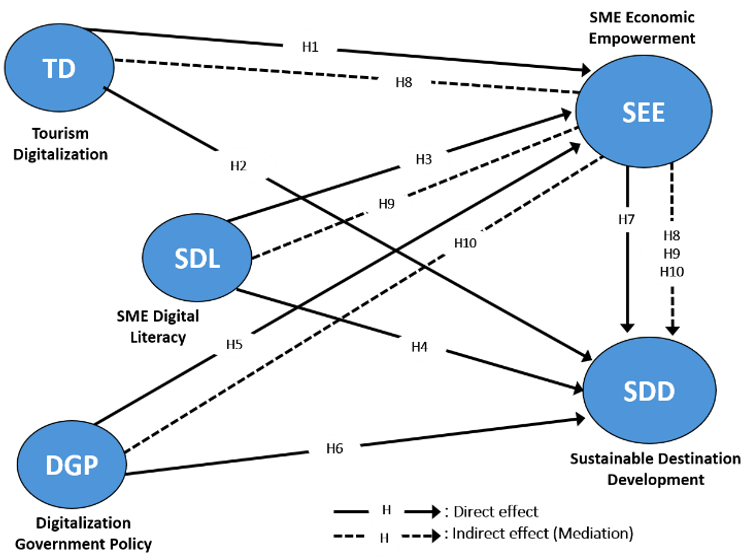
Figure 1. Conceptual framework (Integrated digital transformation and empowerment model)
SEE captures local enterprises' capacity to improve income, market access, competitiveness, employment contribution, and resilience. Economically stronger SMEs may be better positioned to retain tourism expenditure, invest in service and environmental practices, and participate meaningfully in destination governance. Accordingly, this study specifies SEE as an intervening construct statistically linking technological, human-capital, and institutional resources with SDD. Given the cross-sectional design, this specification represents an indirect statistical association rather than a temporal or causal mechanism. These relationships are presented in the following conceptual framework (Figure 1).
2.3 Hypotheses development
2.3.1 Tourism Digitalization
TD integrates digital platforms and data into promotion, reservations, payments, services, and destination management. It can reduce informational and geographic barriers, strengthen customer engagement, and improve coordination [30-37]. These capabilities support SME productivity and market access while enhancing destination information, monitoring, and resource efficiency [54-61]. Accordingly, TD is expected to be positively associated with both enterprise empowerment and perceived destination sustainability.
H1: TD is positively associated with SEE.
H2: TD is positively associated with SDD.
2.3.2 Small and medium-sized enterprise digital literacy
Digital literacy enables entrepreneurs to evaluate information, create content, communicate, conduct transactions, and solve technology-related problems [8, 39, 40, 62, 63]. These competencies support innovation, absorptive capacity, and strategic flexibility [41-45, 57]. At the destination level, digitally capable SMEs may participate more effectively in networks, communicate responsible practices, and respond to market and environmental change [34, 35, 50, 54].
H3: SDL is positively associated with SEE.
H4: SDL is positively associated with SDD.
2.3.3 Digital Government Policy
DGP provides an institutional foundation for technology adoption through infrastructure, regulation, training, incentives, and coordinated public services [48, 49, 64]. Such support is particularly important for SMEs with limited finance, skills, and managerial resources [41, 42]. Policy can also improve destination monitoring, transparency, stakeholder coordination, and adaptive decision-making [35, 50, 60].
H5: DGP is positively associated with SEE.
H6: DGP is positively associated with SDD.
2.3.4 Small and medium-sized enterprise economic empowerment
Economically empowered SMEs can participate in tourism value chains, retain local benefits, create employment, and sustain business activity during disruption [53, 56, 65, 66]. Their stronger economic position can support service improvement, environmental responsibility, cultural preservation, and participation in destination governance [50-54, 67-69].
H7: SEE is positively associated with SDD.
2.3.5 Mediating role of small and medium-sized enterprise economic empowerment
Digitalization expands market access, digital literacy enables the productive use of technology, and government policy reduces institutional barriers. These resources may contribute to sustainability, in part, by strengthening SME income, competitiveness, employment, and resilience [41, 43, 48, 49, 51, 52]. Mediation analysis distinguishes these indirect associations from direct relationships [70, 71].
H8: SEE mediates the relationship between TD and SDD.
H9: SEE mediates the relationship between SDL and SDD.
H10: SEE mediates the relationship between DGP and SDD.
3.1 Research design and setting
This study used a quantitative cross-sectional explanatory survey to estimate the associations specified in the conceptual model. The setting was the Likupang Special Economic Zone and adjacent coastal tourism communities in North Minahasa Regency, North Sulawesi, Indonesia. Likupang was selected because its marine-tourism development depends substantially on local SMEs in tourism services, accommodation, food, and creative products. Because the design is cross-sectional, the estimated paths are interpreted as associations rather than definitive temporal causal effects.
3.2 Population and sample
The population comprised owners and founders of coastal SMEs that participate in the marine tourism value chain. Eligible respondents operated tourism services, homestays, local food businesses, or souvenir enterprises and had managed their businesses for at least two years. We used purposive sampling because no complete formal sampling frame was available and respondents needed direct knowledge of the study context.
We evaluated sample adequacy using established PLS-SEM guidance [72]. Applying the inverse-square-root method with a conservative minimum path coefficient of .20 indicated a minimum of 155 observations [73]. We distributed 400 questionnaires and included 300 usable responses, for an effective response rate of 75.0%. The final sample therefore exceeded the model requirement. Recruitment covered SMEs at different stages of digital adoption. Early and late respondents did not differ significantly in business size, operating duration, or digital-adoption level (p > .05), suggesting limited nonresponse bias.
3.3 Measurement and data collection
We specified constructs as reflective and measured them using 5-point Likert-scale items ranging from 1 (strongly disagree) to 5 (strongly agree). We adapted established scales to the coastal SME context and used familiar examples such as social media platforms and electronic wallets. Table 1 summarizes the construct definitions, retained indicators, and sources. All constructs represent respondents’ perceptions; SDD therefore captures perceived destination development rather than independently observed destination-level performance.
The research team and trained local enumerators collected data between May and August 2025 through structured face-to-face interviews. Participation was voluntary. Respondents received an explanation of the study, provided informed consent, and were assured that their identities and business information would remain confidential. Only usable questionnaires that met the eligibility and completeness requirements were included in the analysis. Procedural safeguards, including confidentiality, concise wording, and separation of predictor and outcome sections, were used to reduce response and common-method concerns [74].
We pilot-tested the adapted instrument with 30 SME owners to assess clarity and face validity. Of the 27 initial items, we retained 25. We removed SDL6 and SDD6 because they did not meet the pilot validity criterion. Cronbach’s alpha after removal increased from .670 to .808 for SDL and from .475 to .774 for SDD. The remaining pilot coefficients were .899 for TD, .944 for DGP, and .931 for SEE. These revisions produced an instrument that met the pilot thresholds for item validity (r > .30) and reliability (α > .70).
Table 1. Construct operationalization
|
Construct |
Definition |
Retained Indicators |
Sources |
|
Tourism Digitalization (TD) |
Integration of digital technologies into tourism promotion, transactions, services, and destination management |
TD1 digital promotion; TD2 online booking; TD3 customer engagement; TD4 digital analytics; TD5 smart tourism |
[30, 32-37] |
|
SME Digital Literacy (SDL) |
Ability to access, evaluate, create, communicate, and apply digital information for business activity |
SDL1 information access; SDL2 content creation; SDL3 digital communication; SDL4 online transactions; SDL5 digital problem-solving |
[8, 38-45, 57, 62, 63] |
|
Digital Government Policy (DGP) |
Perceived public infrastructure, training, incentives, platforms, and coordination supporting digital transformation |
DGP1 digital infrastructure; DGP2 smart platform; DGP3 digital training; DGP4 innovation incentives; DGP5 policy coordination |
[35, 46-50, 58-60, 64] |
|
SME Economic Empowerment (SEE) |
Capacity of tourism SMEs to strengthen income, markets, competitiveness, employment, and resilience |
SEE1 income growth; SEE2 market access; SEE3 business competitiveness; SEE4 local employment; SEE5 business resilience |
[43, 50-53, 56, 67, 69] |
|
Sustainable Destination Development (SDD) |
Perceived balance of economic equity, environmental protection, cultural preservation, participation, and resilience |
SDD1 economic equity; SDD2 environmental protection; SDD3 cultural preservation; SDD4 stakeholder participation; SDD5 destination resilience |
[34, 35, 50-54, 59, 60, 69] |
3.4 Data analysis
We analyzed the data using PLS-SEM in SmartPLS 4. We evaluated the measurement model using indicator loadings, Cronbach’s alpha, composite reliability, average variance extracted (AVE), the heterotrait-monotrait ratio (HTMT), and the Fornell-Larcker criterion. We assessed the structural model using inner variance inflation factors (VIF), coefficients of determination (R²), effect sizes (f²), model-fit indices, and path coefficients. We tested direct and indirect effects using 5,000 bootstrap subsamples. We evaluated two-tailed significance at α = .05 using t > 1.96.
Because all constructs were measured with a single cross-sectional questionnaire, we addressed common method bias using both procedural and statistical approaches. Procedurally, we ensured confidentiality, kept questionnaire wording concise and unambiguous, and separated predictor and outcome sections to reduce consistency motives and evaluation apprehension [74]. Statistically, we assessed common method bias using the full-collinearity VIF approach [75], regressing each latent construct on all other constructs. We interpreted VIF values below 3.3 as indicating that common method variance was unlikely to distort the estimated associations materially. Because the design is cross-sectional, we interpret mediation findings as statistical indirect associations rather than evidence of temporal causal mechanisms.
4.1 Respondent profile
Among the 300 respondents, 138 (46.00%) were aged 30–65 years, 95 (31.67%) were younger than 30, and 67 (22.33%) were older than 65. Women accounted for 161 respondents (53.67%) and men for 139 (46.33%). All respondents met the SME ownership or founder criterion. When asked about their primary occupational status, 196 (65.33%) identified entrepreneurship as their main occupation, 60 (20.00%) reported salaried employment, and 44 (14.67%) were retirees who also owned eligible SMEs. Most respondents had completed senior high school (250; 83.33%), while 29 (9.67%) held a diploma or bachelor’s degree and 21 (7.00%) had completed junior high school. Monthly income was Rp3,000,001–Rp7,500,000 for 169 respondents (56.33%), above Rp7,500,000 for 82 (27.33%), and below Rp3,000,000 for 49 (16.33%). Smartphones were the primary digital device for 229 respondents (76.33%), compared with 71 (23.67%) who mainly used laptops or personal computers.
4.2 Common method bias assessment
We statistically assessed common method bias using the full-collinearity VIF procedure. The resulting VIF values were 1.145 for TD, 1.208 for SDL, 1.224 for DGP, 2.190 for SEE, and 2.497 for SDD. All values were below the conservative threshold of 3.3 [75], suggesting common method variance was unlikely to materially distort the estimated associations. The relatively higher values for SEE and SDD are consistent with the greater empirical proximity between these constructs. Nevertheless, given the single-source survey design, the statistical diagnostic does not completely rule out method-related variance.
4.3 Measurement model
All 25 retained indicators loaded above .70, ranging from .723 to .922. Cronbach’s alpha ranged from .818 to .923, composite reliability (rho_c) from .863 to .942, and AVE from .557 to .765. These results supported indicator reliability, internal consistency, and convergent validity. HTMT values ranged from .160 to .810 and remained below .85. The square root of AVE for each construct also exceeded its correlations with other constructs, satisfying the Fornell-Larcker criterion. Although SEE and SDD were closely related (HTMT = .810), the value remained within the conservative threshold. Table 2 reports the measurement statistics (Appendix Tables A1, A2, A3).
Table 2. Measurement model assessment
|
Construct |
Loading Range |
Alpha |
rho_a |
rho_c |
AVE |
|
DGP |
.823–.922 |
.923 |
.935 |
.942 |
.765 |
|
SDL |
.802–.918 |
.910 |
.918 |
.932 |
.735 |
|
TD |
.811–.878 |
.894 |
.900 |
.922 |
.702 |
|
SEE |
.727–.849 |
.818 |
.826 |
.873 |
.581 |
|
SDD |
.723–.791 |
.842 |
.850 |
.863 |
.557 |
The SEE–SDD HTMT value (.810) was below the conservative .85 threshold but notably higher than those for the other construct pairs (Appendix Table A3). This proximity warrants substantive interpretation rather than reliance on the threshold alone. SEE and SDD were specified at different conceptual levels: SEE captures respondents’ perceptions of the economic capacity of their own enterprises, including income, market access, competitiveness, employment contribution, and business resilience, whereas SDD captures their perceptions of broader destination conditions involving economic equity, environmental protection, cultural preservation, stakeholder participation, and destination resilience. Thus, SEE represents enterprise-level economic capacity, while SDD represents a multidimensional destination-level sustainability assessment. The empirical proximity between these constructs is plausible, as local economic conditions constitute one component of SDD. Still, interpret the distinction with caution given the single-respondent design.
4.4 Structural model and hypothesis testing
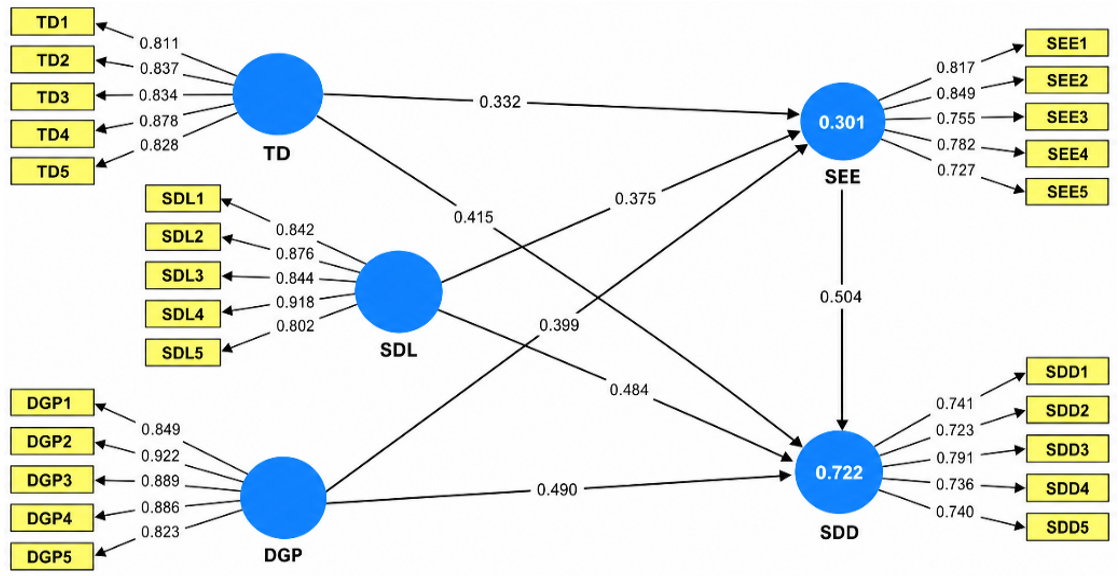
Inner VIF values ranged from 1.223 to 1.473, indicating no problematic collinearity. The model explained 30.1% of the variance in SEE (adjusted R² = .297) and 72.2% of the variance in SDD (adjusted R² = .719). The standardized root mean square residual was .061, and the normed fit index was .912 (Appendix Tables A4, A5).
SEE produced the largest effect on SDD (f-squared = .911), and TD (.105) had the smallest effect (Appendix Table A6). These values indicate that SDD is jointly shaped by strong direct and mediating contributions in the model.
The SRMR value of .061 was below .08, while the NFI value of .912 exceeded .90 (Appendix Table A7). Both indices therefore meet commonly used thresholds and indicate an acceptable model fit.
All specified direct associations were positive and statistically significant. SEE was positively associated with SDD (β = .504, p < .001), while TD, SDL, and DGP were positively associated with both SEE and SDD (Appendix Table A8). Although the standardized coefficients differed numerically, we did not conduct formal coefficient-difference tests; therefore, we do not interpret the results as evidence that one antecedent has a statistically stronger association than another. The three specific indirect associations were also statistically significant. Because the corresponding direct associations remained significant and had the same direction, the observed pattern was consistent with complementary partial statistical mediation for H8–H10.
The total effects were .582 for TD, .673 for SDL, and .691 for DGP; the indirect components accounted for approximately 28.7%, 28.1%, and 29.1% of those effects, respectively. Figure 2 presents the estimated model. Table 3 below summarizes the hypothesis test.
Figure 2. Empirical partial least squares structural equation modeling (PLS-SEM) model
Table 3. Direct and indirect effects
|
Hypothesis |
Path |
β |
t |
p |
f² |
Decision |
|
H1 |
TD → SEE |
.332 |
4.882 |
<.001 |
.105 |
Supported |
|
H2 |
TD → SDD |
.415 |
5.390 |
<.001 |
.535 |
Supported |
|
H3 |
SDL → SEE |
.375 |
4.360 |
<.001 |
.135 |
Supported |
|
H4 |
SDL → SDD |
.484 |
5.902 |
<.001 |
.709 |
Supported |
|
H5 |
DGP → SEE |
.399 |
5.320 |
<.001 |
.152 |
Supported |
|
H6 |
DGP → SDD |
.490 |
6.622 |
<.001 |
.715 |
Supported |
|
H7 |
SEE → SDD |
.504 |
8.129 |
<.001 |
.911 |
Supported |
|
H8 |
TD → SEE → SDD |
.167 |
4.185 |
<.001 |
— |
Supported |
|
H9 |
SDL → SEE → SDD |
.189 |
3.843 |
<.001 |
— |
Supported |
|
H10 |
DGP → SEE → SDD |
.201 |
4.451 |
<.001 |
— |
Supported |
The findings support H1–H10 and indicate that perceived destination sustainability in Likupang is associated with TD, SDL, DGP, and SEE. The model explained a substantial proportion of SDD variance but a more moderate proportion of SEE variance. This difference is substantively important: digital and institutional resources form part of the empowerment process, but finance, business networks, firm resources, infrastructure quality, market conditions, and tourism seasonality are also likely to shape SME outcomes.
5.1 Tourism Digitalization and destination sustainability
TD was positively associated with SEE and SDD, supporting H1 and H2. The result is consistent with Endogenous Growth Theory, as digital technologies can facilitate knowledge diffusion, productivity, and innovation [27-31]. Digital promotion, online reservations, customer interaction, and analytics can reduce geographical and informational constraints and expand SME market access [41, 43, 75]. At the destination level, digital systems can improve visitor information, coordination, environmental communication, and evidence-based planning [34, 35].
Technology is more likely to yield economic benefits when entrepreneurs have appropriate capabilities and institutional support. Under these conditions, TD can support destination sustainability by linking economic opportunities for local SMEs with community well-being and the long-term protection of natural resources.
5.2 Digital literacy as productive human capital
SDL was positively associated with SEE and SDD, supporting H3 and H4. This result extends Human Capital Theory by showing how practical digital competence is related not only to firm activity but also to respondents’ assessments of destination development. Digital literacy enables SME owners to evaluate information, communicate with customers, complete transactions, create content, and solve operational problems [39-42]. It also strengthens absorptive capacity by supporting the recognition and application of knowledge obtained from platforms, customers, competitors, government programs, and business partners [44, 45].
The findings caution against technology-deterministic interpretations. Digital technology is likely more useful when entrepreneurs have appropriate capabilities and operate within supportive institutional conditions. The dominance of smartphones among respondents suggests that mobile-friendly solutions are particularly relevant in Likupang. However, reliance on mobile devices may limit the use of more advanced analytics and integrated destination management systems.
5.3 Digital Government Policy as an institutional foundation
DGP was positively associated with SEE and SDD, supporting H5 and H6. Institutional Theory helps explain these associations because infrastructure, rules, incentives, legitimacy, and public coordination shape the institutional environment in which resource-constrained SMEs adopt and use digital innovation [46-49, 64]. Digital infrastructure, smart platforms, training, and coordinated support can reduce barriers that individual enterprises cannot readily overcome [35, 41, 42]. Policy may also be directly linked to SDD through destination monitoring, service integration, transparency, and stakeholder coordination [35, 50, 60].
In an emerging tourism destination, fragmented or short-term programs may expand access to technology without producing durable local benefits. The results support an ecosystem approach that coordinates infrastructure, capability development, finance, tourism promotion, environmental management, and SME participation. The cross-sectional design, however, does not establish that policy preceded the reported outcomes.
5.4 Small and medium-sized enterprise empowerment and perceived destination sustainability
SEE was positively associated with SDD (β = .504, p < .001), supporting H7. This finding is consistent with research on inclusive tourism, which emphasizes the importance of meaningful participation by local enterprises in destination development [51-53]. Economically stronger SMEs are better positioned to retain tourism expenditure, create employment, develop local supplier networks, improve service quality, and withstand disruption. These outcomes link tourism growth to community welfare and may increase resources available for cultural and environmental practices [50, 54, 69].
SEE and SDD are conceptually related because both include socioeconomic and resilience dimensions. Discriminant validity met the specified thresholds, but the HTMT value of .810 indicates proximity between the constructs. Moreover, both were measured through the same respondent. Future work should combine perception measures with objective indicators such as employment growth, local revenue retention, supplier linkages, business continuity, and environmental compliance.
5.5 Statistical mediation and theoretical contribution
The specific indirect TD–SEE–SDD, SDL–SEE–SDD, and DGP–SEE–SDD associations were statistically significant, supporting H8–H10. The indirect components represented approximately 28.7%, 28.1%, and 29.1% of the respective total associations. Because the corresponding direct associations remained significant and had the same direction, the pattern is consistent with complementary partial statistical mediation. These results should not, however, be interpreted as demonstrating a temporal transmission process. Rather, they indicate that TD, SDL, and DGP are associated with SDD both directly and indirectly through their statistical associations with SEE.
The theoretical contribution lies in integrating Endogenous Growth Theory, Human Capital Theory, and Institutional Theory within an inclusive tourism framework, in which SEE is specified as a statistically relevant intervening construct. The results suggest that perceived technological, capability, and institutional resources are jointly associated with local SMEs' economic position and perceived destination sustainability. The Likupang setting further illustrates why similar digital resources may yield different sustainability outcomes when enterprises vary in their ability to translate those resources into income, market access, employment, and resilience.
5.6 Practical and policy implications
Evaluate digital tourism programs by local economic outcomes, not only by infrastructure coverage, platform adoption, or training participation. Relevant indicators include SME market access, income stability, employment, business continuity, and participation in destination governance. Because most respondents relied on smartphones, public platforms and support services should be mobile-friendly. Training should move beyond social media promotion to include online transactions, customer data management, digital analytics, cybersecurity, content development, and integrated reservation systems.
The findings also support coordinated action among local government, destination organizations, universities, financial institutions, technology providers, and SME associations. Infrastructure investments should be linked with financing, capability development, local procurement, destination promotion, environmental incentives, and participatory monitoring. Such coordination can help SMEs use digitalization not only to increase sales but also to improve workforce capability, service quality, local cultural products, and environmentally responsible practices.
This study examined the direct and indirect associations of TD, SDL, and DGP with perceived SDD in Likupang. All ten hypothesized associations were statistically supported. TD, SDL, and DGP were positively associated with both SEE and SDD, while SEE was positively associated with SDD. The significant specific indirect associations were consistent with complementary partial statistical mediation. Given the cross-sectional design, these findings represent statistical associations and do not establish temporal or causal relationships.
Theoretically, the study integrates technological, human-capital, and institutional perspectives by identifying SEE as a statistically relevant intervening construct within the estimated model. Practically, the findings encourage policymakers to complement technology-adoption indicators with measures of SME market access, income, employment, resilience, and meaningful participation. Mobile-first public services, advanced digital training, accessible financing, and coordinated destination governance are particularly relevant to the Likupang context.
The findings have several limitations. The cross-sectional design does not establish temporal causality. Purposive sampling limits population-wide generalization and may favor accessible or digitally receptive firms. Self-reported data collected from a single respondent per enterprise may introduce common method bias. Although the full-collinearity VIF assessment did not indicate critical common method bias, all substantive constructs were measured through self-reports from a single respondent per enterprise; method-related variance therefore cannot be completely ruled out. In addition, the SEE–SDD HTMT value (.810), although below the conservative .85 criterion, indicates notable conceptual and empirical proximity. SEE was specified as firm-level perceived economic capacity, whereas SDD represents a multidimensional assessment of perceived destination-level sustainability; nevertheless, their economic and resilience dimensions may partially overlap. Future research should examine item purification and alternative measurement specifications, including higher-order modeling, and use multi-source and objective measures to establish the empirical distinctiveness of these constructs more clearly. Both DGP and SDD represent SME owners’ perceptions rather than independently measured policy quality or destination performance. Finally, the moderate explanatory power for SEE indicates that financial access, entrepreneurial orientation, networks, infrastructure, firm characteristics, and seasonality remain relevant.
Future research should use longitudinal and comparative designs, probability-based sampling where feasible, and multi-source data from SMEs, destination authorities, tourists, and communities. Objective measures of sales, employment, local revenue retention, supplier linkages, environmental performance, and business continuity would strengthen inference. Additional mediators or moderators, including financial access, entrepreneurial orientation, collaborative capability, digital readiness, and regulatory quality, could explain why similar digital interventions generate different outcomes across enterprises and destinations.
This work was supported by the Directorate of Research, Technology, and Community Service of the Ministry of Higher Education, Science, and Technology of the Republic of Indonesia through the PFR-Bima 2025 scheme (Grant No. 0070/C3/AL.04/2025).
Measurement and Structural Model Assessment Results
Table A1. Outer loadings
|
DGP |
SDD |
SDL |
SEE |
TD |
|
|
DGP1 |
0.849 |
||||
|
DGP2 |
0.922 |
||||
|
DGP3 |
0.889 |
||||
|
DGP4 |
0.886 |
||||
|
DGP5 |
0.823 |
||||
|
SDD1 |
0.741 |
||||
|
SDD2 |
0.723 |
||||
|
SDD3 |
0.791 |
||||
|
SDD4 |
0.736 |
||||
|
SDD5 |
0.740 |
||||
|
SDL1 |
0.842 |
||||
|
SDL2 |
0.876 |
||||
|
SDL3 |
0.844 |
||||
|
SDL4 |
0.918 |
||||
|
SDL5 |
0.802 |
||||
|
SEE1 |
0.817 |
||||
|
SEE2 |
0.849 |
||||
|
SEE3 |
0.755 |
||||
|
SEE4 |
0.782 |
||||
|
SEE5 |
0.727 |
||||
|
TD1 |
0.811 |
||||
|
TD2 |
0.837 |
||||
|
TD3 |
0.834 |
||||
|
TD4 |
0.878 |
||||
|
TD5 |
0.828 |
Table A2. Construct reliability and validity
|
Cronbach's Alpha |
Composite Reliability (rho_a) |
Composite Reliability (rho_c) |
Average Variance Extracted (AVE) |
|
|
DGP |
0.923 |
0.935 |
0.942 |
0.765 |
|
SDD |
0.842 |
0.850 |
0.863 |
0.557 |
|
SDL |
0.910 |
0.918 |
0.932 |
0.735 |
|
SEE |
0.818 |
0.826 |
0.873 |
0.581 |
|
TD |
0.894 |
0.900 |
0.922 |
0.702 |
Table A3. Discriminant validity
|
DGP |
SDD |
SDL |
SEE |
TD |
|
|
Heterotrait Monotrait (HTMT) |
|||||
|
DGP |
|
|
|
|
|
|
SDD |
0.410 |
|
|
|
|
|
SDL |
0.335 |
0.385 |
|
|
|
|
SEE |
0.250 |
0.810 |
0.220 |
|
|
|
TD |
0.340 |
0.255 |
0.345 |
0.160 |
|
|
Fornell-Larcker Criterion |
|||||
|
DGP |
0.874 |
|
|
|
|
|
SDD |
0.340 |
0.747 |
|
|
|
|
SDL |
0.280 |
0.316 |
0.857 |
|
|
|
SEE |
0.201 |
0.733 |
0.170 |
0.787 |
|
|
TD |
0.280 |
0.200 |
0.280 |
0.115 |
0.838 |
Table A4. Collinearity test
|
DGP |
SDD |
SDL |
SEE |
TD |
|
|
DGP |
1.473 |
1.278 |
|||
|
SDD |
|
|
|
||
|
SDL |
1.450 |
1.278 |
|||
|
SEE |
1.223 |
||||
|
TD |
1.413 |
1.278 |
Table A5. R-square
|
R-Square |
R-Square Adjusted |
|
|
SDD |
0.722 |
0.719 |
|
SEE |
0.301 |
0.297 |
Table A6. f-square
|
DGP |
SDD |
SDL |
SEE |
TD |
|
|
DGP |
0.715 |
0.152 |
|||
|
SDD |
|
|
|
||
|
SDL |
0.709 |
0.135 |
|||
|
SEE |
0.911 |
||||
|
TD |
0.535 |
0.105 |
Table A7. Model fit
|
Saturated Model |
Estimated Model |
|
|
SRMR |
0.061 |
0.061 |
|
NFI |
0.912 |
0.912 |
Table A8. Significance/hypothesis test
|
Hypothesis |
Original Sample |
Sample Mean |
Standard Deviation |
t-Statistics |
p-Values |
Conclusion |
|
1. Direct effect |
|
|
|
|
|
|
|
H1: TD → SEE |
0.332 |
0.334 |
0.068 |
4.882 |
<.001 |
Supported |
|
H2: TD → SDD |
0.415 |
0.416 |
0.077 |
5.390 |
<.001 |
Supported |
|
H3: SDL → SEE |
0.375 |
0.377 |
0.086 |
4.360 |
<.001 |
Supported |
|
H4: SDL → SDD |
0.484 |
0.485 |
0.082 |
5.902 |
<.001 |
Supported |
|
H5: DGP → SEE |
0.399 |
0.401 |
0.075 |
5.320 |
<.001 |
Supported |
|
H6: DGP → SDD |
0.490 |
0.492 |
0.074 |
6.622 |
<.001 |
Supported |
|
H7: SEE → SDD |
0.504 |
0.505 |
0.062 |
8.129 |
<.001 |
Supported |
|
2. Indirect effect |
|
|
|
|
|
|
|
H8: TD → SEE → SDD |
0.167 |
0.169 |
0.040 |
4.185 |
<.001 |
Supported |
|
H9: SDL → SEE → SDD |
0.189 |
0.191 |
0.049 |
3.843 |
<.001 |
Supported |
|
H10: DGP → SEE →SDD |
0.201 |
0.203 |
0.045 |
4.451 |
<.001 |
Supported |
[1] Buhalis, D., O’Connor, P., Leung, R. (2023). Smart hospitality: From smart cities and smart tourism towards agile business ecosystems in networked destinations. International Journal of Contemporary Hospitality Management, 35(1): 369-393. https://doi.org/10.1108/IJCHM-04-2022-0497
[2] Myrovali, G., Tzanis, G., Morfoulaki, M. (2025). Sustainable tourism through digitalization and smart solutions. Sustainability, 17(12): 5383. https://doi.org/10.3390/su17125383
[3] Cvetanović, S., Filipović, M., Nikolić, M., Belović, D. (2015). Endogenous growth theory and regional development policy. Spatium, 1(34): 10-17. https://doi.org/10.2298/SPAT1534010C
[4] Asa, A.R., Nautwima, J.P., Johannes, H.N. (2026). The transformative impact of digital technology on SME performance: A review and framework for digital transformation. Cogent Business & Management, 13(1): 2643949. https://doi.org/10.1080/23311975.2026.2643949
[5] Sahoo, S.K., Goswami, S.S., Sarkar, S., Mitra, S. (2023). A review of digital transformation and Industry 4.0 in supply chain management for small and medium-sized enterprises. Spectrum of Engineering Management Sciences, 1(1): 58-70. https://doi.org/10.31181/sems1120237j
[6] Mariani, M., Bresciani, S., Dagnino, G.B. (2021). The competitive productivity (CP) of tourism destinations: An integrative conceptual framework and a reflection on big data and analytics. International Journal of Contemporary Hospitality Management, 33(9): 2970-3002. https://doi.org/10.1108/IJCHM-09-2020-1102
[7] Fathoni, I., Asfiah, N. (2024). Transformasi digital bisnis UMKM di Indonesia setelah masa pandemi. Innovative Journal of Social Science Research, 4(3): 10219-10236.
[8] Neumeyer, X., Santos, S.C., Morris, M.H. (2020). Overcoming barriers to technology adoption when fostering entrepreneurship among the poor: The role of technology and digital literacy. IEEE Transactions on Engineering Management, 68(6): 1605-1618. https://doi.org/10.1109/TEM.2020.2989740
[9] Zaman, S.A.A., Vilkas, M., Zaman, S.I., Jamil, S. (2024). Digital technologies and digitalization performance: The mediating role of digitalization management. Journal of Manufacturing Technology Management, 36(2): 307-333. https://doi.org/10.1108/JMTM-04-2024-0176
[10] Rachinger, M., Rauter, R., Müller, C., Vorraber, W., Schirgi, E. (2019). Digitalization and its influence on business model innovation. Journal of Manufacturing Technology Management, 30(8): 1143-1160. https://doi.org/10.1108/JMTM-01-2018-0020
[11] Yadav, U.S., Sood, K., Tripathi, R., Grima, S., Yadav, N. (2023). Entrepreneurship in India’s handicraft industry with the support of digital technology and innovation during natural calamities. International Journal of Sustainable Development and Planning, 18(6): 1777-1791. https://doi.org/10.18280/ijsdp.180613
[12] Du, K., Zhao, Q., Yin, Y., Zhang, T. (2024). Marketing executives and corporate performance: From the perspective of marketing digitalization. International Review of Economics and Finance, 93: 631-644. https://doi.org/10.1016/j.iref.2024.03.028
[13] Rahman, M.R., Rahman, M.M. (2023). Impact of digital financial services on customers’ choice of financial institutions: A modified UTAUT study in Bangladesh. International Journal of Safety and Security Engineering, 13(3): 409-421. https://doi.org/10.18280/ijsse.130304
[14] Häikiö, J., Koivumäki, T. (2016). Exploring digital service innovation process through value creation. Journal of Innovation Management, 4(2): 96-124. https://doi.org/10.24840/2183-0606_004.002_0006
[15] Raby, S., Ardito, L. (2025). Examining the interdependent role of digitalization and external search breadth in driving service innovation in SMEs. Journal of Knowledge Management, 30(2): 804-823. https://doi.org/10.1108/JKM-03-2025-0280
[16] Jang, M., Aavakare, M., Nikou, S., Kim, S. (2021). The impact of literacy on intention to use digital technology for learning: A comparative study of Korea and Finland. Telecommunications Policy, 45(7): 102154. https://doi.org/10.1016/j.telpol.2021.102154
[17] Kallmuenzer, A., Mikhaylov, A., Chelaru, M., Czakon, W. (2025). Adoption and performance outcome of digitalization in small and medium-sized enterprises. Review of Managerial Science, 19(7): 2011-2038. https://doi.org/10.1007/s11846-024-00744-2
[18] Affandi, Y., Ridhwan, M.M., Trinugroho, I., Hermawan Adiwibowo, D. (2024). Digital adoption, business performance, and financial literacy in ultra-micro, micro, and small enterprises in Indonesia. Research in International Business and Finance, 70: 102376. https://doi.org/10.1016/j.ribaf.2024.102376
[19] Wang, S., Li, X., Li, Z., Ye, Y. (2023). The effects of government support on enterprises’ digital transformation: Evidence from China. Managerial and Decision Economics, 44(5): 2520-2539. https://doi.org/10.1002/mde.3831
[20] Duan, Y., Xi, B., Xu, X., Xuan, S. (2024). The impact of government subsidies on green innovation performance in new energy enterprises: A digital transformation perspective. International Review of Economics and Finance, 94: 103414. https://doi.org/10.1016/j.iref.2024.103414
[21] Jainuddin, J., Anggraini, L.S., Halik, A., Mujanah, S. (2024). Synergy of MSMEs and blue economy for sustainable development in the coastal areas of East Kalimantan. International Journal of Economics Business and Accounting Research, 8(4): 1-8. https://doi.org/10.29040/ijebar.v8i4.16448
[22] Luntungan, E.C. (2024). Collaborative governance in the development of Likupang Super Priority Tourism Destination in North Sulawesi Province. Journal of Tourism and Hospitality Studies, 2(1): 13-24. https://doi.org/10.32996/jths.2024.2.1.3
[23] Ariowibowo, R., Lolowang, T., Rengkung, L. (2017). Development strategy for the Pulisan nature tourism area in North Minahasa Regency. Agri-SosioEkonomi Unsrat, 13: 109-126.
[24] Firmansyah, A. (2021). Descriptive analysis of tourism potential in villages surrounding the Likupang Special Economic Zone (SEZ). Jurnal Pariwisata Terapan, 5(2): 160. https://doi.org/10.22146/jpt.55822
[25] Kawatak, S.Y., Indriyanto, M.N., Waloni, T.G.L. (2021). A sustainable tourism-based development strategy for Pulisan Beach in Likupang. Cakrawala Jurnal Penelitian Sosial, 10(1): 39-54. https://ejournal.uksw.edu/cakrawala/article/view/4660.
[26] Supit, R.T., Franklin, P.J.C., Moniaga, I.L. (2022). Directions for development of tourism villages in East Likupang as KSPN in North Minahasa Regency. Spasial, 9(1): 40-51.
[27] Romer, P.M. (1986). Increasing returns and long-run growth. Journal of Political Economy, 94(5): 1002-1037. https://doi.org/10.1086/261420
[28] Lucas, R.E. (1988). On the mechanics of economic development. Journal of Monetary Economics, 22(1): 3-42. https://doi.org/10.1016/0304-3932(88)90168-7
[29] Nambisan, S., Lyytinen, K., Majchrzak, A., Song, M. (2017). Digital innovation management: Reinventing innovation management research in a digital world. MIS Quarterly, 41(1): 223-238. https://doi.org/10.25300/MISQ/2017/41:1.03
[30] Vial, G. (2021). Understanding digital transformation: A review and a research agenda. In Managing Digital Transformation, 1st ed., Routledge, London, p. 54. https://doi.org/10.4324/9781003008637-4
[31] Verhoef, P.C., Broekhuizen, T., Bart, Y., et al. (2021). Digital transformation: A multidisciplinary reflection and research agenda. Journal of Business Research, 122: 889-901. https://doi.org/10.1016/j.jbusres.2019.09.022
[32] Buhalis, D., Harwood, T., Bogicevic, V., Viglia, G., Beldona, S., Hofacker, C. (2019). Technological disruptions in services: Lessons from tourism and hospitality. Journal of Service Management, 30(4): 484-506. https://doi.org/10.1108/JOSM-12-2018-0398
[33] Li, Y., Hu, C., Huang, C., Duan, L. (2017). The concept of smart tourism in the context of tourism information services. Tourism Management, 58: 293-300. https://doi.org/10.1016/j.tourman.2016.03.014
[34] Boes, K., Buhalis, D., Inversini, A. (2016). Smart tourism destinations: Ecosystems for tourism destination competitiveness. International Journal of Tourism Cities, 2(2): 108-124. https://doi.org/10.1108/IJTC-12-2015-0032
[35] Ivars-Baidal, J.A., Celdrán-Bernabeu, M.A., Mazón, J.N., Perles-Ivars, Á.F. (2019). Smart destinations and the evolution of ICTs: A new scenario for destination management? Current Issues in Tourism, 22(13): 1581-1600. https://doi.org/10.1080/13683500.2017.1388771
[36] Del Vecchio, P., Mele, G., Ndou, V., Secundo, G. (2018). Creating value from social big data: Implications for smart tourism destinations. Information Processing & Management, 54(5): 847-860. https://doi.org/10.1016/j.ipm.2017.10.006
[37] Mariani, M., Baggio, R., Fuchs, M., Höepken, W. (2018). Business intelligence and big data in hospitality and tourism: A systematic literature review. International Journal of Contemporary Hospitality Management, 30(12): 3514-3554. https://doi.org/10.1108/IJCHM-07-2017-0461
[38] Becker, G.S. (1964). Human Capital: A Theoretical and Empirical Analysis, with Special Reference to Education. Columbia University Press, New York.
[39] Spante, M., Hashemi, S.S., Lundin, M., Algers, A. (2018). Digital competence and digital literacy in higher education research: Systematic review of concept use. Cogent Education, 5(1): 1-21. https://doi.org/10.1080/2331186X.2018.1519143
[40] van Laar, E., van Deursen, A.J.A.M., van Dijk, J.A.G.M., de Haan, J. (2017). The relation between 21st-century skills and digital skills: A systematic literature review. Computers in Human Behavior, 72: 577-588. https://doi.org/10.1016/j.chb.2017.03.010
[41] Eller, R., Alford, P., Kallmünzer, A., Peters, M. (2020). Antecedents, consequences, and challenges of small and medium-sized enterprise digitalization. Journal of Business Research, 112: 119-127. https://doi.org/10.1016/j.jbusres.2020.03.004
[42] Li, L., Su, F., Zhang, W., Mao, J.Y. (2018). Digital transformation by SME entrepreneurs: A capability perspective. Information Systems Journal, 28(6): 1129-1157. https://doi.org/10.1111/isj.12153
[43] Cenamor, J., Parida, V., Wincent, J. (2019). How entrepreneurial SMEs compete through digital platforms: The roles of digital platform capability, network capability and ambidexterity. Journal of Business Research, 100: 196-206. https://doi.org/10.1016/j.jbusres.2019.03.035
[44] Cohen, W.M., Levinthal, D.A. (1990). Absorptive capacity: A new perspective on learning and innovation. Administrative Science Quarterly, 35(1): 128-152. https://doi.org/10.2307/2393553
[45] Zahra, S.A., George, G. (2002). Absorptive capacity: A review, reconceptualization, and extension. Academy of Management Review, 27(2): 185-203. https://doi.org/10.5465/amr.2002.6587995
[46] North, D.C. (1971). Institutional change and economic growth. Journal of Economic History, 31(1): 118-125. https://doi.org/10.1017/S0022050700094109
[47] Scott, W.R. (2014). Institutions and organizations. Ideas, interests and identities. M@n@gement, 17(2): 136-140.
[48] Gil-Garcia, J.R., Dawes, S.S., Pardo, T.A. (2018). Digital government and public management research: Finding the crossroads. Public Management Review, 20(5): 633-646. https://doi.org/10.1080/14719037.2017.1327181
[49] Mergel, I., Edelmann, N., Haug, N. (2019). Defining digital transformation: Results from expert interviews. Government Information Quarterly, 36(4): 101385. https://doi.org/10.1016/j.giq.2019.06.002
[50] Nunkoo, R. (2017). Governance and sustainable tourism: What is the role of trust, power and social capital? Journal of Destination Marketing & Management, 6(4): 277-285. https://doi.org/10.1016/j.jdmm.2017.10.003
[51] Scheyvens, R., Biddulph, R. (2018). Inclusive tourism development. Tourism Geographies, 20(4): 589-609. https://doi.org/10.1080/14616688.2017.1381985
[52] Scheyvens, R., Hughes, E. (2019). Can tourism help to ‘end poverty in all its forms everywhere’? The challenge of tourism addressing SDG1. Journal of Sustainable Tourism, 27(7): 1061-1079. https://doi.org/10.1080/09669582.2018.1551404
[53] Aquino, R.S., Lück, M., Schänzel, H.A. (2018). A conceptual framework of tourism social entrepreneurship for sustainable community development. Journal of Hospitality and Tourism Management, 37: 23-32. https://doi.org/10.1016/j.jhtm.2018.09.001
[54] Mihalic, T. (2016). Sustainable-responsible tourism discourse – Towards ‘responsustable’ tourism. Journal of Cleaner Production, 111: 461-470. https://doi.org/10.1016/j.jclepro.2014.12.062
[55] Buhalis, D., Sinarta, Y. (2019). Real-time co-creation and nowness service: Lessons from tourism and hospitality. Journal of Travel & Tourism Marketing, 36(5): 563-582. https://doi.org/10.1080/10548408.2019.1592059
[56] Sigala, M. (2018). Implementing social customer relationship management: A process framework and implications in tourism and hospitality. International Journal of Contemporary Hospitality Management, 30(7): 2698-2726. https://doi.org/10.1108/IJCHM-10-2015-0536
[57] Khin, S., Ho, T.C.F. (2019). Digital technology, digital capability and organizational performance: A mediating role of digital innovation. International Journal of Innovation Science, 11(2): 177-195. https://doi.org/10.1108/IJIS-08-2018-0083
[58] Twizeyimana, J.D., Andersson, A. (2019). The public value of e-government – A literature review. Government Information Quarterly, 36(2): 167-178. https://doi.org/10.1016/j.giq.2019.01.001
[59] Shafiee, S., Rajabzadeh Ghatari, A., Hasanzadeh, A., Jahanyan, S. (2019). Developing a model for sustainable smart tourism destinations: A systematic review. Tourism Management Perspectives, 31: 287-300. https://doi.org/10.1016/j.tmp.2019.06.002
[60] Femenia-Serra, F., Ivars-Baidal, J.A. (2021). Do smart tourism destinations really work? The case of Benidorm. Asia Pacific Journal of Tourism Research, 26(4): 365-384. https://doi.org/10.1080/10941665.2018.1561478
[61] Gössling, S. (2017). Tourism, information technologies and sustainability: An exploratory review. Journal of Sustainable Tourism, 25(7): 1024-1041. https://doi.org/10.1080/09669582.2015.1122017
[62] Bejaković, P., Mrnjavac, Ž. (2020). The importance of digital literacy on the labour market. Employee Relations, 42(4): 921-932. https://doi.org/10.1108/ER-07-2019-0274
[63] van Laar, E., van Deursen, A.J.A.M., van Dijk, J.A.G.M., de Haan, J. (2019). The sequential and conditional nature of 21st-century digital skills. International Journal of Communication, 13: 3462-3487.
[64] Hinings, B., Gegenhuber, T., Greenwood, R. (2018). Digital innovation and transformation: An institutional perspective. Information and Organization, 28(1): 52-61. https://doi.org/10.1016/j.infoandorg.2018.02.004
[65] Purnomo, E.P., Khairunnisa, T. (2024). Green economy: Increasing economic growth to support sustainable tourism in super priority destinations. International Journal of Sustainable Development and Planning, 19(10): 4021-4031. https://doi.org/10.18280/ijsdp.191031
[66] Sinulingga, S., Marpaung, J.L., Sibarani, H.S., Amalia, A., Kumalasari, F. (2024). Sustainable tourism development in Lake Toba: A comprehensive analysis of economic, environmental, and cultural impacts. International Journal of Sustainable Development and Planning, 19(8): 2907-2917. https://doi.org/10.18280/ijsdp.190809
[67] Kolopaking, L.M., Wahyono, E., Irmayani, N.R., Habibullah, H., Erwinsyah, R.G. (2022). Re-adaptation of COVID-19 impact for sustainable improvement of Indonesian villages’ social resilience in the digital era. International Journal of Sustainable Development and Planning, 17(7): 2131-2140. https://doi.org/10.18280/ijsdp.170713
[68] Alhadi, Z., Zefnihan, Muchtar, B., Evanita, S. (2023). Developing a community-based tourism model for sustainable tourism in the Mandeh Area, West Sumatra Province, Indonesia. International Journal of Sustainable Development and Planning, 18(11): 3491-3503. https://doi.org/10.18280/ijsdp.181114
[69] Sharpley, R. (2020). Tourism, sustainable development and the theoretical divide: 20 years on. Journal of Sustainable Tourism, 28(11): 1932-1946. https://doi.org/10.1080/09669582.2020.1779732
[70] Preacher, K.J., Hayes, A.F. (2008). Asymptotic and resampling strategies for assessing and comparing indirect effects in multiple mediator models. Behavior Research Methods, 40(3): 879-891. https://doi.org/10.3758/BRM.40.3.879
[71] Nitzl, C., Roldan, J.L., Cepeda, G. (2016). Mediation analysis in partial least squares path modeling: Helping researchers discuss more sophisticated models. Industrial Management & Data Systems, 116(9): 1849-1864. https://doi.org/10.1108/IMDS-07-2015-0302
[72] Hair, J.F., Hult, G.T.M., Ringle, C.M., Sarstedt, M. (2022). A Primer on Partial Least Squares Structural Equation Modeling (PLS-SEM), 3rd ed. SAGE Publications, Thousand Oaks.
[73] Kock, N., Hadaya, P. (2018). Minimum sample size estimation in PLS-SEM: The inverse square root and gamma-exponential methods. Information Systems Journal, 28(1): 227-261. https://doi.org/10.1111/isj.12131
[74] Podsakoff, P.M., MacKenzie, S.B., Lee, J.Y., Podsakoff, N.P. (2003). Common method biases in behavioral research: A critical review of the literature and recommended remedies. Journal of Applied Psychology, 88(5): 879-903. https://doi.org/10.1037/0021-9010.88.5.879
[75] Kock, N. (2015). Common method bias in PLS-SEM: A full collinearity assessment approach. International Journal of e-Collaboration, 11(4): 1-10. https://doi.org/10.4018/ijec.2015100101