Pham Ngoc Huong Quynh | Hoang Thi Huong*
© 2026 The authors. This article is published by IIETA and is licensed under the CC BY 4.0 license (http://creativecommons.org/licenses/by/4.0/).
OPEN ACCESS
The night-time economy (NTE) has become a significant component of urban vitality, tourism, consumption, and place-based development, yet its governance is increasingly challenged by public safety concerns, environmental pressure, socio-spatial conflict, informal labour, and resident-visitor tensions. Although digital technologies offer new tools for monitoring, coordinating, and regulating nocturnal urban activities, the literature remains fragmented across smart city studies, remote sensing, urban governance, tourism, and sustainability. This study maps the intellectual structure of research on digital transformation in NTE governance and synthesizes the reported antecedents, governance decisions, and outcomes. Following the PRISMA 2020 protocol, a systematic literature review (SLR) and bibliometric analysis were conducted on 60 Scopus-indexed peer-reviewed articles. VOSviewer was used for bibliometric mapping, while qualitative synthesis was organized through the Antecedents-Decisions-Outcomes (ADO) framework. The findings indicate an emerging shift from measurement-oriented studies using night-time light and remote sensing data toward broader debates on data-driven governance, urban vitality, platformization, and sustainability. The ADO synthesis identifies socio-spatial conflict, economic policy pressure, and digital infrastructure readiness as major antecedents; algorithmic governance, digital finance, and urban digital twins as key governance decisions; and efficiency, safety, economic vitality, surveillance risk, digital exclusion, and spatial inequality as main outcomes. The study contributes a planning-oriented research agenda for designing NTE governance systems that balance urban vitality, public safety, environmental quality, digital accountability, and inclusive access to nocturnal urban space.
night-time economy, digital transformation, sustainable urban development, urban governance, Antecedents–Decisions–Outcomes framework, bibliometric analysis
In the context of global urbanization, the concepts of the 24-hour city and nocturnal urbanism have moved beyond the narrow domain of entertainment activities to become core drivers of economic growth and urban spatial restructuring. The night-time economy (NTE) is increasingly regarded as an important driver of consumption, tourism, service employment, and urban vitality. Accordingly, policymakers are gradually shifting from a restrictive management mindset toward a more proactive, evolutionary governance approach tailored to nocturnal urban spaces [1, 2]. However, the expansion of commercial activities after sunset exposes structural bottlenecks in traditional governance models. Major cities increasingly face socio-spatial conflicts, including noise, alcohol-related harms, environmental degradation (such as air quality issues), and risks related to public safety [1, 3]. These challenges are not only economic or cultural issues; they are also core sustainable planning problems because they involve the temporal allocation of urban space, environmental externalities, noise exposure, public safety, mobility management, and the coexistence between residents, visitors, and night-time workers.
In this review, the NTE is defined as the set of economic, social, cultural, mobility, and service activities occurring after conventional daytime business hours, including night tourism, hospitality, entertainment, food services, night markets, cultural events, transport, and related urban services. Purely technical studies of night-time light are included only when they explicitly connect nocturnal activity to economic, governance, planning, or sustainability issues [1-3].
To address systemic challenges, digital transformation has emerged as an important instrument of governance where spatial big data and automated infrastructure restructure nighttime governance [1, 2]. The application of multi-source big data, AI, smart cameras, and digital financial platforms is increasingly discussed as a basis for data-driven governance, particularly in monitoring mobility, consumption, public safety, environmental pressure, and spatial use after dark [4-7]. Nevertheless, the deeper integration of technology produces a digital-nocturnal paradox, reflecting a tension between algorithmic efficiency and spatial justice [3].
Although the number of studies examining the intersection between urban technology and the NTE has increased, the current body of knowledge remains fragmented. One stream of research focuses on night-time light data and remote sensing to measure the intensity of economic activity [8, 9], while another examines social issues such as control, security, exclusion, and spatial conflict [3, 10]. However, these research streams often develop separately, leaving the interrelationships among conditions associated with digital transformation, technology governance decisions, and sustainable outcomes insufficiently synthesized. Therefore, there remains a need for a systematic review that combines bibliometric analysis with theoretical synthesis to clarify how digital transformation restructures governance of the NTE. Departing from extant reviews that predominantly utilize remote-sensing datasets for macroeconomic estimation, this study provides a Scopus-based attempt to integrate bibliometric mapping with an ADO-based socio-technical synthesis. It bridges the gap between technical night-time light (NTL) accuracy and the socio-spatial critiques of urban governance, using the ADO lens to organize how the literature links institutional pressures, digital governance decisions, and sustainable or exclusionary outcomes.
To address this knowledge gap, this study applies bibliometric analysis in combination with the ADO framework to comprehensively examine the mechanisms of digital transformation in NTE governance. The study addresses the following four research questions:
RQ1. What is the intellectual and thematic structure of research connecting digital technologies, NTE, and urban governance?
RQ2. What antecedent conditions are reported as motivating digital transformation in NTE governance?
RQ3. What digital governance decisions and technological instruments are discussed in the literature?
RQ4. What economic, social, environmental, institutional, and ethical outcomes are associated with these decisions?
By integrating the quantitative strength of bibliometric network analysis with the qualitative depth of the ADO framework, this article makes several contributions. Theoretically, it provides a synthetic structure that connects socio-technical systems theory with the lens of spatial justice in the after-dark economy. Practically, it offers an analytical roadmap for policymakers, particularly in the context of emerging regulatory gaps concerning AI and data governance, to design digitalized planning approaches that simultaneously support economic vibrancy, inclusion, and sustainable development.
The remainder of this article is organized as follows. Section 2 presents the methodology based on the PRISMA protocol. Sections 3 and 4 report the bibliometric results and qualitative synthesis using the ADO framework. Section 5 discusses policy implications, research limitations, and future research directions. Finally, Section 6 concludes the study.
To ensure transparency, objectivity, and reproducibility, this study adopts a systematic literature review (SLR) approach in accordance with the PRISMA 2020 guidelines [11]. The research design follows a dual integrated procedure: (i) bibliometric analysis to map the macro-level structure of knowledge; and (ii) in-depth qualitative synthesis based on the Antecedents–Decisions–Outcomes (ADO) framework, which is widely used in SLRs to structure prior research around antecedent conditions, strategic or governance decisions, and resulting outcomes [12-14].
2.1 Literature search strategy
The literature search was conducted using the Scopus database, as it provides broad coverage of urban studies, governance, social sciences, economics, environmental research, and sustainable development. The search string was designed around three conceptual blocks: the NTE, digital transformation, and urban governance/management. Specifically, the Scopus search query was formulated as follows: TITLE-ABS-KEY (("night-time economy" OR "nighttime economy" OR "night economy" OR "night tourism" OR "night market*" OR "nightlife" OR "night life" OR "evening economy" OR "24-hour city" OR "night-time urbanism" OR "nighttime urbanism" OR (night* W/3 (econom* OR touris* OR market* OR leisure OR consumption))) AND (digital* OR "digital economy" OR "digital finance" OR "smart city" OR "smart cities" OR ICT OR "big data" OR "multi-source data" OR "artificial intelligence" OR AI OR IoT OR sensor* OR platform* OR "digital platform*" OR "remote sensing" OR "night-time light*" OR "nighttime light*" OR "night light*" OR NTL OR "digital twin*") AND (govern* OR management OR planning OR polic* OR regulat* OR sustainab* OR "urban development" OR "urban governance" OR "spatial planning" OR "urban management")).
The final search was conducted on 20 July 2026. The following Scopus filters were applied: publication years 2016 - April 2026, document type = article or review, language = English, and subject areas = social sciences; business, management and accounting; economics, econometrics and finance; environmental science; and decision sciences. The Scopus export included citation information, bibliographic information, abstracts, author keywords, index keywords, references, and funding details. Because the purpose of the study is to map peer-reviewed academic knowledge rather than policy practice, Scopus was selected as the primary database. However, this choice limits coverage of local policy reports and non-indexed urban governance documents.
2.2 Inclusion and exclusion criteria
To control noise and ensure the scientific quality of the dataset, this study established a rigorous set of inclusion and exclusion criteria, each supported by a clear scientific rationale. The review was limited to publications from 2016 to April 2026, as the period beginning in 2016 marks the consolidation of Industry 4.0, smart city debates, and data-driven urban governance and the smart city paradigm, both of which constitute the core foundation of digital transformation in urban governance. Only original research articles and peer-reviewed review articles were included, while books, book chapters, conference proceedings, and grey literature were excluded to prioritize evidence reliability and reduce potential bias in bibliometric data. Furthermore, the review focused exclusively on studies within the fields of business, management, economics, urban studies, and the social sciences, while purely technical studies in computer science, medicine, and hardware engineering were excluded. This decision reflects the study’s emphasis on management and governance perspectives rather than purely technical system design, thereby preventing the dataset from being overwhelmed by studies unrelated to urban governance. Finally, only English-language publications were included to ensure international relevance, cross-validation, and the generalizability of academic terminology. To reduce noise and ensure consistency in the dataset, this study applied the inclusion and exclusion criteria presented in Table 1.
Table 1. Inclusion and exclusion criteria used in the screening process
|
Criterion |
Inclusion |
Exclusion |
Rationale |
|
Time period |
Publications from 2016 to April 2026 |
Publications before 2016 |
2016 marks the consolidation of smart city and Industry 4.0 debates relevant to digital urban governance |
|
Document type |
Peer-reviewed journal articles and review articles |
Books, book chapters, conference proceedings, editorials, reports, theses, and grey literature |
To ensure academic quality and comparability |
|
Language |
English |
Non-English publications |
To maintain consistency in bibliometric processing and international comparability |
|
Subject area |
Urban studies, management, governance, economics, tourism, sustainability, social sciences, environmental studies |
Purely technical computer science, hardware engineering, medical, or unrelated technical studies |
The focus is on governance, management, and urban sustainability rather than technical system design |
|
Topical relevance |
Studies were included only if they addressed: (i) night-time urban/economic activity; and (ii) at least one digital technology/data-driven measurement component; and (iii) a governance, planning, management, sustainability, or policy implication. |
Studies unrelated to night-time urban activities or lacking a digital/governance component |
To ensure conceptual relevance to the research objective |
|
Empirical/conceptual relevance |
Studies providing empirical evidence, conceptual insight, or policy analysis |
Studies with only incidental mention of the search terms |
To avoid false positives |
2.3 Study selection and data extraction
The screening process was conducted independently by two researchers through two stages using Rayyan. Any disagreements were resolved through discussion with a senior expert. The PRISMA screening process followed four steps.
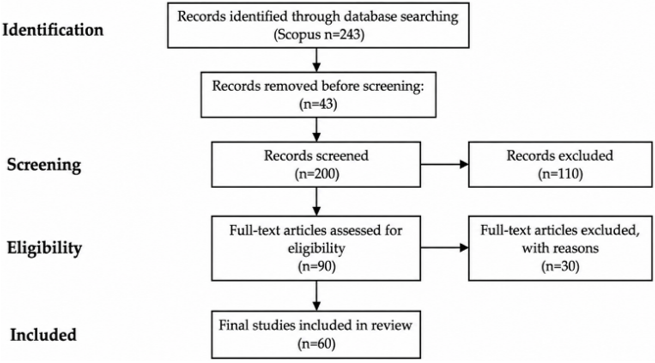
First, in the identification stage, 243 records were retrieved from Scopus. Since the search string encapsulated highly intersecting conceptual blocks, the initial export contained metadata errors, articles published in press without complete bibliographic indexes, and conference index duplicates. After programmatic data cleaning to remove incomplete metadata records (n = 19) and book-section records (n = 24), 200 records were advanced to the title and abstract screening stage. Second, in the screening stage, the titles and abstracts of 200 records were assessed, and 110 articles that did not meet the inclusion criteria were excluded. This left 90 articles for full-text assessment. Third, in the eligibility stage, 90 full-text articles were assessed. Among them, 30 articles were excluded for specific reasons: lack of a relevant urban or NTE context (n = 12), absence of a clear digital transformation context (n = 10), and insufficient engagement with sustainable development issues (n = 8). Fourth, in the inclusion stage, the final corpus consisted of 60 articles that fully met the inclusion criteria and were included in both the bibliometric analysis and the qualitative synthesis based on the ADO framework. The final corpus comprised 60 articles, allowing a descriptive bibliometric mapping alongside an in-depth qualitative synthesis of governance mechanisms [15, 16].
Figure 1 presents the document screening and selection process based on the PRISMA 2020 protocol [11].
2.4 Quality appraisal
To enhance the reliability of the systematic review, eligible articles were assessed using five quality criteria: relevance to the research questions, clarity of research design, transparency of data and methods, relevance to digital transformation, and relevance to NTE governance or sustainable development. Each criterion was scored from 0 to 2, where 0 indicated that the criterion was not met, 1 indicated partial fulfilment, and 2 indicated clear fulfilment. The quality appraisal was not intended to mechanically rank the studies, but rather to support the screening process, reduce selection bias, and improve the transparency of evidence synthesis [11]. Articles scoring below 5 out of 10, or scoring 0 on either digital transformation relevance or NTE governance/sustainability relevance, were excluded during full-text assessment.
2.5 Data analysis framework
All 60 articles were extracted into a standardized coding matrix. The recorded information included authors, year of publication, article title, journal, country/city context, research method, data source, digital technology examined, governance issue, sustainability dimension, key findings, and corresponding ADO code. ADO coding followed a hybrid deductive–inductive approach. Initial codes were derived from the ADO framework [13, 14], while subthemes were refined inductively through repeated reading. Each article could receive multiple codes when it discussed more than one antecedent, decision, or outcome. Coding consistency was checked through repeated discussion among coders; however, formal inter-coder reliability statistics were not calculated, which is acknowledged as a limitation.
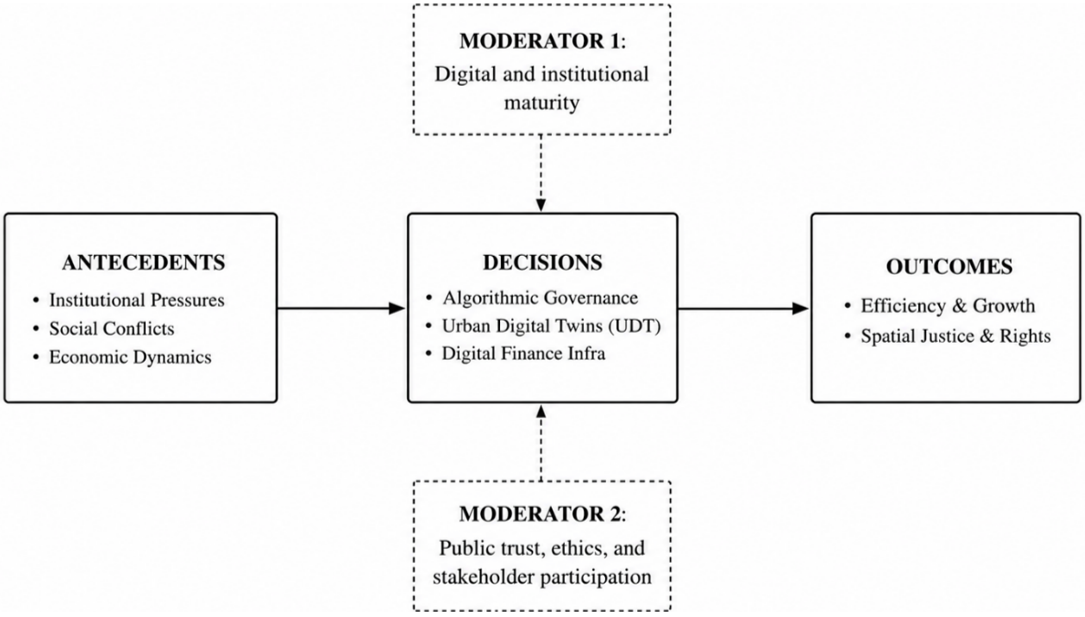
Data analysis was conducted in two steps. First, bibliometric analysis was used to describe publication trends, countries, publication sources, authors, and keyword co-occurrence networks. VOSviewer was used to visualize the knowledge structure. Second, qualitative synthesis was conducted using the ADO framework. In this study, Antecedents refer to the conditions that drive digital transformation; Decisions refer to technological choices and governance instruments; and Outcomes refer to the economic, social, environmental, institutional, and ethical consequences arising from these decisions.
The ADO framework diagram (Figure 2) summarizes the interactions among structural pressures, technology governance choices, and the economic, social, environmental, and institutional consequences of digital transformation in NTE governance. Within this framework, digital and institutional maturity, together with public trust, ethics, and stakeholder participation, are treated as important conditions that influence whether digital transformation generates governance efficiency or exacerbates spatial inequality.
For the science mapping analysis in VOSviewer, a co-occurrence network was constructed using All Keywords with a fractional counting method. The minimum threshold for keyword occurrence was set to 5. To ensure data cleanliness and eliminate semantic redundancies, a customized thesaurus file was applied to merge exact synonyms (e.g., night-time economy, nighttime economy, and night economy were unified under night-time economy; artificial intelligence and AI were merged). Association strength was employed as the normalization method, with a clustering resolution set to 1.00 and a minimum cluster size of 2.
Based on the standardized corpus of 60 scholarly articles selected through the PRISMA protocol, the results of the bibliometric analysis and the qualitative synthesis using the ADO framework are presented as follows.
3.1 Bibliometric landscape
3.1.1 Annual scientific production
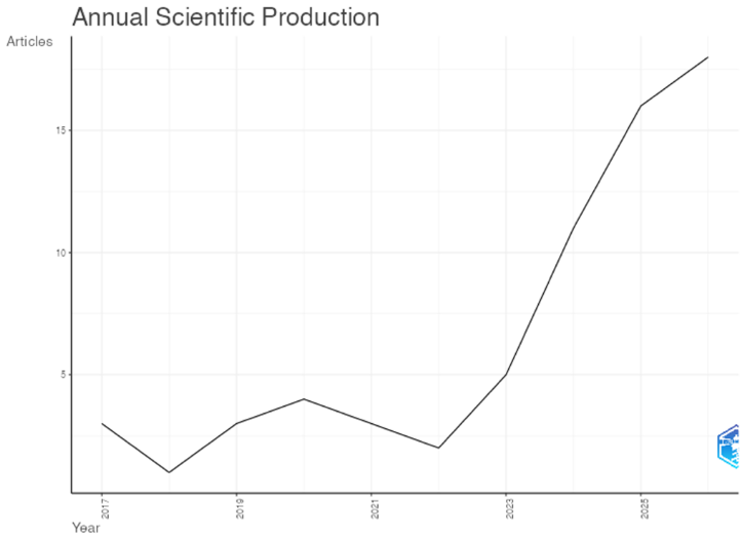
The results (Figure 3) show that the number of publications has increased since 2023. This suggests that digital transformation in NTE governance has attracted growing scholarly attention in studies on smart cities, spatial data, and sustainable development. However, because the data for 2025-2026 may include early-access publications, this trend should be interpreted with caution and should not be treated as definitive evidence of the field’s long-term growth trajectory.
3.1.2 Most locally cited authors
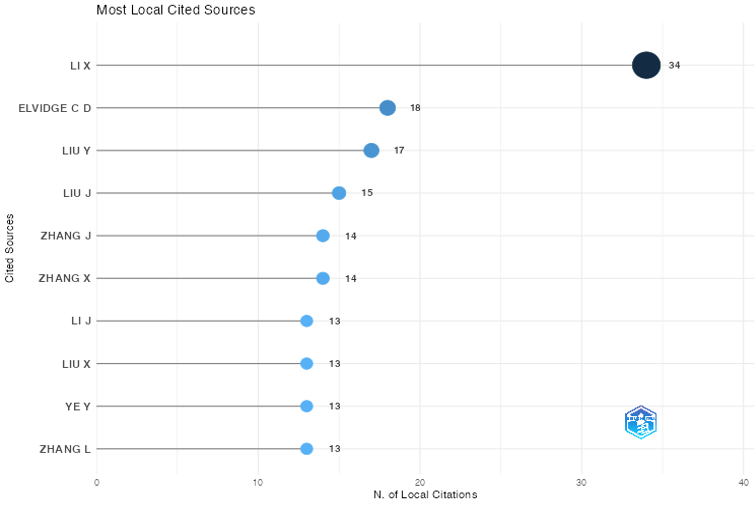
The analysis of local citations (Figure 4) clearly delineates the structure of intellectual influence within the research network of digitalized NTE governance. Leading the corpus with 34 local citations is LI X, confirming a foundational role in providing the methodological pillars for NTL data processing and urbanization measurement. Following are ELVIDGE C D (18 citations) and LIU Y (17 citations), demonstrating that the current body of knowledge is deeply rooted in remote sensing techniques and macro-level spatial data analysis.
Subsequent scholars, including LIU J and ZHANG J, recorded between 13 and 15 citations, indicating a scholarly community growing steadily around these core experts. In summary, the network reflects a “spiky” intellectual structure where satellite-based methodologies drive empirical research trajectories, establishing a robust prerequisite for the formulation of governance decisions within the nocturnal urban ecosystem.
3.1.3 Leading journals and Bradford’s Law
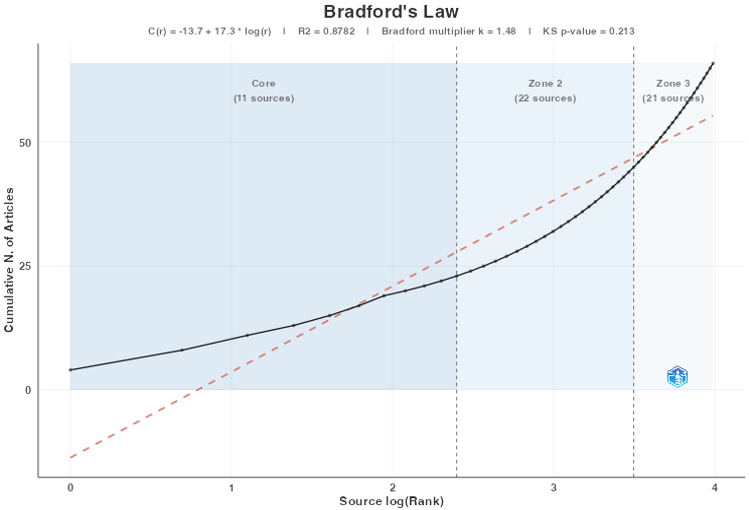
According to Bradford’s Law (Figure 5), the 60 articles were distributed across 54 sources, among which Zone 1 identifies the core journals most directly related to the topic. Ecological Indicators and Remote Sensing each contributed four articles, while Sustainable Cities and Society contributed three articles.
The presence of journals such as Environmental Science and Pollution Research and International Review of Economics and Finance reflects the interdisciplinary intersection of economics, environment, and technology in night-time urban governance.
3.1.4 Most prolific authors
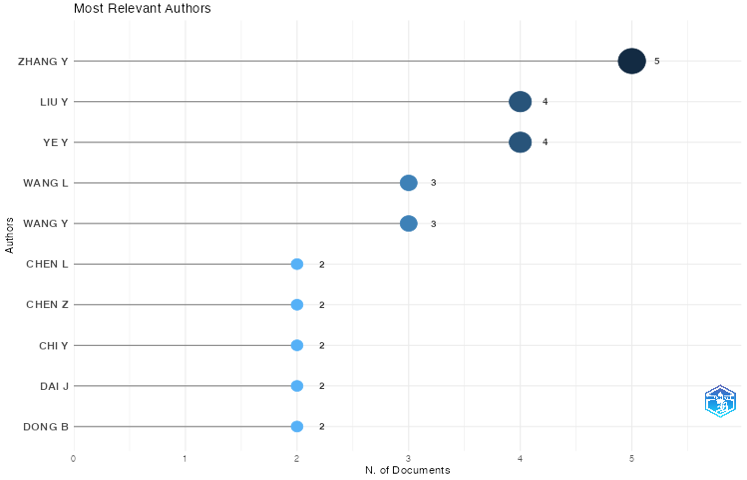
The dataset (Figure 6) includes 237 authors across 60 articles. ZHANG Y is the most prolific author, with five publications, followed by LIU Y and YE Y, each with four publications. According to Lotka’s Law, 88.7% of the authors, equivalent to 211 individuals, contributed only one article. This indicates that the field of digital NTE governance is attracting a broad range of new scholars, while the core group of specialized experts remains relatively thin. This pattern also opens opportunities for further theoretical development.
3.1.5 Science mapping analysis
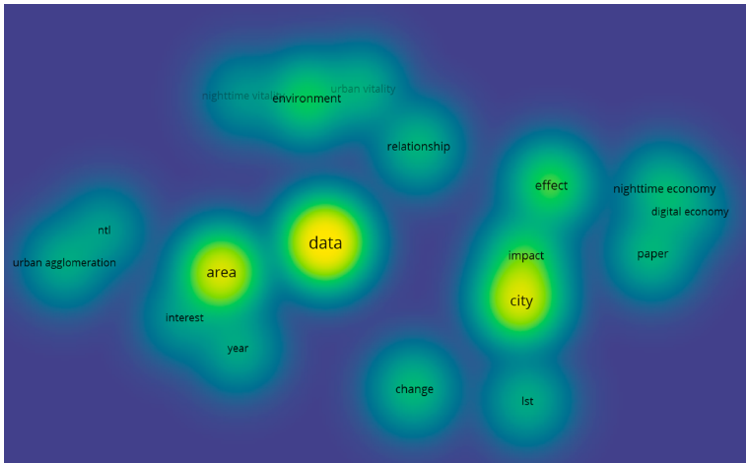
Based on the VOSviewer density visualization (Figure 7), the keyword density visualization reveals three thematic concentrations that capture the intellectual development of digital transformation in NTE governance.
Theme 1: Spatial Measurement and Remote Sensing. The first cluster is centred on keywords such as ntl (night-time light), urban agglomeration, area, interest, year, and change. This cluster represents the spatial and empirical foundation of the field. It indicates that early studies primarily relied on satellite-based night-time light data to measure the scale, intensity, and spatial expansion of nocturnal urban activities [8, 13, 17]. The prominence of area and urban agglomeration suggests that the NTE has often been examined as a spatial phenomenon, especially in relation to urban growth, regional clustering, and macro-level economic activity [18-21].
Theme 2: Data-Driven Urban Governance. The second cluster revolves around data, city, impact, effect, and relationship. This is the core governance cluster in the map. The strong density around data shows that data has become a central analytical and managerial resource in digital NTE governance. The connection between data and city reflects a shift from simple spatial measurement toward data-driven urban management, where algorithms, digital platforms, and sensor-based systems are increasingly used to support decision-making. Keywords such as impact and effect indicate a growing concern with evaluating how digital technologies influence urban management, environmental conditions, public safety, and socio-economic outcomes.
Theme 3: Urban Vitality and the Digital Economy Ecosystem. The third cluster includes nighttime economy, digital economy, urban vitality, nighttime vitality, and environment. This cluster reflects the emerging and future-oriented direction of the field. It shows that recent studies are moving beyond the technical measurement of night-time activity toward broader questions of urban vitality, digital economic development, and sustainability. Recent studies increasingly combine multi-source data, IoT, and built-environment indicators to evaluate urban vitality and sustainability outcomes [22, 23]. The co-presence of nighttime economy and digital economy suggests that the NTE is increasingly being understood as part of a wider digital urban ecosystem. Meanwhile, the appearance of the environment indicates growing scholarly attention to the ecological and sustainability implications of nocturnal urban activities.
3.1.6 Three-Field Plot analysis
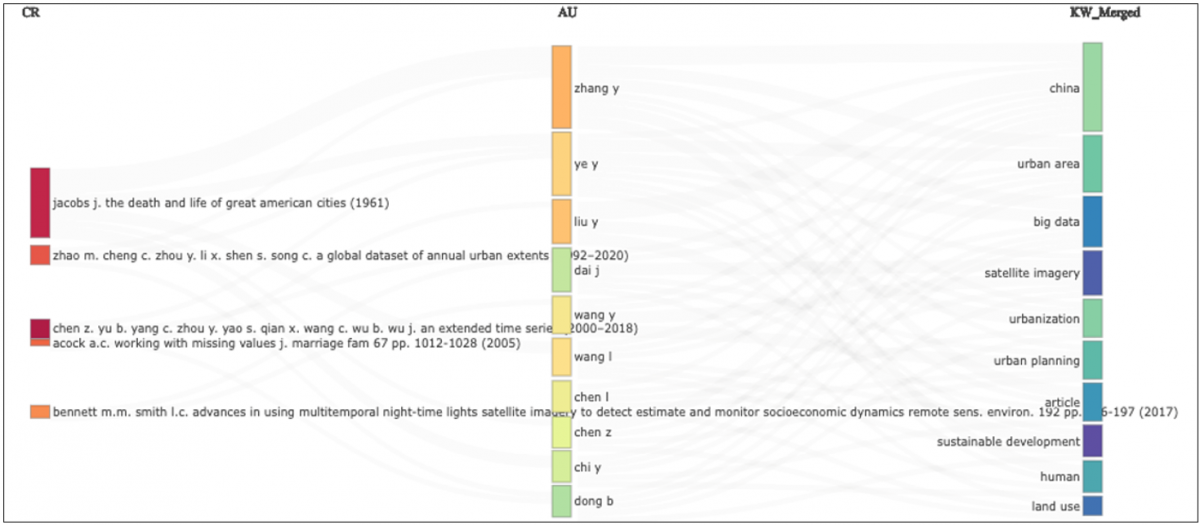
The Three-Field Plot (Figure 8) shows descriptive linkages among authors, cited references, and keywords within the dataset. The plot indicates which intellectual sources are frequently connected with dominant thematic terms such as big data, remote sensing, sustainable development, and urban governance. However, because cited references are not equivalent to research methods, the plot should be interpreted as a descriptive representation of intellectual and thematic associations rather than as evidence of methodological choices.
In summary, the bibliometric results show that the field is shifting from measuring night-time activities through spatial data toward analysing digital governance, urban vitality, and sustainability-related outcomes. These findings provide the foundation for the qualitative synthesis using the ADO framework, which further explains the antecedents, decisions, and outcomes of digital transformation in NTE governance.
3.2 Antecedents-Decisions-Outcomes framework analysis
The ADO framework was used to organize the qualitative synthesis of the 60 articles (Table 2). In this study, Antecedents refer to the economic, social, institutional, and technological conditions that drive digital transformation in NTE governance. Decisions refer to the technological choices, policy instruments, and governance models implemented by governments, businesses, and digital platforms. Outcomes refer to the economic, social, environmental, institutional, and ethical consequences arising from these decisions. This approach allows the study not only to describe technologies, but also to organize the inferred mechanism of digitalized night-time governance.
Table 2. Qualitative analysis of Antecedents–Decisions–Outcomes (ADO) components in digitalized night-time economy (NTE) governance
|
ADO Component |
Main Theme |
Manifestation in the Literature |
Governance Implication |
|
Antecedents |
Socio-spatial conflicts |
Noise, security, environment, crowding, resident–visitor conflicts |
Creates pressure for data-driven governance |
|
Antecedents |
Economic and policy pressures |
Tourism, consumption, service employment, local development |
Requires measurement and coordination of the NTE |
|
Antecedents |
Digital infrastructure readiness |
IoT, big data, NTL, sensors, digital platforms |
Enables real-time monitoring and analysis |
|
Decisions |
Algorithmic governance |
AI, smart cameras, crowd analytics, risk alerts |
Improves efficiency but requires accountability |
|
Decisions |
Digital finance and platforms |
Digital payments, transaction data, consumption platforms |
Enhances transparency but may exclude informal actors |
|
Decisions |
Urban digital twins |
Spatial simulation, zoning, planning scenarios |
Supports evidence-based planning |
|
Outcomes |
Positive outcomes |
Administrative efficiency, safety, urban vitality, transaction transparency |
Strengthens governance and economic development |
|
Outcomes |
Risks |
Excessive surveillance, data blind spots, digital exclusion, spatial inequality |
Requires digital rights protection and spatial justice |
1) Antecedents of digital transformation in NTE governance
The reviewed literature suggests three recurring categories of antecedents. First, socio-spatial conflicts are frequently reported as conditions that motivate urban authorities to adopt more data-oriented governance tools [3, 9]. Second, economic and tourism-development pressures encourage cities to measure and coordinate night-time activity more systematically [1, 2, 24]. Third, pressures to strengthen tourism development, improve access to digital finance, and coordinate night-time commercial activities are associated with growing interest in digital platforms and data-driven support mechanisms [2, 5, 24-26].
2) Governance decisions and digital technology applications
The reviewed literature discusses three main groups of technology-related governance decisions associated with these antecedent conditions. The first is algorithmic and data-driven governance, including AI-enabled risk analysis, smart sensors, mobile safety applications, environmental monitoring, and interactive planning platforms. These tools may support risk detection, spatial monitoring, environmental assessment, public-safety interventions, and the coordination of night-time urban activities [2, 7, 10, 27, 28]. The second is platform-based and digital financial governance, including cashless payments, transaction data, consumption platforms, and tax management tools. These instruments may improve the visibility of financial flows and support night-time commercial activity [5, 25, 26]. However, unequal access to digital financial systems may generate differentiated economic outcomes and reinforce digital exclusion among vulnerable groups [29]. The third is spatial simulation and urban digital twins, which enable authorities to test planning scenarios, zone night-time activities, and assess risks before policy implementation [2, 30].
3) Outcomes of digitalized NTE governance
The outcomes of digital transformation in NTE governance are ambivalent. On the positive side, digital technologies may improve administrative efficiency, enhance security management, support evidence-based planning, increase transaction transparency, and strengthen the economic vitality of night-time districts. Data-driven tools can help identify spatial and temporal patterns of nocturnal activity, mobility, pedestrian conditions, and environmental pressure more accurately [1, 2, 9, 28].
However, negative and unintended outcomes also require attention. Algorithmic surveillance may lead to excessive control, reduced privacy, and discrimination in public spaces [3]. The reviewed literature gives limited direct attention to informal workers and street vendors, indicating a significant data and governance blind spot. In addition, data-driven decisions may generate data blind spots when groups that are not represented in official data systems are overlooked in planning and resource allocation. Therefore, the sustainable impact of digital transformation does not depend on technology alone, but on accountability, stakeholder participation, and the protection of digital rights [3].
The ADO results indicate that the sustainable development of the NTE under the influence of digital technologies is not a linear process. This section further explains the underlying mechanisms and proposes a governance-oriented theoretical framework.
4.1 Boundary conditions in the nocturnal digital governance ecosystem
The synthesis results show that digital transformation does not automatically generate sustainable outcomes for the NTE. The reviewed studies suggest that governance capacity, data quality, institutional readiness, and stakeholder participation condition whether digital tools are associated with sustainable outcomes [15, 30-33]. AI, sensors, digital payments, and urban digital twins may improve coordination efficiency, but they can only realize their potential when embedded within a transparent, accountable, and context-sensitive governance framework [3, 7, 30, 31, 34]. In the absence of these conditions, technology may become an instrument of control rather than a mechanism for enabling sustainable development [3, 23, 30, 33].
The synthesis also suggests that public trust and digital maturity may be interpreted as boundary conditions shaping the relationship between digital tools and governance outcomes within the nocturnal digital ecosystem. Even when technological decisions, such as AI-enabled cameras, achieve high levels of technical accuracy, their outcomes in terms of safety and spatial justice may be weakened if social acceptance and ethical data governance frameworks are absent [3, 30, 33, 35]. Conversely, in cities with higher levels of digital maturity, tools such as urban digital twins may serve not only surveillance purposes but also as platforms through which residents can participate in night-time planning processes, thereby transforming structural pressures into more inclusive and sustainable outcomes [2, 31, 32, 34].
4.2 Addressing the governance paradox and socio-spatial conflicts
A central theoretical finding of this study is the digital-nocturnal paradox. The digital-nocturnal paradox refers to the condition in which digital technologies introduced to improve safety, efficiency, and visibility in night-time districts simultaneously risk intensifying surveillance, exclusion, and data invisibility. Digital technologies are deployed to make the NTE safer, more efficient, and more measurable [1, 2, 7, 10, 23]. However, these same technologies may intensify surveillance, exclude informal actors, and prioritize commercially valuable spaces over socially vulnerable ones [3, 23, 33]. This paradox indicates that the core challenge is not merely how to digitalize the NTE, but how to ensure that digitalization remains responsible, inclusive, and aligned with the principles of spatial justice [3, 23, 32, 33].
4.3 Toward an integrated theoretical framework for digital night-time economy governance
Based on the ADO synthesis, this study proposes an integrated socio-technical framework for NTE governance in the context of digital transformation. The framework consists of three interacting layers.
The first is the institutional spatial layer, which includes regulations, zoning, public safety, resident-business conflicts, and sustainability objectives [3, 15, 30, 32, 33]. The second is the digital architecture layer, which includes data infrastructure, sensors, digital platforms, AI analytics, digital payments, and urban digital twins [5, 10, 25]. The third is the sustainable outcomes layer, which includes economic vitality, governance efficiency, social inclusion, environmental quality, privacy, and spatial justice [3, 22].
This framework suggests that technological investment can generate sustainable value only when it is connected with adaptive institutions and mechanisms for stakeholder participation [2]. The synthetic framework may support future studies in analysing the relationships among institutional conditions, digital architecture, and sustainable outcomes in NTE governance.
5.1 Policy and managerial implications
Based on the synthesis of the ADO framework and the emerging trends identified in the bibliometric mapping, particularly the shift toward urban vitality and algorithmic governance, this study proposes three strategic policy implications for municipal authorities.
First, policymakers should consider transitioning from reactive monitoring to proactive stewardship by institutionalizing controlled policy pilots for digital NTE governance. Given the identified antecedents of socio-spatial conflicts and economic pressures, cities should create controlled environments where digital NTE technologies, such as AI-driven predictive zoning and decentralized digital payment systems, can be tested. Crucially, these sandboxes must incorporate support mechanisms for small and informal businesses, such as training, low-cost access, and transitional compliance support. Our findings regarding the risk of digital exclusion suggest that without specific support mechanisms, small-scale business households and street vendors may be disenfranchised by the monopolistic tendencies of large-scale digital platforms. Therefore, regulatory frameworks should prioritize interoperability and low-barrier access for micro-entrepreneurs to ensure that digital transformation catalyzes, rather than stifles, nocturnal diversity.
Second, urban governance should evolve from a top-down surveillance paradigm toward participatory algorithmic governance. The bibliometric clusters reveal a growing connection between data and impact. This study argues that the deployment of urban digital twins (UDT) should not serve merely as a tool for administrative efficiency but as a participatory interface. By leveraging UDT and citizen feedback platforms, residents, night-workers, and informal laborers can actively influence decisions regarding zoning, operating hour adjustments, and noise mitigation. Moving beyond technological solutionism, municipalities should utilize digital tools to foster a co-governance model that balances algorithmic efficiency with the nuanced socio-spatial needs of nocturnal stakeholders.
Third, cities should establish digital stewardship mechanisms to protect the inclusive access to night-time urban space. To mitigate the identified nocturnal panopticon effect, where excessive surveillance leads to over-policing and data invisibility, governments should consider independent or multi-stakeholder oversight mechanisms for algorithmic accountability. Our ADO synthesis highlights that Public Trust is a critical moderator; hence, the use of high-sensitivity data practices, including biometric identification, location tracking, or continuous behavioural monitoring in nocturnal public spaces, should be governed by purpose-limitation and data-minimization principles. Protecting digital rights is not merely a legal requirement but a strategic necessity to ensure that the digital economy does not lead to the erasure of marginalized groups who are often underrepresented in official data systems. By ensuring algorithmic transparency, cities can safeguard spatial justice and foster an inclusive, resilient urban future after dark.
5.2 Limitations of the study
Despite its contributions, this study is subject to several limitations. First, the data collection was restricted to the Scopus database and English-language peer-reviewed journals. This selection may have overlooked valuable grey literature, local policy reports, and non-English scholarly works, particularly those emerging from Global South nations where nocturnal economies are rapidly evolving. Second, although the final corpus is modest, it is appropriate for an emerging and highly specific interdisciplinary niche. Accordingly, the bibliometric findings are interpreted descriptively, while the main contribution lies in the ADO-based socio-technical synthesis. Third, the keyword co-occurrence analysis is inherently sensitive to the initial search string, data-cleaning procedures, and the specific threshold settings applied within the VOSviewer software. Variations in these parameters could yield different thematic clusters. Fourth, as the year 2026 has not yet concluded, findings regarding recent publication peaks should be treated as preliminary and subject to future indexing updates. Finally, a significant portion of the analyzed literature relies on cross-sectional designs, remote sensing snapshots, or localized case studies. These methodologies inherently limit the ability to establish long-term, longitudinal causal relationships between specific digital transformation initiatives and their multi-dimensional sustainable outcomes. Future research should prioritize longitudinal data and broader linguistic inclusion to validate and expand upon these findings.
5.3 Future research agenda
To address the identified knowledge gaps and advance the discourse on digital nocturnal urbanism, this study proposes a strategic research roadmap structured around three interconnected pillars. The main research gaps and corresponding future research questions are summarized in Table 3.
Table 3. Research gaps and future research questions
|
Research Gap |
Future Research Question |
|
Algorithmic governance |
How does AI-based monitoring affect security, privacy, and the risk of excessive control in night-time economy districts? |
|
Informal labour |
How do digital payments and digital platforms affect street vendors, night-time workers, and small business households? |
|
Spatial justice |
Which groups benefit from data-governed night-time spaces, and which groups are excluded? |
|
Urban environment |
How do night-time activities and monitoring technologies affect noise, energy use, emissions, and PM2.5? |
|
Urban digital twins |
How can urban digital twins support participatory planning and zoning for night-time activities? |
|
Global South cities |
How do institutional characteristics, informality, and digital inequality shape night-time economy governance in developing cities? |
First, regarding theoretical gaps, future scholarship must move beyond technological optimism to construct integrative models that bridge algorithmic governance with the right to the night-time city. Given our findings on the digital-nocturnal paradox, there is an urgent need to theorize the socio-technical tensions between algorithmic efficiency and spatial justice. Future studies should investigate the labour and livelihood effects of algorithmic zoning, platform management, and predictive policing on informal workers, street vendors, and night-time service providers. By adopting a critical data studies lens, researchers can deconstruct the power dynamics inherent in data-driven NTE management, moving from a focus on optimization to a focus on equitable orchestration.
Second, addressing methodological gaps requires a departure from static, cross-sectional snapshots. This study advocates for high-frequency, longitudinal spatial econometrics that triangulate multi-source big data, including night-time light remote sensing, granular bank transaction records, and real-time GPS mobility patterns. Such approaches would allow for the mapping of the dynamic pulse of the nocturnal economy rather than its mere reflection. Furthermore, the application of qualitative comparative analysis is recommended to identify the policy - technology - culture configurations. Understanding which combinations of institutional readiness (antecedents) and digital tools (decisions) yield the most sustainable urban vitality (outcomes) will be critical for cross-city comparisons.
Third, to resolve contextual gaps, empirical research must shift its focus toward the Global South and satellite cities. These regions serve as critical laboratories where informal economic activities, such as street food vending and night markets, constitute the backbone of urban vitality but remain largely invisible in digital governance frameworks. Future research should examine how digital financial inclusion can be designed to empower rather than displace these informal actors. Investigating the unique institutional constraints and socio-spatial resilience of these contexts will provide a more pluralistic and inclusive understanding of what constitutes a smart night-time city, ensuring that the digital future of the night is globally representative and locally grounded.
This study provides a comprehensive SLR and bibliometric mapping to elucidate the evolving landscape of digital transformation within NTE governance. By synthesizing a refined corpus through the ADO framework, the research suggests that digital nocturnal urbanism is an emerging and increasingly interdisciplinary field positioned at the convergence of smart city technologies, remote sensing, algorithmic governance, and sustainable development.
The findings indicate that digital transformation in this niche is commonly associated with three groups of antecedent conditions: escalating socio-spatial conflicts, intensified economic-policy pressures, and the rising maturity of digital infrastructure. In response, the reviewed literature discusses governance decisions centered on algorithmic surveillance, digital financial integration, sensor-based environmental monitoring, and the development of urban digital twins. While these technological interventions offer significant benefits, including enhanced administrative efficiency, heightened public safety, and stimulated economic vitality, they concurrently introduce salient risks. The results highlight a critical digital-nocturnal paradox where increased efficiency often comes at the cost of intensified surveillance, digital exclusion, and the data invisibility of marginalized informal sectors.
Ultimately, this study concludes that achieving a sustainable and inclusive nocturnal urban future requires a shift from technology-centred implementation toward accountable, participatory, and context-sensitive planning. Innovation must transcend purely technical solutions to incorporate robust institutional accountability, participatory planning interfaces, and the active protection of digital rights. Without these socio-technical safeguards, digital NTE governance risks exacerbating urban inequalities rather than fostering resilient and vibrant 24-hour cities.
[1] Zeng, L., Liu, T., Du, P., Ling, Z., Wang, Y. (2024). Research on temporal and spatial distribution pattern of the night-time economy supported by multi-source data—A case study of Xiamen City, Fujian Province, China. Remote Sensing, 16(2): 360. https://doi.org/10.3390/rs16020360
[2] Le, N.H.H., Trinh, T.A., Pham, K. (2026). Multi-level interactive platform for night time economy planning: A case study in Nha Trang, Vietnam. Journal of Sustainable Architecture and Civil Engineering, 39(1): 58-70. https://doi.org/10.5755/j01.sace.39.1.41914
[3] Reia, J. (2025). Invisible data in night-time governance: Addressing policy gaps and building a digital rights framework for cities after dark. Data & Policy, 7: e17. https://doi.org/10.1017/dap.2024.90
[4] Hu, S., Zhu, Z., Liu, P. (2026). Longitudinal mobility and temporal use patterns in urban parks: Multi-year evidence from the City of Las Vegas, 2018–2022. Sustainability, 18(2): 1060. https://doi.org/10.3390/su18021060
[5] Chen, L., Du, T., Wu, D., Lai, C. (2024). Can digital financial inclusion promote the nighttime economy? - New evidence from Chinese counties’ nighttime lighting data and threshold model. Technological and Economic Development of Economy, 30(6): 1553-1571. https://doi.org/10.3846/tede.2024.22245
[6] He, X., Zhou, C., Zhang, J., Yuan, X. (2020). Using wavelet transforms to fuse nighttime light data and POI big data to extract urban built-up areas. Remote Sensing, 12(23): 3887. https://doi.org/10.3390/rs12233887
[7] Zhu, M., Ye, X., Wang, Y., Niu, C., Qiu, W., Xu, J. (2026). Generative AI and causal-spatial modeling for understanding nighttime pedestrian risk in urban systems. Computers, Environment and Urban Systems, 127: 102436. https://doi.org/10.1016/j.compenvurbsys.2026.102436
[8] Wang, Q., Xin, Z., Niu, F. (2022). Analysis of the spatio-temporal patterns of shrinking cities in China: Evidence from nighttime light. Land, 11(6): 871. https://doi.org/10.3390/land11060871
[9] Wang, X., Peng, Z., Yang, X. (2025). Multimodal data-driven hourly dynamic assessment of walkability on urban streets and exploration of regulatory mechanisms for diurnal changes: A case study of Wuhan City. Land, 14(8): 1551. https://doi.org/10.3390/land14081551
[10] Bulovec, T., Eman, K. (2025). Safer nights out: The role of mobile apps in preventing sexual violence. Urban Science, 9(7): 276. https://doi.org/10.3390/urbansci9070276
[11] Page, M.J., McKenzie, J.E., Bossuyt, P.M., et al. (2021). The PRISMA 2020 statement: An updated guideline for reporting systematic reviews. BMJ, 372: n71. https://doi.org/10.1136/bmj.n71
[12] Paul, J., Lim, W.M., O’Cass, A., Hao, A.W., Bresciani, S. (2021). Scientific procedures and rationales for systematic literature reviews (SPAR-4-SLR). International Journal of Consumer Studies, 45(4): O1-O16. https://doi.org/10.1111/ijcs.12695
[13] Paul, J., Benito, G.R.G. (2017). A review of research on outward foreign direct investment from emerging countries, including China: What do we know, how do we know and where should we be heading? Asia Pacific Business Review, 24(1): 90-115. https://doi.org/10.1080/13602381.2017.1357316
[14] Paul, J., Khatri, P., Kaur Duggal, H. (2023). Frameworks for developing impactful systematic literature reviews and theory building: What, why and how? Journal of Decision Systems, 33(4): 537-550. https://doi.org/10.1080/12460125.2023.2197700
[15] Kaiser, Z.R.M.A. (2024). Smart governance for smart cities and nations. Journal of Economy and Technology, 2: 216-234. https://doi.org/10.1016/j.ject.2024.07.003
[16] Onoja, J.P., Ajala, O.A. (2023). Smart city governance and digital platforms: A framework for inclusive community engagement and real-time decision-making. GSC Advanced Research and Reviews, 15(3): 310-317. https://doi.org/10.30574/gscarr.2023.15.3.0225
[17] Afrianto, F., Hariyanto, A.D., Tucunan, K.P. (2025). Nighttime lights as indicators of energy efficiency across urban morphologies in Malang City. Journal of Regional and City Planning, 36(1): 68-91. https://doi.org/10.5614/jpwk.2025.36.1.5
[18] Ma, D., Guo, R., Jing, Y., Zheng, Y., Zhao, Z., Yang, J. (2021). Intra-urban scaling properties examined by automatically extracted city hotspots from street data and nighttime light imagery. Remote Sensing, 13(7): 1322. https://doi.org/10.3390/rs13071322
[19] Ma, M., Lang, Q., Yang, H., Shi, K., Ge, W. (2020). Identification of polycentric cities in China based on NPP-VIIRS nighttime light data. Remote Sensing, 12(19): 3248. https://doi.org/10.3390/rs12193248
[20] Kang, M., Jung, M. (2019). Night on South Korea: Unraveling the relationship between urban development patterns and DMSP-OLS night-time lights. Remote Sensing, 11(18): 2140. https://doi.org/10.3390/rs11182140
[21] Chang, T.C., Tang, J.H., Chan, T.C. (2025). Spatiotemporal impact of urban development on nighttime light intensity and its hotspot distribution. PLoS ONE, 20(6): e0325696. https://doi.org/10.1371/journal.pone.0325696
[22] Zhang, Y., Wang, X., Wang, L., et al. (2026). Measurement of urban vitality and the influence mechanism of the built environment on it based on multi-source data: A case study of Yantai City. PLoS ONE, 21(3): e0343003. https://doi.org/10.1371/journal.pone.0343003
[23] Kim, Y.L. (2025). Urban vitality measurement through big data and Internet of Things technologies. ISPRS International Journal of Geo-Information, 14(1): 14. https://doi.org/10.3390/ijgi14010014
[24] Liu, X., Zhou, G., Wang, H., Wen, E. (2025). Evaluating the progress of tourism in a less-developed area of China: A tourism development index approach based on night-time light and POI data. Land, 14(2): 338. https://doi.org/10.3390/land14020338
[25] Sun, M., Xu, X. (2026). Fiscal and tax incentives and the nighttime economy: The role of the digital economy. International Review of Economics & Finance, 107: 105132. https://doi.org/10.1016/j.iref.2026.105132
[26] Xie, S., Wu, W., Liu, Y. (2026). Digital finance and the nighttime economy: Novel evidence from nighttime light data and financial attention in China. International Review of Economics & Finance, 106: 104958. https://doi.org/10.1016/j.iref.2026.104958
[27] Nguyen, T.T.Q., Takeuchi, W., Misra, P., Hayashida, S. (2021). Technical note: Emission mapping of key sectors in Ho Chi Minh City, Vietnam, using satellite-derived urban land use data. Atmospheric Chemistry and Physics, 21(4): 2795-2818. https://doi.org/10.5194/acp-21-2795-2021
[28] Gu, J., Yuan, B., Baker, S.P., et al. (2025). Revealing nighttime construction-related activities from a spatially distributed air quality monitoring network. Environmental Science: Advances, 4(5): 753-762. https://doi.org/10.1039/d4va00334a
[29] Miranti, R.C., Asdiyanti, S.J. (2026). Illuminating inequality: Heterogeneous effects of financial inclusion on urban-rural economic performance and economic resilience in Papua. Regional Science Policy & Practice, 18(4): 100288. https://doi.org/10.1016/j.rspp.2026.100288
[30] Yessef, M., Hakam, Y., Tabaa, M., Alammar, M.M., Elbarbary, Z.M.S. (2025). Digital twin technology in smart cities: A step toward intelligent urban management. Energy Reports, 14: 5539-5557. https://doi.org/10.1016/j.egyr.2025.11.097
[31] Bibri, S.E., Krogstie, J. (2017). Smart sustainable cities of the future: An extensive interdisciplinary literature review. Sustainable Cities and Society, 31: 183-212. https://doi.org/10.1016/j.scs.2017.02.016
[32] Seijas, A., Gelders, M.M. (2020). Governing the night-time city: The rise of night mayors as a new form of urban governance after dark. Urban Studies, 58(2): 316-334. https://doi.org/10.1177/0042098019895224
[33] Müller, M., Huber, C., Kärreman, D. (2025). Managing urban nights: Night mayors, commons creation, and bodily interconnectedness. Journal of Business Ethics, 1-20. https://doi.org/10.1007/s10551-025-06200-9
[34] Bottà, G. (2025). Extracting the night: Cultural extractivism and urban nightlife in Helsinki. City, Culture and Society, 41: 100625. https://doi.org/10.1016/j.ccs.2025.100625
[35] Dokuka, S., Kapuza, A., Sverdlov, M., Yalov, T. (2022). Women in gig economy work less in the evenings. Scientific Reports, 12(1): 8502. https://doi.org/10.1038/s41598-022-12558-x