Nur Fitri Hidayanti* | Sahman Z | Fitri Astutik | Rina Komala | Muh. Sibawaih
© 2026 The authors. This article is published by IIETA and is licensed under the CC BY 4.0 license (http://creativecommons.org/licenses/by/4.0/).
OPEN ACCESS
This study investigates the influence of circular economy practices, Islamic financial literacy, and digital technology on Micro, Small, and Medium Enterprises (MSMEs) sustainability and community economic development amid increasing environmental, financial, and digital transformation challenges. Using a mixed-method sequential explanatory design, the study integrates quantitative and qualitative approaches to obtain a more comprehensive understanding of the factors supporting sustainable MSMEs development. Quantitative data were collected from 150 MSMEs actors across five regencies/cities in West Nusa Tenggara (NTB), Indonesia, using online and offline Likert-scale questionnaires. The quantitative findings were subsequently explored through Focus Group Discussions (FGD) and in-depth interviews to provide contextual explanations and deeper interpretation of the statistical results. Quantitative data were analyzed using Structural Equation Modeling (SEM), while qualitative data were analyzed through thematic analysis and integrated during the interpretation stage. The findings reveal that circular economy practices significantly influence MSMEs sustainability (β = 0.473, p = 0.001), while Islamic financial literacy also demonstrates a significant positive effect (β = 0.377, p = 0.010). In contrast, digital technology does not significantly affect MSMEs sustainability (β = 0.012, p = 0.905). Furthermore, MSMEs sustainability significantly contributes to community economic development (β = 0.537, p < 0.001). Qualitative findings further indicate that resource efficiency practices, community-based financial awareness, and adaptive business behavior strengthen MSMEs resilience, whereas digital adoption remains constrained by infrastructure limitations, uneven digital capabilities, and varying levels of technology utilization among business actors. This study concludes that strengthening circular economy implementation and Islamic financial literacy provides more substantial contributions to sustainable MSMEs development and community economic growth than digital adoption alone. These findings provide practical implications for designing sustainability-oriented MSMEs empowerment strategies and community-based economic development policies.
circular economy, Islamic financial literacy, Micro, Small, and Medium Enterprises sustainability, community economic
In recent years, the growth of the digital economy and increasing demands for sustainable business practices have prompted Micro, Small, and Medium Enterprises (MSMEs) to adapt to various changes, although many still face limitations in resource management, access to finance, and technology adoption [1]. The circular economy is an economic development approach focused on efficiency and sustainability through the optimization of the resource life cycle based on the principles of reduce, reuse, and recycle, which is increasingly relevant for MSMEs that make a significant contribution to the economy but also face challenges in managing resources and waste sustainably [2]. On the other hand, Islamic financial literacy reflects an individual’s ability to understand and manage finances based on the principles of justice, transparency, and freedom from usury, which plays a crucial role in business decision-making, particularly regarding access to financing and business stability [3]. However, the low level of understanding among SME actors regarding the circular economy and Islamic financial literacy remains a constraint that has the potential to hinder business sustainability and community economic development [4].
In addition, the development of digital technology has become a key factor in modern economic transformation, including in supporting the sustainability of MSMEs [5, 6]. The use of digital technology enables business owners to improve operational efficiency, expand market access, and optimize marketing strategies through various digital platforms [7]. The integration of the circular economy, Islamic financial literacy, and digital technology constitutes a strategic and mutually reinforcing approach to creating a sustainable business system [8]. These three aspects not only play a role in improving the performance of individual MSMEs but also contribute to strengthening an inclusive and competitive community economic structure [9]. Therefore, a more comprehensive study is needed to analyze the synergistic role of the circular economy, Islamic financial literacy, and digital technology in supporting MSMEs sustainability and promoting community-based economic development.
The research findings indicate a strong conceptual alignment between the circular economy and Islamic principles, although its implementation remains limited and research on Islamic financial literacy is still evolving. Conceptually, the circular economy aligns with the Maqasid al-Shariah as it supports resource sustainability and welfare; however, its application remains dominated by a normative approach with limited empirical evidence [10, 11]. On the other hand, Islamic financial literacy in Indonesia remains relatively low, with the Islamic economic literacy index at only 23.3% and the Islamic financial literacy index in the 2024 SNLIK at 39.11%; although it is projected to rise to 50.18% by 2025, it still lags behind conventional financial literacy at 65.43% [12]. Findings by Gonçalves et al. [13] also indicate that Islamic financial literacy remains in the “adequate” category among creative economy actors. Overall, these findings suggest that while there is a strong theoretical alignment between the circular economy and Islamic principles, gaps persist in literacy and implementation, and few studies have directly examined the relationship between the adoption of the circular economy and Islamic financial literacy, thereby opening a significant research gap [14, 15].
The consistent adoption of digital technology has been shown to have a positive and significant impact on the sustainability of MSMEs, according to various empirical studies involving a total of more than 1,000 respondents. Kamista and Masyhuri [16] found that artificial intelligence (AI), cloud computing, and the Internet of Things (IoT) contribute positively to sustainability performance among 385 MSMEs in Thailand. Research by Pramesti et al. [17] and Nugroho et al. [18] indicates that digital marketing (β = 0.284) and product innovation (β = 0.447) have a significant impact on the sustainability of culinary MSMEs (F = 59.279; p < 0.001). Sinuhaji et al. [19], through Structural Equation Modeling (SEM) on 100 MSMEs, also confirmed that the adoption of AI and fintech has a positive and significant effect on business sustainability. Furthermore, Rahmani et al. [20] found that digital marketing, business innovation, and financial literacy significantly influence the sustainability of MSMEs, with financial technology serving as a mediating variable that strengthens this relationship among 120 respondents. Additionally, Akhmad [21] demonstrated that firm size and growth orientation also influence the adoption of digital technology and sustainable innovation among 329 manufacturing MSMEs in Indonesia. Overall, all these studies yield consistent results without conflicting findings, thereby underscoring the critical role of digital technology in supporting MSMEs sustainability.
Community-based economic development driven by digital technology demonstrates positive impacts on income and productivity growth, although the extent of these effects varies depending on the implementation context. Research by Suparman et al. [22] revealed the most significant impact, where the application of digital technology among 500 farmers increased income by up to 50%, reduced production costs by 20%, and boosted crop yields—such as onions from 9 to 12 tons per hectare and coffee from 1.2 to 1.5 tons per hectare. However, the findings by Raharjo et al. [23] indicate that agricultural digitalization only increased income by 8.5%. In another context, Haryadi et al. [24] also demonstrated that in the blue economy, digital technology does not have a direct impact on income but acts as a mediator that provides an indirect positive effect. Meanwhile, Mehen [25] and Lukmanova et al. [26] further demonstrate that improvements in digital literacy and entrepreneurial motivation, although these findings are largely supported by qualitative approaches. Overall, these findings indicate that digital technology provides tangible economic benefits for community economic development, with the magnitude of the impact varying by sector and level of implementation.
Previous studies indicate that research on MSMEs tends to remain fragmented and has not yet fully integrated the circular economy, Islamic financial literacy, and digital technology into a single analytical model, even though all three are closely linked to the concepts of sustainability and community economic development. Furthermore, the relationship between the circular economy and Islamic financial literacy remains limited empirically, although conceptually it aligns with the principles of sustainability and Maqasid al-Shariah, while research examining the synergy of these three elements in the context of MSMEs remains scarce. Therefore, the novelty of this study lies in the development of an empirical model that integrates the circular economy, Islamic financial literacy, and digital technology to analyze the sustainability of MSMEs and their contribution to community economic development. Thus, the objective of this study is to examine the simultaneous influence of the circular economy, Islamic financial literacy, and digital technology on the sustainability of MSMEs and their contribution to fostering inclusive and sustainable community economic development.
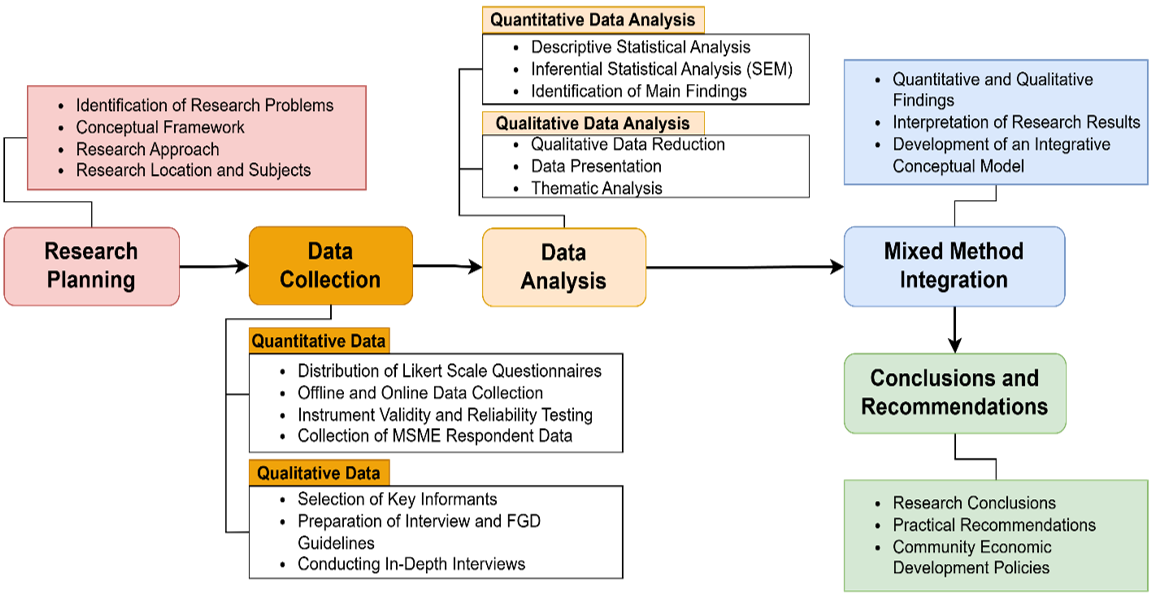
This study employs a mixed-methods approach with a sequential explanatory design, which combines quantitative and qualitative methods in sequence to gain a more comprehensive understanding of the roles of the circular economy, Islamic financial literacy, and digital technology in supporting the sustainability of MSMEs and community economic development. The research procedure was carried out in several stages, namely the research planning stage, the data collection stage, the data analysis stage, and the stage of formulating research conclusions and recommendations. In the initial stage, the research focused on problem identification, literature review, conceptual framework development, research instrument development, and the selection of research subjects. The subsequent stage involved the sequential collection of quantitative and qualitative data to obtain empirical data as well as a contextual understanding of the phenomena under study. Subsequently, the data was analyzed using statistical and thematic approaches to produce a comprehensive interpretation as the basis for formulating strategic recommendations for strengthening MSMEs and developing a community-based, sustainable economy. The research procedure is shown in Figure 1.
Figure 1. Research procedure
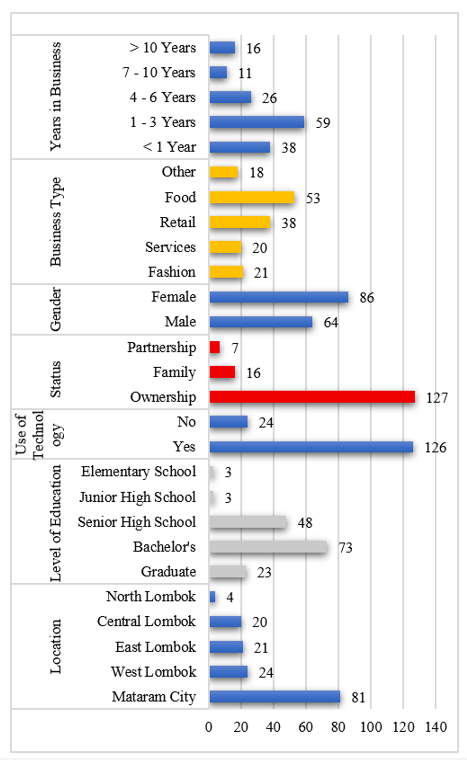
The data selection stage shown in Figure 1 indicates that the study involved a purposive selection process for research subjects and locations based on regional characteristics and relevance to the research focus. The research subjects consisted of 150 MSMEs spread across five regencies/cities in West Nusa Tenggara (NTB) Province, namely Mataram City, West Lombok, Central Lombok, East Lombok, and North Lombok. The selection of research locations was conducted by considering regions with well-developed community-based MSMEs economic activities, as well as community involvement in sharia economic practices and the utilization of digital technology. This study was carried out in collaboration with the West Nusa Tenggara Province Sharia Economic Community Institution as a partner in the process of field coordination, respondent assistance, and the distribution of research instruments to MSMEs operators. The distribution of respondent data is shown in Figure 2.
Figure 2. Map of respondent distribution
Quantitative data collection was conducted through the distribution of Likert-scale questionnaires both offline and online. Offline, the researchers distributed the questionnaires and provided direct assistance to respondents at the research site, while online distribution was conducted via digital media and MSMEs community networks. The questionnaire employed a five-point Likert scale consisting of Strongly Agree (5), Agree (4), Neutral (3), Disagree (2), and Strongly Disagree (1). The research instrument consisted of 30 statement items, with six items for each research variable: circular economy (X1), measured through indicators of resource efficiency, waste reduction, recycling practices, product reusability, environmentally friendly materials, and circular economy adoption [27]; Islamic financial literacy (X2), measured through understanding of riba prohibition, Islamic financial systems, Islamic financial products, halal financial management, Sharia-compliant financial practices, and Islamic investment awareness [28]; digital technology (X3), measured through digital payment utilization, digital technology capability, social media marketing, technology adoption, digital platform utilization, and perceived importance of digital technology [29]; MSMEs sustainability (Y1), measured through business continuity, business resilience, business growth, competitiveness, market adaptability, and financial stability [30]; and community economic development (Y2), measured through business collaboration, community interaction, community benefits, cooperation, business networking, and the role of community support [31]. Before use, the research instrument first underwent content validity assessment by three experts in economics, Islamic finance, and MSMEs development, followed by statistical validity and reliability testing to ensure the instrument’s suitability and consistency before being administered to the research respondents.
In the qualitative phase, data collection was conducted through Focus Group Discussions (FGDs) and in-depth interviews with a number of MSMEs actors and representatives of the Islamic economic community selected based on the results of quantitative analysis. These techniques were used to delve deeper into the implementation of the circular economy, sharia financial literacy practices, the use of digital technology in business, as well as the challenges and opportunities in supporting MSMEs sustainability and strengthening the community economy in NTB.
Quantitative data analysis was conducted using descriptive and inferential statistical analysis to identify relationships among the research variables. The research instruments were tested for validity and reliability prior to hypothesis testing. Instrument validity was assessed using the Corrected Item-Total Correlation coefficient, with a criterion of calculated r > table r at a significance level of 0.05, while reliability was assessed using Cronbach’s Alpha, with a requirement of α > 0.70, indicating that the instruments are reliable and consistent. Hypothesis testing was performed using SEM with the assistance of JASP software. SEM analysis was conducted to test the direct effects between research variables using a 5% significance level (p < 0.05) as the basis for hypothesis decision-making. Although the observed variables were measured using a five-point Likert scale and the Shapiro–Wilk test indicated deviations from normality, the Maximum Likelihood (ML) estimator was employed because previous methodological studies have demonstrated that ML estimation remains robust for SEM applications involving five-category Likert-scale data and moderate sample sizes. Furthermore, the assessment of the structural model was based on multiple goodness-of-fit indices, including χ², CFI, TLI, RMSEA, and SRMR, to provide a comprehensive evaluation of model adequacy and to reduce potential bias arising from non-normality. The research model was deemed acceptable if it met the goodness-of-fit indicators specified in the SEM analysis. Meanwhile, qualitative data analysis was conducted using the Miles and Huberman model through the stages of data reduction, data presentation, and thematic conclusion drawing. The final stage of the research was carried out through the integration of quantitative and qualitative results (mixed-method integration) to produce a comprehensive interpretation, as well as to formulate conclusions and strategic recommendations for strengthening MSMEs and developing a community-based economy centered on sustainability.
3.1 Measurement model assessment
Before field data collection began, the questionnaire instrument first underwent validity and reliability testing to ensure the instrument’s suitability and consistency. The instrument was pilot-tested on 36 MSMES operators from five regencies/cities in NTB Province, with respondents selected to be representative of each research location. This stage aimed to identify the accuracy of the statement items in measuring the research variables, as well as to test the consistency of respondents’ answers to the instrument used. The results of the instrument’s validity and reliability tests were subsequently used as the basis for refining the research instrument before it was distributed to all research respondents. The results of the validity and reliability tests for the research instrument are presented in Table 1.
Table 1. Frequentist scale reliability statistics
|
95% CI |
||||
|
Coefficient |
Estimate |
Std. Error |
Lower |
Upper |
|
Coefficient ω |
0.917 |
0.02 |
0.877 |
0.956 |
|
Coefficient α |
0.909 |
0.017 |
0.876 |
0.941 |
Table 1 shows that the results of the research instrument reliability test indicate a very high level of internal consistency. The ω coefficient value of 0.917 with a 95% confidence interval of 0.877–0.956 and the α coefficient value of 0.909 with a 95% confidence interval of 0.876–0.941 indicate that all items in the instrument possess high reliability, as they exceed the minimum reliability threshold of 0.70. These results indicate that the research instrument is capable of consistently measuring the variables of the circular economy, Islamic financial literacy, digital technology, MSMEs sustainability, and community economic development. However, it should be noted that item X3.5 has a negative correlation with the scale; therefore, this item requires further attention in both data interpretation and the evaluation of the research instrument’s quality.
Table 2 also shows that the results of the item validity test based on item-rest correlation reveal that most items have a positive correlation with the total scale, thus being deemed valid in measuring the research construct. Several items, such as X2.4, X2.6, Y2.2, Y2.4, Y2.5, and Y2.6, have high correlation values, indicating a strong contribution to the measured variables. However, there are several items with low or even negative correlation values, such as X3.5, which has an item-rest correlation of -0.032. This result indicates that the item has a weak relationship with the overall construct and has the potential to reduce the instrument’s validity. Specifically, item X3.5 measured the use of digital platforms to increase sales, whereas the remaining items in the digital technology construct primarily assessed broader aspects of digital technology adoption, including digital payment utilization, digital capability, social media marketing, and perceptions regarding the importance of digital technology. The negative item-rest correlation suggests that responses to this item were not consistent with the overall response pattern of the construct, indicating that it did not adequately represent the latent variable measured in this study. Such inconsistencies may arise because the adoption of digital sales platforms among MSMEs remains uneven, reflecting differences in business characteristics, technological readiness, and infrastructure availability across the study area. Overall, based on the predominance of positive correlation values and the high reliability coefficients, the research instrument remains suitable for use as a data collection tool in this study. The results of the validity and reliability tests indicate that most of the statement items meet the criteria for research instrument validity. However, item X3.5 in the digital technology variable has a correlation value below the specified threshold; therefore, following established psychometric recommendations, this item was excluded from the final analysis because items with negative item-rest correlations may weaken the internal consistency and construct validity of the measurement scale. Thus, the number of statement items used in the field data collection stage was 29, all of which were deemed valid and reliable for subsequent SEM analysis.
Table 2. Frequentist individual item reliability statistics
|
Coefficient ω (if Item Dropped) |
Item-Rest Correlation |
|||||
|
Item |
Estimate |
Lower 95% CI |
Upper 95% CI |
Estimate |
Lower 95% CI |
Upper 95% CI |
|
X1.1 |
0.916 |
0.877 |
0.956 |
0.233 |
-0.103 |
0.522 |
|
X1.2 |
0.912 |
0.87 |
0.953 |
0.585 |
0.318 |
0.766 |
|
X1.3 |
0.919 |
0.881 |
0.957 |
0.185 |
-0.152 |
0.484 |
|
X1.4 |
0.914 |
0.874 |
0.955 |
0.431 |
0.12 |
0.666 |
|
X1.5 |
0.913 |
0.873 |
0.954 |
0.532 |
0.246 |
0.732 |
|
X1.6 |
0.915 |
0.874 |
0.955 |
0.444 |
0.135 |
0.674 |
|
X2.1 |
0.914 |
0.874 |
0.955 |
0.536 |
0.252 |
0.735 |
|
X2.2 |
0.91 |
0.867 |
0.952 |
0.697 |
0.477 |
0.834 |
|
X2.3 |
0.914 |
0.873 |
0.954 |
0.509 |
0.217 |
0.718 |
|
X2.4 |
0.909 |
0.866 |
0.952 |
0.787 |
0.618 |
0.886 |
|
X2.5 |
0.913 |
0.872 |
0.954 |
0.596 |
0.333 |
0.773 |
|
X2.6 |
0.909 |
0.867 |
0.952 |
0.759 |
0.573 |
0.87 |
|
X3.1 |
0.916 |
0.877 |
0.956 |
0.291 |
-0.041 |
0.566 |
|
X3.2 |
0.918 |
0.879 |
0.957 |
0.179 |
-0.159 |
0.479 |
|
X3.3 |
0.916 |
0.876 |
0.955 |
0.399 |
0.081 |
0.643 |
|
X3.4 |
0.916 |
0.877 |
0.956 |
0.317 |
-0.013 |
0.585 |
|
X3.5 |
0.919 |
0.881 |
0.957 |
-0.032 |
-0.357 |
0.3 |
|
X3.6 |
0.918 |
0.879 |
0.957 |
0.142 |
-0.196 |
0.449 |
|
Y1.1 |
0.914 |
0.873 |
0.954 |
0.512 |
0.221 |
0.72 |
|
Y1.2 |
0.914 |
0.873 |
0.954 |
0.519 |
0.23 |
0.724 |
|
Y1.3 |
0.915 |
0.876 |
0.955 |
0.396 |
0.077 |
0.641 |
|
Y1.4 |
0.913 |
0.872 |
0.954 |
0.56 |
0.284 |
0.75 |
|
Y1.5 |
0.914 |
0.873 |
0.954 |
0.526 |
0.238 |
0.728 |
|
Y1.6 |
0.915 |
0.875 |
0.955 |
0.451 |
0.144 |
0.679 |
|
Y2.1 |
0.914 |
0.874 |
0.955 |
0.466 |
0.163 |
0.689 |
|
Y2.2 |
0.909 |
0.866 |
0.952 |
0.693 |
0.471 |
0.832 |
|
Y2.3 |
0.914 |
0.873 |
0.954 |
0.554 |
0.276 |
0.747 |
|
Y2.4 |
0.91 |
0.868 |
0.952 |
0.658 |
0.421 |
0.811 |
|
Y2.5 |
0.911 |
0.87 |
0.953 |
0.663 |
0.428 |
0.814 |
|
Y2.6 |
0.911 |
0.868 |
0.953 |
0.624 |
0.372 |
0.79 |
3.2 Descriptive analysis of research variables
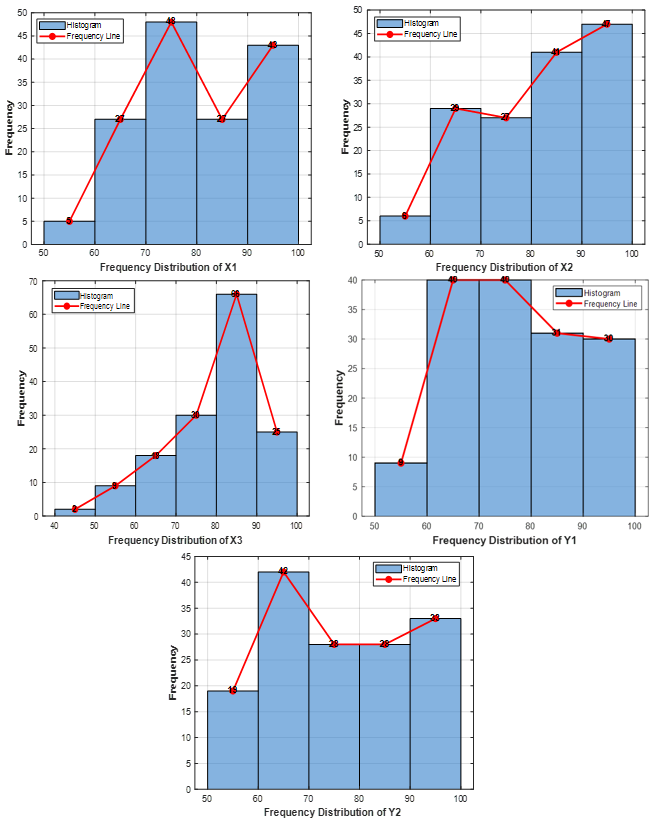
The collected data were then analyzed descriptively to determine the frequency distribution of respondents’ answers for each research variable. The presentation of this data distribution aims to provide an overview of the trends in respondents’ answers regarding the established research indicators. The results of the frequency distribution of the respondents’ data are presented in Figure 3.
Figure 3. Frequency distribution of each variable
The frequency distribution results in Figure 3 show a relatively distinct data distribution pattern, though one that tends to be dominated by the medium-to-high value categories. The circular economy variable (X1) and Islamic financial literacy variable (X2) exhibit an increasing frequency distribution in the high-value intervals, indicating that the majority of MSMEs actors hold positive perceptions regarding the implementation of the circular economy and possess a good understanding of Islamic financial literacy. The digital technology variable (X3) shows the highest frequency concentration in the 80–90 interval, with a significantly larger number of respondents compared to other intervals, indicating that the utilization of digital technology by MSMEs actors falls into the high category. Meanwhile, the MSMEs sustainability variable (Y1) shows a more even data distribution across several value intervals, although the highest frequency remains in the upper-middle category. For the community economic development variable (Y2), the frequency distribution also shows a tendency toward high values, with respondents predominantly in the 60–100 interval. In general, these five frequency distributions indicate that the majority of respondents provided positive responses to all research variables, suggesting a potential relationship between the circular economy, Islamic financial literacy, digital technology, MSMEs sustainability, and community economic development. The detailed descriptive statistical results are presented in Table 3.
Table 3 shows that all research variables have relatively high mean values, ranging from 74.80 to 80.89. The Islamic financial literacy variable (X2) had the highest mean value of 80.89, while the community economic development variable (Y2) had the lowest mean value of 74.80. These results indicate that the majority of respondents gave positive ratings regarding the implementation of the circular economy, Islamic financial literacy, digital technology, MSMEs sustainability, and community economic development. The standard deviation values for each variable range from 11.74 to 14.86, indicating that the distribution of respondent data remains in the moderate category and is not overly heterogeneous. Furthermore, the coefficient of variation values below 0.30 across all variables indicate that the level of data variation is relatively low, suggesting the research data possesses a sufficiently high level of consistency. The frequency distribution results in Figure 2 also support this finding, as the majority of respondents are concentrated in the medium-to-high value intervals.
Table 3. Descriptive statistics
|
X1 |
X2 |
X3 |
Y1 |
Y2 |
|
|
Mean |
78.51 |
80.89 |
79.39 |
76.09 |
74.8 |
|
Std. Error of Mean |
1.028 |
1.153 |
0.959 |
1.064 |
1.214 |
|
Std. Deviation |
12.59 |
14.12 |
11.74 |
13.03 |
14.86 |
|
Coefficient of variation |
0.16 |
0.175 |
0.148 |
0.171 |
0.199 |
|
Variance |
158.6 |
199.4 |
137.8 |
169.7 |
221 |
|
Skewness |
0.165 |
-0.134 |
-0.59 |
0.332 |
0.312 |
|
Std. Error of Skewness |
0.198 |
0.198 |
0.198 |
0.198 |
0.198 |
|
Kurtosis |
-0.96 |
-1.086 |
0.32 |
-0.714 |
-1.091 |
|
Std. Error of Kurtosis |
0.394 |
0.394 |
0.394 |
0.394 |
0.394 |
|
Shapiro-Wilk |
0.954 |
0.934 |
0.961 |
0.955 |
0.929 |
|
p-value of Shapiro-Wilk |
< .001 |
< .001 |
< .001 |
< .001 |
< .001 |
|
Minimum |
50 |
50 |
40 |
50 |
50 |
|
Maximum |
100 |
100 |
100 |
100 |
100 |
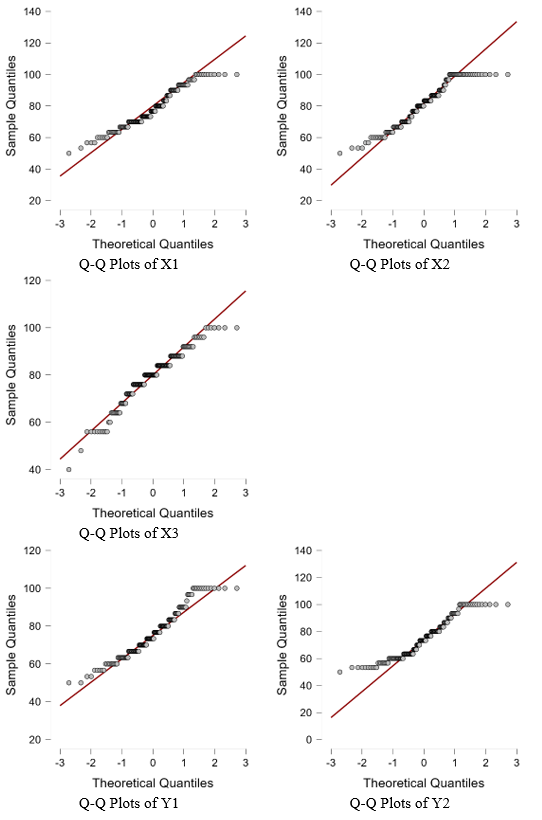
The skewness and kurtosis values also indicate that the data distribution across all variables tends to approximate a normal distribution. Variables X1, Y1, and Y2 have positive skewness values, indicating a slight right-skewed distribution, whereas variables X2 and X3 have negative skewness values, indicating a slight left-skewed distribution. Kurtosis values ranging from -1.091 to 0.320 suggest that none of the variables exhibit excessive kurtosis. The Shapiro–Wilk normality test yielded significant results (p < 0.001) for all variables, indicating statistically significant departures from normality. However, this result should be interpreted cautiously because the Shapiro–Wilk test is highly sensitive to moderate sample sizes and often detects trivial deviations from normality. Moreover, the observed variables were measured using a five-point Likert scale, and the distributions were supported by acceptable skewness and kurtosis values, as well as relatively symmetrical histogram and Q–Q plot patterns. Previous SEM literature has also suggested that ML estimation remains sufficiently robust for five-category Likert-scale data when the sample size is adequate. Therefore, despite the statistical evidence of non-normality, the data were considered appropriate for SEM analysis using the ML estimator, while model adequacy was further evaluated using multiple goodness-of-fit indices (χ², CFI, TLI, RMSEA, and SRMR). To further support the assessment of data distribution, Q–Q plots for each research variable are presented in Figure 4. This visualization is used to illustrate the pattern of data distribution relative to the theoretical normal line, thereby providing an overview of the distribution trends for each research variable.
Figure 4. Q-Q plots for each dataset
3.3 Structural Equation Modeling analysis
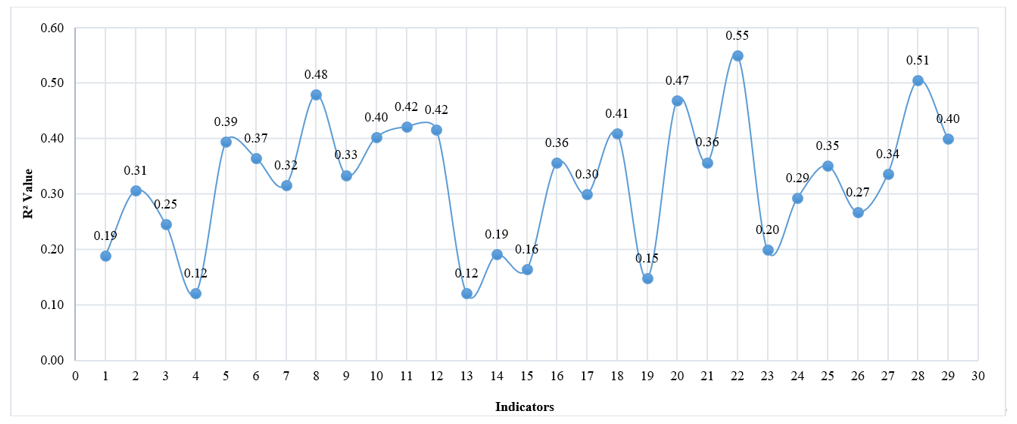
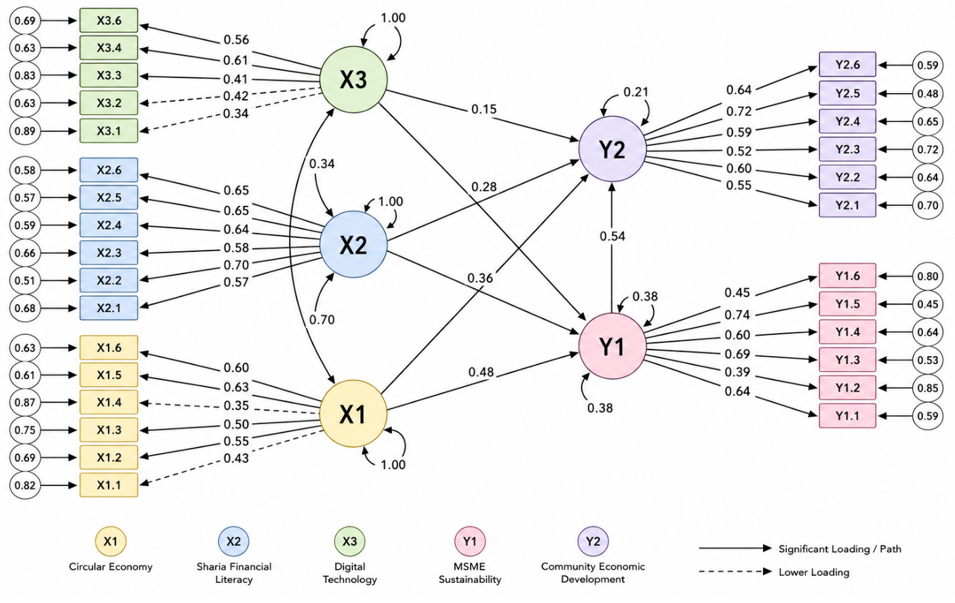
Next, the researcher tested the hypotheses using the SEM approach to analyze the relationships among the study variables simultaneously. The SEM analysis in this study included model fit tests (Table 4) to evaluate the validity of the research model, R -Square (Figure 5) to examine the contribution of exogenous variables to endogenous variables, regression coefficient analysis (Table 5) to determine the direction and magnitude of the effects between variables, analysis of factor variances and covariances (Table 6) to examine relationships between constructs, and analysis of indirect effects (Table 7) to identify indirect effects between the study variables. In addition, the structural relationships between variables were also visualized using a path diagram (Figure 6) to clarify the relationship patterns within the developed research model.
Table 4. Model fit
|
|
|
|
|
n(Parameters) |
Baseline Test |
|||||||
|
AIC |
BIC |
n(Observations) |
CFI |
TLI |
RMSEA |
SRMR |
Total |
Free |
χ² |
df |
p |
|
|
Model 1 |
11,292 |
11,497 |
150 |
0.804 |
0.799 |
0.064 |
0.079 |
68 |
68 |
638.5 |
367 |
< .001 |
Figure 5. R-square value for each variable
Figure 6. Path diagram
Table 4 presents the goodness-of-fit statistics used to evaluate the adequacy of the proposed structural equation model. The model was assessed using several fit indices, including the Chi-square statistic (χ²), Comparative Fit Index (CFI), Tucker–Lewis Index (TLI), Root Mean Square Error of Approximation (RMSEA), Standardized Root Mean Square Residual (SRMR), Akaike Information Criterion (AIC), and Bayesian Information Criterion (BIC). According to commonly accepted SEM guidelines, CFI and TLI values of 0.90 or higher indicate good model fit, whereas RMSEA and SRMR values below 0.08 indicate acceptable model fit. The estimated model produced a χ² value of 638.5 with 367 degrees of freedom (p < 0.001). Although the Chi-square test was statistically significant, this result is expected because the χ² statistic is highly sensitive to sample size and model complexity. The model yielded CFI = 0.804 and TLI = 0.799, indicating that the incremental fit indices did not fully reach the recommended threshold for a good-fitting model. However, the absolute fit indices showed acceptable values, with RMSEA = 0.064 and SRMR = 0.079, both of which fall within the recommended cutoff values (< 0.08). Furthermore, the Akaike Information Criterion (AIC = 11,292) and Bayesian Information Criterion (BIC = 11,497) provide useful information for model comparison, with lower values indicating a more parsimonious model among competing alternatives. Overall, these results suggest that the proposed SEM demonstrates an acceptable level of model fit and is sufficiently adequate for examining the structural relationships among the study variables, although the incremental fit indices indicate that future studies may further refine the measurement and structural model to improve model fit. The R-Square values for each indicator are shown in Figure 5.
Figure 5 shows that the R-Square values for each research indicator range from 0.12 to 0.55. Most indicators have R-Square values in the moderate category, indicating that the latent variables in the model are able to explain the variation in the research indicators with a fairly good level of contribution. The highest R-Square value is observed for indicator Y1.5 at 0.55, followed by indicator Y2.5 at 0.51 and indicator X2.2 at 0.48, indicating that these indicators possess a stronger explanatory power regarding the research construct. Meanwhile, some indicators have relatively low R-Square values, such as X1.4 at 0.12 and X3.1 at 0.12, suggesting that there are still other factors outside the model influencing these indicators. Nevertheless, overall, the pattern of R-Square values indicates that the research model has a sufficiently adequate ability to explain the relationships among variables in this study. The regression coefficients are as shown in Table 5.
Table 5. Regression coefficients
|
95% Confidence Interval |
|||||||
|
Outcome |
Predictor |
Standardized Estimate (β) |
Std. Error |
z-Value |
p |
Lower |
Upper |
|
Y1 |
X1 |
0.473 |
0.144 |
3.275 |
0.001 |
0.19 |
0.756 |
|
X2 |
0.377 |
0.145 |
2.592 |
0.01 |
0.092 |
0.662 |
|
|
X3 |
0.012 |
0.103 |
0.119 |
0.905 |
-0.189 |
0.214 |
|
|
Y2 |
X1 |
0.191 |
0.161 |
1.187 |
0.235 |
-0.124 |
0.506 |
|
X2 |
0.208 |
0.142 |
1.461 |
0.144 |
-0.071 |
0.486 |
|
|
X3 |
0.165 |
0.092 |
1.798 |
0.072 |
-0.015 |
0.345 |
|
|
Y1 |
0.537 |
0.157 |
3.429 |
< .001 |
0.23 |
0.844 |
|
Based on the regression coefficients in Table 5, the SEM framework in this study can be formulated as follows.
$Y_1=0.473 X_1+0.377 X_2+0.012 X_3+e_1$ (1)
$\begin{gathered}Y_2=0.191 X_1+0.208 X_2 +0.165 X_3+0.537 Y_1+e_2\end{gathered}$ (2)
The standardized structural equations presented in Eqs. (1) and (2), together with the regression results in Table 5, indicate that the circular economy variable (X1) has a significant positive effect on MSMEs sustainability (Y1), with a standardized coefficient (β) of 0.473 (p = 0.001). This finding suggests that greater implementation of circular economy practices contributes to improving the sustainability of MSMEs. Likewise, Islamic financial literacy (X2) demonstrates a significant positive effect on MSMEs sustainability, with a standardized coefficient (β) of 0.377 (p = 0.010), indicating that higher levels of Islamic financial literacy enhance the sustainability performance of MSMEs. In contrast, digital technology (X3) shows a positive but statistically insignificant effect on MSMEs sustainability (β = 0.012, p = 0.905), suggesting that the adoption of digital technology alone is insufficient to significantly improve MSMEs sustainability within the context of this study. Overall, these findings indicate that MSMEs sustainability is more strongly influenced by circular economy practices and Islamic financial literacy than by digital technology adoption.
Table 5 further shows that community economic development (Y2) is significantly influenced by MSMEs sustainability (Y1), with a standardized coefficient (β) of 0.537 (p < 0.001). This result indicates that improvements in MSMEs sustainability are associated with stronger community economic development. Meanwhile, the direct effects of circular economy (X1), Islamic financial literacy (X2), and digital technology (X3) on community economic development are not statistically significant, with standardized coefficients of 0.191 (p = 0.235), 0.208 (p = 0.144), and 0.165 (p = 0.072), respectively. These findings suggest that the contributions of circular economy practices, Islamic financial literacy, and digital technology to community economic development occur primarily through their influence on MSMEs sustainability, which acts as an intervening variable. Furthermore, the 95% confidence intervals of the significant relationships do not include zero, providing additional evidence of the robustness and stability of the estimated structural relationships. The values of factor variances and covariances are presented in Table 6.
Table 6. Factor variances dan covariances
|
Factor Variances |
95% Confidence Interval |
|||||
|
Variable |
Estimate |
Std. Error |
z-Value |
p |
Lower |
Upper |
|
X1 |
1.000 |
0.000 |
1.000 |
1.000 |
||
|
X2 |
1.000 |
0.000 |
1.000 |
1.000 |
||
|
X3 |
1.000 |
0.000 |
1.000 |
1.000 |
||
|
Y1 |
0.392 |
0.1 |
3.927 |
< .001 |
0.196 |
0.587 |
|
Y2 |
0.214 |
0.071 |
2.998 |
0.003 |
0.074 |
0.354 |
|
Factor covariances |
|
|
||||
|
X1 - X2 |
0.674 |
0.078 |
8.601 |
< .001 |
0.52 |
0.828 |
|
X2 - X3 |
0.222 |
0.106 |
2.1 |
0.036 |
0.015 |
0.43 |
|
X1 - X3 |
0.000 |
0.000 |
0.000 |
0.000 |
0.000 |
0.000 |
Table 6 presents the estimated factor variances and covariances of the latent variables included in the structural model. The endogenous variables, MSMEs sustainability (Y1) and community economic development (Y2), exhibit significant factor variances with estimated values of 0.392 (p <0.001) and 0.214 (p = 0.003), respectively. These findings indicate that both endogenous constructs retain substantial unexplained variability after accounting for the structural relationships in the model, suggesting that additional factors beyond those included in this study may also contribute to variations in MSMEs sustainability and community economic development. Meanwhile, the exogenous variables circular economy (X1), Islamic financial literacy (X2), and digital technology (X3) were standardized with fixed variances of 1.000, as commonly specified in SEM for model identification.
Table 6 also shows that the factor covariance results indicate positive relationships among the exogenous variables in the research model. The covariance between circular economy (X1) and Islamic financial literacy (X2) is 0.674 (p < 0.001), indicating a strong and statistically significant positive association. Likewise, Islamic financial literacy (X2) and digital technology (X3) demonstrate a significant positive covariance of 0.222 (p = 0.036), suggesting that higher levels of Islamic financial literacy are associated with greater adoption of digital technology among MSMEs. In contrast, the covariance between circular economy (X1) and digital technology (X3) is estimated at 0.000, indicating no statistically meaningful covariance between these two exogenous variables within the proposed model. Overall, these covariance results suggest that Islamic financial literacy serves as a common factor associated with both circular economy practices and digital technology adoption, whereas circular economy and digital technology operate relatively independently in the context of this study. The values of the indirect effects are as shown in Table 7.
Table 7. Indirect effects
|
95% Confidence Interval |
||||||
|
Estimate |
Std. Error |
z-Value |
p |
Lower |
Upper |
|
|
X1 → Y1 → Y2 |
0.254 |
0.11 |
2.312 |
0.021 |
0.039 |
0.469 |
|
X2 → Y1 → Y2 |
0.203 |
0.102 |
1.987 |
0.047 |
0.003 |
0.402 |
|
X3 → Y1 → Y2 |
0.007 |
0.055 |
0.12 |
0.905 |
-0.101 |
0.115 |
Table 7 shows that the indirect effect of the circular economy (X1) on community economic development through MSMEs sustainability has a standardized estimated value of 0.254 with a p-value of 0.021 (<0.05), indicating a significant mediating effect. Furthermore, Islamic financial literacy (X2) also has a significant indirect effect on community economic development through MSMEs sustainability, with a standardized estimated value of 0.203 and a p-value of 0.047 (<0.05). These results indicate that the implementation of circular economy practices and the improvement of Islamic financial literacy can strengthen community economic development by first enhancing MSMEs sustainability. Meanwhile, digital technology (X3) has a positive but statistically insignificant indirect effect on community economic development through MSMEs sustainability, with a standardized estimated value of 0.007 and a p-value of 0.905 (>0.05). This finding suggests that the utilization of digital technology has not yet provided a significant mediating contribution to community economic development through MSMEs sustainability in the proposed research model. In general, the results of the indirect effects show that MSMEs sustainability serves as a key path (path mediation) linking the factors of the circular economy and Islamic financial literacy to community economic development. The path diagram is presented in Figure 6 to illustrate the directions of both direct and indirect relationships among the research variables within the developed SEM model.
Figure 6 shows that the circular economy and Islamic financial literacy have a relatively stronger direct impact on MSMEs sustainability compared to digital technology. The path coefficient value from the circular economy to MSMEs sustainability, at 0.48, indicates that the application of circular economy principles can enhance business sustainability through resource efficiency, waste reduction, and the strengthening of sustainable business practices. Additionally, Islamic financial literacy also demonstrates a positive influence on MSMEs sustainability with a coefficient value of 0.36, indicating that an understanding of Sharia-based finance contributes to more stable and long-term oriented business management. Meanwhile, digital technology has a relatively weaker influence on MSMEs sustainability with a coefficient value of 0.28. Furthermore, Figure 6 also shows that MSMEs sustainability has the most dominant influence on community economic development with a coefficient value of 0.54. These results indicate that increased business sustainability directly contributes to strengthening the community economy through enhanced community economic activities, sustainable income, and the strengthening of local business networks. In addition to direct effects, the path diagram also reveals indirect effects of the circular economy and Islamic financial literacy on community economic development through MSMEs sustainability as a mediating variable. This indicates that the success of community economic development is not solely determined by the direct implementation of the circular economy and Islamic financial literacy but is also influenced by MSMEs’ ability to consistently maintain business sustainability.
Figure 6 further shows that most research indicators have factor loadings in the moderate to high range, thus adequately representing the latent variable constructs. The variables of Islamic financial literacy (X2) and community economic development (Y2) exhibit relatively stable loading values compared to other variables. However, some indicators within the circular economy (X1) and digital technology (X3) variables show lower loading values and are marked with dashed lines, indicating a relatively weak contribution of these indicators to the research construct. Based on the results of the SEM model synthesis, this study shows that the circular economy and Islamic financial literacy are the main factors supporting the sustainability of MSMEs, while the sustainability of MSMEs serves as a strategic pathway in driving community economic development. Thus, the research model confirms that strengthening sustainability-based MSMEs is the key to integrating sustainable economic practices, Islamic financial literacy, and community economic development in West Nusa Tenggara Province.
Interview results indicate that MSMEs operators and communities in NTB Province interpret the circular economy as a business approach that is not only profit-oriented but also focused on ensuring business sustainability through efficient resource use, waste reduction, and the utilization of local potential available in the surrounding environment. Most respondents explained that practices such as reusing production materials, managing business waste, utilizing local raw materials, and strengthening business networks among MSMEs actors are viewed as part of a strategy for survival and growth in a dynamic economic environment. In the community context, the circular economy is understood not merely as a production activity, but also as a mechanism to strengthen socio-economic relationships among community members through more collaborative and mutually supportive business models.
Furthermore, the interview results indicate that business owners view Islamic financial literacy as a guide for managing economic activities in a safer, more transparent manner, and in accordance with the values held by the local community. Respondents explained that an understanding of capital management, financial record-keeping, avoiding transactions deemed harmful, and the ability to make long-term economic decisions are crucial to maintaining business sustainability. At the implementation level, MSMEs entrepreneurs not only integrate Islamic finance aspects into daily business management but also link them to efforts to build customer trust, strengthen business relationships, and maintain the economic stability of families and communities. This indicates that Islamic finance is not viewed merely as a financial instrument but also as part of the community’s socio-economic practices.
Meanwhile, the implementation of digital technology shows a more varied pattern among respondents. Some MSMEs operators have utilized social media, digital platforms, online communication, and electronic transactions as means of promotion and market expansion; however, the level of utilization still varies depending on adaptability, experience with technology, and available infrastructure. The FGD results indicate that some respondents still view digital technology as a business support tool, not as the primary factor determining business success. Nevertheless, nearly all respondents consider digitalization an increasingly critical necessity for addressing future market changes. Overall, the interview results indicate that MSMEs actors and communities integrate the circular economy, Islamic financial literacy, and digital technology through contextual, adaptive, and community-based approaches. Consequently, business sustainability is built not solely through economic factors but also through the community’s ability to foster collaboration, strengthen internal capacity, and adapt to changes in the business environment.
3.4 Discussion
The results of the study indicate that the circular economy has a positive and significant effect on MSMEs sustainability, with a standardized coefficient (β) of 0.473 (p = 0.001). Likewise, Islamic financial literacy also exerts a positive and significant effect on MSMEs sustainability, with a standardized coefficient (β) of 0.377 (p = 0.010). These results align with the study by Utaminingsih et al. [32] on 148 water hyacinth craft MSMEs in Central Java, which found that a green business model based on the circular economy significantly enhances the sustainable competitiveness of MSMEs through green innovation and environmentally friendly collaboration. Similarly, research by Alam et al. [33] on 384 textile industry actors in Bangladesh showed that all circular economy practices (internal environmental management, eco-design, and investment recovery) significantly influence economic, environmental, and social sustainability performance. Brendzel-Skowera [34] also states that the implementation of a circular business model improves resource efficiency and strengthens the sustainability orientation of MSMEs. These results also support the findings of Salvioni et al. [35], who explain that the adoption of a circular business model is correlated with the strengthening of long-term sustainability in small and medium-sized enterprises. Additionally, study by Dey et al. [36] indicates that the implementation of the circular economy significantly improves environmental performance through resource optimization and operational efficiency.
Another finding indicates that Islamic financial literacy exerts a positive and significant effect on MSMEs sustainability, with a standardized coefficient (β) of 0.377 (p = 0.010), suggesting that stronger Islamic financial literacy enhances business stability, improves financial decision-making, and supports the long-term sustainability of MSMEs. This coefficient value is relatively consistent with Hidayat’s [37] study, which found that financial literacy has a positive influence on sustainability with a β value of 0.452 (p < 0.001). This finding also aligns with Priyandono et al. [38], who demonstrated that Islamic financial literacy makes a significant contribution to MSMEs sustainability through improved business financial management capabilities. Research by Amiliya et al. [39] indicates that Islamic financial literacy strengthens sustainability outcomes through improved financial access and business adaptability, while a study by Puspita et al. [40] found that financial literacy significantly enhances sustainability, particularly through improved financial management practices.
Unlike the two previous variables, digital technology did not exhibit a statistically significant effect on MSMEs sustainability (β = 0.012, p = 0.905), indicating that digital technology adoption alone is insufficient to improve MSMEs sustainability. This finding suggests that the benefits of digital technology depend not only on its adoption but also on the availability of supporting infrastructure, digital capabilities, and the effective integration of technology into business operations. This finding is consistent with the research by Sugih and Fitriyah [41], which showed that financial technology and the use of digital technology have not had a significant impact on improving MSMEs performance. These research results also support the study by Safii et al. [42], which found that the influence of digital technology on sustainability tends to operate through mediators such as financial literacy and financial inclusion rather than through direct effects. Furthermore, these findings reinforce Sang’s [43] argument that digital transformation requires innovation capability as a mediator to generate sustainable performance. An indirect effect is also evident in the relationship between MSMEs sustainability and community economic development, where MSMEs sustainability exerts a significant influence on the community economy (β = 0.537; p < 0.001), thereby reinforcing the argument that sustainability serves as a crucial mechanism bridging the influence of internal business variables on community economic development.
In general, the results of this study indicate that the sustainability of MSMEs is determined not only by their ability to adopt technological changes, but also by their internal capacity to manage resources efficiently, build financial resilience, and develop adaptive, long-term business models. These findings suggest that an MSMEs sustainability approach based on the circular economy and Islamic financial literacy holds greater potential for building a community economic foundation compared to approaches that emphasize digitalization alone. Although this finding contradicts several previous studies that reported significant positive effects of digital technology on MSMEs sustainability [16-21], this discrepancy can be attributed to specific contextual factors prevailing in the study area. First, infrastructure limitations in NTB Province remain a significant constraint, as uneven internet access and inadequate digital infrastructure across rural areas hinder the optimal utilization of digital technologies among MSMEs actors. Second, digital capability gaps among business actors are evident, as many MSMEs operators lack adequate digital skills and experience to effectively integrate technology into their business operations, resulting in superficial adoption that does not translate into meaningful sustainability outcomes. Third, the varying levels of technology utilization among business actors indicate that digital adoption remains partial and fragmented, with most MSMEs using digital tools primarily for basic functions such as promotion and communication, rather than for comprehensive business process optimization. Fourth, the descriptive statistics from this study reveal that the digital technology variable (X3) exhibits the lowest coefficient of variation (0.148) among all exogenous variables, suggesting relatively homogeneous responses and limited variation in digital adoption levels, which may reduce the statistical power to detect significant effects. These contextual explanations suggest that the insignificant effect of digital technology in this study does not negate its potential benefits but rather highlights that its impact is contingent upon supporting conditions that are not yet fully realized in the NTB context. One of the strengths of this study lies in its ability to integrate economic, social, and sustainability perspectives through a mixed-methods approach, thereby yielding a more comprehensive understanding of the dynamics of SME development at the community level. Furthermore, this study contributes by presenting an empirical model that links internal MSMEs factors to community economic development through business sustainability mechanisms. Nevertheless, the interpretation of the research results must be conducted with caution due to the specific characteristics of the study area, the limited scope of respondents, and the complexity of digital technology implementation and dynamic community economic practices, which may lead to variations in results if the research is applied to different regional contexts, business sectors, or time periods. Therefore, future research should consider expanding the study area, strengthening longitudinal exploration, and integrating other contextual factors so that the resulting MSMEs sustainability model becomes more robust and generalizable.
The results of the study indicate that the circular economy and Islamic financial literacy have a positive and significant impact on the sustainability of MSMEs, whilst digital technology has not yet shown a significant impact. The circular economy exerts a standardized effect (β) of 0.473 (p = 0.001), whilst Islamic financial literacy exerts a standardized effect (β) of 0.377 (p = 0.010). These findings indicate that the sustainability of MSMEs is more influenced by entrepreneurs’ ability to apply the principles of resource efficiency, sustainable business management, and an understanding of Islamic finance than by the direct use of digital technology. Furthermore, the circular economy, Islamic financial literacy, and digital technology do not show a significant direct impact on the development of community-based economies centred on MSMEs. However, the sustainability of MSMEs was found to have a positive and significant influence on community economic development, with a standardized coefficient (β) of 0.537 (p < 0.001). These results demonstrate that strengthening community-based MSMEs economies in NTB is more effectively achieved through enhancing business sustainability as the primary strategic pathway for community economic development. Future research should focus on developing a digital transformation model that is more adaptable to the characteristics of community-based MSMEs in the region. Further studies are also important, incorporating variables such as business innovation, government policy support, and digital financial inclusion to strengthen the MSMEs sustainability model and community economic development based on sustainable development.
The authors gratefully acknowledge the financial support provided by the Ministry of Higher Education, Science, and Technology of the Republic of Indonesia (Kemdiktisaintek RI) under Decree Number 287/C3/DT.05.00/PL-BARU/2026. This support has been instrumental in enabling the successful completion of this research.
[1] Al-hakim, S., Sonjaya, A., Adityawati, S., Rahmayanti, A.Z., Rozikin, O. (2025). Mosque-based economic transformation: Ecosystem model analysis using ANP. International Journal of Sustainable Development and Planning, 20(2): 623-633. https://doi.org/10.18280/ijsdp.200213
[2] Kartika, L., Maarif, M.S., Sukmawati, A., Koeswanda, H. (2026). Human resource management models for ESG implementation in food and beverage MSMEs: A systematic literature review. International Journal of Sustainable Development and Planning, 21(1): 127-138. https://doi.org/10.18280/ijsdp.210112
[3] Zulfaka, A., Kassim, S. (2025). Integrating financial decision-making into Islamic financial literacy as a mediating factor: Implications for enhancing financial well-being. Journal of Islamic Finance, 14(2): 58-69.
[4] Razouk, A., Melliani, H., El-Adnani, J.M., Falloul, M.E.M. (2023). Analyzing public sentiment towards Islamic finance through social media: Using sentiment analysis on Twitter data. Revue d’Intelligence Artificielle, 37(6): 1461-1470. https://doi.org/10.18280/ria.370610
[5] Yani, A., Manafe, M.W.N., Santosa, S. (2025). Analysis of the role of digital technology in driving business model innovation in MSMEs: Implications for enhancing operational efficiency and sustainable economic growth. Technology ada Society Persvestipes, 3(1): 306-313. https://doi.org/10.61100/tacit.v3i1.253
[6] Hendrawan, S.A., Chatra, A., Iman, N., Hidayatullah, S., Suprayitno, D. (2024). Digital transformation in MSMEs: Challenges and opportunities in technology management. Jurnal Informasi dan Teknologi, 6(2): 141-149. https://doi.org/10.60083/jidt.v6i2.551
[7] Sadaa, A.M., Genasan, Y., Harhoch, H.K., Hazza, O.T., Mukhlif, M.A. (2024). A new key to a sustainable future: Promoting sustainability performance through digital technologies, ESG activities, and circular economy in Jordanian energy companies. International Journal of Sustainable Development and Planning, 19(10): 3935-3947. https://doi.org/10.18280/ijsdp.191022
[8] Akintan, I., Dabiri, M., Salaudeen, J. (2021). A literature review on Islamic finance modes as an alternative approach to finance the business model of a circular economy. International Research Journal of Shariah, Muamalat and Islam, 3(8): 31-48. https://doi.org/10.35631/IRJSMI.38003
[9] Chotisarn, N., Phuthong, T. (2026). Planning for circular economy transitions in emerging economies: A systematic review of business model innovation and sustainable development pathways. International Journal of Sustainable Development and Planning, 21(3): 923-942. https://doi.org/10.18280/ijsdp.210301
[10] Fathma, A., Thoriq Alfarisi, M., Darwanto. (2025). Islamic circular economy in business practice and Islamic finance: A systematic literature review. Journal of Islamic Economic Laws, 8(2): 171-185. https://doi.org/10.23917/jisel.v8i02.11697
[11] Priyatno, P.D., Yetti, F., Karimah, D.A., Urrohman., Ridwan, A.H. (2025). Integrating circular economy and maqāṣid al-sharī‘ah: The mediating role of hifdz al bi’ah in achieving economic justice. Lex Localis-Journal of Local Self-Government, 23(11): 1718-1732. https://doi.org/10.52152/rqjmhg51
[12] Sakum., Mamun, S., Ahmad, A.N., Edy, S., Ainulyaqin, H. (2024). Improving sharia financial literacy through training and community mentoring in Bekasi Regency. Journal of Islamic Economics and Business Studies, 5(12): 5066-5075. https://doi.org/10.47467/elmal.v5i12.4824
[13] Gonçalves, B.D.S.M., Carvalho, F.L.D., Fiorini, P.D.C. (2022). Circular economy and financial aspects: A systematic review of the literature. Sustainability, 14(5): 3023. https://doi.org/10.3390/su14053023
[14] Campra, M., Brescia, V., Jafari-Sadeghi, V., Calandra, D. (2021). Islamic countries and Maqasid al-Shariah towards the circular economy: The Dubai case study. EJIF-European Journal of Islamic Finance, 17(4): 1-10. https://doi.org/10.13135/2421-2172/4560
[15] Vidal-Ayuso, F., Akhmedova, A., Jaca, C. (2023). The circular economy and consumer behaviour: Literature review and research directions. Journal of Cleaner Production, 418(2): 137824. https://doi.org/10.1016/j.jclepro.2023.137824
[16] Kamista, K., Masyhuri, M. (2026). Peran teknologi digital dalam membangun model bisnis berkelanjutan pada UMKM di era digital. Ascendia: Journal of Economic and Business Advancement, 1(4): 1-11. https://doi.org/10.65310/1ava0r78
[17] Pramesti, H., Jaya, U.A., Albar, F.M., Chrisulianti, R., Wulandari, D. (2025). Business sustainability strategy for MSMEs through digital marketing optimization and product innovation. Jurnal Ekonomi Kreatif dan Manajemen Bisnis Digital, 3(4): 492-506. https://doi.org/10.55047/jekombital.v3i4.932
[18] Nugroho, B.S., Salsiyah, S.M., Purnamasari, E., Afandi, A., Ramadhani, R.A. (2024). The influence of integrated digital marketing, supply chain management, and business performance on the sustainability of MSMEs. International Journal of Economics, Business and Innovation Research, 3(1): 17-30. https://doi.org/10.63922/ijebir.v3i01.615
[19] Sinuhaji, F.G., Sibarani, H.J., Pakpahan, V.M. (2024). MSMEs and the role of technology in achieving business sustainability. Journal of Artificial Intelligence and Engineering Applications, 4(1): 589-595. https://doi.org/10.59934/jaiea.v4i1.724
[20] Rahmani, S., Abdillah, F., Ristanti, V., Bakti, S.B. (2025). Optimizing MSME sustainability through digital marketing, innovation, and financial literacy with financial technology support. IQTISHADUNA: Jurnal Ilmiah Ekonomi Kita, 14(1): 212-239. https://doi.org/10.46367/iqtishaduna.v14i1.2425
[21] Akhmad, K.A., Purnomo, S., Purwandari, S., Sentosa, I. (2025). Digital technology adoption to support sustainable innovation among MSMEs in Indonesia. Ekuitas (Jurnal Ekonomi dan Keuangan), 9(3): 387-405. https://doi.org/10.24034/j25485024.y2025.v9.i3.7221
[22] Suparman., Syukur, M., S, P., Sitonda, S. (2025). Agrarian community empowerment model based on digital technology and environmental sustainability: A case study in Enrekang District. Journal of Education and Community Empowerment, 12(1): 18-26. https://doi.org/10.21831/jppm.v12i1.82587
[23] Raharjo, K.M., Zulkarnain., Haidar, M. (2023). Community empowerment through digital-based local economic development. Journal of Out-of-School Education, 11(1): 79-88. https://doi.org/10.24036/kolokium.v11i1.567
[24] Haryadi, B., Leniwati, D., Herawati, N., Angraini, M.S., Shafitri, A.R. (2026). Blue economy development as government policy and community income: The mediation effect of digital technology. Journal of Governance and Regulation, 15(2): 82-92. https://doi.org/10.22495/jgrv15i2art7
[25] Mehen, A. (2023). The role of digital technologies in building resilient communities. Bhumi The Planning Research Journal, 10(1): 33-40. https://doi.org/10.4038/bhumi.v10i1.92
[26] Lukmanova, I., Saini, N., Singh, P.P., Mohan, C., Kumar, Y. (2024). Quantifying the impact of digital transformation on economic growth: A longitudinal analysis. International Conference on Recent Trends in Biomedical Sciences, 86(1): 01079. https://doi.org/10.1051/bioconf/20248601079
[27] Mishra, R., Singh, R.K., Govindan, K. (2022). Barriers to the adoption of circular economy practices in Micro, Small and Medium Enterprises: Instrument development, measurement and validation. Journal of Cleaner Production, 351: 131389. https://doi.org/10.1016/j.jclepro.2022.131389
[28] Choiruddin, M.N., Pratikto, H., Murwani, D., Restuningdiah, N. (2025). Financial literacy, FinTech, and contemporary innovation in Islamic economic law: An analysis of MSME performance sustainability in Indonesia and Malaysia. MILRev: Metro Islamic Law Review, 4(2): 976-1008. https://doi.org/10.32332/milrev.v4i2.10164
[29] Nugraheni, P., Darma, E.S., Muhammad, R. (2025). Adoption of digital technology and financial knowledge: Strategies for achieving sustainable performance of MSMEs. Journal of Risk and Financial Management, 18(11): 646. https://doi.org/10.3390/jrfm18110646
[30] Cahyawati, N.E., Nantungga, K.H., Tumewang, Y.K. (2023). The influence of financial technology & literacy on MSMEs sustainability with financial inclusion as a mediating variable. Journal of Contemporary Accounting, 5(2): 71-82. https://doi.org/10.20885/jca.vol5.iss2.art2
[31] Warsiyah, Mawardi, Fakhrurozi, M. (2025). Circular economy in waste bank for sustainability and empowerment. Economics Development Analysis Journal, 14(3): 355-368. https://doi.org/10.15294/edaj.v14i3.31787
[32] Utaminingsih, A., Lestari, R.I., Rahoyo, S., Widyasmara, B. (2026). Circular economy implementation in water hyacinth craft SMEs for sustainable business. APTISI Transactions on Technopreneurship, 8(2): 522-536. https://doi.org/10.34306/att.v8i2.827
[33] Alam, S.S., Masukujjaman, M., Ahsan, N., Kokash, H.A. (2024). Circular economy practices and sustainable performance of the textile and apparel industry: The roles of corporate environmental ethics and green self-efficacy. Circular Economy and Sustainability, 4(3): 2365-2394. https://doi.org/10.1007/s43615-024-00397-z
[34] Brendzel-Skowera, K. (2021). Circular economy business models in the SME sector. Sustainability, 13(13): 7059. https://doi.org/10.3390/su13137059
[35] Salvioni, D.M., Bosetti, L., Fornasari, T. (2022). Implementing and monitoring circular business models: An analysis of Italian SMEs. Sustainability, 14(1): 270. https://doi.org/10.3390/su14010270
[36] Dey, P.K., Malesios, C., Chowdhury, S., Saha, K., Budhwar, P., De, D. (2022). Adoption of circular economy practices in small and medium-sized enterprises: Evidence from Europe. International Journal of Production Economics, 248(3): 108496. https://doi.org/10.1016/j.ijpe.2022.108496
[37] Hidayat, R. (2025). Modeling the effect of financial literacy and inclusion on MSME sustainability through financial management. Journal of Economics and Accounting, 6(2): 458-466. https://doi.org/10.47065/arbitrase.v6i2.2522
[38] Priyandono, L., Boubekri, A., Kharista, M. (2025). Examining sharia financial literacy and capital access for MSME sustainability: A mixed-methods study in East Kalimantan. Academic Journal of Islamic Studies, 10(2): 435-450. https://doi.org/10.29240/ajis.v10i2.14837
[39] Amiliya, L., Syarief, M.E., Sumiyati, S., Nugraha, M.A., Firdaus, R. (2025). The relations of sharia financial literacy, financial inclusion, and business sustainability. Indonesian Journal of Economics and Management, 5(3): 298-305. https://doi.org/10.35313/ijem.v5i3.6579
[40] Puspita, V.A., Rinaldo, D., Gunardi, G. (2024). Enhancing financial literacy to promote sustainability in MSMEs. Jurnal Ilmu Keuangan dan Perbankan, 14(1): 95-104. https://doi.org/10.34010/jika.v14i1.14393
[41] Sugih, F.A., Fitriyah, F. (2024). Financial behavior, inclusion, and technology in MSMEs: The mediating impact of financial literacy on performance. Jurnal Riset Akuntansi dan Keuangan, 12(3): 495-506. https://doi.org/10.17509/jrak.v12i3.76010
[42] Safii, A.A., Anom, L., Murtini, M. (2024). Financial technology adoption on MSMEs sustainability: The mediating role of financial literacy and financial inclusion. Journal of Socioeconomics and Development, 7(2): 121-131.
[43] Sang, T.M. (2023). Digital transformation toward sustainable development in Vietnamese small and medium enterprises. Management and Marketing, 18(1): 459-473. https://doi.org/10.2478/mmcks-2023-0025