Omar Mejji* | Abdelhadi Darkaoui
© 2026 The authors. This article is published by IIETA and is licensed under the CC BY 4.0 license (http://creativecommons.org/licenses/by/4.0/).
OPEN ACCESS
This study examines the evolving body of literature on green finance and sustainable performance through a comprehensive bibliometric analysis aimed at mapping the field’s intellectual, conceptual, and thematic structure. Using a dataset of 383 publications indexed in the Scopus database between 2015 and 2025, the study employs Bibliometrix (Biblioshiny) and VOSviewer to analyze scientific production trends, influential journals, highly cited publications, international collaboration patterns, and knowledge networks based on keyword co-occurrence and co-citation analyses. The results reveal a substantial increase in scientific output, particularly after 2020, reflecting the growing importance of green finance within sustainability research. The findings identify green finance, sustainable finance, sustainability, environmental performance, and financial performance as the dominant themes shaping the field. The analysis also highlights the leading role of China in scientific production and international collaboration, while influential studies such as Flammer constitute important intellectual foundations of the literature. Furthermore, the results indicate that the field has evolved toward a multidisciplinary research domain integrating finance, environmental sustainability, climate change, environmental, social, and governance (ESG) practices, and green innovation. Despite this rapid development, important research gaps remain, particularly regarding the limited attention devoted to small and medium-sized enterprises (SMEs), the insufficient exploration of mediating mechanisms linking green finance and sustainable performance, and the underrepresentation of emerging and African economies. This study contributes to the literature by providing a systematic mapping of knowledge development, identifying major research streams, and proposing future research directions to advance theoretical and empirical understanding of the green finance–sustainable performance nexus.
green finance, sustainable performance, bibliometric analysis, Biblioshiny, VOSviewer
Over the past decades, environmental degradation, climate change, and resource scarcity have profoundly reshaped global economic and financial priorities. In response to these challenges, green finance has emerged as a strategic mechanism for channeling financial resources toward environmentally sustainable activities and supporting the achievement of the sustainable development goals [1, 2]. This evolution is closely associated with the transition toward low-carbon economic systems and the growing integration of environmental, social, and governance (ESG) considerations into financial and investment decision-making processes [3, 4].
Within this context, an expanding body of literature has investigated the role of green finance in promoting sustainable economic development and improving organizational outcomes. Previous studies have highlighted the potential contribution of green financial instruments, including green bonds, green credit, sustainable investment funds, and environmental financial policies, to enhancing firms’ financial, environmental, and social performance [5, 6]. As governments and financial institutions increasingly encourage sustainable investments, understanding the relationship between green finance and sustainable performance has become a major research concern.
Despite the rapid growth of this literature, existing knowledge remains fragmented. Research has evolved across multiple disciplines, including finance, economics, environmental management, sustainability studies, and corporate governance, resulting in diverse conceptual perspectives and methodological approaches [7]. Furthermore, empirical evidence remains geographically concentrated, with most studies focusing on China, developed economies, and a limited number of emerging countries actively engaged in ecological transition [2, 8]. Consequently, the influence of institutional environments, financial systems, and contextual factors on the green finance-performance relationship remains insufficiently understood, particularly in developing economies.
In addition, most empirical investigations examine the direct effects of green finance on organizational performance while paying limited attention to the underlying mechanisms through which financial resources generate sustainable outcomes. Emerging studies suggest that factors such as green investment, green innovation, environmental capabilities, and sustainable business practices may play important mediating roles in translating financial support into measurable performance improvements [9, 10]. However, these mechanisms remain insufficiently integrated into existing theoretical and empirical frameworks, creating important opportunities for future research.
Alongside the expansion of empirical studies, several review and bibliometric analyses have explored topics such as green finance, sustainable finance, ESG-related finance, climate finance, and green investment. Nevertheless, these studies have generally focused on the evolution of green finance as a standalone research domain, the development of sustainable financial instruments, or broader sustainability-related financial issues. Limited attention has been devoted to the specific nexus between green finance and sustainable performance. Consequently, there is still a lack of comprehensive understanding regarding the intellectual structure, conceptual foundations, thematic evolution, and future research directions of this rapidly growing research field.
As shown in Table 1, previous bibliometric studies have primarily focused on green finance, sustainable finance, ESG-related finance, and green investment. While these studies have significantly contributed to understanding the evolution of sustainable finance research, limited attention has been devoted to the specific relationship between green finance and sustainable performance. Furthermore, existing reviews rarely explore the intellectual and conceptual connections between financial mechanisms, organizational performance outcomes, and sustainability objectives. Therefore, a comprehensive bibliometric assessment of the green finance–sustainable performance nexus remains necessary to advance theoretical understanding and identify promising avenues for future research.
In this regard, bibliometric analysis provides a rigorous and systematic methodology for mapping scientific knowledge, identifying influential contributors, uncovering thematic patterns, and revealing the intellectual structure of a research domain [11, 12]. By combining quantitative performance indicators with science-mapping techniques, bibliometric methods enable researchers to obtain a comprehensive overview of the evolution and maturity of a field while identifying emerging trends and research gaps.
Table 1. Comparative overview of existing bibliometric studies on green finance and related fields
|
Authors |
Research Focus |
Database / Corpus |
Methodology |
Main Contribution |
Remaining Gap |
Ref. |
|
Zhang et al. |
Green Finance |
Green finance literature |
Bibliometric Analysis |
Examined the current status, development trajectory, and future directions of green finance research |
Did not specifically investigate sustainable performance outcomes |
[13] |
|
Bhatnagar and Sharma |
Green Finance Enablers |
Green finance literature |
Bibliometric Analysis |
Identified key drivers, enablers, and emerging themes within green finance research |
Limited focus on organizational sustainable performance |
[14] |
|
Debrah et al. |
Green Finance Research Trends |
Green finance literature |
Bibliometric and Qualitative Review |
Explored research trends, knowledge gaps, and future research directions in green finance |
Did not focus on the green finance–sustainable performance nexus |
[15] |
|
Kashi and Shah |
Sustainable Finance |
723 Scopus-indexed publications |
Bibliometric and Content Analysis |
Mapped the intellectual structure and evolution of sustainable finance research |
Sustainable performance was not examined as a distinct research stream |
[16] |
|
Saxena et al. |
Green Finance |
Scopus database |
Bibliometric Review |
Analyzed publication trends, influential authors, countries, and thematic developments in green finance |
Lacked a specific focus on sustainable performance outcomes |
[17] |
|
Maria et al. |
Green Finance Evolution |
Green finance literature |
Bibliometric Analysis, Complex Networks, and Machine Learning |
Investigated the evolution and knowledge structure of green finance research |
Sustainable performance dimensions remained underexplored |
[18] |
|
Joaqui-Barandica et al. |
Green and Sustainable Finance |
1,372 Web of Science publications |
Bibliometric Analysis and Topic Modeling |
Identified dominant themes, influential contributors, and emerging research trends in green and sustainable finance |
Did not specifically examine the relationship between green finance and sustainable performance |
[19] |
|
Present Study |
Green Finance and Sustainable Performance |
383 Scopus-indexed publications (2015–2025) |
Bibliometrix (Biblioshiny) and VOSviewer |
Provides a comprehensive mapping of the intellectual, conceptual, and thematic structure of the green finance–sustainable performance nexus |
Identifies future research directions, mediating mechanisms, and underexplored contexts, particularly in developing economies and SMEs |
Current Study |
Therefore, this study aims to provide a comprehensive bibliometric analysis of the literature on green finance and sustainable performance. Specifically, the study seeks to answer the following research questions:
RQ1: How has scientific production on green finance and sustainable performance evolved over time?
RQ2: What are the dominant intellectual, conceptual, and thematic structures of the field?
RQ3: Which authors, journals, institutions, and countries have contributed most significantly to the development of this research area?
RQ4: What research gaps and future research directions emerge from the existing literature?
This study provides one of the few bibliometric syntheses specifically focused on the relationship between green finance and sustainable performance. Second, it combines performance analysis and science-mapping techniques to reveal the conceptual, intellectual, and thematic foundations of the field. Third, it identifies emerging research opportunities related to mediating mechanisms linking green finance and sustainable performance, including green investment and sustainable innovation. Finally, the study highlights geographical imbalances in existing research and emphasizes the need for greater attention to developing economies and small and medium-sized enterprises (SMEs), which remain underrepresented despite their critical role in achieving sustainable development objectives.
2.1 Research design
This study adopts a bibliometric research design to systematically analyze the scientific literature on green finance and sustainable performance. Bibliometric analysis has become a widely recognized methodology for mapping scientific knowledge, identifying influential contributors, uncovering thematic structures, and tracking the evolution of research fields over time [11, 12]. By combining performance analysis and science-mapping techniques, bibliometric methods provide a comprehensive understanding of the intellectual, conceptual, and social structures of a research domain.
2.2 Data collection and search strategy
The bibliographic data used in this study were retrieved from the Scopus database, one of the most comprehensive and widely used databases for bibliometric research in the fields of business, economics, finance, and sustainability studies. Scopus was selected because of its extensive journal coverage, high-quality indexing standards, and compatibility with bibliometric software such as Bibliometrix and VOSviewer.
To identify publications related to green finance and sustainable performance, the following search query was applied to article titles, abstracts, and keywords:
TITLE-ABS-KEY (("green finance" OR "sustainable finance" OR "climate finance") AND ("sustainable performance" OR "environmental performance" OR "social performance" OR "financial performance" OR "economic performance")).
The search was conducted on 29 May 2026.
2.3 Inclusion and exclusion criteria
To ensure the relevance and quality of the dataset, several filtering criteria were applied.
First, the search was restricted to subject areas closely related to the research topic, including:
Second, only peer-reviewed Articles and Review Papers were retained, while conference papers, book chapters, editorials, notes, letters, and other document types were excluded.
Third, only publications written in English were considered.
Finally, the study focused on publications published between 2015 and 2025 in order to capture the most recent developments in the field while avoiding the methodological bias associated with incomplete indexing of publications from 2026.
2.4 Study selection process
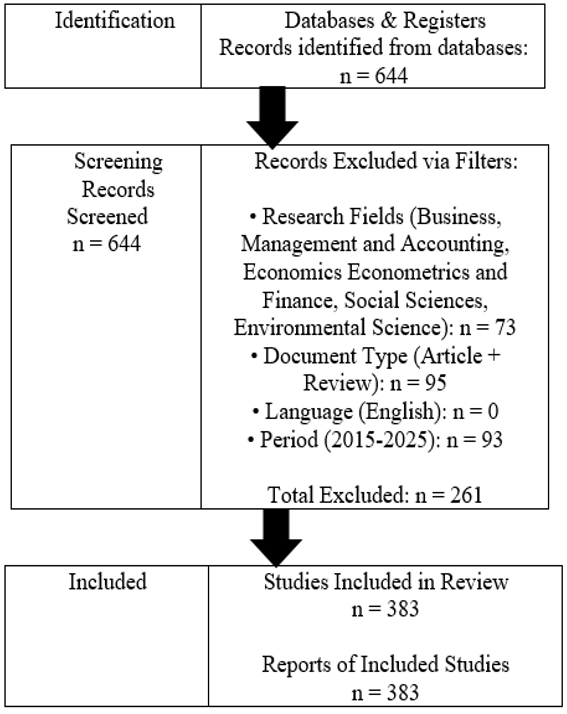
The document selection process followed the Preferred Reporting Items for Systematic Reviews and Meta-Analyses (PRISMA) 2020 framework to ensure transparency, reproducibility, and methodological rigor (Figure 1).
The initial search yielded 644 publications. After applying subject area filters, 571 publications were retained. Restricting the sample to articles and review papers reduced the dataset to 476 publications. No records were excluded based on language, as all retained documents were published in English. Finally, applying the publication period criterion (2015–2025) resulted in a final dataset of 383 publications included in the bibliometric analysis.
2.5 Bibliometric analysis tools
Two complementary bibliometric software packages were employed.
First, Bibliometrix (Biblioshiny) was used to perform descriptive and thematic analyses, including:
Second, VOSviewer was used to construct and visualize bibliometric networks, including:
The combined use of Bibliometrix and VOSviewer enabled a more comprehensive exploration of the field by integrating both quantitative performance indicators and network-based science mapping techniques.
2.6 Analytical framework
To provide a comprehensive understanding of the literature, the analysis was structured around four complementary dimensions.
Descriptive analysis examined the evolution of scientific production and identified the most influential journals, authors, institutions, and countries.
Conceptual analysis explored the thematic structure of the field through keyword co-occurrence analysis, word clouds, thematic maps, and treemap visualizations.
Intellectual analysis investigated the knowledge base of the field through co-citation analysis and the identification of influential scientific contributions.
Social analysis examined collaboration patterns among countries and research actors through network visualization techniques.
Together, these analytical dimensions provide a comprehensive overview of the evolution, structure, and future directions of research on green finance and sustainable performance.
2.7 Methodological limitations
Although Scopus provides extensive coverage of high-quality scientific publications, this study is subject to several limitations. First, the analysis relies exclusively on a single database, which may exclude relevant publications indexed in other databases such as Web of Science or Dimensions. Second, the results may be influenced by the choice of search terms and inclusion criteria. Third, bibliometric findings are sensitive to threshold settings and network construction parameters used in Bibliometrix and VOSviewer. Nevertheless, these limitations do not undermine the validity of the study and are common in bibliometric research.
This section presents the results of the bibliometric analysis of the selected corpus, combining descriptive approaches with advanced science mapping techniques. The aim is to provide a comprehensive overview of the field by highlighting publication trends, underlying intellectual structures, and the thematic evolution of research on green finance and sustainable performance.
3.1 Scientific production dynamics
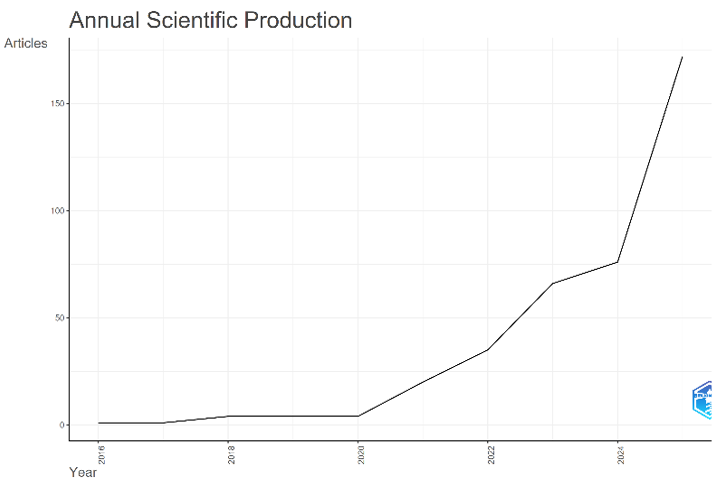
Figure 2 illustrates the annual scientific production in the field of green finance and sustainable performance between 2016 and 2025. The results reveal a remarkable acceleration in publication activity over the analyzed period. During the initial phase (2016–2020), the field remained relatively underexplored, with only a limited number of publications produced annually. Beginning in 2021, scientific output increased substantially, reflecting the growing academic and policy interest in sustainable finance and environmental challenges.
The most significant growth occurred between 2023 and 2025, when the annual number of publications more than doubled. In particular, the sharp increase observed in 2025 confirms the emergence of green finance as one of the most dynamic research streams within sustainability and financial studies. This rapid expansion can be linked to the growing importance of ESG frameworks, climate finance initiatives, green bond markets, and global commitments toward carbon neutrality and sustainable development.
3.2 Leading publication sources and field structuring
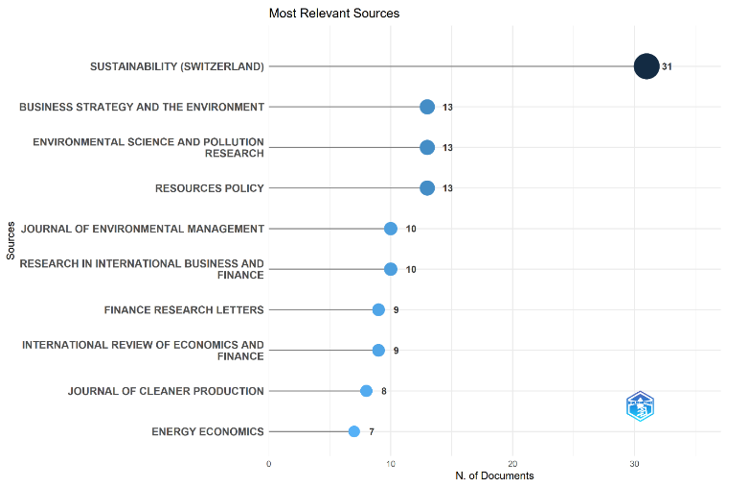
Figure 3 identifies the most productive journals contributing to research on green finance and sustainable performance. Sustainability emerges as the dominant publication outlet, accounting for 31 documents, more than twice the production of the second-ranked journals. This finding confirms the multidisciplinary nature of the field and highlights the central role of sustainability-oriented journals in disseminating knowledge on green finance.
Several high-impact journals, including Business Strategy and the Environment, Environmental Science and Pollution Research, and Resources Policy, also play a significant role in shaping the field. The presence of journals specialized in finance, environmental management, and economic policy reflects the interdisciplinary character of the literature, which increasingly integrates environmental, social, and financial dimensions.
3.3 Most influential scientific contributions
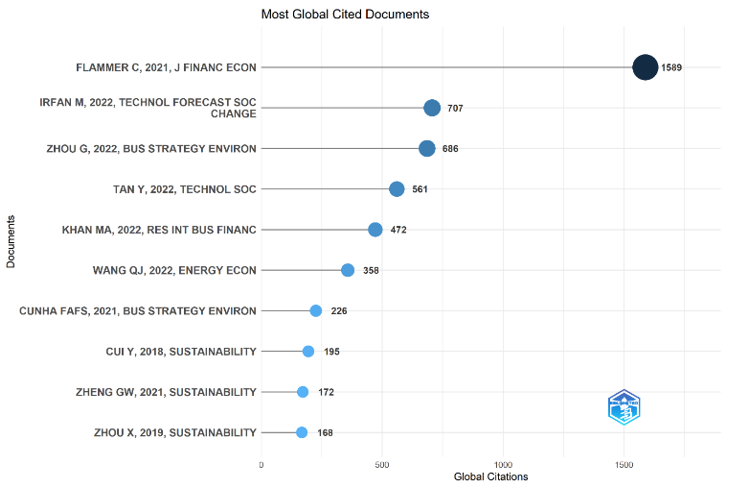
Figure 4 presents the most globally cited documents within the dataset. The analysis reveals a highly concentrated citation structure dominated by Flammer [3], which has accumulated 1,589 global citations. This citation count is more than twice that of the second most cited study, highlighting the seminal role of Flammer's [3] contribution in establishing the intellectual foundations of green finance research.
Other highly influential studies include Irfan et al., Zhou et al., Tan et al., and Khan et al. Collectively, these publications have significantly contributed to advancing knowledge on green bonds, environmental sustainability, financial development, ESG integration, and sustainable investment strategies. The prominence of recent publications among the most cited works confirms the rapid evolution and growing maturity of the field.
3.4 Geographical distribution and scientific collaboration
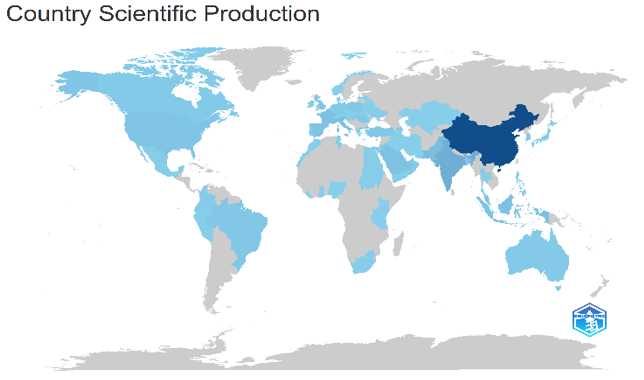
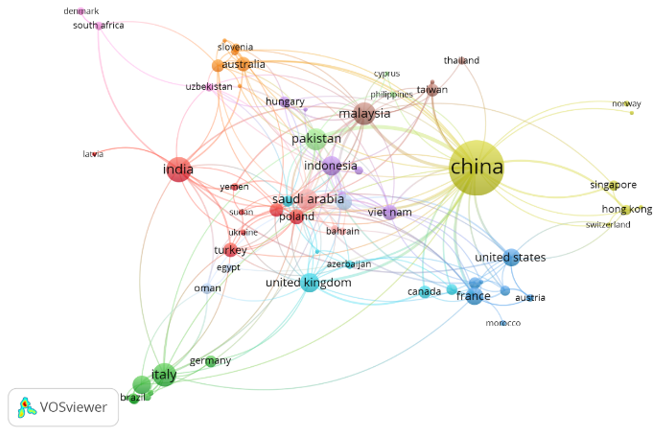
Figure 5 provides an overview of the geographical distribution of scientific production and international collaboration patterns in the field of green finance and sustainable performance.
(a) Country scientific production (Biblioshiny)
(b) Country collaboration network (VOSviewer)
Panel (a) reveals a strong geographical concentration of research activities. China emerges as the most productive country, clearly dominating the scientific landscape. This leading position reflects the country's growing commitment to sustainable development, green financial reforms, carbon neutrality objectives, and environmental governance initiatives. Other countries such as the United States, the United Kingdom, India, France, Italy, and Australia also contribute significantly to the development of the field, demonstrating the global relevance of green finance research. Nevertheless, the distribution of publications remains uneven across regions, with developing countries, particularly in Africa, showing comparatively lower scientific output.
Panel (b) illustrates the international collaboration network generated through VOSviewer. The network reveals a highly interconnected structure characterized by several collaborative clusters. China occupies the most central position within the network, acting as a major hub connecting both developed and emerging economies. Strong collaborative relationships are observed between China and countries such as the United States, the United Kingdom, Malaysia, Pakistan, and several European nations. The network also highlights the active participation of India, Italy, France, and Australia, which serve as important regional collaboration centers.
The presence of multiple interconnected clusters indicates that research on green finance and sustainable performance has become increasingly internationalized. Knowledge production is no longer confined to a few countries but is progressively spreading through collaborative research partnerships. However, the relatively limited participation of African countries, including Morocco, suggests the existence of important geographical gaps in the literature. This underrepresentation highlights the need for more empirical studies in developing economies to broaden the contextual understanding of green finance and its contribution to sustainable performance.
3.5 Scientific relationships and thematic structure
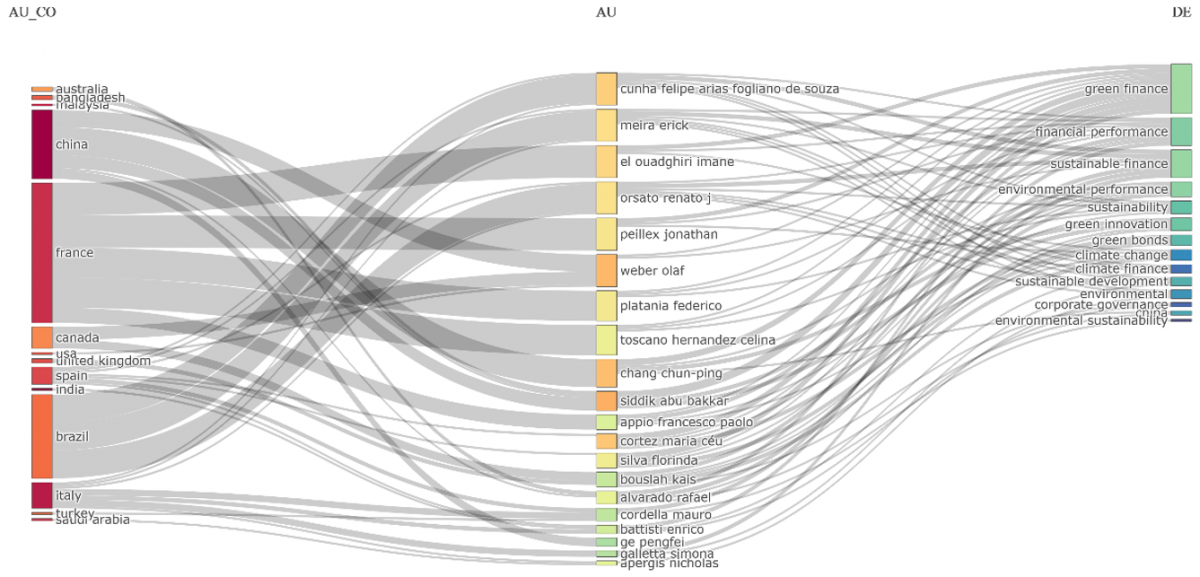
Figure 6 presents the three-field plot linking countries, authors, and keywords. The analysis reveals that China, France, and Brazil constitute the most productive geographical contributors within the field. Several influential authors, including Orsato, Weber, Peillex, and Chang-Chun-Ping, occupy central positions within the knowledge network.
The strongest connections are observed around the keywords “green finance”, “financial performance”, “sustainable finance”, and “environmental performance”. These findings suggest that the literature is increasingly oriented toward understanding how green finance contributes to sustainable organizational performance.
3.6 Conceptual structure of the field: Keyword co-occurrence analysis
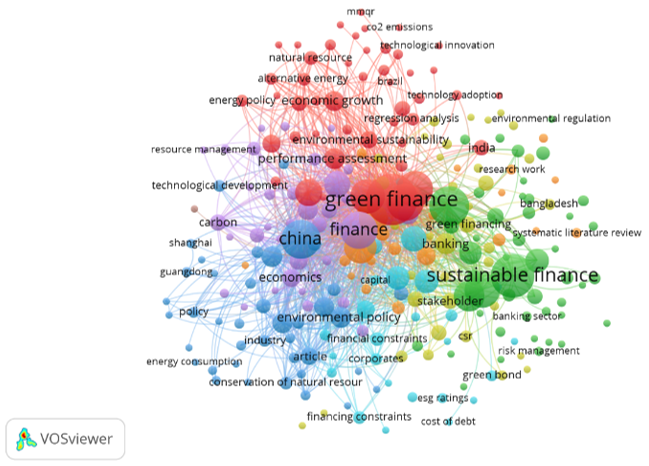
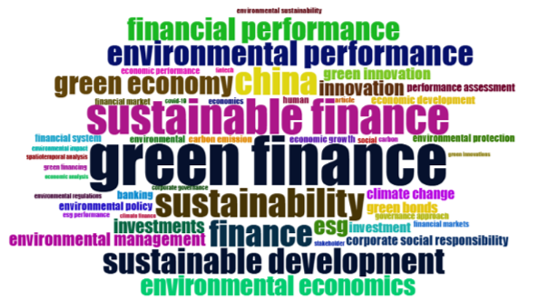
Figure 7 presents the conceptual structure of the green finance and sustainable performance literature through a keyword co-occurrence network generated with VOSviewer and a word cloud developed using Biblioshiny.
The keyword co-occurrence network shown in Figure 7(a) reveals a dense and highly interconnected intellectual structure organized around several thematic clusters. The largest and most central nodes are "green finance", "sustainable finance", "finance", and "China", indicating their dominant role within the knowledge structure of the field. The prominence of these terms suggests that the literature is primarily concerned with the contribution of green and sustainable financial mechanisms to environmental and economic development, particularly within the Chinese context.
The network further highlights the multidisciplinary nature of the field through the presence of several interconnected themes, including environmental policy, economic growth, environmental sustainability, banking, financial constraints, green bonds, ESG ratings, risk management, and technological development. These connections demonstrate that green finance research extends beyond traditional financial issues and increasingly incorporates environmental, social, technological, and governance dimensions.
(a) Co-occurrence network of keywords (VOSviewer)
(b) Word cloud of keywords (Biblioshiny)
Several thematic clusters can be identified. A first cluster focuses on the relationship between green finance, economic growth, environmental sustainability, and energy transition. A second cluster emphasizes banking systems, sustainable finance, green financing instruments, and stakeholder-related issues. A third cluster is centered on environmental policy, financial constraints, corporate finance, and sustainability governance. The strong interconnections among these clusters indicate a growing integration of sustainability concerns into financial decision-making processes.
Figure 7(b) complements this analysis through a word cloud representing the most frequently occurring keywords. Consistent with the co-occurrence network, green finance, sustainable finance, sustainability, finance, and sustainable development emerge as the most prominent concepts in the literature. The visibility of terms such as financial performance, environmental performance, green economy, innovation, ESG, green innovation, green bonds, and climate change further confirms the increasing attention given to the links between sustainable financial practices and organizational performance outcomes.
An important observation concerns the simultaneous prominence of financial performance and environmental performance, suggesting that contemporary research increasingly investigates how green finance contributes to both economic value creation and environmental sustainability. Moreover, the strong presence of China among the most frequently used keywords confirms its central position not only in terms of scientific production but also as a major empirical context for green finance research.
Overall, the keyword analysis reveals a rapidly evolving and multidisciplinary research field in which green finance serves as a strategic mechanism connecting sustainable development, environmental governance, financial performance, innovation, and climate-related challenges.
3.7 Thematic structure and positioning of research
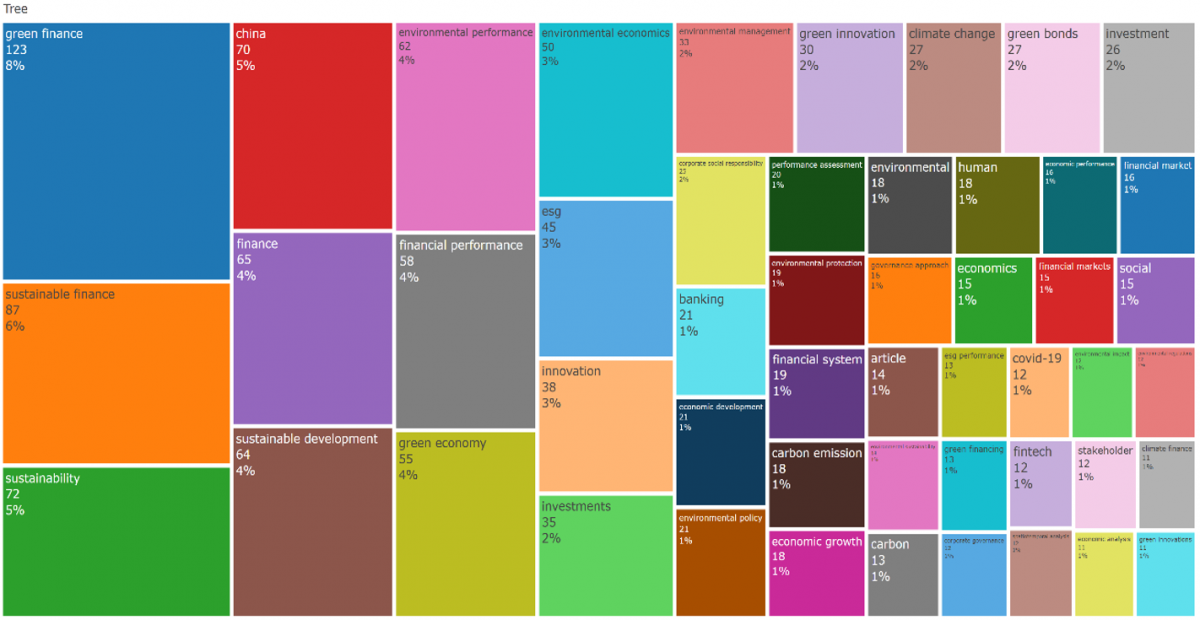
Figure 8 presents the thematic structure of the literature through a treemap visualization generated using Biblioshiny. The size of each rectangle reflects the relative frequency of keywords within the dataset, thereby highlighting the most influential research themes in the field of green finance and sustainable performance.
The figure reveals the overwhelming prominence of green finance (123 occurrences, 8%), which constitutes the core concept of the research domain. This dominance confirms that green finance has emerged as the principal framework through which scholars examine the relationship between financial systems and sustainable development objectives. Other highly represented themes include sustainable finance (87 occurrences, 6%), sustainability (72 occurrences, 5%), China (70 occurrences, 5%), finance (65 occurrences, 4%), sustainable development (64 occurrences, 4%), environmental performance (62 occurrences, 4%), and financial performance (58 occurrences, 4%). Together, these themes form the intellectual foundation of the field and illustrate the growing integration of environmental and financial considerations in contemporary research.
The thematic structure further highlights the increasing importance of environmental and governance-related topics. Keywords such as environmental economics, ESG, green economy, innovation, investments, environmental management, and green innovation indicate that researchers are increasingly exploring the mechanisms through which sustainable financial practices contribute to environmental protection, corporate sustainability, and economic development. The presence of green bonds, climate change, and carbon emission further demonstrates the field’s close alignment with global climate-transition and decarbonization agendas.
In addition, several emerging themes can be identified. Concepts such as FinTech, corporate governance, stakeholder, environmental regulations, economic growth, and financial markets suggest an ongoing diversification of research interests beyond traditional green financing mechanisms. These themes reflect the increasing complexity of sustainable finance research and its growing connections with technological innovation, governance systems, and stakeholder-oriented approaches.
A notable finding is the simultaneous prominence of financial performance and environmental performance, reinforcing the argument that contemporary studies increasingly seek to understand how green finance can generate both economic and environmental value. This observation supports the growing shift from a purely financial perspective toward a broader sustainability-oriented framework that incorporates multiple dimensions of organizational performance.
Overall, Figure 8 illustrates a mature and rapidly expanding research field structured around green finance, sustainable finance, sustainability, and performance-related outcomes, while simultaneously evolving toward newer themes associated with ESG, climate change, green innovation, and sustainable economic transformation.
3.8 Intellectual structure: Co-citation analysis
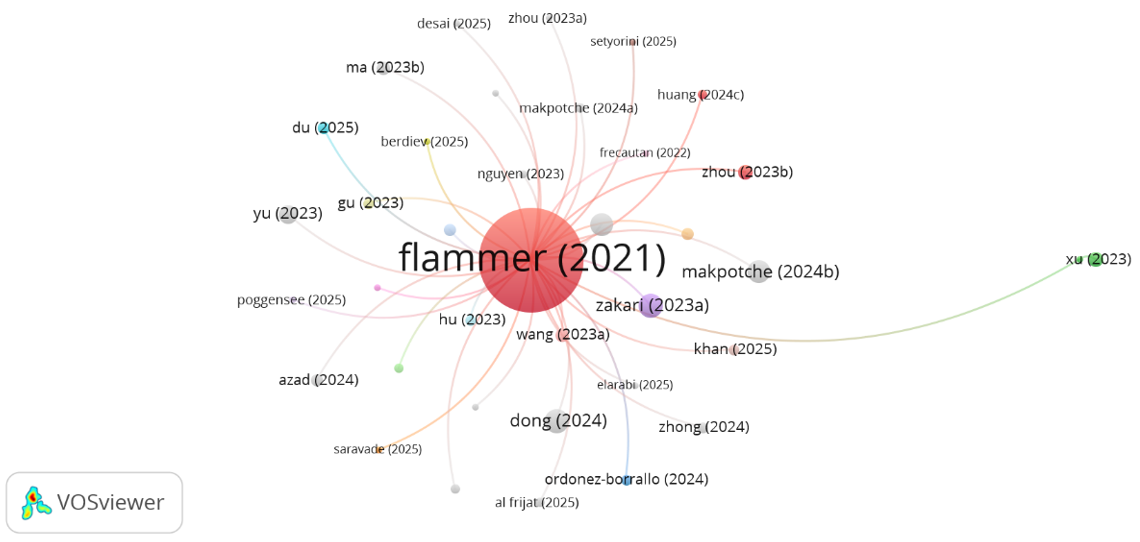
Figure 9 presents the co-citation network of the field generated using VOSviewer. The analysis identifies the most influential publications and their relationships within the green finance and sustainable performance literature.
The network is clearly dominated by Flammer [3], which occupies the most central position and represents the main intellectual foundation of the field. Several recent studies, including those by Zhou, Wang, Nguyen, and Dong, are closely connected to this core publication, reflecting the rapid development of research on green finance, sustainability, and environmental performance.
The dense links among the cited references indicate a well-connected body of knowledge and increasing scholarly convergence around key themes such as sustainable finance, ESG practices, green innovation, and climate-related financial policies. The predominance of recent publications further confirms that this research area is expanding rapidly and attracting growing academic attention.
3.9 Trend topics and thematic evolution
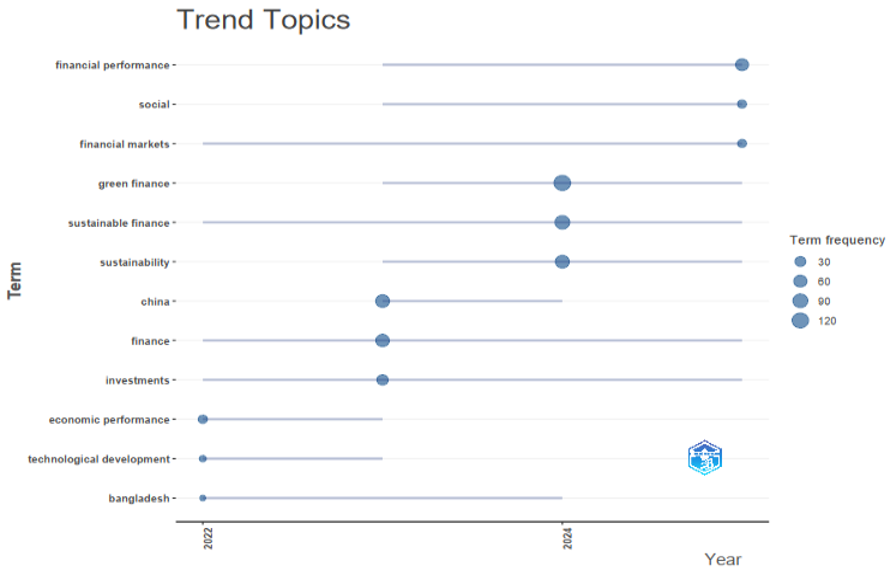
Figure 10 illustrates the evolution of the main research themes between 2021 and 2025. The results indicate a clear shift from general topics such as finance, China, investments, and technological development toward more specialized themes related to green finance, sustainable finance, and sustainability.
The largest nodes are associated with green finance, sustainable finance, and sustainability, confirming their growing importance in recent years. More recently, themes such as financial performance, financial markets, and social dimensions have gained prominence, suggesting an increasing interest in evaluating the economic and societal impacts of sustainable financial practices.
Overall, the trend analysis highlights the progressive maturation of the field, moving from foundational discussions toward more specific investigations of the relationship between green finance, sustainability, and performance outcomes.
This bibliometric study provides a comprehensive overview of the evolution, intellectual structure, and emerging trends of research on green finance and sustainable performance between 2015 and 2025. The findings reveal a rapidly expanding research field characterized by increasing academic interest, growing international collaboration, and a progressive diversification of research themes.
The analysis of annual scientific production demonstrates a significant acceleration of publications after 2020, indicating that green finance has become a major research domain within sustainability studies. This growth reflects increasing global concerns regarding climate change, environmental degradation, carbon neutrality objectives, and the role of financial systems in supporting sustainable development. The expansion of the literature suggests that researchers increasingly recognize green finance as a strategic mechanism capable of aligning economic growth with environmental sustainability objectives [1].
The conceptual structure analysis reveals that the field is organized around several interconnected themes. The prominence of keywords such as green finance, sustainable finance, sustainability, financial performance, and environmental performance confirms that the literature has progressively evolved from a purely financial perspective toward a broader sustainability-oriented approach. The strong links between financial and environmental dimensions indicate that researchers increasingly investigate how financial instruments contribute to both economic and ecological outcomes. This finding supports the growing consensus that sustainability and financial performance should no longer be viewed as conflicting objectives but rather as complementary dimensions of long-term value creation [2, 3].
The keyword co-occurrence network further highlights the interdisciplinary nature of the field. Green finance occupies a central position connecting research streams related to environmental economics, climate change, green innovation, ESG practices, corporate governance, and sustainable development. This centrality suggests that green finance acts as an integrating concept that bridges traditionally separate academic disciplines. The emergence of themes such as green bonds, ESG, green innovation, and climate finance reflects the increasing sophistication and maturity of the research domain [4].
The geographical analysis identifies China as the dominant contributor to scientific production. This leadership can be explained by the country's extensive investments in sustainable development policies, environmental regulations, renewable energy programs, and green financial reforms. The collaboration network further confirms China's central role within international research partnerships. However, despite the increasing globalization of the field, the literature remains concentrated in a limited number of countries. Important regions, particularly Africa and several emerging economies, continue to receive comparatively limited scholarly attention. This imbalance suggests that current knowledge may not fully capture the diversity of institutional, economic, and environmental contexts across the world.
The co-citation analysis reveals the intellectual foundations of the field and highlights the influential role of seminal contributions such as Flammer [3], which occupies a central position within the knowledge network. The dominance of these highly cited studies indicates that the literature increasingly focuses on understanding how sustainable financial practices influence corporate behavior, environmental responsibility, and organizational performance. More broadly, the co-citation structure demonstrates the gradual consolidation of a coherent intellectual base supporting the development of green finance research [20].
The thematic evolution analysis further illustrates a transition from traditional topics such as finance, investments, and environmental economics toward more integrated themes including sustainable finance, financial performance, ESG practices, social sustainability, and green innovation. This evolution suggests that the field is moving beyond descriptive examinations of green financial instruments toward a more comprehensive understanding of their economic, environmental, and social implications. Such a shift reflects the growing recognition that sustainable development requires coordinated interactions between financial systems, firms, governments, and society [6].
An important implication emerging from this study concerns the relative underrepresentation of SMEs within the existing literature. This gap is particularly significant considering the economic importance of SMEs worldwide. According to international organizations, SMEs represent more than 90% of businesses globally and account for a substantial share of employment and economic activity. As major contributors to innovation, job creation, and economic development, SMEs are expected to play a critical role in sustainability transitions. Nevertheless, the bibliometric evidence suggests that most existing studies focus primarily on large corporations, financial institutions, or macroeconomic perspectives. Future research should therefore investigate how green finance mechanisms contribute to improving the sustainable performance of SMEs, particularly through channels such as green investments, technological innovation, and environmental management practices.
The findings also highlight a significant geographical research gap concerning emerging and African economies. Despite increasing international attention to sustainable development, these contexts remain underrepresented within the current literature. This limitation is important because institutional environments, financial systems, regulatory frameworks, and sustainability challenges vary considerably across regions. Consequently, conclusions derived from developed countries may not be fully applicable to developing economies. Future research should therefore focus on examining the effectiveness of green finance instruments in emerging markets and African countries, where sustainable development challenges are particularly pressing. In this regard, Morocco represents a promising context for future investigation due to its growing commitment to renewable energy development, sustainable finance initiatives, and green transition policies.
Overall, the findings suggest that future advances in green finance research will depend on a deeper understanding of the mechanisms linking financial resources to sustainable performance outcomes. Greater attention should be devoted to mediating and moderating factors such as green innovation, green investment, ESG implementation, environmental capabilities, and institutional support mechanisms. Such investigations would contribute to strengthening the theoretical foundations of the field while providing practical guidance for policymakers, financial institutions, and business leaders seeking to accelerate sustainable development.
This study conducted a comprehensive bibliometric analysis of the literature on green finance and sustainable performance based on 383 publications indexed in the Scopus database between 2015 and 2025. Using Bibliometrix (Biblioshiny) and VOSviewer, the study examined the evolution of scientific production, the intellectual and conceptual structure of the field, the most influential contributors, and emerging research trends.
The findings reveal a substantial increase in scientific production over the last decade, particularly after 2020, confirming the growing importance of green finance within sustainability research. The analysis identified green finance, sustainable finance, sustainability, environmental performance, and financial performance as the dominant themes shaping the field. The results also highlight the central role of China in both scientific production and international collaboration networks, while influential studies such as Flammer [3] constitute key intellectual foundations of the literature.
From a conceptual perspective, the study demonstrates that green finance has evolved into a multidisciplinary research domain connecting finance, environmental sustainability, climate change, innovation, ESG practices, and organizational performance. The thematic evolution analysis further indicates a progressive shift from traditional financial concerns toward broader sustainability-oriented issues, reflecting the increasing integration of environmental and social dimensions into financial decision-making processes.
This study contributes to the literature in several ways. First, it provides a dedicated bibliometric synthesis of the green finance–sustainable performance nexus, an area that has received limited attention in previous bibliometric reviews. Second, it offers a comprehensive mapping of the intellectual, conceptual, and social structures of the field. Third, it identifies emerging themes and research gaps that may guide future theoretical and empirical developments.
The findings also generate important practical implications. Policymakers, financial institutions, and business leaders may benefit from a better understanding of the growing role of green finance in supporting sustainable development objectives. The results suggest that effective green financial mechanisms can contribute not only to environmental protection but also to organizational performance and long-term economic value creation.
Despite these contributions, the study is subject to several limitations. First, the analysis relies exclusively on the Scopus database, which may exclude relevant publications indexed elsewhere. Second, the findings depend on the selected search terms and inclusion criteria. Third, bibliometric results may be influenced by threshold settings and network construction parameters used in Bibliometrix and VOSviewer.
Future research should extend the analysis by incorporating additional databases such as Web of Science and Dimensions and by conducting comparative reviews across different regions and sectors. Particular attention should be devoted to the role of green finance in SMEs, which constitute the backbone of most economies worldwide but remain underrepresented in the literature. Furthermore, emerging and African economies deserve greater scholarly attention, as current research remains heavily concentrated in China and developed countries. Future empirical studies should investigate the mechanisms through which green finance influences sustainable performance, particularly through green investment, green innovation, ESG implementation, and institutional support systems.
Overall, the results confirm that green finance has become a strategic pillar of contemporary sustainability research and a key instrument for promoting the transition toward more sustainable and resilient economic systems.
During the preparation of this manuscript, the author used AI-assisted tools for language refinement and structuring purposes. The author reviewed and edited all outputs and takes full responsibility for the content of this publication.
[1] Taghizadeh-Hesary, F., Yoshino, N. (2019). The way to induce private participation in green finance and investment. Finance Research Letters, 31: 98-103. https://doi.org/10.1016/j.frl.2019.04.016
[2] Zhang, D.Y., Mohsin, M., Rasheed, A.K., Chang, Y.H., Taghizadeh-Hesary, F. (2021). Public spending and green economic growth in BRI region: Mediating role of green finance. Energy Policy, 153: 112256. https://doi.org/10.1016/j.enpol.2021.112256
[3] Flammer, C. (2021). Corporate green bonds. Journal of Financial Economics, 142(2): 499-516. https://doi.org/10.1016/j.jfineco.2021.01.010
[4] Friede, G., Busch, T., Bassen, A. (2015). ESG and financial performance: Aggregated evidence from more than 2000 empirical studies. Journal of Sustainable Finance & Investment, 5(4): 210-233. https://doi.org/10.1080/20430795.2015.1118917
[5] Wang, W., Xu, F., Peng, S.T., Ouyang, Y. (2025). How does green finance policy affect the environmental performance of manufacturing companies? Journal of Environmental Management, 393: 126929. https://doi.org/10.1016/j.jenvman.2025.126929
[6] Huang, Y.M., Chen, C., Lei, L.J., Zhang, Y.P. (2022). Impacts of green finance on green innovation: A spatial and nonlinear perspective. Journal of Cleaner Production, 365: 132548. https://doi.org/10.1016/j.jclepro.2022.132548
[7] Soundarrajan, P., Vivek, N. (2016). Green finance for sustainable green economic growth in India. Agricultural Economics - Czech, 62(1): 35-44. https://doi.org/10.17221/174/2014-AGRICECON
[8] Huang, H.Y., Mbanyele, W., Wang, F.R., Song, M.L., Wang, Y.Z. (2022). Climbing the quality ladder of green innovation: Does green finance matter? Technological Forecasting and Social Change, 184: 122007. https://doi.org/10.1016/j.techfore.2022.122007
[9] Dai, X.F., Siddik, A.B., Tian, H.W. (2022). Corporate social responsibility, green finance and environmental performance: Does green innovation matter? Sustainability, 14(20): 13607. https://doi.org/10.3390/su142013607
[10] Flammer, C. (2026). Sustainable finance: Tools, effectiveness, and challenges. Asian Economic Policy Review, 21(1): 14-19. https://doi.org/10.1111/aepr.70007
[11] Donthu, N., Kumar, S., Mukherjee, D., Pandey, N., Lim, W.M. (2021). How to conduct a bibliometric analysis: An overview and guidelines. Journal of Business Research, 133: 285-296. https://doi.org/10.1016/j.jbusres.2021.04.070
[12] Aria, M., Cuccurullo, C. (2017). Bibliometrix: An R-tool for comprehensive science mapping analysis. Journal of Informetrics, 11(4): 959-975. https://doi.org/10.1016/j.joi.2017.08.007
[13] Zhang, D.Y., Zhang, Z.W., Managi, S. (2019). A bibliometric analysis on green finance: Current status, development, and future directions. Finance Research Letters, 29: 425-430. https://doi.org/10.1016/j.frl.2019.02.003
[14] Bhatnagar, S., Sharma, D. (2022). Evolution of green finance and its enablers: A bibliometric analysis. Renewable and Sustainable Energy Reviews, 162: 112405. https://doi.org/10.1016/j.rser.2022.112405
[15] Debrah, C., Darko, A., Chan, A.P.C. (2023). A bibliometric-qualitative literature review of green finance gap and future research directions. Climate and Development, 15(5): 432-455. https://doi.org/10.1080/17565529.2022.2095331
[16] Kashi, A., Shah, M.E. (2023). Bibliometric review on sustainable finance. Sustainability, 15(9): 7119. https://doi.org/10.3390/su15097119
[17] Saxena, A., Tiwari, S., Bhardwaj, S., Srivastava, S., Kumar, N. (2023). A bibliometric review of green finance: Current status, development and future directions. Folia Oeconomica Stetinensia, 23(2): 331-351. https://doi.org/10.2478/foli-2023-0034
[18] Maria, M.R., Ballini, R., Souza, R.F. (2023). Evolution of green finance: A bibliometric analysis through complex networks and machine learning. Sustainability, 15(2): 967. https://doi.org/10.3390/su15020967
[19] Joaqui-Barandica, O., Heredia-Carroza, J., López-Estrada, S., Agheorghiesei, D.T. (2025). Mapping trends in green finance: A bibliometric and topic modeling analysis. International Journal of Financial Studies, 13(3): 137. https://doi.org/10.3390/ijfs13030137
[20] Lee, C.C., Lee, C.C. (2022). How does green finance affect green total factor productivity? Evidence from China. Energy Economics, 107: 105863. https://doi.org/10.1016/j.eneco.2022.105863