Nguyen Xuan Trung
© 2026 The author. This article is published by IIETA and is licensed under the CC BY 4.0 license (http://creativecommons.org/licenses/by/4.0/).
OPEN ACCESS
This study investigates the determinants of workforce readiness within the maritime-related industrial ecosystem of a strategically planned emerging hub, focusing on the port-centric logistics framework. Focusing on the Tran De coastal economic zone in Vietnam, the research employs structural equation modeling (SEM) on cross-sectional perception data from 274 respondents across interconnected sectors to examine how policy support (PO), institutional frameworks, and enterprise collaboration drive human capital sustainability. The results demonstrate that firm engagement (FI), structured training systems (TS), and proactive PO are the primary catalysts for workforce preparedness within this coastal ecosystem. Conversely, broad socio-economic contexts and isolated training effectiveness (TE) fail to improve human resource quality (HR) without institutional reinforcement. A key finding reveals that a coherent TS significantly amplifies the impact of FI, suggesting that integrated planning for diverse industrial actors is superior to fragmented interventions. The study contributes to the theory of sustainable development by highlighting the systemic nature of workforce readiness in emerging maritime hubs and provides foundational insights for policymakers to align vocational training with industrial digitalization and green transition goals. These insights offer a strategic reference for emerging maritime regions aiming to build resilient workforces in an increasingly complex global trade environment.
workforce readiness, industrial ecosystem, regional planning, port-centric logistics, coastal economic zones, policy frameworks
The maritime and port logistics sector is experiencing profound transformations driven by digitalization, climate adaptation, and evolving global trade dynamics. These changes have intensified demands on workforce readiness, requiring not only technical and operational expertise but also broader competences in management, collaboration, and digital skills. While ports continue to function as gateways of international trade, they are also emerging as critical engines of regional economic development, particularly in developing economies.
Recent studies find that innovation and digitalization are fundamentally reshaping port labor by changing tasks, skills, and work organization, with outcomes strongly conditioned by institutional and bargaining frameworks that mediate their impact on employment [1]. Building on these changes, workforce readiness is also increasingly tied to sustainability goals, particularly the sector’s capacity to reduce its environmental footprint through new training practices.
Recent scholarship highlights that sustainability imperatives and technological innovations are reshaping workforce requirements: integrated training approaches are needed to align seafarer competencies with decarbonization goals [2], while the rise of autonomous shipping demands hybrid skills that combine technical expertise, digital literacy, and interpersonal abilities [3].
Despite these advances, important gaps remain in how workforce adaptation is managed at the organizational level. Theotokas et al. [4] pointed out that while digital transition has triggered extensive research on seafarer training, there is far less attention to human resource management practices onshore, even though these practices are crucial for supporting organizational adaptation in the new era of shipping.
In this context, Vietnam’s Tran De coastal economic zone provides a relevant case to examine how workforce readiness is shaped in an emerging maritime hub. As the zone grows in strategic importance, the ability to develop a skilled and adaptable workforce becomes essential for both competitiveness and sustainability. Tran De is strategically located at the mouth of the Hau River in Soc Trang province (known as Can Tho now), serving as a gateway for the Mekong Delta to international maritime routes. The Vietnamese government has approved its development as a coastal economic zone, with the ambition to transform it into a logistics and port services hub for the entire region. This strategic positioning, formalized under Decision No. 1579/QD-TTg (2021), envisions Tran De not merely as a transport node but as an integrated maritime-industrial ecosystem. Within this framework, the zone operates on a port-centric logistics model, where sectors such as manufacturing, construction, trade, and services are intrinsically linked to maritime operations. These diverse enterprises function as either direct users of port facilities or as essential nodes within the maritime supply chain. Consequently, the readiness of the workforce across these interconnected sectors—rather than just within port terminal operations—directly determines the overall efficiency, competitiveness, and sustainability of the entire coastal economic hub. This positioning makes workforce readiness particularly critical, since the zone must attract and sustain skilled human resources to support port operations, logistics, and related industries. Moreover, Tran De remains relatively underexplored in the academic literature compared to more established port cities, offering an opportunity to generate novel empirical insights. Studying this emerging maritime hub therefore not only informs local workforce development strategies but also contributes to broader debates on how new port economies can align training, policy, and enterprise collaboration to build resilient and competitive workforces.
In line with the port-centric logistics model, the development of Tran De necessitates the synchronization of diverse industries—including manufacturing, trade, and services—that form the essential industrial ecosystem surrounding the port. Therefore, investigating workforce readiness across these interconnected sectors is vital for understanding the region’s overall capacity to support maritime trade and logistics operations.
This study investigates the factors that influence workforce readiness by integrating perspectives from human resource management, policy support (PO), training effectiveness (TE), and socio-economic development. By doing so, it aims to provide empirical insights into the multidimensional drivers of workforce preparation in port logistics, with implications for both theory and practice.
2.1 Economic–social context and workforce development in ports
Maritime labor studies highlight the place-based nature of port work, where pilots, tug operators, and liners coordinate tasks under challenging oceanic conditions [5]. Collaboration, situational awareness, and multidimensional skills show that agency in ports is shaped as much by cooperation and risk management as by traditional labor–capital dynamics. At the same time, according to Warren and Gibson [6], ports are increasingly seen as strategic sites within global production. Crises such as climate change, automation, and geopolitical disruption have transformed ports from interchangeable nodes into politically significant places. Evidence from Antwerp shows how ICT and automation polarize jobs, with middle-level positions declining while digital and multi-skilled roles expand, creating new training demands [7].
Research also links port performance and employment [8], demonstrating a two-way relationship in Africa, where increased throughput generates jobs and greater employment feeds back into port activity. Ports therefore function not only as trade gateways but also as engines of labor market expansion, especially in emerging contexts. At the same time, the institutional form of ports by Lavissière and Rodrigue [9] highlights their diversity, with models of free ports varying by jurisdiction, services, and trade flows.
2.2 Firm engagement and human resource development
Workforce and human resource quality (HR) practices are key to port efficiency. Studies show that manpower planning models help manage uncertain labor demand in terminals [10], while digital leadership and organizational culture support e-HRM and innovation in shipping [11]. Evidence from Indian ports further demonstrates that dynamic capabilities improve performance when linked with sustainability and competitive advantage [12]. Together, these studies highlight that strategic HR systems and digital competencies are critical for long-term competitiveness.
Collaboration and knowledge networks also shape outcomes in maritime settings. Research in Singapore, Zhou et al. [13] found that knowledge clusters enhance firm performance through social capital and absorptive capacity. Conversely, barriers to port-centric supply chain integration—such as institutional gaps and lack of innovation culture—can hinder collaboration, especially in emerging economies [14]. These insights underline the dual importance of building networks while addressing systemic obstacles.
Digitalization is further tied to sustainability agendas. Evidence from global port initiatives shows that most projects target goals on innovation, work, climate, and partnerships, with digital tools strengthening infrastructure, efficiency, and collaboration [15]. This suggests that digital transformation is not only technological but also a pathway to align port operations with sustainable development.
2.3 Policy support, standards and institutional frameworks
A first body of research highlights the evolving standards and regulatory frameworks shaping maritime training and port operations. The ongoing review of the STCW Convention by Yi et al. [16] stresses proactive adaptation of seafarer training to new technologies and safety demands. Similarly, alignment with the UN 2030 Agenda demonstrates how ports are increasingly expected to integrate Sustainable Development Goals into their practices [17]. These works show that regulatory updates and global frameworks play a central role in embedding sustainability and safety in port and maritime labor practices.
A second theme relates to environmental sustainability and green innovation. Studies emphasize the urgency of reducing emissions and pollution through low-carbon fuels, energy-efficient systems, and digitalized solutions [18, 19]. The International Maritime Organization’s decarbonization strategy highlights both technological and policy challenges in achieving net-zero emissions, while scholars argue for harmonized regulations and infrastructure investment to enable greener operations. Together, these findings suggest that environmental performance has become inseparable from port competitiveness and legitimacy.
The digital transformation of ports is another key focus. According to Erdogan et al. [20], smart-port research identifies barriers to implementing automation and AI-based solutions, while studies on 5G adoption in UK ports by Potter et al. [21] highlight the interplay between technological maturity, workforce skills, and regulatory support. These insights underline that successful digitalization requires not only advanced technologies but also enabling governance, stakeholder collaboration, and workforce readiness.
Finally, research on climate adaptation and workforce resilience from Chhetri et al. [22] points to the need for embedding climate considerations into risk management and operational systems. Evidence from Australian ports shows that adaptive capacity depends on established systems, organizational culture, and workforce training, reinforcing the importance of integrating climate risks into everyday management practices.
2.4 Training effectiveness and human resource quality
A first theme in the literature concerns the impact of digitalization and Industry 4.0 on maritime careers and training. As emphasized by Baum-Talmor and Kitada [23], most debates narrowly frame future skills in terms of adapting to technology, but this paper shows that workers’ career trajectories and support systems must also be considered. The authors argue that stakeholder engagement is critical for shaping seafarers’ future skills, confirming that technological change alone does not determine career outcomes. Similarly, research on cadet trainees highlights how employment incentives and retention policies shape the long-term attractiveness of maritime careers, particularly for young people and women [24]. These findings together emphasize that human factors and institutional support are just as important as technological adaptation.
A second strand of studies focuses on the demanding nature of maritime work and its consequences for safety training. Evidence from simulator-based surveys suggests that demanding work involves multiple dimensions—ranging from elemental forces to cultural differences—that directly influence performance [25]. The authors believe that recognizing these dimensions can guide safety-oriented training agendas and prevent accidents. Complementing this, research on training transfer shows that learning is not only a linear process but also involves reciprocity between training episodes and workplace practice. The concept of “reverse training transfer” introduced by Wahl and Hybertsen [26] demonstrates how collective reflection and workplace collaboration enhance safety learning across careers.
Another line of work examines the role of human performance and psychology in accident prevention. Scholars confirm that human errors remain a leading cause of maritime incidents and call for more objective tools to evaluate seafarer performance. For instance, Fan et al. [27] developed a psychophysiological machine learning approach using fNIRS data, showing that such methods can reduce subjective bias in certification and enhance seafarer reliability. Similarly, Fan and Yang [28] pioneered a neurophysiological framework to assess psychological factors, arguing that this approach can significantly improve human reliability in both conventionally crewed and autonomous shipping contexts. Together, these studies show that advanced monitoring technologies can provide new ways to address human errors, complementing traditional training system (TS).
2.5 Training systems, simulator/VR, and pedagogy (systematization)
The STCW Convention is widely acknowledged as the backbone of maritime education and training (MET). However, the authors of recent reviews confirm that its decade-old amendments no longer adequately reflect the realities of Industry 4.0, digitalization, and Covid-induced disruptions [29]. A study by Karahalil et al. [30] further finds that inconsistencies in national interpretations of STCW result in fragmented practices across institutions, undermining global standards. To address this, researchers propose bibliometric analyses and concept maps as tools to better align educational systems, arguing that regulatory updates are essential to sustain competence in the digital era.
A growing body of research shows that simulation and immersive VR significantly improve training outcomes. For instance, a pilot study by Makransky and Klingenberg [31] confirms that VR-based training in mooring operations outperforms traditional trainer-led instruction, enhancing motivation, behavioural change, and reducing cognitive load. Similarly, Sardar et al. [32] found that incorporating social fidelity into simulator training strengthens collaboration and boosts the reliability of marine engineers’ performance. Research by resilience engineering scholars demonstrates that simulators provide realistic backdrops for anomaly recognition, shared knowledge, and adaptive decision-making, which are crucial for resilient operations [33]. Moreover, evidence from maritime educators highlights that simulators remain indispensable, compensating for reduced onboard practice and offering immediate feedback across both technical and non-technical training domains [34].
Scholars repeatedly argue that conventional assessment methods in simulator training suffer from bias and low reliability. A study introducing the CAPA-tool by Ernstsen and Nazir [35] confirms that integrating Bayesian Networks with the Analytical Hierarchy Process produces more reliable evaluations of technical competencies compared to traditional methods, although teamwork remains challenging to assess. Complementary research proposes EEG-based monitoring systems to objectively evaluate cognitive workload and stress, with results showing that such tools can identify whether trainees should pass, retrain, or fail [36]. Together, these findings demonstrate that data-driven, psychophysiological approaches can significantly improve the credibility of maritime training assessments.
The literature collectively suggests that workforce readiness is shaped by a combination of contextual, institutional, and organizational factors. However, existing studies often analyse these drivers in isolation, leaving limited understanding of how they interact in emerging maritime regions. To address this gap, the present study proposes and tests nine hypotheses that capture the relationships between Economic–social context (EC), firm engagement (FI), PO, TS, TE, and HR.
2.6 The moderating roles of training systems and effectiveness
While FI is essential for identifying industry needs, its impact on TE may depend on the existence of a structured institutional framework. A coherent TS provides the necessary infrastructure, such as simulators and standardized curricula, which acts as a multiplier for firm-led initiatives. Without such a system, enterprise involvement remains fragmented and lacks the scalability needed to ensure consistent skill acquisition. Thus, we propose: H9: TS positively moderates the relationship between FI and TE.
Furthermore, the transition from FI to high-quality human resources is not always direct. Theoretically, the quality of labor depends on how effectively the training provided by engaged firms is transferred into workplace performance. TE, characterized by the acquisition of practical skills and digital literacy, is expected to strengthen the link between firm involvement and overall HR by ensuring that collaborative efforts result in measurable human capital improvements. Therefore: H8: TE positively moderates the relationship between FI and HR.
H1: EC positively influences TE.
H2: FI positively influences HR.
H3: FI positively influences TE.
H4: PO positively influences TE.
H5: TE positively influences HR.
H6: TS positively influences HR.
H7: TS positively influences TE.
H8: TE positively moderates the relationship between FI and HR.
H9: TS positively moderates the relationship between FI and TE.
This study adopted a quantitative research design to examine the determinants of workforce readiness in the maritime and port logistics sector. The conceptual model was developed from the literature and included six latent constructs: EC, FI, PO, TS, TE, and HR. Nine hypotheses were formulated to test the relationships among these constructs.
The survey instrument was developed through a rigorous process to ensure content and construct validity. All measurement items were adapted from established and validated scales in the maritime and human resource management literature. Specifically, items for FI and HR were derived from the frameworks of Theotokas et al. [4] and Moros-Daza and Jubiz-Diaz [37], focusing on port labor management and organizational adaptation. The TS and TE constructs were informed by the International Convention on STCW standards and the simulator-based education research of Karahalil et al. [30]. Finally, PO items were adapted from the maritime policy and sustainable development frameworks of Tremblay et al. [17] and Almeida and Okon [15].
To ensure linguistic equivalence, a back-translation procedure was conducted by two independent bilingual experts. The draft questionnaire then underwent expert validation by a panel of three academics and two industry practitioners to ensure the items were contextually appropriate for the Tran De coastal economic zone. Furthermore, a pilot test with 30 respondents was performed to refine the wording and technical terms. The reliability of the final scales was confirmed by Cronbach’s Alpha and Composite Reliability values, all of which exceeded the 0.70 threshold as reported in the Results section.
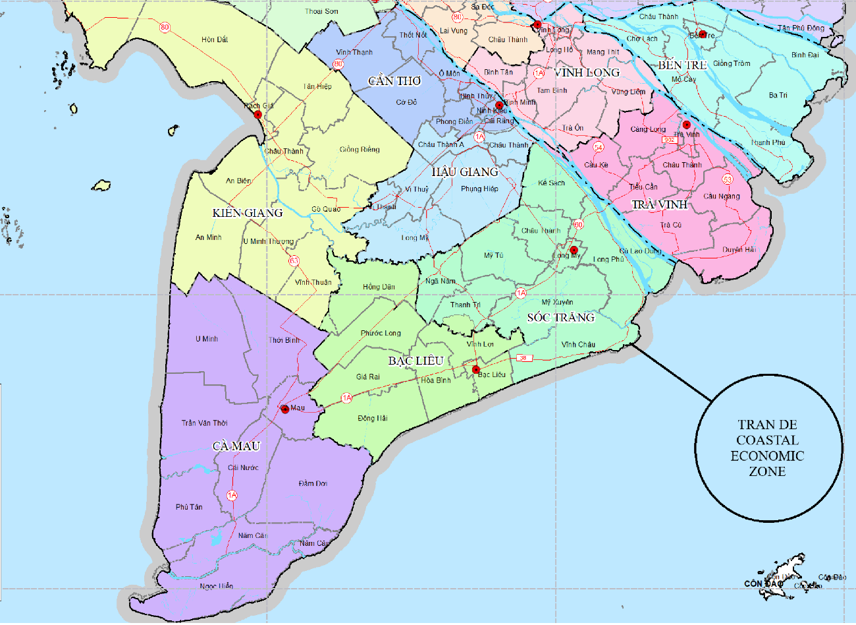
Data were collected through a structured questionnaire administered in the Tran De coastal economic zone of Soc Trang province, Vietnam (see Figure 1). The questionnaire consisted of measurement items for each construct, adapted from previous validated studies and assessed on a five-point Likert scale ranging from 1 (“strongly disagree”) to 5 (“strongly agree”). A total of 274 valid responses were obtained from employees across different enterprises operating in the zone. A stratified random sampling approach was applied, ensuring representation across key enterprise sectors (manufacturing, trade, services, and mixed). Within each stratum, respondents were randomly selected to participate in the survey. The sample was balanced in terms of gender (54.38% male and 45.62% female) and educational background, with most respondents holding university (40.15%) or postgraduate (39.78%) qualifications. More than half of the enterprises represented belonged to the mixed-sector category (52.92%), followed by business and trade (21.17%), manufacturing and construction (13.87%), and services (12.04%), see Table 1.
Figure 1. Study area (Tran De coastal economic zone)
Table 1. Demographic information
|
Variable |
Range |
Frequency |
% |
|
Gender |
Male |
149 |
54.38 |
|
|
Female |
125 |
45.62 |
|
Education level |
Intermediate Professional Education |
37 |
13.5 |
|
|
College |
18 |
6.57 |
|
|
University |
110 |
40.15 |
|
|
Postgraduate |
109 |
39.78 |
|
Field of enterprise |
Manufacturing, Construction |
38 |
13.87 |
|
|
Business, Trade |
58 |
21.17 |
|
|
Services |
33 |
12.04 |
|
|
Mixed |
145 |
52.92 |
The constructs were measured using multiple indicators reflecting both contextual and organizational dimensions of workforce readiness. For example, the EC included perceptions of employment stability and income sufficiency, while FI captured collaboration with training institutions and internal training practices. PO referred to local strategies and incentives for workforce development, and TS addressed knowledge in port management, logistics, and sustainable development. TE was measured through skill outcomes such as equipment operation, teamwork, and foreign language proficiency, while HR assessed the adequacy and alignment of labor with regional development needs.
The factor loading values presented in Table 2 demonstrate the robustness and reliability of the measurement model used to evaluate the development of the Tran De coastal economic zone. All standardized loadings exceed the acceptable threshold of 0.70, indicating a strong relationship between observed variables and their corresponding latent constructs. For instance, PO and TS exhibit high factor loadings, ranging from 0.866 to 0.926, suggesting that government frameworks and vocational training mechanisms are critical enablers in regional development. Similarly, FI displays consistent high loadings between 0.886 and 0.906, implying that enterprises play a significant and coherent role in workforce development and economic collaboration.
Table 2. Factor loading
|
EC |
FI |
HR |
PO |
TE |
TS |
|
|
EC |
0.878 |
|||||
|
0.907 |
||||||
|
0.866 |
||||||
|
0.857 |
||||||
|
0.839 |
||||||
|
FI |
0.890 |
|||||
|
0.906 |
||||||
|
0.886 |
||||||
|
0.886 |
||||||
|
HR |
0.815 |
|||||
|
0.855 |
||||||
|
0.867 |
||||||
|
0.800 |
||||||
|
PO |
0.918 |
|||||
|
0.914 |
||||||
|
0.910 |
||||||
|
0.910 |
||||||
|
0.866 |
||||||
|
TE |
0.876 |
|||||
|
0.914 |
||||||
|
0.871 |
||||||
|
0.907 |
||||||
|
TS |
0.884 |
|||||
|
0.926 |
||||||
|
0.914 |
||||||
|
0.910 |
||||||
|
0.867 |
Note: EC = Econo socio context; FI = Firm engagement; HR = Human resource quality; PO = Policy support; TE = Training effectiveness; TS = Training system.
Meanwhile, constructs such as HR and EC also show substantial internal consistency, with loadings ranging from 0.800 to 0.907. This indicates that labor quality and socio-economic conditions are reliably captured and strongly correlated with broader development goals. TE, with loadings between 0.871 and 0.914, further supports the importance of equipping workers with practical and applicable skills. Overall, the distribution of factor loadings affirms the theoretical framework and highlights the value of combining human capital, institutional support, and enterprise collaboration in promoting sustainable growth in the Tran De coastal economic zone.
In terms of reliability and convergent validity, Table 3 shows that all constructs meet the established thresholds. Specifically, Cronbach’s Alpha values for all six constructs range from 0.856 to 0.944, indicating high internal consistency. The Composite Reliability values are all above 0.90, while the AVE values exceed the recommended threshold of 0.50, confirming strong convergent validity. PO and TS have particularly high AVEs (0.817 and 0.811, respectively), suggesting that most of the variance is captured by the latent variables rather than by measurement error. Together, these indicators reinforce the robustness of the measurement model and validate the inclusion of these constructs in assessing the effectiveness of multi-dimensional strategies in regional workforce development and economic planning (Table 4).
Table 3. Reliability and convergent validity
|
Cronbach's Alpha |
rho_A |
Composite Reliability |
AVE |
|
|
EC |
0.920 |
0.928 |
0.939 |
0.756 |
|
FI |
0.915 |
0.918 |
0.940 |
0.796 |
|
HR |
0.856 |
0.857 |
0.902 |
0.698 |
|
PO |
0.944 |
0.947 |
0.957 |
0.817 |
|
TE |
0.931 |
0.932 |
0.948 |
0.784 |
|
TS |
0.942 |
0.942 |
0.955 |
0.811 |
Note: EC = Econo socio context; FI = Firm engagement; HR = Human resource quality; PO = Policy support; TE = Training effectiveness; TS = Training system; AVE = Average Variance Extracted.
Table 4. Convergent validity and reliability
|
Indicators |
Code |
CR |
AVE |
|
The better the local economic growth, the higher the quality of the human resources. |
EC1 |
0.939 |
0.756 |
|
The economic growth rate of Soc Trang creates sufficient stable employment for the local workforce. |
EC2 |
|
|
|
The average income level of workers in Soc Trang is sufficient to attract labor from other areas. |
EC3 |
|
|
|
Living habits and perceptions of careers are barriers to developing vocational skills among workers in Soc Trang. |
EC4 |
|
|
|
Local cultural factors strongly influence the quality of human resources in Soc Trang. |
EC5 |
|
|
|
Enterprises in Soc Trang directly participate in internal training or cooperate with training institutions. |
FI1 |
0.940 |
0.796 |
|
The collaboration models between schools, businesses, and the government in workforce training in Soc Trang are highly effective. |
FI2 |
|
|
|
The area has specialized training programs specifically for ethnic minority workers in Soc Trang. |
FI3 |
|
|
|
The most common forms of vocational training in Soc Trang are formal and short-term, on-site training programs. |
FI4 |
|
|
|
The labor force in Soc Trang is abundant and excessive. |
HR1 |
0.902 |
0.698 |
|
The labor force in Soc Trang fully meets the needs of this area’s economic activities. |
HR2 |
|
|
|
The structure of trained labor in Soc Trang aligns with the area’s socio-economic development orientation. |
HR3 |
|
|
|
The maritime transport and coastal economy workforce in Soc Trang will grow rapidly in the near future. |
HR4 |
|
|
|
The government of Soc Trang has clear policies on human resource development for the coastal economic zone. |
PO1 |
0.957 |
0.817 |
|
Vocational training policies in Soc Trang are well aligned with the area’s socio-economic development strategy. |
PO2 |
|
|
|
The local policies for attracting labor to work in this area are very effective. |
PO3 |
|
|
|
The human resource development strategy in Soc Trang has a sound medium- and long-term vision aligned with the area's development. |
PO4 |
|
|
|
Soc Trang offers good incentive policies for high-quality human resources. |
PO5 |
|
|
|
Skills in using port management software and automated information systems. |
TE1 |
0.948 |
0.784 |
|
Skills in operating modern port equipment. |
TE2 |
|
|
|
Foreign language skills. |
TE3 |
|
|
|
Communication, negotiation, and presentation skills. |
TE4 |
|
|
|
Teamwork and collaboration skills. |
TE5 |
|
|
|
Workforce with knowledge of maritime transport, logistics, port operations, and supply chain management. |
TS1 |
0.955 |
0.811 |
|
Workforce with knowledge of international regulations and standards related to port operations. |
TS2 |
|
|
|
Workforce with knowledge of the international maritime transport and logistics markets. |
TS3 |
|
|
|
Workforce with knowledge of economics and international trade. |
TS4 |
|
|
|
Workforce with knowledge of environmental protection and sustainable development. |
TS5 |
|
|
Note: EC = Econo socio context; FI = Firm engagement; HR = Human resource quality; PO = Policy support; TE = Training effectiveness; TS = Training system; CR = Composite Reliability; AVE = Average Variance Extracted.
The Fornell–Larcker criterion was applied to assess discriminant validity among the six constructs in the model. As shown in Table 5, the square root of the Average Variance Extracted (AVE) for each construct (represented on the diagonal) exceeds the corresponding inter-construct correlations in the respective rows and columns. This indicates that each latent construct shares more variance with its own indicators than with other constructs, thereby confirming discriminant validity.
Table 5. Fornell-Larcker criterion
|
EC |
FI |
HR |
PO |
TE |
TS |
|
|
EC |
0.870 |
|||||
|
FI |
0.859 |
0.892 |
||||
|
HR |
0.695 |
0.692 |
0.836 |
|||
|
PO |
0.826 |
0.819 |
0.605 |
0.904 |
||
|
TE |
0.722 |
0.751 |
0.596 |
0.778 |
0.885 |
|
|
TS |
0.732 |
0.752 |
0.629 |
0.778 |
0.874 |
0.901 |
Note: EC = Econo socio context; FI = Firm engagement; HR = Human resource quality; PO = Policy support; TE = Training effectiveness; TS = Training system.
All constructs demonstrate satisfactory discriminant validity. For instance, the square root of AVE for FI is 0.892, which is higher than its correlations with EC (0.859), HR (0.692), and other constructs. Similarly, TS shows strong discriminant validity with a square root of AVE of 0.901, surpassing all its inter-construct correlations. Therefore, the results meet the Fornell–Larcker criterion, supporting the distinctiveness of each measured construct within the model.
To further verify discriminant validity, the Heterotrait-Monotrait (HTMT) ratio was assessed. As shown in Table 6, while some correlations are high—specifically between EC and FI—all HTMT values remain below the conservative threshold of 0.90, confirming that the constructs are empirically distinct.
Table 6. Heterotrait-Monotrait ratio (HTMT)
|
EC |
FI |
HR |
PO |
TE |
TS |
|
|
EC |
|
|
|
|
|
|
|
FI |
0.832 |
|
|
|
|
|
|
HR |
0.780 |
0.777 |
|
|
|
|
|
PO |
0.883 |
0.878 |
0.668 |
|
|
|
|
TE |
0.771 |
0.809 |
0.661 |
0.827 |
|
|
|
TS |
0.776 |
0.807 |
0.695 |
0.822 |
0.933 |
|
Note: EC = Econo socio context; FI = Firm engagement; HR = Human resource quality; PO = Policy support; TE = Training effectiveness; TS = Training system.
The multicollinearity assessment, presented in Table 7, reveals that most VIF values fall below the conservative threshold of 5.0, confirming the absence of severe multicollinearity among most constructs. However, indicator TS2 (knowledge of international regulations) exhibits a VIF of 5.481, which slightly exceeds this limit. This elevation is likely due to the highly integrated nature of international maritime standards, where knowledge of regulations (TS2) is closely intertwined with other TS components. Despite this, the corresponding tolerance values (0.182 to 0.608) remain well above the 0.10 minimum, and the overall model remains stable. These results suggest that the independent variables are sufficiently distinct to ensure that the structural estimates are not compromised by problematic linear dependency, supporting the robustness of the structural equation model in this regional context.
Table 7. Multicollinearity testing
|
Construct |
Indicator |
VIF |
Tolerance (1/VIF) |
|
EC |
EC1 |
2.965 |
0.337 |
|
EC2 |
4.074 |
0.245 |
|
|
EC3 |
3.007 |
0.333 |
|
|
EC4 |
2.531 |
0.395 |
|
|
EC5 |
2.396 |
0.417 |
|
|
FI |
FI1 |
2.730 |
0.366 |
|
FI2 |
3.195 |
0.313 |
|
|
FI3 |
3.087 |
0.324 |
|
|
FI4 |
2.921 |
0.342 |
|
|
HR |
HR1 |
1.644 |
0.608 |
|
HR2 |
2.276 |
0.439 |
|
|
HR3 |
2.522 |
0.397 |
|
|
HR4 |
1.854 |
0.539 |
|
|
PO |
PO1 |
4.632 |
0.216 |
|
PO2 |
4.257 |
0.235 |
|
|
PO3 |
3.992 |
0.251 |
|
|
PO4 |
3.966 |
0.252 |
|
|
PO5 |
2.943 |
0.340 |
|
|
TE |
TE1 |
2.932 |
0.341 |
|
TE2 |
3.547 |
0.282 |
|
|
TE3 |
2.972 |
0.336 |
|
|
TE4 |
4.291 |
0.233 |
|
|
TE5 |
3.326 |
0.301 |
|
|
TS |
TS1 |
3.978 |
0.251 |
|
TS2 |
5.481 |
0.182 |
|
|
TS3 |
4.611 |
0.217 |
|
|
TS4 |
4.413 |
0.227 |
|
|
TS5 |
2.935 |
0.341 |
Note: EC = Econo socio context; FI = Firm engagement; HR = Human resource quality; PO = Policy support; TE = Training effectiveness; TS = Training system; VIF = Variance Inflation Factor.
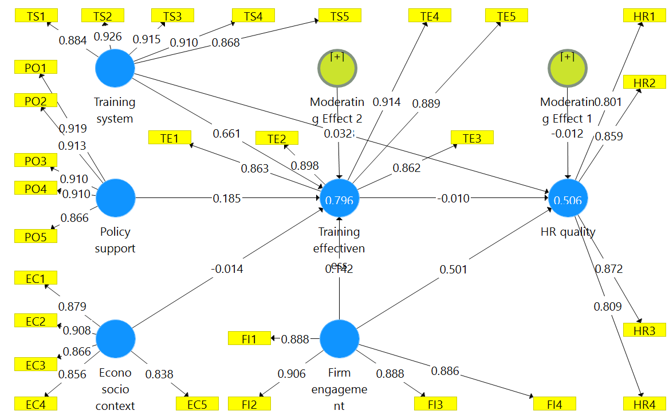
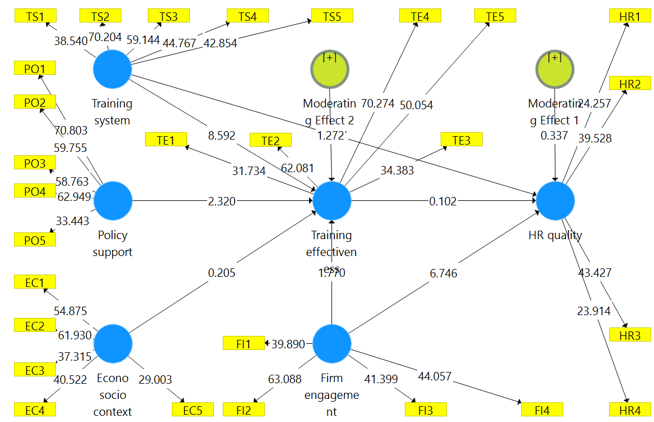
The structural model results are presented in Table 8. The findings reveal a diverse set of relationships among the determinants of workforce readiness. First, the EC does not show a significant impact on TE (β = –0.014, p = 0.838), suggesting that broad socio-economic conditions in the study area are insufficient on their own to strengthen training outcomes. In contrast, FI plays a central role. It exerts a strong and positive influence on HR (β = 0.501, p < 0.01) and also demonstrates a marginally significant effect on TE (β = 0.142, p < 0.10). This confirms that enterprises are essential partners in improving both training processes and the overall preparedness of the workforce.
Table 8. Bootstrapping result
|
Hypothesis |
Coefficient |
t Statistics |
p Values |
Result |
|
|
EC -> TE |
H1 |
-0.014 |
0.205 |
0.838 |
Not supported |
|
FI -> HR |
H2 |
0.501 |
6.746 |
0.000*** |
Supported |
|
FI -> TE |
H3 |
0.142 |
1.770 |
0.077* |
Weakly supported |
|
PO -> TE |
H4 |
0.185 |
2.320 |
0.020** |
Supported |
|
TE -> HR |
H5 |
-0.010 |
0.102 |
0.918 |
Not supported |
|
TS -> HR |
H6 |
0.253 |
2.747 |
0.006*** |
Supported |
|
TS -> TE |
H7 |
0.661 |
8.592 |
0.000*** |
Supported |
|
Moderating effect |
|
|
|
|
|
|
TE * FI -> HR |
H8 |
-0.012 |
0.337 |
0.736 |
Not supported |
|
TS * FI -> TE |
H9 |
0.032 |
5.978 |
0.000*** |
Supported |
|
|
HR |
TE |
|
|
|
|
R2 |
0.506 |
0.796 |
|
|
|
|
Adjusted R2 |
0.499 |
0.792 |
|
|
|
|
f2 |
0.020 |
0.198 |
|
|
|
|
SRMR |
0.054 |
0.056 |
|
|
|
Note: EC = Econo socio context; FI = Firm engagement; HR = Human resource quality; PO = Policy support; TE = Training effectiveness; TS = Training system.
PO also contributes positively, showing a significant effect on TE (β = 0.185, p < 0.05). This underlines the importance of government strategies and policies in enhancing the outcomes of workforce training.
Surprisingly, TE does not directly improve HR (β = –0.010, p = 0.918). This indicates that while training programs may enhance specific skills, they require complementary institutional or organizational support to translate into broader workforce readiness.
The TS emerges as one of the strongest drivers of workforce development. It has a robust and positive influence on both HR (β = 0.253, p < 0.01) and TE (β = 0.661, p < 0.01). This demonstrates that a structured, consistent, and well-aligned TS is foundational for workforce readiness in maritime and port logistics.
4.1 Moderating effects
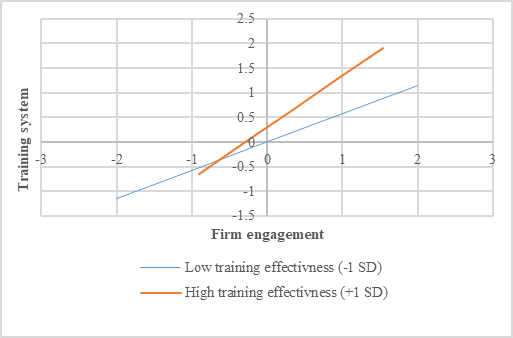
The moderating effect between TS and FI on TE is highly significant (β = 0.032, p < 0.01). This finding highlights a key insight: the impact of FI on training outcomes is substantially amplified when a strong and coherent TS is in place. In other words, firm collaboration becomes more effective when embedded within structured training frameworks.
Overall, the results suggest that FI, PO, and—most critically—a structured TS are the principal mechanisms driving workforce readiness.
Figure 2 and Figure 3 show structural model results and Figure 4 illustrates the moderating effect of TS on the relationship between FI and TE at low, mean, and high levels of TS. The positive relationship between FI and TE becomes stronger as the level of TS increases, supporting the significant moderating effect identified in the bootstrapping analysis (β = 0.032, p < 0.01).
Figure 4. Interaction effect of training system (TS) on the relationship between firm engagement (FI) and training effectiveness (TE)
Our results show that FI, PO, and a structured TS are the main drivers of TE and human-resource (HR) quality in maritime and port logistics. This matches where the industry is heading: ports are shifting from basic cargo interfaces to complex logistics platforms that demand broader and deeper competences from the workforce. Systematic reviews and sector studies underline that managing port labor now requires coordinated HR practices and up-to-date skills to handle technological and organizational change—precisely the terrain where engaged firms and coherent TS make the difference [37].
PO strengthens TE because it creates the institutional scaffolding for curricula, certification, and continuous upskilling. Evidence from maritime education and training (MET) shows that automation and autonomous shipping push providers to rethink content and pedagogy, blending traditional seamanship with digital, systems, and human-automation teaming skills. When policies and standards encourage this shift, training gains translate more readily into workplace outcomes—consistent with our finding that PO boosts TE [38].
A second theme is systematization. Training is most effective when it is part of a recognized framework and supported by realistic practice. For example, port-specific programs—such as security and emergency training frameworks used in European ports—show how formal structures, regular assessments, and refresher sessions help workers retain knowledge and apply it in daily operations. Similarly, simulator-based and scenario-driven learning methods produce stronger results when they are delivered as part of a structured program, rather than as one-time courses. This reflects our significant moderation finding: a strong TS does not just support TE—it multiplies its impact [39]. This finding emphasizes that FI alone is not sufficient to improve training outcomes. Instead, when firms operate within a coherent training framework, their involvement becomes substantially more impactful. In the context of emerging maritime zones such as Tran De, this means that enterprises’ participation in training initiatives must be embedded in well-structured programs in order to deliver tangible improvements in workforce readiness.
By contrast, TE on its own does not lift HR in our model. This finding can be explained by a conceptual mismatch, as suggested by the lack of statistical significance for H5. While TE focuses on the mastery of specific technical skills—such as operating port equipment or foreign language proficiency—HR is a broader construct encompassing labor abundance, structural alignment with regional development, and future growth potential. This is consistent with evidence that learning must be translated into operational behaviours through institutional support, practice, and technology-enabled reinforcement. Mastering a specific task does not automatically translate into a structurally balanced and sufficient workforce for the entire economic zone, especially when institutional support or organizational follow-through is lacking. That logic helps explain why the direct path from TE to HR is not significant here [31].
The broader digital transformation of ports (smart ports, data-driven operations, automation) increases the payoff to FI and TS. Frameworks that stage digital maturity—defining roles, capabilities, and processes—give firms a concrete way to align training with evolving tasks. At the same time, reviews of maritime HR development caution that digital tools only help when organizations tackle adoption barriers and integrate them into everyday practice. Together, these insights fit our pattern of results: engaged firms + enabling policy + structured systems drive TE and, in turn, build durable HR [40, 41].
Although the moderating coefficient of H9 is relatively small (β = 0.032), its high statistical significance (p < 0.01) underscores a critical systemic synergy. In practical terms, this indicates that a structured TS acts as a 'multiplier' or an 'enabling framework'. For enterprises in the Tran De economic zone, their individual efforts to engage in training (e.g., providing internships or equipment) yield significantly higher returns when they are integrated into a coherent, standardized national or regional system rather than being fragmented, isolated activities. This small but stable interaction effect suggests that institutionalizing collaboration is the key to scaling up workforce readiness in emerging maritime hubs.
While these findings offer strategic directions, they should be interpreted with caution as they are based on cross-sectional perception data from a sample of 274 respondents in a single economic zone.
6.1 Theoretical implications
This study advances the understanding of workforce readiness in maritime and port logistics by demonstrating that the determinants of HR are systemic and interactive rather than isolated. FI, PO, and—most importantly—a structured TS emerged as the strongest enablers of both TE and workforce quality. The results also reveal two counterintuitive findings: first, the broader EC does not directly improve TE, indicating that contextual conditions alone cannot guarantee workforce upgrading; second, TE by itself does not translate into higher HR, emphasizing the necessity of institutional reinforcement and organizational follow-through. These findings extend the literature on maritime labor and human capital development by showing that readiness depends on coherent institutional scaffolding and the alignment of firms, training institutions, and policy frameworks.
6.2 Practical implications
Based on stakeholder perceptions, the findings provide foundational insights for policymakers to align vocational training strategies with broader industrial policies on digitalization, sustainability, and regional development. Effective implementation of these policies requires a tripartite coordination mechanism: local government authorities must provide the necessary policy scaffolding and financial incentives; vocational institutions should modernize curricula to meet global standards; and enterprises—specifically those in port and logistics sectors—must provide the practical environments and equipment for training transfer. Incentives for enterprises to cooperate with training institutions and continuous curriculum reform are essential to strengthen training outcomes. For enterprises, the study underscores that training investments are most effective when embedded in structured systems that coordinate with policy frameworks and academic institutions. Collaboration with training providers not only improves specific skills but also enhances organizational adaptability to technological change. To ensure the relevance of workforce readiness, policy interventions and institutional programs should prioritize three core skill clusters identified in this study: (1) Digital literacy for port management software and automated systems (TE1); (2) Technical proficiency in operating modern port equipment (TE2); and (3) Foreign language communication skills (TE3) to facilitate international logistics integration. The results suggest that training institutions should design systematized, practice-oriented programs that combine simulation, digital tools, and international standards. Embedding workplace realities into curricula will help ensure that training outcomes are sustained and transferable to actual port operations.
Temporal framework for regional planning:
Short-term (1–2 years): Focus on addressing immediate skill gaps through industry-led, short-term on-site training programs (FI4) to meet the current operational demands of the Tran De economic zone.
Medium-term (3–5 years): Institutionalize the TS by investing in maritime simulators and aligning regional vocational standards with global requirements, such as the STCW Convention.
Long-term (5+ years): Establish a strategic talent pipeline that anticipates the zone’s transition toward 'Smart Ports' and green logistics, ensuring sustainable and resilient human capital for future growth.
6.3 Limitations and future research
Although this study contributes new insights, it is not without limitations. First, the research focuses on a single economic zone (Tran De, Vietnam), which may limit the generalizability of the findings to other maritime contexts. Comparative studies across multiple regions and countries would provide a broader validation of the model. Second, the cross-sectional design based on a limited sample of 274 respondents captures only a snapshot of stakeholder perceptions; therefore, future longitudinal research is required to validate these findings as the Tran De hub matures. Third, the study relies on self-reported survey data, which may involve perceptual biases. Incorporating mixed methods, such as interviews with managers or case studies of training programs, would strengthen future analyses. Finally, while this study highlights the role of TSs and FI, further research should explore the impact of emerging technologies such as artificial intelligence, automation, and green innovation on workforce readiness.
In conclusion, workforce readiness in maritime and port logistics cannot be achieved by training alone but requires coordinated strategies linking enterprises, policy frameworks, and structured systems. These insights are particularly relevant for developing maritime hubs seeking to build competitive and resilient human resources in an era of digital and sustainable transformation.
[1] Bottalico, A., Vanelslander, T., Verhoeven, P. (2022). Innovation and labor in the port industry: A comparison between Genoa and Antwerp. Journal of Business Logistics, 43(3): 368-387. https://doi.org/10.1111/jbl.12303
[2] Dewan, M.H., Mustafi, M.A.A., Matos, F., Godina, R. (2024). Exploring seafarers' knowledge, understanding, and proficiency in SEEMP: A strategic training framework for enhancing seafarers' competence in energy-efficient ship operations. Heliyon, 10(17): e36505. https://doi.org/10.1016/j.heliyon.2024.e36505
[3] Belabyad, M., Kontovas, C., Pyne, R., Chang, C.H. (2026). Skills and competencies for operating maritime autonomous surface ships (MASS): A systematic review and bibliometric analysis. Maritime Policy & Management, 53(1): 1-26. https://doi.org/10.1080/03088839.2025.2475177
[4] Theotokas, I.N., Lagoudis, I.N., Raftopoulou, K. (2024). Challenges of maritime human resource management for the transition to shipping digitalization. Journal of Shipping and Trade, 9: 6. https://doi.org/10.1186/s41072-024-00165-0
[5] Warren, A., Gibson, C. (2024). The place-based work of global circulation: Maritime workers, collaboration, and labor agency at the seaport. Economic Geography, 100(1): 31-56. https://doi.org/10.1080/00130095.2023.2263127
[6] Warren, A., Gibson, C. (2025). Maritime port geographies: Materiality, labour, and statecraft in global crisis context. Geography Compass, 19(6): e70038. https://doi.org/10.1111/gec3.70038
[7] Esser, A., Sys, C., Vanelslander, T., Verhetsel, A. (2020). The labour market for the port of the future. A case study for the port of Antwerp. Case Studies on Transport Policy, 8(2): 349-360. https://doi.org/10.1016/j.cstp.2019.10.007
[8] Ayesu, E.K., Boateng, K.A.B. (2024). Estimating the impact of container port throughput on employment: An analysis for African countries with seaports. Journal of Shipping and Trade, 9: 8. https://doi.org/10.1186/s41072-024-00166-z
[9] Lavissière, A., Rodrigue, J.P. (2017). Free ports: Towards a network of trade gateways. Journal of Shipping and Trade, 2: 7. https://doi.org/10.1186/s41072-017-0026-6
[10] Legato, P., Monaco, M.F. (2004). Human resources management at a marine container terminal. European Journal of Operational Research, 156(3): 769-781. https://doi.org/10.1016/S0377-2217(03)00134-6
[11] Theotokas, I.N., Lagoudis, I.N., Syntychaki, A., Prosilias, J. (2024). Factors affecting E-HRM practices in Greek shipping management companies: The role of organizational culture, cultural intelligence, and innovation. Journal of Shipping and Trade, 9: 13. https://doi.org/10.1186/s41072-024-00174-z
[12] Kishore, L., Pai, Y.P., Geetha, E., Dmello, V.J., Bidi, S.B. (2025). The impact of dynamic capabilities on shipping port performance: A serial-mediation of sustainability practices based on dynamic capability view. Discover Sustainability, 6: 429. https://doi.org/10.1007/s43621-025-01235-4
[13] Zhou, Y.S., Yuen, K.F., Tan, B., Thai, V.V. (2021). The effect of maritime knowledge clusters on maritime firms' performance: An organizational learning perspective. Marine Policy, 128: 104472. https://doi.org/10.1016/j.marpol.2021.104472
[14] Venkatesh, V.G., Zhang, A., Deakins, E., Mani, V., Shi, Y.Y. (2020). Supply chain integration barriers to port-centric logistics — An emerging economy perspective. Transportation Journal, 59(3): 215-253. https://doi.org/10.5325/transportationj.59.3.0215
[15] Almeida, F., Okon, E. (2024). Achieving sustainable development goals through digitalization in ports. Business Strategy and the Environment, 33(7): 6737-6747. https://doi.org/10.1002/bse.3842
[16] Yi, S.Y., Jung, M., Lee, S.I. (2025). Adapting to change: International maritime education and training for future seafarers – focusing on the comprehensive review of the STCW Convention and Code of the 10th session of the IMO HTW. Journal of International Maritime Safety, Environmental Affairs, and Shipping, 9(2): 2464486. https://doi.org/10.1080/25725084.2025.2464486
[17] Tremblay, D., Villeneuve, C., Faubert, P. (2025). Alignment of the 2030 Agenda to the port industry. Sustainable Development, 33(1): 69-83. https://doi.org/10.1002/sd.3108
[18] Halpe, P., Adams, M., Walker, T.R. (2025). Challenges and opportunities for ports in achieving net-zero emissions in maritime transport. Transportation Research Interdisciplinary Perspectives, 30: 101379. https://doi.org/10.1016/j.trip.2025.101379
[19] Rodrigues, J.N., Bhattacharya, S., Sachdev, B.K., Cabete, D.C.R. (2026). Policy frameworks for green innovation in maritime trade and sustainable development. Maritime Policy & Management, 53(5): 911-937. https://doi.org/10.1080/03088839.2025.2524534
[20] Erdogan, M., Seker, S., Aydin, N., Ayyildiz, E. (2026). Addressing barriers in smart port development: Prioritising strategies for effective implementation. Journal of Marine Engineering & Technology, 25(3): 315-328. https://doi.org/10.1080/20464177.2025.2515743
[21] Potter, A., Wang, Y.L., Naim, M. (2025). Scaling-up 5G adoption in smart ports: Barriers and enablers. Maritime Policy & Management, 52(4): 517-534. https://doi.org/10.1080/03088839.2024.2399524
[22] Chhetri, P., Gekara, V., Scott, H., Thai, V.V. (2020). Assessing the workforce adaptive capacity of seaports to climate change: An Australian perspective. Maritime Policy & Management, 47(7): 903-919. https://doi.org/10.1080/03088839.2020.1729433
[23] Baum-Talmor, P., Kitada, M. (2022). Industry 4.0 in shipping: Implications to seafarers' skills and training. Transportation Research Interdisciplinary Perspectives, 13: 100542. https://doi.org/10.1016/j.trip.2022.100542
[24] Wróbel, K., Formela, K., Gil, M. (2022). Towards maritime employment and retention policy – A longitudinal study on entrants' perspectives. Marine Policy, 144: 105232. https://doi.org/10.1016/j.marpol.2022.105232
[25] Vederhus, L., Ødegård, A., Nistad, S., Håvold, J.I. (2018). Perceptions of demanding work in maritime operations. Safety Science, 110: 72-82. https://doi.org/10.1016/j.ssci.2018.07.008
[26] Wahl, A.M., Hybertsen, I.D. (2025). Reverse training transfer: The social dynamics of developing safe work practices. Safety Science, 191: 106920. https://doi.org/10.1016/j.ssci.2025.106920
[27] Fan, S.Q., Blanco-Davis, E., Fairclough, S., et al. (2023). Incorporation of seafarer psychological factors into maritime safety assessment. Ocean & Coastal Management, 237: 106515. https://doi.org/10.1016/j.ocecoaman.2023.106515
[28] Fan, S.Q., Yang, Z.L. (2023). Towards objective human performance measurement for maritime safety: A new psychophysiological data-driven machine learning method. Reliability Engineering & System Safety, 233: 109103. https://doi.org/10.1016/j.ress.2023.109103
[29] Türkistanli, T.T. (2023). Advanced learning methods in maritime education and training: A bibliometric analysis on the digitalization of education and modern trends. Computer Applications in Engineering Education, 32(1): e22690. https://doi.org/10.1002/cae.22690
[30] Karahalil, M., Lützhöft, M., Scanlan, J. (2025). Factors impacting curricula in maritime simulator-based education. WMU Journal of Maritime Affairs, 24: 545-573. https://doi.org/10.1007/s13437-024-00351-8
[31] Makransky, G., Klingenberg, S. (2022). Virtual reality enhances safety training in the maritime industry: An organizational training experiment with a non-WEIRD sample. Journal of Computer Assisted Learning, 38(4): 1127-1140. https://doi.org/10.1111/jcal.12670
[32] Sardar, A., Garaniya, V., Anantharaman, M., Abbassi, R., Khan, F. (2022). Comparison between simulation and conventional training: Expanding the concept of social fidelity. Process Safety Progress, 41(S1): S27-S38. https://doi.org/10.1002/prs.12361
[33] Wahl, A., Kongsvik, T., Antonsen, S. (2020). Balancing Safety I and Safety II: Learning to manage performance variability at sea using simulator-based training. Reliability Engineering & System Safety, 195: 106698. https://doi.org/10.1016/j.ress.2019.106698
[34] Manning, D.J. (2017). Simulator training. In Encyclopedia of Maritime and Offshore Engineering. https://doi.org/10.1002/9781118476406.emoe049
[35] Ernstsen, J., Nazir, S. (2020). Performance assessment in full-scale simulators – A case of maritime pilotage operations. Safety Science, 129: 104775. https://doi.org/10.1016/j.ssci.2020.104775
[36] Liu, Y.S., Lan, Z.R., Cui, J., et al. (2020). Psychophysiological evaluation of seafarers to improve training in maritime virtual simulator. Advanced Engineering Informatics, 44: 101048. https://doi.org/10.1016/j.aei.2020.101048
[37] Moros-Daza, A., Jubiz-Diaz, M. (2024). Labour force management in maritime ports: A comprehensive systematic literature review. Heliyon, 10(11): e31401. https://doi.org/10.1016/j.heliyon.2024.e31401
[38] Bogusławski, K., Gil, M., Nasur, J., Wróbel, K. (2022). Implications of autonomous shipping for maritime education and training: The cadet's perspective. Maritime Economics & Logistics, 24: 327-343. https://doi.org/10.1057/s41278-022-00217-x
[39] Urciuoli, L. (2016). Port security training and education in Europe—A framework and a roadmap to harmonization. Maritime Policy & Management, 43(5): 580-596. https://doi.org/10.1080/03088839.2015.1134830
[40] Autsadee, Y., Jeevan, J., Mohd Salleh, N.H.B., Othman, M.R.B. (2023). Digital tools and challenges in human resource development and its potential within the maritime sector through bibliometric analysis. Journal of International Maritime Safety, Environmental Affairs, and Shipping, 7(4): 2286409. https://doi.org/10.1080/25725084.2023.2286409
[41] Utama, D.R., Hamsal, M., Abdinagoro, S.B., Rahim, R.K. (2024). Developing a digital transformation maturity model for port assessment in archipelago countries: The Indonesian case. Transportation Research Interdisciplinary Perspectives, 26: 101146. https://doi.org/10.1016/j.trip.2024.101146