Krishanti Beleya | Isabel Akos Agbeko | Prashanth Beleya* | Diana Airawaty | Anusha Kanagala
© 2026 The authors. This article is published by IIETA and is licensed under the CC BY 4.0 license (http://creativecommons.org/licenses/by/4.0/).
OPEN ACCESS
The rapid growth of e-commerce has increased the need for sustainable last-mile delivery (LMD), one of the costliest and environmentally intensive components of urban logistics. This study systematically reviews the role of Artificial Intelligence (AI)-enabled Electric Vehicle (EV) fleets and millennial sustainability values in promoting sustainable LMD. A Systematic Literature Review (SLR) was performed according to the Preferred Reporting Items for Systematic Reviews and Meta-Analyses (PRISMA) guidelines and major academic databases as well as additional sources. Of the 214 studies identified, 47 (between 2017 and 2026) met the inclusion criteria and were analyzed using thematic synthesis. The results indicate the benefits of AI in logistics, such as optimizing routes, predicting demand, managing fleets intelligently, and communicating with customers, which leads to better efficiency and lower operational costs. EV fleets reduce greenhouse gas (GHG) emissions and improve energy efficiency; however, Sustainability performance depends on charging infrastructure availability and electricity generation sources. Millennials came out as the main drivers for the adoption of green delivery, being aware of the environment and engaged with digital. The review develops an integrated framework explaining the relationships among AI technologies, EV fleets, sustainability outcomes, and millennial values.
Artificial Intelligence, Electric Vehicles, last-mile delivery, sustainable transportation, millennials
The dynamism of e-commerce has drastically changed consumer purchasing habits and increased the requirements of efficient, reliable, and sustainable last-mile delivery (LMD) services. The LMD is generally regarded as the most costly and complex part of a logistics chain moving products from a distribution center or local logistics hub to the end consumer [1, 2]. Although LMD represents the shortest geographical distance in the supply chain, it can still contribute to a significant portion of the total logistics costs because of traffic jams in cities, non-regular delivery routes, delivery failures and growing customer demands in terms of delivery velocity and convenience [1-3]. Additionally, the rise of online shopping has led to more freight transport activity in the city which has led to more energy use, GHG emissions and strain on existing transport systems [4, 5].
Artificial Intelligence (AI) has become an important technology solution to these operational and environmental challenges in modern logistics systems. AI represents one of the core enabling technologies of Industry 4.0, and it relies on technologies such as Machine Learning (ML), Deep Neural Networks (DNNs), predictive analytics, and Natural Language Processing (NLP) to enhance the efficiency and effectiveness of logistics networks [1, 6]. By leveraging real-time and historical data from various sources such as traffic conditions, weather forecasts, customer orders, and delivery history, AI-driven systems can make more efficient routing decisions, predict customer demand, and enhance fleet scheduling [1, 4]. Current research indicates that by optimizing routes through AI, companies can achieve substantial improvements in delivery delays, operational cost savings, minimisation of empty vehicle runs, and enhanced quality of customer services via predictive scheduling and communication technologies [1, 6]. However, many of the findings to support such benefits are based on simulation studies and empirical studies in realistic logistics environments are desired [6, 7].
In addition to technological innovation, sustainability is a strategic focus in urban logistics. The traditional delivery service models (LMDs) mainly use internal combustion engine (ICE) vehicles, which cause more air pollution, traffic congestion and carbon emissions in urban areas [3-5]. With ambitious climate targets and net-zero emission targets by governments and organisations, Electric Vehicles (EVs) have become more and more of a consideration for the transport of goods in urban areas [5, 8]. EVs have multiple environmental benefits such as emission reduction of greenhouse gases (GHG), minimizing noise pollution, and the conservation of fossil fuels [3, 5]. Their use in last mile logistics is still controlled by difficulties faced with them like battery ranges, charging infrastructure, charging time, and too high of capital investments [5, 9]. Recent studies indicate that intelligent route planning, charging optimization, energy-aware fleet scheduling, and battery management systems are potential solutions that can be addressed using AI technologies, which would improve the operational feasibility and sustainability of EV-based logistics operations [4, 5].
Consumer behavior has become a major factor influencing the adoption of sustainable logistics, in addition to operational and environmental factors. Millennials, those born between 1981 and 1996, are one of the biggest and most significant consumer groups in the world [10, 11]. Millennials are digital natives who use digital technologies extensively, are environmentally aware and have an increasing preference for socially responsible products and services [12, 13]. Sustainability issues have been found to be more and more important factors in consumer buying decisions such as delivery methods and logistics companies' preferences [14, 15]. Online social media also play a role in strengthening consumption behavior in terms of sustainability via electronic word-of-mouth (eWOM) and influencers, as well as establishing subjective social norms that inspire environmentally responsible purchasing [15-17]. However, millennials should not be considered a reactive group, but an active part of the demand side whose values, expectations and purchasing patterns impact upon the decisions made by organizations in relation to the implementation of sustainable delivery systems.
There are various theoretical frameworks that offer insights into the relationship between consumer behavior and the adoption of sustainable technology. According to the Theory of Planned Behavior (TPB), attitudes, subjective norms, and perceived behavioral control environmentally responsible behaviors [11, 12]. The Technology Acceptance Model (TAM) has been identified as a key theoretical framework within the research on technology acceptance, especially in logistics services, which are increasingly supporting customer operations with AI features such as real-time tracking and predictive notifications to help reduce inefficiencies [18]. In the same way, Diffusion of Innovation (DOI) theory helps understand the process in which new technologies diffuse through social groups or systems, and Stakeholder Theory focuses on the economic, environmental, and social aspects of sustainable logistics projects and their value for society [19-21]. In total, these theories imply that consumer values on sustainability and technology acceptance can be key mechanisms that impact the adoption and diffusion of AI-powered EV fleets.
Although substantial research has examined AI applications in logistics, EV adoption, and sustainable consumer behavior, the literature remains fragmented. Existing reviews have generally focused on individual dimensions of the problem, such as green vehicle adoption [5], logistics optimization technologies [6], or the environmental implications of EV deployment [22]. More recent studies have explored the operational synergy between AI and EV technologies in urban logistics systems [3]. However, limited attention has been devoted to understanding how consumer sustainability preferences, particularly those of millennials, influence the adoption of AI-enabled sustainable logistics solutions. Furthermore, previous studies frequently report operational and environmental performance improvements without clearly distinguishing between empirical evidence, simulation-based findings, and industry projections, thereby limiting the transparency and interpretability of reported outcomes [6].
In order to overcome these, this study carries out a Systematic Literature Review (SLR) of the intersection between the three domains: AI, EV fleets and millennial sustainability values, in the context of last mile delivery. Specifically, the review will aim to: (1) understand the effects of AI technologies on delivery efficiency and operational performance; (2) consider the environmental and operational implications of AI-supported EV fleet management; (3) explore how millennial sustainability values contribute to the acceptance and diffusion of sustainable logistics solutions; and (4) create an integrated framework that combines technological innovation, sustainability outcomes and consumer behaviour.
This review is a significant addition to the literature in 3 ways. First, it brings together disarticulated research from multiple streams of studies in logistics, transportation, sustainability, and consumer behaviour. Second, it lays the groundwork for an evidence-classification process, which classifies studies by the type of evidence given (e.g., empirical peer-reviewed, peer-reviewed simulation, conference paper, thesis, industry report, or preprint), thus improving methodological transparency. Third, it provides an integrated conceptual framework that places values among millennials as a demand-side driver of the adoption of AI technologies among EV fleets in LMD systems. The study integrates technological, environmental, and behavioural angles, offering a complete view of the potential of intelligent and sustainable logistics systems to shape the future of urban freight distribution.
2.1 Research design
In this study, SLR was used to synthesize current evidence regarding the use of AI, EV fleets and millennial sustainability values to foster sustainable LMD. The SLR approach was chosen due to the fact that it's a rigorous, transparent and reproducible methodology, which identifies, evaluates and synthesizes existing knowledge with a minimum of researcher bias. The Preferred Reporting Items for Systematic Reviews and Meta-Analyses (PRISMA 2020) guidelines were followed for methodological transparency and reproducibility of the review.
The review focused on four themes that are interconnected: (i) use of AI in last-mile logistics, (ii) optimisation of EV fleet use, (iii) impact of AI on EV fleet sustainability, and (iv) millennial attitudes towards sustainable delivery solutions. All these themes offer a holistic perspective on the technology, environmental and behavioural aspects of sustainable urban logistics.
2.2 Search strategy and information sources
A thorough literature review was carried out from January to March 2026 to look for studies related to AI, EVs, sustainable LMD, and sustainable values of millennials. The search strategy was developed to ensure maximum breadth and relevance of retrieved studies, whilst maintaining methodological transparency.
The search process was carried out in nine main sources of information, namely: Scopus, Web of Science, ScienceDirect, IEEE Xplore, SpringerLink, Emerald Insight, Taylor & Francis Online, Google Scholar, and ResearchGate. The additional institutional repositories and industry sustainability reports were also explored to include emerging evidence and recent technological advancements that may not yet be published in peer-reviewed journals.
Database specific Boolean search strings were created by combining the keywords of AI, logistics, EVs, sustainability and consumer behaviour. Search syntax was modified as needed to meet the requirements of individual databases. The search strategy, search dates and the amount of records retrieved from each information source is summarised in Table 1.
Table 1. Search strategy and information sources
|
Database |
Search Date |
Search String (Adapted for Database Syntax) |
Records Retrieved |
|
Scopus |
12 January 2026 |
("Artificial Intelligence" OR AI) AND ("Last-mile delivery" OR logistics) AND ("Electric Vehicle*" OR EV) AND sustainability |
41 |
|
Web of Science |
14 January 2026 |
Same search adapted to database syntax |
32 |
|
ScienceDirect |
17 January 2026 |
Same search adapted to database syntax |
29 |
|
IEEE Xplore |
20 January 2026 |
Same search adapted to database syntax |
18 |
|
SpringerLink |
24 January 2026 |
Same search adapted to database syntax |
26 |
|
Emerald Insight |
27 January 2026 |
Same search adapted to database syntax |
16 |
|
Taylor & Francis Online |
30 January 2026 |
Same search adapted to database syntax |
13 |
|
Google Scholar |
4 February 2026 |
Same search adapted to database syntax |
31 |
|
ResearchGate |
12 February 2026 |
Same search adapted to database syntax |
8 |
|
Total |
214 |
The primary Boolean search expression was:
("AI" OR AI OR "ML") AND ("LMD" OR logistics OR "urban logistics") AND ("EV" OR EV OR "electric fleet") AND (sustainability OR "green logistics") AND (millennial OR consumer OR "technology acceptance").
Other keywords related to the TAM, TPB, DOI and green consumer behaviour were included where they were appropriate to provide complete coverage.
2.3 Eligibility criteria
Predefined inclusion and exclusion criteria were established before the screening process as shown in Table 2.
The publication period (2017-2026) was selected because it captures the rapid development of AI-driven logistics, electric mobility, and sustainable transportation research associated with Industry 4.0 and the growing emphasis on environmentally responsible consumer behaviour.
Table 2. Inclusion and exclusion criteria
|
Inclusion Criteria |
Exclusion Criteria |
|
Publications published between 2017 and 2026 |
Publications published before 2017. |
|
English-language publications |
Non-English publications |
|
Studies focusing on AI, EVs, sustainability, consumer behavior, or last-mile delivery |
Studies unrelated to logistics, transportation, sustainability, or technology adoption. |
|
Peer-reviewed journal articles, conference papers, theses, preprints, and industry reports |
Editorials, book reviews, commentaries, and opinion papers. |
|
Full-text articles available for review |
Abstract-only publications. |
|
Empirical, simulation-based, conceptual, review, or mixed-method studies |
Studies lacking sufficient methodological information. |
|
Studies addressing at least one of the review themes |
Duplicate publications. |
2.4 Study selection procedure
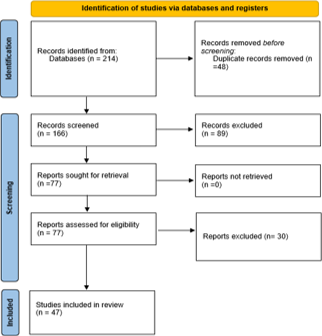
The procedure used for study selection was based on the PRISMA framework which includes identification, screening, eligibility and inclusion. A preliminary search resulted in 214 records being identified. 166 records were left after removing duplicate publications and were then subjected to screening for title and abstract. At this stage, 89 studies were excluded because they did not fulfill the pre-stablished eligibility criteria and/or did not explicitly relate to the research question. The 77 other studies were subsequently full-text reviewed. After eligibility, 30 studies were rejected due to either being insufficiently relevant or having too many methodological issues or too little evidence. Thus, 47 studies were selected to be included in the final synthesis (Table 3).
Table 3. PRISMA study selection summary
|
Stage |
Number of Studies |
|
Records identified |
214 |
|
Duplicate records removed |
48 |
|
Records screened |
166 |
|
Records excluded |
89 |
|
Full-text articles assessed |
77 |
|
Full-text articles excluded |
30 |
|
Final studies included |
47 |
A PRISMA flow diagram illustrating the selection process is presented in Figure 1.
Figure 1. PRISMA flow diagram
Screening was conducted in four stages following the PRISMA framework: identification, duplicate removal, title and abstract screening, and full-text eligibility assessment. Studies that failed to satisfy the predefined inclusion criteria were excluded at each stage. Figure 1 presents the PRISMA flow diagram illustrating the complete study selection process.
2.5 Data extraction
A standardized data extraction template was developed to ensure consistency across all included studies. Information extracted from each publication included:
The extracted information was compiled into a review matrix and used to support thematic analysis and cross-study comparison.
2.6 Quality assessment and evidence classification
All studies included were evaluated by publication type and methodological strength to increase methodological rigour and transparency of evidence. For all studies, evidence was not treated as being equally important, but was categorised based on the level of empirical evidence, allowing readers to differentiate between the findings of studies with empirical evidence from a high level of real-world implementation, and those based primarily on modelling or simulation studies.
Validated findings from empirical studies in actual environments as reported by Ferreira and Esperança [3], Jagoda et al. [13], Dilotsotlhe [10], Mabaso et al. [11] and González-Romero et al. [21] constituted the better evidence, since they were peer-reviewed empirical studies.
Studies that were made using simulations, such as Ahsini et al. [9], Popoola et al. [23], Zhou et al. [7] and Badrinarayanan [1], were considered as moderate evidence as they rely on modeled scenarios, and are not operational deployments.
Reports from industry, technical publications and grey literature are kept largely to report new developments in AI powered logistics and EV uptake but must be interpreted with some suspicion and not as a definitive basis for important findings. This classification allowed to differentiate between the outcomes that are validated by empirical evidence and the projected results often reported in simulation studies (Table 4).
Table 4. Evidence classification of included studies
|
Evidence Category |
Number of Studies |
Interpretation |
|
Peer-reviewed empirical studies |
15 |
Strong evidence |
|
Simulation and modeling studies |
20 |
Moderate evidence |
|
Industry and technical reports |
7 |
Contextual evidence |
|
Conference papers, theses, and preprints |
5 |
Emerging evidence |
|
Total |
47 |
Final review corpus |
2.7 Data analysis and synthesis
The extracted evidence was analysed using the thematic synthesis approach. The analysis was conducted in three steps: First, open coding of study results, second, categorisation of codes into overarching themes, and third, the integration of themes into an overall conceptual framework to explain the relationship between the AI technologies, the performance of EV fleets, sustainability results and the behaviour of millennials.
Findings were interpreted according to the level of evidence found on the production phase, which varied from empirical validation, simulation-based projections, behavioral evidence, and exploratory technological developments.
2.8 Trustworthiness of the review
Various steps were taken to improve the credibility of the review. These were following PRISMA 2020 reporting guidelines, using pre-defined eligibility criteria, exhaustive search in multiple databases, systematic data extraction, evidence classification and comparison across studies. These procedures minimized selection bias, made the review methods transparent, and increased the credibility and reproducibility of the review conclusions (Table 5).
Table 5. Comparison of the present review with previous review studies
|
Previous Review |
Primary Focus |
Limitations |
Contribution of the Present Review |
|
Patella et al. [5] |
Green vehicles in last-mile logistics |
Limited discussion of AI and consumer behaviour |
Integrates AI, EV fleets, and millennial sustainability values |
|
Kumar and Chidambara [4] |
Last-mile e-commerce logistics |
Focuses primarily on logistics optimisation |
Combines technological, environmental, and behavioural perspectives |
|
Mogire et al. [22] |
Electric vehicle bibliometric review |
No integrated sustainability framework |
Develops an integrated socio-technical framework for sustainable LMD |
|
Present Review |
AI, EV fleets, sustainability, and millennial values |
— |
Provides evidence classification, thematic synthesis, and an integrated framework linking technology, sustainability, and consumer behaviour |
3.1 Introduction
This systematic review was based on the analysis of literature related to the influence of AI, EVs, sustainability and consumer behaviour in LMD from 47 studies. The literature review shows that during the last few years, the academic and industrial interest in sustainable solutions for urban logistics has been growing steadily, with some countries dedicated to this cause to a greater extent than others. The majority of the studies were published between 2022 and 2025, signifying that these areas of logistics research and EV-based delivery are still nascent and developing fast.
Geographically, the evidence base was limited to developed economies, and mainly Europe, North America and China. Empirical studies, on the other hand, are comparatively limited in emerging economy countries like Africa and Latin America, despite the growing urbanization and logistical difficulties in these countries. The imbalance reveals a critical need for evidence specific to developing markets.
As in the aim of methodological transparency, the included studies were classified into types of publications as it is presented in Table 6.
Table 6. Distribution of included studies by publication type
|
Publication Type |
Frequency (n = 47) |
Percentage (%) |
|
Journal Articles |
37 |
78.7 |
|
Review Articles |
5 |
10.6 |
|
Conference Papers |
1 |
2.1 |
|
Theses/Dissertations |
2 |
4.3 |
|
Industry Reports/Technical Reports/Preprints |
2 |
4.3 |
|
Total |
47 |
100.0 |
Table 6 presents the number and proportion of studies in each publication category.
Most of the sources were peer-reviewed journal articles, enhancing the credibility of the review conclusions, while the use of grey literature helped to get coverage on new technologies and the recent trends of the industry that could not be found much in the academic literature.
3.2 Artificial Intelligence applications in last-mile delivery
The review identified AI as a central enabler of operational efficiency in last-mile logistics. Three dominant application areas emerged from the literature: route optimization, demand forecasting, and customer communication [1, 23, 24].
Within the literature reviewed, the most widely studied application of AI was found to be route optimization. Typically, the performance of ML, Reinforcement Learning (RL) and other AI based optimization algorithms is compared to traditional routing heuristics and human-planning methods. In the reviewed simulation-based studies, travel distance was consistently lowered by 12-22% and operating costs by 15-40% with the assistance of AI-based routing, but this is the projected improvement for the simulated operation and does not necessarily mean that the same reduction would occur in a large-scale deployment in the field [1, 6, 23]. Furthermore, predictive demand forecasting with ML models also helped to improve the accuracy of the forecasts by up to 50% compared to the traditional forecasting method, which showed a better use of the fleet and fewer empty movements [1, 6, 23]. AI-powered customer communication systems that use NLP and predictive scheduling further increased delivery reliability by minimizing failed deliveries and delivering more satisfying customer communications compared to traditional notification systems [2, 22]. The evidence suggests that AI has a significant positive effect on operational performance, but the majority of evidence comes from simulation studies, suggesting that empirical evidence is needed to validate the AI's impact on operational performance.
The quantified improvements in performance shown in Table 7 have been collated from previous studies and thus should be treated as secondary evidence and not as findings of the present review. The improvements reported most frequently were from simulation-based experiments or modelling investigations involving comparisons between the AI enabled approach and traditional routing/scheduling, forecasting, or customer communication practices. While these studies consistently show the promise of AI to increase the efficiency of operations, the reported performance gains can differ due to assumption made in modelling, data used, logistics situations, and optimization algorithms. Results therefore require further validation from large-scale empirical studies in realistic operating conditions.
Table 7. Quantified impact of AI applications in last-mile delivery
|
AI Application |
AI Technique Reported |
Performance Indicator |
Benchmark/Comparison |
Reported Improvement |
Evidence Type |
Ref. |
|
Intelligent route optimization |
Machine Learning (ML), Reinforcement Learning (RL) |
Operating cost |
Conventional/manual route planning and heuristic routing methods |
15–40% reduction |
Secondary summary (simulation-based study) |
[1] |
|
Intelligent route optimization |
ML and AI routing algorithms |
Travel distance |
Traditional shortest-path and fixed-route planning |
12–22% reduction |
Secondary summary (simulation-based studies) |
[1, 23] |
|
Predictive demand forecasting |
Machine Learning predictive models |
Forecast accuracy |
Conventional statistical demand forecasting |
Up to 50% improvement |
Secondary summary (simulation-based study) |
[23] |
|
AI-enabled fleet scheduling |
AI scheduling and optimization algorithms |
Fleet utilization |
Conventional fleet scheduling |
30–47% improvement |
Secondary summary (simulation-based studies) |
[1, 2] |
|
AI-assisted fleet optimization |
Machine Learning optimization |
Empty vehicle movements |
Conventional dispatch planning |
Up to 26% reduction |
Secondary summary (simulation-based study) |
[1] |
|
AI-enabled customer communication |
Natural Language Processing (NLP) and predictive scheduling |
Failed deliveries |
Conventional customer notification systems |
20–33% reduction |
Secondary summary (simulation-based study) |
[1] |
|
AI-enabled customer engagement |
NLP and intelligent notification systems |
Customer satisfaction |
Conventional delivery communication systems |
30–47% improvement |
Secondary summary (simulation-based studies) |
[1, 2] |
Overall, the reviewed studies consistently indicate that AI improves operational efficiency in LMD through enhanced routing, forecasting, scheduling, and customer communication. Nevertheless, because most available evidence is simulation-based, further empirical investigations are required to confirm these findings in real-world logistics environments.
3.3 Artificial Intelligence-enabled Electric Vehicle adoption in last-mile delivery
EVs were consistently stated as one of the important means to curb the effects on the environment of urban freight transport [3, 8, 19]. Literature has identified several advantages of EV deployment, such as reduction in GHG emissions, less noise pollution, and higher energy efficiency over ICE vehicles [5, 9, 22]. However, a lot of challenges exist, especially operational and infrastructural difficulties, which hinder the widespread adoption of these benefits. The top three problems identified in the reviewed studies [6, 18, 19] were range anxiety, charging infrastructure and high purchase prices. A constant theme in identifying the barriers was the need for AI to be a key enabler to address them. Energy-aware routing systems minimize battery consumption and charging management algorithms maximize vehicle availability and reduce disruption during operation [6, 9, 23]. However, a few studies highlighted the fact that EV fleet environmental performance is still influenced by the CO2 intensity of electricity generation and battery manufacturing [3, 5, 8, 9].
3.4 Sustainability outcomes of Artificial Intelligence-enabled Electric Vehicle fleets
The reviewed studies consistently linked AI-enabled EV fleets with improvements across environmental, economic, and social dimensions of sustainability. Environmental outcomes were the most extensively reported, particularly reductions in GHG emissions and energy consumption [3, 5, 6, 22, 25].
Economic benefits included lower operating costs, improved vehicle utilization, and greater delivery efficiency resulting from AI-assisted fleet management [1, 2, 23]. Social benefits included reduced traffic congestion, lower urban noise levels, and enhanced customer satisfaction through improved service reliability (Table 8) [16, 17, 21].
Although the overall sustainability impact of AI-enabled EV fleets was positive, several studies emphasised that these environmental benefits are influenced by the carbon intensity of local electricity generation, battery manufacturing processes, and lifecycle battery emissions. Consequently, the long-term sustainability of EV fleets depends not only on vehicle electrification but also on cleaner energy systems and sustainable battery lifecycle management [8, 25]
Table 8. Sustainability outcomes associated with AI-enabled EV fleets
|
Sustainability Dimension |
Key Outcome |
Evidence Source |
|
Environmental |
Reduction in CO₂ emissions |
Ferreira and Esperança [3]; Popoola et al. [23] |
|
Environmental |
Improved energy efficiency |
Ahsini et al. [9]; Popoola et al. [23] |
|
Economic |
Reduced operational costs |
Badrinarayanan [1]; Rohit and Sowmya [2] |
|
Economic |
Improved fleet utilization |
Badrinarayanan [1]; Popoola et al. [23] |
|
Social |
Improved service reliability |
Rohit and Sowmya [2] |
|
Social |
Reduced congestion and noise pollution |
González-Romero et al. [21]; Ferreira and Esperança [3] |
3.5 Millennial consumer perspectives on sustainable delivery
Millennials emerged as a key stakeholder influencing the adoption of sustainable delivery solutions. A positive correlation between EA and attitudes towards sustainability and support for green logistics initiatives was consistently reported in the literature [10, 11, 26]. Research based on the TPB showed that environmental attitudes and subjective norms have an important effect on green purchase intentions [12, 26-28]. Likewise, studies using the TAM demonstrated the positive relationships between perceived usefulness and ease of use, and their positive impacts on acceptance of technology-oriented logistics services [18, 29].
Social media emerged as a key factor in influencing attitudes and behavioral intentions for sustainability. Millennials' pro-environmental purchasing increased through exposure to influencer messages, eWOM, and peer-generated pro-environmental messages [14-17]. But there was still an intention-behaviour gap. While the attitudes of millennials in relation to sustainable delivery methods were generally positive, there were a number of issues relating to delivery speed, convenience and extra costs which posed barriers to actual use of these delivery methods [26-28, 30].
3.6 Integrated evidence on Artificial Intelligence, Electric Vehicles, and millennial sustainability values
The final synthesis shows that the adoption of technology and consumer demand complement each other and work best together for sustainable LMD. AI enhances operational efficiency and transparency of delivery, EV fleets reduce GHG emissions and improve energy efficiency, and millennials are driving the market for sustainable logistic services [1, 3, 22, 23].
There is emerging evidence that an integrated system of AI-EV delivery provides better results than the technological interventions alone. Research indicated AI optimization, along with electrified delivery fleets, improved operational efficiency, environmental performance, and customer satisfaction [2, 3, 5, 23]. The results corroborate the proposed framework in which technological capabilities and consumers' sustainability values are complementary drivers for the adoption of green last mile delivery.
Results of the synthesis show that technological innovation is not enough to realize sustainable logistics transformation. Instead, the combination of AI features and EV adoption, along with consumer preferences for sustainable delivery, will be the main driver behind strategy for EV adoption in the last-mile sector (Table 9).
Table 9. Mapping of key findings to research objectives
|
Research Objective |
Key Findings |
|
RO1: Evaluate the impact of AI on operational efficiency |
AI-enabled routing, forecasting, and scheduling improved delivery efficiency, reduced travel distance, and lowered operational costs [1, 2, 6, 22-24]. |
|
RO2: Analyze environmental and operational performance of AI-managed EV fleets |
AI-assisted EV operations improved energy efficiency, fleet utilization, and emissions performance while mitigating range and charging challenges [3, 5, 6, 8, 9, 22]. |
|
RO3: Investigate alignment between millennial values and sustainable logistics |
Environmental attitudes, subjective norms, and social media influence positively affected support for sustainable delivery solutions [10-17, 27, 29]. |
|
RO4: Develop an integrated framework for green LMD adoption |
Evidence supports a synergistic relationship between AI technologies, EV fleets, and millennial sustainability values in driving sustainable logistics adoption [1, 3, 5, 6, 9, 10, 22]. |
4.1 Introduction
This chapter provides an interpretation of the findings obtained from the SLR in conjunction with the research objectives and theories. AI, EVs, and the Millennial mindset on Sustainability are explored as they impact Sustainable LMD. The chapter also emphasizes the theoretical contribution, managerial implications, policy suggestions, and limitations, as well as future research directions.
4.2 Discussion of key findings
AI has emerged as a strategic enabler of sustainable LMD. The review reveals how AI has carved out a niche from being just a technological aid to becoming a strategic enabler for sustainable LMD solutions. The studies reviewed had their main focus on the use of AI in route optimization, demand forecasting, and communication with customers [1, 2, 22, 24].
Results show that AI-powered route optimization can lead to significant decreases in travel distance, delivery time, and cost of operation. This result agrees with earlier findings that ML and RL algorithms are good ways to increase logistics efficiency in dynamic urban environments [1, 6, 31]. The findings also support the argument in which Industry 4.0 and Industry 5.0 technologies are increasingly changing logistics operations from being based on static planning systems to adaptive and data-driven systems [4, 29].
The review also indicates that the majority of the evidence for the benefits of using AI for performance improvements is based on simulation studies and not large, real-world deployments. The result aligns with Kumar and Chidambara's [4] and Zhou's et al. [7] findings that the empirical application of AI-powered logistics has been limited. As a result, although operational benefits have been reported, more field testing of these systems is needed to make generalizations.
4.2.1 The role of Electric Vehicle fleets in green logistics
The review confirms that EV fleets represent one of the most widely adopted approaches for reducing environmental impacts in urban freight transportation [3, 7, 9].
Consistent with previous studies, the findings indicate that EV adoption can substantially reduce carbon emissions and improve energy efficiency when compared with conventional ICE vehicles [3, 5, 22]. Nevertheless, the review highlights that the environmental benefits of EV fleets are highly context-dependent.
Several studies emphasized that lifecycle emissions associated with battery production and electricity generation can significantly influence the overall sustainability performance of EV fleets [3, 5, 8]. Similar concerns were raised by Patella et al. [5], who argued that environmental gains vary across countries depending on energy infrastructure and electricity generation sources.
The review further identified charging infrastructure as one of the most persistent barriers to large-scale EV deployment [9, 28]. This challenge was particularly evident in developing economies, where inadequate charging networks and unstable power supply systems continue to constrain adoption [9, 19, 28].
These findings suggest that EV fleets alone cannot guarantee sustainable logistics outcomes. Instead, sustainability emerges through the interaction between vehicle technology, charging infrastructure, renewable energy availability, and intelligent fleet management systems [1, 3, 18].
4.2.2 Millennial sustainability values and green delivery adoption
The review demonstrates that millennials play a critical role in accelerating sustainable logistics adoption through their environmental awareness, digital engagement, and willingness to support responsible businesses [10, 11, 27].
The findings align with studies indicating that environmental attitudes, subjective norms, and social influence significantly affect green purchase intentions [7, 27, 29]. Social media emerged as a particularly influential mechanism through which sustainability values are communicated and reinforced among millennials [16, 17, 30, 32].
Despite strong environmental awareness, the review identified evidence of an intention-behavior gap. While many millennials express support for sustainable delivery options, actual adoption may be constrained by higher delivery costs, convenience considerations, and limited awareness of available green alternatives [26, 28, 30].
This finding is consistent with previous consumer behavior research, which suggests that environmental concern alone does not always translate into actual purchasing behavior [11-13].
4.3 Discussion through theoretical lenses
4.3.1 Theory of planned behavior
The findings provide substantial support for the TPB. Environmental attitudes and subjective norms consistently emerged as significant predictors of sustainable consumption and green delivery preferences [11, 12, 26, 27].
The review extends TPB by highlighting the growing role of digital communities and social media platforms in shaping subjective norms. Unlike traditional interpersonal influences, digital interactions enable sustainability messages to spread rapidly among large consumer groups, thereby influencing purchasing intentions and environmental behaviors [14, 15, 28, 33].
4.3.2 Technology acceptance model
The review also supports the TAM. AI-enabled delivery technologies were found to be positively associated with perceived usefulness and perceived ease of use, particularly among digitally literate millennials [18, 28, 34]. An important contribution of this review is the identification of sustainability transparency as an extension of perceived usefulness. Consumers increasingly value features such as carbon tracking, delivery visibility, and AI-enabled communication systems because they provide both functional and environmental benefits [18, 30, 34].
4.3.3 Diffusion of innovation theory
The findings further validate the relevance of DOI theory in explaining EV adoption and acceptance of sustainable delivery technologies [8, 19, 35].
Among the DOI constructs, compatibility emerged as the strongest predictor of adoption. Consumers were more likely to embrace sustainable logistics solutions when those solutions aligned with their existing lifestyles, technological habits, and environmental values [11, 35].
The review therefore suggests that logistics innovations must not only offer environmental advantages but also fit seamlessly into consumer routines and expectations.
4.3.4 Stakeholder theory
The findings support Stakeholder Theory by demonstrating that sustainable logistics outcomes are influenced by interactions among multiple actors, including logistics providers, consumers, policymakers, technology developers, and energy providers [8, 20, 36].
The review indicates that successful implementation of AI-enabled EV fleets requires coordinated stakeholder engagement rather than isolated organizational initiatives. This finding reinforces arguments that sustainability performance depends on collaborative governance structures and shared responsibility across supply chain networks [20, 37].
4.4 Theoretical implications
The review contributes to sustainable logistics literature by integrating technological, environmental, and behavioral perspectives into a unified framework. Existing studies often examine AI adoption, EV deployment, or consumer behavior independently. However, the findings demonstrate that sustainable LMD outcomes emerge from the interaction among these dimensions rather than from any single factor alone [1, 3, 9, 10].
The review therefore advances understanding of sustainable logistics as a socio-technical system in which technological innovation and consumer values jointly influence sustainability outcomes [38, 39].
4.5 Practical implications
Table 10 presents the implications.
Table 10. Managerial and policy implications
|
Stakeholder |
Key Implications |
|
Logistics Providers |
Invest in AI-driven route optimization, predictive analytics, and energy-aware fleet management. |
|
Retailers |
Promote green delivery options through transparent sustainability information and digital nudging. |
|
Policymakers |
Expand charging infrastructure, renewable energy integration, and smart-city logistics support. |
|
Technology Developers |
Develop explainable AI systems and interoperable logistics platforms. |
|
Consumers |
Encourage adoption of sustainable delivery options through awareness and incentive programs. |
4.6 Synthesis of findings
The findings of the evidence collated and analysed in this review indicate that sustainable LMD is most effectively defined as a holistic socio-technical system of technological innovation, environmental sustainability and consumer behaviour which influence logistics performance. AI, EV fleets, and millennial sustainability values are not solo drivers as they work together to create sustainable logistics outcomes [1, 9, 22].
The findings presented in Chapter 4 revealed strong evidence that AI serves as the operational enabler of sustainable LMD through route optimization, predictive demand forecasting, and intelligent customer communication systems [2, 6, 23, 24]. Across the reviewed studies, AI-driven optimization consistently reduced travel distance, delivery time, and operational costs, thereby addressing the inefficiencies traditionally associated with urban freight transport [1, 24, 31]. These findings support the argument that AI functions as the "operational brain" of modern logistics systems by enabling real-time decision-making under dynamic operating conditions [4, 29].
The review further established that EV fleets represent a critical component of logistics decarbonization strategies. Evidence from both empirical and simulation studies demonstrated measurable reductions in carbon emissions, energy consumption, and operating costs when EVs are integrated into last-mile logistics operations [3, 6, 9, 22]. However, the findings also revealed that environmental benefits are contingent upon contextual factors such as charging infrastructure availability, electricity generation sources, and battery lifecycle management [5, 19, 28]. Consequently, EV sustainability should be viewed as a system-level outcome rather than a technology-specific characteristic.
The review also pointed out that millennials are a key stakeholder because of their environmental attitudes, their use of digital technologies and their social values increasing the uptake of sustainable delivery solutions [17, 26, 27]. The variables of the TPB which were environmental attitudes and subjective norms were also found to be significant predictors of green purchase intentions [7, 18, 29]. In addition, the review identified social media as an important mechanism for enhancing sustainability awareness and reinforcing pro-environmental behaviour through peer influence and eWOM communication [15, 16, 32, 40].
The most significant contribution of the review lies in demonstrating the synergistic relationship among AI, EV fleets, and millennial sustainability values. The evidence suggests that AI-enabled EV fleets provide the operational efficiency and environmental performance required to support sustainable logistics, while millennial consumers generate the market demand necessary to incentivize adoption [1-3]. This interaction creates a self-reinforcing cycle in which technological innovation improves sustainability outcomes, and sustainability-conscious consumers accelerate market diffusion through purchasing behaviour and social influence [20, 35].
Despite broad agreement across studies, several areas of divergence were identified. First, the majority of operational performance claims originated from simulation and modelling studies rather than large-scale field implementations [3, 31]. Second, the environmental benefits of EV fleets varied considerably across geographical contexts due to differences in energy infrastructure and electricity generation systems [3, 5, 9]. Third, behavioural studies consistently reported an intention-behaviour gap, whereby consumers expressed support for sustainable delivery options but did not always translate these intentions into actual purchasing behaviour [12, 26, 28]. These inconsistencies highlight the need for future research that integrates technical, environmental, and behavioural perspectives within a common analytical framework [41, 42].
4.7 Limitations of the review
Although this SLR provides comprehensive insights into sustainable LMD, several limitations should be acknowledged.
First, a significant geographical imbalance was observed in the literature. The research is predominant in developed economies, especially Europe, North America and China, with empirical research data hardly available in Africa, Latin America or the rest of the emerging markets [3, 5, 9, 19, 22]. It may therefore be limited in its generalizability to contexts in developing countries, due to disparities in infrastructure and regulatory provisions and economic context, etc.
Second, the evidence base exhibited a methodological imbalance. As shown in Chapter 4, a substantial proportion of the reviewed studies relied on modelling and simulation approaches rather than real-world implementation data [18, 23]. While simulation studies provide valuable insights into potential operational improvements, their findings may not fully capture the complexity of actual logistics environments.
Third, most studies examining consumer behaviour employed cross-sectional survey designs and structural equation modelling techniques [26, 27, 29]. These approaches are effective for identifying behavioural relationships but provide limited insight into how sustainability attitudes evolve over time. Consequently, longitudinal evidence concerning changes in consumer preferences remains scarce.
Fourth, despite efforts to include diverse sources, the review was restricted to English-language publications and selected academic databases. Relevant studies published in other languages or contained within organizational reports, government publications, and proprietary industry documents may therefore have been excluded [8, 18].
Finally, the rapidly evolving nature of AI technologies, battery innovations, and smart logistics systems presents an inherent limitation. Because many of the reviewed studies were published between 2022 and 2025, some technological findings may become outdbadrated as new innovations emerge [5, 31].
4.8 Future research agenda
The limitations and evidence gaps identified throughout the review suggest several important directions for future investigation. Table 11 summarizes the key research gaps, the evidence supporting their existence, and recommended future research priorities as shown in Table 12.
Table 11. Theoretical contributions of the review
|
Theory |
Key Findings from Review |
Contribution |
|
TPB |
Environmental attitudes and subjective norms influence green delivery adoption |
Extends TPB by identifying social media as a major source of subjective norm formation |
|
TAM |
AI systems increase perceived usefulness and transparency |
Broadens perceived usefulness to include sustainability benefits |
|
DOI |
Compatibility strongly predicts EV adoption |
Demonstrates importance of lifestyle fit in green logistics adoption |
|
Stakeholder Theory |
Sustainability outcomes depend on collaboration among stakeholders |
Supports multi-stakeholder governance approach to sustainable logistics |
Table 12. Future research agenda for sustainable last-mile delivery
|
Research Gap Identified from Chapter 4 |
Evidence from Review |
Recommended Future Research |
|
Dominance of simulation-based AI studies |
AI route optimization evidence was primarily derived from modelling and simulation studies [1, 3, 6, 23, 24]. |
Conduct large-scale field experiments and longitudinal implementation studies to validate operational benefits under real-world conditions. |
|
Limited empirical evidence from developing economies |
Most studies originated from Europe, North America, and China, with minimal representation from Africa and Latin America [3, 5, 9, 19, 22]. |
Develop country-specific case studies examining infrastructure constraints, policy barriers, and technology adoption challenges in emerging economies. |
|
Uncertainty regarding lifecycle sustainability of EV fleets |
Findings showed environmental performance varies according to electricity generation mix and battery production processes [3, 5, 8, 9]. |
Conduct comparative lifecycle assessment studies across different energy systems and battery recycling frameworks. |
|
Persistent intention–behaviour gap among consumers |
Millennials frequently expressed positive sustainability attitudes but demonstrated inconsistent willingness to pay for green delivery options [13, 34]. |
Undertake longitudinal behavioural studies examining actual purchasing behaviour and sustainable delivery adoption over time. |
|
Weak integration of technical and behavioural models |
Most studies focused exclusively on either logistics optimization or consumer behaviour [7, 10, 12, 27, 29]. |
Develop integrated socio-technical frameworks combining AI performance metrics, sustainability outcomes, and consumer acceptance variables. |
|
Limited research on Explainable AI (XAI) in logistics |
Existing studies emphasized optimization performance but rarely addressed algorithm transparency [6, 31, 34]. |
Investigate how Explainable AI influences stakeholder trust, technology acceptance, and organizational adoption decisions. |
|
Insufficient attention to end-of-life battery management |
Most EV studies focused on operational efficiency rather than battery disposal and recycling [3, 5, 9]. |
Examine circular economy approaches for battery reuse, recycling, and sustainable disposal in urban logistics systems. |
|
Limited understanding of social media-driven sustainability behaviour |
Social media was identified as an important driver of sustainable consumption, but causal mechanisms remain unclear [35, 36, 38]. |
Explore the influence of social media influencers, greenwashing perceptions, and digital trust on sustainable delivery adoption. |
|
Lack of governance-focused studies |
Sustainable logistics implementation depends on collaboration among multiple stakeholders [8, 20, 37]. |
Examine multi-stakeholder governance models involving governments, logistics providers, technology firms, and consumers. |
Future studies on sustainable LMD need to pay greater attention to empirical studies in developing economies, assess the full lifecycle sustainability of EV fleets, consider consumer adoption issues, incorporate technical and behavioural approaches, increase the transparency of AI, study circular batteries, explore the role of social media on sustainable consumption and design appropriate multi-stakeholder governance structures for sustainable urban LMD systems at scale.
5.1 Conclusion
This study systematically reviewed and analyzed the literature related to the influence of AI integrated EV fleet and millennial sustainability values on the sustainable LMD concept. A total of 47 studies were identified, screened, evaluated, and synthesized in this study following the PRISMA framework, between 2017 and 2026. The review included empirical studies, modelling and simulation research, systematic reviews, conference papers, theses and industry reports to gain a comprehensive understanding of sustainable LMD [37, 43].
The study reveals how AI has emerged as an essential tool for achieving sustainable logistics operations. Scale logistics solutions such as AI systems noted for route optimisation, predicting demand, and intelligent communication systems have had a distinct and positive impact on operational efficiency, all while cutting delivery durations, mileage, and logistics expenses [1, 2, 22, 23]. The review also highlighted how AI systems in decision-making processes contribute to the reliability and satisfaction of the services by allowing real-time responses to the ever-changing dynamics of urban logistics [4, 23, 24].
The study also validates the potential of EVs to decarbonise urban freight transport. In the literature surveyed, EV use was linked to decreases in GHG emissions, increases in energy efficiency and decreases in the long-term operating costs of EVs [3-6, 22]. Charging infrastructure, electricity generation sources, managing battery life, and supportive policy environments, however, significantly impact the sustainability performance of the EV fleet [19, 28, 29].
The review confirmed that millennial consumers are an influential force that contributes to the adoption of sustainable logistics solutions from a behavioural perspective. The main factors that influence green delivery preferences were environmental attitudes, social influence, sustainability awareness, and digital involvement [16, 21, 26, 27]. The results lend support to the TPB, TAM and DOI theory, in that they indicate that not only is technology performance important, but also perceived usefulness, compatibility with lifestyle, and social norms affect the adoption of sustainable delivery [18, 34, 35].
More than anything, the review shows there is no one-size-fits-all solution for sustainable last-mile deliveries in the form of technological fixes. Instead, the successful implementation relies on interaction between the AI technologies, EV fleet management systems, supportive infrastructure, stakeholder cooperation and consumer acceptance [4, 8, 22, 31, 37]. The data indicates that AI acts as the operational intelligence that optimizes EV performance and millennial sustainability values are driving the market demand needed for EV uptake. Sustainable LMD should therefore be looked at as a socio-technical ecosystem, and not just a mere technological approach [40, 41, 44].
Overall, this review adds to the sustainable logistics body of knowledge by collating the sparse knowledge from technological, environmental and behavioural perspectives. It suggests the increased alignment of digital transformation with sustainability goals and offers a solid base to build on for future research and application in the dynamic domain of urban logistics.
The study makes several theoretical and practical contributions to sustainable logistics research.
5.2 Theoretical contributions
First, the review adds to existing theory by combining three theories TPB, TAM, and DOI themselves combined into a single framework for exploring sustainable LMD. It integrates multiple theories, such as TPB, TAM, and DOI, into a single framework when investigating sustainable LMD. Research on technology adoption, on environmental sustainability, on consumer behaviour are generally investigated separately from each other. This review shows that these dimensions give rise to sustainable logistics outcomes as a result of their interaction, not directly from any one dimension alone [11, 29, 36].
Secondly, the study demonstrates that sustainability concepts, such as carbon transparency, green delivery and environmental accountability are becoming more prevalent in perceived usefulness [18, 29, 30, 34].
Third, the review extends TPB by identifying the significant role played by social media and digital communities on influencing sustainable consumption related subjective norms among millennials [14-16, 21].
5.3 Practical contributions
The results offer insightful recommendations for logistics providers, retailers, policy makers and technology makers. The review shows how investments in AI-powered logistics systems can have a beneficial effect on operations, while also contributing to environmental goals. It also emphasizes the role of the engagement strategy for consumers, the development of charging infrastructure, and collaboration among stakeholders in the context of sustainable logistics transformation [1, 3, 5, 22].
5.4 Recommendations
Based on the results of this review, the following recommendations are made.
Recommendation 1: Increase empirical validation of AI-enabled logistics systems. Although simulation studies consistently report operational improvements, more large-scale field experiments and longitudinal implementation studies are needed to validate the scalability and effectiveness of AI-powered logistics systems under real-world operating conditions [3, 31].
Recommendation 2: Improve EV infrastructure development.
Investment in charging infrastructure, integration of renewable energy sources, and smart-grid technologies will be key to ensuring the sustainability of EV fleets [3, 19, 28].
Recommendation 3: Raise consumer awareness and encouraging the uptake of green delivery.
Retailers and logistics companies should establish clear sustainability communication strategies, such as carbon tracking systems, green delivery labels, and digital consumer awareness promotion campaigns to inspire consumers to make sustainable choices [14, 15, 25, 30].
Recommendation 4: Promote cooperation between various stakeholders.
Sustainable logistics programmes should be a joint effort between governments, logistics operators, technology suppliers, energy suppliers and consumers. Collaborations between those parties are crucial to overcome infrastructure limitations and to implement green logistics solutions [8, 36].
Close cooperation of the government with NGOs, the public, and the private sector is essential for creating integrated sustainability frameworks.
Research and practice in the future should shift from technology-based solutions towards an integrated solution that takes into account both operational efficiency and environmental and consumer acceptance as well. These strategies more readily create possible scalable and sustainable solutions to urban logistics problems [1, 3, 22, 35, 42].
5.5 Final remark
One of the greatest challenges and opportunities in today's logistics landscape is moving toward sustainable last-mile deliveries. Overall, the findings of this review indicate that integrating AI into EV fleets, along with aligning with millennial sustainability values, offers a promising strategy to realize operational efficiency, environmental sustainability, and customer satisfaction. This, however, will depend on concerted effort from all industry stakeholders, policy makers, technology developers and the consumers. This trend towards the convergence of digital transformation and sustainability means that integrated AI-EV logistics ecosystems are poised to emerge as a decisive factor in the future of urban freight logistics.
The authors sincerely thank INTI International University for its academic support and the researchers whose published work formed the foundation of this SLR.
[1] Badrinarayanan, A. (2024). AI-driven optimization of last-mile delivery. International Journal for Multidisciplinary Research, 6(6): 1-13. https://doi.org/10.36948/ijfmr.2024.v06i06.32057
[2] Rohit, B., Sowmya, K.R. (2025). A study on leveraging AI and sustainable practices to overcome last mile delivery challenges and enhance customer satisfaction. International Journal of Research Publication and Reviews, 6(3): 10035-10038. https://doi.org/10.55248/gengpi.6.0325.1326
[3] Ferreira, J.C., Esperança, M. (2025). Enhancing sustainable last-mile delivery: The impact of electric vehicles and AI optimization on urban logistics. World Electric Vehicle Journal, 16(5): 242. https://doi.org/10.3390/wevj16050242
[4] Kumar, I., Chidambara. (2024). A systematic literature review and bibliometric analysis of last-mile e-commerce delivery in urban areas. Urban, Planning and Transport Research, 12: 2357577. https://doi.org/10.1080/21650020.2024.2357577
[5] Patella, S.M., Grazieschi, G., Gatta, V., Marcucci, E. (2021). The adoption of green vehicles in last mile logistics: A systematic review. Sustainability, 13(1): 6. https://doi.org/10.3390/su13010006
[6] Shuaibu, A.S., Mahmoud, A.S., Sheltami, T.R. (2025). A review of last-mile delivery optimization: Strategies, technologies, drone integration, and future trends. Drones, 9(3): 158. https://doi.org/10.3390/drones9030158
[7] Zhou, F., Lischka, A., Kulcsár, B., Wu, J., Haghir Chehreghani, M., Laporte, G. (2025). Learning for routing: A guided review of recent developments and future directions. Transportation Research Part E: Logistics and Transportation Review, 202: 104278. https://doi.org/10.1016/j.tre.2025.104278
[8] Xia, Z.W., Wu, D.M., Zhang, L. (2022). Economic, functional, and social factors influencing electric vehicles' adoption: An empirical study based on the diffusion of innovation theory. Sustainability, 14(10): 6283. https://doi.org/10.3390/su14106283
[9] Ahsini, Y., Díaz-Masa, P., Inglés, B., et al. (2023). The electric vehicle traveling salesman problem on digital elevation models for traffic-aware urban logistics. Algorithms, 16: 402. https://doi.org/10.3390/a16090402
[10] Dilotsotlhe, N. (2021). Factors influencing the green purchase behaviour of millennials: An emerging country perspective. Cogent Business & Management, 8(1): 1908745. https://doi.org/10.1080/23311975.2021.1908745
[11] Mabaso, B., Osakwe, C.N., Jibril, A.B. (2025). Exploring the green purchase intention-behavior gap among South African millennials using an expanded planned behavior model. Cogent Business & Management, 12(1): 2538715. https://doi.org/10.1080/23311975.2025.2538715
[12] Wang, L., Zhang, Q., Wong, P.P.W. (2022). Purchase intention for green cars among Chinese millennials: Merging the value-attitude-behavior theory and theory of planned behavior. Frontiers in Psychology, 13: 786292. https://doi.org/10.3389/fpsyg.2022.786292
[13] Jagoda, A., Kolakowski, T., Marcinkowski, J., Cheba, K., Hajdas, M. (2023). E-customer preferences on sustainable last mile deliveries in the e-commerce market: A cross-generational perspective. Equilibrium. Quarterly Journal of Economics and Economic Policy, 18(3): 853-882. https://doi.org/10.24136/eq.2023.027
[14] Zhang, Q.R., Demir, E. (2025). Parcel locker solutions for last mile delivery: A systematic literature review and future research directions. Frontiers in Future Transportation, 6: 1654621. https://doi.org/10.3389/ffutr.2025.1654621
[15] Sutedjo Dharma Oetomo, B., Santoso, S. (2025). Environmental factors influencing green consumer behaviour in the digital age among the millennial generation. Journal of Digital Marketing and Halal Industry, 7(1): 103-122. https://doi.org/10.21580/jdmhi.2025.7.1.25275
[16] Bryła, P., Chatterjee, S., Ciabiada-Bryła, B. (2022). The impact of social media marketing on consumer engagement in sustainable consumption: A systematic literature review. International Journal of Environmental Research and Public Health, 19(24): 16637. https://doi.org/10.3390/ijerph192416637
[17] Li, J.Q., Chiu, D.K.W., Ho, K.K.W., So, S. (2024). The use of social media in sustainable green lifestyle adoption: Social media influencers and value co-creation. Sustainability, 16(3): 1133. https://doi.org/10.3390/su16031133
[18] Sultan, M.A., Kramberger, T., Barakat, M., Ali, A.H. (2023). Barriers to applying last-mile logistics in the Egyptian market: An extension of the technology acceptance model. Sustainability, 15(17): 12748. https://doi.org/10.3390/su151712748
[19] Chukwuma, P. (2023). Integrating diffusion of innovations and theory of planned behavior to predict intention to adopt electric vehicles in Rwanda. European Journal of Business and Strategic Management, 8(1): 1-15. https://doi.org/10.47604/ejbsm.1763
[20] Ifekanandu, C.C., Iloka, C.B., Anukwe, G.I., Eze, J.O., Uwakwe, I.V., Asagba, S. (2025). Adoption of sustainable fuels and renewable energy in logistics: Examining the role of stakeholder theory in supply chain strategy. PLoS ONE, 20(3): e0320507. https://doi.org/10.1371/journal.pone.0320507
[21] González-Romero, I., Ortiz-Bas, Á., Prado-Prado, J.C., Lyons, A. (2024). A stakeholder-led sustainability framework for analysing last-mile transport and delivery. International Journal of Logistics Research and Applications, 29(2): 176-206. https://doi.org/10.1080/13675567.2024.2412240
[22] Mogire, E., Kilbourn, P., Luke, R. (2025). Electric vehicles in last-mile delivery: A bibliometric review. World Electric Vehicle Journal, 16(1): 52. https://doi.org/10.3390/wevj16010052
[23] Popoola, R., Aisosa, O.F., Abiodun, L.S., et al. (2025). Artificial Intelligence-driven supply chain optimization for sustainable last-mile delivery in smart cities: An Electric vehicle routing approach. Asian Journal of Advanced Research and Reports, 19(10): 16-31. https://doi.org/10.9734/ajarr/2025/v19i101165
[24] Naz, F., Ramkissoon, H., Fekete-Farkas, M. (2022). Transforming consumers' intention to purchase green products: Role of social media. Technological Forecasting and Social Change, 185: 122067. https://doi.org/10.1016/j.techfore.2022.122067
[25] Ytreberg, N.S., Jordbakke, G.N. (2026). Love thy neighbor-reducing driving through green slot labels in e-commerce. Transportation Research Part D: Transport and Environment, 154: 105252. https://doi.org/10.1016/j.trd.2026.105252
[26] Klein, P., Popp, B. (2022). Last-mile delivery methods in e-commerce: Does perceived sustainability matter for consumer acceptance and usage? Sustainability, 14(24): 16437. https://doi.org/10.3390/su142416437
[27] Al-Dalain, R., Beithou, N., Khalid, M.B., et al. (2024). The implementation of low emission zones in low-income countries: A case study. Journal of Ecological Engineering, 25(12): 261-268. https://doi.org/10.12911/22998993/193639
[28] Rivera, H.J.P., Barcellos-Paula, L. (2024). Personal variables in attitude toward green purchase intention of organic products. Foods, 13(2): 213. https://doi.org/10.3390/foods13020213
[29] Sarkar, M. (2023). Environmental sustainability under e-commerce: A holistic perspective. European Journal of Development Studies, 3(3): 1-6. https://doi.org/10.24018/ejdevelop.2023.3.3.252
[30] Sun, Y.B., Xing, J.Y. (2022). The impact of social media information sharing on the green purchase intention among Generation Z. Sustainability, 14(11): 6879. https://doi.org/10.3390/su14116879
[31] Adeoye, Y., Onotole, E.F., Ogunyankinnu, T., Aipoh, G., Osunkanmibi, A.A., Egbehmhenghe, J. (2025). Artificial intelligence in logistics and distribution: The function of AI in dynamic route planning for transportation, including self-driving trucks and drone delivery systems. World Journal of Advanced Research and Reviews, 25(2): 155-167. https://doi.org/10.30574/wjarr.2025.25.2.0214
[32] Purboyo, P., Firdaus, M.R. (2024). Exploring green consumerism: The impact of environmental knowledge, social influence, and attitudes on millennials' purchase intentions. RSF Conference Series: Business, Management and Social Sciences, 4(2): 29-38. https://doi.org/10.31098/bmss.v4i2.895
[33] Enkel, E., Wintgens, S. (2025). Understanding mass-market electric vehicle adoption: Integrating diffusion of innovation theory with risk mitigation strategy in Germany. Technological Forecasting and Social Change, 220: 124329. https://doi.org/10.1016/j.techfore.2025.124329
[34] Chandraratne, H. (2025). Overcoming last-mile delivery challenges in urban areas: An analysis of innovations and future prospects. Jamk University of Applied Sciences. https://www.theseus.fi/handle/10024/894068.
[35] Alharbi, A., Cantarelli, C., Brint, A. (2022). Crowd models for last mile delivery in an emerging economy. Sustainability, 14(3): 1401. https://doi.org/10.3390/su14031401
[36] Lim, S.F.W., Jin, X., Srai, J.S. (2018). Consumer-driven e-commerce: A literature review, design framework, and research agenda on last-mile logistics models. International Journal of Physical Distribution & Logistics Management, 48(3): 308-332. https://doi.org/10.1108/IJPDLM-02-2017-0081
[37] Oršič, J., Jereb, B., Obrecht, M. (2022). Sustainable operations of last mile logistics based on machine learning processes. Processes, 10(12): 2524. https://doi.org/10.3390/pr10122524
[38] Useche, S.A., Traficante, S., Llamazares, F.J., Marin, C. (2025). The human cost of fast deliveries: A systematic literature review of occupational risks and safety outcomes in last-mile delivery workers. Journal of Transport & Health, 44: 102133. https://doi.org/10.1016/j.jth.2025.102133
[39] Villa, R., Serrano, M., García, T., González, G. (2023). To green or not to green: The e-commerce-delivery question. Sustainability, 15(16): 12161. https://doi.org/10.3390/su151612161
[40] Fang, Z.Y. (2024). Greenwashing versus green authenticity: How green social media influences consumer perceptions and green purchase decisions. Sustainability, 16(23): 10723. https://doi.org/10.3390/su162310723
[41] Xie, S., Madni, G.R. (2023). Impact of social media on young generation's green consumption behavior through subjective norms and perceived green value. Sustainability, 15(4): 3739. https://doi.org/10.3390/su15043739
[42] Mohamad Saleh, M.S., Huang, M., Mehellou, A., Wang, L. (2024). Sustainable behavior among millennials in Malaysia and China: The moderating role of social media usage. Online Journal of Communication and Media Technologies, 14(2): e202422. https://doi.org/10.30935/ojcmt/14409
[43] Abudaqa, A., Geraldina, I., Rakhmansyah, M., Miftah, M., Dlamini, S. (2024). Sustainable management strategies to enhance business competitiveness in the technology sector. APTISI Transactions on Management, 8(3): 231-240. https://doi.org/10.33050/atm.v8i3.2359
[44] Raman, A., Yi Ting, N.W., Antoni Louis, S., Arumugam, V. (2024). Assessment of sustainable transportation model using energy-efficient algorithm. Journal of Wireless Mobile Networks, Ubiquitous Computing, and Dependable Applications, 15(3): 364-372. https://doi.org/10.58346/jowua.2024.i3.024