Hanapi* | I Made Pageh | I Wayan Mudana | I Ketut Margi
© 2025 The authors. This article is published by IIETA and is licensed under the CC BY 4.0 license (http://creativecommons.org/licenses/by/4.0/).
OPEN ACCESS
The integration of local wisdom into school life has emerged as a vital strategy for fostering culturally responsive education that affirms students’ identities and strengthens community ties. This study examines the sustainability of embedding local wisdom, particularly Sasak cultural values, into educational practices, using a combined bibliometric and case study approach. A bibliometric analysis was conducted to map global research trends on local wisdom in education, while a qualitative case study investigated the implementation of Sasak values in schools in East Lombok. Data were collected through interviews, observations, focus group discussions, and document analysis, and were analyzed thematically. Findings reveal that Sasak local wisdom, encompassing values such as honesty, discipline, hard work, tolerance, mutual cooperation, independence, responsibility, and religious integrity, plays a significant role in shaping student character and promoting holistic development. The bibliometric review highlights growing scholarly interest in themes such as indigenous knowledge, cultural heritage, and digital storytelling, reflecting a global shift toward contextualized pedagogy. However, challenges such as rigid curricula, limited teacher training, and inadequate institutional support hinder effective implementation. This study demonstrates that integrating local wisdom into school life not only enriches educational content but also fosters identity formation, resilience, and social cohesion. It contributes to the growing body of literature on culturally grounded education, calling for systemic reforms to support sustainable and inclusive learning environments rooted in local culture.
sustainability, integration, local wisdom, values, bibliometric
In recent years, the integration of local wisdom into formal education has gained increasing attention as a strategy to foster culturally responsive pedagogy (CRP). This pedagogical approach emphasizes the inclusion of community knowledge, practices, and cultural references into school life to enhance educational relevance and inclusivity [1, 2]. CRP is grounded in the understanding that students’ cultural backgrounds are not peripheral but central to their learning process. It seeks to cultivate academic proficiency, cultural competence, and sociopolitical consciousness through pedagogical methods that resonate with students’ lived experiences [3]. By aligning educational practices with the cultural contexts of learners, CRP promotes engagement, identity affirmation, and critical thinking [4]. Local wisdom, often transmitted informally across generations, encompasses a diverse range of knowledge systems, including ecological practices, social norms, and spiritual beliefs. For instance, traditional farming techniques, as documented by Mustangin [5], reflect profound ecological understanding and sustainable resource management. When such knowledge is integrated into formal curricula, it not only enriches academic content but also strengthens the connection between schools and communities. This integration fosters a sense of belonging and relevance among students, particularly in rural and indigenous settings where formal education has historically marginalized local epistemologies [6]. Incorporating local ecological and cultural contexts into education can thus serve as a bridge between formal schooling and community life, enhancing both educational outcomes and social cohesion.
Teachers play a pivotal role in operationalizing CRP through curriculum design and instructional strategies. By planning lessons around local contexts and employing critical literacy frameworks, educators can facilitate deeper engagement with local community narratives and histories [7]. Critical literacy, in this sense, enables students to critically examine dominant discourses and recognize the value of their own cultural knowledge. This pedagogical shift requires educators to move beyond standardized content and adopt a more dialogic and participatory approach to teaching and learning. However, the successful implementation of CRP depends on systemic support, including professional development, curriculum flexibility, and collaboration with local communities. Despite its potential, CRP faces several challenges in its practical application. A primary obstacle is the rigidity of national curricula, which often prioritize standardized testing and universal benchmarks over contextual relevance [8]. This tension between standardization and localization can hinder the integration of culturally responsive content. Moreover, many educators lack the necessary training or resources to integrate local wisdom into their teaching effectively. Lee [9] emphasized the importance of embedding culturally responsive pedagogy within teacher education programs to prepare educators for such practices. Without this preparation, teachers may inadvertently perpetuate cultural biases or fail to recognize the pedagogical value of local knowledge and expertise.
The integration of local wisdom into education aligns with broader paradigms of integrated care and holistic development. Shaw et al. [10] emphasized the importance of developmental milestones in integrated care systems, which recognize the interconnection of health, education, and social services. In this context, culturally responsive teaching can be understood as part of a larger effort to address the social determinants of learning and well-being. By acknowledging and incorporating cultural knowledge, schools contribute to the holistic development of students and the resilience and cohesion of communities. Furthermore, incorporating local wisdom into education has significant implications for mental health and emotional well-being. Browne et al. [11] synthesized evidence on effective mental health programs for school-age children, underscoring the value of culturally relevant interventions. When students see their cultural identities reflected in the curriculum, they are more likely to experience a sense of validation and psychological safety. This affirmation helps mitigate feelings of alienation and supports the formation of a positive identity. Similarly, Juul et al. [12] demonstrated the effectiveness of mindfulness-based interventions in schools, suggesting that culturally grounded practices can enhance emotional regulation and cognitive functioning.
The relevance of local wisdom extends beyond the classroom to broader societal issues. Aborigo et al. [13] discussed the role of traditional healers in maternal health, illustrating how indigenous knowledge systems continue to play a vital role in sustaining community well-being. In educational settings, acknowledging such knowledge systems can foster respect for cultural diversity and promote intergenerational learning. Gearin [14] explored metaphors of psychiatric symptoms in ayahuasca narratives, revealing how cultural interpretations of mental health can inform more nuanced and empathetic approaches to care. These insights underscore the importance of cultural literacy across both educational and health sectors. Moreover, integrating local wisdom into education can contribute to informed policy-making and effective governance. Dalglish et al. [15] examined the dynamics of knowledge and power in child survival policies in Niger, highlighting the need for inclusive and context-sensitive decision-making. A similar principle applies to educational policy, which must be informed by local realities and responsive to the needs of diverse communities. This inclusion requires a shift from top-down mandates to participatory frameworks that value community input and cultural expertise.
Several review studies have examined the integration of local culture or values into education using a bibliometric approach. These studies include: a bibliometric review of STEM and local wisdom influencing character development [16], a literature review on local wisdom and sustainability in science education [17], the incorporation of indigenous knowledge and ethnobotany into higher education curricula through bibliometric analysis [18], bibliometric mapping of local wisdom integration in education [19], and studies on learning about local wisdom using a bibliometric approach [20]. However, based on the author's review of the literature, no studies have combined a bibliometric approach with case studies in examining the integration of local wisdom into school life. Therefore, this research offers both novelty and significance.
Accordingly, this study undertakes a comprehensive exploration of how local wisdom, particularly the rich cultural heritage of the Sasak people in Lombok, can be meaningfully integrated into school life to promote sustainable, culturally responsive education. Employing a dual-method design that combines bibliometric analysis with an in-depth case study, the research offers both a panoramic and granular view of the evolving discourse on integrating local cultural values into education. At the macro level, the bibliometric analysis maps the intellectual landscape of existing scholarship, identifying key trends, influential publications, and critical gaps in the application of indigenous knowledge systems within formal education. This component lays the groundwork for understanding how the concept of local wisdom has been theorized, applied, and debated across diverse educational contexts. At the micro level, the case study examines the real-world impact of incorporating Sasak cultural values into school curricula, focusing on how these practices influence student character development, ecological awareness, and community cohesion. Ultimately, the study demonstrates that culturally grounded education serves as a vehicle for identity affirmation, fostering a sense of belonging and pride among learners.
The Boolean search logic for the topic "Local Wisdom in School Life" was designed to identify scholarly works exploring the integration of cultural heritage and indigenous values into educational settings. A suitable search string for academic databases such as Scopus was formulated as follows: ("local wisdom" OR "indigenous knowledge" OR "traditional values" OR "cultural heritage") AND ("school life" OR "school culture" OR "school activities" OR "school environment" OR "student life") AND ("education" OR "teaching" OR "learning" OR "curriculum" OR "classroom"). This combination ensured comprehensive coverage of multiple terminologies for local wisdom and various aspects of school life, while filtering specifically for educational contexts. The inclusion of synonyms broadened the search scope, whereas the final set of educational keywords ensured that the retrieved studies were directly related to teaching, learning, and curriculum rather than to culture in a general sense.
For the inclusion criteria, articles were required to (1) focus on the integration or application of local wisdom within school life, (2) discuss its impact on learning processes, student behavior, or the school environment, and (3) be based on empirical studies, theoretical frameworks, or case studies in education. Eligible studies also had to be published in reputable journals, conference proceedings, or research reports, and written in English or Indonesian. The exclusion criteria eliminated works that (1) address local wisdom only in general societal contexts without an educational focus, (2) discussed cultural traditions without integration into schooling, (3) were non-scholarly or opinion-based, lacked full-text access, or (4) were written in languages other than English or Indonesian. These criteria ensured the inclusion of only relevant, high-quality, and context-specific literature.
Figure 1 illustrates the distribution of documents per year. The keywords used in the search, such as local wisdom, traditional values, school culture, and curriculum, reflect a multidisciplinary approach that encompasses education, sociology, and cultural studies. The consistent rise in publications from 2020 onward indicates a shift in educational research priorities toward contextual and culturally responsive pedagogy. The slight decline in 2024 and 2025 may indicate either a stabilization of research interest or a shift toward more specialized studies within the field. Overall, the bibliometric data underscores the evolving landscape of educational research, where local wisdom is increasingly recognized as a valuable component of school life and learning.

Figure 1. Documents by year in Scopus
The data collection was conducted on July 4, 2025, using the keyword “Local Wisdom in School Life” in the Scopus database, initially yielding 126 records. During the screening stage, 28 records were excluded due to duplication or irrelevance, leaving 98 eligible articles. A subsequent eligibility assessment, based on abstracts, conclusions, and full content, resulted in the inclusion of 60 studies aligned with the research focus, while 38 records were excluded because they did not meet the relevance criteria. This systematic selection process ensured that only studies directly addressing the integration of local wisdom in school life were retained for further analysis, thereby enhancing the validity and reliability of the review.
Figure 2 illustrates the network visualization derived from the bibliometric analysis of the keywords "Local Wisdom in School Life." The visualization reveals a rich and interconnected landscape of research themes. Using VOSviewer, the mapping displays relationships among keywords, demonstrating how concepts such as "children," "school," "students," "cultural heritage," and "indigenous knowledge" frequently co-occur in the literature. These keywords are grouped into distinct clusters, each representing a thematic focus such as education, cultural preservation, and student engagement, thereby highlighting the multidisciplinary nature of the research. The inclusion of keywords such as "digital storytelling" and "physical activity" suggests innovative approaches to embedding local wisdom into school life, where traditional values are integrated with modern pedagogical tools. The interconnectedness between clusters indicates a strong integration of cultural and educational domains, with "humans" and "school environment" serving as bridging concepts. This visualization highlights the sustainability dimension of the research, demonstrating that local wisdom is not only preserved but also dynamically integrated into contemporary educational practices.

Figure 2. Network visualization in VOSviewer
The red cluster focuses on the human and physical dimensions of school life, including keywords such as children, humans, school, and physical activity. This cluster emphasizes the role of students' physical engagement and social presence in educational environments, suggesting that local wisdom is both a cultural and experiential construct deeply rooted in learners' lived realities. The green cluster centers on indigenous pedagogy and knowledge systems, encompassing terms such as Mātauranga Māori, education, teaching, and indigenous knowledge. This grouping highlights the integration of traditional wisdom into formal education, particularly through culturally responsive teaching practices. The presence of Mātauranga Māori highlights specific regional applications, such as New Zealand’s initiatives to integrate Māori knowledge into school curricula, exemplifying a broader global movement toward sustainable and inclusive education.
The blue cluster explores the transmission of cultural heritage through modern educational tools. Keywords such as cultural heritage, digital storytelling, students, and cultural heritages suggest a dynamic interaction between tradition and technology. This cluster underscores the importance of engaging students in preserving and disseminating cultural narratives, with digital storytelling serving as a bridge between ancestral knowledge and contemporary learning environments. Collectively, these clusters illustrate a comprehensive framework for sustaining local wisdom in education through human-centered, culturally grounded, and technologically supported approaches.
Emerging trends in recent research related to the keywords 'cultural heritages' are illustrated in Figure 3. The integration of local wisdom into school life offers educators an opportunity to enrich the curriculum and foster students’ connection to their cultural heritage. Local wisdom encompasses the values, practices, and traditions that are unique to specific communities, and its integration into education can enhance character formation, promote cultural awareness, and address global educational challenges. It holds significant potential for shaping educational practices, particularly in contexts where cultural identity plays a crucial role in student experiences. Fernando and Yusnan [21] emphasized that local wisdom can be integrated with Islamic education values, thereby aligning religious teachings with the diverse cultural elements present in various communities, provided they do not contradict established religious texts. This approach enriches educational content and fosters respect among students for their heritage and diversity.

Figure 3. The overlay visualization in VOSviewer
Furthermore, educational strategies that incorporate cultural heritage help children appreciate both local and universal traditions. Batmaz [22] highlighted that teaching cultural heritage promotes understanding and preservation of these customs, thereby enabling students to engage in intercultural dialogues and appreciate diversity. This assertion supports the premise that local wisdom can stimulate broader discussions regarding cultural identity, tolerance, and social harmony within school environments. Including local wisdom in the curriculum is not merely an act of preservation; it also cultivates character and social responsibility among students. Arjaya et al. [19] argued that integrating local wisdom into educational frameworks supports the conservation of cultural heritage while rendering the content relevant and sustainable in today's educational landscape. This integration aligns with the findings of Setya et al. [23], which demonstrate that developing local values contributes to enhancing students' skills in a culturally rich environment. Such an approach helps students navigate the complexities of a diverse world, fostering their sense of identity and solidarity within their community.
Notably, the incorporation of local wisdom extends beyond cultural enrichment; it also fosters environmental awareness and promotes socially responsible behaviour. Munisa et al. [24] discussed how narratives rooted in local wisdom can serve as effective media for character education and social interaction, fostering children's connection to their cultural heritage. Similarly, studies by Citra et al. [25] demonstrate that introducing local wisdom at an early educational stage instills pride and appreciation for one's cultural roots, which is foundational for the long-term transmission of cultural heritage. However, the successful integration of local wisdom into school life necessitates strategic planning and consideration of various pedagogical models. Research indicates that innovative teaching methodologies are essential for engaging students effectively with local culture. For instance, Hak [26] outlined the use of creative and culturally relevant teaching materials that resonate with students' backgrounds as a means of integrating local wisdom in education. The development of educational tools, such as worksheets and interactive modules, can facilitate more meaningful connections between academic content and the local context, thereby enhancing educational outcomes [27].
A key and thought-provoking finding from the discussion is that integrating cultural heritage and local wisdom into education is not merely a preservation initiative; it is a dynamic strategy for cultivating identity, character, and global awareness in students. By embedding community-specific values, traditions, and practices into curricula, educators create meaningful connections between students and their cultural roots, fostering pride, empathy, and intercultural dialogue. This approach enriches educational content, aligns with religious and ethical frameworks, and promotes social harmony, while also addressing environmental and behavioral challenges through culturally grounded narratives. The use of innovative, context-sensitive teaching tools ensures that local wisdom is not only accessible but also engaging, making education more relevant and sustainable. Ultimately, this integration empowers students to navigate a diverse world with a strong sense of identity and responsibility, positioning cultural heritage as a cornerstone of holistic and transformative education.
Emerging trends in recent research related to the keyword "indigenous knowledge" are illustrated in Figure 3. Integrating indigenous knowledge into school life is a crucial step toward fostering culturally responsive education that acknowledges and respects local wisdom and traditions. This integration is essential not only for promoting empathy and intercultural understanding among students but also for ensuring the preservation of indigenous practices and perspectives in modern curricula. Indigenous knowledge encompasses a wealth of intergenerational lessons that contribute to environmental stewardship and the preservation of cultural heritage. This aspect is particularly highlighted in the research by Datta [28], which emphasizes the relationality inherent in indigenous climate change education, suggesting that it nourishes practical adaptability and responsibility among future generations. Integrating these perspectives into educational frameworks enhances students’ understanding of their own environmental responsibilities while cultivating respect for indigenous cultures. Similarly, Bishop [29] discussed the foundational values of humility, listening, and respect in Indigenous education, which can enhance educators' approaches to culturally responsive teaching and learning processes that honor Indigenous sovereignty and knowledge systems.
Moreover, the method of Indigenization, as demonstrated in Keskitalo’s work, illustrates how incorporating traditional storytelling into pre-teacher education can enrich the curriculum, thereby preserving and respecting indigenous wisdom that is often marginalized due to colonial histories [30]. Such approaches are crucial for mitigating the loss of indigenous knowledge and offering a more authentic educational experience. Additionally, evidence from Wynn et al. [31] supports the development of culturally responsive health and education tools, highlighting how communities of practice can enhance education delivery through collaboration with indigenous peoples. Manitowabi [32] underscored the importance of community, culturally congruent curricula, and supportive educators in facilitating successful transitions for indigenous students in the school system. These findings are supported by the recommendations of Persaud et al. [33], who advocate for integrating indigenous knowledge systems into teacher education and enhancing cultural competency to address the systemic inequities faced by indigenous students. This ongoing dialogue is essential for advancing reconciliation efforts within educational institutions in Canada and beyond. The synthesis of diverse indigenous educational methods, including land-based education as outlined by Wemigwans and Mackay [34], emphasizes the necessity of grounding educational practices in local contexts to foster relationships with the land and its historical narratives. The broader goal is to move beyond tokenistic acknowledgments of land toward meaningful, integrative practices that engage indigenous learning as a fundamental component of discipline-specific education, as demonstrated by the engineering curriculum adaptations noted by Ruta et al. [35].
A profound insight from the discussion is that integrating indigenous knowledge into education represents a transformative shift toward culturally responsive and socially just learning environments. This approach not only preserves endangered wisdom systems but also instills in students the values of humility, respect, and environmental stewardship. By embedding indigenous perspectives, such as relationality, in climate education and land-based learning, educators foster deeper connections between students and their local contexts, empowering them to navigate global challenges with grounded, ethical frameworks. The process of Indigenisation, particularly in teacher education, counters colonial erasure and promotes authentic engagement with Indigenous communities, thereby enhancing cultural competency and reconciliation efforts. Ultimately, this integration redefines education as a collaborative, place-based endeavor that honors diverse epistemologies and prepares students to be empathetic and responsible citizens in a pluralistic world.
Emerging trends in recent research related to the keyword "storytelling" are illustrated in Figure 3. Digital storytelling is increasingly recognized as a powerful pedagogical tool in education, particularly for integrating local wisdom into the school curriculum. This approach enhances learning experiences by leveraging the cultural contexts that shape students' identities and sense of self. Integrating local wisdom into digital storytelling enriches curriculum content and fosters a deeper understanding and appreciation of students' cultural heritage. A significant benefit of digital storytelling is its ability to engage students in a meaningful way. Audiovisual media that incorporate local cultural tales captivate students’ interest, encouraging active participation in class discussions and the expression of moral messages through storytelling. This active involvement fosters a sense of ownership and relevance in their learning experience, which is essential for promoting character education, an integral aspect of integrating local wisdom into schooling [36]. Moreover, the use of digital formats enables the innovative presentation of local wisdom, making it more accessible and relatable to students. For example, Hadi et al. [37] argued that incorporating local wisdom into online learning materials during the COVID-19 pandemic has yielded positive outcomes in student engagement and understanding, thereby emphasizing the importance of adapting teaching methodologies to meet contemporary educational demands.
Research has demonstrated that character education infused with local wisdom has a significant impact on students’ ethical development and environmental awareness. Interactive multimedia tools that incorporate local narratives and contexts have proven effective in improving students' attitudes towards environmental care [38, 39]. When students engage with learning materials grounded in their local experiences, the increased relevance enhances their engagement and knowledge retention, facilitating personal growth that aligns with community values. Moreover, exploring local wisdom through digital storytelling supports broader educational goals, such as promoting cultural literacy and social responsibility. Integrating local narratives boosts literacy rates and strengthens students' cultural identity, enabling them to navigate their social environments more effectively [40, 41]. Schools implementing this approach have reported an enhanced understanding of systemic social issues among students, resulting in greater empathy and community engagement [42]. As we look to the future of the educational landscape, educators must embrace digital storytelling as a means of integrating local wisdom into curricular frameworks. Incorporating local themes can take various forms, ranging from thematic learning based on the local environment to digital platforms that enhance interactivity [43, 44]. This multidimensional approach enables educators to foster not only academic skills but also civic responsibility and environmental awareness among students, resulting in a more holistic educational experience rooted in their local contexts.
A key finding from the discussion is that digital storytelling, particularly when infused with local wisdom, serves as a transformative educational strategy that not only enhances student engagement but also fosters cultural identity, ethical development, and environmental awareness. By integrating culturally rooted narratives into multimedia formats, educators can create immersive learning experiences that resonate deeply with students’ lived realities, making education more relevant and impactful. This approach bridges traditional values with modern pedagogical methods, promoting character education and civic responsibility while aligning with broader goals of cultural literacy and social empathy. As demonstrated during the COVID-19 pandemic, adapting local wisdom into digital platforms has proven effective in maintaining student interest and deepening their understanding, underscoring the importance of culturally responsive teaching in contemporary education.
This study employed a qualitative approach using a hermeneutic phenomenological design grounded in the philosophy of Martin Heidegger [45]. Hermeneutic phenomenology seeks to interpret individuals' lived experiences within their sociocultural contexts, emphasizing the meanings they attribute to everyday phenomena [46]. This approach is particularly relevant for examining the deeply rooted cultural values of the Sasak ethnic group, especially in relation to the formation of national character within educational settings. Through a phenomenological lens, the study aimed to gain a profound understanding of how students internalize and apply local wisdom values in their school lives.
To collect data, the study employed a triangulated method that involved participant observation, semi-structured interviews, document analysis, focus group discussions, and online questionnaires. Direct observation provided contextual insights into the application of local values in school activities, while interviews and group discussions allowed for in-depth exploration of participants' perceptions and lived experiences. Document analysis contributed to an understanding of how Sasak values are embedded in educational policies and practices. Data were analyzed using thematic analysis, following Braun and Clarke’s six-phase framework [47], which enabled the identification of meaningful themes that reflect the lived experiences of students and educators in developing character grounded in local wisdom [48].
In this qualitative study employing a hermeneutic phenomenological design, the researchers focused on interpreting the lived experiences and meanings constructed by individuals involved in the educational context. Hermeneutic phenomenology, rooted in the philosophical traditions of Heidegger and Gadamer, emphasizes understanding phenomena through the narratives of participants and the researcher's interpretive engagement with these narratives. To ensure rich, contextually grounded insights, purposive sampling was used to select participants with direct experience and relevance to the phenomenon under investigation. The sample comprised 20 teachers and school management personnel, 30 students, 10 parents, and 10 Sasak community leaders, each group contributing unique perspectives that collectively illuminate the essence of the educational experiences within the Sasak cultural setting.
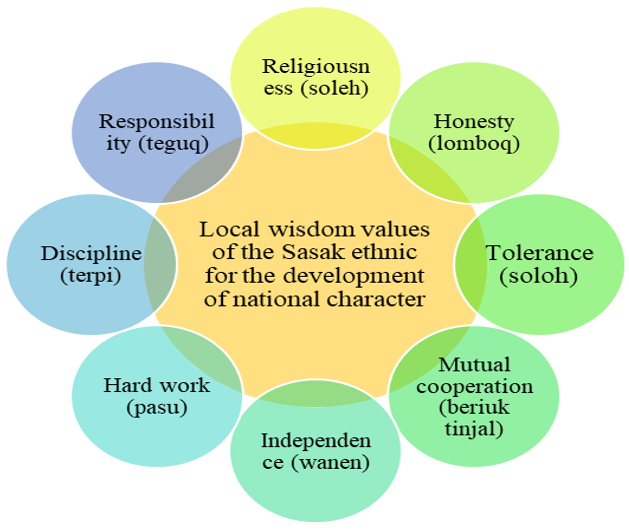
This study reveals that the local wisdom of the Sasak people plays a significant role in shaping the character of students in East Lombok. The findings are organized into two main thematic areas: (1) the values of Sasak local wisdom, and (2) the challenges of integrating these values into school life. The Sasak people possess a rich cultural heritage rooted in ancestral teachings (Papuk Baloq), which encompasses a set of values highly relevant to character education. These values are not only moral and ethical but also pedagogical, offering practical guidance for student behavior and identity formation. Among these values are Soleh (religious integrity), Lomboq (honesty), Terpi (discipline), Teguq (responsibility), Pasu (hard work), Soloh (tolerance), Wanen (independence and courage), and Beriuk Tinjal (mutual cooperation). These values collectively form a framework for character education that is culturally grounded and nationally relevant, as shown in Figure 4.
Figure 4. Local wisdom values of the Sasak ethnic for the development of national character
4.1 Independence (Wanen)
The concept of independence within Sasak local wisdom has a significant influence on educational paradigms in Lombok, Indonesia. As one respondent stated: "The value of independence or Wanen is taught in schools through local history subjects on Lombok Island or local content. Sasak history, rich in courage and independence, as exemplified in the Presean tradition, is a lesson often shared in schools and communities. This independence is fundamentally linked to community resilience, character education, and culture-based learning methods that foster critical thinking and entrepreneurial skills among students".
Integrating Sasak local wisdom into the curriculum not only enhances academic achievement but also promotes a cohesive understanding of what it means to be a responsible and independent citizen in contemporary society. Local wisdom among the Sasak people is deeply rooted in cultural practices and traditions, reflecting values such as responsibility, perseverance, and social harmony. Research indicates that educational practices incorporating local wisdom, such as "Peresean" (a traditional martial art) and "Mbait" (a wedding custom involving marriage negotiations), cultivate qualities such as independence and problem-solving skills among students [49, 50]. These cultural practices can serve as pedagogical tools to teach core values and life skills, thereby nurturing a generation that appreciates and embodies these local attributes of independence.
Furthermore, educational frameworks that leverage these traditions, such as Project-Based Learning (PjBL), have shown promising results in developing students' entrepreneurial skills, which are essential for fostering self-reliance and economic independence [51]. In sociology education, for instance, involving students in projects rooted in their local culture enables them to understand broader societal structures while empowering them through education that resonates with their identity and heritage. This approach not only enhances student engagement but also strengthens their sense of ownership and pride in their cultural background, directly contributing to the notion of independence [52]. Exploring Sasak local wisdom through subjects such as ethnochemistry further demonstrates the potential for intertwining scientific learning with cultural identity, offering a multidimensional perspective on education [53, 54]. Such interdisciplinary frameworks enable students to recognize the connections between academic knowledge and ancestral traditions, facilitating a holistic understanding of both scientific and cultural perspectives. Incorporating local wisdom into the chemistry curriculum, for example, enriches the learning experience by making it contextually relevant, thereby improving students' learning outcomes and critical thinking capabilities [55, 56].
Ultimately, the values of independence encapsulated in Sasak local wisdom provide a philosophical and practical foundation for culturally responsive educational practices. These regional traditions not only enhance academic performance but also cultivate character, resilience, and communal harmony, which are essential for fostering a self-sufficient and independent society.
4.2 Hard work (Pasu)
The concept of hard work, or "Pasu," is deeply embedded in Sasak local wisdom and plays a vital role in shaping educational values within the Sasak community. As expressed by respondents: "hard work learning is applied in the curriculum through serious study and daily practices, such as maintaining school cleanliness, comfort, and security. Hard work reflects a strong sense of responsibility, perseverance, and commitment, all of which are essential for developing a student's character. Integrating these values into the educational framework strengthens student character formation and supports the preservation and sustainability of culture in the face of modernization”.
Research conducted by Parhanuddin et al. [57] highlights the urgency of character education in Sasak schools, emphasizing local wisdom values, including hard work, as foundational pillars for shaping students' ethical framework. The study highlights the significance of character education grounded in local customs for cultivating resilience and social responsibility among learners. This finding aligns with that of Muliadi et al. [58], who note that traditional games of the Sasak tribe impart values such as diligence and precision, ultimately shaping children's characters through engaging and culturally rich activities. Such practices reinforce the importance of hard work as a virtue that can be effectively cultivated through experiential and context-based learning approaches.
Moreover, Noviana and Komariah [51] found that integrating local wisdom values, including hard work, within a project-based learning framework is instrumental in promoting independence and entrepreneurship among students. Incorporating traditional values into the curriculum not only enhances the educational experience but also instills a work ethic that is essential for personal and community development. This pedagogical approach enables students to internalise the value of diligence as they engage with diverse cultural contexts, thereby enhancing their learning motivation and sense of accountability. Additionally, research on traditional Peresean martial arts has demonstrated that practical culture-based education fosters key virtues such as bravery, sportsmanship, and diligent effort [59]. The integration of such cultural practices enables learners not only to acquire formal education but also to internalize local wisdom that celebrates hard work and collective effort as moral and social ideals.
Ultimately, the value of hard work, encapsulated in the idea of "Pasu," serves as a cornerstone of Sasak local wisdom and character education. Through diverse educational practices that blend traditional values with modern pedagogical strategies, students are grounded in a cultural ethos that emphasizes diligence, responsibility, and community engagement. This comprehensive approach is crucial for nurturing a generation that remains deeply rooted in its cultural identity while being prepared to engage confidently and productively in the globalized world.
4.3 Religious integrity (Soleh)
Religious integrity, or Soleh, is a fundamental value upheld by the Sasak people. As conveyed by respondents: "the value of Soleh must be instilled in schools, starting with practices such as Dhuha prayer, reciting and praying before and after studying, demonstrating good behaving, and helping each other. This attribute plays a crucial role in shaping educational practices within the framework of Sasak local wisdom." The overlapping moral and spiritual dimensions of Soleh are deeply rooted in the belief in Tawhid, reflecting a commitment to truth, goodness, and consistency in moral conduct. This foundation establishes a strong ethical framework within character education [60].
Such values promote virtues such as religious tolerance, respect for diversity, cooperation, non-violence, and sincerity [61]. These values align with the principles of holistic education, recognizing that preparing future educators involves more than merely transmitting information; it also entails cultivating moral integrity and wisdom in navigating a complex and pluralistic world [62]. Integrating local cultural and religious values into educational settings enriches learning processes and strengthens students' moral and emotional development. For instance, in education, traditional Sasak music not only preserves cultural identity but also embodies ethical teachings that contribute to personal growth and social harmony [63]. The insights gained from traditional practices, such as through the analysis of unique geometric concepts in Sasak architecture and arts, further illustrate how religious values interlace with educational content in a manner that cultivates diligence, mutual respect, and social awareness among students [64].
Moreover, the concept of ethnomathematics highlights how mathematical ideas rooted in cultural practices can enhance educational values and help students appreciate their cultural heritage while integrating moral education [65]. This integration enables students to respect their cultural heritage while developing critical thinking and ethical reasoning skills simultaneously. The dual pursuit of preserving religious integrity and adopting modern pedagogical methods calls for a deliberate incorporation of Sasak wisdom into educational curricula, ensuring that learning remains both culturally relevant and morally grounded. Despite its transformative potential, the implementation of such integrated pedagogical approaches faces challenges, particularly from the forces of globalization, which often dilute traditional values and weaken cultural continuity [66]. Addressing these challenges requires developing curricula that respect and revitalize local cultural elements as a means of strengthening students’ moral foundations and cultural identity [67].
The Sasak educational framework thus provides an innovative model that harmonizes traditional cultural values, especially religious integrity, with contemporary educational practices. This synergy highlights the enduring relevance of local wisdom in shaping well-rounded, morally responsible individuals who are equipped to face the challenges of the modern world.
4.4 Honesty (Lomboq)
In the discussion of honesty (Lomboq) as a value embedded in the local wisdom of the Sasak tribe, it is imperative to understand its integral role in education, particularly in character education. As stated by participants, "honesty is taught in schools through both explicit and implicit implementation within the curriculum. It is introduced through stories about the honesty of the Sasak people in history lessons. Children learn about this honesty and its impacts through stories and examples presented at school. The Sasak community places strong emphasis on moral values that nurture honesty, integrity, and social responsibility among the younger generation.”
This study synthesizes various research findings to illustrate how these values can be articulated and integrated within educational contexts. Honesty, or Lomboq, is not merely a standalone virtue in Sasak culture but is intertwined with broader moral teachings that advocate for mutual cooperation and dependability. For instance, Mawardi et al. [68] highlighted the moral teachings inherent in Sasak traditions, including values such as mutual respect and personal integrity. The emphasis on honesty serves as a foundation for interpersonal relationships within community settings, reinforcing the importance of fostering a trustworthy social environment.
The integration of local wisdom into educational practices is critical for instilling such values in students. According to Parhanuddin et al. [57], character education utilizing Sasak local wisdom is paramount for developing students' ethical frameworks. By ensuring that educators incorporate local values, students can gain a deeper understanding of the significance of honesty. Methods employed in schools can reflect these values in culturally relevant activities, thereby enhancing students' moral awareness and commitment to honesty in their actions [69]. Traditional games serve as an effective modality for values education, where principles such as solidarity, precision, and responsibility are cultivated [58]. These principles are vital for nurturing a sense of honesty among participants. Engaging students in such cooperative activities allows them to practice honesty in settings that emphasize trust and collective responsibility, thereby reinforcing the significance of honesty (Lombog) in their character development [70].
Moreover, the role of the family in transmitting values, such as honesty, is significant. The local wisdom emphasizes the importance of ethical behavior, prudent financial practices, and mutual assistance as pathways to cultivating honesty [71]. This understanding supports child development and aligns family-based education with community values, reinforcing the essence of honesty across various social contexts. Educational strategies embracing Sasak local wisdom, such as project-based learning and ethnocentric methods, demonstrate how honesty can be effectively integrated into learning frameworks. For instance, models incorporating local wisdom within subjects stimulate independent thinking, entrepreneurship, and responsibility among students while underscoring the importance of honesty in achieving personal and communal goals [51, 72].
The value of honesty, as espoused in the local wisdom of the Sasak people, plays a pivotal role in shaping the moral character of children. The interplay of educational practices, traditional moral teachings, and community involvement fosters an environment where honesty is not merely taught but lived. This holistic approach ensures that Lomboq becomes a vital aspect of the Sasak identity, continuously guiding individuals toward ethical and responsible behavior.
4.5 Tolerance (Soloh)
The concept of tolerance, or "Soloh," within the Sasak local wisdom is significantly intertwined with the educational values observed in the Sasak community. As stated by participants: "Tolerance values are taught directly in schools during Pancasila and citizenship education lessons. Tolerance values are practiced directly in schools by respecting differences in religion and belief. These traditional values encompass a series of moral teachings that emphasize harmony, respect for diversity, and collaboration, essential components in both social and academic contexts. One important aspect of Sasak local wisdom is the inherent principle of tolerance, which encourages respect and understanding among individuals from diverse backgrounds”.
Rahmatih et al. [73] highlighted local wisdom as a guiding framework for educational processes that foster inclusive attitudes and nurture social cohesion. Further, Yasir et al. [74] noted that the Sasak community relies on their traditional values to navigate social issues, believing that these values can effectively address challenges through wise application. Such a perspective is critical in educational settings where diverse student populations must interact harmoniously.
The integration of local values into education has a direct impact on character development, as evident in the educational models employed within the Sasak community. Wahyudiati [53] emphasised the role of local wisdom in shaping ethical standards and behaviors that foster a spirit of cooperation and mutual respect among students. This model not only prioritizes academic skills but also equips learners with critical life skills essential for navigating an increasingly diverse society. Moreover, the educational narrative surrounding Sasak local wisdom includes innovative approaches that align with contemporary educational methodologies. For instance, studies have demonstrated the effectiveness of integrating local wisdom into chemistry education through ethnochemistry, thereby enhancing students' understanding of chemistry while simultaneously fostering an appreciation for their cultural heritage [75]. This pedagogical approach not only reinforces students' scientific knowledge but also ingrains local wisdom values, such as "Soloh," within their academic experience, promoting tolerance and respect for tradition [76]. Wahyudiati and Qurniati's [69] examination of integrating local wisdom into teacher education further highlights the necessity of inclusivity and understanding in educational frameworks addressed to pre-service teachers. When educators are trained to appreciate and incorporate these values, the overall educational environment becomes enriched by a culture of respect and tolerance, reflecting the core tenets of Sasak wisdom.
The role of "Soloh" in Sasak local wisdom provides a profound foundation for educational practices that nurture character and foster tolerance. By weaving these traditional values into the educational fabric, the Sasak community exemplifies how cultural heritage can inform and enrich contemporary learning experiences, ultimately nurturing a generation equipped with both knowledge and moral integrity.
4.6 Mutual cooperation (Beriuk Tinjal)
Mutual cooperation, known locally as "Beriuk Tinjal", is a cornerstone of Sasak local wisdom, particularly in educational contexts. As stated by participants: “The character of mutual cooperation is taught directly in schools through Pancasila and Civic Education lessons. This character value is also practiced directly in the school environment through weekly clean-up efforts. The integration of mutual cooperation into the educational framework underscores the importance of cultural values that foster community solidarity, shared responsibility, and collective decision-making. These values not only reflect the social fabric of the Sasak community but also align with broader educational goals, such as fostering social cohesion and improving student learning outcomes”.
The cultural context of the Sasak tribe emphasizes mutual cooperation through various traditions and practices. In the context of the Merarik (wedding) tradition, principles such as cooperation and mutual respect are integral to strengthening community bonds and enhancing collective celebrations. This tradition embodies essential social, moral, and spiritual values that contribute to societal stability and harmony [55]. Furthermore, research indicates that incorporating Sasak local wisdom into educational curricula can enhance students' engagement, promote critical thinking, and foster scientific attitudes through culturally relevant learning experiences [54].
Moreover, mutual cooperation is essential for cultivating a sense of belonging and social responsibility among students. This finding is particularly illustrated in character education, where values derived from local wisdom are systematically instilled in students. Studies have shown that character education emphasizing mutual cooperation has been beneficial in improving student discipline and social interactions [77]. The Sasak wisdom encourages children to engage in "saling peliwat" (mutual assistance), which embodies collaboration and interdependence, vital for developing teamwork skills within an educational framework. Educational approaches have highlighted the alignment between traditional Sasak practices and scientific learning. Utilizing local customs in teaching chemistry fosters an environment where students can connect their cultural heritage with scientific concepts, enhancing their understanding and appreciation [56, 78]. This reflection of local practices in educational content elevates learning by integrating familiar life experiences for students, leading to a more holistic understanding of subjects like chemistry while reinforcing values of mutual cooperation and community involvement [55].
The values of mutual cooperation inherent in Sasak local wisdom significantly enhance educational practices. The traditions and teachings of the Sasak people serve as mediums for character education, providing practical methods to instill principles of teamwork and community engagement in students. This culturally rooted approach fosters the development of academic and socio-emotional competencies, demonstrating the profound relevance of local wisdom in contemporary education.
4.7 Discipline (Terpi)
Discipline, or "Terpi" within the educational context of the Sasak community, reflects a synthesis of local wisdom and values that inform not just the methods of teaching but also the overall educational environment. As stated by participants: "The character of discipline is highly emphasized and taught in schools. This character is trained in several subjects and is practiced directly in schools, such as arriving every morning at 7:00, being on time, not being late, being disciplined in studying, dressing and behaving appropriately at school. Teachers and schools highly consider this character. The instillation of this value is taught in schools related to the Sasak tribe, who are successful by upholding the value of discipline. The integration of these local values demonstrates a culturally responsive educational approach, which emphasizes the importance of discipline in developing students' character and intelligence. Local wisdom plays an important role in shaping educational practices among the Sasak people”.
It embodies the culturally inherited values that guide the interpersonal relationships and social norms within the community. Studies indicate that family structures, referred to as "bale langgak," are essential in inculcating values of discipline and social responsibility in children. This structure promotes a cohesive educational outreach that emphasizes ethical behavior and respect for cultural traditions, which are essential components of discipline in learning environments [79, 80]. Furthermore, the role of elders and community leaders, such as the Tuan Guru, in disseminating values through verbal teachings and cultural ceremonies is crucial in reinforcing discipline aligned with Islamic tenets [81].
Moreover, educational models grounded in local wisdom, such as the ELSII (Effective Learning Using Local and Indigenous Insights) Model, enhance students' problem-solving and communication skills while establishing discipline through culturally situated learning [82]. These methods leverage local contexts—ranging from traditional stories to community practices to engage learners effectively. Furthermore, interdisciplinary approaches, such as those integrating ethnomathematics, highlight the mathematical principles embedded within Sasak culture, demonstrating that the discipline is not only essential for moral instruction but also for academic achievement [83]. Discipline is also embodied in character education programs developed from Sasak storytelling traditions. Storytelling models serve as vehicles for imparting vital life lessons, embedding discipline in the form of moral narratives that illustrate virtues such as honesty, cooperation, and perseverance [61, 84]. This narrative-driven educational practice emphasizes the importance of discipline in character development and serves as a means of preserving local wisdom across generations. Additionally, implementing educational strategies that incorporate local wisdom enhances the relevance of educational content to students' lives, thereby fostering a sense of discipline and belonging. Research emphasizes the importance of integrating local economic and ecological wisdom into curricula, which complements the discipline of environmental ethics and sustainable practices among students [85]. This localized approach ensures that students not only learn disciplinary skills but also understand their applications in real-world contexts, which is crucial for personal and community growth.
The discipline inherent in Sasak education is a multifaceted concept that intertwines local wisdom, moral education, and academic excellence. It reflects a holistic approach that emphasizes the nurturing of disciplined individuals who are both knowledgeable and socially responsible. Engaging with local culture through structured educational models cultivates an environment where discipline is revered as a foundational value, ensuring the continuation of the Sasak identity and wisdom in future generations.
4.8 Responsibility (Teguq)
The concept of "responsibility" (Teguq) in the context of Sasak local wisdom significantly manifests within educational frameworks, emphasizing the integration of ethical values and communal principles intrinsic to Sasak culture, as conveyed by participants: "the character of responsibility is taught in schools in several thematic subjects that are directly related to responsibility. This character is instilled in students by teachers at school through the formation and development of school organizations (OSIS) and other extracurricular activities that directly teach this character. This character is explained and told through the eyes of the Sasak tribal heroes, who uphold this character as a historical example. This character is rooted in customs and social structures, providing an important perspective for educators to cultivate not only academic knowledge but also character and social responsibility among students”.
For instance, a study indicates that traditional values inherent within the Sasak community, such as Teguq, are pivotal in promoting responsible social interactions and ethical behaviors among students [73]. This value framework fosters a sense of belonging and accountability, which is crucial for character education in schools. Educational initiatives that draw upon local traditions can enhance students' understanding of responsibility as they relate to their cultural identities and community roles [69].
The outcomes of various studies further support the relevance of integrating local wisdom into educational practices. Ethnochemistry, for example, leverages the local knowledge systems of the Sasak people to enrich chemistry education, illustrating how traditional practices can align with scientific inquiry [54]. Such frameworks not only foster cognitive engagement but also instill a sense of responsibility in learners, as they appreciate the cultural significance behind scientific concepts and practices. This act of linking academic knowledge with cultural values underscores the broader role of education as a vehicle for instilling responsibility and civic engagement among students [53]. Research suggests that character education centred around community values, such as Teguq, enhances students' social skills, reinforcing the importance of responsibility towards one another and the environment [51]. When students are engaged in project-based learning that incorporates local wisdom, they develop critical thinking and problem-solving skills that are foundational to responsible citizenship. This approach encourages learners to reflect on their actions and the impact of those actions within their communities, thereby aligning education with social responsibility. Moreover, local wisdom serves as a foundation for conflict resolution and community cohesion, emphasizing the importance of responsible behavior in educational settings. Traditional mechanisms of conflict resolution within Sasak society are rooted in principles that promote harmony, fairness, and mutual respect, qualities essential to education [86]. By weaving these principles into the curriculum, educators equip students not only with knowledge but also with the moral framework necessary for responsible decision-making in a rapidly changing world [87].
The integration of Sasak local wisdom, particularly the value of Teguq into educational practices, provides a robust foundation for developing responsible individuals. This relationship between education and local culture emphasizes that responsibility is not merely an academic concept but a lived value essential for maintaining social harmony and integrity in both personal and community contexts.
5.1 Cultural displacement in the age of globalization
The integration of Sasak local wisdom into formal education is increasingly challenged by cultural displacement, driven by globalization and the pervasive influence of digital media. Students tend to gravitate toward global cultural expressions, often perceiving local traditions as outdated or irrelevant. This phenomenon reflects a broader trend in educational contexts, where global discourses overshadow indigenous knowledge systems [88]. The diminished interest among youth in local cultural practices underscores the urgency of culturally responsive pedagogies that affirm local identities while engaging with global competencies.
5.2 Limited teacher capacity and professional development gaps
A significant barrier to the effective integration of local wisdom is the limited capacity of educators. Many teachers lack both the pedagogical training and the conceptual understanding necessary to integrate local cultural content into their instruction effectively. This issue is compounded by the absence of structured professional development programs that address culturally responsive teaching. Studies have shown that teacher self-efficacy in multicultural and multilingual contexts is closely tied to targeted training and reflective practice [89]. Without such support, efforts to incorporate Sasak wisdom remain superficial and inconsistent [90].
5.3 Curricular constraints and policy implementation challenges
National education policies in Indonesia, while aiming for inclusivity, often emphasize standardization, leaving limited room for regional cultural adaptation. The Independent Curriculum and the Pancasila Student Profile (P5) initiative, although designed to promote contextual learning, are underutilized due to poor implementation and lack of coordination. Similar challenges have been observed in other contexts where policy frameworks fail to translate into practice due to systemic inertia and limited stakeholder engagement [91]. This disconnect between policy intent and classroom reality hampers the localization of curriculum content.
5.4 Resource limitations and institutional support deficits
Schools face considerable resource constraints that hinder the development and sustainability of programs based on local culture. Financial limitations, lack of instructional materials, and inadequate institutional support contribute to the marginalization of local wisdom in school life. Comparative studies highlight that successful integration of indigenous content requires not only curricular flexibility but also robust infrastructural and administrative backing [92]. Without such support, initiatives remain fragmented and vulnerable to discontinuation [93].
5.5 Community engagement deficit in cultural education
The role of community and parental involvement is critical in reinforcing cultural education. However, in urbanized areas, engagement tends to be low, reflecting a broader shift away from traditional values. This disengagement undermines the potential of schools to serve as cultural bridges between generations. Research indicates that culturally sustaining pedagogy thrives in environments where community narratives are actively woven into educational practices [94]. Strengthening school-community partnerships is thus essential for revitalizing interest in local wisdom [88].
5.6 Navigating cultural diversity and policy sensitivity
Indonesia's vast cultural landscape necessitates educational strategies that are both inclusive and sensitive to local contexts. A one-size-fits-all approach risks cultural homogenization and marginalization of minority traditions. Effective integration of local wisdom requires nuanced policy frameworks that recognize and accommodate cultural plurality. This finding aligns with global discourses on ethical integration of indigenous content in teacher education, which emphasize respect, representation, and relational accountability [88, 95].
This study underscores the transformative potential of integrating local wisdom into school life, particularly through the dual lens of bibliometric analysis and case study methodology. The bibliometric review revealed a growing scholarly interest in culturally responsive education, with trending themes such as indigenous knowledge, storytelling, and cultural heritage emerging as focal points. These trends reflect a global shift toward educational practices that honor cultural diversity and contextual relevance. The case study of Sasak local wisdom in East Lombok provided rich insights into how traditional values—such as honesty (Lomboq), discipline (Terpi), hard work (Pasu), tolerance (Soloh), mutual cooperation (Beriuk Tinjal), independence (Wanen), responsibility (Teguq), and religious integrity (Soleh) can be effectively embedded into character education. These values not only foster moral development but also enhance students' ecological awareness, cultural identity, and social cohesion.
However, the study also identified significant challenges to sustainable integration, including curricular rigidity, limited teacher capacity, insufficient institutional support, and cultural displacement resulting from globalization. These barriers highlight the need for systemic reforms, including culturally responsive teacher training, flexible curricula, and stronger community-school partnerships. The findings make a meaningful contribution to the existing body of knowledge by bridging macro-level bibliometric trends with micro-level experiential insights. This integrative approach offers a comprehensive framework for understanding and sustaining local wisdom in education. It affirms that culturally grounded pedagogy is not merely an educational enhancement but a vital strategy for fostering inclusive, resilient, and contextually relevant learning environments.
The study advocates for policy frameworks that prioritize cultural plurality and participatory governance in education. Future research could explore the longitudinal impacts of integrating local wisdom on student outcomes, conduct comparative studies across different ethnic groups, and examine the role of digital technologies in preserving and disseminating indigenous knowledge. Expanding this research across diverse cultural contexts will further validate the universal applicability of culturally responsive education and its role in shaping holistic learners.
[1] Tindowen, D.J., Bangi, J., Ramirez, N.K., Talay, M. (2023). Local knowledge integration in higher education in an online learning environment through virtual expert sharing. Journal of Educational Analytics (JEDA), 2(1): 65-76. https://doi.org/10.55927/jeda.v2i1.2984
[2] Yaqin, M.A., Suyahmo, M., Hardati, P., Atmaja, H.T., Hamid, N. (2024). Sustainable “Gumuk” land management based on local wisdom in Jember, Indonesia. International Journal of Environmental Impacts, 7(1): 65-74. https://doi.org/10.18280/ijei.070108
[3] Sellers, K.M., MacKenzie, A.H. (2024). Looking back to move forward: Exploring urban secondary education teacher perceptions of culturally relevant pedagogy. Education and Urban Society, 56(3): 263-285. https://doi.org/10.1177/00131245221121668
[4] Rosa, M., Orey, D.C. (2020). Principles of culturally relevant education in an ethnomathematical perspective. Revista de Educação Matemática, (17): 1. https://doi.org/10.37001/remat25269062v17id306
[5] Mustangin, P. (2017). Local knowledge as a result of informal education for community-based conservation in Pacitan. In 4th International Conference on English Literature and Humanities (ELH-2017). https://doi.org/10.15242/dirpub.ea0417030
[6] Asmamaw, M., Mereta, S.T., Ambelu, A. (2020). The role of local knowledge in enhancing the resilience of dinki watershed social-ecological system, central highlands of Ethiopia. PLoS ONE, 15(9): e0238460. https://doi.org/10.1371/journal.pone.0238460
[7] Murray-Orr, A., Mitton, J. (2021). Middle years teachers' critical literacy practices as cornerstones of their culturally relevant pedagogies. LEARNing Landscapes, 14(1): 249-263. https://doi.org/10.36510/learnland.v14i1.1047
[8] Young, E. (2010). Challenges to conceptualizing and actualizing culturally relevant pedagogy: How viable is the theory in classroom practice? Journal of Teacher Education, 61(3): 248-260. https://doi.org/10.1177/0022487109359775
[9] Lee, J.S. (2010). Culturally relevant pedagogy for immigrant children and English language learners. Teachers College Record, 112(14): 453-473. https://doi.org/10.1177/016146811011201408
[10] Shaw, J., Gutberg, J., Wankah, P., Kadu, M., Gray, C.S., McKillop, A., Baker, G.R., Breton, M., Wodchis, W.P. (2022). Shifting paradigms: Developmental milestones for integrated care. Social Science & Medicine, 301: 114975. https://doi.org/10.1016/j.socscimed.2022.114975
[11] Browne, G., Gafni, A., Roberts, J., Byrne, C., Majumdar, B. (2004). Effective/efficient mental health programs for school-age children: A synthesis of reviews. Social Science & Medicine, 58(7): 1367-1384. https://doi.org/10.1016/S0277-9536(03)00332-0
[12] Juul, L., Frydenberg, M., Bonde, E.H., Beck, M.S., Goetzsche, K., Nielsen, H.B., Fjorback, L.O. (2025). Mindfulness in the school curriculum? A nationwide cluster-randomized trial of the effectiveness of implementing a mindfulness-based intervention for 9-16-year-olds students in Danish elementary schools. Social Science & Medicine, 378: 118117. https://doi.org/10.1016/j.socscimed.2025.118117
[13] Aborigo, R.A., Allotey, P., Reidpath, D.D. (2015). The traditional healer in obstetric care: A persistent wasted opportunity in maternal health. Social Science & Medicine, 133: 59-66. https://doi.org/10.1016/j.socscimed.2015.03.046
[14] Gearin, A.K. (2023). Moving beyond a figurative psychedelic literacy: Metaphors of psychiatric symptoms in ayahuasca narratives. Social Science & Medicine, 334: 116171. https://doi.org/10.1016/j.socscimed.2023.116171
[15] Dalglish, S.L., Rodríguez, D.C., Harouna, A., Surkan, P.J. (2017). Knowledge and power in policy-making for child survival in Niger. Social Science & Medicine, 177: 150-157. https://doi.org/10.1016/j.socscimed.2017.01.056
[16] Annur, S., Rusilawati, A., Sumarni, W., Kassymova, G.K. (2024). An overview of how STEM-LW (Local wisdom) research influences character over time: An in-depth review with bibliometric analysis. Journal of Higher Education Theory & Practice, 24(4). https://doi.org/10.33423/jhetp.v24i4.6955
[17] Lestari, N., Suyanto, S. (2024). A systematic literature review about local wisdom and sustainability: Contribution and recommendation to science education. Eurasia Journal of Mathematics, Science and Technology Education, 20(2): em2394. https://doi.org/10.29333/ejmste/14152
[18] Marsandi, F., Sutadji, E., Kuntadi, I., Rizal, F., Rahma, A.B.N., Fajri, H. (2025). Integrating ethnobotany and indigenous knowledge into higher education curricula: Insights from a global biobliometric analysis. Ethnobotany Research and Applications, 30: 1-12. http://doi.org/10.32859/era.30.17.1-12
[19] Arjaya, I.B.A., Suastra, I.W., Redhana, I.W., Sudiatmika, A.A.I.A.R. (2024). Global trends in local wisdom integration in education: A comprehensive bibliometric mapping analysis from 2020 to 2024. International Journal of Learning, Teaching and Educational Research, 23(7): 120-140. https://doi.org/10.26803/ijlter.23.7.7
[20] Muhammad, U.A., Fuad, M., Ariyani, F., Suyanto, E. (2022). Bibliometric analysis of local wisdom-based learning: Direction for future history education research. International Journal of Evaluation and Research in Education (IJERE), 11(4): 2209-2222. http://doi.org/10.11591/ijere.v11i4.23547
[21] Fernando, E., Yusnan, M.B.B.M. (2022). The tradition of rejectiveness: The character of responsibility in islamic education values. Jurnal Pendidikan Agama Islam Indonesia (JPAII), 3(4): 100-105. https://doi.org/10.37251/jpaii.v3i4.945
[22] Batmaz, O. (2023). Examination of primary school teachers' opinions on cultural heritage education in life science lesson. Journal of Computer and Education Research, 11(22): 429-446. https://doi.org/10.18009/jcer.1241337
[23] Setya, D.S., Maslia, N., Sasmitha, H.M., Rusda, R., Erika, F. (2024). Literature review: Growing student character education based on local wisdom in science learning. Progres Pendidikan, 5(1): 26-31. https://doi.org/10.29303/prospek.v5i1.401
[24] Munisa, M., Putri, U.N., Sari, W.V., Fitri, N.A. (2024). Digital literacy based on local wisdom in inclusive education. Pionir: Jurnal Pendidikan, 13(1): 120-124. https://doi.org/10.22373/pjp.v13i1.22058
[25] Citra, A., Syaodih, E., Rachmawati, Y., Solahudin, M.N., Morrison, R. (2023). Cultivating patriotism: Independent curriculum and strengthening pancasila profile (p5) in kindergarten. Indonesian Journal of Early Childhood Educational Research (IJECER), 2(1): 39-46. https://doi.org/10.31958/ijecer.v2i1.11104
[26] Hak, P. (2023). Bajo ethnopedagogic. In Fifth Sriwijaya University Learning and Education International Conference (SULE-IC 2022). Atlantis Press, pp. 253-266. https://doi.org/10.2991/978-2-38476-010-7_28
[27] Marhadi, H., Erlisnawati, G., Sapriya, K.A.H. (2023). Developing batobo-based worksheet as teaching material in elementary school. In Proceedings of The Fifth Sriwijaya University Learning and Education International Conference (SULE-IC 2022). Springer Nature, 731: 151. https://doi.org/10.2991/978-2-38476-010-7_18
[28] Datta, R. (2024). Relationality in indigenous climate change education research: A learning journey from indigenous communities in Bangladesh. Australian Journal of Environmental Education, 40(2): 128-142. https://doi.org/10.1017/aee.2024.13
[29] Bishop, M. (2023). Humility. Listen. Respect: Three values underpinning Indigenous (environmental) education sovereignty. Progress in Environmental Geography, 2(3): 191-201. https://doi.org/10.1177/27539687231190658
[30] Keskitalo, P. (2025). Indigenizing pre-teacher education: Reflections on utilizing traditional storytelling to gather language data from Sámi children. AlterNative: An International Journal of Indigenous Peoples, 21(1): 93-100. https://doi.org/10.1177/11771801241291238
[31] Wynn, E., Delbridge, R., Palermo, C., Wilson, A. (2023). The role of communities of practice in improving practice in Indigenous health and education settings: A systematic review. Focus on Health Professional Education: A Multi-Professional Journal, 24(2): 1-26. https://doi.org/ 10.11157/fohpe.v24i2.589
[32] Manitowabi, D. (2022). Weweni zhichge: Wise practices in urban indigenous education in Northern Ontario. AlterNative: An International Journal of Indigenous Peoples, 18(1): 114-121. https://doi.org/10.1177/11771801221088863
[33] Persaud, J.N., Wannamaker, K., Stark, K., Lambert, C., Harrison, C., Keller, N. (2025). Decolonizing education: Advancing Indigenous student success through culturally responsive practices in Ontario. AlterNative: An International Journal of Indigenous Peoples, 21(2): 264-273. https://doi.org/10.1177/11771801251340657
[34] Wemigwans, J., MacKay, L. (2023). The haudenosaunee ohén: Ton karihwatéhkwen thanksgiving address: Moving beyond the havoc of land acknowledgements. Engaged Scholar Journal, 9(2): 1-21. https://doi.org/10.15402/esj.v9i2.70829
[35] Ruta, A., Cicek, J.S., Mante, A., Speare, M., Herrmann, R. (2021). Ten calls to action to integrate indigenous knowledges and perspectives into the biosystems engineering program at the University of Manitoba. Canadian Biosystem Engineering Journal, 63(1): 9.01-9.17. https://doi.org/10.7451/cbe.2021.63.9.1
[36] Saphira, H.V. (2022). Integrating local wisdom-based learning to preparing the pancasila students’ profile, Yes or No? International Journal of Current Educational Research, 1(1): 18-35. https://doi.org/10.53621/ijocer.v1i1.136
[37] Hadi, K., Susantini, E., Kunjtoro, S. (2023). Integrating local wisdom and character education in Biology Learning during the COVID-19 pandemic. KnE Social Sciences, 237-243. https://doi.org/10.18502/kss.v8i4.12904
[38] Ramdani, A., Jufri, A.W., Jamaluddin, J. (2022). Interactive multimedia inquiry based on local wisdom: Alternative media to improve students' environmental care attitude. Prisma Sains: Jurnal Pengkajian Ilmu dan Pembelajaran Matematika dan IPA IKIP Mataram, 10(4): 881-889. https://doi.org/10.33394/j-ps.v10i4.6109
[39] Aura, S., Supiandi, C., Nugraha, D. (2023). The influence of character education based on local wisdom on students' social and environmental behavior. Social Impact Journal, 2(2): 1-14. https://doi.org/10.61391/sij.v2i2.46
[40] Udiyana, I.G., Arnyana, I.B.P. (2022). Balinese local wisdom oriented digital teaching materials to improve cultural literacy of grade V elementary school students. Journal for Lesson and Learning Studies, 5(2): 236-243. https://doi.org/10.23887/jlls.v5i2.52411
[41] Fairus, F., Maftuh, B., Sujana, A., Pribadi, R., Azzahra, F. (2024). Local wisdom integration in learning implementation in elementary school. Jurnal Cakrawala Pendas, 10(2): 194-205. https://doi.org/10.31949/jcp.v10i2.8029
[42] Rakhman, A., Wibawa, B., Rusmono, R., Jarudin. (2024). Urang banjar traditional games for health and harmony: Learning physical sports and health with local wisdom. GSE-Journal, 1(3): 28-34. https://doi.org/10.61667/t0t18f04
[43] Murwati, Y., Sumardjoko, B., Prastiwi, Y. (2022). Thematic learning based on local wisdom in the new normal time in elementary school. JPI (Jurnal Pendidikan Indonesia), 11(3): 388-396. https://doi.org/10.23887/jpiundiksha.v11i3.47039
[44] Sakman, Abdulkarim, A., Komalasari, K., Sitti Masyitoh, I. (2024). Unveiling the merdeka curriculum: A review of local wisdom integration in civic education for junior high schools. KnE Life Sciences, 2024: kss-v9i19. https://doi.org/10.18502/kss.v9i19.16496
[45] Sloan, A., Bowe, B. (2014). Phenomenology and hermeneutic phenomenology: The philosophy, the methodologies, and using hermeneutic phenomenology to investigate lecturers’ experiences of curriculum design. Quality & Quantity, 48(3): 1291-1303. https://doi.org/10.1007/s11135-013-9835-3
[46] Healy, M. (2012). Heidegger's contribution to hermeneutic phenomenological research. In Qualitative Research in Midwifery and Childbirth, pp. 215-232. https://philpapers.org/rec/HEAHCT.
[47] Byrne, D. (2022). A worked example of Braun and Clarke’s approach to reflexive thematic analysis. Quality & Quantity, 56(3): 1391-1412. https://doi.org/10.1007/s11135-021-01182-y
[48] Braun, V., Clarke, V. (2023). Toward good practice in thematic analysis: Avoiding common problems and be (com) ing a knowing researcher. International Journal of Transgender Health, 24(1): 1-6. https://doi.org/10.1080/26895269.2022.2129597
[49] Asyari, A. (2022). Nilai-nilai sosial di balik “konflik dan kekerasan”: Kearifan suku sasak dalam tradisi mbait dan peresean. Jurnal Penelitian Keislaman, 18(2): 101-114. https://doi.org/10.20414/jpk.v18i2.6112
[50] Fajri, S.R., Hajiriah, T.L., Fitriani, H., Sriartha, I.P., Mudana, I.W. (2024). Analysis of the potential values of character education in the independent curriculum on traditional arts typical of the Sasak tribe of Lombok" peresean". Jurnal Kependidikan: Jurnal Hasil Penelitian dan Kajian Kepustakaan di Bidang Pendidikan, Pengajaran, dan Pembelajaran, 10(1): 405-415. https://doi.org/10.33394/jk.v10i1.9796
[51] Noviana, M., Komariah, S. (2022). Project based learning (PjBL) model integration of the Sasak ethnic nenun local wisdom in sociology subjects. Jupiis: Jurnal Pendidikan Ilmu-Ilmu Sosial, 14(2): 95-110.
[52] Rasya, G., Tahir, M., Oktaviyanti, I. (2024). Development of a learning module based on local wisdom of the Sasak tribe on fifth grade in social science subject at SDN 22 Ampenan. Progres Pendidikan, 5(1): 7-15. https://doi.org/10.29303/prospek.v5i1.365
[53] Wahyudiati, D., Qurniati, D. (2023). Ethnochemistry: Exploring the potential of Sasak and Javanese local wisdom as a source of chemistry learning to improve the learning outcomes of pre-service teachers. Jurnal Pendidikan Sains Indonesia (Indonesian Journal of Science Education), 11(1): 12-24. https://doi.org/10.24815/jpsi.v11i1.26790
[54] Wahyudiati, D. (2022). Ethnochemistry: Exploring the potential of Sasak and Java local wisdom as a teaching materials. Jurnal Pendidikan Kimia Indonesia, 6(2): 116-122. https://doi.org/10.23887/jpki.v6i2.49890
[55] Sutrisno, H., Wahyudiati, D., Louise, I.S.Y. (2020). Ethnochemistry in the chemistry curriculum in higher education: Exploring chemistry learning resources in Sasak local wisdom. Universal Journal of Educational Research, 8(12): 7833-7842. https://doi.org/10.13189/ujer.2020.082572
[56] Suanda, N., Wahyudiati, D. (2023). Ethnochemistry: Analysis of the relevance of material atomic structure with the ngejot tradition as a source for learning chemistry. Hydrogen: Jurnal Kependidikan Kimia, 11(3): 267-274. https://doi.org/10.33394/hjkk.v11i3.7803
[57] Parhanuddin, L., Nurdin, E.S., Budimasyah, D., Ruyadi, Y. (2023). Urgensi pendidikan karakter berbasis kearifan lokal etnis sasak di sekolah dasar. Jurnal Paedagogy, 10(3): 926-935. https://doi.org/10.33394/jp.v10i3.8159
[58] Muliadi, E., Asyari, A., Jumarim, J., Nasri, U. (2024). Exploring traditional wisdom: values education in the games of the Sasak tribe, Lombok, West Nusa Tenggara, Indonesia. Journal of Advances in Education and Philosophy, 8(03): 168-179. https://doi.org/10.36348/jaep.2024.v08i03.004
[59] Al-Pansori, M.J., Rismawati, L. (2024). Nilai-nilai pendidikan dalam tradisi peresean: Kajian etnopedagogik masyarakat lombok. Kasta: Jurnal Ilmu Sosial, Agama, Budaya dan Terapan, 4(1): 35-43. https://doi.org/10.58218/kasta.v4i1.1370
[60] Nuraeni, N., Suastra, I.W., Arnyana, I.B.P. (2024). The tindih value of the Sasak tribe as a basic value in developing character education in Schools. Prisma Sains: Jurnal Pengkajian Ilmu dan Pembelajaran Matematika dan IPA IKIP Mataram, 12(1): 141-147. https://doi.org/10.33394/j-ps.v12i1.10579
[61] Zain, M.I. (2024). The character education values on the Sasak community folklores: Putri mandalika and tiwok-iwok. In SHS Web of Conferences. EDP Sciences, 182: 03001. https://doi.org/10.1051/shsconf/202418203001
[62] Uyuni, B., Adnan, M. (2024). Philosophical foundations in training traditional religious educators: Bridging past and present. Futurity Philosophy, 3(2): 40-65. https://doi.org/10.57125/fp.2024.06.30.03
[63] Hidayat, H.A., Syeilendra, S., Marzam, M., Hakim, U., Dhari, B.W., Silahudin, S. (2024). The influence of local cultural values in the traditional music learning process in the Sendratasik Department. Gondang: Jurnal Seni Dan Budaya, 8(1): 139-148. https://doi.org/10.24114/gondang.v8i1.55509
[64] Lalu Muhammad Fauzi, F., Nila Hayati, H., Rody Satriawan, S., Fahrurrozi, F. (2023). Perceptions of geometry and cultural values on traditional woven fabric motifs of the Sasak people. Jurnal Elemen, 9(1): 153-167. https://doi.org/10.29408/jel.v9i1.6873
[65] Fauzi, L.M., Hayati, N., Gazali, M., Fauzi, A. (2022). Ethnomathematics: Exploration of mathematics and cultural values in the performing arts of the Sasak tribe Perisean. Hipotenusa: Journal of Mathematical Society, 4(1). https://doi.org/10.18326/hipotenusa.v4i1.7240
[66] Moslimany, R., Otaibi, A., Shaikh, F. (2024). Designing a holistic curriculum: Challenges and opportunities in Islamic education. Journal on Islamic Studies, 1(1): 52-73. https://doi.org/10.35335/beztg009
[67] Sularso, S., Jazuli, M., Djatiprambudi, D., Hanshi, B. (2023). Revitalizing cultural heritage: Strategies for teaching Indonesian traditional music in elementary schools. International Journal of Education and Learning, 5(1): 79-88. https://doi.org/10.31763/ijele.v5i1.1016
[68] Mawardi, T., Jufry, F.D.M., Renda, R. (2021). Cupak gerantang traditional theater: Interpretation of text meaning as effort to strengthen character. International Journal of Creative Industries, 3(8): 87-95. https://doi.org/10.35631/ijcrei.38007
[69] Tohri, A., Rasyad, A., Sururuddin, M., Istiqlal, L.M. (2022). The urgency of Sasak local wisdom-based character education for elementary school in East Lombok, Indonesia. International Journal of Evaluation and Research in Education, 11(1): 333-344. https://doi.org/10.11591/ijere.v11i1.21869
[70] Muliadi, E., Asyari, A. (2024). Menggali kearifan lokal: Pendidikan nilai dalam permainan tradisional suku Sasak. Jurnal Ilmiah Profesi Pendidikan, 9(1): 129-140. https://doi.org/10.29303/jipp.v9i1.1922
[71] Rizkiwati, B.Y., Jailani, H., Majdi, M.Z. (2023). Kearifan lokal Sasak dan pengembangannya dalam pendidikan literasi financial di lingkungan keluarga. JPEK (Jurnal Pendidikan Ekonomi Dan Kewirausahaan), 7(1): 315-328. https://doi.org/10.29408/jpek.v7i1.17461
[72] Asri, E.S., Hidayatussoalihah, H., Mertina, M., Halimatussakdiah, H., Dewi, B.N.S., Sumardi, L. (2024). Ethno parenting: Early childhood character development based on local wisdom of the Sasak tribe. International Journal of Education and Digital Learning (IJEDL), 3(2): 73-82. https://doi.org/10.47353/ijedl.v3i2.221
[73] Rahmatih, A.N., Maulyda, M.A., Syazali, M. (2020). Reflection of local wisdom value on sains learning in elementary school: Literature review. Jurnal Pijar Mipa, 15(2): 151-156. https://doi.org/10.29303/jpm.v15i2.1663
[74] Yasir, L.A., Andriany, M., SK, D.V. (2023). The traditional value of the Sasak Lombok community regarding handling COVID-19: A literature review. STRADA: Jurnal Ilmiah Kesehatan, 12(1): 1-11. https://doi.org/10.30994/sjik.v12i1.984
[75] Jannah, R., Wardani, S., Alauhdin, M. (2023). Exploration: Utilization of the potential of local wisdom of sasak tape ketan (poteng) on alcohol ether as a learning source. Edukimia, 5(1): 023-032. https://doi.org/10.24036/ekj.v5.i1.a455
[76] Mashami, R.A., Suryati, S., Harisanti, B.M., Khery, Y. (2023). Identification of local wisdom of the Sasak tribe in chemistry learning as an effort to strengthen student character. Jurnal Penelitian Pendidikan IPA, 9(1): 337-345. https://doi.org/10.29303/jppipa.v9i1.2434
[77] Dewi, P.K.A.A., Lasmawan, I.W., Margunayasa, I.G. (2022). Melali ke subak abiansemal storybook: Instilling the gotong royong value in grade v elementary school students. Journal for Lesson and Learning Studies, 5(2): 244-251. https://doi.org/10.23887/jlls.v5i2.52412
[78] Umam, K.K., Wahyudiati, D. (2023). Ethno-chemistry: Relevance analysis of electron valence subject material to Sasak local wisdom as a chemistry learning resource. Hydrogen: Jurnal Kependidikan Kimia, 11(5): 710-719. https://doi.org/10.33394/hjkk.v11i5.9069
[79] Asyari, H. (2021). The role of “bale langgak” in the implementation of socio-cultural values in Sasak Community. In 2nd Annual Conference on Education and Social Science (ACCESS 2020), pp. 598-601. https://doi.org/10.2991/assehr.k.210525.157
[80] Aswasulasikin, A., Fadilah, D., Hadi, Y.A. (2022). Inculcating of Sasak local cultural values in learning at elementary school. Jurnal EDUCATIO: Jurnal Pendidikan Indonesia, 8(2): 96-101. https://doi.org/10.29210/1202222460
[81] Mulianah, B. (2024). The role of tuan guru and traditional institutionsin shaping religious moderation among the Sasak community. Jurnal Penelitian Keislaman, 20(02): 109-126. https://doi.org/10.20414/jpk.v20i2.11453
[82] Fadli, A. (2020). The effect of local wisdom-based ELSII learning model on the problem solving and communication skills of pre-service Islamic teachers. International Journal of Instruction, 13(1): 731-746. https://doi.org/10.29333/iji.2020.13147a
[83] Fauzi, L.M., Gazali, M., Fauzi, A., Wardi, Z., Endriana, N. (2022). Realistic mathematics education: Building mathematical conceptions in Sasak culture. Jurnal Math Educator Nusantara: Wahana Publikasi Karya Tulis Ilmiah di Bidang Pendidikan Matematika, 8(2): 155-167. https://doi.org/10.29407/jmen.v8i2.18885
[84] Adawiyah, B.R., Sumardi, L., Izzah, B., Fadila, D.Y., Yani, L.Z., Sari, P. (2024). Sasak tribe community storytelling model for early childhood character development. International Journal of Education and Digital Learning (IJEDL), 3(1): 41-48. https://doi.org/10.47353/ijedl.v3i1.217
[85] Nurwahidah, N., Nurmawanti, I., Novitasari, S., Kusuma, A.S.H.M. (2022). Development of STEAM-based learning tools based on the Sasak heritage project. Jurnal Penelitian Pendidikan IPA, 8(6): 2900-2908. https://doi.org/10.29303/jppipa.v8i6.2550
[86] Wijayanti, A., Hariri, A., Dewi, I.K. (2022). Settlement of labor disputes after the COVID-19 pandemic based on local wisdom of the Sasak tribe. KnE Social Sciences, 595-606. https://doi.org/10.18502/kss.v7i15.12134
[87] Rahayu, M., Keim, A.P., Nikmatullah, M., Rustiami, H., Susan, D., Sujarwo, W. (2021). The ethnoecology of Sasak people in Mandalika, Lombok Island: Local knowledge and wisdom in relation with land use. Jurnal Pendidikan IPA Indonesia, 10(3): 407-415. https://doi.org/10.15294/jpii.v10i3.30343
[88] Riley, T., Meston, T., Cutler, C., Low-Choy, S., McCormack, B.A., Kim, E.J.A., Nakar, S., Vasco, D. (2024). Weaving stories of strength: Ethically integrating Indigenous content in teacher education and professional development programmes. Teaching and Teacher Education, 142: 104513. https://doi.org/10.1016/j.tate.2024.104513
[89] Özaşkın-Arslan, A.G., Arslan, R., Irmak, Ş. (2024). Reconstruction of a pre-service teacher reflection through objective hermeneutics. Teaching and Teacher Education, 140: 104485. https://doi.org/10.1016/j.tate.2024.104485
[90] Holyoke, E. (2025). Actively choosing love: Preservice teachers and restorative classroom communities. Teaching and Teacher Education, 156: 104924. https://doi.org/10.1016/j.tate.2024.104924
[91] Yang, X., Zhu, X., Chen, D. (2023). Discourses regarding education governance in the digital age at K-12 level: Possibilities, risks, and strategies. Teaching and Teacher Education, 132: 104261. https://doi.org/10.1016/j.tate.2023.104261
[92] Berry, A., Zabolotna, O., Parker, R. (2024). Friend or foe? Learning through play and education reform in Ukraine. Teaching and Teacher Education, 148: 104713. https://doi.org/10.1016/j.tate.2024.104713
[93] Albright, T. (2024). A teacher training program’s becoming…: Entanglements with contact zones and third-space hybridity. Teaching and Teacher Education, 141: 104491. https://doi.org/10.1016/j.tate.2024.104491
[94] Hung, J.H., Shen, J.Y., Hsieh, C.C. (2025). Identity leadership and atayal gaga: A case study of an indigenous experimental school. Teaching and Teacher Education, 154: 104849. https://doi.org/10.1016/j.tate.2024.104849
[95] Wang, X., Husu, J., Toom, A. (2025). What makes a good mentor of in-service teacher education?—A systematic review of mentoring competence from a transformative learning perspective. Teaching and Teacher Education, 153: 104822. https://doi.org/10.1016/j.tate.2024.104822