Jefferson Quiroz-Fabra | Alejandro Valencia-Arias* | Jesus Alberto Jimenez-Garcia | Lilian Verde-Flores | Ada Gallegos | Sebastián Cardona-Acevedo
© 2025 The authors. This article is published by IIETA and is licensed under the CC BY 4.0 license (http://creativecommons.org/licenses/by/4.0/).
OPEN ACCESS
The circular economy (CE) in the textile sector is predicated on the optimization of resource utilization and the minimization of waste at all stages of the life cycle of textile products, from production to disposal. Although there has been an increase in research on this topic, there are still important gaps that require more detailed attention. The objective of this study is to explore the research trends surrounding the topic. The PRISMA-2020 methodology and tools such as Scopus and Web of Science were employed to identify key trends. The results indicated a notable increase in the number of publications over time, with 2023 being the most prolific year. Thematic evolution revealed a shift in focus from textile waste to emerging areas such as sustainable fashion and eco-efficiency. The emerging keywords are social sustainability and circular business model. The keyword co-occurrence network highlighted the relevance of concepts such as sustainability and digitalization.
sustainable fashion, textile sector, management, circular economy, consumption
The circular economy (CE) has emerged as a strategic response to the environmental and economic challenges associated with the production and consumption of clothing. It focuses on maximizing resource efficiency and minimizing waste throughout the production cycle. The life cycle of textile products, from the production of raw materials to their final disposal, is a key area of focus for sustainability and circularity. This is in response to the growing environmental and social pressure induced by the textile industry [1].
The integration of digital technologies has been identified as a pivotal catalyst for the circular transition of the textile sector, facilitating enhanced resource management and the development of innovative business models that promote circularity [2]. Recent research has examined various dimensions of the CE in the textile industry. This research has explored the perception of sustainability and the CE in the fashion industry from a gender and generational perspective, emphasizing the importance of understanding the attitudes and behaviors of consumers [1].
At the same time, the possibility of recycling cotton and polyester textile waste into new cellulose fibers was explored, offering a technical solution that closes the material cycles in textile production [3]. Furthermore, Industry 4.0 technologies have been identified as crucial enablers for improving CE performance in the textile sector, as they facilitate data-driven decision-making and enhance supply chain efficiency [4].
The implementation of the CE in the textile industry is a multifaceted process that necessitates a profound comprehension of the production and distribution systems. To this end, the integration of the CE in the textile supply chain has been addressed from a general perspective, emphasizing the significance of changes at both a technical and organizational level. Conversely, conceptual frameworks have been proposed that analyze the various perspectives of stakeholders in the adoption of circular supply chains in the textile industry [5, 6]. However, the transition to CE is not without challenges, particularly in developing economies, where financial constraints, lack of regulatory incentives, and limited consumer awareness act as significant barriers [7].
In recent literature, there is evidence of technological innovations that enrich the debate on circularity in the textile sector. For example, the incorporation of artificial intelligence techniques for the development of intelligent methods of textile production and waste reduction, impacting the entire supply chain and developing more sustainable products [8]. The researchers emphasize the necessity of adopting integrated approaches that integrate technologies and strategies to close material cycles and minimize waste in the textile industry.
A variety of aspects of the CE have been investigated, including the recovery of textile waste and the application of advanced recycling technologies. On the other hand, advances in emerging chemical recycling technologies make it possible to recover materials at the molecular level, expanding the possibilities of reinserting fibers into new products [9]. These studies have demonstrated the potential of the CE to transform the way textiles are produced and consumed [10, 11].
Furthermore, the adoption of the CE in the textile industry is closely related to the search for sustainable and renewable alternatives for the materials used in the manufacture of textiles. In this context, the progress made in the recycling and recovery of silk waste has been evaluated [12]. Moreover, criteria have been proposed for the sustainable selection of suppliers based on Industry 4.0 initiatives within the context of the CE [13].
From the sustainability approach, the different developments around CE and the textile sector are connected with the Sustainable Development Goals (SDGs), i.e., SDG 9 on modernizing infrastructure and converting industries to make them sustainable [14], or SDG 12 which aims to ensure sustainable consumption and production patterns [15]. Thus, the hybrid decision-making framework [14] demonstrates how advanced technological integration can optimize production cycles and material flows while reducing waste.
Additionally, researchers have investigated the role of the supply chain in the implementation of the CE in the textile industry. This research has focused on circular supply chain orchestration as a strategy to overcome the challenges associated with the implementation of the CE. The findings of this research highlight the importance of collaboration between supply chain actors to promote circularity and address environmental and social challenges in the textile industry.
Despite research growth, significant gaps remain. A bibliometric analysis highlighted the importance of integrating CE elements in the textile industry to reduce waste and promote environmental care, which is valuable to stakeholders [4]. This promising research direction is not yet fully explored. Another study proposed a decision-making algorithm for waste recovery, integrating several CE criteria, emphasizing the potential added value to the final product [16]. This reveals a lack of clarity in optimal waste management strategies and recent advances in methodologies and technologies for integrating different approaches in the textile industry.
Despite the growing number of bibliometric reviews on the CE in the textile industry, significant research gaps remain that warrant further exploration. Previous studies have primarily addressed general aspects of CE without conducting an in-depth analysis of its thematic evolution, conceptual clusters, and emerging trends. This study differentiates itself by systematically identifying consolidating and declining concepts, as well as by developing a research agenda that addresses thematic, geographical, interdisciplinary, and temporal gaps. Through a rigorous bibliometric analysis using tools such as VOSviewer® and following PRISMA-2020 guidelines, this study offers a structured and up-to-date perspective that not only examines the evolution of scientific production but also outlines key directions for future research in CE within the textile sector.
While several bibliometric reviews have explored CE in the textile industry, this study provides a distinct contribution by integrating a more comprehensive analysis of thematic evolution, an advanced keyword co-occurrence network, and a systematic identification of research gaps and future opportunities. Unlike previous reviews, which primarily focus on publication trends and general bibliometric indicators, this study employs a quadrant-based framework to classify concepts as emerging, growing, declining, or consolidated, offering a more nuanced understanding of the field’s development. Moreover, by systematically merging datasets from Scopus and Web of Science, this research ensures broader coverage and minimizes database-specific biases. Special emphasis is placed on underexplored areas such as social sustainability, digitalization, and interdisciplinary research gaps, which have received limited attention in prior bibliometric analyses. By identifying and categorizing research gaps across multiple dimensions, this study provides a structured research agenda that offers clearer guidance for future investigations compared to previous works.
Given the existing research gaps, the objective of this study is to explore the research trends around the CE in the textile sector. To this end, the following research questions have been formulated:
The present research employs a bibliometric analysis following the parameters outlined in the PRISMA-2020 declaration. This methodology is used to evaluate and synthesize the existing literature on CE in the textile sector. It provides a broad and structured view of the topics, trends, and areas of interest in this emerging field. This enables the identification of patterns and gaps in knowledge, which facilitates the formulation of new research questions and the identification of areas for future research.
1.1 Conceptual framework
The CE has emerged as a transformative paradigm that promotes a shift from a linear model of production to a regenerative one. In this paradigm, the value of products, materials, and resources is retained within the economic cycle for as long as possible. In this regard, the integration of the digital economy with the CE has unlocked new opportunities to optimize resource use, enhance efficiency, and foster more sustainable business models. Liu et al. [17] emphasized that the synergy between these two economies accelerates circularity through the application of technologies such as artificial intelligence, blockchain, and the Internet of Things. These technologies enable traceability and informed decision-making across value chains.
Within this framework, the circular approach has begun to influence various industrial sectors, with the textile industry standing out due to its significant environmental impact. Senthil Kumar and Femina Carolin [18] posited that the future of the CE is contingent upon the capacity of industries to adopt regenerative design systems, biodegradable materials, and efficient recycling processes that reduce waste generation. Such a transition necessitates not only technological innovations but also a reconfiguration of conventional business logic and organizational strategies.
In the domain of entrepreneurship research, the nexus between CE principles and innovative business models has garnered mounting scholarly attention. Suchek et al. [19] posited that circular entrepreneurship signifies a promising domain for research endeavors, demonstrating the potential for integrating economic value creation with environmental regeneration. This approach encourages the formulation of sustainable models predicated on reuse and redesign. These authors identify a rapidly expanding research domain, thereby underscoring the necessity for further investigation into the drivers that motivate firms, particularly small and medium enterprises, to adopt circular strategies.
In particular, significant progress and challenges have been identified in the implementation of CE practices in specific industrial sectors, such as textiles and construction. In their comprehensive review of construction and demolition waste management, Oluleye et al. [20] draw parallels with the textile sector, where material-intensive flows and complex waste handling processes prevail. Concurrently, Coppola et al. [21] underscored the significance of cultivating dynamic capabilities within organizations to facilitate the circular transition, encompassing the capacity to innovate, respond to regulatory pressures, and collaborate across diverse industrial ecosystems.
The research consists of an exploratory study based on secondary research sources, employing a bibliometric analysis following the parameters outlined in the PRISMA-2020 statement [22].
2.1 Eligibility criteria
The terms related to the CE and the textile sector were considered primary metadata, both in the titles and keywords of the analyzed documents. Additionally, all possible variations in the citation of these concepts were included to ensure the broadest coverage of relevant literature in this field. The methodological protocol followed the PRISMA-2020 guidelines, ensuring a systematic and transparent selection process. The inclusion criteria were as follows:
Studies had to be published in journals indexed in Scopus or Web of Science. The research focus had to be on CE in the textile industry. Articles had to be written in English to ensure broad international coverage. Conversely, the following exclusion criteria were applied to refine the dataset and ensure the relevance and reliability of the selected studies: Erroneous indexing: Records exhibiting incorrect metadata or classification issues were excluded. Lack of full-text access: Studies for which the full text was unavailable were not considered.
In order to ensure a rigorous and unbiased selection of studies, the following structured approach was employed to maximize the relevance and quality of the final dataset. First, irrelevant or incomplete documents were excluded. Conference proceedings, incomplete articles, and texts not directly related to the research topic were excluded from consideration. Second, duplicate records were removed. Studies appearing more than once in the database search results were removed to avoid duplicates. Third, non-bibliometric literature reviews were excluded. Reviews that did not provide a detailed bibliometric analysis were excluded to avoid including studies that did not contribute significantly to the research topic.
2.2 Source of information
The Scopus and Web of Science databases were selected as the primary sources of bibliographic information due to their extensive coverage of high-impact scientific literature and their relevance for bibliometric studies. These platforms provide access to a comprehensive collection of peer-reviewed articles, conference proceedings, books, and other academic sources, ensuring both the quality and reliability of the publications included in the analysis. The rigorous indexing standards and broad disciplinary scope of these databases render them essential tools for obtaining updated and relevant information on the subject under study [23].
2.3 Search strategy
To ensure comprehensive coverage and alignment with the defined inclusion criteria, two specialized search equations were developed, tailored to the specific characteristics of each database. The fractional counting method was used. Considering only authors' words, and not indexed keywords, and excluding keywords from the equation to avoid redundancy. The search strategy was constructed iteratively to maximize exhaustiveness, incorporating key terms such as "circular economy”, "textile industry”, "sustainable fashion”, "textile waste”, and "recycling in textiles". These terms were combined using Boolean operators to refine and optimize the retrieval of relevant information. Furthermore, the search equations were adapted to the indexing structures and search functionalities of each database to enhance the precision and relevance of the results.
For the Scopus database: (TITLE (“circular economy" AND "textile industry”) OR KEY ("circular economy" AND "textile industry"))
For the Web of Science database: (TI= (“circular economy" AND "textile industry") OR AK=("circular economy" AND "textile industry"))

The present study is structured as a global trend analysis with a focus on the CE within the textile sector. To ensure comprehensive coverage and representativeness, the analysis encompasses scientific publications indexed in Scopus and Web of Science without geographic restrictions, thereby reflecting global research efforts. The temporal scope of the present study extends from the earliest identified publication in the dataset to 2023, with a notable increase in scientific output observed particularly during the years 2021, 2022, and 2023, as illustrated in Figure 1. The incorporation of studies from multiple subsectors, including fashion, apparel manufacturing, textile recycling, and fiber innovation, facilitates a comprehensive perspective on the evolution of circular practices across the textile value chain.
2.4 Data management
Microsoft Excel® was employed for the extraction, storage, and processing of data from each database. To visualize bibliometric data, VOSviewer® 1.6.20 version was utilized to generate bibliometric maps that illustrate relationships between documents, authors, and key terms [24]. Microsoft Excel® was also used to create graphs and tables, ensuring a clear and structured presentation of the bibliometric analysis results. To ensure a comprehensive and unbiased analysis, the datasets obtained from Scopus and Web of Science were systematically merged. First, search results from both databases were exported in standardized formats (CSV and RIS). The datasets were then cleaned to eliminate duplicates by cross-referencing DOI numbers, titles, and author names, ensuring that each article appeared only once in the final corpus. The refined dataset was subsequently processed in Microsoft Excel® for manual verification and structured organization.
For bibliometric mapping, as VOSviewer® only supports a single dataset at a time, a unified dataset was created by consolidating the merged records into a single file. This allowed for the visualization of co-occurrence networks, co-authorship patterns, and thematic clusters incorporating data from both databases. The final bibliometric maps were generated in VOSviewer® using this combined dataset, providing a more comprehensive representation of the research landscape on circular economy in the textile industry. This meticulous approach enhances the scientific rigor, transparency, and reproducibility of the study.
2.5 Selection process
In this study, Microsoft Excel® automation tools were utilized as an internal resource, collectively developed by all participating researchers. Each researcher independently applied the inclusion and exclusion criteria using this tool, ensuring consistency and minimizing the risk of study loss or misclassification by achieving convergence in the final selection. The selection process was carried out in three phases: 1) elimination of irrelevant documents: Articles that did not directly address CE in the textile industry were excluded. 2) evaluation of access and quality: Only studies with full-text availability and published in indexed journals with recognized impact were included. Finally, a final consensus review was conducted, in which all authors participated in the validation of the final database, ensuring objectivity and the reliability of the selected studies.
The methodological path used is detailed as shown in Figure 2, with the corresponding phases. Finally, after all the processes, a set of 146 articles was obtained and considered for analysis in the present bibliometric study.

2.6 Assessment of reporting bias
A potential source of bias in the synthesis may be the absence of results in the synthesis, which may be attributed to reporting biases. These biases could manifest in the preference for certain synonyms found in thesauri, which are reflected in the inclusion criteria, the search strategy, and data collection. Similarly, the exclusion of documents with incomplete indexing, conference proceedings, and texts of little relevance as exclusion criteria could result in the omission of valuable information for the construction of knowledge on the subject, which could also contribute to bias in the synthesis of results.
Figure 1 shows an exponential growth of 96% in the number of publications in this field. The years with the greatest number of articles published on the topic were 2023, 2022, and 2021. The exponential increase in the number of publications indicates a growing interest and attention among a portion of the scientific community for the study of the CE in the context of the textile sector.
Figure 3 depicts two distinct groups of authors, identified in blue, who have made a notable impact despite exhibiting a relatively low productivity index, collectively garnered over 200 citations in their research. Like the author, M. A. Franco, who, with only 1 publication, has many citations in his work on the transition of CE in the textile sector, which makes that study very influential in the field. Conversely, a group of authors is identified in green, distinguished primarily by their scientific productivity, like the author R. Kaipia with a study around recyclable textiles in the fashion industry.

Figure 4 identifies those journals that exhibit both high productivity and impact. Among these are the Journal of Cleaner Production, Science of the Total Environment, Resources, Conservation and Recycling, Sustainability and Business Strategy and the Environment. A second group of journals is identified that, although they present a low rate of scientific productivity, are positioned as references in terms of impact. Waste Management is one of the most relevant journals in this aspect. The influence of the prestige of the different journals, some more specialized than others, can be observed, and how this intervenes in the choice of these for the publication of articles and their respective impact.

Switzerland, the Netherlands, and Singapore are countries with high citation impact but low to moderate publication volume (Figure 5). These countries may be producing high-quality or highly influential research, even with a smaller volume, maybe due to some investment in sustainable innovation and advanced technologies that help generate cutting-edge and citable findings. Italy and Finland show both high research output and strong citation impact: these could be related to traditional textile sectors within these countries or high-performing research network. Meanwhile, India leads in the number of publications but has fewer citations than Italy or Switzerland. In green, there are some emerging countries in the field, thus Brazil and Spain have relatively low publication counts, which could indicate some efforts to be part of the conservation in the CE through related studies in projects.

As can be seen in Figure 6, the thematic evolution in the literature related to the topic is analyzed. It is noteworthy that, at the outset of the period under analysis, the concept of textile waste emerged as a prominent topic, with increasing prominence being observed in subsequent years for topics such as sustainable fashion, textile recycling, eco-efficiency, and sustainability. Thus, in recent years, there have been advances in the recycling of cotton textiles to generate cellulose fibers [25], recycling systems and management policies for recyclable resources [3], and the experiential dimensions and attitudes of consumers towards reused and recycled garments [26]. This aligns with the trend of sustainable fashion, highlighting the importance of post-consumer textile value retention and the implementation of closed-loop systems, strategies that promote resource conservation and waste reduction in the textile industry [27].

Regarding the primary network of keyword co-occurrence, a total of seven thematic clusters were identified, as illustrated in Figure 7. The light blue cluster is particularly noteworthy, as it encompasses terms such as sustainability, digitalization, consumer acceptance, circular textile products, and textile waste management. Around this cluster are interconnected studies that explore user behavior and its relationship with CE products, such as Jäämaa and Kaipia [28] who explore the tension between fast fashion and sustainability, highlighting that although consumers value quality and durability, market trends are still heavily influenced by fast fashion practices. This cluster represents the most prominent in the network.

The yellow cluster contains terms such as reuse, circular business model, resources, recycling, and business models. This cluster is related to studies such as that of Joy et al. [29] where sustainable business models are reviewed, providing insights into how value creation and cost structures in circular models can lead to higher price points, supporting the concept of a circular premium.
In addition, other clusters of purple, red, green, orange, and blue colors are identified, which reflect different aspects of conceptual affinity in the field of the CE in the textile sector.
The present investigation introduces a Cartesian plane that evaluates the frequency of use of keywords on the quadrant (Figure 8). The decreasing concepts are identified, where keywords such as "Textile Waste" stand out, indicating a decrease in their temporal relevance. Conversely, quadrant 2 reveals infrequent yet highly current words, which are considered to be emerging concepts. These include social sustainability, waste, waste reduction, sustainable development, apparel, and circular business models. Meanwhile, the consolidated and increasing concepts are located in quadrant 1. It should be noted that in this case, no growing concepts were found in relation to the CE in the textile sector.
The discussion section provides a classification of keywords according to their function, and establishes a research agenda for future studies in this field. This section enables us to comprehend the impact and significance of the findings and to direct the advancement of future research.
4.1 Analysis of the growth of scientific literature
The years with the most publications were 2023, 2022, and 2021. In 2023, significant works included studies on sustainable supplier selection based on Industry 4.0 initiatives within CE implementation in supply chains, highlighting how emerging technologies improve textile industry sustainability [13]. Additionally, a three-layer circular economic model was presented to control waste, emissions, and wastewater in the textile and fashion industry, emphasizing the importance of integrating environmental considerations into industrial processes [30].
In 2022, a seminal study investigated the impediments to implementing circular supply chains in the textile industry from the perspective of stakeholders, identifying significant challenges that must be surmounted to transition towards more circular business models in the supply chain [26]. In 2021, the application of the CE in the fashion industry was explored, specifically through the use of waste from the food industry for the production of biotextiles. The study highlighted the importance of seeking alternative sources of materials in the textile industry, which can significantly contribute to reducing the environmental footprint and promoting sustainability in the sector [27].
4.2 Analysis of research references
The author, M. A. Franco, has been acknowledged for his contributions to the advancement of knowledge regarding the CE at the micro level within the textile industry. His research offers a dynamic vision of the challenges and struggles that established companies are facing in the transition to the CE. Furthermore, it highlights the importance of understanding the specific barriers and difficulties that textile companies face in the adoption of circular practices.
Other authors offer a critical perspective on the CE in the fashion and textile industry, revealing the negative consequences of inadequate waste management in the textile industry, underscoring the urgency of adopting more sustainable circular practices through an analysis of the challenges and opportunities associated with the implementation of the CE in the textile sector [31]. Also, Jäämaa and Kaipia [28] related the importance of addressing logistical and operational obstacles in the initial stage of the circular supply chain.
The scientific journals: Journal of Cleaner Production and Science of the Total Environment, which have been particularly prolific in their output, have published a number of studies on the subject. For example, Shirvanimoghaddam et al. [32] examined the growing trend towards the repair of household appliances, mobile phones, and clothing, and highlighted the importance of repair as a strategy to promote circularity in consumption. Similarly, a detailed analysis of the challenges and opportunities associated with the implementation of the CE in the textile industry has been conducted, which contributes to a more complete understanding of the environmental and socioeconomic impacts of current practices in this industry [31].
In addition, journals such as Resources, Conservation and Recycling, and Sustainability have also played an important role in the topic. A case study in Suzhou was published to analyze the recycling system and policy of recyclable resources in China, allowing for an easy understanding of waste management practices in this specific context [28]. In contrast, Laitala et al. [33] explored customer experience in the CE, focusing on experiential dimensions among consumers of reused and recycled clothing, revealing consumer attitudes and behaviors towards sustainability in the textile industry. Finally, the periodical Business Strategy and the Environment and Waste Management has been instrumental in elucidating the strategic and environmental implications of the research topic. Researchers have endeavored to identify the pivotal success factors for a CE, intending to furnish guidance for the development of business strategies in this context [34].
Countries such as Italy, Finland, and India have emerged as leading contributors to the scientific community, demonstrating their significance in terms of productivity and impact. For instance, in Italy, trends in the fashion industry were explored, the perception of sustainability and the CE was studied, and the country's significant contribution to the development of sustainable strategies in the textile sector was highlighted [1].
In the case of Finland, researchers explored the recycling and transformation of textile waste into new cellulosic fibers, demonstrating that Finland has been a leader in promoting innovative solutions for waste management in the textile industry [3]. Furthermore, the production of fabrics from mechanically recycled PET bottles in India was investigated, underscoring the pivotal role of Indian researchers in the advancement and implementation of recycling technologies in the textile industry [35].
4.3 Analysis of the thematic evolution
The concept of textile waste played a pivotal role in drawing attention to the challenges and issues associated with textile waste in the industry. The initial studies provided a framework for understanding the management of recyclable resources in the context of recycling policies and systems in China, highlighting the importance of addressing the generation and management of textile waste in the process of transition towards the CE [28]. This initial focus on textile waste provided the foundation for a greater understanding of the environmental and socio-economic issues associated with the production and waste in the textile industry in the years to come.
In 2024, research highlighted the concept of sustainable fashion as a key area of interest in the CE of the textile sector. The research focused on product value retention in post-consumer textiles, underscoring the importance of implementing closed-loop systems to improve sustainability in the industry. A trend towards more responsible practices is reflected in fashion, where resource conservation and waste reduction are prioritized through more sustainable design and production approaches [36].
In 2023, the concept of textile recycling was the most studied, indicating a growing interest in textile waste management and reuse and recycling opportunities in the industry. The potential for reuse and recycling of textile waste in Ontario, Canada, is examined, emphasizing the importance of developing effective strategies to reduce waste and promote recycling practices in the textile supply chain [37].
In 2022, the concept of eco-efficiency was a prominent topic, with a focus on the evaluation of the ecological efficiency of the CE in the recovery of cellulose from the shredding of textile waste. The importance of adopting eco-efficient approaches in textile waste management was addressed, with a particular emphasis on the need to maximize value and minimize environmental impact in recycling and material recovery processes [38].
In 2021, the most studied concept was sustainability. This year, the global changes in employment induced by the CE in fashion value chains were examined, with particular focus on the reduction of jobs in clothing production activities and the growth in reuse and recycling activities. Research highlights the importance of considering not only environmental aspects, but also the social and economic impacts of CE practices in the textile industry [39].
4.4 Analysis of the thematic clusters
Upon examination of the primary keyword co-occurrence network (see Figure 7), the light blue thematic cluster encompasses terms such as sustainability, digitalization, consumer acceptance, circular textile products, and textile waste management. This cluster reflects the interconnection of fundamental concepts in the CE applied to the textile sector. The research examines the pivotal elements of this network, including consumer environmental awareness and the implementation of the CE in the textile industry. The studies provide a more comprehensive understanding of the interconnection between sustainability, digitalization, and consumer acceptance, and their influence on the management of circular textile products [40-42].
In contrast, the second most relevant cluster, the yellow one, underscores the significance of circular business models and reuse and recycling practices in the textile industry. Researchers have investigated innovative strategies to address the challenges of sorting textile waste and orchestrating circular supply chains, with a particular focus on fashion. The studies contribute to the understanding of how the adoption of circular models can transform resource management and improve sustainability in the textile sector [43-45].
The keyword co-occurrence analysis reveals the emergence of social sustainability, circular business models, waste reduction, and digitalization as key themes, reflecting the influence of economic, social, and regulatory shifts that are shaping the textile industry's transition toward CE practices. From an economic perspective, the increasing focus on circular business models aligns with growing demand for resource efficiency, cost reduction, and market competitiveness in the global textile industry.
The economic benefits of CE strategies, such as product-as-a-service models, textile reuse, and advanced recycling technologies, which optimize material flows and reduce dependence on virgin resources, are being recognized by companies. Additionally, rising consumer preferences for sustainable fashion have intensified market pressure on brands to adopt transparent, circular production processes, further reinforcing the importance of these concepts.
From a social standpoint, the emergence of social sustainability as a research priority is driven by increasing concerns over fair labor practices, ethical sourcing, and environmental justice within the textile supply chain. Growing consumer awareness and advocacy efforts have pushed companies to prioritize supply chain transparency, workers' rights, and community benefits, positioning social sustainability as a core pillar of CE adoption in the sector.
Regulatory frameworks play a pivotal role in influencing these research trends. Governments and international organizations have implemented stringent waste management policies, extended producer responsibility regulations, and textile recycling mandates, compelling industries to transition toward circular production models. Furthermore, the mounting emphasis on digitalization and Industry 4.0 in CE research is intricately linked to regulatory initiatives promoting smart manufacturing, blockchain-based traceability, and AI-driven waste management systems as mechanisms to enhance circularity in the textile sector.
The present study seeks to elucidate the factors that are precipitating the shift in CE research in the textile industry toward holistic, technology-driven, and socially responsible approaches. These economic, social, and regulatory forces are of particular importance in the context of designing effective policies and corporate strategies that facilitate the large-scale adoption of circular principles in the industry.
4.5 Analysis of the frequency and conceptual validity
Upon examination of Figure 8, it becomes evident that quadrant 4 represents a decline in the prevalence of the keyword "Textile Waste”. This observation suggests that, in comparison to previous periods, the usage and relevance of this term in recent scientific literature have diminished. This topic has been addressed, indicating the potential for circularity of industrial textile waste generated in Swiss companies. Previous studies on textile waste management, such as the one mentioned, may have contributed to the initial understanding of the challenges associated with textile waste in the industry and driven interest in this topic in previous years [46].
Quadrant 2 of Figure 8 represents emerging concepts in the scientific field on the topic of study. These include keywords such as social sustainability, waste, waste reduction, sustainable development, apparel, and circular business model. These emerging concepts are of vital importance currently and in the near future, as they reflect areas of growing interest in research related to the CE in the textile industry. For instance, social sustainability has garnered attention due to its impact on equity, social justice, and the well-being of communities engaged in the production and consumption of textiles [41]. Moreover, the emphasis on waste management and waste reduction is crucial for addressing the environmental challenges associated with textile production and promoting more sustainable practices throughout the sector's value chain [28, 47].
4.6 Classification of keywords according to their function
Table 1 presents a detailed classification of the principal emerging and growing keywords related to the CE in the textile sector, according to their function. This classification allows the specific characteristics and applications of each of the categorized functions to be identified.
This table provides readers with an overview of the key terms that are gaining importance in the field of textile CE and how they relate to different aspects.
Table 1. Classification of keywords according to their function
|
Keyword |
Associated Tools |
Applications |
Characteristics |
|
Social Sustainability |
Stakeholder Engagement, Impact Assessment, Community Development |
Promotion of Social Equity, Promotion of Inclusion, Improvement of Community Wellbeing |
Promotes social cohesion |
|
Waste |
Recycling, Upcycling, Waste Management |
Waste Management, Materials Recovery, Pollution Reduction |
Minimize waste generation |
|
Waste Reduction |
Lean Manufacturing, Process Optimization, Material Efficiency |
Process Optimization, Loss Reduction, Efficient Use of Materials |
Improves efficiency in the use of resources |
|
Sustainable Development |
Life Cycle Assessment, Green Infrastructure, Renewable Energy |
Life Cycle Assessment, Development of Sustainable Infrastructure, Promotion of Renewable Energy |
Promotes economic and environmental growth |
|
Apparel |
Textile Design, Fashion Engineering, Performance Fabrics |
Innovative Textile Design, Fashion Engineering, Development of High-Performance Fabrics |
Promotes innovation in the textile industry |
|
Circular Business Model |
Product-as-a-Service, Closed-Loop Systems, Collaborative Platforms |
Business Model as a Service, Closed Loop Systems, Collaborative Platforms |
Promotes the reuse and recirculation of resources |
4.7 A comparison of studies conducted previously, and the contributions made in the theoretical domain
Bibliometric studies on the CE in the textile industry have, for the most part, examined barriers and drivers of circular business models without undertaking a comprehensive analysis of their thematic evolution and conceptual interconnections. For instance, Jäämaa and Kaipia [28] conducted qualitative empirical research to explore organizational and operational challenges in textile recycling but did not provide a systematic bibliometric mapping of research trends. Similarly, Saccani et al. [47] discussed technological and regulatory enablers of CE but lacked a longitudinal perspective on the evolution of key research themes.
In contrast, the present study employs a quadrant-based classification system to identify emerging, growing, declining, and consolidated themes, offering a structured approach to tracking conceptual progress in the field. Furthermore, this study extends previous analyses by emphasizing the role of digitalization and Industry 4.0 technologies in CE adoption, a dimension that remains underexplored in many bibliometric reviews.
While Hassan et al. [2] underscored the promise of digital technologies in CE transitions, their study is constrained to case-based assessments and lacks integration of a large-scale bibliometric approach to map thematic clusters and knowledge gaps. Similarly, Ali et al. [4] proposed a hybrid decision-making framework to measure Industry 4.0-driven CE performance; however, their research does not assess the broader research landscape and interdisciplinary intersections in CE studies.
Furthermore, this study provides a geographical perspective on CE research gaps, particularly in developing economies, aligning with the findings of Farrukh and Sajjad [7], who discuss socioeconomic and regulatory challenges in CE adoption within low- and middle-income countries. However, unlike their study, which focuses on regional policy frameworks, this research employs bibliometric methodologies to identify global research trends and emerging areas of study, ensuring a more comprehensive roadmap for future investigations.
4.8 Theoretical implications
Firstly, analyzing the frequency of publications per year reveals the temporal evolution of academic interest in the topic, providing insight into research dynamics and changing trends over time. This perspective highlights the evolution of the CE approach in the textile sector and the aspects addressed over time. Identifying principal theoretical references in the field clarifies significant contributions in the literature, serving as a foundation for future research and understanding the theoretical basis of CE in the textile sector. Additionally, analyzing the evolution of themes identifies changes in topics of interest and research approaches, revealing new trends or areas needing attention.
The co-occurrence of keywords reveals the interrelation of concepts within the field, identifying patterns and thematic relationships between relevant terms. This analysis clarifies the conceptual framework of the literature on CE in the textile sector, showing how concepts are interconnected. Finally, analyzing emerging keywords and identifying research gaps are crucial for guiding future research. Emerging keywords highlight new areas of interest and potential directions, while research gaps indicate underexplored areas needing more academic attention.
4.9 Practical implications
The shift in thematic focus, moving from a primary focus on textile waste to a broader exploration of topics such as sustainable fashion, textile recycling, eco-efficiency, and sustainability, reflects an adaptation towards a more comprehensive and sustainable approach in the management of textile resources. This suggests that companies and policymakers can benefit from greater attention to implementing recycling, environmental efficiency, and sustainable fashion practices in their strategies and operations.
The identification of the primary thematic cluster, characterized by terms such as sustainability, digitalization, consumer acceptance, circular textile products, and textile waste management, provides valuable guidance for guiding research and practical action in the textile sector. These concepts suggest the importance of integrating sustainability, digital innovation, consumer acceptance, and circular management of textile products into business strategies and public policies. Therefore, companies and policymakers can use this information to design more effective strategies and policies that promote the CE in the textile sector.
The transformation towards the CE is already evident in leading fashion companies such as Adidas and H&M, which are implementing CE principles in their business models. Implementing material reuse strategies, repair and recycling systems, which have been discussed in recent studies [48, 49]. Furthermore, it is crucial to consider the role of public policies, as interventions such as the European Commission's Circular Economy Action Plan [50] and case studies in the fashion industry [51] demonstrate that regulations can incentivize the adoption of circular practices through fiscal incentives and environmental regulations. Also, systematic reviews have identified factors that drive and constrain the implementation of circular models in various industrial contexts [52].
Conversely, an analysis of the frequency and validity of the keywords indicates a change in emerging trends in academic research on the CE in the textile sector. The emergence of concepts such as social sustainability, waste reduction, sustainable development, apparel, and circular business models highlights the growing importance of addressing social, environmental, and economic aspects in the management of textile resources. This indicates a necessity for increased focus on these matters in future research endeavors. It may also inform resource allocation towards areas of study that present potential for innovation and advancement in the CE within the textile sector.
In addition to the previously mentioned practical implications, this research provides a valuable roadmap for decision-making at the government and political level. As a complement to the development of this study, it is possible to include qualitative data that allows us to recognize, with companies and individuals, what is found around CE in the textile sector. The results of bibliometrics can inform the formulation of public policies that promote the adoption of more sustainable practices in the industry. These include encouraging innovation, investment in clean technologies, and the implementation of stricter environmental regulations.
In a broader context, this study can contribute to the advancement of scientific knowledge and the strengthening of the evidence base for decision-making in various fields. The findings of this study can serve as a foundation for future interdisciplinary research addressing sustainability, resource management, and innovation in other industrial sectors. Similarly, the availability of bibliometric data and analysis can facilitate collaboration between researchers, academic institutions, and companies in the search for innovative and sustainable solutions to global challenges.
4.10 Limitations
One significant limitation of this bibliometric analysis is the reliance on the Scopus and Web of Science databases, which may not fully encompass all pertinent publications on the CE in the textile sector. Although these databases are widely used and provide access to a wide range of scientific journals, some relevant publications may be excluded due to access restrictions or a lack of indexing on these platforms. Consequently, there is a possibility that bibliometrics results are incomplete or biased due to this limitation in the coverage of scientific literature.
It is also important to consider the potential for bias in the data selection and analysis process. Despite following the PRISMA-2020 methodology, the identification and selection of publications included in bibliometrics may be subject to selection biases. This could result in the inadvertent omission of certain relevant studies or the inclusion of studies that may not adequately represent the overall picture. Likewise, data analysis using tools such as Microsoft Excel® and VOSviewer® may be subject to interpretation biases and technical limitations that could influence the results and conclusions obtained.
While bibliometric analysis provides valuable insights into research trends, it has inherent limitations when used as a standalone method. This study does not assess the practical implementation of CE strategies at an industry level, nor does it evaluate policy effectiveness, business adoption barriers, or consumer behaviors. Future research should complement bibliometric findings with qualitative and quantitative methodologies, such as case studies, surveys, and interviews with industry stakeholders, to provide a more comprehensive understanding of CE adoption in the textile sector.
The selection of Scopus and Web of Science, while ensuring the inclusion of high-quality sources, may introduce publication bias by excluding studies from open-access repositories, industry reports, and non-indexed journals. Addressing this limitation may be possible through the integration of additional data sources, the implementation of systematic literature reviews, or the application of machine learning techniques to analyze a more extensive range of publications.
4.11 Research agenda
For future research, it would be beneficial to further explore the analysis of sustainable practices in the textile supply chain. This could be done by evaluating their impact in terms of waste reduction, energy efficiency, and pollution mitigation. Furthermore, the development of innovative design and production strategies that promote sustainability throughout the textile value chain could be explored. This would include strategies from raw materials to the final product. It would be beneficial to address aspects such as eco-efficiency and eco-innovation.
The topic of social sustainability is of critical importance, given the social impacts of industrial practices on local communities and workers. For future research, it would be beneficial to examine the potential of CE initiatives in the textile sector to contribute to the socioeconomic development of local populations, with a particular focus on promoting fair working conditions, social inclusion, and gender equality. In this way, the role of education and public awareness in promoting social sustainability in the textile industry could be analyzed, as well as the design of policies and regulations that guarantee respect for human and labor rights. Waste management is equally important, as it seeks to minimize waste generation and maximize the recovery and reuse of materials. Thus, the development of innovative technologies and processes for the efficient management of textile waste could be further explored, such as the recovery of fibers and the valorization of by-products. Moreover, it would be beneficial to examine the environmental and economic consequences of various waste management strategies employed in the textile industry, as well as assess their long-term technical and commercial viability.
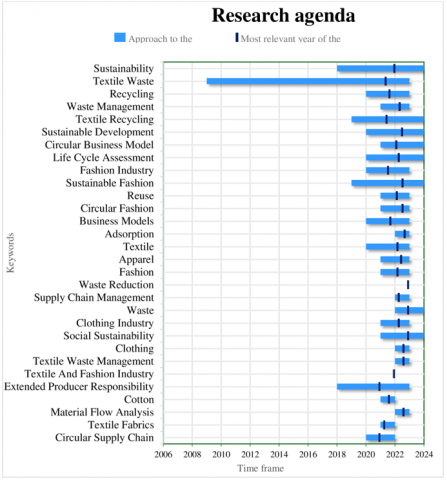
It's true that circular production, which often includes sustainable practices and advanced recycling, can lead to higher initial costs. However, these increased costs might be offset by a "circular premium" that consumers are willing to pay. This premium can be justified by the significant long-term environmental and social benefits that these products offer. Understanding the relationship between product prices and this circular premium will be vital for future studies on the CE. This also relates to the behavior of companies integrating the EC from a greenwashing perspective, as a barrier to genuine sustainability. Future research should integrate economic analysis, knowledge of consumer behavior, and regulatory scrutiny to develop robust frameworks that promote genuine circularity, ensuring that sustainability claims are credible and transformative in the textile sector. These lines of research are essential for sustainable innovation (Figure 9).
Conversely, the efficacy of existing recycling systems in the textile industry could be evaluated, as well as potential avenues for enhancement and optimization. Moreover, it would be beneficial to investigate novel recycling techniques and technologies that enhance the quality and quantity of recycled materials in the textile sector. This would contribute to a reduction in the environmental footprint and the promotion of circularity. It is also necessary to analyse the different reuse models that exist in the textile industry. These include the rental of garments and the reconversion of materials. The effectiveness and viability of these models must be evaluated in terms of their economic, environmental, and social impact. Additionally, the influence of consumer culture on the acceptance and adoption of reuse practices in the textile sector should be investigated, as well as the identification of barriers and facilitators for their large-scale implementation.
It would be beneficial to analyze the effectiveness and efficiency of existing waste management systems in the textile industry, as well as identify innovative practices and technologies that can improve the recovery and valorization of materials. Moreover, the environmental and economic impact of distinct waste management strategies within the textile sector could be evaluated, with a focus on their long-term viability and sustainability.
Another topic of interest is the study of how the adoption of circular practices can transform the fashion industry, promoting responsible production and consumption, as well as the implementation of sustainable business models. Additionally, the impact of fast fashion on the environment and society could be investigated, as well as innovative alternatives that promote more sustainable and ethical fashion.
The adsorption of pollutants on textile materials represents a promising technology in the CE of the textile sector, which seeks to reduce environmental pollution and improve water and air quality. For future research, it would be relevant to explore the potential of adsorption in the removal of dyes, chemicals, and other contaminants present in textile effluents. Additionally, it would be beneficial to investigate new adsorbent materials and treatment techniques in the same way. The environmental and economic impact of adsorption in the textile industry could be investigated, as well as its integration into waste and wastewater management systems to promote circularity and sustainability.
This bibliometric analysis reveals a significant acceleration in scientific production related to the CE in the textile sector, particularly between 2021 and 2023. While this underscores growing academic interest, the field largely consists of fragmented studies, suggesting its conceptual, methodological, and practical foundations are still solidifying. Research has shifted focus from textile waste to broader themes, such as sustainable fashion, digitalization, and circular business models, signaling the need for a more integrated understanding of sustainability transitions within the textile industry.
This study contributes theoretically by introducing a quadrant-based framework that maps the conceptual evolution of the field and distinguishes between consolidated, emerging, and declining themes. This framework provides a valuable tool for structuring future research agendas and theorizing circularity not only as a set of practices, but as a socio-technical and institutional transformation. The emergence of topics like social sustainability and consumer acceptance invites interdisciplinary exploration linking CE to behavioral sciences, ethics, and development studies.
From a policy perspective, the findings highlight the urgent need to develop enabling environments for CE adoption. Regulatory instruments—such as extended producer responsibility, incentives for digital traceability, and public procurement standards—are crucial for accelerating circular transitions. Countries like Finland and Italy exemplify how coordinated policy frameworks and industrial ecosystems can foster both research productivity and high-impact CE innovations. However, the limited representation of low- and middle-income countries in high-impact studies points to a persistent North-South knowledge gap, demanding inclusive research funding and policy support.
Practically, the identification of key clusters—particularly those related to digital innovation, business models, and consumer engagement—highlights opportunities for firms to integrate CE principles into core strategies. Business leaders should not only invest in technological solutions, but also in new organizational capabilities to orchestrate circular supply chains, communicate sustainability transparently, and co-create value with consumers. The concept of a “circular premium” suggests a potential reconfiguration of market dynamics where quality, durability, and ethical production become key drivers of competitive advantage.
This study encourages a shift from descriptive to transformative research on the CE in the textile sector. Future studies should deepen theoretical development, integrate mixed-method approaches, and address structural inequalities in knowledge production. Only through such critical, interdisciplinary, and inclusive efforts can the circular transition in the textile industry evolve from a conceptual aspiration to a measurable global transformation.
[1] Gazzola, P., Pavione, E., Pezzetti, R., Grechi, D. (2020). Trends in the fashion industry. The perception of sustainability and circular economy: A gender/generation quantitative approach. Sustainability, 12(7): 2809. https://doi.org/10.3390/su12072809
[2] Hassan, R., Acerbi, F., Rosa, P., Terzi, S. (2024). The role of digital technologies in the circular transition of the textile sector. The Journal of the Textile Institute, 116(12): 2860-2873. https://doi.org/10.1080/00405000.2024.2414162
[3] Haslinger, S., Hummel, M., Anghelescu-Hakala, A., Määttänen, M., Sixta, H. (2019). Upcycling of cotton polyester blended textile waste to new man-made cellulose fibers. Waste Management, 97: 88-96. https://doi.org/10.1016/j.wasman.2019.07.040
[4] Ali, S.S., Torğul, B., Paksoy, T., Luthra, S., Kayikci, Y. (2024). A novel hybrid decision-making framework for measuring Industry 4.0-driven circular economy performance for textile industry. Business Strategy and the Environment, 33(8): 7825-7854. https://doi.org/10.1002/bse.3892
[5] Kazancoglu, I., Kazancoglu, Y., Yarimoglu, E., Kahraman, A. (2020). A conceptual framework for barriers of circular supply chains for sustainability in the textile industry. Sustainable Development, 28(5): 1477-1492. https://doi.org/10.1002/sd.2100
[6] Kazancoglu, I., Kazancoglu, Y., Kahraman, A., Yarimoglu, E., Soni, G. (2020). Investigating barriers to circular supply chain in the textile industry from stakeholders’ perspective. International Journal of Logistics Research and Applications, 25(4-5): 521-548. https://doi.org/10.1080/13675567.2020.1846694
[7] Farrukh, A., Sajjad, A. (2024). Drivers for and barriers to circular economy transition in the textile industry: A developing economy perspective. Sustainable Development, 32(6): 7309-7329. https://doi.org/10.1002/sd.3088
[8] de Carvalho, P.T., Lopes, J.D., Raimundo, R.J. (2025). Innovation impact in the textile industry: From the Toyota production system to artificial intelligence. Sustainability, 17(3): 1170. https://doi.org/10.3390/su17031170
[9] Baloyi, R.B., Gbadeyan, O.J., Sithole, B., Chunilall, V. (2023). Recent advances in recycling technologies for waste textile fabrics: A review. Textile Research Journal, 94(3-4): 508-529. https://doi.org/10.1177/00405175231210239
[10] Ding, Z., Liu, J., Chen, H., Huang, S., Evrendilek, F., He, Y., Zheng, L. (2021). Co-pyrolysis performances, synergistic mechanisms, and products of textile dyeing sludge and medical plastic wastes. Science of The Total Environment, 799: 149397. https://doi.org/10.1016/j.scitotenv.2021.149397
[11] Ribul, M., Lanot, A., Tommencioni Pisapia, C., Purnell, P., McQueen-Mason, S.J., Baurley, S. (2021). Mechanical, chemical, biological: Moving towards closed-loop bio-based recycling in a circular economy of sustainable textiles. Journal of Cleaner Production, 326: 129325. https://doi.org/10.1016/j.jclepro.2021.129325
[12] Lu, L., Fan, W., Ge, S., Liew, R.K., Shi, Y., Dou, H., Wang, S., Lam, S.S. (2022). Progress in recycling and valorization of waste silk. Science of the Total Environment, 830: 154812. https://doi.org/10.1016/j.scitotenv.2022.154812
[13] Kusi-Sarpong, S., Gupta, H., Khan, S.A., Chiappetta Jabbour, C.J., Rehman, S.T., Kusi-Sarpong, H. (2021). Sustainable supplier selection based on industry 4.0 initiatives within the context of circular economy implementation in supply chain operations. Production Planning & Control, 34(10): 999-1019. https://doi.org/10.1080/09537287.2021.1980906
[14] Sustainable Development Goals. (2023). Goal 9: Build resilient infrastructure, promote sustainable industrialization and foster innovation. https://www.un.org/sustainabledevelopment/infrastructure-industrialization/.
[15] Sustainable Development Goals. (2023). Goal 12: Ensure sustainable consumption and production patterns. https://www.un.org/sustainabledevelopment/sustainable-consumption-production/.
[16] Hora, S.T., Bungau, C., Negru, P.A., Radu, A.F. (2023). Implementing circular economy elements in the textile industry: A bibliometric analysis. Sustainability, 15(20): 15130. https://doi.org/10.3390/su152015130
[17] Liu, Z., Liu, J., Osmani, M. (2021). Integration of digital economy and circular economy: Current status and future directions. Sustainability, 13(13): 7217. https://doi.org/10.3390/su13137217
[18] Senthil Kumar, P., Femina Carolin, C. (2019). Future for circular economy. In Circular Economy in Textiles and Apparel, pp. 207-217. https://doi.org/10.1016/B978-0-08-102630-4.00010-8
[19] Suchek, N., Ferreira, J.J., Fernandes, P.O. (2022). A review of entrepreneurship and circular economy research: State of the art and future directions. Business Strategy and the Environment, 31(5): 2256-2283. https://doi.org/10.1002/bse.3020
[20] Oluleye, B.I., Chan, D.W.M., Saka, A.B., Olawumi, T.O. (2022). Circular economy research on building construction and demolition waste: A review of current trends and future research directions. Journal of Cleaner Production, 357: 131927. https://doi.org/10.1016/j.jclepro.2022.131927
[21] Coppola, C., Vollero, A., Siano, A. (2023). Developing dynamic capabilities for the circular economy in the textile and clothing industry in Italy: A natural-resource-based view. Business Strategy and the Environment, 32(7): 4798-4820. https://doi.org/10.1002/bse.3394
[22] Zandberga, A., Kalnins, S.N., Gusca, J. (2023). Decision-making algorithm for waste recovery options. Review on textile waste derived products. Environmental and Climate Technologies, 27(1): 137-149. https://doi.org/10.2478/rtuect-2023-0011
[23] Page, M.J., McKenzie, J.E., Bossuyt, P.M., Boutron, I., et al. (2021). The PRISMA 2020 statement: An updated guideline for reporting systematic reviews. International Journal of Surgery, 88: 105906. https://doi.org/10.1016/j.ijsu.2021.105906
[24] Pranckutė, R. (2021). Web of Science (WoS) and Scopus: The titans of bibliographic information in today’s academic world. Publications, 9(1): 12. https://doi.org/10.3390/publications9010012
[25] Durieux, V., Gevenois, P.A. (2010). Bibliometric indicators: Quality measurements of scientific publication. Radiology, 255(2): 342-351. https://doi.org/10.1148/radiol.09090626
[26] Peter John, E., Mishra, U. (2023). A sustainable three-layer circular economic model with controllable waste, emission, and wastewater from the textile and fashion industry. Journal of Cleaner Production, 388: 135642. https://doi.org/10.1016/j.jclepro.2022.135642
[27] Wójcik-Karpacz, A., Karpacz, J., Brzeziński, P., Pietruszka-Ortyl, A., Ziȩbicki, B. (2023). Barriers and drivers for changes in circular business models in a textile recycling sector: Results of qualitative empirical research. Energies, 16(1): 490. https://doi.org/10.3390/en16010490
[28] Jäämaa, L., Kaipia, R. (2022). The first mile problem in the circular economy supply chains—Collecting recyclable textiles from consumers. Waste Management, 141: 173-182. https://doi.org/10.1016/j.wasman.2022.01.012
[29] Joy, A., Sherry, Jr, J.F., Venkatesh, A., Wang, J., Chan, R. (2012). Fast fashion, sustainability, and the ethical appeal of luxury brands. Fashion Theory, 16(3): 273-295. https://doi.org/10.2752/175174112X13340749707123
[30] Bocken, N.M.P., Short, S.W., Rana, P., Evans, S. (2014). A literature and practice review to develop sustainable business model archetypes. Journal of Cleaner Production, 65: 42-56. https://doi.org/10.1016/j.jclepro.2013.11.039
[31] Provin, A.P., de Aguiar Dutra, A.R., de Sousa e Silva Gouveia, I.C.A., Cubas, e A.L.V. (2021). Circular economy for fashion industry: Use of waste from the food industry for the production of biotextiles. Technological Forecasting and Social Change, 169: 120858. https://doi.org/10.1016/j.techfore.2021.120858
[32] Shirvanimoghaddam, K., Motamed, B., Ramakrishna, S., Naebe, M. (2020). Death by waste: Fashion and textile circular economy case. Science of the Total Environment, 718: 137317. https://doi.org/10.1016/j.scitotenv.2020.137317
[33] Laitala, K., Klepp, I.G., Haugrønning, V., Throne-Holst, H., Strandbakken, P. (2021). Increasing repair of household appliances, mobile phones and clothing: Experiences from consumers and the repair industry. Journal of Cleaner Production, 282: 125349. https://doi.org/10.1016/j.jclepro.2020.125349
[34] Mo, H., Wen, Z., Chen, J. (2009). China's recyclable resources recycling system and policy: A case study in Suzhou. Resources, Conservation and Recycling, 53(7): 409-419. https://doi.org/10.1016/j.resconrec.2009.03.002
[35] Ta, A.H., Aarikka-Stenroos, L., Litovuo, L. (2022). Customer experience in circular economy: Experiential dimensions among consumers of reused and recycled clothes. Sustainability, 14(1): 509. https://doi.org/10.3390/su14010509
[36] Moktadir, M.A., Kumar, A., Ali, S.M., Paul, S.K., Sultana, R., Rezaei, J. (2020). Critical success factors for a circular economy: Implications for business strategy and the environment. Business Strategy and the Environment, 29(8): 3611-3635. https://doi.org/10.1002/bse.2600
[37] Majumdar, A., Shukla, S., Singh, A.A., Arora, S. (2020). Circular fashion: Properties of fabrics made from mechanically recycled poly-ethylene terephthalate (PET) bottles. Resources, Conservation and Recycling, 161: 104915. https://doi.org/10.1016/j.resconrec.2020.104915
[38] Charnley, F., Cherrington, R., Mueller, F., Jain, A., Nelson, C., Wendland, S., Ventosa, S. (2024). Retaining product value in post-consumer textiles: How to scale a closed-loop system. Resources, Conservation and Recycling, 205: 107542. https://doi.org/10.1016/j.resconrec.2024.107542
[39] Weber, S., Weber, O., Habib, K., Dias, G.M. (2023). Textile waste in Ontario, Canada: Opportunities for reuse and recycling. Resources, Conservation and Recycling, 190: 106835. https://doi.org/10.1016/j.resconrec.2022.106835
[40] de Oliveira Neto, G.C., Teixeira, M.M., Souza, G.L.V., Arns, V.D., Tucci, H.N.P., Amorim, M. (2022). Assessment of the eco-efficiency of the circular economy in the recovery of cellulose from the shredding of textile waste. Polymers, 14(7): 1317. https://doi.org/10.3390/polym14071317
[41] Repp, L., Hekkert, M., Kirchherr, J. (2021). Circular economy-induced global employment shifts in apparel value chains: Job reduction in apparel production activities, job growth in reuse and recycling activities. Resources, Conservation and Recycling, 171: 105621. https://doi.org/10.1016/j.resconrec.2021.105621
[42] Shamsi, M.A., Chaudhary, A., Anwar, I., Dasgupta, R., Sharma, S. (2022). Nexus between environmental consciousness and consumers’ purchase intention toward circular textile products in India: A moderated-mediation approach. Sustainability, 14(20): 12953. https://doi.org/10.3390/su142012953
[43] Luoma, P., Penttinen, E., Tapio, P., Toppinen, A. (2023). Paradoxical tensions in exploiting data to implement circular economy in the textile industry. Ambio, 52(8): 1400-1413. https://doi.org/10.1007/s13280-023-01865-w
[44] Shamsi, M.A., Anwar, I., Chaudhary, A., Akhtar, S., Ahmad, A. (2023). Sustainable transition through circular textile products: An empirical study of consumers’ acceptance in India. Sustainability, 15(18): 13656. https://doi.org/10.3390/su151813656
[45] Riba, J.R., Cantero, R., Riba-Mosoll, P., Puig, R. (2022). Post-consumer textile waste classification through near-infrared spectroscopy, using an advanced deep learning approach. Polymers, 14(12): 2475. https://doi.org/10.3390/polym14122475
[46] Warwas, I., Podgórniak-Krzykacz, A., Przywojska, J., Kozar, Ł. (2021). Going green and socially responsible-Textile industry in transition to sustainability and a circular economy. Fibres and Textiles in Eastern Europe, 29(3(147)): 8-18. https://doi.org/10.5604/01.3001.0014.7782
[47] Saccani, N., Bressanelli, G., Visintin, F. (2023). Circular supply chain orchestration to overcome Circular Economy challenges: An empirical investigation in the textile and fashion industries. Sustainable Production and Consumption, 35: 469-482. https://doi.org/10.1016/j.spc.2022.11.020
[48] Tecchio, P., McAlister, C., Mathieux, F., Ardente, F. (2017). In search of standards to support circularity in product policies: A systematic approach. Journal of Cleaner Production, 168: 1533-1546. https://doi.org/10.1016/j.jclepro.2017.05.198
[49] Niinimäki, K., Peters, G., Dahlbo, H., Perry, P., Rissanen, T., Gwilt, A. (2020). The environmental price of fast fashion. Nature Reviews Earth & Environment, 1(4): 189-200. https://doi.org/10.1038/s43017-020-0039-9
[50] European Commission. (2020). First circular economy action plan. https://ec.europa.eu/environment/circular-economy/.
[51] LabOpen. (2024). Circular textile and fashion economy in Finland. https://www.labopen.fi/en/lab-pro/circular-textile-and-fashion-economy-in-finland/.
[52] Govindan, K., Hasanagic, M. (2018). A systematic review on drivers, barriers, and practices towards circular economy: A supply chain perspective. International Journal of Production Research, 56(1-2): 278-311. https://doi.org/10.1080/00207543.2017.1402141