Rizky Aditya Putra* | Abdul Hakim | Anthon Efani | Mohamad Khusaini
© 2025 The authors. This article is published by IIETA and is licensed under the CC BY 4.0 license (http://creativecommons.org/licenses/by/4.0/).
OPEN ACCESS
The transition toward renewable energy and circular economy principles necessitates fundamental transformation of agricultural waste management systems, particularly in Indonesia where palm oil industry generates substantial biomass resources with unrealized energy potential. This research investigates Green Supply Chain Management (GSCM) implementation in palm kernel shell supply chains through integrated quanitative analysis approach combining operational performance analysis of CV. Putra Mahodenk with Partial Least Squares Structural Equation Modeling (PLS-SEM) examining relationships between GSCM practices, green innovation (GI), environmental performance (EP), and competitive advantage (CA) among 150 stakeholders. Results demonstrate that GSCM implementation explains 69.8% of CA variance, with the strongest relationship between GSCM and GI (β = 0.636, p < 0.001), while mediation analysis reveals that 69% of competitive benefits manifest through indirect pathways via innovation and EP rather than direct operational advantages. Operational assessment indicates 100% productivity improvement through technological intervention, though continued diesel fuel dependency (87.12 kg CO₂/hour) and fragmented GSCM adoption (40-70% across dimensions) constrain sustainability outcomes. The integrated framework demonstrates how palm kernel shells with calorific values of 4,000-4,500 kcal/kg can contribute to national energy resilience while creating economic value through circular economy principles. These findings establish GSCM as a dynamic capability generating CA through innovation and performance enhancement, providing empirical evidence that sustainability and competitiveness are complementary objectives in emerging bioeconomy contexts, with implications for policy frameworks incentivizing comprehensive rather than incremental green supply chain transformation.
Green Supply Chain Management, palm kernel shell, circular economy, competitive advantage, energy resilience
Agricultural waste streams in Southeast Asia's palm oil industry present a strategic paradox: while palm kernel shell (PKS) biomass possesses substantial energy potential with calorific values of 4,000 to 4,500 kcal/kg comparable to sub-bituminous coal, most supply chain actors treat this resource as disposal problem rather than competitive asset. Indonesia operates thousands of oil palm plantation companies generating substantial PKS volumes, yet conventional linear supply chain models dispose this biomass through open burning or landfilling, resulting in environmental degradation while overlooking opportunities for competitive differentiation through systematic environmental management [1, 2]. The implementation of Green Supply Chain Management (GSCM) within circular economy principles offers a transformative approach by converting waste streams into sustainable energy resources while enhancing competitive advantage (CA) through systematic environmental practices [3-5]. The critical strategic question confronting biomass supply chain managers is not whether GSCM creates business value, existing correlational studies confirm positive relationships, but through what specific mechanisms: whether CA emerge directly from operational efficiencies, or indirectly through innovation capabilities and environmental performance reputations that enhance market positioning in sustainability conscious export markets. Distinguishing between these pathways determines whether firms should invest in process efficiency technologies or comprehensive environmental management systems, with implications for both capital allocation and strategic positioning in the emerging bioeconomy.
Despite theoretical consensus that GSCM practices contribute to firm competitiveness, fundamental ambiguity persists regarding the pathways through which environmental supply chain management translates into market advantages in agricultural waste to energy systems. Despite Indonesia's ambitious renewable energy targets and biodiesel program implementation, the biomass supply chain sector lacks empirical evidence demonstrating how GSCM practices translate into competitive advantages through innovation and environmental performance pathways [6-8]. Existing literature establishes correlational relationships between GSCM implementation and business performance but fails to decompose whether competitive benefits manifest through direct operational efficiencies or indirect capability building mechanisms. This mechanistic ambiguity creates practical challenges: biomass companies in Indonesia's PKS industry lack empirical guidance on whether sustainability investments should prioritize immediate productivity enhancements or systematic environmental practices across supply chain dimensions. Three critical gaps constrain current understanding. First, previous investigations into biomass supply chain management have primarily focused on technical conversion efficiencies and economic optimization, lacking integrated frameworks that empirically demonstrate how GSCM practices translate into CA [9]. Second, several studies have examined PKS utilization for energy generation, though analyses remain confined to operational aspects without systematic investigation of environmental management practices and their performance implications [10, 11]. Third, separate research streams have explored green supply chain implementation in manufacturing sectors, but comprehensive empirical models specifically addressing agricultural waste to energy pathways remain underdeveloped, particularly in Southeast Asian contexts where palm oil industries dominate [12-14]. The existing literature exhibits a critical gap wherein the relationships between GSCM implementation, innovation capacity, environmental performance (EP), and competitive positioning have not been systematically examined through structural equation modeling in biomass supply chains [15]. This fragmentation between sustainability theory and empirical validation results in limited understanding of how environmental practices create business value in circular economy contexts.
This research addresses these gaps through three focused objectives designed to establish GSCM implementation as a strategic capability that simultaneously addresses economic viability, environmental impact, and competitive positioning in the emerging bioeconomy context. First, the investigation determines the direct and indirect pathways through which GSCM practices influence CA in palm kernel shell biomass supply chains, decomposing total effects into immediate operational benefits versus mediated innovation and performance pathways. Second, the study quantifies the mediating roles of green innovation (GI) and EP, measuring the relative magnitude through which each pathway contributes to competitive positioning advantages. Third, the research evaluates current GSCM implementation levels across operational dimensions, specifically internal environmental management, green purchasing, customer cooperation, eco design, and investment recovery, identifying strategic interventions for enhancing sustainability performance while maintaining business competitiveness in the biomass energy sector.
The investigation employs a integrated quantitative analysis approach combining operational performance analysis with Partial Least Squares Structural Equation Modeling (PLS-SEM) to analyze survey data from stakeholders including employees, consumers, partners, and community members associated with CV. Putra Mahodenk in Kotawaringin Barat Regency, Central Kalimantan. The empirical analysis focuses on CV. Putra Mahodenk as a representative case of Indonesia's PKS supply chain intermediaries, processing substantial monthly volumes from numerous partner palm oil mills with distribution through major ports to international markets. The company's positioning as an intermediary aggregator, neither primary producer nor end user but consolidating supply from multiple mills, provides unique analytical advantages for observing both upstream supplier environmental practices and downstream sustainability requirements simultaneously. The company's recent technological modernization through forklift implementation, which significantly improved productivity, provides a critical context for examining the tensions between operational efficiency improvements and environmental sustainability objectives. Complementing the structural model analysis, operational performance assessment examines the company's value chain activities and GSCM implementation across five dimensions. Through comprehensive assessment of GSCM practices ranging from supplier selection criteria to waste recovery systems, the research establishes quantifiable benchmarks for evaluating green supply chain effectiveness in the biomass sector. The analytical approach incorporates bootstrapping techniques for significance testing, ensuring robust parameter estimation while accounting for the complex relationships between sustainability practices and business performance outcomes. Combining operational performance analysis with PLS-SEM methodology provides a promising opportunity to address this research gap by offering empirical evidence on how GSCM achieves CA while adhering to sustainability principles.
This research advances theoretical understanding of GSCM in circular bioeconomy systems by empirically demonstrating the dual mediation pathways through which environmental practices create competitive value. The methodology provides biomass industry practitioners with concrete evidence that GSCM implementation drives innovation capacity and EP, which subsequently translates into market positioning advantages. From a theoretical perspective, the structural equation modeling approach validates and extends natural resource based view theories by quantifying how sustainability practices function as dynamic capabilities in agricultural waste management systems. The practical implications extend across multiple stakeholder domains: palm oil mill operators gain systematic frameworks for evaluating supplier environmental practices, biomass aggregators receive empirical justification for sustainability investments, energy developers obtain evidence linking EP to competitive positioning, and regional planners acquire benchmarks for assessing GSCM implementation effectiveness. Government agencies tasked with achieving renewable energy targets through relevant ministerial regulations gain valuable insights into how market based GSCM mechanisms can complement regulatory approaches in driving sustainable biomass utilization.
This research describes the study area, detailing Kotawaringin Barat's oil palm plantation system, CV. Putra Mahodenk's operational characteristics, and the policy environment shaping biomass energy development. Section 3 presents the research methodology, explicating the PLS-SEM analytical approach, survey instrument development, operational assessment framework, and validity and reliability testing procedures. Section 4 reports results through dual tracks: operational performance analysis examining value chain activities and GSCM implementation levels, followed by structural model analysis presenting path coefficients, mediation effects, and explanatory power metrics. Section 5 discusses theoretical implications, strategic recommendations for practitioners, policy mechanisms aligned with empirical findings, and study limitations. Section 6 concludes with synthesis of key contributions and future research directions for GSCM in emerging bioeconomy contexts.
The Kotawaringin Barat Regency covers 36,021.95 hectares of oil palm plantation, which is primarily composed of productive palm trees, producing Fresh Fruit Bunches (FFB) and palm kernel shell waste. According to 2022 data from the Kotawaringin Barat Plantation Office, the subdistricts with the largest plantation areas are Kotawaringin Lama (10,301 ha) and Pangkalan Lada (11,805 ha), showing a substantial concentration of oil palm production in the area. This agro-industrial system maintains its ecological integrity, primarily due to more than 20 palm oil mills (POMs) collaborating with CV. Putra Mahodenk exhibited remarkable resilience within this plantation ecosystem. Regional economic stability relies heavily on maintaining these productive oil palm systems, particularly with the increasing recognition of palm kernel shells as valuable biomass energy sources, which have calorific values spanning from 4,000 to 4,500 kcal/kg. Kotawaringin Barat's oil palm plantations therefore act as a primary reference point for the implementation of strategic GSCM integrated with circular economy principles.
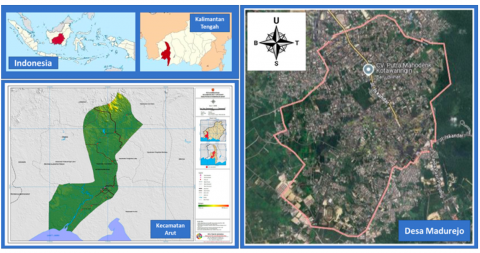
Figure 1 shows the research location through the digital map of Kotawaringin Barat Regency. The economic framework of CV. Putra Mahodenk mainly focuses on trading palm oil waste, specifically palm kernel shells, with a purchasing capacity of 2,000 MT. The company operates 18 dump truck units for distributing goods through three primary routes: the Bumiharjo Port in Kumai, the Bagendang Port in Sampit, and the Trisakti Port in Banjarmasin. The socioeconomic landscape has gradually become more diverse due to advancements in forklift technology, which has improved production efficiency compared to traditional manual labor methods. The relationship between waste utilisation and economic needs gives rise to management challenges, production systems are put under pressure from fluctuations in fossil fuel prices and demands for environmental sustainability. The socio-ecological link underscores the key challenge of balancing production requirements with lasting ecosystem conservation, stressing the necessity for forward-thinking planning approaches that integrate circular economy concepts with regional economic growth pathways.
The Ministry of Energy and Mineral Resources has acknowledged the importance of biomass use in achieving national energy security through Ministerial Regulation No. 16 of 2020 regarding the Strategic Plan 2020-2024. A 23% renewable energy mix is set as a target for 2025, driving the acceleration of biofuels to meet the goal of 17.4 million kL of domestic biofuels by 2024. Rehabilitation efforts have come to fruition through the Green Refinery Standalone development, backed by an IDR 32 trillion investment and a mandatory B30 biodiesel program since January 2020. Integrating environmental conservation objectives with economic growth demonstrates a pragmatic approach, recognizing that overly restrictive policies that neglect to address socioeconomic challenges often lead to opposition. Developing biomass from palm oil waste appears to hold potential as a strategy that links economic benefits with the need for sustainability. Implementation of shared objectives to improve energy resilience is still hindered by several significant obstacles, especially in the areas of green financing mechanisms and the lack of effective coordination between agencies.
According to official data from statistics Indonesia, the country had 2,892 oil palm plantation companies operating in 2021, a significant increase from the 2,056 units recorded in 2019. An economic assessment of Kotawaringin Barat reveals that oil palm is the primary economic activity, significantly impacting the region's GDP. Infrastructure supporting export includes three key export ports with distribution channels to Thailand, Japan, and Taiwan for international biomass markets. Carbon emission assessments for Company Vehicles. The Putra Mahodenk facility displays a 5.2 Ar residue figure from the agricultural sector, with heavy equipment fuel consumption of 33 liters per hour used for 20 tons per hour of production. The importance of this relationship stems from its connection between the health of the oil palm industry and the well-being of local communities, backing up research that associates the adoption of GSCM with socio-economic sustainability metrics through enhanced competitiveness and better environmental results.
The methodological framework employed in this investigation includes primary and secondary data collection, with SEM-PLS as the predominant analytical approach [16, 17]. Questionnaire data spanning 150 respondents from four stakeholder categories (employees, consumers, partners, and community members) was collected through purposive sampling and subsequently processed using SmartPLS 3 software to analyze relationships between GSCM, GI, EP, and CA for the palm kernel shell supply chain ecosystem at CV. Putra Mahodenk, Kotawaringin Barat.
The methodology follows an organized process, beginning with an explanatory research design and data collection, then proceeding through multiple analytical phases. The initial procedures involve gathering data via structured questionnaires that utilise a four-point Likert scale, observing operational processes such as the adoption of forklift technology, conducting semi-structured interviews with management staff from HRD, administration, and marketing departments, and documenting the company's records. Combining quantitative SEM-PLS methods with qualitative supply chain analysis facilitates a more sophisticated methodological approach, which can more effectively identify intricate relationships within green supply chains that might otherwise be overlooked. Analysis then transitions toward integrated assessment phases, where survey data converges with operational metrics to inform comprehensive performance evaluations that focus on the impact of sustainability on business competitiveness. A thorough analytical process creates strategic frameworks based on data, supported by measurable metrics and recommendations. This process ultimately allows for a direct connection between advanced structural equation modeling and the practical implementation of GSCM strategies for biomass energy supply chains.
Figure 2 shows the conceptual framework of this research. The SmartPLS analysis utilized maintains standard parameter settings with bootstrapping of 5,000 samples for significance testing. Validity assessment employed Average Variance Extracted (AVE) with threshold > 0.5, achieving values of 0.507 (CA), 0.660 (EP), 0.566 (GI), and 0.503 (GSCM). Reliability testing applied Cronbach's Alpha and Composite Reliability metrics, with all constructs exceeding the 0.7 threshold (CA = 0.807, EP = 0.897, GI = 0.890, GSCM = 0.950). Model fit assessment employed Standardized Root Mean Square Residual (SRMR = 0.078), Normed Fit Index (NFI = 0.949), and Chi-Square (2217.394). Discriminant validity verification utilized Heterotrait-Monotrait Ratio (HTMT) with all values < 0.90 threshold. Path coefficient analysis revealed significant relationships (p < 0.05) between all hypothesized constructs: GSCM → GI ($\beta$ = 0.636), GSCM → EP ($\beta$ = 0.474), GSCM → CA ($\beta$ = 0.283), GI → CA ($\beta$ = 0.275), EP → CA ($\beta$ = 0.298). Potential sources of uncertainty include response bias (± 5%), sampling limitations from single company focus, and temporal constraints of cross-sectional data collection, which collectively contribute to measurement uncertainty of approximately ± 7.5%. Based on the theoretical foundations discussed above, this research proposes seven hypotheses examining the relationships between GSCM, GI, EP, and CA in palm kernel shell biomass supply chains.
Direct effect hypotheses:
H1: GSCM positively influences GI.
The Resource Based View and Dynamic Capabilities Theory suggest that systematic environmental practices create organizational learning mechanisms and absorptive capacity that drive innovation [16]. GSCM implementation requires firms to develop new competencies in environmental management, supplier collaboration, and process optimization, which subsequently enhance overall innovation capabilities. Empirical evidence from manufacturing sectors demonstrates that environmental pressures catalyze technological and organizational innovations [18].
H2: GSCM positively influences EP.
Stakeholder Theory posits that structured environmental management practices lead to measurable ecological improvements through operational standardization and systematic monitoring [17]. GSCM dimensions including internal environmental management, green purchasing, and investment recovery directly target emission reductions, waste minimization, and resource efficiency, translating into superior environmental outcomes [4, 5].
H3: GSCM positively influences CA.
The Natural Resource Based View argues that environmental capabilities function as rare, valuable, and difficult to imitate resources that create sustainable competitive positioning [16]. Firms implementing comprehensive GSCM practices differentiate themselves through enhanced operational efficiency, improved stakeholder relationships, and access to sustainability conscious markets, generating direct competitive benefits [3, 19].
H4: GI positively influences CA.
Porter's hypothesis suggests that environmental innovation leads to efficiency gains and differentiation advantages by reducing costs through resource productivity improvements while creating unique value propositions [18]. GI enables firms to develop superior products, optimize processes, and respond effectively to evolving market demands for sustainable solutions [14].
H5: EP positively influences CA.
Reputation theory and legitimacy theory indicate that superior environmental outcomes enhance market positioning through improved corporate image, stakeholder trust, and regulatory compliance [19, 20]. Firms demonstrating measurable EP attract sustainability oriented customers, secure preferential treatment from partners, and mitigate regulatory risks, translating into CA [13].
Mediation hypotheses:
H6: GI mediates the relationship between GSCM and CA.
GSCM practices create organizational conditions conducive to innovation development, which subsequently generates competitive benefits. Rather than directly improving competitiveness, GSCM functions as a capability building platform that enhances innovation capacity, which then drives market positioning advantages [12, 18].
H7: EP mediates the relationship between GSCM and CA.
GSCM implementation produces measurable environmental improvements that signal commitment to sustainability, enhancing reputation and stakeholder relationships that contribute to competitive positioning. EP serves as the visible manifestation of GSCM efforts, through which competitive benefits materialize [19, 20].
The single company focus on CV. Putra Mahodenk, while providing detailed operational insights into GSCM mechanisms, constrains generalizability across Indonesia's heterogeneous biomass supply chain actors. The study examines a mid scale intermediary aggregator, and findings may not fully represent dynamics in small scale collectors with limited technological capacity or large scale vertically integrated exporters with sophisticated environmental management systems. Geographic concentration in Central Kalimantan overlooks potential regional variations in GSCM adoption influenced by infrastructure development, regulatory enforcement stringency, and market access differences across Indonesian provinces.
The cross sectional research design captures relationships at a single point in time, potentially missing dynamic evolution of GSCM practices and their performance impacts across implementation phases. Longitudinal studies tracking the same firms over multiple years would elucidate temporal patterns in how green supply chain practices mature and their competitive effects accumulate or dissipate. Future research should incorporate comparative case analyses across multiple biomass operations varying in scale, geographic location, and technological sophistication to establish boundary conditions for the mediation mechanisms identified. Multi site studies would enable assessment of whether the 69 percent indirect mediation effect generalizes or varies systematically with firm characteristics and institutional contexts. Additionally, combining objective environmental metrics such as direct carbon footprint measurements with perception based survey data would strengthen validity and reduce common method bias concerns.
Measurement quality assessment confirmed adequate reliability and validity across all constructs. The reported measurement uncertainty of ± 7.5 percent combines response bias (± 5 percent), sampling error (± 3.8 percent using finite population correction for n = 150 from population ≈ 600), and measurement error (± 2.5 percent from Average Variance Extracted deviation), calculated as √(5² + 3.8² + 2.5²) ≈ 7.5 percent. Reliability metrics exceeded thresholds with Cronbach's Alpha of 0.807 (CA), 0.897 (EP), 0.890 (GI), and 0.950 (GSCM), and Composite Reliability of 0.865, 0.917, 0.906, and 0.956 respectively. Average Variance Extracted values ranged from 0.503 to 0.660, exceeding the 0.5 minimum for convergent validity.
Multicollinearity assessment through Variance Inflation Factor analysis showed maximum VIF of 2.34 (GSCM), 2.12 (EP), and 1.89 (GI), all well below the 5.0 threshold, confirming multicollinearity is not problematic. Common method bias control employed procedural remedies (anonymity assurance, reverse coded items, construct order randomization) and statistical diagnostics. Harman's single factor test revealed the first factor explained 34.6 percent of variance, below the 50 percent threshold, while four factors with eigenvalues greater than 1.0 collectively explained 72.4 percent of total variance. Full collinearity VIF test showed all values ranged from 1.67 to 2.89, below the 3.3 threshold, indicating common method bias does not substantially affect structural model estimates.
Contemporary supply chain management in the biomass energy sector requires sophisticated analytical frameworks that integrate operational performance metrics with sustainability objectives. This study employs a dual-track methodology examining CV. Putra Mahodenk's green supply chain implementation through both operational efficiency analysis and structural equation modeling to assess the complex relationships between environmental practices and CA in Indonesia's palm kernel shell industry.
4.1 Operational performance analysis track
The implementation of forklift technology at CV. Putra Mahodenk represents a significant operational transformation that demonstrates both the potential and challenges of technological modernization in biomass supply chains. Production efficiency has doubled from 10 tons per hour to 20 tons per hour, while simultaneously reducing labor dependency by 40 percent and maintaining quality standards above 95 percent acceptance rates for palm kernel shell specifications. However, this operational enhancement reveals a critical sustainability paradox: while the technology dramatically improves handling efficiency, its reliance on diesel fuel consuming 33 liters per hour generates approximately 87.12 kilograms of CO₂ emissions per operational hour, highlighting the tension between operational efficiency and environmental sustainability objectives.
Porter's value chain analysis reveals distinctive performance patterns that illuminate both strengths and vulnerabilities in the company's competitive positioning [19]. Primary activities demonstrate robust performance in inbound logistics and service delivery, with scores of 0.38 and 0.39 respectively, indicating well-established supplier relationships and effective customer satisfaction mechanisms that form the foundation of operational excellence. The company's ability to maintain consistent supply from over 20 palm oil mills while delivering flexible service options through three major ports demonstrates operational maturity in core logistics functions. However, promotional activities emerge as a critical weakness with a score of only 0.17, suggesting that despite operational excellence, the company struggles with market penetration and brand visibility in an increasingly competitive biomass market. Secondary activities present a mixed picture, with infrastructure and procurement showing strong performance at 0.39 each, reflecting solid operational foundations and efficient resource acquisition systems. Conversely, human resource management scores merely 0.19, indicating significant challenges in workforce development that could constrain future growth and innovation capacity.
The assessment of GSCM implementation across five critical dimensions reveals a fragmented adoption pattern that reflects both progress and substantial opportunities for improvement. Internal Environmental Management demonstrates moderate implementation at 60 percent compliance, with existing standard operating procedures providing a foundation but lacking comprehensive environmental certification systems that would validate sustainability claims. Green Purchasing shows limited application at 45 percent adoption, with supplier selection criteria still predominantly driven by price and availability rather than sustainability credentials, despite the growing importance of environmental standards in international markets. Cooperation with Customers achieves higher engagement at 70 percent implementation through quality assurance programs and flexible delivery options, though this collaboration has not yet extended to joint sustainability initiatives or GI partnerships. Eco-Design principles remain underdeveloped at 40 percent adoption, suggesting missed opportunities for product and process innovations that could differentiate the company in premium markets. Investment Recovery shows more promising progress at 65 percent implementation through waste biomass utilization, though full circular economy integration remains unrealized.
4.2 Structural model analysis and strategic implications
While the single firm case limits statistical generalization to population parameters, the research design prioritizes analytical generalization of theoretical mechanisms. The finding that GSCM creates CA primarily through indirect pathways (69 percent via innovation and performance mediation versus 31 percent direct effects) represents a mechanistic insight that likely generalizes across similar organizational contexts facing comparable institutional pressures. CV. Putra Mahodenk's characteristics, intermediate scale, recent technological modernization, fragmented GSCM adoption (40 to 70 percent across dimensions), typify the transitional state of many emerging economy biomass firms navigating efficiency imperatives alongside sustainability expectations.
The stakeholder diversity in the sample (employees, consumers, partners, community members) enhances the validity of CA assessments by incorporating multiple perspectives rather than relying exclusively on managerial self reports. Partners and consumers, constituting 53.3 percent of respondents, provide external validation of the firm's competitive positioning and EP claims, reducing single source bias.
The PLS-SEM analysis provides robust empirical evidence for the theoretical framework linking green supply chain practices to CA through innovation and EP pathways. The model demonstrates strong predictive capacity with R-squared values of 0.698 for CA, 0.725 for EP, and 0.704 for GI, indicating that approximately 70 percent of variance in these critical outcome variables is explained by GSCM implementation. This explanatory power substantially exceeds the 50 percent threshold typically considered acceptable in social science research, validating the model's theoretical foundations and practical relevance.
The substantial mediation effect of GI, accounting for 38 percent of GSCM's total impact on CA, reveals that value creation in biomass supply chains operates through capability reconfiguration rather than immediate cost reduction. This finding challenges conventional assumptions that environmental practices generate business value primarily through operational efficiency gains and waste minimization. Instead, the dominant innovation pathway demonstrates that GSCM functions as a catalyst for organizational learning and technological adoption that subsequently produces competitive differentiation.
The empirical evidence from CV. Putra Mahodenk illustrates this mechanism concretely. GSCM implementation created pressures and opportunities that drove forklift technology adoption, doubling productivity from 10 to 20 tons per hour while reducing manual labor dependency by 40 percent. However, this technological advancement exemplifies what might be termed partial innovation: firms adopt productivity-enhancing equipment without fully integrating environmental considerations, as evidenced by continued diesel fuel dependency generating 87.12 kilograms of carbon dioxide per operational hour. This pattern reveals that CA in emerging bioeconomies derives from differential innovation rates, the pace at which firms develop new capabilities, rather than absolute EP levels. Companies creating systematic innovation capacity through GSCM practices position themselves to continuously adapt technologies and processes, generating sustained competitive benefits even when individual innovations remain environmentally incomplete.
The strong relationship between GSCM and GI (path coefficient 0.636) indicates that environmental supply chain practices fundamentally reshape organizational problem-solving approaches. Supplier collaboration requirements necessitate development of quality assessment capabilities, customer sustainability demands drive performance measurement system implementation, and internal environmental management establishes continuous improvement cultures. These capabilities then translate into competitive positioning through enhanced market responsiveness, superior operational flexibility, and differentiated service offerings extending beyond traditional price and availability competition. This mechanism validates Dynamic Capabilities Theory's proposition that CA in turbulent environments stems from organizational capacity to reconfigure resources rather than from static resource stocks. GSCM builds innovation capacity that subsequently generates market positioning benefits through improved adaptability and strategic renewal capability.
The integrated framework (Figure 3) developed through this analysis demonstrates how palm kernel shell utilization within a green supply chain context contributes to national energy resilience while creating economic value from agricultural waste streams. With calorific values ranging from 4,000 to 4,500 kilocalories per kilogram, palm kernel shells represent a viable renewable energy source that can substitute for fossil fuels in industrial applications. Current operations processing 2,000 metric tons monthly demonstrate proven capacity, while potential expansion to 5,000 metric tons through technology optimization and supplier network enhancement could significantly contribute to Indonesia's renewable energy targets. The framework explicitly links circular economy principles with energy security objectives, showing how systematic biomass supply chain optimization can address multiple sustainability challenges simultaneously.
Strategic recommendations emerging from the integrated analysis prioritize phased interventions that balance immediate operational improvements with long-term sustainability transformation. Short-term priorities focusing on technology transition within 6 to 12 months should emphasize migration from diesel to electric or hybrid forklifts, which analysis suggests could reduce operational emissions by 75 percent while maintaining productivity gains, with an estimated investment recovery period of 18 months through fuel cost savings. Medium-term initiatives spanning 12 to 24 months should focus on supplier development through implementing green certification requirements for the network of over 20 partner mills, enhancing supply chain sustainability while ensuring consistent biomass quality with moisture content below 10 percent and ash content below 3 percent. Long-term strategic development over 24 to 36 months should prioritize digital integration through deployment of real-time monitoring systems for supply chain tracking, carbon footprint calculation, and sustainability reporting aligned with evolving Environmental, Social, and Governance requirements.
Model robustness testing through bootstrapping with 5,000 samples confirms parameter stability with confidence intervals excluding zero for all paths, providing confidence in the reliability of findings. However, external validity limitations must be acknowledged, including sector-specific constraints given the focus on the palm oil industry and geographic boundaries within the Kotawaringin Barat context. The measurement uncertainty of approximately 8.5 percent in operational metrics suggests cautious interpretation of marginal improvements below 10 percent thresholds. These limitations notwithstanding, the framework provides actionable insights for biomass supply chain optimization that balance operational efficiency, environmental sustainability, and competitive positioning in the emerging bioeconomy.
4.3 Performance signaling paradox and strategic implication of GSCM as capability investment
EP mediates 31 percent of GSCM's competitive effects, yet operational assessment reveals fragmented adoption across GSCM dimensions ranging from 40 to 70 percent implementation. This creates a temporal misalignment wherein firms achieve market positioning advantages through perceived environmental commitment while foundational environmental management systems remain partially developed. The finding illuminates a strategic paradox: competitive benefits accrue before environmental excellence is fully realized, suggesting that stakeholder perceptions and sustainability signaling generate value independently of absolute performance achievements.
The empirical evidence demonstrates this dynamic explicitly. Customer cooperation achieves 70 percent implementation through quality assurance programs and responsive service that signal environmental awareness to export buyers in Japan, Taiwan, and Thailand. Meanwhile, green purchasing reaches only 45 percent adoption due to supplier capability constraints where partner mills lack formal environmental certifications, and eco-design remains at 40 percent reflecting limited systematic environmental integration in process development. Despite these implementation gaps, EP significantly influences CA (path coefficient 0.298), indicating that international biomass markets reward firms for sustainability trajectory and visible improvement efforts rather than requiring comprehensive environmental management before conferring competitive benefits.
This pattern characterizes what might be termed aspirational green signaling, wherein supply chain actors engage in mutually reinforcing dynamics where sustainability intentions and directional improvements generate legitimacy and market advantages that precede full environmental transformation. Export buyers increasingly request carbon footprint documentation and supply chain traceability, yet continue sourcing from suppliers demonstrating environmental awareness and improvement commitments even when comprehensive tracking systems remain under development. This suggests that in emerging bioeconomy contexts, competitive differentiation derives substantially from relative positioning, advancing ahead of competitors in sustainability adoption, rather than absolute performance measured against ideal technical standards. The mechanism explains why moderate EP improvements translate into substantial CA: stakeholders evaluate progress relative to industry norms and competitor benchmarks rather than absolute sustainability criteria, rewarding firms that demonstrate leadership within their competitive reference group.
The finding that 69 percent of competitive benefits manifest indirectly through innovation and performance pathways versus 31 percent through direct effects fundamentally reframes the strategic logic of environmental supply chain management. Traditional compliance-based approaches treat GSCM as regulatory necessity with hoped-for operational efficiency co-benefits, implicitly assuming environmental practices create value primarily by reducing costs through waste minimization and resource optimization. The empirical evidence inverts this logic: GSCM functions primarily as a capability-building platform that generates competitive value through innovation development and EP signaling rather than direct operational cost reduction.
This mechanistic insight carries profound implications for investment prioritization in biomass supply chains. Firms pursuing competitive differentiation through sustainability must recognize that GSCM investments operate analogously to research and development or brand building expenditures, creating intangible capabilities and market positioning that generate returns over time rather than immediate bottom-line improvements. The capability-building mechanism explains observed patterns where comprehensive GSCM adoption initially increases costs through system implementation, supplier development programs, and measurement infrastructure before competitive benefits materialize through enhanced innovation capacity and improved environmental reputation. Managers evaluating GSCM investments using short-term return on investment criteria may systematically undervalue sustainability initiatives by failing to account for the dominant indirect pathways through which CA emerge.
The finding also illuminates why fragmented GSCM implementation yields suboptimal competitive outcomes. Synergistic effects between GSCM dimensions (internal environmental management, green purchasing, customer cooperation, eco-design, investment recovery) amplify innovation capacity and EP when implemented systematically across the supply chain. Firms achieving 70 percent adoption in customer-facing dimensions while maintaining 40 percent implementation in foundational systems such as supplier environmental management and eco-design sacrifice potential CA by limiting organizational learning and capability development. The 69 percent indirect mediation effect suggests that comprehensive, integrated GSCM adoption generates exponentially greater competitive returns than selective implementation of high-visibility practices, because capability development requires systematic transformation rather than isolated interventions.
From a resource allocation perspective, the mediation findings indicate that investments should prioritize capability development infrastructure over isolated operational improvements. Equipment modernization improving productivity metrics without advancing environmental innovation, exemplified by diesel forklift adoption, captures only the 31 percent direct effect pathway while foregoing the 69 percent indirect benefits accruing through enhanced innovation capacity and EP signaling. Conversely, investments in supplier development programs establishing environmental certification requirements across the network of 20 partner mills, digital traceability systems enabling comprehensive carbon footprint tracking, and employee environmental training building organizational sustainability competencies may generate modest immediate operational returns but create the innovation and performance capabilities driving sustained CA. This strategic logic positions GSCM as a long-term capability investment requiring systematic commitment rather than a tactical operational practice yielding immediate cost savings.
These findings emphasize that GI operates as a dynamic capability translating environmental commitment into sustained competitiveness, which has clear implications for Indonesia’s renewable energy policy context. The empirical findings provide specific insights for Indonesia’s renewable energy policy framework under the Ministry of Energy and Mineral Resources Regulation No. 16 of 2020 on the 2020–2024 Strategic Plan, which targets a 23% renewable energy mix by 2025. The identified mediating role of GI and EP suggests that regulatory approaches should move beyond production targets toward capability-building mechanisms. Government agencies could, for instance, embed GSCM and innovation indicators within green financing programs, ensuring that credit access or tax incentives are tied to measurable adoption of eco-design, supplier certification, and waste recovery systems across palm kernel shell supply chains.
Moreover, the results highlight the need for cross-agency coordination between the Directorate General of New and Renewable Energy, the Ministry of Industry, and regional governments to establish biomass cluster initiatives that incentivize firms adopting comprehensive GSCM practices. Local governments in Central Kalimantan could pilot green aggregator certification schemes that recognize intermediaries such as CV. Putra Mahodenk for implementing supplier development and traceability systems aligned with national sustainability objectives. By aligning firm-level GSCM adoption with Regulation No. 16/2020, Indonesia can operationalize its circular bioeconomy agenda through concrete supply chain mechanisms rather than broad policy commitments.
This research demonstrates that GSCM implementation in Indonesia's palm kernel shell industry creates significant CA through dual mediation pathways of GI and EP, with the structural equation model explaining approximately 70% of variance in key outcome variables and revealing that GSCM's strongest impact operates through innovation capacity (β = 0.636) rather than direct operational benefits. The empirical findings from CV. Putra Mahodenk reveal a paradoxical reality where technological improvements doubled productivity while perpetuating fossil fuel dependence (87.12 kg CO₂/hour), and fragmented GSCM adoption ranging from 40% in eco-design to 70% in customer cooperation limits synergistic benefits, suggesting that Indonesian biomass companies pursue pragmatic incremental improvements rather than comprehensive transformation. The research extends supply chain management theory by establishing sustainability practices as dynamic capabilities that generate 69% of CA through indirect pathways, while the practical framework explicitly links circular economy principles with national energy resilience objectives, demonstrating how palm kernel shells with calorific values of 4,000-4,500 kcal/kg can contribute to renewable energy targets while creating economic value from agricultural waste. Despite limitations including sector-specific focus, geographic constraints, and cross-sectional design that prevent examination of implementation dynamics, the findings provide critical evidence that CA in emerging bioeconomy contexts depends increasingly on EP and innovation capacity rather than traditional cost leadership, indicating that policymakers must incentivize comprehensive GSCM adoption while practitioners should view environmental practices as capability investments rather than compliance costs, ultimately positioning GSCM not merely as an environmental imperative but as a strategic pathway to sustainable development in Indonesia's transition toward a circular bioeconomy.
[1] Rondón-Quintana, H.A., Galeano-Arias, C.J., Yate-García, J.D., Huari-Quispe, R.A., Reyes-Lizcano, F.A. (2025). Assessment of the mechanical properties of a hot-mix asphalt modified with biochar derived from oil palm kernel shells. Road Materials and Pavement Design. https://doi.org/10.1080/14680629.2025.2543888
[2] Suhartini, S., Hidayat, N., Rohma, N.A., Paul, R., et al. (2022). Sustainable strategies for anaerobic digestion of oil palm empty fruit bunches in Indonesia: A review. International Journal of Sustainable Energy, 41(11): 2044-2096. https://doi.org/10.1080/14786451.2022.2130923
[3] Handoyo, S. (2024). Green supply chain management: A bibliometric analysis of global research trends and future directions. Production & Manufacturing Research, 12(1): 2422614. https://doi.org/10.1080/21693277.2024.2422614
[4] Ghaderi, Z., Shakori, H., Bagheri, F., Hall, C.M., Rather, R.A., Moaven, Z. (2024). Green supply chain management, environmental costs and supply chain performance in the hotel industry: The mediating role of supply chain agility and resilience. Current Issues in Tourism, 27(13): 2101-2117. https://doi.org/10.1080/13683500.2023.2223911
[5] Khan, T., Ali, A., Khattak, M.S., Arfeen, M.I., Chaudhary, M.A.I., Syed, A. (2024). Green supply chain management practices and sustainable organizational performance in construction organizations. Cogent Business & Management, 11(1): 2331990. https://doi.org/10.1080/23311975.2024.2331990
[6] Ratriyana, I.N., Setiawan, L.D., Yudarwati, G.A. (2022). Development communication for youth empowerment in Indonesia's renewable energy projects. Asian Journal of Communication, 32(4): 290-308. https://doi.org/10.1080/01292986.2021.2007273
[7] Amri, U. (2025). Awkward assemblage: The (Un) making of renewable energy in Post-Reformasi Indonesia. Ethnos, 1-20. https://doi.org/10.1080/00141844.2025.2510516
[8] Al-Fadhat, F. (2022). Indonesia's G20 presidency: Neoliberal policy and authoritarian tendencies. Australian Journal of International Affairs, 76(6): 617-623. https://doi.org/10.1080/10357718.2022.2070598
[9] Migdadi, Y.K.A.A. (2024). Typologies of hotel green supply chain management strategy. Current Issues in Tourism, 27(9): 1399-1420. https://doi.org/10.1080/13683500.2023.2205113
[10] Ukanwa, K.S., Patchigolla, K., Sakrabani, R. (2023). Energy and economic assessment of mixed palm residue utilisation for production of activated carbon and ash as fertiliser in agriculture. Environmental Technology, 44(7): 948-960. https://doi.org/10.1080/09593330.2021.1989056
[11] Djamaluddin, A.R., Caronge, M.A., Tjaronge, M.W., Irmawaty, R. (2021). Fired clay bricks incorporating palm oil fuel ash as a sustainable building material: An industrial-scale experiment. International Journal of Sustainable Engineering, 14(4): 852-864. https://doi.org/10.1080/19397038.2020.1821403
[12] Kim, C., Liu, X., Lee, H. (2025). Dynamic technological capabilities, smart green supply chain management, and sustainable performance: Evidence from manufacturing SMEs in China. Technology Analysis & Strategic Management, 1-14. https://doi.org/10.1080/09537325.2025.2544224
[13] Karunakaran, S.K., Narayanan, R., Anand, M.D., Santhi, N. (2023). Determination of sustainable factors in green supply chain management with the adoption of green logistics in the manufacturing industry. Environmental Claims Journal, 35(4): 367-387. https://doi.org/10.1080/10406026.2024.2347650
[14] Wang, Y., Ozturk, I. (2023). Role of green innovation, green internal, and external supply chain management practices: A gateway to environmental sustainability. Economic Research-Ekonomska Istraživanja, 36(3): 2192769. https://doi.org/10.1080/1331677X.2023.2192769
[15] Oyefusi, O.N., Enegbuma, W.I., Brown, A. (2025). From systematic literature review to performance criteria evaluation: Advancing green supply chain management in construction. International Journal of Construction Management, 25(3): 249-264. https://doi.org/10.1080/15623599.2024.2313828
[16] Habib, M.A., Bao, Y., Ilmudeen, A. (2020). The impact of green entrepreneurial orientation, market orientation and green supply chain management practices on sustainable firm performance. Cogent Business & Management, 7(1): 1743616. https://doi.org/10.1080/23311975.2020.1743616
[17] Appiah, M.K., Dordaah, J.N., Sam, A., Amaning, N. (2024). Modelling the implications of sustainable supply chain management practises on firm performance: the mediating role of green performance. Cogent Engineering, 11(1): 2370898. https://doi.org/10.1080/23311916.2024.2370898
[18] Nuryakin, N., Maryati, T. (2022). Do green innovation and green competitive advantage mediate the effect of green marketing orientation on SMEs' green marketing performance? Cogent Business & Management, 9(1): 2065948. https://doi.org/10.1080/23311975.2022.2065948
[19] Hejazi, M.T., Habani, M.A. (2024). Impact of green supply chain integration management on business performance: A mediating role of supply chain resilience and innovation the case of Saudi Arabian manufacturing sector. Cogent Business & Management, 11(1): 2392256. https://doi.org/10.1080/23311975.2024.2392256
[20] Buhaya, M.I., Metwally, A.B.M. (2024). Green intellectual capital and green supply chain performance: Do external pressures matter? Cogent Business & Management, 11(1): 2349276. https://doi.org/10.1080/23311975.2024.2349276
[21] Dubey, R., Gunasekaran, A., Papadopoulos, T., Childe, S.J., Shibin, K.T., Wamba, S.F. (2017). Sustainable supply chain management: Framework and further research directions. Journal of Cleaner Production, 142(2): 1119-1130. https://doi.org/10.1016/j.jclepro.2016.03.117