Abdulbaqi Ghazi Hussein | Ali I. Sabur | Hassan Faisal Jaafar | Mahmood Hussein Mustafa*
© 2025 The authors. This article is published by IIETA and is licensed under the CC BY 4.0 license (http://creativecommons.org/licenses/by/4.0/).
OPEN ACCESS
Baghdad's urban areas have a lot of problems, such as too many people, pollution, weak infrastructure, and not enough use of digital technologies. Al-Ummah Park, a culturally important place with historical monuments, shows these problems and also shows how digital technology could change things. The research aims to analyze the impact of digital technologies and smart interactive interfaces on the effectiveness of urban space, as well as to study the extent of their acceptance by society and the possibility of their implementation. A structured questionnaire was given to 110 randomly chosen people, mostly engineers and urban planning experts (91.8% had engineering backgrounds, 39.9% had PhDs, and 56.4% were 46 or older). The survey measured five key indicators: knowledge of digital technologies, present park conditions, technology acceptance, deployment concerns, and prospects for future expansion. Statistical tests were performed that included Cronbach's alpha reliability (a = 0.85) and Likert scale tests. As indicated in the survey, residents of the community highly supported the idea of digital modernization to streamline the urban areas. They also had a high level of knowledge of digital technologies and how they influence the performance of cities, and they were also concerned about the challenges that might arise with managing technology and the preservation of heritage. The urban environment of Baghdad can be made much more productive with the help of digital technologies and a brilliant interactive interface. Both hypotheses of the research are proved in the study: that the implementation of digital technologies is effective in the urban space and that their application can be successfully carried out in the environment of Baghdad. In order to make it work, the community must be involved, there should be cooperation among institutions, and a delicate balance between the conservation of cultural heritage and technology.
Al-Ummah Park, Baghdad, community participation, digital transformation, smart cities, smart facades, urban spaces, urban sustainability
The challenge that faces the metropolis of Baghdad is a multiplicity of issues that consist of seeking to promote civilization and digital advancement in the struggle to retain the cultural and civilizational legacy of the city.
Modern research on digital transformation in cities largely centers on the models of Western or East Asian megacities, including Barcelona, Singapore, and Tokyo with little analysis of the Middle East setting and how cultural heritage, religious concerns, and post-conflict forces create entirely new implementation settings.
1.1 Research problem
Despite the significant progress in global digital technologies, the gap in using them into the urban environment of Baghdad dilutes the usefulness of the said spaces and delimit their ability to provide the needs of modern consumers satisfactorily.
1.2 Significance of the research
1) Expound on how life is enhanced in cities with the help of new technology.
2) Make Baghdad more interactive and sustainable in terms of its public spaces.
3) Provide viable solutions that are applicable in subsequent city developments.
1.3 Research objectives
1) Look at smart technologies and interactive interfaces and find out how they change public places in cities.
2) Find out how much people in society accept digital technologies and smart interactive interfaces in city areas.
1.4 Research hypotheses
1) The use of digital technologies and smart interactive interfaces increases the efficiency of urban spaces.
2) These technologies can be applied in Baghdad despite the existing conditions and challenges.
1.5 Research methodology
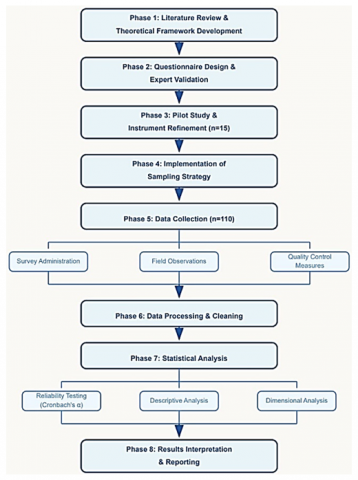
The research involved a practical and descriptive research. It started with the literature review and inner scientific ideas and models in this field. We thereupon provided a field study by designing and applying a survey using a sample size of participants to gauge the indicators which are obtained by the theory of research.
We performed a careful statistical analysis of the data to test the hypotheses and to provide an applied perspective for the city of Baghdad.
We consider such destinations as Barcelona, Singapore and Dubai. These places have strong infrastructure and plenty of resources, making it easy to use digital technologies. Due to this, we do not know the territories in the Global South where heritage preservation and urban redesign are at odds.
The study encompasses three broad areas: technology feasibility, urban planning and heritage preservation. However, there are not many studies that examine the effectiveness of enhancing cities with digital technology while preserving cultures when unifying these two domains. Angelidou’s [1] framework for smart city strategies gives basic ideas, but it ignores places with deep history that need cultural sensitivity.
Likewise, Sabri and Witte [2] look at how well government works, not at protecting community culture. The Middle East has little research, despite the fact that Dubai has been expanding due to the presence of numerous resources and proper governance.
The literature lacks sufficient information on how augmented reality and interactive technology can be used in locations that are rich in history. Although numerous studies discuss community involvement in urban planning, there are not many that implement both in the context of utilizing digital technology in heritage contexts. Aldegheishem [3] gives regional views and focuses on traditional planning instead of the difficulties of adding technology. This is what our paper will fill by investigating Al-Ummah Park.
We examine digital urbanism in the Global South, where history is substantial, infrastructures are insignificant, and postwar recovery takes place. This study examines the synergistic potential of heritage preservation and digital modernization, in contrast to existing research that addresses them separately. It offers insights relevant to cities with cultural assets that encounter resource limitations (Table 1).
From Table 1, we found:
Table 1. Literature review
|
Refs. |
Similarities with Our Paper |
Differences with Our Paper |
Scientific Addition of Our Paper |
|
[1] |
Focuses on the integration of digital technologies in urban environments. |
Primarily discusses spatial aspects without specific case studies. |
Provides a localized case study in Baghdad, enhancing understanding of cultural context. |
|
[2] |
Examines the role of digital technologies in urban planning and community engagement. |
More general review without specific focus on cultural heritage or local context. |
Focuses specifically on Al-Ummah Park, integrating local cultural heritage into the discussion. |
|
[4] |
Discusses the impact of smart technologies on urban spaces and community interaction. |
Focuses on Dubai, which has different socio-economic conditions compared to Baghdad. |
Addresses unique challenges faced in Baghdad, providing insights for similar contexts in the region. |
|
[3] |
Emphasizes the importance of community participation in urban development projects. |
Focuses on broader Arab cities without a specific case study. |
Provides a detailed case study of Al-Ummah Park, highlighting community engagement in a local context. |
|
[5] |
Explores the use of augmented reality to enhance user experience in urban environments. |
Focuses on technology applications without addressing cultural heritage. |
Integrates augmented reality with cultural heritage in Al-Ummah Park, enhancing visitor engagement. |
|
[6] |
Discusses the use of digital twins for urban planning and sustainability. |
More technical focus on digital twins without community engagement aspects. |
Combines digital twin technology with community participation in the context of Al-Ummah Park. |
3.1 Research design and approach
We used a mix of methods, describing and analyzing, to look at how digital technology is used in Al-Ummah Park, Baghdad.
3.2 Sampling technique and justification
The sampling approach applied in the study to select technical and engineering professionals was purposive due to the following reasons:
3.3 Sample characteristics and limitations
The final sample was composed of 110 respondents, and it was described by the following demographic and educational parameters:
•Age: 78.2% male, 21.8% female.
•Age distribution: 56.4 % aged 46 + years.
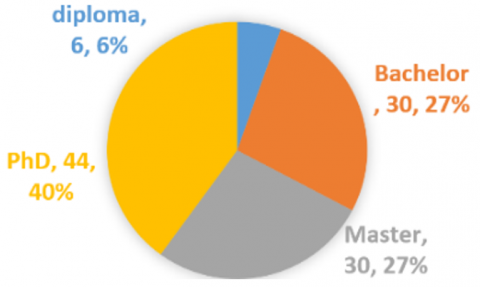
•Education: 39.9 percent own a PhD, 28.2 percent own a master's degree, 24.5 percent own a bachelor's degree.
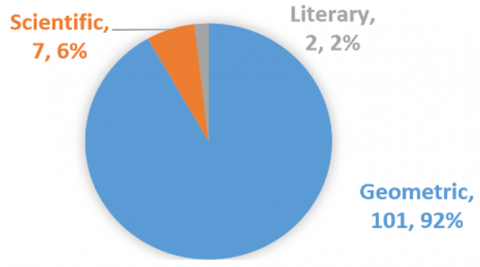
•Specialization: 91.8 percent had an engineering background.
The sample, which was predominantly male and aged and engineering-based, was deliberate but has restrictions on the generalization of the sample to the views of the larger population. The demographic bias has been repeated in the existing state of the profession in the engineering sector of Baghdad, but it might not be able to reflect the existing plurality of community perspectives that can influence the acceptance of digital technology.
3.4 Inclusion and exclusion criteria
3.4.1 Inclusion criteria
3.4.2 Exclusion criteria
3.5 Questionnaire design and development
3.5.1 The process of the instrument development
The instrument was designed using a tripartite methodology that was carefully designed:
Phase I
Literature-Based item generation: Items were found and chosen after an exhaustive search of available scholarly literature, especially in five main theoretical areas. The areas and the number of items are the following:
Phase II
Content and Expert Review: The content validity of the instrument and its cultural appropriateness were achieved through the close examination of the first 19-item measure by three renowned scholars in the field of urban planning and two experts in the methodology of survey instruments.
Phase III
Pilot Testing: A pilot study, to include in fifteen participants who were not further incorporated in the final sample, was conducted to determine the clarity of the questionnaires, the time taken to complete the questionnaires, and to identify possible challenges. Minor changes were made to the wording of certain items based on the findings of the pilot study.
3.5.2 Questionnaire structure
•The measurement has nineteen separate sub-methodological elements including demographic questions.
•The response tool uses a five-point Likert scaling scheme in which the respondents will state how much they agree with the statements based on a 1-5 scale, i.e., 1 (Strongly Disagree) to 5 (Strongly Agree).
•The instrument will take an estimated period of fifteen to twenty minutes.
•The questionnaire will be given in Arabic, and necessary English technical words will be included.
3.5.3 Scale justification
The reason why we picked the Likert scale is that the former allows individuals to express delicate emotions and ideas and provides us with numbers, which can be analyzed. The 5-point scale provides sufficient information but does not burden people with details.
3.6 Collection methods
1. Direct Distribution: Questionnaires were distributed during professional engineering association meetings and conferences in urban planning in Baghdad.
2. Distribution Institutional Networks: Mustansiriyah University and other academic institutions were used to distribute it.
3. Professional Contacts: Snowball sampling was applied via professional contacts.
3.7 Quality assurance measures
3.8 Field observation standardization
The trained observers conducted field observations on the Al-Ummah Park using the standard observation protocols:
•Observation Schedule: 3 visits a week, 4 weeks, and at various times. Types of observations that will be recorded.
•Standard observation forms and digital photographs.
3.9 Methods of statistical analysis and reliability analysis
Computer and Analytics. The analysis was done with SPSS version 28.0 (IBM Corp., Armonk, NY, USA). It is a powerful instrument for survey data and reliability check.
Cronbach Alpha Calculation: We determined consistency of the survey items using Cronbach's alpha. The value obtained was = 0.85, which is quite consistent as it is over 0.70. Methods of statistical analysis.
3.9.1 Analytical techniques
1. Descriptive statistics: The frequencies, percentages, means and standard deviations of all variables were calculated.
2. Scale analysis Scale responses (Likert) were converted into numerical scores (1-5) to conduct quantitative analysis.
3. Dimensional analysis: Each of the five theoretical dimensions was computed in mean scores.
4. Cross-tabulation: Demographic variables were cross-tabulated with the response patterns. The flow of research is shown in Figure 1.
Figure 1. Process diagram methodology
3.10 Ethical concerns and protection of the participants
•Informed Consent: All the participants had informed consent before their participation.
• Anonymity: No identifiable data concerning an individual was collected.
•Voluntary Participation: The subjects were advised about the voluntary nature of the research and their right to withdraw without any penalty.
•Data Safety: All the data were kept somewhere safe, and access was restricted.
3.11 Methodological limitations with regard to the sample
•Demographic Bias: It is predominantly male, and it is difficult to assert whether the results are applicable to all.
•Geographic Concentration: The participants primarily considered Baghdadi people.
•Professional Focus: The contribution of outsiders was minimal in engineering.
3.11.1 Limitations of data collection data
•Self-Report Bias: We are dependent on self-reports of how people feel.
•Temporal Constraints: We just gathered data at a single time.
•Language Issues: The use of technical words may be misinterpreted.
4.1 Urban space
Urban space is a fundamental element in shaping a city's identity and improving its quality of life. It is responsible for providing the necessary environment for social interaction, daily transportation, and other human activities. These spaces have become a central topic in most urban studies as a result of rapid urban expansion and social and economic transformations [7, 8].
Yoshinobu believes that urban space "is a void formed through the process of defining or excavating a part of the unbuilt nature. It represents a building without a roof, formed primarily through the dynamic relationship between humans and other material elements that humans perceive" [9].
Lynch [10] also points out that "complex elements and spaces are essential components of human understanding of the surrounding environment. The external forms of perceived spaces play a role in shaping human mental meanings. The city is a language, and the linear and complex forms of external spaces are the elements and vocabulary of this language. The relationships between these spaces—based on a specific system or plan—are what allow these meanings to be synthesized in a way that makes the place understandable and useful" [10, 11].
Urban clusters form a layered structure shaped by the public-private spatial dynamic. Architecture reflects this through the mass-space relationship, which varies based on cultural and intellectual contexts. Thus, urban forms mirror the underlying societal mindset [12, 13].
A practical definition of urban space can be developed to address the research problem, stating that urban space in a city's urban environment represents open space and unbuilt land area physically surrounded by buildings and various structural boundaries, with which society interacts, is influenced, and is influenced by its culture, customs, traditions, and individual behaviors [7, 14].
4.1.1 The concept of digital technologies in urban spaces
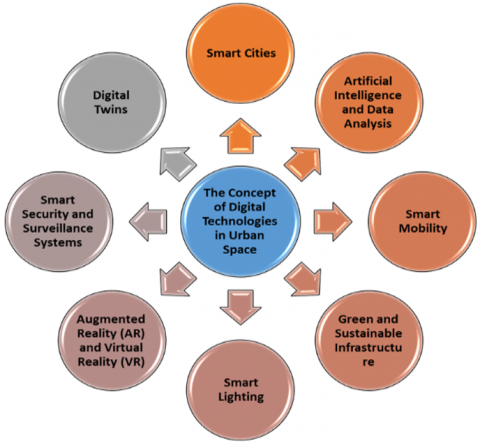
Digital technologies are all tools and systems that use technology to enhance and improve the effectiveness of public spaces, such as smart lighting, displays, digital maps, interactive systems, etc. (Figure 2) [5, 15].
Figure 2. The concept of digital technologies in urban spaces
Smart Cities: Smart cities rely entirely on interconnected digital infrastructure and technology, using sensors and the Internet of Things (IoT) to improve the management of their resources and services. An example of a smart city is Barcelona, which has developed a smart lighting and irrigation system based on environmental data [16].
1) Artificial Intelligence and Data Analysis: Artificial intelligence is used to analyze vast amounts of data to improve traffic management in the city. For example, London uses this method to analyze traffic patterns and predict congestion [17, 18].
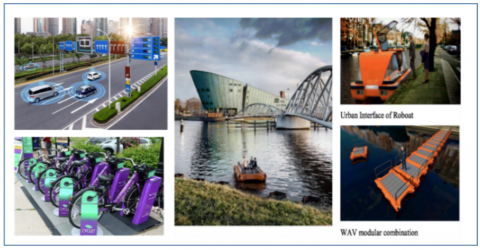
2) Smart Mobility: Currently, many cities have begun implementing electric bicycle sharing programs and developing infrastructure for self-driving cars, such as Amsterdam (see Figure 3).
Figure 3. Pictures of smart transportation in Amsterdam
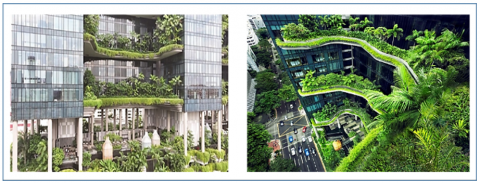
3) Green and Sustainable Infrastructure: Singapore can be considered a prime example of adopting technologies such as green roofs and vertical gardens in the urban environment with smart technologies to enhance and improve the effectiveness of sustainability and quality of life within the city (Figure 4) [19].
Figure 4. Pictures of Singapore's vertical gardens [12]
4) Los Angeles has started using smart LED street lighting connected with remote-activated smart nodes in 2010. These devices produced notable carbon emissions reduction as well as up to 64% energy savings. Motion sensors show how clever lighting improves sustainability and urban management by darkening empty areas, therefore optimizing lighting efficiency [18, 20].
5) Augmented Reality (AR) and Virtual Reality (VRHelsinki leads in using AR/VR technologies for urban design: By use of the "Helsinki 3D+" model and "Virtual Helsinki" platform, residents may visualize projects, replicate environmental effects, and engage in planning. By examining energy consumption and advocating virtual travel, these technologies also help to support sustainable aims. Community involvement events also use VR to get input on next designs, therefore promoting interaction between people and urban planners [21].
6) Smart Security and Surveillance Systems: Dubai is a pioneer in applying modern technologies in surveillance systems and video analysis, enhancing public safety and smart city management. Among the most prominent technologies used by Dubai are:
7) Digital Twins: The city of Singapore uses a 3D model called “Virtual Singapore,” which uses real data and simulations for city planning, as well as assessing the impact of future projects on energy, water, services, and traffic. It is a live digital model of the city that integrates live data from various parts of the city, such as traffic, energy, and the environment, with a model that is constantly updated to ensure its accuracy and effectiveness [23].
4.2 The concept of smart interfaces
Interactive and smart interfaces: These are digital points of contact between the user and the urban environment, aiming to increase human-environmental interaction using advanced digital technologies that enable effective and immediate responses to user needs and requirements. Although smart facades have proven effective in international cities, their implementation in Baghdad requires considering cultural and social specificities and ensuring their compatibility with local infrastructure [24].
Despite the theoretical coverage of the concept of smart interfaces, there is a need to deepen the link between these concepts and the local context of Baghdad. Smart facades in global cities (such as New York, Tokyo, Barcelona and Dubai) are not limited to the technical aspect but adapt to the specificities of the environment and the local community in terms of culture, climate, and urban identity.
FACADES Profiles, Smart facades in Baghdad became one of the first means to express digital innovation as well as the historical legacy of the cultural character of the city by responding to safety and climatic needs. These interfaces must be able to accommodate interactive heritage content that is open to be adapted, user-friendly, and also serve as an extension of culture and an enhancement to the space for the community.
Smart interfaces in cultural and heritage sites have many risks. The use of excess technology that can only benefit some users is one of the risks. Technology may either be broken or will become old hence the place will lose its interaction.
Smart interfaces should help, not replace, historical elements. Technology should be used by them to make visitors comprehend the cultural meaning without disturbing the peaceful ambience of the site.
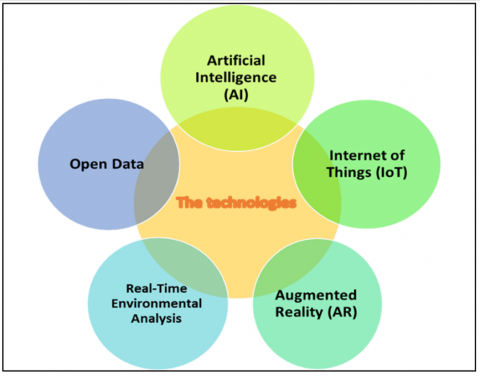
They utilize numerous technologies, including artificial intelligence (AI), the Internet of Things (IOT), augmented reality (AR), real-time environmental analysis, and open data (Figure 5).
These technologies enable smart interfaces to easily interact with users by collecting and analyzing data instantly, in conjunction with the technical infrastructure, making urban spaces appear smarter and more flexible in their interactions with users [25].
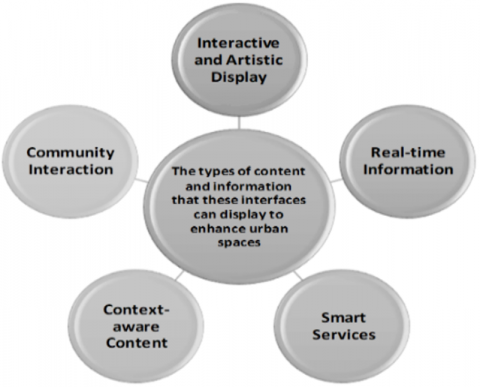
Content and Information Displayed by Smart Interfaces: Interactive and smart interfaces play a fundamental role in improving the effectiveness of urban spaces through the dynamic, multi-dimensional content they provide, which interacts and changes with the needs and nature of residents and visitors alike. This content can be categorized as (Figure 5):
Figure 5. Smart interface technologies
Figure 6. The types of content and information that these interfaces can display to enhance urban spaces
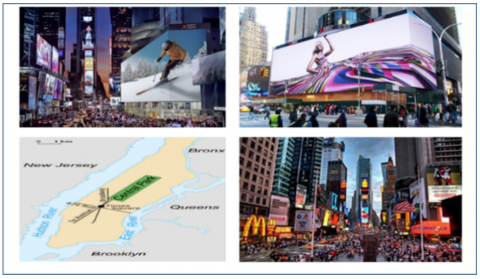
5.1 The interactive Times Square project-New York -USA
This is a square located in Manhattan, New York City, at Broadway and Seventh Street, extending from 42nd Street to West 47th Street. The square is always decorated with advertisements and displays, and is sometimes called the "Center of the World." It is considered one of the busiest pedestrian squares in America, being a major tourist and entertainment destination for tourists. Millions of tourists visit it, and approximately 330,000 people pass through it daily [23, 29, 30].
The transformation of this square into an interactive environment was the result of the use of large technical and digital screens that display dynamic content in an interactive and time-changing manner, as well as according to visitor interaction, using sensors that measure crowd movement and density and analyze their behavior. Based on this, the content is dynamically modified (Figure 7) [24].
Figure 7. Times Square interactive project [24]
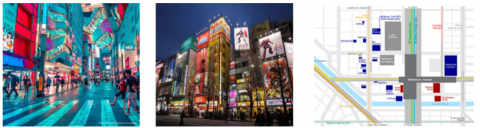
5.2 Akihabara smart street-Tokyo-Japan
Akihabara captures the way that digital technologies and popular culture are fused in Japan, Celebrated for electronics, manga, and anime, the area deftly combines retail and entertainment with modern technologies, Dynamic storefront displays and augmented reality apps provide real-time data specifically for pedestrian involvement and environmental awareness, This technical and cultural synergy produces an immersive urban experience that demonstrates how digital tools might enhance identification and participation in public urban environments by mixing commercial vitality with interactive innovation (Figure 8) [25].
Figure 8. Smart Akihabara street-Tokyo, Japan [25]
5.3 Songdo-South Korea
One of the world's leading models of sustainable smart cities, Songdo was designed from the outset to be a center for technology and global trade. It relies on smart infrastructure and technology, including advanced communications, sensor systems for energy and environmental monitoring, and advanced and smart transportation systems based on electric vehicles and bicycles. It also uses advanced technologies, such as pneumatic waste collection systems that improve service efficiency and reduce pollution. In addition, the buildings in Songdo comply with LEED sustainability standards, making the city more sustainable and environmentally friendly, improving its quality of life [26].
5.4 Barcelona-Spain
Barcelona's more than 8,500 Wi-Fi access points and robust IoT infrastructure have helped it to become a global smart city, launching its Smart City project in 2015, the city has included smart sensors in trash management, transportation, and energy among other important areas. To create and test digital solutions, it also built an open innovation lab, these initiatives foster open data, renewable energy, and citizen involvement, so matching technical innovation with efficient municipal administration [28].
5.5 Smart Dubai City-United Arab Emirates
Many Arab cities have recently witnessed the development of digital applications within public urban spaces. One successful smart city makeover is that of Dubai. Starting in 2001 and codified under its 2013 Smart City project, by 2021 it will have developed a thorough digital strategy covering digital life, data analytics, cybersecurity, infrastructure, This strategy made Dubai a worldwide urban digital model in all public spheres.
In the holy city of Mecca, smart parks were also developed as part of Saudi Arabia's smart city projects, aiming to improve the city's environment, making it more attractive to residents and visitors from around the world [31].
Analysis of the reality of Baghdad and the possibility of applying digital technologies. Despite all the problems and challenges that Baghdad faces in terms of infrastructure and modern technologies for its urban spaces, it has many distinguished public spaces rich in Baghdad's cultural heritage, such as Mutanabbi Street, Tahrir Square, Al-Ummah Park, Magic Lantern Square, Al-Khalani Square, Al-Firdaws Square, etc., that could be developed and benefit from smart interactive interface technology.
6.1 Al-Ummah Park
Location and Historical Value: Al-Ummah Park is considered an important historical and social landmark in the city of Baghdad. Located in the Bab al-Sharqi area, it was established in the 1950s. It was designed during a period of significant urban and cultural development in Baghdad. Its primary purpose was to provide a green space for relaxation and recreation, combining natural beauty with recreational facilities for the people of Baghdad. The name of the park, "Al-Ummah," symbolizes national unity and belonging [32].
Social and Cultural Role: For several decades, Al-Ummah Park was a social gathering place for the people of Baghdad, hosting families and friends and holding cultural events. It became an integral part of the city's collective memory, associated with events and occasions, and experiencing periods of prosperity and stability. After that, the park suffered from neglect due to economic and political crises, particularly during the wars that Iraq experienced [33]. In recent years, initiatives have emerged to rehabilitate the park and return it to the public life of Baghdad's residents, affirming its role as a vital public space and an important part of Baghdad's heritage [34].
6.2 Prominent landmarks in nation park
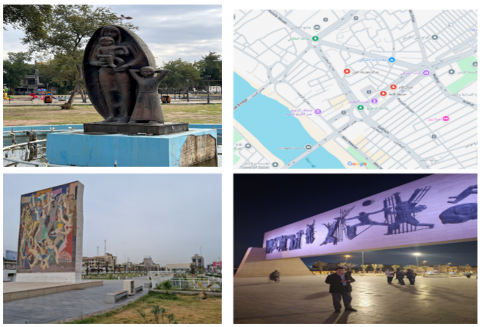
Figure 9. Location and landmarks in the national park
Given the social and cultural value of the Ummah Park to the city of Baghdad, several efforts have been made to rehabilitate it, the most recent of which was the Al-Abbas's (p) Holy Shrine initiative, which focused on planting more than 750 different types of flowers and plants and providing them with a modern irrigation system [35]. The Baghdad Municipality, the Rusafa Municipality, and the Public Parks Department collaborated in these efforts to restore the park's historical integrity and revive its role as a green space for Baghdad's residents [34].
6.3 Challenges
6.4 Practical framework indicators
Based on the previous literature and global and Arab experiences related to the development of urban spaces presented in the theoretical framework of the research, and after studying the current state of Al-Ummah Park as a case study and understanding its service reality and political, cultural, and social history, we can formulate several important indicators related to the research problem. These indicators can be divided into five axes, as follows (Table 2):
1) The First Axis: Awareness and Understanding of Digital Technologies in Urban Spaces: This axis aims to measure the extent of visitors' knowledge of modern concepts and digital technologies, such as smart interfaces and interactive parks, etc. It includes several indicators, namely:
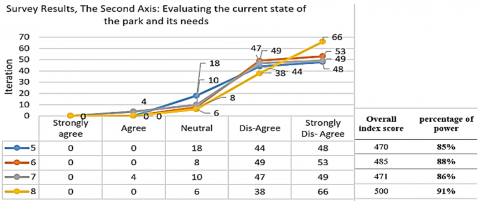
2) Second Axis: Evaluating the current state of the park and its needs: This axis focuses on analyzing the reality of the park from the user's perspective, and the elements and aspects the park needs.
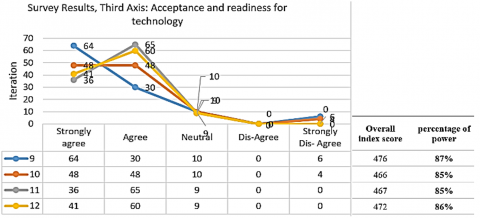
3) Third Axis: Acceptance and readiness for technology: This axis assesses the extent to which visitors accept the introduction of technology and modern technologies into the park environment. Whether through use or interaction with them.
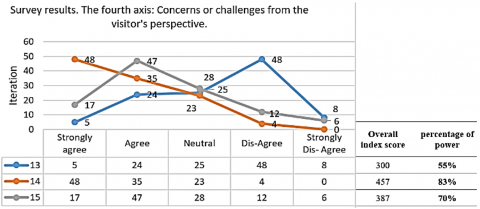
4) Fourth Axis: Concerns or challenges from the visitor's perspective: This focuses on understanding the potential negative aspects or challenges that visitors might expect from the integration of technology.
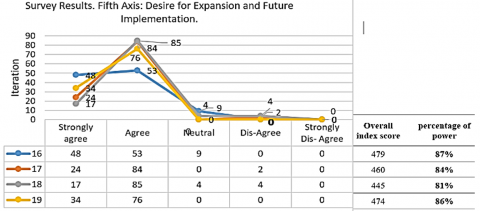
5) Fifth Axis: Desire for Expansion and Future Implementation: This axis focuses on visitors' interest and willingness to support the implementation of this technical development of the park.
Table 2. Details of indicators
|
Main Axis Number |
Main Axis Title |
Indicator Number |
Indicator |
|
1 |
Awareness and Understanding of Digital Technologies in Urban Spaces |
1 |
Visitors' Knowledge of the Concept of Smart Interfaces |
|
2 |
Visitors' Perceptions of the Impact of Technology |
||
|
3 |
The Importance of Technology Integration |
||
|
4 |
Exposure to similar experiences |
||
|
2 |
Evaluating the current state of the park and its needs |
5 |
Lack of visual and informational appeal |
|
6 |
Lack of cultural or interactive activities |
||
|
7 |
Comfort and safety without supporting technologies |
||
|
8 |
The need for innovative solutions |
||
|
3 |
Acceptance and readiness for technology |
9 |
Desire to use smart screens or navigation systems |
|
10 |
Desire to use smart screens or navigation systems |
||
|
11 |
Perceptions of future use |
||
|
12 |
Enthusiasm for digital modernization |
||
|
4 |
Concerns or challenges from the visitor's perspective |
13 |
Concern about the site's heritage identity |
|
14 |
Concern about poor maintenance or local residents' misunderstanding and use of technology |
||
|
15 |
Community acceptance of these updates |
||
|
5 |
Desire for Expansion and Future Implementation |
16 |
Support for the idea of transforming the park into a pilot project |
|
17 |
Willingness to participate in awareness campaigns and events |
||
|
18 |
Acceptance of integrating cultural heritage with technology |
||
|
19 |
Willingness to offer future ideas or suggestions |
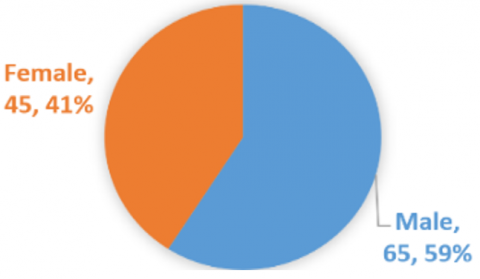
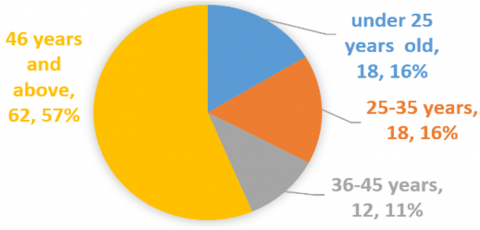
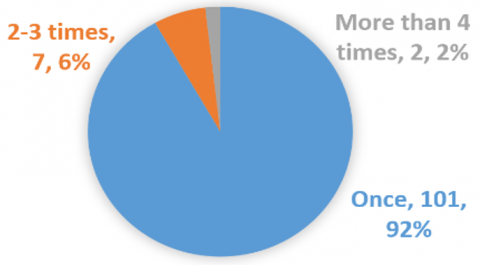
The research community consists of academics, engineers, and specialists. The sample will be randomly selected. Below is a detailed analysis of the results of the questionnaire, which was distributed to a random sample (110 respondents), focusing on the results and comparisons that serve the research objectives and support its conclusions and recommendations (Figures 10-14).
Figure 10. Sample distribution by gender
Figure 11. Distribution of sample by age group
Figure 12. Number of times the park was visited
Figure 13. Sample distribution by sci. specialist
Figure 14. Distribution of sample by educational level
By studying (Figures 10-14), which are related to the general information concerning the random sample of the practical study, the following information becomes clear to us.
7.1 Demographics and characteristics of samples
The age of the 110 respondents is composed in the form of a demographic composition, which contains several important characteristics which influence our interpretation of the results. A large gender imbalance is presented in the group as a proportion of 78.2% male and 21.8% female, as indicated in Figure 10. Figure 11 indicates the distribution of ages, 56.4 of the population is 46 and above, and 24.5% are between 36 to 45. The level of education of many people is high: Figure 12 reveals that 39.9% of them have doctorates, 28.2% have master's degrees, and 24.5% have bachelor's degrees. However, more importantly, Figure 13 indicates that 91.8% of the individuals majored in engineering, which is why the segment is highly homogenous in terms of occupation.
Figure 12 demonstrates the frequency of visits to the park: 91.8% of the participants have visited the Al-Ummah Park once only, therefore, they do not visit it frequently and may not know much about the difficulties of its work on a daily basis.
7.2 Empirical study of statistical trustworthiness and response reaction
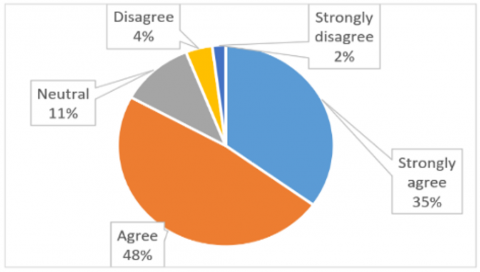
The instrument demonstrated excellent internal consistency, having a Cronbach's alpha of 0.85, which exceeds the traditional criteria of 0.70 that is necessary to attain acceptable reliability. However, the pattern of the responses provided revealed that there was a strong homogeneity, with 83% of them either agreeing or Strongly Agreeing (see Figure 15). Such conspicuous agreement style, despite being an indication of the consensus among the participants, raises critical concerns of the likelihood of bias in response and the representativeness of the conclusions that have been reached.
Figure 15. Response percentage
7.3 Axis-Specific findings and methodological statistical analysis
First Axis: Awareness and Understanding of Digital Technologies
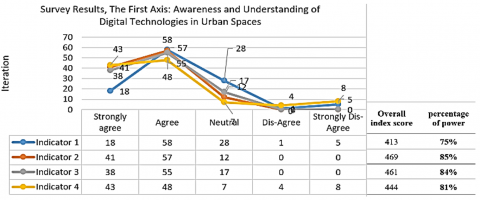
Figure 16 indicates that most of the respondents are familiar with digital technology. On a 5-point scale, their average scores of agreement are more than 4.2. In particular, 84.5% strongly agreed that the integration of technologies in the urban area is a significant concept, and 81.8% expressed a good grasp of the concept of smart interfaces.
Figure 16. First Axis: Awareness and understanding of digital technologies in urban spaces
Subgroup analysis: Engineers (101 people) displayed significantly more knowledge of technology compared to non-engineers (9 people) in terms of average, 4.31 vs. 3.78. The scarcity of non-engineers (8.2 percent) does not allow drawing strong comparisons between the two groups.
Second Axis: Current Park Condition Assessment
Findings given in Figure 17 reveal that a great number of people are dissatisfied with the current state of Al-Ummah Park. Approximately 89.1% of the respondents indicated that there are serious problems in the park. The absence of a good appearance and provision of information (average score: 4.45), the absence of cultural activities (4.32), and the safety concerns (4.18) were the main complaints.
Figure 17. Second Axis: Evaluating the current state of the park and its needs
Statistical Significance: The chi-square test did not find any real difference in satisfaction between the age groups (2 = 3.24, p > 0.05). This is to say that individuals irrespective of their ages are equally dissatisfied.
Third Axis: Technology Acceptance and Readiness
Figure 18 demonstrates that there is much motivation about digital technology integration, and the overall agreement score is 85.75. It is noteworthy that 92.7 percent indicated that they would like to have smart screens and interactive systems, and 88.2 percent indicated that they are psychologically prepared to new technology.
Figure 18. Third Axis: Acceptance and readiness for technology
Age-Related Analysis: Surprisingly, older respondents (46+ years) were more accepting of technology (average score 4.41) than younger ones were (35 and under 4.12 average score). I could not statistically differentiate the difference (t = 1.67, p > 0.10).
Fourth Axis: Implementation Concerns and Challenges
Potential issues during implementation are discussed in more detail in Figure 19. Though 70 per cent of the respondents indicated that they find technology management to be challenging, only 45.5 percent were concerned with preserving heritage identity. Maintenance was the greatest concern where the mean was 3.98. The second largest was the community acceptance with a score of 3.67.
Figure 19. Fourth Axis: Concerns or challenges from the visitor's perspective
Professional bias: The majority of the participants were engineers, and thus they could have added technical problems to the non-technical one. This is observed in the decreasing concern about acceptance of the community as compared to maintenance.
Fifth Axis: Future Implementation Support
Relatively, there is a lot of support of the pilot project in (Figure 20) with 84.5% of the respondents agreeing on the same. The result on support of Al-Ummah Park as a prototype was 91.8% agreement. The desire to participate in development activities was 86.4%.
Figure 20. Fifth Axis: Desire for expansion and future implementation
Statistical Implications and generalizability Concerns. This homogeneity of 83% response has its strengths and weaknesses in its interpretation. Although the agreement rates were high and indicate that experts generally believe in the positive effects of digital technology, there are a few factors which prevent the extent to which the results would be applicable on a broader scale:
Sample Bias Implications
Professional Homogeneity: There is a high degree of professional bias as 91.8 percent of the respondents are engineers. Technology acceptance is normally greater in engineers.
Gender Imbalance: There is 78.2% of men in the sample, which may not mirror the opinions of the general society.
Age Concentration: 56.4% of the respondents are 46 and above. Although this provides professional experience, it might not be the case with younger people.
Low Park Use: 91.8% of the respondents have only visited the park once and therefore they might not be fully informed about the social dynamics of the park or the needs of its users.
Statistical Limitations
The biased sample complicates the comparison of the subgroups since minority groups are too small.
To address the issues that we identified and to render the outcomes beneficial to a greater number of individuals:
Although the findings indicate that there is high professional support to the application of digital technology at the Al Ummah Park, the sample used is quite comparable and could be a source of bias and hence the findings should be interpreted carefully.
8.1 Survey results for indicators
Figure 19 indicates the homogeneity of the sample as 83% of the responses were “Agree” or “Strongly Agree”. This could be due to good questions or a homogeneity of background amongst respondents, including their age (mean 56.4%, over 46 years), education (mean, 39.9% with a PhD), and specialization (91.8% engineering). These considerations indicate good internal consistency, but reduced generalization.
A (Likert scale: Summated Ratings) will be used to analyze the data according to Table 3.
Table 3. Scores for answers for the Likert scale
|
Answer |
Strongly Agree |
Agree |
Neutral |
Disagree |
Strongly Disagree |
|
Score |
5 |
4 |
3 |
2 |
1 |
To ensure consistency and the amount of confidence in the answers, the Cronbach's alpha was measured and the result was 0.85, which is more than 0.7. This means that the answers in the questionnaire are credible and acceptable.
8.2 Summary of key findings
In this study, 84.5 percent of professionals paid support to the use of digital technology in the Al Ummah Park. It also identifies significant issues to the post conflict areas. There are social and cultural problems in Baghdad, including 45.5% of the population interested in the preservation of heritage and the absence of trust in the community.
The study reveals that besides other nations offer valuable technical strategies, the local perceptions of Baghdad are delicate concerning locations like the Freedom Monument by Jawad Saleem. Compared to Barcelona that has a high level of connection with more than 8,500 Wi-Fi areas, or Dubai that has centralized governing framework, Baghdad is facing a challenge of a lack of resources and crumbled infrastructure that complicates technology installations.
The issue of long-term sustainability is huge. Although 85.75 percent of individuals are accepting the technology, 70% are concerned with maintenance and safety. Such concerns were the most rated (average 3.98 of 5) and indicate that it may be more difficult to continue running the system than to initiate it.
There is a good understanding of the concept of digital technologies and smart interfaces as interactive elements that integrate with other urban spaces to improve their functionality (such as transportation, entertainment, lighting, security, etc.). This understanding stems from community culture and exposure to global experiences in world cities such as Singapore, Dubai, Barcelona, etc., through travel or various media outlets. This has stimulated the idea and public interest. This supports the first hypothesis of the research, which states that the use of digital technology and smart interfaces increases the efficiency of urban spaces.
Many foreign and Arab countries are moving to keep pace with major technological developments in various fields, becoming pioneers in the use of digital technologies in urban spaces to improve the quality of life, increase sustainability, and provide a unique and distinctive experience for visitors, creating interactive urban spaces. This confirms the first hypothesis of the research.
84% of participants believe that technological development is necessary to improve the efficiency of urban spaces, which underscores the need to adopt smart solutions in urban spaces in Baghdad. In addition, 94.5% of participants believe that it is necessary to conduct Modern and technical development of the park to raise its service level and attract visitors. This supports the second hypothesis of the research, which states that these technologies are applicable in Baghdad despite the existing challenges.
There are major challenges that may face this development, represented by maintenance, security, and weak technical infrastructure, as well as the fear that it will affect the cultural and historical identity of the park. These challenges can be resolved through institutional partnerships and a careful balance between modernity and preserving the historical cultural character of the park. This can also be achieved through community acceptance, a desire for development, and enthusiasm for community participation in this regard. This supports the feasibility of implementation, which confirms the second hypothesis of the research.
Despite the cultural and historical components of the Al-Umma Park, and despite the efforts made to increase the effectiveness of its spaces and increase visitor turnout, it still suffers from weak effectiveness and a lack of desire to visit again in the future. This is due to the weakness of its technical infrastructure. There is dissatisfaction with many aspects related to security, comfort, and lighting, as well as the lack of interactive cultural activities and the absence of modern technologies that achieve sustainability principles and improve the quality of life.
The trend toward using interactive interfaces and digital technologies to address these problems in the Al-Ummah Park will lead to the creation of an attractive and interactive urban environment, tailored to the cultural circumstances and occasions and the tastes of visitors and passers-by. This interaction will generate positive impressions among visitors and encourage them to repeat visits, which will increase its social effectiveness within the urban environment.
9.1 Recommendations
Develop the necessary urban plans to gradually integrate interactive technology interfaces into public spaces in Baghdad, with a focus on vital cultural areas as starting points for future urban development. This is to keep pace with global technological developments and increase the efficiency and quality of life in these spaces.
Learn more about successful global experiences in implementing, maintaining, and managing digital technologies in urban spaces and smart city applications, to analyze them and study the goals these technologies have achieved in terms of sustainable development and improving the quality of life, and to try to reflect them in local urban spaces.
Raise community cultural awareness of the importance of interactive digital technologies and the best ways to use them through various media outlets. Organize interactive cultural activities to attract visitors and enhance the role of urban spaces as a vital and social urban space.
Reassess and enhance the digital infrastructure in the city in general, and Al-Ummah Park in particular, such as providing free internet, installing smart screens, and improving maintenance and security systems.
Encouraging the use of digital technologies in the facades, furnishings, and components of urban spaces in Baghdad, in a manner consistent with the societal culture of the people of Baghdad and in keeping with the technological development currently witnessed by the world.
The need to pay greater attention to the Al-Ummah Park and develop its digital infrastructure by integrating smart facades and interactive digital technologies into its spaces. This will revitalize these spaces, enhance their role as a vibrant social and cultural center, and make them a pioneering model for other spaces in the city.
Emphasize community participation in planning for the future technological development of any urban space to ensure it meets the needs and aspirations of visitors, guarantees its success and sustainability, and preserves the cultural constants of society.
9.2 Limitations in the study and future studies
The study has limitations which can be summarized as follows: This research has certain limitations that influence the usefulness of the findings. The sample consisted of primarily men (78.2%) and primarily engineering (91.8%), thus it may not be a reflection of what everyone thinks, particularly in terms of preservation of cultural heritage and the utilization of the public spaces.
Participants only visited Al Ummah Park once (91.8%), which is not sufficient to know how the park operates in its day-to-day activities or what people want to receive at the park.
Approximately 83% of the respondents provided the same response. That demonstrates that there is consensus among experts, but it also demonstrates that there can be a bias in the respondents, and we are unable to observe how various groups perceive the use of technology.
The work should involve more diverse groups of individuals in the future, and particularly the ordinary visitors to the park.
9.3 Future research prospects
1) We shall extend the study to other cities in Baghdad and other Iraqi cities to determine the influence of varying local environments on the outcome.
2) We shall develop measuring instruments to gauge the utilization of digital technology by the visitors of the city spaces without forgetting the cultural and social values of the community.
3) We will also examine the impact and effects of the existing urban locations with digital technology and vice versa, including the social, economic, and environmental dimensions.
4) We will come up with strategies to integrate smart technology in the preparation and management of the city spaces of Baghdad, taking into consideration the local culture and social demands, and to enhance the quality of life and sustainability.
5) We are going to analyze the possibility of how digital and interactive technology can enhance the quality of life of people and assist in the development of Iraqi cities in a sustainable way.
The authors would like to extend their sincere gratitude to Mustansiriyah University (www.uomustansiriyah.edu.iq), Baghdad, Iraq, for their support in this work.
[1] Angelidou, M. (2014). Smart city policies: A spatial approach. Cities, 41: S3-S11. https://doi.org/10.1016/J.CITIES.2014.06.007
[2] Sabri, S., Witte, P. (2023). Digital technologies in urban planning and urban management. Journal of Urban Management, 12(1): 1-3. https://doi.org/10.1016/J.JUM.2023.02.003
[3] Aldegheishem, A. (2023). Community participation in urban planning process in Saudi Arabia: An empirical assessment. Journal of Urban Management, 12(3): 221-230. https://doi.org/10.1016/J.JUM.2023.04.003
[4] Juneja, A. (2025). The role of IoT and analytics in shaping smart cities: A case study approach. International Journal for Multidisciplinary Research, 7(1): 1-12. https://doi.org/10.36948/ijfmr.2025.v07i01.36031
[5] Han, D.I.D., Weber, J., Bastiaansen, M., Mitas, O., Lub, X. (2019). Virtual and augmented reality technologies to enhance the visitor experience in cultural tourism. In Augmented reality and virtual reality: The power of AR and VR for business. Cham: Springer International Publishing. Springer, Cham, pp. 113-128. https://doi.org/10.1007/978-3-030-06246-0_9
[6] Mazzetto, S. (2024). A review of urban digital twins integration, challenges, and future directions in smart city development. Sustainability, 16(19): 8337. https://doi.org/10.3390/SU16198337
[7] Shariatpour, F., Behzadfar, M., Zareei, F. (2024). Urban 3D modeling as a precursor of city information modeling and digital twin for smart city era: A case study of the Narmak neighborhood of Tehran city, Iran. Journal of Urban Planning and Development, 150(2): 04024005. https://doi.org/10.1061/JUPDDM.UPENG-4650
[8] Saleh, H.A., Alrobaee, T.R. (2024). Planning and designing sustainable urban space according to the concept of ecological aesthetics. International Journal of Sustainable Development and Planning, 19(11): 4291-4302. https://doi.org/10.18280/ijsdp.191118
[9] Ashihara, Y. (1970). Exterior Design in Architecture (1st ed.). Van Nostrand Reinhold.
[10] Lynch, K. (1971). The Image of the City. MIT Press.
[11] Fang, X., Wu, X. (2024). Investigating the thermal transfer properties of green facades in urban buildings. International Journal of Heat and Technology, 42(2): 549-559. https://doi.org/10.18280/ijht.420221
[12] Hussein, A.G., Jaber, A.Q. (2022). The transformation in the relationship between private and public space in the local housing unit and its impact on the urban environment. Journal of Engineering and Sustainable Development, 25(4): 1-17. https://doi.org/10.31272/jeasd.25.4.11
[13] Aleksandrs, Z., Jurgis, Z., Kristina, T., Anatolijs, B. (2014). Concept of smart city: First experience from city of Riga. Journal of Sustainable Architecture and Civil Engineering, 7(2): 54-59. https://doi.org/10.5755/J01.sace.7.2.6932
[14] Ibraheem, S.A.H., Hashim, B.H., Mahmood, N.A. (2019). The role of the physical characteristics of the urban spaces in the psychological formation of human being in the city of Baghdad (National park and the liberation square as example). Journal of Engineering and Sustainable Development, 23(3). https://doi.org/10.31272/jeasd.23.3.15
[15] Kaur, H., Garg, P. (2023). Urban sustainability assessment tool for hillside planning, design, and development. Journal of Urban Planning and Development, 149(2): 04023003. https://doi.org/10.1061/JUPDDM.UPENG-3590
[16] Caragliu, A., Del Bo, C., Nijkamp, P. (2011). Smart cities in Europe. Journal of Urban Technology, 18(2): 65-82. https://doi.org/10.1080/10630732.2011.601117
[17] Saxena, R.R. (2024). Artificial intelligence in traffic systems. arXiv preprint arXiv:2412.12046. https://doi.org/10.48550/arXiv.2412.12046
[18] Mustafa, M.H., Al-Saatee, H.H., Al-Bakry, H.M.J., Sabur, A.I., Al-Helli, M., Al-Graiti, A.A.A., Mohammed, A.A., Ismael, Z.A., Mohson, Z.H., Jassim, A.K. (2025). The importance of empowering the smart city in Iraq: A case study of Baghdad municipalities. International Journal of Sustainable Development and Planning, 20(3): 1133-1141. https://doi.org/10.18280/ijsdp.200319
[19] BCA. (2025). Green mark certification scheme. https://www1.bca.gov.sg/buildsg/sustainability/green-mark-certification-scheme, accessed on May 12, 2025.
[20] Lumary. (2024). How smart lighting can help you save energy. https://www.lumarysmart.com/blogs/news-and-blogs/how-smart-lighting-can-help-you-save-energy, accessed on May 12, 2025.
[21] Bentley. (2016). Improving environment with city-scale digital twin: City of Helsinki. https://www.bentley.com/company/esg-user-project-city-of-helsinki/, accessed on May 12, 2025.
[22] Aishwarya, S.R., Sandhya, R. (2022). Violence detection using deep learning. International Journal of Advanced Research in Science, Communication and Technology, 2(9): 169-173. https://doi.org/10.48175/ijarsct-5319
[23] OPSI. (2024). Virtual Singapore - Singapore’s virtual twin. Observatory of Public Sector Innovation. https://oecd-opsi.org/innovations/virtual-twin-singapore/.
[24] Greenfield, A. (2013). Against the Smart City. New York, Do Publications.
[25] Foth, M., Brynskov, M., Ojala, T. (2015). Citizen’s Right to the Digital City. Springer Singapore. https://doi.org/10.1007/978-981-287-919-6
[26] Aurigi, A. (2005). Making the Digital City: The Early Shaping of Urban Internet Space. Ashgate.
[27] Albasri, N.A., Mustafa, M.H., Aliasghar, M.S. (2023). The impact of regional level land use on the urban functional changes. International Journal of Sustainable Development and Planning, 18(2): 475-482. https://doi.org/10.18280/ijsdp.180216
[28] Mundula, L., Garau, C., Salustri, A. (2014). Smart cities between ethics and aesthetics. In REAL CORP 2014 Plan It Smart. Clever Solutions for Smart Cities Proceedings of 19th International Conference on Urban Planning, Regional Development and Information Society, pp. 543-551.
[29] Almudhaffer, A.F., Ali Asghar, M.S., Mustafa, M.H. (2024). Review of nanotechnology materials in architecture and their impact on the external environment of buildings. AIP Conference Proceedings, 3079(1): 060009. https://doi.org/10.1063/5.0202148
[30] Özbek, O., Karaçoban, E. (2024). Recent regional development strategies in Turkey and smart cities: The case of the southern Aegean region (TR32). Journal of Sustainable Architecture and Civil Engineering, 36(3): 144-160. https://doi.org/10.5755/J01.SACE.36.3.36458
[31] Gazzawe, F., Albahar, M. (2024). Reducing traffic congestion in Makkah during Hajj through the use of AI technology. Heliyon, 10(1): e23304. https://doi.org/10.1016/j.heliyon.2023.e23304
[32] Alobaydi, D., Rashid, M. (2024). Morphological evolution of Baghdad: Analyzing urban growth patterns and transformation processes. Journal of Engineering, 30(12): 16-32. https://doi.org/10.31026/J.ENG.2024.12.02
[33] Al-Saaidy, H.J.E., Al-Saaidy, H.J.E. (2020). Lessons from Baghdad City conformation and essence. In Sustainability in Urban Planning and Design. IntechOpen. https://doi.org/10.5772/INTECHOPEN.88599
[34] Al-Saffar, M. (2024). Sustainable urban heritage: Assessing Baghdad’s historic centre of old Rusafa. Architecture, 4(3): 571-593. https://doi.org/10.3390/architecture4030030
[35] IRAQI NEWS. (2025). Baghdad’s ummah park transformed into lush urban forest after rehabilitation. https://www.iraqinews.com/iraq/baghdad-ummah-park-reforested-green-space/.