Bo Wang | Mohd Sallehuddin bin Mat Noor* | Norhuzailin Hussain
© 2025 The authors. This article is published by IIETA and is licensed under the CC BY 4.0 license (http://creativecommons.org/licenses/by/4.0/).
OPEN ACCESS
This study explores the role of behavioral stimulation, environmental attraction, and facility experience in influencing low-carbon park design, visitor awareness, sustainable behavior, and design satisfaction. Using Changsha Yanghu Wetland Park in China as a case study, the research examines how urban parks can promote sustainability through effective design strategies. A cross-sectional survey was conducted among 510 participants, including park visitors, local community members, and online respondents. Data was collected using a structured questionnaire with validated measurement scales from past research. structural equation modeling (SEM) was performed using AMOS to analyze the relationships between key variables and assess the impact of behavioral, environmental, and facility-related factors on low-carbon park design. Results confirm that behavioral stimulation, environmental attraction, and facility experience significantly enhance low-carbon park design, fostering visitor awareness, sustainable behavior, and overall design satisfaction. The study highlights how sustainable infrastructure, interactive experiences, and environmental aesthetics contribute to eco-conscious engagement in urban green spaces. This research contributes to urban sustainability and environmental psychology by integrating design thinking principles into low-carbon park planning. The findings offer practical insights for urban planners, policymakers, and environmental organizations, emphasizing the need for behaviorally informed, eco-friendly park designs to promote sustainable urban development.
low-carbon park design, behavioral stimulation, environmental attraction, facility experience, sustainable urban development
Urban planners embrace sustainability through low-carbon designs that reduce waste, energy use, and resource consumption. Sustainable park planning has emerged as a central strategy to urban planning, particularly as a response to growing challenges posed by climate change and environmental degradation. Parks and green spaces play an important role in urban sustainability by enhancing ecological functions such as carbon sequestration, conservation of biodiversity, and enhancing air quality [1]. However, traditional park planning hardly integrates low-carbon solutions that are particularly designed to limit environmental load and encourage low-carbon behaviors among tourists [2]. In the last few years, there has been a growth in the low-carbon park planning approach with its focus on low-carbon practices that include low-energy infrastructure, sustainable buildings, and green nature-based solutions that help steer clear of carbon emissions while pursuing ecological preservation [3]. Low-carbon urban parks align with the global push toward sustainable urban development, as specified by Goal 11 of the United Nations' Sustainable Development Goals [4]. This goal calls for sustainable cities and communities.
Design thinking plays an important role in urban planning by creating facilities that meet the needs of different stakeholders. Kumar et al. [5] define design thinking as a human-centered approach that investigates users’ needs and incorporates them in product design. Designers work with users to understand their needs and test prototypes. In urban parks, design thinking creates spaces where residents can interact with nature, enjoy the natural environment, and engage in recreational activities. Design thinking also creates a strong sense of community since citizens participate in the project, starting from ideation to implementation [6]. The sense of community motivates urban residents to protect the park and visit it regularly. Therefore, design thinking leads to urban parks that meet users’ needs, which strengthens the park-user relationship.
One of the most influential determinants of low-carbon park efficacy is visitor participation in sustainability practices fueled by stimulation of behavior, environmental attractiveness, and experience building [7]. Well-planned parks are not only a place for recreation but also a venue for environmental learning and change of pro-environmental behavior [8]. People visiting urban parks can embrace environmental conservation by learning about ecological destruction or developing the urge to safeguard the natural environment. The purpose of this study is to investigate how design thinking creates features that motivate park visitors to embrace low-carbon behaviors. For example, park planners incorporate green spaces, informational signboards, attractive sceneries, accessible paths, and recreational areas that meet the users’ needs and bring them closer to the natural environment. It is important to understand whether these features encourage visitors to embrace pro-environment behaviors. To meet this objective, this study used the following key research questions:
•How does behavioral stimulation impact park design with low-carbon strategies?
•What role does environmental attraction play in shaping visitor engagement with low-carbon parks?
•How does facility experience contribute to design satisfaction and sustainability outcomes in park settings?
2.1 Design thinking for low carbon behavior through landscape planning
Design thinking has evolved as a key methodology in advancing sustainable innovation, particularly in ecological and environmental planning [9]. As a human-centered, iterative approach, it encourages creative problem-solving through interdisciplinarity, stakeholder involvement, and rapid prototyping [3]. In low-carbon projects, design thinking assists in developing integrated and adaptive solutions that balance environmental protection and human needs [10]. By emphasizing ideation, experimentation, and empathy, it enables planners and designers to create and endure carbon-emitting processes and build ecological resilience [11]. Latest studies indicate that the introduction of design thinking in urban and environmental planning yields more resilient sustainability results because it allows for adaptive capacity in responding to changing environmental trends and stakeholder needs [12]. This is the very rewarding approach in planning wetland park, where delicate interplay between nature systems, urban forms, and recreational use needs to be harmoniously balanced for ecological wholesomeness to be ensured with promotion of sustainable tourism and participation of the local people [13].
Wetland parks play a crucial role in carbon sequestration, biodiversity conservation, and climate regulation, making them indispensable components of urban sustainability campaigns. However, conventional planning methods often do not address the dynamic and site-determined demands around such environmental spaces [11]. Design thinking in planning for wetland parks will ensure that low-carbon approaches such as renewable energy, sustainable materials for building, and green solutions for water and carbon sequestration are integrated into an orderly yet adaptable system [14]. Literature studies suggest that through design thinking, co-creative innovative solutions that fit with environmental objectives as well as with stakeholder priorities are created; this will yield resilient and adaptive park designs [15]. Examples from many urban wetland projects through case studies prove that participatory design processes maximize the efficacy of low-carbon policies by inculcating the feeling of stewardship and ownership among neighborhood groups [16]. With processes of iterative testing and feedbacking, planners have the opportunity to adjust their plans to achieve greater ecological dividends, improve visitors' experiences, and guarantee long-term sustainability for wetland parks [10].
Landscape planning and design thinking are intertwined. Urban planners are expected to design functional parks and landscapes that serve the residents’ needs [17]. Design thinking supports this goal by helping landscape planners create aesthetic natural environments, functional parks, and accessible facilities that facilitate environmental stewardship and recreational activities. The resulting parks should benefit current and future generations by offering long-term uses such as sporting activities, fishing, nature walks, carbon sequestration, and water preservation. Through design thinking, planners collect views from residents to understand their needs and incorporate them in the planning process, leading to complex urban parks that deliver value to residents.
2.2 Behavioral stimulations and park design with low carbon
Behavioral stimulation includes the psychological and environmental cues stimulating people's perception, attitude, and behavior of sustainable practices [18]. In the aspect of park design, behavioral stimulation is essential to shape low-carbon awareness, encourage low-carbon behaviors for visitors, designers, and decision-makers [19]. Low-carbon awareness is the knowledge of the environmentally related impacts brought about by people's actions specifically on carbon footprint and sustainability [9]. It is also a stepping stone to low-carbon behavior, which involves practicing environmentally friendly ways of doing things like energy savings, waste management, and eco-friendly transport. Urban and environmental planning incorporates the behavioral dimensions through park design as interactive components, educational resources, and sustainable engineering to promote eco-friendly actions [20]. Satisfaction with the design, therefore, indicates how closely the design of the park matches the demands of users concerning beauty, efficiency, and environment [21]. The application of behavior stimulation in park planning promotes consciousness and behavior transformation simultaneously by providing experiential, meaningful experiences that facilitate sustainable choice [14]. User-friendly signages, green corridors, and energy-efficient installations, for example, can promote visitors towards low-carbon behavior without necessarily forcing them to do so, thereby transforming the park into a model for sustainable cities [8].
Empirical research has consistently demonstrated the impact of behavior stimulation on sustainable design and environmentally motivated activities. Prior work has revealed that well-designed public spaces with designed behavioral stimuli, such as visual cues, green spaces, and participatory environmental programs, significantly enhance low-carbon consciousness and promote sustainable behaviour [18]. In city planning, behaviorally grounded low-carbon park design that includes behavioral drivers—such as nudging interventions, experience-learning activities, and participatory nature exhibits—has been shown to increase visitor engagement with low-carbon action [2]. For example, studies in Chinese green city parks revealed that strategically placed behavioral prompts, such as pedestrian and cycling-oriented pathways that discourage driving, reduced the park's total carbon impact [15]. In addition, research has indicated that design satisfaction is directly linked with the use of behavioral stimulations because visitors and residents alike prefer parks that not only provide aesthetic and recreational values but also foster sustainable living [1]. As such, based on this empirical fact, it can be argued that park design is strongly influenced by behavioral stimulation in the form of encouraging low-carbon consciousness, inducing low-carbon action, and generating design satisfaction [22]. Through integrating behavioral stimulations into design, policymakers and city planners can design parks that are effective functional and educational examples of low-carbon lifestyles. Hence, the hypothesis for this observation is as in H1.
H1: Behavioral stimulations have a significant impact on park design with low carbon.
2.3 Environmental attraction and park design with low carbon
Environmental attraction is a scale of the extent to which a natural or constructed environment grabs individuals' attention, interest, and feeling of connection to nature [18]. During park planning, environmental attraction is the focus in creating sustainable experiences, stimulating ecological appreciation, and instilling pro-environmental behaviors [11]. A well-planned park that takes in natural conditions of attraction—landscape attractiveness, diversity, and interactive green space—both adds and improves people's low-carbon awareness [11]. Low-carbon awareness is the perception of the environmental consequences of human behaviors, especially reducing carbon emissions and leading low-carbon lifestyles [2]. This perception is achieved as low-carbon conduct, which involves practices like energy saving, green transport usage, and sustainable waste management. Furthermore, design satisfaction is the degree to which planning, facilities, and sustainability elements of a park align with user preferences and impact visitor loyalty and sustainable use [23]. The integration of environmental amenity into low-carbon park design can serve as a driver of behavior that forces users to use and internalize green values, eventually making parks vibrant spaces inducing green behavior [15].
Empirical evidence exists for the existence of environmental appeal as an important factor in sustainable design results, e.g., low-carbon awareness and behavior [13]. Past studies have found green spaces that are both attractive and functionally pleasing produce pro-environmental action among users, e.g., recycling, energy conservation, and non-motorized transportation [24]. Urban park studies reveal that ecological and aesthetic elements, such as water elements, biodiversity zones, and green infrastructure, enhance the affective and cognitive connection of visitors with nature, leading to a rise in ecological responsibility [16]. Besides, studies have established that design satisfaction is greatly influenced by the presence of environmental attraction factors because the public would tend to expect the parks to be harmoniously composed of nature and sustainable functionality [22]. On this basis of empirical evidence, environmental attraction can be postulated to be a major driver in low-carbon park design by promoting environmental consciousness, strengthening sustainable behavior, and maximizing user satisfaction [25]. By integrating environmental appeal into park design, urban planners can create public spaces that serve both recreational purposes and as platforms for promoting low-carbon lifestyles, leading to hypothesis H2.
H2: Environmental Attraction has a significant impact on park design with low carbon.
2.4 Facility experience and park design with low carbon
Facility experience encompasses people's impressions and interactions with a park's physical infrastructure, services, and facilities. Quality facility experience raises users' level of engagement, convenience, and satisfaction and thus it is a pivotal aspect in green park design. In the design of low-carbon parks, facility experience is inextricably connected with the efficiency of sustainable infrastructure, including energy-efficient lighting, green rest areas, waste management facilities, and green transportation [12]. These facilities help develop low-carbon awareness through direct exposure to sustainability efforts, hence deepening the understanding of green practices among park visitors [25]. Low-carbon behavior, in return, is influenced by the usability and availability of such facilities, because users are inclined to perform eco-friendly actions whenever parks offer necessary infrastructure, such as specific recycling bins, bicycle-sharing points, or solar-powered benches [3]. In addition, design satisfaction is greatly impacted by the facility experience since visitors enjoy parks that provide functional and environmentally sustainable attributes, making their overall experience better and fostering repeated visits [26]. By making sure facilities are both accessible and compatible with low-carbon goals, park designers can make environments that facilitate long-term sustainability and behavioral change [27].
Empirical evidence has established that experience in a facility is fundamental in fostering green behaviors and boosting environmental consciousness. Previous research shows that well-structured park facilities, especially those with a focus on sustainability, have a significant impact on people's attitudes towards environmentally friendly activities [19]. Empirical studies on city parks and urban recreational facilities have identified that access to green-rated buildings, green energy equipment, and efficient garbage collection facilities maximizes awareness on sustainable factors by visitors [7]. Besides, studies imply that urban parks with holistic low-carbon structures promote healthier green behaviors like cycling rather than taking a car, effective disposal of waste, and careful resource management [28]. Design satisfaction has also been linked to the quality and availability of low-carbon infrastructure as users want parks that blend sustainability with functionality and comfort in harmony [29]. Following this empirical data, it can be hypothesized that facility experience significantly impacts low-carbon park design by enhancing awareness, sustainable behavior, and user satisfaction [13]. By prioritizing sustainable, human-centered parks, urban planners and designers can create parks which, in addition to meeting recreational and beautification needs, become effective centers for environmental education and carbon reduction [30]. Hence, the hypothesis for this observation is as in H3.
H3: Facility experience has a significant impact on park design with low carbon.
2.5 Theoretical framework supporting the research
Theoretical basis for conceptualization of the relationships in this research model is attainable with the Stimulus-Organism-Response (S-O-R) theory that describes how external stimuli are shaped by behavior and individual perception as a result of affective and cognitive processes. Environment beauty, behavior, and construction experience serve as stimuli (S) to invoke individuals' cognitive and affective reactions to produce high levels of low-carbon consciousness and adoption of green behavior (organism (O)), resulting in green actions and enhanced satisfaction in design (response (R). This model underlies the extant literature in affirming the extent to which optimally designed surroundings affect the people's involvement in sustainability practice and thus result in a self-sustaining spiral of consciousness, conduct, and satisfaction [18]. The Theory of Planned Behavior (TPB) further underlines this model in pointing out that the people's attitude, subjective norm, and personal belief regarding behavior control are primary determinants of their intention to develop low-carbon habit [31]. Parks that incorporate environmental appeal, interactive amenities, and behavioral stimulation factors improve perceived behavioral control through improving the ease and convenience of making sustainable choices, vindicating the adoption of low-carbon habits [1]. Additionally, the Self-Determination Theory (SDT) explains further how intrinsic and extrinsic motivation influences environmental participation such that when the users are contented with park planning via green infrastructure and interactive and immersive activities, their intrinsic motivation to participate in sustainability is boosted [32]. Therefore, on the basis of incorporating S-O-R, TPB, and SDT, the present research model has a sound theoretical base to account for why stimulation of behavior, environmental appeal, and experience in the facility are all important to low-carbon awareness, behavior, and design satisfaction with sustainable planning in parks.
2.6 Conceptual framework
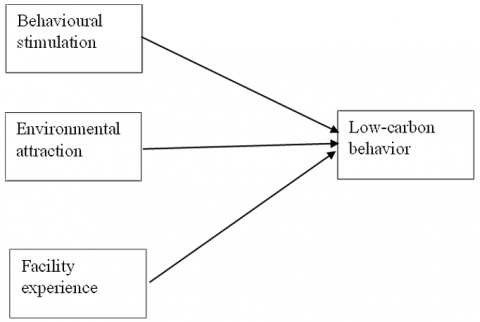
The theoretical rationale of this research is a complex of theoretical approaches which are based on the Stimulus-Organism-Response (S-O-R) model, Theory of Planned Behavior (TPB) and Self-Determination Theory (SDT). The three frameworks act at various but complementary levels, which together offer explanations of the influence exerted by the features of the park designs on the low-carbon awareness and intention and behavior. The external stimuli (S) used in the S-O-R model in the context of low-carbon park design are behavioral stimulation, environmental attraction and facility experience. The features of the design make visitors susceptible to visual information, aesthetic experiences, and sustainable infrastructure which trigger cognitive and affective analysis in the organism (O). This transition stage will capture the awareness of low carbon, emotional attachment to nature and behavioral feasibility. The last response (R) stage entails the low-carbon actual behavioural involvement and design satisfaction of the visitors. Whereas S-O-R describes how design characteristics invoke psychological responses, TPB introduces an additional dimension in terms of describing how visitors convert the responses into behavioural intentions. TPB shows that attitudes to low-carbon behavior, perceived social demands, and perceived behavioral control influence the choice of a person to adopt sustainable practices. Therefore, TPB augments the conceptual model because it describes the cognitive appraisal mechanism that connects the initial stimuli in the environment (S) to the organism (O), to the intention to act sustainably (R). SDT introduces a third side of complementary dimension, which is the issue of the quality and sustainability of motivation. Enhanced intrinsic motivation and internalization of low-carbon values is achieved through park environments that provide pleasant access to natural experience, autonomy-enhancing facilities (e.g., convenient recycling bins), and elements of competence-enhancing learning (e.g., educational signboards). This motivation drive can be used to define why certain visitors are capable of sustaining some of their behaviors after getting out of the park. Based on this, SDT explains how parks can be built in such a way that they can foster long-term commitment as opposed to behavioral compliance in the short-term (Figure 1).
Figure 1. Conceptual framework
3.1 Questionnaire development
The three independent variables were converted into questions about the park and experience. Each variable was subdivided into four questions. Responses to these questions would be aggregated to determine the value for each variable. The study used a 5-point Likert Scale, ranging from 1 (Strongly Disagree) to 5 (Strongly Agree), to collect quantitative data. A pilot test was conducted with a small number of respondents before the actual data collection to pretest the relevance, clarity, and reliability of the survey tool. This exercise helped to finalize the questionnaire such that the items were useful.
3.2 Sampling method
The study utilized convenience sampling since participants were people leaving Yanghu Wetland Park. In convenience sampling, participants are chosen based on their availability to the researcher [33]. Convenience sampling was ideal because the researcher was interested in information from people visiting the wetland park. Further, thousands of people visiting the park each week, making it an ideal location to recruit a large sample for the study. The researcher recruited participants by approaching them and asking whether they were willing to participate in the study. After explaining the study and its purpose, willing participants were issued with questionnaires.
3.3 Questionnaire distribution and answering method
A cross-sectional survey was employed to collect primary data from 510 participants, including park visitors, local community, and online participants. Online and on-site distribution of questionnaires were conducted to make the sample diverse and representative. The survey was structured to record participants' awareness, perception, and experience related to low-carbon park design, environmental attractiveness, stimulation of behavior, and facility experience. Participants were recruited employing the convenience and purposive sampling method, with particular attention being paid to the more recent visit respondents or direct pertinence to urban sustainability measures. Reliability was ensured through the construction of the questionnaire that completely prevented potential biases, with data gathering on a scheduled duration to allow varying visitor groups. The demographic profile of the participants was analyzed to provide contextual information on the diversity of the sample. The analysis included age, gender, frequency of visits, and prior exposure to environmental sustainability initiatives, allowing for an understanding of how different visitor segments interact with and perceive the low-carbon activities of the park.
To establish construct validity, the study utilized previous research studies' measurement items, which are already validated in the fields of environmental psychology, sustainable design, and behavioral science. The survey instrument contained different items measuring low-carbon awareness, behavioral stimulation, environmental attraction, facility experience, low-carbon behavior, and satisfaction with design.
This paper operationalized the operation of design thinking using three dimensions that can be measured and that capture the ways in which the principles of design thinking are incorporated in park planning and visitor experience, including behavioral stimulation, environmental attraction, and facility experience. These dimensions are pragmatic manifestations of human-centered and iterative as well as experience-oriented design. Behavioral stimulation was assessed using items that describe the existence of informational signboards, interactive functionality, and visual cues which promote low-carbon practices to be adopted by visitors. The environmental attraction was measured using factors that revolve around natural beauty, biodiversity aspects, scenic and biophilic features that foster ecological feelings and emotional attachment. The experience of the facility was operationalised based on the scale items of sustainable infrastructure, convenience-enhancing attributes, and environmentally friendly facilities like energy-efficient lighting, available walking paths, and green mobility. Four validated Likert-scale items were used to guarantee construct validity in each dimension, which were modified out of the previous studies on the environmental psychology and sustainable design researches. Combined, these actions demonstrate how the thinking related to design was made concrete design elements, which define consciousness, behavior, and satisfaction in low-carbon parks environment.
3.4 Data analysis
Information so collected was examined with the use of AMOS (Analysis of Moment Structures), a popular structural equation modeling (SEM) package that supports complex statistical modeling and testing of theoretical hypotheses. The analysis of the data was performed in stages for verification and reliability purposes. This started with the creation of descriptive statistics that yielded summaries of significant demographic and behavioral attributes of the respondents. Then exploratory factor analysis (EFA) was also performed to ascertain that the items in the survey were loading high on their appropriate constructs. Confirmatory factor analysis (CFA) was also performed to analyze the validity and reliability of the measurement model through good factor loadings, composite reliability, and convergent validity. Lastly, SEM was performed to ascertain hypothesized relationships between facility experience, low-carbon park design outcomes, environmental attraction, and behavioral stimulation. The analysis technique supported direct and indirect effects among the variables, affording empirical fit to the hypothetical research model. Model fit was confirmed with the help of the conventional goodness-of-fit indices of Chi-square/df ratio, Comparative Fit Index (CFI), Tucker-Lewis Index (TLI), and Root Mean Square Error of Approximation (RMSEA), to confirm the structural model is a good representation of the observed data.
Table 1 displays the test for reliability and validity of the variables in the study using Cronbach's alpha, composite reliability (CR), and average variance extracted (AVE). All the variables have a greater Cronbach's alpha than 0.7, and this indicates high internal consistency. Composite reliability (CR) is greater than 0.8, and this demonstrates that the constructs are highly reliable. The average variance extracted (AVE) values are also greater than 0.5, thereby indicating high convergent validity. Among all the variables, low carbon park design possesses the highest reliability (Cronbach's alpha = 0.959, CR = 0.970, AVE = 0.825) that signifies an appropriate measurement construct. The results verify the employment of these constructs in the study and authenticate that the measurement model produces reliable and consistent outcomes.
Table 1. Variables reliablity and validity
|
Variable |
Cronbach's Alpha |
Composite Reliability |
Average Variance Extracted |
|
Stimulation |
0.820 |
0.870 |
0.630 |
|
Experience |
0.842 |
0.890 |
0.670 |
|
Attraction |
0.862 |
0.905 |
0.700 |
|
Park Design with Low Carbon |
0.959 |
0.970 |
0.825 |
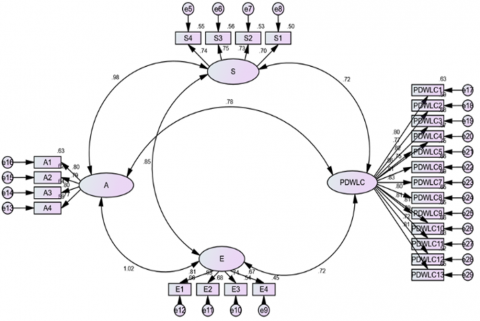
Table 2 shows the model fit outcomes of confirmatory factor analysis (CFA). The value of 0.071 for the root mean square error of approximation (RMSEA) lies within an acceptable limit (≤ 0.08), showing a satisfactory model fit. Comparative fit index (CFI) = 0.919, which is greater than the acceptable value of 0.9, showing a satisfactory incremental fit of the model. Moreover, the ratio of chi-square/df is 2.916, which is less than 3.0, indicating a good parsimonious fit. These findings affirm that the measurement model has good goodness-of-fit, and hence the hypothesized relationships are valid (Figure 2). To strengthen model fit reporting, additional SEM fit indices were included. The Tucker-Lewis Index (TLI) demonstrated an acceptable incremental fit (TLI = 0.903), exceeding the recommended threshold of 0.90. The Standardized Root Mean Square Residual (SRMR) was 0.061, which falls below the recommended cut-off value of 0.08, indicating a good residual-based fit. Collectively, RMSEA (0.071), CFI (0.919), TLI (0.903), SRMR (0.061), and the chi-square/df ratio (2.916) confirm that the proposed measurement model meets conventional SEM goodness-of-fit standards. Regarding model modification, only theoretically justifiable covariances between error terms of items within the same construct were included based on AMOS modification indices. No cross-construct error covariances were added, ensuring that the integrity of the theoretical structure remained intact.
Table 2. Pooled CFA model fitness tests
|
Name of Category |
Name of Index |
Value in Analysis |
|
Absolute Fit |
RMSEA |
0.071 |
|
Residual-Based Fit |
SRMR |
0.061 |
|
Incremental Fit |
CFI |
0.919 |
|
Incremental Fit |
TLI |
0.903 |
|
Parsimonious Fit |
Chi-square/df |
2.916 |
Figure 2. Measurement model
Table 3. Measurement item fitness
|
Variable |
Item |
Estimate |
|
Stimulation |
S1 |
0.704 |
|
S2 |
0.73 |
|
|
S3 |
0.749 |
|
|
S4 |
0.74 |
|
|
Experience |
E1 |
0.813 |
|
E2 |
0.826 |
|
|
E3 |
0.735 |
|
|
E4 |
0.668 |
|
|
Attraction |
A1 |
0.795 |
|
A2 |
0.787 |
|
|
A3 |
0.798 |
|
|
A4 |
0.769 |
|
|
Park Design with Low Carbon |
PDWLC1 |
0.796 |
|
PDWLC2 |
0.768 |
|
|
PDWLC3 |
0.823 |
|
|
PDWLC4 |
0.753 |
|
|
PDWLC5 |
0.863 |
|
|
PDWLC6 |
0.811 |
|
|
PDWLC7 |
0.833 |
|
|
PDWLC8 |
0.804 |
|
|
PDWLC9 |
0.807 |
|
|
PDWLC10 |
0.813 |
|
|
PDWLC11 |
0.791 |
|
|
PDWLC12 |
0.718 |
|
|
PDWLC13 |
0.808 |
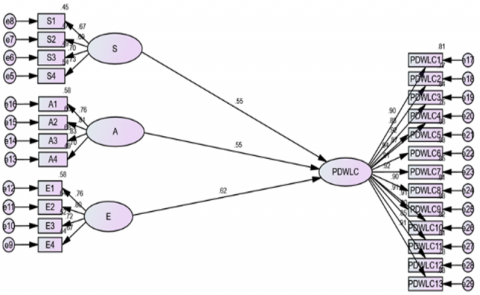
Table 3 displays factor loadings of the individual measurement items for every variable. Each factor loading is above the suggested cut-off of 0.6, validating strong construct validity. The stimulation variable has consistent factor loadings from 0.704 to 0.749, indicating that the items accurately measure the construct. The experience variable has slightly larger loadings (0.668 to 0.826), validating a solid measurement. Likewise, attraction variable shows solid item reliability ranging from 0.769 to 0.798. Low-carbon park design, on the other hand, with a maximum number of measurement items retains uniformly high factor loadings that range from 0.718 to 0.863 supporting its validity. These findings are in support of the sufficiency of the measured items chosen in measuring the expected constructs (Figure 3).
Figure 3. Structural model
Table 4. Path analysis
|
Estimate |
S.E. |
C.R. |
P |
|
|
Behavioral stimulations has a significant impact on park design with low carbon |
0.555 |
0.056 |
3.067 |
0.002 |
|
Environmental Attraction has a significant impact on park design with low carbon |
0.553 |
0.073 |
5.964 |
0.000 |
|
Facility experience has a significant impact on park design with low carbon |
0.625 |
0.062 |
2.597 |
0.010 |
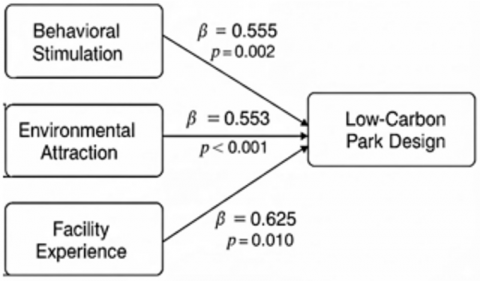
Table 4 displays the structural path analysis findings on the influence of influential factors on low-carbon park design. All three hypothesized relationships were statistically significant (p < 0.05). Behavioral stimulation has a significant influence on low-carbon park design (β = 0.555, p = 0.002), with encouraging results showing that strong behavioral cues yield improved perceptions of sustainable park design. Environmental attractiveness also has significant support for the effect on low-carbon park design (β = 0.553, p < 0.001), suggesting that attractive and naturally designed environments promote visitor participation in sustainable activities.
Figure 4. Path coefficient
Finally, facility experience has the greatest influence on low-carbon park design (β = 0.625, p = 0.010), highlighting the role of well-planned, green infrastructure in ensuring sustainability (Figure 4). These results validate the theoretical and empirical significance of environmental, facility-based, and behavioral variables in determining sustainable park design, providing vital insights for future urban planning and conservation efforts.
Sustainable urban green spaces are not just green space; they are a synergistic convergence of environmental responsibility, visitor satisfaction, and creative thinking on design. With cities fighting alongside the challenges of urbanization and climate change, the role of parks in supporting low-carbon perception, behavior, and satisfaction becomes even more critical. Outcomes of this study indicate the substantial role of facility experience, environmental attractiveness, and behavior stimulation on designing sustainable parks, indicating that park structure significantly impacts people's involvement in sustainable practices, perception towards them, and use. Parks are no longer passive landscapes but dynamic drivers of sustainability learning and behavior shift, where all aspects of design—from interactive environmental signs to experiential natural landscapes and energy-efficient buildings—function to induce a low-carbon culture. Validation of all three hypotheses herein reaffirms the assertion that sustainability in urban parks is not one proposition but a holistic paradigm where aesthetic, behavioral, and infrastructural aspects intermingle and harmonize towards gaining ecological awareness and sustainable action. The results are thus firmly argumentative towards redesignating urban parks not just as provided space for play but as proactive platforms for effecting mass adoption of sustainability.
Findings of this study confirm that stimulation of behavior has a strong influence on park planning with low-carbon strategies and validate the postulation that environmental interactive features and nudging approaches are major propellers of the interaction of tourists with sustainability. Stimulation of behavior, through visual stimuli, interactive displays, and educational boards, was observed to significantly enhance low-carbon consciousness, exciting tourists to make their behavior in park settings greener. This corroborates previous studies that showed when individuals are repeatedly exposed to sustainability stimuli in their environments, they become more concerned about reducing their carbon imprint [27]. Additionally, the research indicates that stimulation of behavior encourages low-carbon behavior as tourists are more likely towards sustainable activity such as proper waste disposal, energy conservation, and utilization of eco-friendly modes of transportation when parks are designed to implicitly strengthen these behaviors [34]. The strong impact on design satisfaction likewise suggests that people who use the park enjoy to be in a setting that is integrated with sustainability as part of their leisure time, emphasizing how parks should be designed not merely as sustainable entities but also engaging and lovely settings. This finding is particularly vital for urban developers and policymakers considering designing parks as not only recreations but a means of educational sustainability. Through integrating sustainability principles in interactive park attractions, governments are able to guarantee that low-carbon practices are promoted actively and sustained in the long run.
In the same context, the research confirms the function of environmental beauty in low-carbon park design, where there is an emphasis on the dominance of ecological and aesthetic considerations that drive sustainability. The existence of natural landscapes, intensive vegetation cover, and green deep spaces increases people's care for the environment, thereby improving low-carbon commitment. This is in line with previous studies which have proven that well-designed, beautiful natural surroundings translate into greater environmental perception and sustainability [22]. Environmental beauty is also shown to enhance low-carbon consumption because those tourists who are closely attached to nature will be most likely to incorporate sustainable behavior into consumption, such as waste reduction, water conservation, and biodiversity conservation programs [9]. In addition, it is proven in research that ecological attractiveness can best influence design satisfaction in a way that more enjoyment is experienced by visitors in parks that combine ecological attractiveness with green elements of design. This is the reason that biophilic elements of design must be applied to low-carbon park development based on the reality that the inclusion of nature elements not only provides visual appeal but also enhances the attachment feeling of visitors to sustainability efforts. The implication of this finding is that urban parks should give top priority to the maintenance of natural environments, use native plants, and construct areas enabling direct interaction with ecological systems. In this way, park planners can guarantee that environmental attraction will serve as a trigger for the promotion of sustainable attitude and behavior amongst visitors.
Finally, the research confirms that facility experience is an important element that may impact low-carbon park design, understanding that the quality, accessibility, and sustainability of park facilities have a positive influence on the interaction of park visitors with green practices. Research shows that accessible, energy-efficient, and well-designed facilities result in low-carbon awareness, as tourists become more aware of sustainability practices when they are interacting with green infrastructure [18]. The research further discloses that facility experience influences low-carbon behavior in a positive way, as the visitors tend to emulate green behavior wherever parks have adequate infrastructure, e.g., segregated recycling collection facilities, water-efficient toilets, solar-powered premises, and green transport means like bike-sharing schemes [11]. In addition, design satisfaction was significantly impacted by facility experience, highlighting that tourists appreciate parks that not only provide aesthetic and natural beauty but also functional and sustainable amenities. This is in line with research indicating that access to sustainable infrastructure increases overall user satisfaction since visitors feel more comfortable and encouraged to adopt environmentally friendly behaviors when parks offer easy and practical solutions [35]. Therefore, urban designers must prioritize smart, green, and efficient facilities in park planning to inspire visitors to embrace sustainability during recreation. By incorporating innovative green technologies and ensuring effective facility maintenance, park planners can enhance both the ecological-experiential value and long-term sustainability of low-carbon parks, thereby increasing their visitor appeal.
An interesting conclusion of the present research is that facility experience had the greatest impact on low-carbon park design than behavioral stimulation and environmental attraction. This prevailing impact may be explained in terms of cultural and local context of the Chinese urban parks where people usually attach much importance to convenience, functional infrastructure, and well-kept facilities. The parks are not only recreational areas; they are also vital community spaces, which sustain day-to-day activities like physical workouts, socialization and family life in the fast-growing urban cities in China. Consequently, the visitors will tend to be more positive towards concrete, convenient, and sustainability-focused facilities such as the availability of pathways, energy-saving lights, waste-sorting stations, and environmentally-friendly mobility solutions as they increase comfort, safety, and usability directly. Past studies on Chinese public spaces also show that when environmentally friendly infrastructure is visible and convenient to access, users tend to engage in environmentally responsible behavior as they tend to follow the practical sustainability solution that is infrastructure based and cultural. Thus, the powerful role of experience of the facilities will help to note that the context-related expectations of the presence of functional and high-quality facilities influence the way in which visitors perceive the sustainable design, which emphasizes that the infrastructural improvements can be considered a key channel of encouraging low-carbon behavior in wetland parks throughout China.
Acceptance of all three hypotheses in the present study pinpoints the intricate, multi-attribute nature of sustainable park planning, underscoring that awareness, behavior, and design satisfaction associated with the low-carbon strategy arise out of a harmonious combination rather than a segregate effort from the behavioral, environmental, or infrastructural sphere. Parks fostering pro-environmental behaviors, engaging visitors based on ecological qualities, and developing sustainable, decent facilities leave profound marks on people's individual practices and overall citywide sustainability policies. These results are part of a widening literature supporting more reflective and experiential sustainability-led planning for urban parks so that not only are they climate-resilient but also capable of generating sustained behavioral change. As cities worldwide balance development and environmental care, this study offers a model for designing parks that go beyond recreation to drive sustainability. Moving forward, planners, policymakers, and designers must recognize how behavioral stimulation, environmental appeal, and facility experience interconnect. This will enable the creation of parks that reduce carbon footprints and inspire lasting, sustainable practices for future generations.
6.1 Implications
The conclusions of this research provide useful lessons for urban planners, landscape architects, policymakers, and environmental groups who aim to incorporate low-carbon approaches in wetland park planning. Through the validation that behavioral stimulation, environmental attraction, and facility experience have significant effects on sustainable park design, this study emphasizes the importance of adopting a multidimensional approach to green space planning. Urban planners should first ensure interactive and pedagogical design features that stimulate low-carbon consciousness and action, including digital sustainability manuals, intelligent signage, and gamified green learning opportunities. These amenities can facilitate higher visitor interaction while subtly nudging pro-environmental behavior. Second, biodiversity conservation and ecological aesthetics need to be integrated centrally into park design in order to create an immersive experience through natural landscapes, water features, and native plants that enhances the sense of connection to sustainability. This is in line with biophilic design principles, which have been reported to enhance environmental awareness and facilitate responsible behaviors by visitors. Third, sustainable facility management and infrastructure need to be a high priority. Using solar-powered lighting, energy-efficient visitor centers, green modes of mobility, and waste management, it is possible to ensure that parks are low-carbon environments while maintaining visitor satisfaction. Policymakers must also use these findings to create policies of urban sustainability that require the integration of low-carbon design principles into every public park project. Interagency coordination among government departments, environmental NGOs, and private stakeholders can help mobilize funding, research, and mass-scale deployment of sustainable park designs. By implementing these methods, wetland parks like the Changsha Yanghu Wetland Park in this research can be exemplars of green spaces that do not only offset urban carbon traces but also raise awareness and encourage people towards long-term sustainable behavior.
This research has important contributions to the theoretical comprehension of sustainable innovation in park design in cities, especially under the framework of low-carbon policy. By confirming the effect of behavioral stimulation, environmental attractiveness, and facility experience on sustainable park planning, this study extends the scope of Environmental Behavior Theories, including the Theory of Planned Behavior [31] and Self-Determination Theory [32], in the urban sustainability field. The results support the assumption that low-carbon behavior and design satisfaction can be determined by behavioral intentions and environmental attitudes through external environmental stimuli, for example, elements of park design. Additionally, the study marries principles derived from biophilic design theory, which has proposed that nature contact influences pro-environmental behaviors, upholding the supposition that environment attraction is greater than a merely aesthetic aspect—more a stimulant to behavioral action. Facility experience is also aligned with Service-Dominant Logic, which focuses on the fact that effectively designed, resource-saving facilities lead to user satisfaction as well as behavior change. With a convergence of these theoretical underpinnings, this study offers a holistic model of how design factors interface with sustainability behaviors and presents new insight into how urban parks serve as experiential spaces that foster ecological awareness. Subsequent theoretical breakthroughs can capitalize on these findings by investigating the extent to which technological interventions, digital nudges, and AI-facilitated smart park amenities augment sustainability performance. Therefore, this research not only develops current theory but also creates new interdisciplinary avenues for investigation at the crossroads of environmental psychology, urban planning, and sustainable development.
6.2 Limitations and future directions
Although it has made important contributions, this research has a number of limitations that need to be noted. To begin with, the study is based mainly on one case study—Changsha Yanghu Wetland Park in China—and this restricts the applicability of the findings to other urban parks with varying geographical, climatic, and cultural settings. Wetland parks across different locations can have different environmental policies, visitor populations, and infrastructure capacities, which can result in disparate results in terms of low-carbon consciousness, behavior, and design satisfaction. Future research should attempt to conduct comparative studies with more than one wetland park in various locations to verify findings in more generalizable contexts. Second, although this research study investigates the effect of behavioral stimulation, environment attraction, and experience of facilities, other important factors—policy rules, budget limitation, technology innovation, and participation of local communities—were not directly studied. More multi-stakeholder approaches could be employed by future studies to include views from government departments, park managers, green groups, and tourists in creating an enhanced comprehensive vision of sustainable park planning. Second, the research is heavily dependent on quantitative survey responses, which, although valuable for statistical testing, do not necessarily capture the richness of visitor experiences, emotional attachments to nature, and individual motivations for low-carbon behaviors. A mixed-methods strategy, combining qualitative interviews and observational studies, would yield deeper insights into the psychological and behavioral processes underlying sustainability participation in urban parks.
In addition, the research presented in this article does not measure the long-term sustainability effect of low-carbon park design, since it merely reflects a cross-sectional observation of visitor behavior and design satisfaction. Future research could employ longitudinal research to investigate if the impact of behavioral stimulation, environmental attraction, and facility experience on low-carbon behavior and satisfaction can last over a longer period. Moreover, with the ongoing speed of smart technology and AI-based environmental observation, subsequent studies might evaluate the utilization of digital solutions in sustainable park planning. For example, IoT-based green infrastructure, AI-based energy efficiency, and virtual reality-based environmental education initiatives could even more significantly improve visitor experience and adoption of sustainability. Yet another likely future research direction is the influence of social and cultural aspects on low-carbon attitudes. Examining how cultural values, social norms, and shared environmental responsibility affect the efficacy of sustainable park design can offer context-specific information for policymakers and urban planners. Lastly, as climate change progresses, future research should examine how climate-resilient infrastructure, adaptive park design, and ecosystem-based solutions can be incorporated into wetland parks to provide long-term environmental sustainability. Through the addressing of such limitations and the exploration of these future research directions, scholars continue to refine and expand theoretical and practical knowledge about sustainable urban planning and low-carbon innovation.
[1] Chong, X., Li, L., Wang, X. (2025). Sustainable development toward low-carbon energy and industry future: Transferable cross-scale eco-chemical industry parks. Energy & Fuels, 39(6): 3375-3382. https://doi.org/10.1021/acs.energyfuels.4c05315
[2] Liu, T., Hu, Y., Wang, Y., Li, H. (2024). Analyzing energy utilization influence on tourism and low-carbon development: Insights from Xianju National Park in China. Energy Strategy Reviews, 54: 101480. https://doi.org/10.1016/j.esr.2024.101480
[3] Cacciuttolo, C., Guzmán, V., Catriñir, P. (2024). Renewable solar energy facilities in South America—The road to a low-carbon sustainable energy matrix: A systematic review. Energies, 17(22): 5532. https://doi.org/10.3390/en17225532
[4] Chen, P., Dagestani, A.A. (2023). Urban planning policy and clean energy development harmony- evidence from smart city pilot policy in China. Renewable Energy, 210: 251-257. https://doi.org/10.1016/j.renene.2023.04.063
[5] Kumar, A., Lodha, D., Mahalingam, A., Prasad, V., Sahasranaman, A. (2016). Using ‘design thinking’ to enhance urban re-development: A case study from India. Engineering Project Organization Journal, 6(2-4): 155-165. https://doi.org/10.1080/21573727.2016.1155445
[6] Mensonen, A., Hällström, A.A. (2020). Designing cities? The use of design thinking in urban planning in Finland. IOP Conference Series: Earth and Environmental Science, 588(5): 052043. https://doi.org/10.1088/1755-1315/588/5/052043
[7] Lin, A., Lou, J., Zeng, E., Li, D., Zheng, L. (2023). Impact of energy policies on residential low-carbon behaviors by considering place attachment: Evidence from China. Energy & Environment, 36(1): 425-447. https://doi.org/10.1177/0958305x231183683
[8] Fu, X., Qian, Q.K., Liu, G., Zhuang, T., Visscher, H.J., Huang, R. (2023). Overcoming inertia for sustainable urban development: Understanding the role of stimuli in shaping residents' participation behaviors in neighborhood regeneration projects in China. Environmental Impact Assessment Review, 103: 107252. https://doi.org/10.1016/j.eiar.2023.107252
[9] Jiang, N., Jiang, W., Chen, H. (2022). Innovative urban design for lowcarbon sustainable development: Evidence from China's innovative city pilots. Sustainable Development, 31(2): 698-715. https://doi.org/10.1002/sd.2413
[10] Guo, Z., Li, Y. (2024). Analysis of the decisive factors of government attracting tourists in public management from the perspective of environmental protection. Problemy Ekorozwoju, 19(1): 285-295. https://doi.org/10.35784/preko.5414
[11] Huang, D. (2023). Coupling coordination analysis between urban park wetland water ecological construction and carbon emissions. Desalination and Water Treatment, 313: 290-299. https://doi.org/10.5004/dwt.2023.30028
[12] Li, T., Liao, C., Law, R., Zhang, M. (2023). An integrated model of destination attractiveness and tourists’ environmentally responsible behavior: The mediating effect of place attachment. Behavioral Sciences, 13(3): 264. https://doi.org/10.3390/bs13030264
[13] Wang, H., Shi, W., He, W., Xue, H., Zeng, W. (2023). Simulation of urban transport carbon dioxide emission reduction environment economic policy in China: An integrated approach using agent-based modelling and system dynamics. Journal of Cleaner Production, 392: 136221. https://doi.org/10.1016/j.jclepro.2023.136221
[14] Xuan, X., Zheng, Y. (2024). Collaborative mechanism and simulation of low-carbon travel for residents in community-built environment based on evolutionary game. Journal of Cleaner Production, 443: 141098. https://doi.org/10.1016/j.jclepro.2024.141098
[15] Shao, Q., Fu, J., Huang, F., Li, G., Huang, H., Tang, Z., Zhang, Z. (2024). Low-carbon territorial spatial detailed planning in the context of climate change: A case study of the Wenzhou Garden Expo Park area, China. Atmosphere, 15(11): 1334. https://doi.org/10.3390/atmos15111334
[16] Zhang, L., Cai, Y., Song, S., Sun, L. (2024). An urban renewal design method based on carbon emissions and carbon sink calculations: A case study on an environmental improvement project in the Suzhou Industrial Investment Science and Technology Park. Buildings, 14(9): 2962. https://doi.org/10.3390/buildings14092962
[17] Lu, X., Liu, R., Xia, L. (2023). Landscape planning and design and visual evaluation for landscape protection of geological environment. Journal of King Saud University-Science, 35(6): 102735. https://doi.org/10.1016/j.jksus.2023.102735
[18] Chen, X., Cheng, Z. (2023). The impact of environment-friendly short videos on consumers’ low-carbon tourism behavioral intention: A communicative ecology theory perspective. Frontiers in Psychology, 14: 1137716. https://doi.org/10.3389/fpsyg.2023.1137716
[19] Cheng, X., Long, R., Wu, F., Geng, J., Yang, J. (2023). How social interaction shapes habitual and occasional low-carbon consumption behaviors: Evidence from ten cities in China. Renewable and Sustainable Energy Reviews, 182: 113387. https://doi.org/10.1016/j.rser.2023.113387
[20] Sun, M., Chen, C. (2021). Renovation of industrial heritage sites and sustainable urban regeneration in post-industrial Shanghai. Journal of Urban Affairs, 45(4): 729-752. https://doi.org/10.1080/07352166.2021.1881404
[21] He, Q., Yan, M., Zheng, L., Wang, B. (2023). Spatial stratified heterogeneity and driving mechanism of urban development level in China under different urban growth patterns with optimal parameter-based geographic detector model mining. Computers, Environment and Urban Systems, 105: 102023. https://doi.org/10.1016/j.compenvurbsys.2023.102023
[22] Hu, J., Wang, Y., Dong, L. (2024). Low carbon-oriented planning of shared energy storage station for multiple integrated energy systems considering energy-carbon flow and carbon emission reduction. Energy, 290: 130139. https://doi.org/10.1016/j.energy.2023.130139
[23] Klarin, A., Park, E., Xiao, Q., Kim, S. (2023). Time to transform the way we travel?: A conceptual framework for slow tourism and travel research. Tourism Management Perspectives, 46: 101100. https://doi.org/10.1016/j.tmp.2023.101100
[24] Xia, P., Lu, G., Yuan, B., Zhang, J., Wu, C., Fu, X. (2023). Research on planning model of low-carbon path for the park taking into account carbon asset value. In 2023 2nd Asian Conference on Frontiers of Power and Energy (ACFPE), Chengdu, China, pp. 614-618. https://doi.org/10.1109/ACFPE59335.2023.10455706
[25] Liu, Y., Lu, F., Xian, C., Ouyang, Z. (2023). Urban development and resource endowments shape natural resource utilization efficiency in Chinese cities. Journal of Environmental Sciences, 126: 806-816. https://doi.org/10.1016/j.jes.2022.03.025
[26] Song, Y., Xian, X., Zhang, C., Zhu, F., Yu, B., Liu, J. (2023). Residual municipal solid waste to energy under carbon neutrality: Challenges and perspectives for China. Resources, Conservation and Recycling, 198: 107177. https://doi.org/10.1016/j.resconrec.2023.107177
[27] Rahmafitria, F., Kaswanto, R.L. (2024). The role of eco-attraction in the intention to conduct low-carbon actions: A study of visitor behavior in urban forests. International Journal of Tourism Cities, 10(3): 881-904. https://doi.org/10.1108/IJTC-07-2023-0138
[28] Wang, J., Zhang, Y., Zhang, X., Song, M., Ye, J. (2023). The spatio-temporal trends of urban green space and its interactions with urban growth: Evidence from the Yangtze River Delta region, China. Land Use Policy, 128: 106598. https://doi.org/10.1016/j.landusepol.2023.106598
[29] Morales Pedraza, J. (2023). The role of renewable energy in the transition to green, low-carbon power generation in Asia. Green and Low-Carbon Economy, 1(2): 68-84. https://doi.org/10.47852/bonviewglce3202761
[30] Al-Swidi, A.K., Al-Hakimi, M.A., Al-Sarraf, J., Al koliby, I.S. (2023). Innovate or perish: Can green entrepreneurial orientation foster green innovation by leveraging green manufacturing practices under different levels of green technology turbulence? Journal of Manufacturing Technology Management, 35(1): 74-94. https://doi.org/10.1108/JMTM-06-2023-0222
[31] Ajzen, I. (1991). The theory of planned behavior. Organizational Behavior and Human Decision Processes, 50(2): 179-211. https://doi.org/10.1016/0749-5978(91)90020-t
[32] Ryan, R.M., Deci, E.L. (2024). Self-determination theory. In Encyclopedia of Quality of Life and Well-Being Research, pp. 6229-6235. https://doi.org/10.1007/978-3-031-17299-1_2630
[33] Golzar, J., Noor, S., Tajik, O. (2022). Convenience sampling. International Journal of Education & Language Studies, 1(2): 72-77. https://doi.org/10.22034/ijels.2022.162981
[34] Liu, J., Chau, K.W., Bao, Z. (2023). Multiscale spatial analysis of metro usage and its determinants for sustainable urban development in Shenzhen, China. Tunnelling and Underground Space Technology, 133: 104912. https://doi.org/10.1016/j.tust.2022.104912
[35] Li, Q., Li, X., Chen, W., Su, X., Yu, R. (2020). Involvement, place attachment, and environmentally responsible behaviour connected with geographical indication products. Tourism Geographies, 25(1): 44-71. https://doi.org/10.1080/14616688.2020.1826569