Eviatiwi Kusumaningtyas Sugiyanto* | Kesi Widjajanti | Ratna Wijayanti | Yudhitiya Dyah Sukmadewi
© 2025 The authors. This article is published by IIETA and is licensed under the CC BY 4.0 license (http://creativecommons.org/licenses/by/4.0/).
OPEN ACCESS
The sustainable blue economy has emerged as a global framework integrating economic growth, environmental protection, and social inclusion. However, there remains a gap in understanding the key determinants and stakeholder dynamics that shape its sustainability. This study aims to identify the multi-level factors influencing sustainable blue economy performance and to analyze the roles of stakeholders involved. A systematic literature review and content analysis were conducted following the SPAR-4-SLR protocol. Articles published between 2010 and 2024 were retrieved from the Scopus database through Publish or Perish, using keyword combinations related to “sustainable blue economy.” Based on inclusion and exclusion criteria, 64 articles were selected from an initial pool of 164 papers. The results reveal three levels of determinant factors (macro, meso, and micro) that influence sustainability outcomes. Key stakeholders include governments, the private sector, local communities, NGOs, academics, and international organizations, each with distinct yet interconnected roles. The review highlights the increasing global attention to blue economy research, particularly since 2020. This study contributes by offering a structured synthesis of multi-level factors and stakeholder interactions, providing a clearer analytical framework for guiding future research and policy development in sustainable blue economy practices.
determinant factors, stakeholders’ role, sustainable blue economy
The concept of a blue economy has gained prominence worldwide. The blue economy emerged in 2012 at the UN Sustainable Development Convention and is now widely applied in marine policy and governance [1]. The idea of a blue economy is expected to promote economic growth, social inclusion, and environmental sustainability. The blue economy is considered not only a natural capital that accelerates global economic growth but also a means to reduce unemployment and poverty worldwide. The blue economy offers great potential for the world economy [2]. Blue economy discourse and policies generally tend to highlight how ocean crises can be turned into new opportunities [3]. For the blue economy to be a genuinely useful approach, social benefits and equity must be explicitly prioritized alongside environmental and economic concerns in its management.
The sustainable blue economy concept emphasizes the responsible use and conservation of marine resources to ensure long-term environmental, economic, and social benefits [4]. This approach aims to promote sustainable development, maintain the health of marine ecosystems, and create harmonious relationships between people and the ocean. However, research on the added value or potential of the blue economy towards sustainable business is still minimal [5, 6]. The concept of a sustainable blue economy relies heavily on a deep understanding of the factors that influence its sustainability. Research on these factors is crucial for identifying challenges and opportunities for the effective and sustainable management of marine resources. The sustainable blue economy concept emphasizes the responsible management of marine resources, where the roles of various stakeholders are crucial in achieving the sustainability goal. Understanding the importance of stakeholder engagement in shaping the future of blue economy development is critical to ensuring that the sustainable blue economy remains inclusive, equitable, and effective [7]. Research on stakeholder roles is also crucial for understanding how each party can contribute to enhancing blue economy performance. This systematic review was conducted to help identify the key factors that influence the performance of a sustainable blue economy and the roles of stakeholders in it. This information can be used to make predictions, identify opportunities or challenges, and take appropriate actions for the development of the blue economy itself.
The concept of sustainability has increased in popularity with the development of the environmental movement and the climate crisis. Environmental sustainability has brought positive progress in the economic context. Harmonization of different objectives, such as economic growth, ecological stability, and long-term social justice, is necessary to reduce environmental degradation and damage and achieve sustainability [5]. In context, sustainability extends to sustainable economies, sustainable cities, sustainable businesses, and sustainable energy [8]. Sustainability in the economic context led to the emergence of the concept of “sustainable development”. Studies conducted in the field to achieve sustainable development laid the groundwork for the emergence of specific concepts, such as the circular economy, green management, and green economy [8].
The conceptualization of the blue economy is a further exploitation of the Green Economy, a more general approach to socio-economic activities that aim to reduce environmental degradation on land, air, or sea [9]. Oceans, seas, and coastal areas are integral and crucial components of the Earth's ecosystem and are essential to sustainable development. The blue economy is closely related to the sustainable development paradigm, as the development of business models incorporating environmentally friendly innovation creates broader social benefits and promising financial returns. Many factors need to be evaluated to achieve a sustainable blue economy. Determinants such as government policies, technological advancements, and consumer demand all play a role in shaping the future of sustainable blue economy development [10]. Stakeholders, including governments, businesses, NGOs, and local communities, must work together to ensure that oceans are protected and managed sustainably for the coming years. Collaboration and cooperation among these stakeholders are essential in achieving a successful and sustainable blue economy [11]. By working together, they can implement effective policies, invest in innovative technologies, and educate consumers about the importance of protecting the ocean. This collective effort will help conserve marine biodiversity, support local economies, and address the challenges of climate change and overfishing [12]. Ultimately, prioritizing sustainability and responsible management practices ensures that our oceans remain healthy and productive for generations to come.
While developing a sustainable blue economy is important, it is also essential to consider the urgent needs of communities that depend on marine resources for their livelihoods [13]. Implementing strict conservation measures without addressing social and economic impacts can jeopardize vulnerable populations. It is important to find a balance between conservation efforts and supporting communities to ensure long-term success [14]. This balance can be achieved through community engagement, education, and the implementation of sustainable practices that benefit the environment and the communities that depend on it. By taking a holistic approach to ocean conservation and development, we can create a future where marine ecosystems and coastal communities can thrive together [15]. Finally, by working together to achieve common goals, we can create a more sustainable and equitable future for all.
This study is secondary research using a systematic literature review and content analysis to examine Scopus-indexed journal articles and identify key determinants and stakeholder roles in sustainable blue economy development. Articles were sourced using the Publish or Perish 8 tool.
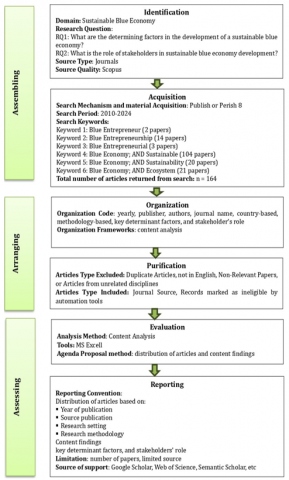
There are several systematic literature review procedures [16]. There are many guidelines on literature reviews, which are often limited to the philosophy of review procedures, protocols, and nomenclatures, leading to overlapping reporting [17]. This study used a systematic literature review method based on the SPAR-4-SLR (Scientific Procedures and Rationales for Systematic Literature Review) protocol [18]. The SPAR-4-SLR protocol consists of three stages and six sub-stages that flow sequentially, namely:
(1) Assembling, which involves (1a) identification and (1b) acquisition of synthesized literature,
(2) Arranging includes (2a) organizing and (2b) purification of literary works that are in the process of synthesis, and
(3) Assessing includes (3a) evaluating and (3b) reporting on synthesized literature.
The SPAR-4-SLR protocol [18] was adopted to screen and review literature based on selected terms and databases. To ensure reproducibility and methodological transparency, all key steps (assembling, arranging, and assessing) were documented systematically, accompanied by a coding framework, reliability check, and exclusion log.
The research stages in SPAR-4-SLR are described in the next section (see Figure 1).
Figure 1. SPAR4-SLR method
3.1 Assembling (identification and acquisitions)
The first protocol in SLR is done by determining the domain and research questions. The topic or domain in this research is the sustainable blue economy. From the domain, we defined two research questions, namely RQ1: What are the determinants in the development of a sustainable blue economy? RQ2: What is the role of stakeholders in the development of a sustainable blue economy? To obtain relevant articles, we used three steps. The first step used the Publish or Perish 8 databases. The second step retrieved articles sourced from journals and indexed by Scopus. The third step used five keyword combinations consisting of 1) Blue Entrepreneur, 2) Blue Entrepreneur, 3) Blue Entrepreneurial, 4) Blue Economy; AND Sustainable, 5) Blue Economy; AND Sustainability, 6) Blue Economy; AND Ecosystem. At these stages, 164 papers were obtained. This process yielded 164 papers. Only peer-reviewed journal articles written in English were included.
3.2 Arranging (organizing and purification)
The coding of articles depends on the type of SLR performed. In this research, the SLR method used was content analysis. Based on the type of SLR, articles were organized based on the analysis content (key determinants, factors, and stakeholder roles). To improve transparency, an exclusion log was created to record the removal of papers during the purification stage. Out of the initial 164 papers, 100 were excluded for the following reasons:
The final dataset included 64 eligible papers for full analysis.
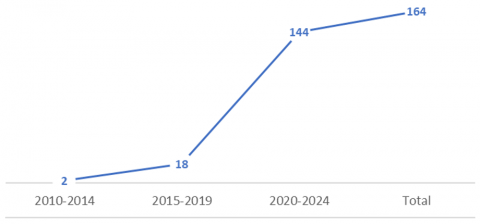
Figure 2. Publication trends on blue economy (2010-2024)
The publication trend shows a significant upward trajectory over the past 15 years (see Figure 2). The trend demonstrates exponential growth, suggesting that the blue economy has become a central theme in sustainability and marine studies in the last five years.
4.1 Distribution of articles
The final sample of 64 articles was carefully analyzed. Table 1 summarizes the distribution of articles, including author name and year of publication, title, citations, research setting, methodology, and journal.
Table 1. Top 10 most relevant contributions
|
No. |
Refs. |
Title |
Cites |
Setting |
Journal |
|
1 |
[19] |
Enabling Conditions for an Equitable and Sustainable Blue Economy |
91 |
N/A |
Nature |
|
2 |
[20] |
From Science to Action: Exploring the Potential of the Blue Economy for Enhancing Economic Sustainability in Bangladesh |
76 |
Bangladesh |
Ocean and Coastal Management |
|
3 |
[13] |
The Blue Economy-Cultural Livelihood-Ecosystem Conservation Triangle: The African Experience |
72 |
N/A |
Frontiers in Marine Science |
|
4 |
[21] |
Ecosystem Services Approach for Community-Based Ecotourism: Towards an Equitable and Sustainable Blue Economy |
70 |
Indonesia |
Journal of Sustainable Tourism |
|
5 |
[22] |
Comparative Coastal and Marine Tourism, Climate Change, and the Blue Economy in African Large Marine Ecosystems |
51 |
Africa |
Environmental Development |
|
6 |
[23] |
Impact of Energy Intensity, Green Economy, and Blue Economy to Achieve Sustainable Economic Growth in GCC Countries: Does Saudi Vision 2030 Matter to GCC Countries |
44 |
GCC Countries |
Renewable Energy |
|
7 |
[24] |
A Roadmap to a Sustainable Indian Ocean Blue Economy |
33 |
Indian Ocean |
Journal of the Indian Ocean Region |
|
8 |
[25] |
Assessing Policy Coherence and Coordination in the Sustainable Development of a Blue Economy. A Case Study from Timor-Leste |
30 |
Timor Leste |
Ocean and Coastal Management |
|
9 |
[26] |
Defining the Blue Economy as a South African Strategic Priority: Toward a Sustainable 10th Province? |
29 |
N/A |
Journal of the Indian Ocean Region |
|
10 |
[27] |
Deep Aspirations: Towards a Sustainable Offshore Blue Economy |
26 |
N/A |
Reviews in Fish Biology and Fisheries |
The research was conducted in a wide range of countries and regions with particularly large bodies of water, including Bangladesh, Indonesia, Brazil, and Timor Leste, as well as in broader regions such as the Indian Ocean and Africa. The results show that the blue economy is a global issue with different challenges and opportunities in various regional contexts. Research from these different countries can help in understanding the implementation of the blue economy at large and provide diverse perspectives. Some studies focus on resource management, ecosystem sustainability, and social aspects of the blue economy. For example, research by Karani [22], the relationship between ecotourism and sustainability is an important element in the development of an equitable blue economy. Other research, such as that conducted by Sarwar [23] and van Wyk [26], assesses economic impacts and relevant government strategies to achieve economic sustainability.
Research by Cisneros-Montemayor [19] has the highest number of citations (91), indicating that the findings have a significant impact on policy development or further research in the context of the blue economy. More recent research, despite having fewer citations, can still provide valuable insights into the field, as seen in studies related to the blue economy and entrepreneurship [28].
Table 2 shows that among the 64 studies, 30 used qualitative methods, 15 quantitative, 6 mixed methods, and 13 literature reviews. The dominance of qualitative approaches highlights the complexity of the blue economy and the importance of understanding local perspectives and social context.
Table 2. Documents by method
|
|
Number of Papers |
% |
|
Qualitative |
30 |
47% |
|
Quantitative |
15 |
23% |
|
Mixed Method |
6 |
9% |
|
Literature Review |
13 |
20% |
|
Total |
64 |
100% |
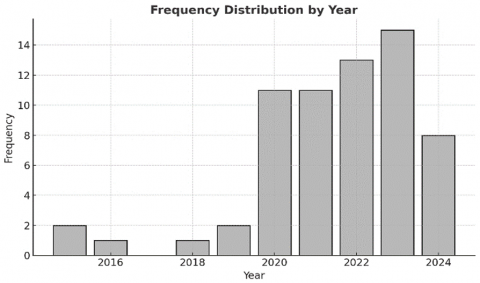
Based on the frequency distribution of blue economy publications from 2015 to 2024 (see Figure 3), the number of studies has increased significantly since 2020, reaching its peak in 2023. Before 2020, research on this topic was still limited, indicating that the blue economy has gained broader academic and policy attention only in recent years. This trend reflects growing awareness of sustainable maritime economic development.
Figure 3. Frequency distribution by year
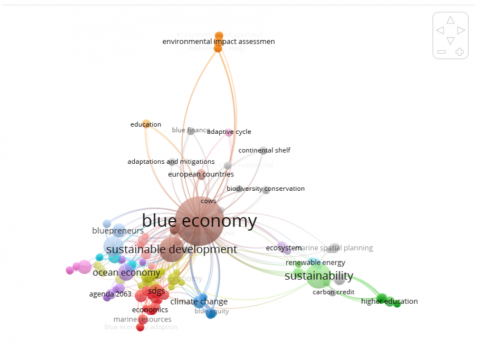
Figure 4. Network mapping of literature
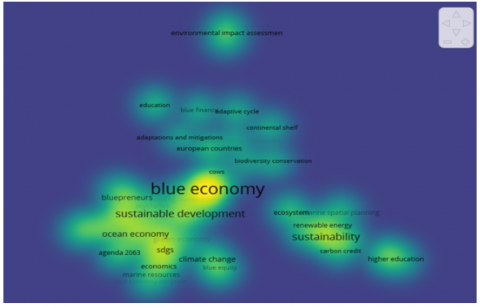
Based on the network mapping in Figure 4, several under-researched topics that present potential for future studies include blue finance, adaptive cycle, ecosystem-based approach, bluepreneurs, and environmental impact assessment.
Figure 5. Overlay visualisation
Furthermore, the overlay visualization (see Figure 5) indicates that the most recent topics explored in 2024 related to the blue economy are ecosystem management, ecosystem-based approach, measurement of the blue economy, and blue economy competencies, particularly in the context of human resources. This finding is supported by the density visualization (see Figure 6), which shows that these topics have significantly lower density compared to more dominant themes such as blue economy and sustainability.
Figure 6. Density visualisation
4.2 Content findings
Based on a content analysis of 64 papers, key determinants of sustainable blue economy development were identified and grouped into macro, meso, and micro levels, reflecting their scope and influence. Common themes include local community involvement, government policy, and socio-economic sustainability. For instance, Novaglio et al. [27] emphasized the importance of ecosystem conservation and social welfare within the blue economy framework. These findings underscore the need to balance economic benefits with environmental protection, particularly in regions highly vulnerable to climate change and resource exploitation. The active involvement of diverse stakeholders such as governments, private sectors, local communities, NGOs, and researchers are essential in shaping inclusive strategies, aligning interests, and ensuring long-term sustainability across all levels of intervention.
4.3 Macro-level
Macro-level factors (see Table 3), such as policy and regulation, environmental conditions, economic growth, maritime security, gender equality, and human rights, as well as risks and uncertainties, largely determine the direction of sustainable blue economy development. Government policies and regulations play a central role in promoting or hindering a sustainable blue economy [21, 29, 30]. Regulations supporting marine conservation, natural resource protection, and promoting a green economy will increase the participation of related sectors, such as sustainable fisheries, marine tourism, and renewable energy [21, 31-34]. Conversely, inadequate policies can lead to overexploitation, pollution, and damage to marine ecosystems [35]. The policy also plays a role in setting incentives, such as subsidies for renewable energy and taxes on activities that damage the marine environment [36]. The state of the marine environment, including climate change, biodiversity decline, and marine pollution, greatly affects the blue economy [31, 37-39].
Table 3. Macro-level factors of developing a sustainable blue economy
|
Determinant Factors |
Explanation |
Source |
|
|
Macro-Level |
Policy and Regulation |
Supportive government policies are essential for sustainable marine resource management, including regulations on fishing, ecosystem protection, and eco-friendly maritime infrastructure to ensure efficient and sustainable use of marine resources. |
[13, 19-22, 24, 25, 27, 29-32, 34, 37, 39-41, 44-58] |
|
|
Environmental/Ecosystem Conditions |
Environmental factors like climate change, water quality, and ecosystem health influence blue economy performance, as climate change can impact fish migration and fishery yields. |
[20, 21, 27, 29, 30, 38, 39, 41, 46, 47, 56, 57, 59-62] |
|
|
Economic Growth |
The blue economy is prioritized globally to drive economic growth without harming the marine environment. Its performance is also influenced by external factors like global market demand, price fluctuations, and international economic conditions. |
[19, 27, 30, 34, 38, 39, 44, 54, 57, 59-61, 63] |
|
|
Risk and Uncertainty |
Natural disasters like tsunamis and earthquakes, along with economic uncertainty, can impact investment and development in the blue economy sector. |
[30, 64] |
|
|
Maritime Safety |
Marine resource security involves preventing illegal practices, such as illegal fishing and slavery in the fisheries sector. |
[31, 65] |
|
|
Gender Equality and Human Rights |
Gender equality and human rights play a vital role in the sustainable blue economy by promoting social justice, inclusion, and equal stakeholder participation. |
[19, 60] |
Environmental degradation can reduce fisheries yields, damage coral reef ecosystems, and undermine the sustainability of sectors such as fisheries, tourism, and mariculture [40, 41]. Therefore, the sustainability of the blue economy depends on the proper preservation of the marine environment as well as efforts to mitigate the impacts of climate change. National and global economic growth can influence the development of the blue economy. On the one hand, economic growth can create opportunities for investment in marine infrastructure, technological innovation, and expansion of marine-related sectors [26, 27, 42]. However, unsustainable economic growth can increase pressure on marine resources through greater exploitation. Therefore, it is important to balance economic growth with sustainability principles. Maritime security is an important factor affecting the blue economy, especially in activities such as fishing, marine transportation, and natural resource exploration. Threats such as piracy, illegal trade, or political instability in coastal areas can disrupt economic activity and incur additional security costs [31, 43]. Countries should invest in maritime security to support safe and stable blue economy activities.
Gender equality and respect for human rights are critical in ensuring that the blue economy is inclusive and sustainable [28, 32]. Many coastal communities depend on marine resources, and in many cases, women play an important role in fisheries and seafood processing. Without equality and social justice, vulnerable groups may be marginalized from the benefits of the blue economy [44]. Implementing policies that address gender equality and human rights will support social inclusion and equitable access to marine resources. Economic, political, and environmental risks and uncertainties have a major impact on investment in the blue economy [30]. Climate change, fluctuations in ocean commodity markets, and political conflicts can create uncertainties that hinder the development of blue economy sectors. Dealing with these risks requires adaptive approaches, investment in technological innovation, and strong risk mitigation policies.
4.4 Meso-level
Meso-level factors (see Table 4), such as infrastructure, innovation and technology, investment and financing, partnerships and cooperation, intersectoral coordination, and good governance, serve as the link between macro-level policies and micro-level implementation. Adequate infrastructure, such as ports, marine transportation facilities, seafood processing centers, and marine renewable energy technologies, enables efficient and sustainable blue economy operations [44]. Good infrastructure supports access to markets, transportation of goods, and the development of clean ocean energy, such as offshore wind energy. Technological innovation plays a role in improving the efficiency and sustainability of economic activities in marine sectors such as fisheries, mariculture, marine tourism, and renewable energy. Environmentally friendly technologies can reduce negative impacts on marine ecosystems, for example, through sustainable fishing methods, satellite-based monitoring of marine resources, and the development of clean ocean energy [30, 52].
Table 4. Meso-level factors of developing a sustainable blue economy
|
Determinant Factors |
Explanation |
Source |
|
|
Meso-Level |
Infrastructure |
Adequate infrastructure, such as ports and processing facilities, enhances efficiency and sustainability in blue economy sectors. |
[23, 44, 49, 52] |
|
|
Innovation and Technology |
New technologies and innovations enhance efficiency and sustainability in marine resource management, supporting ecosystem monitoring, fisheries management, and renewable energy development. |
[19, 21, 22, 24, 29-31, 34, 38-41, 43, 47, 48, 52, 54-56, 59-63, 71] |
|
|
Investment and Funding |
Sufficient investment in blue economy projects, such as green technology and conservation, supports sustainable sector development. |
[20, 39-41, 44, 46, 47, 49, 50, 53, 58, 72] |
|
|
Partnership and Cooperation |
Partnerships, including international cooperation, promote sustainability through shared knowledge, resources, and best practices. Strong relations between countries support effective collaboration in resource exploration and use. |
[22, 24, 30, 31, 39, 45, 58] |
|
|
Stakeholder Engagement and Involvement |
Active involvement of stakeholders, local communities, industries, and governments—is essential for inclusive and effective blue economy policies. |
[13, 19, 21, 24, 27, 32, 34, 37, 38, 41, 44-48, 52, 55-57, 59, 63, 73] |
|
|
Cross-sector coordination and collaboration |
Collaboration across maritime sectors—fisheries, energy, and conservation—and among governments, businesses, and research institutions is key to enhancing sustainable blue economy performance. |
[13, 19, 25, 62] |
|
|
Corporate Governance |
Governance quality (transparency, accountability, and participation) greatly affects blue economy performance by ensuring inclusive decision-making based on accurate information. |
[19, 21, 22, 24, 31, 38, 40, 41, 43, 52, 63, 72, 74] |
|
|
Market Demand |
Global market demand, price fluctuations, and international economic conditions can influence blue economy performance. |
[32, 41, 48, 75] |
Adequate investment and funding are critical to advancing blue economy initiatives [46, 66]. Funding is needed for infrastructure development projects, innovative technology development, and marine resource research and management [67]. In addition, funding directed toward green activities can support the sustainable growth of the blue sector [54]. Partnerships between the public sector, private sector, local communities, and international organizations are essential to create synergies in marine resource management and blue economic development [20, 68].
This collaboration helps in knowledge transfer, technology sharing, and integrated strategic planning to achieve common economic and sustainability goals [69, 70]. The blue economy involves many sectors such as fisheries, energy, tourism, and transportation. Coordination between sectors is needed to prevent overlapping policies and conflicts of interest [25]. This coordination helps create complementary and reinforcing policies, ensuring all sectors are working in harmony for sustainability [41]. Good governance ensures transparency, accountability, and sustainable management of marine resources. Effective governance helps to regulate the wise use of marine resources, reduce the risk of environmental damage, and create a stable and sustainable investment environment [7, 53]. It also ensures that local communities are involved in the decision-making process and that the benefits of the blue economy are shared equitably.
4.5 Micro-level
Micro-level factors (see Table 5), such as data and information, social awareness and education, digital literacy, and human resources (HR), play a role in the direct implementation of the blue economy strategy. Accurate and up-to-date data is critical in sustainably managing marine resources [44]. Information on the condition of marine ecosystems, fish stocks, pollution, and climate change enable evidence-based decision-making to avoid over-exploitation. With good data, stakeholders can design more informed policies and more effectively manage sectors such as fisheries, marine tourism, and marine renewable energy [31, 41]. Social awareness and education play a major role in changing individual and community behavior [30]. Adequate education can improve people's understanding of the importance of marine sustainability and encourage environmentally friendly practices [76, 77]. This awareness also drives support for environmental policies and active participation in marine conservation efforts.
Table 5. Micro-level factors of developing a sustainable blue economy
|
Determinant Factors |
Explanation |
Source |
|
|
Micro-Level |
Data and Information |
Accurate data and research on ocean conditions, ecosystems, and human impacts are essential for evidence-based blue economy management. |
[37, 44, 49, 52, 78] |
|
|
Social Awareness and Education |
Public awareness and education on marine sustainability influence support and participation in blue economy practices, promoting more environmentally responsible behavior. |
[13, 21, 22, 24, 30, 31, 34, 37, 39, 44, 47-49, 52, 56, 58] |
|
|
Digital literacy |
Digital literacy among communities and industries is crucial for sustainable marine resource management, aiding data collection, analysis, and decision-making in sectors like tourism and fisheries. |
[56, 79] |
|
|
Human Resources |
Enhancing human resources in entrepreneurship involves the ability to create economic and environmental value, generate jobs, and support local welfare. It includes motivation, professional capacity, abilities, and skills. |
[20, 22, 23, 29, 39] |
Digital literacy enables blue economy sector actors to utilize digital technology in ocean management and monitoring [30]. For example, digital applications for fisheries monitoring, satellite-based navigation systems, or the use of big data to predict changes in the marine environment can improve operational efficiency and sustainability. Digitally literate businesses are better able to innovate, adopt new technologies, and utilize information quickly [43, 63]. Skilled human resources with a deep understanding of the marine sector are essential for the development of a sustainable blue economy. HR development through training, education, and specialized skills development in areas such as sustainable fisheries, ocean energy, and ecosystem management will increase the workforce's capacity [77]. Competent human resources are also able to adapt to technological and environmental changes, and lead innovations that support sustainability [22].
4.6 Stakeholders’ role
Stakeholders play an important role in influencing the performance of a sustainable blue economy, as shown in Table 6, through their contributions, interests, and responsibilities [56]. Local communities play a role in sustainable resource management through traditional practices and local knowledge [19, 39]. Their active participation in decision-making and ecosystem conservation is essential to ensure that policies take into account their needs and rights [33]. Governments are responsible for protecting ecosystems and ensuring that blue economy development is in line with sustainability goals [72]. Through law enforcement and supervision, governments can encourage sustainable practices and address inter-stakeholder conflicts [20, 60].
Table 6. Stakeholders’ role in developing a sustainable blue economy
|
|
Roles |
Source |
|
Local Community |
Engage in the implementation and management of marine resources, especially in coastal areas that rely on the sea for livelihoods. |
[22, 25-27, 32, 34, 36-42, 47, 52, 56, 58, 59, 62, 72, 75] |
|
Government |
Play an important role in setting policies and regulations to ensure the sustainable use of marine resources. |
|
|
Private Sector |
Contribute through investment and green technology innovation in various marine sectors, including companies engaged in fisheries, tourism, and other marine industries, which need to implement sustainable practices. |
|
|
Non-governmental organizations (NGOs) |
Contribute to marine resource conservation and management efforts. Play a role in advocacy, education, and environmental conservation, and help raise awareness about the importance of the blue economy. |
[22, 25-27, 32, 34, 38-42, 47, 56, 58, 59, 72, 75] |
|
Academics and Researchers |
Provide scientific research that supports data-driven policy development for a sustainable blue economy. |
|
|
International Organization |
Support the achievement of sustainable development goals (SDGs) at the Global level and ensure coordination between countries for ocean protection. |
[34, 36, 41, 47, 52, 56, 62, 72, 75, 80] |
The private sector contributes to the development of the blue economy through investment and innovation in environmentally friendly technologies [47, 62, 79]. Companies can create sustainable products and services, and participate in corporate social responsibility (CSR) programs that support environmental conservation. NGOs act as advocates for environmental protection and community rights [30, 33, 38]. They are often involved in awareness campaigns, education, and research to support sustainable policies [56, 61]. NGOs can also facilitate dialog between stakeholders and help mediate conflicts, as well as provide support in the implementation of sustainability projects [41].
Academics and researchers provide science-based data, analysis, and solutions to the challenges faced in blue economy development [69]. They research marine ecosystems, climate change impacts, and best practices in resource management. The knowledge generated can help inform evidence-based decision-making [25, 41, 47]. International organizations, such as the UN and related agencies, provide frameworks, guidelines, and support for the development of a sustainable blue economy at the global level [22, 53, 67]. They facilitate collaboration between countries, provide resources and financing, and encourage the adoption of policies that align with global sustainability goals, such as the Sustainable Development Goals (SDGs) [24, 27].
Conflicts in the sustainable blue economy often emerge between exploitation and conservation, economic interests and local communities, ocean energy use and ecosystem protection, as well as regulation and business activities. Disputes also arise over ocean access, sectoral management, and national versus international interests. Resolving these issues requires open dialogue, mediation, and science-based approaches. Governments should promote fair policies, while collaboration and equitable benefit-sharing among stakeholders can ease tensions. Education and awareness are essential to support more sustainable and inclusive solutions.
The findings indicate that the sustainability of the blue economy is not shaped by isolated determinants, but by a dynamic and multi-level causal chain linking macro, meso, and micro factors through stakeholder interactions. At the macro-level, national policies, governance quality, and global environmental commitments create enabling or constraining conditions that influence investment climates, institutional cooperation, and innovation pathways. These top-down mechanisms determine the extent to which sustainability principles are embedded within national and regional blue economy agendas.
At the meso level, the translation of macro policies into operational frameworks occurs through institutional coordination, technological innovation, and partnership networks. This level acts as a mediating bridge, where public–private collaboration, funding availability, and governance quality directly affect how strategic visions are implemented in practice. For instance, transparent governance and strong partnerships enhance cross-sectoral coordination, which subsequently strengthens implementation capacity at the local level.
At the micro level, community awareness, human capital, and digital literacy represent the behavioral and operational outcomes of the broader system. These micro factors are shaped by policy incentives and institutional support from higher levels, but they also feed back upward by generating social innovation, local entrepreneurship, and data that inform new policy cycles.
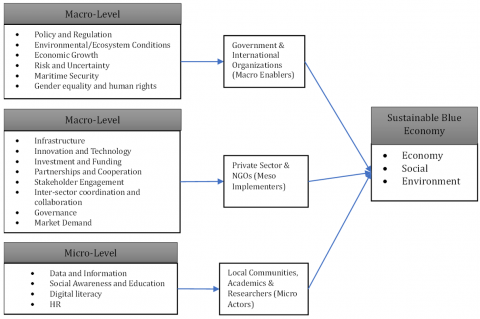
Stakeholders play distinct yet interconnected roles in maintaining this causal flow. Governments and international organizations act as macro-level enablers by designing regulatory and financial frameworks. Private sectors and NGOs occupy the meso-level space, translating governance goals into concrete actions through innovation and community programs. Local communities, academics, and researchers operate primarily at the micro level, where adoption, knowledge generation, and behavioral change occur. These interactions form a bidirectional system in which top-down policy interventions and bottom-up community practices continually reinforce each other, shaping the long-term trajectory of a sustainable blue economy.
This causal and directional model suggests that sustainable outcomes depend on the alignment and feedback consistency across levels: policies (macro) create enabling environments, institutions and technologies (meso) operationalize them, and community behavior (micro) sustains the outcomes. Disruption in one level—such as weak governance or low public participation—can weaken the entire system, emphasizing the importance of integrated, multi-stakeholder governance.
Figure 7. Empirical model: Directional linkages among determinant levels and stakeholder roles in sustainable blue economy
Figure 7 illustrates causal and directional linkages among macro, meso, and micro determinant levels and stakeholder roles. The model highlights top-down policy influence and bottom-up feedback loops that collectively shape the sustainability trajectory of the blue economy.
While the three-level determinant structure proposed in this study may appear conceptually straightforward, it provides a context-specific adaptation that complements established analytical frameworks such as DPSIR (Driver–Pressure–State–Impact–Response) and SES (Social–Ecological Systems). The DPSIR model offers a linear cause–and–effect perspective focused on environmental pressures and responses, whereas the SES framework emphasizes the reciprocal interactions between ecological systems and social institutions. In contrast, the macro–meso–micro model applied in this study integrates both system-level and actor-level dimensions, linking policy and governance mechanisms (macro), institutional coordination and innovation (meso), and community capacity and behavioural adaptation (micro) within a unified analytical lens. This structure not only aligns with the causal logic embedded in DPSIR and SES but also extends their application by explicitly incorporating stakeholder roles and governance functions as integral components of blue economy sustainability. Thus, the model contributes a stakeholder-oriented synthesis that bridges conceptual frameworks with actionable insights for policy and strategic planning in diverse coastal and marine contexts.
Previous research provides a clear overview of the blue economy landscape, highlighting diverse approaches, geographical contexts, and key themes. These findings should be continuously integrated into policies and practices that support ocean and coastal sustainability. Future research could focus on stakeholder collaboration to address existing challenges and better harness the potential of the blue economy. The determinant factors for a sustainable blue economy are categorized into three interconnected levels: macro, meso, and micro. Macro factors offer the policy and regulatory framework, meso factors support technical and managerial implementation, while micro factors ensure policies are translated into concrete actions. Alignment across these levels is essential to achieving balanced economic, social, and environmental outcomes. As these factors interact and influence the effectiveness of blue economy initiatives, they must be considered in strategy planning and implementation. This article emphasizes that the success of a sustainable blue economy relies on a holistic and collaborative approach involving all stakeholders.
This research has several limitations: (1) Data limitations, as it relies solely on published literature, potentially overlooking empirical data from underrepresented regions or practices; (2) Subjective bias in literature analysis, where the limited scope of sources may influence content selection and interpretation; (3) Publication bias, since the review primarily includes English-language sources, which may exclude relevant studies published in local or non-English contexts; (4) Conceptual overlap among factor levels, where certain constructs such as governance, community engagement, and innovation may intersect across analytical dimensions, potentially blurring categorical boundaries; and (5) Lack of empirical approach, as the study does not include direct insights from stakeholders such as policymakers, investors, or local communities.
To address these limitations, future research should: (1) incorporate empirical data through interviews, surveys, or field case studies to capture stakeholder perspectives; (2) adopt a multidisciplinary approach that integrates economic, environmental, social, and technological aspects; (3) expand geographic coverage to include developing countries and coastal areas with unique challenges and opportunities; and (4) broaden data inclusion criteria to consider non-English and gray literature, while refining conceptual frameworks to minimize overlap and enhance analytical clarity.
The authors would like to thank Universitas Semarang and LPPM USM for funding and support.
[1] Wenhai, L., Cusack, C., Baker, M., Tao, W., et al. (2019). Successful blue economy examples with an emphasis on international perspectives. Frontiers in Marine Science, 6: 261. https://doi.org/10.3389/fmars.2019.00261
[2] Sailaja, K. (2019). Sustainable blue economy-opportunities and challenges. International Journal of Social Science and Economic Research, 4(3): 1630-1637. https://ijsser.org/files_2019/ijsser_04__119.pdf.
[3] Anand, A., Argade, P., Barkemeyer, R., Salignac, F. (2021). Trends and patterns in sustainable entrepreneurship research: A bibliometric review and research agenda. Journal of Business Venturing, 36(3): 106092. https://doi.org/10.1016/j.jbusvent.2021.106092
[4] Spalding, M.J. (2016). The new blue economy: The future of sustainability. Journal of Ocean and Coastal Economics, 2(2): 8. https://doi.org/10.15351/2373-8456.1052
[5] Cosimato, S., Vona, R. (2022). Blue economy potential for shaping a marine Entrepreneurship Ecosystem: The case of the Adriatic Sea. In EISIC 25th Conference Proceedings. https://sites.les.univr.it/eisic/wp-content/uploads/2022/10/Cosimato-Vona.pdf.
[6] Figueiredo, R., Soliman, M., Al-Alawi, A.N. (2023). Deep blue entrepreneurship: Ocean venturing and infinite opportunity. In Bleeding-Edge Entrepreneurship: Digitalization, Blockchains, Space, the Ocean, and Artificial Intelligence, pp. 5-17. https://doi.org/10.1108/S2040-724620230000016002
[7] Niner, H.J., Barut, N.C., Baum, T., Diz, D., et al. (2022). Issues of context, capacity and scale: Essential conditions and missing links for a sustainable blue economy. Environmental Science & Policy, 130: 25-35. https://doi.org/10.1016/j.envsci.2022.01.001
[8] Habip, E., Dogan, E. (2022). Blue entrepreneurship: A new agenda for sustainability of seas and oceans. Yönetim ve Ekonomi Araştırmaları Dergisi, 20: 159-177. https://doi.org/10.11611/yead.1182695
[9] Brand, U. (2012). Green economy – the next oxymoron? No lessons learned from failures of implementing sustainable development. GAIA - Ecological Perspectives for Science and Society, 21: 28-32. https://doi.org/10.14512/gaia.21.1.9
[10] Klinger, D.H., Maria Eikeset, A., Davíðsdóttir, B., Winter, A.-M., Watson, J.R. (2018). The mechanics of blue growth: Management of oceanic natural resource use with multiple, interacting sectors. Marine Policy, 87: 356-362. https://doi.org/10.1016/j.marpol.2017.09.025
[11] Lee, K.H., Noh, J., Khim, J.S. (2020). The blue economy and the United Nations’ sustainable development goals: Challenges and opportunities. Environment International, 137: 105528. https://doi.org/10.1016/j.envint.2020.105528
[12] Cochrane, K.L. (2021). Reconciling sustainability, economic efficiency and equity in marine fisheries: Has there been progress in the last 20 years? Fish and Fisheries, 22(2): 298-323. https://doi.org/10.1111/faf.12521
[13] Okafor-Yarwood, I., Kadagi, N.I., Miranda, N.A.F., Uku, J., Elegbede, I.O., Adewumi, I.J. (2020). The blue economy-cultural livelihood-ecosystem conservation triangle: The African experience. Frontiers in Marine Science, 7: 586. https://doi.org/10.3389/fmars.2020.00586
[14] Wali, A., Alvira, D., Tallman, P.S., Ravikumar, A., Macedo, M.O. (2017). A new approach to conservation: Using community empowerment for sustainable well-being. Ecology and Society, 22(4): 6. https://doi.org/10.5751/ES-09598-220406
[15] Bennett, N.J., Cisneros-Montemayor, A.M., Blythe, J., Silver, J.J., et al. (2019). Towards a sustainable and equitable blue economy. Nature Sustainability, 2(11): 991-993. https://doi.org/10.1038/s41893-019-0404-1
[16] Sauer, P.C., Seuring, S. (2023). How to conduct systematic literature reviews in management research: A guide in 6 steps and 14 decisions. Review of Managerial Science, 17(5): 1899-1933. https://doi.org/10.1007/s11846-023-00668-3
[17] Kraus, S., Breier, M., Lim, W.M., Dabić, M., Kumar, S., et al. (2022). Literature reviews as independent studies: Guidelines for academic practice. Review of Managerial Science, 16: 2577-2595. https://doi.org/10.1007/s11846-022-00588-8
[18] Paul, J., Lim, W.M., O’Cass, A., Hao, A.W., Bresciani, S. (2021). Scientific procedures and rationales for systematic literature reviews (SPAR-4-SLR). International Journal of Consumer Studies, 45(4): O1-O16. https://doi.org/10.1111/ijcs.12695
[19] Cisneros-Montemayor, A.M., Moreno-Báez, M., Reygondeau, G., Cheung, W.W.L., et al. (2021). Enabling conditions for an equitable and sustainable blue economy. Nature, 591(7850): 396-401. https://doi.org/10.1038/s41586-021-03327-3
[20] Sarker, S., Bhuyan, M.A.H., Rahman, M.M., Islam, M.A., Hossain, M.S., Basak, S.C., Islam, M.M. (2018). From science to action: Exploring the potentials of Blue Economy for enhancing economic sustainability in Bangladesh. Ocean & Coastal Management, 157: 180-192. https://doi.org/10.1016/j.ocecoaman.2018.03.001
[21] Phelan, A., Ruhanen, L., Mair, J. (2020). Ecosystem services approach for community-based ecotourism: Towards an equitable and sustainable blue economy. Journal of Sustainable Tourism, 28(10): 1665-1685. https://doi.org/10.1080/09669582.2020.1747475
[22] Karani, P., Failler, P. (2020). Comparative coastal and marine tourism, climate change, and the blue economy in African Large Marine Ecosystems. Environmental Development, 36: 100572. https://doi.org/10.1016/j.envdev.2020.100572
[23] Sarwar, S. (2022). Impact of energy intensity, green economy and blue economy to achieve sustainable economic growth in GCC countries: Does Saudi Vision 2030 matters to GCC countries. Renewable Energy, 191: 30-46. https://doi.org/10.1016/j.renene.2022.03.122
[24] Llewellyn, L.E., English, S., Barnwell, S. (2016). A roadmap to a sustainable Indian Ocean blue economy. Journal of the Indian Ocean Region, 12(1): 52-66. https://doi.org/10.1080/19480881.2016.1138713
[25] Voyer, M., Farmery, A.K., Kajlich, L., Vachette, A., Quirk, G. (2020). Assessing policy coherence and coordination in the sustainable development of a Blue Economy. A case study from Timor Leste. Ocean & Coastal Management, 192: 105187. https://doi.org/10.1016/j.ocecoaman.2020.105187
[26] van Wyk, J.A. (2015). Defining the blue economy as a South African strategic priority: Toward a sustainable 10th province? Journal of the Indian Ocean Region, 11(2): 153-169. https://doi.org/10.1080/19480881.2015.1066555
[27] Novaglio, C., Bax, N., Boschetti, F., Emad, G.R., et al. (2022). Deep aspirations: Towards a sustainable offshore Blue Economy. Reviews in Fish Biology and Fisheries, 32(1): 209-230. https://doi.org/10.1007/s11160-020-09628-6
[28] Dijkstra, H., van Beukering, P., Brouwer, R. (2022). Marine plastic entrepreneurship; Exploring drivers, barriers and value creation in the blue economy. Sustainable Technology and Entrepreneurship, 1(3): 100018. https://doi.org/10.1016/j.stae.2022.100018
[29] Hossain, F. (2021). Adaptation measures (AMs) and mitigation policies (MPs) to climate change and sustainable blue economy: A global perspective. Journal of Water and Climate Change, 12(5): 1344-1369. https://doi.org/10.2166/wcc.2020.152
[30] Alshubiri, F. (2020). Editorial: The blue economy of the GCC region: Sustainability and security. Marine Policy, 116: 103843. https://doi.org/10.1016/j.marpol.2020.103843
[31] Gerhardinger, L.C., Andrade, M.M. de, Corrêa, M.R., Turra, A. (2020). Crafting a sustainability transition experiment for the Brazilian blue economy. Marine Policy, 120: 104157. https://doi.org/10.1016/j.marpol.2020.104157
[32] Christiansen, J. (2021). Fixing fictions through blended finance: The entrepreneurial ensemble and risk interpretation in the Blue Economy. Geoforum, 120: 93-102. https://doi.org/10.1016/j.geoforum.2021.01.013
[33] Rasyid, S.B.A., Purnomo, E.P., Salsabila, L., Fathani, A.T. (2022). Discurse analysis of online news on green economy an blue economy for sustainable development: The case in Indonesia. Fronteira: Journal of Social, Technological and Environmental Science, 11(1): 165-180. https://doi.org/10.21664/2238-8869.2022v11i1.p165-180
[34] Markandya, A. (2022). Marine ecosystems and the blue economy: Policies for their sustainable exploitation. The Blue Economy: An Asian Perspective, 37-55. https://doi.org/10.1007/978-3-030-96519-8_3
[35] Yilmaz, Ö. (2020). Analysis of fisheries support estimate for sustainable blue economy. Yuzuncu Yıl University Journal of Agricultural Sciences, 30(4): 772-780. https://doi.org/10.29133/yyutbd.698092
[36] De Luca Peña, L.V., Dewulf, J., Staes, J., Moulaert, I., Vandamme, S., Heymans, J.J., Taelman, S.E. (2024). Assessing the sustainability of Blue Economy activities using an ecosystem and life cycle-based approach: Possibilities, challenges and implications for an informed policy making. Ocean & Coastal Management, 257: 107360. https://doi.org/10.1016/j.ocecoaman.2024.107360
[37] Green Sea, K., Rajakumar, M., Umamaheswari, T., Sujath Kumar, N.V., Jawahar, P., Keer, N.R., Yadav, R. (2021). Ecosystem service approach for community-based management towards sustainable blue economy. The Indian Journal of Animal Sciences, 91(12): 1122-1126. https://doi.org/10.56093/ijans.v91i12.119843
[38] Senaratne, M., Zimbroff, A., Stevens, J.T. (2021). An instrument to assess blue economy entrepreneurship ecosystems: A case study from the Seychelles. Journal of the Indian Ocean Region, 17(2): 205-223. https://doi.org/10.1080/19480881.2021.1969516
[39] Appiah, M.K., Ameko, E., Asiamah, T.A., Duker, R.Q. (2023). Blue economy investment and sustainability of Ghana’s territorial waters: An application of structural equation modelling. International Journal of Sustainable Engineering, 16(1): 1-15. https://doi.org/10.1080/19397038.2023.2195422
[40] Sarangi, U. (2023). Blue economy coastal resources: Economic valuation and governance for achieving sustainable development goals. Journal of Ocean and Coastal Economics, 10(1): 3. https://doi.org/10.15351/2373-8456.1132
[41] Poza-Vilches, F., Arjona-Romero, J.J., Martín-Jaime, J.J. (2023). Diagnosis of blue and sustainable entrepreneurship in university education in Spain: A case study. Journal of Teacher Education for Sustainability, 25: 98-115. https://doi.org/10.2478/jtes-2023-0007
[42] Hong Nham, N.T., Mai Hoa, T.T., Ha, L.T. (2023). Influences of digitalization on sustaining marine minerals: A path toward sustainable blue economy. Ocean & Coastal Management, 239: 106589. https://doi.org/10.1016/j.ocecoaman.2023.106589
[43] Cisneros-Montemayor, A.M. (2019). A blue economy: Equitable, sustainable, and viable development in the world’s oceans. In Predicting Future Oceans: Sustainability of Ocean and Human Systems Amidst Global Environmental Change. Elsevier, pp. 395-404. https://doi.org/10.1016/B978-0-12-817945-1.00034-4
[44] Nikčević, J., Škurić, M. (2021). A contribution to the sustainable development of maritime transport in the context of blue economy: The case of Montenegro. Sustainability, 13(6): 3079. https://doi.org/10.3390/su13063079
[45] Fernández Otero, R.M., Bayliss-Brown, G.A., Papathanassiou, M. (2019). Ocean literacy and knowledge transfer synergies in support of a sustainable blue economy. Frontiers in Marine Science, 6: 646. https://doi.org/10.3389/fmars.2019.00646
[46] Whisnant, R. (2019). Investing in the new blue economy: The changing role of international development organizations in catalyzing private sector investment in support of regional strategic action programmes for the sustainable development of coasts and oceans. Journal of Ocean and Coastal Economics, 6(1): 8. https://doi.org/10.15351/2373-8456.1116
[47] Wibowo, H.A., Indarti, N. (2020). Blue-collar workers entrepreneurial intentions and the extended theory of reasoned action: Incorporating SEM and person-item map analysis. Journal of Indonesian Economy & Business, 35(3): 204-235.
[48] Fang, X., Zou, J., Wu, Y., Zhang, Y., Zhao, Y., Zhang, H. (2021). Evaluation of the sustainable development of an island “blue economy”: A case study of Hainan, China. Sustainable Cities and Society, 66: 102662. https://doi.org/10.1016/j.scs.2020.102662
[49] Hossain, M.S., Sharifuzzaman, S.M., Nobi, M.N., Chowdhury, M.S.N., et al. (2021). Seaweeds farming for sustainable development goals and blue economy in Bangladesh. Marine Policy, 128: 104469. https://doi.org/10.1016/j.marpol.2021.104469
[50] Ahmed, Z.U., Hasan, O., Rahman, M.M., Akter, M., Rahman, M.S., Sarker, S. (2022). Seaweeds for the sustainable blue economy development: A study from the south east coast of Bangladesh. Heliyon, 8(3): e09079. https://doi.org/10.1016/j.heliyon.2022.e09079
[51] Campanati, C., Willer, D., Schubert, J., Aldridge, D.C. (2022). Sustainable intensification of aquaculture through nutrient recycling and circular economies: More fish, less waste, blue growth. Reviews in Fisheries Science & Aquaculture, 30(2): 143-169. https://doi.org/10.1080/23308249.2021.1897520
[52] Karani, P., Failler, P., Gilau, A.M., Ndende, M., Diop, S.T. (2022). Africa blue economy strategies integrated in planning to achieve sustainable development at national and regional economic communities (RECs). Journal of Sustainability Research, 4(3): e220011. https://doi.org/10.20900/jsr20220011
[53] Nham, N.T.H., Ha, L.T. (2023). The role of financial development in improving marine living resources towards sustainable blue economy. Journal of Sea Research, 195: 102417. https://doi.org/10.1016/j.seares.2023.102417
[54] Knol-Kauffman, M., Nielsen, K.N., Sander, G., Arbo, P. (2023). Sustainability conflicts in the blue economy: Planning for offshore aquaculture and offshore wind energy development in Norway. Maritime Studies, 22(4): 47. https://doi.org/10.1007/s40152-023-00335-z
[55] Pace, L.A., Saritas, O., Deidun, A. (2023). Exploring future research and innovation directions for a sustainable blue economy. Marine Policy, 148: 105433. https://doi.org/10.1016/j.marpol.2022.105433
[56] Pranita, D., Sarjana, S., Musthofa, B.M., Kusumastuti, H., Rasul, M.S. (2023). Blockchain technology to enhance integrated blue economy: A case study in strengthening sustainable tourism on smart islands. Sustainability, 15(6): 5342. https://doi.org/10.3390/su15065342
[57] Brito, J.A.F., Nguyen, T.V., Kristófersson, D.M. (2024). Evaluating the sustainability and potential of the blue economy: A bioeconomic and input–output analysis of the fisheries sector in Cape Verde. Ocean & Coastal Management, 250: 107042. https://doi.org/10.1016/j.ocecoaman.2024.107042
[58] Maskaeva, A., Failler, P., Cowaloosur, H., Lallemand, P., Mang’ena, J. (2024). Assessment of socioeconomic and ecosystem services of the blue economy in Tanzania using the UNECA’s Blue Economy Valuation Toolkit. Marine Policy, 159: 105920. https://doi.org/10.1016/j.marpol.2023.105920
[59] Pace, L.A., Borch, K., Deidun, A. (2023). Bridging knowledge gaps towards 2030: The use of foresight for the strategic management of a sustainable blue economy. Sustainability, 15(13): 10026. https://doi.org/10.3390/su151310026
[60] Philip, O., Odote, C., Kibugi, R. (2020). Integrating marine spatial planning in governing Kenya’s land-sea interface for a sustainable blue economy. Law, Environment and Development Journal, 16: 178-194. https://doi.org/10.25501/SOAS.00033484
[61] Ovchynnykova, O., Martinkienė, J., Navickas, V. (2024). Enhancing global sustainability: The role of the blue economy in preserving natural capital. Challenges in Sustainability, 12(1): 65-79. https://doi.org/10.56578/cis120105
[62] Liang, J., Yin, Z., Yang, J., Li, Y., Xu, M., Li, J., Yang, M., Niu, L. (2022). Bibliometrics and visualization analysis of research in the field of sustainable development of the blue economy (2006–2021). Frontiers in Marine Science, 9: 936612. https://doi.org/10.3389/fmars.2022.936612
[63] Germond-Duret, C. (2022). Framing the blue economy: Placelessness, development and sustainability. Development and Change, 53(2): 308-334. https://doi.org/10.1111/dech.12703
[64] Appiah, M.K., Sam, A., Twum, E., Godslove, E. (2023). Modelling the influencing of green entrepreneurship orientation on sustainable firm performance: A moderated mediation model. Economic Research-Ekonomska Istrazivanja, 36(2): 2179094. https://doi.org/10.1080/1331677X.2023.2179094
[65] Spaniol, M.J., Hansen, H. (2021). Electrification of the seas: Foresight for a sustainable blue economy. Journal of Cleaner Production, 322: 128988. https://doi.org/10.1016/j.jclepro.2021.128988
[66] Lechuga-Jimenez, C., Barroso, M.B., Alastor, E., Tójar-Hurtado, J.C. (2024). Promoting social and blue entrepreneurship and sustainability skills in higher education by transversal competencies. Cogent Education, 11(1): 2309412. https://doi.org/10.1080/2331186X.2024.2309412
[67] Andriamahefazafy, M., Bailey, M., Sinan, H., Kull, C.A. (2020). The paradox of sustainable tuna fisheries in the Western Indian Ocean: Between visions of blue economy and realities of accumulation. Sustainability Science, 15(1): 75-89. https://doi.org/10.1007/s11625-019-00751-3
[68] Valenza, G., Zoppelletto, A., Fazio, G. (2023). Family SMEs and managerial approaches to sustainability in the blue economy. Journal of Management & Organization, 30(3): 521-544. https://doi.org/10.1017/jmo.2023.32
[69] Kyvelou, S.S., Ierapetritis, D.G., Chiotinis, M. (2023). The future of fisheries co-management in the context of the sustainable blue economy and the green deal: There is no green without blue. Sustainability, 15(10): 7784. https://doi.org/10.3390/su15107784
[70] Pournara, A., Sakellariadou, F., Kitsiou, D. (2023). Toward a sustainable blue economy in the coastal zone: Case study of an industrialized coastal ecosystem in Greece. Sustainability, 15(14): 11333. https://doi.org/10.3390/su151411333
[71] Geng, B., Wu, D., Zhang, C., Xie, W., Mahmood, M.A., Ali, Q. (2024). How can the blue economy contribute to inclusive growth and ecosystem resources in Asia? A comparative analysis. Sustainability, 16(1): 429. https://doi.org/10.3390/su16010429
[72] Thompson, B.S. (2022). Blue bonds for marine conservation and a sustainable ocean economy: Status, trends, and insights from green bonds. Marine Policy, 144: 105219. https://doi.org/10.1016/j.marpol.2022.105219
[73] Heidkamp, C.P., Garland, M., Krak, L. (2023). Enacting a just and sustainable blue economy through transdisciplinary action research. The Geographical Journal, 189(2): 246-258. https://doi.org/10.1111/geoj.12410
[74] Benzaken, D., Voyer, M., Pouponneau, A., Hanich, Q. (2022). Good governance for sustainable blue economy in small islands: Lessons learned from the Seychelles experience. Frontiers in Political Science, 4: 1040318. https://doi.org/10.3389/fpos.2022.1040318
[75] Dziura, B., Cernota, M. (2016). Blue economy: The new model for sustainable development. Актуальні проблеми економіки, (7): 34-38.
[76] Hoerterer, C., Schupp, M.F., Benkens, A., Nickiewicz, D., Krause, G., Buck, B.H. (2020). Stakeholder perspectives on opportunities and challenges in achieving sustainable growth of the blue economy in a changing climate. Frontiers in Marine Science, 6: 795. https://doi.org/10.3389/fmars.2019.00795
[77] Meghla, H.A., Alam, M.N., Rifat, S.M., Masroor, I. (2024). Sea of opportunities: Unravelling the impact of cluster-based blue entrepreneurship and blue technology penetration on seaweed export propensity. Environment, Development and Sustainability. https://doi.org/10.1007/s10668-024-05349-z
[78] Pagano, M., Fernetti, M., Busetti, M., Ghribi, M., Camerlenghi, A. (2023). Multicriteria GIS-based analysis for the evaluation of the vulnerability of the marine environment in the Gulf of Trieste (north-eastern Adriatic Sea) for sustainable blue economy and maritime spatial planning. People and Nature, 5(6): 2006-2025. https://doi.org/10.1002/pan3.10537
[79] Elsherif, M. (2024). Nexus between blue economy, renewable energy and environmental sustainability in the MENA region: Evidence from panel threshold regression. International Journal of Energy Economics and Policy, 14(4): 169-185. https://doi.org/10.32479/ijeep.16125
[80] Jeffery, N.W., Lehnert, S.J., Kess, T., Layton, K.K.S., Wringe, B.F., Stanley, R.R.E. (2022). Application of omics tools in designing and monitoring marine protected areas for a sustainable blue economy. Frontiers in Genetics, 13: 886494. https://doi.org/10.3389/fgene.2022.886494