Udin Udin | Suteera Chanthes* | Radyan Dananjoyo
© 2025 The authors. This article is published by IIETA and is licensed under the CC BY 4.0 license (http://creativecommons.org/licenses/by/4.0/).
OPEN ACCESS
In response to growing environmental challenges, Green transformational leadership (GTL) has become a key driver of sustainable business practices and improved environmental performance. This study offers a comprehensive bibliometric analysis to map the intellectual landscape, research trends, and emerging themes in GTL and environmental performance. A total of 65 Scopus-indexed documents published between 2020 and April 2025 were analyzed using VOSviewer software to identify influential publications, prominent authors, key institutions, and leading countries shaping this evolving field. Six main thematic clusters emerge: strategic environmental management, employee green behavior, innovation, knowledge management, dynamic capabilities, and the link between GTL and environmental performance. The findings emphasize GTL’s pivotal role in fostering a green organizational culture, driving innovation, and embedding sustainability within core business strategies. Furthermore, the study highlights the increasing recognition of environmental stewardship as both a regulatory obligation and a source of competitive advantage and long-term profitability. In addition, this research provides a roadmap for future studies and offers practical guidance for leaders and organizations aiming to integrate environmental sustainability into their strategies. By deepening our understanding of GTL’s influence on environmental outcomes, this study contributes to both academic knowledge and the broader goal of global sustainability.
green transformational leadership, environmental performance, bibliometric analysis, VOSviewer
In recent decades, sustainability and environmental performance have become critical priorities for organizations, policymakers, and society. Growing concerns over resource depletion, climate change, and environmental degradation have driven a shift toward more sustainable and eco-friendly business practices. Companies worldwide now face mounting pressure to embed environmental sustainability into their core operations—not only to meet regulatory requirements but also to gain competitive advantages [1] and fulfill corporate social responsibilities [2]. In this context, leadership plays a pivotal role in shaping organizational commitment to sustainability, influencing employee behaviors, and fostering an environmentally responsible corporate culture [3]. Among various leadership styles, green transformational leadership (GTL) has gained prominence as a key driver in enhancing environmental performance and sustainability practices [4, 5].
Transformational leadership, originally conceptualized by Bass in 1985, is characterized by four key dimensions [6, 7]: idealized influence (i.e., leaders act as role models and are admired, respected, and trusted by followers), inspirational motivation (i.e., leaders articulate a compelling vision that inspires and motivates followers), intellectual stimulation (i.e., leaders encourage innovation and creativity by challenging assumptions and soliciting followers’ ideas), and individualized consideration (leaders provide personalized encouragement and support to followers). It inspires followers to transcend self-interest for the greater good and stimulates innovation and proactive behavior [8]. While transformational leadership has been extensively theorized since Bass [9], GTL represents a contextualized application of this framework within the domain of environmental sustainability [10]. Leaders who adopt a green transformational approach emphasize eco-friendly values, cultivate environmental awareness, and mobilize collective efforts toward sustainable development [11]. By serving as role models, they inspire employees to engage in environmentally responsible behaviors, thereby fostering a green organizational culture [4].
Understanding the role of GTL is particularly crucial in today’s rapidly evolving global landscape, where businesses are increasingly held accountable for their environmental impact. As organizations strive to align with the United Nations Sustainable Development Goals (SDGs) and corporate Environmental, Social, and Governance (ESG) standards, the need for transformational leadership that prioritizes sustainability has never been more pronounced [11]. Leaders who integrate environmental concerns into their strategic vision not only enhance their organization’s reputation and legitimacy but also drive long-term financial and ecological benefits [12]. Despite the growing recognition of GTL as a significant factor in sustainability-driven organizations, existing studies exhibit several limitations. Many research efforts have focused on theoretical discussions without empirical validation [11, 13], while others have explored GTL within limited industrial contexts, such as manufacturing or energy sectors [14, 15], overlooking its applicability in service industries, SMEs, and emerging economies [16]. Additionally, methodological inconsistencies, such as variations in measurement scales and study designs, hinder the generalizability of findings across different cultural and organizational settings. This study, therefore, employs a bibliometric approach to map the intellectual structure of GTL and environmental performance, identifying key research themes and gaps for future investigation. By analyzing academic trends, influential publications, and emerging themes, the study aims to provide valuable insights for advancing research in this field. Specifically, this study addresses the following key questions:
How has the academic interest in GTL evolved over time?
What are the most influential publications, authors, and institutions in this field?
What are the dominant themes and emerging research trends related to GTL and environmental performance?
What gaps exist in the current literature, and what directions should future research take?
This research is essential for several reasons. First, it consolidates the existing knowledge base on GTL and environmental performance, offering a comprehensive overview of past and present scholarly contributions. Second, it provides empirical evidence on the theoretical foundations that underpin the field, helping scholars and practitioners better understand the mechanisms through which leadership influences sustainability outcomes. Third, it identifies key research gaps, enabling future studies to build upon unresolved questions and methodological shortcomings. Finally, the findings of this study have practical implications for policymakers, corporate leaders, and sustainability advocates by highlighting leadership strategies that effectively enhance environmental performance.
2.1 Introduction to green transformational leadership
GTL has emerged as a critical leadership style in response to global sustainability challenges. Rooted in transformational leadership theory [9], GTL integrates environmental concerns into organizational leadership, inspiring employees to adopt eco-friendly behaviors [10, 17]. Unlike traditional transformational leadership, which emphasizes motivation, vision, and individual development, GTL specifically drives environmental consciousness, sustainability-oriented innovation, and corporate environmental responsibility [18]. Several studies have demonstrated that leaders with a green transformational approach influence employees’ pro-environmental behaviors, enhance corporate green performance, and strengthen sustainable business practices [19, 20]. By instilling a strong environmental vision and promoting eco-centric values, green transformational leaders encourage employees to go beyond regulatory compliance and actively engage in environmental initiatives.
2.2 Theoretical foundations of green transformational leadership
GTL is grounded in multiple leadership theories, including transformational leadership theory, corporate sustainability frameworks, and green organizational behavior. Bass and Avolio’s [21] transformational leadership model serves as the primary theoretical basis, where GTL is characterized by four dimensions [4, 22]: (1) Green idealized influence – Leaders act as role models by embodying environmentally responsible behaviors and values, inspiring employees to do the same; (2) Green inspirational motivation – Leaders articulate a compelling vision of sustainability, motivating employees to adopt eco-friendly practices and align their goals with environmental objectives; (3) Green intellectual stimulation – Leaders encourage innovative thinking and empower employees to develop and implement creative solutions to environmental challenges; (4) Green individualized consideration – Leaders offer personalized support and mentorship, fostering employees’ engagement in sustainability by developing their environmental competencies and addressing their specific needs.
The Resource-Based View (RBV) theory [23] underscores the strategic importance of GTL in advancing sustainability by fostering distinctive green capabilities. GTL not only cultivates a green organizational culture and enhances employees’ environmental motivation but also improves overall environmental performance [4]. Empirical studies support this RBV-based perspective, revealing that GTL enables organizations to develop valuable, rare, inimitable, and non-substitutable (VRIN) resources—such as green employee behavior and pro-environmental culture—which ultimately contribute to sustained competitive advantage. For example, Singh et al. [19] and Awan et al. [24] demonstrate that GTL-driven green HR practices play a critical role in building these strategic capabilities.
By integrating transformational leadership theory with the RBV, a more comprehensive understanding of GTL’s impact on environmental performance emerges. Transformational leadership explains the mechanisms through which leaders influence employee behavior and organizational values—by articulating a compelling vision, modeling sustainable practices, and fostering intrinsic motivation—thereby encouraging pro-environmental behavior and innovation [25, 26]. Meanwhile, the RBV elucidates the strategic significance of these behaviors: they help organizations accumulate VRIN resources such as green organizational culture, knowledge, and capabilities [27, 28].
2.3 Green transformational leadership and environmental performance
The relationship between GTL and environmental performance has been widely examined in sustainability research. Environmental performance refers to an organization’s ability to minimize environmental harm while maximizing sustainability efforts [29], including carbon footprint reduction, energy efficiency, and waste management [19]. Studies consistently show that GTL positively influences environmental performance across various sectors. For example, in small and medium-sized enterprises (SMEs) in Indonesia and food enterprises in Saudi Arabia, GTL fosters pro-environmental behaviors among employees, thereby enhancing the organization’s overall environmental outcomes [20, 30].
GTL directly impacts environmental performance by cultivating a culture focused on green innovation and sustainability [31, 32]. Leaders who communicate environmental values and integrate sustainability into corporate strategy enhance green performance metrics. Moreover, empirical findings suggest that GTL enhances environmental performance through multiple pathways: (1) Leaders who model environmentally conscious behaviors and inspire their followers to adopt sustainability principles significantly promote green practices among employees [26]; (2) Organizational policies, resources, and initiatives serve as mediators between GTL and employee green behavior (EGB), highlighting the crucial role of organizational support in fostering environmentally responsible actions; and (3) Leaders who prioritize environmental issues and share environmental knowledge can encourage green advocacy by motivating employees to engage in green behavior through discussions and knowledge sharing [33].
This study utilized bibliometric analysis to examine the development, trends, and intellectual structure of research on GTL and its connection to environmental performance. The bibliometric approach is well-suited for systematically analyzing academic literature, identifying key themes, influential publications, co-authorship networks [34], and potential future research directions [35]. VOSviewer version 1.6.20 was employed for the analysis, facilitating the visualization of co-authorship networks, keyword co-occurrence, citation patterns, and thematic clusters [36]. The software generates density maps and network visualizations that reveal intellectual connections and research hotspots within the field.
Data for this study were sourced from the Scopus database, a leading and reliable repository of peer-reviewed literature. Scopus was chosen for its extensive coverage of high-quality journals, especially in business, management, environmental sciences, and leadership studies. Using the keywords “Green Transformational Leadership” and “Environmental Performance,” an initial search in the Scopus database yielded 108 documents.
After limiting the publication period to 2020 through April 2025, the number of relevant documents slightly decreased to 106. This time filter was applied to focus on recent research trends within the past decade. The fact that only two documents were published before 2020 indicates that GTL is a relatively new yet rapidly emerging area of study. Further refinement of the search—targeting only works that explicitly examine the relationship between GTL and environmental performance—narrowed the results to 65 documents. Out of the 65 documents identified, 96.92% are articles (63 documents), and 3.08% are conference papers (2 documents). Additionally, 49.23% of the documents are open access (32 documents), with 35.38% having Gold access (23 documents), 12.31% having Green access (8 documents), 9.23% being Hybrid Gold access (6 documents), and 3.08% having Bronze access (2 documents).
Figure 1 illustrates the annual distribution of publications on GTL and environmental performance, revealing a consistent upward trend. In 2020, only 2 documents were published, increasing slightly to 4 in 2021. A more substantial rise occurred in 2022 with 10 publications, followed by 17 in 2023. The peak was reached in 2024 with 18 documents, before a slight decline to 14 in 2025. Overall, this pattern indicates growing scholarly interest in the topic, particularly over the last four years.
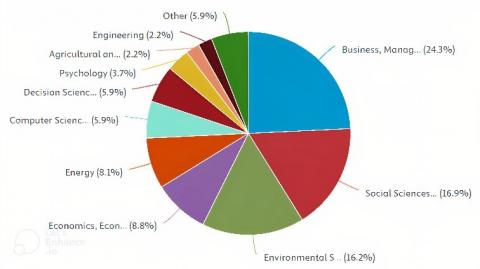
Figure 2 illustrates the distribution of documents on GTL and environmental performance across various subject areas. The highest number of publications is found in Business, Management, and Accounting (33), reflecting the strong relevance of the topic to organizational practices and leadership studies. This is followed by Social Sciences (23) and Environmental Science (22), highlighting the interdisciplinary nature of the research and its connection to sustainability and societal impact. Other notable subject areas include Economics, Econometrics, and Finance (12), Energy (11), Computer Science (8), and Decision Sciences (8), indicating the growing integration of leadership and environmental performance in diverse analytical and technological contexts. Additionally, a smaller number of publications appear in Psychology (5), Agricultural and Biological Sciences (3), Engineering (3), and Biochemistry, Genetics, and Molecular Biology (2), suggesting emerging interest from the natural sciences and behavioral disciplines. Fields with minimal representation—each with one document—include Arts and Humanities, Mathematics, Medicine, Multidisciplinary studies, Neuroscience, and Nursing. This distribution highlights a growing academic interest in the topic, particularly concentrated in the fields of business and environmental studies.
Figure 1. Documents by year in the field (2020-2025)
Figure 2. Documents by subject area in the field
Table 1 highlights the seven most cited scholarly articles on GTL and environmental performance. These studies reflect increasing academic interest in sustainable leadership and its impact on organizational environmental outcomes. Singh et al. [19] emphasized the critical role of GTL and green human resource management (GHRM) in driving environmental performance through innovation, garnering 1,284 citations. Other influential works, such as Riva et al. [37] and Hameed et al. [38], explore how green creativity mediates environmental outcomes, showing that leadership style and green knowledge foster innovation among employees.
Begum et al. [39] and Awan et al. [24] broaden the scope by linking green leadership to both product and process innovation in manufacturing, highlighting leadership and employee engagement as critical drivers of sustainable practices. Similarly, Hussain et al. [40] integrate corporate social responsibility (CSR) and environmental strategy, offering a holistic perspective on how organizational elements collectively influence environmental performance. Sun et al. [41] focus on small and medium enterprises (SMEs), demonstrating that the impact of GTL extends beyond large corporations and is equally vital for the sustainable growth of smaller firms. Together, these studies underscore the importance of GTL, strategic HR practices, and innovation in advancing sustainability. The recurring role of mediators such as green creativity, CSR, and environmental strategy reflects a nuanced but powerful relationship between leadership, employee behavior, and organizational environmental outcomes.
Table 2 presents the top seven academic journals publishing influential research on GTL and environmental performance. The selection is based on metrics such as the number of relevant documents published, CiteScore 2023, SCImago Journal Rank (SJR) 2023, and H-Index, reflecting both impact and scholarly credibility. Environmental Science and Pollution Research (Springer Nature) ranks first with four key articles and the highest H-Index (212), supported by a strong CiteScore (8.7) and SJR (1.006), indicating its broad reach and consistent citation impact in environmental research.
Frontiers in Psychology and Sustainability (Switzerland) follows, with two and four relevant documents, respectively. Although their CiteScores (5.3 and 6.8) are slightly lower, their high H-Index scores (212 and 207) highlight their long-term scholarly influence, particularly in interdisciplinary studies connecting psychology, leadership, and sustainability. Moreover, Business Strategy and the Environment stands out with the highest CiteScore (22.5) and SJR (3.666), despite publishing only two key articles. This reflects its high prestige and strong impact per article, positioning it as a leading journal for strategic sustainability topics.
Corporate Social Responsibility and Environmental Management (Wiley) maintains relevance with four publications, a solid CiteScore (17.2), and a robust SJR (2.201), establishing it as a reputable journal for integrated studies on CSR and environmental management. The final two journals, Economic Research-Ekonomska Istraživanja and Journal of Hospitality and Tourism Insights, reflect the growing interest in green leadership within the economics and hospitality sectors. Though their H-Indices (65 and 33) are more modest, their inclusion signals the diversification of publication outlets in this field.
Table 1. The top 7 most cited articles in the field
|
Rank |
Document title |
Authors |
Source |
Year |
Citations |
|
1 |
Green innovation and environmental performance: The role of green transformational leadership and green human resource management |
Singh, S.K., Del Giudice, M., Chierici, R., Graziano, D. |
Technological Forecasting and Social Change, 150: 119762 |
2020 |
1,284 |
|
2 |
Investigating the link between managers' green knowledge and leadership style, and their firms' environmental performance: The mediation role of green creativity |
Riva, F., Magrizos, S., Rubel, M.R.B. |
Business Strategy and the Environment, 30(7): 3228-3240 |
2021 |
118 |
|
3 |
How GHRM is related to green creativity? A moderated mediation model of green transformational leadership and green perceived organizational support |
Hameed, Z., Naeem, R.M., Hassan, M., Naeem, M., Nazim, M., Maqbool, A. |
International Journal of Manpower, 43(3): 595-613 |
2022 |
111 |
|
4 |
Achieving green product and process innovation through green leadership and creative engagement in manufacturing |
Begum, S., Xia, E., Ali, F., Awan, U., Ashfaq, M. |
Journal of Manufacturing Technology Management, 33(4): 656-674 |
2022 |
105 |
|
5 |
Stimulating environmental performance via green human resource management, green transformational leadership, and green innovation: A mediation-moderation model |
Awan, F.H., Dunnan, L., Jamil, K., Gul, R.F. |
Environmental Science and Pollution Research, 30(2): 2958-2976 |
2023 |
102 |
|
6 |
Exploring the mediating role of environmental strategy, green innovations, and transformational leadership: The impact of corporate social responsibility on environmental performance |
Hussain, Y., Abbass, K., Usman, M., Rehan, M., Asif, M. |
Environmental Science and Pollution Research, 29(51): 76864-76880 |
2022 |
80 |
|
7 |
Green transformational leadership and environmental performance in small and medium enterprises |
Sun, X., El Askary, A., Meo, M.S., Zafar, N.U.A., Hussain, B. |
Economic Research-Ekonomska Istrazivanja, 35(1): 5273-5291 |
2022 |
79 |
Table 2. The top 7 journals in the field
|
Rank |
Journal Name |
Publisher |
Documents |
Cite Score 2023 |
SJR 2023 |
H-Index |
|
1 |
Environmental Science and Pollution Research |
Springer Nature |
4 |
8.7 |
1.006 |
212 |
|
2 |
Frontiers in Psychology |
Frontiers Media S.A. |
2 |
5.3 |
0.800 |
212 |
|
3 |
Sustainability (Switzerland) |
Multidisciplinary Digital Publishing Institute (MDPI) |
4 |
6.8 |
0.672 |
207 |
|
4 |
Business Strategy and the Environment |
John Wiley & Sons |
2 |
22.5 |
3.666 |
173 |
|
5 |
Corporate Social Responsibility and Environmental Management |
John Wiley & Sons |
4 |
17.2 |
2.201 |
129 |
|
6 |
Economic Research Ekonomska Istrazivanja |
Taylor & Francis |
2 |
7.1 |
0.830 |
65 |
|
7 |
Journal of Hospitality and Tourism Insights |
Emerald Publishing |
2 |
6.3 |
0.974 |
33 |
Table 3. The top 7 authors in the field
|
Rank |
Author Name |
Affiliation |
Country |
Documents |
H-Index |
|
1 |
Van, H.V. |
University of Economics Ho Chi Minh City |
Viet Nam |
3 |
7 |
|
2 |
Dilanchiev, A. |
International Black Sea University |
Georgia |
2 |
21 |
|
3 |
Martínez-Falcó, J. |
University of Alicante |
Spain |
2 |
21 |
|
4 |
Sánchez-García, E. |
University of Alicante |
Spain |
2 |
20 |
|
5 |
Sahibzada, U.F. |
University for the Creative Arts |
United Kingdom |
2 |
19 |
|
6 |
Le, T.T. |
Ho Chi Minh City University of Economics and Finance |
Viet Nam |
2 |
15 |
|
7 |
Ai, F. |
Beijing Institute of Technology |
China |
2 |
7 |
Table 3 presents the top seven authors in the academic field, ranked from 1 to 7, with Van, H.V. leading the list. Despite having only three publications, Van, H.V. holds an H-Index of 7, indicating significant influence per publication. In contrast, Dilanchiev, A. and Martínez-Falcó, J. tie for second place with two publications each, but boast a much higher H-Index of 21, reflecting the high citation impact of their work.
The authors come from diverse countries, including Viet Nam, Georgia, Spain, the United Kingdom, and China. Spain is particularly notable with two authors, Martínez-Falcó, J. and Sánchez-García, E., from the University of Alicante, highlighting the institution’s strong presence in the field. Most authors are affiliated with universities, such as the University of Economics Ho Chi Minh City and the International Black Sea University. This representation from both emerging research regions (e.g., Viet Nam, Georgia) and established ones (e.g., the UK, Spain) reflects the global contribution to the field.
Table 4 identifies the leading academic institutions contributing to research on GTL and environmental performance. Notably, the institutions predominantly come from Asia and the Middle East, rather than traditional research powerhouses in North America or Western Europe. For example, the University of Economics Ho Chi Minh City (Vietnam) emerges as the most prolific contributor with five documents, despite not being ranked in the QS World University Ranking. This suggests that research productivity and institutional visibility on global rankings do not always align—especially in emerging research fields or regional contexts where institutions may focus on niche but increasingly important topics like green leadership or environmental performance.
Similarly, China is well represented, with both Beijing Institute of Technology and Jiangsu University contributing three publications each. Beijing Institute of Technology stands out for its strong QS rank (302), which reflects robust research infrastructure, international collaborations, and recognition across disciplines. Meanwhile, Jiangsu University, although equally productive, lacks a QS ranking in this table, highlighting a possible gap between actual research output and global recognition—perhaps due to language barriers, regional indexing practices, or limited international outreach.
Institutions like King Faisal University (Saudi Arabia) and the Azerbaijan State University of Economics represent a broader trend of growing academic engagement from the Middle East and Central Asia. King Faisal’s appearance on the list, with a QS ranking in the 761–770 range, indicates a university in transition: not yet globally elite, but steadily investing in research capacity and expanding its footprint in international literature. Azerbaijan State University of Economics, ranked 1001–1200, reinforces this trend, exemplifying how even modestly ranked institutions can play a meaningful role in contributing to globally relevant research themes—especially in fields that intersect with national policy priorities such as economic reform, sustainability, and innovation.
Table 4. The top 7 affiliations in the field
|
Rank |
Affiliation |
Country |
Documents |
QS World University Ranking |
|
1 |
University of Economics Ho Chi Minh City |
Viet Nam |
5 |
N/A |
|
2 |
Beijing Institute of Technology |
China |
3 |
302 |
|
3 |
Jiangsu University |
China |
3 |
N/A |
|
4 |
King Faisal University |
Saudi Arabia |
3 |
761-770 |
|
5 |
Azerbaijan State University of Economics |
Azerbaijan |
3 |
1001-1200 |
|
6 |
Chung-Ang University |
South Korea |
2 |
489 |
|
7 |
Mansoura University |
Egypt |
2 |
951-1000 |
Table 5 identifies the seven most active countries in the publication of research on GTL and environmental performance. The data reveals a clear geographic concentration, with Asian countries—particularly China, Pakistan, and several Southeast Asian nations—taking a leading role. This regional dominance underscores a significant shift in the global research landscape, where interest in GTL is expanding beyond traditional Western academic spheres. The growing scholarly output from developing and transitional economies suggests an increasing awareness of, and commitment to, sustainable leadership practices as key drivers of environmental performance. This trend may reflect both the urgent environmental challenges faced by these regions and a strategic embrace of green leadership as a means of fostering sustainable development.
China leads with 21 publications, firmly establishing itself at the forefront of global scholarship on GTL. Pakistan follows with 12 publications, reflecting a strong and expanding interest in green leadership, particularly within the framework of environmental sustainability. Vietnam ranks third with seven publications, demonstrating a notable commitment to this emerging research domain despite the country’s relatively modest research infrastructure. This trend highlights the increasing prominence of Asian nations in advancing the discourse on sustainable leadership practices.
Table 5. The top 7 countries in the field
|
Rank |
Country |
Documents |
|
1 |
China |
21 |
|
2 |
Pakistan |
12 |
|
3 |
Viet Nam |
7 |
|
4 |
Saudi Arabia |
6 |
|
5 |
Malaysia |
6 |
|
6 |
Indonesia |
6 |
|
7 |
United Kingdom |
4 |
Saudi Arabia, Malaysia, and Indonesia each contribute six publications, reflecting a growing strategic investment in environmental leadership research across the Global South. In contrast, the United Kingdom—despite producing only four publications—demonstrates a disproportionate influence in the field. This suggests that its relatively limited output may stem from a focus on high-impact, specialized contributions rather than a lack of research capacity or interest.
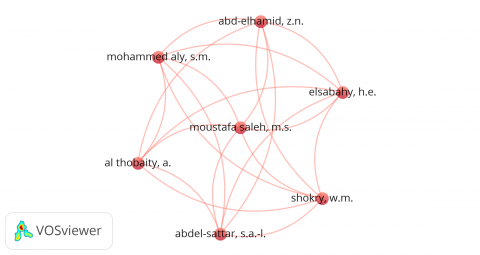
Figure 3. Author collaboration network in the field
Figure 3 highlights a core group of scholars who have significantly shaped research on GTL and environmental performance. Key contributors include Moustafa Saleh, M.S. (Shaqra University, Saudi Arabia), Mohammed Aly, S.M. (Port Said University, Egypt), Abd-Elhamid, Z.N. (Zagazig University, Egypt), Elsabahy, H.E. (Mansoura University, Egypt), Shokry, W.M. (Menoufia University, Egypt), Abdel-Sattar, S.A.L. (Zagazig University, Egypt), and Al Thobaity, A. (Taif University, Saudi Arabia). Among them, Moustafa Saleh, M.S. stands out as the central figure in the collaboration network. His prominent position indicates a strong influence and frequent partnerships, underscoring his pivotal role in connecting research groups and advancing knowledge in GTL and environmental performance.
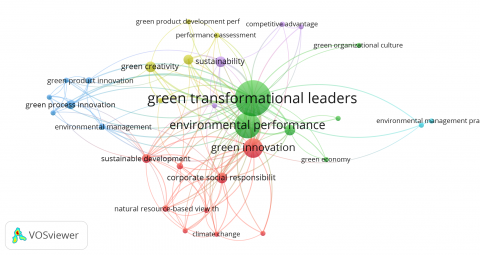
The thematic clustering presented in Figure 4 and Table 6 offers a comprehensive and insightful mapping of the research landscape on GTL and environmental performance. Six major clusters were identified, each representing interconnected areas of inquiry that shape the current understanding of the field.
Figure 4. Keyword co-occurrence network in the field
Table 6. Theme clusters in the field
|
Clusters |
Theme |
Research Focus Areas |
|
Cluster 1 (red color): 9 items |
Climate Change Commerce Corporate Social Responsibility Environmental Strategy Firm Performance Green Innovation Industrial Performance Natural Resource-Based View Theory Sustainable Development |
It focuses on how firms integrate environmental strategies, CSR, and green innovation within commerce activities to enhance firm and industrial performance, guided by the Natural Resource-Based View (NRBV) theory, thereby contributing to sustainable development and addressing the challenges of climate change. |
|
Cluster 2 (green color): 6 items |
Employee Green Behavior Environmental Performance Green Economy Green Human Resource Management Green Organizational Culture Green Transformational Leadership |
It explores how green human resource management practices, green transformational leadership, and green organizational culture foster employee green behavior, ultimately enhancing environmental performance and supporting the transition toward a green economy. |
|
Cluster 3 (navy blue color): 6 items |
Creative Process Engagement Environmental Management Green Process Green Process Innovation Green Product Innovation Process Innovation |
It investigates how creative process engagement and environmental management drive green process and product innovation, with a focus on enhancing green processes and advancing overall process innovation for sustainable business practices. |
|
Cluster 4 (yellow color): 5 items |
Environmental Economics Green Creativity Green Knowledge Green Product Development Performance Performance Assessment |
It examines the role of green creativity and green knowledge in enhancing green product development performance, assessed through performance evaluation frameworks within the context of environmental economics. |
|
Cluster 5 (purple color): 4 items |
Competitive Advantage Green Dynamic Capability Sustainability Sustainable Business Performance |
It explores how green dynamic capabilities contribute to sustainability, driving competitive advantage and ultimately enhancing sustainable business performance. |
|
Cluster 6 (sky blue color): 2 items |
Environmental Management Practices Financial Performance |
It examines the relationship between environmental management practices and financial performance. |
The first cluster (represented in red) focuses on strategic environmental management, emphasizing key themes such as climate change, CSR, environmental strategy, and sustainable development. This cluster underscores the strategic shift where organizations no longer treat environmental concerns as secondary or regulatory obligations but as core components of their competitive strategies. The integration of environmental initiatives into broader corporate agendas demonstrates a deliberate effort by firms to align sustainability with value creation, risk mitigation, and stakeholder expectations [42]. Moreover, this cluster highlights a critical linkage between proactive environmental strategies and enhanced firm and industry performance, suggesting that sustainability initiatives are increasingly seen as drivers of innovation, operational efficiency, brand reputation, and market differentiation [2]. The growing prominence of these themes reflects a paradigm shift in management thought — from viewing environmental stewardship as a cost center to recognizing it as a strategic asset essential for long-term corporate resilience, profitability, and legitimacy in a rapidly evolving global market.
The second cluster (depicted in green) focuses on the internal organizational dynamics that underpin environmental outcomes. Central themes—such as employee green behavior, GHRM, green organizational culture, and GTL—coalesce into a coherent narrative emphasizing the human and cultural dimensions of sustainability. This cluster clearly demonstrates that leadership behaviors, particularly transformational leadership with an environmental orientation, are critical catalysts for embedding sustainability within organizational routines and mindsets. Leaders who emphasize environmental values play a pivotal role in fostering employees’ internalization of these priorities, thereby shaping attitudes, promoting pro-environmental behaviors [31], and enhancing overall organizational environmental performance. Through articulating a compelling sustainability vision, modeling eco-conscious practices, and encouraging innovation in green initiatives, transformational leaders cultivate a culture deeply committed to environmental responsibility [43, 44]. This underscores that environmental performance is not merely the product of formal policies, but is fundamentally driven by the beliefs, motivations, and behaviors of individuals within the organization.
The third cluster (represented in navy blue) highlights the crucial role of innovation and creative processes in driving effective environmental management. Key themes, such as green product and process innovation, are identified as critical levers for organizations seeking to enhance their environmental performance. This cluster reinforces the idea that sustainability cannot be achieved through policies or strategies alone; it requires a fundamental shift toward embedding green thinking into the very fabric of the innovation process [45, 46]. By fostering an environment that encourages creativity and sustainability-focused innovation, organizations can develop eco-friendly products and efficient, resource-conscious processes that not only reduce environmental impact but also create competitive advantages in the marketplace [47]. In this context, innovation becomes both a driver and an enabler of sustainability, demonstrating that the pathway to long-term environmental success lies in integrating sustainability into the core of business innovation and operational practices.
The fourth cluster (represented in yellow) focuses on the critical role of green knowledge, creativity, and performance assessment in advancing environmental management. It emphasizes that organizations must leverage knowledge management and creative thinking to not only develop environmentally friendly products but also to measure and assess their environmental impact effectively [48, 49]. This cluster reflects a knowledge-intensive perspective on environmental management, where the improvement of environmental performance is driven by the strategic use of intellectual capital, including both tangible knowledge (such as technologies and processes) and intangible assets (such as innovative thinking and expertise) [50]. By fostering a culture that encourages the continuous generation and application of green knowledge, organizations can innovate more effectively and ensure that their sustainability efforts are not only creative but also measurable, impactful, and aligned with long-term goals [51, 52]. In this way, performance improvements are increasingly shaped by how well organizations manage and apply their intellectual capital to address environmental challenges.
The fifth cluster (depicted in purple) explores the critical connection between dynamic capabilities, sustainability, and competitive advantage. It underscores that firms capable of adapting dynamically and integrating green practices into their core competencies are better equipped to achieve sustainable business performance [53]. This cluster highlights the idea that environmental initiatives should not be viewed merely as compliance-driven obligations but as strategic assets that can be leveraged to create long-term competitive advantages. By embedding sustainability into their organizational capabilities and continually adapting to environmental challenges, firms can differentiate themselves in the market, enhance their resilience to external pressures, and build a sustainable competitive edge [54]. This perspective suggests that companies with a proactive environmental strategy are not only meeting regulatory requirements but are also positioning themselves for sustained success in an increasingly eco-conscious global economy.
Finally, the sixth cluster (represented in sky blue) isolates the direct relationship between environmental management practices and financial performance. It challenges the traditional notion that sustainability and profitability are mutually exclusive, emphasizing that, in fact, effective environmental practices can lead to improved financial outcomes [55]. This cluster illustrates that organizations that implement strategic environmental initiatives—such as resource efficiency, waste reduction, and sustainable sourcing—are not only contributing to environmental goals but also unlocking cost savings, operational efficiencies, and enhanced brand value, all of which can directly improve their bottom line. By adopting green practices, businesses can reduce operational costs, access new markets for eco-friendly products, attract sustainability-conscious consumers [56], and mitigate financial risks associated with environmental degradation and regulatory changes [57]. As a result, this cluster reinforces the argument that sustainability is not merely a corporate responsibility but a sound business strategy capable of driving long-term profitability and competitive advantage.
This study presents a comprehensive bibliometric analysis of GTL and its impact on environmental performance, underscoring its rising academic and practical importance. The findings show a sharp increase in scholarly interest, particularly between 2020 and 2025, positioning GTL as a critical leadership style that fosters sustainable innovation, employee green behavior, and stronger environmental outcomes. Rooted in transformational leadership theory and enriched by sustainability principles, GTL effectively embeds environmental values into corporate culture and operational strategies, driving improvements in environmental performance.
The analysis identifies several thematic clusters—including strategic environmental management, green organizational behavior, innovation, knowledge management, dynamic capabilities, and financial performance—highlighting GTL’s multifaceted influence on sustainability outcomes. Human factors, such as leadership behaviors, green HR practices, and organizational culture, emerge as central enablers of environmental success. Moreover, the study reveals a shift: environmental stewardship is no longer seen merely as regulatory compliance but as a strategic asset that enhances competitive advantage and financial performance.
Practically, the findings provide valuable insights for leaders, policymakers, and organizations striving to achieve sustainability objectives. Incorporating GTL into leadership development initiatives—and aligning it with GHRM and innovation strategies—can substantially enhance both environmental performance and organizational outcomes. As sustainability emerges as a defining global challenge in the 21st century, fostering GTL becomes imperative for organizations aiming for long-term success in an increasingly eco-conscious economy. Advancing GTL research and practice offers not only environmental benefits but also contributes to sustainable economic development. Nevertheless, while the study presents actionable guidance, the applicability of GTL strategies may differ across cultural and institutional contexts. For example, leadership approaches that are effective in Western settings may require adaptation in collectivist cultures prevalent in many Asian countries. Therefore, future research should examine how cultural values and institutional dynamics influence or moderate the relationship between GTL and environmental performance.
The authors gratefully acknowledge the financial support provided by Mahasarakham Business School, Mahasarakham University, for this research project.
[1] Mahmood, H., Hassan, M.S., Meraj, G., Furqan, M. (2024). Agriculture's role in environmental sustainability: A comprehensive review of challenges and solutions. Challenges in Sustainability, 12(3): 178-189. https://doi.org/10.56578/cis120302
[2] Bhattacharjee, J., Singh, R., Singh, N.K. (2025). Embracing sustainability: Role of corporate social responsibility in promoting green growth amidst a competitive business environment in India. In Integrating Environmental Sustainability and Corporate Social Responsibility: A Move Beyond Profit: Corporate Social Responsibility for Environmental Sustainability, Switzerland, pp. 205-223. https://doi.org/10.1007/978-3-031-81469-3_9
[3] Khotob, D., Sudiro, A., Setiawan, M., Mugiono, M. (2024). The determinants of pro-environmental behavior toward goal setting in Indonesian cement industry. The Journal of Behavioral Science, 19(1): 68-80.
[4] Suieubayeva, S., Sánchez-García, E., Martínez-Falcó, J., Marco-Lajara, B., Sadenova, A., Montalvo-Falcón, J.V. (2025). Green leaders and global change: Uncovering the drivers of corporate environmental sustainability. Environmental Development, 54: 101148. https://doi.org/10.1016/j.envdev.2025.101148
[5] Ismail, I.J. (2025). Transforming small business ventures for a greener tomorrow: The interplay between green transformational leadership, organizational green culture, and environmental sustainability. Cogent Social Sciences, 11(1): 2441400. https://doi.org/10.1080/23311886.2024.2441400
[6] Salem, T., Thomson, B. (2023). Transformational leadership in practice: Bridging the chasm. In Transformational Leadership Styles for Global Leaders: Management and Communication Strategies, IGI Global, pp. 99-112. https://doi.org/10.4018/979-8-3693-1380-0.ch006
[7] Suhana, S., Udin, U., Suharnomo, S., Mas'ud, F. (2019). Transformational leadership and innovative behavior: The mediating role of knowledge sharing in Indonesian private university. International Journal of Higher Education, 8(6): 15-25. https://doi.org/10.5430/ijhe.v8n6p15
[8] Blom, M. (2024). Transformational leadership. In Elgar Encyclopedia of Organizational Psychology, Edward Elgar Publishing, pp. 693-695. https://doi.org/10.4337/9781803921761.00135
[9] Bass, B.M. (1985). Leadership and Performance Beyond Expectations. New York, NY: Free Press.
[10] Chen, Y.S., Chang, C.H. (2013). The determinants of green product development performance: Green dynamic capabilities, green transformational leadership, and green creativity. Journal of Business Ethics, 116: 107-119. https://doi.org/10.1007/s10551-012-1452-x
[11] Vargas-Hernández, J.G. (2024). Implications between environmental management and green transformational leadership in greening organizations. In Research Anthology on Business Law, Policy, and Social Responsibility, USA, pp. 976-994. https://doi.org/10.4018/979-8-3693-2045-7.ch051
[12] Banerjee, P. (2024). The nexus of change management and sustainable leadership: Shaping organizational social impact. In Diversity, Equity and Inclusion, Routledge, pp. 184-197. https://doi.org/10.4324/9781003487180-18
[13] Afsharbakeshlo, Z., Omidvar, M., Gigauri, I. (2024). Green transformational leadership: A systematic literature review and future research suggestion. In Marketing and Resource Management for Green Transitions in Economies, IGI Global, pp. 47-74. https://doi.org/10.4018/979-8-3693-3439-3.ch003
[14] AlGhanem, N., Mendy, J. (2024). Sustaining successful organisational change through leadership competence within Bahrain oil and gas: The power of Sustainable Network Leadership approach. Journal of Organizational Change Management, 37(6): 1340-1360. https://doi.org/10.1108/JOCM-06-2023-0202
[15] Ahsan, M.J. (2024). Green leadership and innovation: Catalysts for environmental performance in Italian manufacturing. International Journal of Organizational Analysis, 33(7): 1646-1669. https://doi.org/10.1108/IJOA-04-2024-4450
[16] Le, T.T., Gia, L.L.C. (2025). How green innovation and green corporate social responsibility transform green transformational leadership into sustainable performance? Evidence from an emerging economy. Corporate Social Responsibility and Environmental Management, 32(2): 2527-2541. https://doi.org/10.1002/csr.3077
[17] Shi, C., Liang, H. (2025). Linking green transformational leadership to employee green behavior: The moderating role of green psychological climate. Social Behavior and Personality: An International Journal, 53(1): 1-9. https://doi.org/10.2224/sbp.14009
[18] Jamshed, K.A., Shah, S.H.A., Durrah, O. (2024). How corporate responsibility influences organizational performance: An overview on the role of green transformational leadership. Strategies and Approaches of Corporate Social Responsibility Toward Multinational Enterprises, IGI Global, pp. 221-241. https://doi.org/10.4018/979-8-3693-0363-4.ch013
[19] Singh, S.K., Del Giudice, M., Chierici, R., Graziano, D. (2020). Green innovation and environmental performance: The role of green transformational leadership and green human resource management. Technological Forecasting and Social Change, 150: 119762. https://doi.org/10.1016/j.techfore.2019.119762
[20] Sangadji, E.M., Islami, M.I. (2024). Effect of green transformational leadership on organizational environmental performance: The role of green human resource management practices (Study on SMEs in the embroidery sector). International Journal of Economics and Management, 18(1): 53-72. https://doi.org/10.47836/ijeam.18.1.04
[21] Bass, B.M., Avolio, B.J. (1994). Transformational leadership and organizational culture. The International Journal of Public Administration, 17(3-4): 541-554. https://doi.org/10.1080/01900699408524907
[22] Hussain, M.A., Ali, S., Ali, S., Goh, G.G.G., Saif, N., Khan, S.U. (2025). Redefining the concept of green transformational leadership through psychometric analysis: Evidence from educational setup of developing country prospective. Asia Pacific Management Review, 30(3): 100354. https://doi.org/10.1016/j.apmrv.2024.100354
[23] Barney, J. (1991). Firm resources and sustained competitive advantage. Journal of Management, 17(1): 99-120. https://doi.org/10.1177/014920639101700108
[24] Awan, F.H., Dunnan, L., Jamil, K., Gul, R.F. (2023). Stimulating environmental performance via green human resource management, green transformational leadership, and green innovation: A mediation-moderation model. Environmental Science and Pollution Research, 30(2): 2958-2976. https://doi.org/10.1007/s11356-022-22424-y
[25] Mukhtar, A., Mahmood, S., Naeem, M., Khan, K.I. (2025). I feel green with my leader: When and how green transformational leadership influences employees’ green behavior. International Journal of Ethics and Systems. https://doi.org/10.1108/IJOES-08-2024-0250
[26] Elshaer, I.A., Azazz, A.M., Semlali, Y., Mansour, M.A., Elziny, M.N., Fayyad, S. (2024). The Nexus between green transformational leadership, employee behavior, and organizational support in the hospitality industry. Administrative Sciences, 14(6): 107. https://doi.org/10.3390/admsci14060107
[27] Dhrubo, A.M., Lemago, S.T., Brohi, A.A., Erdem, O.H. (2024). Re-conceptualizing Resources: An ontological re-evaluation of the resource-based view. Philosophy of Management, 23(2): 287-313. https://doi.org/10.1007/s40926-024-00313-3
[28] Galbreath, J. (2005). Which resources matter the most to firm success? An exploratory study of resource-based theory. Technovation, 25(9): 979-987. https://doi.org/10.1016/j.technovation.2004.02.008
[29] Rosli, N.T., Ahmad, F.S., Quoquab, F., Salam, Z.A. (2017). Measuring environmental performance awareness: A qualitative approach. Advanced Science Letters, 23(4): 3198-3201. https://doi.org/10.1166/asl.2017.7709
[30] Sobaih, A.E.E., Hasanein, A., Gharbi, H., Abu Elnasr, A.E. (2022). Going green together: Effects of green transformational leadership on employee green behaviour and environmental performance in the Saudi food industry. Agriculture, 12(8): 1100. https://doi.org/10.3390/agriculture12081100
[31] Liao, H.Y. (2024). How to facilitate employee's workplace environmental-friendly behavior: The joint impact of green transformational leadership and green human resource management. Journal of Chinese Human Resources Management, 15(1): 3-15. https://doi.org/10.47297/wspchrmWSP2040-800501.20241501
[32] Weber, P., Kassab, E.A. (2024). The employee green behavior of green transformational leadership, green human resource management on the sustainable performance. Journal of Infrastructure, Policy and Development, 8(8): 4630. https://doi.org/10.24294/jipd.v8i8.4630
[33] Crucke, S., Servaes, M., Kluijtmans, T., Mertens, S., Schollaert, E. (2022). Linking environmentally-specific transformational leadership and employees' green advocacy: The influence of leadership integrity. Corporate Social Responsibility and Environmental Management, 29(2): 406-420. https://doi.org/10.1002/csr.2208
[34] Sai, C., Omar, A.R.C., Juhdi, N.H., Hizam-Hanafiah, M. (2025). Trends in entrepreneurial leadership: A bibliometric analysis. Multidisciplinary Reviews, 8(9): 202524-202524. https://doi.org/10.31893/multirev.2025284
[35] Udin, U. (2025). Agile leadership and employee outcomes: A bibliometric analysis for future research agenda. Human Systems Management, 44(2): 237-248. https://doi.org/10.3233/HSM-240093
[36] Udin, U. (2023). Leadership styles and their associated outcomes: A bibliometric review using VOSviewer. International Journal of Human Capital in Urban Management, 8(4): 443-456. https://doi.org/10.22034/IJHCUM.2023.04.01
[37] Riva, F., Magrizos, S., Rubel, M.R.B. (2021). Investigating the link between managers' green knowledge and leadership style, and their firms' environmental performance: The mediation role of green creativity. Business Strategy and the Environment, 30(7): 3228-3240. https://doi.org/10.1002/bse.2799
[38] Hameed, Z., Naeem, R.M., Hassan, M., Naeem, M., Nazim, M., Maqbool, A. (2022). How GHRM is related to green creativity? A moderated mediation model of green transformational leadership and green perceived organizational support. International Journal of Manpower, 43(3): 595-613. https://doi.org/10.1108/IJM-05-2020-0244
[39] Begum, S., Xia, E., Ali, F., Awan, U., Ashfaq, M. (2022). Achieving green product and process innovation through green leadership and creative engagement in manufacturing. Journal of Manufacturing Technology Management, 33(4): 656-674. https://doi.org/10.1108/JMTM-01-2021-0003
[40] Hussain, Y., Abbass, K., Usman, M., Rehan, M., Asif, M. (2022). Exploring the mediating role of environmental strategy, green innovations, and transformational leadership: The impact of corporate social responsibility on environmental performance. Environmental Science and Pollution Research, 29(51): 76864-76880. https://doi.org/10.1007/s11356-022-20922-7
[41] Sun, X., El Askary, A., Meo, M.S., Zafar, N.U.A., Hussain, B. (2022). Green transformational leadership and environmental performance in small and medium enterprises. Economic Research-Ekonomska Istrazivanja, 35(1): 5273-5291. https://doi.org/10.1080/1331677X.2021.2025127
[42] Hristov, I., Chirico, A., Ranalli, F. (2022). Corporate strategies oriented towards sustainable governance: Advantages, managerial practices and main challenges. Journal of Management and Governance, 26(1): 75-97. https://doi.org/10.1007/s10997-021-09581-x