Thi Huong Tran* | Ha Minh Tri Nguyen | Tuyen Nguyen Thanh | Hong Duong Nguyen
© 2025 The authors. This article is published by IIETA and is licensed under the CC BY 4.0 license (http://creativecommons.org/licenses/by/4.0/).
OPEN ACCESS
This research examines technological advancements designed to reduce greenhouse gas (GHG) emissions in the maritime industry, offering recommendations for researchers and practitioners to promote sustainability. The study’s motivation is the shipping sector's significant contribution to global carbon dioxide emissions, presenting a challenge to achieving carbon neutrality by 2050. The research analyzed 210 papers published between 2011 and 2024 from Scopus using bibliometric techniques and VOSviewer software. By applying the modularity community detection algorithm, seven key themes were identified: alternative fuels like LNG and ammonia, hybrid and electric power systems, renewable energy sources (solar, wind, wave), energy-efficient engine technologies, integration of alternative power systems, carbon capture and storage (CCS), and ship-network optimization. Key findings highlight the increasing focus on renewable energy and alternative fuels since 2018, particularly ammonia, hydrogen, and electricity. CCS technologies, gaining attention since 2021, show potential for reducing CO2 emissions through long-term storage. The research underscores the need for integrating diverse technologies and optimization algorithms to reduce GHG emissions effectively while balancing efficiency and costs. Governments, businesses, and communities are encouraged to prioritize renewable energy, explore advanced technologies like AI and blockchain, and expand efforts in CCS to ensure a sustainable future for the shipping industry.
maritime transportation, GHG emissions, technological advancements, sustainability, literature review
The escalating global warming crisis, primarily driven by excessive CO2 and greenhouse gases (GHGs), has called for the urgent need for sustainable logistics practices worldwide. As part of the global response to this challenge, the International Maritime Organization (IMO) has established ambitious goals—seeking to cut the carbon intensity of international shipping by at least 40% by 2030 compared to 2008 levels and to reach near-zero emissions by 2050 [1].
Adopting the latest and most appropriate technologies is essential to meet sustainability goals in shipping transportation. This can give businesses competitive advantages in terms of cost, efficiency, and social impact. As Guri I. Marchuk highlighted in 1992, the latter half of the 20th century saw numerous groundbreaking advancements, including supercomputers, robotics, space technologies, nuclear energy, polymers, biotechnology, genetic engineering, and composite materials.
Numerous studies have explored the integration of technology in logistics to achieve sustainability goals. In the context of reducing carbon dioxide emissions, two specific terms have emerged to standardize the language related to modifications in ships or their operations. Carbon Dioxide Reducing Measure (CDRM) refers to any action that diminishes the carbon dioxide (CO2) emissions of a vessel or a fleet. CDRM measures can be classified as operational measures or Carbon Dioxide Reducing Technologies (CDRT) [2]. An example of an operational measure (non-technological CDRM) is the reduction of operational speed. Conversely, CDRT encompasses any technology that can be integrated into a ship, whether through retrofitting or during construction, that lowers CO2 emissions compared to the vessel’s original design. CDRTs are a subset of CDRMs and may include strategies such as reducing propulsion power, decreasing auxiliary power, enhancing fuel efficiency (thereby increasing energy efficiency and reducing CO2 emissions), or employing alternative fuels (e.g., Liquefied Natural Gas (LNG) as opposed to Marine Diesel Oil (MDO).
This study seeks to offer a thorough overview of carbon emissions reduction potential in the shipping industry by analyzing recent advancements and performing a content analysis of relevant literature. In addition to an integrated network-based approach, we carry out a content analysis of the selected papers to highlight key practices driving progress in the field. The primary contribution of this research lies in the combined use of cluster networks, as well as RFP and KCO methods that consolidate our content analysis.
The remainder of the paper is organized as follows: Section 3 outlines the data collection process and methodological approach used to identify relevant studies. This is followed by an analysis of the thematic clusters emerging from the research. Then Section 5 presents the key findings in detail. Finally, the paper concludes with a summary of the main insights, discusses limitations, and suggests potential directions for future research.
In the pursuit of maritime decarbonization, researchers have investigated different alternatives to achieve efficient and sustainable operations [3, 4]. Previous research has revealed several promising alternatives, including PtX technology, which converts renewable energy into hydrogen and subsequent fuels [5]; the implementation of carbon capture and storage (CCS) from ships during operation [6]; a strong emphasis on energy efficiency and electrification [7]; and other innovative approaches. However, despite growing interest from academic researchers and the clear relevance of the topic, the field remains highly fragmented. There is still no unified understanding of what defines a comprehensive set of technological and managerial solutions for reducing carbon emissions in the maritime industry.
While several systematic literature reviews have examined potential decarbonization methods in the shipping industry, many have focused on specific aspects, such as green transportation [8], and have limited scope to selected countries [9]. The study by Bouman et al. [10] analyzes a broader range of studies, identifying promising technologies and operational practices, thus quantifying their combined mitigation potential. However, the research topics are not clearly developed or organized.
In recent years, several articles have been published on decarbonization technologies in different modes of transport. In air transport, there was a study by Sallan and Lordan [11], whereas in road freight transport, it was a study by Meyer [12]. Nevertheless, the field of decarbonization in maritime logistics has only been nascent. To foster research advancement and develop a comprehensive understanding of the framework, consolidating specific research findings is essential. Therefore, we adopt a systematic literature review and bibliometric network analysis to explore green technological advancements in the maritime industry and suggest recommendations to academic researchers and practitioners in the shipping industry toward sustainability.
The methodology for the literature review followed in our study is illustrated in Figure 1 and described in detail in the following sections.
Figure 1. Methodology for literature review
3.1 Data collection
We chose Scopus as our primary data source due to its comprehensive and broader coverage of peer-reviewed literature compared to the Web of Science, especially in the fields of science, technology, and environmental studies. To ensure transparency and reproducibility, we adopted a three-level Boolean search strategy, applied to the title, abstract, and keywords fields. The final search string used the "AND" operator to combine concepts across different levels and the "OR" operator to group synonymous terms within each level, as follows:
Level 1: Define the scope within marine transportation: (“mari*” OR “vessel” OR “ship” OR “water transportation”);
Level 2: Captures studies focused on emissions and decarbonization: (“greenhouse gas emission” OR “GHG emission”) AND (“decarbon*” OR “neutral*” OR “remov*” OR “release*” OR “reduc*”);
Level 3: Filters for technology-related studies using the root form: “techn*”.
The dataset was developed based on several inclusion criteria. First, we focused our search on papers within the fields of Business, Management and Accounting; Economics, Econometrics and Finance; Environmental Sciences; Energy; and Social Sciences. Second, we included only studies published in peer-reviewed journals or conference proceedings, while excluding book chapters and working papers. Third, we restricted our review to articles published in English. During this process, we excluded non-relevant papers based on a subjective criteria selection: Specifically, we examined the abstract and/or full text of each article to determine whether it clearly addressed the use of technology aimed at reducing greenhouse gas emissions within the scope of maritime transportation. The final dataset used for further analysis consists of 210 research papers published between 2011 and August 2024. We collected articles up to August 2024 because our project started at that time.
3.2 Data analysis
3.2.1 The keyword network mapping
In this research, we conducted a bibliometric analysis of keywords to investigate the knowledge structure within the field. Our approach, adapted from Su and Lee [13], included four main steps: (i) data extraction, (ii) keyword review and descriptive statistics, (iii) network property calculation, and (iv) visualization of a knowledge map. We retrieved the final dataset of 210 research papers in plain text format from search databases. We utilized VOSviewer and R-Studio for bibliographic analysis and data transformation tasks. To prepare the raw data, we standardized the keywords by (i) converting plural forms to singular, (ii) consolidating synonyms (e.g., ‘marine transportation’ and ‘sea transportation’), and (iii) merging abbreviations with their full phrases (e.g., ‘GHG emission’ and ‘Greenhouse gas emission’). Our meticulous data preparation, including keyword review and full-text analysis conducted by two researchers, has addressed potential interpretation limitations.
3.2.2 Research focus parallel ship (RFP)
Research focus parallel ship (RFP) is a concept used in bibliometric analysis [14] to assess the relationship between research papers based on their shared keywords. The idea is that if two papers use the same or similar keywords, it indicates that their research focuses on overlapping areas or topics. RFP assumes that if two papers share at least one keyword, they likely have a potential link in terms of their research focus. This keyword overlap suggests that the papers are addressing related aspects of a broader research area. The method also posits that the presence of common keywords points to parallelism in the research areas of the papers. In other words, shared keywords imply that the research content or focus of the papers has similarities. RFP is often used to map out how different papers relate to each other based on their research themes, helping to identify clusters of related research and understanding the structure of a research field. In conclusion, RFP is particularly useful in bibliometric studies for visualizing and analyzing connections and overlaps in research topics, aiding in the identification of trends and gaps in the literature.
3.2.3 Keyword co-occurrence (KCO)
Keyword co-occurrence (KCO) is a pivotal method in bibliometric analysis that examines the frequency with which specific keywords appear together across a collection of research papers. By analyzing these co-occurrences, researchers can uncover patterns and relationships between different research topics. The method begins with the extraction of keywords from a set of documents, followed by the construction of a co-occurrence matrix, which records how often each pair of keywords appears together. This matrix is then used to build a network or graph, where nodes represent keywords and edges denote the strength of their co-occurrence. This visualization helps researchers spot clusters of related keywords, reveal emerging trends, and understand the overall structure of the research field. KCO analysis is invaluable for understanding how research themes are interconnected, discovering new areas of inquiry, and highlighting the evolution of research topics over time. Tools such as VOSviewer, Gephi, and R-studio are commonly used to perform and visualize this analysis, providing insights into the dynamic and evolving landscape of academic research.
3.2.4 Integrated RFP and KCO method
The integrated RFP-KCO method offers a more robust and comprehensive approach to literature analysis than traditional co-citation or standalone KCO techniques. Co-citation struggles with newly published or less-cited works [15], while KCO, though useful for identifying thematic clusters, often fails to capture the multi-domain nature of keywords and becomes less effective in dense networks [13]. RFP addresses these issues by clustering papers based on shared keywords to reveal inter-paper relationships, yet it may oversimplify thematic content. By combining RFP’s structural mapping with KCO’s thematic insight, the integrated RFP-KCO method improves clustering accuracy and preserves connections to both core and emerging research themes, offering a clearer, more nuanced understanding of the knowledge structure in a field [13, 16].
4.1 Descriptive analysis
4.1.1 Distribution of reviewed papers by year
Figure 2 shows the yearly distribution of all articles in the sample. The earliest publication appeared in 2011, and the number of articles has steadily increased over time. Interestingly, the volume of research presented from 2019 to 2022 was more than double that observed during 2014–2018. With 50 articles published, the topic attracted the most attention in the year 2023. In the first 8 months of 2024, 43 papers were published; if we did a simple extrapolation, the total number of articles would be 65. Figure 2 shows that the field of technologies to reduce CO2 emissions in the shipping industry is receiving a lot of attention from scientists in the context of implementing the COP21 goals.
*This is an estimated number
Figure 2. Annual distribution of research articles on technological applications for reducing GHG emissions in the shipping industry
4.1.2 Distribution of reviewed papers by the journal
The 210 papers in this review were published across 80 different journals. Figure 3 highlights the top 11 journals with the highest number of publications. Interestingly, around 38% of these journals contributed more than one article to the dataset. The Journal of Marine Science and Engineering led with 22 articles, followed by the Journal of Cleaner Production with 17, and Ocean Engineering with 16 papers.
Figure 3. Distribution of reviewed papers by the journal
4.1.3 Distribution of reviewed papers by countries
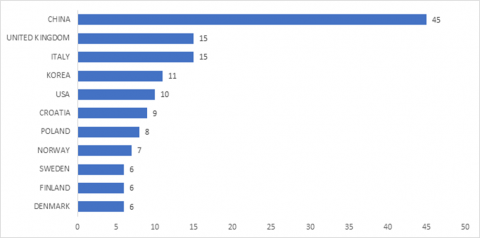
This review comprised 210 papers from 39 different countries around the world. Figure 4 indicates the top twelve countries contributing the most to this topic. Significantly, China has the most published articles on the topic, with 45 papers. Italy and the United Kingdom ranked second with 15 papers for each country.
Figure 4. Distribution of reviewed papers by countries
4.1.4 Keyword frequency
The accompanying word cloud visually represents the most frequently used keywords among researchers in this field. The most prominent terms include "greenhouse gas," "decarbonization," and "ship," followed by "energy efficiency," "Liquefied Natural Gas," "alternative fuels," "hydrogen fuels," and "sustainable development." These keywords suggest various strategies for achieving environmentally sustainable marine transportation by reducing greenhouse gas (GHG) emissions.
Figure 5 highlights that the keywords span three primary aspects of the topic: "technology" (e.g., "cold ironing," "biofuels"), "marine transportation" (e.g., "shipping industry," "transportation sector," "ship propulsion"), and "reduction of GHG emissions" (e.g., "green transportation," "global warming"). Among these, the category related to "reduction of GHG emissions" is the most prominent, indicating it is a major focus of discussion. This prominence reflects the emphasis researchers place on improving GHG emissions. The term "ships" also features prominently, underscoring that the research predominantly focuses on marine transportation. Although "technology" keywords appear less prominently, they encompass the largest number of terms, suggesting a diverse array of technological solutions presented in these studies, which may be relevant for both academic inquiry and practical application. Examples of relevant technologies include "carbon capture" [17, 18]; "ammonia" [19-21], "cold ironing” [22-24]; and "solid oxide fuel cells" [25-27].
Figure 5. Keyword frequency in research on green technologies applied to reduce GHG emissions in the shipping industry
4.1.5 Distribution of reviewed papers by research methodology
Table 1 shows the distribution of research methodologies across the studies in our sample. While categorizing into groups, we followed the method applied by Taherdoost [28]. Notably, the Experimental method is the most popular methodology which is utilized by 64 papers, followed by the case study method applied by 24 papers.
Table 1. Distribution of articles by research methodology
|
No. |
Methodology |
No. of Papers |
|
1 |
Experimental |
64 |
|
2 |
Causal-Comparative |
9 |
|
3 |
Survey |
4 |
|
4 |
Case Studies |
24 |
|
5 |
Grounded Theory |
9 |
4.1.6 Trend topics
Figure 6 presents a detailed overview of the selected topics, highlighting their occurrence frequency and temporal distribution. The first, median, and third quartiles for each topic illustrate its relative prominence over time, helping to identify evolving trends and changes in the discourse.
Figure 6. Trend topics on technological applications for reducing GHG emissions in the shipping industry
4.1.7 Technologies applied in the green transition of shipping industry
Among the 210 selected articles, 13 different technologies have been investigated by scientists to reduce carbon emissions. The most common technology is the use of alternative fuels, found in 86 articles, accounting for more than ⅖ of the total. A typical example is the research by Kanchiralla et al. [17] and Richter et al. [29], which uses electricity-based fuels as an alternative energy for fossil fuels. Other fuels such as H2 [30], ammonia, LNG [31], wind energy [32], and solar energy [33] have also been mentioned by scientists in their research. In addition, carbon capture technology and ship engine optimization were noted in 12 and 11 articles, respectively, notably the research by Wang et al. [34] to optimize the ship's operating range or the research by Zhou et al. [35] using tetraethylenepentamine (TEPA) and monoethanolamine (MEA) to capture CO2 emissions from ships. Furthermore, 46 articles used a combination of methods, such as the research by Ma et al. [36] on the combination of sails and wind energy to propel ships or the research by Chen et al. on optimizing the operation of electric motors on ships. Finally, the author also found some new technologies such as the research by Liu et al. [37] on demand information sharing or the research by Zhao et al. [38] on the technology transition in liner shipping (Table 2).
Table 2. Distribution of articles by technology applied in green transition of shipping industry
|
Technology Applied |
No. of Papers |
% of Total Papers |
|
Alternative fuels |
86 |
40.95% |
|
Carbon capture |
12 |
5.71% |
|
Ship engine optimization |
11 |
5.24% |
|
Network optimization |
6 |
2.86% |
|
Mixed methods |
46 |
21.90% |
|
Others |
49 |
23.34% |
|
Total |
210 |
100% |
4.2 Content analysis: Research focus on parallelship and keyword co-occurrence analysis
We used BibExcel to convert the dataset into .net format so it could be imported into VOSviewer, an open-source tool used to analyze and visualize networks [39]. By default, VOSviewer created a random network consisting of 147 nodes and 485 connections, showing that 148 out of 210 articles were connected to one another.
Next, we ran a modularity-based community detection algorithm (with randomization, edge weights, and a resolution setting of 1.00) to find topic clusters within our dataset. The analysis produced a moderate modularity score of 0.60 and revealed 7 main groups [40].
After identifying the clusters through RFP network analysis, we performed KCO analysis for each sub-topic. Using BibExcel again, we extracted keywords for every article group and built KCO networks to better understand the themes within each cluster.
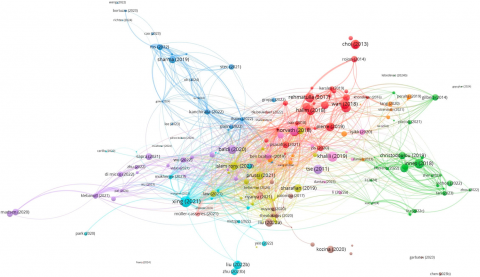
Figure 7 shows the outcome of our combined analysis. The network is visually organized using colors, circular outlines, and letter labels for each cluster. To identify the most influential nodes within each group, we applied the Eigenvector Centrality (EVC) index [41]. The network layout was generated using the ForceAtlas2 algorithm [42], which places the articles with the highest EVC scores near the center.
Figure 7. Seven clusters on technological applications in shipping industry to reduce GHG emissions
Cluster A (red), labeled ‘LNG and ammonia energy,’ includes papers with high EVC values, indicating that its research themes are closely connected to other clusters—such as Cluster B (green, ‘Electricity and hybrid power’) and Cluster C (purple, ‘Carbon capture and storage’). In contrast, Cluster G (yellow), focused on ‘Ship-network optimization’, appears more isolated, as reflected by the lower EVC score of its leading node.
In the next section, the paper takes a closer look at each cluster and explores the key research themes within them.
4.2.1 Cluster A: LNG and ammonia energy
Research in this area began relatively late compared to other clusters, starting in 2019. However, it has shown substantial growth over the past five years, particularly in the last three years. There had been a growing emphasis on using LNG and ammonia as alternative fuels for ship transportation to reduce GHG emissions, with five studies published in 2022, four in 2023, and ten in 2024.
Most studies focus on evaluating the technical feasibility and environmental impact of various decarbonization solutions through life-cycle assessments that consider both ecological effects and cost-effectiveness. These solutions include synthetic fuels [29], NaOH solutions [43], LNG [10, 44], and electro-ammonia among others.
In addition, several articles focus on specific applications and case studies. For example, Taghavifar and Perera [44] examined the emissions, energy use, and cost impacts of adopting LNG as a cleaner fuel in combination with advanced dual-fuel engines, as part of the SeaTech H2020 project. The study found that using high-quality LNG (with a higher Wobbe Index) instead of lower-grade diesel is a feasible option within a 30% sensitivity margin. In contrast, Herdzik [45] argued that LNG should be seen as a transitional marine fuel, with a shift towards synthetic fuels, ammonia, and hydrogen being necessary in the long term.
4.2.2 Cluster B: Electricity and hybrid power
Research on the use of electricity in marine transportation to reduce GHG emissions began relatively early, in 2011 with one study. However, there was little progress in this area until 2019. Between 2019 and 2023, 19 articles were published on the topic, with notable activity in 2021 (5 articles) and 2022 (6 articles).
Multiple studies have concentrated on the design, modeling, and feasibility analysis of alternative power systemsfor ships, including ammonia-powered vessels [46], hydrogen fuel cells [20, 30] molten carbonate fuel cells [47], and solid oxide fuel cells (SOFCs) [48]. These studies primarily explore their potential for reducing emissions, cost efficiency, and technical reliability. Benet et al. [49] highlighted existing knowledge gaps in maritime hybrid power plants, particularly those that incorporate fuel cells.
Additionally, other researchers have conducted comparative studies of ship propulsion technologies. For example, Klebanoff et al. [50] investigated the use of batteries and hydrogen fuel cells in hybrid research vessels, concluding that hydrogen fuel-cell technology serves as an effective complement to diesel engines, particularly for coastal or nearshore research operations. Park et al. [51] conducted a lifecycle analysis comparing electricity derived from inland sources with other two zero-carbon fuels - focusing on operational feasibility and Well-to-Wake environmental impacts. Their findings indicate that using hydrogen fuel cells, with batteries storing inland power and solar PV systems as backup, resulted in GHG emissions at 25.7% of those from conventional fossil fuels.
4.2.3 Cluster C: Renewable energy sources (solar/ wind/ wave)
There was no research on renewable energy applications in maritime transportation prior to 2021. However, in just four years, from 2021 to 2024, it has become a promising area of study, with eight research publications exploring wind, solar, and wave fuel energy. Most of these studies focus on optimizing sail design [36, 52], as well as evaluating the performance and energy-saving potential of wind-assisted propulsion using Flettner rotors under various sea and weather conditions [32, 53]. For instance, Nyanya et al. [54] investigated the optimal sail angle and the integration of solar and wind systems on available deck space, achieving a 36% reduction in carbon dioxide emissions compared to a similar ship without these technologies. De Beukelaer [55] argued that both technological innovation and demand reduction are essential for developing a decarbonization pathway for the shipping industry that aligns with the Paris Agreement targets. Meanwhile, Franz and Bramstoft [56] advised that policymakers and industry leaders boost investments to reduce the cost of renewable technologies, which in turn would support experiential learning and encourage innovation in practical, real-world settings.
4.2.4 Cluster D: Improvement of energy efficiency of ship engines
Some articles in this group explored improving the energy efficiency of ship engines in transport operations [5, 33, 57]. Overall, research in this area centers on lowering fuel consumption and cutting emissions from vessel operations, all while maintaining the vessels' performance and operational reliability. For example, Bellot et al. [58] emphasized improving the operational efficiency of marine engines by optimizing fuel injection timing and adopting advanced fuel technologies.
4.2.5 Cluster E: Combining using alternative power sources with technological advancement
Recent studies have integrated two or more technologies to mitigate carbon emissions in maritime transportation. Cluster E serves as a bridge between Clusters A, B, C, and D. The integration of alternative fuels and improved engine efficiency is a promising new direction, as evidenced by the increasing volume of recent research. A study by Wang et al. [3] examined improving the operational efficiency of dual-fuel engines powered by hydrogen and LNG. Another study by Seddiek and Ammar [32] investigated the design of sails to harness wind energy, minimising fuel consumption. Based on these studies, researchers concluded that integrating multiple technologies offers greater benefits than solely relying on alternative fuels or improving engine efficiency.
4.2.6 Cluster F: Carbon capture and storage technologies
Cluster F primarily focuses on the application of CCS technologies in maritime transportation. CCS technologies are emerging as a crucial pathway for decarbonizing maritime transportation, particularly given the sector's reliance on fossil fuels and the urgency to meet the IMO’s 2050 GHG reduction targets. The introduction of the Net Zero policy, along with various carbon credit trading and carbon tax regulations, has increased the focus of researchers and businesses on CCS technologies. A notable study by Feng et al. [7] explored innovative decarbonization methods for inland waterway freight transportation, while Skoko et al. [59] analyzed CO2 emissions and fuel consumption in dredger ship engines, offering insights into emissions reduction technologies. Among the most mature approaches, amine-based chemical absorption systems, especially those using monoethanolamine (MEA), can achieve capture rates up to 90%, although they require significant thermal energy, with reboiler duties around 3.7 GJ/tCO₂ [60, 61] compared MEA to a mixed MDEA/PZ solvent system and found that the latter reduced energy demand by 10%, lowering the reboiler duty to 3.3 GJ/tCO₂ and the CO₂ avoidance cost from \$281 to \$191 per tonne, while maintaining similar capture performance. Temperature Swing Adsorption (TSA) also demonstrates high capture rates (~90%) and operates with minimal external energy when integrated with waste heat recovery, making it highly suitable for mobile platforms like ships [62]. In contrast, alkaline absorption using NaOH in spray towers is simpler and more compact but offers lower capture efficiency, reducing CO₂ emissions by only ~20% in experimental settings [43]. In summary, recent studies collectively demonstrate that while multiple CCS technologies such as amine-based absorption, temperature swing adsorption, and alkaline scrubbing offer promising pathways for reducing CO₂ emissions from maritime transportation, their successful implementation will depend on optimizing capture efficiency, minimizing energy penalties, and addressing integration challenges unique to shipboard environments.
4.2.7 Cluster G: Ship-network optimization technologies
Before exploring new technologies, researchers and businesses often focus on enhancing the performance of existing operational systems. This is why this cluster, centered on operational improvement, has the highest number of studies to date, totaling 50 articles. Research in this area began in 2011 and consistently attracted interest since 2013. Between 2014 and 2019, an average of 2 to 4 articles on this topic were published each year. Since 2020, with the advent and rapid development of new technologies, there has been a notable increase in the number of articles on operational improvement, with 4 to 8 articles published each year.
The adage “What gets measured gets managed” underlines the importance of monitoring in managing operations. Numerous studies have proposed automated monitoring systems to track ship operations, calculate GHG emissions, and provide alerts for self-regulation. For instance, Efimova and Saini [63] demonstrated that implementing such systems at ports can reduce actual fuel consumption, achieving a 6% reduction in emissions from port to Container Freight Station (CFS) and a 23% reduction from CFS to ports. Similarly, Fan et al. [64] developed a multisource information system by installing sensors on ships to collect extensive data from various sections of the Yangtze River. Their analysis concluded that the ship’s main engine speed is the most significant factor influencing fuel consumption, and that the voyage environment along the Yangtze River also impacts fuel usage.
Beyond monitoring, researchers have proposed various optimization strategies to reduce GHG emissions. For example, Wang et al. [65] and Woo and Moon [66] identified optimal engine speeds to achieve maximum energy efficiency under predicted operating conditions. Prause et al. [67] explored optimizing inventory routing for ammonia supply in German ports.
Additionally, several researchers have emphasized the need for policy interventions to support GHG emission reductions in the maritime sector. For example, Karountzos et al. [68] proposed a restructuring of the Greek Coastal Shipping Network (GCSN) by incorporating zero-emission sub-networks operated by electric ferries. Meanwhile, Khondaker et al. [69] recommended that the international community work toward a deeper understanding of the advantages of various mitigation strategies, assess the reduction potential and effectiveness of each measure, and examine their possible effects on global trade and market dynamics.
Mitigating carbon emissions in maritime transportation is a global priority in the pursuit of carbon neutrality. Carbon reduction technologies offer a promising pathway, demonstrated by the significant increase in research papers on this topic in recent years. After a preliminary screening, our research continued with data cleaning and bibliometric and network analysis. We conducted an in-depth analysis using data analytics techniques, including research focus parallelship and KCO analysis. The yearly distribution of 210 papers published between 2011 and 2024 shows a steady increase in publication volume, suggesting continued growth in the field. By applying a modularity-based community detection algorithm, we identified seven main thematic clusters. The cluster analysis revealed several key research directions, with one of the largest groups of studies concentrating on alternative fuels, such as renewable energy sources. This group of technologies, which includes the utilization of carbon-free fuels such as LNG, Ammonia, H2, electricity, and renewable energy, is the most prevalent in mitigating CO₂ emissions from transportation due to their relative ease of implementation. Once performed a Life Cycle Cost Analysis (LCCA) comparing hydrogen, ammonia, and electric energy [70] concluded that hydrogen fuel cell propulsion systems are financially more effective for short-distance ferries, proving less expensive than ammonia-fueled PEMFCs and batteries. In the renewable energy cluster, while wind energy has been extensively studied, solar and wave energy are potential technologies for future research because only a few studies have explored the utilization of these two energy sources. Furthermore, the emerging concept of utilizing waste heat for ship operations has introduced a new dimension to alternative fuels. The research by Díaz-Secades et al. [71] focuses on recovering waste heat from ship diesel engines and utilizing it as a fuel source for other ship operations, thereby reducing CO₂ emissions. Other prominent clusters have focused on CCS. Within these, scientists have employed chemical methods to neutralize carbon emissions, as exemplified by the research of Andreae et al. [5] on capturing CO₂ using cold LNG. Additionally, Cluster E in this study highlights the integration of multiple technologies within a single framework to reduce CO₂ emissions. For example, Liu et al. [37] investigated a novel ammonia-diesel stratified injection system designed to enable the use of low-carbon ammonia fuel in marine engines, aligning with future emissions regulations. Furthermore, Seddiek and Ammar [32] introduced the use of wind-assisted propulsion through Flettner rotors on commercial ships, which has the potential to achieve significant fuel savings—up to 22.28% annually.
The research findings identified several emerging topics such as ship-network optimization, which is poised for continued growth. While novel technologies like AI and blockchain have been integrated into various sectors, there is a dearth of papers within the ship-network optimization domain that leverage AI or blockchain to optimize shipping routes. Consequently, this presents a potential topic for future research. Overall, future research should aim to conduct more comprehensive studies using long-term data and take a broader perspective to explore how collaboration with various types of supply chain partners influences both product and process innovation.
While this research offers some interesting findings, there are a few important limitations to consider. Firstly, it is possible that some relevant articles were missed because they did not meet the search criteria. Secondly, although KCO analysis is a widely accepted method for mapping research trends, it may not fully capture the core content or conceptual depth of the articles. This limitation arises because author-assigned keywords are often selected for visibility rather than comprehensiveness. However, this concern was mitigated through several validation steps. Specifically, we conducted manual screening of the most frequent and central keywords to remove overly generic or irrelevant terms (e.g., “model”, “system”), merged synonymous keywords, and standardized variant spellings. Additionally, we reviewed the abstracts and, where necessary, the full texts of articles within each cluster to ensure thematic consistency. This content-based cross-checking helped confirm that the keyword groupings aligned with the actual focus of the studies. Thirdly, two papers with similar keywords might not actually cover the same topics. To address this, we analyzed the content of the papers in each cluster to confirm that they were discussing similar subjects. Future studies could improve our approach by including other article features like titles and abstracts. Lastly, this study only focused on high-quality journals, so it might have missed relevant articles published in lower-ranked journals.
[1] IMO. (2023). 2023 IMO strategy on reduction of GHG emissions from ships. https://www.ccs.org.cn/ccswzen/file/download?fileid=202312271176512392.
[2] Calleya, J., Pawling, R., Greig, A. (2015). Ship impact model for technical assessment and selection of Carbon dioxide Reducing Technologies (CRTs). Ocean Engineering, 97: 82-89. https://doi.org/10.1016/j.oceaneng.2014.12.014
[3] Wang, Y., Wright, L., Boccolini, V., Ridley, J. (2024). Modelling environmental life cycle performance of alternative marine power configurations with an integrated experimental assessment approach: A case study of an inland passenger barge. Science of the Total Environment, 947: 173661. https://doi.org/10.1016/j.scitotenv.2024.173661
[4] Kwak, J.S., Jung, D.H., Ko, G., Kwon, J.G., Kim, S.H., Jee, J.H., Kim, D.Y. (2024). Performance assessment of an exhaust gas CO2 absorption (EGCA) system installed on a 1.075-MW HiMSEN 5H22CDF engine. Fuel, 358: 130082. https://doi.org/10.1016/j.fuel.2023.130082
[5] Andreae, E., Johnsen, A.G., Reinert, R., Mortensen, M.H., Weckesser, T. (2024). Cost minimization of a hybrid PV-to-methanol plant through participation in reserve markets: A Danish case study. International Journal of Hydrogen Energy, 68: 190-201. https://doi.org/10.1016/j.ijhydene.2024.04.158
[6] Tavakoli, S., Gamlem, G.M., Kim, D., Roussanaly, S., Anantharaman, R., Yum, K.K., Valland, A. (2024). Exploring the technical feasibility of carbon capture onboard ships. Journal of Cleaner Production, 452: 142032. https://doi.org/10.1016/j.jclepro.2024.142032
[7] Feng, Y., Dai, L., Yue, M., Hu, H., Fang, S. (2024). Assessing the decarbonization potential of electric ships for inland waterway freight transportation. Transportation Research Part D: Transport and Environment, 129: 104151. https://doi.org/10.1016/j.trd.2024.104151
[8] Kołakowski, P., Ampah, J.D., Wróbel, K., Yusuf, A.A., Gil, M., Afrane, S., Liu, H. (2022). Alternative fuels in shipping: Discussion on the findings of two recently published, independent bibliometric studies. Journal of Cleaner Production, 338: 130651. https://doi.org/10.1016/j.jclepro.2022.130651
[9] Romano, A., Yang, Z. (2021). Decarbonisation of shipping: A state of the art survey for 2000–2020. Ocean & Coastal Management, 214: 105936. https://doi.org/10.1016/j.ocecoaman.2021.105936
[10] Bouman, E.A., Lindstad, E., Rialland, A.I., Strømman, A.H. (2017). State-of-the-art technologies, measures, and potential for reducing GHG emissions from shipping–A review. Transportation Research Part D: Transport and Environment, 52: 408-421. https://doi.org/10.1016/j.trd.2017.03.022
[11] Sallan, J.M., Lordan, O. (2023). Recent trends in air transport research: A bibliometric analysis. Future Transportation, 3(3): 1046-1067. https://doi.org/10.3390/futuretransp3030058
[12] Meyer, T. (2020). Decarbonizing road freight transportation–A bibliometric and network analysis. Transportation Research Part D: Transport and Environment, 89: 102619. https://doi.org/10.1016/j.trd.2020.102619
[13] Su, H.N., Lee, P.C. (2010). Mapping knowledge structure by keyword co-occurrence: A first look at journal papers in technology foresight. Scientometrics, 85(1): 65-79. https://doi.org/10.1007/s11192-010-0259-8
[14] Malacina, I., Teplov, R. (2022). Supply chain innovation research: A bibliometric network analysis and literature review. International Journal of Production Economics, 251: 108540. https://doi.org/10.1016/j.ijpe.2022.108540
[15] Tang, O., Musa, S.N. (2011). Identifying risk issues and research advancements in supply chain risk management. International Journal of Production Economics, 133(1): 25-34. https://doi.org/10.1016/j.ijpe.2010.06.013
[16] Rajagopal, V., Venkatesan, S.P., Goh, M. (2017). Decision-making models for supply chain risk mitigation: A review. Computers & Industrial Engineering, 113: 646-682. https://doi.org/10.1016/j.cie.2017.09.043
[17] Kanchiralla, F.M., Brynolf, S., Malmgren, E., Hansson, J., Grahn, M. (2022). Life-cycle assessment and costing of fuels and propulsion systems in future fossil-free shipping. Environmental Science & Technology, 56(17): 12517-12531. https://doi.org/10.1021/acs.est.2c03016
[18] Ros, J.A., Skylogianni, E., Doedée, V., van den Akker, J. T., Vredeveldt, A.W., Linders, M.J., Monteiro, J.G.M. (2022). Advancements in ship-based carbon capture technology on board of LNG-fuelled ships. International Journal of Greenhouse Gas Control, 114: 103575. https://doi.org/10.1016/j.ijggc.2021.103575
[19] Zhu, Z., Liang, X., Cui, L., Wang, K., Wang, X., Zhu, S. (2023). Simulation research on the injection strategy of a diesel-ammonia dual-fuel marine engine. Energy & Fuels, 37(13): 9736-9745. https://doi.org/10.1021/acs.energyfuels.3c01086
[20] Wu, Y., Chen, A., Xiao, H., Jano-Ito, M., Alnaeli, M., Alnajideen, M., Valera-Medina, A. (2023). Emission reduction and cost-benefit analysis of the use of ammonia and green hydrogen as fuel for marine applications. Green Energy and Resources, 1(4): 100046. https://doi.org/10.1016/j.gerr.2023.100046
[21] Fu, L., Ren, Z., Si, W., Ma, Q., Huang, W., Liao, K., Xu, P. (2022). Research progress on CO2 capture and utilization technology. Journal of CO2 Utilization, 66: 102260. https://doi.org/10.1016/j.jcou.2022.102260
[22] Glavinović, R., Krčum, M., Vukić, L., Karin, I. (2023). Cold ironing implementation overview in European ports—case study—Croatian ports. Sustainability, 15(11): 8472. https://doi.org/10.3390/su15118472
[23] Innes, A., Monios, J. (2018). Identifying the unique challenges of installing cold ironing at small and medium ports–The case of Aberdeen. Transportation Research Part D: Transport and Environment, 62: 298-313. https://doi.org/10.1016/j.trd.2018.02.004
[24] Piccoli, T., Fermeglia, M., Bosich, D., Bevilacqua, P., Sulligoi, G. (2021). Environmental assessment and regulatory aspects of cold ironing planning for a maritime route in the Adriatic Sea. Energies, 14(18): 5836. https://doi.org/10.3390/en14185836
[25] Baldi, F., Moret, S., Tammi, K., Maréchal, F. (2020). The role of solid oxide fuel cells in future ship energy systems. Energy, 194: 116811. https://doi.org/10.1016/j.energy.2019.116811
[26] Güler, E., Ergin, S. (2024). Investigation of a solid oxide fuel cell integrated into an internal combustion engine with carbon capture for maritime applications. Energy Conversion and Management, 314: 118660. https://doi.org/10.1016/j.enconman.2024.118660
[27] Lee, J.I., Yoon, B.Y., Cha, S.W. (2023). Analysis of solid oxide fuel cell hybrid power system in marine application for CO2 reduction. Energy Reports, 9: 3072-3081. https://doi.org/10.1016/j.egyr.2023.01.123
[28] Taherdoost, H. (2022). What are different research approaches? Comprehensive review of qualitative, quantitative, and mixed method research, their applications, types, and limitations. Journal of Management Science & Engineering Research, 5(1): 53-63. https://doi.org/10.30564/jmser.v5i1.4538
[29] Richter, S., Braun-Unkhoff, M., Hasselwander, S., Haas, S. (2024). Evaluation of the applicability of synthetic fuels and their life cycle analyses. Energies, 17(5): 981. https://doi.org/10.3390/en17050981
[30] Pal, N., Boudreau, B., Monroe, N., Vaughn, E., Zaag, N., Sookhoo, R., Klebanoff, L.E. (2024). Project Nautilus: Introducing a hydrogen fuel cell system as a retrofit for a hybrid electric vessel. International Journal of Hydrogen Energy, 53: 1457-1476. https://doi.org/10.1016/j.ijhydene.2023.11.309
[31] Law, L.C., Mastorakos, E., Othman, M.R., Trakakis, A. (2024). A thermodynamics model for the assessment and optimisation of onboard natural gas reforming and carbon capture. Emission Control Science and Technology, 10(1): 52-69. https://doi.org/10.1007/s40825-023-00234-z
[32] Seddiek, I.S., Ammar, N.R. (2021). Harnessing wind energy on merchant ships: Case study Flettner rotors onboard bulk carriers. Environmental Science and Pollution Research, 28: 32695-32707. https://doi.org/10.1007/s11356-021-12791-3
[33] McAllister, L., Wang, H. (2024). Techno-economic and environmental analysis of the integration of PV systems into hybrid vessels. Energies, 17(10): 2303. https://doi.org/10.3390/en17102303
[34] Wang, H., Zhou, P., Liang, Y., Jeong, B., Mesbahi, A. (2020). Optimization of tugboat propulsion system configurations: A holistic life cycle assessment case study. Journal of Cleaner Production, 259: 120903. https://doi.org/10.1016/j.jclepro.2020.120903
[35] Zhou, S., Zhu, Y., Xi, H., Hao, Z., Han, Z., Sun, C. (2024). Research on CO2 capture performance and reaction mechanism using newly tetraethylenepentamine (TEPA)+ monoethanolamine (MEA) mixed absorbent for onboard application. Chemical Engineering Journal, 485: 149790. https://doi.org/10.1016/j.cej.2024.149790
[36] Ma, R., Wang, Z., Wang, K., Zhao, H., Jiang, B., Liu, Y., Huang, L. (2023). Evaluation method for energy saving of sail-assisted ship based on wind resource analysis of typical route. Journal of Marine Science and Engineering, 11(4): 789. https://doi.org/10.3390/jmse11040789
[37] Liu, L., Wu, Y., Wang, Y., Wu, J., Fu, S. (2022). Exploration of environmentally friendly marine power technology-ammonia/diesel stratified injection. Journal of Cleaner Production, 380: 135014. https://doi.org/10.1016/j.jclepro.2022.135014
[38] Zhao, Y., Chen, Y., Fagerholt, K., Lindstad, E., Zhou, J. (2025). Pathways towards carbon reduction through technology transition in liner shipping. Maritime Policy & Management, 52(3): 417-439. https://doi.org/10.1080/03088839.2023.2224813
[39] Bastian, M., Heymann, S., Jacomy, M. (2009). Gephi: An open source software for exploring and manipulating networks. Proceedings of the International AAAI Conference on Web and Social Media, 3(1): 361-362. https://doi.org/10.1609/icwsm.v3i1.13937
[40] Newman, M.E., Girvan, M. (2004). Finding and evaluating community structure in networks. Physical Review E, 69(2): 026113. https://doi.org/10.1103/PhysRevE.69.026113
[41] Combe, D., Largeron, C., Egyed-Zsigmond, E., Géry, M. (2010). A comparative study of social network analysis tools. In Web Intelligence & Virtual Enterprises.
[42] Jacomy, M., Venturini, T., Heymann, S., Bastian, M. (2014). ForceAtlas2, a continuous graph layout algorithm for handy network visualization designed for the Gephi software. PLoS ONE, 9(6): e98679. https://doi.org/10.1371/journal.pone.0098679
[43] Wang, Z., Liu, X., Li, K. (2022). Study of absorbing CO2 from emissions using a spray tower. Atmosphere, 13(8): 1315. https://doi.org/10.3390/atmos13081315
[44] Taghavifar, H., Perera, L.P. (2023). Life cycle emission and cost assessment for LNG-retrofitted vessels: The risk and sensitivity analyses under fuel property and load variations. Ocean Engineering, 282: 114940. https://doi.org/10.1016/j.oceaneng.2023.114940
[45] Herdzik, J. (2022). Liquefied natural gas–the future fuel for shipping or Cul-De-Sac. Rocznik Ochrona Środowiska, 24. http://doi.org/10.54740/ros.2022.002
[46] Di Micco, S., Cigolotti, V., Mastropasqua, L., Brouwer, J., Minutillo, M. (2024). Ammonia-powered ships: Concept design and feasibility assessment of powertrain systems for a sustainable approach in maritime industry. Energy Conversion and Management: X, 22: 100539. https://doi.org/10.1016/j.ecmx.2024.100539
[47] Bosio, B., Archetti, M., Audasso, E., Bove, D. (2023). Process analysis of a molten carbonate fuel cell on-board application to reduce vessel CO2 emissions. Chemical Engineering and Processing-Process Intensification, 190: 109415. https://doi.org/10.1016/j.cep.2023.109415
[48] Gianni, M., Pietra, A., Coraddu, A., Taccani, R. (2022). Impact of SOFC power generation plant on carbon intensity index (CII) calculation for cruise ships. Journal of Marine Science and Engineering, 10(10): 1478. https://doi.org/10.3390/jmse10101478
[49] Benet, Á., Villalba-Herreros, A., d’Amore-Domenech, R., Leo, T.J. (2022). Knowledge gaps in fuel cell-based maritime hybrid power plants and alternative fuels. Journal of Power Sources, 548: 232066. https://doi.org/10.1016/j.jpowsour.2022.232066
[50] Klebanoff, L.E., Caughlan, S.A., Madsen, R.T., Conard, C.J., Leach, T.S., Appelgate Jr, T.B. (2021). Comparative study of a hybrid research vessel utilizing batteries or hydrogen fuel cells. International Journal of Hydrogen Energy, 46(76): 38051-38072. https://doi.org/10.1016/j.ijhydene.2021.09.047
[51] Park, C., Jeong, B., Zhou, P. (2022). Lifecycle energy solution of the electric propulsion ship with live-life cycle assessment for clean maritime economy. Applied Energy, 328: 120174. https://doi.org/10.1016/j.apenergy.2022.120174
[52] Zeng, Q., Zhang, X., Cai, W., Zhou, Y. (2023). Wake distortion analysis of a Dynarig and its application in a sail array design. Ocean Engineering, 278: 114341. https://doi.org/10.1016/j.oceaneng.2023.114341
[53] Angelini, G., Muggiasca, S., Belloli, M. (2023). A techno-economic analysis of a cargo ship using flettner rotors. Journal of Marine Science and Engineering, 11(1): 229. https://doi.org/10.3390/jmse11010229
[54] Nyanya, M.N., Vu, H.B., Schönborn, A., Ölçer, A.I. (2021). Wind and solar assisted ship propulsion optimisation and its application to a bulk carrier. Sustainable Energy Technologies and Assessments, 47: 101397. https://doi.org/10.1016/j.seta.2021.101397
[55] De Beukelaer, C. (2022). Tack to the future: Is wind propulsion an ecomodernist or degrowth way to decarbonise maritime cargo transport? Climate Policy, 22(3): 310-319. https://doi.org/10.1080/14693062.2021.1989362
[56] Franz, S., Bramstoft, R. (2024). Impact of endogenous learning curves on maritime transition pathways. Environmental Research Letters, 19(5): 054014. https://doi.org/10.1088/1748-9326/ad3bce
[57] Altosole, M., Balsamo, F., Campora, U., Fasano, E., Scamardella, F. (2024). Simulation analysis of a methanol fueled marine engine for the ship decarbonization assessment. Energies, 17(11): 2498. https://doi.org/10.3390/en17112498
[58] Bellot, A., Baumler, R., Bouallou, C., Nemer, M., Ölcer, A. (2024). A cradle-to-grave assessment of carbon and energy footprints of ships using synthetic fuel for net-zeros operations. Ocean Engineering, 310: 118392. https://doi.org/10.1016/j.oceaneng.2024.118392
[59] Skoko, I., Stanivuk, T., Franic, B., Bozic, D. (2024). Comparative analysis of CO2 emissions, fuel consumption, and fuel costs of diesel and hybrid dredger ship engines. Journal of Marine Science and Engineering, 12(6): 999. https://doi.org/10.3390/jmse12060999
[60] Luo, X., Wang, M. (2017). Study of solvent-based carbon capture for cargo ships through process modelling and simulation. Applied Energy, 195: 402-413. https://doi.org/10.1016/j.apenergy.2017.03.027
[61] Khaled, F., Hamad, E., Traver, M., Kalamaras, C. (2024). Amine-based CO2 capture on-board of marine ships: A comparison between MEA and MDEA/PZ aqueous solvents. International Journal of Greenhouse Gas Control, 135: 104168. https://doi.org/10.1016/j.ijggc.2024.104168
[62] Sharma, S., Maréchal, F. (2019). Carbon dioxide capture from internal combustion engine exhaust using temperature swing adsorption. Frontiers in Energy Research, 7: 143. https://doi.org/10.3389/fenrg.2019.00143
[63] Efimova, A., Saini, M. (2023). Assessing carbon emissions reduction by incorporating automated monitoring system during transit: A case study. Acta Logistica. https://doi.org/10.22306/al.v10i1.357
[64] Fan, A., Yan, X., Yin, Q. (2016). A multisource information system for monitoring and improving ship energy efficiency. Journal of Coastal Research, 32(5): 1235-1245. https://doi.org/10.2112/JCOASTRES-D-15-00234.1
[65] Wang, K., Yan, X., Yuan, Y., Li, F. (2016). Real-time optimization of ship energy efficiency based on the prediction technology of working condition. Transportation Research Part D: Transport and Environment, 46: 81-93. https://doi.org/10.1016/j.trd.2016.03.014
[66] Woo, J.K., Moon, D.S.H. (2014). The effects of slow steaming on the environmental performance in liner shipping. Maritime Policy & Management, 41(2): 176-191. https://doi.org/10.1080/03088839.2013.819131
[67] Prause, F., Prause, G., Philipp, R. (2022). Inventory routing for ammonia supply in German ports. Energies, 15(17): 6485. https://doi.org/10.3390/en15176485
[68] Karountzos, O., Kagkelis, G., Kepaptsoglou, K. (2023). A decision support GIS framework for establishing zero-emission maritime networks: The case of the Greek coastal shipping network. Journal of Geovisualization and Spatial Analysis, 7(2): 16. https://doi.org/10.1007/s41651-023-00145-1
[69] Khondaker, A.N., Rahman, S.M., Khan, R.A., Malik, K., Muhyedeen, M.A.R. (2016). Management of greenhouse gas emissions from maritime operations-challenges and mitigation opportunities. International Journal of Global Warming, 9(3): 306-336. https://doi.org/10.1504/IJGW.2016.075447
[70] Hwang, I., Park, C., Jeong, B. (2023). Life cycle cost analysis for Scotland short-sea ferries. Journal of Marine Science and Engineering, 11(2): 424. https://doi.org/10.3390/jmse11020424
[71] Díaz-Secades, L.A., González, R., Rivera, N. (2022). Waste heat recovery from marine main medium speed engine block. Energy, exergy, economic and environmental (4E) assessment–case study. Ocean Engineering, 264: 112493. https://doi.org/10.1016/j.oceaneng.2022.112493