Poniasih Lelawatty* | Sudarnice | La Sudarman | La Jejen
© 2025 The authors. This article is published by IIETA and is licensed under the CC BY 4.0 license (http://creativecommons.org/licenses/by/4.0/).
OPEN ACCESS
The tourism industry is a rapidly growing economic sector, especially in the digital era, where digital platforms play a significant role in expanding market reach. This study aims to explore the potential of digital platform-based tourism markets in increasing international tourism and promoting the concept of green economy in Central Buton and South Buton, Indonesia. This study uses a qualitative approach with triangulation analysis and SWOT analysis. Data were collected through observation, document analysis, surveys, and interviews with 63 respondents from Central Buton and South Buton. Triangulation content analysis was conducted to verify the validity of the data and identify patterns and relationships between relevant variables. The findings of the study indicate that digital platforms play a significant role in expanding the tourism market by increasing accessibility, promotion effectiveness, and service efficiency. Digitalization also supports economic sustainability by creating local jobs, optimizing tourism revenues, and encouraging environmentally friendly tourism practices. However, there are challenges in the form of limited infrastructure, low digital literacy among local stakeholders, and lack of regulatory support. To address these challenges, this study recommends strategic interventions, such as enhancing digital literacy programs, investing in tourism infrastructure, and developing policies that integrate digital marketing with sustainable tourism principles. By effectively utilizing digital platforms, the tourism industry in Central Buton and South Buton can improve its global competitiveness while supporting sustainable development goals. This study is limited to the Central Buton and South Buton regions, so the results may not be fully applicable to other tourism destinations in Indonesia. Future research can expand the scope by examining the implementation of digital strategies in other tourism destinations that have similar challenges and further explore the impact of green economy policies on tourism management.
community-based tourism, digital platforms, digital tourism, green economy, sustainable tourism, and tourism marketing
In line with global economic growth, the tourism industry is one of the reliable and potential economic sectors, this condition is greatly influenced by the development of information technology that cannot be avoided by anyone including business actors engaged in the tourism industry such as UMKM [1, 2], this has become a demand and trend for tourism service providers in utilizing various conveniences as an opportunity for success in achieving business goals in the long term.
In the era of the Industrial Revolution 4.0, which is moving towards society 5.0, the use of various sophisticated technologies such as robotics, big data, artificial intelligence (AI), and the Internet of Things (IoT) is increasingly being carried out in various sectors, including tourism. Salgue [3] explains that this phenomenon requires all business actors, especially tourism destination managers, to actively improve digital literacy and the ability to manage various digital platforms connected via the internet network. Thus, digital platforms become an important instrument for integrating various social media features in searching for information, creating collaborative content, and strengthening user interaction, which can ultimately increase the competitiveness of tourist destinations in reaching the international market.
A digital platform-based tourism market is a market that uses internet-based software or applications to directly connect tourism business actors with tourists, allowing for transactions, promotions, interactive communication, and efficient collection of tourist data [4, 5]. In the context of global development, this concept is very relevant because it is able to accelerate international market penetration while supporting the realization of green economy principles through more environmentally friendly and sustainable tourism management [6-8].
A digital platform or digital kiosk is a software-based online infrastructure that facilitates interaction between users [4]. Digital platforms can act as data collectors to help users navigate large amounts of information, such as search engines as a hub to enable transactions between digital users, or as collaborative tools for the development of new content, such as online communities. In line with the statement above that the basic principle of digital platforms is as a collaborative tool to develop new content for online communities by connecting several social media features in searching for information and connecting with its users, not to mention this digital platform facility can be used to explore the potential of the tourism market as a basis for formulating strategic decisions and planning effective marketing designs to increase competitiveness which has implications for increasing the economy which leads to increasing purchasing power and is expected to have a significant impact on improving the welfare of the surrounding community [4, 9, 10].
The tourism industry is widely recognized as a significant driver of economic growth, especially in regions endowed with unique natural attractions. This potential is increasingly being unlocked by the widespread use of digital platforms, which broaden market reach and improve access to international tourists. In this digital era, the intersection of technology and tourism offers an opportunity for rapid expansion while aligning with sustainability principles. As the global tourism market continues to grow, it becomes essential to integrate strategies that not only enhance economic growth but also ensure environmental preservation. In this context, the concept of a green economy emerges as a guiding framework, focusing on sustainable tourism practices that foster environmental stewardship while promoting economic and social well-being [6]. By leveraging digital platforms, tourism markets can transition from traditional models to more sustainable practices, providing both economic and ecological benefits.
In essence, there are several previous studies that examine issues related to the exploration of tourism market potential, but there are still few studies that explore the potential of a digital platform-based tourism market that explores the economic potential that has a direct impact on increasing the purchasing power of local people, social equality that has implications for welfare in the future, as well as the location that will be the place of research is certainly not the same as previous studies. In general, previous studies that have been conducted explore the potential, which is related to local wisdom and the digital revolution. Meanwhile, the research that will be conducted aims to identify problems that have not been studied specifically, namely, how exploring the potential of a digital platform-based tourism market has a direct impact on increasing the purchasing power of local people including dimensions: (1) income of local tourism service providers by comparing the cost of expenditure or production costs of tourism services, (2) creating new development opportunities for expanding tourism services, (3) creating attractions for various market segments, so that new consumer retention increases which has implications for increasing the welfare of local people, in particular, maintaining the environment and natural resources as a form of the green economy concept.
Southeast Sulawesi Province is one of the provinces located in the central Indonesian zone of the Unitary State of the Republic of Indonesia which has abundant natural wealth but has not received full attention and explored to the maximum, both wealth originating from natural resources and non-living, in the research that will be conducted on the exploration of the potential of the tourism market is included in the category of marine tourism called marine and non-marine tourism, the research location is located in the Province of South Buton Regency and Central Buton Regency, the tourist attraction studied is located in Banabungi Village, Kadatua District, South Buton Regency called Labulengke cliff, this cliff towers high and has a beautiful view overlooking the vast blue sea, this cliff can be used for rock climbing, there is a natural aquarium under the sea with various types of marine biota and coral reefs, around the cliff there is a vast expanse of land and can be used by tourists for camping and other activities. This condition of high economic value is a qualified natural resource that needs to be maintained and preserved for the welfare of the local community in particular. However, it has not been explored optimally even though it is a prospective economic opportunity.
Below is information about the Labulengke cliff (Figures 1 and 2):
Figure 1. Labulengke cliff - Banabungi Village, Kadatua District, South Buton Regency
Source: https://i.ytimg.com/vi/FrpWJUuyWUI/hqdefault.jpg
Figure 2. Natural aquarium of Tebing Labulengke - Banabungi Village, Kadatua District, South Buton Regency
Source: Mediasultra.co.id., 2023
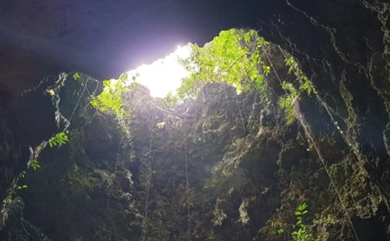
Next, non-marine tourism in the Buton Islands region is tourism located in the highlands in Wadiabero Village, Gu District, Central Buton Regency, called Gua Bidadari as an underground tourist spot, in this cave there is the beauty of natural rocks, there is also a natural bathing pool. This cave is a combination of water and dry caves, sunlight from the mouth of the cave penetrates into the cave providing natural lighting creating a stunning atmosphere [11].
The results of virtual observations obtained information that the Regional Government, in this case, the Wadiabero village government, wants to manage it, but until now it has not been managed properly due to constraints on costs, infrastructure and other supporting factors, even though the Bidadari Cave tourist attraction is an economic opportunity that can be utilized and used as a source of regional income and a source of income for the local community, if managed professionally with the hope of having a significant impact on positive changes that underlie the improvement of the welfare of the local community, thus this economic opportunity should ideally be started immediately and managed in stages.
Below is information about the Gua Bidadari (Figure 3):
Figure 3. Cave Bidadari - Wadiabero Village, Gu District
Source: https://www.itrip.id/gua-bidadari-buton
Observing the phenomenon of the results of observations of tourism potential in Banabungi District, South Buton Regency and Wadiabero Village, Central Buton Regency, there are still many tourisms potential opportunities that have not been explored by previous researchers and there are still many research problem opportunities that can be studied according to the knowledge of each researcher, such as tourism market potential that has not been identified by previous researchers. Thus, researchers are interested in researching: "Exploration of Tourism Market Potential Based on Digital Platforms Towards the International Tourism Market (Survey of Exploration of Tourism Market Potential to Realize the Green Economy Concept).
2.1 Tourism marketing trends in the digital era
The development of digital technology has changed the way tourism destinations are marketed and how consumers interact with tourism service providers. As internet usage increases, digital platforms have become one of the main ways to expand the reach of the tourism market. Digital platforms, including booking applications, social media, and tourism websites, make it easier for tourists to access information and make transactions in real time. According to a recent study by Mukhlis et al. [6], digital marketing not only increases destination visibility but also enables more personalized and data-driven marketing. This study replaces the older work of Sun et al. [4] and provides more recent evidence of the important role of digital platforms in tourism marketing. Marketing through digital platforms allows for more direct and dynamic interactions between tourism service providers and consumers. As exemplified by Anggarwati et al. [12], the use of social media and location-based applications allows tourists to discover and explore previously unreachable tourism destinations. These digital platforms optimize tourism marketing through the use of algorithms to target more specific markets and personalize offers according to consumer preferences.
2.2 Technology as a tourist market attraction
The digital world is identical to internet technology which is no exception to be used as a supporter of the attraction of the tourism market. Market attraction and competition support companies to develop strategic marketing, the strategic marketing process includes stages; strategic situation analysis, marketing strategy preparation, marketing program development and implementation and control of marketing strategies, such as the opinion that states that market attractiveness can be measured by market growth rate projection and attractiveness assessment made by management [13].
The existence of digital-based technology that is connected to internet technology has a significant impact and is an attraction for the tourism industry, which has implications for the gradual transformation of digital technology and is even implemented simultaneously in all aspects of social activities, including the tourism industry. This change in behavior certainly has an impact on economic actors, namely switching and changing conventional business models to digital business models by implementing various digital platforms based on AI, which make tourist consumers feel happy and comfortable with all the conveniences they get.
Furthermore, the technology of using AI, as a tourist market attraction is based on the results of research on "AI's Impact on Hospitality and Tourism Marketing", stating that; AI transforms customer processes and services by engaging smart and predictive customer care and by employing predictive and augmented product and service design [14]. It also illustrates the impact of AI on a three-stage framework for strategic marketing planning, namely: mechanical AI for repetitive functions; thinking AI for processing data to arrive at decisions; and feeling AI for analyzing interactions and human emotions. Initial applications have included personalization and recommender systems, conversational systems such as chatbots and voice assistants, prediction and forecasting systems, smart travel assistants, and language translation applications [14, 15].
2.3 Tourism market potential
Tourism market segmentation can be categorized as follows: 1) geographic segments, 2) demographic segments, 3) psychographic segments, 4) behavioral segments, 5) price segments, 6) life stage segments, and 7) benefit segments [16].
The potential of the tourism market overlaps with tourism marketing which is the implementation of systematic and coordinated business policies by private or public sector tourism organizations operating at the local, regional, national or international level, thus, tourism marketing needs to adopt digital marketing principles and strategies to reach netizens [12]. Tourism marketing applies segmenting, targeting, & positioning (STP) to increase business growth and satisfy the needs of modern travelers [17].
2.4 Economic perspective of the tourism sector
Investigating explanatory variables as determinants of tourism demand can use consumer theory. This theory states that the level of consumption depends on consumer income, the price of certain goods, the price of substitute and complementary goods and other variables that can cause shifts in demand. The main factors considered to influence tourism demand are income and relative prices [18].
In the Asia Pacific Journal of Marketing and Logistics, a research article entitled "Assessing Tourism Market Potential in a Dynamic Emerging Economy Theoretical and Empirical Insights" states that according to the World Bank reports, 80 percent of the 56 countries studied, cite tourism as the top option for economic growth and poverty reduction and Cambodia gives equal weights to tourism, agriculture, and manufacturing [7].
The economic perspective of the tourism sector is implied in the article "Tourism Development Policy Through Economic Potential in Supporting Tourism and Creative Economy Programs in the Lake Toba Region" that if implemented with optimal planning, tourism development will encourage economic growth and improve people's welfare. However, if tourism development does not go through good planning, it will hurt people's lives around the Lake Toba area. Efforts to develop tourism objects in terms of economic potential by increasing the diversity and competitiveness of local community products and facilitating and fostering community tourism businesses through tourism marketing programs.
2.5 Green economy concept
Green economy is an idea to improve the welfare and social equality of society, while reducing the risk of environmental damage significantly. The goal of a green economy is to avoid producing carbon dioxide emissions, conserve natural resources, and promote social justice. It also aims to create equitable opportunities for all members of society, ensuring that the benefits of a green economy are shared justly. The essence of the green economy as a model of economic development based on sustainable development. The green economy, according to the United Nation Environment (UNEP), is the process of reconfiguring business and infrastructure to provide better benefits to nature, humans and the economy.
The concept of a green economy focuses on sustainable management of natural resources and creates a balance between economic growth, environmental conservation, and social welfare. The application of a green economy in the tourism sector is essential to ensure that tourism growth does not damage the environment and can provide long-term benefits to local communities. According to Lumbanraja and Lumbanraja [19], the application of a green economy in managing tourism destinations not only focuses on reducing the carbon footprint but also on empowering local communities and preserving ecosystems. With the growing digital-based tourism market, the integration of the concept of a green economy and digital marketing is very relevant to ensure that destination promotion is carried out by considering sustainability aspects. The use of digital platforms in tourism marketing can be utilized to introduce and strengthen the principles of a green economy, such as by highlighting efforts to conserve nature, manage waste, and empower sustainable local economies.
2.6 Pillars of the green economy
The pillars of the green economy in Indonesia, namely the economic, social and environmental pillars that reflect green economic development, consist of 15 indicators as follows:
1) Economic Pillar, includes three indicators: emission intensity, energy intensity and Gross National Income (GNI)
2) The social pillar consists of four indicators, including unemployment rate, poverty rate, life expectancy, and average length of schooling
3) The environmental pillar includes five indicators; land cover, degraded peatland, emission reduction, managed waste and new and renewable energy.
The implications of the green economy are:
1) Production must be carried out using natural resources as efficiently as possible
2) Economic growth must be spread out and have an impact on the environment that is managed in a balanced manner
3) Conflicts of interest in the use of natural resources must be managed in a balanced manner [19].
This study uses a qualitative approach to explore the potential of the digital platform-based tourism market in Central Buton and South Buton. In analyzing the data, this study adopted the triangulation analysis method and SWOT analysis to ensure the validity and completeness of the information obtained. Triangulation was carried out by comparing data from various sources, including observation, document analysis, surveys, and interviews. However, to ensure the validity of the data, the data validation procedure was carried out through member checking techniques and discussions with experts in the field of digital tourism and green economy, to ensure the interpretation of the data is appropriate and in accordance with the local context.
The type of data in this study is primary data, Supomo and Indriantoro [20] against people who have insight into green economy and tourism development in South Buton Regency Sampling in this study used a purposive sampling technique, where informants were selected based on certain criteria relevant to the research objectives. Informants involved in the interview were individuals who had a deep understanding of the digital tourism sector and the green economy, including tourism destination managers, local stakeholders, and communities around the destinations that were the objects of study. A total of 63 respondents were selected for this study, with details of 37 respondents from South Buton and 26 respondents from Central Buton. This purposive sample selection was intended to gain relevant and in-depth insights into the implementation of digital platforms in marketing tourism and its relationship to the concept of a green economy.
In this study, ethical considerations are also very important. Before conducting interviews and surveys, all participants were given informed consent to ensure that they understood the purpose of the study, the procedures to be carried out, and their right to withdraw at any time without negative consequences. The researcher also guaranteed the confidentiality and anonymity of respondents' personal data, and ensured that the interview results were only used for academic and research purposes.
4.1 Content triangulation through observation, document analysis, questionnaires, and interviews
Content triangulation was conducted to verify the validity of the data by comparing the results of observations, document analysis, questionnaires, and interviews to ensure that the research findings were not based on only one data collection method. The triangulation results showed that the development of digital platform-based tourism has a significant impact on improving the local economy, supporting the concept of a green economy, and strengthening readiness towards the international tourism market.
Observations of tourism conditions carried out both directly and through online media showed that tourist destinations with great potential have not received full attention in management and marketing. The results of the document analysis confirmed that there are still limitations in digital-based promotional strategies that can increase the visibility of tourist destinations.
The results of the questionnaire and interviews with economic actors living around tourist destinations showed that the majority of people still face challenges in increasing income due to the lack of tourist visits. Therefore, digital marketing strategies and infrastructure improvements are important steps in optimizing the economic potential of this area.
4.2 Results and discussion of qualitative data content triangulation analysis
4.2.1 Income of economic actors
Most of the economic actors around Tebing Labulengke and Gua Bidadari have relatively low and unstable incomes. Their income depends on the number of tourists who come, which is still limited due to the lack of promotion and supporting facilities [21].
This analysis is in line with research in the Asia Pacific Journal of Marketing and Logistics [7], which states that tourism is a major factor in economic growth and poverty reduction in developing countries. In the case of South Buton and Central Buton, exploring tourism potential based on digital platforms is a strategic solution to improve the economic welfare of local communities.
4.2.2 Creating new potential tourist opportunity development
Economic actors and the community hope that local governments and investors can develop tourist destinations with broader promotional strategies, especially digital-based ones. As many as 96% of economic actors around Gua Bidadari are optimistic that this destination has the potential to attract new tourists if managed well.
This phenomenon supports the findings of previous study [6] which emphasizes that tourism marketing should utilize various digital platforms to reach a wider audience. In addition, the research [13] highlights that the attractiveness of a tourism market can be measured through growth rates and market projections.
4.2.3 Creating new tourism market segment attraction
Tourist destinations in South Buton and Central Buton still need innovation in attracting new tourist market segments. Lack of facilities and less than optimal marketing strategies make it difficult for these destinations to compete with other tourist destinations. The results of this study are in line with Elgin and Elveren [22], which show that increasing tourist loyalty to a destination is a key strategy in the increasingly competitive tourism industry.
4.2.4 Green economy concept
Green economy consists of three main pillars: economic, social, and environmental. The implementation of the green economy concept in South Buton and Central Buton still faces various challenges, especially in terms of regulation and policy implementation.
1) Economic Pillar: As many as 66% of economic actors hope that the green economy concept can improve people's welfare and create new jobs [23].
2) Social Pillar: Around 48% of economic actors believe that implementing a green economy can reduce poverty and increase labor productivity.
3) Environmental Pillar: As many as 47.6% of economic actors are aware of the importance of preserving the environment and expect government intervention in waste management and natural resource conservation.
This finding is consistent with the green economy policies proposed by UNEP (United Nations Environment Programme), which emphasizes the need to reconfigure infrastructure and businesses to provide greater benefits for people and the environment.
4.2.5 Towards the international tourism market
Tourist destinations in South Buton and Central Buton still have limitations in international competitiveness. As many as 55% of economic actors around Tebing Labulengke and 29.8% in Gua Bidadari feel that their tourist destinations are not yet confident that they can compete in the international market. The main challenges include the lack of global promotion, inadequate facilities, and security and comfort for foreign tourists.
Previous study [24] regarding the role of local government in marketing tourist destinations highlights the importance of effective promotion, participation in tourism exhibitions, and cooperation with airlines and travel agents. This finding is supported by Kubickova [25], who emphasizes that developing countries must be more active in managing and marketing tourist destinations to increase global competitiveness.
4.3 Triangulation results: Consistency of data and emerging patterns
4.3.1 Consistency of data
Based on the results of triangulation of data obtained from surveys, document analysis, quantitative data processing results from questionnaires, and interviews, it was found that there was a match in the exploration of tourism potential in South Buton Regency and Central Buton Regency. The tourist destinations of Tebing Labulengke in South Buton Regency and Gua Bidadari in Central Buton Regency have great potential to be developed into leading tourist attractions. This potential is supported by the uniqueness of each nature, such as the existence of towering cliffs with panoramic views of the sea at Tebing Labulengke and underground caves with natural pools at Gua Bidadari. However, until now, these two destinations have not been optimally managed to support local economic growth, improve community welfare, and contribute to the concept of a green economy.
This phenomenon shows that exploring the potential of digital-based tourism markets can have a significant impact on economic and environmental sustainability in the future, as well as opening up opportunities for this destination to enter the international tourism market through the use of digital platforms as a promotional and marketing tool.
4.3.2 Emerging patterns
1) Income of Economic Actors
70% of economic actors around Tebing Labulengke and 61% around Gua Bidadari have difficulty meeting economic needs due to the low number of tourists and minimal additional sources of income. Only a small number of economic actors feel that their income is sufficient to finance routine needs and future investments. The income gap between high- and low-income economic actors is quite significant, indicating the need for policies that can improve the distribution of community welfare.
2) Creating New Tourist Opportunities
96% of economic actors in Gua Bidadari and the majority of economic actors in Tebing Labulengke hope for concrete efforts from the local government and investors in developing infrastructure and tourism facilities. Great hopes are focused on the implementation of digital-based promotions, considering that digital platforms such as social media have a wide reach in attracting tourists from various market segments.
3) The Attraction of New Market Segments
91% of economic actors around Gua Bidadari and most of Tebing Labulengke feel that this tourist destination has not attracted new market segments due to the lack of innovation and minimal promotion carried out. The local government is expected to immediately implement a digital promotion strategy and improve the quality of facilities so that tourists have a pleasant and memorable experience, so that it can attract more local and international tourists.
4) Green Economy Concept
Economic Pillar (I1): 66% of economic actors in Tebing Labulengke and 93% in Gua Bidadari expect the local government to immediately implement the green economy concept to improve community welfare and reduce the risk of environmental damage. Social Pillar (I2): 98% of economic actors in Gua Bidadari expect the green economy concept to create more job opportunities and reduce poverty levels. Environmental Pillar (I3): The majority of economic actors in both regions are aware of the importance of preserving the environment, but face challenges in the form of limited infrastructure and supporting policies from the local government.
5) Towards the International Tourism Market
55% of economic actors in Tebing Labulengke are optimistic that this destination can compete in the international market, while 29.8% in Gua Bidadari are still hesitant due to the lack of infrastructure and promotion support. 67.5% of economic actors in Tebing Labulengke believe that the local government has not implemented an effective marketing strategy to attract international tourists.
Based on the results of data triangulation from South Buton Regency and Central Buton Regency, it shows that exploring digital-based tourism potential can have a positive impact on local economic growth and community welfare. However, various challenges still hamper the development of the Tebing Labulengke and Gua Bidadari tourist destinations, especially in terms of infrastructure, digital marketing, and the application of the green economy concept. This phenomenon is in line with research Hawkins [7] in the Asia Pacific Journal of Marketing and Logistics, which states that the tourism sector is one of the main instruments in economic growth and poverty alleviation in many developing countries.
One of the main obstacles is the lack of supporting infrastructure, such as road access, transportation facilities, and communication facilities that are still limited. This causes tourists to have difficulty reaching the destination, resulting in low levels of visits. This condition is in accordance with the findings which examines the role of government in promoting Mandalika tourism [24], where the active involvement of the government in managing and marketing the destination plays a major role in increasing tourism appeal. In addition, the absence of regional policies that support the implementation of a green economy is also a challenge in itself, as stated by Crompton and Nuttall [23] that the green economy is a strategy that can improve people's welfare while protecting the environment.
In addition to infrastructure issues, marketing and branding of tourist destinations in both districts are still very limited. Until now, promotions have been carried out conventionally and are not well organized, so they have not been able to reach potential tourists from a national or international scale. Implementation of digital-based marketing strategies, such as the use of social media and digital platforms, is very necessary to increase the attractiveness of this tourist destination. Study Mukhlis et al. [6] supports this by stating that digital marketing trends are able to significantly increase the competitiveness of tourist destinations through various online media that are more efficient and have a wider reach.
In addition, from the triangulation results it was found that the majority of economic actors around tourist destinations are still experiencing income instability. As many as 70% of economic actors around Tebing Labulengke and 61% around Gua Bidadari stated that their income was not enough to meet the family's routine needs. This is in line with Sukirno [21] which states that a person achieves maximum economic satisfaction when his income is sufficient to meet daily needs and has a surplus for future investment. The instability of income experienced by most local tourism actors in Central Buton and South Buton is one of the main challenges faced in tourism management. Most local economic actors depend on the number of tourist visits, which are often unstable, depending on the season and external circumstances. Although digital platforms can help increase visibility and attract more visitors, the causal relationship between the use of digital platforms and revenue growth needs to be strengthened with further evidence. For example, through surveys and interviews, many tourism actors reported an increase in visits after they used digital platforms for promotion. However, to prove this relationship more concretely, longitudinal data is needed that measures income and number of visits before and after the implementation of digital marketing strategies, which will provide a clearer picture of the effectiveness of using digital platforms in increasing local income.
Central Buton and South Buton face major challenges in competing in the international tourism market. Despite their extraordinary natural potential, the two regions are still lagging behind in terms of infrastructure and promotion. Competitor analysis shows that destinations such as Bali and Lombok have long dominated the Indonesian tourism market, with more developed infrastructure and stronger digital marketing strategies. In addition, new destinations such as Labuan Bajo in East Nusa Tenggara are also tough competitors with rapid development in terms of tourism facilities and international promotion. To increase competitiveness, Central Buton and South Buton must focus on improving basic infrastructure, such as accessibility, as well as strengthening branding and digital promotion that highlights their uniqueness, including the richness of local nature and culture.
In relation to the potential for developing new market segments, the majority of economic actors hope that local governments and investors can increase innovation and create new opportunities to attract domestic and international tourists. This hope is in line with opinion [13] which states that market attractiveness can be measured based on the growth rate and competitiveness of a tourist destination. However, the lack of innovation in managing tourist destinations is a major obstacle in attracting new market segments. This is also reinforced by the findings of Elgin and Elveren [22], which state that increasing tourist loyalty to a destination is highly dependent on the experience and satisfaction they obtain, which ultimately encourages repeat visits and recommendations to other tourists.
To contextualize the findings of this study, a comparative analysis was conducted with similar new tourism destinations in Indonesia, such as Gili Labak in Sumbawa and Komodo National Park in East Nusa Tenggara. Both destinations have successfully developed their tourism markets by optimizing digital marketing and utilizing online platforms to introduce their unique nature. Gili Labak, for example, has successfully attracted international tourists through social media-based promotions and collaboration with international travel agents. Similarly, Komodo National Park has introduced the concept of sustainable ecotourism, using digital platforms to educate tourists about nature conservation. This suggests that destinations such as Central Buton and South Buton can adopt similar strategies to attract tourists, while still paying attention to the deep sustainability aspects.
In relation to the green economy, the results of this study indicate that most people hope that the green economy concept will be implemented immediately in the management of tourist destinations. Around 66% of economic actors in Tebing Labulengke and 93% in Gua Bidadari support the implementation of the green economy as a solution to improve community welfare and maintain environmental sustainability. This is in line with research which states that the green economy is a sustainable development strategy that not only improves social welfare but also protects natural resources [23]. However, the biggest challenge is the lack of policies and regulations from local governments related to the implementation of this concept, as stated in the study of the Ministry of Energy and Mineral Resources that the implementation of the green economy must be supported by concrete policies and oriented towards long-term sustainability.
In addition, in the context of developing the international tourism market, it was found that 55% of economic actors in Tebing Labulengke were optimistic that this destination could compete in the global market, while in Gua Bidadari, only 29.8% had similar optimism. This shows that there is still a lack of confidence from the local community regarding the competitiveness of their tourist destination at the international level. Kubickova [25] in The Role of Government in Tourism emphasizes that in developing countries, the government has an important role in increasing the competitiveness of tourist destinations, but the main challenge faced is determining the appropriate level of involvement in managing the tourism sector.
Based on these findings, synergy is needed between the government, academics, the private sector, and the community in developing more effective strategies to promote tourism potential in South Buton Regency and Central Buton Regency. With the implementation of digital-based marketing, increasing supporting infrastructure, and integrating the green economy concept, the Tebing Labulengke and Gua Bidadari tourist destinations have the potential to become major attractions that can compete at national and international levels.
4.4 SWOT analysis
The results of the Strengths, Weaknesses, Opportunities, and Treaths (SWOT) analysis (Appendix Table A1) show that Gua Bidadari has great potential to be developed as a leading tourist destination in Central Buton Regency. However, this development faces various challenges, especially in terms of infrastructure, community economy, marketing, and regional policies that do not yet support the concept of a green economy. In terms of strengths, the uniqueness of Goa Bidadari as an underground tourist attraction provides its own appeal, especially for tourists looking for a different natural experience. This finding is in line with research by Hawkins [7], which states that the uniqueness of geography and the natural beauty of a destination is one of the main factors in attracting tourists and increasing regional economic growth.
However, the main weaknesses faced are the lack of infrastructure and limited marketing. Limited road access and transportation make it difficult for tourists to reach the location, resulting in low numbers of visits. In addition, promotions that are still very limited also hamper the potential for attracting national and international tourists. This is in line with the findings [6] which emphasize the importance of using digital platforms in tourism marketing, especially in the current digitalization era. The use of social media and other digital platforms can be a key strategy in increasing the exposure of this tourist destination to a wider market.
The opportunities available are quite large, especially in terms of government policy. The existence of programs such as the Special Allocation Fund (DAK) for Tourism and the Tourism Community Empowerment Program (P2MP) provide an opportunity for the Central Buton Regional Government to accelerate infrastructure development and empower the surrounding community. This is in line with research [25] which states that the government has a crucial role in managing tourist destinations, including in terms of incentive policies, infrastructure, and promotion. By utilizing tax incentives, ease of licensing, and better infrastructure development, the development of Gua Bidadari can be done more quickly and effectively.
However, threats such as climate change, global economic dependency, and security factors also need serious attention. Study [22] emphasized that tourist destinations that do not pay attention to sustainability and security aspects will experience a decline in tourist appeal in the long term. Therefore, it is important for the Central Buton Regional Government to immediately implement disaster mitigation strategies, tourism security systems, and environmental management based on a green economy. Study [23] also emphasized that developing green economy-based tourism can increase the long-term attractiveness of destinations, while ensuring environmental sustainability and community welfare.
Based on the strategies proposed in the SWOT analysis, several strategic steps that need to be taken to develop Gua Bidadari include:
1) Develop tourism infrastructure by utilizing Tourism DAK, including improving road access, providing transportation facilities, and improving internet services around destinations.
2) Increase community involvement through the Tourism Community Empowerment Program (P2MP) so that the community has an active role in tourism management.
3) Utilize digital platforms for tourism promotion, including social media, regional tourism websites, and digital campaigns targeting national and international markets.
4) Implement disaster mitigation strategies and tourism security systems to anticipate the risks of climate change and the threat of crime around tourist locations.
5) Design green economic policies, including regulations on environmental management and incentives for tourism businesses that apply sustainability principles.
With the implementation of this strategy, Gua Bidadari has the potential to develop into a leading tourist destination that is not only attractive to domestic tourists, but can also compete in the international market. Management based on a green economy and digitalization of tourism can be a solution in overcoming various existing challenges, thus providing a positive impact on the economy of the surrounding community and environmental sustainability.
Digitalization of tourism allows for wider promotion and leads to an increase in the number of tourists visiting areas such as Central Buton and South Buton. However, this expansion must still consider environmental and social sustainability, which is the core of the green economy. Digital platforms can be used to introduce and promote tourism destinations that prioritize sustainability principles, such as waste management, use of renewable energy, and nature conservation. By implementing digital-based marketing that promotes green economic values, tourism destinations can not only attract tourists but also encourage tourists to participate in sustainable practices during their visit.
As the use of digital platforms for marketing and transactions in the tourism sector increases, cybersecurity risks become a threat that needs to be considered. Digital platforms used by tourism actors for promotion and transactions can be the target of cyberattacks, which can damage reputation, reduce consumer trust, and cause financial losses. In the context of Central Buton and South Buton, the increased use of digital platforms that are not balanced with adequate security systems can expose the personal data of tourists and business actors to hacking or data leaks. Therefore, it is important for local stakeholders to invest in cybersecurity infrastructure, such as data encryption and continuous monitoring of potential threats.
This study shows that although Central Buton and South Buton have tremendous natural tourism potential, both still face significant challenges in developing their tourism markets, especially in the international market. The use of digital platforms in tourism marketing has been shown to have a positive impact on destination visibility, although its impact on increasing revenue still needs to be proven with more data. Along with market expansion, the implementation of green economy principles is essential to ensure long-term sustainability, both environmentally and socially. Therefore, local governments and tourism stakeholders need to develop strategies that align tourism market development with sustainability principles to achieve inclusive and environmentally friendly growth. To increase competitiveness in the international market, it is essential for Central Buton and South Buton to strengthen tourism infrastructure and improve digital promotion in a more integrated manner. One crucial step is to ensure that these destinations utilize technology to reach a wider market, while also maintaining environmental integrity through the implementation of a green economy.
5.1 Recommendation
As a strategic step, the local governments in Buton Tengah and Buton Selatan Regencies need to improve tourism infrastructure by building better road access, providing public transportation to tourist locations, and strengthening internet networks in tourist destinations to support digital-based promotions. In addition, the implementation of digital marketing through social media, official tourism websites, and collaboration with travel influencers and international travel agents must be strengthened to increase the attractiveness of these tourist destinations for global tourists. In the context of sustainability, the implementation of a green economy in managing tourist destinations must be a priority, including waste management, natural resource conservation, and community empowerment through community-based tourism programs. To ensure the sustainability of this strategy, synergy is needed between local governments, academics, the private sector, and the community in developing tourism policies based on innovation and sustainability. Further research is also recommended to examine the effectiveness of digital marketing in increasing the number of tourist visits, as well as developing a community empowerment model in tourism management that is oriented towards economic welfare and environmental sustainability. With these strategic steps, tourist destinations in Buton Tengah and Buton Selatan Regencies have great potential to develop into leading tourist destinations that not only attract domestic tourists, but are also able to compete internationally.
Based on the research findings, the following are recommendations that can be implemented by local governments and tourism stakeholders in Central Buton and South Buton:
1) Short-term Actions:
a. Increase digital promotion of tourism destinations through social media platforms and collaboration with international travel agents.
b. Introduce policies that support the development of basic infrastructure, such as road accessibility and public transportation, to facilitate tourists.
c. Implement digital literacy programs for local tourism actors to improve their understanding of the use of digital platforms in marketing.
2) Long-term Actions:
a. Develop policies that support the implementation of a green economy, including waste management, nature conservation, and empowerment of local communities through ecotourism.
b. Invest in strengthening cybersecurity infrastructure to protect the personal data of tourists and tourism actors who use digital platforms.
c. Form partnerships between the government, private sector, and local communities to design and implement programs that support the sustainability and growth of the tourism economy.
This study contributes to the development of tourism policy by providing in-depth insights into how digital platforms and green economy can be integrated to create sustainable tourism. These findings provide important evidence for local governments to formulate policies that encourage innovation in tourism marketing while maintaining environmental and social sustainability. This study also opens up opportunities for the development of policies that focus more on empowering local communities and environmentally friendly natural resource management in the context of tourism. Thus, the results of this study can be a reference for policy makers in designing more sustainable and highly competitive tourism development strategies in the future.
Table A1. SWOT analysis
Exploration of the Market Potential of the Underground Bidadari Cave Tourism
Wadiabero Village, Gu District, Central Buton Regency
Southeast Sulawesi Province
|
Internal Strategic Factor Analysis Summary (IFAS) \ External Strategic Factor Analysis Summary (EFAS) |
STRENGTHS (S)
|
WEAKNESSES (W)
|
|
OPPORTUNITIES (O)
a. Tax incentives b. Ease of permits c. Infrastructure Support d. Tourism Promotion |
Strategy SO
a. Tax incentives b. Ease of permits c. Infrastructure Support d. Tourism Promotion |
Strategy WO
|
|
TREATHS (T)
|
Strategy ST
|
Strategy WT
|
[1] Sudarnice, A. Eliyana, M.N. Sutoyo, Sumerta, I.K. (2024). Technology adoption in the measurement of innovation performance in SMEs: A systematic literature review. Journal of Infrastructure, Policy and Development, 8(8): 1-11. https://doi.org/10.24294/jipd.v8i8.5138
[2] Sudarnice, S., Herachwati, N., Udin, U. (2023). Bank financing, government support, and SME performance: The mediating role of entrepreneur competence. International Journal of Sustainable Development and Planning, 18(10): 3243-3251. https://doi.org/10.18280/ijsdp.181024
[3] Salgues, B. (2018). Society 5.0: Industry of the Future, Technologies, Methods and Tools. John Wiley & Sons. Inc.
[4] Sun, R., Gregor, S., Keating, B. (2015). Information technology platforms: Conceptualisation and a review of emerging research in IS research. In 26th Australasian Conference on Information Systems, Adelaide, Australia, pp. 1-17. http://doi.org/10.48550/arXiv.1606.01445
[5] Salgues, B. (2018). Society 5.0 and the Management of the Future. Wiley Online Library. https://doi.org/10.1002/9781119507314.ch6
[6] Mukhlis, I.R., Ratnawita, R., Oktaviani, D., Solihin, D.A., Agustiani, I.N., Akrom, N.K., Mardiana, D.L.S., Riana, N. (2023). Digital Marketing Strategy: Panduan Praktis & Strategi Pemasaran Digital Terkini. PT. Sonpedia Publishing Indonesia.
[7] Hawkins, R.A. (2022). Digitised historic newspapers as a primary source for marketing historians. Journal of Historical Research in Marketing, 14(2): 292-302. https://doi.org/10.1108/JHRM-08-2021-0036
[8] Karim, R., Goh, G.G.G., Lee, Y.L.E., Zeb, A. (2025). To be digital is to be sustainable-Tourist perceptions and tourism development foster environmental sustainability. Sustainability, 17(3): 1053. https://doi.org/10.3390/su17031053
[9] Prastika, Y., Kurniadi, H. (2023). Platform digital sebagai media informasi dan promosi sub sektor ekonomi kreatif keroncongantar. Jurnal Riset Mahasiswa Dakwah dan Komunikasi, 5(2): 131-144. http://doi.org/10.24014/jrmdk.v5i2.24681
[10] Ratna, S., Saide, S., Putri, A.M., Indrajit, R.E., Muwardi, D. (2024). Digital transformation in tourism and hospitality industry: A literature review of blockchain, financial technology, and knowledge management. EuroMed Journal of Business, 19(1): 84-112. https://doi.org/10.1108/EMJB-04-2023-0118
[11] Badan Pusat Statistik, “Buton Tengah dalam Angka,” Kabupaten Buton Tengah. https://butengkab.bps.go.id/id, accessed on Mar. 25, 2025.
[12] Anggarwati, D., Purwanto, Y., Winarno, A., Hermawan, A. (2023). Pengembangan bisnis pariwisata melalui inovasi produk dan penataan manajemen pada pasar wisata pandesari. Jurnal Pemantik, 2(1): 40-47. https://doi.org/10.56587/pemantik.v2i1.56
[13] Noor, Z.Z. (2021). Stategi Pemasaran 5.0. Deepublish.
[14] Bulchand-Gidumal, J., William Secin, E., O’Connor, P., Buhalis, D. (2024). Artificial intelligence’s impact on hospitality and tourism marketing: Exploring key themes and addressing challenges. Current Issues in Tourism, 27(14): 2345-2362. https://doi.org/10.1080/13683500.2023.2229480
[15] Vlačić, B., Corbo, L., e Silva, S.C., Dabić, M. (2021). The evolving role of artificial intelligence in marketing: A review and research agenda. Journal of Business Research, 128: 187-203. https://doi.org/10.1016/j.jbusres.2021.01.055
[16] Hidayah, N. (2021). Pemasaran destinasi pariwisata berkelanjutan di era digital: Targeting, positioning, branding, selling, marketing mix, internet marketing. Kreasi Cendekia Pustaka. Erlangga. http://repository.poltekpar-nhi.ac.id/1976/1/B_3802018101_Pemasaran%20Destinasi%20Pariwisata%20Berkelanjutan%20di%20Era%20Digital.pdf.
[17] Wahyuningrum, I.F.S., Oktavilia, S., Utami, S. (2020). Developing tourism potentials: Evidence from Semawis night market. Journal of Southwest Jiaotong University, 55(6): 1-10. https://doi.org/10.35741/issn.0258-2724.55.6.16
[18] Wirdiyantara. (2020). Pengantar Ekonomi Pariwisata. Yogyakarta : Pustaka Pelajar.
[19] Lumbanraja, P.C., Lumbanraja, P.L. (2023). Analisis variabel ekonomi hijau (Green Economy variable) terhadap pendapatan Indonesia (Tahun 2011-2020) dengan metode SEM-PLS. Jurnal Cendikia Niaga (JCN), 7(1): 61-73. https://doi.org/10.52391/jcn.v7i1.836
[20] Supomo, B., Indriantoro, N. (2002). Metodologi Penelitian Bisnis, Cetakan Kedua (2nd ed.). BPFE UGM.
[21] Sukirno, S. (2016). Teori Pengantar Mikro Ekonomi. PT. Raja Grapindo Persada.
[22] Elgin, C., Elveren, A.Y. (2024). Unpacking the economic impact of tourism: A multidimensional approach to sustainable development. Journal of Cleaner Production, 478: 143947. https://doi.org/10.1016/j.jclepro.2024.143947
[23] Crompton, R., Nuttall, N. (2012). UNEP annual report 2011. https://www.unep.org/resources/annual-report/unep-2011-annual-report.
[24] Harsono, I. (2024). Tourism industry performance: The role of local government in West Nusa Tenggara. Journal of Economics and Policy, 17(1): 102-116. https://doi.org/10.15294/jejak.v17i1.15273
[25] Kubickova, M. (2016). The role of government in tourism: Linking competitiveness, freedom, and developing economies. Czech Journal of Tourism, 5(2): 73-92. https://doi.org/10.1515/cjot-2016–00005