Jakkawat Laphet | Tapsatit Gooncokkord | Dultadej Sanvises | Waraphon Klinsreesuk*
© 2025 The authors. This article is published by IIETA and is licensed under the CC BY 4.0 license (http://creativecommons.org/licenses/by/4.0/).
OPEN ACCESS
This study examines the integration of transportation choices to enhance tourism efficiency and public safety within Thailand's Eastern Economic Corridor (EEC). It looks at how current management techniques and logistics could help to create ecologically friendly travel routes and experiences. The study demonstrates how much good project management affects operational results as well as solutions to raise the essential infrastructure quality for transportation and tourism. Important conclusions indicate strong relationships between project planning and logistical operations, therefore highlighting the need for strategic planning to support better travel and transportation experiences. Some ideas, on the other hand, were disproved since they suggested a mismatch between project planning and financial performance, therefore underlining the critical requirement of improved financial alignment and management during project development. This study aims to improve the acceptability of creative technologies and proactive participation of stakeholders to guarantee that infrastructure projects fitly satisfy the changing needs of the tourism and logistics sectors. The results provide a structure for feasible policies meant to preserve the status of the competitive economic center of the EEC. This study intends to help to create a more powerful and efficient transportation ecosystem supporting long-term development and stability in the area by filling up the found gaps. Emphasizing sustainability in all undertakings, this research at last provides the platform for further investigations aiming at enhancing travel operations inside the EEC and transportation networks.
modern management, logistics flow, transportation solutions, tourism efficiency, public safety, eastern economic corridor
In Thailand, urban road infrastructure represents a significant challenge that raises considerable concerns for road users daily. Issues such as subsiding roads, broken water pipes, and negligence on the part of construction contractors have led to an increase in road accidents. This alarming situation has led experts [1], to advocate for immediate assessments, strategic planning, and corrective measures to mitigate risks before injuries and fatalities occur. The severity and frequency of road accidents in Thailand have attracted widespread international attention, emphasizing the urgent need for enhanced road safety measures [2]. International media outlets, such as the New York Times, have depicted Thai roads as particularly hazardous, especially for marginalized populations. In addition, CNN has highlighted the disturbing statistics regarding road fatalities in Thailand. These reports highlight the critical role of infrastructure in promoting safety and efficiency, particularly given that traffic congestion remains a chronic issue with ramifications that extend beyond mere inconvenience [3]. The time lost due to traffic delays not only translates into heightened transportation costs but also leads to unnecessary fuel consumption and increased air pollution [4]. Several key factors contribute to these challenges, including a demand for road usage that surpasses current capacity, accelerated urban expansion, misaligned urban planning, and inadequate adherence to traffic regulations [5]. Identified six primary causes affecting concrete road quality in Thailand [6], including insufficient methodical oversight, challenges in personnel coordination, environmental factors, the quality of materials, and inadequate machinery. Despite local government agencies receiving consistent funding for infrastructure development, many of these resources are not effectively allocated for the essential maintenance and repair of deteriorating roads, resulting in wasted taxpayer money [7]. Addressing the multitude of road quality issues calls for the utilization of various theories and methodologies, including project management, maintenance techniques, budget management, cooperation with relevant agencies, and material quality control. Furthermore, effective infrastructure management is essential for enhancing operational efficiency in logistics an objective intricately tied to the successful development of the Eastern Economic Corridor (EEC) [8].
The EEC is heralded as a transformative initiative for economic and industrial development in Thailand, serving as a foundation for building upon existing industry strengths. By promoting the production of electric vehicles and advanced electronic systems, the EEC aims to capitalize on past successes, such as the Eastern Seaboard Development Program (ESB) [9], which played a pivotal role in revolutionizing Thailand's industrial capabilities three decades ago. The enactment of the Eastern Special Development Zone Act in 2018 grants the EEC distinct legislative advantages that facilitate rapid policy implementation and investment incentives for both international and local stakeholders [10]. At the heart of the EEC's operational framework is a commitment to investing in a comprehensive transportation network that interconnects roads, rail systems, maritime routes, and air travel. This infrastructure will seamlessly link Bangkok, Chachoengsao, Chonburi, Laem Chabang, Pattaya, Sattahip, U-Tapao, Map Ta Phut, and Rayong, creating a synergistic logistical ecosystem that enhances trade and tourism [11]. Key projects within this initiative include the development of the Laem Chabang deep-sea port, enhancements to U-Tapao airport, and the establishment of dual-track railways and high-speed rail to improve connectivity between essential regions [12]. The EEC aims to stimulate ten strategic industries to ensure sustainable growth, categorized into two groups: the “First S-Curve” industries focusing on established sectors such as modern automotive [13], smart electronics, high-income tourism, agriculture, biotechnology, and food processing and the “New S-Curve” industries, which emphasize emerging sectors like robotics, aviation and logistics, biofuels and bio-chemicals, digital technology, and comprehensive medical services [14]. This focused industrial push will establish a robust framework for stimulating private sector investment, enhancing production capabilities, and creating an appealing environment for foreign investments. Tourism, a crucial sector within the EEC [15], highlights the region's potential for economic advancement. Comprising the three key provinces of Chonburi, Rayong, and Chachoengsao, the EEC region is endowed with a wealth of natural resources and scenic attractions. Chonburi is celebrated for its beautiful coastline and islands, while Rayong adds to its charm with diverse culinary experiences and vibrant tourism options. Similarly, Chachoengsao, with its fertile lands and rich cultural heritage, presents unique attractions that draw visitors from around the world [16]. To align with the EEC's ambitious development agenda, it is imperative that the region implements effective road design and maintenance protocols. Clear traffic management systems and appropriate signage will significantly reduce accident rates and ensure safer travel experiences for users [17]. As travel times decrease, the region is poised to benefit from enhanced participation in various socio-economic activities, leading to greater efficiency in goods and service transport [18]. A robust infrastructure is paramount for nurturing new investment opportunities and fostering business growth, which ultimately strengthens the local economy. Well-maintained roads not only support public transport systems and promote walking or cycling thereby reducing reliance on personal vehicles—but also play a critical role in alleviating urban congestion and minimizing environmental pollution [19]. The resultant improvement in the urban environment directly enhances the quality of life for residents, allowing them to flourish in a safer and more efficient setting [20]. In conclusion, the challenges facing Thailand’s urban infrastructure, particularly within the EEC, necessitate a comprehensive and forward-thinking approach to road management and development. By investing in well-designed and maintained transportation networks, Thailand can facilitate effective logistics management, enhance road safety, and ultimately improve the quality of life for its citizens. The intersection of robust infrastructure and sustainable practices will ensure that the nation remains competitive on the global stage while promoting a safe and efficient urban environment for all.
Therefore, the objectives of this study are as follows:
1. How do modern management practices and logistics flow impact transportation and tourism efficiency in Thailand’s Eastern Special Economic Corridor (EEC)?
2. What effective strategies can be developed to improve transportation and tourism efficiency while ensuring public safety in the Eastern Special Economic Corridor?
To address these research questions, a comprehensive literature review was conducted, followed by the formulation of hypotheses, leading to the development of a conceptual model focused on the modern management of logistics flow: Boosting Operational Efficiency in the Eastern Economic Corridor. The ensuing sections detail the research methodology employed in this study and interpret the results obtained. Following this, the results, conclusions, discussions, and implications of the findings are presented. Finally, directions for future research are proposed. By exploring the interconnections between modern management practices and logistics efficiency, this research aims to contribute valuable insights into the optimization of transportation systems and tourism operations within the EEC. The findings are expected to guide stakeholders in developing effective strategies that align with the region's economic growth objectives, ultimately fostering a more efficient and robust transport ecosystem.
2.1 Modern management
In this study, the constructs from the POLC (Planning, Organizing, Leading, and Controlling) framework were selected due to their established relevance in modern management practices, particularly in the context of tourism logistics. Each component of the POLC framework plays a critical role in optimizing logistics operations and enhancing overall efficiency. Modern management is essential for optimizing tourism logistics, enhancing sustainability and visitor experiences. It encompasses four key components [21, 22]: planning, organizing, leading, and controlling. Each aspect is vital for aligning resources and stakeholders to ensure successful outcomes in tourism logistics. Planning is the first step, focusing on strategies that support tourism while protecting environmental quality. This process requires thorough research and collaboration among stakeholders, including local communities, businesses, government agencies, and NGOs [23]. Effective planning involves assessing tourism's impacts on local ecosystems and establishing guidelines to prevent overcrowding and degradation [24]. Moreover, strategic planning anticipates future trends, such as the integration of artificial intelligence (AI) and blockchain technology, ensuring relevance and competitiveness [25]. Organizing facilitates coordination among organizations, aligning stakeholder interests toward common goals established during the planning phase. Clear communication structures are essential to ensure roles and responsibilities are understood [26]. Prioritizing stakeholder involvement, public-private partnerships, and benefit-sharing mechanisms enhances cooperation and logistic efficiency [27]. Building marketing partnerships and knowledge networks among tourism businesses fosters best practices and continuous improvement in logistics operations [28]. Leading involves influencing individuals and groups to achieve desired outcomes. Effective leadership is critical for motivating teams and fostering a positive organizational culture [29]. Key leadership attributes include business acumen and strong interpersonal skills to guide team members [30]. Leaders should encourage entrepreneurial qualities that promote creativity and innovation, enhancing logistics management and visitor experiences [31]. Controlling ensures operations meet predefined objectives through quality control processes that address customer needs while minimizing costs. Implementing tools like Just in Time (JIT) inventory management improves operational efficiency [32]. Additionally, controlling includes conducting environmental impact assessments to maintain tourism sustainability. Feedback mechanisms enhance customer satisfaction and identify areas for improvement [33].
2.2 Logistics flow
Logistics flow is a vital element of efficient supply chain management, encompassing both core logistics activities and supporting operations [34]. Categorize these activities to help organizations optimize their processes, thereby enhancing operational performance and meeting customer expectations [35]. Core logistics activities include customer service, which focuses on timely communication and resolving issues to foster loyalty and repeat business [36]. Order processing is critical for accurate fulfillment and improved customer satisfaction, with technologies such as blockchain enhancing order accuracy and transparency [37]. Demand forecasting is essential for optimizing inventory levels, with IoT-based analytics improving accuracy and supply chain resilience [38]. Effective inventory management reduces carrying costs and uses Just-in-Time (JIT) techniques to minimize waste [39]. Warehousing ensures efficient storage, with digital twin technology optimizing space utilization [40]. Transportation's effectiveness depends on choosing the right mode, with sustainable practices like electric vehicle adoption contributing to environmental goals [41]. Effective procurement ensures timely sourcing of materials, and blockchain technology has been shown to improve supplier reliability [42]. Reverse logistics is crucial for managing returns and recycling, thereby enhancing sustainability, especially in e-commerce [43]. Supporting activities include after-sales support for customer retention [44], strategic site selection for warehouses influenced by AI and data analytics [45], and automation in material handling to improve efficiency [46]. Additionally, packaging must balance protection and sustainability, with smart solutions helping reduce waste [47]. Effective logistics communications through cloud-based platforms enhance collaboration among supply chain partners [48]. In conclusion, logistics flow integrates core activities like customer service and transportation with supporting activities [49], transforming operations through digital technologies, ultimately promoting efficiency and sustainability. Adapting to emerging trends is essential for businesses to remain competitive in a dynamic market [50].
2.3 Efficiency in logistics operations
Efficiency in logistics operations is vital for organizations looking to improve performance and effectively meet market demands [46]. Various indicators measure this efficiency, categorized into cost efficiency, reliability in delivery, and reliability in transport [51]. Cost efficiency is assessed through several key metrics. Warehousing Management Costs, which include expenses related to storage, equipment, and labor, can be minimized through improved practices and the adoption of AI-driven warehouse automation that enhances inventory control [52]. Inventory Carrying Costs, associated with holding inventory like storage fees and potential obsolescence, significantly impact profitability. Implementing Just-in-Time (JIT) strategies helps to lower these costs [53]. Transportation Costs involve expenses for the movement of goods, which can be optimized with effective route planning and digital logistics solutions while adopting green technologies reduces both costs and environmental [54]. Logistics Administration Costs, which cover wages and planning, can be diminished using cloud-based logistics platforms that enhance decision-making [55].
Reliability in delivery measures includes Average Order Cycle Time, which gauges the total time from order receipt to delivery, critical for improving customer responsiveness [56]. Average Inventory Days indicate how long inventory remains unsold, affecting cash flow; AI-driven forecasting has improved inventory turnover and demand prediction [57]. Average Delivery Cycle Time also highlights the importance of efficient last-mile delivery, especially for e-commerce, with IoT integration providing real-time updates to minimize delays [58].
Reliability in transport ensures timely and safe delivery of goods. The Delivery Capability Rate reflects an organization’s success in meeting delivery promises, with blockchain technology enhancing transparency and accuracy [59]. Furthermore, the Return Rate of Goods can uncover quality issues and customer dissatisfaction, while Accuracy in Demand Forecasting supports optimal stock levels through AI-powered analytics, reducing stockouts and excess [60]. In conclusion, measuring logistics efficiency through these indicators provides businesses with insights critical for informed decision-making and strategic alignment, supporting economic and environmental goals within evolving logistics landscapes [61].
2.4 Research conceptual framework and hypotheses
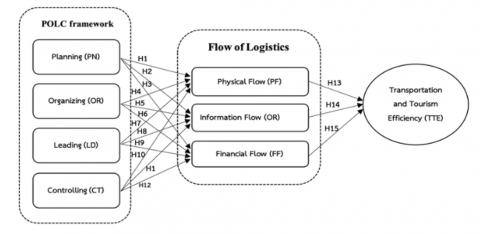
Based on the study of Modern Management in Optimizing Tourism Logistics (MM), Logistics Flow (LF), and Transportation and Tourism Efficiency (TTE), it can be summarized into a research conceptual framework and hypotheses as illustrated in Figure 1.
Figure 1. Conceptual research framework
2.4.1 From the research conceptual framework, the following hypotheses can be articulated
H1. Project planning has a statistically significant relationship with physical flow.
H2. Project planning has a statistically significant relationship with the flow of information data.
H3. Project planning has a statistically significant relationship with the flow of funds.
H4. Project management has a statistically significant relationship with physical flow.
H5. Project management has a statistically significant relationship with the flow of information data.
H6. Project management has a statistically significant relationship with the flow of funds.
H7. Achieving the project's goals has a statistically significant relationship with physical flow.
H8. Achieving the project's goals has a statistically significant relationship with the flow of information data.
H9. Achieving the project's goals has a statistically significant relationship with the flow of funds.
H10. Project control has a statistically significant relationship with physical flow.
H11. Project control has a statistically significant relationship with the flow of information data.
H12. Project control has a statistically significant relationship with the flow of funds.
H13. Physical flow has a statistically significant relationship with Transportation and Tourism Efficiency.
H14. The flow of information data has a statistically significant relationship with Transportation and Tourism Efficiency.
H15. The flow of funds has a statistically significant relationship with Transportation and Tourism Efficiency.
2.5 Data extraction and analysis
This study focuses on the development of prototype roads aimed at enhancing transportation efficiency and tourism within the Eastern Economic Corridor. A quantitative research approach was adopted for data collection, utilizing an online questionnaire to investigate various dimensions of modern management, logistics flow, and the effectiveness of transportation and tourism in the region. The questionnaire was developed using Google Forms and disseminated through multiple channels, including social media platforms such as Facebook and Line, as well as via email, during the data collection period in March 2025. Prior to the main survey, a pilot study was conducted to ensure the validity and reliability of the instrument. The structured questionnaire comprises four sections: the first section gathers demographic factors, collecting data on respondents' personal attributes such as age, gender, occupation, and location; This research has received ethical approval from the Ethics Committee of Burapha University, Thailand, under the reference number IRB2-046/2568, for the project titled "Development of Prototype Roads for Transportation Efficiency and Tourism in the Eastern Economic Corridor." The second section assesses modern management components, requesting evaluations of perceptions regarding professional management and its relationship to logistics flow; the third section explores logistics flow, focusing on the effectiveness of logistics processes as experienced by respondents; and the final section invites suggestions for improvement, allowing respondents to provide additional comments on the existing systems. For this quantitative research, a nonprobability sampling technique was employed, specifically convenience sampling, which does not account for the probability of selection for each unit. The target population consisted of residents of Chonburi Province, totalling 1,064,161 individuals [62]. The sample size was determined based on the recommendations of Hair et al. [63, 64], suggesting a range of 200 to 300 respondents, calculated as 10 to 20 times the number of observable variables, resulting in a minimum sample size of 200 respondents.
Data analysis was conducted using statistical methods, primarily through Structural Equation Modeling (SEM), with a focus on the Partial Least Squares SEM (PLS-SEM) approach. This method is particularly suitable for exploratory research and is robust against deviations from normal distribution. The analysis process began with preliminary data screening to ensure completeness and consistency, followed by descriptive statistics to summarize the demographic information and general sentiment. Utilizing SmartPLS 4.0 software, the PLS-SEM approach was employed to assess the measurement model for construct validity and reliability, in addition to evaluating the structural model for the hypothesized relationships. Path coefficients, t-values, and R² values were extracted to evaluate the strength and significance of the defined relationships within the research framework. Overall, these meticulous data extraction and analytical procedures were designed to provide comprehensive insights into the impact of modern management on logistics performance and tourism success within the Eastern Economic Corridor, allowing for evidence-based recommendations for future enhancements. Additionally, the questionnaire included one item dedicated to collecting further suggestions from respondents, employing a 5-point Likert scale, as shown in Table 1 [65, 66] to allow for nuanced evaluations of attitudes and opinions.
Table 1. Five-point Likert rating scale
|
Mean Score Range |
Interpretation |
Mean Score Range |
|
4.21 – 5.00 |
Strongly disagree |
4.21 – 5.00 |
|
3.41 – 4.20 |
Disagree |
3.41 – 4.20 |
|
2.61 – 3.40 |
Moderate |
2.61 – 3.40 |
|
1.81 – 2.60 |
Agree |
1.81 – 2.60 |
|
1.00 – 1.80 |
Strongly agree |
1.00 – 1.80 |
The initial development of the questionnaire was based on a comprehensive review of the literature and consultations with experts to ensure content validity. Techniques such as the Index of Item Objective Congruency (IOC) were employed to confirm alignment with the research objectives. Specifically, three experts one in transportation logistics, one civil engineer, and one tourism academic were consulted to assess and verify the relevance and clarity of the questionnaire items. This rigorous approach, which included their feedback, ensured that the questionnaire effectively captures the intended constructs, contributing to the overall reliability and validity of the study findings before ethical approval was sought and received ethical approval from Burapha University, number IRB2-046/2568. Prior to data collection for this research. Data collection was implementeds through online platforms, disseminating the questionnaire via Facebook and LINE groups, employing Google Forms for efficient data gathering. The researcher allocated a timeframe of 20 days to gather responses, ultimately achieving a full response rate of 100%, with 200 completed questionnaires ready for analysis. Data analysis was conducted using statistical software, beginning with descriptive statistics to summarize demographic data.
Following this, Structural Equation Modeling (SEM) was employed to analyze the interconnectedness of variables based on the initial hypotheses, allowing for alternative model constructions to identify the most fitting model based on statistical criteria. Reliability testing was conducted using Cronbach's Alpha Coefficient, aiming for a value above 0.7 to confirm the survey’s consistency. For validation of the different dimensions of the data, both convergent and discriminant validity were assessed using average variance extracted (AVE) and Fornell-Larcker criteria [67]. The evaluation of model adequacy and hypothesis testing incorporated techniques such as Bootstrapping for establishing confidence intervals for parameter estimates, with significance levels considered in the context of paths between variables.
From the survey data collected from a sample of 200 respondents meeting the specified criteria, the respondents primarily included those who have used Road No. 344 and live in the vicinity. It was found that many respondents were female, totaling 107 individuals, which accounted for 53.5%, while 93 respondents were male, making up 46.5%. Regarding age, most respondents were between 20-29 years old, totaling 74 individuals, or 37.0%. This was followed by the age group of 30-39 years with 58 individuals (29.0%), then 40-49 years with 34 individuals (17.0%), 50-59 years with 18 individuals (9.0%), and finally those aged 60 years and above, totaling 16 individuals (8.0%). In terms of marital status, many respondents were single, amounting to 112 individuals (56.0%), followed by those who were married (74 individuals, 37.0%), divorced (12 individuals, 6.0%), and separated (2 individuals, 1.0%). Regarding education, many respondents held a bachelor's degree, totaling 103 individuals (51.5%). This was followed by those with education below a bachelor's degree (41 individuals, 20.5%), master's degree holders (36 individuals, 18.0%), and those with a doctoral degree (20 individuals, 10.0%). In terms of occupation, most respondents were employees in the private sector, totaling 135 individuals (67.5%). This was followed by public servants (34 individuals, 17.0%), self-employed/business owners (15 individuals, 7.5%), state enterprise employees (9 individuals, 4.5%), and those who were unemployed (7 individuals, 3.5%). Regarding income, many respondents earned between 15,001 and 25,000 baht, totaling 98 individuals (49.0%). This was followed by those earning between 25,001 and 30,000 baht (35 individuals, 17.5%), between 45,001 and 55,000 baht (23 individuals, 11.5%), above 55,000 baht (19 individuals, 9.5%), between 35,001 and 45,000 baht (17 individuals, 8.5%), and those earning 15,000 baht or less (8 individuals, 4.0%).
According to Table 2, the descriptive statistical analysis aligned with the conceptual framework reveals a generally high level of effectiveness across various dimensions. Planning is rated at a mean of 4.14 with a standard deviation of 0.73, indicating that strategic planning practices are perceived as robust. Similarly, organizing also scores high with a mean of 4.13 (S.D. = 0.74), reflecting solid organizational structures and processes. The leadership dimension shows the highest mean at 4.21 (S.D. = 0.74), suggesting that leadership practices are particularly effective in driving the organization’s goals. Controlling follows closely with a mean of 4.16 (S.D. = 0.73), emphasizing effective monitoring and regulatory processes. Among the various flows assessed, physical flow and financial flow both achieve the highest scores of 4.34 (S.D. = 0.72), demonstrating a strong perception of efficiency in the movement of goods and management of financial resources. Information flow is also notably high at a mean of 4.32 (S.D. = 0.72), Finally, transportation and tourism efficiency received a mean rating of 4.04 (S.D. = 0.82), reflecting a strong emphasis on the importance of enhancing transportation efficiency among respondents. The higher standard deviation indicates greater variability in opinions, suggesting diverse views on the effectiveness of current transportation systems and the need for improvements. While perceptions in this category remain positive, they are slightly lower than in other dimensions, highlighting the need for targeted enhancements. Overall, respondents perceive the organization as performing well in all categories, particularly in flow-related areas, which are critical for ensuring operational success.
Table 2. Descriptive statistics
|
Constructs |
Descriptive Statistics |
|||
|
Min. |
Max. |
Mean |
S.D. |
|
|
Planning |
1.00 |
5.00 |
4.147 |
0.7302 |
|
Organizing |
1.00 |
5.00 |
4.136 |
0.7453 |
|
Leading |
1.00 |
5.00 |
4.210 |
0.7400 |
|
Controlling |
1.00 |
5.00 |
4.161 |
0.7375 |
|
Physical Flow |
1.00 |
5.00 |
4.343 |
0.7237 |
|
Information Flow |
1.00 |
5.00 |
4.325 |
0.7290 |
|
Financial Flow |
1.00 |
5.00 |
4.346 |
0.7255 |
|
Transportation and Tourism Efficiency |
1.00 |
5.00 |
4.0428 |
0.8240 |
The researchers provided examples of the questions used in the study. As shown in Table 3, the factor loadings for all measurement items exceeded 0.70, indicating adequate item reliability. To assess internal consistency, we utilized composite reliability and Cronbach’s alpha values, all of which surpassed the recommended threshold of 0.70, suggesting high internal consistency [68]. Convergent validity was assessed using average variance extracted (AVE) values, all of which exceeded the recommended threshold of 0.50, indicating adequate convergent validity. Additionally, the assessment of multicollinearity among the predictors was conducted to ensure that there were no significant intercorrelations. The variance inflation factor (VIF) should be below 5.00, as advised by Hair et al. [64]. Referring to Table 2, the VIF values for the predictor constructs ranged from 1.001 to 3.553, which aligns with the established criteria. This indicates that the structural equation model for this study did not encounter issues with multicollinearity among the external constructs.
Table 3 presents the results for discriminant validity, which was assessed using the Fornell–Larcker criterion. Additionally, it was verified by checking if the square root of each measure's average variance extracted (AVE) 38 was greater than its correlations with other constructs in the model. The findings demonstrated that all AVE values surpassed the corresponding squared correlations among the latent constructs, meeting the criteria for adequate discriminant validity in this study. This indicates that the average variance extracted for the same latent variables was higher than their correlations with other latent variables. Details are as follows: Financial Flow (FF) had the highest AVE in the same block at 0.941, while Controlling (CT) was 0.871.
The results presented in Table 4 illustrate the outcomes of the hypothesis testing conducted on the 12 propositions, revealing that 9 hypotheses were rejected due to their p-values exceeding the significance threshold of 0.05. Specifically, the rejected hypotheses include H3, which posits that project planning has a statistically significant relationship with the flow of funds; H6, asserting that project management has a statistically significant relationship with the flow of funds; H7, suggesting that achieving the project's goals correlates significantly with physical flow; H9, which states that achieving the project's goals relates significantly to the flow of funds; H10, indicating that project control significantly affects physical flow; H11, claiming a significant relationship between project control and the flow of information data; H12, which presumes project control affects the flow of funds; H13, asserting that physical flow is significantly related to logistics and tourism efficiency in the Eastern Economic Corridor; and H14, which posits that the flow of information data significantly impacts logistics and tourism efficiency in the region.
Table 3. Measurement model results
|
Constructs |
Measurement Label |
Loading |
T-Value |
|
Planning (PN) VIF =3.552; CR=.908; α = .909; AVE = .787 |
PN1. The road construction in your area involves a participatory process with the local community. |
0.854 |
11.864 |
|
PN2. The information provided regarding the road construction in your area is clear, detailed, and comprehensive. |
0.937 |
11.862 |
|
|
PN3. The road construction in your area includes feedback from the local community during the implementation. |
0.833 |
10.970 |
|
|
Organizing (OR) VIF =1.369; CR= .922; α = .922; AVE = .866 |
OR1. The road construction in your area receives feedback from the local community after the operations are completed. |
0.911 |
16.446 |
|
OR2. The road construction in your area is of high quality and meets standards. |
0.930 |
16.445 |
|
|
OR3. The roads in your area have improved travel convenience. |
0.950 |
17.775 |
|
|
Leading (LD) VIF=1.309 ; CR=.919; α =.920; AVE = .807 |
LD1. The roads in your area facilitate more convenient transportation of goods. |
0.832 |
48.453 |
|
LD2. The roads in your area enhance access to tourist attractions for the public. |
0.937 |
46.978 |
|
|
LD3. The roads in your area contribute to an improved quality of life. |
0.920 |
44.810 |
|
|
Controlling (CT) VIF=3.553; CR= .842;α = .840; AVE = .759 |
CT1. The roads in your area undergo strict operational control. |
0.893 |
10.443 |
|
CT2. Issues arising during the road construction in your area have been effectively addressed. |
0.904 |
10.464 |
|
|
CT3. Problems arising after the road construction in your area have been well improved and resolved. |
0.813 |
9.393 |
|
|
Physical Flow (PF) VIF=1.544; CR= .903; α = .909; AVE = .723 |
PF1. The roads in your area are safe for pedestrians. |
0.854 |
17.776 |
|
PF2. The roads in your area are safe for cyclists. |
0.937 |
17.775 |
|
|
PF3. The roads in your area are safe for motorcycle users. |
0.833 |
17.205 |
|
|
Information Flow (IF) VIF=1.545; CR= .950; α = .951; AVE = .771 |
IF1. The roads in your area have clear directional and traffic signage. |
0.896 |
27.895 |
|
IF2. The travel application of the Department of Land Transport, such as DLT Smart Services, provides efficient travel information. |
0.925 |
28.191 |
|
|
IF3. Private travel applications, such as Booking.com, Expedia, Traveloka, Trip.com, TripAdvisor, Trivago, and Airbnb, can provide |
0.847 |
16.528 |
|
|
Financial Flow (FF) VIF=1.001; CR= .957;α = 0.957; AVE = .886 |
FF1. The road construction in your area is cost-effective in terms of investment. |
0.961 |
35.909 |
|
FF2. The repair of roads in your area is cost-effective in terms of investment. |
0.958 |
35.910 |
|
|
FF3. The road constructions in the area are environmentally friendly. |
0.946 |
26.204 |
|
|
Transportation and Tourism Efficiency (TTE) CR= .959; α = .959; AVE = .775 |
TTE1. Transportation costs in your area affect the prices of goods and services. |
0.906 |
10.160 |
|
TTE2. The readiness of logistics in your area influences travel decision-making. |
0.839 |
16.221 |
|
|
TTE3. The readiness of logistics in your area impacts the transportation of goods. |
0.886 |
10.155 |
Note: CR: composite reliability; α: Cronbach’s alpha values; AVE: average variance extracted
Table 4. Discriminant validity using the Fornell–Larcker criterion
|
Construct |
Mean |
S.D. |
PN |
OR |
LD |
CT |
PF |
IF |
FF |
TTE |
|
Planning (PN) |
4.147 |
0.730 |
0.887 |
|
||||||
|
Organizing (OR) |
4.136 |
0.745 |
0.433 |
0.930 |
|
|||||
|
Leading (LD) |
4.210 |
0.740 |
0.429 |
0.390 |
0.898 |
|
||||
|
Controlling (CT) |
4.161 |
0.737 |
0.839 |
0.467 |
0.392 |
0.871 |
|
|||
|
Physical Flow (PF) |
4.343 |
0.723 |
0.491 |
0.482 |
0.368 |
0.461 |
0.850 |
|
||
|
Information Flow (IF) |
4.325 |
0.729 |
0.479 |
0.506 |
0.581 |
0.430 |
0.594 |
0.878 |
|
|
|
Financial Flow (FF) |
4.346 |
0.725 |
-0.014 |
-0.017 |
0.035 |
-0.002 |
-0.000 |
-0.022 |
0.941 |
|
|
Transportation and Tourism Efficiency (TTE) |
4.042 |
0.824 |
-0.028 |
-0.088 |
-0.025 |
-0.031 |
-0.065 |
-0.022 |
0.871 |
0.881 |
Notes: The values of the square root of AVE are presented through the italicized diagonal elements. The other elements present the mutual correlations among the constructs
Table 5. Path analyses (direct effects)
|
Direct Effect |
Path |
T-Value |
P-Value |
Results |
|
H1 |
PN$\to$PF |
2.204** |
0.028 |
Accepted |
|
H2 |
PN$\to$IF |
2.233** |
0.026 |
Accepted |
|
H3 |
PN$\to$FF |
0.480 |
0.632 |
Rejected |
|
H4 |
OR$\to$PF |
4.010** |
0.000 |
Accepted |
|
H5 |
OR$\to$IF |
3.843** |
0.000 |
Accepted |
|
H6 |
OR$\to$FF |
0.434 |
0.664 |
Rejected |
|
H7 |
LD$\to$PF |
1.586 |
0.113 |
Rejected |
|
H8 |
LD$\to$IF |
5.569*** |
0.000 |
Accepted |
|
H9 |
LD$\to$FF |
0.787 |
0.431 |
Rejected |
|
H10 |
CT$\to$PF |
0.382 |
0.702 |
Rejected |
|
H11 |
CT$\to$IF |
0.442 |
0.658 |
Rejected |
|
H12 |
CT$\to$FF |
0.326 |
0.745 |
Rejected |
|
H13 |
PF$\to$TTE |
1.939 |
0.053 |
Rejected |
|
H14 |
IF$\to$TTE |
1.088 |
0.276 |
Rejected |
|
H15 |
FF$\to$TTE |
33.728*** |
0.000 |
Accepted |
Notes: *** p<0.01; ** p<0.05; n.s. = p > 0.05
Conversely, 6 hypotheses were accepted, indicating statistically significant relationships. These accepted hypotheses include H1, which maintains that project planning has a statistically significant relationship with physical flow; H2, suggesting that project planning significantly affects the flow of information data; H4, proposing that project management has a statistically significant relationship with physical flow; H8, asserting that achieving the project's goals correlates significantly with the flow of information data; and H15, which posits that the flow of funds significantly relates to logistics and tourism efficiency in the Eastern Economic Corridor. These findings contribute to a nuanced understanding of the interplay between various aspects of project management and their implications for logistics and tourism outcomes in the region.
The findings from the hypothesis testing indicate the respondents' perceptions and opinions of the interrelations among project management factors and their influence on logistics and tourist efficiency in the Eastern Economic Corridor. The dismissal of nine hypotheses indicates that respondents did not recognize substantial linkages among these elements, which carries significant consequences for comprehending the present condition of project management methods and their efficacy.
The dismissal of H3 and H6 signifies that participants did not identify a statistically significant correlation between project planning or project management and the flow of cash. This highlights apprehensions over a possible disjunction between strategic planning and financial efficacy in their experiences. This suggests that while project planning is essential for initiative success, its implementation may not be well aligned with finance goals, resulting in suboptimal resource allocation and financial results. This disconnection may lead to projects not achieving their financial objectives, thereby compromising overall efficiency and sustainability in logistics and tourism operations.
The rejection of hypotheses concerning the attainment of project objectives and operational oversight (H7, H9, H10, H11, H12) indicates a consensus among respondents that these project management processes may not substantially impact critical logistical flows or financial operations as initially proposed. This indicates that the existing project management frameworks may insufficiently address the complexities and issues unique to the logistics and tourist sectors. The absence of observed impact suggests that operational control methods and goal attainment strategies may need reassessment or improvement to successfully enhance logistical performance and align with overarching corporate objectives.
The rejection of hypotheses H13 and H14 signifies that respondents did not recognize a significant influence of physical movement or data flow on the overall efficiency of logistics and tourism. This discovery prompts inquiries on the efficacy of current logistics systems and the resilience of information flow in supporting decision-making and improving operational results. This indicates a possible deficiency in the integration of logistics processes or the technologies employed for data management, resulting in inefficiencies that may negatively impact visitor experiences and operational agility.
The endorsement of six hypotheses underscores regions where respondents identified substantial linkages. The endorsement of H1 demonstrates that respondents acknowledged a significant correlation between project planning and physical flow, suggesting that they perceive good project planning as a means to enhance logistical operations. Correspondingly, the endorsement of H2 suggests that respondents recognized the pivotal role of project planning in influencing the dissemination of information data, reflecting an understanding of the significance of strategic planning in information management. The validated hypotheses about project management (H4) and the attainment of project objectives (H8) emphasize the respondents' recognition of these elements as crucial determinants of efficient physical and informational flows. Ultimately, the endorsement of H15 indicates that respondents regarded the flow of funds as a pivotal element affecting the efficiency of logistics and tourism, highlighting the significance of financial considerations in the effective implementation of projects.
The insights obtained from both the accepted and rejected hypotheses offer a detailed comprehension of the elements influencing logistics and tourism efficiency in the Eastern Economic Corridor. Addressing the ramifications of the rejected hypotheses will be essential for formulating strategic efforts that improve project management efficacy and synchronize operational practices with the requirements of the tourism industry.
The findings of this study reveal a complex perception among respondents regarding project management's effectiveness in influencing logistics and tourism outcomes within the Eastern Economic Corridor (EEC). By confirming some hypotheses while rejecting others, the research underscores critical insights into how modern management practices shape operational efficiency. To enhance transportation and tourism within the EEC, several strategic initiatives are recommended. First, strengthening project planning through comprehensive frameworks that integrate stakeholder inputs is essential to align projects with local needs and global best practices. Collaboration among government agencies, private sectors, and local communities should be fostered to enhance infrastructure project implementation. Additionally, leveraging advanced technologies like artificial intelligence (AI) and blockchain can improve logistics management by enhancing inventory control and facilitating real-time tracking. Investment in the maintenance and upgrading of existing transport infrastructure is crucial to reduce accidents and delays, which will improve safety and travel experiences. Promoting sustainable practices, such as the integration of electric vehicles and emissions reduction strategies, can further attract eco-conscious visitors. Streamlining regulations will build confidence among users and investors, while establishing robust monitoring mechanisms for performance indicators will support continuous improvements.
Diversifying tourism offerings to highlight the unique attractions of the EEC and investing in workforce development will ensure that personnel in logistics and tourism are equipped to provide high-quality service. Collectively, these strategies aim to create a more efficient transport ecosystem in the EEC, fostering economic growth and enhancing the quality of life in the region.
This study elucidates the complex interconnections between modern management techniques, logistics flow, and their influence on sustainable transportation and tourism efficiency within Thailand's Eastern Economic Corridor (EEC). Effective project management significantly enhances operational outcomes, particularly through strategic planning, which is closely linked to improved logistical operations, aligning with previous research on management practices in the tourism and transportation sectors [69, 70].
Key results reveal that the acceptance of hypothesis H15 illustrates that the allocation of financial resources significantly impacts transportation and tourist efficiency (TTE), highlighting the imperative for robust financial management strategies to promote sector growth. The rejection of nine hypotheses, including H3 and H6, signifies a disconnect between project planning and financial outcomes, as stakeholders demonstrate skepticism about the returns on infrastructure expenditures, especially concerning high-speed rail projects in the EEC [71].
The rejections of H3, H6, and H7 highlight significant shortcomings in the interrelations of project planning, management, and financial transactions. This suggests that respondents do not identify clear connections between strategic planning and effective financial management. These findings accord with significant concerns about insufficient project governance in developing economies, often resulting in financial misalignment [72-74]. Therefore, it is essential to integrate financial strategies with project execution to ensure effective resource allocation and long-term sustainability.
The uncertainty regarding the impact of project control on logistical and financial operations, as evidenced by the rejection of H7, H9, H10, H11, and H12, indicates significant opportunities for improvement. Ineffective oversight procedures can create bottlenecks in tourism logistics, highlighting the need for enhanced governance and accountability in project management frameworks, as stated by Ribeiro et al. [75]. Improving project control mechanisms is crucial for optimizing logistical flows, leading to safer and more efficient transportation systems [69, 76, 77].
In conclusion, the research highlights that the effectiveness of tourism and transportation in the EEC is largely contingent upon contemporary management strategies and logistical operations. The varied viewpoints of respondents underscore challenges in enhancing tourism and logistics outcomes, highlighting the intricacies of effective project management. Bridging these gaps requires alignment between programs, local needs, and global norms.
The utilization of technologies such as blockchain and artificial intelligence (AI) can optimize logistics management, improve efficiency, and enable real-time decision-making [78-80]. Moreover, reliability and safety are critical determinants affecting the overall travel experience of travelers. Sustainability initiatives, like electric vehicles and emissions mitigation tactics, not only appeal to environmentally conscious tourists but also conform to global trends in environmental stewardship. Improving tourist offerings that leverage the unique characteristics of the EEC promotes visitor involvement and economic advantages [81, 82].
These findings support a comprehensive approach that incorporates effective project management, stakeholder engagement, and data-driven solutions. By rectifying current weaknesses and implementing these efforts, stakeholders may enhance the travel and transportation sectors, positioning the EEC as a competitive economic hub that promotes sustainable development and advancement.
To enhance transportation and tourism efficiency in the Eastern Special Economic Corridor (EEC), strategic initiatives such as strengthening project planning, fostering stakeholder collaboration, leveraging advanced technologies, and investing in infrastructure maintenance are essential. By developing comprehensive project frameworks that incorporate stakeholder inputs and conducting thorough impact assessments, planners can align with local needs and global best practices. Collaboration among government agencies, private sector entities, and local communities will promote effective infrastructure project implementation and create synergies. Advanced technologies, including artificial intelligence (AI) and blockchain, can improve logistics management through enhanced inventory control and real-time tracking, while sustainable practices, such as using electric vehicles and reducing emissions, will appeal to eco-conscious visitors.
Moreover, addressing regulatory challenges by streamlining regulations will build confidence among users and investors, and implementing robust monitoring mechanisms for key performance indicators will allow for continuous improvements. Diversifying tourism offerings based on the EEC's unique attractions will enhance visitor experiences, and investing in workforce development will ensure personnel are equipped to provide high-quality services.
The research highlights the critical importance of modern management practices in driving sustainable logistics flow and operational efficiency within the EEC. While some hypotheses were accepted, emphasizing effective project management's role in enhancing logistical outcomes, the rejection of others reveals challenges regarding financial alignment and governance in project execution. To ensure sustainable growth, addressing these issues is paramount. The findings underscore the urgent need for improved road infrastructure quality through better management practices and innovative, sustainable technologies. By fostering stakeholder engagement and implementing robust financial strategies, a more efficient and resilient transport ecosystem can be created that aligns with the EEC's economic development objectives. Ultimately, addressing identified gaps and strengthening the link between management practices and logistics efficiency will enhance the EEC's potential as a competitive economic hub in Thailand. Future research should continue to explore these dynamics and assess the effectiveness of implemented strategies to bolster the region's long-term growth and stability.
It is essential to enhance project planning and framework development through comprehensive frameworks that actively engage stakeholders, including local communities and private sector partners, to improve transportation and tourism efficiency in Thailand's Eastern Economic Corridor (EEC). This approach ensures that initiatives with thorough impact evaluations suit local needs and worldwide best practices together, hence improving relevance and community support. Formal strategies of motivating stakeholder cooperation will boost knowledge-sharing and resource aggregation, therefore guaranteeing coordinated efforts in the implementation of infrastructure projects. Moreover, by means of improved supply chain transparency, real-time tracking, and inventory control, embracing blockchain and artificial intelligence (AI) can greatly help logistics management to be incorporated. Investing in sustainable infrastructure, stressing low-emission technologies and electric cars would help to increase transportation efficiency and attract ecologically sensitive tourists in accordance with trends in world sustainability.
Developing a strong and effective transportation system and increasing user and investor confidence allows authorities to create regulatory frameworks thereby allowing activities influencing travel and transportation. Good monitoring systems with significant performance indicators (KPIs) would support adaptive management techniques and enable continuous evaluation. Various tourism goods based on the unique features of the EEC would enhance visitor experiences and support local businesses thereby promoting sustainable development. Funding projects aiming at workforce development ensures that workers in the travel and transportation sectors have the necessary qualifications to offer first-class services. While constant research and analysis will highlight transportation and tourist dynamics, therefore ensuring continuous development and stability in the EEC; good financial management will help to overcome problems of financial alignment and governance.
1) The study focuses on the Eastern Economic Corridor (EEC) of Thailand, which may limit the applicability of the findings to other regions or countries experiencing different infrastructural challenges.
2) The use of convenience sampling may result in potential bias in the findings, as it may not capture the diverse perspectives of all road users and stakeholders.
3) Data collection occurred over a limited time frame in March-Apil 2025, which may impact the relevance of the findings as infrastructure and logistical conditions can evolve rapidly. Further studies may be needed to assess long-term trends.
Design research, J.L., T.G. and W.K; methodology, J.L. and T.G; software, J.L. and W.K; validation, J.L. and W.K.; formal analysis, J.L. and W.K.; investigation, J.L. D.S., and W.K.; data curation, J.L; writing - original draft preparation, J.L. and W.K; writing - review and editing, J.L., D.S., and W.K.; Project administration, J.L. D.S., and W.K. Summarize results J.L., T.G., Provide Recommendations T.G. All authors have read and agreed to the published version of the manuscript. And essentially intellectual contributor: T.G.
This research received funding from the Fundamental Fund 2025 at Thailand Science Research and Innovation (TSRI), grant number 1.16/2568.
[1] Assavavipapan, K., Opasanon, S. (2016). Thailand transportation infrastructure performance and the economics: Measurement and relationship. Asia Pacific Journal of Marketing and Logistics, 28(5): 923-938. https://doi.org/10.1108/APJML-09-2015-0145
[2] Klinjun, N., Kelly, M., Praditsathaporn, C., Petsirasan, R. (2021). Identification of factors affecting road traffic injuries incidence and severity in Southern Thailand based on accident investigation reports. Sustainability, 13(22): 12467. https://doi.org/10.3390/su132212467
[3] Auttha, W., Klungboonkrong, P. (2023). Evaluation of the transport environmental effects of an urban road network in a medium-sized city in a developing country. Sustainability, 15(24): 16743. https://doi.org/10.3390/su152416743
[4] Iamtrakul, P., Chayphong, S., Yoshitsugu, H. (2024). Exploring the perception of quality of life in urban daily commuting for sustainable urban transport in Bangkok, Thailand. Transportation, 1-27. https://doi.org/10.1007/s11116-024-10496-3
[5] Kronprasert, N., Sutheerakul, C., Satiennam, T., Luathep, P. (2021). Intersection safety assessment using video-based traffic conflict analysis: The case study of Thailand. Sustainability, 13(22): 12722. https://doi.org/10.3390/su132212722
[6] Thitisiriwech, K., Panboonyuen, T., Kantavat, P., Kijsirikul, B., Iwahori, Y., Fukui, S., Hayashi, Y. (2023). Quality of life prediction in driving scenes on Thailand roads using information extraction from deep convolutional neural networks. Sustainability, 15(3): 2847. https://doi.org/10.3390/su15032847
[7] Edelman, D.J. (2022). Managing the urban environment of Bangkok, Thailand. Current Urban Studies, 10(1): 73-92.
[8] Kettanurak, S. (2023). The analysis of labor market efficiency driven by the eastern economic corridor (EEC). Southeast Asian Journal of Economics, 11(1): 43-71. https://so05.tci-thaijo.org/index.php/saje/article/view/264578.
[9] Mieno, F. (2013). The eastern seaboard development plan and industrial cluster in Thailand: A quantitative overview. In Aid as Handmaiden for the Development of Institutions: A New Comparative Perspective. Springer Nature Link, pp. 81-105. https://doi.org/10.1057/9781137023483_3
[10] Champahom, T., Jomnonkwao, S., Banyong, C., Nambulee, W., Karoonsoontawong, A., Ratanavaraha, V. (2021). Analysis of crash frequency and crash severity in Thailand: Hierarchical structure models approach. Sustainability, 13(18): 10086. https://doi.org/10.3390/su131810086
[11] Sermsomboon, K., Jaroenwisan, K. (2022). The model of business tourism in area of eastern economic corridor (EEC). Journal of Liberal Arts and Management Science Kasetsart University, 9(1): 165-180. http://kuojs.lib.ku.ac.th/index.php/jfam.
[12] Thibenda, M., Wedagama, D.M.P., Dissanayake, D. (2022). Drivers’ attitudes to road safety in the South East Asian cities of Jakarta and Hanoi: Socio-economic and demographic characterisation by Multiple Correspondence Analysis. Safety Science, 155: 105869. https://doi.org/10.1016/j.ssci.2022.105869
[13] Phahisuk, A., Pornpundejwittaya, P., Silpcharu, T. (2024). Smart city development in eastern economic corridor from the perspective of industrial sector. Revista de Gestão Social e Ambiental, 18(8): 1-39. https://doi.org/10.24857/rgsa.vl8n8-050
[14] Tankasem, P., Satiennam, T., Satiennam, W., Klungboonkrong, P. (2019). Automated speed control on urban arterial road: An experience from Khon Kaen City, Thailand. Transportation Research Interdisciplinary Perspectives, 1: 100032. https://doi.org/10.1016/j.trip.2019.100032
[15] Meesit, R. (2024). Factors affecting the future utilisation of high-speed train services in eastern economic corridor (EEC). Transportation Research Interdisciplinary Perspectives, 26: 101162. https://doi.org/10.1016/j.trip.2024.101162
[16] Siridhara, S. (2021). Sustainable urban transport index for Bangkok and impacts of COVID-19 on mobility. https://hdl.handle.net/20.500.12870/3565.
[17] Iamtrakul, P., Padon, A., Chayphong, S., Hayashi, Y. (2024). Unlocking urban accessibility: Proximity analysis in Bangkok, Thailand’s Mega City. Sustainability, 16(8): 3137. https://doi.org/10.3390/su16083137
[18] Pongsayaporn, P., Chinda, T., Ammarapala, V. (2022). Interrelationships among factors influencing multimodal transportation efficiency of agricultural products in Thailand. Engineering Management Journal, 34(4): 620-637. https://doi.org/10.1080/10429247.2021.1979866
[19] Klungboonkrong, P., Woolley, J., Pramualsakdikul, S., Tirapat, S., Yotmeeboon, W., Pattulee, N., Faiboun, N. (2019). Road safety status and analysis in Thailand and other Asian countries. Engineering and Applied Science Research, 46(4): 340-348.
[20] Iamtrakul, P., Chayphong, S., Kantavat, P., Nakamura, K., Hayashi, Y., Kijsirikul, B., Iwahori, Y. (2024). Assessing subjective and objective road environment perception in the Bangkok Metropolitan Region, Thailand: A deep learning approach utilizing street images. Sustainability, 16(4): 1494. https://doi.org/10.3390/su16041494
[21] Magee, J.F., Copacino, W.C., Rosenfield, D.B. (1985). Modern Logistics Management: Integrating Marketing, Manufacturing and Physical Distribution. John Wiley & Sons.
[22] Ezenwa, A.E., Ede, O., Oledinma, A. (2025). Sustainable logistics solutions for managing overtourism in African destinations: Strategies for balancing tourism growth with resource conservation. In Solutions for Managing Overtourism in Popular Destinations. IGI Global Scientific Publishing, pp. 343-378. https://doi.org/10.4018/979-8-3693-8347-6.ch017
[23] Hussain, S., Ahonen, V., Karasu, T., Leviäkangas, P. (2023). Sustainability of smart rural mobility and tourism: A key performance indicators-based approach. Technology in Society, 74: 102287. https://doi.org/10.1016/j.techsoc.2023.102287
[24] Rane, N., Choudhary, S., Rane, J. (2023). Sustainable tourism development using leading-edge artificial intelligence (AI), blockchain, internet of things (IoT), augmented reality (AR) and virtual reality (VR) technologies. http://doi.org/10.2139/ssrn.4642605
[25] Prados-Castillo, J.F., Guaita Martínez, J.M., Zielińska, A., Gorgues Comas, D. (2023). A review of blockchain technology adoption in the tourism industry from a sustainability perspective. Journal of Theoretical and Applied Electronic Commerce Research, 18(2): 814-830. https://doi.org/10.3390/jtaer18020042
[26] Zhu, J., Zhu, Z. (2023). The space-time evolution and driving mechanism of coordinated development of modern logistics industry and tourism industry. Journal of Cleaner Production, 423: 138620. https://doi.org/10.1016/j.jclepro.2023.138620
[27] Acharya, B., Kharel, K.R., Yadav, M.U., Gnawali, A., Biswakarma, G. (2024). Public-private partnership practices to transform textbook publishing and distribution: Nepal’s experience for quality education. Knowledge and Performance Management, 8(2): 1. http://doi.org/10.21511/kpm.08(2).2024.01
[28] Vatankhah, S., Darvishmotevali, M., Rahimi, R., Jamali, S.M., Ale Ebrahim, N. (2023). Assessing the application of multi-criteria decision making techniques in hospitality and tourism research: A bibliometric study. International Journal of Contemporary Hospitality Management, 35(7): 2590-2623. https://doi.org/10.1108/IJCHM-05-2022-0643
[29] Paredes-Saavedra, M., Vallejos, M., Huancahuire-Vega, S., Morales-García, W.C., Geraldo-Campos, L.A. (2024). Work team effectiveness: Importance of organizational culture, work climate, leadership, creative synergy, and emotional intelligence in university employees. Administrative Sciences, 14(11): 280. https://doi.org/10.3390/admsci14110280
[30] Ragas, M.W., Culp, R. (2024). Defining “business acumen”: A Delphi study of corporate communication leaders. In Business Acumen for Strategic Communicators. Emerald Publishing Limited, pp. 3-25. https://doi.org/10.1108/978-1-83797-082-720241001
[31] Mittal, S., Dhar, R.L. (2016). Effect of green transformational leadership on green creativity: A study of tourist hotels. Tourism Management, 57: 118-127. https://doi.org/10.1016/j.tourman.2016.05.007
[32] Fahim, F., Mahadi, B. (2022). Green supply chain management/green finance: A bibliometric analysis of the last twenty years by using the Scopus database. Environmental Science and Pollution Research, 29(56): 84714-84740. https://doi.org/10.1007/s11356-022-21764-z
[33] Bruns-Smith, A., Choy, V., Chong, H., Verma, R. (2015). Environmental sustainability in the hospitality industry: Best practices, guest participation, and customer satisfaction. https://ecommons.cornell.edu/items/0147ede5-e9f8-448a-b9fb-7853961ad998.
[34] Kain, R., Verma, A. (2018). Logistics management in supply chain–An overview. Materials Today: Proceedings, 5(2): 3811-3816. https://doi.org/10.1016/j.matpr.2017.11.634
[35] Nguyen, D.T., Le, P.L. (2022). Twenty-year application of logistics and supply chain management in the construction industry. Construction Management and Economics, 40(10): 796-834. https://doi.org/10.1080/01446193.2022.2110273
[36] Rejeb, A., Simske, S., Rejeb, K., Treiblmaier, H., Zailani, S. (2020). Internet of Things research in supply chain management and logistics: A bibliometric analysis. Internet of Things, 12: 100318. https://doi.org/10.1016/j.iot.2020.100318
[37] Winkelhaus, S., Grosse, E.H. (2020). Logistics 4.0: A systematic review towards a new logistics system. International Journal of Production Research, 58(1): 18-43. https://doi.org/10.1080/00207543.2019.1612964
[38] Yadav, S., Garg, D., Luthra, S. (2021). Development of IoT based data-driven agriculture supply chain performance measurement framework. Journal of Enterprise Information Management, 34(1): 292-327. https://doi.org/10.1108/JEIM-11-2019-0369
[39] Phogat, S., Gupta, A.K. (2019). Expected maintenance waste reduction benefits after implementation of Just in Time (JIT) philosophy in maintenance (A statistical analysis). Journal of Quality in Maintenance Engineering, 25(1): 25-40. https://doi.org/10.1108/JQME-03-2017-0020
[40] Nguyen, T., Duong, Q.H., Van Nguyen, T., Zhu, Y., Zhou, L. (2022). Knowledge mapping of digital twin and physical internet in supply chain management: A systematic literature review. International Journal of Production Economics, 244: 108381. https://doi.org/10.1016/j.ijpe.2021.108381
[41] Lazar, S., Klimecka-Tatar, D., Obrecht, M. (2021). Sustainability orientation and focus in logistics and supply chains. Sustainability, 13(6): 3280. https://doi.org/10.3390/su13063280
[42] Vazquez Melendez, E.I., Bergey, P., Smith, B. (2024). Blockchain technology for supply chain provenance: Increasing supply chain efficiency and consumer trust. Supply Chain Management: An International Journal, 29(4): 706-730. https://doi.org/10.1108/SCM-08-2023-0383
[43] Treiblmaier, H., Mirkovski, K., Lowry, P.B., Zacharia, Z.G. (2020). The physical internet as a new supply chain paradigm: A systematic literature review and a comprehensive framework. The International Journal of Logistics Management, 31(2): 239-287. https://doi.org/10.1108/IJLM-11-2018-0284
[44] Durugbo, C.M. (2020). After-sales services and aftermarket support: A systematic review, theory and future research directions. International Journal of Production Research, 58(6): 1857-1892. https://doi.org/10.1080/00207543.2019.1693655
[45] Uddin, M.K.S., Hossan, K.M.R. (2024). A review of implementing AI-powered data warehouse solutions to optimize big data management and utilization. Academic Journal on Business Administration, Innovation & Sustainability, 4(3): 10-69593. https://doi.org/10.69593/ajbais.v4i3.92
[46] Abdul Rahman, N.S.F., Karim, N.H., Md Hanafiah, R., Abdul Hamid, S., Mohammed, A. (2023). Decision analysis of warehouse productivity performance indicators to enhance logistics operational efficiency. International Journal of Productivity and Performance Management, 72(4): 962-985. https://doi.org/10.1108/IJPPM-06-2021-0373
[47] Giannakis, M., Spanaki, K., Dubey, R. (2019). A cloud-based supply chain management system: Effects on supply chain responsiveness. Journal of Enterprise Information Management, 32(4): 585-607. https://doi.org/10.1108/JEIM-05-2018-0106
[48] Farahbakhsh, B., Fanian, A., Manshaei, M.H. (2021). TGSM: Towards trustworthy group-based service management for social IoT. Internet of Things, 13: 100312. https://doi.org/10.1016/j.iot.2020.100312
[49] Engeström, Y., Pyörälä, E. (2021). Using activity theory to transform medical work and learning. Medical Teacher, 43(1): 7-13. https://doi.org/10.1080/0142159X.2020.1795105
[50] Farida, I., Setiawan, D. (2022). Business strategies and competitive advantage: The role of performance and innovation. Journal of Open Innovation: Technology, Market, and Complexity, 8(3): 163. https://doi.org/10.3390/joitmc8030163
[51] Arvidsson, N., Woxenius, J., Lammgård, C. (2013). Review of road hauliers' measures for increasing transport efficiency and sustainability in urban freight distribution. Transport Reviews, 33(1): 107-127. https://doi.org/10.1080/01441647.2013.763866
[52] Grover, N. (2025). AI-enabled supply chain optimization. International Journal of Advanced Research in Science, Communication and Technology, 5(3): 28-44. https://doi.org/10.48175/ijarsct-23103
[53] Singh, G., Singh Ahuja, I. (2014). An evaluation of just in time (JIT) implementation on manufacturing performance in Indian industry. Journal of Asia Business Studies, 8(3): 278-294. https://doi.org/10.1108/JABS-09-2013-0051
[54] Dong, C., Akram, A., Andersson, D., Arnäs, P.O., Stefansson, G. (2021). The impact of emerging and disruptive technologies on freight transportation in the digital era: Current state and future trends. The International Journal of Logistics Management, 32(2): 386-412. https://doi.org/10.1108/IJLM-01-2020-0043
[55] Montoya-Torres, J.R., Muñoz-Villamizar, A., Mejia-Argueta, C. (2023). Mapping research in logistics and supply chain management during COVID-19 pandemic. International Journal of Logistics Research and Applications, 26(4): 421-441. https://doi.org/10.1080/13675567.2021.1958768
[56] Akram, M.W., Abbas, A., Khan, I.A. (2022). Effects of perceived value, service quality and customer trust in home delivery service staff on customer satisfaction: Evidence from Pakistan. International Journal of Management Research and Emerging Sciences, 12(4): 351. https://doi.org/10.56536/ijmres.v12i4.351
[57] Kaul, D., Khurana, R. (2022). Ai-driven optimization models for e-commerce supply chain operations: Demand prediction, inventory management, and delivery time reduction with cost efficiency considerations. International Journal of Social Analytics, 7(12): 59-77. https://norislab.com/index.php/ijsa/article/view/104/98.
[58] Verma, S., Kawamoto, Y., Fadlullah, Z.M., Nishiyama, H., Kato, N. (2017). A survey on network methodologies for real-time analytics of massive IoT data and open research issues. IEEE Communications Surveys & Tutorials, 19(3): 1457-1477. https://doi.org/10.1109/COMST.2017.2694469
[59] Pattanayak, S., Ramkumar, M., Goswami, M., Rana, N.P. (2024). Blockchain technology and supply chain performance: The role of trust and relational capabilities. International Journal of Production Economics, 271: 109198. https://doi.org/10.1016/j.ijpe.2024.109198
[60] Nweje, U., Taiwo, M. (2025). Leveraging Artificial Intelligence for predictive supply chain management, focus on how AI-driven tools are revolutionizing demand forecasting and inventory optimization. International Journal of Science and Research Archive, 14(1): 230-250. https://doi.org/10.30574/ijsra.2025.14.1.0027
[61] Zrelli, I., Rejeb, A. (2024). A bibliometric analysis of IoT applications in logistics and supply chain management. Heliyon, 10(16): e36578. https://doi.org/10.1016/j.heliyon.2024.e36578
[62] Department of Local Administration, Ministry of Interior. (2023). Statistical population data from civil registration. https://stat.bora.dopa.go.th/stat/statnew/statMONTH/statmonth/#/mainpage.
[63] Hair, J.F., Sarstedt, M., Ringle, C.M., Gudergan, S.P. (2018). Advanced Issues in Partial Least Squares Structural Equation Modeling (PLS-SEM). Thousand Oaks, CA: Sage. https://doi.org/10.3926/oss.37
[64] Hair, J.H., Black, W.C., Babin, B.J., Anderson, R.E. (2010). Multivariate Data Analysis (7th ed). Pearson Education.
[65] Likert, R. (1932). A technique for the measurement of attitudes. Archives of Psychology, 22(140): 55.
[66] Kusmaryono, I., Wijayanti, D., Maharani, H.R. (2022). Number of response options, reliability, validity, and potential bias in the use of the Likert scale education and social science research: A literature review. International Journal of Educational Methodology, 8(4): 625-637. https://doi.org/10.12973/ijem.8.4.625
[67] Nunnally, J.C. (1978). An overview of psychological measurement. In Clinical Diagnosis of Mental Disorders: A Handbook. Springer, Boston, MA, pp. 97-146. https://doi.org/10.1007/978-1-4684-2490-4_4
[68] Hair, J., Hollingsworth, C.L., Randolph, A.B., Chong, A.Y.L. (2017). An updated and expanded assessment of PLS-SEM in information systems research. Industrial Management & Data Systems, 117(3): 442-458. https://doi.org/10.1108/IMDS-04-2016-0130
[69] Ismail, A., Zulkipli, F.N., Mahat, R., Daril, M.A.M., Öchsner, A. (2024). Innovative Technologies for Enhancing Experiences and Engagement. Springer Nature. https://doi.org/10.1007/978-3-031-55558-9
[70] Samara, D., Magnisalis, I., Peristeras, V. (2020). Artificial intelligence and big data in tourism: A systematic literature review. Journal of Hospitality and Tourism Technology, 11(2): 343-367. https://doi.org/10.1108/JHTT-12-2018-0118
[71] Rungskunroch, P., Triwanapong, S., Wattanajitsiri, V., Maneerat, P. (2024). Assessing the viability of enhancing logistics and supply chain operations: A case study of the Eastern Economic Corridor. Urban, Planning and Transport Research, 12(1): 2379352. https://doi.org/10.1080/21650020.2024.2379352
[72] Pinto, J.K. (2014). Project management, governance, and the normalization of deviance. International Journal of Project Management, 32(3): 376-387. https://doi.org/10.1016/j.ijproman.2013.06.004
[73] McDonald, S.D., Ngo, M.D.K. (2024). Transforming Logistics in a Developing Nation. Springer. https://doi.org/10.1007/978-981-97-7819-5
[74] Sundram, V.P.K., Bahrin, A.S., Abdul Munir, Z.B., Zolait, A.H. (2018). The effect of supply chain information management and information system infrastructure: The mediating role of supply chain integration towards manufacturing performance in Malaysia. Journal of Enterprise Information Management, 31(5): 751-770. https://doi.org/10.1108/JEIM-06-2017-0084
[75] Ribeiro, V., Barata, J., da Cunha, P.R. (2024). Modeling inter-organizational business process governance in the age of collaborative networks. Electronic Markets, 34(1): 51. https://doi.org/10.1007/s12525-024-00730-2
[76] Bouchon, F., Prideaux, B. (2019). Leadership and tourism development in rural South-East Asia: Analysis of a capacity-building project in a rural community in Timor-Leste. In Advances in Hospitality and Leisure. Emerald Publishing Limited, pp. 1-21. https://doi.org/10.1108/S1745-354220190000015001
[77] Kumar, A., Pal, I., Roy, J., Benjachat, N., Pimpakhun, K. (2023). Critical infrastructure resilience in Eastern Economic Corridor of Thailand—A review. Multi-Hazard Vulnerability and Resilience Building, pp. 363-382. https://doi.org/10.1016/B978-0-323-95682-6.00021-8
[78] Campanella, S. (2024). Cross-border goals in Mediterranean sustainable development: The case of the Servagri Cluster Project. In La Geografía ante los Retos del Desarrollo Local. Asociación Española de Geografía, pp. 5-13.
[79] Chandrasekaran, N., Somanah, R., Rughoo, D., Dreepaul, R.K., Cunden, T.S.M., Demkah, M. (2019). Digital transformation from leveraging blockchain technology, artificial intelligence, machine learning and deep learning. In Information Systems Design and Intelligent Applications: Proceedings of Fifth International Conference INDIA 2018, Singapore, pp. 271-283. https://doi.org/10.1007/978-981-13-3338-5_25
[80] Tran-Dang, H., Kim, J.W., Lee, J.M., Kim, D.S. (2024). Shaping the future of logistics: Data-driven technology approaches and strategic management. IETE Technical Review, 1-36. https://doi.org/10.1080/02564602.2024.2445513
[81] Halkos, G., Nomikos, S. (2021). Corporate social responsibility: Trends in global reporting initiative standards. Economic Analysis and Policy, 69: 106-117. https://doi.org/10.1016/j.eap.2020.11.008
[82] Somnuk, S., Sawatwong, U. (2023). The database and potential analysis of cultural tourism in the Eastern Economic Corridor (EEC). Chiang Mai University Journal of Economics, 27(1): 1-30. https://so01.tci-thaijo.org/index.php/CMJE/artiscle/view/260112.